Encyclopedia Britannica sues OpenAI for copyright and trademark infringement

OpenAI has been hit with another lawsuit. This time, Encyclopedia Britannica took legal action against OpenAI, accusing the company of copyright and trademark infringements, as first reported by Reuters. More specifically, Britannica alleged that OpenAI illegally used its “copyrighted content at a massive scale” when training its AI models. Not just with training, the encyclopedia company claimed that ChatGPT’s responses to user queries sometimes contain “full or partial verbatim reproductions of [Britannica’s] copyright articles.”

Along with claims of copyright violations, Britannica argued that OpenAI was also responsible for trademark infringement. According to the lawsuit, ChatGPT generates “made-up content or ‘hallucinations‘ and falsely attributes them” to Encyclopedia Britannica. The lawsuit doesn’t specify an amount for monetary damages, but Britannica is also seeking an injunction to prevent OpenAI from repeating these accusations.

When reached out for comment, a spokesperson for OpenAI told Engadget that, “ChatGPT helps enhance human creativity, advance scientific discovery and medical research, and enable hundreds of millions of people to improve their daily lives. Our models empower innovation, and are trained on publicly available data and grounded in fair use.”

It’s not the first time that Britannica has filed a lawsuit against an AI company. In September, the company, which owns Merriam-Webster, also sued Perplexity for similar reasons. On the other side, OpenAI is still embroiled in a legal battle with The New York Times, which also sued the AI giant for copyright infringement.

This article originally appeared on Engadget at https://www.engadget.com/ai/encyclopedia-britannica-sues-openai-for-copyright-and-trademark-infringement-164747991.html?src=rss

100 years later, where is Robert Goddard’s first liquid-fuel rocket?

It flew for only two seconds, but its impact is still felt a century later.

Robert Goddard’s first liquid-fueled rocket, which lifted off from a snowy field on March 16, 1926, has been written about extensively. Earlier solid-fueled rockets existed, but liquid-fueled rockets promised the sustainability and control needed to send spacecraft and humans into Earth orbit and beyond.

“The rocket’s reach was short, but it marked the moment that humanity entered a new era,” said Kevin Schindler, author of “Robert Goddard’s Massachusetts,” speaking at the site of that first launch as part of a centennial commemoration held Saturday in Auburn (March 14). “It proved that liquid fuel could lift a craft skyward—the essential breakthrough that would one day carry humans to the moon.”

Read full article

Comments

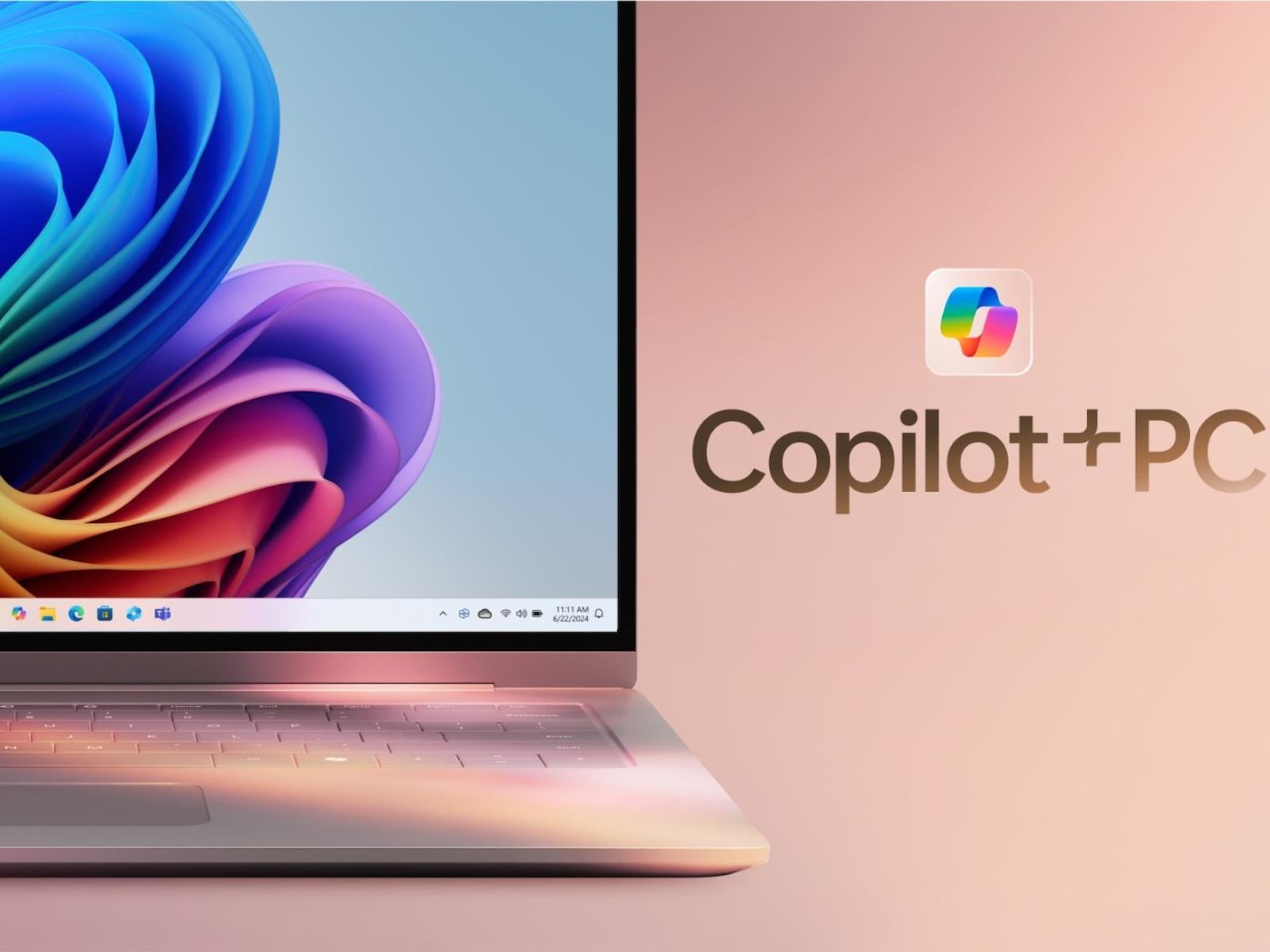
Windows 11 Pulls Back Copilot Features As Microsoft Rethinks AI Strategy

Windows 11 Pulls Back Copilot Features As Microsoft Rethinks AI Strategy
Many users have decried the rapid and pervasive integration of AI features in Windows 11. For many, the final straw was when Microsoft Copilot-ified the humble Notepad application. “Enough’s enough,” folks said as they downloaded sketchy scripts like Remove Windows AI to rip out the very foundations of Microsoft’s AI push. Surprisingly, Microsoft

Fedora Workstation 44 Beta Benchmarks On The AMD Ryzen AI Max Framework Desktop

Since last week’s Fedora 44 Beta release I have been testing out this upcoming Fedora Linux version on a few systems in the lab, most notably with the Framework Desktop powered by the powerful AMD Ryzen AI Max+ 395 “Strix Halo”. Fedora Workstation 44 Beta has been looking nice and running stable albeit in some instances seeing lower performance at this point than Fedora Workstation 43 but overall in good shape.

iOS 27’s Best Feature Might Not Be a Feature at All

When Apple takes the virtual stage in June for WWDC 2026, avid fans might expect the company to announce a number of new features for updates like iOS 27, iPadOS 27, and macOS 27. And while these updates will almost assuredly sport some key features and changes from the “OS 26” era, the best new feature might not be a feature at all. In fact, it might be the exact opposite.

In his Power On newsletter on Sunday, Bloomberg’s Mark Gurman ran through some of Apple’s thought processes with its upcoming updates, per Gurman’s sources. It seems that following the company’s big delays and stumbles in rolling out big AI features, and its Liquid Glass design overhaul, the company is in a position to focus more on iterative updates rather than sweeping changes. As such, Gurman expects “years of gradual improvements,” starting with iOS 27, which he has said since November will be a “Snow Leopard-like” release.

For those out of the loop, Mac OS X Snow Leopard is a famous OS update in Apple world. Apple announced Snow Leopard as having zero new features, as the update was intensely focused on delivering bug fixes and stability updates to Mac OS (now macOS). Snow Leopard didn’t actually ship with zero new features—there was a new QuickTime player and a fresh version of Safari—but the emphasis was really on shipping a new OS for the Mac that felt the same as before, but just worked better.

If that’s the philosophy Apple wants to carry onto iOS 27, I’m all for it. iOS 26 hasn’t been too buggy in my experience, but I keep encountering other users who swear the update has negatively impacted their iPhones. The one complaint I keep hearing is about the keyboard, which users allege is buggy beyond belief. While there are general steps you can take to make the iOS keyboard work better for you, any software bugs affected it will require Apple’s intervention—not the end user.

I would also like Apple to extend those plans to its other big updates this year, as well. The first couple of versions of macOS 26 (Tahoe) received an even poorer reception online than iOS 26, from what I’ve seen. The negative reviews kept me from updating my M1 iMac until macOS 26.3, which beta testers found to be less buggy than previous versions. Indeed, my M1 Mac can handle macOS 26.3, but it’s still a bit laggy at times. While you could chalk that up to the five-year-old chip, I’d bet Apple could optimize its OSes across the board to make the experience a bit smoother for any devices that will be compatible with any of the OS 27 updates. If Apple can make macOS Tahoe run smooth on the MacBook Neo, running a binned, two-year-old iPhone chip, I imagine my iMac could run macOS 27 with some grace.

iOS 27 will have actual new features, too

Like Snow Leopard, Apple won’t actually have zero new features to ship with iOS 27. The biggest feature of all will be rolling out its new “AI Siri,” which despite being announced in 2024 for iOS 18, has encountered delay after delay. But Gurman says the other big iOS 27 “feature” will be support for Apple’s upcoming foldable iPhone, introducing things like split-screen apps for the first time on iOS. It’d be great if Apple extended this support to standard iPhones as well (especially the Max), but Gurman seems to think this will remain a foldable perk only.

Remember, this year marks Apple’s 50th anniversary, and the company likely has some big plans in store. But I think the best thing the company could do to celebrate is make sure that all of its devices are running optimized versions of their respective OSes. Happy Birthday, Apple!

Court Rules TCL’s ‘QLED’ TVs Aren’t Truly QLED

A German court ruled that TCL misled consumers by marketing certain TVs as “QLED” when they “do not deliver the color reproduction expected from QLED TVs.” It has ordered the company to stop advertising or selling those models in Germany. TechRadar reports: The case was filed by Samsung, which claimed that TCL was running deceptive advertising, and more court cases on the same topic are coming in other countries, including the US. The lawsuits all make the same claim: that what TCL calls a QLED isn’t a QLED as it’s commonly understood, and that consumers are being mis-sold TVs as a result. The court found that TCL’s quantum dot TVs, such as the QLED870 series available in Germany, didn’t deliver the characteristics of a quantum dot LED, and that consumers were being misled as a result.

The tests were commissioned by Seoul chemicals company Hansol Chemical (which, it’s worth noting, works with Samsung, a key TCL rival, and which heavily promoted the results of these tests alongside launching the court case) and carried out by Geneva’s SGS and the UK’s Intertek. According to ET News (via Google Translate), “no indium (In) or cadmium (Cd) was detected in three TCL QD TV models. Indium and cadmium are essential materials that cannot be omitted for QD implementation… if neither is present, QD technology cannot be said to have been applied.” You can see the test results here.

TCL disputed the findings — “The QD content may vary depending on the supplier, but it definitely contains cadmium,” it responded — and published its own tests, including a test by SGS, the same firm that conducted tests for Hansol. The results contradicted Hansol Chemical’s tests, but those tests used a different methodology: where TCL’s tests focused on TCL’s quantum dot films, Hansol’s commissioned tests were on finished TCL TVs. […] Hansol Chemical has filed a complaint against TCL with the US Federal Trade Commission, alleging false advertising, and TCL is also facing class action lawsuits in several US states making the same claim. TCL isn’t alone here: Hisense has also been targeted in the US.


Read more of this story at Slashdot.

Imagination’s Open-Source PowerVR Vulkan Driver Now Plays Nicely With Zink OpenGL

The past several years Imagination Tech has been investing in an upstream and open-source DRM kernel graphics driver as well as a PowerVR Vulkan driver in Mesa. Their Mesa focus has exclusively been on the PowerVR Vulkan driver with the plans all along to use the Zink generic OpenGL-on-Vulkan implementation. With next quarter’s Mesa 26.1 release, that goal is being realized with Zink now working nicely atop the PowerVR Vulkan driver for in turn achieving open-source OpenGL support on PowerVR…

Creative’s New Audigy FX Pro Promises A Big Audio Upgrade But Can It Deliver?

Creative’s New Audigy FX Pro Promises A Big Audio Upgrade But Can It Deliver?
To borrow and tweak a line from The Outer Limits, there is nothing wrong with your monitor, do not attempt to adjust the picture. You also haven’t stepped into a time warp. I checked the calendar and it is indeed 2026, though that wasn’t immediately clear when I saw that Creative had launched a new Audigy sound card, the Audigy FX Pro.

It’s

OpenAI’s adult mode reportedly won’t generate pornographic audio, images or video

OpenAI’s forthcoming “adult mode” will allow users to engage in lewd conversations with ChatGPT, but not use the chatbot to generate explicit images, audio or video. In response to reporting from The Wall Street Journal, an OpenAI spokesperson characterized the upcoming release as capable of producing smut rather than pornography.

OpenAI CEO Sam Altman first floated the idea of allowing people to use ChatGPT for erotica last October, saying the company wanted to “treat adult users like adults.” OpenAI originally planned to release adult mode at the start of 2026. Since then, the company has pushed back the feature a handful of times, with the most recent delay coming at the start of March so that OpenAI could “focus on work that is a higher priority for more users.”

Through The Journal’s reporting, we’re learning OpenAI forged ahead with work on adult mode despite reservations from its council on wellbeing and AI. The group of eight researchers and experts were reportedly unanimous in warning the company AI-generated erotica could lead to people developing an unhealthy emotional dependence on ChatGPT, and that underage users would almost certainly find ways to access the feature. According to The Journal, one council member, citing cases where people have taken their own lives after becoming attached to ChatGPT, said the company was at risk of creating a “sexy suicide coach.”

Those concerns appear to have been well-founded. At one point, the company’s age verification technology was misidentifying underage users as adults about 12 percent of the time, according to The Journal. At OpenAI’s scale, with around 100 million teens using ChatGPT every week, that error rate would have translated to millions of minors accessing erotic chats. OpenAI told The Journal its prediction algorithm performs to industry standards, adding no such system will ever be completely foolproof.

This article originally appeared on Engadget at https://www.engadget.com/ai/openais-adult-mode-reportedly-wont-generate-pornographic-audio-images-or-video-150744035.html?src=rss

AI Facial Recognition Error Gets Grandma Arrested At Gunpoint And 6 Months In Jail

AI Facial Recognition Error Gets Grandma Arrested At Gunpoint And 6 Months In Jail
In a quiet suburb of Tennessee, the AI and physical world collided with devastating consequences for a grandmother whose only crime was existing in a database. Law enforcement’s increasing reliance on facial recognition technology has shifted from a futuristic tool for catching fugitives into a bureaucratic nightmare that treats algorithmic