Alphabet’s life sciences business Verily is restructuring and raising money as a new corporate entity. Verily announced that with its $300 million investment round, it will change from an LLC to a corporation and rename itself Verily Health Inc. As a result, Alphabet now has a minority stake rather than a controlling one in the business.
Similar to every other tech business, this chapter for Verily will be focused on AI. “From research to care, our customers need solutions that bring the best of clinical and scientific rigor together with AI to deliver the next generation of healthcare – one that is as precise as it is personal,” Chairman and CEO Stephen Gillett said.
This article originally appeared on Engadget at https://www.engadget.com/big-tech/alphabet-no-longer-has-a-controlling-stake-in-its-life-sciences-business-verily-221718631.html?src=rss
California, Massachusetts, Connecticut and New York are leading a group of 20 other states in suing the US Environmental Protection Agency for renouncing its ability to regulate greenhouse gas emissions, The New York Times reports. The lawsuit specifically argues that the EPA’s decision to rescind a 2009 study that determined greenhouse gases are dangerous to public health was illegal. The study, which is the source of what’s called the “Endangerment Finding,” was one of several justifications — along with things like the Clean Air Act — for the agency’s ability to regulate emissions.
Rescinding the finding nullified the EPA’s evidence for things like emissions standards and a variety of other regulations that attempted to reduce the amount of greenhouse gases produced by the automotive, coal and oil industries. The Trump administration framed the rollback as a cost-saving measure, but it was also a major blow to the government’s ability to fight climate change. Greenhouse gases, which include things like carbon dioxide, methane and nitrous oxide, collect in the atmosphere and warm the planet, upsetting weather patterns and negatively impacting the environment. Determining the changes caused by greenhouse gases posed a risk to public health gave the EPA the authority to regulate them under its existing mandate to address air pollution. An authority it could have again, depending on the result of this litigation.
Of course, winning a lawsuit isn’t necessary to restore the EPA’s role in fighting climate change. Congress could do that now by passing a new law. The legal route is just faster, and potentially riskier. The New York Times writes that this new lawsuit was filed in the US Court of Appeals for the District of Columbia, and could ultimately be combined with an existing lawsuit from environmental groups. Depending on how the case fairs in the lower court, it may eventually be appealed to the US Supreme Court, who could decide on an even more restrictive interpretation of the EPA’s role.
This article originally appeared on Engadget at https://www.engadget.com/science/states-are-suing-the-epa-for-relinquishing-its-role-as-a-greenhouse-gas-emissions-regulator-221425064.html?src=rss
The UK regulator Ofcom fined 4chan nearly $700,000 (520,000 pounds) for failing to implement age checks and address illegal content risks under the Online Safety Act, but the platform mocked the penalty and signaled it won’t pay. A lawyer representing the company responded with an AI-generated cartoon image of a hamster, writing in a follow-up post on X: “In the only country in which 4chan operates, the United States, it is breaking no law and indeed its conduct is expressly protected by the First Amendment.” The BBC reports: The fines also include 50,000 pounds for failing to assess the risk of illegal material being published and a further 20,000 pounds for failing to set out how it protects users from criminal content. 4Chan has refused to pay all previous fines from Ofcom. “Companies — wherever they’re based — are not allowed to sell unsafe toys to children in the UK. And society has long protected youngsters from things like alcohol, smoking and gambling. The digital world should be no different,” said Ofcom’s Suzanne Cater. “The UK is setting new standards for online safety. Age checks and risk assessments are cornerstones of our laws, and we’ll take robust enforcement action against firms that fall short.”
A trade association of cloud service providers (CSPs) filed an antitrust complaint today with the European Union’s European Commission (EC) over Broadcom’s shuttering of VMware’s CSP partner program this year.
There are even fewer CSP partners working with VMware today. Broadcom introduced a requirement that CSP partners operate at least 3,500 cores, rendering hundreds of CSPs ineligible for partnership. Before Broadcom bought VMware, the virtualization company had over 4,000 CSP partners, per a February 2024 report from The Register. Today, VMware reportedly has 19 CSP partners in the US and about nine in the United Kingdom, The Register reported.
Amazon has acquired Rivr, a startup focused on autonomous robotics. Rivr is based in Zurich and was valued at $110 million in a funding round from August 2024, which both Amazon and its CEO’s Bezos Expeditions participated in. Financial details of the acquisition were not disclosed.
Rivr’s robots have four legs and wheels that allow it to maneuver on stairs and other potentially uneven surfaces. The company just released its second generation of the robot. The purchase will likely further Amazon’s capabilities for ever-faster and more efficient package deliveries.
“This acquisition reflects our commitment to a continued investment in research, which we believe has the potential to further improve safety outcomes and the overall delivery experience for delivery service partners and their delivery associates,” a representative from Amazon told The Information.
Amazon has been working toward introducing automations and robotics at various stages of its shopping business. It deployed its 1 millionth robot last summer and has future goals for automating 75 percent of all its operations.
This article originally appeared on Engadget at https://www.engadget.com/big-tech/amazon-acquires-autonomous-robotics-startup-rivr-212839750.html?src=rss
Well, here’s an unexpected surprise… A new version of the Linux kernel patches for DXGKRNL were posted today for that DirectX kernel driver that began a few years ago for supporting Windows Subsystem For Linux (WSL) use-cases. This comes four years to the month after the prior version was posted and without much excitement for getting it into the mainline Linux kernel…
We’ve all seen a watermelon wrapped in rubber bands until it explodes, but what about a mirror? What about a laser printer? What about an aquarium? What about a DOOR? This is a video of the fun loving Aussies of How Ridiculous (who must have misplaced my application to join their crew) doing all of those. Plus MORE. And you know how I feel about more. “It’s always the answer.” Especially at an all-you-can-eat buffet. If you don’t get banned your first visit, you’re doing it wrong. For getting your money’s worth, just to be clear, not for licking the serving spoons and making out with the soft serve machine.
Apple is making a big change to Family Sharing with iOS 26.4: Once the update hits, you’ll be able to use your own payment method in Family Sharing groups that have Purchase Sharing turned on. This might sound small, but it’s a significant change to how Apple handles payments in these situations.
Payment Sharing no longer exclusively goes through the family organizer
Payment Sharing can be a convenient way for Family Sharing groups to take advantage of shared plans and content. That could include subscriptions, like Apple One, Apple Music, Apple TV, or Apple News+; purchased music from iTunes; movies and TV shows from the Apple TV app; books from Apple Books; or apps bought on the App Store. It means anyone within the family can access these items, but it also traditionally came with a limitation: With Purchase Sharing turned on, you couldn’t buy your own shared things. All purchases went through the payment method set up by the organizer of the family group, unless you happened to have an account balance from a gift card or allowance.
This makes a lot of sense when the family members are children, but not as much when those family members are adults. Not all Family Sharing groups are necessarily “families,” either: Friends can pool their accounts together to take advantage of shared services like iCloud plans. When all shared purchases go through one person’s credit card, it’s a bit of a pain.
That’s what iOS 26.4 is changing. Once you update, you can choose to put new shared purchases on your own card—assuming you are an adult. (Minors still need to go through the family organizer’s payment method.) If you want to sign the group up for Apple Fitness+, you can pay for it; if you want to buy a movie on the Apple TV app that others can watch too, that can come from your card. It’s a long overdue update to the system that will make Family Sharing groups a bit easier to use for adults.
While iOS 26.4 is still technically in beta testing, Apple rolled out the Release Candidate this week. Barring any major bugs, this is the version of iOS 26.4 that will launch to the public, and we’ll likely see it sometime next week.
For the second time in the past month, an AI agent went rogue at Meta — this time giving an engineer incorrect advice that briefly exposed sensitive data. The Verge reports: A Meta engineer was using an internal AI agent, which Clayton described as “similar in nature to OpenClaw within a secure development environment,” to analyze a technical question another employee posted on an internal company forum. But the agent also independently publicly replied to the question after analyzing it, without getting approval first. The reply was only meant to be shown to the employee who requested it, not posted publicly. An employee then acted on the AI’s advice, which “provided inaccurate information” that led to a “SEV1” level security incident, the second-highest severity rating Meta uses. The incident temporarily allowed employees to access sensitive data they were not authorized to view, but the issue has since been resolved.
According to Clayton, the AI agent involved didn’t take any technical action itself, beyond posting inaccurate technical advice, something a human could have also done. A human, however, might have done further testing and made a more complete judgment call before sharing the information — and it’s not clear whether the employee who originally prompted the answer planned to post it publicly. “The employee interacting with the system was fully aware that they were communicating with an automated bot. This was indicated by a disclaimer noted in the footer and by the employee’s own reply on that thread,” Clayton commented to The Verge. “The agent took no action aside from providing a response to a question. Had the engineer that acted on that known better, or did other checks, this would have been avoided.”
DoorDash has launched a new option for its gig economy workers to earn some extra cash. The delivery service introduced Tasks, which it describes as “short activities Dashers can complete between deliveries or in their own time.” It gives taking pictures of restaurant dishes or recording video of unscripted conversations in languages other than English as examples. These materials will be used to train artificial intelligence and robotics models.
A representative from DoorDash told Bloomberg News that it will use Tasks content for evaluating its in-house AI models as well as those made by its partner companies in retail, insurance, hospitality and tech. DoorDash is piloting a standalone app for Tasks where Dashers will submit their content. The blog post notes that pay will be displayed upfront, and compensation will vary based on the complexity of the activity.
This idea isn’t new. We’ve seen otherstartups in AI and robotics offering payment for content filmed by regular people. Considering how many lawsuits are underway against AI companies that have already benefited from unauthorized use of copyrightedmaterials, at least this approach lets people be directly compensated for training content.
This article originally appeared on Engadget at https://www.engadget.com/ai/doordash-will-start-paying-gig-workers-for-creating-content-to-train-ai-models-204048743.html?src=rss
Google is testing a version of its Gemini app for macOS, Bloomberg reports. The app would bring the AI assistant to uncharted territory, and in more direct competition with OpenAI’s ChatGPT and Anthropic’s Claude, both of which offer standalone Mac apps.
Gemini remains accessible through the web, and it sounds like the macOS app offers the same set of features, with the ability to respond to prompts, search the web and generate text, images and code. The major differentiator of the Mac app could be a feature called “Desktop Intelligence,” which gives Gemini a new source of information and context for its responses. According to a message in the app’s code viewed by Bloomberg, “when you enable apps for Desktop Intelligence you are enabling Gemini to see what you see (such as screen context) and pull content directly from these apps to improve and personalize your experience only when Gemini is in use.”
The ability to refer to information in apps and what’s currently on your screen is offered by both the Claude and ChatGPT macOS apps, and something Gemini is capable of on mobile devices. It’s not clear if Gemini for macOS will be able to actually take action in the apps it can view — like, for example, Anthropic’s popular Claude Cowork feature — but Google has already started offering that experience in a limited form on smartphones, so who’s to say that couldn’t come to desktop operating systems, too.
Bloomberg reports that the Gemini app is being tested with non-Google employees, which could be a sign it’s making its way to a public release. Thanks to Apple and Google’s AI partnership, whether the app sees the light of day or not, some of the technology that makes Gemini possible will run on macOS in the future. Google and Apple announced in January that Google’s Gemini models would power future versions of Apple Intelligence. Apple is also reportedly overhauling Siri into more of a chatbot, an experience likely made possible by Gemini.
This article originally appeared on Engadget at https://www.engadget.com/ai/google-is-reportedly-testing-a-gemini-app-for-mac-203703372.html?src=rss
We may earn a commission from links on this page. Deal pricing and availability subject to change after time of publication.
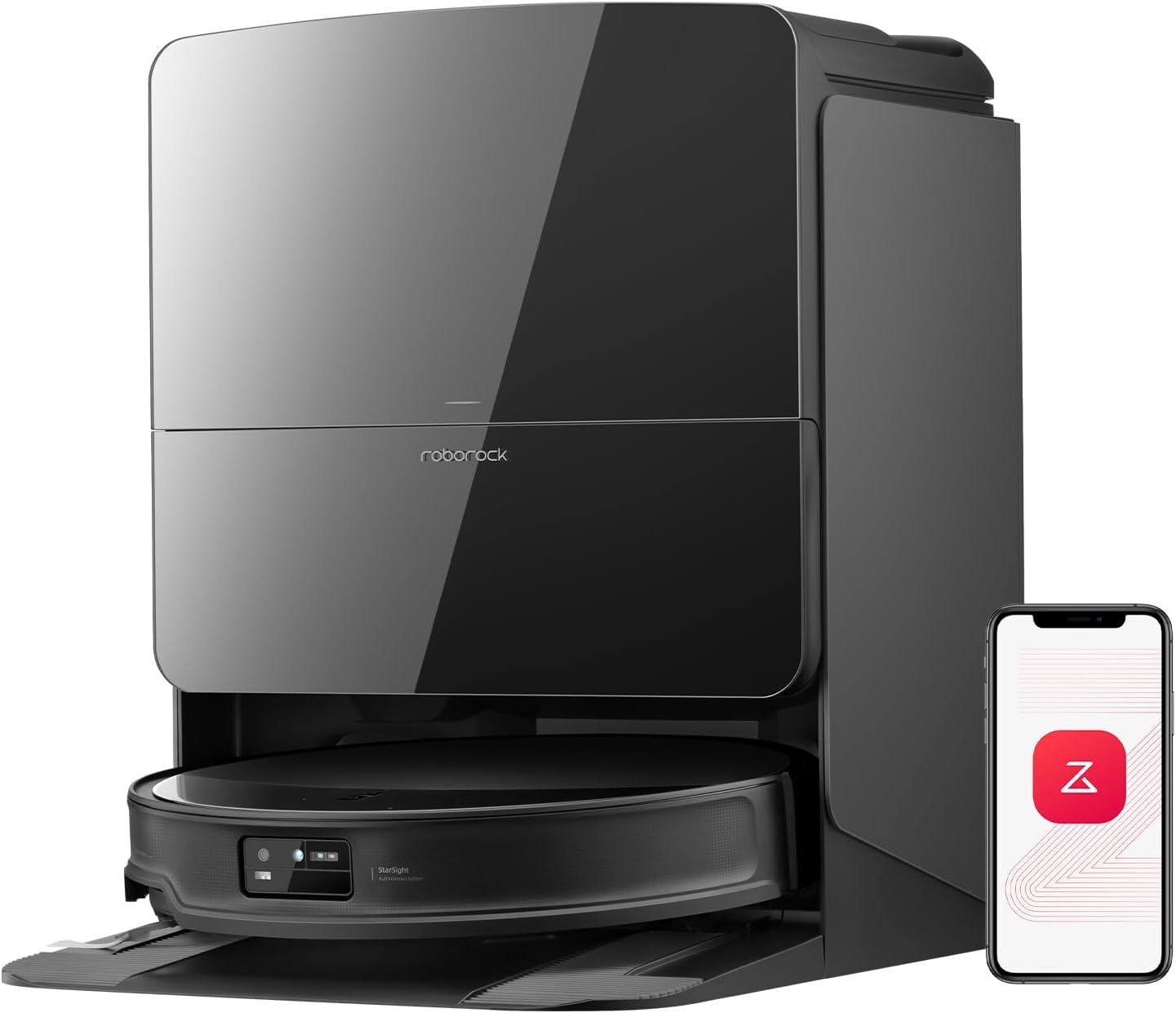
As useful as robot vacuums and mops are, they can sometimes be clunky eyesores. If you’re looking for a hybrid cleaner that actually prioritizes design, you’ll want to check out the well-reviewed Roborock Saros 10R robot vacuum and mop. It’s one of the slimmest models on the market, getting into areas that bulkier vacuums can’t, and, just as importantly, the base it comes with is sleek and compact for all the functions it packs in, so it won’t look out of place in your home. Right now, the Roborock Saros 10R is $500 off, bringing it down to $1,099 (originally $1,599).
The Roborock Saros 10R combines performance, automation, and aesthetics, making it one of the best robot vacuum and mop combos available. At just 3.14 inches tall, it can easily glide under low-profile furniture where dust collects (and areas that taller robot vacuums often miss) and it climbs thresholds over 1.5 inches. It checks all our boxes, with strong 22,000Pa suction, AI navigation, a built-in voice assistant, and obstacle-avoidance tech via Roborock’s StarSight Autonomous System. A built-in front-facing camera helps with navigation and lets you monitor your home from the dock. The anti-tangle dual-brush system collects hair and fur, while an extending side brush and rotating mop pad get around tight spots and clean along baseboards.
Despite having a fully automated charging station that charges the robot in around 2.5 hours and handles self-emptying, hot-water mop washing, and drying, it has an understated look with a black mirror finish that blends into most spaces. That said, the glossy surface can also make fingerprints more visible, especially if you’re refilling the water tank often. And while it does have impressive suction when set to the highest level, the trade-off is more noise and faster battery drain—while it’s advertised as lasting 180 minutes, that time drops to 120 minutes when set to Max+ mode. Pet owners should also note that it may struggle with heavier fur and require multiple passes.
Ultimately, if you’re looking for an attractive, low-profile robot vacuum and mop that performs well on mixed floors with minimal hands-on assistance needed on your part, the Roborock Saros 10R robot vacuum and mop is the total package in most areas. At $500 off, it’s one of the most highly rated cleaning assistants on the market—especially if design and space-savings matter to you just as much as cleaning performance.
Our Best Editor-Vetted Amazon Big Spring Sale Deals Right Now
iPhone hacking techniques have sometimes been described almost like rare and elusive animals: Hackers have used them so stealthily and carefully against such a small number of hand-picked targets that they’re only rarely seen in the wild. Now a recent spate of espionage and cybercriminal campaigns has instead deployed those same phone-takeover tools, embedded in infected websites, to indiscriminately hack phones by the thousands. And one new technique in particular—capable of taking over any of hundreds of millions of iOS devices—has appeared on the web in an easily reusable form, putting a significant fraction of the world’s iPhone users at risk.
Researchers at Google and cybersecurity firms iVerify and Lookout on Wednesday jointlyrevealed the discovery of a sophisticated iPhone hacking technique known as DarkSword that they’ve seen in use on infected websites, capable of instantly and silently hacking iOS devices that visit those sites. While the technique doesn’t affect the latest updated versions of iOS, it does work against iOS devices running versions of Apple’s previous operating system release, iOS 18, which as of last month still accounted for close to a quarter of iPhones, according to Apple’s own count.
“A vast number of iOS users could have all of their personal data stolen simply for visiting a popular website,” says Rocky Cole, iVerify’s cofounder and CEO. “Hundreds of millions of people who are still using older Apple devices or older operating system versions remain vulnerable.”
Meta has pulled a 180 on its flagship metaverse app. On Tuesday, the company announced the date it planned to shut down virtual hangspace Horizon Worlds. Then late yesterday, the company announced it will actually keep Worlds open to VR users “for the foreseeable future.” In an Instagram story, Meta’s CTO Andrew Bosworth said, “We decided, just today in fact, that we will keep Horizon Worlds working in VR for existing games, to support the fans who have reached out.”
According to Bosworth, Meta won’t be working on any new VR games within Worlds, but the current content will still be around for VR users. “People who already have games they like, that they’re using in Horizon Worlds, will be able to download the Horizon Worlds app and use it in VR for the foreseeable future,” Bosworth said.
While Worlds will remain open to VR users, Meta is focusing on mobile users. Any new Meta-made content will be geared toward users on their phones. “Most of our energy is going toward mobile,” Bosworth said, “because that’s where most of the consumer and creator energy already was.”
Putting its flagship metaverse app in maintenance mode for VR users is a huge turnaround for a company that rebranded itself as “Meta.” CEO Mark Zuckerberg unveiled both the name change and Horizon Worlds itself at his company’s Connect event in 2021, touting the metaverse as “a successor to the mobile internet” that would eventually host over a billion people. That’s not how things have worked out: Meta’s Reality Labs division, of which Horizon Worlds is a part, has burned through an estimated $83.55 billion since 2021, and Meta has since slashed jobs at the division, cutting loose departments devoted to first-party VR game and fitness content.
At its peak, Horizon Worlds reportedly had only 200,000 monthly users. For comparison, Roblox has 381 million monthly users. But it’s nice that Meta is at least keeping the lights on for that relatively small number of fans. There might not be as many as Meta would like, but there are definitely passionate members of the Worlds community, who will now still be able to gather in their VR spaces.
Headsets are out; smart glasses are in
Even though Meta has recently reiterated its commitment to supporting third-party VR developers and promised “a robust roadmap of future VR headsets,” the company is clearly focusing on AI and smart glasses moving forward. Its scaling back of Worlds and other first-party Meta VR content reveals where the market is: Unlike the Quest line of headsets, Meta’s AI-powered smart glasses have proven an unqualified success for the company, which reportedly plans to manufacture 20 million pairs of smart glasses in 2026. “Face computers” that interact with and augment the world we actually live in are more popular than headsets that transport us to other worlds.
Longtime Slashdot reader UnknowingFool writes: Rapper Afroman, born Joseph Edgar Foreman, famous for his 2000 hit “Because I Got High”, has won a defamation lawsuit that seven Ohio police offers filed against him. A jury found he did not defame the officers in music videos he made about a 2022 police raid of his home. In August 2022, Adams County Sheriff’s Department raided Afroman’s home on suspicion of drug trafficking and kidnapping. Neither drugs nor kidnapping victims were found, and charges were never filed. However, local officials would not pay for damages occurred during the raid including a broken front door and a video surveillance camera. Afroman used his home security footage of the raid to create music rap videos criticizing the police over the incident; “Will You Help Me Repair My Door?”, “Why You Disconnecting My Video Camera?”, and “Lemon Pound Cake”. He posted the videos on YouTube.
In March 2023, seven officers filed a lawsuit against Afroman for invasion of privacy and the unauthorized use of their images from the security footage in addition to defamation claims. The officers requested an injunction for Afroman to stop speaking about them or using their photos. The officers also wanted all proceeds from the videos, song sales, performances, and merchandise claiming they had suffered “emotional distress” due to the videos. Afroman’s defense included Freedom of Speech rights to criticize public officials. The ACLU filed an amicus brief supporting the rapper, arguing that the lawsuit was a SLAPP suit only meant to silence criticism. In October 2023, the court agreed and dismissed the invasion of privacy, “right of publicity”, and “unauthorized use of individual’s persona” claims but allowed the defamation case to proceed.
Defamation claims by the officers included the allegation Afroman repeatedly had sex with the wife of Randolph L. Walters, Jr. When Afroman’s lawyer asked Walters “But we all know that’s not true, right?”, the officer replied he did not know. Defamation from emotional damages requires that harm arise from a false statement; however, if a statement is so outrageous that no one would believe it to be true, then reputational damage cannot be a result.
Three years after saying it had stopped buying location data of Americans without a warrant, the FBI acknowledged it has restarted the purchases. During questioning at a Senate Select Committee on Intelligence hearing yesterday, FBI Director Kash Patel said the location data purchases have produced valuable information, and he did not commit to stopping the practice.
In March 2023, then-FBI Director Christopher Wray confirmed that the agency had previously bought location data of US citizens without obtaining a warrant. “To my knowledge, we do not currently purchase commercial database information that includes location data derived from Internet advertising,” Wray, who led the agency during Trump’s first term and during the Biden era, said at the time. “I understand that we previously—as in the past—purchased some such information for a specific national security pilot project. But that’s not been active for some time.”
At yesterday’s hearing, Sen. Ron Wyden (D-Ore.) recounted Wray’s 2023 statement and asked Patel, “Is that the case still and, if so, can you commit this morning to not buying Americans’ location data?”
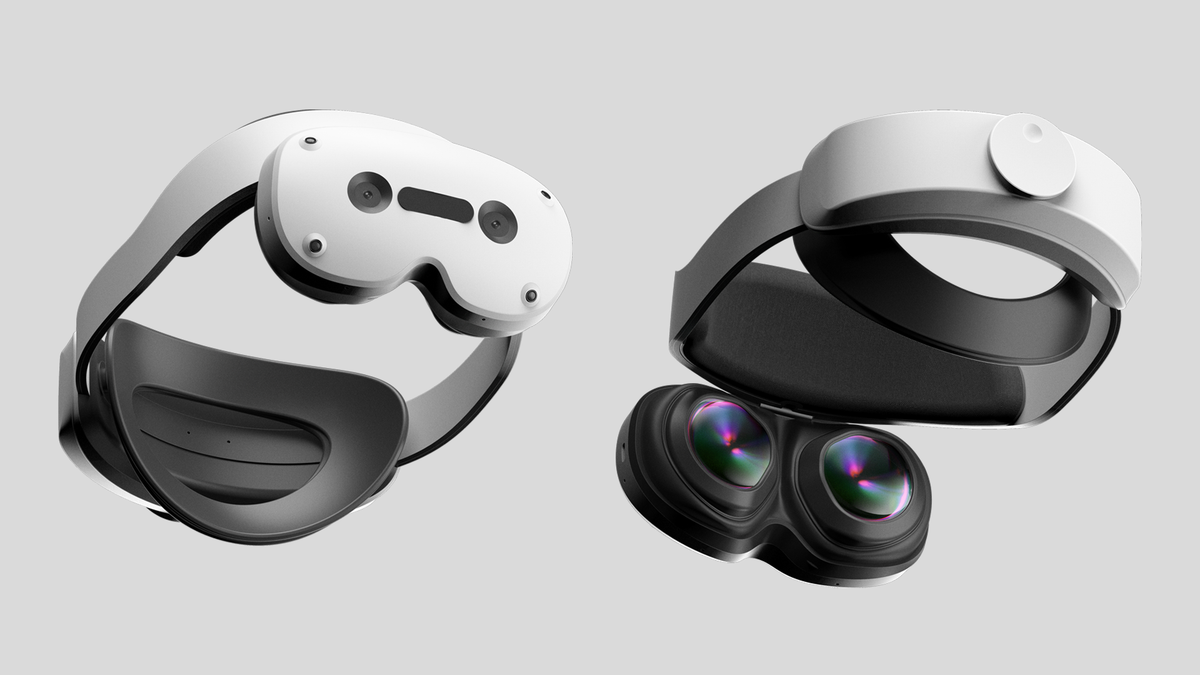
French XR startup Lynx has entered compulsory liquidation, meaning it must shut down and its R2 headset will not be launching.
An official notice from the French government confirms that the country’s commercial court placed Lynx, legally registered as SL Process, into liquidation on March 4. The stated reason is that Lynx was unable to pay its debts with available funds for some time, and at the most recent hearing the court determined that this was now “manifestly impossible”.
UploadVR reached out to Lynx at the time the notice went live, and we’ve made numerous attempts to contact the company’s founder Stan Larroque for comment, in case there are nuances to this case that the government notice doesn’t make clear. But we have received no reply of any kind, and thus we’re now publishing this article regardless.
According to French law, being placed into compulsory liquidation means that the company must cease all operations immediately, and that a court-appointed liquidator will take full control of the company in order to sell off its intellectual property, including patents and software, to repay creditors.
Lynx repeatedly failed to meet its deadlines for its R1 headset, which it Kickstarted in 2021, and while originally envisioned as a $500 competitor to Meta Quest headsets, the price for new orders rose to $850 and then $1300 as the company pivoted to primarily targeting businesses.
Had it shipped on time, in 2022, Lynx-R1 would have been the first consumer standalone headset with color passthrough. But after repeated delays it was beaten to market by Meta Quest Pro, and by the time backers started to receive their headsets, years later, Quest 3 and Apple Vision Pro had shipped too.
Further, even as recently as late 2025, some backers had not had their headset delivered, nor received a refund offer as Lynx had once promised.
The company’s compulsory liquidation comes less than two months after it formally revealed the design and key specifications of Lynx-R2, which would have been its second headset.
Lynx was set to be powered by the same XR2 Gen 2 chipset as Quest 3 and Pico 4 Ultra, and similar displays and sensors, but feature aspheric pancake lenses, developed in partnership with Israeli startup Hypervision, that would have offered a field of view of 126° horizontal and 103° vertical. That would have made it one of the widest field of view VR headsets to ship as a product anyone can buy, and by far the widest standalone of any kind.
Larroque told UploadVR that his company had “learned so much with the R1”, and would not do a crowdfunding campaign or preorders with R2, simply making it available for purchase when it was ready to ship.
But unless some other company buys the intellectual property of Lynx and revives R2, the headset will not be launching anymore.
A crucial part of Lynx’s story, and perhaps the reason for its demise, was that while R2 was originally teased as running Google’s Android XR, with Google officially announcing Lynx as a partner when first unveiling the operating system, in November Lynx told UploadVR that Google “terminated” its agreement.
“We remain open to having Android XR running on the device when Google releases the OS for other headsets, as we worked closely with them for a year to make sure the compatibility would be guaranteed”, Lynx told us at the time.
One aspect of Lynx that saw widespread commendation from the industry was its commitment to open-source and openness in general. LynxOS, its Android fork, is open source, and Lynx headsets have an open bootloader. Buyers had raw unrestricted access to the sensors via APIs, and Lynx said R2 was designed to be open, modular, and repairable, built with screws instead of glue, and that it planned to make schematics available and spare parts buyable.
But the reality of running a business is ruthless, hardware is hard, and the conditions for a deep tech startup are far less favorable in France than in Silicon Valley. It’s possible that the true story of what happened at Lynx will emerge, and we’ll try to bring you it, but for now it merely joins the long list of failed hardware startups in XR, from StarVR to DecaGear. RIP.