joshuark shares a report from Neowin: OpenAI is planning to combine its Atlas web browser, ChatGPT app, and Codex coding app into a singular desktop “superapp.” CEO of Applications, Fidji Simo, said the company was doubling down on its successful products. By taking this move, the AI company aims to streamline the user experience and reduce fragmentation. Simo said in an internal memo: “We realized we were spreading our efforts across too many apps and stacks, and that we need to simplify our efforts. That fragmentation has been slowing us down and making it harder to hit the quality bar we want.”
The White House has announced a new AI policy framework that calls for Congress to craft federal regulation that overrules state AI laws. The Trump administration has made multiple attempts to overrule more restrictive state-level AI regulation, but has failed so far, most notably in the passing of the “One Big Beautiful Bill.”
The framework focuses on a variety of topics, covering everything from child privacy to the use of AI in the workforce. “Importantly, this framework can succeed only if it is applied uniformly across the United States,” The White House writes. “A patchwork of conflicting state laws would undermine American innovation and our ability to lead in the global AI race.”
In terms of child privacy protections, the framework calls for Congress to require tools like “screen time, content exposure and account controls” while also affirming that “existing child privacy protections apply to AI systems,” including limits on how data is collected and used for AI training. The framework also calls for a carveout that allows states to enforce “their own generally applicable laws protecting children, such as prohibitions on child sexual abuse material, even where such material is generated by AI.”
The energy-use and environmental impact of AI infrastructure is a going concern, but the White House’s policy proposals are primarily worried about the cost of data centers. The framework suggests federal AI regulation should make sure that higher electricity costs aren’t passed on to people living near new AI data centers, while streamlining the process for permitting AI infrastructure construction to allow for “on-site and behind-the-meter power generation.” The framework also calls for fewer restrictions on the software-side of AI development, proposing “regulatory sandboxes for AI applications” and asking Congress to “provide resources to make federal datasets accessible to industry and academia in AI-ready formats.”
Developing…
This article originally appeared on Engadget at https://www.engadget.com/ai/the-white-house-proposes-new-ai-policy-framework-that-supersedes-state-laws-192251995.html?src=rss
Most of us don’t do enough strength training to realize the health benefits it can bring. The American College of Sports Medicine has released a new guideline on strength training that gives more realistic advice than what you may have heard about strength training elsewhere. Aside from outlining the amount of training we need, the new guidelines also come with a few surprises, in the form of debunking many long-held “rules” of strength training. Among them: training to failure isn’t essential, and unstable surfaces aren’t necessary to improve your balance.
I keep seeing fitness professionals celebrating these new ACSM guidelines as a major improvement on previous advice. Certainly the new version gets more specific about how to achieve different benefits of training (like strength versus muscle size), but it also tells us how not to overthink the details. I’ll give the highlights below, and then you can read the press release and the full list of guidelines.
Why strength training matters
If you’re interested in fitness for its own sake, you should know that cardio and strength training are both important—you can’t just do one and ignore the other. But even if you’re only interested in health benefits, strength training is crucial.
I’ve previously written about the benefits of gaining muscle mass, which include improvements to your metabolism, overall health, and the ability to stay active and independent as you get older. The ACSM writes in its paper that resistance training (its preferred term for what I call strength training) has positive effects on health outcomes, including cardiovascular disease, cancer, diabetes, depression, and sleep quality.
How much strength training to plan for
We should all be doing some strength training, as all exercise guidelines tell us. (Specifically, here are the most recent U.S. guidelines, which advise that we all strength train twice a week.) The ACSM agrees with the minimum of twice per week, per muscle group. That means you can do a full-body workout twice a week, or split up your workouts so that each muscle gets at least two days of work.
Six things not to overthink when strength training
I find that some of the most interesting things in the new ACSM guidelines are where it tells us what not to worry about. According to the evidence the authors have reviewed, there’s a lot of stuff that isn’t conclusively supported, and you can safely stop worrying about it:
Training “to failure” isn’t necessary. You don’t have to keep going with an exercise until you physically can’t. You should work pretty hard, but hitting the point of failure is not critical.
Instability training isn’t better for balance. You don’t need to stand on unstable surfaces to train your balance; balance gets better as people get stronger, regardless of whether they used stable or unstable surfaces to train.
Time under tension isn’t important. Some gym bros will tell you that the amount of time your muscle spends doing an exercise is the most important thing, and thus slow reps are better than fast ones. The ACSM review did not find any benefit of maximizing time under tension for either strength or muscle growth.
Beginner/intermediate/advanced routines aren’t needed. The same basic advice applies to everyone, the ACSM concludes. That doesn’t mean you have to train the same way as an advanced lifter as you did as a beginner, but it also means you can just keep doing what works for you as long as it’s working.
Any equipment you use to strength train is fine. Gym workouts, home workouts, resistance bands, bodyweight exercises—anything that gives you a good strength workout is fine. You should make sure you can do challenging sets of exercise with whatever you choose, but there’s no inherent reason to prefer barbells over, say, resistance bands at home.
Progressive overload isn’t always needed. This will be a shocker to a lot of fitness buffs! Gradually increasing the difficulty of your workouts is a way to get stronger, but it’s not always necessary to get the basic health benefits. That said, if you start out with very light or easy exercises at the beginning, you’ll need to increase the difficulty to make sure you’re training hard enough.
Ultimately, the guidelines emphasize that doing something is better than nothing, and that finding something you will stick to is more important than optimizing the details of your routine. Only about 30% of us do any strength training twice a week, and that number may be as low as 10% for older people.
How to meet your strength training goals, according to the ACSM
Here’s the basic breakdown that the ACSM gives for different goals:
For strength, lift heavy loads (at least 80% of your one-rep max) for at least 2 to 3 sets per exercise.
For muscle gain (hypertrophy), aim to get 10 sets of strength exercises per muscle group, per week.
For power (explosiveness), use loads that are between 30% to 70% of your one-rep max, and try to move the weight as fast as possible during the concentric (lifting) portion of the exercise.
If you’ve never thought of these things separately, let me break them down:
Power is probably the easiest to ignore, but as exercise scientist Jason Sawyer told Medical News Today, it’s one of the things older adults lose fastest, and rarely train. Power refers to how fast, or how explosively, you can contract a muscle. Jumping onto a box is an exercise that works on power in your legs; standing up a barbell squat as quickly as possible is another power exercise for the legs.
Strength is pretty much what it sounds like—the ability to handle heavy weights or to apply a lot of force. The stronger you are, the easier it will be to carry a child or a bag of dog food or cement (to put it into real-world terms).
Hypertrophy refers to building muscle. We all lose muscle as we age, so some amount of hypertrophy training is helpful to counteract that trend. Muscle tissue is good for our body, including our metabolism, as I’ve told you before.
You can work on all three of these areas by using a variety of exercises and loads, but you may find it simplest to focus on one of them at a time.
Meta’s Smart Glasses have generally earned high praise as fashionable Augmented Reality glasses, but an upcoming update promises to add facial recognition capabilities, and at least two U.S. Senators are raising concerns. Even if you aren’t worried about facial recognition coming to the glasses, a growing number of the people wearing what
If you’ve watched videos on the internet any time over the past year or two, you’ve encountered AI-generated content (even if you didn’t realize it). While some of it is convincing, a lot of it is obvious. Like, I’m guessing no one thought those dramatic narrative videos of people made of fruit were painstakingly animated by hand. This type of artificially generated content has been lovingly (or not so lovingly) labeled “AI slop,” which sums it up quite well: It’s meaningless drivel, made with little effort or investment by some AI generator, that’s raking up real money by going viral on social media.
While all platforms that showcase short-form videos are inevitably already filled with AI slop, YouTube has been hit particularly hard. YouTube Shorts can be borderline unwatchable, depending on your algorithm. (Try watching in an incognito window to see what the platform serves up to a blank slate; it’s wild out there.) What’s worse, YouTube’s algorithm shows these videos to kids. Short-form videos are already bad enough for kids in so many ways, but AI slop takes it to another level.
“Did this feel like AI slop?”
There’s some good news on this front, at least: As reported by Dexerto, Starting this month, it appears YouTube is now asking users for their help identifying this AI-generated content. In fact, the company isn’t mincing words or beating around the bush. If you’re called to action, you’ll receive a pop-up that literally reads: “Did this feel like AI slop?” According to a screenshot from this Redditor, you’ll have the options of responding with any of the following: “Not at all,” “Slightly,” “Moderately,” “Very much,” or “Extremely.”
Why is YouTube asking for your help identifying AI slop?
That might sound like a good thing, and I certainly hope it is. In an ideal world, YouTube would take the results from these findings and remove the videos that are egregious. It tracks with some of the company’s past actions: YouTube has even taken down popular AI channels in the name of “reducing the spread of low quality, repetitive content.”
But Dexerto highlights a different theory, one that is less hopeful. Perhaps the reason YouTube is giving you so many choices in its popup is to understand more precisely how viewers interpret these AI videos. YouTube will then be able to tell which videos are obviously AI slop, versus videos that exist in the uncanny valley. Using that data, they’ll be able to train their own AI video models to generate content that doesn’t come across as slop to most viewers. If you’re scrolling on Shorts and the videos you see feel real, how likely are you to question whether or not they’re legit?
I hope that’s not the case. While my faith in tech companies remains low, I was impressed by YouTube’s recent stance against AI slop, and these flagging pop-ups seem to be another step in the right direction. With any luck, YouTube will continue to push higher-quality, human-made content, and crush low-quality AI slop.
An anonymous reader quotes a repot from the Portland Tribune: There was plenty of uncertainty and debate about the effectiveness of a cell phone ban decreed (PDF) by executive order last summer. But at least in Estacada, the policy has earned two thumbs up, including approval from a “grumpy old teacher.” Jeff Mellema is a language arts teacher at Estacada High School. He has worked in the building for 24 years, and he said the new policy that prohibits students from using their phones during the day has been a breath of fresh air.
“There is so much better discourse in my classroom, be it personal or academic,” Mellema said. “Students can’t avoid those conversations anymore with their phones.” “This ban has brought joy back to this old, grumpy teacher,” he added with a smile. That is the kind of feedback Gov. Tina Kotek was hoping for as she visited Estacada High School on Wednesday afternoon, March 18. Her goal was to visit classrooms, speak with administrators, and meet with students one-on-one to hear about the effectiveness of her phone policy. […] In the classrooms, she was able to take a straw poll around the cell phone ban and then get specific, direct feedback from the kids. Overall, it was positive.
The Rangers said they noticed changes in how they interact with teachers and peers. They don’t feel that “siren’s song” tug of their phones as often, and the changes are bleeding into everyday life as well — think less reminders to put phones away during family dinners. Phones also led to issues around bullying and online toxicity during the school day. There are some hiccups. The students spoke about difficulties in tracking busy schedules. Many athletes relied on their phones for practice times and locations. Some advanced placement kids said the overzealous programs monitoring school laptops blocked access to needed resources for studying/researching schoolwork. There is even a strange quirk with school-provided tech that prevents them from accessing their calculators. “Maybe the filters are too strong right now,” Gov. Kotek said. “That is why we are working with the districts to best implement the policy.”
The kids also weighed in on the debate around the extent of the ban. The two options bandied in Salem were a “bell-to-bell” policy or just inside classrooms. The latter would allow kids to use their phones during passing period and lunch. Several advocated for that change. That mirrored the debate within the Oregon legislature. It ultimately led to a stalemate and the need for Gov. Kotek’s executive ruling. “When you make a decision like this, you don’t know how it will ultimately work,” Kotek told the students. “I appreciate you adapting to the situation and making it work for you.” While things could change in the future, the governor is pleased with the early results. The phone ban is here to stay.
The US Attorney’s Office for the Southern District of New York has charged three people with illegally exporting NVIDIA GPUs to China in violation of the Export Control Reform Act. NVIDIA’s chips have become a critical component in the rush to train and run increasingly complex artificial intelligence models, one the US has sought to manipulate with export controls and profit-sharing schemes with NVIDIA.
The three people, Yih-Shyan “Wally” Liaw, Ruei-Tsang “Steven” Chang and Ting-Wei “Willy” Sun, two employees and one contractor working for US IT company Super Micro Computer, allegedly circumvented export control laws via a multi-step scheme that involved creating fake orders for servers with NVIDIA chips from Southeast Asian companies, that were then secretly sent to China. The plan involved paying a logistics company to repackage the servers in Taiwan, staging dummy servers to be inspected by Super Micro Computer’s compliance team and falsifying records so Liaw, Chang and Sun’s employer was unaware where the servers were actually being sent.
The DOJ claims Liaw, Chang and Sun facilitated the illegal purchase of $2.5 billion worth of servers between 2024 and 2025 in direct violation of US export laws. Super Micro Computer is not named as a defendant in the US Attorney’s indictment, but the company’s stock price has been impacted by the scheme, CNBC writes. In a statement released on Thursday, Super Micro Computer announced that it’s distancing itself from Liaw, Chang and Sun. “The individuals charged are Yih-Shyan “Wally” Liaw, Senior Vice President of Business Development and a member of the Company’s Board of Directors; Ruei-Tsang “Steven” Chang, a sales manager in Taiwan; and Ting-Wei “Willy” Sun, a contractor,” the company writes. “Supermicro has placed the two employees on administrative leave and terminated its relationship with the contractor, effective immediately.”
This isn’t the first time people have attempted to illegally smuggle NVIDIA’s products out of the US, and it likely won’t be the last time. Reportedly $1 billion worth of NVIDIA’s AI chips were illegally sold in the three months after the Trump administration tightened export controls, and back in December 2025, Texas authorities seized more than $50 million worth of NVIDIA GPUs bound for China. As long as there’s demand for AI, there’ll be demand for the hardware that makes it possible.
This article originally appeared on Engadget at https://www.engadget.com/ai/three-people-have-been-charged-with-illegally-exporting-nvidia-gpus-to-china-184928430.html?src=rss
Android’s most diehard fans were less than pleased when Google announced plans to limit the sideloading of apps, in an effort to create a more secure platform. The backlash from power users was immediate, with the developers behind the popular third-party app store F-Droid penning a scathing letter denouncing the coming clampdown. Today, fans
Version
19 of the Agama installer for openSUSE and SUSE has been
released. This release includes major changes in Agama’s architectural
design, organization of the web interface, and more.
We always wanted Agama to follow the schema […] in which the core of
the installer could be controlled through a consistent and simple
programming interface (an API, in developers jargon). In that schema,
the web-based user interface, the command-line tools and the
unattended installation are built on top of that generic API.
But previous versions of Agama were full of quirks that didn’t
allow us to define an API that would match our quality standards as a
solid foundation to build a simple but comprehensive installer. Agama
19 represents a quite significant architectural overhaul, needed to
leave all those quirks behind and to define mechanisms that can be the
cornerstone for any future development.
A French officer recently leaked the location of an aircraft carrier because of a run on the sports app Strava. This is not the first time this has happened, as the app tracks location data.
��� NEW: The location of the French aircraft carrier, FS Charles de Gaulle, has been given away by a sailor using Strava whilst jogging on the ship deck
In other words, the use of Strava to track runs is becoming a global security risk, but it doesn’t have to be. If you happen to find yourself in an undisclosed location as part of a military entourage, here are a couple of ways to keep things private.
Change the settings
Don’t want to give up those Strava runs? Just change the settings. On the web, click on “Do Not Share My Personal Information” on the feed page and then look for “Opt Out.”
This is also fairly easy for smartphone users. Just head to “Privacy Controls” for the app and follow the prompts on both iOS and Android. Both versions include an option to disable the sharing of personal information, including location data.
Use another running app
Most sports apps track location data, but they don’t all share Strava’s spotty history. There are plenty of apps out there to choose from, and some are quite good. No matter which one you download, be sure to take steps to change the privacy settings.
Run the old-fashioned way
Believe it or not, people still jogged before smartphones. Just lace up a pair of shoes and get out there. For extra protection, leave your phone and smartwatch at home.
Get a treadmill
Are you stuck on an aircraft carrier somewhere in the middle of the ocean? It could be tough to get your steps in, so consider bothering the top brass for a treadmill.
This article originally appeared on Engadget at https://www.engadget.com/apps/heres-how-not-to-leak-military-information-with-your-strava-run-183635879.html?src=rss
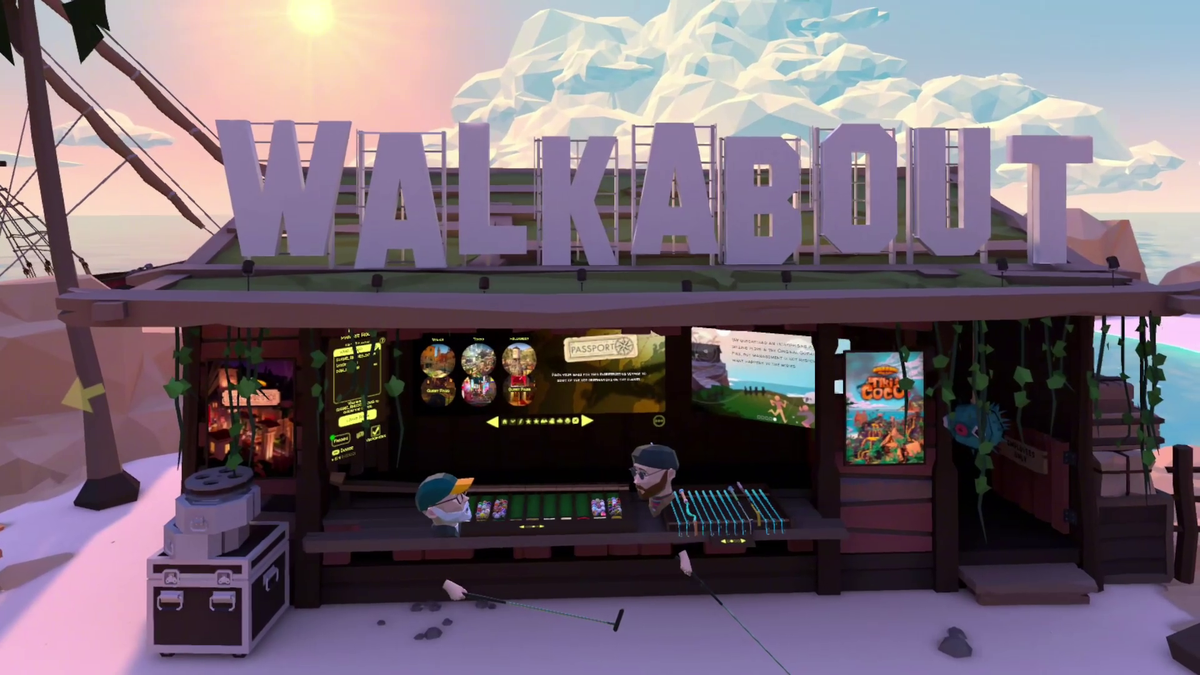
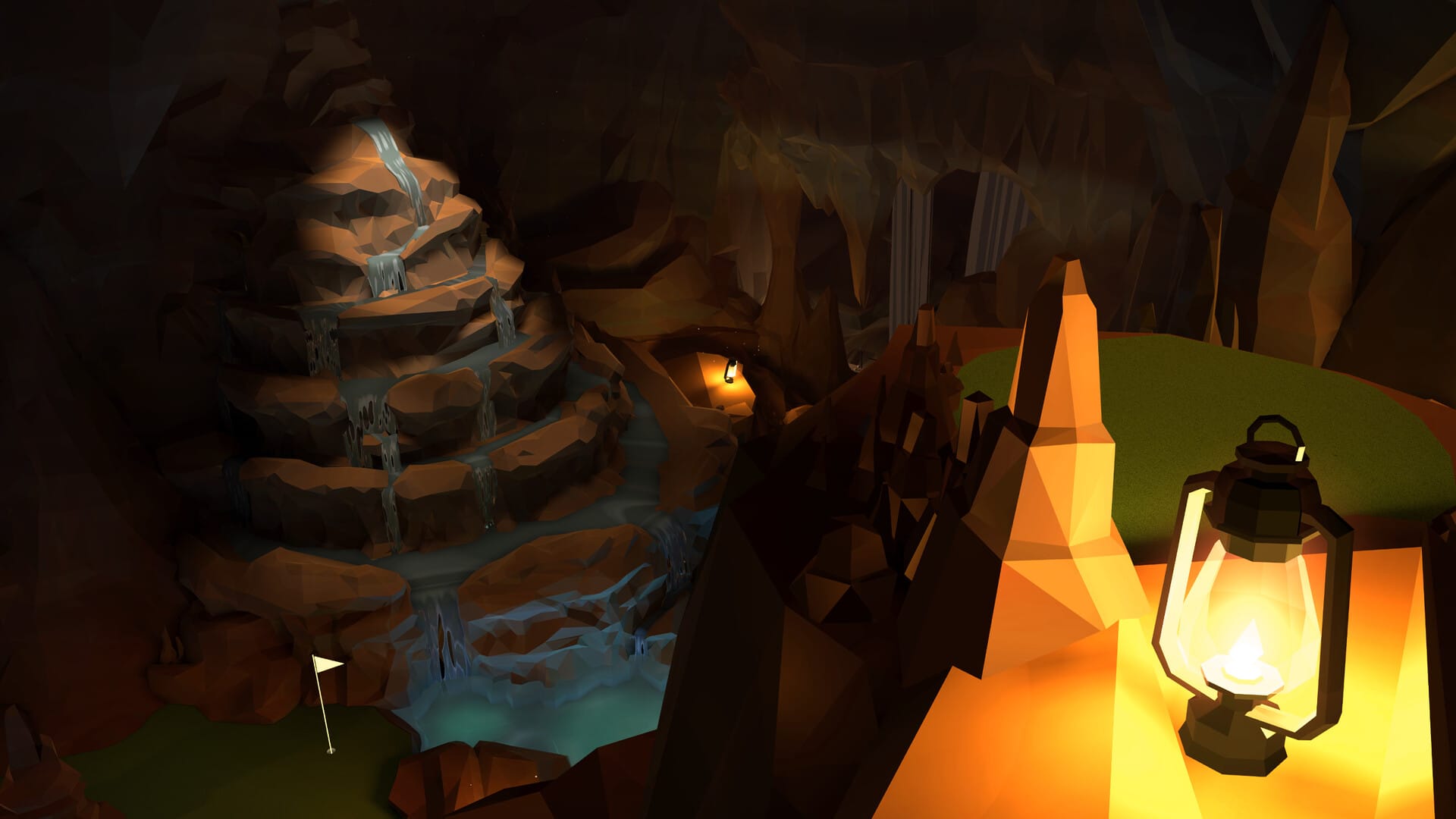
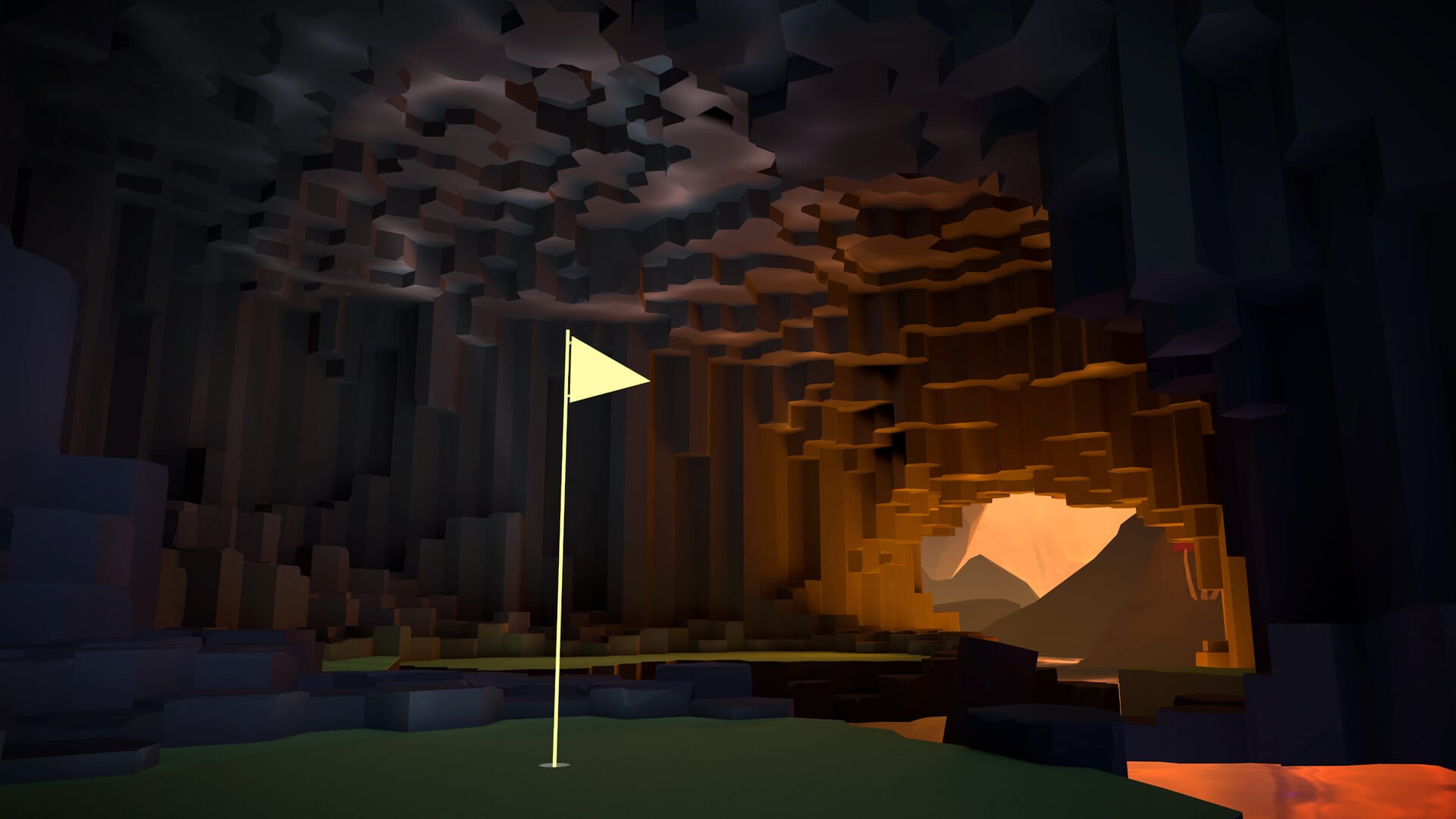
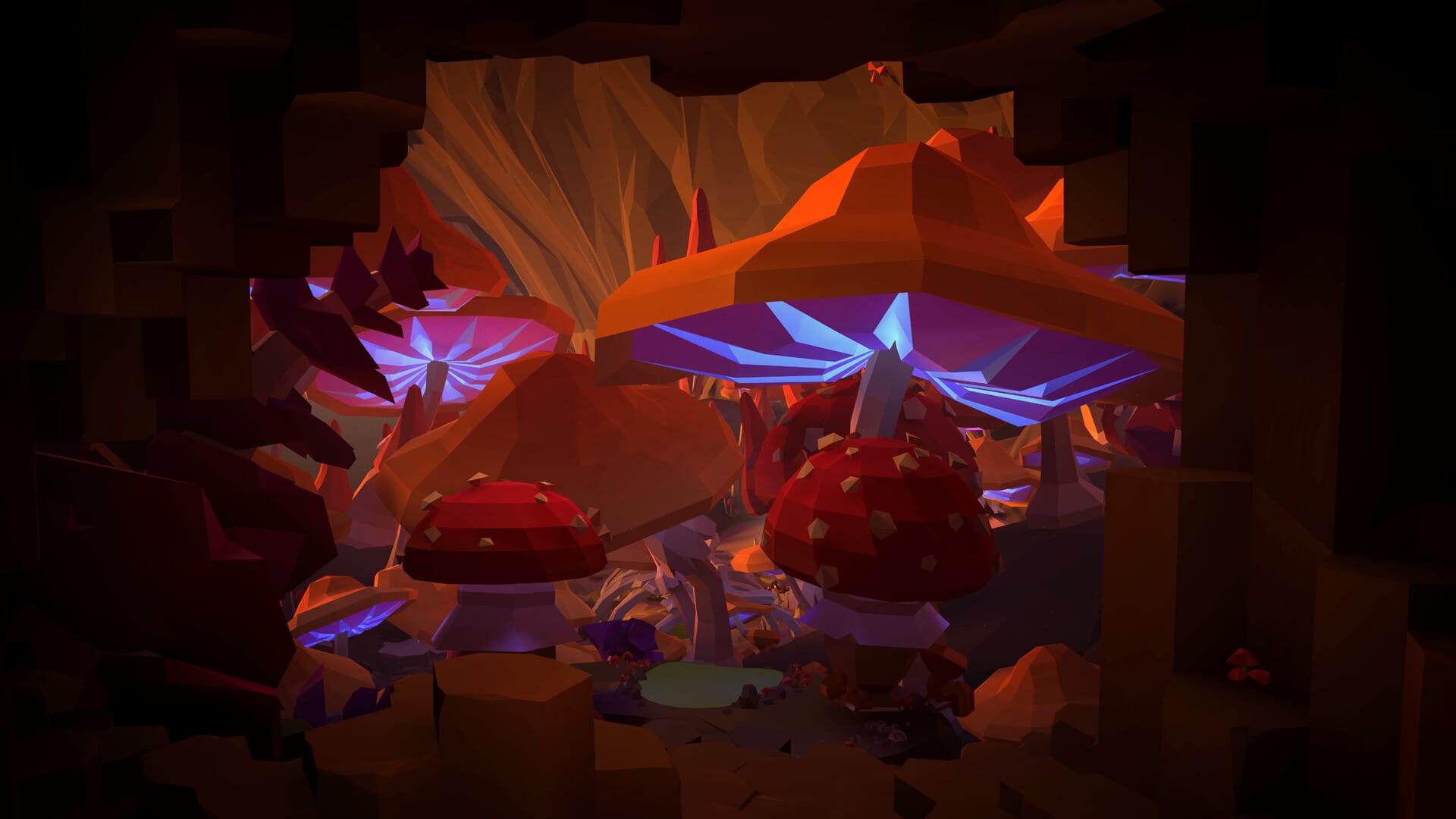
At GDC 2026, we had the chance to chat with Mighty Coconut CEO, Lucas Martell, about his past work in film and the application of those skills to VR.
Before founding Mighty Coconut, Lucas, along with other members of the Mighty Coconut team, spent ten years working in Hollywood. This interview is a fascinating insight into applying the skills learned in Tinseltown to his flagship virtual reality mini golf game.
UploadVR: So, Passport Hollywood, the thirty-ninth course for Walkabout Mini Golf. Number one, congratulations.
Lucas Martell: Thank you.
UploadVR: Did you ever think you were going to get this far when you first started?
Lucas Martell: Definitely not when we first started. I forget at what point we kind of realized that, wait a second we could basically keep doing this for an indeterminate amount of time. But no, that was never the thought when it started. I thought that maybe we’ll get like “oh we’ll get eight courses or something in at the very very beginning and here we are six years later.”
UploadVR: When I spoke to Don Carson, he told me that you and several other people on the team have backgrounds in Hollywood animation and effects before you started in VR. So, with that said, what took so long to get Hollywood on the course list?
Lucas Martell: You know, I think the thing that I love about the Hollywood course is sort of like that it’s really sort of a throwback. It’s kind of the golden age Hollywood. It’s an era that doesn’t really exist. It’s sort of this 50s, 60s where so much was happening with practical effects which are just so much more entertaining to see and golf around as opposed to now when so much of it is happening digitally. And I think that for us, we also just reached a point where we realized wait a second we’ve done so many different courses now and we have so much material to pull from. Why don’t we imagine that a bunch of these courses are just actually like the film version of those courses. Farm some of those assets in a way that would have been one of the most expensive courses we’ve ever done if we had done it 20 courses ago. But now we’ve got all that base material that’s like, “Oh no, now it’s almost more like the greatest hits.”
Walkabout Mini Golf Passport Hollywood
UploadVR: So you just pull it from what existed before.
Lucas Martell: Yeah. Exactly. And we still modify it, we still do a whole bunch to it and it’s still done with a lot of care. But yeah, like I said, it’s more of a greatest hits than anything else.
UploadVR: What was your background specifically at Hollywood before you came in?
Lucas Martell: I was a music major in school and then I started getting in the sound for film and then moved over into color and worked on Sin City and a couple of different things like that around Austin. Then during that, I made a short film called Pigeon Impossible and then sold that to Fox Animation, which became Spies In Disguise, which was the Will Smith and Tom Holland film where Will Smith turns into a pigeon. And so I wasn’t super involved in the production of that, but while that 10-year production was going on, I was then sort of doing development.
So I was doing a lot more screen writing, shopping stuff around. I directed a lot more short form and commercial work. I was doing a little bit of everything, but I will say that the bulk of my time was actually spent, there’s I think the third hole in Hollywood is the development room where you see all the scripts thrown out all over the floor. That was pretty much the world that I lived in for a very long time. Production tended to be a very short chunk of it and like 90% of Hollywood is trying to get your thing made. And it’s sitting in rooms pitching and repitching and trying to just like sitting in story meetings and working all that stuff out. Sadly probably one of the least interesting rooms in Hollywood is where I spent probably most of my time sitting in those pitch meetings.
UploadVR: How much of that of your past skill set was almost like a one to one transfer to VR? How much did you actually have to learn when you got into this side of it?
Lucas Martell: I think that I have done so much animation and hands-on work that the coding was probably one area that I had to learn and I actually don’t do coding anymore. I’ve been shut out. I’m no longer allowed in the kitchen. Anytime I submit a code change, there’s always a couple of eyebrows raised of what fresh hell I’ve unleashed on the game.
I would say that probably the other biggest thing that’s been sort of a learning issue for me [was] just the business of games and how I thought that it would function a lot like Hollywood and it is almost opposite in every single way. And this is more speaking on like the business side of things, but in Hollywood it’s so much that it’s you’ve kind of got the idea, you come in, you do a script and it’s a very linear process, whereas in the games world, it is almost actually more like the old school Hollywood approach where everything is very insular to a studio and you don’t have people coming into a game studio and pitching an idea.
You’ve got someone internally building a prototype, developing something, but it’s all happening internally, which is that’s kind of an old school way. There’s still a couple of like animation studios like Pixar are still Pixar and Disney still kind of do things that way, but yeah, it’s just a different beast than the film world where the script and the story is really the thing that you pass around and shop around and everything.
Walkabout Mini Golf Passport Hollywood Tour
UploadVR: So each course, and especially Hollywood when I did my tour of it, feels like you go on this journey. There’s a story there.
Lucas Martell: You can think of it like three act structure. It’s basically you got your story beats, but you just happen to have eighteen story beats. And sometimes we think more about an actual story if it’s more of a gimmick hole where you’re trying to do something thematic with a hole. Wallace and Gromit would probably be the one that had the most of that like, “Oh no, here is the very clear story beat that happens.” Sometimes though that’s a bit more gameplay. And I would say that there are certain things like Arizona Modern is one where I feel like that is pure gameplay from the design of that one, but even then you still see this bridge sort of like shooting out into the space out the side of the mountain. You see that the whole course and then leading up to that is all kind of building up and getting you excited to finally go back and be able to see this big vista from the other side of it.
So, there absolutely is some screenplay and a structure, especially structural stuff that kind of comes in from the filmmaking world. I also just have to say that Don Carson, who I know did that walk through with you, he is an absolute master of environmental storytelling and I think that he really taught me a lot about how much you can say with very little in terms of just placing assets in a very specific way. And like just you don’t have quite the linear story that I’m used to in film where you’ve got characters and you got a really clear sequence of events. It’s a little bit more general, but it gives you a sandbox to play in. Also Emma Mercado, one of our artists, is also just absolutely fantastic at sort of creating all these beautiful little vignettes with just the prop placement that’s sort of like it seems like such a simple thing, but you can tell when someone who really knows what they’re doing is placing those because it absolutely tells a story visiting a crime scene. You can tell what happened here and why and there’s a whole backstory behind it that’s just amazing if you take the time to really study it.
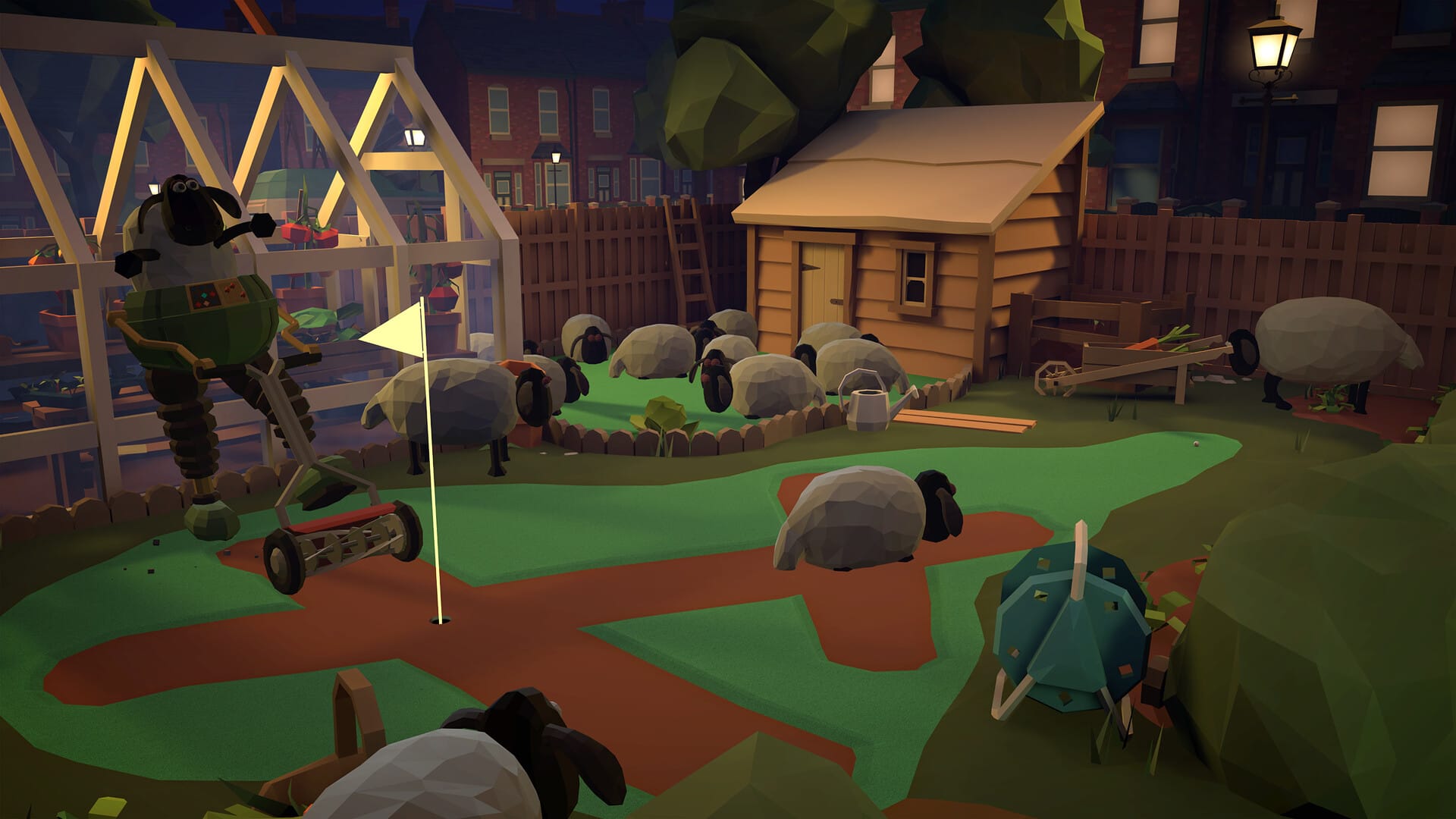
Walkabout Mini Golf’s Wallace and Gromit course
UploadVR: So have there been moments where you’ll design a hole and there’s all these elaborate intricate setups and someone will say, no, just put this prop here and it just fills in that whole gap.
Lucas Martell: Oh yeah, absolutely. And we also do a balance where we always start with the environment in the world first. We do think about gameplay early on, but we usually don’t really nail down the gameplay because for us, it’s more about sort of the placement. Part of the reason that it’s called Walkabout is that it is almost more about visiting this course as a world that you’re supposed to explore or encouraged to explore. And mini golf just happens to be the thing that allows you to or gives you an excuse to sort of go on this particular path, this particular journey. So sometimes the holes do absolutely play into the story and sometimes it’s almost more just like the hiking trail. Those are like the little markers along the way that guide you.
UploadVR: Back to Passport Hollywood for just a second. Obviously, that one holds a deep meaning to you because of your background. Was there another licensed course that really holds a personal touch to you? I asked that because Don said he personally fought for Alice in Wonderland.
Lucas Martell: I didn’t even realize until more recently that I got to check off a couple of bucket list things because when I was a kid, I had wanted to make a journey to the center of the Earth adventure game that was very much inspired by Myst. And then the fact that we got to do an actual Journey to the Center of the Earth course and the actual Myst course checked that little childhood box because I grew up as a child of the 90s and the adventure game back then which that’s where I spent so much of my time. So I’d say that those are probably the two that were maybe the most nostalgic for me.
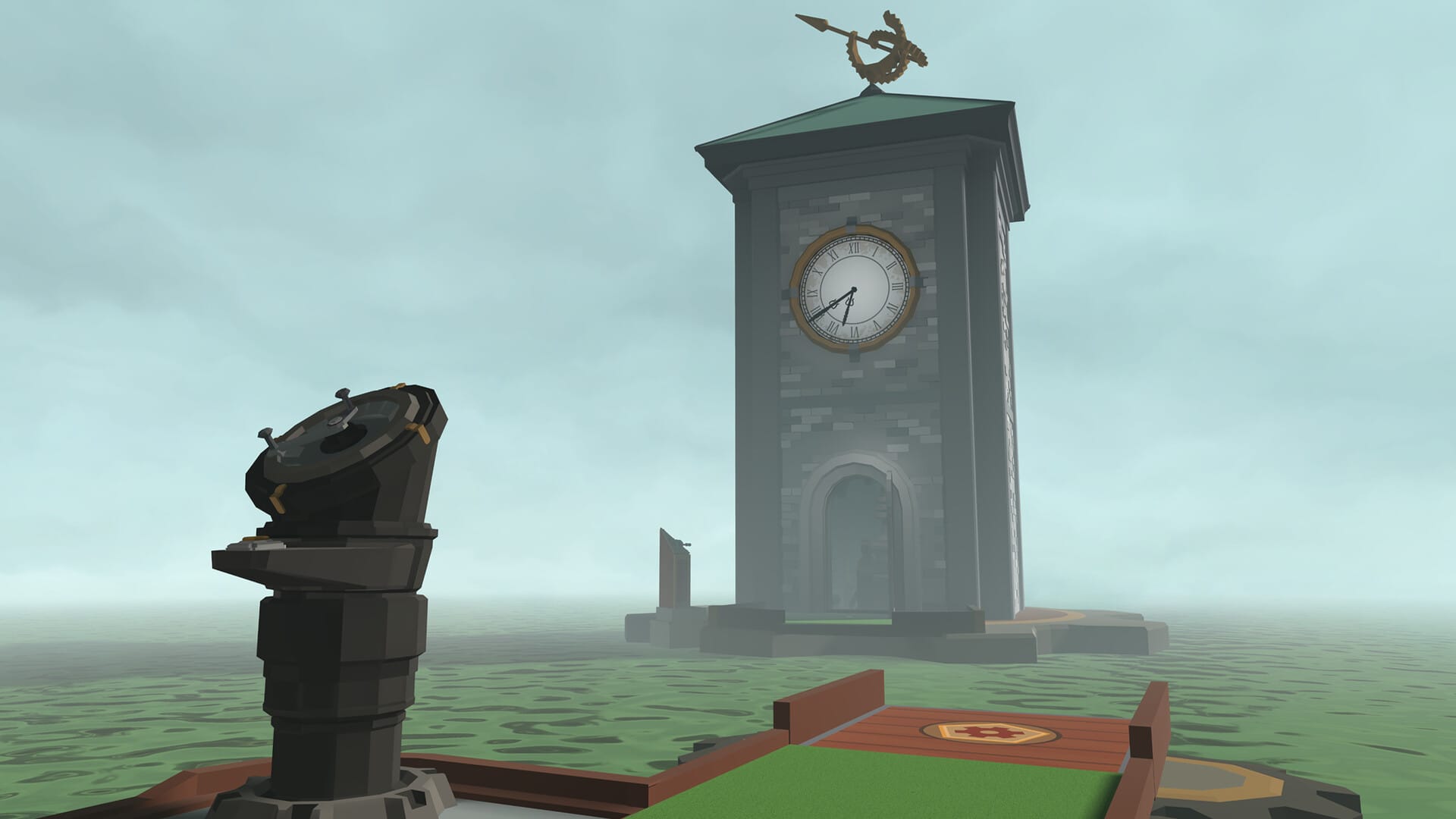
Walkabout Mini Golf’s Myst course
UploadVR: So as you’re conceptualizing these courses, does that happen a lot where a member of the team will say, “hey, I have a deep attachment to this,” similar with Don with Alice In Wonderland?
Lucas Martell: Yeah. Absolutely. So, currently we’ve got four people on the design team. So, myself, Don Carson, Henning Koczy, and Laura Krause. One of the things that we realized probably about a year and a half ago was that every course certainly needs what we call a champion. And we will be at our design retreats that happened about once every 6 months or so and people were all talking about ideas and throwing out things that we want to see. And ultimately we sort of boil that down to a short list of like, okay, here’s what we’re really working on this week. But what we also realized is that if we don’t have someone who raises a hand and says, “I want that to be mine. I want that to be I want to own that. I’m close to it. I know exactly what needs to happen with that,” that if you don’t have that champion, it kind of doesn’t have someone fighting for it. It doesn’t have someone with a really clear vision. So I would say that it mostly comes down to the design team in that sense that it’s usually one of the four of us that has to sort of be the driving force behind it.
Now that’s not to say that the rest of the team isn’t very influential on that, but the core idea of what something is has to come from that design team because that’s the thing that unifies everything and that’s what gives it the skeleton for the rest of the team to hang on, so that when the artists are working on something, they still have a base to work from. They’re not having to invent the story from scratch basically.
UploadVR: Okay, the design retreat you just talked about. I read your AMA on Reddit. There, you said that you already had your courses plotted out for all of 2026 and you’re talking about 2027?
Lucas Martell: Actually, we have all of 2027 figured out. It’s 2028 that we’re starting to work on with the next one.
UploadVR: Wow. Are the design retreats where those decisions get made or you kind of like a specialized lay out the road map for that? Or is that in different places?
Lucas Martell: Yeah, that so the design retreat is usually about one week every six months and it is sort of the hatching grounds for a lot of those. So typically we’ll come out of one of those with about three or four new courses and we’ll usually touch on a couple of existing courses that just need a decision made or a little bit of just figuring out some element to them. And usually how that happens is that people come in with ideas of what they’re wanting to do and we kind of pitch them and we talk back and forth. It’s still a very collaborative thing because I can think of one of the courses that’s coming up, I won’t give away because we haven’t announced it yet, but it was a cool idea, but it was missing a little something.
And what often happens in those design retreats is that someone will raise a hand and say, “I want to do GDC the game.” Like, okay.” Then someone else says like, “Oh, I I see how that could be cool.” Sort of like, “Oh, maybe you could do like you do different types of video games. Like, it’s like you’re walking the show floor or something like that.” This is a terrible idea. We’re not doing this, but then a lot of times we have another element that we often call a twist and sometimes an idea by itself isn’t quite enough to sort of hold a course. So, it’d be like, okay, well, what else could you do because if it’s just in the conference center, that’s not that interesting. Okay. So, place it in virtual reality, place it in the metaverse, do something to sort of make it a lot more cool.
I guess probably the best example is Around The World in 80 Days which there was the thought like “oh you just do holes that each one is sort of like a different country,” which was interesting, but it just it felt a little bland and also a lot of those were like no, we actually want to do a course in Venice. We wanted to do a course in these places. It was right about the time that the passport series was being hatched and we kind of didn’t want to waste all of that and burn through all of that really cool content where like I want to spend a full course in Tokyo. So, we came up with this idea, like let’s imagine it more as the place where the travel is happening from.
So much of that book was about the mechanics of travel and just figuring out how to get from point A to point B and making that the thing and then putting it into the Eiffel Tower. None of that was actually in the book, but it was very apropos because it came directly from the time period that was occurring. Jules Verne was, I believe, involved somewhat in the creation of the Eiffel Tower in the World’s Fair or maybe he just participated. I forget exactly what it was, but there were so many elements that sort of tied it together that none of that was exactly part of the book, but that twist made it such an interesting place to explore and something that was uniquely ours.
Walkabout Mini Golf’s Around The World In 80 Days course
UploadVR: Have you ever been into a situation where you’ll have the course idea, you said you got everything for 2026 and 2027 done. Have you ever like put something on the backburner saying, “Hey guys, this one isn’t fully baked yet. Let’s put this on the backburner and bring another one up.”
Lucas Martell: I would say that we used to do that a lot more. I feel like now we’ve kind of figured that out. We all have sort of a sixth sense of this is ready versus maybe it still needs to cook just a little bit longer. So we don’t do that much anymore. Although there were times in the past where we would shift the order around more or we would be getting somewhere on a course and be like, you know what? This is still missing something. Let’s actually shove that down the line. Let’s move these other couple up. That is sort of chaos for the production team.
So we’ve done a lot less of that lately and a big part of that has also just been we added Laura Krause to the team about a year and a half ago. She’s really proven to be that fourth voice in the room and she also has a different aesthetic than all of us. We needed that balance and we needed that extra person to give us the time to create something. I almost think of our design team like the bullpen and like a baseball team. You know you got your starters and you’ve got some closing pitchers and everyone sort of has a different skill set. It’s about putting the right person in at the right time.
UploadVR: You’re the head of the company obviously, but you also talked about being a champion for certain courses. Sometimes that’s you and sometimes it’s other people. How do you balance being the champion of one course where pretty much the buck stops with you versus having to go be CEO guy and there’s champions for other courses and having to step on their toes versus giving them the creative freedom to build what they want?
Lucas Martell: Yeah, well I would say that I’m the CEO of the company out of necessity because someone had to have the title? Someone had to do it. So I wouldn’t necessarily put myself. That’s not sort of like how my brain naturally works. I would say that the way that I personally balance that is not unlike um directing film or anything like that, which is you want to create an environment where people are able to do their best work, but to also ensure that it will fit together. So the way I always usually think about that is sort of like creating a sandbox. Like you if you just sort of set people loose on a beach and said, “Hey, you know, here’s a bunch of stuff. Go build something.” It’s going to be chaos. Whereas if you as a director, if you just come in and say like, “Okay, we’re going to do a course.” I want to put up the walls of that sandbox and then people know they’re like, “Okay, I can build anything that I want, but I’ve got these constraints within it.”
It’s really about defining those constraints, but then really giving people the freedom to kind of take it and own it. And I mean something that is so unique about our process is that unlike most traditional games where they would come up with a list of assets, you would do concept art for those assets, you would hand them off and each modeler would only work on like one asset at a time. We actually hand the entire course between different people.
So at any given time, so like one of the artists will just like own the course for four or five weeks. Maybe they’re focusing on the architecture. Tad Catalano tends to do a lot of the architecture and he owns the entire course for that time. So if he decides that he needs to move something around, he wants to knock out a wall and open something up for visuals. Like he might raise his hand and say, “Hey, is this okay?” just to make sure he doesn’t step on anybody’s toes. But ultimately he’s got it at the moment. So if he really wants to and believes that it’ll make it that much better, he might just go in and do it and not tell anybody. But that’s part of that trust factor that someone’s not going to destroy something that doesn’t fundamentally make it better. That freedom I think is a big part of what makes Walkabout’s environments especially so cool and visually interesting is that the fact that it is getting lovingly handled in its entirety by so many different people.
UploadVR: I asked Don the same question I’ll ask you now. Is there a specific part of Passport Hollywood that is a little Easter egg or thing that’s especially meaningful to you?
Lucas Martell: I think that for me the one specific thing that I squeezed in there was I mentioned hole number three which is the development meeting room. That building was loosely based off of what had been the music building on the Fox lot. That actually became Fox animation basically. So we were working on Spies In Disguise, that was where all that was happening. It’s not the exact thing, but it was definitely inspired by that. I was like “you know what I spent a whole lot of time going in and out of that building, so let’s memorialize that and represent all of the uh all of the different drafts of that script that got tossed into the bin during the development process.”
Yeah, I remember taking the tour and I thought to myself just from the people that Don was explaining who worked on the course. I know that okay this probably meant something to this person. That probably meant something to that person. Just as we’re going through different rooms like the props room and the art room that’s great because you can tell a lot of care went into that. That’s awesome. You love to see that. Honestly I don’t know half of the stuff is in there. That’s one of the other big things, but also that there’s so many in jokes and Easter eggs and those little details that people are putting in that because most of my focus ends up being on the very front and just a little bit towards the very end of it.
UploadVR: So, I’d be remiss if I didn’t talk about the general state of the industry. Gaming’s had a tough time in the last three years with layoffs and studio closures and Mighty Coconut has not been immune to that. So, in the course of your restructuring, you said that some things were going to be scaled back. So how do you prioritize [projects] while having to run a little bit leaner now due to where the state of the industry is?
Lucas Martell: Well, because Walkabout is a mini-golf game, we really decided to prioritize the mini-golf. Which makes a lot of sense. We had been doing a lot of other things that I still absolutely love and there’s still a few things that we are going to be releasing because they had been in development or we’re even getting basically close to done. So, there will be a little bit of a tail end of some of those extra non-mini-golf things that we’re going to be announcing and launching here soon. But, a lot of that was frankly experiments. We were trying to see what we could do, what the audience responded to, and would people spend time doing some of these other things beyond just mini golf. Some of those were successful, some of them weren’t as popular, but I think that we got a lot of what we needed out of them.
One of the other things we also realized is that the amount of time that we were spending was starting to it was taking a lot of time and effort to sort of like create those and add those and polish those. It was less about the actual effort that it took to make each of those in terms of like putting it into the game. It was more that just the tracking of all those things. And like suddenly you’ve got instead of just like a few big plates which of course are spinning, you’ve got like fifty or sixty little tiny plates. Like oh yeah, we’ve got to launch the slingshots on that course this week. Then next week, we’ve got to do this, which means you’ve got to do all the marketing art, all the social support. QA has to check it. We really didn’t fully or at least I didn’t fully wrap my head around how much of that ancillary stuff would go into actually launching all that stuff on an individual basis. So, that’s really ultimately a lot of the stuff that we’ve pulled back from. So, I don’t think that a lot of fans will necessarily notice a difference other than those who are really paying attention to all that extra stuff. That was unfortunately one of those areas that we just we absolutely had to pull back on because of the amount of resources that it was uh that it was taking out.
UploadVR: Walkabout started several years ago and this industry changes quite often. What do you think has kept Walkabout steady and relevant as you move through, probably two or three different generations of players by now?
Lucas Martell: I would say two things. I think the social side of it and the fact that so many people are able to meet up with either strangers or, for most people, it’s people playing with others that they know and it may be physically distant. We’ve also had a lot of couples who played together and I saw the wedding. That was actually two strangers who met in Walkabout. Yeah, so they actually met as strangers and then they got married after that. The social side of it was something that I had not intended for the game to become when I first made it. In fact, it was kind of a fluke because Oculus at the time pushed to really add multiplayer. At the time, it was only a Quest 1 and I was like “there are hardly any headsets out there. Why do we need to add multiplayer to this one?” I didn’t realize that the Quest 2 was literally going to launch like two weeks after Walkabout. So, thank you to them for calling that out.
The second thing that has really made Walkabout stay relevant is the world building and the care and the fact that you can go into one of these and even though it’s still mini golf, it’s still fundamentally the same mechanic, you’re stepping into a totally different world every single time. And where a lot of games are maybe more constrained that like if it’s set in a post apocalyptic world, you’re very limited on the range of different types of worlds that you can convey that fit the story. But because with us, it’s just a minigolf game. We can go drastic. You can have Sweetopia on one and then Journey To The Center Of The Earth. Each of them can have their own identity and I think that’s kind of just been luck that worked out so well, but once we learned that, I think we’ve absolutely been pushing that and been pushing ourselves to do better, more interesting worlds because that’s also the thing that I think keeps people coming back.
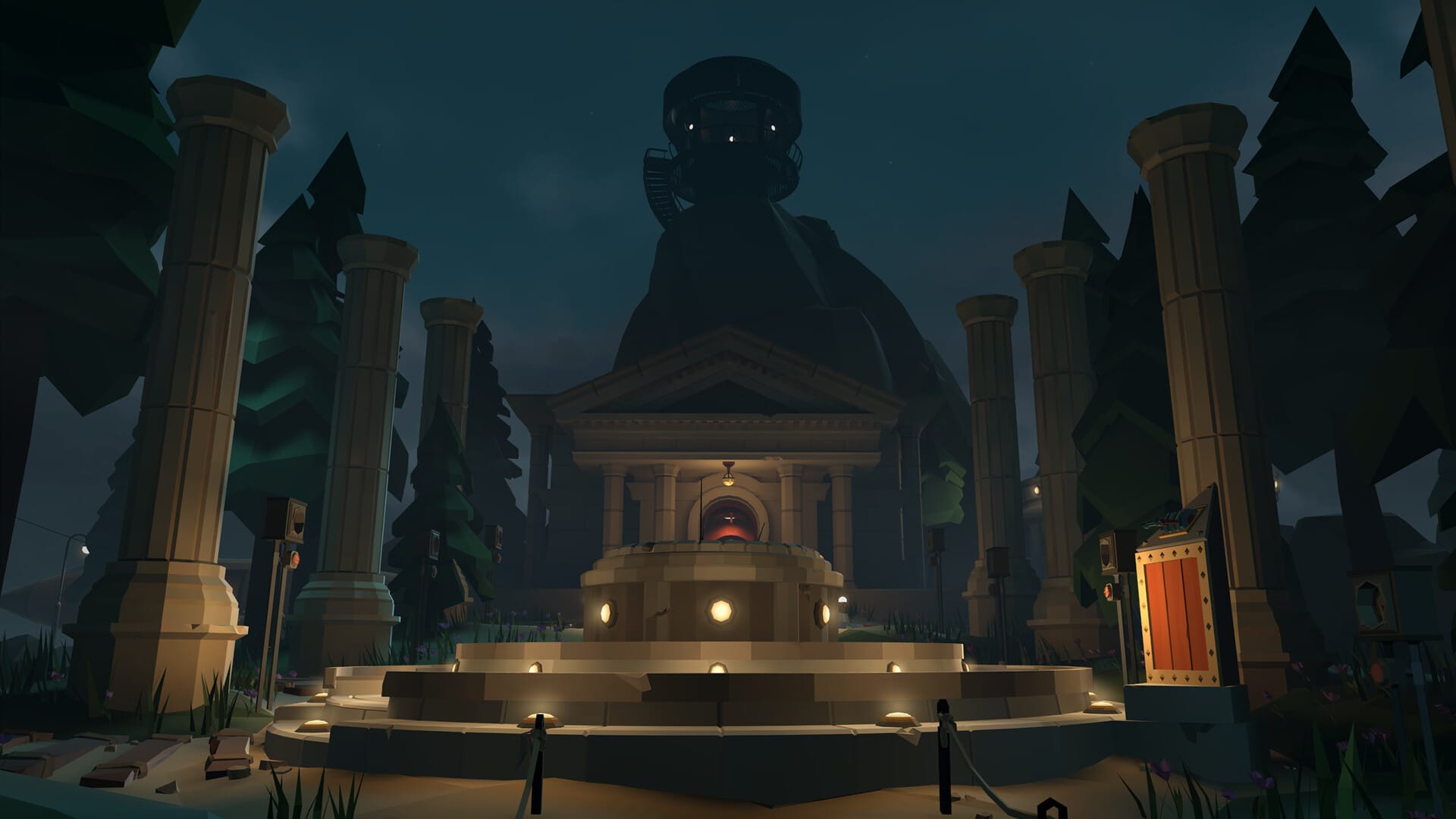
Walkabout Mini Golf’s Journey to the Center of the Earth course
UploadVR: Moving forward, what are you excited about for Walkabout?
Lucas Martell: For the game personally, I am really excited because I actually haven’t gotten a chance to be a course champion of course in quite a while. There is one coming up that I finally get to get my hands dirty and I get to do a lot of the hands-on stuff that I’ve been missing for a long time. So selfishly I am really, really excited to be able to get back in and do some of the hands-on stuff. I will let you know when that one comes out.
UploadVR: Lucas Martell, pleasure to meet you. Thank you so much for your time. I appreciate it.
Another massive data breach has compromised millions of Americans’ healthcare data and sensitive information. Navia Benefit Solutions, a benefits administrator for more than 10,000 U.S. employers, has disclosed a hack that affects nearly 2.7 million individuals, according to a March 18 filing with the Maine Attorney General.
Navia’s services include software and customer support for the administration of everything from Flexible Spending Accounts (FSAs) and Health Savings Accounts (HSAs) to commuter and education benefits.
What happened with the Navia Benefit Solutions data breach?
On Jan. 23, Navia identified “suspicious activity” on its systems, leading to the discovery that hackers had access to some of the organization’s data between Dec. 22, 2025, and Jan. 15, 2026. During this time, threat actors were able to exfiltrate a significant amount of personally identifiable information (PII), which may include the following:
Full name
Date of birth
Social Security Number (SSN)
Phone number
Email address
Health plan information
The compromised health plan data may include Health Reimbursement Arrangement (HRA) participation, Consolidated Omnibus Budget Reconciliation Act (COBRA) enrollment information, and information about users’ FSAs
Navia has said that no claims or financial data were included in the breach, though the information stolen is commonly used for social engineering attacks and identity theft.
What to do if you were affected by the Navia Benefit Solutions security breach
Navia began notifying affected individuals on March 18, so keep an eye out for a letter from Navia Benefit Solutions. If your data was included in the breach, you are eligible for one year of identity monitoring services through Kroll. Your letter will include information about how to enroll, including the deadline to sign up for services and your unique activation code. You’ll need to activate your account online at enroll.krollmonitoring.com/redeem.
As always, a major data breach is a good reminder to lock down your identity. Freeze your credit (this should be your default unless you are actively applying for a new credit line) and set up a one-year fraud alert, which adds extra friction if someone tries to apply for credit in your name. Check your credit report and financial accounts regularly for suspicious activity, and report fraud immediately to your financial institution. You can also file an identity theft report with the Federal Trade Commission and your local police department.
Members of the Manjaro Linux distribution’s community have published
a “Manjaro 2.0 Manifesto”
that contains a list of complaints and a demand to restructure the project to provide
a clear separation between the community and Manjaro as a company. The manifesto
asserts that the project’s leadership is not acting in the best interests of the
community, which has caused developers to leave and innovation to stagnate. It
also demands a handover of the Manjaro trademark and other assets to a
to-be-formed nonprofit association. The responses on the Manjaro forum showed widespread support
for the manifesto; Philip Müller, project lead and CEO of the Manjaro
company, largely stayed out of the discussion. However, he surfaced
on March 19 to say he was “open to serious discussions“, but only
after a nonprofit had actually been set up.
Google just announced some notable upgrades to the Google Play gaming experience on Windows PCs, with improvements that cover game discovery and purchases, and the news that a broader number of paid titles are now becoming available for the desktop.
While an official Windows client for Google Play apps and games has been available for several years, these latest updates mean the experience is more polished than ever before.
There are four main changes for gamers wanting to play Android games on Windows.
First, Google is “actively expanding” the number of paid, premium games that are fully optimized for PCs. Android games don’t get this optimization by default, and need to be specifically tweaked to support PC gaming (keyboard controls and all), so more titles that meet this criteria will be very welcome.
Second, there’s a new PC section in the Play Store Games tab on mobile devices, so you can actually see which titles are going to be cross-platform compatible before you install them.
Third, you only need to buy a game once to use it on both mobile and desktop (something that wasn’t always the case in the past).
The last upgrade is Game Trials. On selected titles, you’ll be able to dive in and start playing for free—once you reach a certain limit in terms of time or progress, you’ll then be asked if you want to buy the game (and your progress will be carried over, if you do decide to make the purchase).
Credit: Lifehacker
It’s not clear from the announcements how long this will all take to roll out, but Google says games such as Moonlight Peaks, Sledding Game, and Low-Budget Repairs will be available on PC in the “coming months.” None of those games are live in the Play Store app on Android yet.
There’s a lot to like about running Android games on the desktop—not least a much bigger screen, and keyboard and mouse input options—so if you’re keen to dive in, here’s how you can give it a try.
How to Android games on your PC
Get started by visiting the Google Play Games web portal on your Windows PC. Follow the download prompts, and you get taken through the process of installing the software and entering your Google account details (for syncing purposes). Assuming you have actually played a game on your Android device at some point, your profile and stats are carried over to the desktop.
At the end of the installation process, you’ll be shown a list of games you’ve already played that are available on Windows. You can also find this list later by clicking From your library on the home page of the Google Play Games app. The majority of the titles I’ve played on Android seem to be present and correct.
Credit: Lifehacker
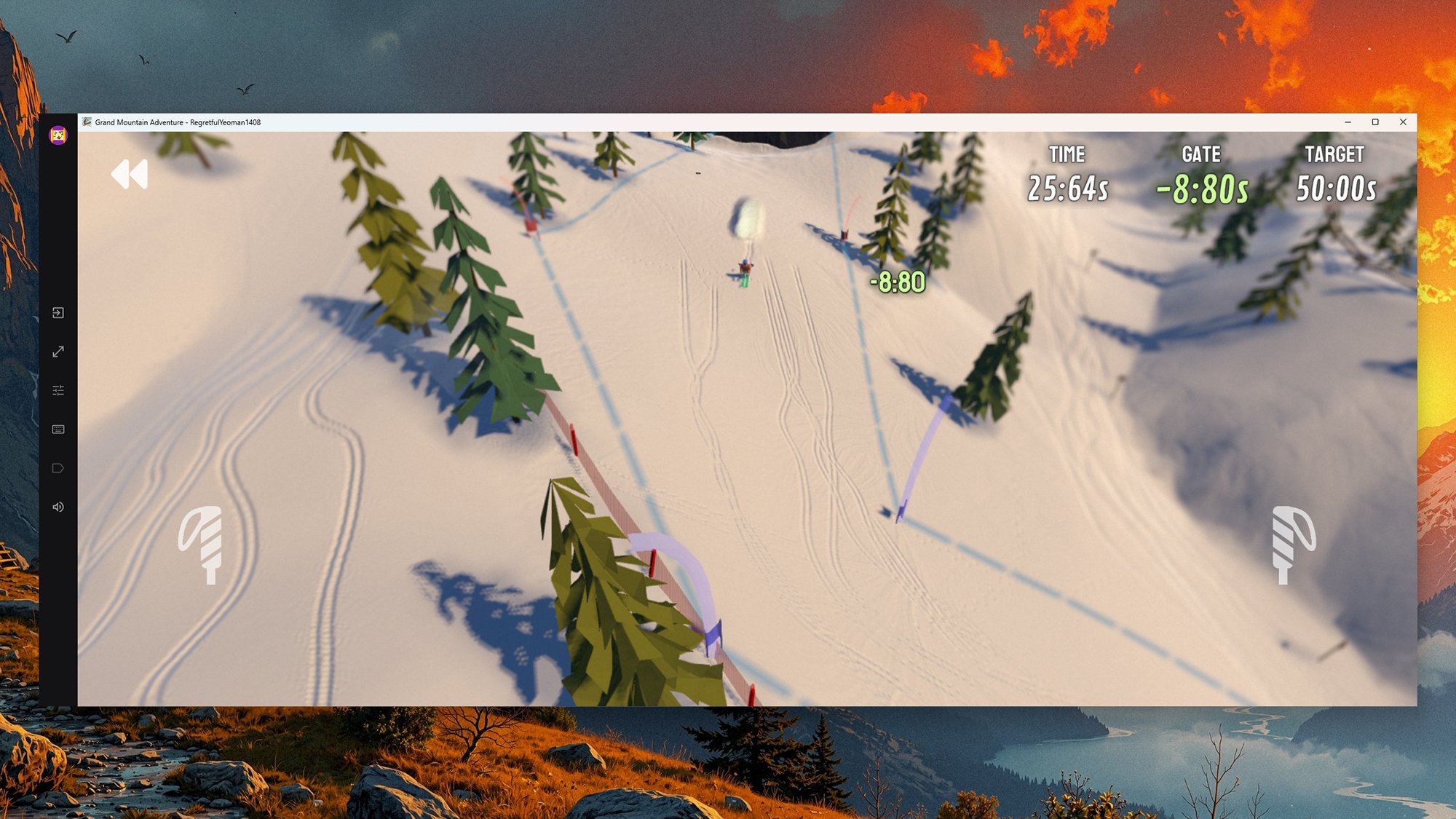
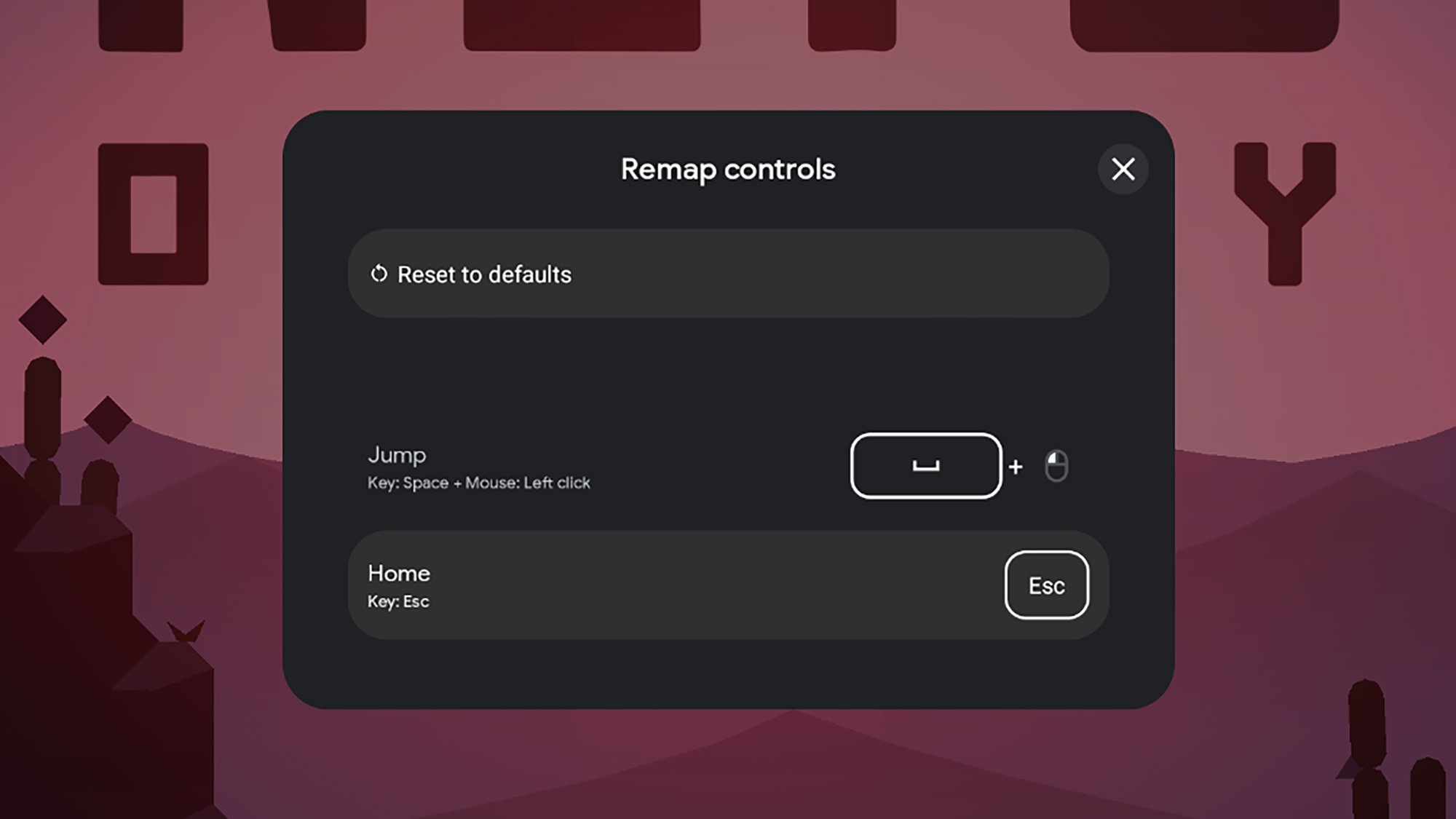
The playing experience is, on the whole, intuitive and straightforward. Most of the games I tried I had no problems with, although sometimes the desktop controls can take some working out: Click the keyboard icon to the left of the game window to remap these (you might also find some control settings within the games themselves).
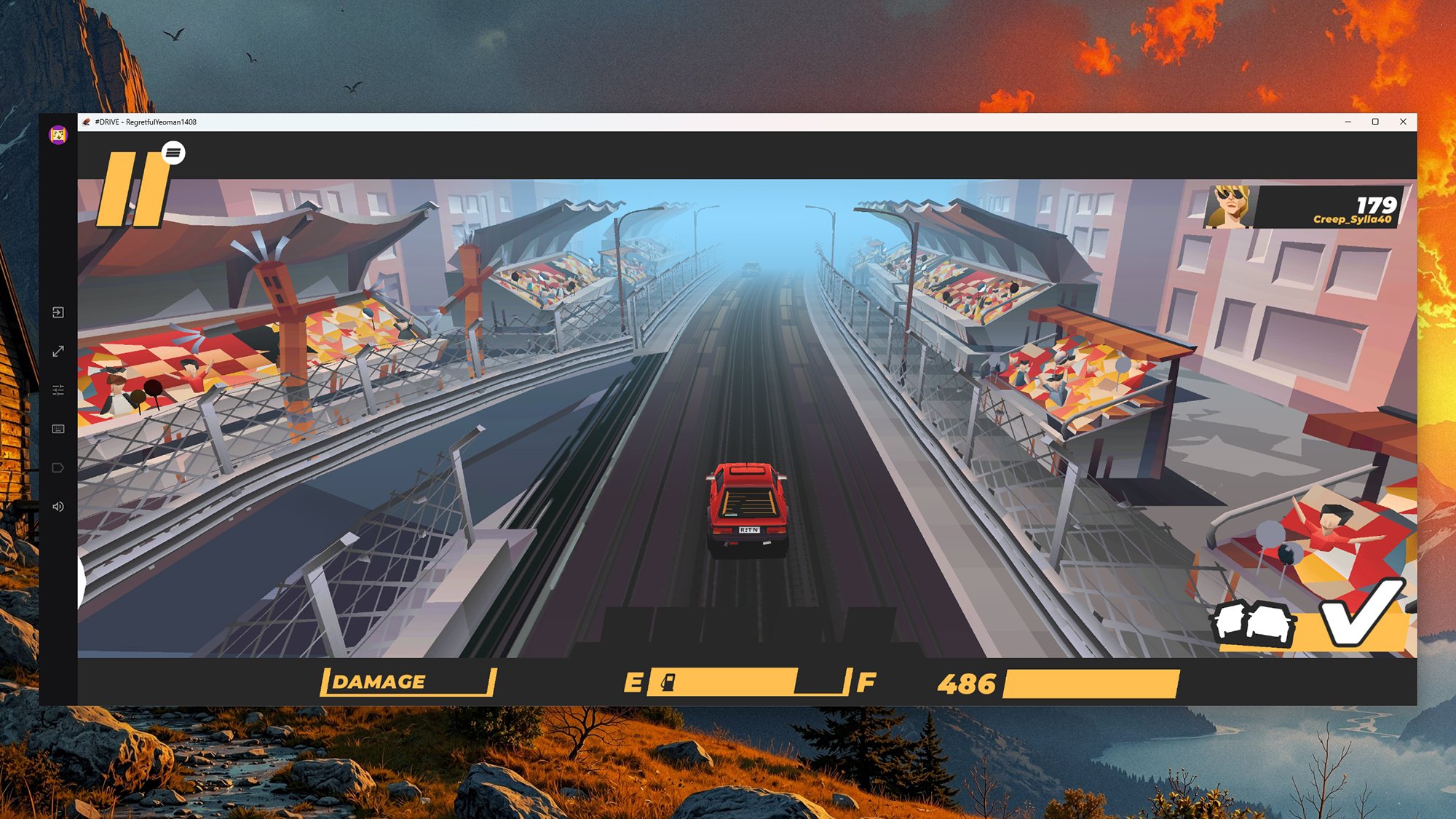
You can also click the visual settings button (the sliders icon) to change how the game is displayed on screen, and there’s a volume control button on the left too. Games tend to stick to their default orientation from mobile, whether that’s landscape or portrait, but you can adjust the size of the gaming window.
The games I tried from my own library were rather hit and miss when it came to syncing up—some carried my progress over from my phone and some didn’t, so it seems likely that the onus is largely on developers to implement this right now (and it’s something Google clearly wants to improve).
#DRIVE on the PC. Credit: Lifehacker
From the home page, click the magnifying glass icon to explore games from the desktop: You can filter out titles that haven’t been optimized for PC, and from what I can see, there’s already plenty to choose from. I didn’t find any Game Trials available at the time of writing, so it seems those are still in the pipeline.
Android games on PC can be a lot of fun—especially those that work properly with keyboards or gamepads—and I can see this being something a lot of gamers should set up, especially given the latest improvements. And when you’re not sitting at your Windows PC, you can carry on gaming as normal on your phone or tablet.
Longtime Slashdot reader AmiMoJo shares a report from CNN: The co-founder of Super Micro Computer and two others were charged with diverting $2.5 billion worth of servers with Nvidia’s artificial intelligence chips to China, in violation of U.S. laws barring exports to that country without a license. Yih-Shyan Liaw, known as Wally; Ruei-Tsang Chang, known as Steven; and Ting-Wei Sun, known as Willy, were charged with conspiring to violate export control laws, smuggling goods from the U.S. and conspiring to defraud the U.S.
Liaw, who co-founded Super Micro Computer and served on its board of directors, was arrested Thursday in California and released on bail. Sun, a contractor, is held awaiting a detention hearing. Chang, who worked in the Taiwan office of Super Micro, remains at large. […] According to the indictment, the men used a pass-through company based in Southeast Asia to place orders to obscure that the servers would end up in China. The men worked with executives at the pass-through company to provide false documents to the server manufacturer to further the deception, the indictment said. They used a shipping and logistic company to repackage the servers into unmarked boxes to conceal their contents before they were shipped to China.
To deceive the manufacturer’s auditors, who checked the pass-through company for compliance with export laws, the men allegedly used “dummy” nonworking copies of the servers when the actual servers were on their way to China. Two of the defendants allegedly worked to stage the dummy servers at a warehouse rented by the pass-through company, according to the indictment. Sun took photos and videos of the staged servers to one of the compliance auditors who instead of conducting the audit was “off-site enjoying entertainment paid for” by the pass-through company, according to the indictment. In another instance, prosecutors said surveillance cameras documented individuals using hair dryers to remove labels and add labels and serial number stickers to the boxes and dummy servers. Super Micro said it’s fully cooperating with the investigation, but that hasn’t prevented its stock from plunging. It’s down nearly 30% following the news.
The company issued the following statement: “The conduct by these individuals alleged in the indictment is a contravention of the Company’s policies and compliance controls, including efforts to circumvent applicable export control laws and regulations. Supermicro maintains a robust compliance program and is committed to full adherence to all applicable U.S. export and re-export control laws and regulations.”