Superagers’ ‘Secret Ingredient’ May Be the Growth of New Brain Cells

alternative_right shares a report from ScienceAlert: According to a study of 38 adult human brains donated to science, superagers — people who retain exceptional memory as they age — have roughly twice as many immature neurons as their peers who age more typically. Moreover, people with Alzheimer’s disease show a marked reduction in neurogenesis compared to a normal baseline. […]

Led by researchers at the University of Illinois Chicago, the team set out to examine a variety of postmortem hippocampal tissue samples to see if they could identify markers of neurogenesis — and if different groups had any notable differences. The brain samples were donated from five groups: eight healthy young adults, aged between 20 and 40; eight healthy agers, aged between 60 and 93; six superagers, aged between 86 and 100; six individuals with preclinical Alzheimer’s pathology, aged between 80 and 94; and 10 individuals with an Alzheimer’s diagnosis, aged between 70 and 93. The young healthy adult brain tissue was first analyzed to establish the neurogenesis pathways in the adult brain. Then, they analyzed 355,997 individual cell nuclei isolated from the hippocampus, searching for three different stages of cell development: Stem cells, which can develop into neurons; neuroblasts, which are stem cells in the process of that development; and immature neurons, on the verge of functionality. The results were striking.

“Superagers had twice the neurogenesis of the other healthy older adults,” [says neuroscientist Orly Lazarov of the University of Illinois Chicago]. “Something in their brains enables them to maintain a superior memory. I believe hippocampal neurogenesis is the secret ingredient, and the data support that.” That’s an interesting result on its own, but the data from the individuals with preclinical Alzheimer’s pathology and Alzheimer’s diagnoses is where the real meat of the study sits. In the preclinical group, subtle molecular changes hinted that the system supporting new neuron growth was beginning to falter. In the Alzheimer’s group, a clear drop in immature neurons was evident. A genetic analysis of the nuclei also showed that superager neural cells have increased gene activity linked to stronger synaptic connections, greater plasticity, and brain-derived neurotrophic factor, a critical protein for neural survival, growth, and maintenance. Taken together, these three things can be interpreted as resilience. The research has been published in the journal Nature.


Read more of this story at Slashdot.

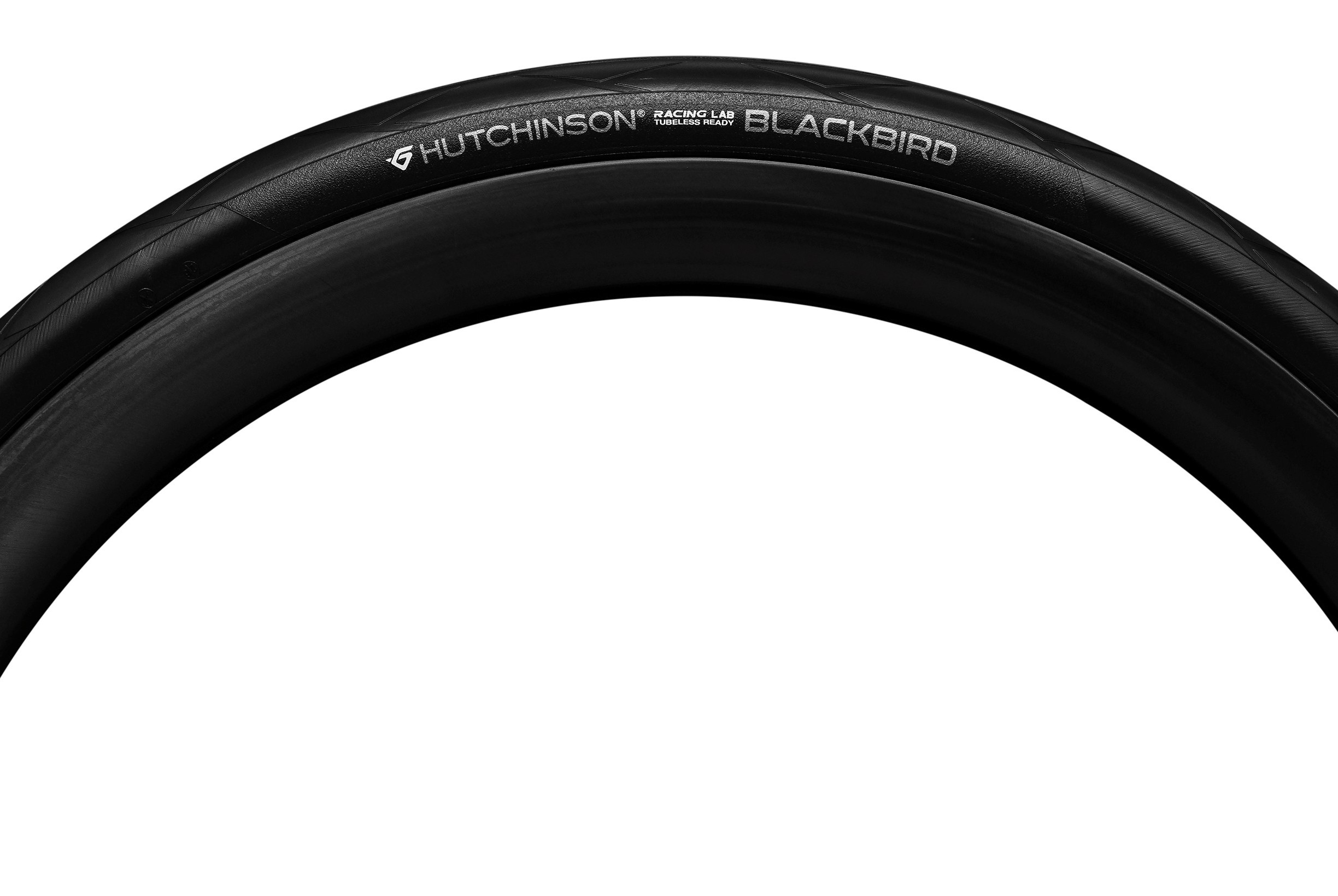
You need 32mm+ tyres on your road bike, according to independent testing of new Hutchinson Blackbird

Hutchinson has added new wider tyres to its Blackbird range, with 32mm and 34mm widths now available for all Blackbird variants: the Blackbird Race, standard Blackbird and Blackbird All Season.

There are two pieces of good news. First, the wider tyres are the same price as narrower options and, second, Hutchinson says independent testing shows the 32mm tyres roll 5% faster than the same tyre in a 30mm width.

According to Hutchinson product manager, Martin Chuchu: “The industry believed that wider tyres would hinder performance. We wanted to challenge that. With the 32mm and 34mm Blackbirds, we want to demonstrate precisely that this vision is outdated. 

“A wider tyre performs better: it filters vibrations, provides damping, and, above all, delivers a level of stability you feel immediately, especially in high-speed corners.“

Faster than a 30mm tyre

Hutchinson cites added cornering grip and stability from the added width.

Wider tyres are increasingly taking over, not just for amateur riders but for the pros, too. However, rather than launching a me-too product, Hutchinson wanted to prove its new widths offer an advantage over narrower tyres.

So, it sent its 30mm and 32mm tyres for independent testing, which found a 5% gain in efficiency for the wider tyre. There were also measured improvements in comfort and grip, as you might expect.

Hutchinson highlights three benefits of its new wider tyres: rolling resistance, grip and stability, and ride comfort. It says the energy saved from the lower rolling resistance and reduced fatigue far outweigh any aerodynamic penalty from the increased tyre width. It’s also a proponent of wider rims to enable you to lower your tyre pressure further.

It suggests riders should choose a 32mm tyre for performance or a 34mm tyre for training or racing on damaged or cobbled roads.

That ties in with our opinion here at BikeRadar. Only last weekend, Warren Rossiter documented his move to tyres of 30mm or more, with his newest bike fitted with 32mm rubber. 

For him, it’s not about rolling resistance though, but the abysmal state of UK roads, where a wider tyre can help with ride comfort and stability.  

It’s not only Hutchinson that’s going wider, with Continental launching a 35mm option for the GP5000 S TR in February and Pirelli puffing up its P Zero Race TLR to 40mm at the end of 2024.

Blackbird tyre widths and prices

The new 32mm and 34mm widths are available across the Blackbird range.

The new tyre widths are available across Hutchinson’s three Blackbird tyre types. Hutchinson was a pioneer of tubeless and all three are tubeless-ready.

The Blackbird Race tyre is now available in 28, 30, 32 and 34mm widths, priced at £69.99 / €79.99.

The Blackbird all-rounder tyre adds a 26mm width if you’re still old-school or your bike lacks the clearance to go wider, as well as black and tan sidewall options, and is priced at £61.99 / €69.99.

The Blackbird All Season tyre, aimed at wet and cold conditions, has the same 28, 30, 32 and 34mm widths as the Blackbird Race and is priced at £61.99 / €69.99.

OpenAI will amend Defense Department deal to prevent mass surveillance in the US

OpenAI’s Sam Altman said the company will amend its deal with the Defense Department (or the Department of War) to explicitly prohibit the use of its AI system on mass surveillance against Americans. Altman has published an internal memo previously sent to employees on X, telling them that the company will tweak the agreement to add language to make that point especially clear. Specifically, it says:

“Consistent with applicable laws, including the Fourth Amendment to the United States Constitution, National Security Act of 1947, FISA Act of 1978, the AI system shall not be intentionally used for domestic surveillance of U.S. persons and nationals.

For the avoidance of doubt, the Department understands this limitation to prohibit deliberate tracking, surveillance, or monitoring of U.S. persons or nationals, including through the procurement or use of commercially acquired personal or identifiable information.”

Altman has also claimed in the memo that the agency affirmed that its services will not be used by its intelligence agencies, including the NSA, without a modification to their contract. He added that if he received what he believed was an unconstitutional order, he would rather go to jail than follow it.

In addition, the OpenAI CEO has admitted in the memo that the company shouldn’t have rushed to get the deal out on Friday, February 27, since the issues were “super complex and demand clear communication.” Altman explained that the company was “trying to de-escalate things and avoid a much worse outcome” but it “looked opportunistic” in the end. If you’ll recall, OpenAI announced the partnership shortly after President Trump ordered all US government agencies to stop using Claude and any other Anthropic services. To note, Anthropic started working with the US government in 2024.

The Defense Department and Secretary Pete Hegseth had been pressuring Anthropic with to remove its AI’s guardrails so that it can be used for all “lawful” purposes. Those include mass surveillance and the development of fully autonomous weapons. Anthropic refused to bow down to Hegseth’s demands and in a statement said that “no amount of intimidation or punishment” will change its “position on mass domestic surveillance or fully autonomous weapons.” Trump issued the order as a result. The Defense Department had also taken the first steps to designate Anthropic as a “supply chain risk,” which is typically reserved for Chinese companies believed to be working with their country’s government.

Altman said that in his conversations with US officials, he reiterated that Anthropic shouldn’t be designated as a supply chain risk and that he hoped the Defense Department would offer it the same deal OpenAI agreed to. In an AMA session on X over the weekend, Altman clarified that he didn’t know the details of Anthropic’s agreement and how it differed from the one OpenAI signed. But if it had been the same, he thought Anthropic should have agreed to it.

After the news broke out about OpenAI’s deal, Anthropic climbed its way to the number one spot of the App Store’s Top Free Apps leaderboard, beating out both ChatGPT and Google Gemini. Anthropic, capitalizing on Claude’s sudden popularity, launched a memory import tool to make switching to its chatbot from another company’s easier. Meanwhile, uninstalls for ChatGPT’s jumped by 295 percent day-over-day, according to Sensor Tower.

Here is re-post of an internal post:

We have been working with the DoW to make some additions in our agreement to make our principles very clear.

1. We are going to amend our deal to add this language, in addition to everything else:

“• Consistent with applicable laws,…

— Sam Altman (@sama) March 3, 2026

This article originally appeared on Engadget at https://www.engadget.com/ai/openai-will-amend-defense-department-deal-to-prevent-mass-surveillance-in-the-us-050637400.html?src=rss

DFI IRN556 3.5-inch SBC supports Atom x7000RE and Twin Lake CPUs

DFI has introduced the IRN556, a 3.5-inch single board computer supporting Intel Atom x7000RE “Amston Lake” processors and Intel Processor N-series “Twin Lake” parts. The board targets industrial and embedded deployments requiring extended temperature operation and flexible I/O expansion. The IRN556 supports Intel Atom x7211RE, x7433RE, and x7835RE processors with up to eight cores and […]

Iowa County Rolls Out Extensive Zoning Rules For Data Centers

Linn County, Iowa has adopted what may be one of the nation’s strictest local zoning ordinances for data centers, requiring detailed water studies, formal water-use agreements, 1,000-foot residential setbacks, noise and light limits, and infrastructure compensation. “But seated beneath a van-sized American flag hanging from the rafters of the drafty Palo Community Center gymnasium, residents asked for even stronger protections,” reports Inside Climate News. “One by one, they approached the microphone at the front of the gym to voice concerns about water use, electricity rates, light pollution, the impacts of low-frequency noise on livestock, and the county’s ability to enforce the terms of the ordinance. Some, including Dorothy Landt of Palo, called for a complete moratorium on new data center development.”

Landt asked: “Why has Linn County, Iowa, become a dumping ground for soon-to-be obsolete technology that spoils our landscape and robs us of our resources? While I admire the efforts of the Board of Supervisors to propose a data center ordinance, I would prefer to see all future data centers banned from Linn County.” From the report: The county is already home to two major data center projects, operated by Google and QTS. Both are located in Cedar Rapids, Iowa’s second-largest city, and are therefore subject to its laws. The new ordinance would apply only to unincorporated areas of the county, which make up more than two-thirds of its geographic footprint. […] In drafting the ordinance, [Charlie Nichols, director of planning and development for Linn County] and his staff drew on the experiences of communities nationwide, meeting with local government officials in regions that have seen massive booms in data center development, including several counties in northern Virginia, the “data center capital of the world.”

As data center development balloons, many communities that initially zoned the operations as warehouses or standard commercial users are abandoning that practice, Nichols noted. The extreme energy and water demands of data centers simply cannot be accounted for by existing zoning frameworks, he said. “These are generational uses with generational infrastructure impacts, and treating them as a normal warehouse or normal commercial user is just not working.” […] The Linn County, Iowa, ordinance goes one step further than tightening existing zoning rules. Instead, it creates a new, exclusive-use zoning district for data centers, granting county officials the power to set specific application requirements and development standards for projects. No other counties in the state have introduced similar zoning requirements, said Nichols. In fact, few jurisdictions nationwide have. […]

From its first reading to final adoption, the ordinance has expanded to include language setting light pollution standards, requiring a waste management plan, including the Iowa DNR in the water-use agreement to address potential well interference issues and requiring an applicant-led public meeting before any zoning commission meetings. “I am very confident that no ordinance for data centers in Iowa is asking for more information or asking for more requirements to be met than our ordinance right now,” said Nichols at the final reading. The Cedar Rapids Metro Economic Alliance has said that it strongly supports current and future data center development in the area. The new ordinance is not an effective moratorium, Nichols said. He said he “strongly believes” that a data center can be built within the adopted framework.


Read more of this story at Slashdot.

British Columbia To End Time Changes, Adopt Year-Round Daylight Time

An anonymous reader quotes a report from CBC.ca: The B.C. government says this Sunday will be the last time British Columbians have to change their clocks. The province will be permanently adopting daylight time and the March 8 “spring forward” will be the last time change, Premier David Eby announced Monday. “We are done waiting. British Columbia is going to change our clocks just one more time — and then never again,” Eby said. Residents will have eight months to prepare for Nov. 1, 2026, when the clocks would have been turned back one hour, but will now remain the same. B.C.’s new time zone will be called “Pacific Time,” according to the province. Further reading: Permanent Standard Time Could Cut Strokes, Obesity Among Americans


Read more of this story at Slashdot.

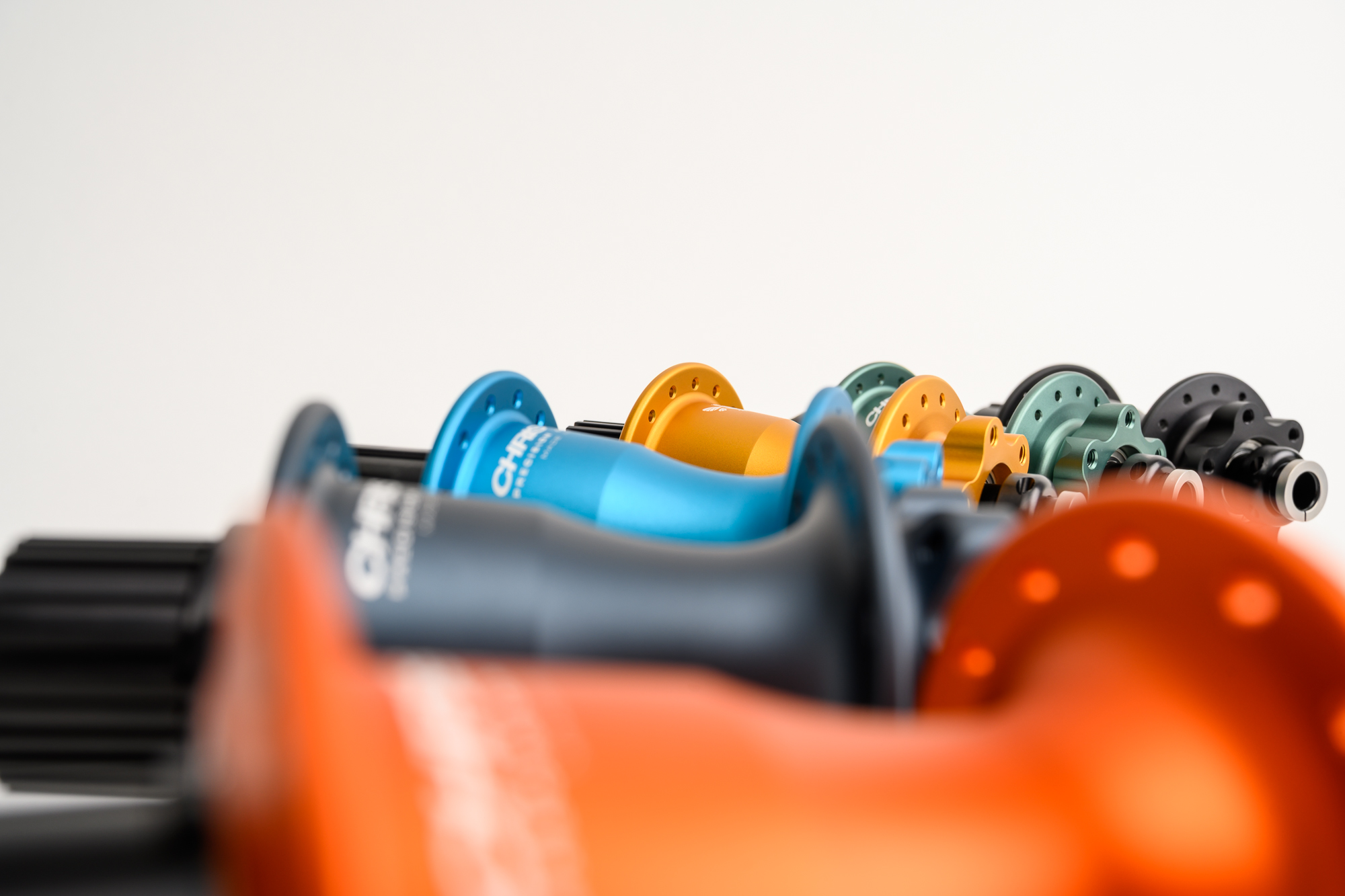
Chris King releases new MTB hub for 6-bolt rotors after request from downhill world champion Jackson Goldstone

High-end component maker Chris King, which has just celebrated its 50th anniversary, has launched a new SuperBoost mountain bike hubset, along with a newly designed 36-tooth freehub ratchet with 10-degree engagement. 

While Centerlock is now the dominant standard to attach a disc brake rotor, Chris King’s new hub is designed for six-bolt rotors. 

According to Chris King president Kirby Bedsaul, the new hubs fill a gap in the brand’s line-up: “Now we offer 6-Bolt compatibility across all of our mountain hubs. It really completes the picture for riders across the spectrum. All Chris King mountain hubsets are now available in either brake standard.”

New slower-engaging ratchet

The new 36-tooth ratchet is engineered to be quieter.

The new hubs can be fitted with either a 72-tooth freehub ratchet or a new 36-tooth ratchet with 10-degree engagement, enabling riders to tune their engagement angle. 

Chris King’s hubs have usually come fitted with the 72-tooth ratchet. But the new 36-tooth option is a response to a request from Santa Cruz Syndicate team rider and downhill world champion Jackson Goldstone for a hub with fewer points of engagement, which the brand says enables the hub to spin faster.

Bedsaul continues: “At this level, they’re searching for milliseconds, and they see this as a meaningful contribution toward that goal. Jackson won the key races last season on the prototype 36T hub, which reduces hub drag and noise significantly.”

Lower freehub noise enables downhillers to hear other bike sounds better.

The lower freehub noise from the 36-tooth ratchet compared to its buzzy 72-tooth ratchet is significant for downhill racers, according to Bedsaul, because it enables them to hear noise from tyres, brakes, chain and suspension better, to provide feedback on the bike’s performance. 

The 36-tooth ratchet doesn’t only have fewer teeth, they’re re-engineered to reduce the contact area, which further reduces drag and enables the brand’s RingDrive 2.0 lubricant to penetrate the ratchets better.

The new hub is available in the usual wide range of colours.

Chris King’s RingDrive ratchet lube includes nanoparticles and is claimed to reduce friction, improve cold-weather performance and add to ratchet longevity. It also sells its newly launched Gold Grease for bearings, designed to help them spin faster, with a claimed 25% reduction in drag over its previous silver grease.  

Chris King says you can retrofit the 36-tooth ratchet ring to any of its hubs made since the 1990s. It recommends the 72-tooth ring for most riders on most terrain, though, and says even its team riders still use it if there’s significant pedalling needed. 

A Dust Devil Full Of Tumbleweeds

This is a video captured by Douglas Barillas of a dust devil blowing a bunch of tumbleweeds around in the sky of Lake Los Angeles, California. I guess they’re not tumbleweeds anymore, they’re *putting on cool guy shades* flyweeds. Damn, I haven’t put on those cool guy shades on in a while, that felt good. “Well it shouldn’t have, now take them off.” But– “TAKE THEM OFF AND STEP ON THEM.” Mom!

� Driver spots a tumbleweed dust devil, Los Angeles County
by
u/solateor in
NatureIsFuckingLit

Apple Might Use Google Servers To Store Data For Its Upgraded AI Siri

Apple has reportedly asked Google to look into “seting up servers” for a Gemini-powered upgrade to Siri that meets Apple’s privacy standards. The Verge reports: Apple had already announced in January that Google’s Gemini AI models would help power the upgraded version of Siri it delayed last year, but The Information’s report indicates Apple might lean even more on Google so it can catch up in AI.

The original partnership announcement said that “the next generation of Apple Foundation Models will be based on Google’s Gemini models and cloud technology,” and that the models would “help power future Apple Intelligence features,” including “a more personalized Siri.” While the announcement noted that Apple Intelligence would “continue to run on Apple devices and Private Cloud Compute,” it didn’t specify if the new Siri would run on Google’s cloud. Apple’s Private Cloud Compute is not only underpowered but it’s also underutilized in its current state, notes 9to5Mac, “with the company only using about 10% of its capacity on average, leading to some already-manufactured Apple servers to be sitting dormant on warehouse shelves.”


Read more of this story at Slashdot.

Oops: South Korean cops lost $5M in seized crypto after leaking wallet password

Soon after South Korean police posted a press release boasting about seizing $5.6 million worth of cryptocurrency from 124 wealthy tax evaders, cops realized that they had mistakenly posted images that made it possible for a thief to quickly steal most of the seized assets.

Eventually, the press release was removed, but not before it was grabbed by local media outlets and tech publications covering the theft.

Bleeping Computer shared a screenshot of the retracted images, which showed a handwritten note next to a Ledger device that’s used as a so-called “cold wallet” to store crypto out of reach of online threats. Clearly legible in the photo, the note contained a complete mnemonic recovery phrase that anyone can use as a master key to move assets off the cold wallet to a new wallet without any additional PIN or permissions required.

Read full article

Comments

[$] The ongoing quest for atomic buffered writes

There are many applications that need to be able to write multi-block
chunks of data to disk with the assurance that the operation will either
complete successfully or fail altogether — that the write will not be
partially completed (or “torn”), in other words. For years, kernel
developers have worked on providing atomic writes as a way of satisfying
that need; see, for example, sessions from the Linux Storage, Filesystem,
Memory Management, and BPF (LSFMM+BPF) Summit from 2023, 2024,
and 2025 (twice). While atomic direct I/O is now supported by some filesystems, atomic
buffered I/O still is not. Filling
that gap seems certain to be a 2026 LSFMM+BPF topic but, thanks to an early
discussion, the shape of a solution might already be coming into focus.

Australia will consider requiring app stores to block AI services without age verification

Australia’s government may take a strict stance on ensuring younger users cannot access AI chatbots. Reuters reports that Australian regulators may require app storefronts to block AI services that do not implement age verification for restricting mature content by March 9. 

“eSafety will use the full range of our powers where there is non-compliance,” a representative for the commissioner said in a statement to the publication. Those paths could include “action in respect of gatekeeper services such as search engines and app stores that provide key points of access to particular ‌services.”

A review by Reuters found that of 50 leading text-based AI chat services in the region, only nine had introduced or shared plans for age assurance. Eleven services reportedly “had blanket content filters or planned to block all Australians from using their service,” according to the report, leaving a large number that had not taken public action a week ahead of the country’s deadline. Failure to comply could see AI companies face fines of up to A$49.5 million ($35 million).

The question of which parties are responsible for keeping children from accessing potentially harmful content is being debated around the world. In the US, for instance, Apple and Google have been lobbying to have the task delegated to platforms rather than app store operators. The language from the Australian regulators about all stores is hardly definitive at this stage, but given the breadth of its sweeping ban on the use of social media and some highly social digital platforms for citizens under age 16 enacted last year, an aggressive stance seems to align with leaders’ priorities. 

This article originally appeared on Engadget at https://www.engadget.com/ai/australia-will-consider-requiring-app-stores-to-block-ai-services-without-age-verification-221714252.html?src=rss

Anthropic brings memory to Claude’s free plan

Anthropic is bringing another paid feature to Claude’s free tier. The next time you chat with Claude, you’ll have the option to have it reference your previous conversation to inform its outputs. Anthropic first made its chatbot capable of remembering past interactions last August, before giving it the ability to compartmentalize memories in the fall. Making memory a free feature is well-timed; earlier today Anthropic made it easier for users to import their past conversations with a competing chatbot to Claude. If after enabling memory you decide to turn it off, you can either pause the feature, preserving Claude’s memories for use down the road, or completely delete them so they’re not saved on Anthropic’s servers.

Claude is enjoying new-found popularity, having recently jumped to the number one spot in the App Store’s free app charts. This comes while Anthropic is engaged in a high-stakes contract dispute with the US government over AI safeguards. On Friday, US Defense Secretary Pete Hegseth labeled the company a “supply chain risk” after it refused to sign a contract that would allow the Pentagon to use Anthropic models for mass surveillance against Americans and in fully autonomous weapons. Following Hegseth’s announcement, Anthropic vowed to challenge the designation. As of right now, we’re waiting to see how things play out, and what it might mean for Anthropic.

This article originally appeared on Engadget at https://www.engadget.com/ai/anthropic-brings-memory-to-claudes-free-plan-220729070.html?src=rss

HBO Max and Paramount+ To Merge Into One Streaming Service

Paramount Skydance plans to combine HBO Max and Paramount+ into a single streaming platform following its acquisition of Warner Bros. Discovery. “As we said, we do plan to put the two services together, which today gives us a little over 200 million direct-to-consumer subscribers,” said David Ellison, the company’s CEO. “We think that really positions us to compete with the leaders in the space.” The deal still needs regulatory approval. The Washington Post reports: He added that Paramount didn’t want to make changes to the HBO brand. “Our viewpoint is HBO should stay HBO,” Ellison said, noting that his favorite HBO product is “Game of Thrones.” If Justice Department regulators allow the deal to go through, it would place recent HBO Max hits, such as “The Pitt” and “A Knight of the Seven Kingdoms,” alongside Paramount offerings including “South Park” and “Yellowstone.” “They built a phenomenal brand,” he said. “They are a leader in the space, and we just want them to continue doing more of it.”

The deal to buy Warner Bros., valued at about $110 billion, will almost surely attract regulatory scrutiny from the Justice Department because — without divestments — it places major swaths of the film, television and news industries under one roof: Warner Bros. and Paramount studios, HBO Max and Paramount+, and CBS and CNN would all have the same parent company. Ellison expressed confidence on the call that the deal wouldn’t face hurdles with regulators.


Read more of this story at Slashdot.

AMD EPYC Turin 128 Core Comparison: EPYC 9745 “Zen 5C” vs. EPYC 9755 “Zen 5”

The AMD EPYC 9755 128-core Zen 5 server processor has been benchmarked a lot at Phoronix since the EPYC 9005 “Turin” launch as their top-end Zen 5 server processor with “full fat” cores compared to the denser Zen 5C cores that extend up to the EPYC 9965 at 192 cores. For those eyeing the 128 core per socket sweet spot, there is also the EPYC 9745 that is made up of 128 Zen 5C cores that allows for a 400 Watt TDP compared to the 500 Watt EPYC 9755. Today’s benchmarking is comparing the EPYC 9745 and EPYC 9755 performance and power difference.

Call of Duty will add Black Ops Royale, a new free game mode coming March 13

Call of Duty is getting a new battle royale mode later this month. The popular first-person shooter will introduce Black Ops Royale as a free game mode on March 13. 

Black Ops Royale pays homage to Blackout, the series’ first foray into a battle royale game mode back in CoD: Black Ops 4. Matches will have 100 players dropping in as four-person teams. The mode takes place on the massive Avalon map, but there will be no familiar Warzone features like loadouts, the gulag, or buy stations. Instead, it’s all about the scavenging the weapons from the recent Black Ops 7 game and upgrading them. 

According to the team’s announcement, there will be other familiar features from the Blackout days such as the weapon handling and bullet drop that have been reimagined for modern-day Warzone players. You’ll also be able to further customize your play style with an open-ended perks system, another nod to the original Call of Duty BR perk mechanic.

This article originally appeared on Engadget at https://www.engadget.com/gaming/call-of-duty-will-add-black-ops-royale-a-new-free-game-mode-coming-march-13-211733205.html?src=rss