With new plugins feature, OpenAI officially takes Codex beyond coding

OpenAI has added plugin support to its agentic coding app Codex in an apparent attempt to match similar features offered by competitors Anthropic (in Claude Code) and Google (in Gemini’s command line interface).

What OpenAI calls “plugins” are actually bundles that may include skills (“prompts that describe workflows to Codex”—a standard feature in tools like this these days), app integrations, and MCP (Model Context Protocol) servers.

The idea is that they make it possible to configure Codex in certain ways for specific tasks to be easier for the user and replicable across multiple users in an organization.

Read full article

Comments

From Linux to Blockchain: The Infrastructure Behind Modern Financial Systems

The modern internet is built on open systems. From the Linux kernel powering servers worldwide to the protocols that govern data exchange, much of today’s digital infrastructure is rooted in transparency, collaboration, and decentralization. These same principles are now influencing a new frontier: financial systems built on blockchain technology.

Outbreak linked to raw cheese grows; 9 cases total, one with kidney failure

Two more illnesses have been identified in an E. coli outbreak linked to unpasteurized cheese and milk, the Food and Drug Administration reported Thursday. The maker of the products, California-based Raw Farm, continues to deny the link and has refused to issue a recall.

According to the FDA, at least nine people have been sickened in three states, an increase of two cases since the outbreak was announced earlier this month. Three of the nine cases required hospitalization, and one person developed a life-threatening complication called Hemolytic uremic syndrome, or HUS, which causes a type of kidney failure.

Outbreak investigators have interviewed eight of the nine people sickened. All eight reported consuming unpasteurized dairy. One person couldn’t recall a brand, but the remaining seven all singled out products from Raw Farm. Five people ate Raw Farm’s raw cheddar, and two drank Raw Farm’s raw milk. Whole genome sequencing of the E. coli isolates from the patients shows high similarity, suggesting they came from a common source.

Read full article

Comments

The Best TV Deals I Found in Amazon’s Big Spring Sale

We may earn a commission from links on this page. Deal pricing and availability subject to change after time of publication.

I’m practically an evangelist about this point: If you need a TV, you should get one right now. Not just because it’s Amazon’s Spring Sale—March and April are traditionally the time when retailers clear space on their shelves and in their warehouses to make room for the new models coming for the holidays. And this year, the RAM tax is coming too: Big tech companies are buying up the world’s supply of memory to power AI data centers, so the price of televisions is expected to go up in the near future, and stay elevated for a while.

That’s all to say: Grab these bargains from Amazon’s Big Spring Sale while you can.

50″ Amazon Fire TV 4-Series 4K HDR10+ Smart TV (2025 Model)


$239.97
at Amazon
$399.99
Save $160.02

50" Amazon Fire TV 4-Series 4K HDR10+ Smart TV (2025 Model)


$239.97
at Amazon
$399.99
Save $160.02

Roku Smart TV 2026 – 40-Inch Select Series, 1080p Full HD TV – RokuTV with Voice Remote – Flat Screen LED Television with Wi-Fi for Streaming Live Local News Sports & Movies – Bluetooth Headphone Mode


$129.00
at Amazon
$229.99
Save $100.99

Roku Smart TV 2026 – 40-Inch Select Series, 1080p Full HD TV – RokuTV with Voice Remote – Flat Screen LED Television with Wi-Fi for Streaming Live Local News Sports & Movies – Bluetooth Headphone Mode


$129.00
at Amazon
$229.99
Save $100.99

75″ Hisense U6 Series 4K Mini-LED QLED Smart TV (2025 Model)


$597.96
at Amazon
$899.99
Save $302.03

75" Hisense U6 Series 4K Mini-LED QLED Smart TV (2025 Model)


$597.96
at Amazon
$899.99
Save $302.03

55″ Samsung OLED S85F 4K Smart TV (2025 Model)


$897.99
at Amazon
$1,397.99
Save $500.00

55" Samsung OLED S85F 4K Smart TV (2025 Model)


$897.99
at Amazon
$1,397.99
Save $500.00

55″ Samsung The Frame LS03F 4K QLED Smart TV (2025 Model)


$897.99
at Amazon
$1,197.99
Save $300.00

55" Samsung The Frame LS03F 4K QLED Smart TV (2025 Model)


$897.99
at Amazon
$1,197.99
Save $300.00

INSIGNIA 32″ Class F20 Series LED HD Smart Fire TV with Alexa Voice Remote (NS-32F201NA26)


$74.99
at Amazon
$129.99
Save $55.00

INSIGNIA 32" Class F20 Series LED HD Smart Fire TV with Alexa Voice Remote (NS-32F201NA26)


$74.99
at Amazon
$129.99
Save $55.00

The best budget TV in Amazon’s Big Spring Sale: The Amazon Fire 4-Series

In terms of what you pay versus what you get, you can’t do much better than Amazon’s house brand. The company is selling its 4-series Fire TVs for almost comically low prices during its ongoing Big Spring Sale. The 50″ model is $239.97, and the 43″ is $199; that’s 40% off the list price and the lowest price Amazon has ever offered on these 4K smart TVs. I bought a 55″ Fire TV a few months ago, and even though I paid $400 for it, I have no complaints. It’s a solid TV that gets good reviews from pros and customers alike—Amazon’s reviewers give it a 4.3 our of 5.

The best all-in-one streaming TV in Amazon’s Big Spring Sale: The Roku Smart TV 2026

The Roku Smart TV 2026 is a standout pick if you want everything in one package. The 40″ version is marked down 44%, to just $129. It’s an all-in-one, hassle-free streaming solution that’s perfect as a second TV in a bedroom or office. It comes with the Roku interface that can be navigated with voice remote, and it offers access to over 500 free live TV channels as well as Netflix, Disney+, and any other paid streamer you can think of.

The best “go big” TV bargain in Amazon’s Big Spring Sale: The 75-inch Hisense Class U6 Series Mini-LED 4K

If you just want a gigantic television, the 75-inch Hisense U6 is a steal for $598. . Hisense’s 2026 models were unveiled earlier this month, so retailers are slashing prices on older models to clear warehouse space. Despite not being new, it uses Mini-LED tech that provides brightness levels and local dimming that rival TVs twice its price. (Besides, you probably don’t really need a “better” TV.)

The best deal on an OLED TV in Amazon’s Big Spring Sale: The 55-inch Samsung S85F OLED TV

This 55-inch Samsung S85F OLED TV is 36% off, down to $897.99 (originally $1,397.99). Despite being labeled an entry-level OLED TV, the picture quality is impressive, with strong HDR performance, color accuracy, and near-infinite contrast. The blacks are perfect. That means you’ll get better bang for your buck during dark scenes than you will with LED/QLED displays. It also rivals the best gaming TVs, with a highly responsive 9.4ms input lag, four HDMI 2.1 ports that support 4K 120Hz, AMD FreeSync Premium, Nvidia G-Sync, ALLM, and HDR10+ gaming, as well as Motion Xcelerator tech to reduce blur in fast scenes and an AI Auto Game Mode to optimize settings.

The best art TV in Amazon’s Big Spring Sale: The 55-Inch Samsung “The Frame” TV

If your living room is more “art gallery” than “sports bar,” The Frame is your dream TV. It comes with a special mount so it can hang on the wall like a picture, and when you aren’t watching a show, it enters “Art Mode” and displays museum-quality masterpieces (or your own photos) with a matte finish that makes the screen look like a canvas. When your snobby friends come over, you can pretend you don’t even have a television, then secretly binge Love Island when they go home. During the Big Spring Sale, the 55-inch model is down to $897.99, a $300 drop from its $1,197.99 list price.

The overall cheapest TV in Amazon’s Big Spring Sale: This 32-inch Hisense LED TV

All TVs are cheaper-than-usual right now, but this deal is ridiculous: A Hisense 32″ LED television for just $74.99. It’s not the greatest TV of all time, but by all available accounts, it’s at least a solid buy It’s an older model—released in 2020—but that means there are over 3,000 reviews on Amazon, and the score is a respectable 4.1 stars out of 5. Critics generally were positive when it came out, too. The screen is 32″, so it’s big enough to be watchable, and the picture is 720p, so it’s technically “high-def,” if not “full high-def.” It even comes with built-in Alexa and FireTV, and you can get it for less than I paid for Thai food last night.

Our Best Editor-Vetted Amazon Big Spring Sale Deals Right Now

Deals are selected by our commerce team

Kash Patel’s personal email account was accessed by hackers linked to Iran

A hacking group called Handala has gained access to FBI Director Kash Patel’s email account, Reuters reports. The group published content from Patel’s email on their website as proof, including photos of Patel “sniffing and smoking cigars” and “making a face while taking a picture of himself in the mirror with a ​large bottle of rum.”

TechCrunch was able to independently confirm that at least some of the emails Handala stole were from Patel’s account by checking information used by mail delivery systems that’s stored in an email’s header. Several stolen emails included a cryptographic signature that linked them to Patel’s account. The FBI has also separately confirmed that the Director’s account was hacked. “The FBI is aware of malicious actors targeting Director Patel’s personal email information, and we have taken all necessary steps to mitigate potential risks associated with this activity,” the Bureau told TechCrunch. “The information in question is historical in nature and involves no government information.” 

The FBI is offering up to $10 million in rewards for more information about the hackers who targeted Patel’s account. Handala presents as a pro-Palestinian hacking group online, but is believed to be one of several aliases used by cyberintelligence units working for the Iranian government, Reuters writes. Groups affiliated with Iran have targeted officials in the US before. In August 2024, the FBI shared that a separate group, APT42, was trying to gain access to both the Trump and Harris campaigns. Three men associated with APT42 were later charged that September.

Handala has appeared to become more active during the current conflict between the US, Israel and Iran. According to Reuters, the group claimed to be behind a cyber attack on Stryker, a medical devices company, earlier in March. Handala also said it accessed and published personal data from Lockheed Martin employees stationed in the Middle East.

This article originally appeared on Engadget at https://www.engadget.com/cybersecurity/kash-patels-personal-email-account-was-accessed-by-hackers-linked-to-iran-212618474.html?src=rss

Mark Zuckerberg offered to ‘help’ Elon Musk with DOGE in 2025

Elon Musk and Mark Zuckerberg have a complicated history. In 2023, the two vowed to fight each other in a cage match that never happened. But by early 2025, when both were cozying up to the newly-elected President Donald Trump, they were apparently on more friendly terms. 

In February of that year, Zuckerberg texted Musk approvingly about his work with the now-defunct Department of Government Efficiency (DOGE). “Looks like DOGE is making progress,” the Meta CEO texted. “I’ve got our teams on alert to take down content doxxing or threatening the people on your team. Let me know if there’s anything else I can do to help.”

The texts, which were published Friday in court documents as part of Musk’s lawsuit against Sam Altman and OpenAI, are dated February 3, 2025. That’s just a few weeks after Zuckerberg announced Meta’s pivot away from content moderation in favor of “free expression.” It’s also the same day that a US Attorney said he would protect DOGE employees from “disgruntled” critics. 

Musk responded to Zuckerberg’s message with a heart and followed up with an unrelated topic: OpenAI. He asked Zuckerberg if he was “open to the idea of bidding on the OpenAI IP with me and some others.” Zuckerberg asked to “discuss it live” and Musk said he would call the next day. Previous documents disclosed in the case show that Musk had invited Zuckerberg to help him buy OpenAI, though he never officially signed on to the bid.

In a separate filing also made public Friday, Musk’s lawyers argued that his exchanges with the Meta CEO ought to be excluded from the lawsuit. “Musk’s personal relationships and communications – including with other high-profile individuals – are also tangential and prejudicial,” they wrote. “Defendants included in their exhibit list for trial, for example, several private exchanges between Musk and Mark Zuckerberg discussing Musk’s political activity and this lawsuit. Those recent communications have nothing to do with Musk’s claims and are nothing more than Defendants’ attempt to stoke negative sentiments toward Musk because of his association with Zuckerberg.”

A Meta spokesperson declined to comment. 

In the same filing, Musk’s lawyers also take issue with Altman’s lawyers asking about Musk’s alleged ketamine use and his attendance at Burning Man. A transcript from a video deposition with Musk indicated he was asked if had taken “rhino ket” at Burning Man in 2017. Musk said no, according to the transcript. 

“Any implication that music festivals or drugs have any relevance to this case is outlandish, and how Musk spends his free time is equally irrelevant,” his lawyers wrote. A judge ruled earlier this month that OpenAI’s lawyers would be permitted to ask “limited” questions about Burning Man, but not ketamine. 

This article originally appeared on Engadget at https://www.engadget.com/big-tech/mark-zuckerberg-offered-to-help-elon-musk-with-doge-in-2025-211737138.html?src=rss

Judge irate as defendant joins by Zoom while driving—then lies about it

A local judge in Woodhaven, Michigan, lost it this week when a defendant showed up to her court hearing late, on Zoom, and… while driving a car.

Kimberly Carroll was facing a hearing over a few thousand dollars that she allegedly owed and had defaulted on. She was allowed to attend remotely, but when the hearing began, she wasn’t yet available on Zoom.

When she finally joined, Judge Michael McNally told her she needed to turn her camera on.

Read full article

Comments

Playable Tony Hawk’s Pro Skater LEGO Build

Because there’s no ingenuity like LEGO ingenuity, this is a video of the playable Tony Hawk’s Pro Skater inspired LEGO build imagined and constructed by David McLelland. It’s currently up for voting on the LEGO Ideas website, so if you want LEGO to consider making it a real set, go vote. Voting is important, especially when it comes to deciding what to have for dinner. Unfortunately, I always vote for one thing, my girlfriend always votes for another, and we both go to bed hangry, usually with her knee in my back.

@americanbricker Tony Hawk has seen this video � I’m grateful, but also feel bad if he’s gotten a million notifications. � #proskater #tonyhawk #lego #la #roadtrip ♬ original sound – mckinzimcclelland

Wordle Is Too Easy, but Now I’m Obsessed With These Daily Cryptic Puzzles

I find it satisfying to do a word puzzle (or three) each day. Wordle is great, but it’s not really exciting anymore. Crosswords are fun if you have the time (I love an NYT Thursday puzzle) but I don’t always bother. My sweet spot, lately, are games like Minute Cryptic and Parseword—which are entry points into the incredibly bizarre world of British “cryptic” crossword clues. 

What is a cryptic puzzle?

Cryptics are a type of word puzzle unlike anything else. There exist whole crosswords full of them, but the daily puzzles I’m writing about are just one clue per day, so you can focus on exactly what’s going on in that single clue. 

Cryptics look like a regular crossword clue—a short bit of text with a single word or phrase as an answer—but the way you come up with the answer is by re-interpreting the clue as instructions for wordplay. You might realize you’re being asked to anagram a word, insert another word inside of it, flip a word backwards, or any of a variety of other devilish tricks. 

For example, one recent Minute Cryptic clue was “Learn 1970s-style dance music! $5 off per beginner!” To solve it (which took me a few hints) I needed to do the following: 

  • Ignore the word “learn” for now, since it will turn out to be the definition of the word I’m trying to find

  • Translate “1970s-style dance music” into DISCO

  • Translate “$5” into another way to write the number five—the roman numeral V

  • Take off the beginner of the word “per,” leaving me with ER

  • Put those bits together to make the word DISCOVER, a synonym for “learn.” 

If you scream “are you fucking kidding me?” at your phone when you figure out the answer, you’ve done it right. Another favorite of mine was “box for dead pet of Schrödinger contains almost half-skeleton.” To construct a “box for dead,” you put the letters SKE (almost half of “skeleton”) inside of CAT. So you get CASKET. Get it?

I’ve always loved regular, nice, American crosswords—where the clue is a definition and that’s all there is to it—and figured the cryptic type were basically impossible. But friendly puzzles like Minute Cryptic and Parsewords help you learn the little tricks of the trade, and after playing them daily for a while, I can now often answer cryptic clues without hints. 

How to learn to play daily cryptic puzzles

While my favorite is Minute Cryptic, I’m first going to show you Parseword, since that’s more explicit about teaching you the manipulations you might see in a cryptic clue. When you first visit parseword.com, you’ll get a fairly thorough tutorial. 

Rather than just giving you boxes to type in the answer, Parseword lets you click on each word in the clue. When you click, you’ll get the option to replace the word with a substitute. If you click two words, you’ll get options for different ways to combine them. The interface lets you click around to explore all the possibilities, which can be a good way of getting un-stuck when you’d otherwise just be staring at the screen wondering what you’re supposed to do. 

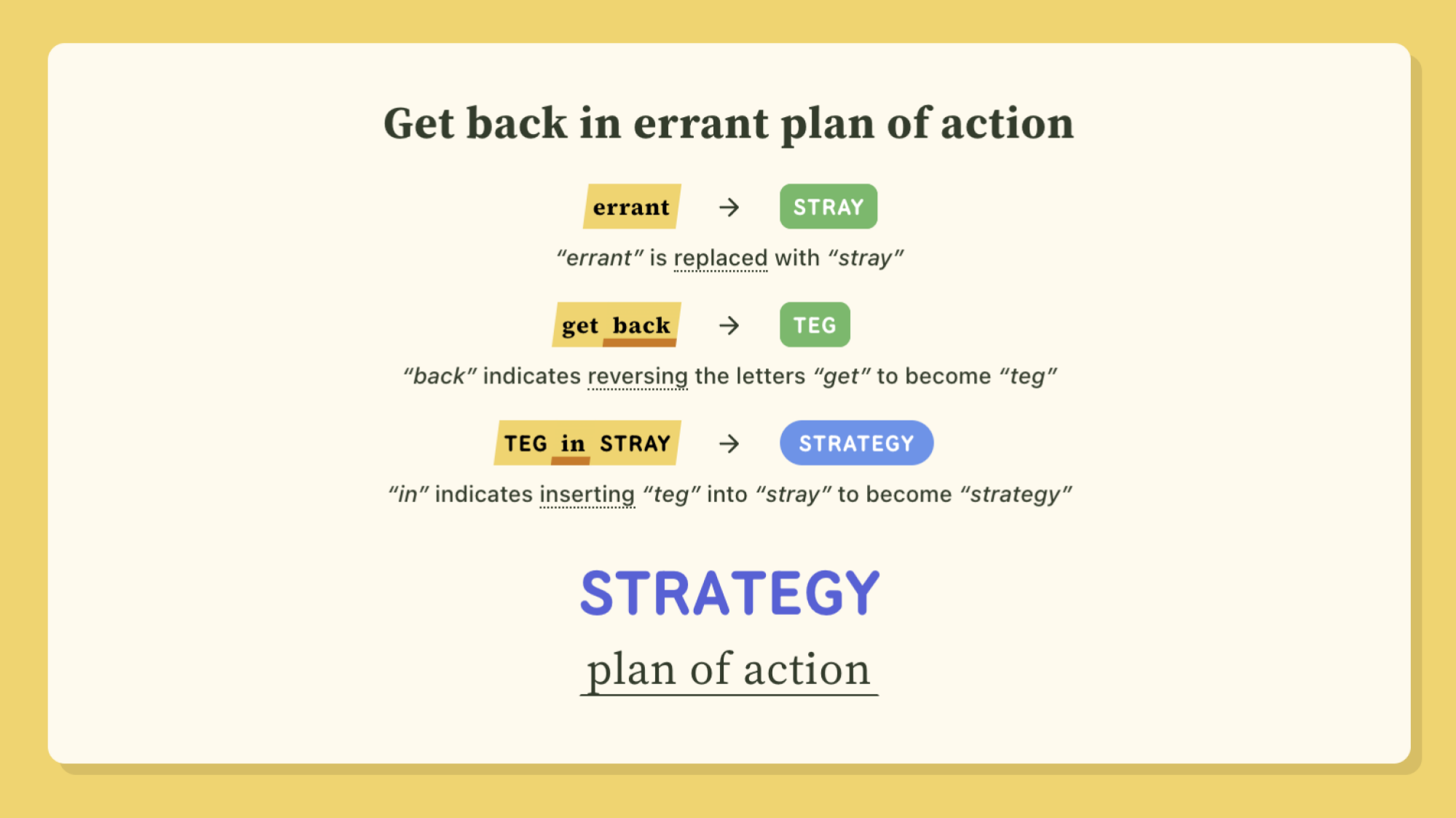
Parseword example: "get back in errant plan of action" - "back" means you reverse the word "get," and STRAY is a synonym for "errant." The answer is STRATEGY, which means "plan of action."

Credit: Parsewords

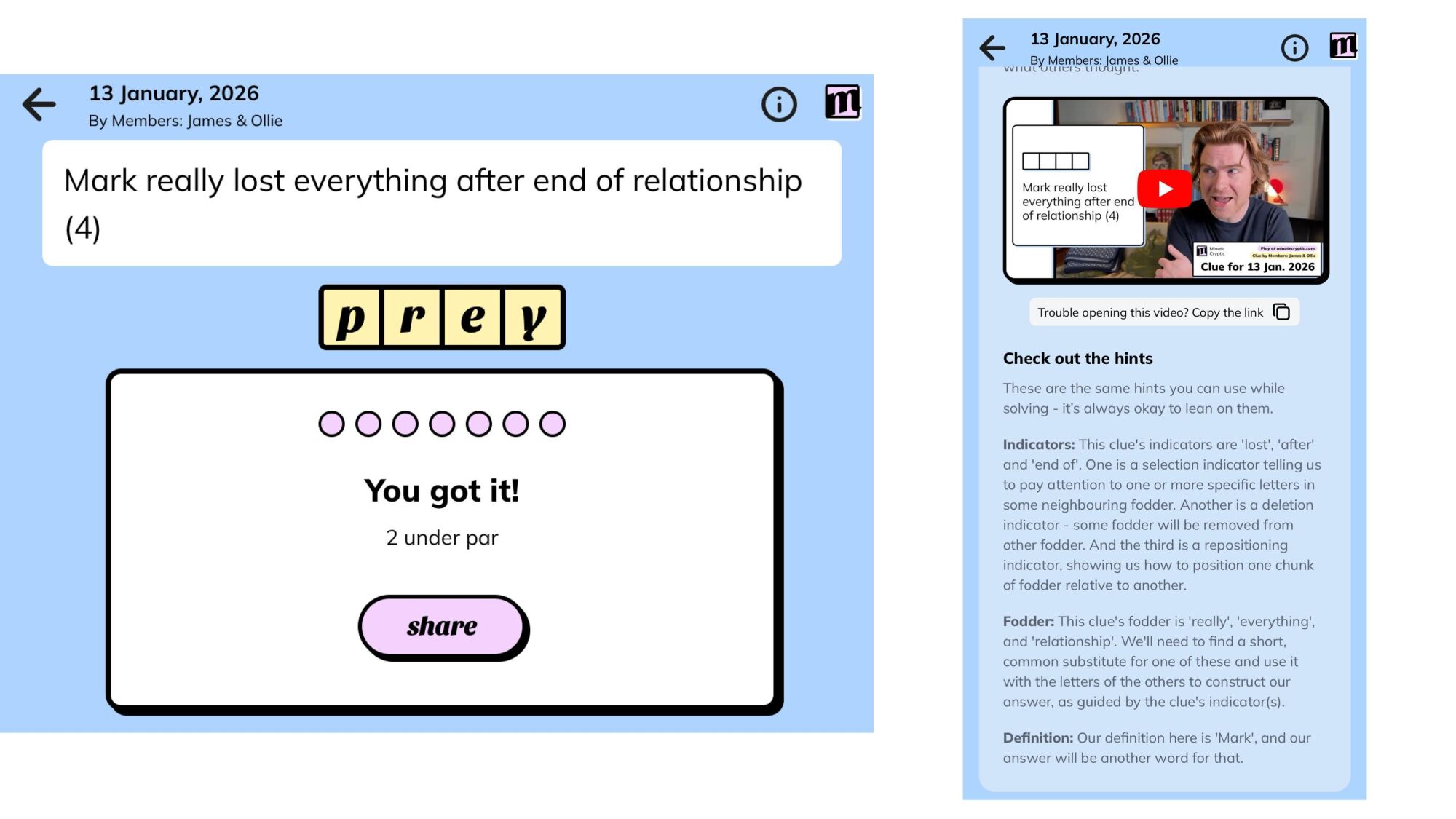
Minute Cryptic takes a different approach, based on hints. You can decide if you’d like the game to reveal the indicators (the words telling you what operations to do, like “off” and “beginner” in my DISCOVER example), or the fodder (the words you use for parts) or point out which word is the definition. If you’re still stumped, you can ask the game to reveal one letter at a time until you finally get it. There’s no way to fail Minute Cryptic—you’re just told whether you used more or fewer hints than the average player. 

Minute Cryptic's solve screen and all the hints for the puzzle
On the left, what you first see when you solve a puzzle; on the right, the hints and the video explanation
Credit: Minute Cryptic

Both games are friendly to beginners—no judgment if you need hints, but no hints if you choose not to use them. Parseword can be more structured, with its “learn mode” and automatic suggestions. I prefer Minute Cryptic’s hints, and I love that it recently added a “scribble space” where you can select and rearrange letters—perfect if you know you need to anagram something. (Before that feature was introduced, I used scranagram as my non-cheating anagram tool. You enter your letters, and hit “shuffle” until inspiration strikes.) 

After a few days with Minute Cryptic, I started to understand how the clues were constructed. After a few weeks, I was usually solving them “under par.” After a few months, I paid for a subscription that gives you unlimited mini crosswords to do, where each clue has hints available. 

Another step in your learning journey, if you’re feeling confident, is trying out the Guardian’s Quick Cryptic. Not only is it smaller than a regular cryptic crossword, there’s also an explanation of the clue types used in the day’s puzzle. For example, puzzle #103 has anagrams, hidden words, soundalikes, and acrostics, but no other clue types. You’ll get practice spotting and solving those four types, but you’re on your own for the solutions themselves. 

Windows PCs Crash Three Times As Often As Macs, Report Says

A workplace-device study says Windows PCs crash significantly more often than Macs, lag further behind on patching and encryption in some sectors, and are typically replaced sooner. TechSpot reports: Omnissa’s 2026 State of Digital Workspace report outlines the IT challenges that various organizations face from the growing use of AI and the heterogeneous deployment of enterprise devices. The relative instability of Windows and Android is a recurring theme throughout the report. The company gathered telemetry from clients located across the globe in retail, healthcare, finance, education, government, and other sectors throughout 2025. The data suggests that IT administrators face frustrating security gaps due to inconsistent patching across a diverse mosaic of devices and operating systems.

Employee workflow disruption, often due to software issues, is one area of concern. The report found that Windows devices were forced to shut down 3.1 times more often than Macs. Windows programs also froze 7.5 times more often than macOS apps and needed to be restarted more than twice as often. Certain industries were also alarmingly lax in securing Windows and Android devices. More than half of Windows and Android devices in healthcare and pharma were five major operating system updates behind, likely leaving them more vulnerable to errors and malware. More than half of the desktops and mobile devices used for education were also unencrypted, putting students’ privacy at risk.

Macs also last longer, being replaced every five years on average, compared to every three years for Windows PCs. Despite a recent backlash against Windows, driven by a push for digital sovereignty in countries such as Germany, Windows use on government devices actually doubled last year. Meanwhile, Macs using Apple’s M-series chips showcase a significant thermal advantage, with an average temperature of 40.1 degrees Celsius, while Intel processors run at 65.2 degrees.


Read more of this story at Slashdot.

AV1’s open, royalty-free promise in question as Dolby sues Snapchat over codec

AOMedia Video 1 (AV1) was invented by a group of technology companies to be an open, royalty-free alternative to other video codecs, like HEVC/H.265. But a lawsuit that Dolby Laboratories Inc. filed this week against Snap Inc. calls all that into question with claims of patent infringement.

Numerous lawsuits are currently open in the US regarding the use of HEVC. Relevant patent holders, such as Nokia and InterDigital, have sued numerous hardware vendors and streaming service providers in pursuit of licensing fees for the use of patented technologies deemed essential to HEVC.

It’s a touch rarer to see a lawsuit filed over the implementation of AV1. The Alliance for Open Media (AOMedia), whose members include Amazon, Apple, Google, Microsoft, Mozilla, and Netflix, says it developed AV1 “under a royalty-free patent policy (Alliance for Open Media Patent License 1.0)” and that the standard is “supported by high-quality reference implementations under a simple, permissive license (BSD 3-Clause Clear License).”

Read full article

Comments

How AI Is Making Tax Scams Harder to Spot

Tax time is high season for scammers, who target taxpayers with fraud campaigns ranging from IRS impersonation to “ghost” preparers that take your money and run. In fact, the IRS publishes its annual “Dirty Dozen,” a list of the tax scams consumers should be especially aware of. And this year’s list reveals that, as with romance scams and scams targeting travelers, AI is making tax scams appear more sophisticated—and harder to spot.

AI is facilitating tax scams

One of the IRS’ top scams for 2026 is AI-powered impersonation by phone: fraudsters are using AI tools for voice cloning and caller ID spoofing so recipients believe they are talking to a legitimate IRS representative. These forms of impersonation are so good that it’s difficult to distinguish between what’s fake and what’s real. Scammers may call you about your tax bill and demand payment, or tell you that your information is being used in a crime and ask you to verify sensitive details.

Of course, AI facilitates other forms of impersonation, spoofing, and phishing. It’s easy to set up an AI-generated fake website (such as for the IRS or other organizations that provide tax prep or support services) that looks nearly identical to the real thing, and which scammers can use to harvest personally identifiable information and login credentials. The same goes for other communication, such as text messages and notices sent via email or snail mail.

AI isn’t just an external threat. Researchers at McAfee found that 30% of taxpayers plan to use an AI tool like ChatGPT to help them prepare their taxes. Not only will a chatbot potentially provide incorrect (if relatively harmless) information to users, it could also put personal data at risk in the event of a data breach.

How to spot AI-powered tax scams

Taxpayers may be particularly vulnerable to these scams because the possibility of getting into trouble with the IRS is especially scary, and fraudsters capitalize on this fear. People may be more likely to act on an urgent message that comes with the threat of financial penalties, wage garnishment, or a lien being placed on their home. And since AI can make communication sound more human—and both believable and trustworthy—than an actual human, the typical scam red flags like poor grammar and odd language aren’t reliable indicators.

First and foremost, remember that the IRS almost always initiates contact by mail and will not call taxpayers to demand payment or threaten arrest. The agency also does not leave prerecorded messages. Legitimate notices sent by mail are informational and should contain specific references to your tax return rather than vague demands for money. It is possible you will receive a call or even an-person visit from the IRS, but these occur in specific cases and only after multiple mailed notices.

Because AI scams can be so difficult to spot, you should be wary of all communication related to taxes. You can set up an online IRS account through ID.me and view any notices and letters you’ve been sent to verify they are legitimate. As always, never comply with any demand for money or information without confirming who you are talking to—because it’s almost certainly not the IRS.

Meta will fund seven new natural gas plants to power its biggest data center yet

Meta will essentially foot the power bill for the $27 billion mega data center it’s building in Louisiana. On Friday, the Wall Street Journal reported that the company struck a deal to fund the energy infrastructure needed for the project.

Through a deal with Entergy Louisiana, Meta will fund seven new natural gas power plants, 240 miles of transmission lines and battery energy storage at three locations. The gas plants will have a combined power output of 5,200 megawatts, and the transmission lines will operate at 500 kilovolts.

In addition, the company will help fund up to 2,500 MW of new renewable resources. It also agreed to a memorandum of understanding for future nuclear power development. The 4-million-square-foot Richland Parish, LA, data center will be Meta’s biggest yet. It’s currently under construction.

The energy deal follows a pledge by tech companies, including Meta, to offset local residents’ rising electricity costs from AI data centers. The companies plan to “build, bring or buy the new generation resources and electricity needed to satisfy their new energy demands, paying the full cost of those resources.” However, the pledge lacks a binding agreement or any enforcement mechanisms.

The shift in tone comes in response to growing anger from local communities over the rise of power-hungry, environmentally damaging AI data centers. A December poll found that 60 percent of Americans — including majorities of Democrats, Republicans, and independents — support more AI regulation. Just this week, Sen. Bernie Sanders and Rep. Alexandria Ocasio-Cortez introduced a bill to force a moratorium on data center construction until meaningful regulations are passed.

We could easily file this and similar moves as Big Tech’s latest attempt to convince voters and officials that it can be trusted to do right without enforceable regulations. We’ve seen that movie before.

This article originally appeared on Engadget at https://www.engadget.com/big-tech/meta-will-fund-seven-new-natural-gas-plants-to-power-its-biggest-data-center-yet-201000045.html?src=rss

Android 17’s New Beta Brings Major UI Changes, Split-Screen Controls And More

Android 17's New Beta Brings Major UI Changes, Split-Screen Controls And More
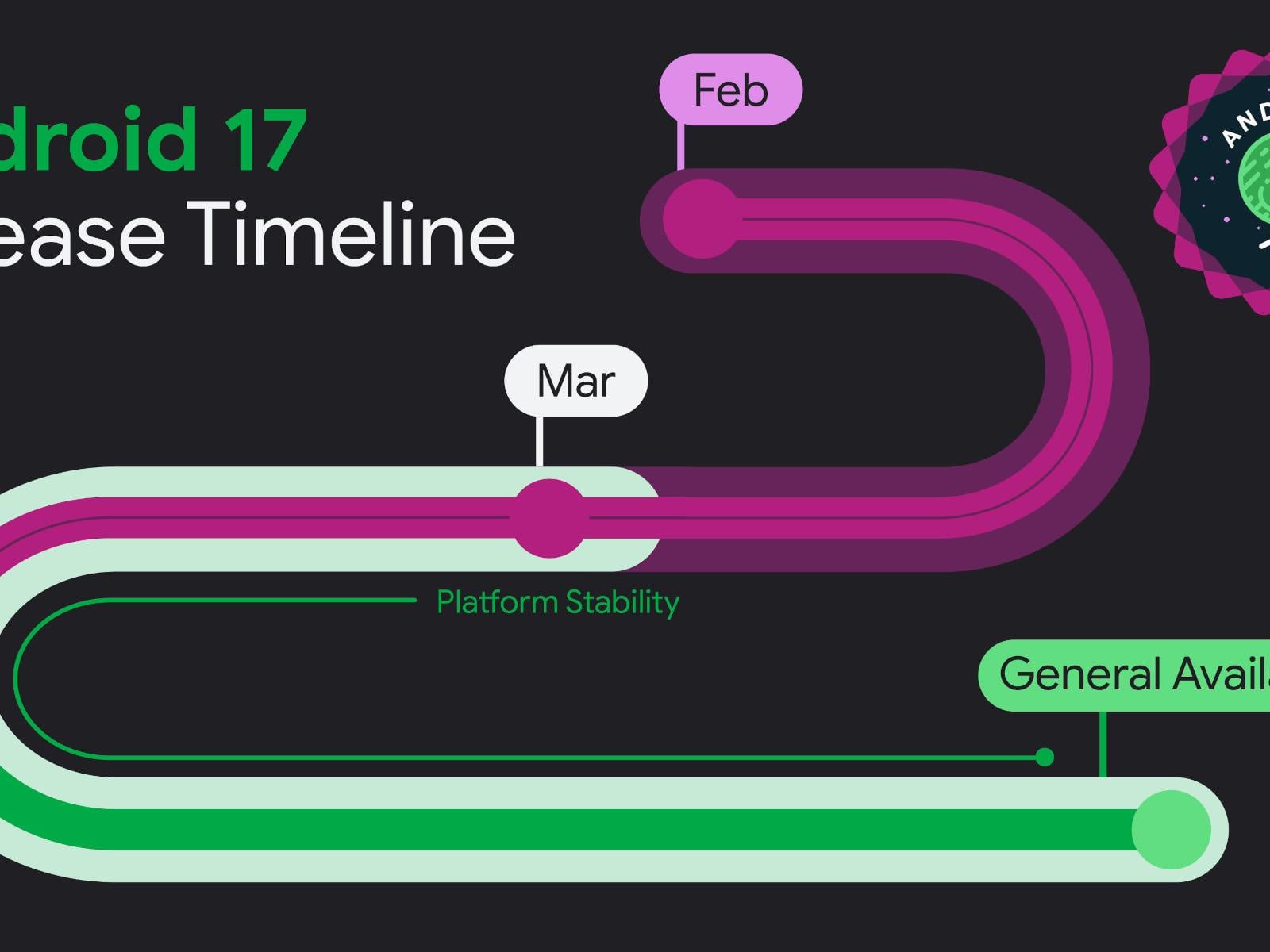
Android 17 has reached the Platform Stability and third beta phase. Per Google, Platform Stability means that since “the API surface is locked; you can perform final compatibility testing and push your Android 17-targeted apps to the Play Store.”

This is an especially pivotal time for app developers, and certain Android 17 features like