The Amusement, a VR narrative adventure game, is launching on Quest and PC VR in April.
ARTE France and German VR studio Curvature Games have confirmed that their VR narrative adventure, The Amusement, will be launched on April 16.
The game puts players in the shoes of Samantha Burkhart, a young woman who returns to her late father’s derelict amusement park to solve puzzles, resurrect the park’s broken rides, and work through the riddle of her family’s troubled past.
0:00
/0:49
We recently previewed a demo of The Amusement, which released as part of Steam Next Fest, and found it to be a captivating experience with just one simple flaw: its omission of smooth locomotion detracts from an otherwise wonderful puzzle game.
Still, our writer concluded, “If you enjoy story-based puzzle games and have been waiting for a new one after last year’s stellar Ghost Town, this is one to watch.”
The Amusement is coming to Meta Quest and Steam on April 16.
As part of today’s MacBook Pro update, Apple has also unveiled the M5 Pro and M5 Max, the newest members of the M5 chip family.
Normally, the Pro and Max chips take the same basic building blocks from the basic chip and just scale them up—more CPU cores, more GPU cores, and more memory bandwidth. But the M5 chips are a surprisingly large departure from past generations, both in terms of the CPU architectures they use and in how they’re packaged together.
We won’t know the impact these changes have had on performance until we have hardware in hand to test, but here are all the technical details we’ve been able to glean about the new updates and how the M5 chip family stacks up against the past few generations of Apple Silicon chips.
X will suspend creators from its revenue sharing program if they post AI-generated videos depicting armed conflicts without disclosing they were made with AI. Head of product Nikita Bier announced the policy change on March 3, saying first-time violators will be cut off for 90 days and repeat offenders would be permanently removed from the program.
Today we are revising our Creator Revenue Sharing policies to maintain authenticity of content on Timeline and prevent manipulation of the program.
During times of war, it is critical that people have access to authentic information on the ground. With today’s AI technologies,…
The policy is notably narrow, applying only to creators enrolled in the platform’s revenue sharing program and only to AI-generated videos of armed conflicts, not AI content in general or non-monetized accounts. Violations will be flagged through Community Notes, X’s crowd-sourced fact-checking system, or by detecting metadata from generative AI tools. Bier framed the change as necessary “during times of war,” though the current conflict unfolding between the United States, Israel and Iran has not been formally, or at least not legally, declared a war. Of course, the US has not formally declared war since 1942.
The quality of AI video generation has progressed at a rapid pace, and generated content has become almost indistinguishable from real footage for most viewers. X already watermarks images and videos generated by its Grok chatbot but has not previously required users to disclose AI-generated content. The platform is separately testing a broader AI labeling toggle that would let users mark any post as containing synthetic content, as first reported by Social Media Today, though X has not shared a timeline for that feature.
This article originally appeared on Engadget at https://www.engadget.com/social-media/x-to-require-ai-labels-on-armed-conflict-videos-from-paid-creators-citing-times-of-war-183631400.html?src=rss
We may earn a commission from links on this page. Deal pricing and availability subject to change after time of publication.
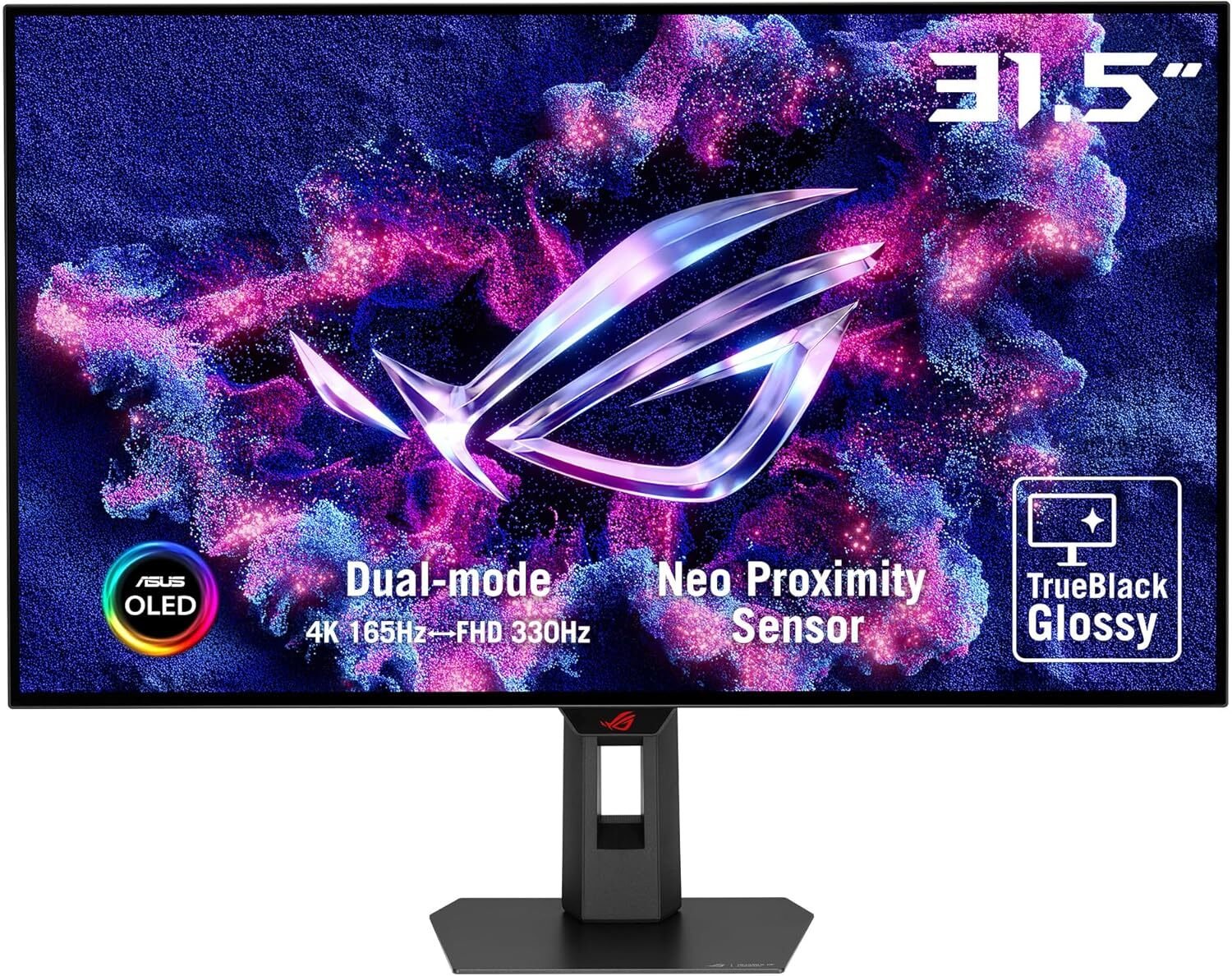
The 32-inch ASUS ROG Strix OLED XG32UCWG gaming monitor has earned stellar review for its excellent visuals, refresh rate flexibility, and other impressive gaming-focused features. If you’ve been looking to upgrade your setup, right now is a good time: It’s $200 off, reaching its lowest price ever—$799 (originally $999).
This 32-inch monitor has a 4K UHD WOLED panel that delivers high contrast and deep blacks, making games, movies, and TV shows look more vivid. Compared to a traditional OLED panel, WOLED (White OLED) uses a white light source with filters to provide deeper blacks, faster response times, and more uniform images across a range of lighting conditions. The TrueBlack Glossy coating is better at reducing glare than a matte screen while delivering a clearer picture (though some reviews claim it’s still not bright enough to mitigate intense glare if bright light hits the screen directly).
A native 4K, 165 Hz refresh rate allows for high-detail gaming and multimedia use, while its Frame Rate Boost mode offers versatility for playing different kinds of games. For example, FHD at 330 Hz also makes it a solid choice for competitive shooting games and high-FPS play. The monitor has an overall 0.03 ms response time, which is best-in-class, and minimizes motion blur. Other notable features include NVIDIA G-SYNC and AMD FreeSync support, and reduced burn-in risk due to OLED Care Pro and the Neo Proximity Sensor.
If you’re looking for a gaming monitor with dual-mode features, nearly instantaneous response time across a range of refresh rates, low input lag, and inky blacks, the 32-inch ASUS ROG Strix OLED XG32UCWG monitor for gamers is a great choice . While it doesn’t offer 240 Hz+ at 4K like some elite models, it delivers a lot for this $800 price point.
Sure, Blue Prince has the most name recognition among the indie games that had a surprise debut on Nintendo Switch 2 today. However, I implore you not to overlook two other wonderful indies that hit Nintendo’s consoles in the wake of this morning’s Indie World showcase.
Minishoot’ Adventures — from SoulGame Studio and co-publisher IndieArk — is a game I absolutely loved when it first emerged on Steam in 2024. It’s an RPG that adopts the format of top-down Legend of Zelda games. At the same time, it’s a twin-stick bullet-hell shooter. The two-person team at SoulGame blended those genres to great effect.
Here, you play as a ship. Exploration is key, as you’ll need to find upgrades for your ship in order to access new areas. SoulGame injected a ton of personality into Minishoot’ Adventures as well. Errant apostrophe in the name aside, it’s a real gem.
I’m perplexed as to why Nintendo only showcased Öoo in the Japanese version of the Indie World stream. It’s utterly brilliant and by far the best new game I played in 2025. It’s so exquisitely designed by Nama Takahashi (ElecHead) that a 20-second trailer is all that’s needed to show how this puzzle platformer works.
You play as a caterpillar who has a bomb — and later a second one — that can be used to blow stuff up. The bombs are also used to hold down buttons and to propel the caterpillar upwards or sideways.
There are no instructions here. Takahashi (who made the game with the help of Tiny Cactus Studio and Tsuyomi) helps you figure out what to do solely through intelligent level design. The puzzles aren’t overly difficult, but they got my brain matter working just enough that I smiled whenever I found a solution. The visuals, music and sound design are supremely charming too.
This is a truly wonderful game. It doesn’t outstay its welcome either, as it can be completed within a couple of hours.
Öoo is available now on Switch for $11. It’s coming to PS5 on March 11 and Xbox Series X/S later this month.
This article originally appeared on Engadget at https://www.engadget.com/gaming/nintendo/two-fantastic-indie-games-not-named-blue-prince-also-just-arrived-on-switch-182648197.html?src=rss
Approved proposal reverses earlier stance, even as survey highlights bigger frustrationsThe Go team has approved generic methods, reversing a longstanding position in the language’s FAQ. The proposal, from Go co-designer Robert Griesemer, now moves to implementation.…
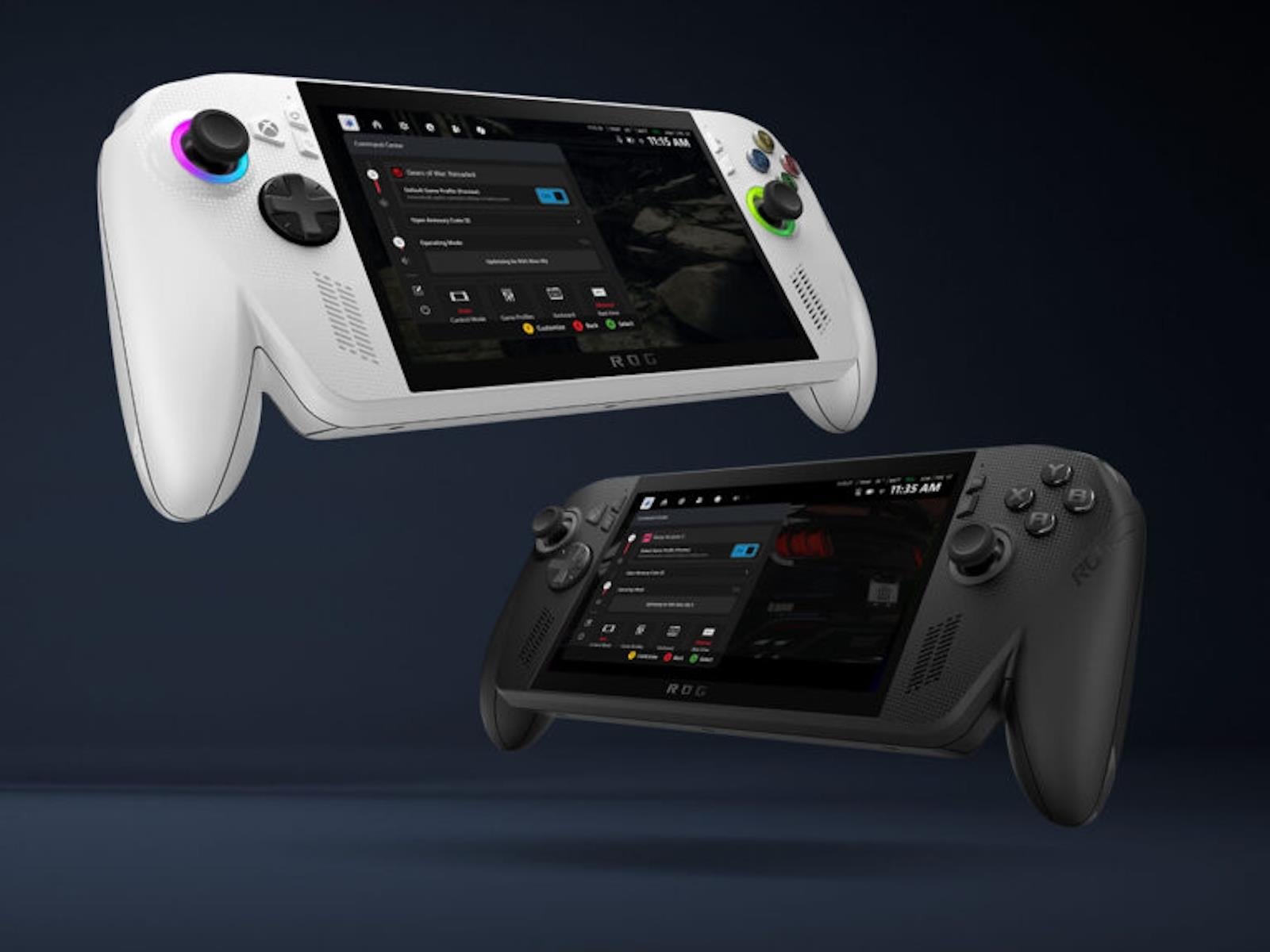
Microsoft partnered up with ASUS to release the excellent ROG Xbox Ally X last year, to do battle with the SteamOS powered Steam Deck. Because it has jumped into the handheld gaming PC battle a bit late it has been working to continually to play catch up by adding new features, the latest of which is Highlight Reels, now available to Xbox
Apparently, AI data centers are capable of sucking less (power, that is). A recent UK trial demonstrated that they can adjust their energy demands dynamically without disrupting critical workloads. This contrasts with data centers’ current approach of always-on power draw, which can strain grids and drive up prices for everyone.
Over five days in December 2025, more than 200 simulated “grid events” tested a London data center’s ability to adjust its energy use on the fly. The trial used software from Emerald AI, which was involved in the study. Other partners included NVIDIA, National Grid, Nebius and the nonprofit Electric Power Research Institute.
In each simulated grid event, the data center successfully adjusted its energy use to the requested level. It reduced power draw by up to 40 percent, while critical workloads continued to run as normal throughout the trial.
The data center successfully reacted to spikes in demand during soccer match halftimes. In one case, it reduced its power draw by 10 percent for up to 10 hours. It also managed to cut its demand quickly: One event saw the data center reduce its load by 30 percent in only 30 seconds.
The study will serve as a blueprint for a 100MW “power-flexible AI factory” that NVIDIA plans to operate in Virginia. “This trial proves that NVIDIA-powered infrastructure can act as a grid-aware asset, modulating demand in real-time to support stability,” Josh Paker, NVIDIA’s sustainability lead, wrote in a statement. “By making AI workloads responsive, we accelerate deployment while reducing the need for costly grid upgrades.”
The organizations involved in the study say they’ll share their data with the AI industry, regulators and policymakers to try to influence their approach. Fortunately, we don’t need to hope that data center operators’ altruism (ha) will lead to their cooperation. Agreeing to curb usage during peak demand could be good for their balance sheets and lead to faster approvals for new data center grid connections. “We would love to get to a point where we can get customers on the network in two years, and this is part of that,” Steve Smith, president of National Grid Partners, toldBloomberg.
This article originally appeared on Engadget at https://www.engadget.com/ai/ai-data-centers-could-reduce-power-draw-on-demand-study-says-180628982.html?src=rss
An anonymous reader quotes a report from the BBC: India’s Supreme Court has threatened legal consequences after a judge was found to have adjudicated on a property dispute using fake judgements generated by artificial intelligence. The top court, which was responding to an appeal by the defendants, will now examine the ruling given by the lower court in the southern state of Andhra Pradesh. The Supreme Court called the case a matter of “institutional concern” and said fake AI-generated judgements had “a direct bearing on integrity of adjudicatory process.”
[…] Coming down sternly against the fake judgements, the top court last Friday stayed the lower court’s order on the property dispute. It said the use of AI while making judgements was not simply “an error in decision making” but an act of “misconduct.” “This case assumes considerable institutional concern, not because of the decision that was taken on the merits of the case, but about the process of adjudication and determination,” the top court said. The court said it would examine the case in more detail and issued notices to the country’s Attorney and Solicitor General, as well as the Bar Council of India.
Anthropic is taking steps to make it easier to switch to Claude. While the AI chatbot app is popular among developers and vibecoders, it’s also been infamous for keeping its more advanced features behind a paywall (and for rate-limiting free users). But now, Claude is finally catching up to ChatGPT and bringing its memory feature to free users.
The move follows Claude overtaking ChatGPT in the App Store to become the #1 most downloaded free app in the U.S., so the timing makes sense. As for what could have caused the sudden interest in the app, OpenAI recently announced that it will be working with the U.S. Department of Defense (unofficially titled the Department of War), a day after Anthropic CEO Dario Amodei expressed concern about unrestricted AI use by governments.
Alongside the new free memory feature, Claude is also introducing a free import tool to help you bring your AI context along with you when moving from other chatbots. Technically, it’s more of a guided prompt to feed into other bots, but the idea is that it can help new users avoid blank-slate syndrome. Within 24 hours of using the tool, Claude will theoretically know all the personal details you’ve previously shared with the chatbots you’re importing from, including special instructions, your career, and your ongoing projects, making it easier to converse with Claude.
How to enable memory in Claude for free
While Claude’s memory feature is available for free for all users, it’s not enabled by default. Let’s fix that. Open the Claude website or the app, click the Profile icon, and go to Settings. Here, in the Capabilities section, you’ll see a new Memory section up top. Enable the Generate memory from chat history feature. Now, Claude will automatically start remembering key details about your life as you share them. According to Anthropic, Claude “will automatically summarize your conversations and create a synthesis of key insights across your chat history (not including chats in projects). This synthesis is updated every 24 hours and provides context for every new standalone conversation.”
Say you’re a dentist and you ask Claude for dental implants research; it will know that you’re learning about implants the next time you ask a related question.
Credit: Khamosh Pathak
Of course, this does mean that Claude will start remembering your personal data, too, or at least your personal context. Claude does offer a couple of ways to get around this. If you try to disable memory (from the same menu where you enabled it), you’ll see two other options. For a less severe workaround, you can use the Pause memory option to stop the chatbot from creating new memories while keeping its current memories intact. Or, you can choose the Reset memory option to permanently delete all memories, including project-specific memories. That way, you can manually dump what Claude knows about you every once in a while.
Credit: Khamosh Pathak
While you’re in the Memory settings, you can also use the new Import feature. Click the Start Import button to bring up the new menu. Up top, you’ll see a prompt that you’ll have to copy. After that, paste it into ChatGPT or Gemini to snag your memories from these bots. You’ll get your results in a Markdown file. Back in Claude, paste the Markdown file into the textbox below the prompt you copied and click Add to memory. Claude will synthesize it, and it will add its data to its memory file.
Audible just launched a new budget-friendly Standard plan that costs $9 each month. Despite the lower price, this plan still includes a monthly audiobook credit. These credits allow users to download pretty much any audiobook from the library, including most brand-new releases. This was a perk previously locked to the Premium Plus plan, which is $15 per month.
Subscribers also get access to a curated library of content sourced from the Audible Originals library and Wondery+. All of this will be available without ads.
There are some caveats, especially when compared to the pricier Premium Plus subscription. That plan lets subscribers keep downloaded audiobooks forever, but the same isn’t true of the Standard plan. Audiobooks will float into the ether once a subscription has been cancelled. This is only a big deal, however, for those who like to re-listen to their favorites.
Audible
The Premium Plus plan provides some other perks not available to Standard users. Subscribers get regular access to sales and discounts, and there’s a library of audiobooks and podcasts to peruse. This is sort of like Kindle Unlimited, but for audiobooks. It’s not a comprehensive catalog, but it works in a pinch.
Amazon says the new plan is “projected to bring millions of new consumers into the Audible experience over the next year.” It’s available right now in the US, the UK, Canada, Germany, France and Australia. The company says it’s currently testing the tier in additional marketplaces throughout the world.
This article originally appeared on Engadget at https://www.engadget.com/entertainment/streaming/audibles-new-plan-is-9-a-month-and-still-includes-an-audiobook-credit-174641878.html?src=rss
Microsoft has revealed the first wave of Xbox Game Pass additions for March. Cyberpunk 2077 and F1 25 headline the batch; the former is coming to both Ultimate and Premium tiers. Hollow Knight: Silksong, which launched about six months ago, is also on the way to Premium.
Final Fantasy III and Kingdom Come: Deliverance II had been previously announced and are both available starting today. Both games can be played straight from the cloud or downloaded to the Xbox Series X/S as well as PC across all Game Pass tiers.
F1 25 joins Game Pass Ultimate and PC Game Pass on March 4. For Ultimate subscribers, the game is already available through EA Play. F1 fans should know that EA used LiDAR to map the tracks for F1 25. Also arriving March 4 is To a T, an adventure game from the creator of Katamari Damacy about “a teen navigating small-town life with their cute dog companion.” Your character takes on these adventures while stuck in a permanent T-pose, for reasons.
The sci-fi adventurePlanet of Lana II: Children of the Leaf launches as a day-one Game Pass release on March 5 across cloud, console, handheld and PC. Fan favorite Cyberpunk 2077 hits Game Pass Ultimate and Premium on March 10 across cloud and console. The Witcher 3, also from developer CD Projekt RED, returned to Game Pass just a couple of weeks ago.
Hollow Knight: Silksong drops on March 12 across cloud, console, handheld and PC. The highly-anticipated follow-up to the 2017 action-adventure was a day one release on Game Pass Ultimate, and will now be available on the lower Premium tier. Construction Simulator and DreamWorks Gabby’s Dollhouse: Ready to Party round out the first half of the month on March 10 and March 17, respectively.
This article originally appeared on Engadget at https://www.engadget.com/gaming/xbox/game-pass-additions-for-march-include-cyberpunk-2077-and-f1-25-171433874.html?src=rss
Today, Apple updated the MacBook Pro and MacBook Air with support for its new M5 chips. It also unveiled a pair of all-new Studio Display XDR monitors. Longtime Slashdot reader jizmonkey shares details about the M5 Pro and M5 Max chips, which look to be fairly major updates from the previous generation: Apple announced its newest CPUs today, which it claims has the fastest single-threaded performance in the world. Both the M5 Pro and M5 Max have eighteen-core designs, versus twelve or fourteen in the M4 Pro and fourteen or sixteen in the M4 Max. However, the number of higher-performing cores has been reduced significantly. In the older M4 designs, the chips had eight, ten, or twelve “performance” cores and four “efficiency” cores. In the M5 design, there are now only six higher-performing cores (now called “super” cores) and twelve lower-performing cores (now called “performance” cores). [Apple positions this “reduction” as a redesigned architecture with new core types.] The maximum amount of RAM remains the same at 128GB for the M5 Max (64GB for the M5 Pro), and GPU performance has increased. [The M5 Pro features up to a 20-core GPU, while the M5 Max scales up to 40 cores, each equipped with a Neural Accelerator. Apple also says the new architecture delivers over 4x peak GPU compute for AI compared to the previous generation, along with up to 35 percent faster performance in ray-traced graphics workloads.] Laptops with the new chips are available to order starting tomorrow and will be delivered starting March 11. As for the new XDR monitors, MacRumors highlights some of the key features in its reporting: Apple today introduced an all-new Studio Display XDR monitor with a 27-inch screen, mini-LED backlighting, 5K resolution, peak brightness of 2,000 nits for HDR content, up to a 120Hz refresh rate, Thunderbolt 5, and more. The new Studio Display XDR replaces Apple’s former Pro Display XDR, which has been discontinued. Going forward, there are now two Studio Display models.
Both new Studio Display models have the same overall design as the original model. Both models have a 12-megapixel Center Stage camera, but it now supports Desk View on the new models. Both models also feature an upgraded six-speaker system, with Apple advertising “30 percent deeper bass” compared to the previous model. Only the higher-end Studio Display XDR received a 120Hz refresh rate, mini-LED backlighting, increased brightness, and faster 140W pass-through charging. The regular Studio Display still has a 60Hz refresh rate and up to 600 nits of brightness. Both models have 27-inch displays with a 5K resolution.
The new Studio Displays can be pre-ordered starting Wednesday, March 4, ahead of a Wednesday, March 11 launch. In the U.S., the regular Studio Display continues to start at $1,599, while the Studio Display XDR starts at $3,299.
Specialized has launched its new Cotton TLR race tyre, which is said to be the new favourite of its sponsored pro riders.
The brand says in testing, six initial pairs were made available to Red Bull-Bora-hansgrohe team riders, and claims they refused to return them, such was the positive feedback.
Of course, these riders would only have been comparing the tyres to what was previously available – S-Works Turbo tubeless tyres and the brand’s Cotton Folding Racing Only tyre, which requires a tube to run.
That said, the tyres have been raced in plain sight since the 2025 Tour de France, and most recently at 2026’s Opening Weekend races, indicating the claim is more than simply marketing bluster.
The casing is made of cotton, along with polyester reinforcement. Specialized
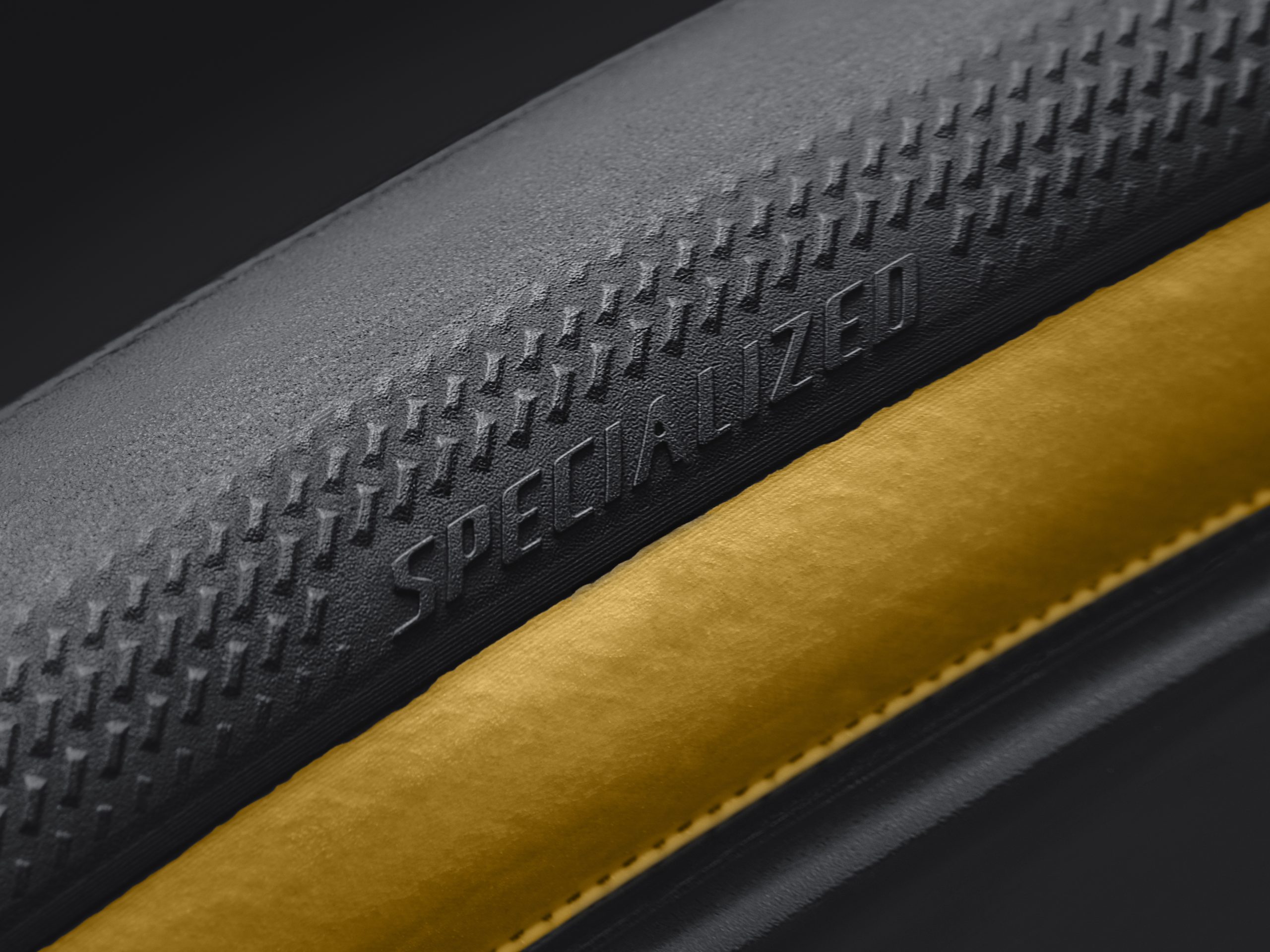
The Cotton TLR tyre features a 320TPI (threads-per-inch) polycotton casing, layered over with Specialized’s established Gripton T2 and T5 compounds.
Specialized says the use of polyester as “the core” of the casing, with cotton fibres functioning as a “wrap”, delivers the tear resistance and strength needed, while the cotton material offers the desired ride feel and flexibility.
This material approach differs from Vittoria, for example, which uses aramid fibres in conjunction with cotton in its Corsa Pro TLR line tyres.
In theory, polyester is more elastic than aramid (albeit aramid is used commonly to improve puncture protection), which Specialized suggests helps the Cotton TLR tyres deliver peak suppleness and smoothness on a given road.
Remco Evenepoel is said to have described the tyre as “perfect”. Specialized
Specialized also says its Gripton T2 and T5 compounds produce the grip racers need in changing conditions – the low-rolling resistance T2 compound applied at the smooth centre strip, and the grippier T5 compound on the textured shoulders.
It’s worth noting that despite references to the Cotton TLR being faster than previous-generation cotton-cased tyres, Specialized doesn’t offer any data to back up the claim.
Interestingly, this top-tier tyre appears to have dropped the S-Works branding. Specialized
That said, the Cotton TLR tyre is designed purely for racing and “enthusiast” use, with Specialized stating it’s not suitable for “all-season riders seeking high durability” or those “expecting puncture-proof endurance”.
The Cotton TLR tyre is compatible with hookless rims (despite sibling components brand Roval’s latest high-performance wheels featuring a hooked design), and is available in 700×28, 30 and 32c sizes, weighing from a claimed 280g, and priced at £85 / $109.99 / €99.
You may be under the impression that in order to upgrade to a really big gaming monitor, a really big budget is a prerequisite. While true in some instance, that is not always the case. There are some reasonably-priced options available, and even better, Amazon just dropped one of them to an all-time low price with a 25% discount over MSRP.
Acer
This
404 Media article looks at how the US Customs and Border Protection
agency (CBP) is using location data from phones to track the location of
people of interest.
Specifically, CBP says the data was in part sourced via real-time
bidding, or RTB. Whenever an advertisement is displayed inside an
app, a near instantaneous bidding process happens with companies
vying to have their advert served to a certain demographic. A side
effect of this is that surveillance firms, or rogue advertising
companies working on their behalf, can observe this process and
siphon information about mobile phones, including their
location. All of this is essentially invisible to an ordinary phone
user, but happens constantly.
We should note that the minimal advertising shown on LWN is not delivered
via this bidding system.
This is a wonderfully designed puzzle game that oozes atmosphere. The game tasks players with exploring a gigantic mansion, but there’s a twist. You actually build this mansion as you explore, room by room. This is done by placing what can only be described as magical blueprints.
The goal is to fully explore the mansion and solve its many, many mysteries. However, there are only so many blueprints and too many obstacles. This is where the roguelike part comes in. When you build yourself into a dead end, you go to sleep and end the run. All of the rooms reset, but you may have learned a thing or two for the next run. Rinse and repeat.
It’s a very nifty gameplay loop, which is why it easily found a spot on Engadget’s list of our favorite games from 2025. We even called it a masterpiece, which is deserved. In other words, this is a fantastic addition to the Nintendo eShop.
I only have one small gripe. This is a gorgeous game, but that’s primarily due to the art direction and overall vibe. Why is it a Switch 2 exclusive? It seems like the OG Switch could handle it. In any event, this version is priced at $30 but has been discounted to $20 for launch.
This article originally appeared on Engadget at https://www.engadget.com/gaming/nintendo/blue-prince-is-out-on-switch-2-today-complete-with-mouse-control-162242506.html?src=rss