Ivy Road, the video game developer behind Annapurna-published cozy game Wanderstop, is shutting down on March 31. While Wanderstop was well-received and even critically acclaimed, it seems like it wasn’t enough of a hit to sustain the studio while it develops a new game without getting investors involved. In its announcement, the Ivy Road team said the company failed to land a funding and publishing deal for its new project, Engine Angel. The studio’s problems securing funding for its new game first came to light back in January when it laid off five team members.
Even though the studio is shutting down soon, the team said it has one last surprise that will help Wanderstop reach new players. It didn’t say what the surprise was, but the team said Annapurna Interactive will share more news about it in the future. Wanderstop revolves around a former fighter, Alta, who manages a tea shop in a magical forest. In the game, you can gather ingredients and concoct tea, tidy up, talk to customers and learn their stories or just sit on a bench to think and relax. The game will still be available to play and purchase even after Ivy Road shuts down.
This article originally appeared on Engadget at https://www.engadget.com/gaming/wanderstop-developer-ivy-road-is-shutting-down-153655278.html?src=rss
Long-time Slashdot reader Qbertino writes: … but the CERN Project “Antimatter in motion” just did it. For the first time in history researchers at CERN have transported 92 antiprotons on a truck in a specially designed magnetic enclosure. The test-drive went so well that the researchers spontaneously decided to go another round… The purpose of the experiment was to test the feasibility of transporting antimatter to other facilities in Europe to conduct further antimatter research. German news Tagesschau has a nice report.
CNN reports that the antiproton enclosure was nearly six feet tall and weighed about 1,760 pounds. And Smithsonian magazine explains that it trapped the antiprotons in a vacuum chamber that had to be cooled to around -450 degrees Fahrenheit:
Experts used a crane to carefully move the box of precious cargo from a lab onto a truck, which took about three hours, per the Associated Press’ Jamey Keaten. Then, they drove the vehicle for roughly 30 minutes around CERN’s campus, and subsequently returned the antiprotons to the lab. They worked with so little antimatter that even if it did touch ordinary matter and annihilate, it would release a small amount of energy detectable only by a special instrument, reports the AP.
AMD’s GAIA AI agent framework (that previously stood for “Generative AI Is Awesome” albeit they seemed to have dropped promoting it as that name) for Ryzen AI hardware is out with a new version. AMD GAIA 0.17 introduces Agent UI as a new privacy-first web application for local AI agents…
A dog missing for two months was found at an animal shelter — and its owner received an email from an artificial intelligence service that identified it, according to the Washington Post.
“As controversial as AI is right now, this is one of those areas where it’s a real win,” according to the chief executive at the nonprofit animal welfare organization Best Friends Animal Society. And while it shouldn’t replace microchipping pets, AI does offer another tool to help desperate pet owners (and overcrowded animal shelters) — and might even be “game-changing”…
People send photos of their lost pets to a database, and AI compares the pets’ features — including facial structure, coat pattern and ear shape — to photos of stray pets that have been spotted elsewhere. Many of the stray pets have already been taken to shelters… Doorbell cameras have recently implemented facial recognition for dogs, and perhaps the largest AI database for pet reunification is Petco Love Lost, which says it has reunited more than 200,000 pets and owners since 2021… After owners upload photos of their lost pets, AI scans thousands of photos of lost animals from social media and from about 3,000 animal shelters and rescues that use the software, according to Petco Love, an animal welfare nonprofit that’s affiliated with the pet store Petco. It notifies owners if two photos match.
The article notes that one in three pets go missing during their lifetime, according to figures from the Animal Humane Society. “But as technology has progressed, so have resources for finding lost pets” — including GPS collars — and now, apparently, AI-powered pet identification.
The English translator and editor for KDC II claimed that he’s been replaced with AI in a bid to make Warhorse Studios “more effective” and “save finances”
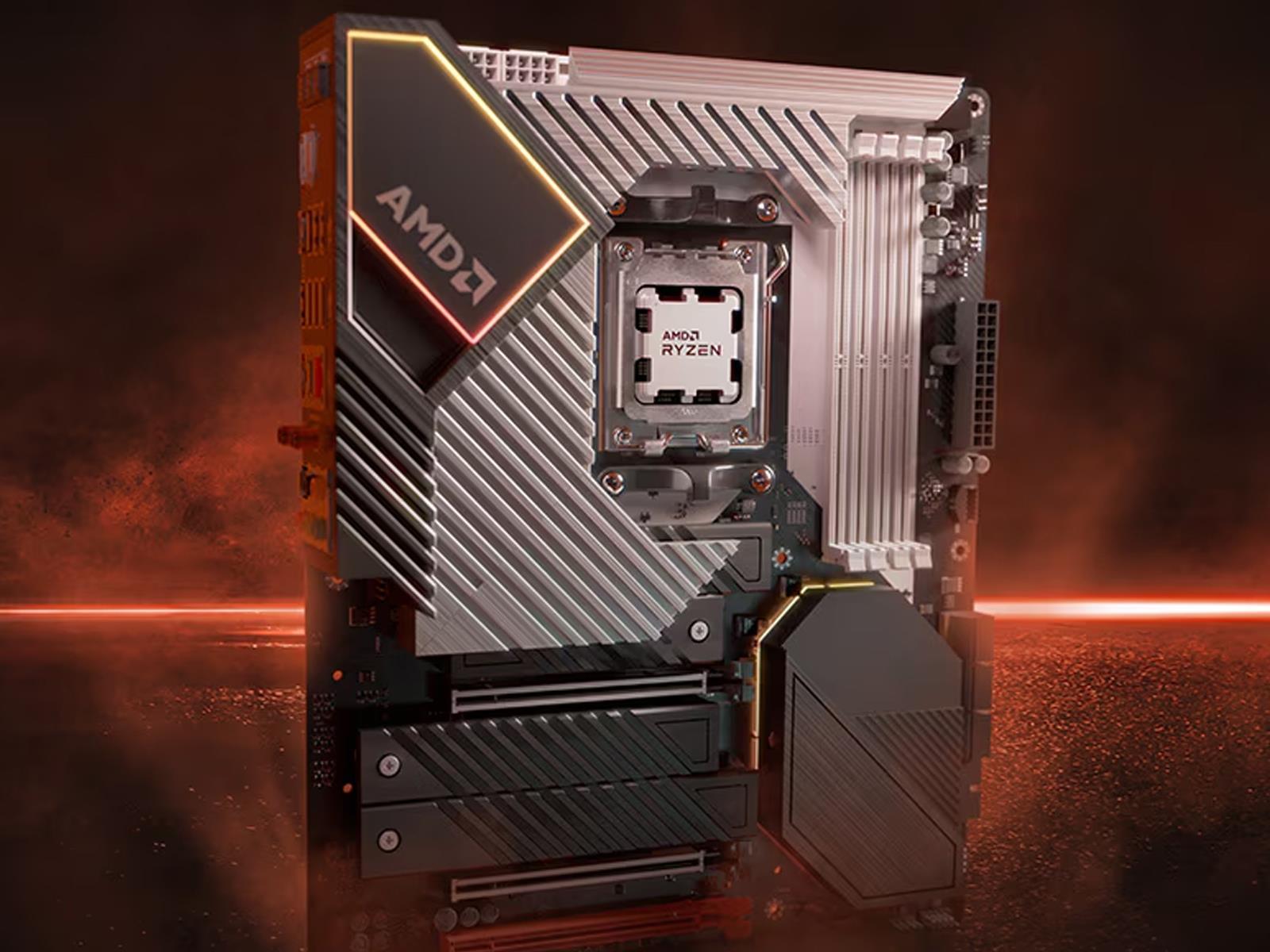
One of the major selling points of AMD’s Ryzen processors for the desktop is the chip designer’s commitment to socket longevity. To put it into perspective, socket AM4 introduced with AMD’s original Zen processors is turning 10 years old this year and is still seeing platform support with chipset updates and even new processor models. Will
TaVRn’s Takedown, a new beat ’em up from VR studio LDLC, is out now on Quest and Steam.
The chaotic and comedic physics-driven melee game throws players into over-the-top tavern brawls. You’ll fight your way through tavern after tavern of troublemakers, all in various stages of inebriation, defeat epic bosses, and restore order to the land of Mliuej one punch at a time. The game’s immersive combat involves throwing punches and using weapons and the environment to dispatch your foes.
The game’s developers describe TaVRn’s Takedown as “equal parts absurd adventure and stress-relieving brawler.”
0:00
/1:30
TaVRn’s Takedown is the first VR experience set in the fictional Naheulbeuk universe. Created in 2001 by John Lang, The Dungeon of Naheulbeuk began as a comedic audio fantasy series parodying traditional role-playing game tropes, and has grown into a cult phenomenon with comics, novels, videogames, and more.
We’ve been playing TaVRn’s Takedown over the past week and will have an impressions article posted early next week.
Meta went first, then Valve, and now PlayStation VR2 players can take advantage of discounts for dozens of games right now.
The annual PlayStation Spring Sale kicked off earlier this week with many of the best PS VR2 games on sale. Just to name a few: UploadVR’s 2025 Game of the Year Arken Age, The Game Awards’ Best VR/AR Game The Midnight Walk, and the Dice Awards Immersive Reality Game of the Year Ghost Town.
A partial list of the games on sale is below, but be sure to check out the full sale here. Over seventy full games are on sale along with many DLC add-ons and bundles.
Note: Games marked with an asterisk (*) have an additional discount for PlayStation Plus Premium subscribers.
The open world Middle Ages life simulator sees a drastic price cut alongside the free new content update. The new update also adds support for Meta’s new FrameSync technology to improve performance.
Medieval Dynasty New Settlement celebrates its two year anniversary this week. It first released in late March 2024 for $29.99. Update 2.5, the fifteenth post release update accompanies a permanent price drop to $13.99, less than half its original price.
0:00
/0:47
Medieval Dynasty is no stranger to seasonal events. Developer Spectral Games has previously done Christmas, Halloween, and Easter updates with themed decorations in towns across the valley and as craftable items. This year’s Easter update brings back an Easter egg hunt spanning the entire map and three new decorations: an outhouse (with a ‘smelly’ daily reward), a stone pathway, and a barricade.
In the announcement, Spectral Games also addressed the noted downturn in frequency of updates with the following statement:
We’re not hiding the fact that in recent months the pace of work on the game has slowed down. We want to be transparent and explain that this is tightly connected to production economics and technological barriers. Maintaining the original development pace has become unprofitable given current sales. Although the game has been successful, the cost of further development is enormous. As a small studio, we must manage our resources wisely. Moreover, with the scope of features like its open-worldness and customizations, we’re reaching the limits of Meta Quest 3, and with Quest 2 we’ve likely already exceeded them.
The new update also notes support for Meta’s new FrameSync technology, bringing better gameplay performance. There were no specifics in the announcement about FrameSync-specific improvements.
Medieval Dynasty is available on Meta Quest for $13.99.
Developer Buffalo Buffalo has rescheduled the move out of Early Access; the Quest is now slated for April while PC VR will follow later in the year.
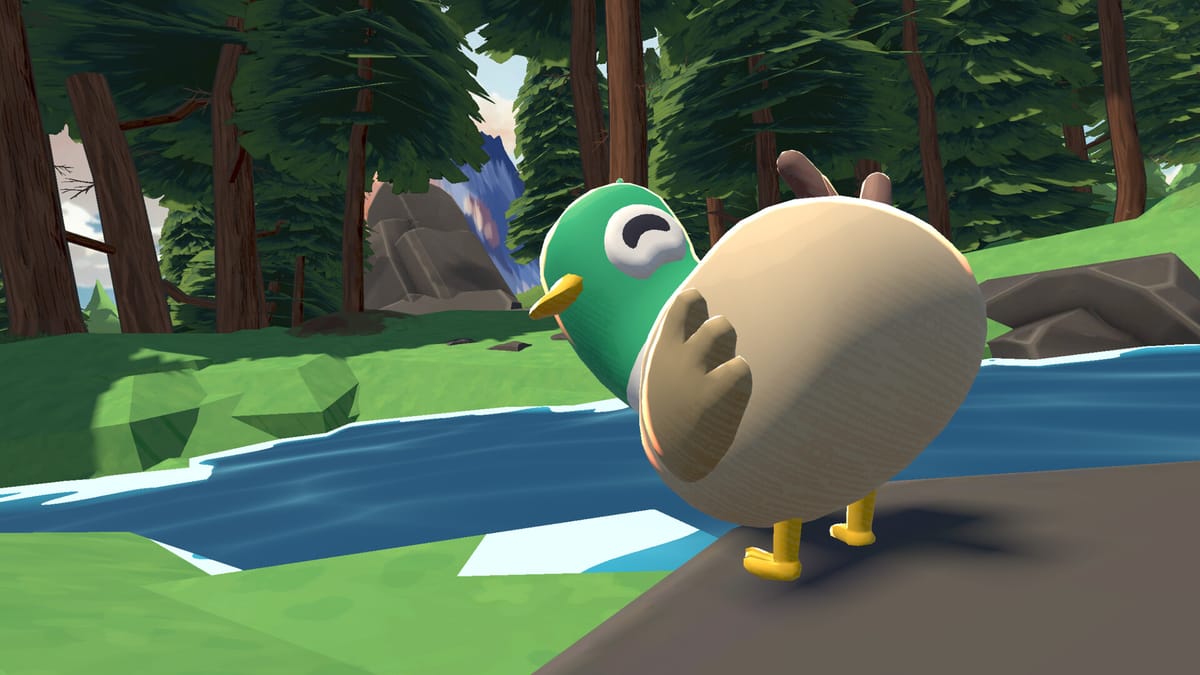
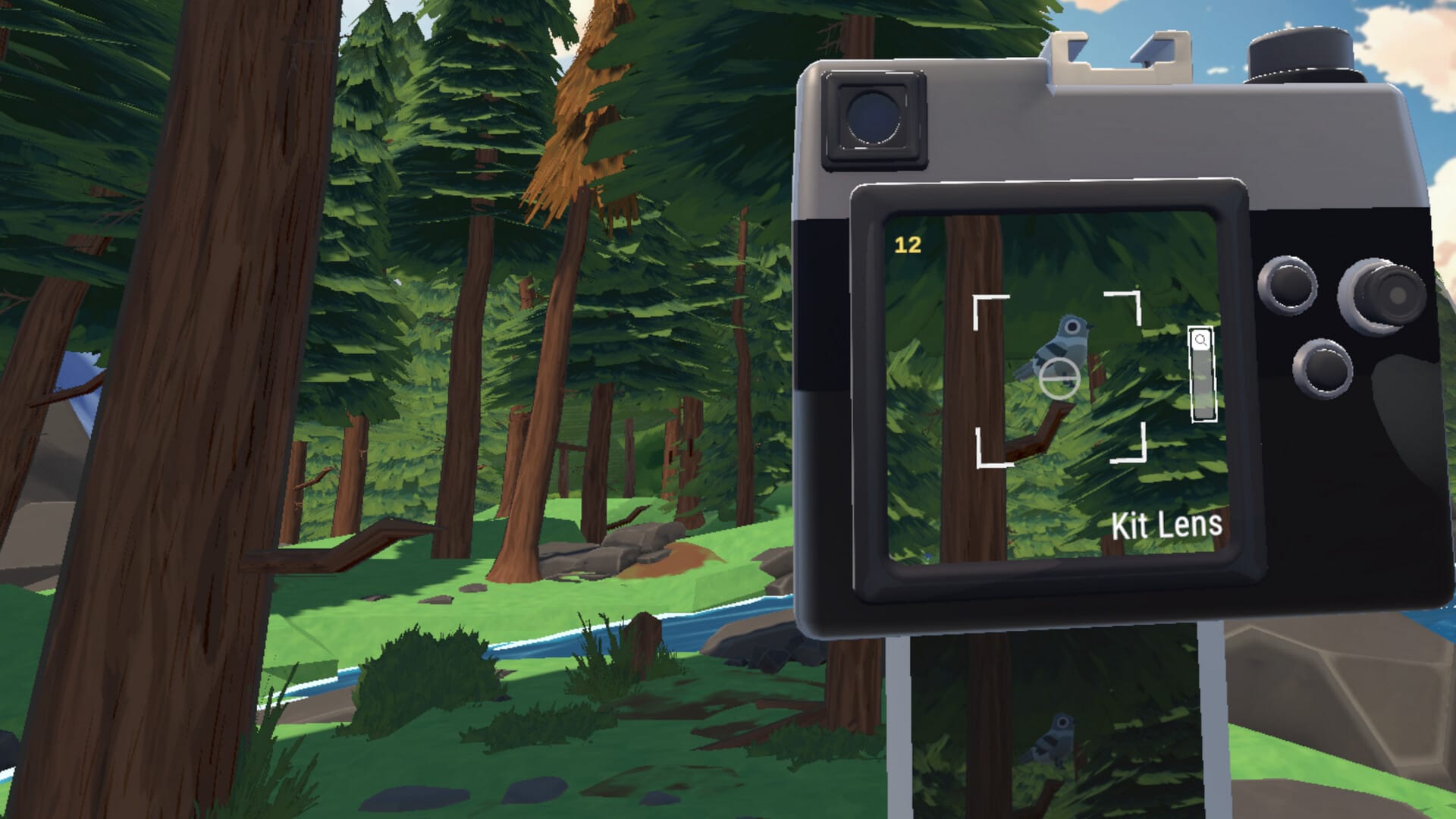
Birdseed VR is a cozy birdwatching sim currently available free-to-play on Meta Quest in Early Access. The game participated in a recent Steam Next Fest with the demo still available to play. We took a look at Birdseed recently, saying “when it works without crashing, I’m enjoying every minute that I spend in Birdseed. Though those minutes amount to just about 30 per day, it’s a nice half hour in VR.”
The full release was originally slated for March on Quest and Steam, but today Buffalo Buffalo announced on BlueSky that the full release on Quest has been pushed to April 30. The PC VR version is stated to come “at a later date in 2026.” This also delays the planned multiplayer support that was to come with the 1.0 update. Buffalo Buffalo is also working on a VR port of its skiing rhythm game Fresh Tracks.
Birdseed VR
Birdseed VR is available now in Early Access on Quest 3 headsets. A free demo on Steam will be kept up for a few more weeks due to the delay.
The Boys: Trigger Warning has the proverbial face only a mother could love. In spite of underwhelming visuals, it still pulls off stealth action that neither betrays its source material nor the tropes of its genre.
For those not familiar with The Boys, imagine if the Justice League or the Avengers were arrogant, socialite, super-powered jerks (‘supes’ is the canon term) working for and protected by a corrupt mega corporation. The titular Boys are a group of vigilantes working to take them down.
The Facts
What is it?: A stealth action game based on the comic book inspired Amazon Prime series Platforms: Meta Quest (played on Quest 3) Release Date: March 26, 2026 Developer: Arvore Immersive Games Publisher: Sony Pictures Virtual Reality Price: $ 29.99
VR stealth games are an acquired taste. Some VR gamers who put on a headset want to actually do something and stealth works against that. Great stealth games are about waiting, usually crouched or otherwise out of sight, while plotting and memorizing guard patterns to either sneak past or take them out quietly. In that respect, The Boys: Trigger Warning delivers, bringing every stealth trope in the book to its roughly ten hours of gameplay.
Bad enemy AI that rarely thinks to look up? Yes. Getting spotted, only to hide and wait out the thirty seconds of alarms and guards before they forget they spotted you? Absolutely. The same enemies never noticing what should be very loud movement above their heads? Of course. A powerful, well armed protagonist that still manages to die far too quickly if attacked? You bet! I laughed each time I killed a guard and watched another walk past the body as if nothing was wrong. If you are expecting any innovations on the basic stealth formula, look elsewhere. For comparable games in VR, Digital Lode’s Espire series and Fast Travel Games’ Vampire: The Masquerade – Justice come to mind.
0:00
/1:27
Taking down guards in The Boys: Trigger Warning – Captured by UploadVR
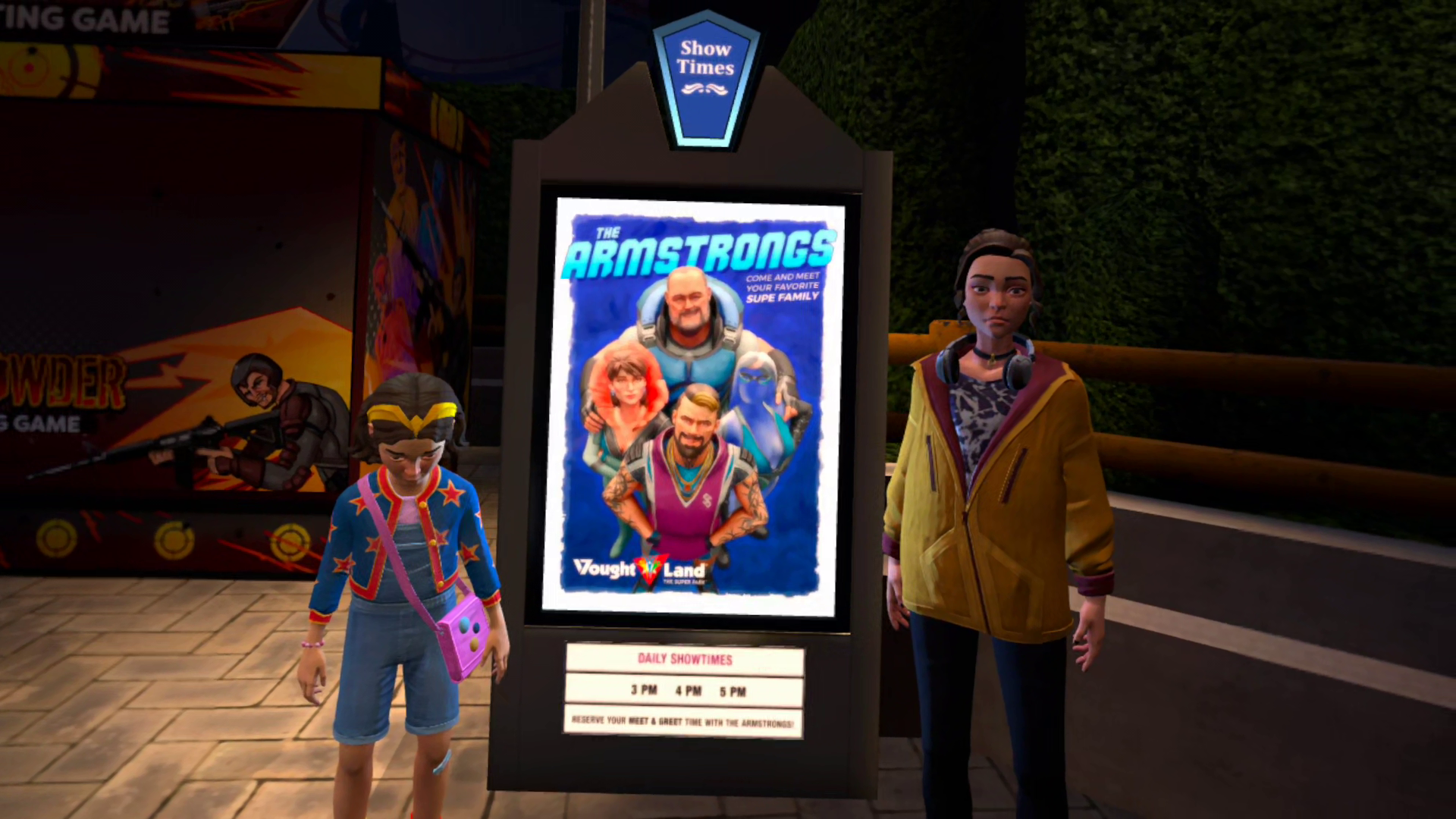
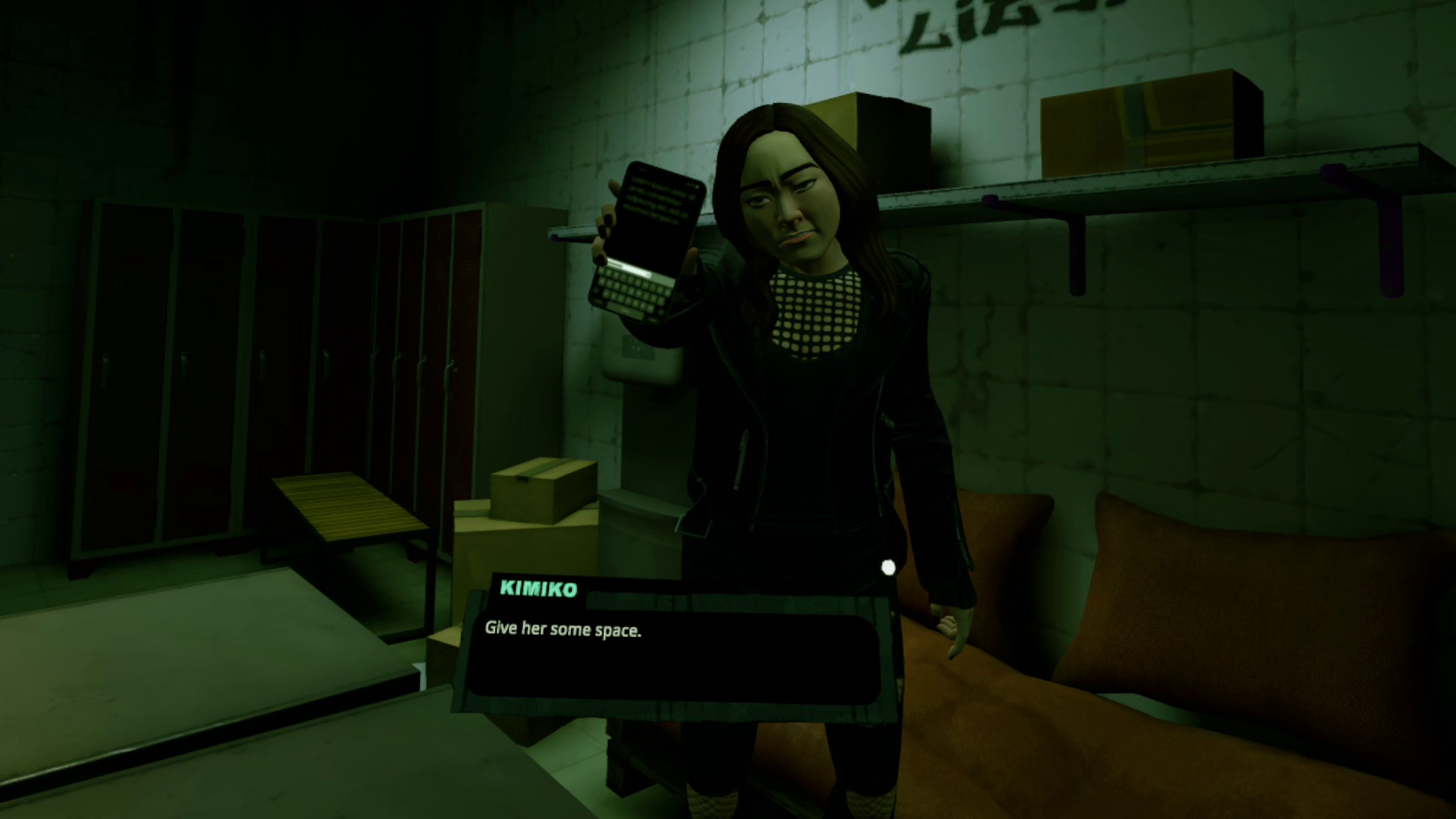
You play as Lucas Costa, who takes his daughters to visit The Armstrongs, a celebrity superhero family. Things go tragically wrong, leaving Lucas on the brink of death. He’s rescued by series regulars Butcher, Mother’s Milk, and Kimiko and injected with a drug called Compound V that saves his life and grants him superpowers. After this, he is recruited into The Boys with the promise of vengeance. It’s a fairly straightforward revenge story wrapped in the vulgar, violent world The Boys fans know and love.
With these artificial powers, starting with telekinesis, a ‘TK sense’ (X-ray vision), and a long range teleport, you infiltrate Vought to gather intel on and eventually confront the Armstrongs. Throughout the game are injectables called ‘Temp V’ that temporarily grant other abilities. Dosages are limited, but like any good stealth game, there are just enough refills scattered about to avoid going empty for too long, plus they regularly respawn. When you do use your powers to take enemies down, particularly the sneak-behind telekinetic kill, it’s very satisfying.
0:00
/0:33
The game also ramps as it wears on. Every mission adds a new wrinkle in the form of new enemies or environmental challenges to test your mastery of Lucas’s powers as well as the restraint to keep from relying on them like a crutch. As you get better, the game raises the stakes to match.
Using new characters is smart because The Armstrongs and the Costas don’t have plot armor, meaning Arvore was free to do whatever it wanted to service the story. With that said, the best parts of the game are with the series’ cast. Butcher’s callous characterization is spot on. Homelander is a standout each time he appears and has the best dialogue in the game. The usage of Soldier Boy is surreal and excellent. Several of the show’s cast members voice their characters, lending some authenticity to the game as well.
There are collectibles in the form of documents and audio recordings for players into that sort of thing. I’m usually not, but thankfully these flesh out the world and contain Easter eggs for fans of the series, so I felt compelled to track them down.
The Boys: Trigger Warning captured by UploadVR
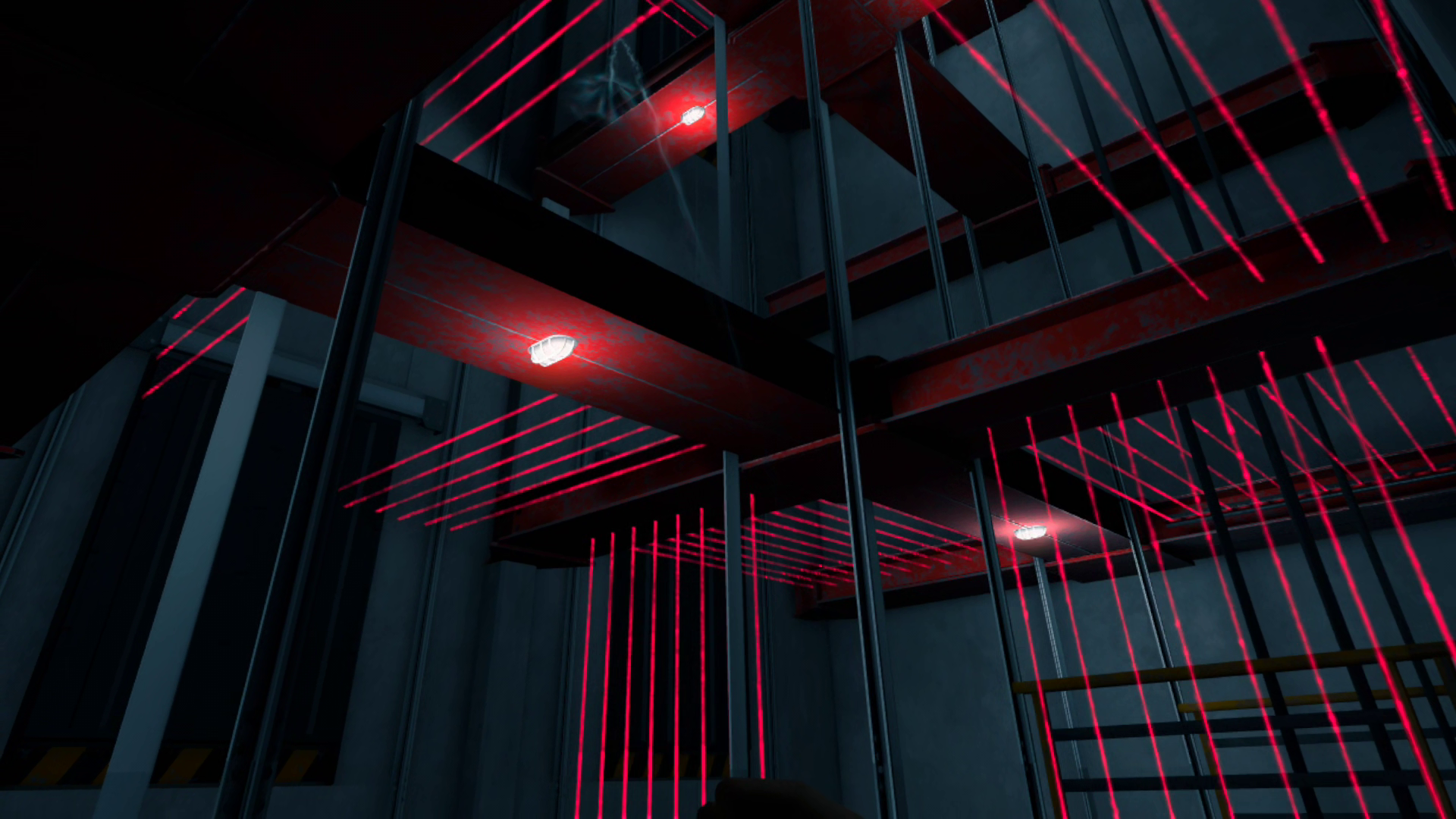
The Boys is hurt by two issues: visuals and interactions. The series characters are at least recognizable, albeit a bit goofy, but this is at least in line with Arvore’s Pixel Ripped aesthetic. The flat and bland environments are the true letdown. You only interact with The Boys between missions, otherwise it’s just Butcher speaking through an ear piece while navigating drab hallways avoiding the same guards for most of the game. Then there are some visual quirks. If I killed a guard on a staircase, their blood hovered above in a flat circle. While scaling an elevator shaft, the area above me flickered in and out of existence. Walking side to side produced a mirrored, almost reprojection-like effect. Here’s hoping the upcoming PlayStation VR2 version gets a visual lift.
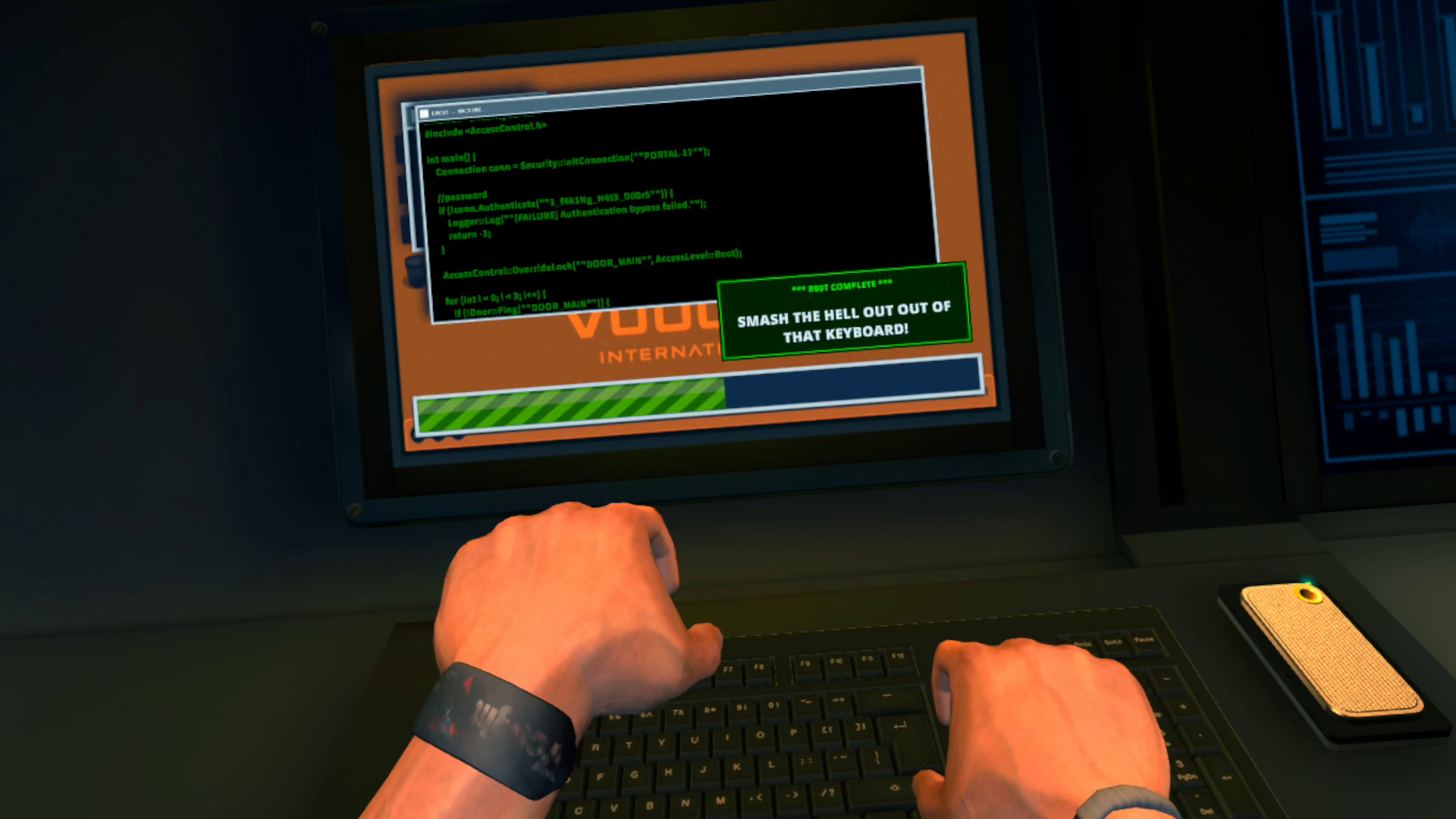
You physically touch half a dozen objects in this game. The Temp V syringes, enemies if using one specific Temp V ability, a hacking device, keycards, keycode terminals, and keyboards, the latter of which is just banged on. Your hands just don’t cooperate at times, especially in the vents and using keypads. Telekinesis and teleportation do most of the lifting here, leaving Trigger Warning without a sense of tactile presence I found myself longing for.
Comfort
The Boys is encouraged to be played seated, and with limited physical interaction in the game, is most comfortably played that way. It uses stick-based movement with a teleport ability unlocked after the first mission.
There are motion vignette settings, snap and smooth turning with options for each, and a choice between head or hand based movement. There’s also a forced vignette when crouching that cannot be disabled.
With all that said, I still liked Trigger Warning. There’s a tricky balancing act here, empowering the player to indulge in gloriously graphic violence, while still maintaining a belief that you can die at any moment. Trigger Warning pulls this off while still delivering an effective, if mostly predictable, story.
The Boys: Trigger Warning – Final Verdict
Trigger Warning mostly plays it safe, delivering a run-of-the-mill stealth game lifted by the world it is set in. The wry, dark humor of The Boys undercuts the earnestness of the Costas/Armstrong story and the game strikes a good balance between power complex and a genuine sense of danger.
I would recommend The Boys: Trigger Warning to specifically to fans of the series and players who enjoy stealth games. Others may otherwise find the pace too slow and the lack of physicality off-putting and with underwhelming graphics, it’s tough to recommend.
UploadVR uses a 5-Star rating system for our game reviews – you can read a breakdown of each star rating in our review guidelines.
Three-hundred million years ago, the skies of the late Palaeozoic era were buzzing with giant insects. Meganeuropsis permiana, a predatory insect resembling a modern-day dragonfly, had a wingspan of over 70 centimeters and weighed 100 grams. Biologists looked at these ancient behemoths and asked why bugs aren’t this big anymore. Thirty years ago, they came up with an answer known as the “oxygen constrain hypothesis.”
For decades, we thought that any dragonflies the size of hawks needed highly oxygenated air to survive because insect breathing systems are less efficient than those of mammals, birds, or reptiles. As atmospheric oxygen levels dropped, there wasn’t enough to support giant bugs anymore. “It’s a simple, elegant explanation,” said Edward Snelling, a professor of veterinary science at the University of Pretoria. “But it’s wrong.”
Insect breathing
Unlike mammals, insects don’t have a centralized pair of lungs and a closed circulatory system that delivers oxygen-rich blood to their tissues. “They breathe through internalized tubing called the tracheal system,” Snelling explained.
Major changes are afoot at Xbox, which has already seen a big shakeup to top management with the departures of Phil Spencer, the long-time face of the brand, and former Xbox President Sarah Bond. Microsoft elevated Asha Sharma to Executive Vice President and CEO of Microsoft Gaming to lead Xbox’s comeback, and while a lot of the talk as been
Over a decade ago, when I was first starting to pretend I could write about quantum mechanics, I covered a truly bizarre experiment. One half of a pair of entangled photons was sent through a device it could navigate as either a particle or a wave. After it was clear of the device, the other half of the pair was measured in a way that forced the first to act as one or the other. Once that was done, the first invariably behaved as if it were whatever the measurement made it into the whole time.
It was as if the measurement had reached backward in time to alter the photon’s behavior, raising questions about whether causality itself actually applied to quantum mechanics.
Unbeknownst to me, physicists have been asking the same question and have designed experiments to probe it in detail. A few weeks back, they provided an experiment that seems to indicate it’s possible to create quantum superpositions of two different series of events, essentially making the question of whether A or B happened first a matter of probability*. While the current experiment leaves a few loopholes, the researchers behind the work think they could ultimately be eliminated.
The Linux 7.0-rc6 kernel due for release tomorrow has a lot of audio fixes/quirks to correct a wide variety of different hardware issues, mostly different problematic laptops for their speakers and/or microphone behavior under Linux…
Calibre developer Kovid Goyal released Calibre 9.6 today as a hefty update of this open-source, free, and cross-platform e-book management software for GNU/Linux, macOS, and Windows.
Last year LLVM began landing their Distributed ThinLTO “DTLTO” support as an enhancement to their ThinLTO approach for link-time optimizations. An improvement merged this week to LLVM addresses a performance bottleneck discovered when adding files to the link…
Our oceans are full of sophisticated, perfect traps: Nets, hooks, fishing lines. Designed to capture animals destined for our dinner tables, they often catch other wildlife too.
This accidental harvest is known as bycatch, and every year it causes the death of millions of marine animals, including whales, dolphins, sharks, turtles, and seabirds. Nets and gear can asphyxiate animals or cause fatal injuries; even when the animals are tossed back to sea, they frequently die. Bycatch is also a dilemma for fishermen—entangled creatures can destroy equipment, costing time, money, and fisheries’ reputations.
Over the decades, conservationists, researchers, and fishermen have developed ways to minimize various kinds of bycatch in different fishing stocks around the world. But putting these solutions to work is often a challenge, and many mitigation strategies are never widely implemented.