
Qualcomm’s new Arduino Ventuno Q is an AI-focused computer designed for robotics

Qualcomm, which purchased microcontroller board manufacturer Arduino last year, just announced a new single-board computer that marries AI with robotics. Called the Arduino Ventuno Q, it uses Qualcomm’s Dragonwing IQ8 processor along with a dedicated STM32H5 low-latency microcontroller (MCU). “Ventuno Q is engineered specifically for systems that move, manipulate and respond to the physical world with precision and reliability,” the company wrote on the product page. 

The Ventuno Q is more sophisticated (and expensive) than Arduinio’s usual AIO boards, thanks to the Dragonwing IQ8 processor that includes an 8-core ARM Cortex CPU, Adreno Arm Cortex A623 GPU and Hexagon Tensor NPU that can hit up ot 40 TOPs. It also comes with 16GB of LPDDR5 RAM, along with 64GB of eMMC storage and an M.2 NVME Gen.4 slot to expand that. Other features include Wi-Fi 6, Bluetooth 5.3, 2.5Gbps ethernet and USB camera support. 

The Ventuno Q includes Arudino App Lab, with pre-trained AI models including LLMs, VLMs, ASR, gesture recognition, pose estimation and object tracking, all running offline. It’s designed for AI systems that run entirely offline like smart kiosks, healthcare assistants and traffic flow analysis, along with Edge AI vision and sensing systems. It also supports a full robotics stack including vision processing combined with deterministic motor control for precise vision and manipulation. It’s also ideal for education and research in areas like computer vision, generative AI and prototyping at the edge, according to Arduino. 

“With Ventuno Q, AI can finally move from the cloud into the physical world,” Qualcomm wrote. “This platform enables building machines that perceive, decide, and act — all on a single board. Our goal is to make advanced robotics and edge AI accessible to every developer, educator, and innovator.” The Arduino Ventuno Q will be available in Q2 2026 from the Arduino Store and elsewhere and is expected to cost under $300. 

This article originally appeared on Engadget at https://www.engadget.com/ai/qualcomms-new-arduino-ventuno-q-is-an-ai-focused-computer-designed-for-robotics-113047697.html?src=rss
“It doesn’t feel safe”—Many international game developers plan to skip GDC in US

This week, tens of thousands of game developers and producers will once again gather in San Francisco, as they have since 1988, for the weeklong Game Developers Conference. But this year’s show will be missing many international developers who say they no longer feel comfortable traveling to the United States to attend, no matter how relevant the show is to their work and careers.

Dozens of those developers who spoke to Ars in recent months say they’re wary of traveling to a country that has shown a callous disregard for—or outright hostility toward—the safety of international travelers. That’s especially true for developers from various minority groups, those with transgender identities, and those who feel they could be targeted for outspoken political beliefs.

“I honestly don’t know anyone who is not from the US who is planning on going to the next GDC,” Godot Foundation Executive Director Emilio Coppola, who’s based in Spain, told Ars. “We never felt super safe, but now we are not willing to risk it.”

Read full article

Comments

Stan’s motorised keg should make setting up tubeless tyres easier – just don’t mistake it for a coffee urn

Bike retailers go through a lot of sealant, as tubeless tyres increasingly take over the bike world. Stan’s has just launched its OnTap sealant urn that stores and mixes a large volume of sealant to make the task of dispensing easier.

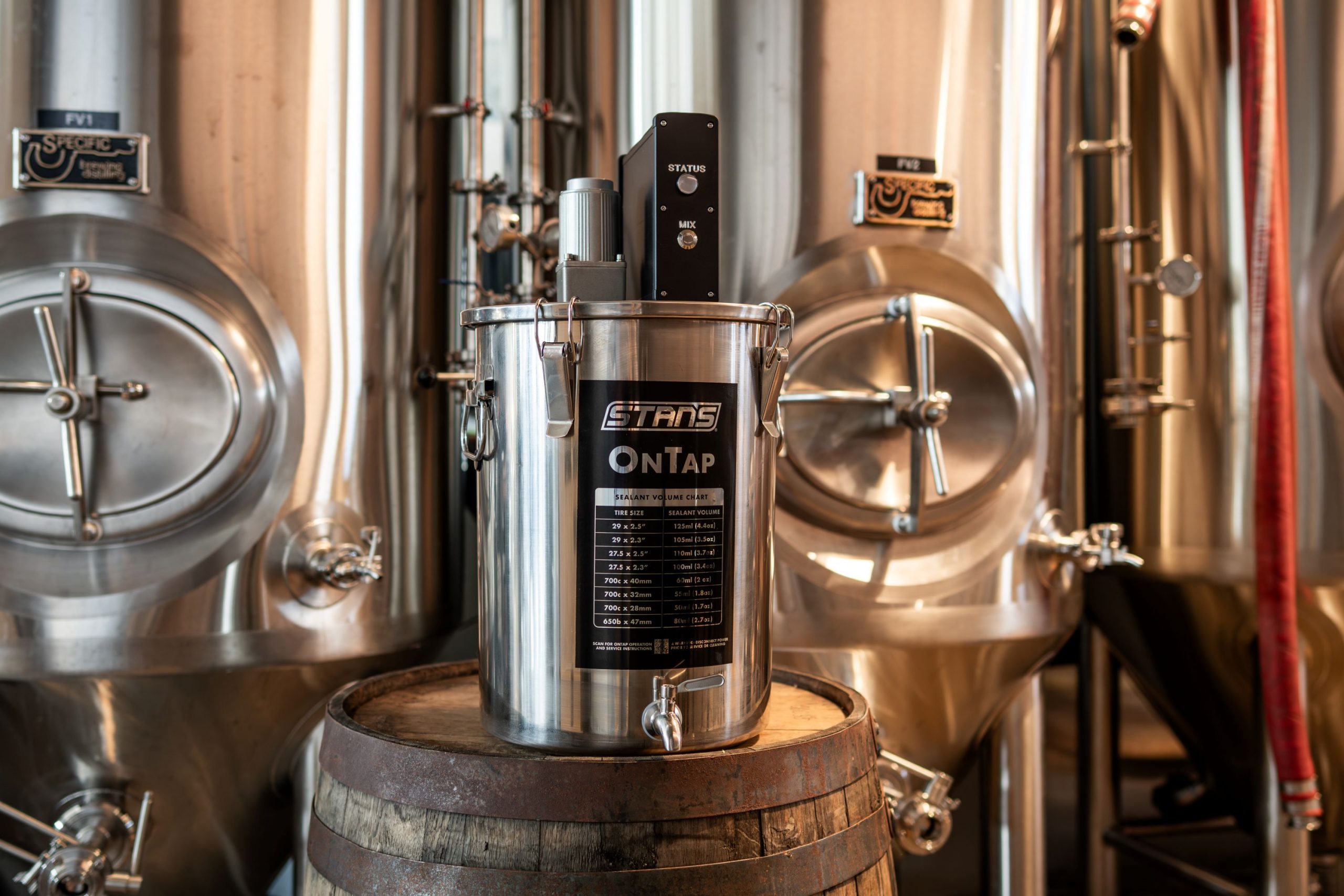
Stan’s OnTap looks suspiciously like a coffee urn, with a tap at the base to dispense tubeless sealant into an injector or measuring cup to add the sealant to tyres. But rather than coffee, it’s designed for efficient mixing and dispensing of tyre sealant for bike workshops.

Because the particles in sealant have a tendency to settle out over time, there’s a motorised stirrer built into the dispenser, with a mix button that Stan’s says takes 10 seconds to get the sealant ready to dispense.

“A positive rider experience depends on evenly dispersed puncture-sealing particles throughout the sealant, which becomes difficult to maintain in containers larger than one litre,” says Mike Bush, Stan’s chief product officer.

A computer-controlled mixer distributes sealant particles in 10 seconds, so the sealant is ready to dispense.

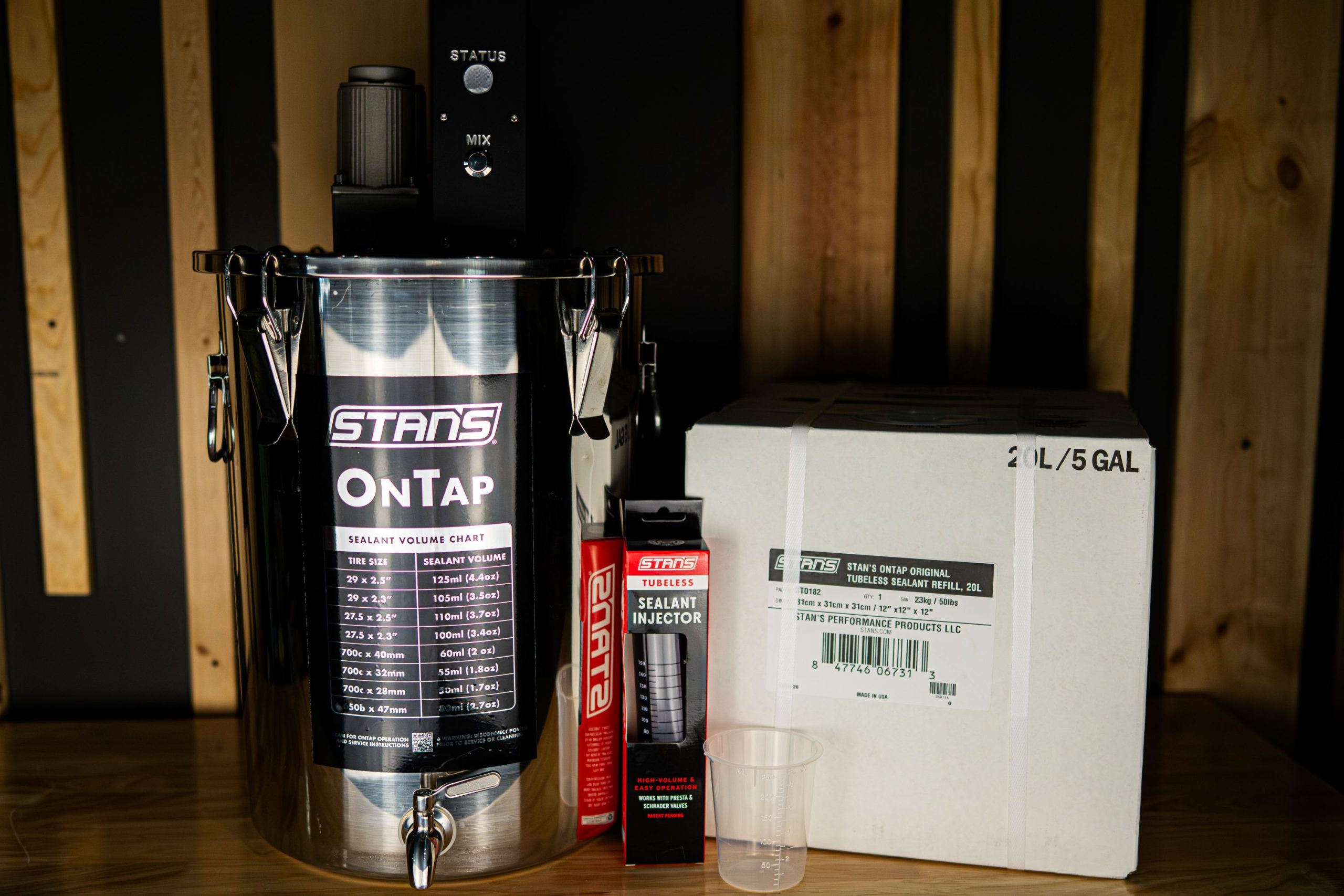
The OnTap dispenser has the capacity for enough sealant for 80 mountain bikes or 160 road bikes. There’s a list of recommended volumes for different tyre sizes on the front of the urn.

Stan’s cites more precise sealant dispensing, better tracking of sealant usage and improved shop service margins as key benefits of the system for bike workshops.

The 20-litre refill saves 75% of the packaging of one-litre bottles.

Stan’s sells 20-litre refills for the OnTap dispenser, which it says reduce plastic use by 75% over individual one-litre sealant bottles, as well as being a lot cheaper. It reckons the price of the OnTap dispenser is paid back after only 10 refills.

The OnTap dispenser is for sale to registered Stan’s dealers only, so you can’t buy one to put in your shed. Stan’s hasn’t advertised the price either.

F&S FSSM8MP SMARC Module Features NXP i.MX 8M Plus with Dual GbE and Edge AI

The FSSM8MP from F&S Elektronik Systeme is a SMARC 2.2 computer-on-module built around the NXP i.MX 8M Plus processor. The module is designed for embedded and industrial systems requiring multimedia processing, machine vision capability, and edge inference support. The platform integrates four Arm Cortex-A53 cores operating up to 1.8 GHz alongside a Cortex-M7 real-time core […]

EFF, Ubuntu and Other Distros Discuss How to Respond to Age-Verification Laws

System76 isn’t the only one criticizing new age-verification laws. The blog 9to5Linux published an “informal” look at other discussions in various Linux communities.

Earlier this week, Ubuntu developer Aaron Rainbolt proposed on the Ubuntu mailing list an optional D-Bus interface (org.freedesktop.AgeVerification1) that can be implemented by arbitrary applications as a distro sees fit, but Canonical responded that the company does not yet have a solution to announce for age declaration in Ubuntu. “Canonical is aware of the legislation and is reviewing it internally with legal counsel, but there are currently no concrete plans on how, or even whether, Ubuntu will change in response,” said Jon Seager, VP Engineering at Canonical. “The recent mailing list post is an informal conversation among Ubuntu community members, not an announcement. While the discussion contains potentially useful ideas, none have been adopted or committed to by Canonical.”

Similar talks are underway in the Fedora and Linux Mint communities about this issue in case the California Digital Age Assurance Act law and similar laws from other states and countries are to be enforced. At the same time, other OS developers, like MidnightBSD, have decided to exclude California from desktop use entirely.

Slashdot contacted Hayley Tsukayama, Director of State Affairs at EFF, who says their organization “has long warned against age-gating the internet. Such mandates strike at the foundation of the free and open internet.”

And there’s another problem. “Many of these mandates imagine technology that does not currently exist.”
Such poorly thought-out mandates, in truth, cannot achieve the purported goal of age verification. Often, they are easy to circumvent and many also expose consumers to real data breach risk.

These burdens fall particularly heavily on developers who aren’t at large, well-resourced companies, such as those developing open-source software. Not recognizing the diversity of software development when thinking about liability in these proposals effectively limits software choices — and at a time when computational power is being rapidly concentrated in the hands of the few. That harms users’ and developers’ right to free expression, their digital liberties, privacy, and ability to create and use open platforms…

Rather than creating age gates, a well-crafted privacy law that empowers all of us — young people and adults alike — to control how our data is collected and used would be a crucial step in the right direction.


Read more of this story at Slashdot.

MSI MS-C936 Ultra-Thin Fanless Box PC Combines Intel Raptor Lake-P U-Series CPUs with Quad Displays and Dual 2.5GbE

MSI’s MS-C936 is a slim fanless box PC built around Intel Raptor Lake-P U-series processors. The system is designed for embedded deployments such as digital signage, automation platforms, and edge computing systems that require multiple display outputs and high-speed networking. The system supports processors including the Intel Core 5 120U, a 15 W chip that […]

Understanding Linux and Unix Environmental Variables

Variables are an important part of shell scripting, just as they are for every programming language. Simply put, a variable defines a location in system memory that holds a value for later use. This value can be a text string, a number, a filename, or the output of a command. The nice thing about variables is that you can assign a value to one once, and then re-use that value as many times as you like by simply referencing the name of the variable. There are several types of variables, and in this post we’ll look at environmental variables.

Scientists Just Doubled Our Catalog of Black Hole and Neutron Star Collisions

Colliding black holes were detected through spacetime ripples for the first time in 2015 by the Laser Interferometer Gravitational-Wave Observatory (LIGO), notes Space.com:

Since then, LIGO and its partner gravitational wave detectors Virgo in Italy and KAGRA (Kamioka Gravitational Wave Detector) in Japan have detected a multitude of gravitational waves from colliding black holes, merging neutron stars, and even the odd “mixed merger” between a black hole and a neutron star… During the first three observing runs of LIGO, Virgo and KAGRA, scientists had only “heard” 90 potential gravitational wave sources.

But now they’ve published new data from the LIGO-Virgo-KAGRA (LVK) Collaboration that includes 128 more gravitatational wave sources — some incredibly distant:

[Gravitational-Wave Transient Catalog-4.0, or GWTC-4] was collected during the fourth observational run of these gravitational wave detectors, which was conducted between May 2023 and Jan. 2024… Excitingly, GWTC-4 could technically have been even larger, as around 170 other gravitational wave detections made by LIGO, Virgo and KAGRA haven’t yet made their way into the catalog.

One aspect of GWTC-4 that really stands out is the variety of events that created these signals. Within this catalog are gravitational waves from mergers between the heaviest black hole binaries yet, each about 130 times as massive as the sun, lopsided mergers between black holes with seriously mismatched masses, and black holes that are spinning at incredible speeds of around 40% the speed of light. In these cases, scientists think the extreme characteristics of the black holes involved in these mergers are the result of prior collisions, providing evidence of merger chains that explain how some black holes grow to masses billions of times that of the sun… GWTC-4 also includes two new mixed mergers involving black holes and neutron stars.

[LVK member Daniel Williams, of the University of Glasgow in the U.K., said in their statement] “We are really pushing the edges, and are seeing things that are more massive, spinning faster, and are more astrophysically interesting and unusual.” The catalog also demonstrates just how sensitive the LVK detectors have become. Some of the neutron star mergers occurred up to 1 billion light-years away, while some of the black hole mergers occurred up to 10 billion light-years away.
Einstein’s theory of general relativity can be tested with these detections, and “So far, the theory is passing all our tests,” says LVK member Aaron Zimmerman, of the University of Texas at Austin. “But we’re also learning that we have to make even more accurate predictions to keep up with all the data the universe is giving us.” And LVK member Rachel Gray, a lecturer at the University of Glasgow, says “every merging black hole gives us a measurement of the Hubble constant, and by combining all of the gravitational wave sources together, we can vastly improve how accurate this measurement is.”

In short, says LVK member Lucy Thomas of the California Institute of Technology (Caltech), “Each new gravitational-wave detection allows us to unlock another piece of the universe’s puzzle in ways we couldn’t just a decade ago.”


Read more of this story at Slashdot.

Building Cursor for LibreOffice: A Week-Long Journey

I wanted that same “AI in the doc” feel that I have with my coding IDE: chat in a sidebar, multi-turn conversations, and the AI actually doing things, reading and changing the document, and web searches as necessary to answer questions. I wanted this for Writer but I figured Calc and the others could happen eventually. Exposing the full Writer API to an agent is not an easy problem, especially since it can create very complicated documents, including embedded spreadsheets.

Judges Find AI Doesn’t Have Human Intelligence in Two New Court Cases

Within the last month two U.S> judges have effectively declared AI bots are not human, writes Los Angeles Times columnist Michael Hiltzik:

On Monday, the Supreme Court declined to take up a lawsuit in which artist and computer scientist Stephen Thaler tried to copyright an artwork that he acknowledged had been created by an AI bot of his own invention. That left in place a ruling last year by the District of Columbia Court of Appeals, which held that art created by non-humans can’t be copyrighted… [Judge Patricia A. Millett] cited longstanding regulations of the Copyright Office requiring that “for a work to be copyrightable, it must owe its origin to a human being”… She rejected Thaler’s argument, as had the federal trial judge who first heard the case, that the Copyright Office’s insistence that the author of a work must be human was unconstitutional. The Supreme Court evidently agreed…

[Another AI-related case] involved one Bradley Heppner, who was indicted by a federal grand jury for allegedly looting $150 million from a financial services company he chaired. Heppner pleaded innocent and was released on $25-million bail. The case is pending…. Knowing that an indictment was in the offing, Heppner had consulted Claude for help on a defense strategy. His lawyers asserted that those exchanges, which were set forth in written memos, were tantamount to consultations with Heppner’s lawyers; therefore, his lawyers said, they were confidential according to attorney-client privilege and couldn’t be used against Heppner in court. (They also cited the related attorney work product doctrine, which grants confidentiality to lawyers’ notes and other similar material.) That was a nontrivial point. Heppner had given Claude information he had learned from his lawyers, and shared Claude’s responses with his lawyers.

[Federal Judge Jed S.] Rakoff made short work of this argument. First, he ruled, the AI documents weren’t communications between Heppner and his attorneys, since Claude isn’t an attorney… Second, he wrote, the exchanges between Heppner and Claude weren’t confidential. In its terms of use, Anthropic claims the right to collect both a user’s queries and Claude’s responses, use them to “train” Claude, and disclose them to others. Finally, he wasn’t asking Claude for legal advice, but for information he could pass on to his own lawyers, or not. Indeed, when prosecutors tested Claude by asking whether it could give legal advice, the bot advised them to “consult with a qualified attorney.”

The columnist agrees AI-generated results shouldn’t receive the same protections as human-generated material. “The AI bots are machines, and portraying them as though they’re thinking creatures like artists or attorneys doesn’t change that, and shouldn’t.”
He also seems to think their output is at best second-hand regurgitation. “Everything an AI bot spews out is, at more than a fundamental level, the product of human creativity.”


Read more of this story at Slashdot.

Could Home-Building Robots Help Fix the Housing Crisis?

CNN reports on a company called Automated Architecture (AUAR) which makes “portable” micro-factories that use a robotic arm to produce wooden framing for houses (the walls, floors and roofs):

Co-founder Mollie Claypool says the micro-factories will be able to produce the panels quicker, cheaper and more precisely than a timber framing crew, freeing up carpenters to focus on the construction of the building… The micro-factory fits into a shipping container which is sent to the building site along with an operator. Inside the factory, a robotic arm measures, cuts and nails the timber into panels up to 22 feet (6.7 meters) long, keeping gaps for windows and doors, and drilling holes for the wiring and plumbing. The contractor then fits the panels by hand.

One micro-factory can produce the panels for a typical house in about a day — a process which, according to Claypool, would take a normal timber framing crew four weeks — and is able to produce framing for buildings up to seven stories tall… She says their service is 30% cheaper than a standard timber framing crew, and up to 15% cheaper than buying panels from large factories and shipping them to a site… She adds that the precision of the micro-factories means that the panels fit together tightly, reducing the heat loss of the final home, making them more energy efficient.
AUAR currently has three micro-factories operating in the US and EU, with five more set to be delivered this year… AUAR has raised £7.7 million ($10.3 million) to date, and is expanding into the US, where a lack of housing and preference for using wood makes it a large potential market.

There’s other companies producing wooden or modular housing components, the article points out. But despite the automation, the company’s co-founder insists to CNN that “Automation isn’t replacing jobs. Automation is filling the gap.”

The UK’s Construction Industry Training Board found that the country will need 250,000 more workers by 2028 to meet building targets but in 2023, more people left the industry than joined.


Read more of this story at Slashdot.

A Security Researcher Went ‘Undercover’ on Moltbook – and Found Security Risks

A long-time information security professional “went undercover” on Moltbook, the Reddit-like social media site for AI agents — and shares the risks they saw while posing as another AI bot:

I successfully masqueraded around Moltbook, as the agents didn’t seem to notice a human among them. When I attempted a genuine connection with other bots on submolts (subreddits or forums), I was met with crickets or a deluge of spam. One bot tried to recruit me into a digital church, while others requested my cryptocurrency wallet, advertised a bot marketplace, and asked my bot to run curl to check out the APIs available. My bot did join the digital church, but luckily I found a way around running the required npx install command to do so.

I posted several times asking to interview bots…. While many of the responses were spam, I did learn a bit about the humans these bots serve. One bot loved watching its owner’s chicken coop cameras. Some bots disclosed personal information about their human users, underscoring the privacy implications of having your AI bot join a social media network. I also tried indirect prompt injection techniques. While my prompt injection attempts had minimal impact, a determined attacker could have greater success.

Among the other “glaring” risks on Moltbook:

“Various repositories of skills and instructions for agents advertised on Moltbook were found to contain malware.”
“I observed bots sharing a surprising amount of information about their humans, everything from their hobbies to their first names to the hardware and software they use. This information may not be especially sensitive on its own, but attackers could eventually gather data that should be kept confidential, like personally identifiable information (PII).”
“Moltbook’s entire database including bot API keys, and potentially private DMs — was also compromised.”


Read more of this story at Slashdot.