An anonymous reader quotes a report from Wired: Advanced Machine Intelligence (AMI), a new Paris-based startup cofounded by Meta’s former chief AI scientist Yann LeCun, announced Monday it has raised more than $1 billion to develop AI world models. LeCun argues that most human reasoning is grounded in the physical world, not language, and that AI world models are necessary to develop true human-level intelligence. “The idea that you’re going to extend the capabilities of LLMs [large language models] to the point that they’re going to have human-level intelligence is complete nonsense,” he said in an interview with WIRED.
The financing, which values the startup at $3.5 billion, was co-led by investors such as Cathay Innovation, Greycroft, Hiro Capital, HV Capital, and Bezos Expeditions. Other notable backers include Mark Cuban, former Google CEO Eric Schmidt, and French billionaire and telecommunications executive Xavier Niel. AMI (pronounced like the French word for friend) aims to build “a new breed of AI systems that understand the world, have persistent memory, can reason and plan, and are controllable and safe,” the company says in a press release. The startup says it will be global from day one, with offices in Paris, Montreal, Singapore, and New York, where LeCun will continue working as a New York University professor in addition to leading the startup. AMI will be the first commercial endeavor for LeCun since his departure from Meta in November 2025. […]
LeCun says AMI aims to work with companies in manufacturing, biomedical, robotics, and other industries that have lots of data. For example, he says AMI could build a realistic world model of an aircraft engine and work with the manufacturer to help them optimize for efficiency, minimize emissions, or ensure reliability. LeCun says AMI will release its first AI models quickly, but he’s not expecting most people to take notice. The company will first work with partners such as Toyota and Samsung, and then will learn how to apply its technology more broadly. Eventually, he says, AMI intends to develop a “universal world model,” which would be the basis for a generally intelligent system that could help companies regardless of what industry they work in. “It’s very ambitious,” he says with a smile.
Looking Glass has been doggedly committed to making holographic displays the next big thing since 2019, and with its new Musubi digital photo frame, it might finally be offering its tech at a price that’s hard to deny. Musubi is scheduled to start shipping in June, and unlike the company’s previous, more developer-focused kits, the company’s new display only costs $149.
Musubi is a 7-inch frame with a glass border and white matte that acts as the home for whatever content you convert and upload to it. Looking Glass says the Musubi can store up to 1,000 images or 30-second video clips, and is able to display your content for three hours on a single charge, or indefinitely if you plug it in with an included wall adapter. You’ll have to convert your photos and videos into holographic files using Looking Glass’ free desktop app in order to display them, but once they’re converted, all you need to do is transfer them over USB-C to start showing them off on Musubi.
Musubi can also cycle through multiple holographic images.
Looking Glass
Looking Glass has offered multiple versions of this concept before — including the compact, $300 Looking Glass Go from 2023 — but Musubi is supposed to be the best representation of the company’s current display stack. The frame uses the Hololuminescent Display (HLD) technology Looking Glass announced in 2025, which “combines 2D display layers with a 3D holographic volume” to show off holograms that are viewable by multiple people at the same time, without the need for eye-tracking or glasses. It’s hard to get a sense for the whole Musubi experience from the company’s YouTube video alone, but the results seem novel, if a bit limited.
You can pre-order Musubi starting today through Looking Glass’ Kickstarter campaign. For the first 24 hours of the company’s Kickstarter, the frame will be available for $99. Afterwards, Musubi will sell for $149. Anything on Kickstarter should be treated with a certain amount of caution, but Looking Glass’ past campaigns and the company’s commitment to start shipping Musubi in June does suggest it’s confident the frame will be released without issues.
This article originally appeared on Engadget at https://www.engadget.com/ar-vr/looking-glass-musubi-showcases-its-holographic-display-in-a-consumer-friendly-package-130000304.html?src=rss
Spring officially begins on March 20 and so it’s almost time to put those dreary winter rides and turbo sessions behind you, and to make the most of the lengthening days and better weather.
But the chances are you might be coming out of a winter cycling hibernation that’s leaving your performance on the bike to be desired.
If your fitness and skills aren’t quite where they need to be, there’s no need to worry. In this guide, we explain how to adapt from winter road cycling or winter mountain biking to spring cycling training.
We asked performance nutritionist Ellen McDermott and coach Dr Tom Kirk for their seven tips on how to leap into a new riding season and smash those summer goals, plus discipline-specific training sessions.
1. Put yourself to the test
You don’t need access to a lab – field testing will do the job. Simon Bromley
Coaches increasingly advocate Critical Power testing because it gives a better picture of your overall capabilities.
Dr Tom Kirk, who runs Custom Cycle Coaching, says: “I prefer to use Critical Power testing involving two to three maximal efforts between three and 20 minutes long.
“The shorter efforts involve a greater proportion of anaerobic work, while the longer ones are more aerobic.
“This allows you to assess anaerobic capacity as well as endurance and enables really accurate calculations of what someone should be capable of for interval sessions.”
Having recovered from your testing, input your (hopefully higher) FTP or Critical Power number into a training zones calculator. Updating your zones will ensure you’re riding at the right intensity during endurance rides and intervals alike. Check our guide on how to train with a power meter for more advice.
2. Don’t increase the volume and intensity
You’ll suffer if you try to copy a WorldTour rider’s 25-hour training week. DAVID PINTENS/BELGA MAG/AFP via Getty Images)
If you’ve been following the periodisation model, spring is the time to transition from base training to the build phase of your preparation. This traditional approach to cycling training prioritises long, slow riding in the winter before introducing more intensity, for example sweetspot training, in the spring. This should prepare you for the harder work to come and help you peak in the summer events.
As intensity increases, overall training volume must come down. Otherwise, you put yourself at risk of overuse injuries, such as IT band syndrome, illness or overtraining.
Cycling coach and athlete Nik Cook says: “Don’t rush into top-end efforts but build through the training levels, working through tempo, threshold, VO2 max and finally anaerobic capacity in turn.
“Building fitness is like building a house – you can’t put the roof on without the other floors.
“Plan your season, working back from key events and remembering to factor in taper weeks before and recovery weeks after each one.”
Kirk says this can be effective. “You focus more on top-end fitness on the turbo to develop your FTP and VO2 max before adding more volume in the spring when the weather and daylight allows,” he explains.
“If you currently ride for four hours a week over three rides, suddenly copying a pro’s training on your week off work will lead to disaster.
“It’s better to progress your training gradually as the most important thing to make improvements is to train consistently.”
3. Go easy on the weights
Strength work might need to take a back seat when training gets more serious. Joseph Branston / Immediate Media
But Kirk says some riders, especially those prone to injury, benefit from continuing with strength work year-round.
He suggests consulting a coach to work out what should be your priority – nailing your intervals or continuing strength gains.
4. Be more specific
Owners of multiple bikes should start to spend more time on their race or event bike in spring. Ian Linton / Our Media
As weather improves and the date of your goal approaches, if you have multiple bikes, swap from your winter bike to your best road, gravel or mountain bike.
Practise riding the road bike position or mountain bike setup you’ll use on the day too. You need to know you’ll be as comfortable and powerful as you can be while remaining in control of the bike, says Kirk.
He adds that one of the downsides of indoor vs outdoor cycling training is that bike handling diminishes over winter if you ride little outdoors.
Kirk believes getting your eye back in is vital for safety and to save energy in bunch racing such as road races and crits.
Brush up on your cornering if your skills have dipped in winter. Man Down Media
You can do drills, such as cornering, on your own. But to improve confidence and competence in a group, nothing beats the real thing, argues Kirk.
To work group riding into a training plan, he suggests swapping a Zwift or solo interval session for a chain gang, or an endurance ride for a Sunday club run.
Mountain bikers who haven’t spent much time at the bike park or gravel riders who haven’t been cyclocross racing will also see their skills decline in the muddy months. Therefore, Kirk advises off-road riders to maximise their time on the trails in spring to compensate.
5. Spring clean your diet
Regular doses of protein will preserve lean muscle mass and aid recovery. BikeRadar
Reduced training volume and excessive calorie intake in winter can leave us heavier than our optimal weight for cycling come spring.
The good news is losing weight by cycling is quite straightforward, according to nutritionist and elite road racer Ellen McDermott.
“It’s all about making sure you are getting enough protein spread out evenly across the day and focusing on high intakes of carbohydrates around your training window,” McDermott explains.
“And you’re not eating a block of cheese a day. If your intake of fat is high, a lot of your calories will come from fat.
“So fat is what you should cut back if you want to shed weight.”
McDermott doesn’t recommend using food tracking apps, such as MyFitness Pal, because their calculations depend so heavily on what you input. As a result, the daily calorie target they recommend “can be really inaccurate”.
Instead, McDermott works out her clients’ energy needs by asking about their activity level and training diary.
Losing weight alone is not a recipe for cycling success, even to get better at climbing hills. The second aspect of the watts per kilo equation is often neglected.
McDermott says: “It’s something I try to hammer home all the time.
“Often an athlete going from a low protein intake to getting enough at the right times has much more impact on their power-to-weight ratio than losing body fat because [increased muscle mass] they’re able to produce more watts.”
6. Fuel for the fire
Hard rides require multiple carb-dense snacks an hour. Chris Sansom
Another reason to reduce fat intake in spring is to leave more room for carbohydrates in your macronutrient balance, which higher-intensity training demands.
McDermott urges her male and female racers to consume up to 120g of carbohydrate an hour in competition, given that an hour of threshold riding can consume 200g of carbohydrate.
For those of us who don’t ride that hard and won’t require as much fuel, McDermott suggests 60 to 100g an hour in training or events, depending on intensity. For example, a medium banana contains about 25g of carbs.
Signs you’re not fuelling properly can be failing to complete tough interval sets and feeling your legs are empty – McDermott says your leg muscles may literally have no glycogen to power the pedals.
In order to maximise recovery, she recommends a post-ride snack with a 3:1 ratio of carbohydrate to protein within 30 minutes of finishing a session. Chocolate milk is a cheap and effective alternative to recovery shakes.
McDermott says your recovery meal should contain roughly 2g per kilo body mass of carbs and 30 to 40g of protein. Tuna and pasta or chicken and rice work well.
7. Practise your event nutrition strategy
Your diet the day before a big ride should be carb-rich. Olive Magazine / Immediate Media co
So that you’re flying on the day of your race, sportive or century ride, your muscle glycogen stores need to be full.
As a starting point, McDermott advises ingesting 8 to 12g of carbohydrate per kilo of body mass in a readily digestible form, such as rice or Haribo.
“It will put you in quite a large calorie surplus for that day, but in the event the day after you’re going to be churning through your glycogen stores. So that’s where all that goes,” she says.
It’s worth trying which kinds of food work best for you ahead of key training rides. But McDermott says there’s no need to fuel to this extent before every long Sunday ride. Your weight is likely to increase and the desired training stimulus of endurance training could diminish.
Aggressive on-bike fuelling doesn’t always sit well on a untrained stomach. Olive Magazine / Immediate Media
What’s more, you should practise a high, on-bike carbohydrate intake to train your gut.
Kirk adds: “Fuelling with enough carbohydrates not only helps improve your training quality but also means that on race or event day, when you’re trying to maximise carbohydrate availability, your stomach is used to it.
“This can avoid an upset stomach, which can ruin your day.”
Different types of event require different fuelling strategies, according to McDermott.
On the road or on smooth gravel, it can be easy to reach into your jersey pocket to pull out an energy bar and therefore graze regularly.
Yet, technical mountain bike terrain gives fewer chances to grab a snack. McDermott says riders participating in longer MTB disciplines, such as marathon cross-country racing, should consider high-carb drinks and energy gels instead.
Key spring sessions to accelerate your fitness
Start hard, then try to hang on for four minutes. Steve Sayers / Our Media
Dr Kirk suggests the following spring cycling workouts to hone your condition, whichever discipline you ride.
Road
Warm up with at least 10 minutes of zone 1 to 2 spinning, followed by optional short efforts above your threshold.
From a slow pace, accelerate hard and continue flat-out (at the top of power zone 5 if you have a power meter) for 30 to 60 seconds. Then settle in to a more comfortable pace – power zone 4, or an effort you could sustain for 20 minutes – and ride another four minutes.
Spin the legs in zone 1 for five minutes to recover.
Do four to six reps.
Gravel
Ride at least 10 minutes in zone 1 to 2 to warm up, with optional primer efforts.
Do 2x 20 minutes at high zone 3, with a 30-second burst in a bigger gear every 4.5 minutes. A gentle rise is ideal for this effort.
Either spread out the 20-minute intervals over a longer ride or recover with five minutes’ zone 1 spinning in between.
The session can be done on a long, uninterrupted off-road circuit, on the road or on the turbo trainer, preferably not in ERG mode to make it more realistic.
Mountain bike
This workout is good for riders wanting to develop their mountain bike training and get off the line quickly in mass-start cross-country races and events.
Warm up for at least 10 minutes in zone 1-2. Throw in a few hard surges if you feel like it.
In the main block, you’ll practise standing starts. Begin with one foot down, then sprint for 30 seconds to a minute. After this maximal effort, ease into a steadier pace for four to five minutes.
Repeat up to 10 times, leaving a long recovery (of about 10 minutes’ easy pedalling) between each rep.
Editor’s note: This article was first published on April 7, 2023, and was updated in March 2026.
We all remember that infamous scene in the 1983 classic, A Christmas Story, where a young boy licks a cold metal post on the playground and ends up getting his tongue stuck to the surface. It’s practically a childhood rite of passage. A 1996 case study coined the term “tundra tongue” to describe the phenomenon. But how dangerous is it, really? And what’s the best way to free one’s tongue with minimal damage?
Anders Hagen Jarmund, a graduate student at the Norwegian University of Science and Technology (NTNU), experienced tundra tongue firsthand in his youth and had the same questions. So he decided to investigate the underlying science as part of his master’s thesis, recruiting several colleagues to the project. This turned into two separate papers: one published in the International Journal of Pediatric Otorhinolaryngology, and the other in the journal Head & Face Medicine.
“I’m from a small place called Hattfjelldal, which is quite cold in the winter,” Jarmund said of the rationale for undertaking the project. “I don’t remember if it was a signpost or a lamppost behind the school, but I remember licking it and my tongue got stuck. This was an experience that my friends had also had, actually, and then we were wondering if it was actually dangerous, getting your tongue stuck to a lamppost or railing.” (Their experience was common, it seems; Norway actually passed legislation in 1998 to prohibit any bare metal in playground equipment.)
The breakdown of security flaws is as follows, according to BleepingComputer: 46 elevation-of-privilege vulnerabilities, two security feature bypass vulnerabilities, 18 remote-code-execution vulnerabilities, 10 information disclosure vulnerabilities, four denial of service vulnerabilities, and four spoofing vulnerabilities. Two of the remote code execution vulnerabilities and one of the information disclosure vulnerabilities are labeled “critical.”
Patch Tuesday is typically pushed at 10 am PT on the second Tuesday of every month.
Two publicly disclosed zero-days for this Patch Tuesday
Zero-day vulnerabilities are flaws that have been either actively exploited or publicly disclosed before an official fix is made available by the developer. This month, both of the zero days being patched have been publicly disclosed, but Microsoft hasn’t indicated that either has been actively exploited by attackers.
The first, labeled CVE-2026-21262, is an elevation of privilege vulnerability in the SQL Server that grants SQLAdmin privileges to an authorized attacker over a network. Erland Sommarskog has been credited with discovery. The second zero-day, labeled CVE-2026-26127, is a .NET denial of service vulnerability that has been attributed to an anonymous researcher.
The March update also includes two patches for remote code execution vulnerabilities in Microsoft Office and a handful of fixes for flaws in Microsoft Excel, so users should ensure these applications are up to date as well.
CE:UK was set up by myself, Dean Cunningham, as a discipline-specific organiser/governing body for Cycling Esports within the United Kingdom of Great Britain.
Until 2025, the UK saw no organised regional or national-level racing held in the Cycling Esports discipline, despite it being recognised as a discipline within cycle sport by the UCI.
The UK is a cycling nation, and there is no more accessible way to race on a bike than to do so at home on platforms such as Zwift, where hundreds of people across the UK are already racing week in, week out. It seems fair and sensible that we capture and give the opportunity of a Championship race each year. This is what Cycling Esports UK set out to do in 2025, and what it continues to build and deliver in 2026.
With CE:UK, we want to build a positive movement. It’s not just about an annual Championship race. We want to build a supportive community of racers in our country. What we are doing here is trying to bring everyone of all abilities and outlooks on Cycling Esports together, within the UK. We have spent too many years disjointed and frustrated. Let’s all come together, support this community in its build phase, and see what we can achieve together!
Championship Race 2026
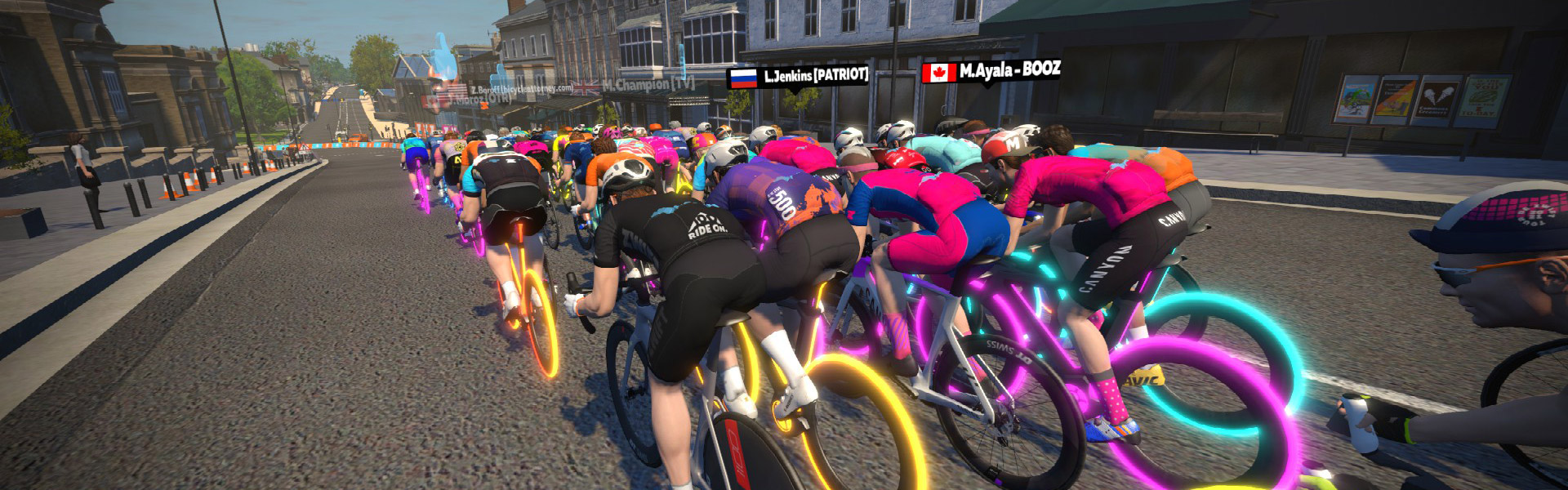
The second annual Cycling Esports UK Championship will take place on Tuesday, 17th March 2026. Women race at 1830 UTC, and men race at 1930 UTC.
The course and format for the race are inspired by classic town centre crits of times gone by in the UK. Fun to race. Fun to watch!
It’s a straight scratch race consisting of 12 laps of Duchy Estate on Zwift’s Yorkshire world (37.7 km distance with 492m of elevation gain).
Every lap will see racers have to punch out of corners and kick up short, steep climbs. It will be attritional and will truly highlight the best all-around riders.
One of the critical things for us at CE:UK, is giving something for everyone to race for, whether that is to become a Champion, to win your age group, or to have fun racing with your friends.
As well as crowning our Cycling Esports UK Champions for 2026, the race will also determine who our winners are in the following Age Group categories:
18-29
30-39
40-49
50+
As always, male and female races will feature the same categories and the same course over the same distance.
Performance Verification
All participants are required to submit a weight video prior to the race and to submit a dual recording after their race has finished.
We totally understand that some riders will see these requirements as a hurdle. But within CE:UK and within participating riders/their teams, we have incredible amounts of knowledge and willingness to help people comply with these requirements. We promise, they are not as difficult as they seem. After you have done them once, it is super easy going forward!
Zwift, at its core, relies on rider weight and input power being correct. The dynamics of the peloton in game are directly dictated by these factors. So, it is only fair that we ensure everyone racing is doing so at their correct weight and utilising a power device that is both accurate and fair to their fellow competitors.
Performing a weight video or submitting a dual recording is not “elite.” These are simple tasks that anyone of any level of capability can do. Even if not for race accuracy/fairness, it confirms to you that your equipment is working well. It verifies the numbers you are riding/training/racing with are a true representation of your capability, which is very beneficial to all riders who are training/racing indoors. The more people we have doing means better, fairer and more legitimate racing in general for everyone.
If the Performance Verification requirements are deterring anyone from entering, we absolutely welcome them to come and have a chat with us. Reach out in the Discord server, email the race organiser or speak with your team mates. There is so much support out there for anyone who is unsure about the PV requirements. Don’t let it stop you from racing!
A full list of PV requirements can be found by hitting the “Download Race Book” button on Leadout Esports at leadoutesports.com/events/uk-2026.
CE:UK Ambitions
A Championship race is just the beginning. The intention is to grow Cycling Esports within the UK. But we need the support and the strength that comes from an established community.
Region-Specific Racing
The momentum of a strong community will allow us to deliver league structures, regional and national rankings, and host further Championship events.
For Winter 2026, we would love to establish regionalised racing and region-specific leagues/leaderboards. To establish this, we want to integrate with local clubs throughout the UK. This will allow riders to compete with their local clubmates and rivals during the winter months.
This naturally then leads us to hosting Regional Championships, which lead into the annual CE:UK Championship race.
As an example, Scotland North region hosted a Winter Chase League series on Zwift during January/February this year. It saw 110+ riders enter every single week for six weeks across six categories. All abilities, showing up racing for their local club on Zwift and having fun! It was a great success and shows that this model can be utilised in more regions within the UK, all under our Cycling Esports UK umbrella.
Esports as a Development Pathway
Establishing Cycling Esports within the UK itself doesn’t just help existing racers. It also opens up doors for young talent to use Cycling Esports as a pathway to professional sport. We absolutely can and should be using Cycling Esports as talent identification, since it is easily the most accessible form of cycle sport we have.
The commitments required of young athletes to make cycling a career are currently unfeasible for the vast majority. The monetary requirements alone for young riders and their families are simply unachievable, and we feel that Cycling Esports can play a very important role in lessening that burden.
Please support this community and help us achieve together!
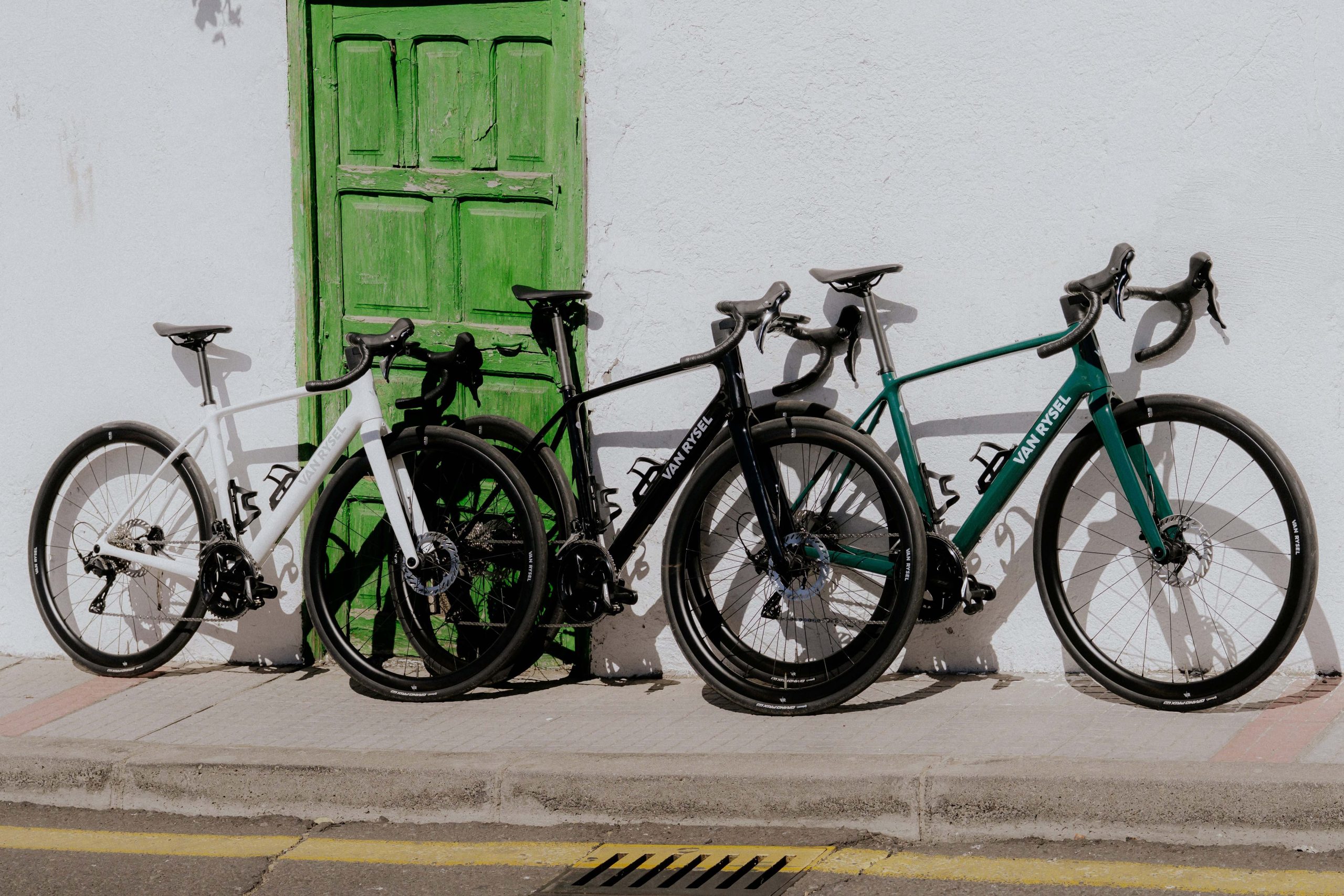
Van Rysel has announced the new budget-friendly EDR CF, which is said to deliver “comfort and versatility”.
Launched as part of its spring/summer 2026 range, Van Rysel says the new endurance bike bridges the gap between its mid-range EDR CF and entry-level EDR AF.
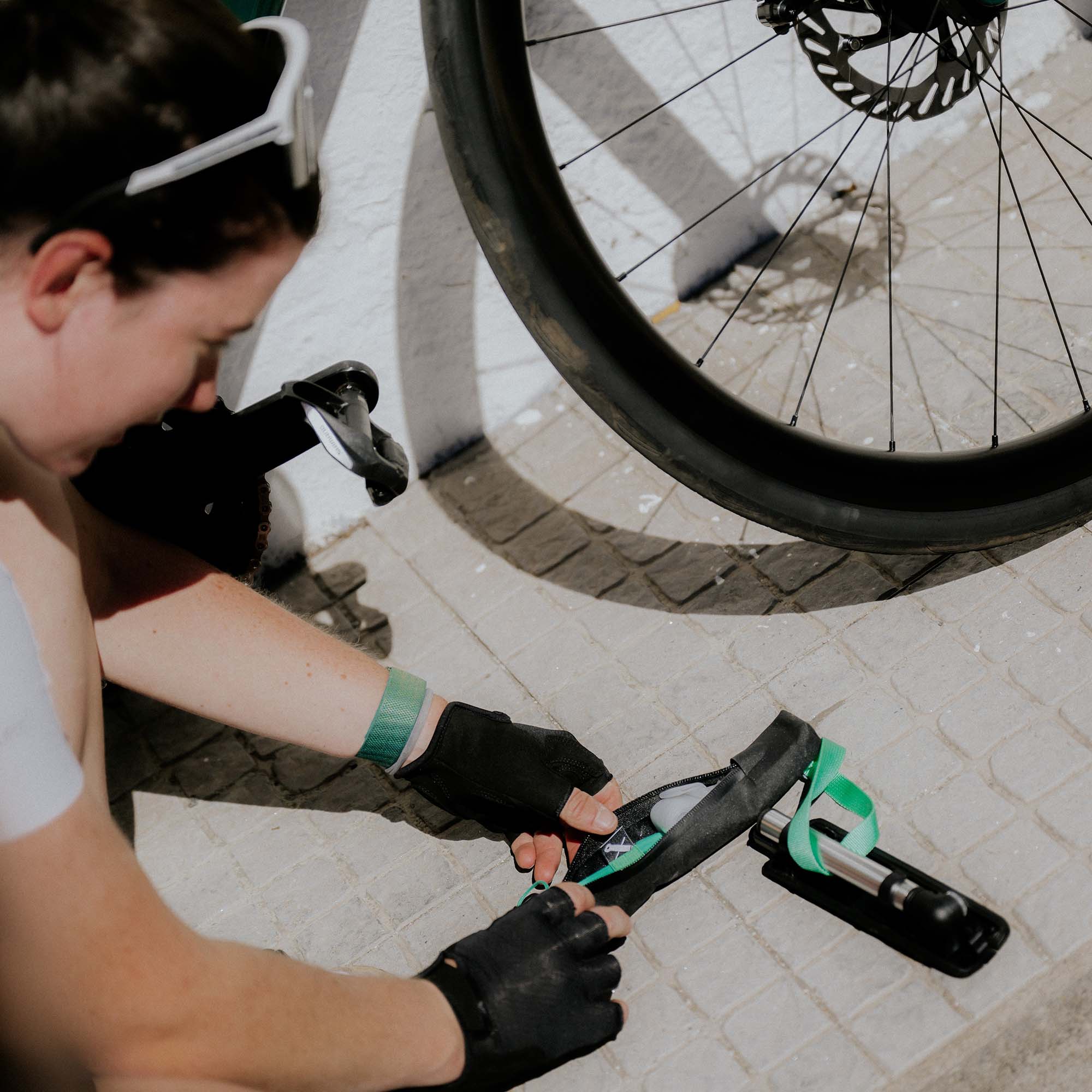
Alongside its “endurance-oriented geometry”, Van Rysel has designed the EDR CF’s carbon fibre frame to include integrated storage in the down tube “for ride essentials such as inner tubes and tools”.
This is one of the latest trends in endurance road bike design, and features on our 2025 Bike of the Year winner, the Cannondale Synapse, as well as the latest Bianchi Infinito, which launched last week.
The panels to access the integrated storage on the Cannondale and Bianchi are located under the bottle-cage mounts. Van Rysel has taken a different approach, with an access panel further up the down tube, which is possibly a simpler, and therefore more cost-effective, design.
The Van Rysel EDR CF comes with a toolbox in the down tube storage. Van Rysel
The Van Rysel’s internal storage also comes with a toolbox, which includes an inner tube, tyre levers, a multi-tool and a pump.
Another trend the EDR CF picks up on is the move to wider tyres. The bike can fit rubber up to 38mm, which is more conservative than the Synapse and Bianchi, but matches the Scott Addict, which launched last year.
Van Rysel says the EDR CF delivers “comfort and versatility”. Van Rysel
All cable routing on the new bike is internal and there are three places to mount water bottles, alongside mounts on the top tube for extra accessories such as a bento box.
Van Rysel says the frame weighs 1kg in a size medium, which is 170g more than the EDF CF Ultra. But the two bikes have carbon forks, which weigh an identical 400g.
This means without the 260g toolbox, weights for complete builds range from 8.5kg to 8.9kg, also in a size medium.
The Van Rysel EDR CF comes in a variety of builds, starting from €1,799. Van Rysel
Van Rysel has announced four variants of the EDR CF, with prices ranging from €1,799 to €2,899.
You’ll note we’ve listed the prices in euros and that’s because the full range won’t be available in the UK for the time being, and none of the bikes are available in the USA.
The entry-level EDR CF Tiagra comes with aluminium wheels shod in Continental Grand Prix TR tyres. It has Shimano Tiagra’s 10-speed groupset, rather than the latest 11-speed Tiagra, which will likely start appearing on bicycles later this year. It weighs 8.9kg and is not available in the UK.
Sitting above the Tiagra model is the EDR CF 105. Available in the UK, this has carbon wheels that are also wrapped in Continental Grand Prix TR tyres and a mechanical Shimano 105 12-speed groupset. The bike weighs 8.7kg.
If you prefer electronic shifting, Van Rysel has the EDR CF Rival AXS. This has SRAM’s Rival groupset, but otherwise the same spec as the 105 model, and weighs 200g less. This model will be available later this year in Europe only.
There will also be a version of the EDR CF with a SRAM Apex AXS groupset, available in Europe and the UK, but Van Rysel hasn’t revealed the full details yet.
The pricing for the range is as follows:
Van Rysel EDR CF Tiagra: €1,799
Van Rysel EDR CF 105: £2,299 / €2,499
Van Rysel EDR CF Rival AXS: €2,899
Van Rysel EDR CF Apex AXS: £1,999 / €2,299
What else is new from Van Rysel?
Van Rysel has also revealed a new unisex cycling jersey. Van Rysel
While Van Rysel’s bikes are building a reputation as budget-friendly options, Decathlon’s in-house cycling brand also has a wide range of clothing.
As part of its spring/summer collection, it has added a new unisex jersey (£59 / €59.99), and men’s and women’s bib shorts (£89.99 / €69), to its performance-focused RCR line.
Van Rysel has also revealed the unisex EDR Ultra Jersey (£59.99 / €59), which it says is “designed primarily to meet the needs of ultra-distance cyclists”. While it has a “pro fit” like the RCR jersey, it has two more pockets, taking the total to eight.
Elsewhere, Van Rysel has released three new sets of cycling glasses: the Taain Photochromic (£99.99 / €99), Kware Category 3 (£69.99 / €70) and Vertain Category 3 Van Rysel Roubaix (£119.99 / €120).
Meta announced new features today aimed at cracking down on scams perpetrated via its platforms. First, Meta is launching AI tools for identifying impersonator of brands and celebrities, as well as for detecting deceptive links, which should help it to quickly take down frauds. Second, it is adding new alerts to caution against interacting with a potentially fraudulent account. Facebook will roll out alerts for suspicious friend requests, WhatsApp is getting warnings for device linking requests, and Messenger will also issue warnings if an account seems suspect.
Finally, Meta is also continuing to expand its processes for advertiser verification. The company said it aims to have verified advertisers account for 90 percent of its ads revenue by the end of the year, up from the current share of 70 percent. Last year, Meta estimated that marketing for scams and banned products could have been responsible for 10 percent of its 2024 revenue.
The social media company has been ramping up its actions against scams, particularly those known as celeb bait. Last month, it sued three entities from Brazil and China that were behind scams that leveraged images and deepfakes of popular people to promote dubious products and investment schemes. Meta said today that over the course of 2025, it removed 159 million scam ads as well as 10.9 million Facebook and Instagram accounts tied to criminal scam centers.
This article originally appeared on Engadget at https://www.engadget.com/social-media/meta-rolls-out-new-features-for-scam-protection-110000173.html?src=rss
Currently the Linux IPv6 networking stack can be built into the Linux kernel, built as a loadable kernel module, or not built at all. With proposed patches from a SUSE engineer, the IPv6 networking stack would be limited to being a kernel built-in or not at all. In doing away with IPv6 as a loadable kernel module would allow simplifying some code and lowering the Linux networking maintenance burden…
Valve is facing a new consumer class-action lawsuit two weeks after New York sued the video game company for “letting children and adults illegally gamble” with loot boxes. The new lawsuit is similar, alleging that loot boxes in games like Counter-Strike 2, Dota 2, and Team Fortress 2 are “carefully engineered to extract money from consumers, including children, through deceptive, casino-style psychological tactics.”
“We believe Valve deliberately engineered its gambling platform and profited enormously from it,” Steve Berman, founder and managing partner at law firm Hagens Berman, said in a press release. “Consumers played these games for entertainment, unaware that Valve had allegedly already stacked the odds against them. We intend to hold Valve accountable and put money back in the pockets of consumers.” PC Gamer reports: The system is well known to anyone who’s played a Valve multiplayer game: Earn a locked loot box by playing, pay $2.50 for a key, unlock it, get a digital doohickey that’s sometimes worth hundreds or even thousands of dollars but far more often is worth just a few pennies. Is that gambling? If these cases go to court, we’ll find out.
The full complaint points out that the unlocking process is even designed to look like a slot machine: “Images of possible items scroll across the screen, spinning fast at first, then slowing to a stop on the player’s ‘prize.’ Players buy and open loot boxes for the same reason people play slot machines — the hope of a valuable payout.” Loot boxes, the complaint continues, are not “incidental features” of Valve’s games, but rather “a deliberate, carefully engineered revenue model.” So too is the Steam Community Market, and Steam itself, which the suit claims is “deliberately designed” to enable the sale of digital items on third-party marketplaces through “trade URLs,” despite Valve’s terms of service prohibiting off-platform sales.
And while the debate over whether loot boxes constitute a form of gambling continues to rage, the suit claims Valve’s system does indeed qualify under Washington law, which defines gambling as “staking or risking something of value upon the outcome of a contest of chance or a future contingent event not under the person’s control or influence.” “Valve’s loot boxes satisfy every element of this definition,” the lawsuit alleges. “Users stake money (the price of a key) on the outcome of a contest of chance (the random selection of a virtual item), and the items received are ‘things of value’ under RCW 9.46.0285 because they can be sold for real money through Valve’s own marketplace and through third-party marketplaces that Valve has fostered and facilitated.”
Intel’s Advanced Performance Extensions (APX) debuting with Nova Lake and Diamond Rapids is ready with Linux 6.16+ and recent open-source compilers. One piece of the support puzzle still coming together though that will be especially important for Xeon Diamond Rapids is the KVM virtualization support. New patches there were posted this week…
Van Allen Probe A, a 1,300-pound (600 kg) NASA satellite launched in 2012 to study Earth’s radiation belts, is expected to re-enter Earth’s atmosphere this week. While most of it is expected to burn up during descent, “some components may survive,” reports the BBC. “The space agency said there is a one in 4,200 chance of being harmed by a piece of the probe, which it characterized as ‘low’ risk.” From the report: The spacecraft is projected to re-enter around 19:45 EST (00:45 GMT) on Tuesday the U.S. Space Force predicted, according to Nasa, though there is a 24-hour margin of “uncertainty” in the timing. […] The spacecraft and its twin, Van Allen Probe B, were on a mission to gather unprecedented data on Earth’s two permanent radiation belts. It was not immediately clear where in Earth’s atmosphere the satellite is projected to re-enter. NASA and the U.S. Space Force has said it will monitor the re-entry and update any predictions. […] Van Allen Probe B is not expected to re-enter the Earth’s atmosphere before 2030.
Adriaan de Groot released Calamares 3.4.2 today as a new maintenance update in the latest Calamares 3.4 series of this popular graphical installer for Linux distros with various improvements like support for Plasma Login Manager.
Last November, Amazon sued Perplexity demanding that the AI search startup stop allowing its AI browser agent, Comet, to make purchases for users online. Today, a judge ruled in favor of the tech giant, granting it a temporary court injunction blocking the scraping of Amazon’s website. According to court filings, the judge found strong evidence the tool accessed the retailer’s systems “without authorization.” CNBC reports: In a ruling dated Monday, U.S. District Judge Maxine Chesney wrote that Amazon has provided “strong evidence” that Perplexity’s Comet browser accessed its website at the user’s direction, but “without authorization” from the e-commerce giant. Chesney said Amazon submitted “essentially undisputed evidence” that it spent more than $5,000 to respond to the issue, including “numerous hours” where its employees worked to develop tools to block Comet from accessing its private customer tools and to prevent the tool from “future unauthorized access.” “Given such evidence, the Court finds Amazon has shown a likelihood of success on the merits of its claim,” Chesney wrote.
Chesney’s ruling includes a weeklong stay to allow Perplexity to appeal the order. Amazon wrote in its original complaint that Perplexity’s agents posed security risks to customer data because they “can act within protected computer systems, including private customer accounts requiring a password.” The company also said Perplexity’s agents created challenges for the company’s advertising business, because when AI systems generate ad traffic, the impressions have to be detected and filtered out before advertisers can be billed. “This requires modifications to Amazon’s advertising systems, including developing new detection mechanisms to identify and exclude automated traffic,” Amazon wrote in its complaint. “These system adaptations are necessary to maintain contractual obligations with advertisers who pay only for legitimate human impressions.”
The inspector general’s office of the Social Security Administration is investigating allegations of a security breach by a member of the so-called Department of Government Efficiency operation spearheaded by Elon Musk. A whistleblower has claimed that a former software engineer from DOGE said he possessed two databases from the SSA, “Numident” and the “Master Death File.” The person reportedly asked for help transferring the databases from a thumb drive “to his personal computer so that he could ‘sanitize’ the data before using it at [the company],” an unnamed government contractor where he is currently employed. Those databases include personal information about more than 500 million living and deceased Americans.
The Washington Post reported that the whistleblower complaint was filed with the inspector general in January. “When The Post contacted the agency and the company in January, both said they had not heard of the complaint. Both said they subsequently looked into the allegations and did not find evidence to confirm the claims,” the publication said. It is unclear why the complaint is now being investigated and neither party offered comment this week for ThePost‘s article. The SSA watchdog informed both members of Congress and the Government Accountability Office of its investigation.
These allegations follow a different whistleblower complaint filed last August about DOGE access and mishandling of data from the SSA. Charles Borges, former chief data officer at the agency, claimed that a SSA database was stored in an unsecured cloud environment. “This is absolutely the worst-case scenario,” Borges told The Post of the latest claims. “There could be one or a million copies of it, and we will never know now.”
This article originally appeared on Engadget at https://www.engadget.com/cybersecurity/social-security-watchdog-investigating-claims-that-doge-engineer-copied-its-databases-212722061.html?src=rss