There was a time when cutting the cord could save you big money versus paying for a satellite or traditional cable TV package. Those days are gone, perhaps for good, though one of the best streaming services is rolling out more affordable plans. That would be YouTube TV, and streaming subscribers now have several new tiers to choose from,
We may earn a commission from links on this page. Deal pricing and availability subject to change after time of publication.
The Blink Mini 2K+ (2-pack) is currently down to $44.99 on Amazon, half off its usual $89.99 price and the lowest it has ever been, according to price-trackers. That makes it one of the cheapest ways right now to add basic indoor security with sharper video than the older 1080p models. Blink, which is owned by Amazon, has always leaned toward simple and affordable cameras, and this one follows that formula closely. It records in 2K resolution, so faces and fine details come through more clearly than on earlier Minis. It also adds a built-in spotlight, which allows for color night footage instead of grainy black-and-white clips when motion is detected.
This is a wired camera, so it needs to live close to a power outlet. The upside is size. The Mini 2K+ is tiny at roughly two inches wide and about three inches tall with the stand attached. It is light enough to move around easily if you want to keep an eye on different rooms at different times. Set-up is straightforward through the Blink app. That said, it only works on a 2.4GHz network, which is worth noting if your home is set up around 5GHz. Video quality is solid for the price, and two-way audio is clearer than before thanks to better noise filtering.
There is also a built-in siren and support for Amazon Alexa, letting you view the camera feed on Fire TV devices or get alerts on Echo speakers. As for its storage and smart features, live viewing is free, but recorded clips, smart alerts like person detection, and cloud storage require a Blink subscription. That starts at $4 per month for one device or $12 per month for unlimited devices. You can avoid cloud storage by adding the Blink Sync Module 2 ($49.99) and a USB drive, but that is another piece of hardware to buy and manage. And while the Mini 2K+ is meant for indoor use, you can place it outdoors with a weather-resistant power adapter ($9.99), which is also sold separately.
The American economy’s most valuable companies are now worth trillions of dollars more than their predecessors were a generation ago, yet they employ a fraction of the workers — and a new analysis by the Wall Street Journal argues that this widening gap between capital and labor is the defining economic story of our time.
Labor received 58% of gross domestic income in 1980; by the third quarter of 2025, that figure had fallen to 51.4%. Corporate profits’ share rose from 7% to 11.7% over the same period. Nvidia, the most valuable US company in 2026, is nearly 20 times as valuable as IBM was in 1985 in inflation-adjusted terms and employs roughly a tenth as many people. Since the end of 2019, real average hourly wages have risen 3% while corporate profits have climbed 43%.
Household stock wealth now equals almost 300% of annual disposable income, up from 200% in 2019. Yale economist Pascual Restrepo predicted that AI integration will shrink labor’s share of revenue further, just as factory automation did for blue-collar workers in decades past.
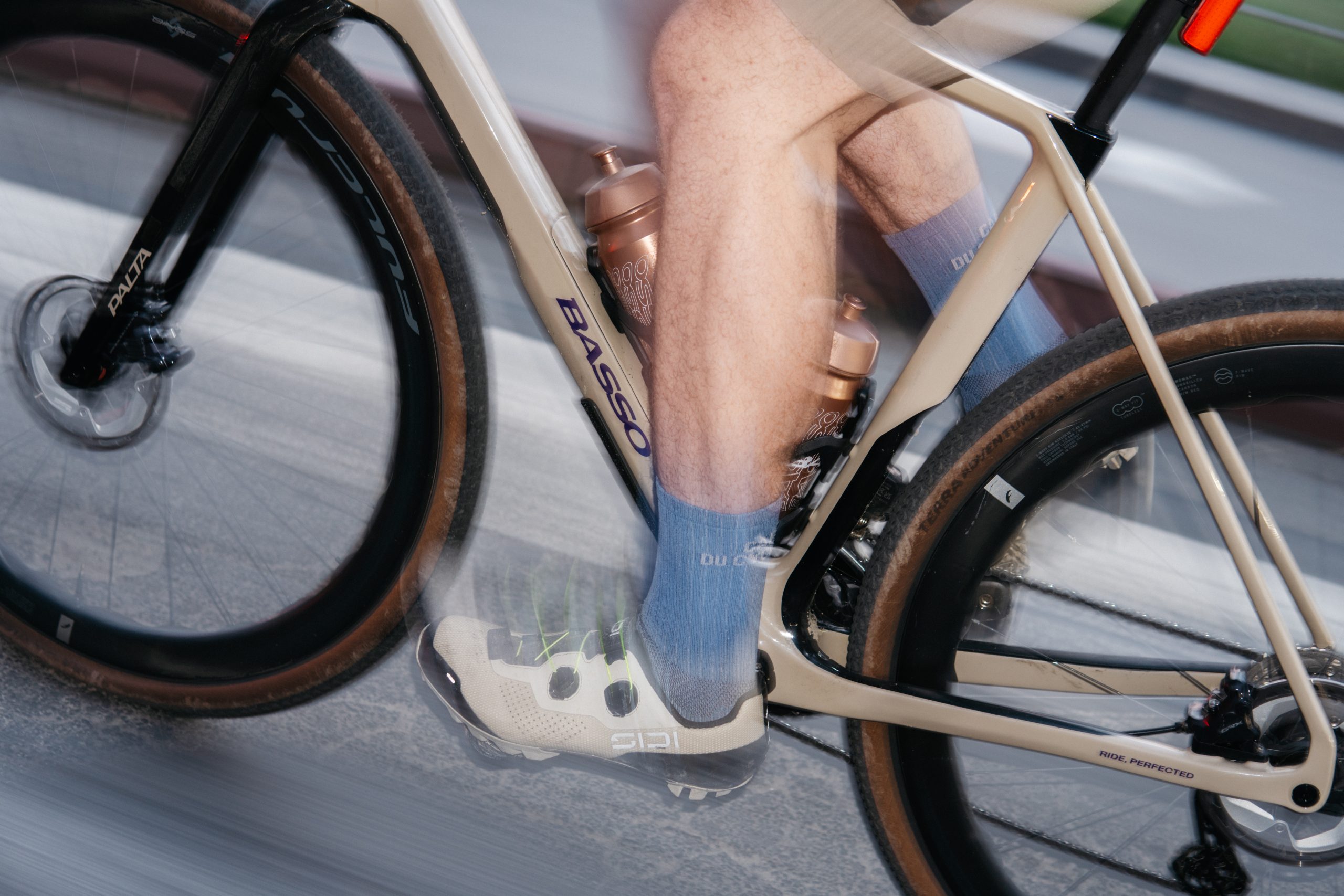
The Basso Palta III follows a familiar path trodden by many contemporaneous do-it-all gravel bikes, but its ‘liveability’, custom build options, tasteful design details and made-in-Italy provenance could make it a compelling choice in a crowded marketplace.
Compared to the outgoing model, Basso has boosted the Palta III’s tyre clearance to 52mm front and 50mm rear, refined the geometry to improve comfort and added down-tube storage, resulting in a bike that it says straddles gravel racing and adventure without compromising too heavily in either area.
“We know it’s never going to be the fastest bike on the road or the fastest on mountain bike trails,” says product and marketing manager Leonardo Basso. “So for us it’s about giving riders the most versatile bike to define what gravel means for them.”
Although it’s backed up by extensive customisation options, prices in the UK start at £3,999 for the base-level GRX 1×12 build, rising to £5,399 for the top-spec SRAM Force XPLR AXS build.
The Palta III doesn’t quite match these chonky extremes, but it’s not far off, with capacity for 52mm at the front and 50mm at the rear.
Given that it defines the intent and ride feel of a bike, how does a brand settle on a final figure, particularly for a bike designed to satisfy most riders?
“50mm was a good balance to still have a lively and animated bike,” says Basso. “We didn’t want something sluggish on the road or fast trails.”
Basso adds that increasing clearance further would require longer chainstays, changing the bike’s character.
“We didn’t want to lengthen the chainstays too much – we still wanted to keep the wheel close to the pedalling. But on the other hand, we wanted enough tyre clearance for riding that crosses the line with mountain biking.”
The bike strikes a good balance with its accessory mounts. Basso
Outside of suitably versatile tyre clearance, to say credibly that it straddles both adventure and gravel racing requires an appropriate mix of accessory mounts.
The Palta III does’t have the Action Man-crotch-smooth silhouette of a truly race-oriented gravel bike, nor is it festooned in Surly levels of barnacle-like protrusions.
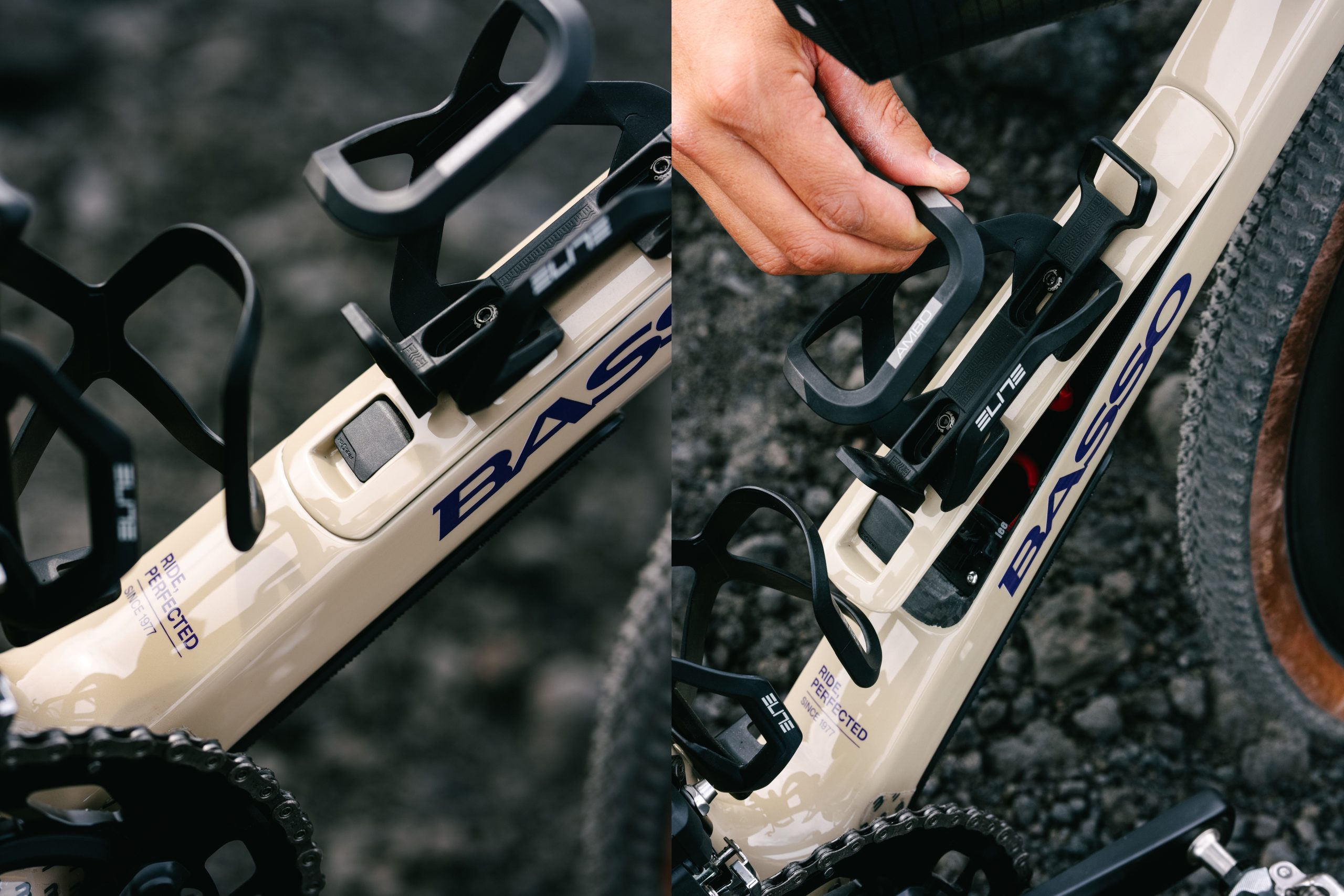
It strikes a balance that’s appropriate for the bike’s intent, with mounts on the top and bottom of the top tube, three bottle mounts inside the main triangle and two mounts under the down tube.
Some will rue the lack of fork bosses or rack mounts, which are often used by ultra racers looking to carry extra luggage or water.
But Basso points to other bikes in the brand’s line-up to meet those needs: “The Palta has always been a bike capable of carrying luggage or additional accessories, but it’s never been a full-on bikepacking bike, like the Terra,” it says.
“[For the Palta III], we didn’t want to add too many bolts. It adds weight, and we wanted to keep really clean lines.”
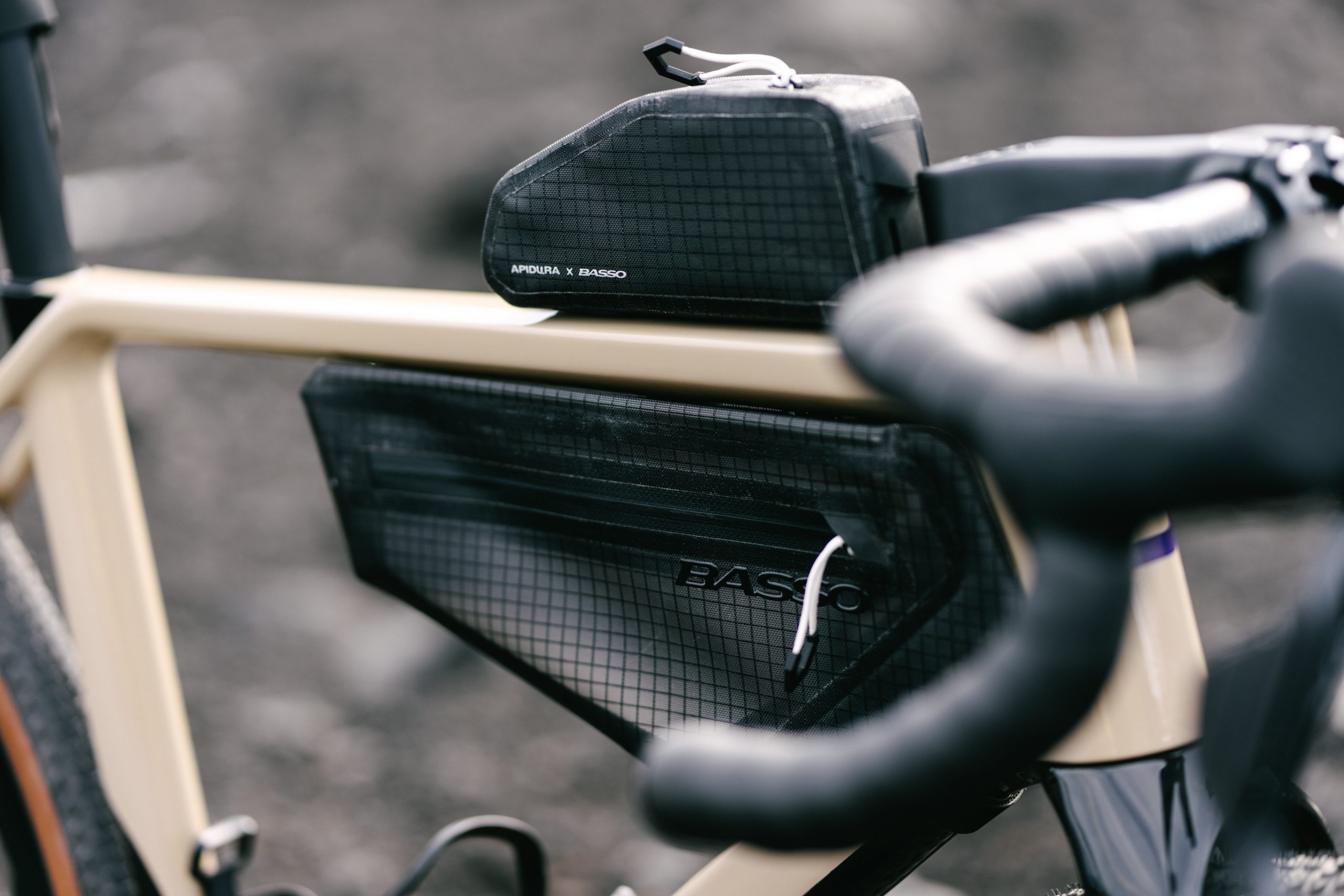
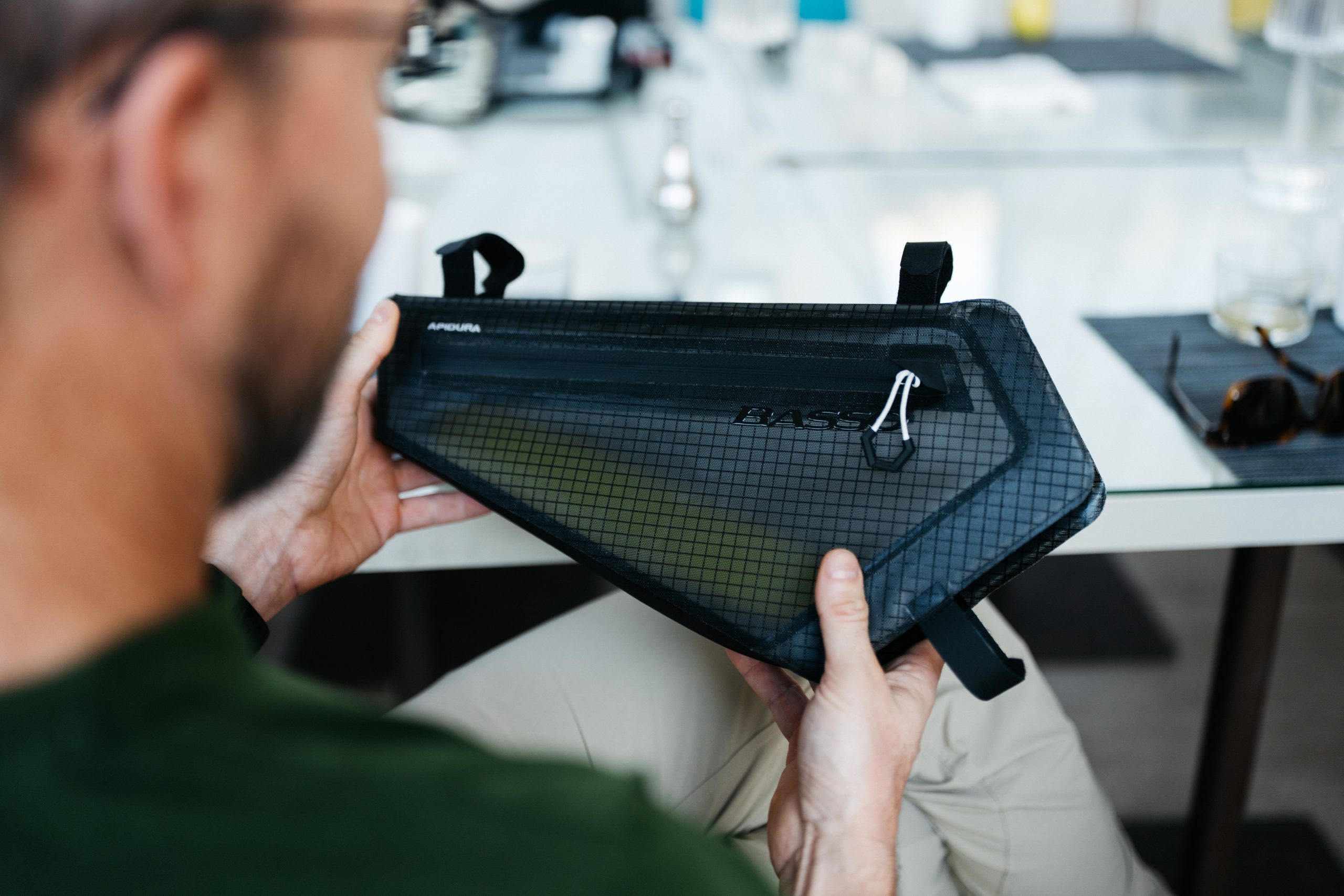
The matching bags from Apidura are a highlight. Basso
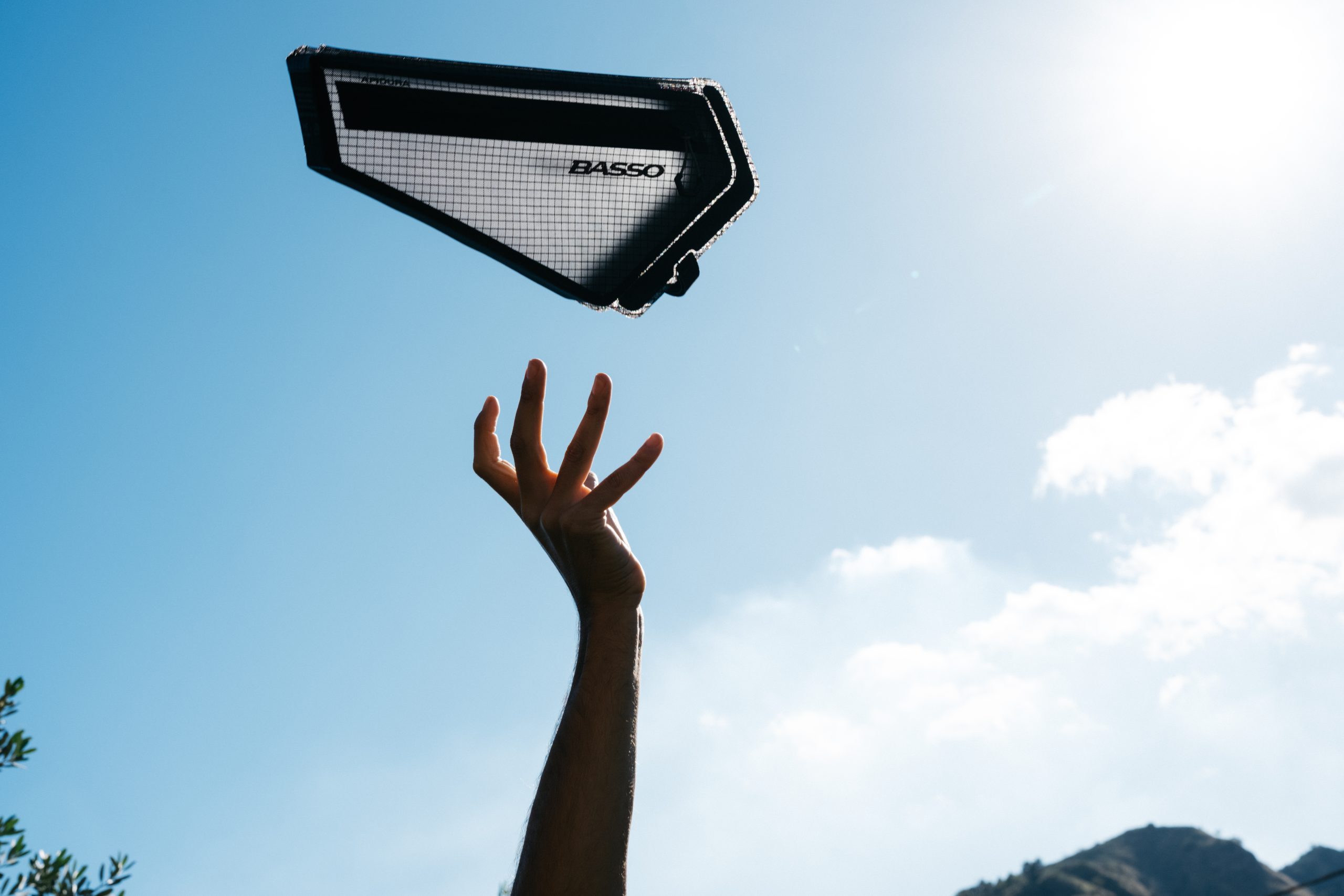
Basso has partnered with Apidura to develop a range of bags designed to complement the bike.
Rather than use straps, these bolt on, which Basso says offers a more secure fit, while protecting the frame’s paintwork from abrasion.
The range includes two frame-bag options and top-tube storage, designed specifically around the Palta III’s tube shapes and mounting points.
Basso says the bags are shaped to enable continued access to bottles and the bike’s internal down-tube storage compartment – more on that in a moment.
Like most of the brand’s range, Apidura’s waterproof construction is used throughout, with welded seams and weatherproof zips.
Basso is not the first brand to work with a specialist to produce bags for a new bike, but this is a notably well-executed collaboration – the bags look super-clean when mounted and add to the credibility of Basso’s claim that it has designed this to be a bike for all gravel riders.
‘Rental and hire is important for us’
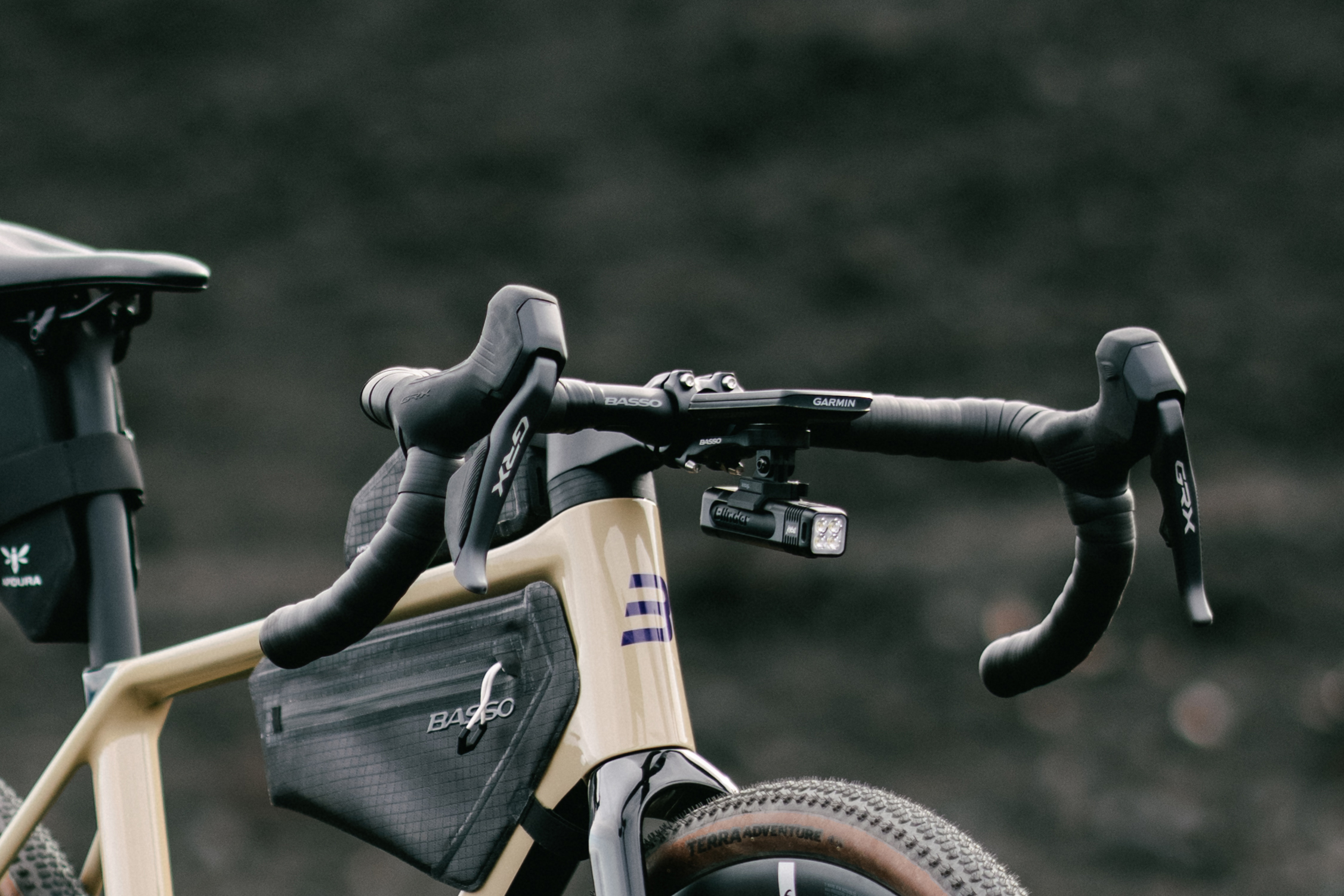
The bike is available with three cockpit options.
Basso offers three cockpit options on the Palta III: two one-piece cockpits (the Fuga and Levita) and a traditional two-piece setup using the new Strato alloy stem.
The Strato stem is available in lengths from 80mm to 130mm and routes cables underneath through a channel. It’s paired with a conventionally shaped carbon gravel bar.
Beyond providing riders with flexibility to customise cockpits as they please, Basso is unflinching in explaining how it supports another key, and unexpected, part of the brand’s business: “This stem supports what we’re doing in the area of Bassano [Basso’s hometown]. There are not enough possibilities for people who want to buy our bikes to test them,” says Basso.
“So this is how we view the rental and hire side of our business – it’s a way to get people trying bikes.
“The whole goal of what we do is to give the best riding quality to the riders… and this stem is really versatile for that.”
Levita stem and bar
Bar widths: From 400 to 460mm at the tops, and 420 to 480mm at the drops
Bar flare: 12 degrees
Stem lengths: 80 to 130mm
The Fuga cockpit is the performance-oriented option, with an aerodynamic profile and a racey fit.
Fuga cockpit
370mm wide at hoods, 400mm in the drops
6-degree flare
Stem sizes: 80 to 130mm
Claimed weight: 300g, +/- 3%
The Levita cockpit offers a more classic road-bike fit, with slightly wider fit options and less flare.
Levita cockpit
Bar widths: From 380 to 440mm at the tops, and 400 to 460mm at the drops
4-degree flare
Stem sizes: 80 to 130mm
Claimed weight: 330g, +/- 3%
Carbon – but not for the reasons you think
The Palta now features down-tube storage. Basso
Following many of its peers, the Palta III features internal frame storage in the down tube.
However, unlike other bikes, Basso uses a painted carbon cover instead of injection-moulded plastic – a point of genuine difference that’s more complex to pull off than you might assume.
“A carbon cover gives a really rigid mounting point for the bottle, and it’s lighter,” explains Basso, but that’s not the key reason the brand opted for carbon.
The real benefit comes when painting. Generally speaking, paint adheres more easily to the carbon, but crucially, the carbon cover has the same texture as the rest of the frame, lending the bike a very clean finish.
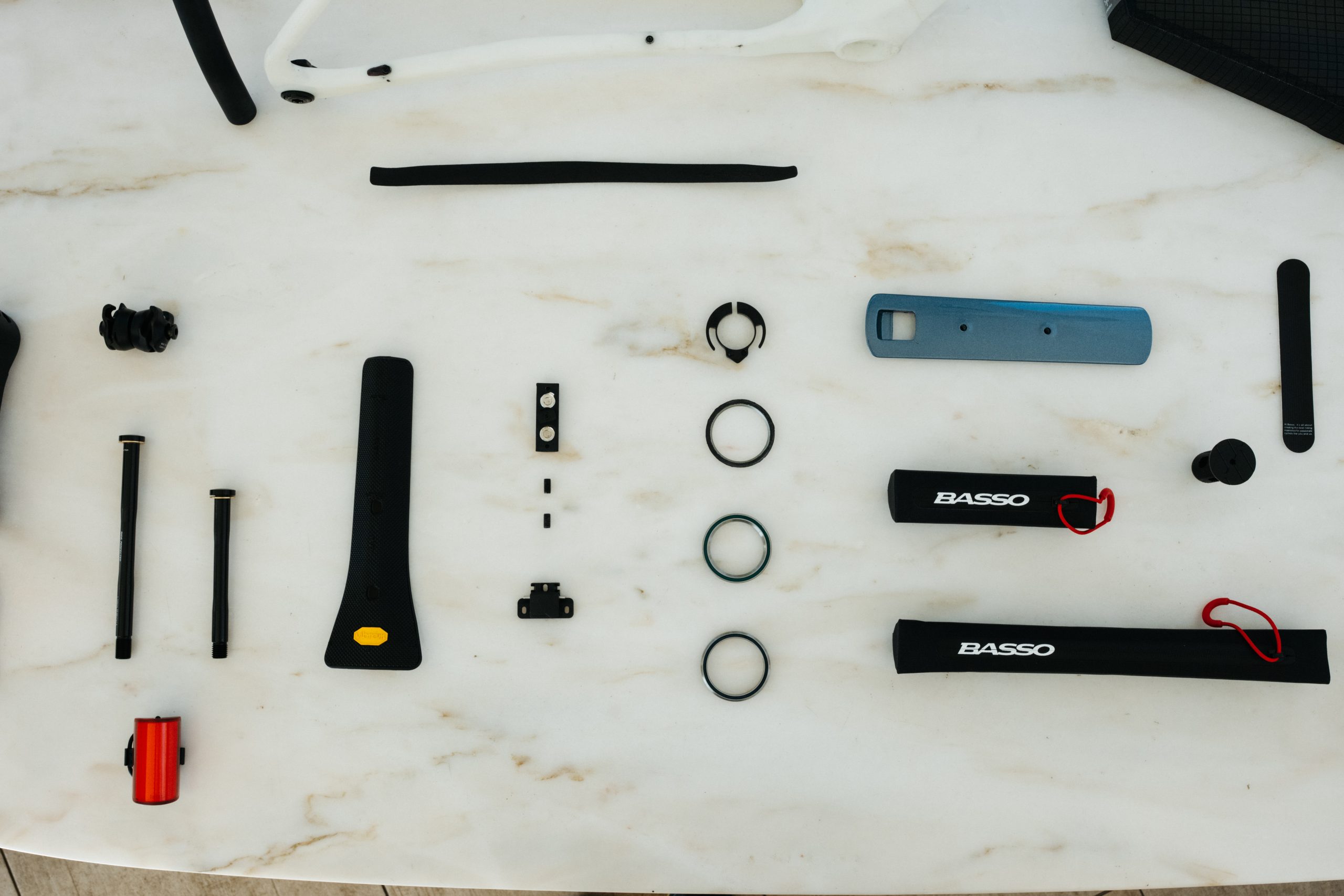
The down-tube cover sits among a wider suite of well-considered components and accessories designed for the bike. Basso
Basso says manufacturing using carbon is “really complicated”, and that maintaining tolerance between the two parts is very difficult, but any minor imperfections can be accommodated by the adjustability built into the magnetic Fidlock latch.
Compared to those found on the early generation of down-tube storage hatches, this clasp is easy to use and, crucially, secure.
I did my best to boot it out of place, belting the bike into volcanic lumps on my test rides, but it stayed steadfast. The mechanism also feels very positive, with a more pleasant tactile feel than some designs.
A specially designed, seam-welded water-resistant pouch lives inside the down tube, with enough space for a small pump, TPU tube and other small spares.
A familiar frameset
The kicked-forward fork is a defining feature of Basso’s bikes. Basso
Although they share similar overall silhouettes, the profile of every tube on the Palta III has been updated for the new bike.
Some familiarly Basso-esque features remain – key among these is the kicked-forward fork crown. The same design is used on the Astra and SV road bikes, among others.
“With this layout, we can keep weight down and allow compliance while maintaining torsional rigidity,” says Basso.
For the Palta III, Basso says the torsional stiffness at the fork crown has been reduced slightly compared to previous versions, to improve comfort and front-end confidence on rough terrain.
Basso’s patented 3B Clamp system houses the seatpost in a sleeve, with a humped clamp slotting into a groove moulded into the back of the post. Basso says this provides a secure grip on the post, while enabling it to flex more, improving comfort.
Vibram x Basso
A wee bit daft, but unquestionably practical – I love this collaboration with Vibram. Basso
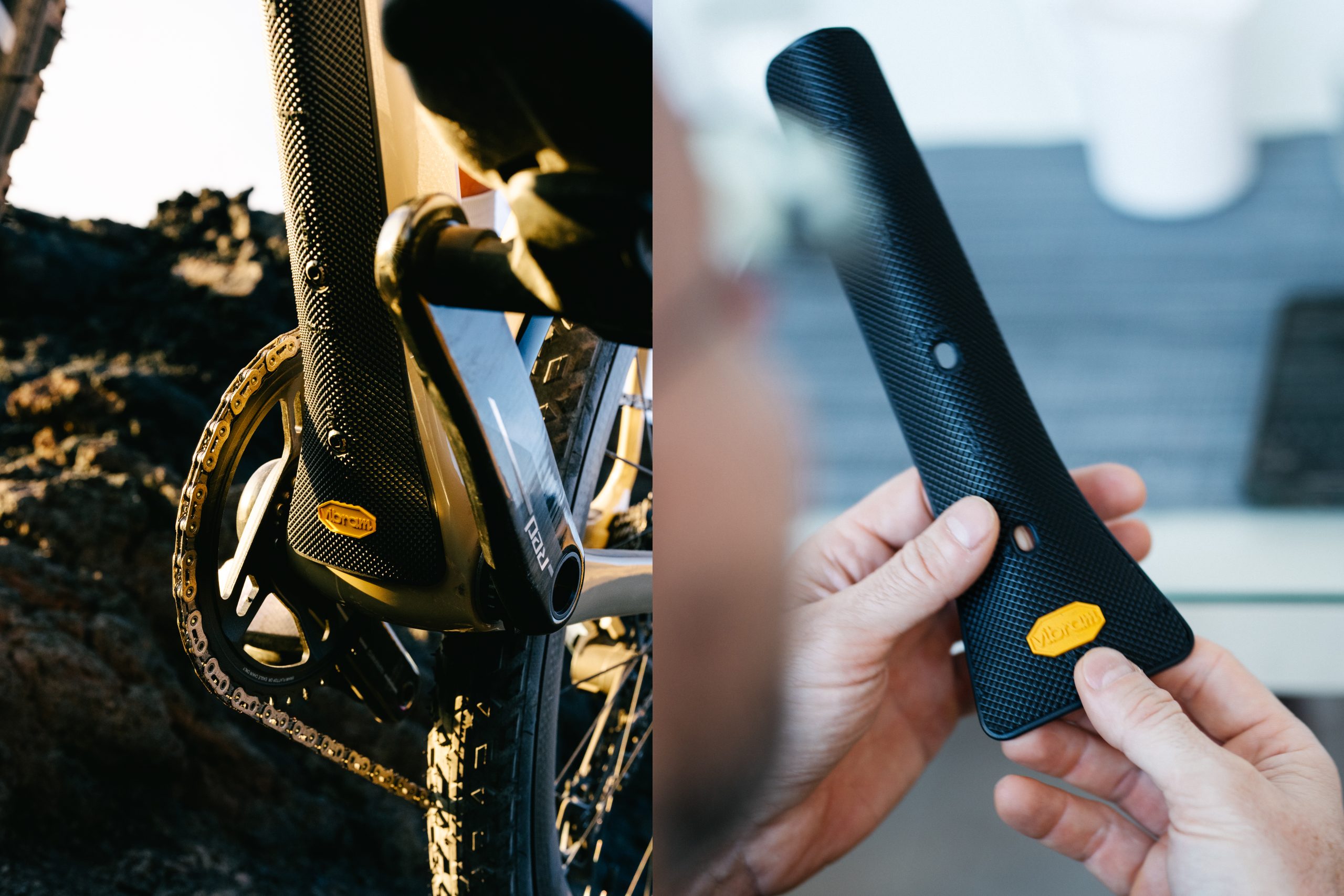
On the underside of the down tube is my personal highlight of the bike – the rubberised down-tube protector produced in collaboration with Vibram.
Made close to the brand’s headquarters, Basso says the thick, plastic-backed rubber-coated bolt-on plate protects the bike from impacts better than a typical stick-on protector, and there are more collaborations between the brands to come.
Reactions to this at the bike’s launch were mixed, but I think it’s a fun point of differentiation on an otherwise perfunctory part – memorable cycling marketing campaigns are increasingly dominated by collaborations, so why not extend this to an overlooked part of a bike?
Other small but welcome details include the solid oil bearings used in the headset and Basso’s novel sliding wedge-style expander.
Familiar, but no worse for it
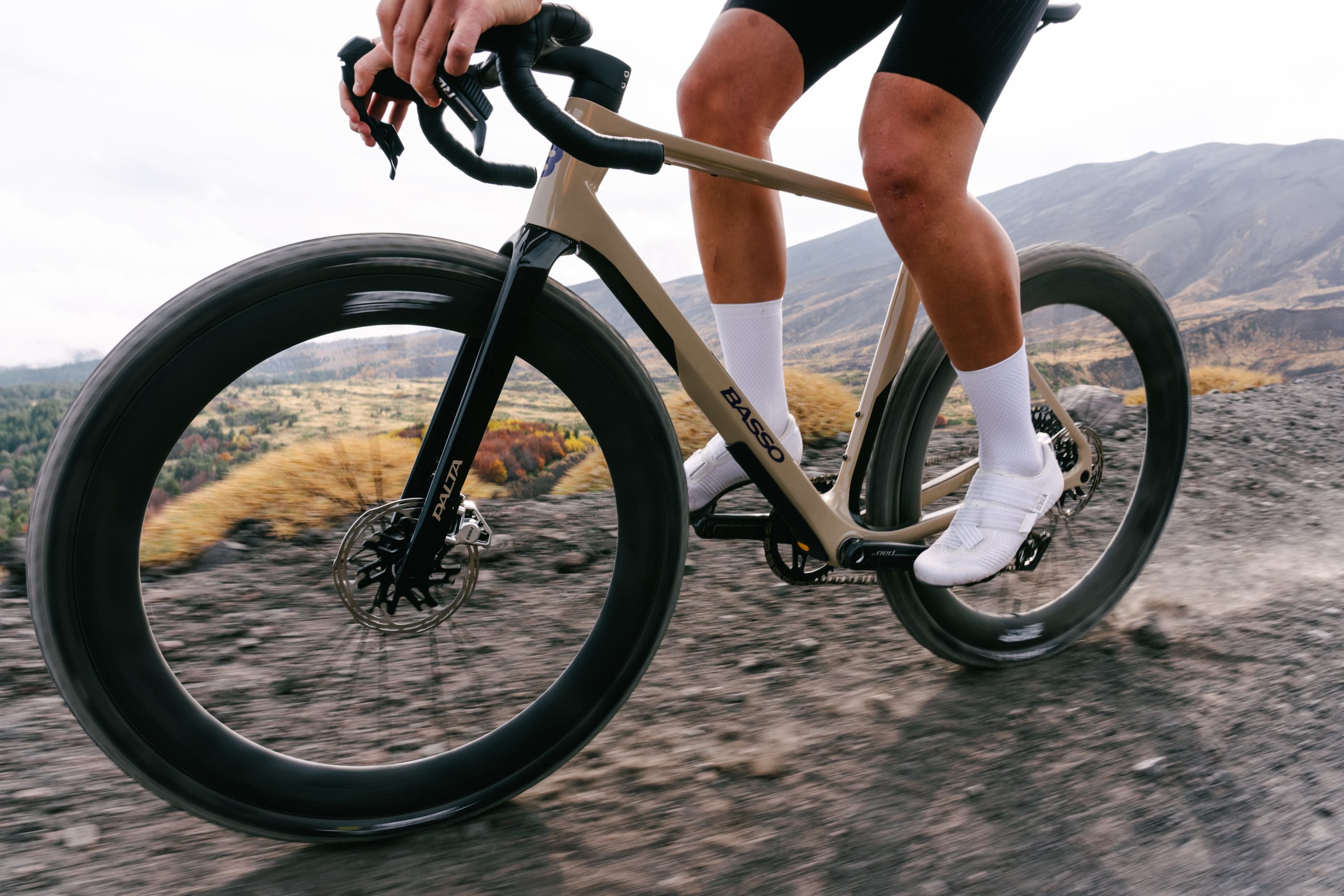
The Palta III presents nothing out of the ordinary – and that’s not a problem. Basso
I rode the bike for several days at a press camp in Sicily.
The riding covered a mix of farmland tracks over unexpectedly high cols; forested trails carpeted with pine needles, infested with mushroom hunters; and a long grind up the treacherously slippery slopes of Mount Etna, interspersed with extended road transfers.
Overall, the Palta III doesn’t present any surprises – the neutral and confidence-inspiring handling is what you’d expect from a bike of this ilk. The relatively short rear end gives it a more animated feel on tighter or technical terrain, but it’s no handful on rowdier descents.
Tyre pressure and volume have a far greater impact on ride quality than any bump-taming layup ever could, so I’m loath to draw conclusions here.
However, my brief observation is that the Palta leans into the firmer end of the riding spectrum – it’s by no means a tooth rattler, but it’s also no bendy wrist-protecting carbon hammock. Given the bike is designed to be raced hard and accommodate a decent bikepacking load, this gives me no cause for concern.
I appreciate that Basso’s bikes can be customised to suit your taste. Basso
With a 590mm stack, my size-56cm equivalent test bike had a relatively generous – but by no means tall – front end.
Tastes differ in this area, but I prefer the slightly more luxuriant fit of a tall(er) stack because it enables you to use the drops more confidently when descending off-road, and languish on the tops when gasping for breath on a savage extended steep climb.
My bike was equipped with a 2x GRX Di2 drivetrain, which almost all bikes will accommodate without issue. However, while some brands have shunned the humble mechanical 2x drivetrain, Basso retains compatibility with the new Palta III – a very welcome move.
On that, dwelling on the specs is not important because the Palta III is offered as a custom build to all customers. Backed up with a commendably wide range of cockpit options that will satiate even the fussiest gravel diva – this is something that should always be celebrated.
In a world where gravel-bike design has largely converged around familiar features, ‘liveability’, accessories and provenance matter more than ever. Basso
It’s fair to say the Palta III doesn’t push boundaries, and it joins the ranks of many well-designed and perfectly handsome gravel bikes.
However, where these often feel overlooked on other bikes, the Palta III’s neat details and tasteful accessories help it stand out – and that’s key if Basso wants to win new riders given gravel-bike design has largely settled on a proven formula.
That the frameset is manufactured in Italy – but doesn’t cost an outrageous amount of money – will also be a draw for those who wish to support more local supply chains than is typical of the wider cycling industry.
Mature, well-considered and versatile, the Palta III is a connoisseur’s choice for the do-it-all gravel rider.
Michiel Leenaars, director of strategy at the NLnet Foundation, used his keynote
at FOSDEM to sound warnings for
the community for free and open-source (FOSS) software; in particular, he
talked about the threats posed by geopolitical politics, dangerous
allies, and large language models (LLMs). His talk was a mix of
observations and suggestions that pertain to FOSS in general and to
Europe in particular as geopolitical tensions have mounted in recent
months.
Alphabet has lined up banks to sell a rare 100-year bond, stepping up a borrowing spree by Big Tech companies racing to fund their vast investments in AI this year.
The so-called century bond will form part of a debut sterling issuance this week by Google’s parent company, said people familiar with the matter.
Alphabet was also selling $20 billion of dollar bonds on Monday and lining up a Swiss franc bond sale, the people said. The dollar portion of the deal was upsized from $15 billion because of strong demand, they added.
Crossings offers up incredibly visceral and engaging combat by keeping things simple while still offering a variety of choices for players. However, it has a lot of rough edges that show the more you play it.
Coincidentally or not, Crossings is one of two Norse mythology-based roguelites that released for Meta Quest in December. However, the similarities between it and Soul Assembly’s Street Gods end with the setting. Neat Corp, whose previous titles include the stealth thriller Budget Cuts series and cozy island farming sim Garden of the Sea, set a dark tone from the instant you load in. With the previously delayed co-op mode and Steam version now available, read on for our full review.
The Facts
What is it?: A Norse mythology roguelike Platforms: Meta Quest 3/3S; SteamVR (played natively on Quest 3 and SteamVR via Virtual Desktop) Release Date: December 18, 2025 (Quest); February 6, 2026 (Steam) Developer: Neat Corp Publisher: Creature Label Price: $9.99
Crossings on Meta Quest. Captured by UploadVR
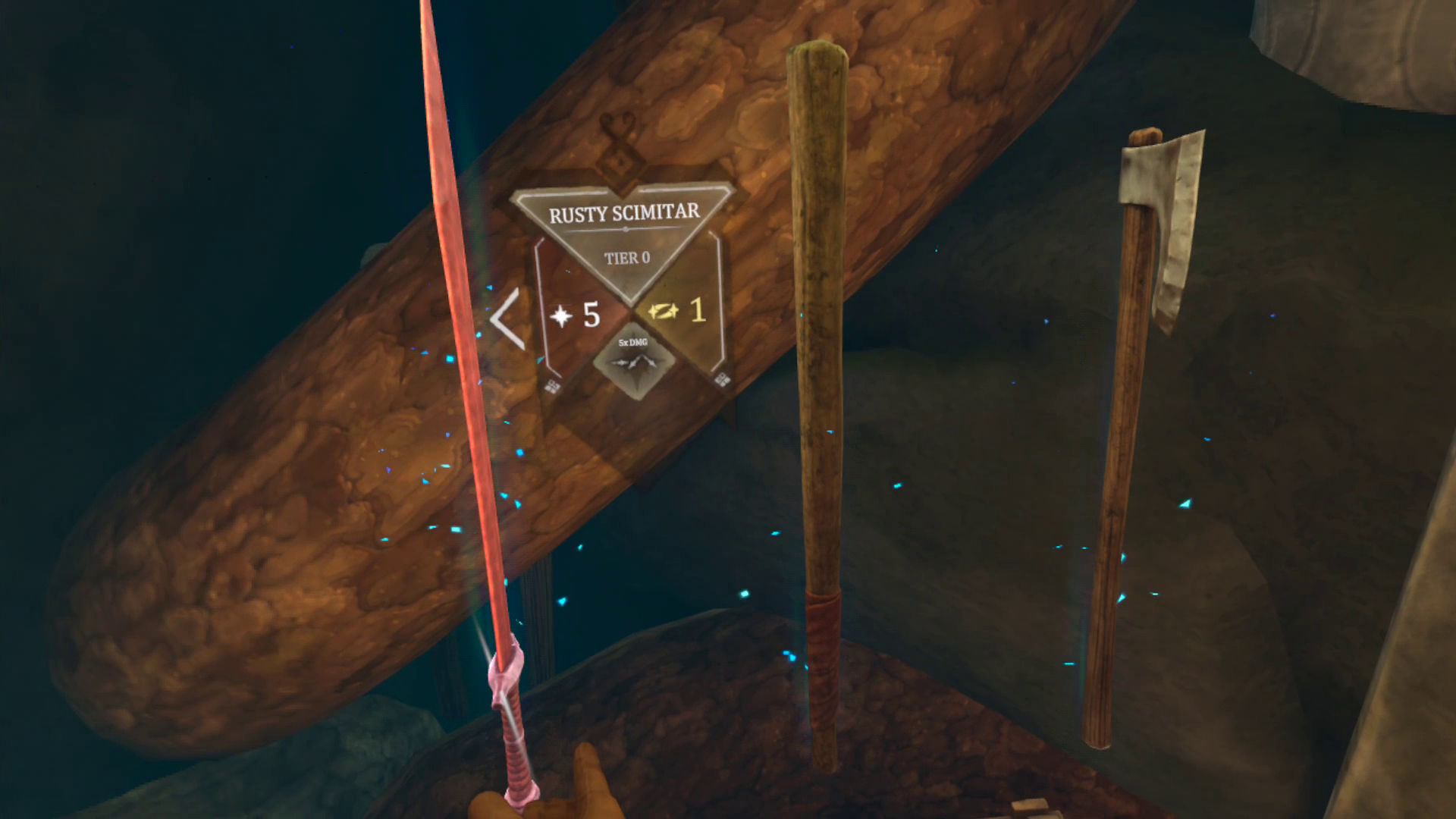
In Crossings, you awaken in the Norse afterlife, starting in a forest blanketed in fog with a choice of weapons to start your run with. Each weapon has a tier, damage stats, and special gesture-based combo attacks that offer a buff such as a damage multiplier or status ailment, if performed correctly. If you pick another weapon, it simply replaces the original. There is no full body avatar here, just hands and wrists, which are replaced with your weapon (primary hand) or item (secondary hand) when in use. The floating hands are nothing new to VR, but seeing them disappear in favor of an item was jarring and a bit immersion breaking.
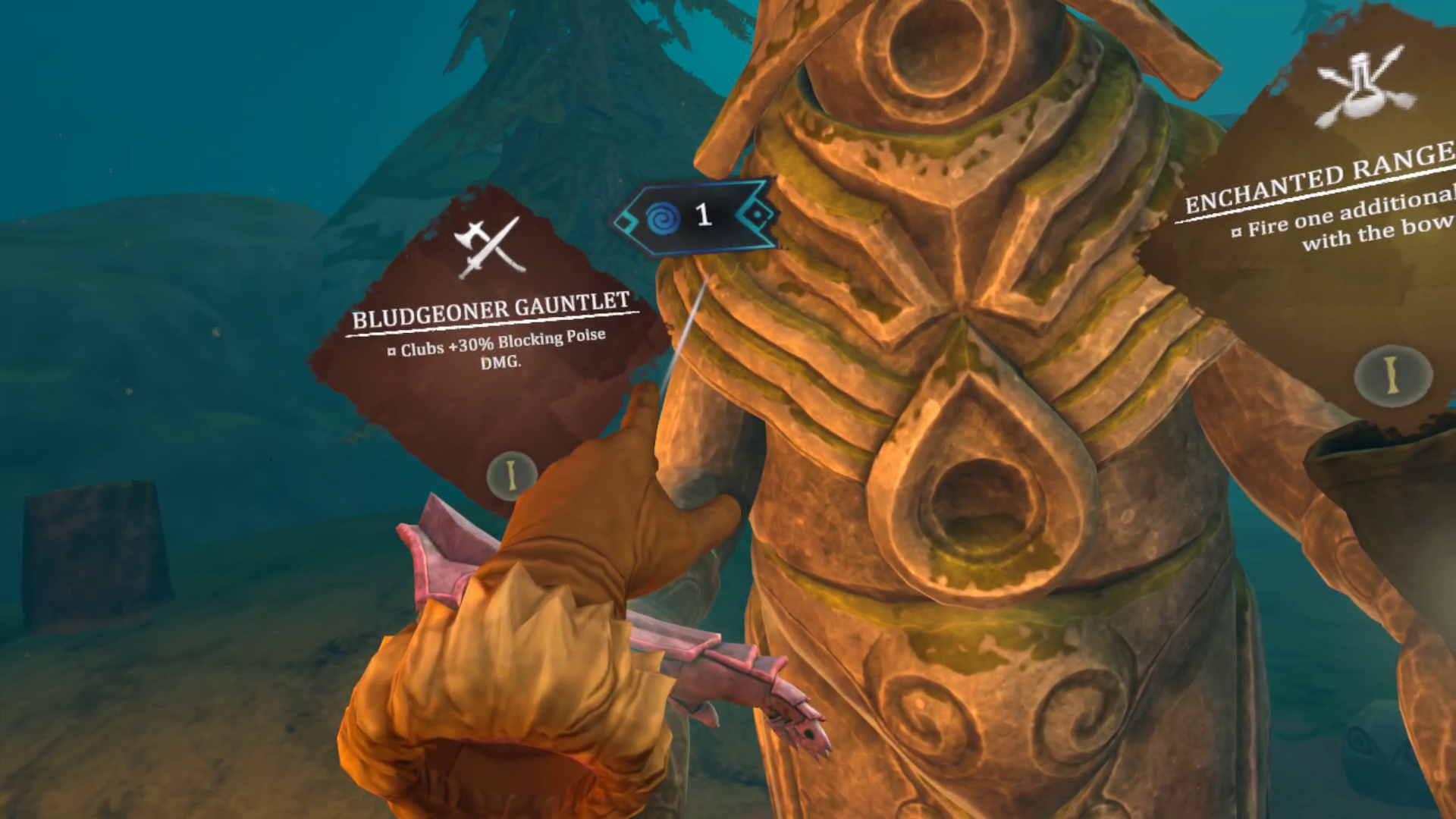
You continuously come across weapons in treasure chests, so you’re not married to the same weapon until the run ends. Some of the perks you come across are tied to specific weapon types, like increasing the block damage when using a club, incentivizing you to backtrack for a weapon you passed on earlier because there’s an upgrade available.
0:00
/0:18
Fighting an enemy in Crossings. Captured on Quest 3 by UploadVR.
The same goes for magic. Each run starts with the same three wind magic attacks, triggered by a simple, unarmed, dual-arm gesture: crush, lift, and push. As the run progresses, you come across podiums with three statues offering your choice of replacement spells for one of the gestures, bringing different more powerful elemental attacks. Every perk and spell replacement costs units of either health or mana. You will randomly get offered a choice of an extra unit of health or mana from translucent statues that pop up after defeating enemies, so you’re never forced to skip an upgrade because you can’t ‘afford’ it.
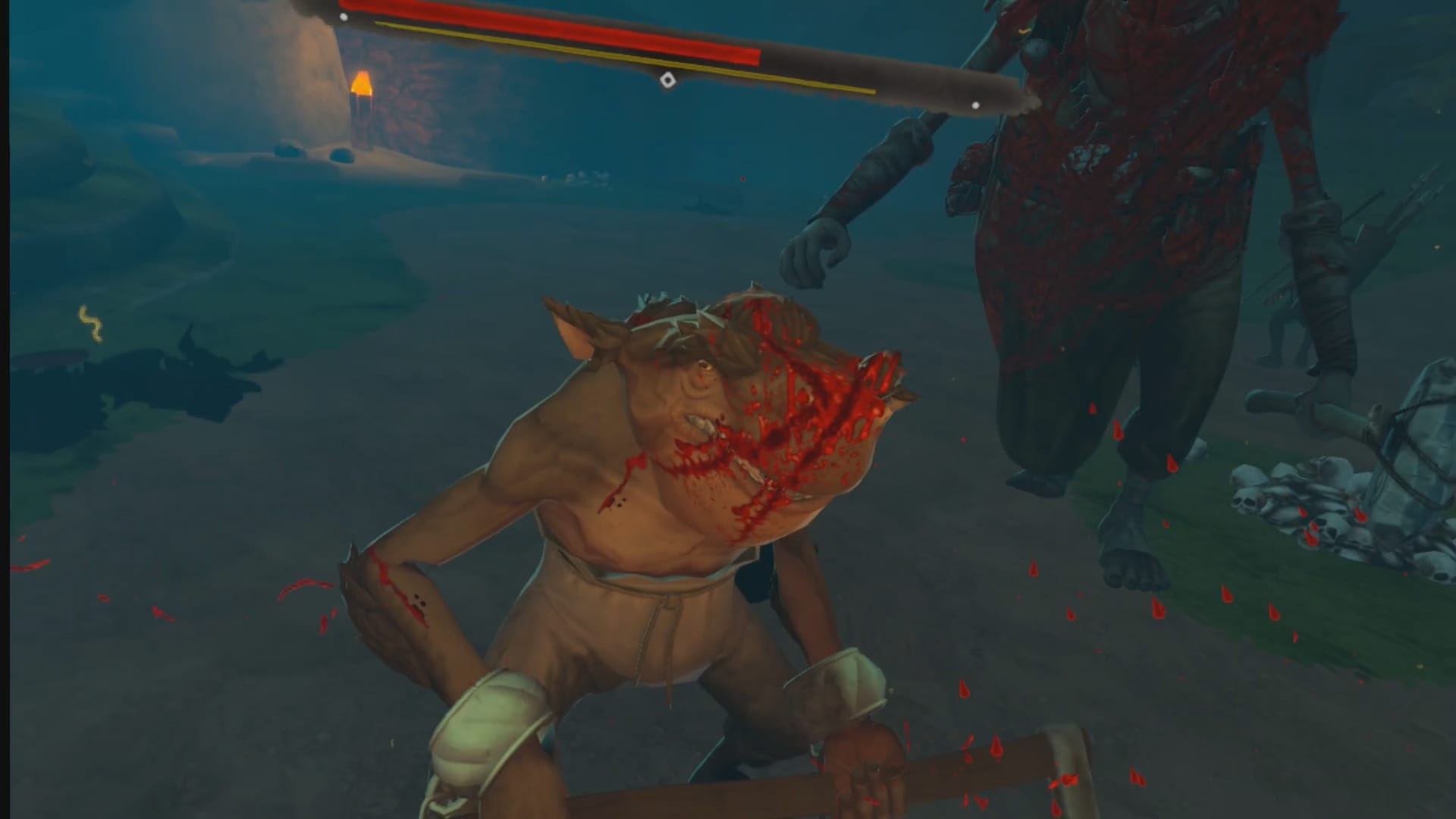
The combat is almost brilliant in its simplicity. It feels, for lack of a better term, chunky. Enemies visibly take damage and react accordingly when hit. Every hit registers thanks to terrific sound design and the standard fighters can quickly close the distance on you with far-ranging leaping attacks or throwing spears. A lone enemy is a threat to hurt you in Crossings which is a nice change of pace from the horde-like feeling in other roguelites.
0:00
/0:27
Fighting a boss in Crossings – Captured on Steam by UploadVR
This is still a roguelite though, so expect to see the same enemies quite often. Getting to the third boss fight only to find out it’s the same (or very similar) model as the first with a couple of new attacks was a bit of a letdown. Also, this is a slower-paced, more measured rogue, closer to something like In Death or Ancient Dungeon VR than the recent Roboquest. This isn’t necessarily a bad thing. I quite enjoyed it. Just a point of comparison.
You will spend just as much time exploring and looting as in combat. Successful runs can get quite lengthy, so if you are doing well and fully exploring an area, expect to be in headset for over an hour before you go down. A run save feature would be welcome in future updates.
Comfort
Crossings uses artificial stick-based locomotion. You can choose between snap and smooth turning, but there are no settings for degrees on snap turning or speed for smooth turning. There are also no available vignettes for those prone to motion sickness.
Your weapon defaults to your primary hand with your inventory appearing on your other hand, but this can be changed in settings.
Unfortunately, Crossings still shows signs of an early release. The options lack, well, options like turn speed/angles and vignettes. You can only run in a straight line. Trying to strafe or draw your weapon slows you back down. The magic gestures, specifically the crush spell, can be hit-or-miss at times. I used push more than anything else simply because it registered more consistently than crush or lift. At times, I triggered them accidentally and lost mana.
0:00
/0:28
Selecting an upgrade. Captured on Quest 3 by UploadVR.
Then there’s the co-op gameplay. Crossings originally released in Early Access on Quest without the promised co-op mode. That was added later, shortly before the Steam release, and it still feels unfinished. There is no voice chat, which to my understanding was a deliberate move by the developers to force communication via body language and hand motions. A curious choice when Discord exists (and will soon have native Quest integration) and players on Quest can use the Horizon OS voice chat to communicate. I’m curious how many players will opt for the silent communication approach as intended.
Your friend joins with a full body, a curious choice given you yourself just have hands. Mercifully, you do not see your buddy’s arm transform into a club/sword/axe/mace when they pull their weapon, but the weapon floats awkwardly at their wrist instead of appearing to be actually held. Same with the bow and arrow and the lamp that keeps you on the right path forward. This doesn’t affect the gameplay, but it’s tough to unsee.
The aforementioned translucent statues randomly appear for each player while being unseen by the other. When you both arrive at the upgrade statues, if one player selects an upgrade, that statue shuts down, even if the other player wanted the upgrade in the other hand. Passing inventory items, like potions, to each other was quite cumbersome. It’s surprisingly clunky, especially coming from a seasoned developer like Neat Corp. Crossings in general feels better as a singleplayer experience than a co-op one.
PC Specs Used
For this review, Crossings was played and captured on both Meta Quest 3 and PC. My PC uses an RTX 5070 Ti with a Ryzen 5 5600X processor and 64GB of RAM.
When playing on PC, Crossings was played on a Quest 3 using Virtual Desktop on the Ultra preset. The in-game graphics were set to the highest level.
You can find the minimum and recommended specs on the Steam page to learn more.
From a technical standpoint, Crossings nails the atmosphere. Fog is used quite liberally, even in some interior areas, but that’s to be expected since you’re in the afterlife. This is paired with excellent music and sound design to create a dark, unnerving world. However, the world-building here is light. Ethereal voices make references to whatever quest you’re on and runs play out in a mostly linear fashion, despite the open maps to explore.
In terms of fidelity, there’s not a great deal of difference between the standalone and PC versions. Visually, it does feel like the Quest version was the priority. Both versions were performant with no major bugs or issues to speak of, other than occasional hitching in co-op.
Crossings – The Final Verdict
Crossings manages to mask its flaws with strong, well-designed combat and a moody atmospheric world to explore. The co-op experience comes up short and the game lacks several comfort features, but these are all fixable issues and with an attractive $10 price point, it’s a welcome addition to one of the most crowded genres in VR.
UploadVR uses a 5-Star rating system for our game reviews – you can read a breakdown of each star rating in our review guidelines.
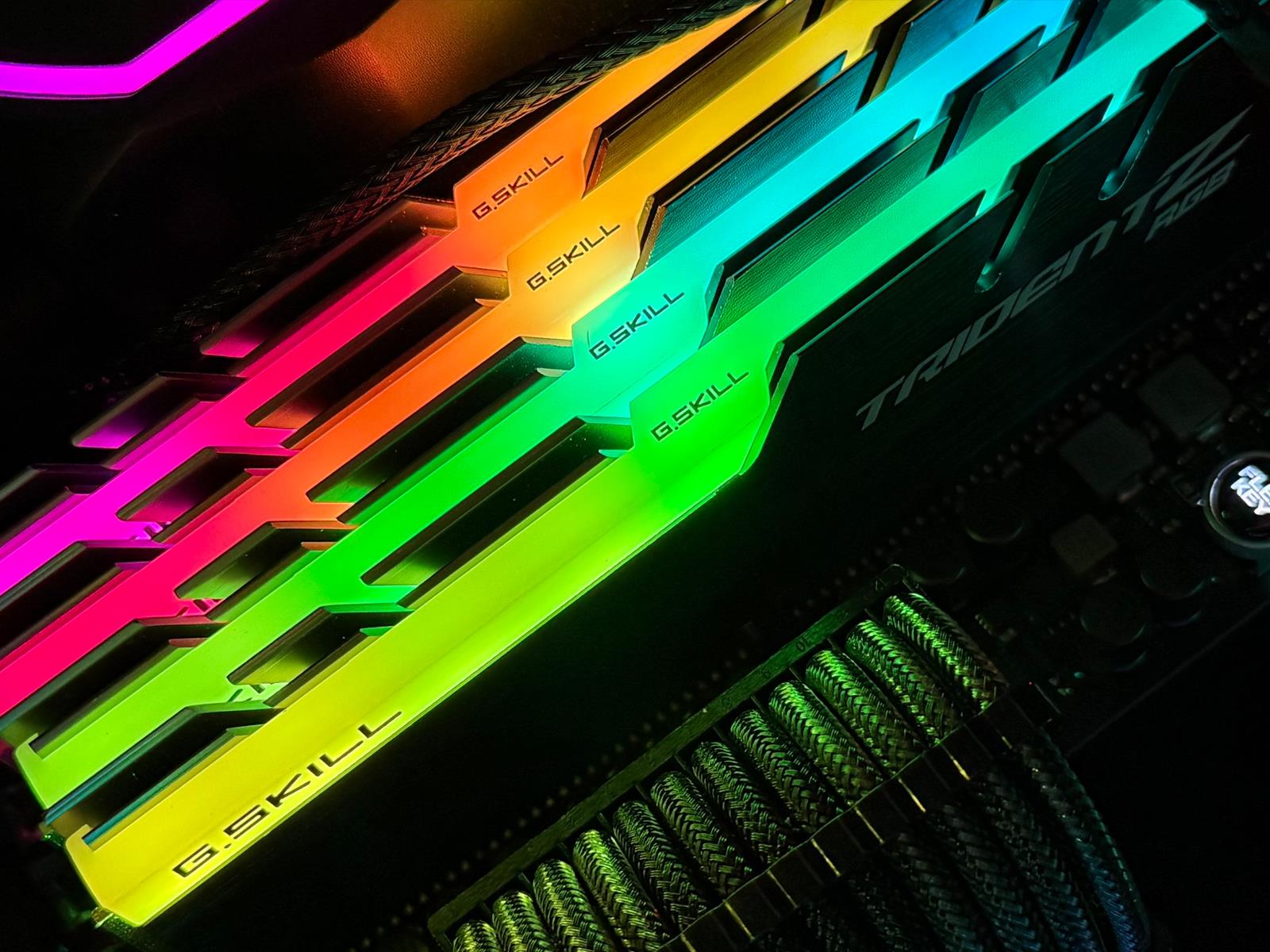
G.Skill has agreed to pay $2.4 million to settle a class action lawsuit alleging it “deceptively advertised and labeled” the speed of its DDR5 and DDR4 desktop memory modules. The settlement allows G.Skill to put the matter to rest without admitting any wrongdoing, and it avoids having a court decide of G.Skill’s memory speed labels violated
The open-source Redis 8.6 release is now available and this GA release has brought “substantial” performance improvements and to memory reduction too. Plus various new features like TLS certificate-based automatic client authentication, time series enhancements, and new eviction policies…
In addition to the BPF filtering support for IO_uring that was merged on Monday, the other block device changes and IO_uring updates were also merged for the newly-opened Linux 7.0 merge window…
Google announced two new ways for users to remove their sensitive information from the web Tuesday morning—or, at least, remove that data from Google Search. The first lets users request that Google remove sensitive government ID information from Search, while the second gives users new tools to request the same for non-consensual explicit images.
Google’s “Results about you” tool is getting an update
Credit: Google
First, Google is updating its existing “Results about you” tool, which helps users scour the internet for their personal information. Before today, this tool could already locate data points like your name, phone number, email addresses, and home addresses. Following the update, you can now find and request the deletion of search results containing highly sensitive information, including your driver’s license, passport, or Social Security number.
To launch this tool, click here. If you’ve never used “Results about you” before, you’ll need to set it up to tell Google what to look out for. Once you do, you’ll be able to add government ID numbers, such as your driver’s license, passport, and Social Security number. If Google finds a match, the company will let you know. You can receive an alert from the Google app on your smartphone, which takes you to a summary of what data was found and where. From here, you can choose from “Request to remove,” or “Mark as reviewed.”
Unfortunately, this tool won’t remove the data from the websites that are hosting it, but it will eventually remove the search results—sharply reducing the chance that someone will find your data on their own.
Google says these changes will roll out in the U.S. over the “coming days,” while it is working on bringing them to other countries in the future.
Google’s simpler way to remove explicit images from Search
Credit: Google
In addition to these changes, Google is now rolling out a simpler tool for users to request the remove of non-consensual explicit images (NCEI) from Search. If you find such an image on Search, you can tap the three dots on that image, choose “remove result,” then “it shows a sexual image of me.” You’ll have the choice to report whether the photo is real, or is artificially generated, as well, and you can report multiple images at once, if needed. Your requests will all appear in the Results about you hub, so you can track the progress of each.
The tool lets you opt-in to an option that will filter additional explicit results in other searches. Google says it will also share links to “emotional and legal support” after you submit a request.
It takes time for novel designs to catch on. But even so, I am still wondering why the Zenbook Duo hasn’t had a bigger impact on the market after ASUS released its first true dual-screen laptop two years ago. Notebooks like these provide the kind of screen space you’d typically only get from a dual monitor setup, but in a much more compact form factor that you can easily take on the road. It could be that people were wary of an unfamiliar design, shorter battery life or buying a first-gen product — all of which are understandable concerns. However, now that ASUS has given the ZenBook Duo a total redesign for 2026, the company has addressed practically all of those barriers to entry while making it an even more convincing machine for anyone who could use more display space. Which, in my experience, is pretty much everyone.
Editor’s note: The 2026 ASUS Zenbook Duo is expected to be available for pre-order sometime in late February, with general availability slated for March.
Design
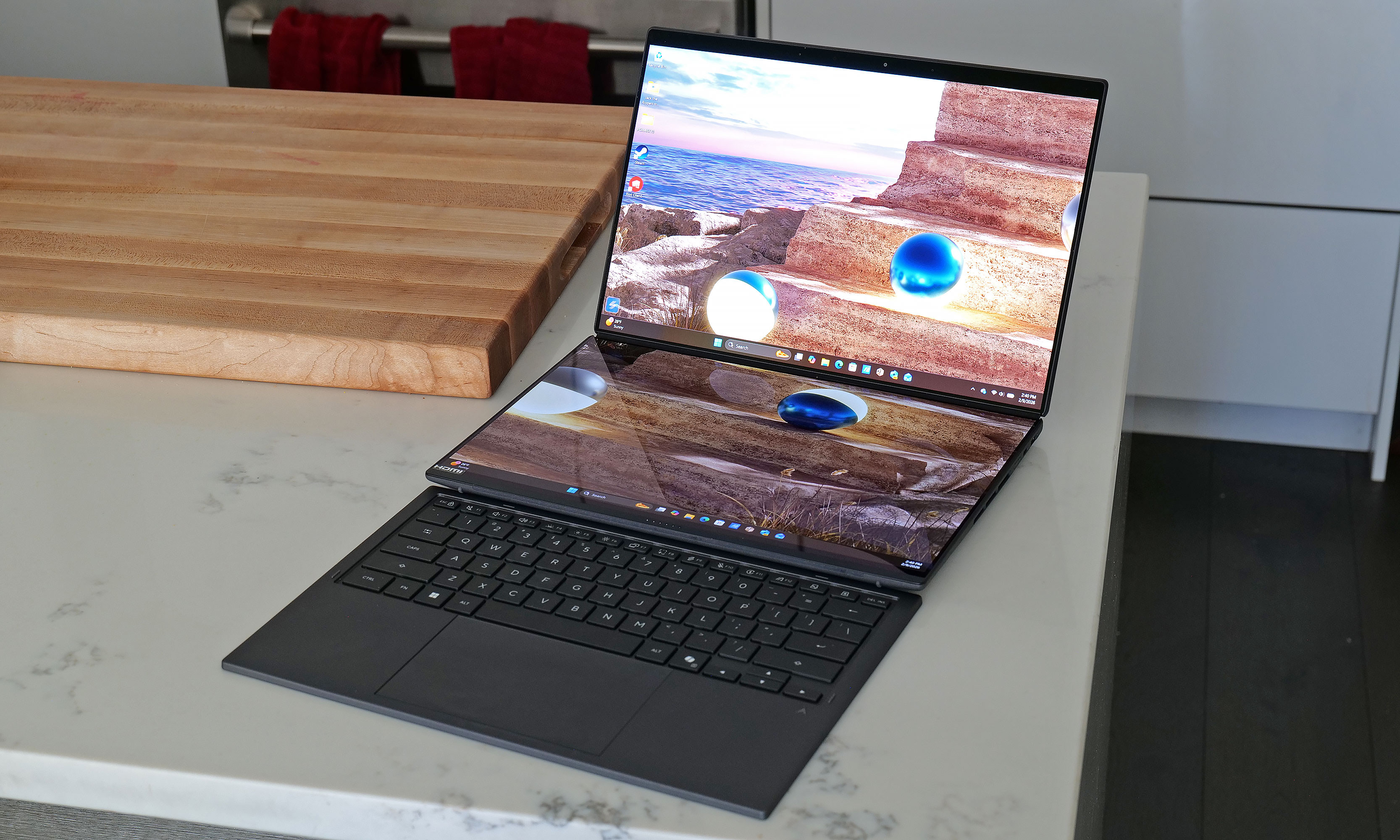
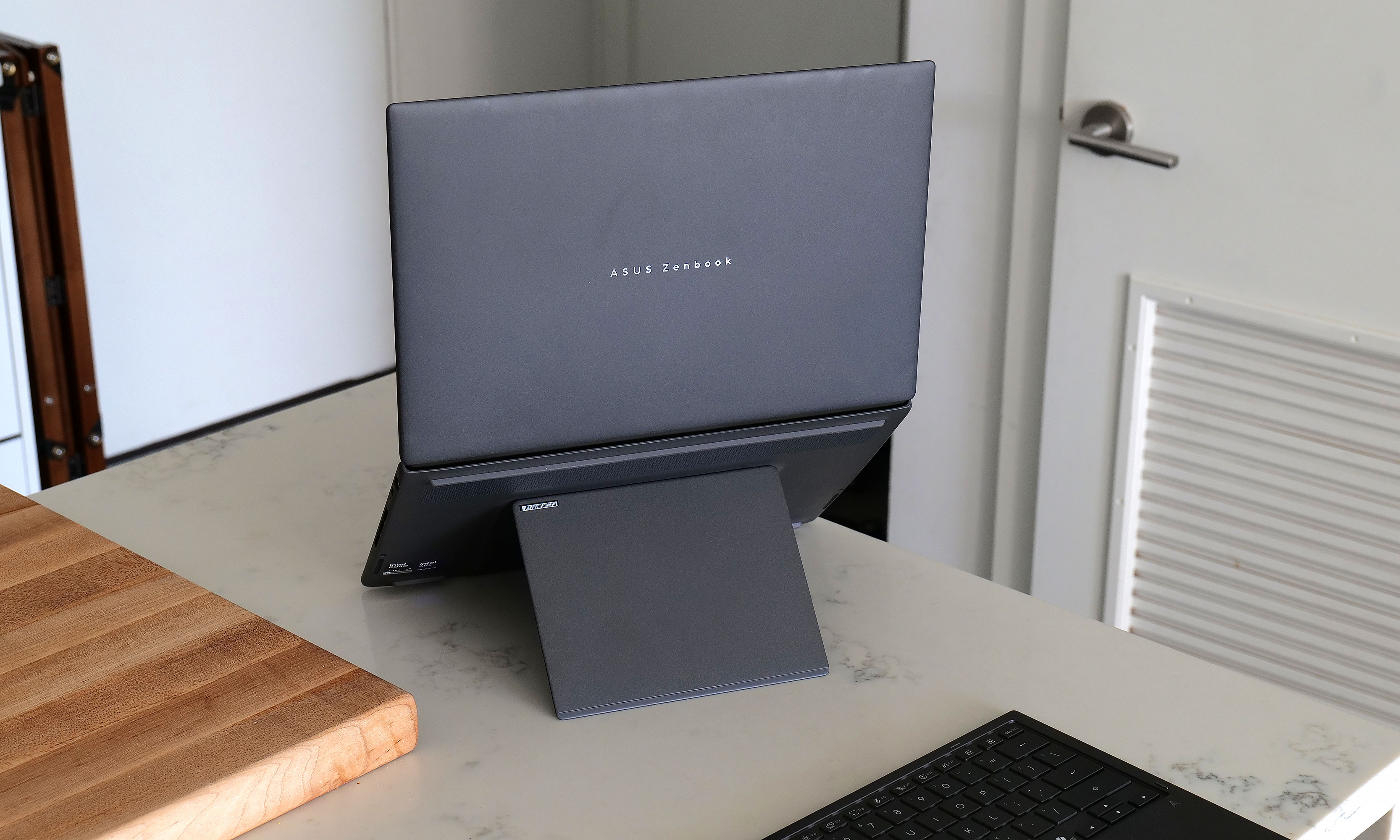
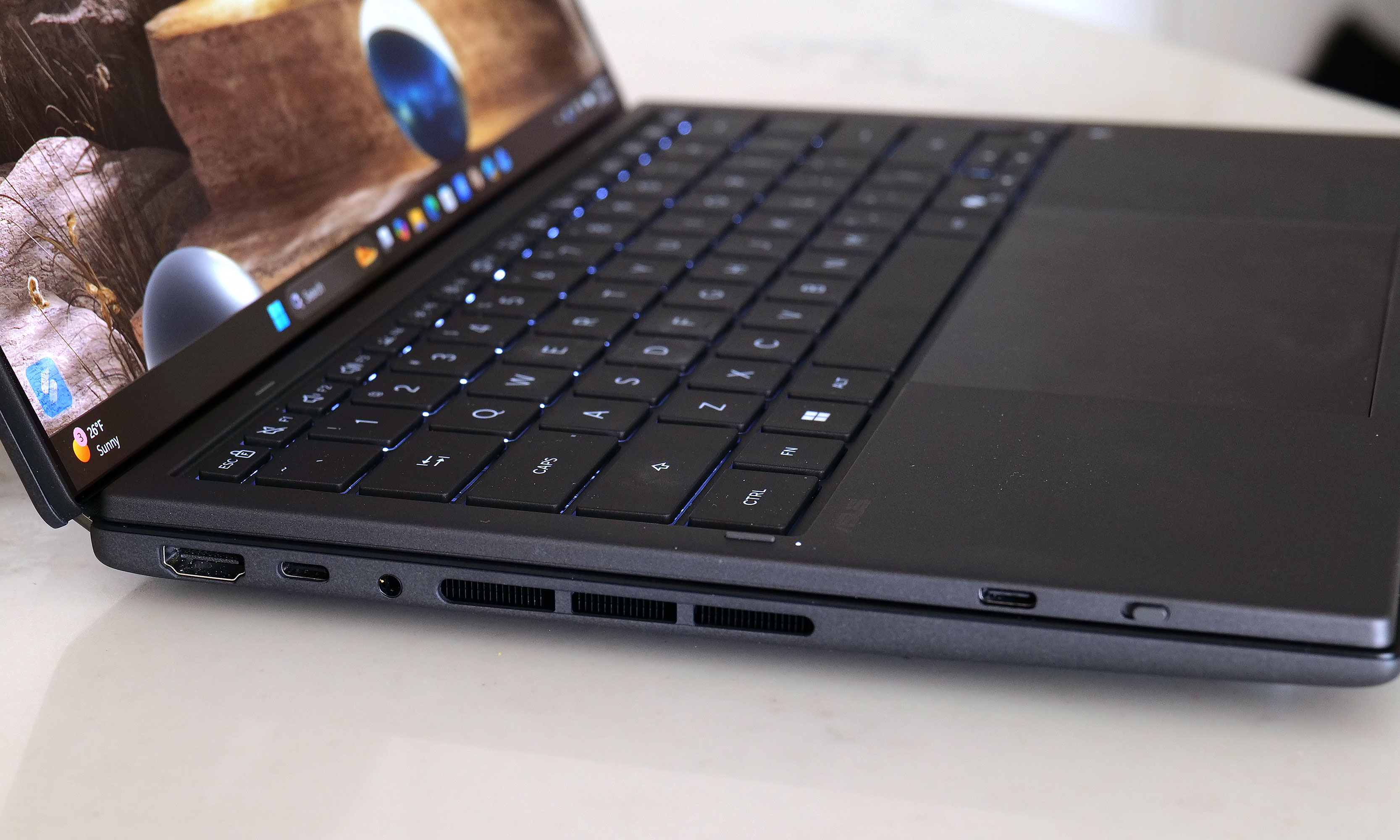
For the new model, ASUS didn’t mess with the laptop’s basic layout too much. Instead, the company polished and tightened everything up, resulting in a system that weighs about the same (3.6 pounds) while reducing its overall size (12.1 x 8.2 x 0.77 to 0.92 inches) by five percent. Critically, you still get a built-in kickstand on the bottom and a detachable keyboard that you move wherever you want. There’s also a decent number of ports, including two USB-C with Thunderbolt 4, one USB-A 3.2 jack, HDMI 2.1 and a combo audio port. That said, I do wish ASUS had found room for an SD card reader of some kind, though given the Zenbook Duo’s unique design, I get why that didn’t make it.
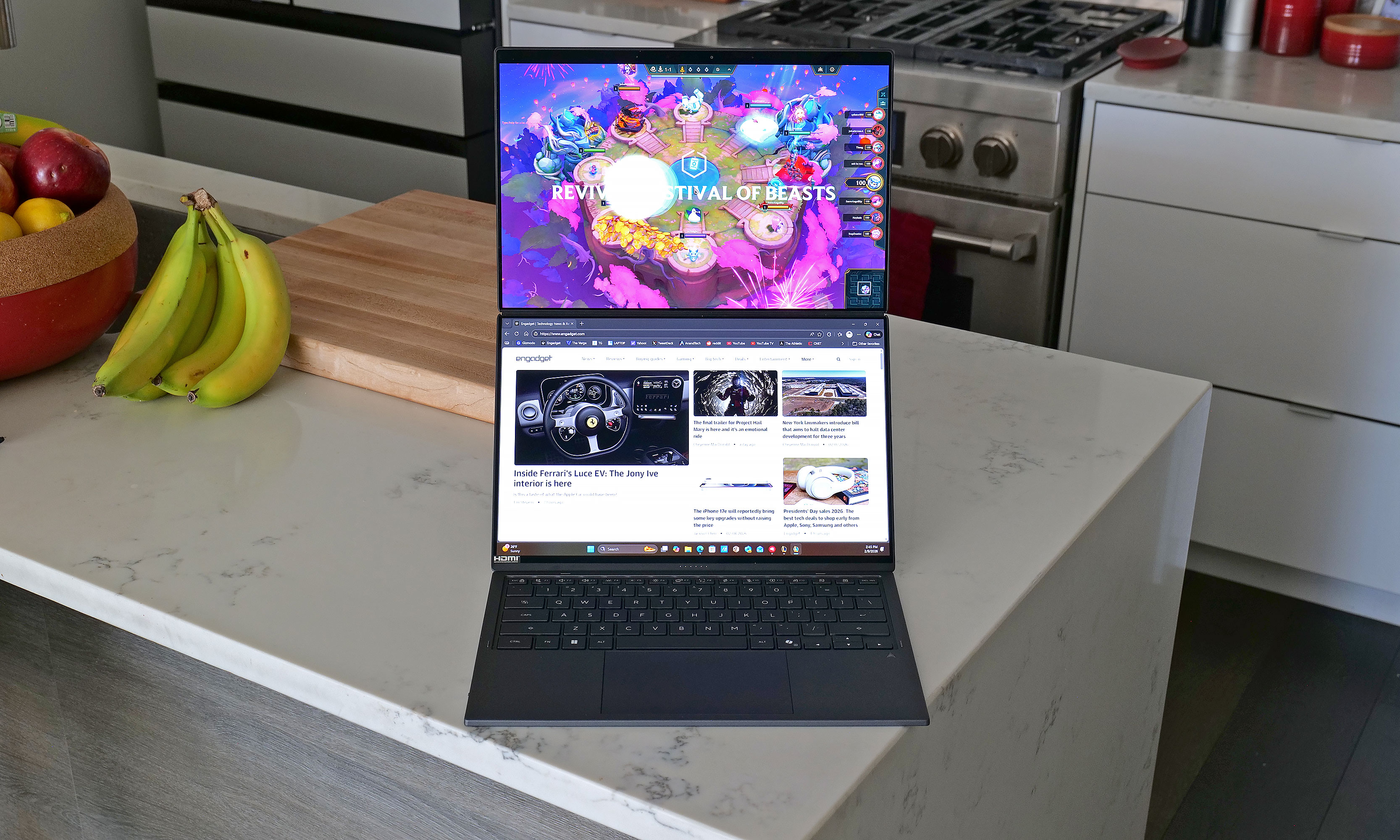
The Zenbook Duo’s detachable keyboard gives users a ton of flexibility when it comes to utilizing both of the laptop’s displays.
Sam Rutherford for Engadget
One of the Zenbook Duo’s most important design upgrades is a new “hideaway” hinge that reduces the gap between the laptop’s two screens. Not only does this make the laptop easier and more pleasant to use in dual-screen mode, it also allows the entire system to lay flat on a table, which is nice for drawing or sharing your screen with someone sitting opposite you. Unfortunately, while my review unit didn’t come with one, ASUS says its forthcoming Pen 3.0 will come bundled with the Zenbook Duo in the US, so you won’t need to pay extra for it.
Another small but appreciated improvement is the new pogo pins below the lower display, which provides a more secure and reliable way of keeping the laptop’s detachable keyboard topped up. In my experience, even after running multiple rundown tests that completely drained the Duo’s battery, I never had to charge up the keyboard on its own. It was always smart enough to sip electricity from the main system in the background, though it also has a built-in USB-C port for power just in case. On the flipside, if you’re not scared of typing on glass, you can still use the lower screen as a keyboard and touchpad, or as a place to display widgets for news, the weather, performance and more.
Displays
As someone who loves a desktop with dual monitors, I can’t overstate how nice it is to have similar built-in functionality on a laptop.
Sam Rutherford for Engadget
The standout feature on the Zenbook Duo continues to be its dual displays, and now for 2026, they look better than ever. Both OLED panels have a 144Hz refresh rate with a 2,880 x 1,800 resolution while also covering 100 percent of the DCI-P3 spectrum. And while its nominal brightness of 500 nits for SDR content is just OK, ASUS makes up for that with peaks of up to 1,000 nits in HDR. And to make both screens even more enjoyable, ASUS managed to shrink the size of their bezels down to just 8.28mm. That’s a reduction of 70 percent compared to the previous model, so now there’s even less getting in the way of you utilizing these screens to their fullest.
Performance
The Zenbook Duo can be configured with a range of new Intel Core Ultra 7 and Core Ultra 9 processors, including the X9 388H chip used on our review unit. For general use and productivity, the laptop is super smooth and responsive, though that shouldn’t be a surprise coming from Intel’s latest top-of-the-line mobile CPU. However, for those seeking max performance, some of the benchmark numbers aren’t quite as impressive as you might expect. That’s because ASUS has limited the Duo’s TDP (thermal design power) to 45 watts — which is shy of the chip’s 80-watt turbo power limit.
The kickstand in back adds a bit a bulk, but it’s better than not having one at all like with Lenovo’s Yoga Book.
Sam Rutherford for Engadget
In PCMark 10, the Zenbook Duo only managed a score of 7,153 compared to 9,651 from a Dell XPS 14, despite the latter having a lower-tier Intel Core Ultra X7 358H processor. That said, in other tests like Geekbench 6, the Duo had no trouble staying on top with a multicore score of 17,095 versus 9,651 for the Dell.
Another pleasant surprise is that because the Duo’s chip comes with Intel’s upgraded Arc B390 integrated GPU, this thing has plenty of oomph to game on, let alone edit videos or other similar tasks. In Elden Ring at 1,920 x 1,200, the Zenbook maintained a relatively stable framerate between 55 and 60 fps on high settings, which is great considering this thing doesn’t have discrete graphics. This means as long as you don’t mind fiddling with game options a bit, you should be able to play newer AAA games without too much trouble.
Battery life
The left side of the Zenbook Duo features a full-size HDMI connector along with a USB-C port, plus a backup USB-C jack for charging the detachable keyboard.
Sam Rutherford for Engadget
You’d think a laptop with two displays would be super power hungry. However, by increasing the capacity of its cell from 75WHrs to 99WHrs, ASUS has made the Zenbook Duo’s endurance (or lack thereof) a complete non-issue. On PCMark 10’s Modern Office rundown test, the laptop lasted 18 hours and 33 minutes in single-screen mode. Granted, that’s nearly four hours less than what we got from MSI’s Prestige 14 Flip AI+, but considering that’s the longest-lasting notebook we’ve ever tested, I’m not bothered. When compared to ASUS’ own Zenbook A14 (18:16), things are basically a wash, which I think is a win for the Duo, as the A14 is meant to be an ultralight system with an emphasis on portability and longevity.
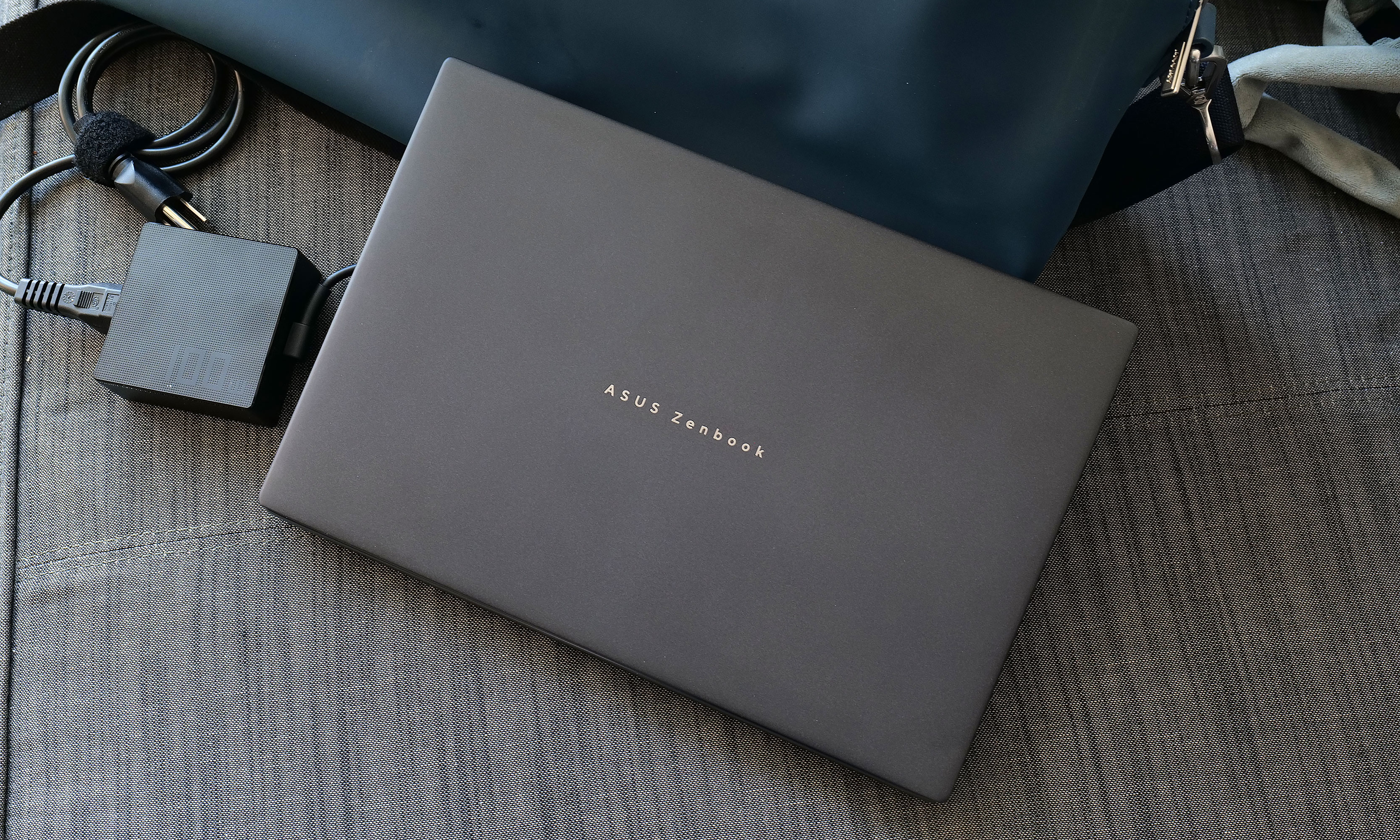
Obviously, battery life takes a hit when you’re using both displays. However, when I re-ran our battery test with its two displays turned on, the Duo still impressed with a time of 14:23. This is more than enough to give you the confidence to set this thing up in dual-screen mode even when an outlet isn’t close at hand. Thankfully, for times when you do need a power adapter, the charging brick on ASUS’ cable is rather compact, so it’s not a chore to lug it around.
Wrap-up
The Zenbook Duo’s battery life is good enough you won’t always need its power brick. Thankfully, when you do, ASUS’ 100-watt adapter is relatively compact.
Sam Rutherford for Engadget
I’m a believer that one day people will eventually embrace typing on screens with laptops just like they have for smartphones. However, even if you’re not willing to make that jump just yet, the Zenbook Duo still has all of its bases covered. Its detachable keyboard gives you a pleasant experience while freeing up the bottom of the notebook to be a second display. This allows you to have something similar to a traditional dual-monitor desktop but in a chassis that you can easily take on the road without any major compromises.
The 2026 Zenbook Duo combines a compact design with strong performance, plenty of ports and surprisingly good battery life. Sure, it’s a touch heavier than a typical 14-inch laptop, but its two screens more than make up for a little added weight and thickness. That leaves price as the Duo’s remaining drawback, and starting at $2,100 (or $2,300 as reviewed), it certainly isn’t cheap.
However, when you consider that a similarly equipped rival like a Dell XPS 14 costs just $50 less for a single screen, that price difference is rather negligible. Alternatively, if you opt for a more affordable ultraportable and then tack on a decent third-party portable monitor, you’re still likely looking at a package that costs between $1,500 and $1,800. Plus, that setup is significantly bulkier and more annoying to carry around. So while the Zenbook Duo might be an unconventional pick right now, it has all the tools to deliver unmatched portable productivity and I don’t think it will be too much longer until the masses catch on.
This article originally appeared on Engadget at https://www.engadget.com/computing/laptops/asus-zenbook-duo-2026-review-two-screens-really-are-better-than-one-140000982.html?src=rss
The top private schools in New York City plan to charge more than $70,000 this year for tuition, an amount exceeding that of many elite colleges, as they pass on the costs of soaring expenses including teacher salaries. From a report: Spence School, Dalton School and Nightingale-Bamford School on Manhattan’s Upper East Side are among at least seven schools where the fees now exceed that threshold, according to school disclosures and Bloomberg reporting
Fees among 15 private schools across the city rose a median of 4.7%, outpacing inflation. Sending a kid to New York private school has always been expensive, but the cost now is so high that even those with well-above-average salaries are feeling squeezed. Prices have risen dramatically in the past decade, up from a median of $39,900 in 2014.
After the merge request was opened back in 2023 and after going through 628 comments/activity, merged now to Wayland Protocols is the experimental zones “xx-zones” implementation for area-limited window positioning…
Last year the UK declared that Apple and Google were a duopoly with “strategic market status” in the mobile platforms market, making them subject to special regulations. However, the UK’s Competition and Markets Authority (CMA) will not regulate Google and Apple’s app stores like the EU has done. Rather, government plans to enforce its own digital markets rules in a “pragmatic” way by accepting “commitments” from Apple and Google in areas like app rankings, the CMA announced.
Google and Apple agreed to work with the CMA to address concerns on the following matters: app review, app ranking, use of data and interoperability process. Effectively, regulators require the tech giants to treat developers fairly, particularly when they compete against Google and Apple’s own apps. However, the UK’s rules are more like suggestions and “not legally binding in any case,” former CMA director Tom Smith told the Financial Times.
This is in stark contrast to Europe’s Digital Markets Act, which forced Apple to make changes to open up iOS features and data to rivals, allow app installations from outside its Store and reduce fees collected on purchases.
That could change if the companies fail to comply with its measures, though. The CMA plans to check metrics like the number of apps approved or rejected, app review times and developer complaints received. New requirements could then be brought forward if deemed necessary. “For example, if we find Apple is routinely declining interoperability requests without good reason… we could bring forward specific interoperability requirements. Non-compliance would also mean we would be unlikely to consider commitments as a similar approach in [the] future.”
Google said in a blog today that it “welcomed the opportunity to resolve the CMA’s concerns collaboratively.” Apple, meanwhile, seemed similarly pleased with the deal. “The commitments announced today allow Apple to continue advancing important privacy and security innovations for users and great opportunities for developers,” an Apple spokesperson told Bloomberg.
The UK is possibly taking a light touch on app store rules to avoid antagonizing the Trump administration. Earlier today, French President Emmanuel Macron predicted that the US could go after the EU on areas like data privacy, digital taxation and the plan of multiple EU countries to ban children from social media. “The US will, in the coming months — that’s certain — attack us over digital regulation,” Macron said at a special summit yesterday.
This article originally appeared on Engadget at https://www.engadget.com/big-tech/uk-takes-light-touch-approach-to-regulating-apple-and-googles-app-stores-131119575.html?src=rss
The first Pony.ai bZ4X robotaxi, made in partnership with Toyota, has just rolled off the production line and is ready to be deployed. It’s the first of many, if the companies stick to their plan, which is to produce more than 1,000 bZ4X robotaxis this year. The bZ4X is one of the three autonomous vehicle models Pony.ai intends to use for commercial services in Tier 1 Chinese cities, including Beijing and Shanghai. The other two vehicles are already being used for Pony.ai’s ride-hailing service, while the bZ4X robotaxis will be gradually integrated into its fleet. Pony.ai’s goal is to operate 3,000 vehicles by the end of 2026.
Toyota introduced the new bZ4X last year, and the non-autonomous versions are available for purchase to the public. Pony.ai’s version comes equipped with the company’s Gen-7 autonomous driving system, which features Bluetooth-based automatic vehicle unlocking and in-cabin voice interaction. It also comes integrated with online music services and braking patterns that can help minimize motion sickness for passengers. Pony.ai was founded in 2016 and has been testing and operating self-driving vehicles since then. It received permission from Beijing to offer self-driving car services to the general public back in 2022. While It’s a Chinese company, it has headquarters in Silicon Valley and filed for an IPO in the US in 2024.
This article originally appeared on Engadget at https://www.engadget.com/transportation/evs/toyota-and-ponyai-start-mass-producing-robotaxis-for-china-130833065.html?src=rss