A long time ago, in (I believe) an issue of Car Magazine from the mid-1990s, the designer Gordon Murray shared his thoughts about a possible four-door follow-up to the McLaren F1.
Road cars weren’t really his thing. Until then, his career had been focused on Formula 1 car design, and he brought that sport’s obsession with weight savings with him. Were he to design a sedan, he’d trim the interior with textile, not leather. After all, wool made fine suits and coats, Murray reasoned, and it would save weight.
A four-door McLaren never happened during his tenure, nor has one appeared since. Murray now runs his own boutique hypercar company, which also builds no sedans. But the idea that high-end cars could use something other than leather has stuck with me, especially after driving BMW’s i7, which debuted in 2022 with a premium cashmere wool interior. More recently, new EVs have experimented with interesting textile alternatives to leather. Two good examples are the BMW iX3 and the Audi A6, though neither can be ordered with these textile options in the US.
Toyota has unveiled the 2027 Highlander, the first fully electric version of the vehicle and the automaker’s fourth EV in the US. It’s also the company’s first EV assembled in the country and the first electric model with three rows of seats. The automaker already sells the electric C-HR crossover and the electric bZ SUV in the US. While the 2027 Highlander resembles its predecessors, its lines look sharper and it has broader fenders. In addition, it features flush door handles similar to Tesla’s, which were designed for aerodynamics but which China recently banned out of safety concerns.
The new Highlander will be available in several varieties, specifically in Limited and XLE (Executive Luxury Edition) grades with either front-wheel or all-wheel drive configuration. If you get the Limited edition all-wheel drive with a 95.8 kWh battery, you can get a range of 320 miles on a single charge, based on Toyota’s estimates. Take note that range estimates by manufacturers and the EPA could be different from each other. It would be more accurate to compare EPA ranges between vehicles across brands, because they were determined using the agency’s testing methodologies.
The 2027 Highlander in XLE front wheel drive configuration with a 77 kWh battery has a manufacturer-estimated range of 287 miles. Meanwhile, the all-wheel drive XLE variant comes with either a 77 kWh battery that can power it for 270 miles or a 95.8 kWh battery that has an estimated range of 320 miles, similar to the Limited edition vehicle. The all-wheel drive variants have a total maximum power output of 338 horsepower, whereas the front-wheel models have a power output of 221 hp.
All the EV’s versions can seat seven, with the third row being able to fold flat if you need it for cargo. They come with heated front seats, but you can also get ventilated and heated second row seats for an additional fee. Toyota will start selling the 2027 Highlander in late 2026, with some regions getting it early next year. The automaker says it will announce pricing for the EV model closer to its release date.
This article originally appeared on Engadget at https://www.engadget.com/transportation/evs/the-2027-toyota-highlander-is-fully-electric-and-has-a-320-mile-range-115828463.html?src=rss
With his newfound focus on the Moon, Elon musk is making some wild new plans. In an xAI meeting with employees, Musk said the company needed to build an AI satellite factory on the moon with a gigantic catapult to launch them into space, according to audio heard by The New York Times.
All of that would be part of the billionaire’s plans to create a massive orbiting AI “data center” that uses satellites powered by the sun and kept cool by the vacuum of space (a bad plan, some experts say). Any satellites launched from the Moon would presumably orbit the Moon as well, though Musk didn’t provide any additional details.
“You have to go to the moon” in order to build the required AI capabilities, Musk told employees. “It’s difficult to imagine what an intelligence of that scale would think about, but it’s going to be incredibly exciting to see it happen.”
Such a catapult would certainly need to be powerful — though the Moon has only one-sixth the gravity of Earth, the minimum escape velocity required for orbit is still around 3,800 MPH or five times the speed of sound. That’s currently possible with electromagnetic railguns that launch projectiles at speeds up to Mach 8.8, though any satellite launched by such a device would need to withstand acceleration forces around 10,000 g or more.
It’s fun to think about it, but there are a few tiny steps required first. That starts with orbiting the Moon and eventually landing on the surface. Then you’d need to build a colony, followed by a factory, all of which would require a large number of manned and unmanned expeditions. As a reminder, we haven’t been to the moon for over 50 years and none of the colony or factory stuff has ever been done.
Early last year Musk said in a post on X that SpaceX would be going “straight to Mars” and that “the Moon is a distraction.” However, the CEO apparently shifted his near-term priorities to building a “self-growing city on the Moon” because it’s a more achievable target. In a post on X, Musk said the company could complete this in less than 10 years, while doing the same on Mars would take over 20 years.
Any estimates from Musk himself certainly need to be treated skeptically, though. Elon once said in 2017 that SpaceX would send cargo missions to Mars by 2022 aboard a rocket that’s still being tested in 2026.
This article originally appeared on Engadget at https://www.engadget.com/science/space/elon-musks-latest-scheme-is-a-satellite-catapult-on-the-moon-113403143.html?src=rss
The core timer changes to the Linux 7.0 kernel score a rather nice performance improvement in a UDP receive network stress test from inlining a function that compilers haven’t been able to tackle with their optimizations…
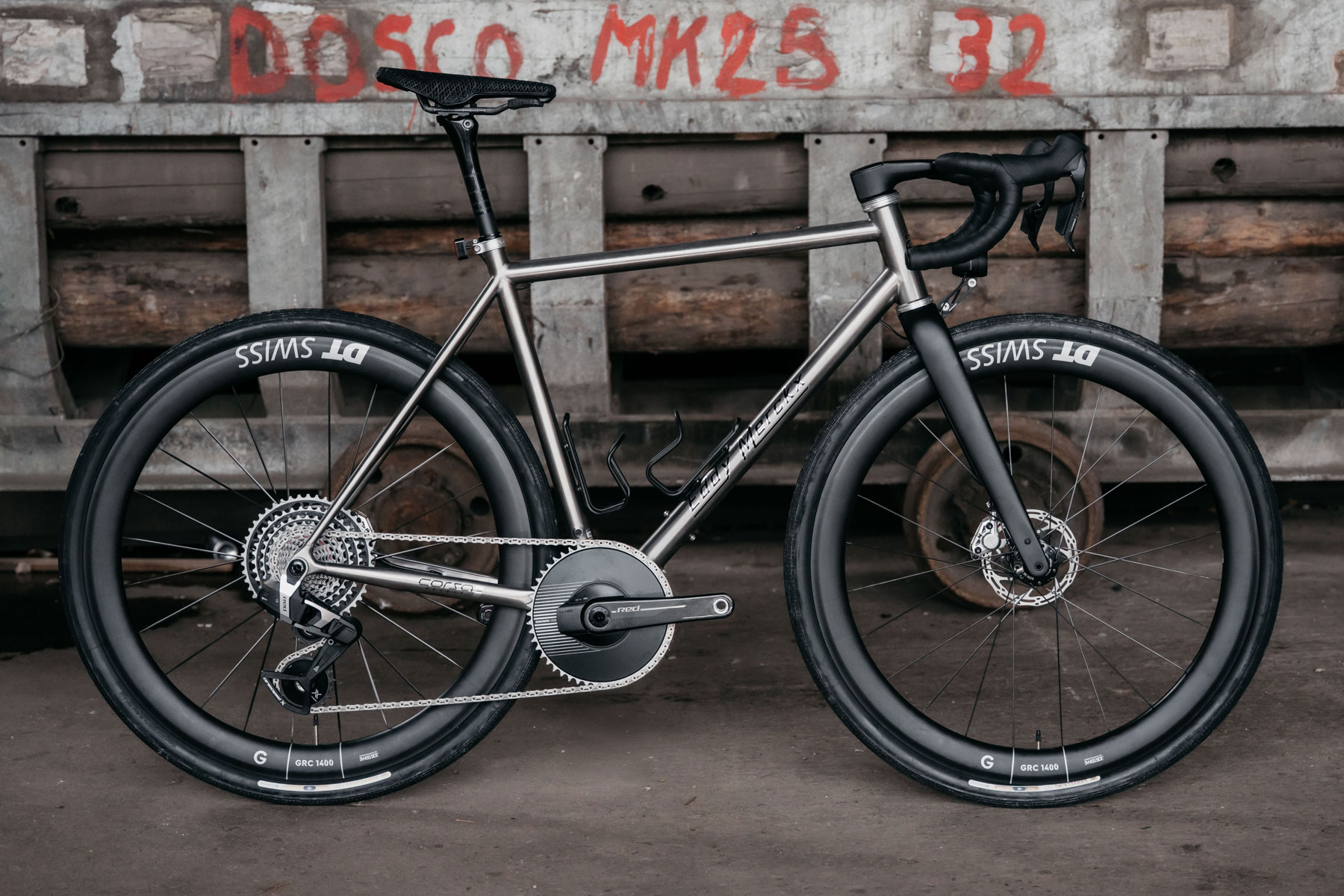
Eddy Merckx Bikes has unveiled a pair of new titanium bikes, handmade in Italy from Columbus tubing.
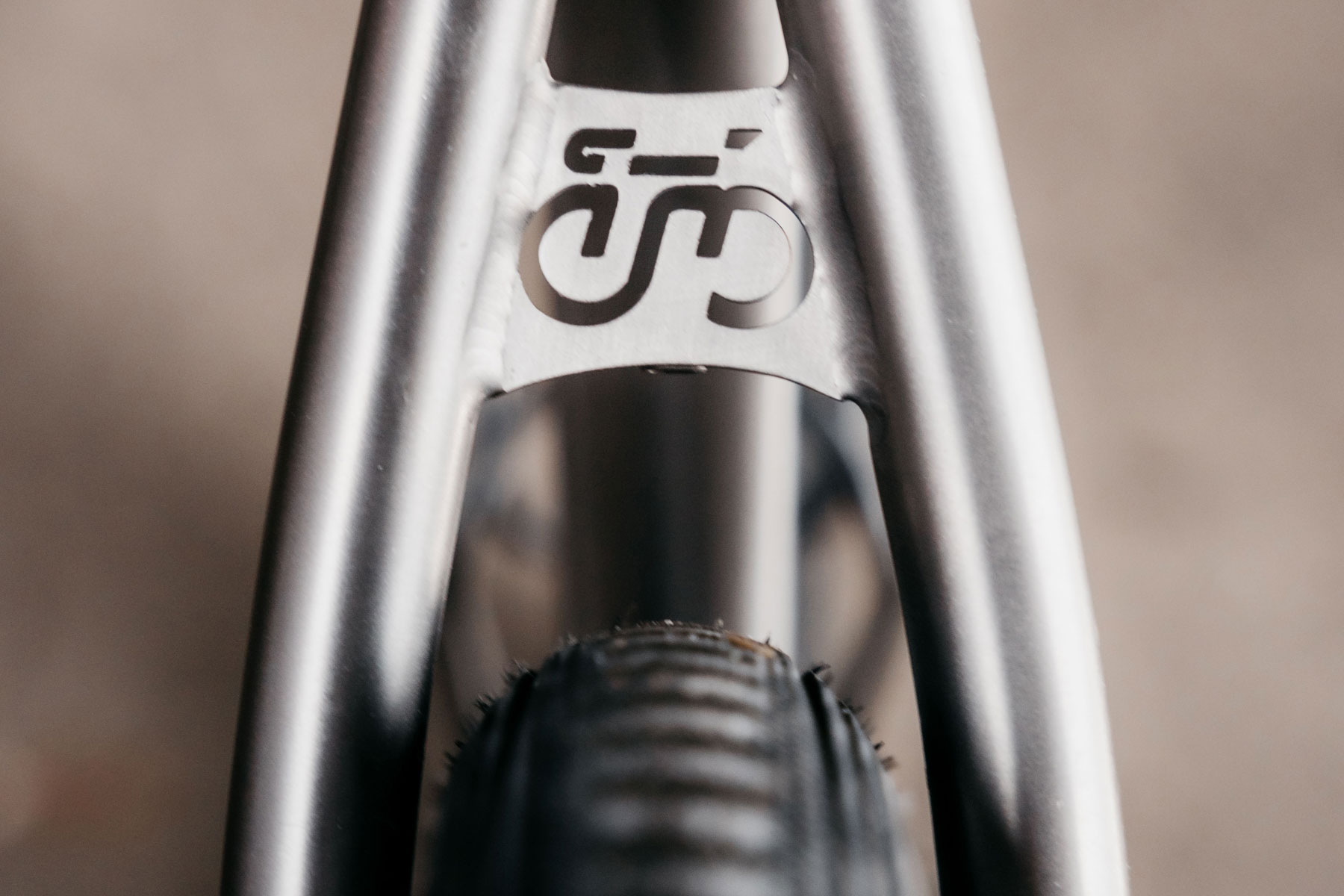
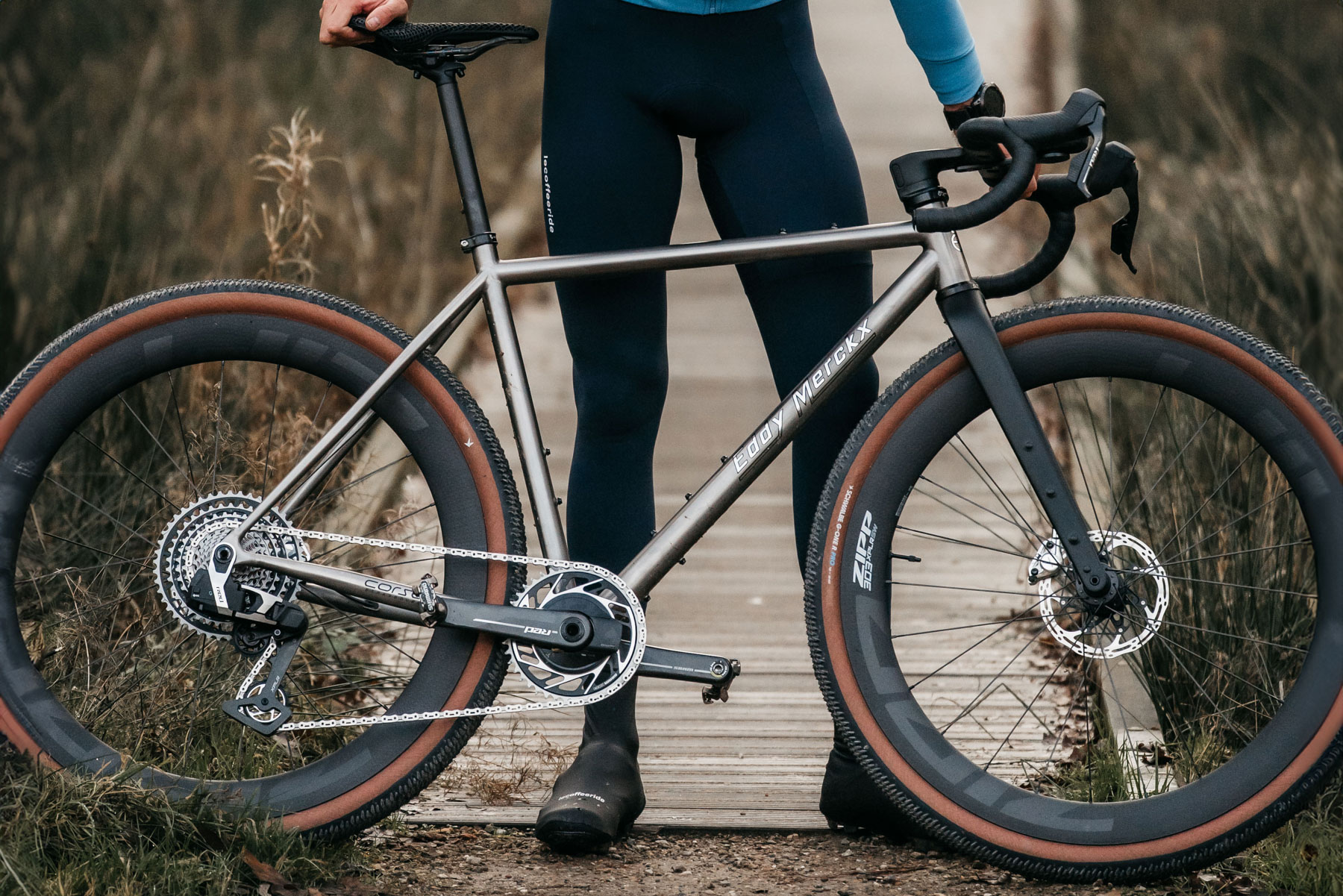
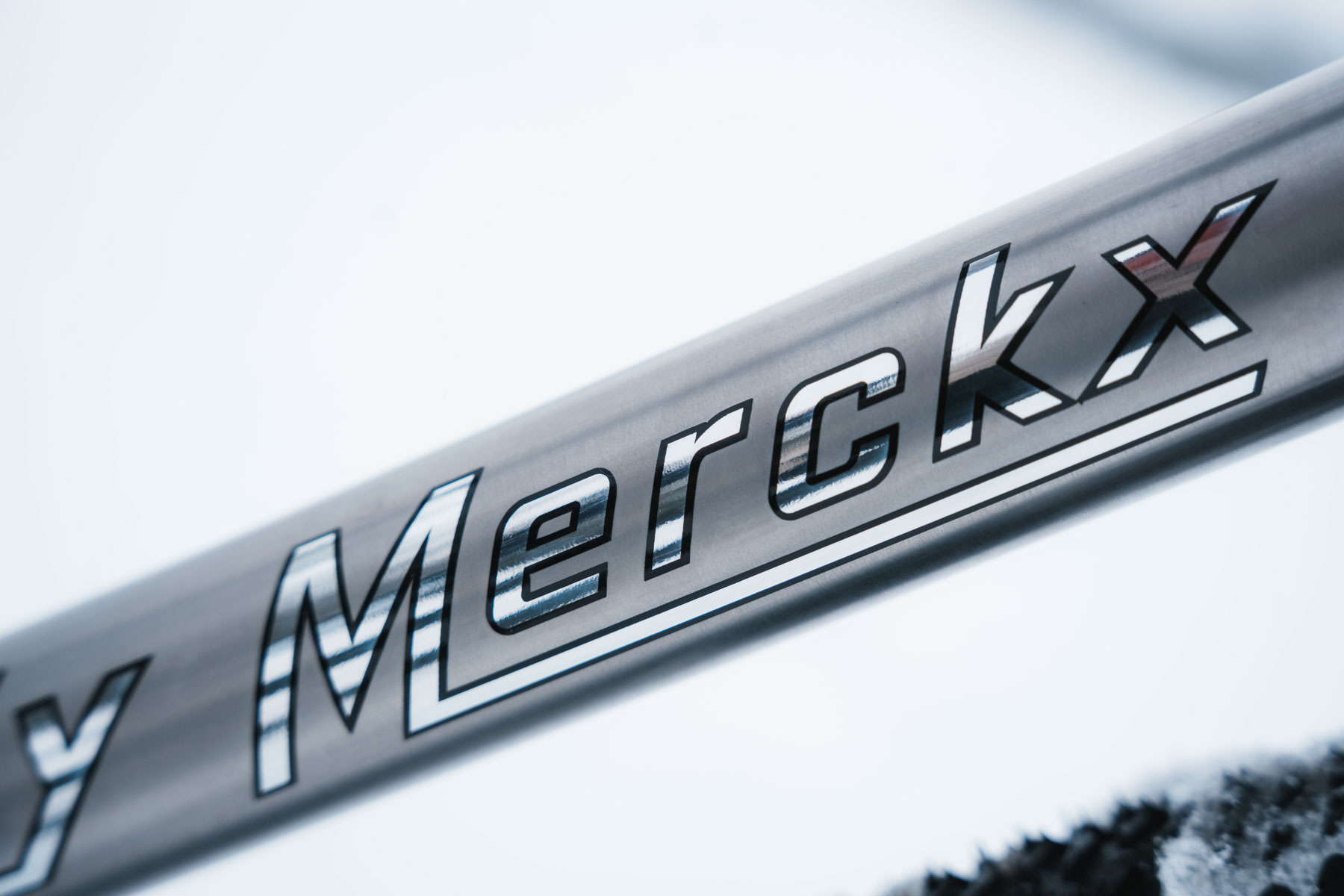
The new Eddy Merckx Corsa Strasbourg Ti features retro-modern Merckx logos and head badge, modern gravel geometry, a UDH dropout and colour-coordinated Wolf Tooth small parts.
I think this combination of retro and modern makes it one of the best-looking new gravel bikes for 2026.
Made from custom Columbus titanium tubing, with plenty of build options, the do-it-all gravel Strasbourg Ti looks impressive.
If you prefer your titanium kicks to be a little more road-focused, Merckx has you covered with the Corsa Pévèle all-road/endurance bike.
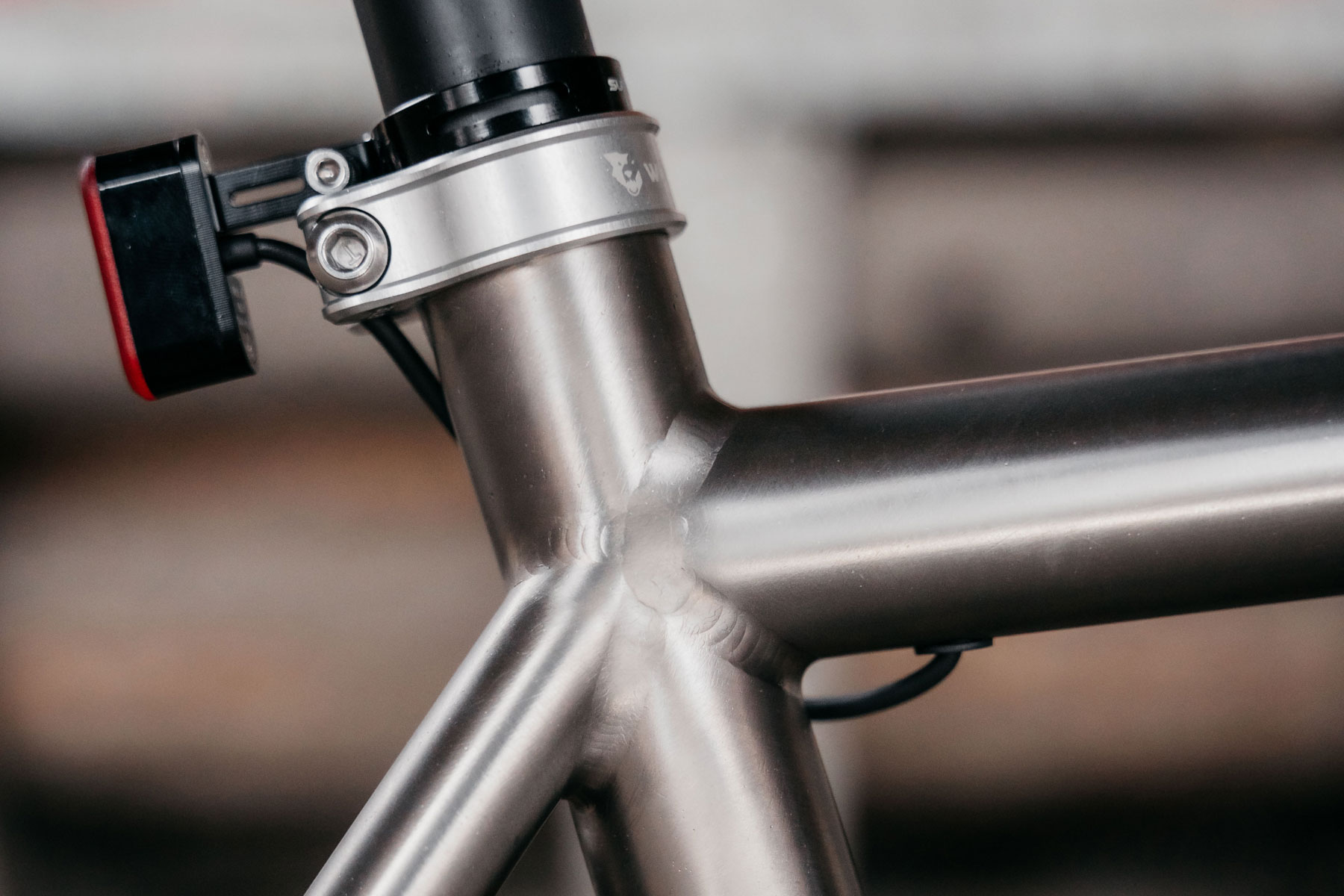
The original Merckx logo is laser-cut into the seatstay bridge on both the Corsa Pévèle and Strasbourg. Eddy Merckx cycles / Belgian Cycle Factory
Cycling’s greatest ever competitor, Eddy Merckx rode exclusively Italian-made bikes throughout his career, from the age of 16 until his retirement from racing at 33 in 1978.
The Merckx bicycle brand was founded in 1980 and the exclusive Corsa line has been reserved for handmade metal bikes.
The original Merckx Corsa models were made by Johan Vranckx, who learnt his craft at De Rosa. Now Vranckx has retired, Merckx Bikes has decided to take its metal frame manufacturing back to Italy.
The Corsa titanium frames are handmade in Italy. Eddy Merckx cycles / Belgian Cycle Factory
The two new titanium models sit alongside the ‘standard’ Corsa Strasbourg and Pévèle. Both keep up the Merckx tradition of using steel frames made from Columbus Zona and SL tubes. Like the titanium models, these are also handmade in Italy.
Eddy Merckx Corsa Strasbourg Ti
A Strasbourg Ti prototype was raced at last year’s UCI Gravel World Championships. Eddy Merckx cycles / Belgian Cycle Factory
The bike is made from Columbus’ Hyperion titanium tubing, the lightest titanium tubeset the Italian metal specialist has ever produced.
Retro logos add a touch of class to the new Corsa titanium models. Eddy Merckx cycles / Belgian Cycle Factory
The frame features a UDH dropout, 48mm tyre clearance (up from the 47mm of the prototype).
The geometry looks to be at the racier edge of gravel design, with a 70.5-degree head tube angle and steep 75-degree seat tube angle. The chainstays measure 435mm and the wheelbase is 1,038mm on the size-large (56cm equivalent).
Eddy Merckx Corsa Pévèle Ti
The all-road/endurance Corsa Pévèle. Eddy Merckx cycles / Belgian Cycle Factory
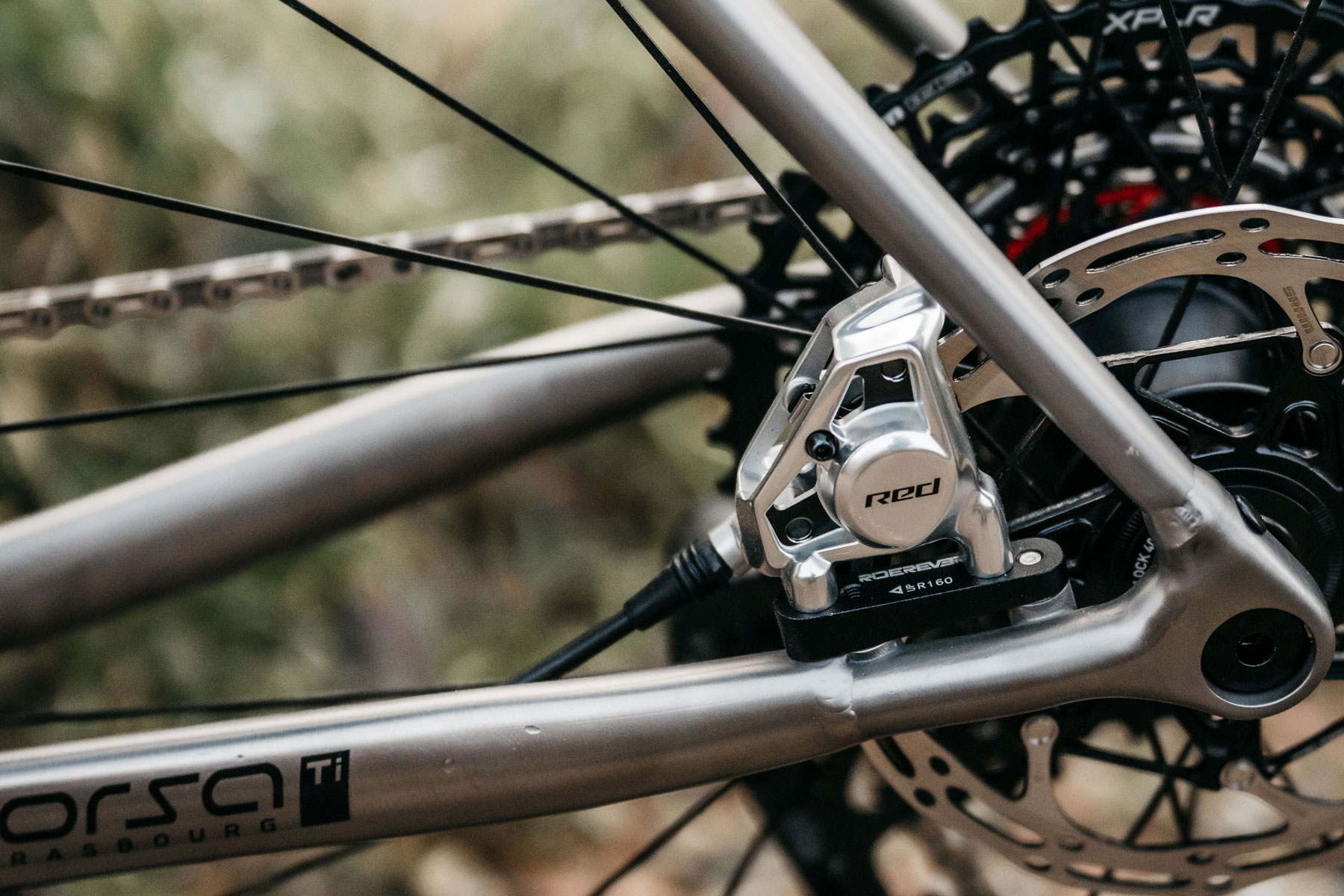
Alongside the gravel bike is the new Corsa Pévèle, an all-road/endurance design. Like the Strasbourg Ti, it features a UDH dropout and retro-modern graphics, and is available with coordinated Wolf Tooth components.
The Pévèle can be had in both 1x and 2x configurations. A 1x drivetrain leaves room for 40mm tyres, and with 2x this drops to 38mm.
Neat internal routing for a dynamo-powered rear light on the Corsa Pévèle. Eddy Merckx cycles / Belgian Cycle Factory
Prices and options
The Strasbourg Ti can be had as a frameset from £4,499.10 / €4,999, or in the following builds:
SRAM Force XPLR AXS 1x 13 (with power meter): £7,776 / €8,640
SRAM Red XPLR AXS 1x 13: £10,578.60 / €11,754
Campagnolo Super Record 1x 13: £11,928.60 / €13,254
All builds have plenty of options through the Merckx online configurator.
The Pévèle frameset is priced similarly at £4,499 / €4,999, with the following build options:
1x 13 SRAM Force XPLR (with power meter): £7,465.50 / €8,295
2x 12 SRAM Force AXS (with power meter): £7,915.50 / €8,795
Shimano Ultegra Di2: £8,099 / €8,595
Shimano Dura-Ace Di2: £9,625.50 / €10,695
SRAM Red XPLR AXS 1x 13: £9,715.50 / €10,795
SRAM Red AXS 2 x 12 (with power meter): £9,985.50 / €11,095
Campagnolo Super Record 1x 13: £10,938.60 / €12,154
Campagnolo Super Record 2x 13: £12,149.10 / €13,499
There were recently patches for getting the Adobe Photoshop 2025 installer to work on Linux under Wine. Those patches were picked up by Wine-Staging and now more traction is coming for getting those patches into the upstream Wine codebase, some of which have now been merged…
The locking code changes have been merged for the Linux 7.0 kernel and it introduces support for a new compiler-driven feature being introduced on the compiler side with the upcoming LLVM Clang 22…
Cangaroo is an open-source CAN bus analyzer for Linux systems used in automotive, robotics, and industrial environments. The desktop application focuses on real-time capture, decoding, and analysis of CAN and CAN-FD traffic, with native integration into the Linux SocketCAN stack. The tool works with a wide range of interfaces supported by the kernel, including SocketCAN […]
Discord has moved to calm a user backlash over its upcoming age verification mandate by clarifying that the “vast majority” of people will never be asked to confirm their age through a face scan or government ID.
The platform said it will instead rely on an internal “age prediction” model that draws on account information, device and activity data, and behavioral patterns across its communities to estimate whether someone is an adult. Users whose age the model cannot confidently determine will still need to submit a video selfie or ID.
Those not verified as adults or identified as under 18 will be placed in a “teen-appropriate” experience that blocks access to age-restricted servers and channels. The clarification came after users threatened to leave the platform and cancel Nitro subscriptions, and after a third-party vendor used by Discord for age verification suffered a data breach last year that exposed user information and a small number of uploaded ID cards.
An anonymous reader shares a report: The most seductive narrative in American work culture right now isn’t that AI will take your job. It’s that AI will save you from it. That’s the version the industry has spent the last three years selling to millions of nervous people who are eager to buy it. Yes, some white-collar jobs will disappear. But for most other roles, the argument goes, AI is a force multiplier. You become a more capable, more indispensable lawyer, consultant, writer, coder, financial analyst — and so on. The tools work for you, you work less hard, everybody wins.
But a new study published in Harvard Business Review follows that premise to its actual conclusion, and what it finds there isn’t a productivity revolution. It finds companies are at risk of becoming burnout machines.
As part of what they describe as “in-progress research,” UC Berkeley researchers spent eight months inside a 200-person tech company watching what happened when workers genuinely embraced AI. What they found across more than 40 “in-depth” interviews was that nobody was pressured at this company. Nobody was told to hit new targets. People just started doing more because the tools made more feel doable. But because they could do these things, work began bleeding into lunch breaks and late evenings. The employees’ to-do lists expanded to fill every hour that AI freed up, and then kept going.
Iceland in October classified the potential collapse of the Atlantic meridional overturning circulation — the ocean current system that ferries warm water northward from the tropics and essentially functions as the country’s central heating — as a national security risk, a designation that amounts to a formal reckoning with the possibility that climate change could render the island nation uninhabitable.
Several recent studies have found the AMOC far more vulnerable to breakdown than scientists had long assumed. One, analyzing nine models under high-emission scenarios, saw the current weaken and collapse in every single instance; even under the Paris agreement’s emission targets, the researchers estimated a 25% chance of shutdown. Stefan Rahmstorf, an oceanographer at Germany’s Potsdam Institute for Climate Impact Research and a co-author of that study, said it was “wrong to assume this was low probability.” Simulations of a post-collapse world project Icelandic winter extremes plunging to minus-50 degrees Celsius, and sea ice surrounding the country for the first time since Viking settlement.
Iceland’s national strategy for dealing with AMOC risks is scheduled to be finalized by 2028. The country has also flagged that NASA Goddard, a key source of AMOC modeling, has been targeted for significant staff and budget cuts under the current U.S. administration.
For programmers fond of the Go programming language, Go 1.26 is out today with two language changes, performance improvements, and other alterations to this Google-backed programming language…
hackingbear writes: China’s Bytedance has released Seedance 2.0, an AI video generator which handles up to four types of input at once: images, videos, audio, and text. Users can combine up to nine images, three videos, and three audio files, up to a total of twelve files. Generated videos run between 4 and 15 [or 60] seconds long and automatically come with sound effects or music.
Its performance is unfortunately so good that it has forced the firm to block its facial-to-voice feature after the model reportedly demonstrated the ability to generate highly accurate personal voice characteristics using only facial images, even without user authorization.
In a recent test, Pan Tianhong, founder of tech media outlet MediaStorm, discovered that uploading a personal facial photo caused the model to produce audio nearly identical to his real voice — without using any voice samples or authorized data. […]
DeepComputing has opened an Early Access Program for the DC-ROMA RISC-V Mainboard III. This hardware is a modular internal component designed to fit the Framework Laptop 13 chassis. It allows users to transition the modular laptop to a RISC-V architecture while utilizing the existing 2.2K display and shell. The board features the SpacemiT K3 SoC, […]
The Food and Drug Administration has refused to review Moderna’s application for an mRNA flu vaccine, the company revealed Tuesday.
While the move came as a surprise to the high-profile vaccine maker, it is just the latest hostility toward vaccines—and mRNA vaccines in particular—from an agency overseen by the fervent anti-vaccine activist Robert F. Kennedy Jr. In his first year in office, Kennedy has already dramatically slashed childhood vaccine recommendations and canceled $500 million in research funding for mRNA vaccines against potential pandemic threats.
In a news release late Tuesday, Moderna said it was blindsided by the FDA’s refusal, which the FDA cited as being due to the design of the company’s Phase 3 trial for its mRNA flu vaccine, dubbed mRNA-1010. Specifically, the FDA’s rejection was over the comparator vaccine Moderna used.
Back in 2022 Google deprecated and then removed JPEG-XL image support from the Chrome/Chromium browser codebase and now in 2026 it’s back. Last month I wrote about JPEG-XL decoding merged back to Chromium/Chrome and that has rolled out today as part of today’s Chrome 145 stable debut…