Good Luck, Have Fun, Don’t Die rails against AI in style

You’ve seen this movie before: A disheveled man (Sam Rockwell) busts into a restaurant, threatening to blow up the joint unless a crew of people joins him. Like Groundhog Day, he’s been through this countless times before, and he immediately starts recounting otherwise unknowable details to convince the diner patrons. Like 12 Monkeys, he’s from the future — the timely twist in Good Luck, Have Fun, Don’t Die is that, rather than a world-ending virus, he needs help preventing a humanity-ending AI from being born. 

Good Luck is more of a primal scream than a thoughtful articulation about where everything went wrong. There’s a bit of “old man yells at cloud” energy here (director Gore Verbinski is 61, and screenwriter Matthew Robinson is 47), but it fits the film’s satirical tone. Looking around at the world today, who doesn’t wish they could warn their past selves about the tech industry and the new ruling class it helped breed. 

Rockwell’s character eventually wrangles a ragtag crew of future saviors: Mark and Janet (Michael Pena and Zazie Beetz), a married couple of high school teachers; Susan (Juno Temple), a distraught mother; and Ingrid (Haley Lu Richardson), a sad woman wearing a princess dress. There’s also Asim Chaudhry’s Scott, who mostly serves as comic relief, but doesn’t get any real backstory like the others. 

Good Luck wastes no time fleshing out its present near-dystopia in episodic chapters. It turns out Mark and Janet are also on the run from smartphone-obsessed high schoolers, who spend their days scrolling through endless TikTok-like feeds. Susan is forced to confront a horrific situation around her son (I won’t get into specifics here, but it’s a distinctly American phenomenon). And Ingrid is literally allergic to Wi-Fi and smart devices, which makes it hard to fit into the modern world. 

Each of these scenarios play out like mini Black Mirror episodes. Everything is heightened to the absurd, and all the problems can be traced back to unchecked technological encroachment and capitalism. Nothing subtle there. The glimpses of an apocalyptic future are even less so — all we see are destroyed cities, people trapped in VR headsets (which place them in an AI-generated reality) and robots hunting down anti-AI humans. 
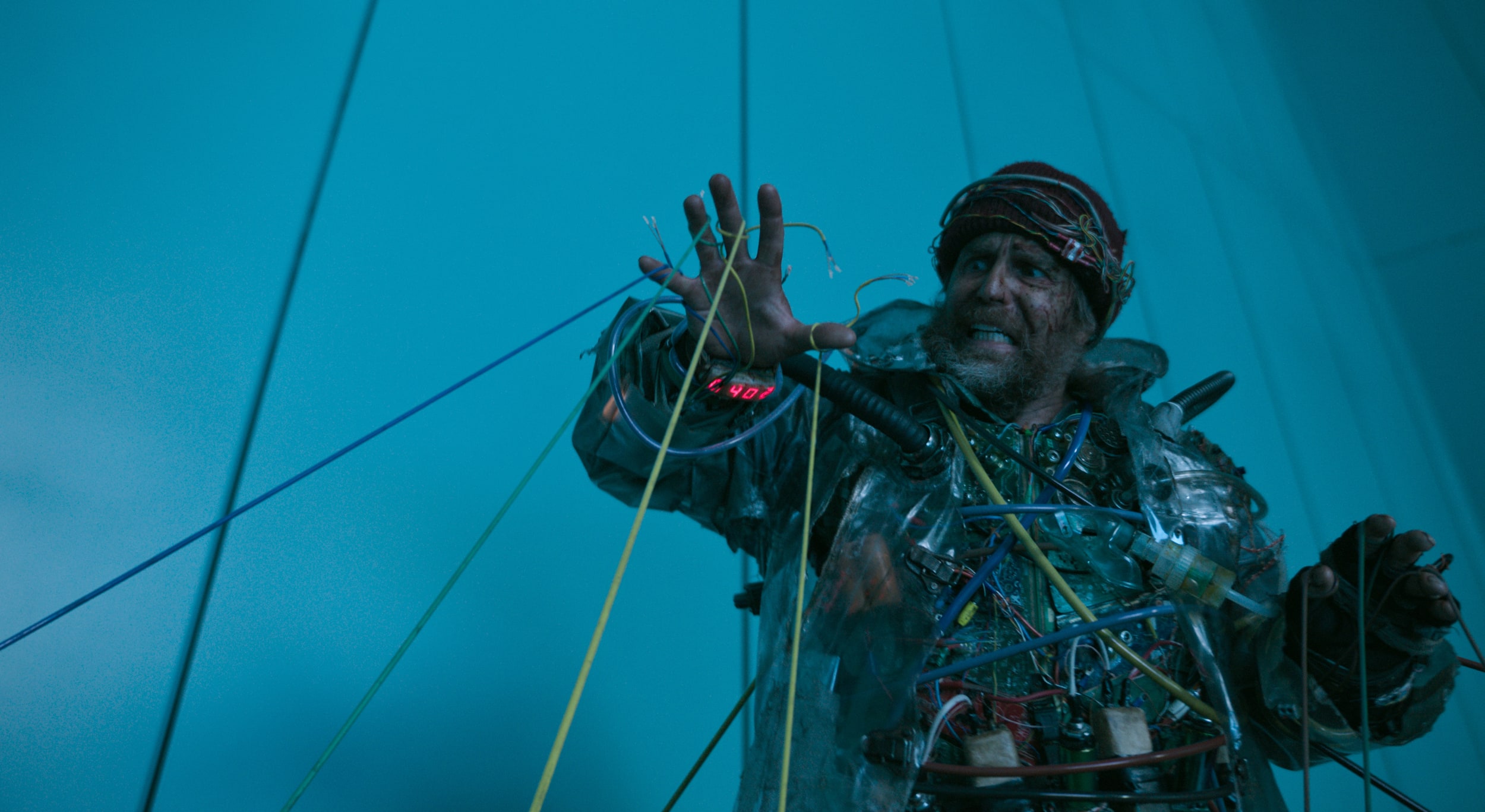
Sam Rockwell in Good Luck, Have Fun, Don't Die.
Sam Rockwell in Good Luck, Have Fun, Don’t Die.
Briarcliff Entertainment

Good Luck is at its best when it’s simply having fun. As Rockwell and crew make their way to their final destination — a child who is about to invent true AI — they encounter pig-faced assassins, Stepford-esque parents and an adorably horrific kaiju. Even when faced with half-baked scripts, Verbinski always manages to impress visually (think back to the creepiness of The Ring, or the wildly entertaining set pieces in Pirates of the Caribbean). That’s as true as ever here, where the final scene evokes the hyper-tech chaos of Akira.

As much as Good Luck, Have Fun, Don’t Die, evokes classic sci-fi, it still can’t hold a candle to the sheer terror of seeing AI unleash a nuclear bomb in Terminator 2. And despite its zanines, it doesn’t reach the madcap heights of Gilliam’s Brazil or 12 Monkeys. But if you’re sick of having AI products shoved down your throat, and you think the notion of “true AI” is a farce, it’s a fun way to channel your rage.

This article originally appeared on Engadget at https://www.engadget.com/entertainment/tv-movies/good-luck-have-fun-dont-die-rails-against-ai-in-style-154437854.html?src=rss
Reserve Samsung’s Galaxy S26 For A Preorder Credit And Chance At $5,000

Reserve Samsung's Galaxy S26 For A Preorder Credit And Chance At $5,000
As Samsung is apt to do, it’s dangling a promotional incentive for anyone who makes a ‘reservation’ ahead of its next big Galaxy device unveiling. Samsung isn’t saying what exactly it plans to announce at its Galaxy Unpacked event next week, but unless all of the leaks and rumors have it wrong (very doubtful), we anticipate the Galaxy S26

New delegation for Debian’s data protection team

Debian Project Leader (DPL) Andreas Tille has announced
a new delegation for Debian’s data projection team:

Following the end of the previous delegation, Debian was left
without an active Data Protection team. This situation has
understandably drawn external attention and highlighted the importance
of having a clearly identified point of contact for data protection
matters within the project.

I am therefore very pleased to announce that new volunteers have
stepped forward, allowing us to re-establish the Debian Data
Protection team with a fresh delegation.

Tille had put out a call for
volunteers
in January after all previous members of the team had
stepped down. He has appointed Aigars Mahinovs, Andrew M.A. Cater,
Bart Martens, Emmanuel Arias, Gunnar Wolf, Kiran S Kunjumon, and Salvo
Tomaselli as the new members of the team. The team provides a central
coordination and advisory function around Debian’s data handling,
retention, dealing with deletion requests, and more.

[$] The first half of the 7.0 merge window

The merge window for Linux 7.0 has opened, and with it
comes a number of interesting improvements and enhancements. At the time of
writing, there have been 7,695 non-merge commits accepted. The 7.0 release is
not special,

according to the kernel’s versioning scheme
— just the release
that comes after 6.19. Humans love symbolism and round numbers, though, so it
may feel like something of a milestone.

What if riders don’t close a robotaxi door after a ride? Try DoorDash.

Autonomous vehicles have a lot of potential. As long as you program them right, they won’t speed, won’t break traffic laws, and won’t get drunk, high, abusive, or violent. And the technology has been getting much more capable, even as some of the hype has died down, taking some of the related companies with it. Waymo still easily leads the field and is already operating commercially in six cities across America, with a dozen more (plus London) coming soon. Waymos can even drop you off and pick you up at the airport in Phoenix and San Francisco.

Soon, Waymo will begin deploying its sixth-generation Waymo Driver, using upfitted Zeekr Ojai minivans, adding to the Jaguar I-Paces that have become so common on San Francisco streets and to its fleet of Hyundai Ioniq 5 electric vehicles. It has upgraded the cameras, lidar, and radar, meaning the cars can better sense their environments at night and in inclement weather. There are even microphones that can pick up sounds like sirens to better inform the robotaxi of the direction the emergency vehicle(s) are coming from.

But even with all these advances since the pod-like two-seater that predates even the Waymo name, there are still a few things that remain beyond a robotaxi’s capabilities. Like closing a door a passenger left open on their way out. All the sophisticated sensors and high-powered computer processing in the world are useless if the car can’t move until the door closes and there’s no one there to give it a hand.

Read full article

Comments

This Rugged Action Camera Is Nearly $90 Off During an Early Presidents Day Sale

We may earn a commission from links on this page. Deal pricing and availability subject to change after time of publication.

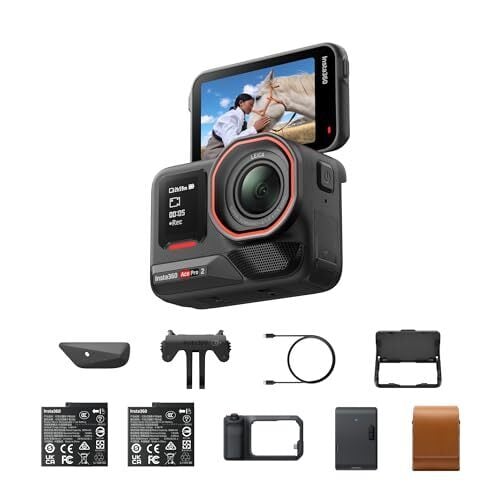
The Insta360 Ace Pro 2 isn’t trying to win you over with just flashy specs, though it has plenty of those. It’s currently on sale (see more President’s Day sale here) for $489.99 on Amazon (down from $579.99), which also happens to be its lowest tracked price to date, according to price trackers.

This particular bundle includes some solid extras: two batteries, a flip screen hood, a leather case, a grip kit, and even a pocket printer to turn your favorite captures into prints. What you’re really getting, though, is a rugged, compact camera that delivers impressive 4K video, stable footage, and solid low-light performance—all in a body that’s waterproof, durable, and lightweight enough to clip onto your shirt or bike.

While Insta360 advertises 8K recording at 30fps, most people will likely stick to its excellent 4K modes, which go up to 120fps for smooth slow motion. It also offers a log profile (I-Log) for anyone who wants to color grade their footage later. The 2.5-inch flip-up screen is a standout—bigger than what you get on front-facing GoPro or DJI screens—making framing easier whether you’re filming yourself or setting up a shot. The flip mechanism can be a bit clunky if you’re constantly switching angles, but it doubles as a mount or even a POV bite grip in a pinch. Unlike its rivals, it doesn’t have built-in storage, so a microSD card (up to 1TB supported, sold separately) is a must-have from day one.

In daily use, the Ace Pro 2 delivers. The footage is sharp, the stabilization keeps things steady, and the built-in mics offer better-than-expected audio. There’s Bluetooth, Wi-Fi, USB-C 3.0, and solid app integration for both iOS and Android, making edits and uploads quick. Battery life is solid, and the included extras in this Flash Print Bundle add good value. It’s not leagues ahead of the GoPro Hero 13 or DJI Osmo Action 5 Pro, but it brings enough to the table—like the larger flip screen, smart mounting system, and polished app experience—to make it worth considering. If you’re in the market for a flagship action cam and prefer editing clean 4K footage over fiddling with massive 8K files, this is a smart pickup at its current price.


Our Best Editor-Vetted Presidents’ Day Deals Right Now


HP Omen 35L (Intel Core Ultra 9 285K, RTX 5080, 2TB SSD, 64GB RAM)


—


(List Price $3,099.99 With Code “PRESDAYPC100”)

Deals are selected by our commerce team

Waymo is Asking DoorDash Drivers To Shut the Doors of Its Self-Driving Cars

Waymo’s autonomous vehicles can transport passengers across six cities without a human driver, but the Alphabet-owned company has discovered that its cars become completely inert if a passenger accidentally leaves a door open. The company confirmed that it is now paying DoorDash drivers in Atlanta to close these doors as part of a pilot program.

A Reddit post from a DoorDash driver showed an offer of $6.25 to drive less than one mile to a Waymo vehicle and close its door, plus an additional $5 after verified completion. Waymo and DoorDash told TechCrunch the post is legitimate. The door-closing partnership began earlier this year and is separate from the autonomous delivery service the two companies launched in Phoenix in October. Waymo has also worked with Honk, a towing service app, in Los Angeles on the same problem. Honk users in L.A. have been offered up to $24 to close a Waymo door. Future Waymo vehicles will have automated door closures.


Read more of this story at Slashdot.

Forget The Upside Down, Astronomers Discover A Bizarre Inside-Out Planetary System

Forget The Upside Down, Astronomers Discover A Bizarre Inside-Out Planetary System
A team of international astronomers has announced the discovery of an “inside-out” planetary system that defies the established understanding of planetary patterns. The system features four planets orbiting around a faint red host star called LHS 1903: the innermost is rocky, the next two are gaseous, whereas oddly, the outermost one is rocky.

Why is Bezos trolling Musk on X with turtle pics? Because he has a new Moon plan.

The founder of Amazon, Jeff Bezos, does not often post on the social media site owned by his rival Elon Musk. But on Monday, Bezos did, sharing on X a black and white image of a turtle emerging from the shadows.

The photo, which included no text, may have stumped some observers. Yet for anyone familiar with Bezos’ privately owned space company, Blue Origin, the message was clear. The company’s coat of arms prominently features two turtles, a reference to one of Aesop’s Fables, “The Tortoise and the Hare,” in which the slow and steady tortoise wins the race over a quicker but overconfident hare.

Bezos’ foray into social media turtle trolling came about 12 hours after Musk made major waves in the space community by announcing that SpaceX was pivoting toward the Moon, rather than Mars, as a near-term destination. It represented a huge shift in Musk’s thinking, as the SpaceX founder has long spoke of building a multi-planetary civilization on Mars.

Read full article

Comments

[$] Open-source mapping for disaster response

At FOSDEM 2026 Petya
Kangalova, a senior tech partnership and engagement manager for the Humanitarian OpenStreetMap
Team
(HOT) spoke about how
the project helps people map their surroundings to assist in
disaster response and humanitarian aid. The project has
developed a stack of technology to help volunteers collectively map an
area and add in local knowledge metadata. “One of the core things
that we believe is that when we speak about disaster response or
people having access to data is that they really need accessible
technology that’s free and open for anyone to use
.”

Evaluating The Performance Cost To AMD SEV-SNP On EPYC 9005 VMs

AMD Secure Encrypted Virtualization with Secure Nested Paging (SEV-SNP) provides memory encryption and integrity protections that can be especially useful in modern cloud computing. Typically a 2~10% performance overhead is reported when engaging AMD SEV-SNP for these hardware-backed security protections. In this article is an extensive look at the current AMD SEV-SNP performance impact for confidential computing on EPYC 9005 “Turin” servers. The current Ubuntu 24.04 LTS was tested as well as an Ubuntu 26.04 development snapshot in evaluating the latest optimizations and what is on the horizon this year for AMD EPYC Linux server performance.

Amelia’s Escape Impressions: A Bit De-Myst-ifying

Reality Syndrome Symphony’s upcoming escape room puzzler has promise, but issues with controls and puzzle readability make this a release we’ll need to see more before recommending.

I love puzzle games, as I’d imagine most VR players do; it comes with the territory. I also love narrative puzzlers like Myst, and have played more than a handful of escape rooms. So, when Reality Syndrome Symphony offered us a chance to take an early look at the upcoming Amelia’s Escape, I was pretty stoked to see what the game had in store – yet what I’ve played leaves me concerned and excited for the final release in equal measure.

The Facts

What is it?: An escape room puzzler, where players must task Amelia with escaping an unknown warehouse.
Platforms: Quest (Previewed on Quest 3), Steam
Release Date: TBA
Developer: Reality Syndrome Symphony
Publisher: Reality Syndrome Symphony
Price: TBA

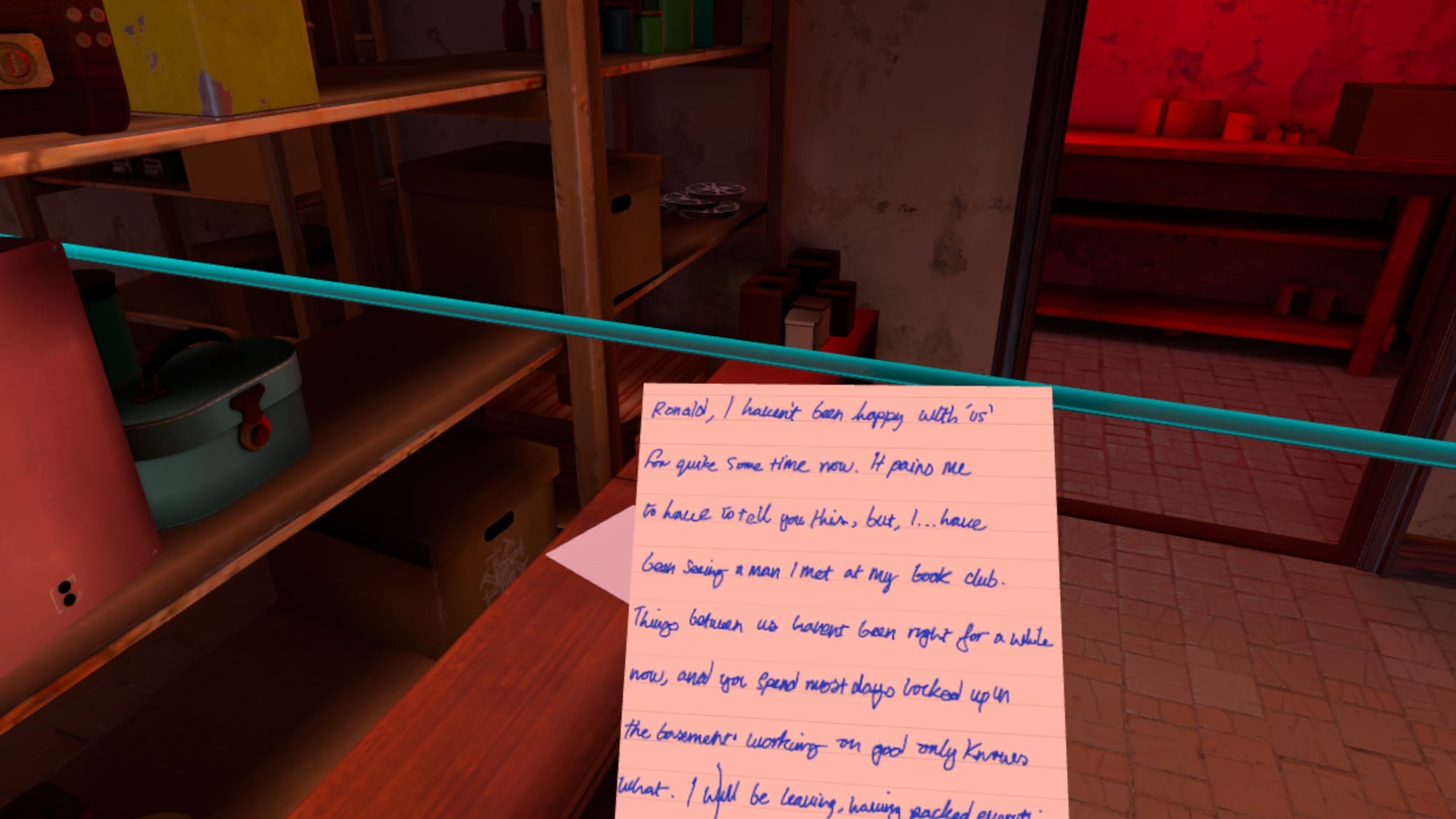
Let’s start with some of the obvious; starting up the demo, players find themselves – Amelia – locked in a warehouse filled with puzzles, and after some brief exposition discover they must complete a number of puzzles and gain keycards to unlock a door to allow their escape. You accomplish this by searching the warehouse for items to interact with, some obvious and others less so. Two major issues immediately reveal themselves, one hopefully exclusive to this demo build, and another which isn’t inherently exclusive, but with any luck will be patched before launch.

I must confess that I found myself stuck on the second of the demo’s puzzles for an unreasonably long amount of time, to the point where I eventually ended up emailing the developers to figure out if I had run into a progression blocker, or some other known issue. I hadn’t, but I did learn that the build I played came with a few quirks; while the warehouse is dotted with all manner of objects, all but a few of them actually do anything in this version of the game. The rest are “red herrings” that will be used in the full release.

On its own, I can’t say I’m a fan of this tactic. Some of these objects, like air canisters that Amelia will comment on when interacted with can be filled with air, leading the player down a dead-end. Others, then, don’t even offer this luxury – even if Amelia will comment on them all the same, suggesting that they do offer a use. Ultimately the solution I was missing all along I’d glanced over due to a weird interaction; you’re meant to bridge a connection with a metal spanner, but placing it when the fuse starts the power flowing will do nothing, even if you place the spanner in the right spot.

0:00

/0:14

Frustrating detection for controls.

I’d hope in the final release the game can either prevent you from placing the spanner when the power is on – ideally making it clear that, yes, you’re on the right track in the process. This ties into my second issue with the game, not tied to the demo; sometimes the game’s controls, and which objects the player can interact with, are inconsistent. For the most part, objects that the player can interact with are a brighter shade than objects surrounding them. Yet, at the same time, this logic is inconsistent. Sometimes darker objects can be picked up and interacted with just fine. Other times, brighter objects are stuck in place and in the end players are left scratching their heads and scrambling their hands across entire shelves of the warehouse in search of objects they can pick up.

Comfort

Unsurprisingly, Amelia’s Escape doesn’t offer too many comfort options – mostly because there’s little need to. As a slow-paced puzzle game, players can choose between stick-based locomotion and teleport movement. At least at this stage these options aren’t very granular; what you see is what you get.

Even worse, while most objects players have to actively use the grip button to interact with, switches do not – and the sensitivity with which they’re activated is ridiculous. Returning to that electricity puzzle; the same box you place the spanner in has two levers the player can interact with. They will react to your hands even from what feels like a foot away, and it’s almost impossible to finely control which of the two is activated at any given time.

On a more positive note, and perhaps unsurprisingly the game looks and runs great on a Quest 3 headset. Even if this demo left me with far more questions than answers, with any luck the final release will manage to fix the issues I’ve had with this early build. I hope the next time I check out the game, things will be in a better – and more easily recommendable – state.

Ring Just Ended Its Controversial Partnership With Flock Safety

Ring isn’t having the week it probably thought it would have. The Amazon-owned company aired an ad on Super Bowl Sunday for “Search Party,” its new feature that turns a neighborhood’s collective Ring cameras into one network, with the goal of locating lost dogs. Viewers, however, saw this as a major privacy violation—it doesn’t take much to imagine using this type of surveillance tech to locate people, not pets.

The backlash wasn’t just isolated to the ad, however. The controversy reignited criticisms of the company’s partnership with Flock Safety, a security company that sells security cameras that track vehicles, notably for license plate recognition. But the partnership with Ring wasn’t about tracking vehicles: Instead, Flock Safety’s role was to make it easier for law enforcement agencies that use Flock Safety software to request Ring camera footage from users. Agencies could put in a request to an area where a crime supposedly took place, and Ring users would be notified about the request. They didn’t have to agree to share footage, however.

Law enforcement could already request footage from Ring users, through the platform’s existing “Community Requests” feature. But this partnership would let agencies make these requests directly through Flock Safety’s software. If a user submitted footage following a request, Ring said that data would be “securely packaged” by Flock Safety and share to the agency through FlockOS or Flock Nova.

Ring cancels its partnership with Flock Safety

That partnership is officially over. On Friday, Ring published a blog post announcing the end of its relationship with Flock Safety. The company said, after a review, the integration “would require significantly more time and resources than anticipated.” As such, both parties have agree to cancel the partnership.

Importantly, Ring says that since the integration never actually launched, no user footage was ever sent to Flock Safety—despite the company announcing the partnership four months ago. Social media influencers had spread the false claim that Flock Safety was seeding Ring footage directly to law enforcement agencies, such as ICE. While those claims are inaccurate, they were likely fueled by reporting from 404 Media that ICE has been able to access Flock Safety’s data in its investigations. Had Ring’s partnership with Flock Safety gone ahead, there would be legitimate cause to believe that agencies like ICE could tap into the footage Ring users had shared—even if those users were under the impression they were only sharing footage with local agencies to solve specific cases.

While privacy advocates will likely celebrate this news, the cancelled partnership has no effect on Community Requests. Law enforcement agencies will still be able to request footage from Ring users, and those users will still have a say in whether or not they send that footage. Ring sees the feature as an objective good, allowing users to voluntarily share footage that could help law enforcement solve important cases. In its announcement on Friday, Ring cited the December 2025 Brown University shooting, in which seven users shared 168 video clips with law enforcement. According to Ring, one of those videos assisted police in identifying the suspect’s car, which, in turn, solved the case.

AMD Surges To 36% Desktop CPU Share To Chip Away At Intel’s Big Lead

AMD Surges To 36% Desktop CPU Share To Chip Away At Intel's Big Lead
AMD continues to make strides in chipping away at Intel’s dominant market share lead in the x86 CPU space. According to the latest data from Mercury Research, total x86 processor shipments for the fourth quarter actually declined, which the market research firm highlighted as unusual, given that the highest sequential total unit growth of

This Premium Sony Soundbar Is More Than 50% Off During an Early Presidents Day Sale

We may earn a commission from links on this page. Deal pricing and availability subject to change after time of publication.

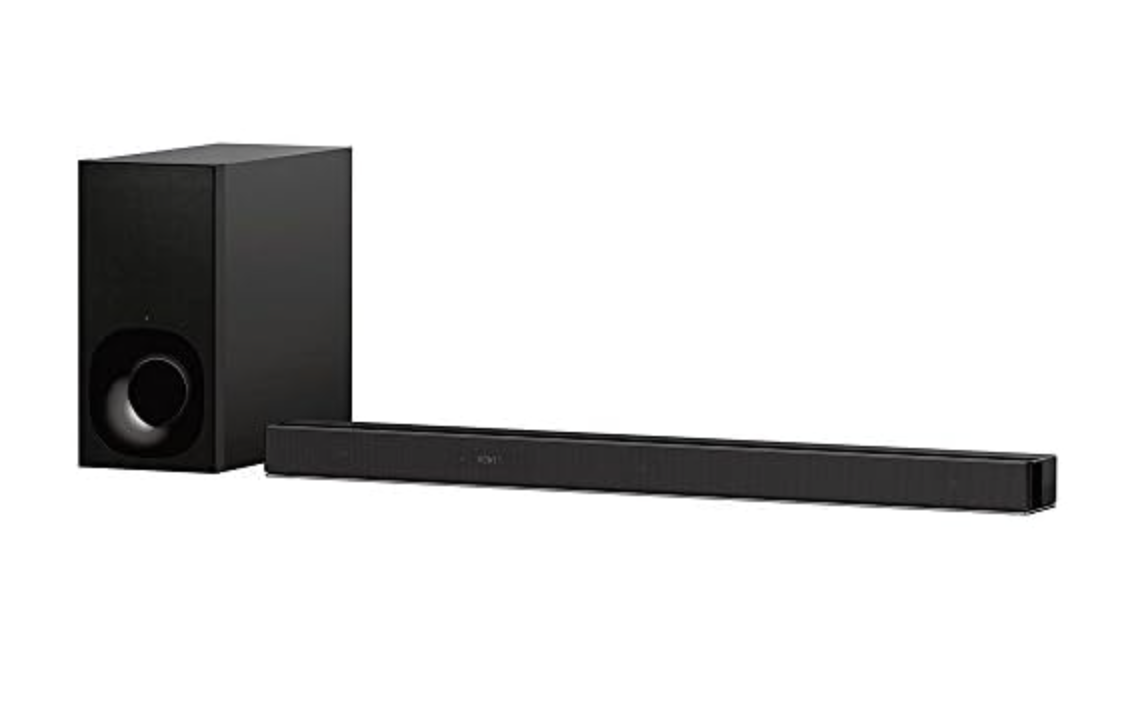
The Sony HT-Z9F is down to $419.99 on Woot, a steep drop from its original price of $899.99. At this price, it becomes a far more accessible way to upgrade your TV audio without committing to a full AV receiver and multi-speaker setup. The deal is available for the next 16 days or until it sells out, whichever happens first. Prime members receive free standard shipping, while non-Prime customers pay $6. That said, shipping is not available to Alaska, Hawaii, APO addresses, or PO Boxes, and the purchase includes a 90-day Woot limited warranty. Discover more President’s Day Sale deals and the best Tech deals during the early President’s Day Sale here.

It’s a 3.1-channel soundbar, meaning it has left, right, and center speakers built in, plus a wireless subwoofer. That dedicated center channel is especially helpful for dialogue—it keeps voices clear and easy to follow, even during action scenes or loud background scores (meaning you do not need to ride the volume during conversations, then scramble to lower it when explosions hit). And then, there’s the wireless sub, which adds weight to action movies and bass-heavy playlists. It is not room-shaking, but it gives enough low-end punch to feel cinematic in a living room setting.

Sony markets the HT-Z9F as Dolby Atmos-enabled, but it does not have upward-firing drivers or rear satellite speakers. Instead, it relies on Sony’s S-Force Pro Front Surround and Vertical Surround Engine to simulate height and surround effects. That processing does create a wider sound field than basic stereo, but everything still feels anchored to the front of the room. Overhead effects lack the distinct placement you would get from true Atmos speakers bouncing sound off the ceiling. If you are upgrading from built-in TV speakers, the improvement will be obvious. But if you expect a fully immersive surround with objects flying above and behind you, this will not deliver that experience.

As for its connectivity, you get two full HDMI inputs that handle all major audio formats, plus HDMI ARC for TV connection. You also get Bluetooth, wifi, and built-in Chromecast for streaming music directly from your phone or apps. The design looks premium and feels sturdy, which helps it blend into a midrange or high-end setup. The tradeoff is limited sound customization. There are preset EQ modes, but no detailed treble or bass adjustments. At $419.99, the HT-Z9F makes sense for someone who values clear dialogue and solid bass, with wide-format support. Those chasing a true Atmos surround setup with discrete height channels may want to look elsewhere.


Our Best Editor-Vetted Presidents’ Day Deals Right Now


HP Omen 35L (Intel Core Ultra 9 285K, RTX 5080, 2TB SSD, 64GB RAM)


—


(List Price $3,099.99 With Code “PRESDAYPC100”)

Deals are selected by our commerce team

Orcs Must Die! By The Blade Out Now On Quest 3

Orcs Must Die! By The Blade, the VR reimagining of the long-running tower-defense series, is available now on Quest 3 and 3S.

Developed by Teravision Games, makers of the tower-defense shooter Captain Toonhead vs. The Punks from Outer Space, Orcs Must Die! By The Blade is the first VR release in the Orcs Must Die series. By the Blade builds on the long-running franchise’s core gameplay loop for VR. Beyond setting up traps and auto-battling as you try to survive waves of orcs, as in traditional tower-defense, the VR version of Orcs Must Die! will have you physically wielding weapons to defend your base in first person.

In addition to the game’s standard solo mode, a two-player co-op mode is also included.

0:00

/1:15

The game’s main campaign features 12 missions across three chapters. These task the player with placing traps on a map before physically battling oncoming orcs with weapons like axes and swords. By The Blade uses free locomotion for movement and combat, and you’ll need to balance blocking and countering along with offensive attacks. As you progress through the campaign, you’ll upgrade your weapons and traps to become a more formidable anti-orc force.

In a recent interview, Teravision Games’ Co-Founder and Creative Director Luis Daniel Zambrano spoke about bringing Orcs Must Die! to VR for the first time. “We dialed up the importance of combat vs. the traps, and we made the enemies focus more on the players than the Rifts. Bold ideas that aimed at making the player feel more present, and the game more immersive overall. […] Once we did that, it started to feel more excitingly VR than ever.”

Originally announced to release on January 22nd, Orcs Must Die! By the Blade was delayed due to an unexpected performance issue found in the Quest 2 build. That version is still under construction and will release at a later date.

Orcs Must Die! By The Blade is available now on Quest 3 and Quest 3S.

Forefront Is Coming To PlayStation VR2 This Year

Though no release date has been announced, the multi-player FPS will be storming onto PS VR2 later this year.

Triangle Factory has announced that its Battlefield-like FPS, Forefront, is coming to PS VR2 in 2026. The visceral and tactile FPS dumps players onto large-scale battlefields where up to 32 players fight for control of territory using handheld weapons, Humvees, tanks, helicopters, and other war machines of the air, land, and sea.

I previewed Forefront when it launched in Early Access on Meta Quest and found it to be a solid take on the Battlefield formula. Combat is exciting and tense, its VR gunplay is tactile and satisfying, and its environments are dynamic and engaging. While some small problems did exist in that EA build, mostly due to weapon balance issues, on the whole, Forefront stands as the strongest large-scale shooter I’ve played in VR.

Forefront Hands-On: The Battlefield Multiplayer Experience In VR
Forefront in early access brings excitingly tense, large-scale multiplayer warfare reminiscent of Battlefield to VR.
UploadVRJames Tocchio

Forefront is available now on Quest, Steam, and Pico, and you can now wishlist it on PS VR2 from the PlayStation Store.

Meta is reportedly working to bring facial recognition to its smart glasses

Meta has backed away from highly controversial facial recognition tech in its products and services before, but seemingly not so far that it isn’t willing to have another crack at it. A new report from The New York Times claims Mark Zuckerberg’s company wants to add facial recognition to its lineup of branded smart glasses at some point this year.

The NYT spoke to four anonymous people with knowledge of Meta’s plans, who told the publication that the feature is codenamed “Name Tag” internally. As you’d expect, it would let people wearing Meta-powered Oakley or Ray-Ban glasses identify people and “get information about them” using AI.

Such technology naturally carries huge privacy and ethical risks, which is reportedly why Meta was hesitant to unveil Name Tag at a conference for the blind last year. It also may have shelved plans to include facial recognition in the first version of its smart glasses, which launched in 2023.

In an internal memo from Meta’s Reality Labs viewed by the NYT, Meta said that the current political instability in the US presents a good opportunity for it to push ahead with its plans. “We will launch during a dynamic political environment where many civil society groups that we would expect to attack us would have their resources focused on other concerns,” it said.

With the smart glasses market expected to become more competitive in the coming years, Meta seemingly believes facial recognition would give it an edge on rival products from the likes of OpenAI. As for how it would work, the company is considering its options. It could recognize people the wearer is already connected to via one of Meta’s apps, or potentially display information from public Instagram accounts. The NYT’s sources said that universal facial recognition, effectively allowing you to look up the identity of anyone you walked past, would not be possible.

Meta shut down Facebook’s Face Recognition system, used when tagging people in photos, in 2021, following widespread public backlash over privacy concerns. Three years later, it brought it back, this time as a tool for Instagram and Facebook designed to detect scam ads that use the faces of celebrities and other public figures. Last year Meta rolled out the feature beyond the US, so Facebook and later Instagram users in the UK, Europe and South Korea could also use it on their accounts.

This article originally appeared on Engadget at https://www.engadget.com/ai/meta-is-reportedly-working-to-bring-facial-recognition-to-its-smart-glasses-144721330.html?src=rss