The Best Puzzle Games On Quest In 2026

Looking to stretch your mind in VR? Here are some of our favorite puzzle games available on Quest today.

There’s something unique about puzzle games in VR. When you can reach out and touch the world around you, the genre transforms into something magical. Games like Lumines Arise and Tetris Effect: Connected wrap you in a warm sensory blanket while narrative puzzlers like Red Matter and Ghost Town immerse you in their story in ways wholly unique to VR.

Meta Quest users have no shortage of puzzle games. From meditative and musical experiences to emotionally powerful narrative puzzlers that challenge your mind and stir your emotions, here are some of the best the genre has to offer.


0:00

/2:00

Tetris Effect: Connected

With Tetris Effect, Tetsuya Mizuguchi and his colleagues at Enhance tapped into something remarkable. The 2018 release took the classic puzzle game from the 1980s and transformed it into a musical trance masterpiece. In 2020, the updated Tetris Effect: Connected added co-op and competitive multiplayer, and it remains one of the best puzzle games to this day.

Tetris Effect: Connected wraps you in reactive visuals and music that evolve with your moves. Every rotation, every slammed block, every cleared row adds a new dimension to the soundtrack so that playing Tetris Effect: Connected becomes less about traditional gaming and more about entering a flow state. It’s the ultimate VR vibe game, and beautifully demonstrates VR’s power to elevate traditional gameplay into something greater.

Buy it here.

From Pong To VR: Tetsuya Mizuguchi’s Quest To Make Games That Move You
With Lumines Arise launching this November on PS VR2 and Steam, we interviewed Tetsuya Mizuguchi about his career and how Enhance are approaching this new entry.
UploadVRJames Tocchio


0:00

/1:23

The Room VR: A Dark Matter

If you love mechanical puzzles, secret compartments, and mysterious artifacts, Fireproof Games’ The Room VR: A Dark Matter is an essential game for your Quest collection. Not only is it one of the most immersive puzzle games on Quest, it’s also one of the most visually impressive.

In this narrative puzzle game built exclusively for VR and set in 1908 London, you’re tasked with investigating the mysterious disappearance of a renowned Egyptologist after a police investigation yields no result. The 5-6 hour-long adventure will have you exploring cryptic locations with fantastic gadgets as you work your way through an opaque mystery.

In addition to its standalone release, Fireproof Games has also bundled The Room VR: A Dark Matter into a two-pack alongside the team’s extraordinary Ghost Town (mentioned later in this list).

Get it here.


0:00

/1:02

I Expect You To Die (Series)

Part slapstick comedy, part absurd escape room, part mid-century spy parody, the I Expect You To Die series drops you into increasingly ridiculous and deadly scenarios, and tasks you with saving yourself (and the world) from the nefarious super-villain Dr. Zor. You’ll explode, get swarmed by bees, zapped by lasers, and try to survive, all from the comfort of your Quest headset. Clever design rewards experimentation, and the tongue-in-cheek humor makes failure feel fun.

There are three mainline I Expect You To Die games on Quest, which can be purchased separately, or bundled together as part of the Phoenix Rising Trilogy.

Get it here.


0:00

/1:33

The House of Da Vinci

As Leonardo Da Vinci’s most promising apprentice, you are summoned to Florence only to find that Leonardo has mysteriously disappeared. Thus begins The House of Da Vinci, a challenging puzzle mystery that our reviewer described as “one of the best VR puzzle games I’ve ever played, delivering an experience that’s been lovingly created with reverence to its historical inspiration.”

Gameplay takes the shape of escape room-style challenges in which we manipulate complex machines, peer into the past, and solve puzzles based on Da Vinci’s real-life inventions. Gorgeous visuals and advanced riddles make this a perfect game for puzzle fans and art history buffs alike.

Get it here.


0:00

/1:40

Ghost Town

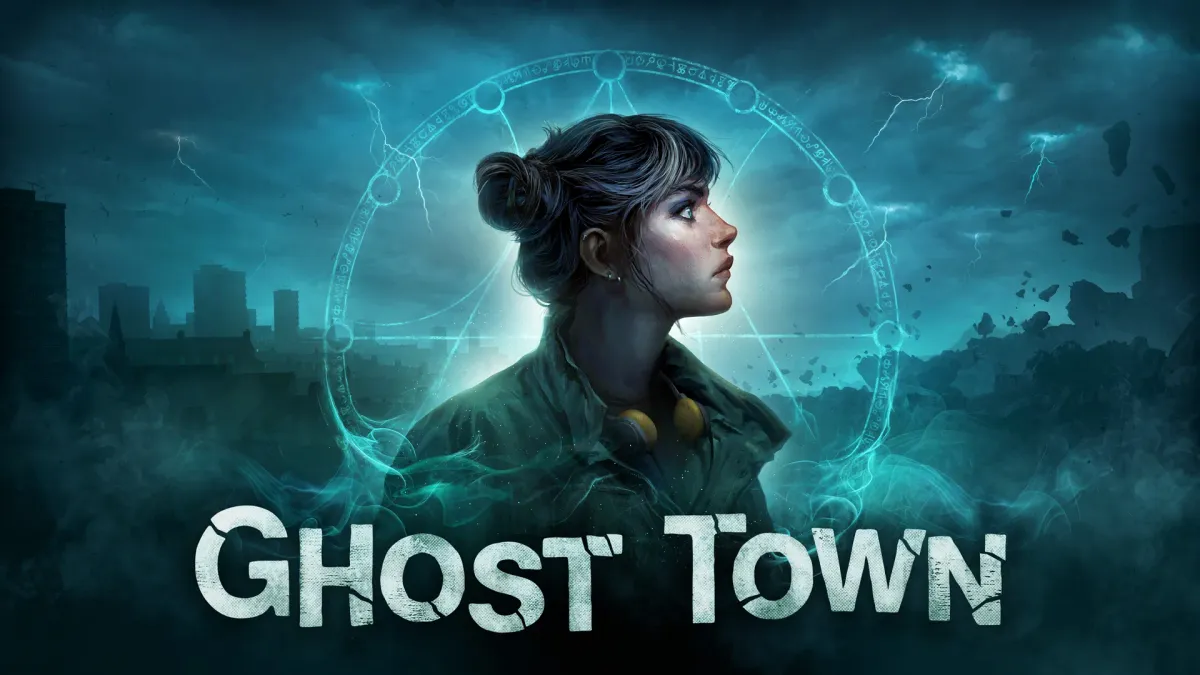
The latest phenomenal mystery from Fireproof Games, Ghost Town is a narrative puzzle game set in the 1980s that puts players in the shoes of Edith, an Irish witch turned exorcist and ghost hunter. “What follows,” says Henry Stockdale in our review last year, “is a thoroughly gripping narrative that sees us searching for Edith’s missing brother. Fireproof’s not afraid to have some fun with this story[…]”

One of Ghost Town’s great strengths is that it strikes a great balance. It tells a story, but does so with both humor and suspense, and its puzzles, while challenging, never feel overly difficult. The end result is, as our review put it, “one of the best VR games so far this year.”

Get it here.

Ghost Town Review: An Utterly Engrossing Supernatural VR Adventure
Ghost Town is a brilliant supernatural puzzle adventure from The Room VR studio that you won’t want to miss.
UploadVRHenry Stockdale


0:00

/1:58

Humanity

Humanity is a third-person puzzle-action game in which your goal is to guide a massive mob of humanity to the end point of each level. You lead the pack as a cute Shiba Inu, leading the seemingly mindless humans as they jump, turn, push, float, shoot, and climb their way toward salvation across 90 story-mode stages.

Another game from Tetsuya Mizuguchi’s Enhance, Humanity is a flatscreen critical darling that has really stuck the landing on Quest. It was voted VR Game of the Year at the 2023 EDGE Awards, ranked Best Puzzle Game of 2023 by Game Informer magazine, and was nominated for Best VR / AR Game at The Game Awards in 2023.

As with most of Mizuguchi and Enhance’s games, there’s more than meets the eye here. And while the game’s online servers and user-generated level support are ending in March, 2026, there’s enough meat on the base game’s bones to warrant a thorough chewing.

Get it here.


0:00

/1:29

Red Matter & Red Matter 2

These narrative-heavy adventures blend environmental puzzles with atmospheric world-building and deliver some of the most impressive visuals yet seen on Quest headsets.

The first game drops you into a retro-futuristic Cold War space race where you play as Agent Epsilon, sent to a deserted Volgravian base on Rhea, Saturn’s mysterious moon to investigate a secret project with the potential to change humanity’s destiny forever. And once you’re done with that, fire up Red Matter 2 for yet another stunning story.

Start with Red Matter here, or buy the two-game bundle.


0:00

/1:22

Myst

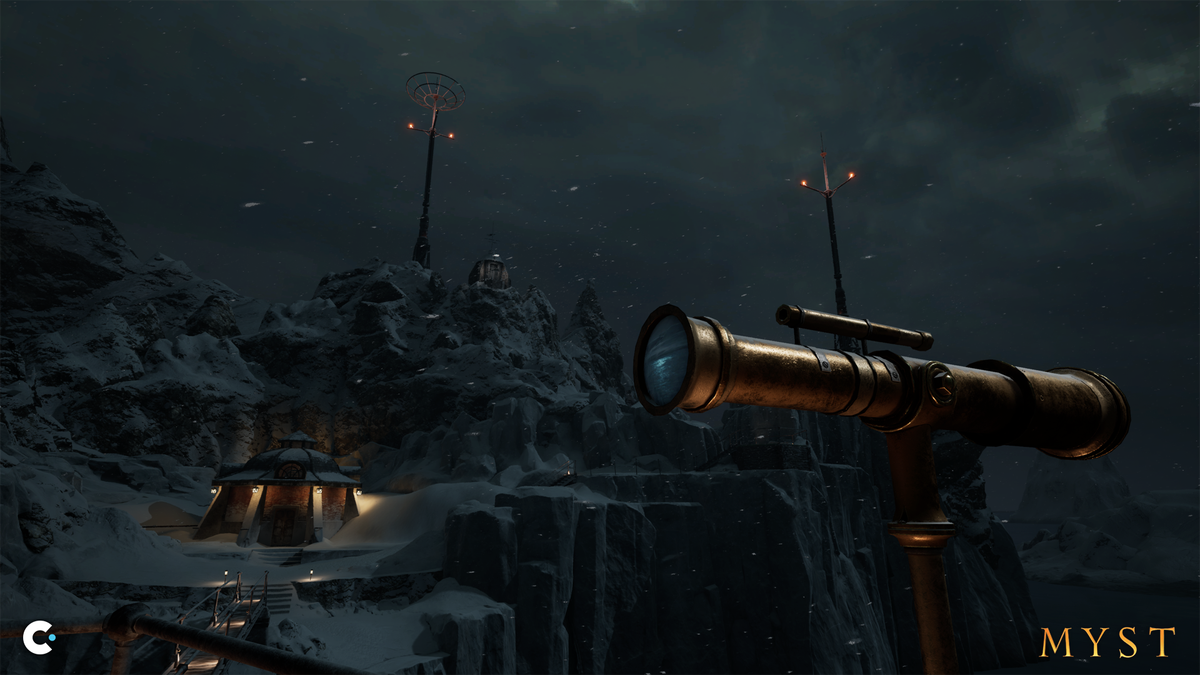
Few games define the puzzle genre like Myst. For most gamers of a certain age, it was the first puzzle game we’d ever played (and the first we’d ever owned on CD-ROM). In VR, its enigmatic puzzles and lonesome island feel more tangible than ever.

Built from the ground up by Cyan Worlds, the indie studio that created the beloved classic way back in 1993, Myst for Quest is a definitive reimagining of one of the greatest puzzle games ever made. It brings new art, new sound, new interactions, and optional puzzle randomization.

When you’ve finished unraveling the mysterious island of Myst, you may be tempted to jump into its sequel, Riven. While Riven is a must-play for fans of the original flatscreen version, or for those who simply can’t get enough of the Myst universe, in truth, Riven on Quest is not a very strong adaptation. It’s good, just not as great as Myst.

Myst Added The Age Of Rime In Major Update
Myst’s VR remake introduced the Age of Rime in a recent update.
UploadVRSarah Thwaites


0:00

/2:09

The Last Clockwinder

Called “One of the most unique and creative VR games ever” by Polygon, and “the best puzzle game since Portal” by Beardo Benjo, The Last Clockwinder is a creative and clever game that our own review described as “a true delight and gem of a puzzle game that’s well worth your time.”

The main mechanic of the game centers on mapping your real-life physical actions to several robotic “clones” which will repeat your actions indefinitely. This allows you to create a sort of production line that moves fruit from one place to another, feeding the health of a mystical tree. It’s a gameplay hook that defies explanation, but it’s one that’s totally engaging and superbly executed. Add to this a mysterious story that’s “an absolute delight to unravel” and we have all the makings of a VR classic.

Get it here.


0:00

/1:50

A Fisherman’s Tale

In A Fisherman’s Tale, you play as a reclusive fisherman puppet who awakens locked inside a lighthouse. In the center of the room sits a model of the very same lighthouse, with a tiny version of yourself inside, and a larger one outside, mimicking your every move. The perspective-bending puzzles begin from there.

When we reviewed the game some years ago, we gave it 5 out of 5 stars and said it “might be the first [Quest game] to achieve a perfect storm of gameplay, immersion and narrative in a single experience. [A Fisherman’s Tale] fuses experience and interactivity to really show what this medium is capable of.”

The game’s sequel, Another Fisherman’s Tale, doubles down on the original’s creativity with whole new gameplay mechanics. It’s imaginative, slightly absurd, and filled with tactile puzzle design.

You can get both games here.


0:00

/1:31

Puzzling Places

Another special experience that could only exist in VR, Puzzling Places lets you build gorgeous photorealistic dioramas of beautiful places from all over the world, either in full VR or in the familiar comfort of your own space in mixed reality. There are no timers, no pressure; just pure, mindful building at a peaceful puzzling pace, alone or with others in online multiplayer and local MR co-op modes.

The base game includes 25 puzzles, and a massive collection of DLC puzzles continues to grow. The most recent, a gorgeous Van Gogh-inspired impressionist diorama, joins previous themed puzzles such as cities of the world, a haunted house, underwater seascapes, and dozens more.

Get it here.


0:00

/0:42

Cubism

Clean shapes and floating blocks, Cubism strips puzzle design down to its essentials. You rotate and place geometric shapes into transparent containers, building increasingly complex forms in full VR or MR modes. Hand tracking makes the game play seamlessly and intuitively, and the balance of relaxation and challenge is perfectly struck.

While the concept of Cubism is great, what really sets it above is the game’s minimalist aesthetic. As in old Japan Studio games like Echochrome, or Keita Takahashi’s Katamari Damacy, there’s a simplicity of concept that we also find in Cubism. As we shift pastel-colored shapes into place, the resonant strings of a rich piano strum a beautiful backing soundtrack. The overall vibe is elegant, calming, and clever.

Get it here.


0:00

/1:49

Gadgeteer

Gadgeteer lets you build elaborate chain-reaction machines in both VR and MR using ramps, marbles, dominoes, and motors, creating chain reactions that may even end up tearing apart the fabric of space-time.

There are over 60 physics puzzles, plus sandbox environments that let you build whatever wild machines you like. Hundreds of community-made puzzles round out the experience. For older gamers who might remember launching the MS-DOS build of The Incredible Machine on some ancient PC, watching your Gadgeteer contraption unfold in 3D space feels like a dream come true.

Get it here.


0:00

/1:40

Shadow Point

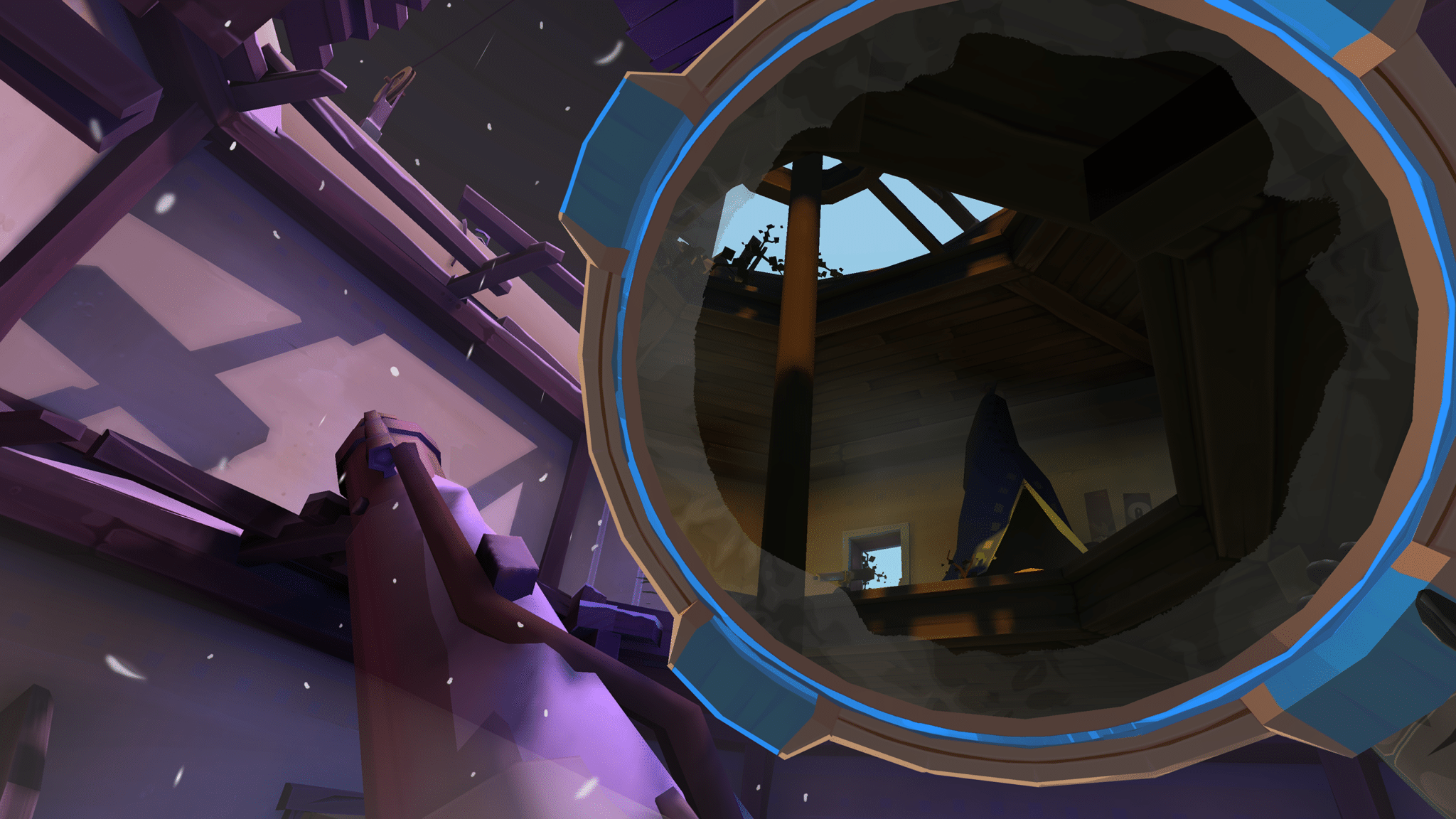
Shadow Point is a story-driven puzzle game in which you’ll explore a vibrant kingdom and solve mind-bending puzzles as you uncover the mystery of missing schoolgirl, Lorna McCabe who vanished from Shadow Point Observatory twelve years ago. As your adventure unfolds, you will manipulate gravity, play with shadows, work with your own reflection, walk on walls, peer through a magical lens to reveal an alternate reality and much more.

Narrated by Sir Patrick Stewart, Shadow Point combines over 80 puzzles with a reflective story about memory and mentorship. Its paper doll-esque art style is gorgeous and evocative and its light-and-shadow mechanics are clever. We recommended the game in our review some years ago, though we felt Stewart to be underutilized. More than anything else, however, the game’s emotional framing elevates it to a must-play.

Get it here.

Quest Launch Title Shadow Point Is Coming To PSVR
Coatsink is bringing its Quest launch title, Shadow Point, over to PSVR this month. The game, which also came to Rift, will launch on Sony’s headset on March 22nd for $19.99. Check out the PSVR announcement trailer for the game below. Coatsink PSVR Released Shadow Point sees players
UploadVRJamie Feltham


Whether you want a musical flow state (Tetris Effect, Lumines Arise), a story-rich adventure (Red Matter, Shadow Point), or relaxing brain training (Cubism, Puzzling Places), Quest offers some of the most inventive puzzle design in gaming today.

For more of the best of VR, check these out:
After a year of dithering, I’ve finally found a cordless pressure washer deal worth buying – but this discount code expires tonight

I moved to a top-floor flat in February 2025, with no access to a hose or mains power, forcing lazy old me to buy a cordless pressure washer to clean my bikes. Fast forward to today and… well, I’m really tight and have toiled with a sponge and bucket since moving.

But the green layer growing on my balcony floor and my delicate editor’s hands, grown weary of bathing my bikes after a truly disgusting winter, have forced action. 

I shopped around diligently, looking for something affordable from a reputable brand, and landed on this Worx pressure washer, available direct from the brand’s eBay shop for £89.99 – a 47 per cent saving on RRP and most retailers.

At checkout, I was pleasantly surprised to find I’d saved another 10 per cent off using the automatically applied discount code HEART10. This time-limited code expires on 16 February 2026 at 11.59pm and brings the price down further to £80.99, with free postage.

Even without the discount code, that’s a great deal when you consider it’s £149 on Amazon. At the time of writing, there are some Amazon Resale options available for as little as £97.20, but that’s still more expensive than the brand-new option from eBay.

The washer includes a bucket, cleaning accessories, one battery plus charger, and a helpfully long 6m hose – a generous suite of bundled bits compared to the comparatively frugal offering of something such as this Titan pressure washer from Screwfix. 

Why the Worx?

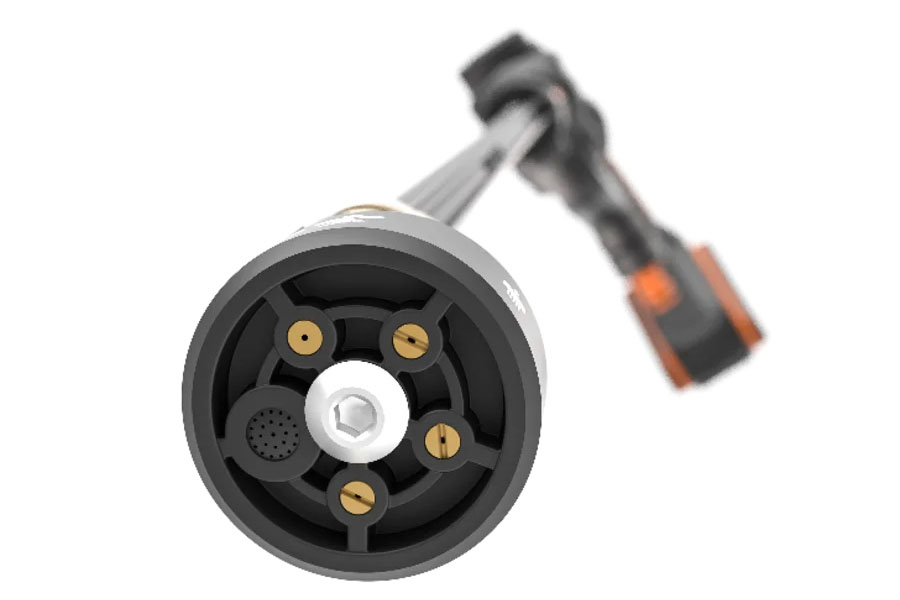
adjustable nozzle
POV: you’re a bottom bracket that’s about to have every bit of grease blasted out of it. Worx

Full disclosure: I only slapped down my 80 big ones last night, so I’m yet to receive the pressure washer, so I can’t vouch for its efficacy. 

However, based on the enthusiastic endorsements of mud-slinging, shred-sledding colleague Tom Marvin, alongside former colleague and good friend Matthew Loveridge, I have no reason to doubt it will be up to the task.

In addition, our 4.5-star 2018 review of the similar Worx Max Hydroshot heaped praise on its quality and power. User reviews on Amazon are also, generally, very positive.

Parkside to Worx battery adapter
Worx definitely won’t approve of me using one of these, but I’m too tight to buy into a new battery system. eBay

I was also drawn to the washer for one extremely niche reason. 

I’m an enthusiastic advocate of Lidl’s house tool brand, Parkside, and have a decent stash of its 20v batteries. 

Alas, despite waiting patiently for one of its well-liked cordless washers to go on sale, the middle aisle gods have not looked kindly upon my soggy soul.

However, 3D-printed adaptors enabling you to use Parkside batteries on Worx tools (and other brands) are widely available. Because they are both 20v systems, these adaptors are simpler than others that must switch/convert voltage.

Worx will, doubtless, take a dim view of these (I expect it will invalidate your warranty, so proceed with caution), but many online reports suggest these work perfectly well. 

If you’re looking for a pressure washer, this is about as good a deal as you’re going to find – just act quickly if you want to use that discount code. 

Sony May Push Next PlayStation To 2028 or 2029 as AI-fueled Memory Chip Shortage Upends Plans

Sony is considering delaying the debut of its next PlayStation console to 2028 or even 2029 as a global shortage of memory chips — driven by the AI industry’s rapidly growing appetite for the same DRAM that goes into gaming hardware, smartphones, and laptops — squeezes supply and sends prices surging, Bloomberg News reported Monday.

A delay of that magnitude would upend Sony’s carefully orchestrated strategy to sustain user engagement between hardware generations. The shortage traces back to Samsung, SK Hynix, and Micron diverting the bulk of their manufacturing toward high-bandwidth memory for Nvidia’s AI accelerators, leaving less capacity for conventional DRAM. The cost of one type of DRAM jumped 75% between December and January alone. Nintendo is also contemplating raising the price of its Switch 2 console in 2026.


Read more of this story at Slashdot.

Apple’s More Affordable MacBook Design Leaks With A Pleasant Surprise

Apple's More Affordable MacBook Design Leaks With A Pleasant Surprise
There has been considerable chatter over the past several months about Apple releasing a lower-cost MacBook, perhaps in an attempt to combat the growing army of budget Windows laptops and Chromebooks. If such a thing comes to fruition, there will obviously need to be concessions made to lower the cost, but the overall design could end up being

The creators of Mixtape want to make a great hangout video game

For most adventure games, the long-term goal can often focus on solving a grand mystery or chasing a lost artifact of the past. But for the upcoming Mixtape, from publisher Annapurna Interactive, it sets its sights on the misadventures of young friends enjoying their last days together before moving on. It’s the type of narrative adventure game that shines a light on how good music can bring people together, and how much fun getting into trouble can be.

From developer Beethoven and Dinosaur, the Australian creative team behind The Artful Escape, Mixtape is, in many ways, a tribute to classic ’90s Americana and an ode to the rebellious youth of the average suburb. I recently got to play the latest build of Mixtape and spoke with game director Johnny Galvatron about the making of their latest game. Along with sharing his favorite ’80s and ’90s films that helped shape his vision, he also explained how tough yet rewarding it is to make “idleness” in video games compelling.

“Idleness is hard to explore as a video game, and one of the interesting things about being a teenager is you just hang out a lot, and sometimes it just sucks,” said Galvatron. “So I love that we made a game that shows that idleness.”

“I think it can be a really hard balance to make something that is based on what is really a hangout film, something like Wayne’s World or Richard Linklater’s Dazed and Confused, but to have that be paced well and to be exciting for a video game was a real challenge.”

Set in the 1990s, Rockford and her friends Slater and Cassandra prepare for one last hurrah before heading into adulthood. With Rockford deciding to make a daring move to New York City to hopefully connect with her music idol, the crew reminisces on the good times they had going for late-night fast food runs, evading the police in shopping carts, and first kisses with their crushes – and all to the tune of their favorite songs.

Mixtape
Beethoven & Dinosaur

On the surface, Mixtape is an interactive coming-of-age story about a crew of rebellious teens, with memories serving as playable mini-games and interludes that capture their feelings at the time. But that’s actually what makes this interactive trip down memory lane so compelling. These segments are presented as exaggerated memories of the past, fueled by the music of Devo, Joy Division, and Siouxsie and the Banshees. They’re emotional, poignant moments for these characters, tapping into the idea of how moments from our youth seemed bigger and grander than they actually were.

One section I enjoyed playing was an interactive head-bobbing segment where the crew drove across town to get fast food. Different buttons corresponded to fist-pumping and head-bobbing actions, but there were no specific directions, so I just had to go with the flow. This scene was a great bit of comedy that showed off how goofy Rockford and her friends could get while vibing, but it was also a fun callback to films like Pulp Fiction, which used rear-projection sets to simulate car driving scenes (the memory even plays out on a film set). Another segment focused on a photo booth with Rockford and Slater, which put them in a position to capture the best or funniest shots.

But it’s not all fun and games with the crew. One segment focused on the friends tossing toilet paper rolls around their school principal’s home, which quickly takes a turn for the worse when one of them decides to take the blame to spare Rockford from expulsion. It’s a surprisingly heartfelt and sad moment, but it also foreshadows a simmering conflict for these characters.

It’s clear that Mixtape seeks to capture the experiences of a particular era, and that the developers themselves had a particular fondness for American movies and pop culture of the time. It captures the feeling of the so-called MTV generation and the intersection of media and the emotional expression of youth during this period. This is also evident in the game’s use of a “mixed media, liquid television” editing style, which intercuts clips from TV shows and movies to emphasize emotional and comedic beats.. Rockford even does a Ferris Bueller-style narration for the players.

Given that video game-to-movie adaptations have never been more popular, game director Johnny Galvatron has also had some talks about a potential movie adaptation.

“Obviously, Annapurna is also a film company, and they have those kinds of connections, and let me tell you, those meetings are fun as fuck,” said the director. “When people pitch you stuff, it’s super cool. I would just say that, yes, I can see it coming. I would probably be totally hands-off on it.”

“When you develop video games, you should be changing them to work better within the medium,” he continued. “I think when they try to adhere too closely to the way a game works, that can sometimes break down. But yeah, I think if there were to be some adaptation stuff for Mixtape, probably, and I will stay clear of it.”

Mixtape
Beethoven & Dinosaur

Mixtape feels like a heartfelt tribute to the ’90s. While nostalgia bait is increasingly common these days, I felt there’s a much deeper message under the hood, and getting to take part in these larger-than-life days of being a young adult has really got me excited for what’s to come. I’m hoping the final game will deliver an adventure where I can really savor those listless hangouts with friends.

Mixtape is set to be released on PC, PlayStation 5, and Xbox Series X|S later this year.

This article originally appeared on Engadget at https://www.engadget.com/gaming/the-creators-of-mixtape-want-to-make-a-great-hangout-video-game-140026928.html?src=rss

‘VRChat’ Breaks All-Time Concurrent User Record with Japanese Anime Concert

VRChat announced it just topped its all-time user peak, bringing in over 150,000 concurrent users to attend a Japanese language concert.

VRChat Community Head ‘Tupper’ confirmed on X that the social VR platform hit a new all-time high of 156,716 concurrent users over the weekend.

The platform played host to Sanrio Virtual Festival, a music and anime culture festival taking place from February 8th to March 8th, although it was the main act that drew in glut of the fans though—a musical performance by Kaguya, the main character from Netflix anime series Cosmic Princess Kaguya! 

You can check out a clip of the concert below, courtesy YouTuber ‘Koge’s Game Streaming Channel’ (こげのゲーム配信ちゃんねる):

If you want to catch the act ‘live’ in VRChat, you’ll have three more occasions. Bookmark this link when it’s time:

  • Sunday, March 1st 18:00 [JST]
  • March 7th (Sat) 12:00 [JST]
  • Sunday, March 8th 12:00 [JST]

Notably, the month-long festival will include performances from a host of VTubers and musical groups, and also includes a virtual theme park featuring Sanrio characters such as Hello Kitty.

This follows VRChat’s most recent record-breaking event, which took place during the recent New Year’s Eve celebration. Then, the platform welcomed in a peak of 148,886 concurrent users during the Central Time Zone ball drop.

While we don’t know the specific numbers for how the Japan time zone fared during the NYE ball drop, at the time Tupper said Japan-based users had “a strong showing,” noting the number “did surprise me.”

VRChat has long been a popular platform in Japan, however lately it seems to have broken through to mainstream Japanese culture. In June 2025, McDonald’s Japan opened an official VRChat world, which came as part of a larger marketing campaign involving popular VTubers.

The post ‘VRChat’ Breaks All-Time Concurrent User Record with Japanese Anime Concert appeared first on Road to VR.

Making the Impossible Possible: World Champion Caroline Pasedach 

In 2019, Caroline Pasedach thought it was all over. An experienced German competitive cyclist and a doctor at a big university clinic, she was also on the German National Team for 4X (a discipline between Downhill and BMX) and was the World Champion of a 24-hour mountain bike race (24h-MTB-Indoor World Championship in Freistadt, Austria). Then she went paragliding for the first time. And fell from the sky.

“You will never ride again.”

The accident happened shortly after the start of her flight. She and her pilot barely got off the ground when the wind gusted from an unexpected direction and folded the glider. They crashed back on the grass. HARD. Her pilot fell on top of her, and she damaged both wrists. 

“My wrist was badly broken, and I also suffered a nerve injury to the hand,” she recalls. 

This caused a condition called complex regional pain syndrome (CRPS). It is a chronic illness for which there is no cure. She had to undergo surgery.

“The doctors told me I would never cycle again. I told them that they don’t know me!”

“My life was miserable.” She ate too much and became overweight. She was very unhappy with her life. Her life became a nightmare. This was not the way she wanted to live. 

“They didn’t know me.”

Then one day she woke up, feeling fat and disgusted, and said to herself, “I am a doctor. I’ve dealt with many obstacles in my life. Why!? Why am I doing this to myself?” It was time to meet this challenge head-on. She would change her life.

Since she couldn’t work with her injury, she quit her job. 

In the first two years after her accident, she focused on regaining normal hand function. Due to a broken tendon, she had to undergo a second surgery almost a year after the first one. The operation made the pain syndrome worse, and she had to be treated in a special clinic for six weeks to regain movement of her fingers. Cycling was not possible at all. 

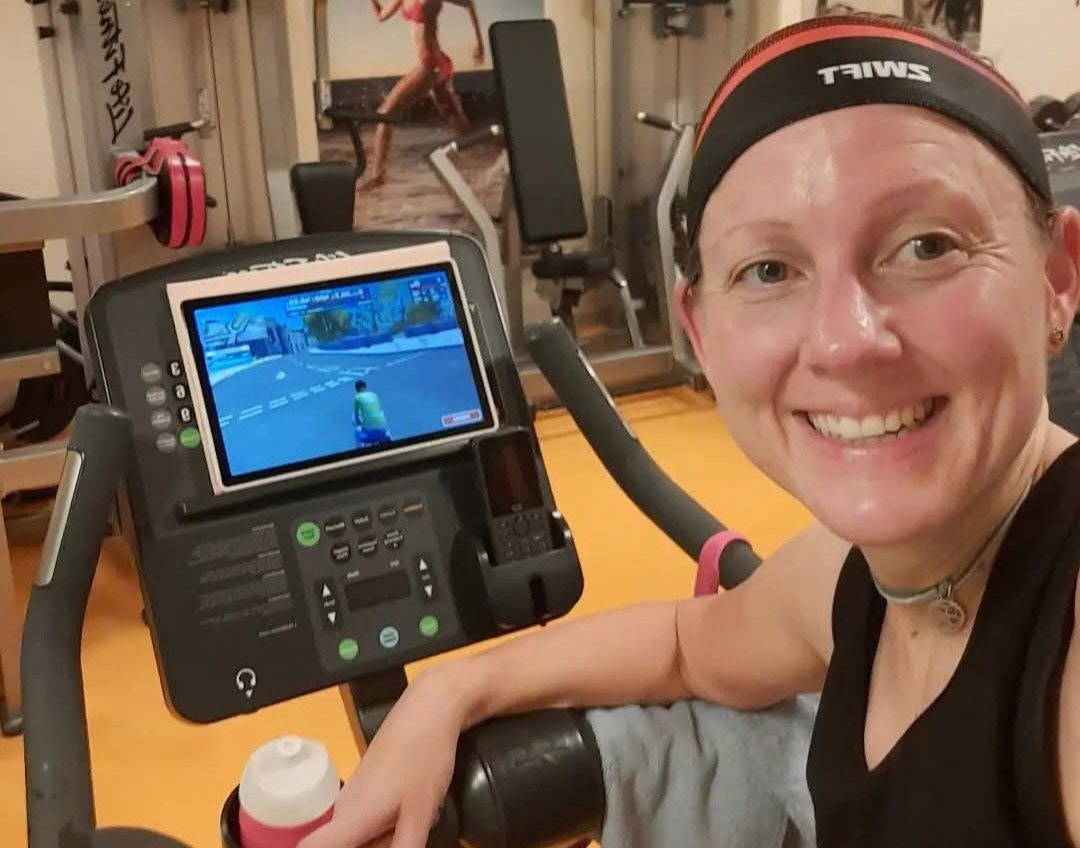
Since she was unable to hold the handlebars properly and outside riding would have been too dangerous, she turned to Zwift. She put some books under the front wheel of her indoor bicycle to reduce the pressure on my hands. 

Zwift gave her strength and confidence.

Zwift helped her lose weight.

Zwift turned her life around. 

“The doctors were wrong.”

She could ride. She could race. The doctors were wrong.

Now she trains almost entirely on Zwift. She loves it. It helped her get and stay in shape. Thanks to Zwift and better eating habits, she lost over 100 pounds, and is in the best shape of her life.

“Zwift helped me realize I was more than a long-distance cyclist.”

During her Zwift training, she started to snag a bunch of green sprinter jerseys, and she was really flying around the routes. She was fast! Faster than she thought she could ever go. This gave her the confidence to sign up for a European Championship Vintage Time Trial race in 2024. 

“I used the Zwift Time trial training plan and won that race! I couldn’t believe it! Zwift made me a better cyclist.”

After the success at the European Championship, she competed at the Vintage World Championship for Road Cycling – and won again!

In 2025, she cycled across the Australian outback from Brisbane to Perth – 5,000 miles. 

“I made the impossible possible.”

Read Her Upcoming Book and Support Her Next Big Adventure

“I wanted to give all the patients with complex regional pain syndrome hope that they can reach their goals, like I did.” To that end, you’ll be able to read about her comeback as she kept daily notes on her experience and is now writing a book about her experience:  “I don’t know how many people will read it because everything I write is the truth and it is not always nice and shiny. But the world is exactly like that. I want to write about the ups and downs, because that’s how life is.”

Coming up for 2026, she plans to cross the United States twice. “I am signed in for the Transam Team for Bike the US for MS from June to August. After that I want to do the Southern Tier.” 

You can support her ride by clicking here.

Follow Caroline’s journeys and thoughts on Instagram at @caropasedach and Facebook at facebook.com/caroline.pasedach. 

Ride on, Caroline! 

Share Your Story!

Are you a Zwifter with a great story? Can we share it?

At Zwift Insider, we’re always looking for personal stories from the Zwift community that inspire, educate, or amaze. Email eric@zwiftinsider.com with a quick summary of your story to get started!

Where’s The Evidence That AI Increases Productivity?

IT productivity researcher Erik Brynjolfsson writes in the Financial Times that he’s finally found evidence AI is impacting America’s economy. This week America’s Bureau of Labor Statistics showed a 403,000 drop in 2025’s payroll growth — while real GDP “remained robust, including a 3.7% growth rate in the fourth quarter.”

This decoupling — maintaining high output with significantly lower labour input — is the hallmark of productivity growth. My own updated analysis suggests a US productivity increase of roughly 2.7% for 2025. This is a near doubling from the sluggish 1.4% annual average that characterised the past decade… The updated 2025 US data suggests we are now transitioning out of this investment phase into a harvest phase where those earlier efforts begin to manifest as measurable output.

Micro-level evidence further supports this structural shift. In our work on the employment effects of AI last year, Bharat Chandar, Ruyu Chen and I identified a cooling in entry-level hiring within AI-exposed sectors, where recruitment for junior roles declined by roughly 16% while those who used AI to augment skills saw growing employment. This suggests companies are beginning to use AI for some codified, entry-level tasks.

Or, AI “isn’t really stealing jobs yet,” according to employment policy analyst Will Raderman (from the American think tank called the Niskanen Center). He argues in Barron’s that “there is no clear link yet between higher AI use and worse outcomes for young workers.”

Recent graduates’ unemployment rates have been drifting in the wrong direction since the 2010s, long before generative AI models hit the market. And many occupations with moderate to high exposure to AI disruptions are actually faring better over the past few years. According to recent data for young workers, there has been employment growth in roles typically filled by those with college degrees related to computer systems, accounting and auditing, and market research. AI-intensive sectors like finance and insurance have also seen rising employment of new graduates in recent years. Since ChatGPT’s release, sectors in which more than 10% of firms report using AI and sectors in which fewer than 10% reporting using AI are hiring relatively the same number of recent grads.

Even Brynjolfsson’s article in the Financial Times concedes that “While the trends are suggestive, a degree of caution is warranted. Productivity metrics are famously volatile, and it will take several more periods of sustained growth to confirm a new long-term trend.” And he’s not the only one wanting evidence for AI’s impact. The same weekend Fortune wrote that growth from AI “has yet to manifest itself clearly in macro data, according to Apollo Chief Economist Torsten Slok.”

[D]ata on employment, productivity and inflation are still not showing signs of the new technology. Profit margins and earnings forecasts for S&P 500 companies outside of the “Magnificent 7” also lack evidence of AI at work… “After three years with ChatGPT and still no signs of AI in the incoming data, it looks like AI will likely be labor enhancing in some sectors rather than labor replacing in all sectors,” Slok said.


Read more of this story at Slashdot.

Sideways on the ice, in a supercar: Stability control is getting very good

SAARISELKÄ, FINLAND—If you’re expecting it, the feeling in the pit of your stomach when the rear of your car breaks traction and begins to slide is rather pleasant. It’s the same exhilaration we get from roller coasters, but when you’re in the driver’s seat, you’re in charge of the ride.

When you’re not expecting it, though, there’s anxiety instead of excitement and, should the slide end with a crunch, a lot more negative emotions, too.

Thankfully, fewer and fewer drivers will have to experience that kind of scare thanks to the proliferation and sophistication of modern electronic stability and traction control systems. For more than 30 years, these electronic safety nets have grown in capability and became mandatory in the early 2010s, saving countless crashes in the process.

Read full article

Comments

Monarch Money deal: Get a 50 percent off one of our favorite budgeting apps

If you’ve been meaning to get a better handle on your finances, now might be a good time to try one of our favorite budgeting apps without paying full price. Monarch Money is offering new users 50 percent off an annual subscription when you use the code MONARCHVIP at checkout, bringing the cost down to $50 for a full year of access instead of the usual $100.

Monarch regularly earns a spot in our guide to the best budgeting apps thanks to its detailed tracking tools, flexible budgeting systems and collaborative features. The app lets you connect unlimited accounts, track spending and investments, set financial goals and share access with a partner, all across web, mobile and tablet apps.

Monarch Money is the kind of budgeting app that can feel a little overwhelming at first, especially when you’re setting up categories, rules and recurring transactions. There’s a bit of a learning curve, and some of the finer details are easier to manage on the web than in the mobile app. But once you’re past that initial setup, it starts to make a lot more sense and becomes a powerful tool for keeping tabs on your finances.

Where Monarch Money really shines is in the level of detail it offers. It’s built for people who want a clear, structured view of their money, not just a running list of transactions. In the budgeting section, you can see budgets versus actual spending by category, along with forecasts by month or by year. Recurring expenses can also be defined using more than just merchant names, which helps keep things accurate with less manual cleanup.

Beyond day-to-day budgeting, Monarch does a good job of showing the bigger picture. It includes visual reports and charts that make it easier to spot trends over time, plus tools for tracking net worth, investments and financial goals. Monarch can even factor in non-cash assets like your home or vehicle, pulling in estimates automatically so they appear alongside your accounts.

All of that depth won’t be for everyone, but if you’re willing to spend a little time getting set up, Monarch Money offers a lot of control and insight. With the current deal bringing the price down to $50 for a full year, it’s a solid opportunity to try one of our favorite budgeting apps at a discount of 50 percent off and see if it fits how you like to manage your money.

This article originally appeared on Engadget at https://www.engadget.com/deals/monarch-money-deal-get-a-50-percent-off-one-of-our-favorite-budgeting-apps-120000712.html?src=rss

ByteDance promises to tighten up its new AI video generator after viral Cruise vs. Pitt clip

ByteDance released Seedance 2.0 less than a week ago and enraged artists everywhere with a viral clip AI-generated clip of Tom Cruise and Brad Pitt fighting. Unsurprisingly, the AI video-making tool has reportedly already received multiple cease-and-desist letters around copyright infringement. Now, it appears ByteDance is going to curb the new media generator’s use of prohibited content. 

In a statement to the BBC, ByteDance said, “We are taking steps to strengthen current safeguards as we work to prevent the unauthorised use of intellectual property and likeness by users.” It added that the company “respects intellectual property rights and we have heard the concerns regarding Seedance 2.0.” However, when pressed for more information on exactly how they would do this, ByteDance didn’t respond. 

ByteDance’s vague pledge follows a cease-and-desist letter from the Walt Disney Company on Friday. Disney claimed that Seedance 2.0 uses “a pirated library of Disney’s copyrighted characters from Star Wars, Marvel, and other Disney franchises, as if Disney’s coveted intellectual property were free public domain clip art.” Disney included example videos that included its copyrighted characters, such as Spider-Man and Darth Vader. 

Paramount Skydance has also reportedly issued a cease-and-desist letter to ByteDance to stop Seedance 2.0 from using its materials, according to the BBC. 

This article originally appeared on Engadget at https://www.engadget.com/ai/bytedance-promises-to-tighten-up-its-new-ai-video-generator-after-viral-cruise-vs-pitt-clip-112941384.html?src=rss

New Ventum NS1 embraces the latest road bike trends and drops 200g 

Utah-based bikemaker Ventum has launched the third generation of its NS1 road bike, replacing the 2023 second generation with a new frameset featuring updated geometry.

The new frame is claimed to be 200g lighter and takes advantage of the current UCI frame-dimension rules to include a revised head tube and fork legs.

Originally launched in 2019, the NS1 was Ventum’s first road bike, with the brand focusing on triathlon bikes since its founding in 2014. At its launch, Ventum claimed the original NS1 was one of the lightest and strongest road frames available.

Deeper, narrower head tube

Ventum has extended the head tube and added a waist on the third-generation frame.

The reshaped head tube is both deeper and sharper at its leading edge, which extends ahead of the steerer, as per the Specialized Tarmac SL8 and a host of other recent road bikes. The waisted head tube shape is a feature of many of the current crop of lightweight-aero bikes, such as the Factor Ostro VAM, and is designed to reduce the frame’s frontal area.

The fork legs are now deeper for a claimed improvement in aerodynamics and increased stiffness, again mirroring the Ostro VAM’s 2024 update.

Another feature shared with many recent road bikes is an increase in stack, which is 13mm higher in a size M/L. Ventum says this should help riders maintain an aero ride position for longer. It’s a trend that Ollie Smith highlighted last year in his piece on five ways race bikes will improve in 2026. 

The reach remains largely the same as for the previous-generation bike. The wheelbase has been changed slightly, increasing by 6mm for the M/L, but less for other sizes, which Ventum claims makes the bike more settled at speed, while still offering a responsive ride feel. 

Lower frame weight

Ventum claims to have shaved 203g off the frame weight, reducing it to 852g for a size M/L – effectively the same as removing the down tube and half the head tube from the Gen 2 NS1. It has changed the carbon layup and production process, and the redesign has reduced the mass of the frame’s front end and seatstays. 

Despite the weight loss, Ventum claims an 11.9% increase in stiffness at the bottom bracket and 7.7% at the head tube. The frame is specced for a T47 bottom bracket and Universal Derailleur Hanger, and offers 35mm tyre clearance. It comes fitted with a 10mm-offset seatpost.

Frameset-only and five build options

Full builds include three SRAM and two Shimano options, all with Zipp wheels.

The new NS1 frameset is available in three colours, priced at $3,599. 

Full SRAM builds include SRAM Rival AXS with Zipp 303 S wheels and Zipp two-piece cockpit, priced at $5,499; SRAM Force AXS with Zipp 303 SW wheels and a Ventum one-piece cockpit, priced at $7,599; and SRAM Red AXS with Zipp 353 NSW wheels and Ventum cockpit, priced at $10,999.

Shimano options include Ultegra with Zipp 303 SW wheels and one-piece Ventum cockpit, priced at $7,899; and Dura-Ace with Zipp 353 NSW wheels and Ventum cockpit, priced at $11,299.

Ventum sells direct to consumers and via dealers. Its range now includes the GS1 gravel bike and the ES1-G electric gravel bike, alongside the NS1 and its tri and time-trial framesets.

OpenAI has hired the developer behind AI agent OpenClaw

Recently we were introduced to OpenClaw, an AI that allows users to create their own agents to control apps like email, Spotify and home controls. Now, Sam Altman has announced that OpenAI has absorbed OpenClaw by hiring developer Peter Steinberger “to drive the next generation of personal agents,” he wrote on X. Steinberger confirmed the news on his own blog. “I’m joining OpenAI to work on bringing agents to everyone. OpenClaw will move to a foundation and stay open and independent.” 

Steinberger was also in talks to join Meta, with both companies reportedly making offers in the “billions,” according to Implicator.AI. The primary attractant was said to be OpenClaw’s 196,000 GitHub stars and 2 million weekly visitors rather than its codebase. 

OpenClaw became buzzy in the last few weeks thanks to its multifaceted ability to carry out tasks. People have used it to create agents that can write code, clear their inboxes, do online shopping and other assistant-like jobs. On its website, OpenClaw touts its ability to interact with popular apps and sites including WhatsApp, Discord, Slack, iMesage, Hue and Spotify. 

Peter Steinberger is joining OpenAI to drive the next generation of personal agents. He is a genius with a lot of amazing ideas about the future of very smart agents interacting with each other to do very useful things for people. We expect this will quickly become core to our…

— Sam Altman (@sama) February 15, 2026

OpenClaw was recently called “Clawdbot” but Anthropic forced a name change due to similarities with its “Claude” branding. OpenClaw is often compared to Claude Code by “vibe coders” seeking to automate website development and other programming chores.  

In his announcement, Altman said that “the future is going to be extremely multi-agent and it’s important to support open source as part of that,” adding that “OpenClaw will live in a foundation as an open source project” supported by Open AI. Steinberger, meanwhile, said that “what I want is to change the world, not build a larger company and teaming up with OpenAI is the fastest way to bring this to everyone.” 

This article originally appeared on Engadget at https://www.engadget.com/ai/openai-has-hired-the-developer-behind-ai-agent-openclaw-092934041.html?src=rss