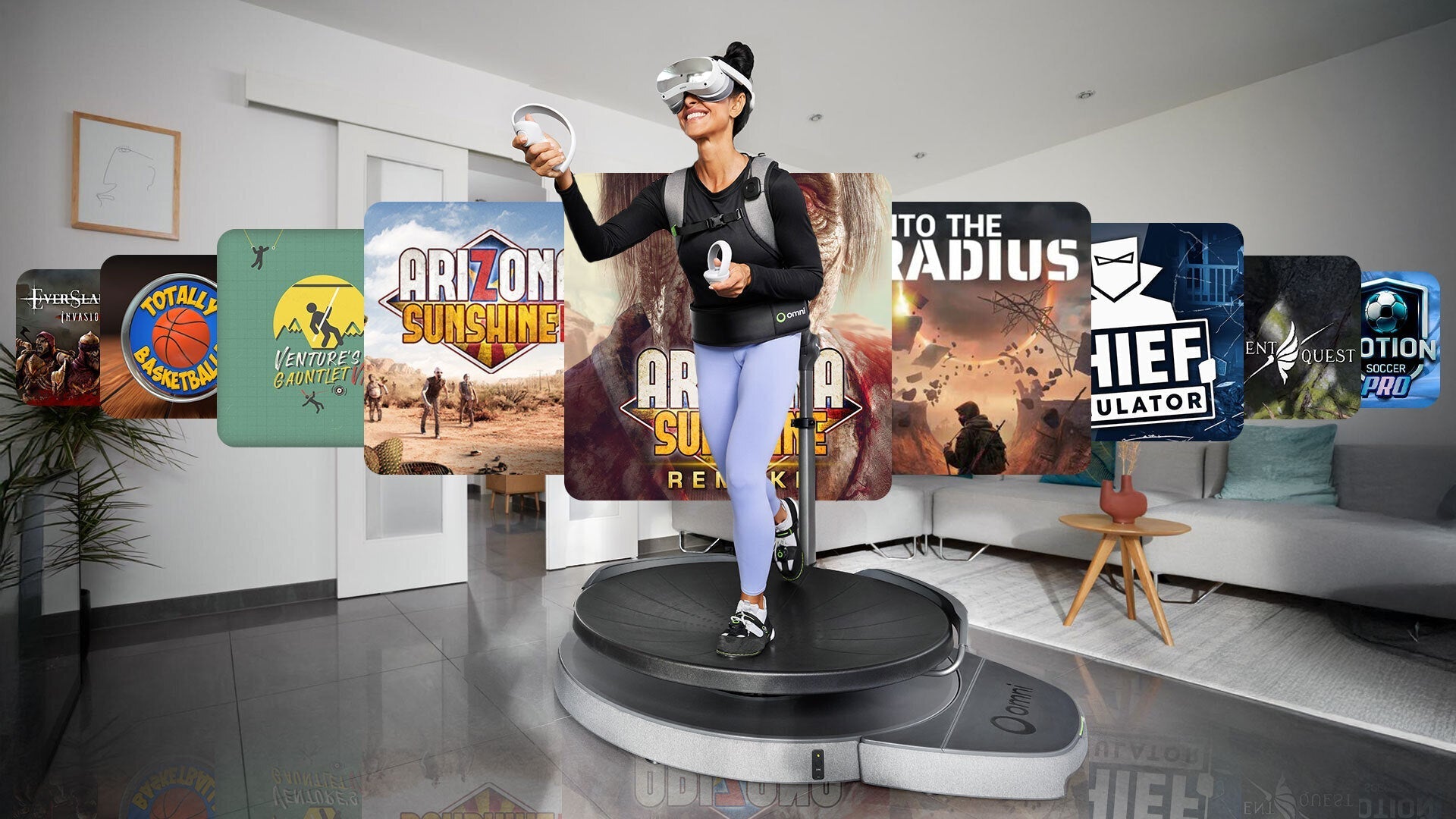
Virtuix announced it’s joined the Made for Meta program, which opens the door to bring official Quest compatibility to the company’s Omni One VR treadmill.
Made for Meta is a hardware partnership that certifies that accessories not only work with Meta devices, but also meet the company’s quality standard. Since the 2023 launch of the program, a wide range of Made for Meta accessories have been certified, including bHaptics TactSuit Pro, Logitech MX Link stylus, and Roto VR Explorer Chair.
As the latest member of the program, Virtuix says it plans to make its Omni One VR treadmill compatible with Quest headsets and games, effectively broadening Omni One’s reach to the world’s largest XR user base.
Image courtesy Virtuix
Official Quest support will be a first for Omni One. Before joining Made for Meta, the VR treadmill supported PC VR headsets through its ‘Core’ device, priced at $2,600, as well as a custom Pico 4 Enterprise Ultra headset through its ‘Complete’ system, priced at $3,500.
“Joining the Made for Meta program expands our addressable market to millions of active Quest users who already own and love their VR headset and games library,” said Jan Goetgeluk, CEO of Virtuix. “We look forward to collaborating with Meta as we continue to scale our consumer business and bring our immersive, full-body gaming experience to a mass audience.”
Speaking to Road to VR, Goetgeluk says Omni One won’t support all Quest games, however the company plans to make “a large number of games compatible,” which will include tight integration with the Omni One SDK. Goetgeluk says we’ll learn more about product and compatibility at a later date.
This follows the VR treadmill creator’s recent stock market debut on the Global Market tier of the Nasdaq, which came alongside an additional $11 million investment from Chicago Venture Partners, with an additional $50 million equity line of credit that the company says it will use to scale sales of Omni One.
The software industry’s decades-old habit of charging companies a flat fee for every employee who uses a product is running into a fundamental problem: AI agents don’t sit in chairs, and they don’t need licences.
As autonomous agents take on tasks that human workers once handled, the per-seat pricing model that made SaaS revenue so predictable is giving way to consumption-based and hybrid alternatives. Snowflake and Databricks (valued at $134 billion) already charge based on usage. Salesforce initially priced its Agentforce customer relations bot at $2 per conversation but faced customer pushback and now offers action-based pricing, upfront credits and fixed fees.
ServiceNow’s finance chief Amit Zavery said last month that some customers aren’t ready for purely consumption-based models. Goldman Sachs estimates US software spending will nearly triple to $2.8 trillion by 2037 as automated tasks blur the boundary between IT and wage budgets, but that money will no longer arrive in the neat recurring instalments that investors and private equity firms have come to expect.
In December 2025, Canonical announced a plan to
develop a universal Public Key Infrastructure called upki. Jon Seager has published
an update about the project with instructions on trying it
out.
In the few weeks since we announced upki, the core revocation engine
has been established and is now functional, the CRLite mirroring tool
is working and a production deployment in Canonical’s datacentres is
ongoing. We’re now preparing for an alpha release and remain on track
for an opt-in preview for Ubuntu 26.04 LTS.
Earlier this month, No More Rainbowsand DigiGodsdeveloper Squido Studio announced that it was partnering up with gaming streamer jmancurly’s video game publishing company CurlyBlue to create VR experiences – the first being a colorful dungeon crawler named Wizherd.
The lore of Wizherd goes that in ancient times, the world was protected by a magical group called “the herd.” Life was once peaceful, but now zombies and other evil forces threaten the world. As a result, players now take on the role of wizards as they embark on missions to hold off the forces of darkness.
The Facts
What is it?: A magic-based, dungeon-crawling adventure title that lets players conjure spells and team up with other would-be wizards. Platforms: Meta Quest Release Date: February 12, 2026 Developer: Squido Studio Publisher: CurlyBlue LTD. Price: Free To Play
As a fan of magic and fantasy games, I was curious to see Wizherd in action, especially after seeing the game’s blocky art style that calls back to the old Final Fantasy games from the original PlayStation era. Unfortunately, new players are greeted to a steep and confusing learning curve that could sour the experience for most.
When you first boot up Wizherd, you are instantly thrust into a magical hub with little in the way of an introduction to the world you and your fellow would-be sorcerers must explore. There are tutorial missions posted to a bulletin board, but they amount to little more than grinding the player’s experience level by venturing off into the wilderness to battle undead monsters. The bulletin board also features daily and weekly quests that any player can perform. Once you complete a mission, you can claim your reward by opening a treasure chest beside the board.
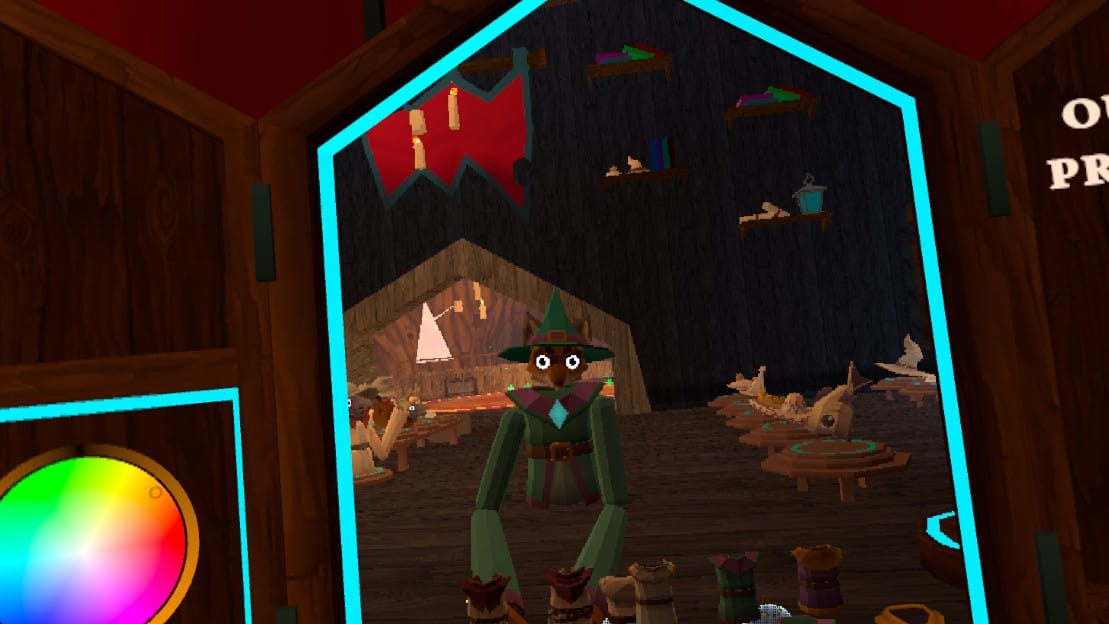
Players can customize their Wizherd character.
Players can move their character in one of two ways in Wizherd, by either moving the right joystick or physically swinging their arms at the ground to propel forward. The former doesn’t always work, and the latter takes some getting used to. Once the player gets a handle on moving around, the world outside the hub consists of sunny hillsides, castle-like structures, and underground caverns flooded with lava.
Wizherd’s magic system is simple enough: the player chooses between three different elemental spells at the start of the game and equips their selection to their hands. By holding down the trigger and releasing it in the middle of a tossing motion, the player can throw a ball of fire or ice at an enemy, though this action can be somewhat clunky and frustrating in the middle of a frantic battle. Melee-based spells like fire swords, on the other hand, are quite fun to swing around once you have them unlocked.
Spells can be upgraded at certain parts of the hub by spending coins and crystals. You can also customize your wizard avatar’s look by purchasing cosmetic items like robes, hats, and even animal faces you can equip at a vanity. There is even a color slider you can use to adjust your character’s skin tone.
Wizherd is free-to-play, though there are two different types of in-game currency. Coins are earned by defeating enemies, while crystals can be obtained by completing tasks or spending real-world money. The rewards for completing quests can be quite small at first, so you might have to either grind for a while or bust out your wallet.
0:00
/0:26
Combat and exploration can be hit or miss.
The overall presentation can be hit or miss. As mentioned before, there is a sort of retro charm to Wizherd’s blocky graphics, but the music and sound isn’t anything you haven’t heard before in Minecraft. Most of the time you’ll be hearing the chatter of other players who are just as confused as you.
So far, Wizherd has some potential, but getting started can be tedious if you don’t want to spend due to the grind needed to get a decent loadout. There is some potential here, but only time will tell if the game has enough staying power to keep players coming back.
Nintendo’s strangest Switch 2 accessory has arrived: a remarkably faithful recreation of the Virtual Boy.
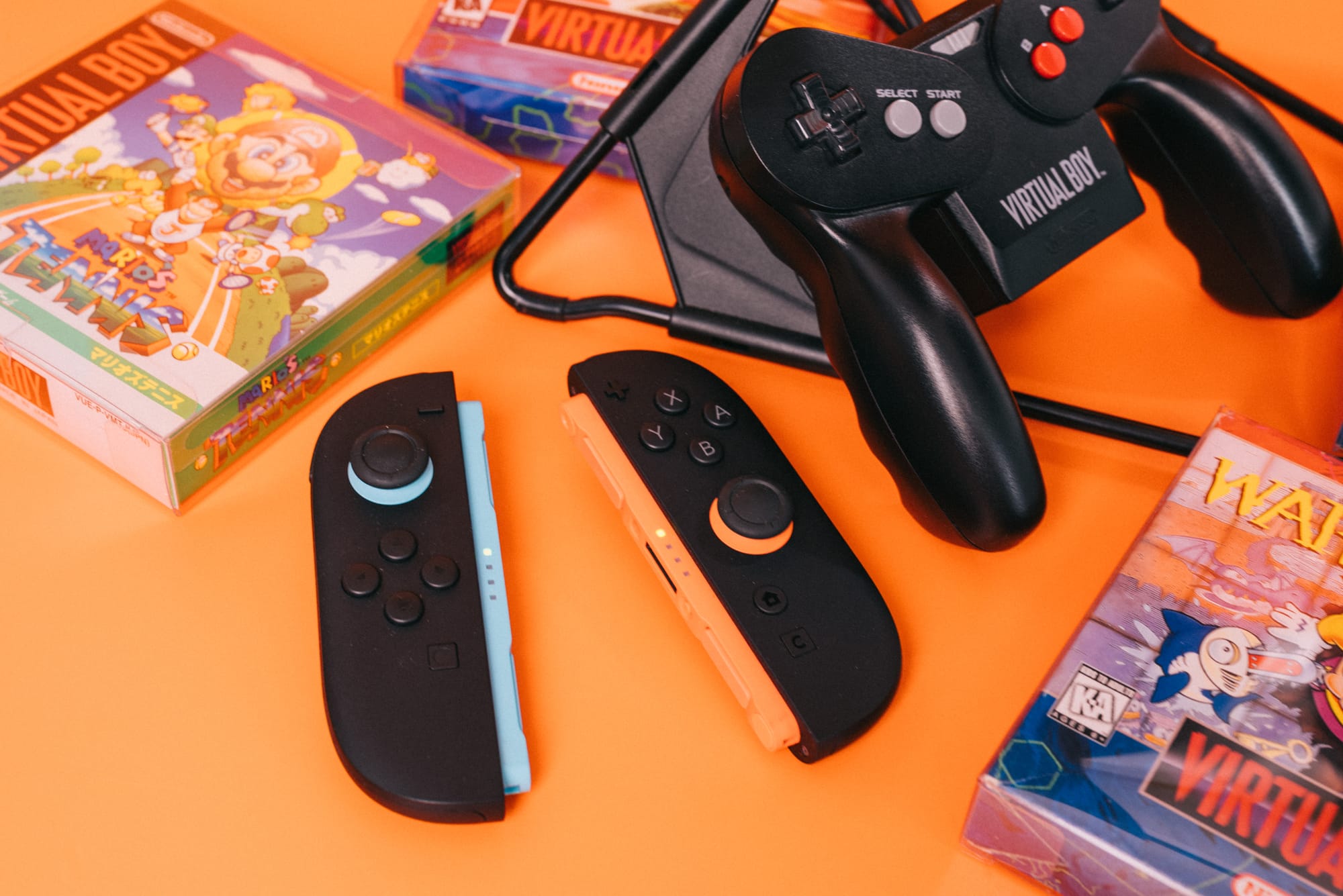
Toward the end of last year, Nintendo dropped the surprise announcement that Virtual Boy games would soon be playable on Switch and Switch 2 via the company’s subscription-based membership service, Nintendo Online + Expansion Pack. For the first time in 30 years, Nintendo fans would be able to play Virtual Boy games like Red Alarm, Wario Land, and Mario’s Tennis on a current-gen Nintendo console.
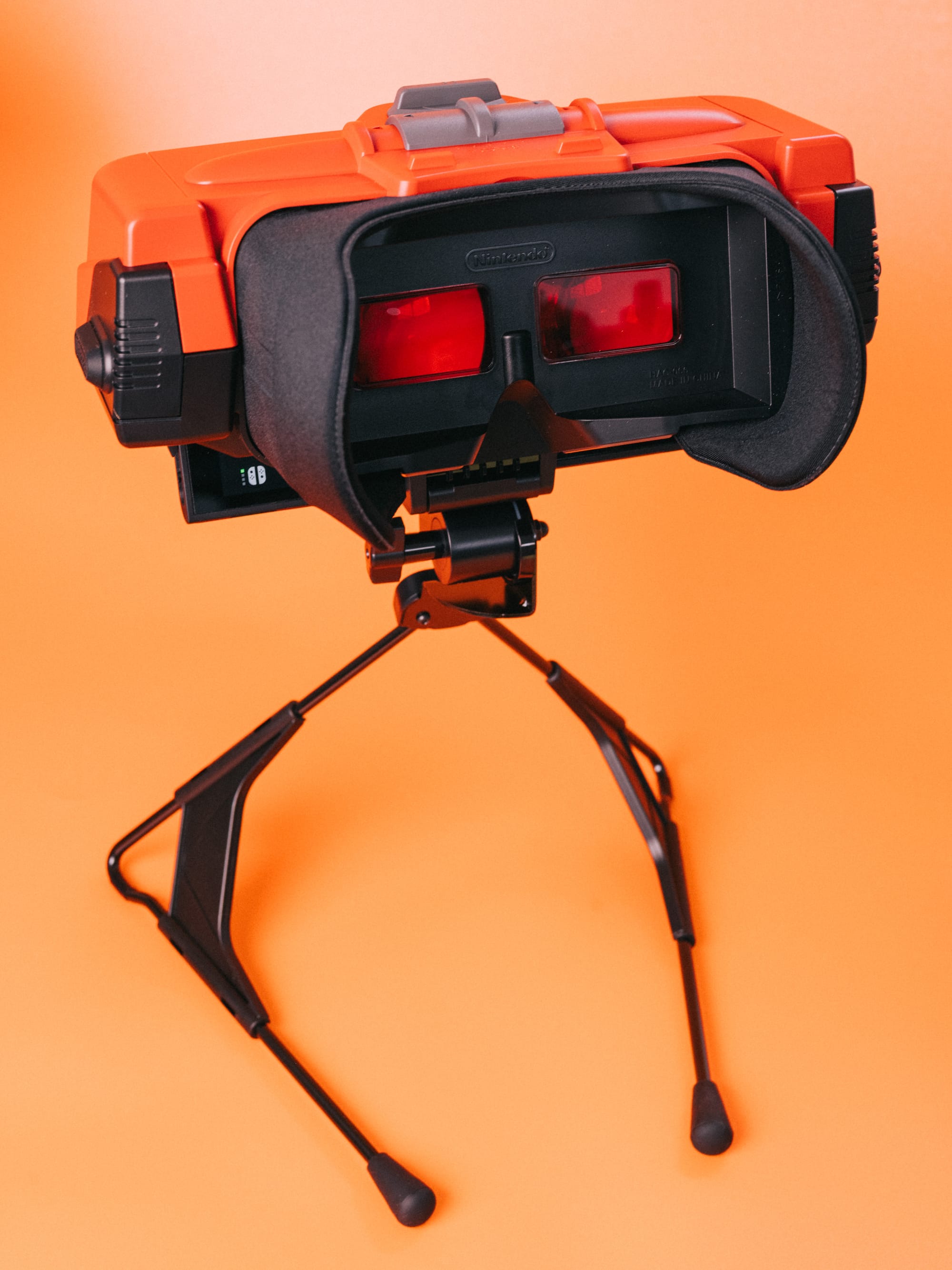
Perhaps even more surprising was the announcement that the catalog of Virtual Boy games would be accompanied by two new accessories: an inexpensive cardboard “headset” priced at $24.99, and a full-on replica Virtual Boy for $99.99. In both cases, the Switch and Switch 2 slot into these accessories (like a dock) in order to play the old games.
Editor’s Note: What Exactly Was The Virtual Boy?
We’re aware that not everyone knows what the Virtual Boy was, so here’s a quick rundown.
Released in 1995, Nintendo’s Virtual Boy was the first standalone home stereoscopic 3D gaming system, providing a 384×224 red-only image to each eye via its two lenses. While often described as a “VR headset”, Virtual Boy lacked any kind of head tracking, not even rotational, and had a tiny field of view of around 20 degrees. That’s not to say it wasn’t an interesting 3D device – it just wasn’t really VR.
Virtual Boy was a market failure, selling very few units, and was discontinued after just one year. But it had a lasting cultural impact in the gaming world, and is looked back on fondly by many in the VR industry.
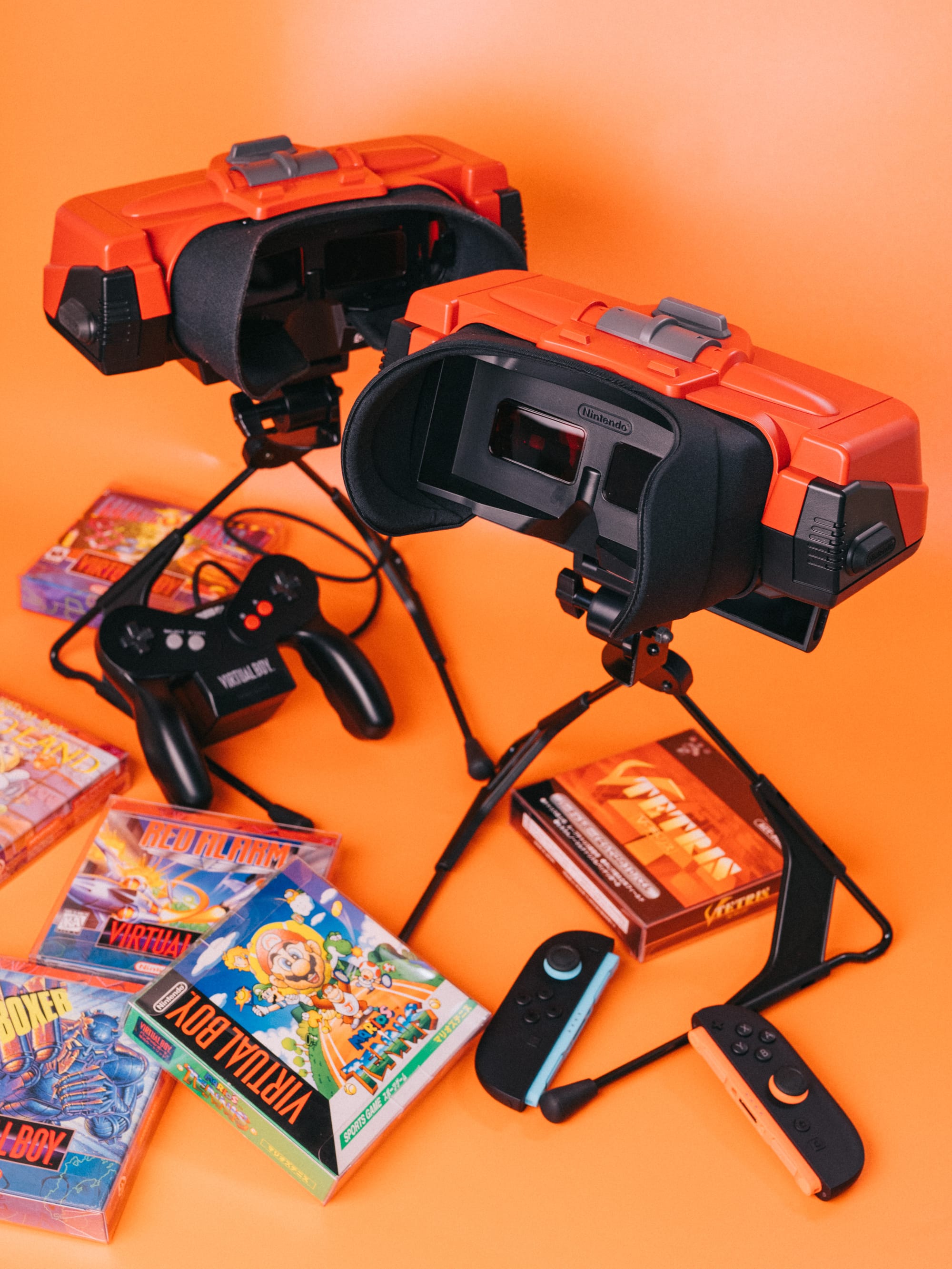
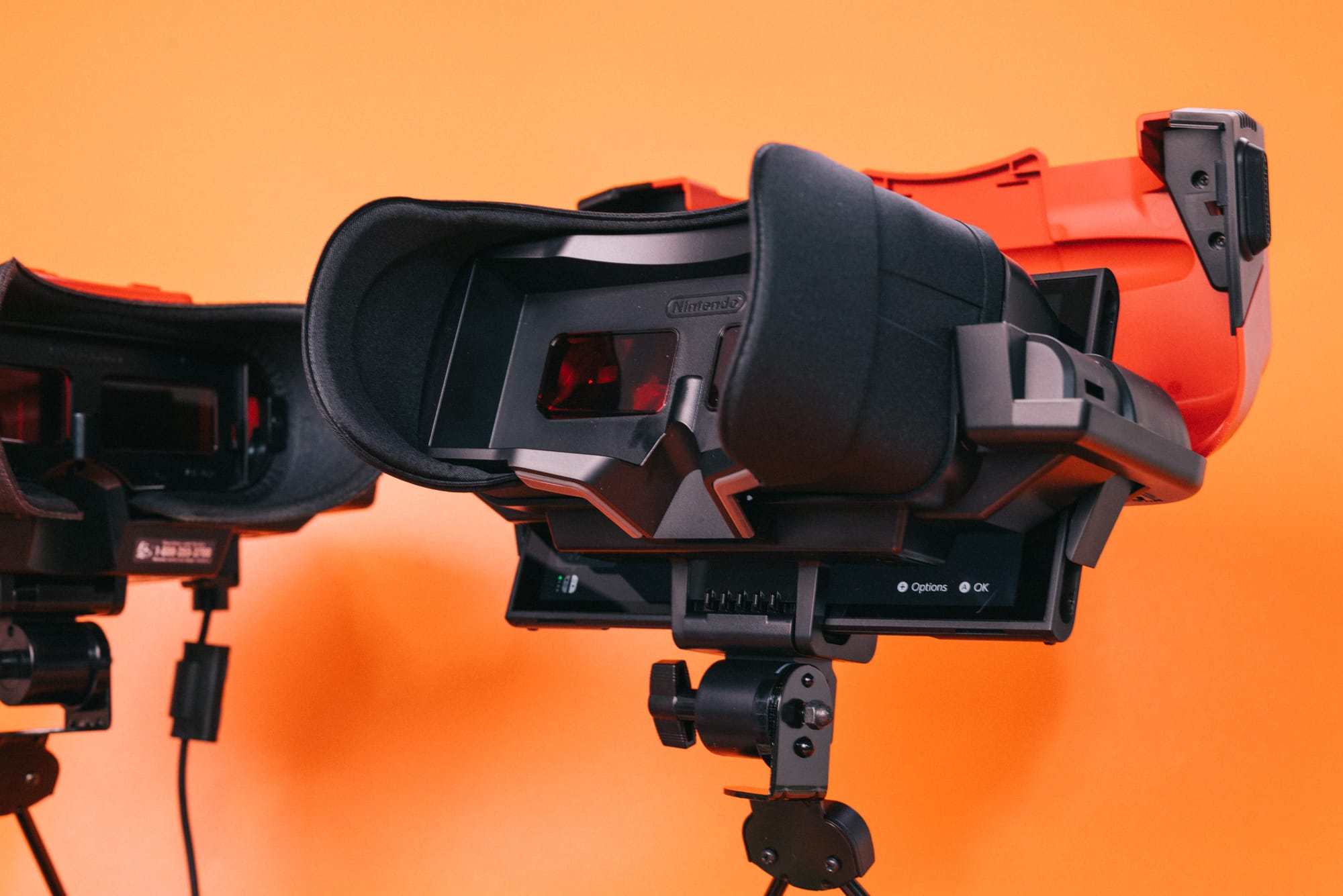
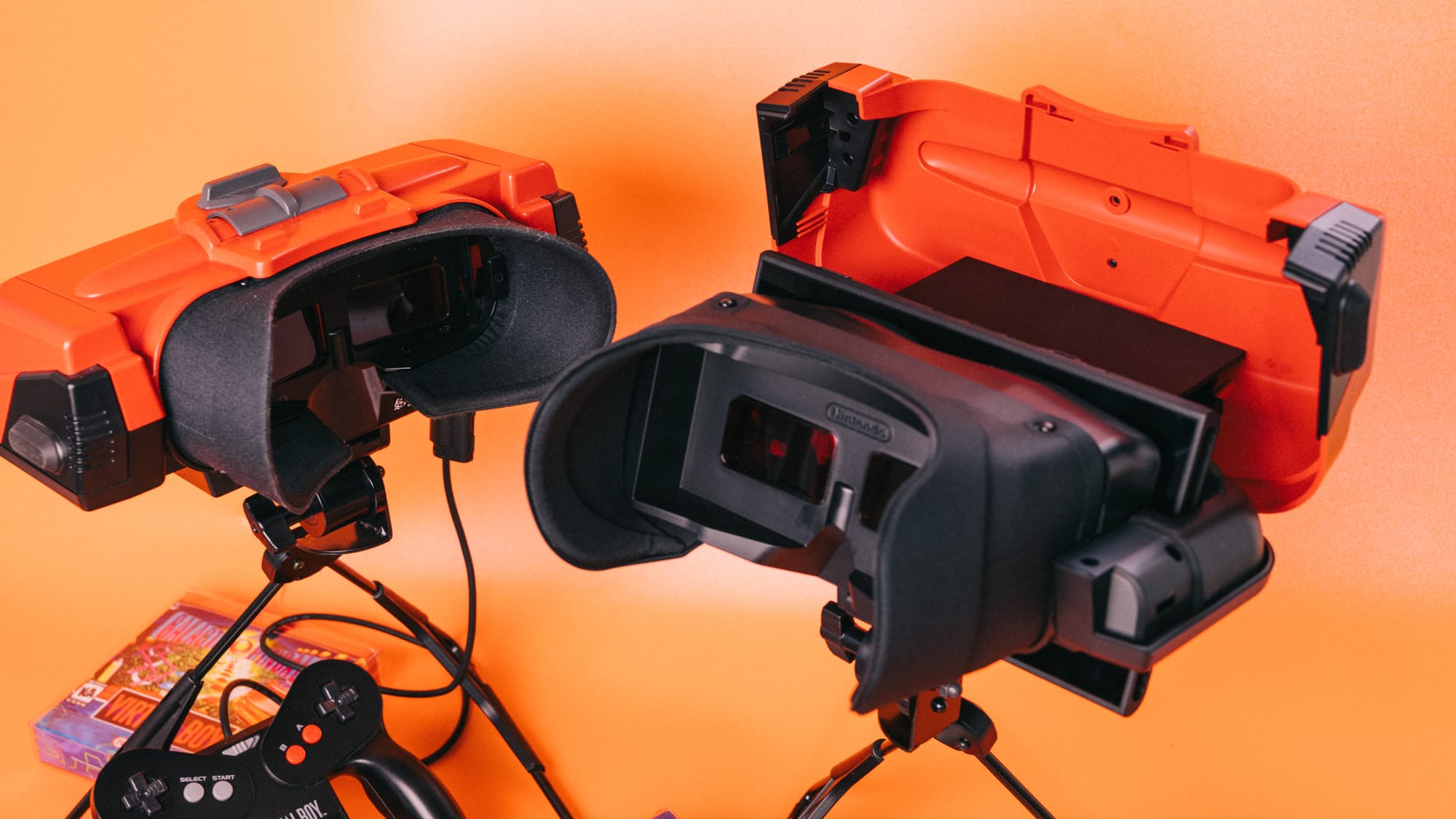
Virtual Boy for Switch (foreground) is a remarkably faithful remake of the original system (background).
A couple of items of note: To start, due to the way that Virtual Boy games are displayed, you will need to buy one of Nintendo’s official accessory “headsets” to play the Virtual Boy’s catalog on Switch and Switch 2.
Second, I’m using the term “headset” loosely. Virtual Boy was never, in fact, a headset, as Nintendo opted to sell it on a stand, rather than in a configuration that allowed mounting the unit to your head. This was the right call, since the original Virtual Boy was ridiculously heavy, and though the new replica “headset” is lighter, it’s indeed a replica. The new model is not a headset, either.
Hardware First
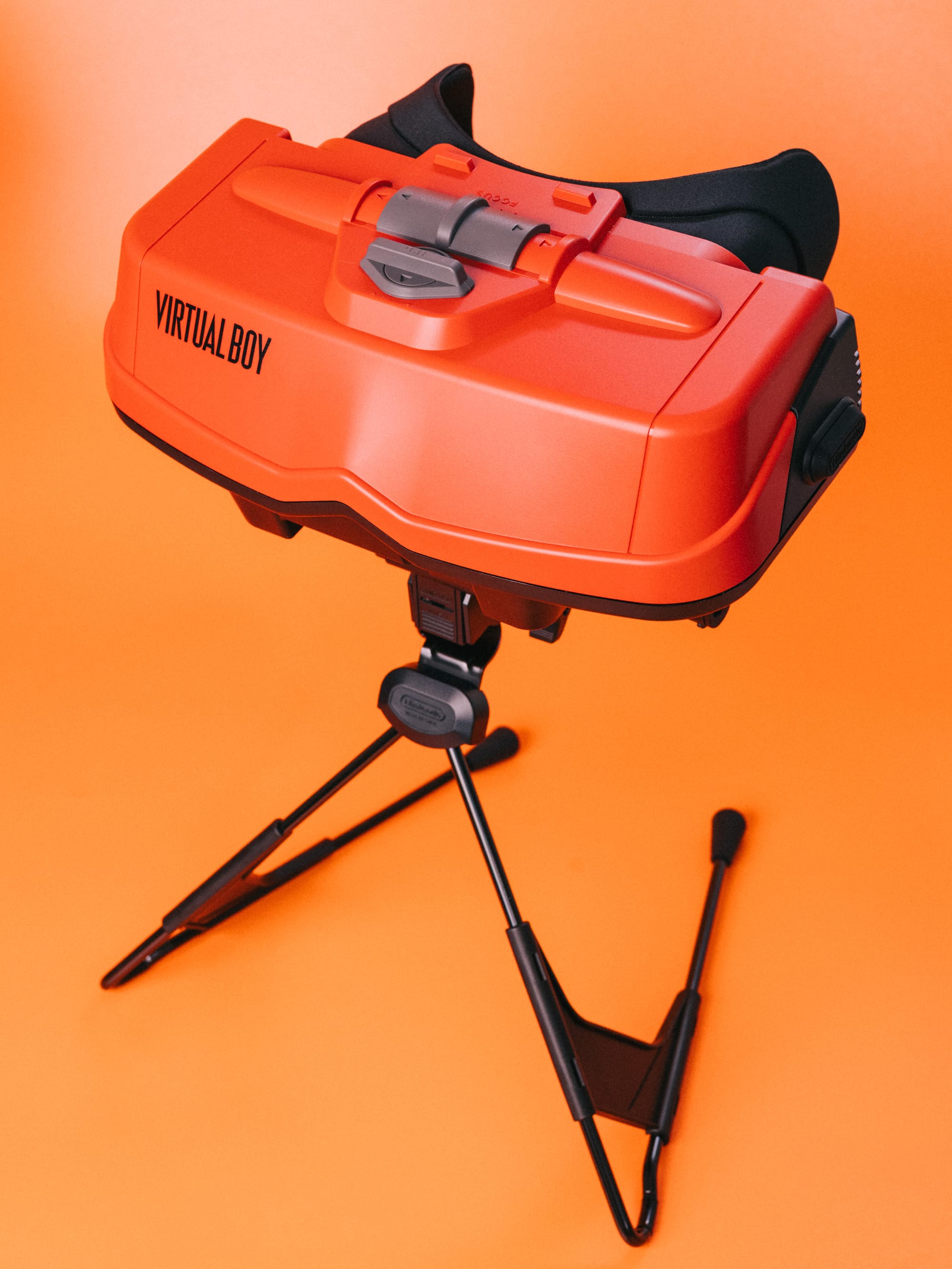
What most surprised me when the headset arrived was just how faithful its design is to the original system. Owning my launch edition Virtual Boy from 1995 gave me a great opportunity to put the two pieces of hardware side by side, to compare the units and take some photos.
It’s so identical that my ten-year-old daughter (who I taught to solder on my original Virtual Boy when its ribbon cables detached) saw the new unit and asked, “You bought another Virtual Boy?”
It’s true that the new Virtual Boy is slightly larger than the original, but then again, we need to slot a Switch or Switch 2 inside it. That naturally requires some extra space. That said, the small details are incredibly accurate. The rubber bumpers on the side of the unit, the rubber nubs at the end of the stand’s legs, the focus and IPD controls, the (fake) volume control and headphone jack and EXT. port, they’re all here and replicated perfectly. Even the stand’s adjustment mechanism utilizes a virtually identical acorn nut as the original.
The next thing you’ll notice is that it’s remarkably well made. The stand feels good, deploys tightly, and holds the unit well. The adjustment point on the stand also cinches tightly. The plastic feels dense and solid, the spring-loaded docking cradles work beautifully and hold the Switch in place nicely, and the satin foam of the eye-shroud feels more comfortable than the original.
In short, Nintendo did a great job making an almost perfect replica of their least successful gaming system.
It should also be noted that the new Virtual Boy arrives configured to work with Switch 2. To use the original Switch, we are required to install an adapter plate, which involves unscrewing four screws, swapping the plate, and reattaching the screws. The adapter plate comes packaged with the unit.
Do you need to spend $99.99 on a replica Virtual Boy headset? Probably not. Despite it being well made and effective at its one and only job, unless you’re a big fan of weird tech and oddball experimental products, you’ll almost certainly regret buying this thing.
Additional strikes against it would come down to the fact that these games are only accessible on Switch or Switch 2 via Nintendo’s subscription service. You won’t really own these games on Switch unless Nintendo releases some sort of purchasable collection. As of now, you’re buying a headset to play games that you’re essentially renting.
And if you’ve never played Virtual Boy and simply want to try out some old, weird games, there are cheaper and easier ways to experience Virtual Boy’s compact library.
But if you’re like me and love the Virtual Boy, well, you’ve probably already spent the money.
If you’d like your own Virtual Boy for Switch and Switch 2, you’ll have to be a member of Nintendo Online, and then grab one via the company’s website. We’ll have an overview of all the Virtual Boy games playable on Switch and Switch 2 soon.
This week we’re taking a look at some hyper-specific cultures within the larger youth culture. They run the gamut from the truly disturbing Looksmaxxing community, to the strange world of hardcore audiophiles, to the nostalgic domain of the bebot girls. What’s a bebot girl? I’m glad you asked!
What is a “Bebot Girl”?
TikTok is being taken over by Bebot Girls. “Bebot” is Filipino slang from the 2010s that means “babe” or “baddie.” The bebot girl trend is posting videos of the transformation from a regular person to a bebot, that is, a Filipino baddy from the 1990s. This is usually accomplished through period-appropriate makeup like heavy bronzer, frosty inner eyes, and striking metallic eyeshadow. It looks like this:
and this:
The trend started with TikToker @bellepauleen posting this video, which revived the term. The bebot anthem and soundtrack to the these videos is Black Eyed Peas 2005 song “Bebot.” Bebot girls seems like part of the same nostalgia trend that brought us Millennial Optimism and nostalgia for 2016, but with a huge dose of Filipino pride. If you want to watch bedot girl videos all day, check out the hashtag.
Who is Clavicular?
This week in people who are famous to your children but not you, we have Clavicular. His real name is Braden Peters, he was born in 2005, and he is the world’s most famous looksmaxxer.
Looksmaxxing (as you can read in my Gen Z and Gen A slang glossary) is maximizing one’s physical attractiveness through personal grooming, working out, and dressing stylishly. That doesn’t sound terrible in theory, but in practice, looksmaxxing is nihilistic vanity. To the Looksmaxxer, there’s a single standard for male attractiveness: basically being a lantern-jawed white dude. And there is nothing more important than looks. Being smart, cool, interesting, good-hearted, talented etc. does not matter; the only quality that is worthwhile is how you look. Looksmaxxers are insanely obsessive about defining what makes a person attractive. They measure their canthal tilt (the angle of the eyes), obsess over their maxilla (upper jaw), and know their exact biacromial width (the span of the clavicle.) Clavicular’s is 19.5 inches, hence the name.
Clavicular’s fame comes from his Kick channel, where he films himself rating other people’s looks, walking around being handsome, giving advice to his followers on how they can “ascend,” (become more attractive) and going on dates. As expected, he does sell an online course. To achieve his look, Clav says he’s been injecting himself with testosterone since he was 14, takes steroids regularly, and smashed his cheekbones with a hammer so they would grow more prominent. There are rumors that he takes meth to keep his weight down too. Although he describes himself as apolitical, Clavicular’s associates include right-wing influencers Nick Fuentes, Sneako, Andrew Tate, and more. He says the n-word all the time.
So all this is very bad, and it’s all growing in popularity among boys of the brainrot generation. So be warned, I guess: Young boys are not OK.
What is a “Big John machine”?
While niche communities like Looksmaxxers are depressing, many young people are into much less dire interest groups, like audiophiles. Within that community, audio equipment is sometimes referred to as “Big John machines,” because people are demonstrating their ridiculously expensive audio set-ups by playing a Geoff Castelucci cover of Jimmy Dean’s 1961 novelty hit “Big Bad John.”
It started with a post on Reddit’s audiophile subreddit, describing the original song as “an interesting example of how good audio systems can bring out more life in a recording.” So people started posting videos of extremely exotic and expensive systems playing the song. Like this system with $2 million speakers:
Then people started posting their own systems playing the song. Or just middle-of-the-road gear. Then people started posting the cheapest gear that can play “Big Bad John,” like this:
and this:
Viral video of the week: The Leaf Test
Recently, TikTokers Toni & Austin posted the following 11-second video, dubbed “The Leaf Test.”
In it, Toni says, “I found a leaf,” and Austin responds “It’s beautiful, just like you.” She sighs. He panics, presumably having said the wrong thing. It’s mildly funny, but it went viral in a huge way—over 18 million views— for maybe the wrong reasons.
Despite it being very, very clear that the clip is a joke, the video’s comment section is full of anger, with people saying things like, “Dump her ungrateful ass,” “He deserves someone better,” and “Can we normalize not doing test on our boyfriends he gave a perfect and valid answer and how are we still gonna get upset??”
I don’t know if there’s any way to measure this, but the internet has made people way less able to understand when someone is being ironic or sarcastic, whether it’s misinterpreted written posts on Threads or joke videos on TikTok. The internet seems to have made people less likely to moderate their responses; people are fast on the trigger.
There have been rumblings of Apple launching new products in the coming weeks and there’s now a confirmed event to go along with the chatter. Apple has been sending out invitations for what it’s describing as a “special Apple Experience” in New York. There’s no mention or even hint of what products will be announced, but we have some guesses.
Apple
Start with Pre-installation step $ sudo apt install build-essential bpftool and include /usr/sbin in system $PATH variable.On Debian forky installation of libdw-dev and build dependencies for libdw-dev steps are required to succeed with build CachyOS 6.19.2 Kernel on top of Debian Testing ( forky native kernel 6.18.9 )
Up to a third of people worldwide have shoulder pain; it’s one of the most common musculoskeletal complaints. But medical imaging might not reveal the problem—in fact, it could even cloud it.
In a study published in JAMA Internal Medicine this week, 99 percent of adults over 40 were found to have at least one abnormality in a rotator cuff on magnetic resonance imaging (MRI). The rotator cuff is the group of muscles and tendons in a shoulder joint that keeps the upper arm bone securely in the shoulder socket—and is often blamed for pain and other symptoms. The trouble is, the vast majority of the people in the study had no problems with their shoulders.
The finding calls into question the growing use of MRIs to try to diagnose shoulder pain—and, in turn, the growing problem of overtreatment of rotator cuff (RC) abnormalities, which includes partial- and full-thickness tears as well as signs of tendinopathy (tendon swelling and thickening).
Anthropic’s Claude is an AI bot that keeps up a steady pace when it comes to pushing out new features, and the latest upgrade of note sees three useful features make their way down to free users, having previously been exclusive to the paid-for plans.
If you’re choosing between AIs and comparing the features available on the free plans, then there’s now more of a case to be made for choosing Claude over a competitor like ChatGPT or Gemini for your next batch of AI tasks.
The three new features now available to free users on Claude are file creation, external plug-ins called Connectors, and bundles of instructions called Skills. Here’s how you can make use of them.
File creation in Claude
Claude’s file creation capabilities let you create Word documents, PowerPoint slideshows, Excel spreadsheets, and PDFs from right inside a conversation. You can either supply the bot with all text, data, and other information you want included, get Claude to invent everything itself, or something in between.
For example, if you’ve got a long list of names and scores, Claude can put them into a spreadsheet for you. If you’ve got a series of images, Claude can combine them into a PDF and describe them. You can get it to analyze and visualize data, produce presentations based on reports, and create summary documents.
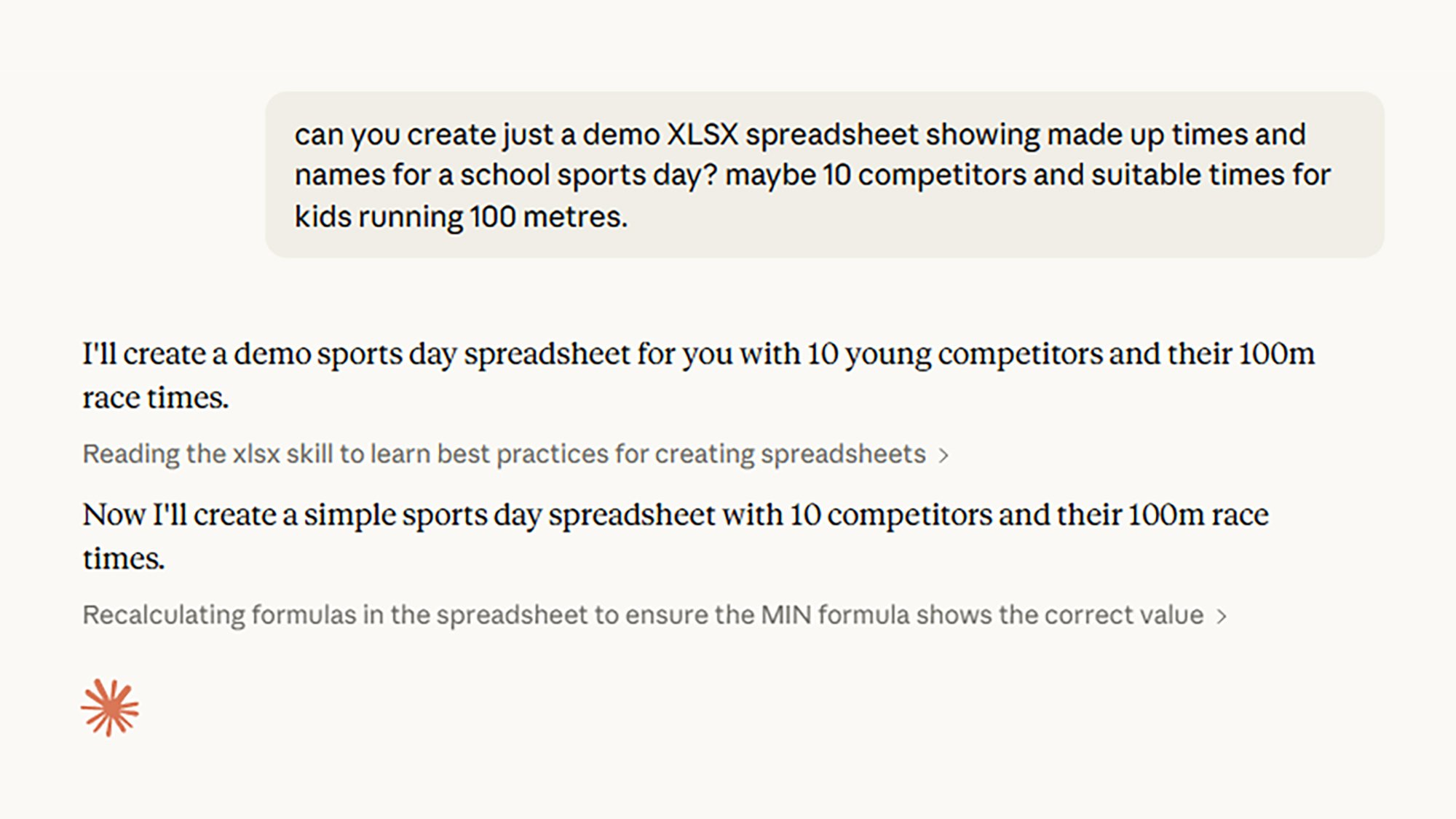
A simple prompt can create a file in Claude. Credit: Lifehacker
To enable file creation for your account, click your profile icon (bottom left) in Claude on the web, then select Settings > Capabilities and enable Code execution and file creation. With that done, you just have to prompt Claude with the type of file you want to make and what you want included, supplying any information as needed (or telling the AI where to find it online).
As usual with these AI bots, the more detail and specificity you can provide, the better—the end result is then more likely to be closer to what you were aiming for. I got it to quickly come up with the results of a fictional sports day race, and produce a spreadsheet from it. While it’s not the most demanding of tasks, Claude completed it correctly.
Claude Connectors
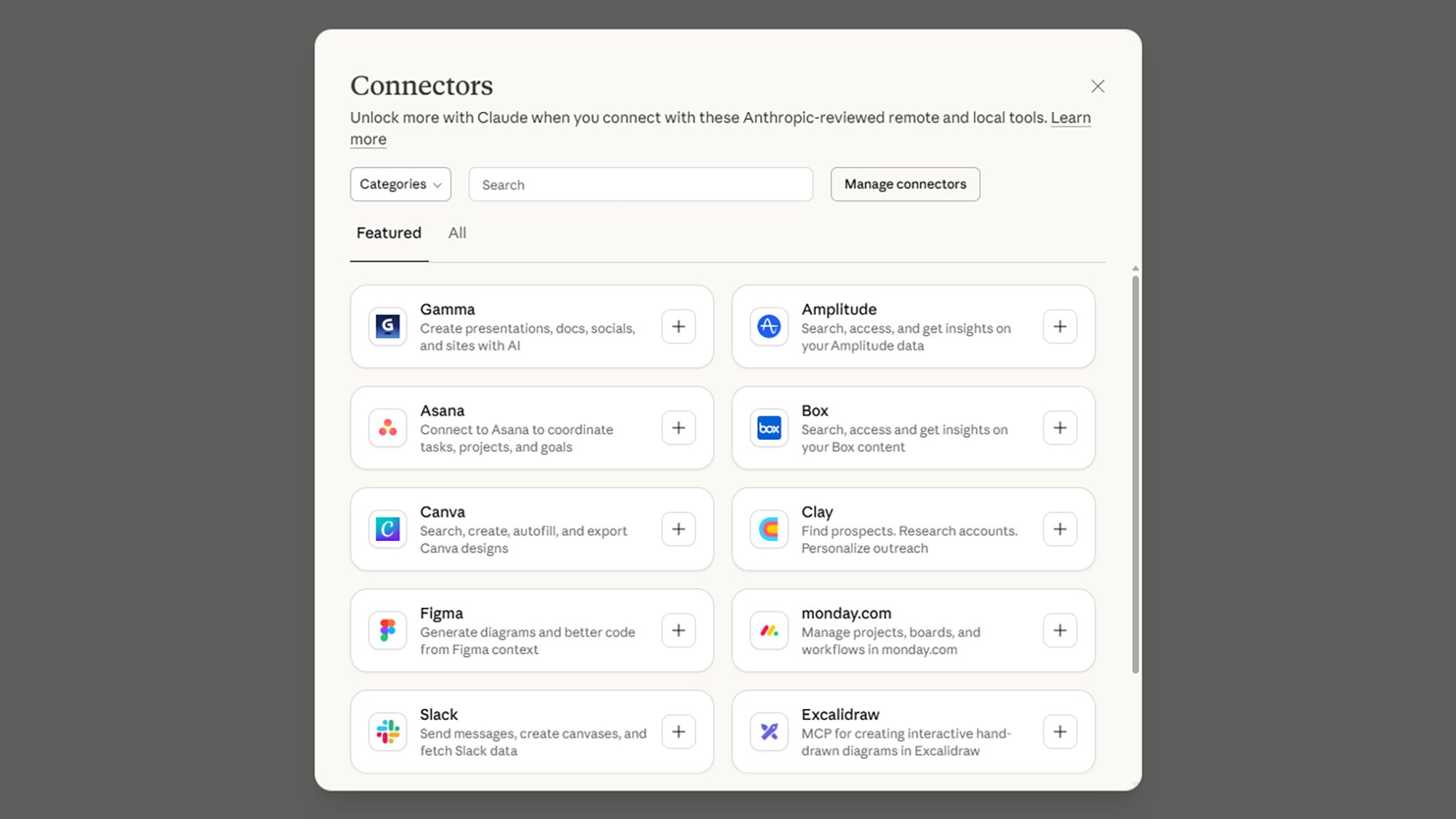
Connectors can hook Claude up to a variety of other apps, sites, and services: So if you want to get it to design something for you in Canva, or manage your messages in Slack, or find some travel deals on Trivago, then Claude can do that for you. The full list of current Connectors gives you some idea of what’s possible.
To get to the Connectors from the Claude prompt box, click the small + (plus) icon in the lower left corner, then choose Add connectors. You can search through Connectors by name, and filter them by type and category. When you select one you like, you’ll need to supply your account credentials and give Claude permission to access your account.
Use Connectors to connect Claude to other apps. Credit: Lifehacker
Your Connectors of choice are then available from the same sub-menu in the prompt box: You can add more plug-ins and remove existing ones from there. You can either select an app, or specify the name of it in your prompt and Claude should understand what you mean. You can ask for outputs, run searches, and communicate through your connected services.
Connectors can give Claude some handy extra talents. With the Canvas Connector, for example, I was able to create a basic bit of artwork for a birthday party flyer—something that the AI wouldn’t have been able to do on its own. I find that access was spotty, however, perhaps a sign of a lot of free users now making use of these tools.
Claude Skills
With Skills, you can “teach Claude how to complete specific tasks in a repeatable way” (in the words of the official support document). In old-school computer talk, they might be referred to as macros: batches of set instructions that Claude can repeat whenever you need something doing in a particular way.
Templates are a good example, whether they’re for emails or documents. Rather than just getting Claude to write an email for you, you can set down some basic parameters for the job that include guidelines on tone, length, and style, as well as crucial bits of information (such as your contact details) that always need to be included.
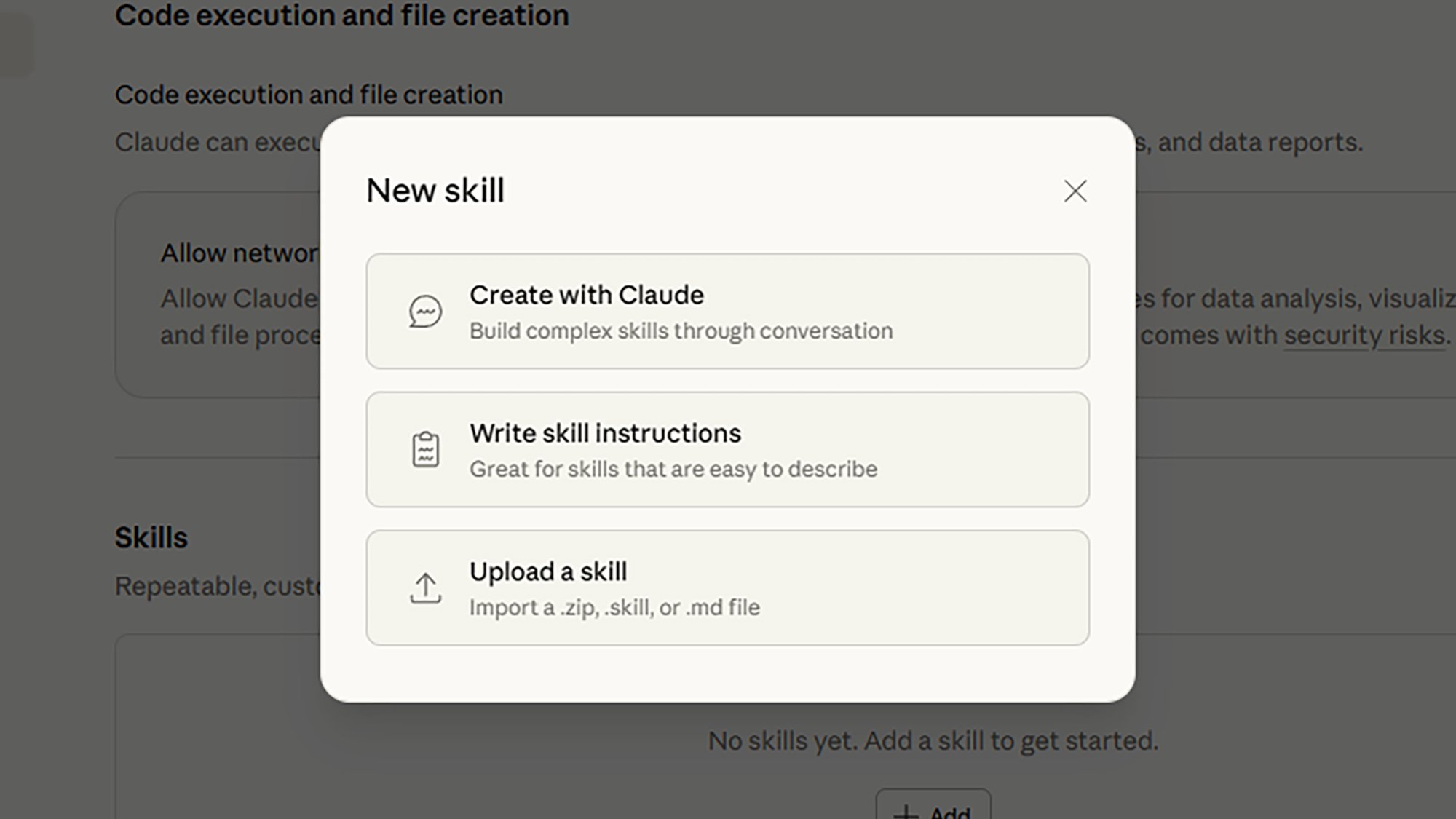
You’ve got three options for creating Skills. Credit: Lifehacker
Click your account profile icon (bottom left) in Claude on the web, then choose Settings > Capabilities and click Add under Skills to get started. You can create a Skill through a Claude conversation, by writing out the instructions, or by uploading a Skills file (which is handy for including extra items such as code snippets, as described here).
I took the Create with Claude route to put together a basic way of summarizing PDF reports, with specific guidelines on how many paragraphs and headings to use, and the tone of voice to apply. In the future, rather than typing out those instructions every time I need something summarized, I can just invoke the Skill.
Cannondale has launched the third generation of its SuperSlice time trial/triathlon bike, which it says is the fastest Cannondale ever made. There’s a claimed 10-watt saving at 50km/h from its predecessor, representing a 14% drag reduction.
The new SuperSlice’s overall weight is kept similar to the previous frameset, thanks to Cannondale’s top-spec Lab71 carbon fibre construction in place of the previous frameset’s Hi-Mod carbon. Nevertheless, the brand says the frame weight has increased by 60g due to the additional material needed to maintain strength in the deeper tube sections.
Cannondale claims a size-M frame weighs 1,122g, with the fork adding 610g, the seatpost 267g and the base bar 321g, for a 2,026g total.
The Delta steerer enables Cannondale to keep the front end narrow.
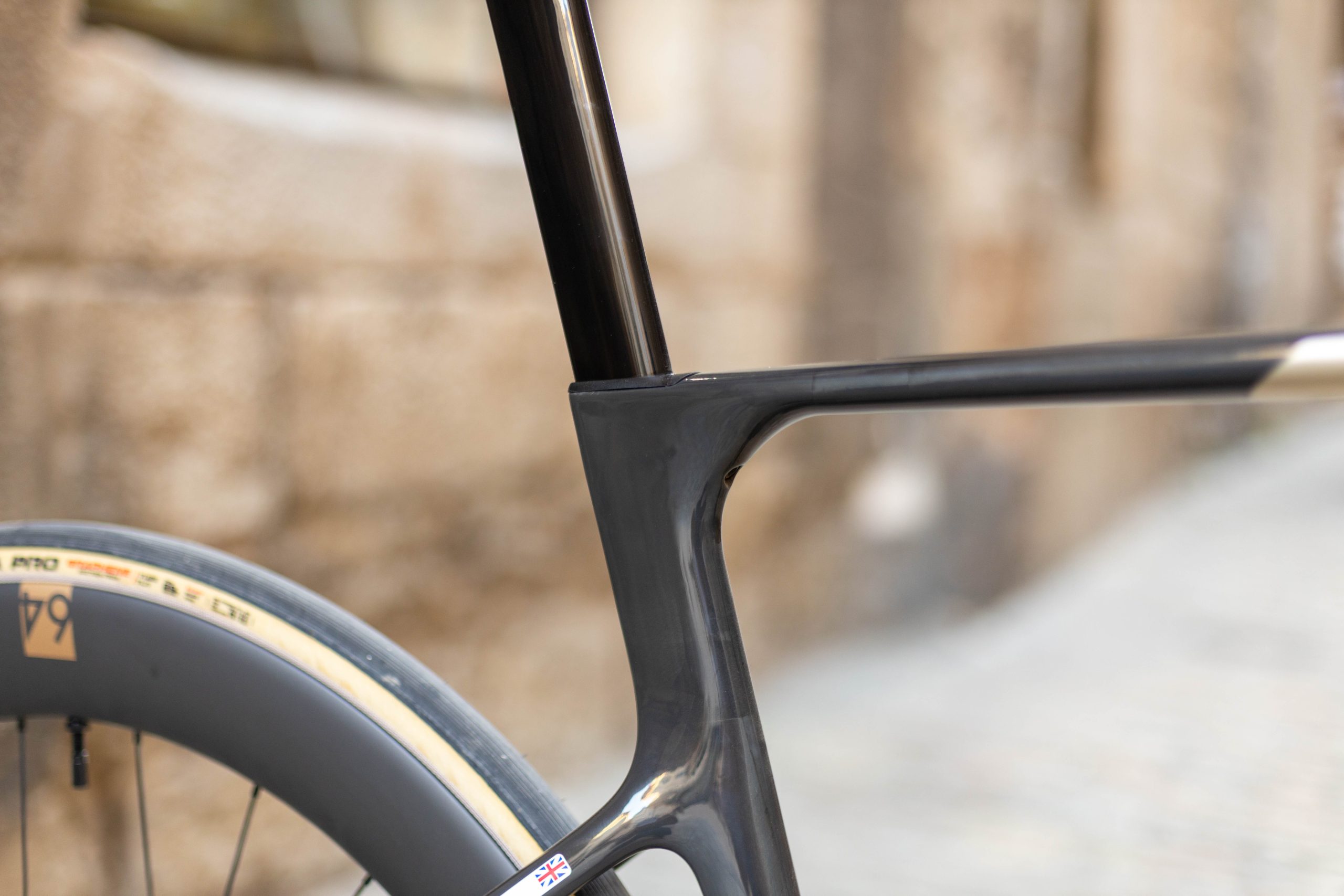
The design incorporates Cannondale’s Delta steerer, now used on the majority of its road bikes, including the new SuperSix Evo road bike, which also launched today. This design enables integrated hose routing through the narrow head tube with its 1⅛-inch top and bottom bearings.
Cannondale has switched to a Universal Derailleur Hanger and a 68mm BSA bottom bracket. It recommends a maximum 64-tooth 1x chainring or a 60/46-tooth 2x, although it says you could go larger still, as do some of the EF Education pros. The frameset is compatible with electronic groupsets only.
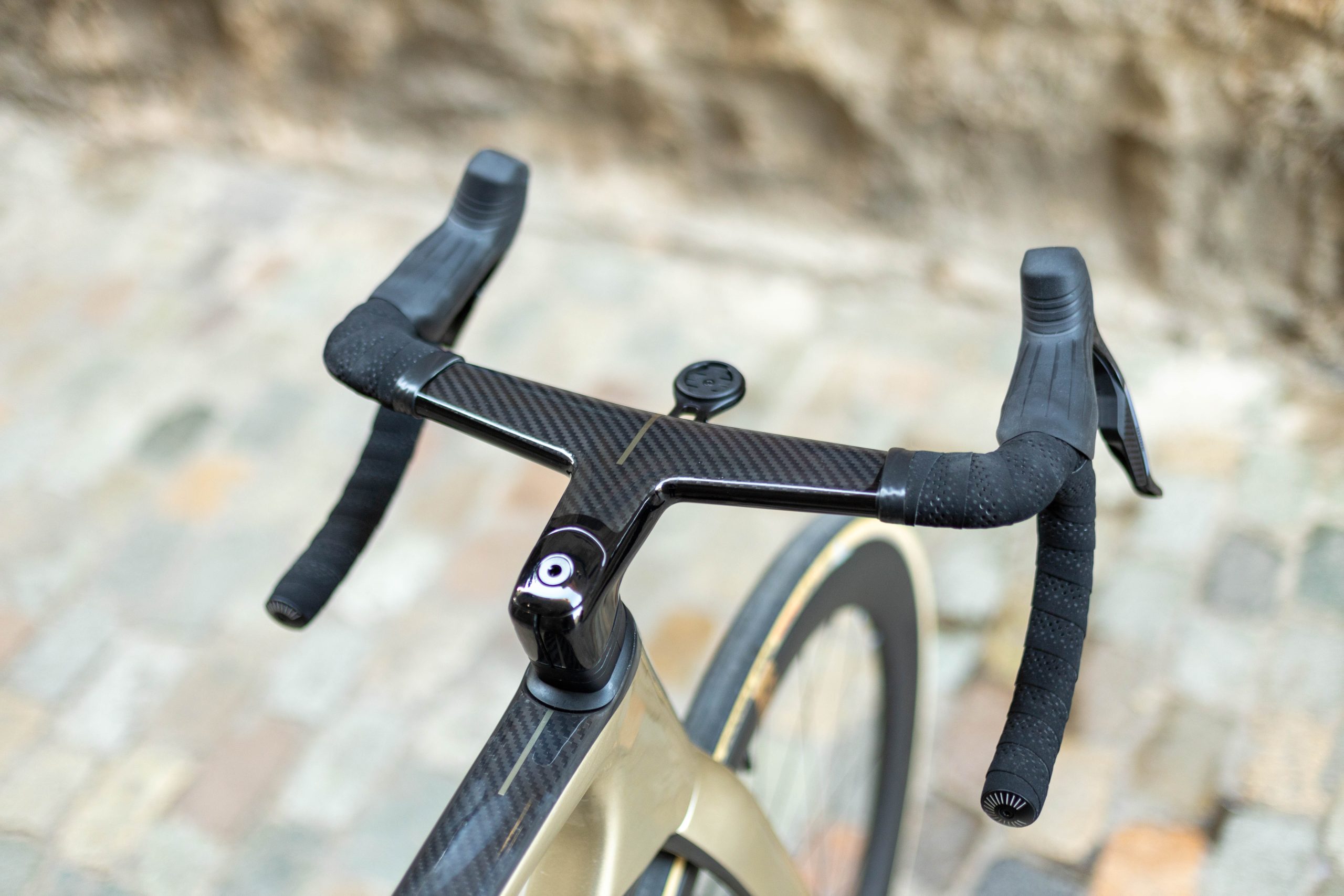
Cannondale’s updated design offers more cockpit adjustability and compatibility with Vision mono-riser extensions.
Cannondale has made small changes to the SuperSlice’s steering geometry, claiming its handling is now sharper for fast descents and tight turns.
There’s a larger range of effective seat tube angle adjustability, thanks to a saddle clamp that can be moved forward and back through 45mm. This equates to effective seat tube angles between 74 and 77 degrees.
There’s also a greater range of cockpit adjustability, with 100mm and 120mm reach adjustment, as well as 0 to 30-degree extension angle adjustment.
The bike has a new base bar, the SystemBar TT, which has a mono-riser and is compatible with Vision Speed JS-Bend and Vision TFE EVO extensions. Cannondale says the new cockpit reduces both weight and drag from the second-generation SuperSlice.
Cannondale enables you to equip the SuperSlice for triathlon use, with the Vision bar providing compatibility with the Metron front and Trimax rear hydration systems.
The new SuperSlice is available in sizes XS, S, M and L.
Vittoria has announced a new, 30c version of its Corsa Pro Speed TLR tyres.
Designed for improved grip in wet conditions, Vittoria says this new size was developed “at the request of WorldTour teams”.
The news comes on the same day as Continental announced it has launched a 30mm option for its GP5000 TT TR time trial tyre, and a 35mm option for its G5000 S TR all-rounder.
Available now, the 700x30c Vittoria Corsa Pro Speed TLR costs £89.99 / $125.99 / €95.95 per tyre.
The difference a millimetre makes
Vittoria has launched its biggest time trial tyre yet. Vittoria
The addition of a 30c (or 700x30c / 30-622, officially) option to the Corsa Pro Speed TLR range brings the total number of sizes available to five.
The range starts with a skinny – by modern standards – 24c option, and now goes up to 30c in 2mm nominal increments.
Eagle-eyed readers will note a 29c version already existed, though, so the addition of another model ostensibly only one millimetre wider might seem curious.
The claimed weights for the tyres give an insight into what’s likely going on, though.
A 29c Corsa Pro Speed TLR tyre is claimed to weigh 255g, for example, only 5g more than the 28c version.
In contrast, the new 30c version is claimed to weigh 270g per tyre, 15g more than the 29c version.
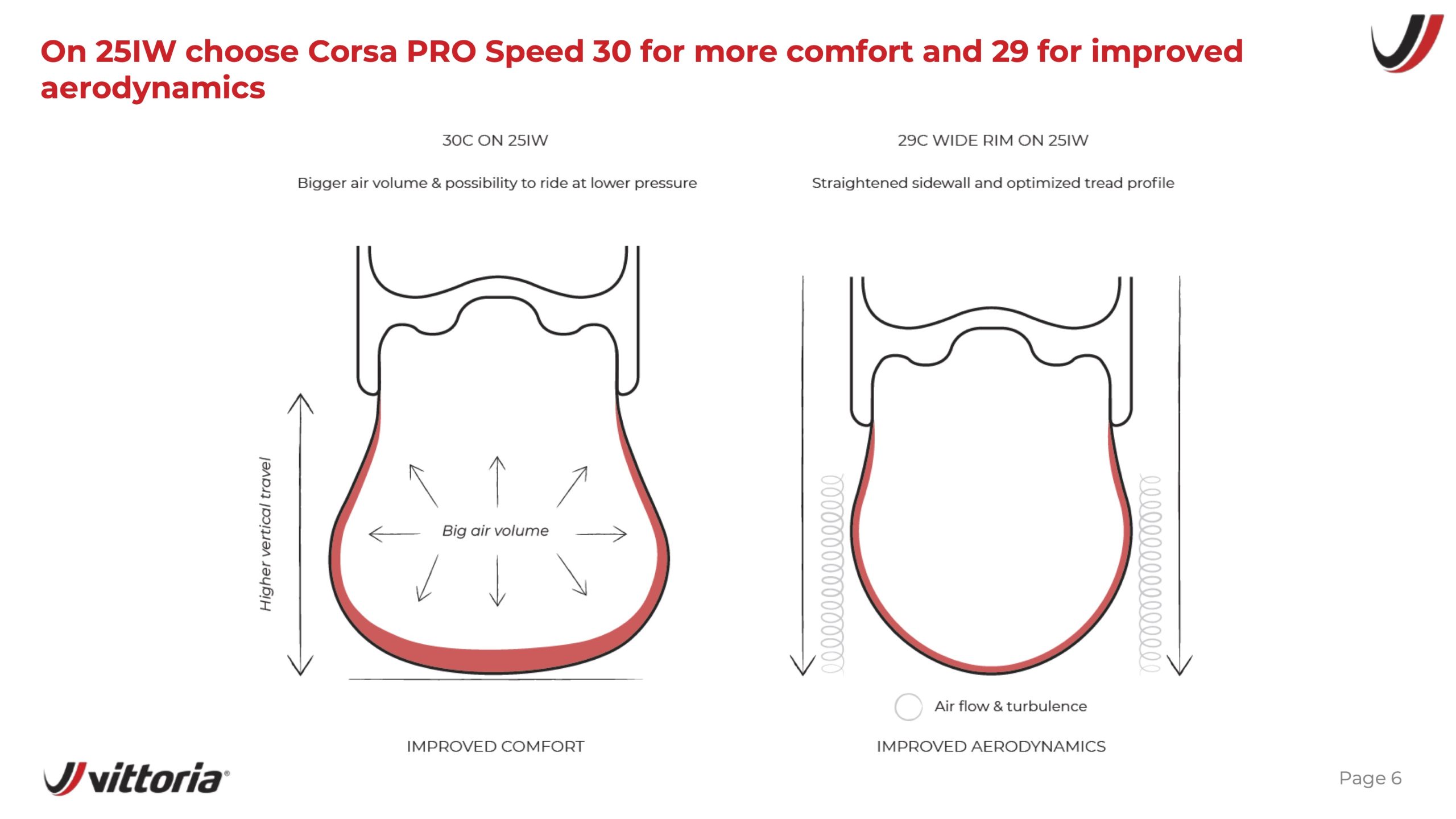
The difference is due to the fact the 29c tyre is “Wide Rim Optimised”, which is Vittoria’s label for tyres it has designed for optimal aerodynamic performance with 25mm-wide rims (internal width).
In contrast the new 30mm option looks to be designed with a relatively higher volume casing – Vittoria specifically references the tyre’s “larger air volume and contact patch” in its press release – hence the more significant increase in weight.
Despite a nominal difference in size of just 1mm, the casing size – and therefore volume – of the 30 and 29c tyres is actually markedly different. Vittoria
If that all feels exceptionally confusing then don’t worry – you’re not alone.
This mess is why Josh Poertner, CEO of Silca and the former chairman of the Bicycle Wheel Technical Committee, told BikeRadar “currently the sidewall printed number [on a tyre] is meaningless”.
Instead, Poertner believes the industry should instead quote the “unmounted casing lay-flat width” of tyres, as that would enable riders to make better informed decisions about which tyres are safe to use on their rims.
Although the Corsa Pro Speed TLR was originally pitched as a pure time trial tyre – given its thin casing, low weight and lack of a puncture protection strip beneath the tread – it, and other time trial tyres, have become increasingly popular in pro road races in recent years.
Cannondale has unveiled its latest SuperSix Evo all-round race bike, with a refined geometry and frameset designed to meet the needs of its pro racers.
The bike, which we spotted at the Tour Down Under WorldTour season opener, doesn’t rip up the SuperSix Evo design playbook, but instead sees a series of incremental developments to cut weight while maintaining the previous bike’s aerodynamics.
The geometry has been made more aggressive by reducing the stack by 10mm (resulting in a 4mm increase in effective reach), while the new bike is available with two new one-piece handlebars.
The frameset comes in three carbon tiers – Lab71 (‘0 Series’), Hi-Mod and ‘standard’, weighing from 728g for the frame and 410g for the fork, in a size 56cm.
Prices start from £4,495 for the SuperSix Evo 5 with a Shimano 105 Di2 R7100 groupset, rising to a £12,500 ceiling.
The latest SuperSix Evo sees a more aggressive fit geometry compared to the previous generation. Brazo de Hierro for Cannondale
Despite some brands edging towards making their all-round race bikes slightly less aggressive to help them fit more riders, Cannondale has responded to feedback from its professional riders – such as Ben Healy – to make the SuperSix more aggressive in terms of fit.
This isn’t the surprise it might first appear, though. The previous SuperSix was relatively conservative with a 10mm taller stack and 6mm shorter reach than a Specialized Tarmac SL8, for example, in a size 56cm.
Steve Smith, Cannondale’s engineering manager for road bikes, says that Healy and Kasper Asgreen were key in offering feedback on the old SuperSix Evo – incidentally, both rode Specialized Tarmacs before moving to the EF-Education sponsored team.
Handling was one element pro riders didn’t want changed. Brazo de Hierro for Cannondale
Smith also says the latest Synapse endurance bike had “racy performance added to it”, suggesting this left the SuperSix ripe for an even racier layout.
That said, the head tube angle remains identical at 73 degrees, while the seat tube angle has steepened by 0.2 degrees (in a size 56cm).
When asked, Smith confirmed riders wanted to preserve the handling of the previous bike, so the similarities here are unsurprising.
Cannondale has also added an extra size to the range – with 50 and 52cm offerings rather than a single 51cm size between its 48 and 54cm sizes.
The SystemBar Road is the more aerodynamically optimised cockpit. Ashley Quinlan / Our Media
The frameset continues to sport the brand’s Delta steerer design, which sees brake hoses routed inside the headset bearings, but two new top-tier cockpits have been designed for the new bike.
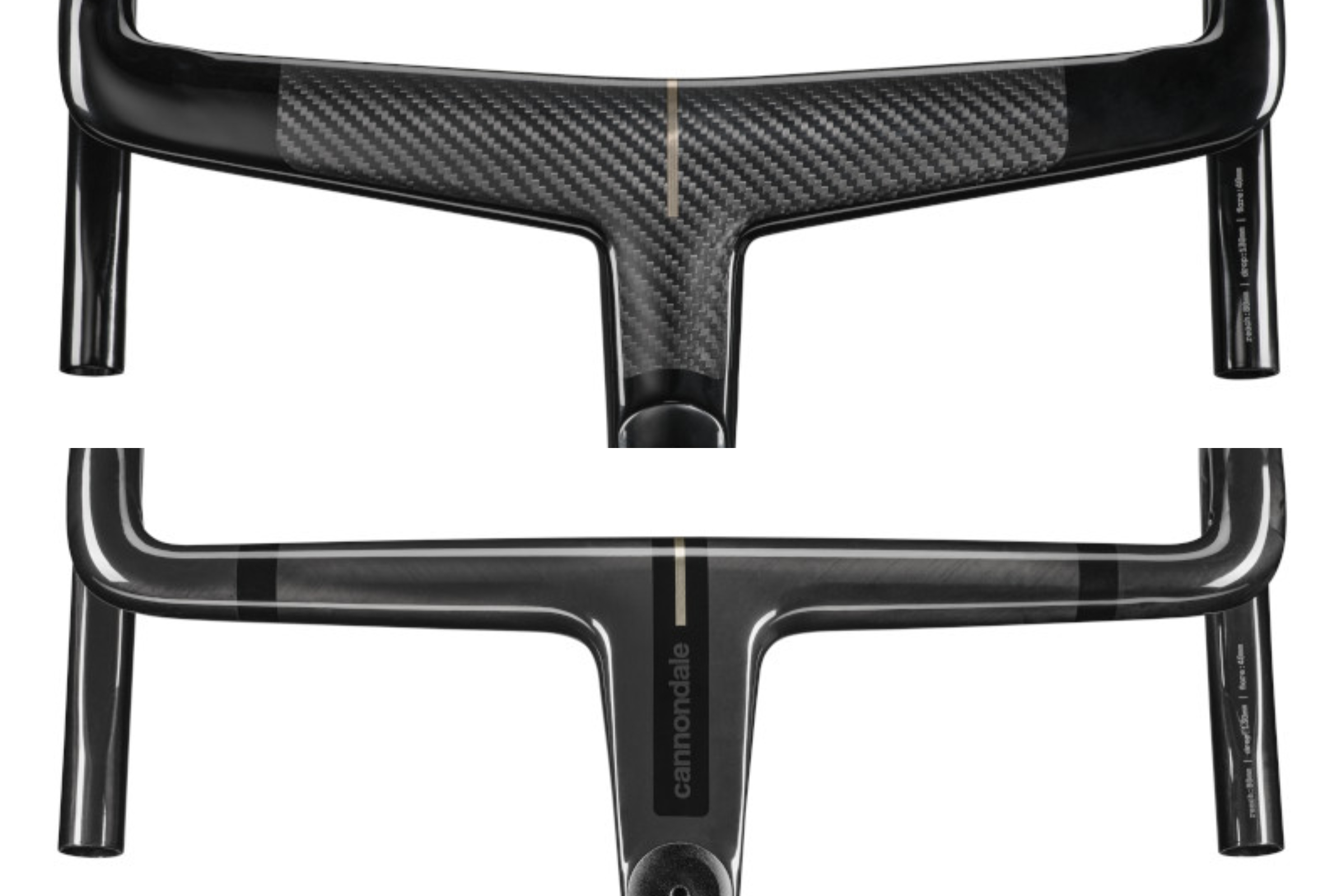
Cannondale refers to these as the SystemBar Road and the SystemBar SL – the first designed as a more aerodynamic solution, and the latter a lightweight option.
The new bike has two cockpit options – the SystemBar Road (top) and SL. Ashley Quinlan / Our Media
The SystemBar Road features aerofoil tops, which sweep forwards to increase the effective reach to the hoods, with a 20mm flare at the drops. This is available in 10 sizes, ranging from 340-380mm wide (measured centre-to-centre), with 90-140mm effective stem lengths.
The SystemBar SL comes in seven sizes – 380 or 400mm widths, with 90-130mm effective stem lengths, but with more traditional rounded tops that don’t sweep forwards. This is said to weigh 265g, compared to the SystemBar Road’s 375g.
These handlebars come specced with the Lab71 and Hi-Mod grade framesets. Entry-level frame bikes come with a Vision Trimax Carbon Aero handlebar and Cannondale C1 stem.
Tweaks under the skin
Cannondale describes the finish of the SuperSix frame as “immaculate”, realising small weight savings. Ashley Quinlan / Our Media
Cannondale says it has improved upon its carbon manufacturing process to help cut excess material (and therefore weight) from the frames.
A Lab71 frame is said to tip the scales at 728g in a size 56cm (painted, including bonded parts), a Hi-Mod frame 781g, and an entry-level frame 910g. Factoring in the changes made elsewhere, including the handlebars, Cannondale claims a Lab71 bike is 148g lighter than the previous generation.
The latest bike makes the switch to a Universal Derailleur Hanger. Ashley Quinlan / Our Media
Cannondale says every tube is new despite the similar aesthetics, and this yields marginal gains across the entire yaw spectrum in the wind tunnel – albeit the brand won’t divulge by exactly how much.
The smaller changes include a new seatpost-clamp design and a recessed dust cover to help prevent ingress, a new Di2 battery mounting system, plus a switch to SRAM’s Universal Derailleur Hanger design. 32mm tyre clearance remains, alongside a threaded bottom bracket.
Cannondale says the updated bottle cages are 26% lighter than before. Ashley Quinlan / Our Media
Cannondale has stuck with its aero-shaped bottle cage (and bottle) design, but this now features injected carbon for a claimed 26% weight reduction compared to the previous cages. Customers will have the cages and bottles supplied with all Lab71 and Hi-Mod spec bikes. The cages will sport regular round-shaped bottles, too.
Lab71 and Hi-Mod bikes also feature new titanium seatpost bolts, but all bikes come with an integrated out-front mount – a new dedicated unit for Lab71 and Hi-Mod bikes designed for the new handlebars, and a Cannondale Conceal mount for the entry-level machines.
2026 Cannondale SuperSix Evo models and pricing
The SuperSix Evo is available in the established Lab71, Hi-Mod and Carbon tiers. Brazo de Hierro for Cannondale
As mentioned, the SuperSix Evo is available in three frameset specifications – Lab71, Hi-Mod and entry-level ‘Carbon’.
Customers are supplied a set seatpost setback (zero or 15mm offset) and handlebar size with each size bike, with the alternatives available to purchase after market.
The Lab71 and Hi-Mod grade bikes are split into two basic build approaches: aero-oriented and lightweight ‘SL’, while entry-level bikes have one all-round spec. It’s also worth noting that Cannondale has dropped the Hi-Mod and Carbon branding from the bikes’ names, as shown below.
Valve has updated the Steam Deck website to say that the Steam Deck OLED may be out of stock “intermittently in some regions due to memory and storage shortages.” From a report: The PC gaming handheld has been out of stock in the US and other parts of the world for a few days, and thanks to this update, we now know why. The update comes shortly after Valve delayed the Steam Machine, Steam Frame, and Steam Controller from a planned shipping window of early 2026 because of the memory and storage crunch.
“We have work to do to land on concrete pricing and launch dates that we can confidently announce, being mindful of how quickly the circumstances around both of those things can change,” Valve said in a post about that announcement from earlier this month. Its goal is to launch that new hardware sometime in the first half of 2026, and the company is working to finalize its plans “as soon as possible.”
Try getting your hands on a Steam Deck these days and you’re likely to be frustrated by the lack of inventory. That’s understandable for the original LCD version of the Steam Deck, which also happens to be the most affordable variant, as Valve confirmed in December that it had discontinued that model. But even the Steam Deck OLED models are
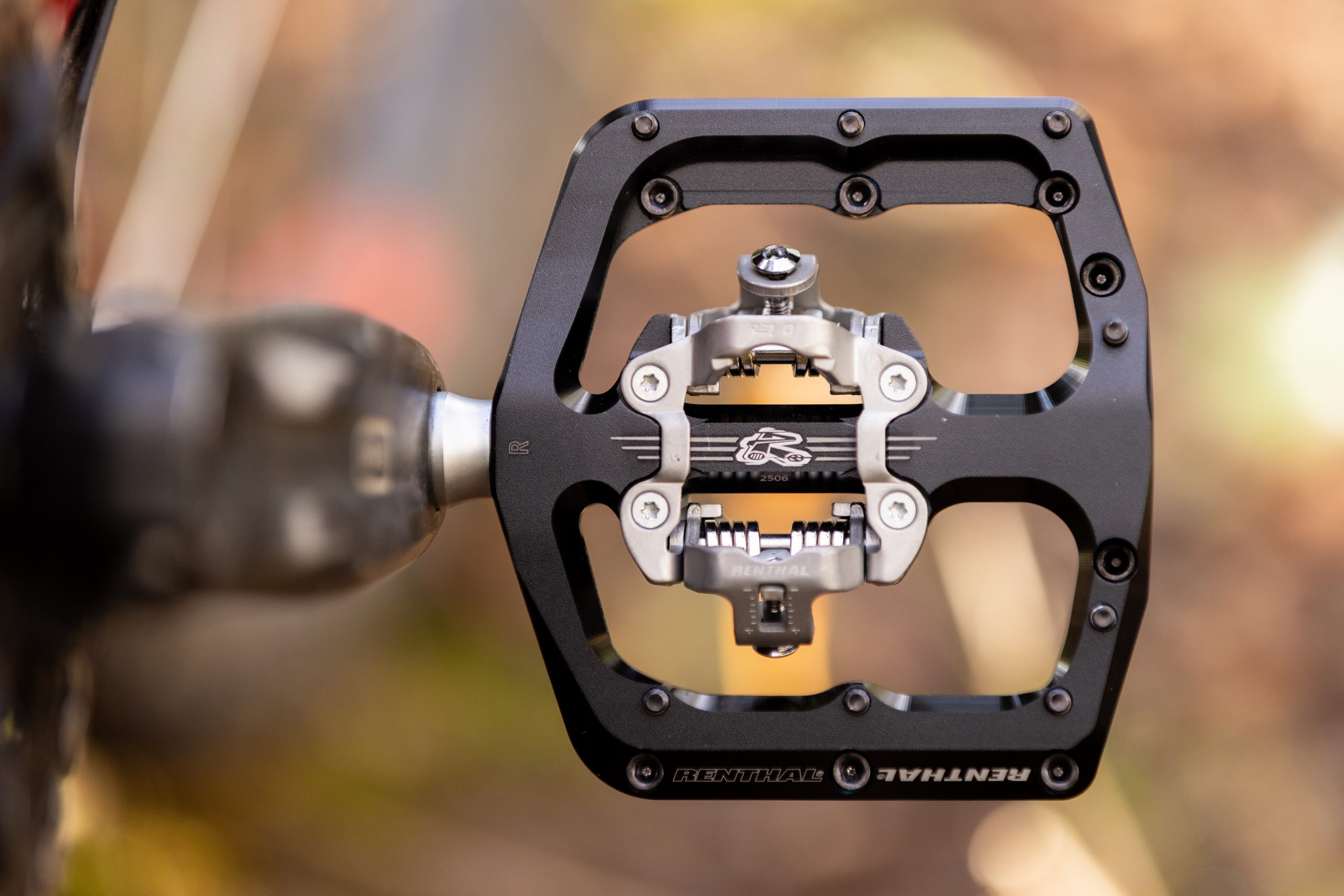
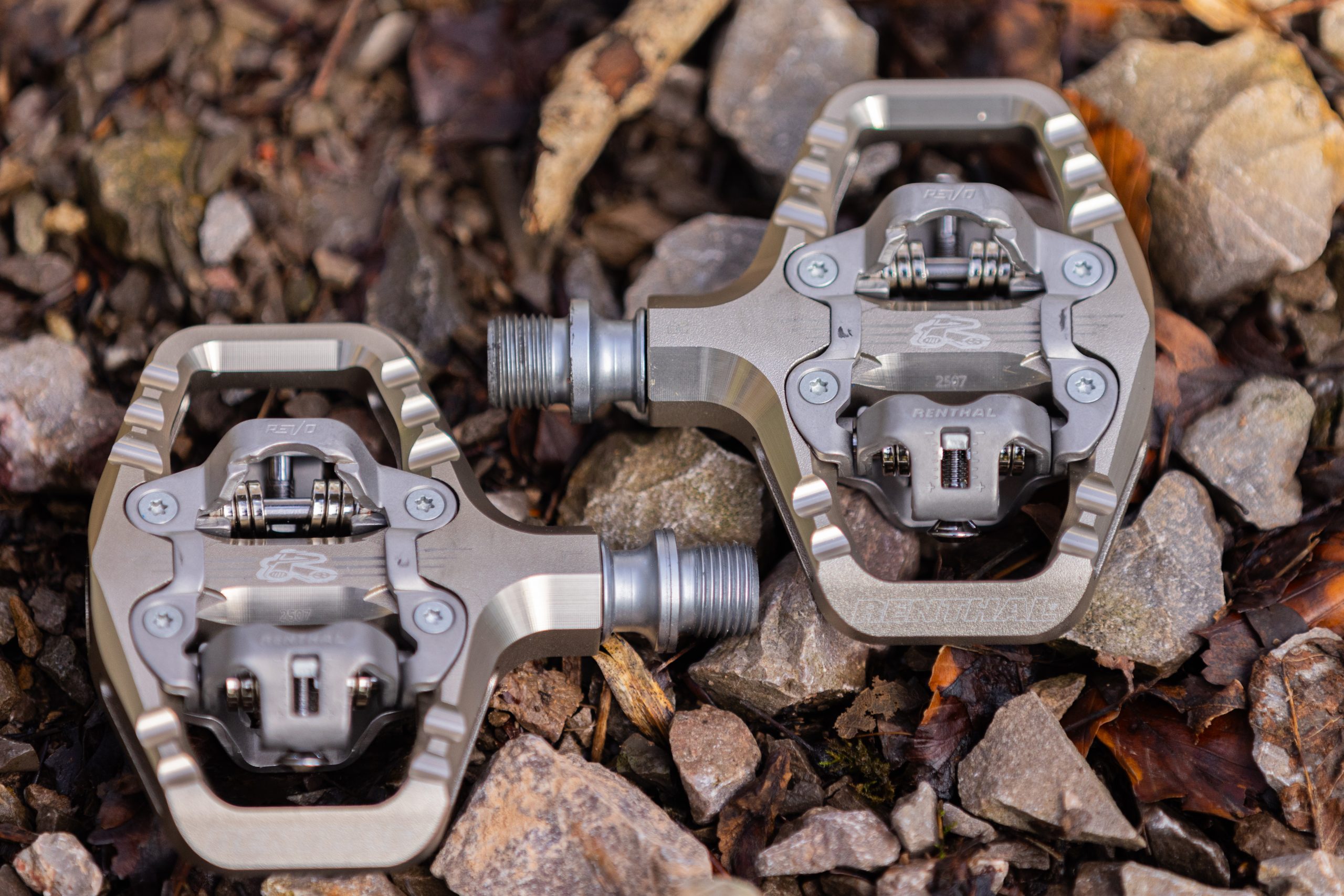
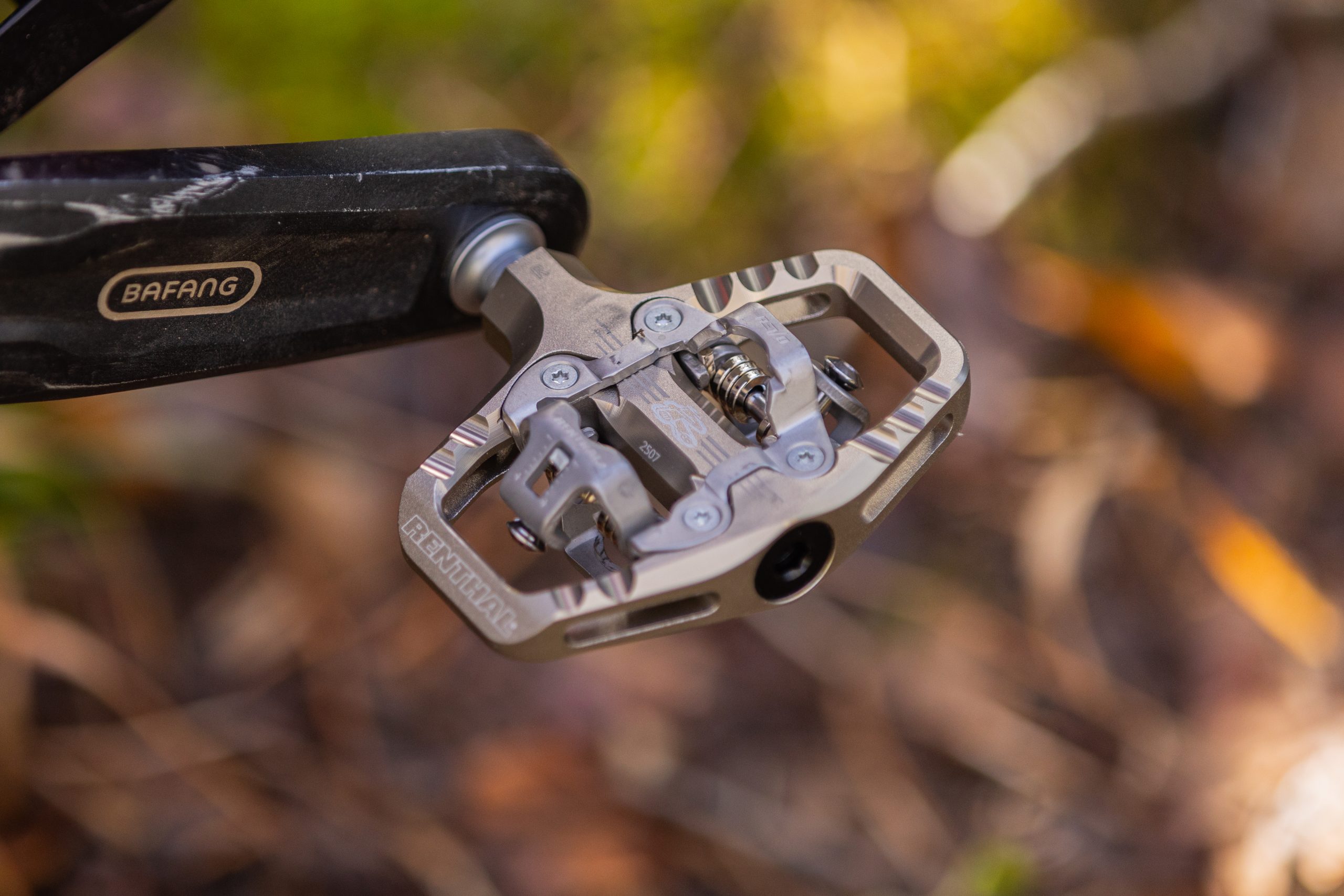
Considerable research and development has gone into Revo’s first clipless pedals since we first saw the prototypes at COREbike in February 2024. Now both models are finally available.
Renthal says the design it has settled on for the Revo-DHC and Revo-TRC prioritises durability, easy servicing and feel.
The brand says that in the case of the Revo-DHCs, it was aiming for a flat-pedal-like feel, but has gone about this in an unorthodox way.
Renthal says the binding is the same distance from the crank as on most clipless pedals. Scott Windsor / Our Media
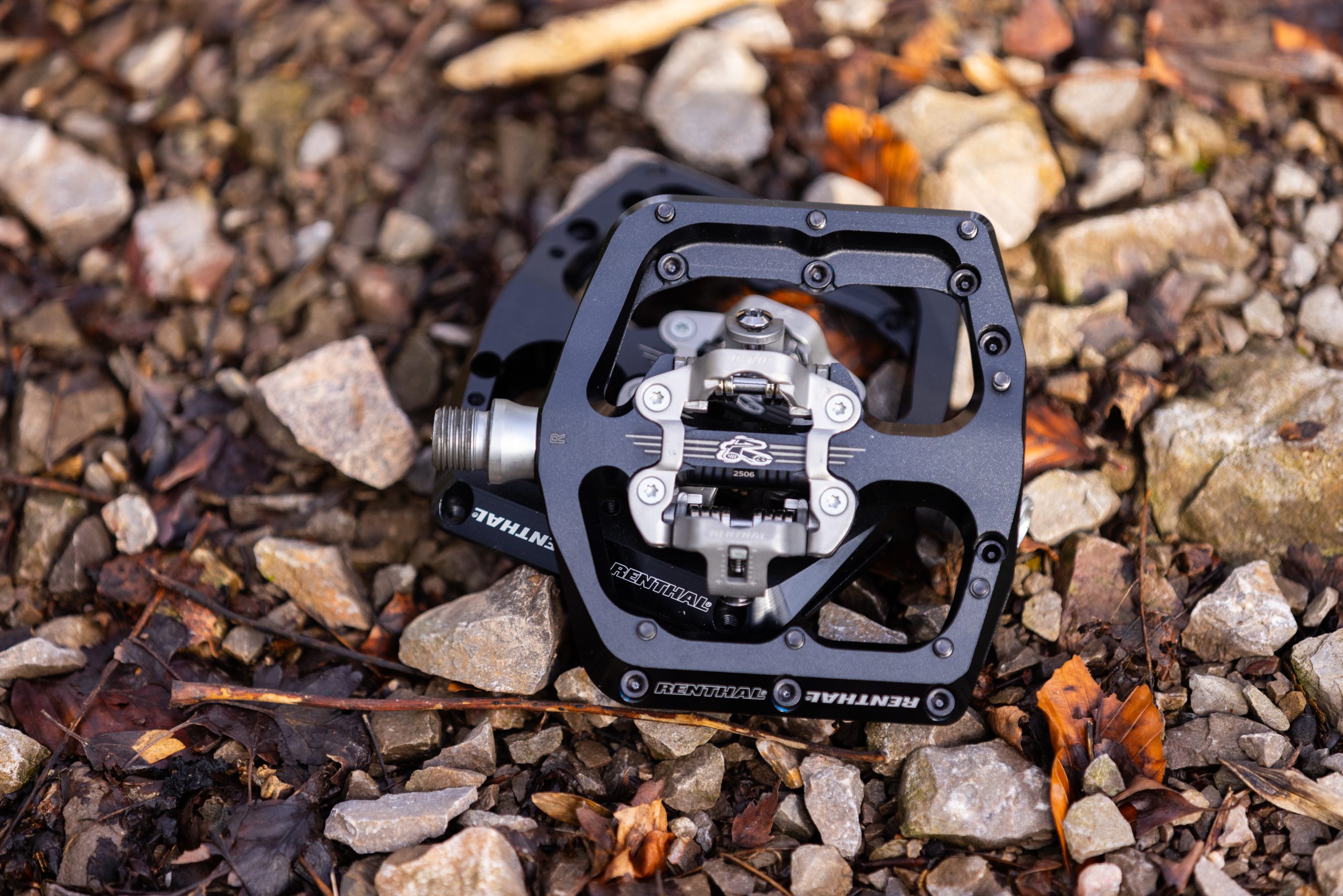
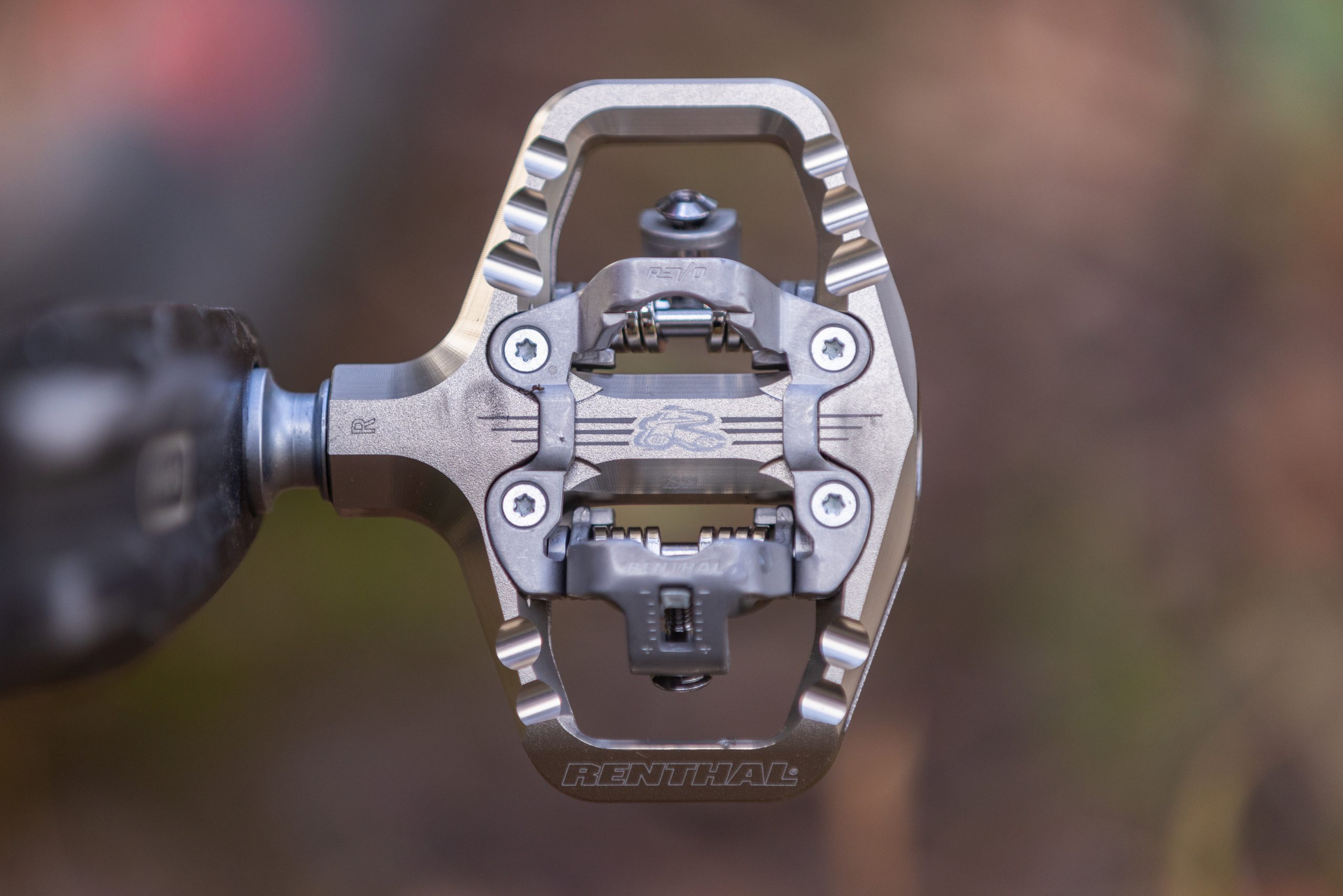
Aimed at downhill racers, the Revo-DHC pedals look striking because the mechanism is heavily offset inboard within the flat-pedal-esque platform.
It sits the same distance from the crank arm (circa 55mm) as on most clipless designs, but unlike traditional pedals, there is increased additional outboard support for the shoe sole.
Adjustable-height pins mean traction can be tailored to your preference. Scott Windsor / Our Media
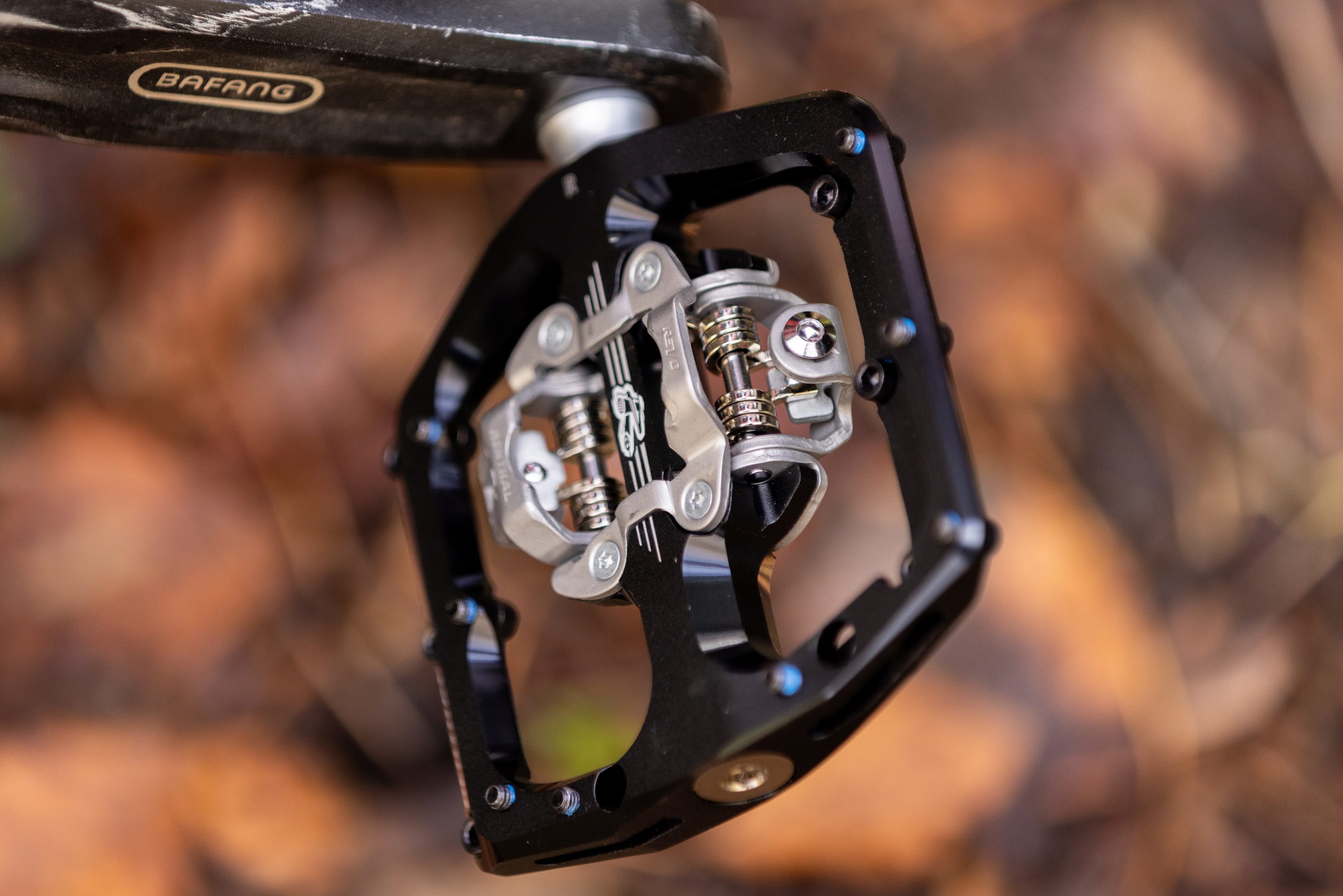
The Revo-DHCs share their silhouette with Renthal’s Revo-F flat pedals, launched in 2024, and use the same adjustable-height (1.5 to 5.5mm) pins.
The idea is that these should be set to a length that enables ‘float’ between shoe and pedal for easy engagement, but permits them to bite into the sole when you load the pedal, giving a planted feel.
A proprietary binding mechanism is compatible with Shimano SPD system cleats. Scott Windsor / Our Media
The Revo-DHCs’ large platform contains eight pins per side, so when you unclip, there should be plenty of support available until you can clip in again.
“The front pins are set to clear the front of the shoe as close as possible when clipping in, the rear pins are set to clear the shoe by the same margin when clipped in,” says Renthal.
At 620g a pair, the DHCs aren’t light, but Renthal says “we didn’t want to sacrifice that flat-pedal feel just to save a few grams”.
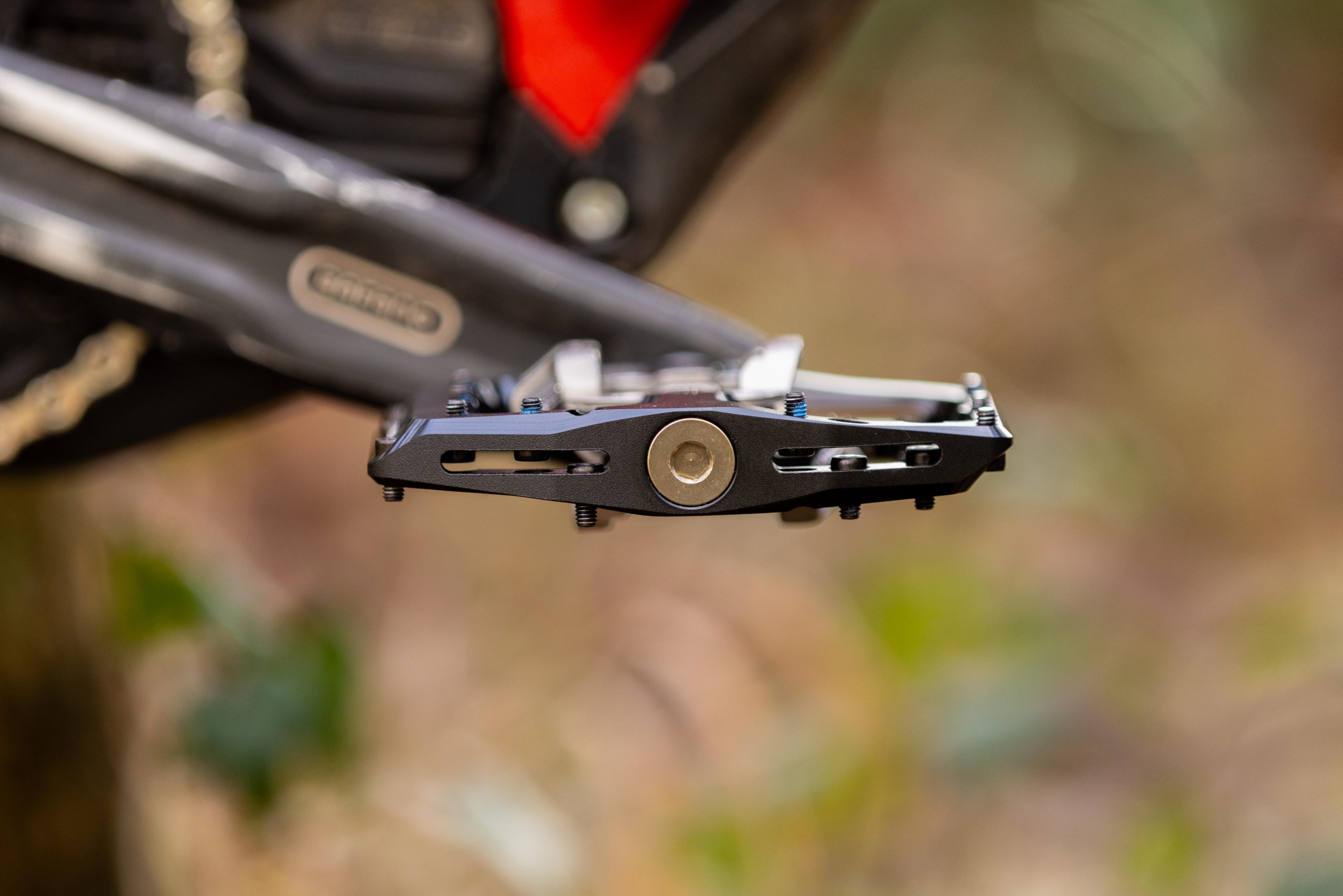
The platform is made from CNC-machined 6061 aluminium alloy and spins on a chromoly steel axle, supported by an inboard IGUS bush and three outboard cartridge bearings.
The platform on Renthal’s DHC pedal is made from CNC-machined 6061 aluminium alloy and spins on a chromoly steel axle. Scott Windsor / Our Media
The binding mechanism used on both models of Revo pedal is proprietary, but compatible with Shimano’s ubiquitous SPD cleats.
Renthal’s TRC pedals are smaller and lighter than the DHC model. Scott Windsor / Our Media
For riders concerned about weight, the UK brand also has the Revo-TRCs, which it claims weigh 394g. Aimed at trail and enduro riders, they feature the same materials and mechanism as the DHCs, but have a smaller platform, no pins and a more conventional look; the binding sits centrally within the cage.
Renthal moved the three sealed cartridge bearings to the centre of the TRC pedals because load is concentrated there. Scott Windsor / Our Media
Unusually, the three cartridge bearings have been moved to the middle of the body on this design.
Renthal’s Ian Collins says pedals with a smaller platform are less prone to rock strikes, and therefore loads more often go through the centre of the pedals, so this arrangement provides the best bearing longevity.
Both models of Revo pedal are designed to be easily serviceable by home mechanics. Scott Windsor / Our Media
Both pedals are designed for easy servicing without specialist tools, thanks mainly to Renthal’s proprietory patent-pending axle design, where the axle itself doubles as a bushing installation and extraction tool.
Both pedals are available in either anodised black or Renthal’s AluGold signature colourway. Scott Windsor / Our Media
They are available either in black or Renthal’s signature ‘AluGold’ colourways.
Apple released its new 14-inch MacBook Pro M5 in October with little fanfare. But, despite the underselling, we found the device to be a great upgrade to its predecessor and the best MacBook for creatives. Now, you can find out for yourself with less of a strain on your wallet, thanks to a big sale.
Currently, B&H has discounts available for a variety of configurations. The cheapest option is the MacBook Pro M5 with 16GB of RAM and 512GB of SSD. It’s available in Space Black and Silver for $1,499, down from $1,599 — the lowest price we’ve seen for it. There’s also a deal on the 24GB of RAM option, but the best savings are $300 off the model with 32GB of RAM and either 512GB ($1,699) or 1TB ($1,899).
We gave the 14-inch Apple MacBook Pro M5 a 92 in our October review. We were impressed with how much faster — up to 60 percent — the GPU is than with the M4. It has a 10-core GPU, 10-core CPU and 16 Neural Engine cores. Beyond that, it has an extensive battery life, lasting 34 hours and 30 minutes while playing a looping HD video. It also has an excellent design, great keyboard and an extensive port selection.
Apple Vision Pro just got a new update that brings Foveated Streaming to the headset, essentially the same bandwidth-saving feature Valve is bringing to its upcoming Steam Frame headset.
The News
As noted by VR supply chain analyst Brad Lynch, foveated streaming has arrived on Vision Pro via the latest visionOS 26.4 beta update, which landed on February 16th.
Much like Valve’s foveated streaming solution for Steam Frame, Apple’s implementation uses Vision Pro’s eye-tracking to optimize the streamed image to serve up the highest quality at the very center of your view, according to recent Apple developer documentation.
If you have an existing virtual reality game, experience, or application built for desktop computers or a cloud server, you can stream it to Apple Vision Pro with the Foveated Streaming framework.
Foveated Streaming allows your endpoint to stream high quality content only where necessary based on information about the approximate region where the person is looking, ensuring performance.
Additionally, Apple notes that on Vision Pro, foveated streaming allows for a sort of hybrid approach to computing: you can display visionOS spatial content alongside streaming content, such as a flight simulator rendering a cockpit using RealityKit while processor-intensive landscapes are streamed from a remote computer to the device.
The key difference is the focus and implementation. Valve seems to be applying Foveated Rendering globally, meaning all Steam apps will benefit out of the box. Valve’s focus is also on local PC streaming, which is done via a direct Wi-Fi 6E connection.
Instead, Vision Pro apps and games need to be specifically integrated with Apple’s version of the technology, with Apple additionally supporting NVIDIA’s CloudXR SDK, which allows developers of existing VR apps created for desktop computers as well as cloud servers to stream to Vision Pro.
My Take
On the face of it, it looks like Apple is matching Valve punch-for-punch with foveated streaming, although I wouldn’t take this as Apple meaningfully looking to compete with the upcoming Steam Frame on the consumer end of things.
The $3,500 Vision Pro M5 refresh likely won’t come down in price anytime soon, and I don’t suspect Apple is trying to get a bunch of PC VR developers onboard to create consumer-facing versions of their apps that will need to be specifically integrated with Vision Pro foveated streaming.
If I were an enterprise user though, I would may be pretty interested in the new update, as this opens up one of the key features Steam Frame is bringing to the table.
Being able to push more compute-intensive apps to a headset they likely already own could stop some companies from justifying a Steam Frame(s) purchase, which Apple is all too happy to oblige—especially as the recent memory and storage crisis has seen components shoot up in price so dramatically, causing Valve to take reassess pricing and release date of Steam Frame.