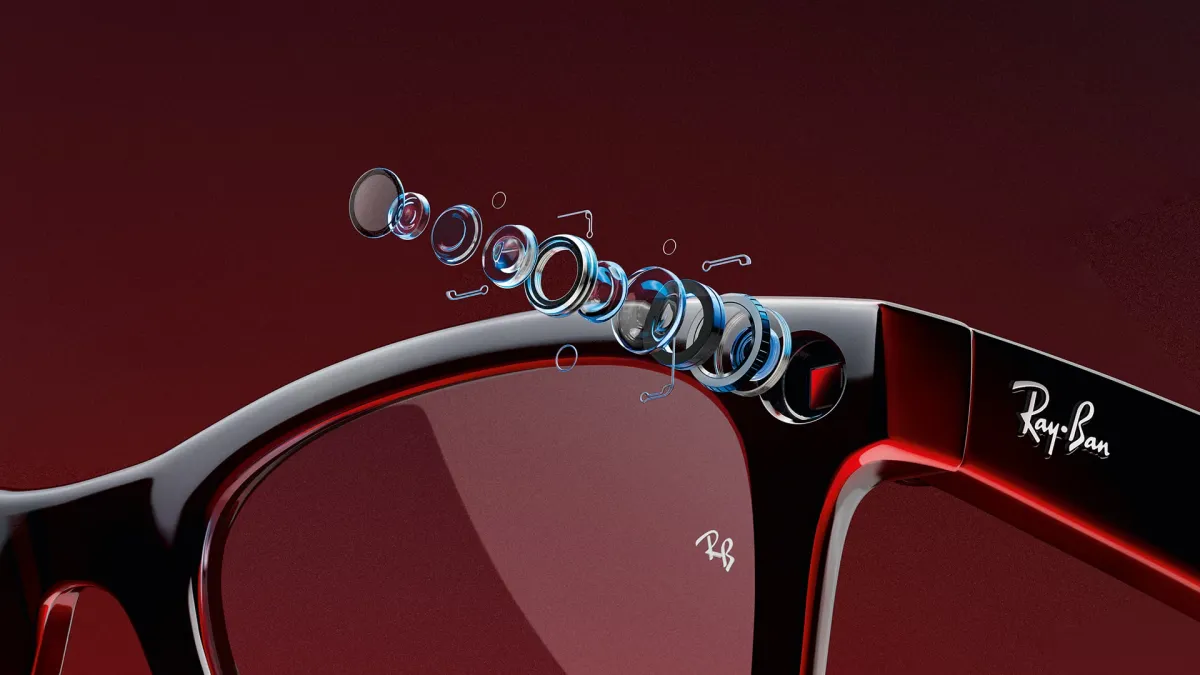
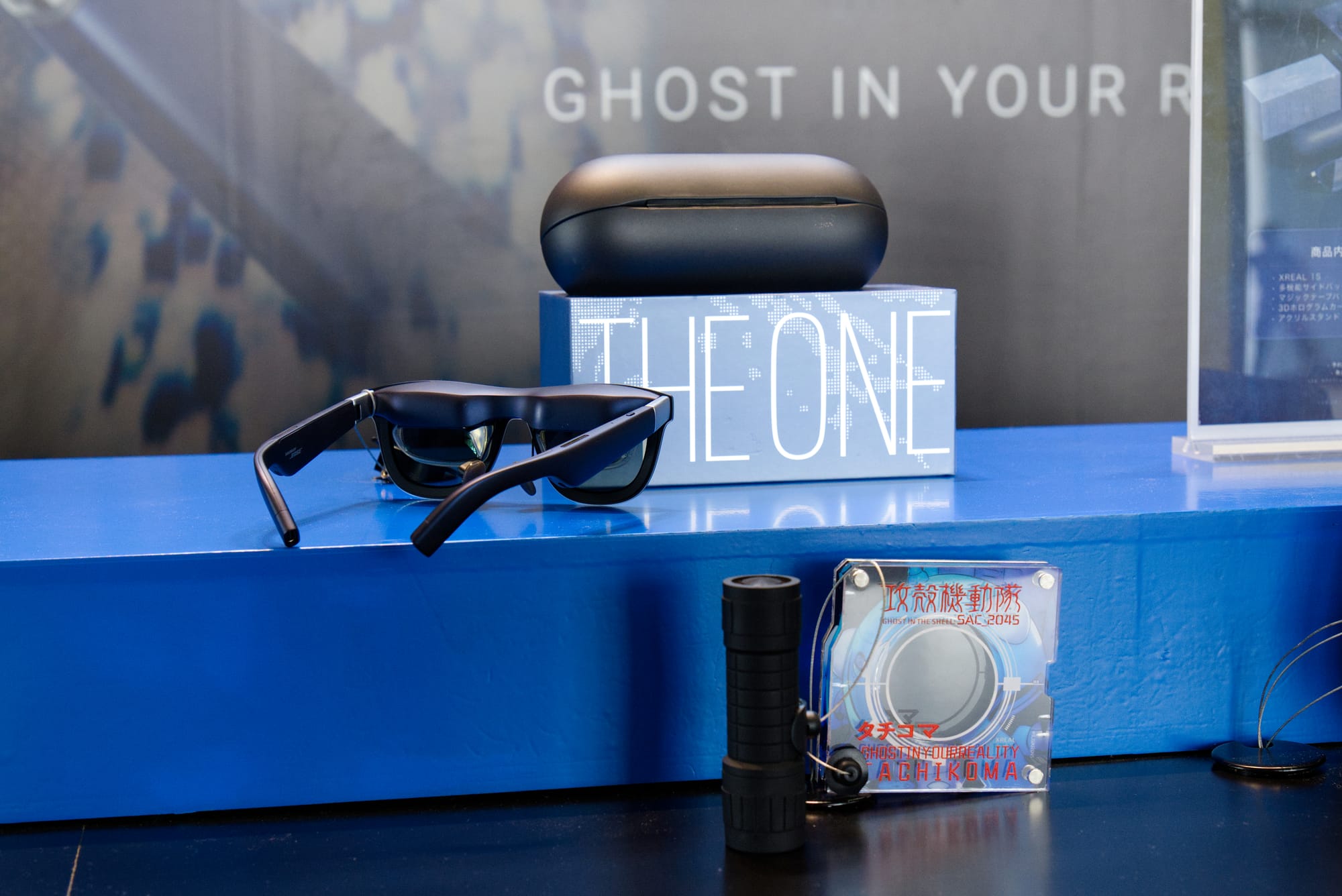
Apple’s smart glasses will have two cameras, one for capture and the other for computer vision, and launch in early 2027, Bloomberg’s Mark Gurman reports.
Gurman, who has a strong track record of reporting on Apple products in advance of an official reveal, has been tracking the company’s plans to launch a Ray-Ban Meta competitor for well over a year now.
His previous reports described the company’s first glasses as lacking a display, having cameras, microphones and speakers, and being powered by a new Apple-designed chipset, based on the highly efficient S-series chips used in Apple Watch. The product would be used for phone calls, music playback, live translations, turn-by-turn directions, and multimodal AI, which Apple calls Visual Intelligence.
His new report explains how Apple plans to distinguish its hardware from Meta’s: “build quality and camera technology”.
According to Gurman, the device will use “high-end materials” including acrylic elements and have two cameras, one for high-quality image and video capture, and the other for computer vision.
UploadVR’s take on that is that a dedicated computer vision sensor could draw significantly less power than a sensor designed for imaging, and thus be sampled continually for advanced use cases like spatially-aware pedestrian navigation. “Turn left just past that red Honda”, instead of “In 200 meters, turn left”. It might also enable hand gestures without the need for a wristband – though you would need to raise your arm.
Apple is targeting December for mass production of the glasses, Gurman writes, for a launch in early 2027.
Unlike Meta and Google, which are working with established fashionable glasses brands, Apple will be designing its own frames, Gurman claims, with a variety of colors and sizes set to be offered.
The competition won’t be standing still, though. Last year The Information reported that Meta and EssilorLuxottica plan to launch next-generation Ray-Ban Meta glasses with a facial recognition feature and the ability to run continuous AI sessions for “hours”.
Meanwhile, Google is set to launch its Gemini-powered smart glasses platform this year, partnering with eyewear companies Gentle Monster and Warby Parker, as well as Samsung, to bring it to market.
The industry is set to see a fierce three-way battle between Meta, Apple, and Google to own the software platform on the glasses the companies hope you’ll wear all day. Is there room for three players, or will it narrow to a two-horse race over time?
The “More Accurate Explicit Congestion Notification” (AccECN) mechanism is
defined by this
RFC draft. The Linux kernel has been gaining support for AccECN with
TCP over the last few releases; the 7.0 release will enable it by default
for general use. AccECN is a subtle change to how TCP works, but it has
the potential to improve how traffic flows over both public and private
networks.
You don’t have to want to live forever (a la the millionaire-immortality-influencer Bryan Johnson) to want to live longer. I’ve seen a larger shift in the fitness industry lately, where a focus on “longevity” has replaced where you might have once seen the words “beach body.” All around us, the language has shifted from “get shredded” to “increase healthspan,” from “tone up” to “build bone density.” In this new era, the goal isn’t just looking good at the beach, but making sure you can still walk on that beach when you’re ninety.
On its face, this is a welcome change. I’ll always advocate for metrics of success that are less about how you look in a mirror, and more about how well your body functions across decades. At the same time, I’m skeptical of the ways “metabolic flexibility,” “muscle mass preservation,” and “inflammation control” are replacing “beach body” in the wellness lexicon. Is this truly progress in how we think about health?
Again: A fundamental reimagining of why we exercise is not altogether bad. I’m just not convinced that’s what’s happening here. Is this obsession with longevity actually in good faith? Or are we being sold the same old products and insecurities, now wrapped in shiny new scientifically sounding packaging?
What is the science behind longevity fitness?
Beneath the fresh terminology, much of the longevity fitness advice in my algorithm is pretty familiar. Lift weights, do cardio, eat whole foods, get enough sleep, and manage stress? These are all the same recommendations that have anchored public health guidance for decades.
Going a little deeper, studies do consistently show that muscle mass is one of the strongest predictors of longevity and independence in older age. Cardiovascular fitness is so strongly correlated with lifespan that some researchers have called it the single best predictor of mortality.
“Instead of optimizing for short-term aesthetics or peak performance, longevity-focused movement optimizes for metabolic health, hormonal stability, and functional strength over time,” says Dr. Katheleen Jordan, chief medical officer at Midi Health, a virtual care clinic focused on women in midlife. “Resistance training preserves muscle mass and bone density, which are critical predictors of fall risk and independence as we age. Muscle mass itself and cardiovascular fitness improves our metabolism and insulin sensitivity.” This matters especially for women, who face specific challenges as they age. Women lose muscle mass faster than men after menopause and are at higher risk for osteoporosis. Plus, the cultural pressure to stay small has historically steered women away from the heavy lifting that could protect their bone density.
“Fitness used to often be defined by one number on a scale, so it’s exciting to see that we have gone beyond that with a greater understanding that many things define fitness,” Jordan says. In this way, the longevity fitness framework pushes a truly helpful counter-narrative to diet culture, one where strength is more than just aesthetics.
How longevity fitness can be used to rebrand products you don’t need
So, on one hand, a focus on longevity does feel like progress: valuing strength over skinniness and thinking in decades rather than weeks. On the other hand, it’s yet another set of standards to meet, and another source of anxiety about whether you’re doing enough.
“A lot of what’s being marketed as new longevity or biohacking is actually reinforcing long trusted ideas around fitness, but with new language,” Jordan says. This isn’t necessarily nefarious—reframing exercise around long-term health rather than short-term aesthetics is genuinely valuable. But it does raise questions about who benefits from this linguistic shift. Often, it’s the same wellness industrial complex that previously profited from body insecurity, now profiting from aging anxiety.
In this way, the fitness industry has found a way to rebrand the same old products—like supplements or wearables—along with hawking some new ones, like direct-to-consumer “biological age” tests. But even a seemingly legit “biological age” test won’t really give you any actionable insights into living longer. That company will, however, try to sell you a supplement that you certainly don’t need.
“As with any industry, there are some bad actors and we should be mindful of interventions that promise outsized results,” Jordan says. “Healthspan cannot be hacked quickly or swallowed in one pill.” The interventions proven to have some impact on healthspan—exercise, nutrition, sleep, stress management, not smoking—are decidedly unglamorous.
Myths about longevity fitness
It’s no surprise that the longevity fitness space is rife with oversimplifications and outright myths. Here are some I kept coming across in my research that warrant skepticism:
The idea that you can “biohack” your way to dramatic life extension. Despite the promises of longevity influencers, there’s no evidence that any supplement, cold plunge protocol, or red light therapy device will add decades to your life.
That more data equals better health.Obsessively tracking every health metric can become counterproductive, leading to stress that ironically undermines the benefits of all the healthy behaviors you’re tracking.
That longevity fitness can compensate for structural inequality. Your zip code is a better predictor of your lifespan than your VO2 max. Access to healthcare, safe places to exercise, fresh food, and economic security matter enormously. Individual optimization can’t overcome systemic disadvantage.
The pros and cons of the longevity fitness movement
So where does this leave us? The longevity fitness movement contains both genuine progress and, predictably, a lot of repackaged hype. The emphasis on strength, cardiovascular fitness, and metabolic health rests on solid science. And the shift from pure aesthetics to actual health-focused goals is meaningful, particularly for women escaping a lifetime of diet culture.
But this shift isn’t perfect. In many ways, “healthspan” allows us to talk about the same old snake oil supplements and unattainable beauty standards, just with fancier language. It’s yet another arena for optimization, full of expensive and often unnecessary interventions.
I recommend a middle ground. Embrace the core insights of longevity fitness—that exercise is about building a resilient, capable body for the long haul—while rejecting the anxiety and consumerism that often accompany it. Because in the end, what’s the point of extending your healthspan if you spend all those extra healthy years anxiously monitoring whether you’re doing it right?
Earlier this month Dell sent over a review sample of their new UltraSharp U5223KW monitor. While the model number may not imply much, this monitor is outright incredible. The Dell UltraSharp U5223KW is a 52-inch 6K @ 120Hz monitor with integrated USB hub also working as a KVM switch, 140 Watt power delivery support for USB-C/Thunderbolt laptops, 2.5G Ethernet, and the color reproduction and visuals with this Dell 6K monitor are impeccable.
An anonymous reader shares a report: In 2013, scientists unveiled the first lab-grown burger at a cost of $330,000. By 2023, the FDA approved cultivated chicken for sale. The price had dropped to around $10-$30 per pound, and over $3 billion in investor money had poured into more than 175 companies developing meat grown from animal cells instead of slaughtered animals.
The promise is straightforward: real meat, no slaughter required. You could eat beef without killing cattle, chicken without industrial farming, steak without ethical compromise. The technology works. Federal regulators approved it as safe. And nearly a third of US states have banned it or are trying to. Not because it’s dangerous — because it threatens something deeper than food safety.
Start with a small sample of animal cells — a biopsy, not a slaughter. Place them in a bioreactor with nutrients. The cells multiply, forming muscle tissue identical to conventional meat at the cellular level. Nutritionally comparable, same protein content, but grown without raising and killing an animal.
The process uses 64-90% less land than conventional meat production and drastically reduces greenhouse gas emissions. No factory farms, no slaughterhouses, no ethical compromise for people who love meat but hate industrial animal agriculture. For vegetarians who gave up meat for ethical reasons, it offers something impossible before: guilt-free steak.
[…] Here’s where the dream hits reality. Consumer surveys show people perceive conventional meat as tastier and healthier than lab-grown alternatives. Fewer consumers are willing to try cultivated options than expected. The words “lab-grown” and “cultivated” don’t exactly make mouths water.
Something about meat grown in a bioreactor triggers deep discomfort for many people, even those who claim to care about animal welfare and environmental impact. It’s the same psychological barrier that made “Frankenfood” stick as a label for GMOs. Meat is supposed to come from animals, raised on farms, connected to land and tradition. Growing it in a facility feels wrong to people in ways they struggle to articulate.
Justin Wheeler writes, on Fedora
Magazine, that Fedora is now available in Syria once again:
Last week, the Fedora Infrastructure Team lifted
the IP range block on IP addresses in Syria. This action restores
download access to Fedora Linux deliverables, such as ISOs. It also
restores access from Syria to Fedora Linux RPM repositories, the
Fedora Account System, and Fedora build systems. Users can now access
the various applications and services that make up the Fedora
Project. This change follows a recent update to the Fedora Export
Control Policy. Today, anyone connecting to the public Internet from
Syria should once again be able to access Fedora.
[…] Opening the firewall to Syria took seconds. However, months of
conversations and hidden work occurred behind the scenes to make this
happen.
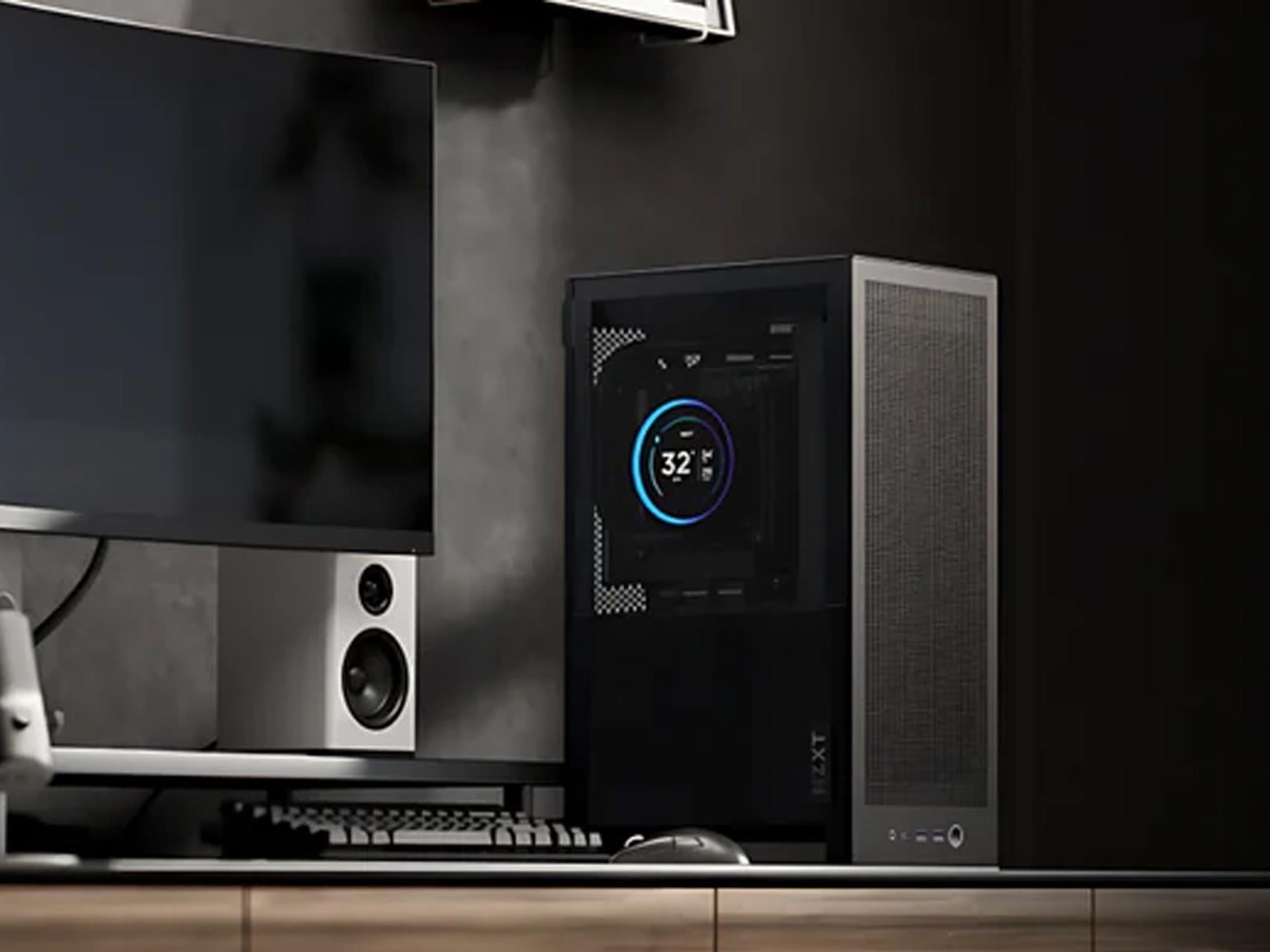
NZXT has launched a compact prebuilt gaming PC that it’s calling the H2 Mini PC, and you have a choice between an AMD or Intel foundation with both setups carrying the same price tag. Despite it’s name, the system falls more into the small form factor (SFF) category than a traditional mini PC though it’s certainly a smaller setup measuring
Early every year, Google releases a budget-oriented a-series phone that acts like a stripped down version of its latest mainline Pixel phone. The Pixel 9a, for instance, had the same chip as the Pixel 9, reduced memory and camera specs, and most importantly, a slimmed down design that finally ditched the obtrusive camera bar. The Pixel 10a, announced today, is a bit of an outlier. Instead of upgrading to the same chip as the Pixel 10, it also has the same chip as the Pixel 9, with only slight improvements to everything else that was already in the Pixel 9a. So, is it worth an upgrade?
The Pixel 10a’s specs
The Pixel 10a’s specs are, on paper, nearly identical to the Pixel 9a’s. Both phones have a Tensor G4 processor, 8GB of RAM, and up to 256GB of storage. They also have the same camera system, with a 48MP main lens, a 13MP ultrawide lens, and a 13MP selfie camera. Battery life also sits at the same promised 30+ hours, with a typical 5,100 mAh capacity. The only real difference on paper is that the 6.3-inch screen is a little brighter, with up to 3,000 nits of peak brightness instead of 2,700. The bezels are also supposed to look about 10% thinner, although I needed to be told that to spot it during a hands-on session with the Pixel 10a.
Even the Pixel 10’s MagSafe-like Pixelsnap feature is gone, meaning you won’t be able to use this phone with any magnetic accessories, at least without adhesive magnets or special third-party cases.
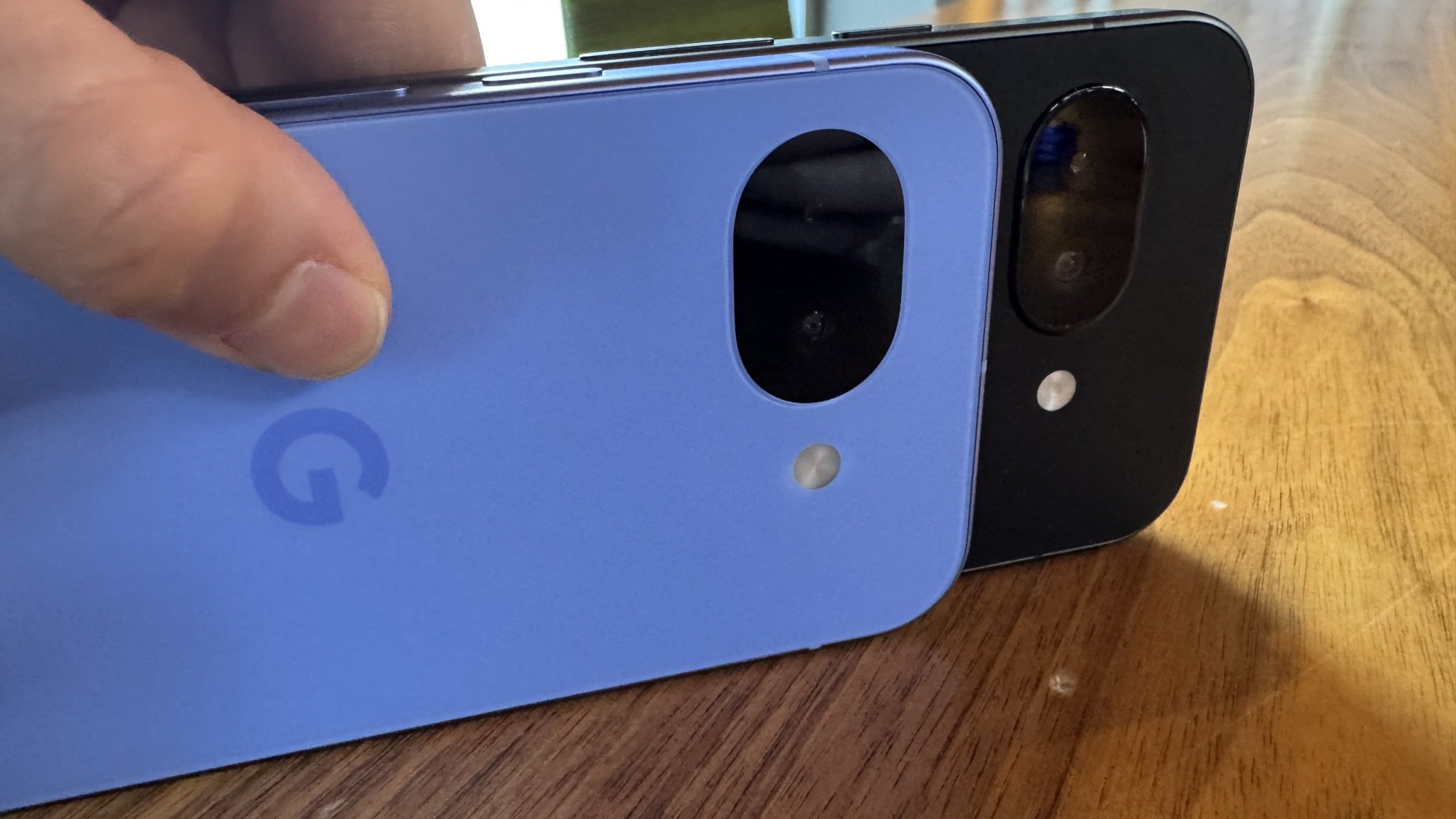
Google Pixel 10a (left) vs. Google Pixel 9a (right) Credit: Michelle Ehrhardt
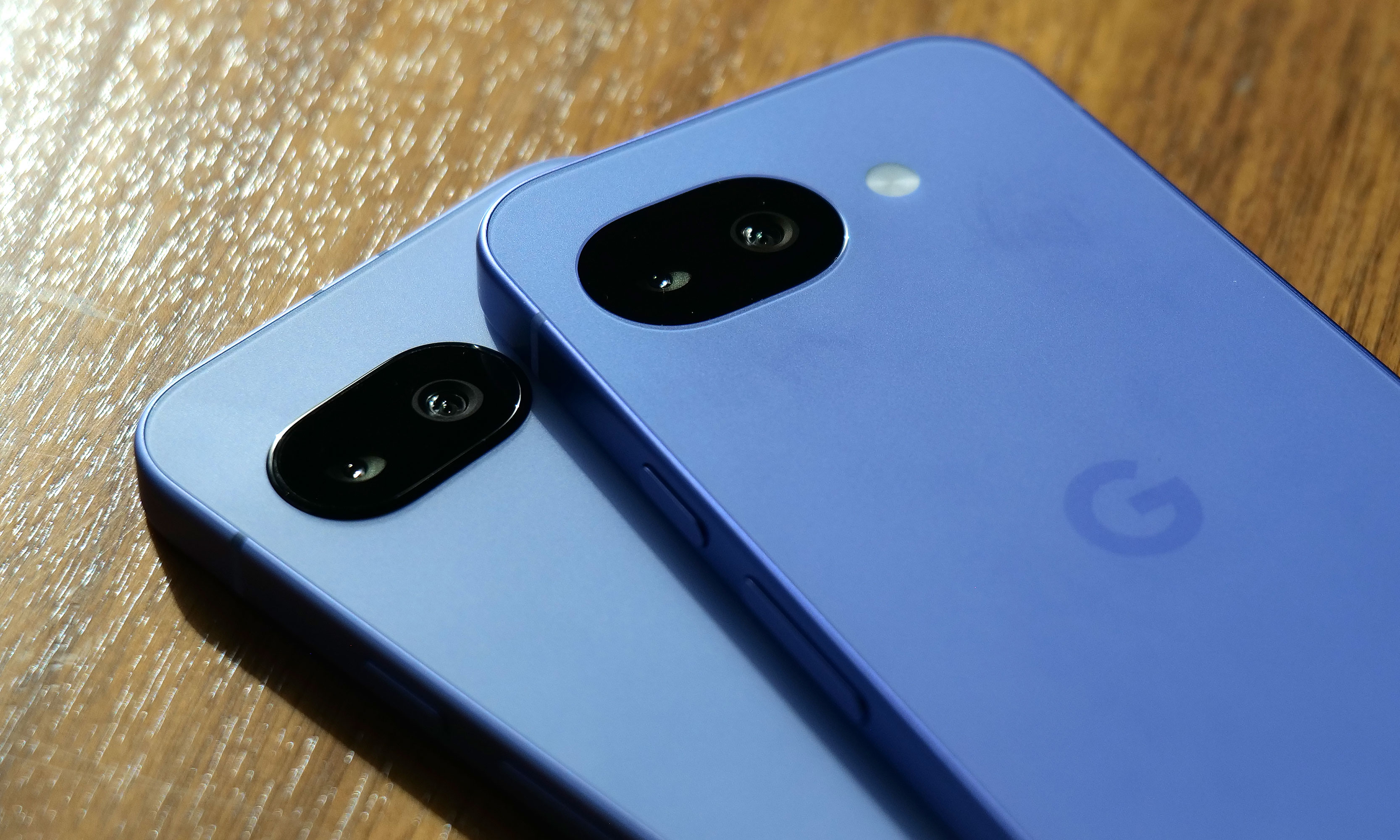
That said, there are a few changes to the hardware, notably to the look of the phone. Like the Pixel 9a, the Pixel 10a also ditches the camera bar, and evolves on Google’s last budget model for a completely flat back. That means the rear camera has no bump or lip to it at all, for a completely flush and seamless feel. It’s definitely clean, but the 9a’s miniscule camera bump was already barely an inconvenience back when I reviewed it.
Meanwhile, you’d need to be told about the other design upgrades to appreciate them. Google says the Pixel 10a has improved Corning Gorilla Glass 7i cover glass so that it’s more resilient to drops and scratches, but I couldn’t test that while carefully handling the company’s demo units.
Essentially, when looking at raw specs, the Pixel 10a comes across at first less like a stripped down version of the Pixel 10, and more like another iteration of the Pixel 9. But Google’s hoping its software can win you over.
Pixel 10a AI camera features and satellite SOS
The Pixel 10a does differ from the Pixel 9a when it comes to AI, and introduces two AI camera features that debuted on the main-series Pixel 10. These are Auto Best Take and Camera Coach, although one of them is also an iteration on something that came out alongside the Pixel 8.
That would be Auto Best Take. Essentially, what this does is detect when you’re in a group shot with other people, then take up to 150 frames all in one press. It’ll then intelligently find the best shot from those frames and ditch the rest, and if it can’t find a good shot, it’ll stitch together elements from multiple shots so that everyone has their eyes open. You will know when a shot has been stitched together using Auto Best Take (it’ll have a Gemini icon), and can choose to use a non-AI assisted one if you prefer. The ability to stitch together photos is a few generations behind at this point, but not having to choose when to load it up is convenient, if you’re into AI-generated photos.
If you’re not, Camera Coach lets you get some AI assistance in your photos without actually having AI in your shots. Essentially, this will look through your camera for you, generate an ideal shot for you to take, then guide you through the real-world steps you need to follow to recreate it. You’re essentially handing off the ideation part of photography to Gemini, but you also won’t have to risk any hallucinations popping up in your pics.
Credit: Michelle Ehrhardt
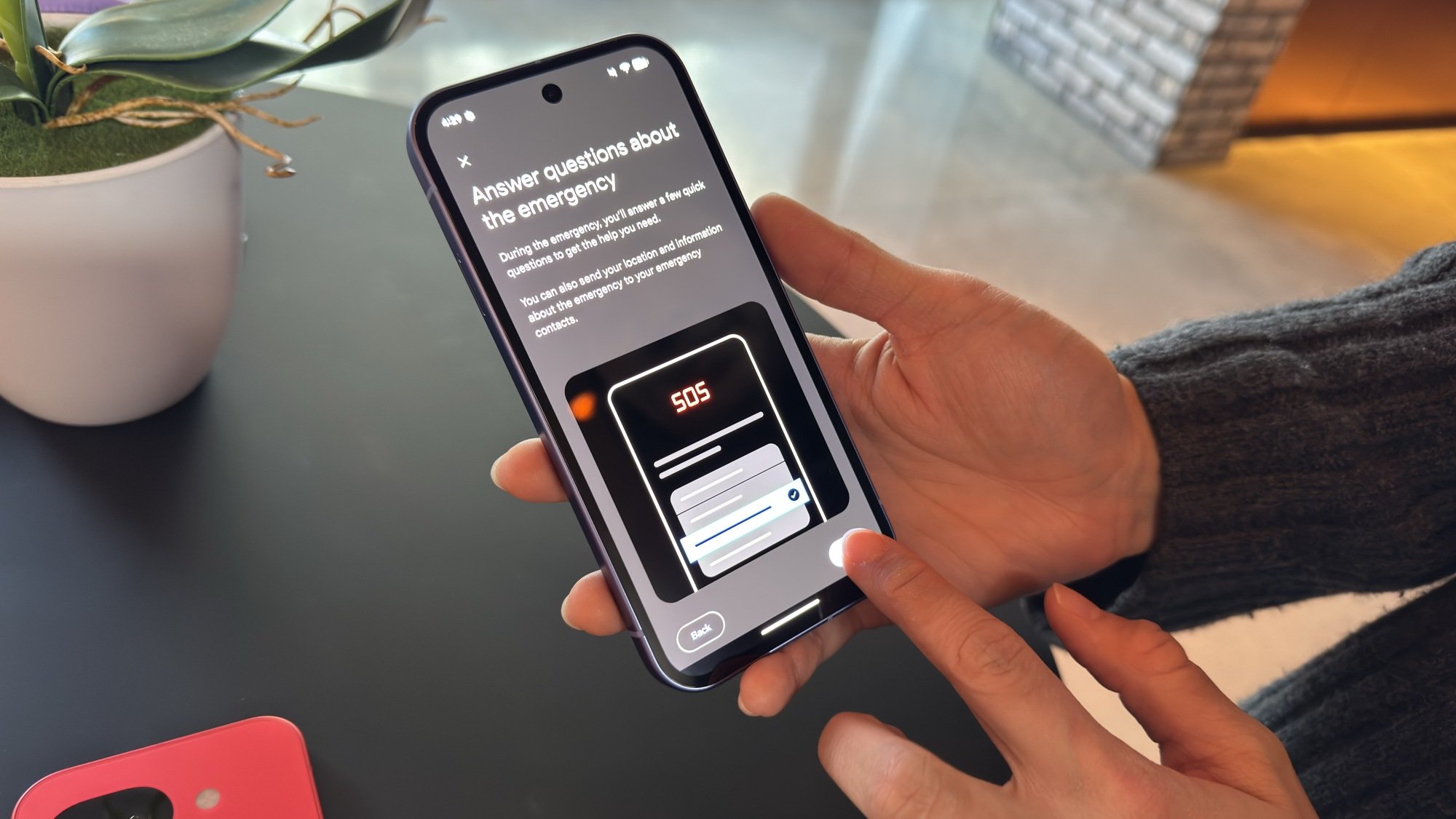
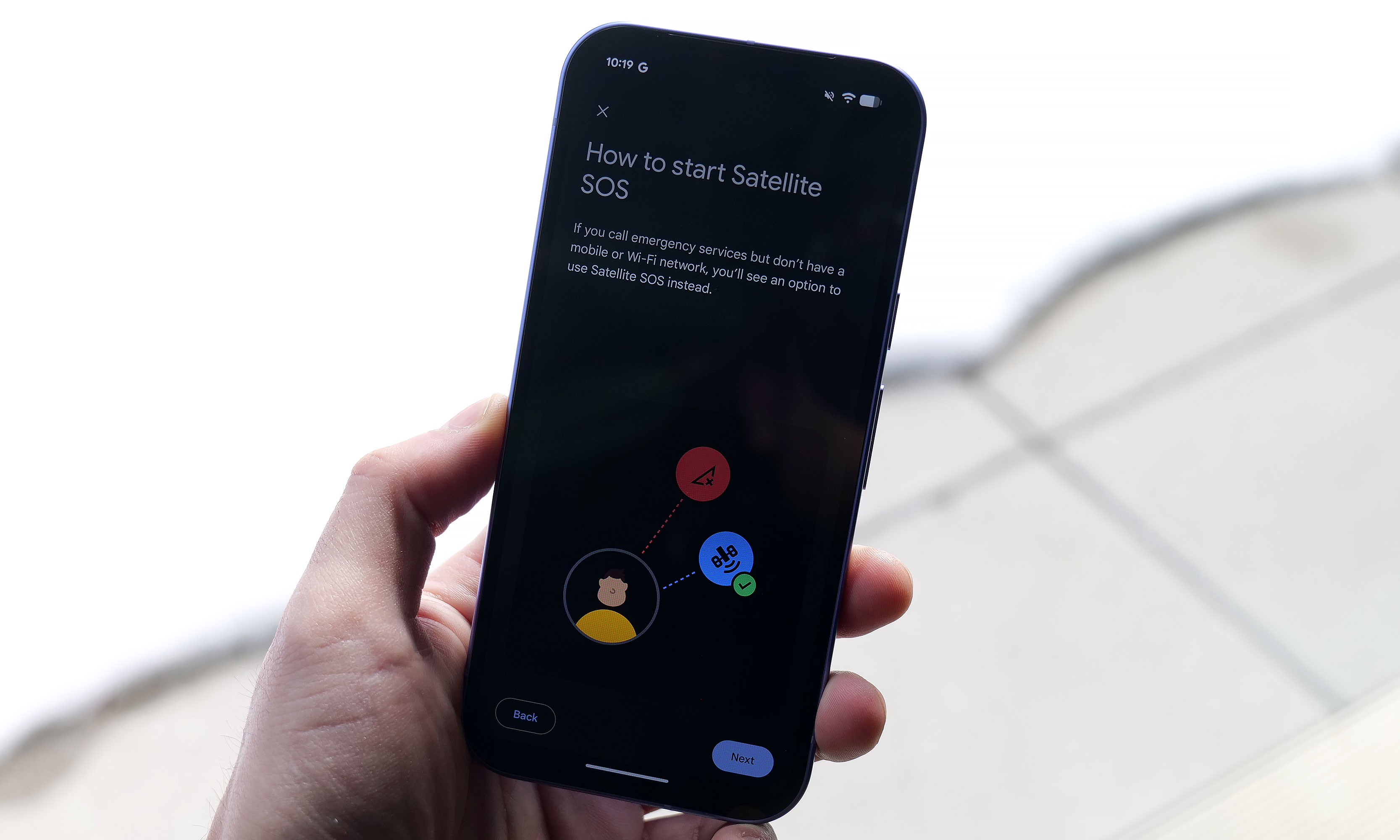
Aside from new photography features, you’ve also got Satellite SOS for the first time on an a-series phone. This lets you connect to a Satellite if you’re away from wifi or your mobile network, so you can ping emergency services for help if you need it. Hopefully, you’ll never actually have to use this feature, but it is some great piece of mind.
Is the Pixel 10a worth it?
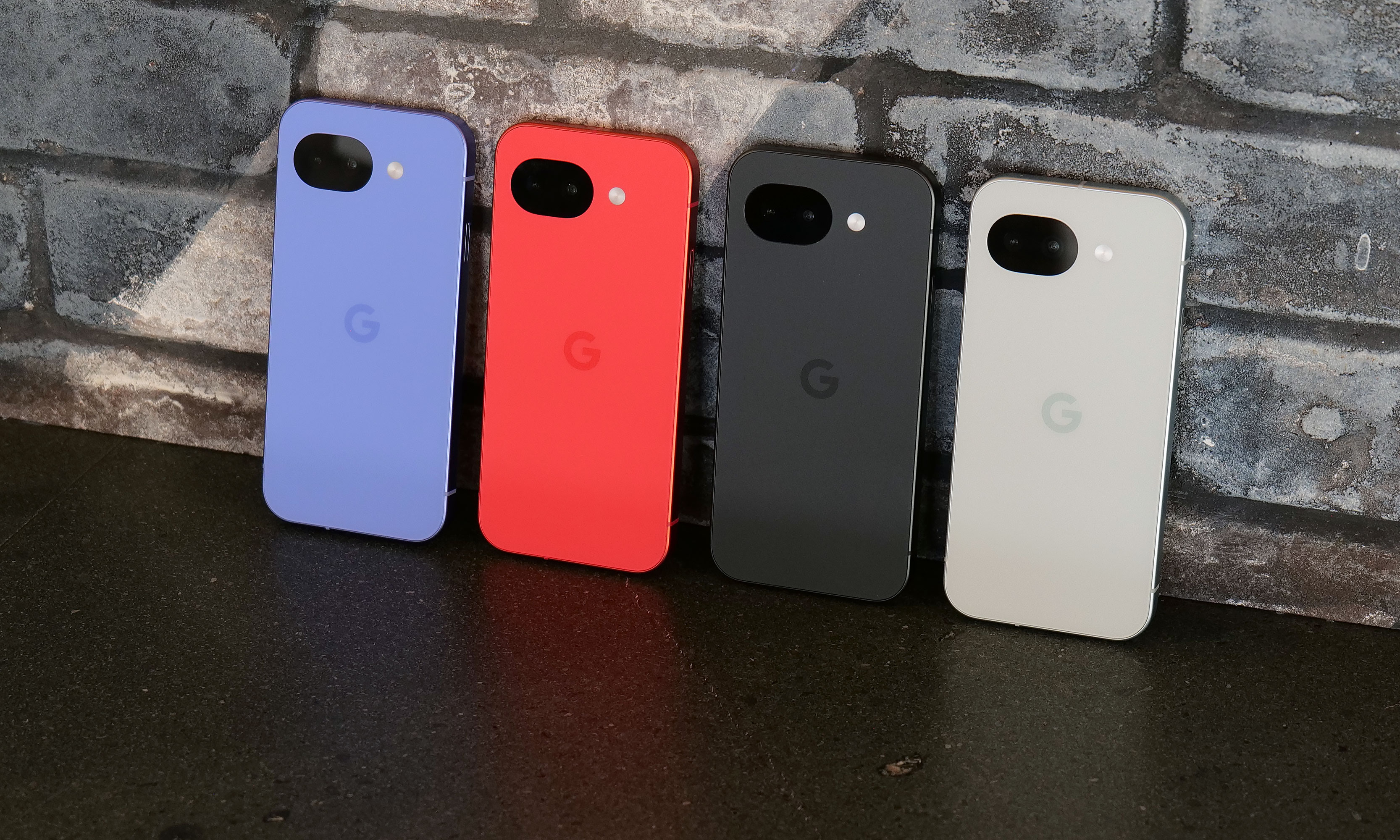
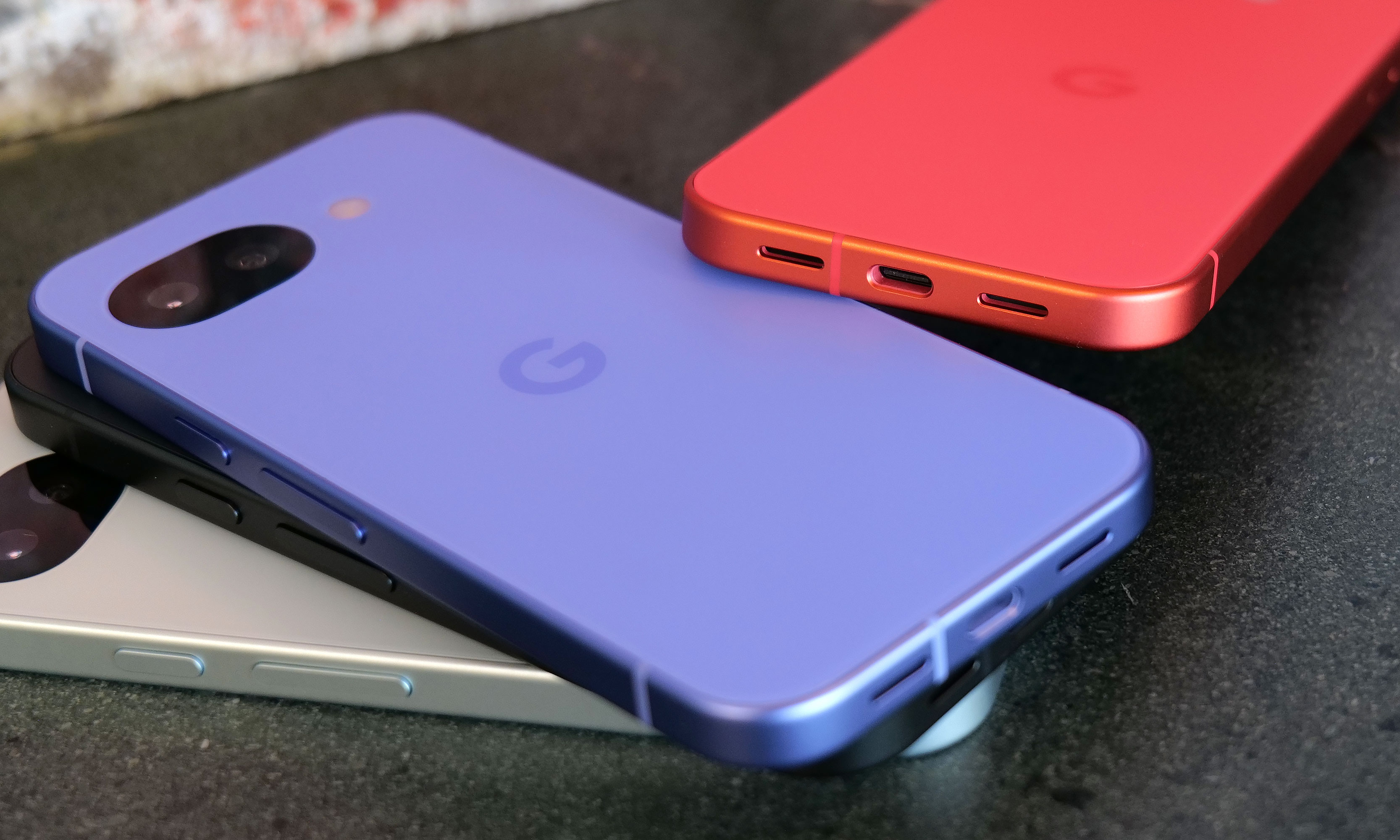
Like the Pixel 9a, the Pixel 10a is $500, so if you’re trying to choose between the two and aren’t buying a 9a at a discount secondhand, it’s a no-brainer. It does also have a new selection of colors, including a poppy red “berry” look and a purplish blue hue named Lavender.
Google Pixel 10a in Berry Credit: Michelle Ehrhardt
But if you’ve already got a Pixel 9a and are eyeing an upgrade, it’s a bit harder to justify. The biggest new additions are all software, and Google has already brought previously Pixel 10-exclusive software to older phones before (although with mixed results). That means the 9a is likely to stay relevant for a good few more years, and may actually eventually have all the same features as the 10a, minus that completely flush back.
The standard Pixel 10 series is also likely to remain a good choice. Back when I reviewed it, I thought the 9a was better than the Pixel 9, but since the 10a doesn’t even have the same chip as the regular Pixel 10, it’s much less likely to be able to stand in for it, however clean it looks.
If that doesn’t deter you, though, you can pre-order the Pixel 10a now on Google’s website, with models set to ship out and hit retail stores on March 5.
It’s that time of year—a new budget Pixel phone is about to hit virtual shelves. The Pixel 10a will be available on March 5, and pre-orders go live today. The 9a will still be on sale for a while, but the 10a will be headlining Google’s store. However, you might not notice unless you keep up with the Pixel numbering scheme. This year’s A-series Pixel is virtually identical to last year’s, both inside and out.
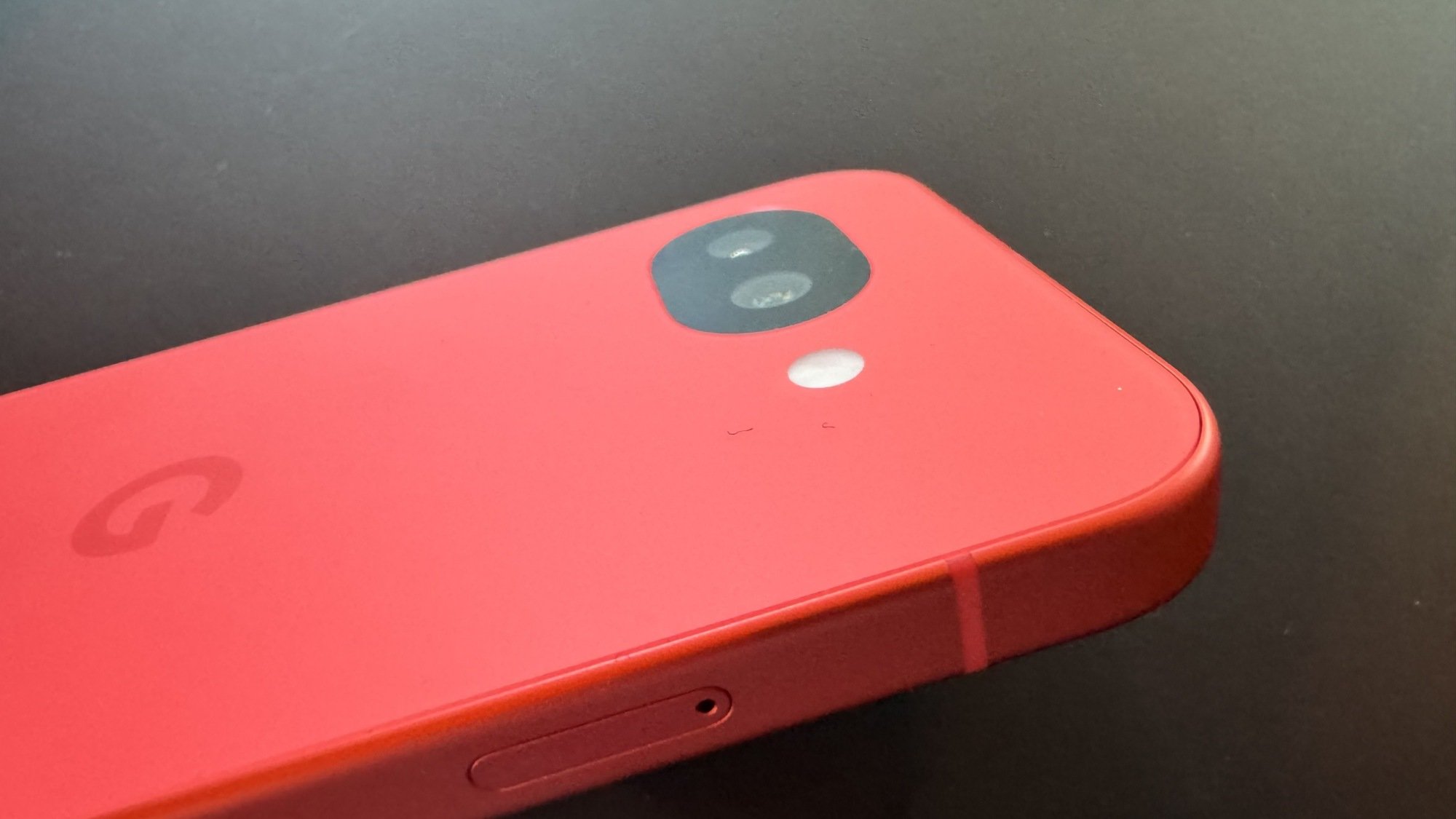
Last year’s Pixel 9a was a notable departure from the older design language, but Google made few changes for 2026. We liked that the Pixel 9a emphasized battery capacity and moved to a flat camera bump, and this time, it’s really flat. Google says the camera now sits totally flush with the back panel. This is probably the only change you’ll be able to identify visually.
5,100 mAh, 23 W wired charging, 7.5 W wireless charging
5,100 mAh, 30 W wired charging, 10 W wireless charging
Connectivity
Wi-Fi 6e, NFC, Bluetooth 5.3, sub-6 GHz 5G, USB-C 3.2
Wi-Fi 6e, NFC, Bluetooth 6.0, sub-6 GHz 5G, USB-C 3.2
Measurements
154.7×73.3×8.9 mm; 185 g
153.9×73×9 mm; 183 g
Google also says the new Pixel will have a slightly upgraded screen. The resolution, size, and refresh rate are unchanged, but peak brightness has been bumped from 2,700 nits to 3,000 nits (the same as the base model Pixel 10). Plus, the cover glass has finally moved beyond Gorilla Glass 3 to Gorilla Glass 7i, which supposedly has improved scratch and drop protection.
Now that pre-orders are open for the Google Pixel 10a, it’s time to see how it stacks up against last year’s Pixel 9a. At first glance, the two phones look very similar, and that’s not a bad thing. Google hasn’t tried to reinvent its budget-friendly formula this year, sticking to the same compact design, clean software experience and camera-first approach that made the 9a such a good value.
Both phones share a lot in common, including 120Hz OLED displays, Google’s Tensor G4 chip, strong computational photography and seven years of OS and security updates. The actual differences are more incremental, including a moderately brighter, tougher display, improved Extreme Battery Saver longevity, slightly faster wireless charging and the addition of Satellite SOS. Importantly, Google is keeping the starting price the same as before, with both phones coming in at $499.
On paper, the Pixel 10a doesn’t dramatically rethink what an affordable Pixel should be, but it does offer meaningful upgrades for the same price. While we wait for a review unit to evaluate the Pixel 10a’s day-to-day performance, here’s a quick comparison of the spec sheets of the two devices to see what the new model brings.
Pixel 10a vs Pixel 9a: Design and display
There’s very little separating these two on performance. Both the Pixel 9a and Pixel 10a run Google’s Tensor G4 chip with 8GB of RAM and the same storage options, so day-to-day speed should feel virtually identical. The Pixel 10a ships with Android 16 out of the box, though the 9a can be updated to the same version.
Off the bat, the Pixel 10a doesn’t look dramatically different from the Pixel 9a, and that appears to be intentional. Google is sticking with the same compact, no-frills approach from the last few A-series Pixels, so you’re still getting a 6.3-inch OLED panel with a smooth 60–120Hz refresh rate and a clean, understated aesthetic.
The meaningful changes show up once you dig into the display specs. The Pixel 10a upgrades the cover glass from Corning Gorilla Glass 3 to Gorilla Glass 7i, which should offer better durability against drops and scratches over time. Brightness also gets a noticeable bump. The 9a topped out at 1,800 nits for HDR content and 2,700 nits at peak, while the 10a pushes that to 2,000 nits for HDR and up to 3,000 nits at peak brightness. In practice, that should make the Pixel 10a easier to read outdoors and a bit punchier when watching HDR video.
Contrast is improved as well. The Pixel 10a’s panel is rated at a contrast ratio of more than 2,000,000:1, doubling the already respectable figure on the Pixel 9a. That won’t radically change how the phone looks day to day, but it should translate to deeper blacks and slightly more depth in darker scenes, especially when streaming video or browsing photos at night.
Pixel 10a vs Pixel 9a: Cameras
On paper, the Pixel 10a’s camera hardware looks very familiar. Like the Pixel 9a, it uses a 48-megapixel main camera paired with a 13MP ultra-wide, and there’s no dedicated telephoto lens. Image quality, color science and low-light performance should therefore be similar between the two.
Where the Pixel 10a pulls ahead is in software features. Google has added a few camera tools that aren’t available on the Pixel 9a, even though the underlying hardware hasn’t changed much. One of those is Camera Coach, which debuted on last year’s Pixel 10 series and offers on-screen tips to help you frame shots better or adjust how you’re holding the phone. The Pixel 10a also gains Macro Focus, allowing you to get much closer to small subjects like plants or textures. In our Pixel 9a review, we found the phone could capture solid close-up detail, but locking focus could be finicky at times, so a more dedicated macro mode should make those shots easier to nail.
Finally, there’s Auto Best Take, which automatically picks the best expressions from a burst of photos and combines them into a single image. The feature debuted on Google’s Pixel 10 lineup last year, and it’s especially handy for group shots where someone always seems to blink at the wrong moment. By bringing it to the 10a, Google is extending one of its more genuinely practical AI camera tricks to a cheaper phone.
Battery life and charging
Both the Pixel 9a and Pixel 10a use a 5,100mAh battery and support the same 23W wired charging speeds. Where the Pixel 10a does pull ahead slightly is wireless charging. The Pixel 9a tops out at 7.5W, while the Pixel 10a supports wireless charging at up to 10W when used with Qi-certified Extended Power Profile (EPP) chargers, which are designed to deliver faster wireless power than basic Qi pads. The difference isn’t dramatic, but the Pixel 10a should charge a bit quicker on a compatible wireless stand when you’re in a pinch.
You’ll also get some extra hours in dire situations. When you activate Extreme Battery Saver, the Pixel 9a is rated for up to 100 hours, while the Pixel 10a extends that to up to 120 hours.
The Pixel 10a gets Satellite SOS
The biggest safety-related upgrade on the Pixel 10a is the addition of Satellite SOS. Because it uses a newer modem compared to the Pixel 9a’s Exynos Modem 5300, it is capable of tapping satellite networks when necessary. This allows the phone to contact emergency services when you’re outside of cellular or Wi-Fi coverage, which can be genuinely useful if you spend time hiking, traveling or driving in remote areas.
If you already own a Pixel 9a, there doesn’t appear to be a huge reason to upgrade. Day-to-day performance may feel almost identical, since both phones use the same Tensor G4 chip, the same amount of RAM and very similar camera hardware.
That said, the Pixel 10a does make a stronger case for first-time buyers or anyone upgrading from an older Pixel. The biggest differentiator, though, is Satellite SOS — it’s the one feature the Pixel 9a simply can’t match due to hardware limitations. At the same $499 starting price, the Pixel 10a is, on paper, the better long-term buy if you’re choosing between the two today.
Google Pixel 10a vs. Google Pixel 9a: Specs at a glance
Spec
Google Pixel 10a
Google Pixel 9a
Price
$499
$499
Processor
Google Tensor G4, Titan M2 coprocessor
Google Tensor G4, Titan M2 coprocessor
Display
6.3-inch Actua display, 1080 x 2424 pOLED at 422.2 PPI, Gorilla Glass 7i
6.3-inch Actua display, 1080 x 2424 pOLED at 422.2 PPI, Corning Gorilla Glass 3
RAM
8GB
8GB
Storage
128GB, 256GB
128GB, 256GB
Battery
5,100mAh
5,100mAh
Wireless charging
Up to 10W
Up to 7.5W
Rear camera
48MP wide, 13MP ultrawide, Super Res Zoom up to 8x
48MP wide, 13MP ultrawide, Super Res Zoom up to 8x
Front camera
13MP selfie cam
13MP selfie cam
SIM
Dual SIM (single nano SIM, eSIM)
Dual SIM (single nano SIM, eSIM)
Connectivity
Wi-Fi 6E, Bluetooth v6, NFC
Wi-Fi 6E, Bluetooth v5.3, NFC
OS
Launch with Android 16
Launch with Android 15
This article originally appeared on Engadget at https://www.engadget.com/mobile/smartphones/google-pixel-10a-vs-pixel-9a-whats-changed-and-which-one-should-you-buy-150000786.html?src=rss
Google debuted the Pixel 10a phone today. Pre-orders are open now and the smartphone will be available starting March 5. Although it’s the new 2026 addition to the A series lineup, the Pixel 10a invites many comparisons with last year’s Pixel 9a. For starters, the price is identical at $499.
Design-wise, not much as changed. The back of the phone can lay flat, which has become a hallmark of the Pixel A collection, rather than wobbling around on a bulky camera housing. The screen is still 6.3 inches with an Actua display. The phone’s insides are also the same; the 10a comes with the same Tensor G4 chip and 8GB of RAM as its predecessor, and buyers have the option to upgrade to either 128GB or 256GB of storage. The phone has an IP68 rating for dust and water resistance and its display uses Corning Gorilla Glass 7i.
One of the few areas where the 10a is getting a marked upgrade is on its battery. This version claims more than 30 hours of battery life, or up to 120 under the Extra Battery Saver mode. The 10a also brings the welcome addition of proper fast charging, where a compatible charger can get the device to 50 percent battery in about 30 minutes. This addresses one of the few complaints we had about the 9a.
For the photo buffs, the Pixel 10a has a 48MP main camera and a 13MP ultrawide lens; again unchanged from the specs in the 9a. AI is also present in the new model’s photography suite, with the addition of the Camera Coach resource for the first time on the A series lineup. Camera Coach uses Gemini AI models to read the scene and offer tips on getting the desired shot. The 10a also has the Auto Best Take feature for getting everyone’s best side in a group shot and the Add Me tool that lets you insert yourself into a photo after the fact.
This article originally appeared on Engadget at https://www.engadget.com/mobile/smartphones/googles-500-pixel-10a-smartphone-arrives-on-march-5-150000489.html?src=rss
Google’s A-series phones have offered some of the best value among midrange handsets for years, and after checking out the new Pixel 10a, I don’t see that trend stopping anytime soon.
Let’s start with the specs. Starting at just $499, you get a vivid 6.3-inch OLED screen with a 120Hz refresh rate and 3,000 nits of peak brightness, 8GB of RAM and either 128GB or 256GB of onboard storage. The phone also features a durable aluminum frame along with a stronger Corning Gorilla Glass 7i panel in front and a composite plastic back with a lovely matte finish. As a nod towards sustainability, Google says the P10a’s chassis is made from 100 percent recycled material, while the rear panel comes in at 81 percent. And just like its predecessor, you still get an IP68 rating for dust and water resistance and the same battery capacity (5,100mAh) — except now it charges even faster, both wired (30 watts, up from 23) and wirelessly (10 watts, up from 5).
While lavender is the new hero color for the Pixel 10a, berry is the hue I’d pick.
Sam Rutherford for Engadget
The one place where the Pixel 10a might come up a touch short is that unlike its more expensive siblings, it features an older Tensor G4 processor instead of the Tensor G5 chip used on the main Pixel 10 line. Google says the decision to go with an older SoC is due to budget constraints. While it might not be the first choice for gamers or power users, I’ve never really had an issue with the day-to-day performance of Google’s recent homegrown silicon.
However, even with a one-year-old chip, Google found a way to port over three flagship features to the Pixel A series for the first time. Camera Coach uses AI to help you compose and come up with more interesting shots. Meanwhile, Auto Best Take is designed to ensure that everyone in a group shot ends up with their finest expression. Finally, Satellite SOS allows you to call for help during emergencies, even when you don’t have proper cell service.
Satellite SOS support is one of three new features coming to the Google’s A-series phones for the first time.
Sam Rutherford for Engadget
As for its cameras, the P10a looks to be using the same sensors as before, including a 48MP main camera, a 13MP ultra-wide and a 13MP selfie shooter in front. That might be a bummer for some, but considering that the Pixel 9a offered by far the best image quality of any phone in its price bracket, I’m not that bothered. Also, it’s quite likely that if Google had opted for new hardware, it may have pushed the phone above $500.
After seeing the positive response to the barely-there camera bump on its predecessor, Google leaned in and made the Pixel 10a’s rear camera module completely flat, and it’s my favorite thing about the phone. There’s no hump or protrusions to speak of, and when combined with the rest of the phone’s design, it results in a really sleek, minimalist look. Plus, after almost a decade of big and bulky camera warts on the back of phones, it’s just nice seeing the Pixel 10a go the opposite direction.
I really appreciate how Google double downed on feedback regarding the Pixel 9a’s tiny camera bump (left) by making the Pixel 10a’s camera (right) completely flat.
Sam Rutherford for Engadget
On the flipside, my biggest complaint about the P10a is that Google didn’t include Pixelsnap support (aka magnetic Qi2 compatibility). It’s another feature that got cut due to cost and it’s a real bummer because after introducing it on last year’s main Pixel 10 line, I was hoping that it would become a standard inclusion on all Google phones going forward. Thankfully, when I asked about the lack of Pixelsnap support, Google representatives were able to confirm that there will be third-party accessory makers such as Casefinite, Dbrand and Spigen that will offer cases with built-in magnetic rings, so anyone hoping to attach magnetic peripherals will still have an avenue to do so.
The Pixel 10a’s charging speeds have been improved to 30 watts for wired and 10 watts wirelessly.
Sam Rutherford for Engadget
Regardless, for Android phone owners who are in the market for a simple, no-nonsense upgrade that covers all the basics without breaking the bank, the Pixel 10a is looking like another top contender.
The Pixel 10a is available for pre-order today in lavender, berry, fog and obsidian with official sales slated for March 5.
This article originally appeared on Engadget at https://www.engadget.com/mobile/smartphones/pixel-10a-hands-on-google-locks-down-the-midrange-phone-game-150000513.html?src=rss
Apple is reportedly accelerating the development of smart glasses, as the company is ostensibly making a shift toward AI-centric hardware.
According to a report from Bloomberg’s Mark Gurman, Apple is ramping up development of its forthcoming smart glasses, which are slated to head into production as early as December 2026, with public release expected sometime in 2027.
Apple’s smart glasses are being positioned to compete with Meta and EssilorLuxottica’s most recent smart glasses, the report maintains.
While this mostly echoes previous reports from last October, Apple appears to be accelerating development, having recently distributed a broader set of glasses prototypes within its hardware engineering division.
According to an all-hands meeting with employees earlier this month, CEO Tim Cook supposedly also hinted that Apple would be pushing hard into AI devices, noting that the company was working on new “categories of products” centered around AI.
“We’re extremely excited about that,” Cook said in the internal meeting, saying “[t]he world is changing fast.”
Citing people familiar with Apple’s plans, the smart glasses (allegedly codenamed ‘N50’) are said to include two cameras: a high-resolution camera for photos and video, and another dedicated to computer vision tasks. The high quality onboard cameras and overall build quality are expected to set it apart from competing products, the report maintains.
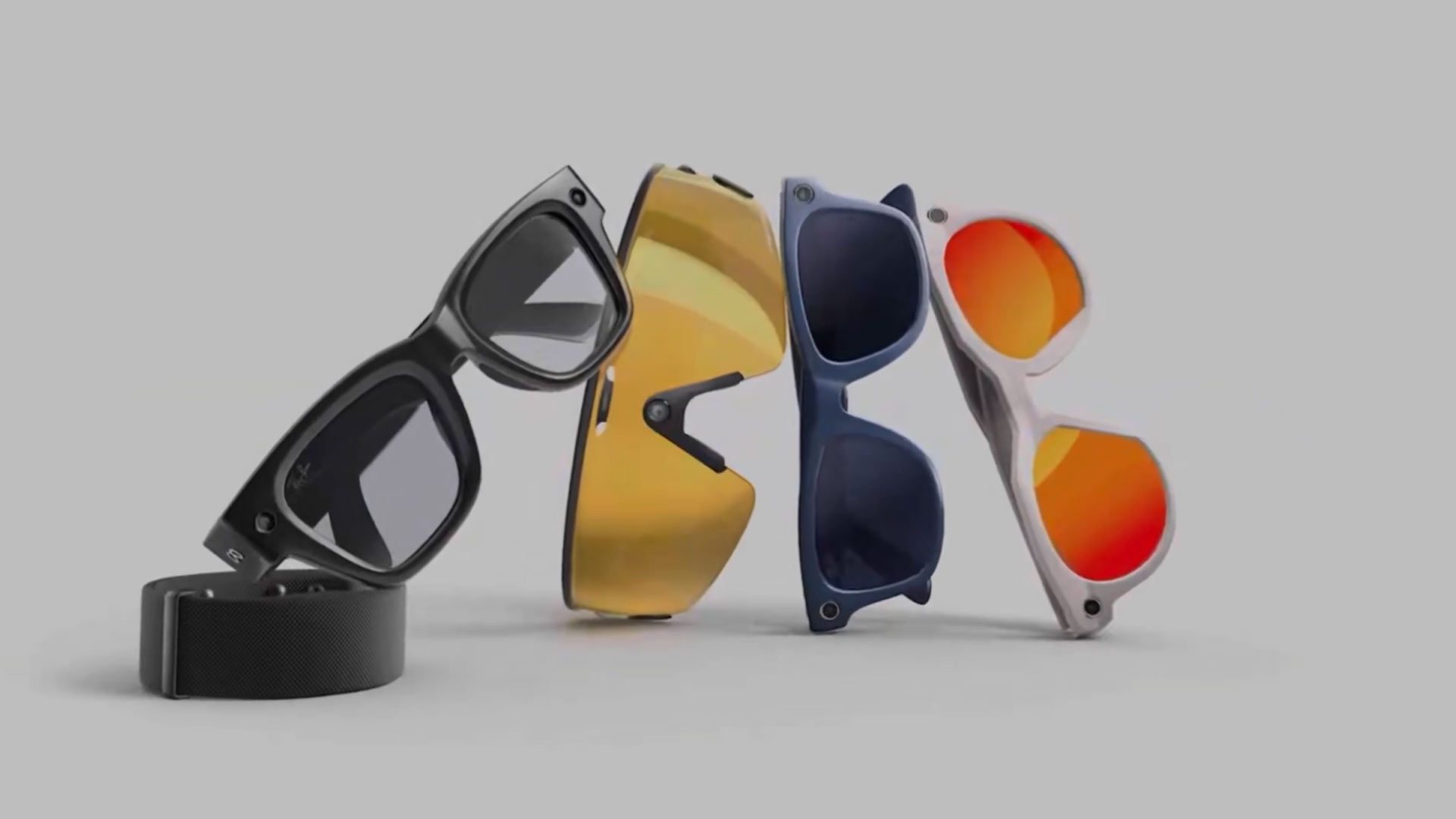
Array of Meta smart glasses | Image courtesy Brad Lynch
Similar to Meta’s audio-only smart glasses though, Apple’s N50 hardware isn’t expected to include a display of any kind, instead relying on cameras, speakers and microphones for things such as phone calls, AI queries, listening to music, and capturing images.
Apple allegedly floated the idea of partnering with eyewear brands—similar to Meta’s partnership with EssilorLuxottica or Google’s partnership with Warby Parker and Gentle Monster—the company seems to have more recently decided on developing in-house designs, which are said to arrive in a variety of sizes and colors.
“Early prototypes of the glasses connect via a cable to a standalone battery pack and an iPhone, but newer versions have the components embedded in the frame,” Bloomberg reports. “The design uses high-end materials, including acrylic elements intended to give the glasses a premium feel. Apple is already discussing launching the device in additional styles over time.”
This comes as Apple is investing more heavily in AI in effort to better compete with Google and OpenAI, which comes part and parcel with a critical redesign of Siri. The report also maintains Apple is working on an AI-powered pendant and AirPods with expanded AI capabilities—all three of which will rely on visual input.
Notably, the report maintains that all three will rely on connection to iPhone. Apple did not respond to Bloomberg’s request for comment.
The setting and imagery of Ghost in the Shell is iconic by this point.
A futuristic, dystopian society where AI and cybernetic technology have transformed society into a militarized, oppressive surveillance state where the border between humanity and machine is blurred. The title, even, refers to the idea that a soul (‘the ghost’) could be uploaded and transferred into a mechanical shell, or flesh could be fused to transform the human. It’s an idea that has been used to comment on humanity’s relationship with technology, and, to mark thirty years since the first anime adaptation of the 1989 manga, a new art exhibition celebrating the franchise in its entirety has hit Tokyo.
But this isn’t any normal exhibition. It make sense that a franchise speculating about the future of technology would implement the cutting-edge aspects of this technology into even a showcase of the human artistry that went into its creation, but this Ghost in the Shell Exhibition has implemented AR technology using Xreal Air 2 Ultra to enhance the experience of exploring and understanding the artwork on display.
The series in every iteration follows members of Public Security Section 9, professionals separate to to the police that work at solving and preventing crime, typically with a cybercrime and counter-terrorist purpose. The crimes they encounter, and the personal stories that reverberate into the broader world, touch on corruption, surveillance, technological overreach and abuse and more. The Puppet Master, the antagonist of the original manga and first film, can hack and overtake cybernetic bodies, whereas the Laughing Man circumvents surveillance through hacked video feeds.
Conceptually, this is the first deep dive into the history of the entire franchise in a single exhibition, showcasing materials used in the production of not just early works but every series and film from the 1995 original all the way until the more recent Netflix-produced CG works, Arise, and an all-new preview for the all-new series from Science Saru premiering later this year. As such, original cels, storyboards, sketches and production materials from every series were on display, alongside newly-produced artworks from a range of creatives that explore questions on humanity, AI, technology and the human body posed by the franchise. An analogue look at a technological world, as original paper sketches are framed on walls and in glass panels.
In an opening room, you also had tall PCs with a digital interface to witness lines of dialogue, sketches, hear music, and more from across the franchise. In the main gallery featuring art from every series also sat a PC with digitized assets from every series to flick through at your leisure, a hard drive with a treasure trove of materials from the dense work of the series. Then you have the Xreal Air 2 Ultra AR device.
Their implementation at this exhibition is certainly unusual, one of the first examples in the world of AR glasses being used at an art exhibition in such a manner. While you could simplify their use as a more thematically-fitting audio guide like the listening devices available to rent at museums around the world, their use here was a bit more involved and interesting than such a simplistic summation. For a cost of 1500yen ($10) on top of your ticket, you will be given a pair of Xreal Air 2 Ultra glasses and a smartphone in a case to hold around your neck. After plugging the glasses into the phone, selecting your language between Japanese and English, and being instructed on how to use the device for the first time, you enter the exhibition.
Dotted around the floor of every room of the exhibition are special marks featuring Tachikoma, the cute blue robot from the series. Scanning these marks will trigger an AR scene superimposed over that room or area of the exhibition. The first marker, serving as an introduction to this enhanced walkthrough of the space, places Tachikoma inside the open-plan first room of the showcase in order to explain the franchise and the exhibition, featuring the machine voiced by its original voice actor, Sakiko Tamagawa.
These AR markings are primarily found in the next room, the main gallery space and centerpiece of the exhibition featuring original production sketches, cels and more each broken up by series or film. At the beginning of each entry in the franchise’s space within the showcase sits a large Tachikoma mark that you scan with the Xreal glasses, letting them know where you are in the space and triggering the enhancements related to that entry. Each begins with an introduction to that work by Tachikoma enhanced by video clips and audio from that movie or series, before light paths appear on the floor guiding you to specific sketches and cels on display on the show floor.
Scanning these will not only work as a story-driven runthrough of the story of that particular production, but provide production background and context to the work you’re seeing.
While functionally similar to an audio guide, the format using this technologically allows this guide to go further in expanding upon what visitors can understand about each piece on display. Highlighting specific works and provided overlayed video places these sketches within the context of the finished work for those less familiar with the animation production process, which can be eye-opening for anyone unaware of everything that goes into taking a work from page to screen.
Of course, it doesn’t do this for every sketch, but it’s easily possible to wander the floor and look at these assets at your own pace, then scan these enhanced works at any moment. Newly-produced artworks are placed alongside these original production materials that each lean into the themes of the series, leaving you with fresh perspectives to ponder as you bask in the world of Ghost in the Shell. One that particularly stood out to me was a human-sized doll in a box with a mirror for a face, reflecting the viewer as they stared at the piece. When humanity can be moved into a new shell to the point the flesh is unimportant, what is a body? What is human?
Considering the warnings the franchise has made about the convergence of technology and humanity in the wake of the potentially-ruining consequences of AI or technological overabundance, all while still recognizing the potential of these advancements, these artworks and even the use of XReal glasses felt fitting. Innocence, the second film by Mamoru Oshii, specifically dives into the AI question at some depth, which coincidentally is where this doll artwork was positioned in the event space.
Not all of these art pieces and technology-infused additions to the showcase felt fitting – moving from the warnings of Innocence regarding AI to the uncritical embrace of the technology via distorted Generative AI artwork was disappointing to witness in an exhibition celebrating human creativity. But most 0f these artworks and technological experiments enhanced the experience overall.
After viewing every series and film in order, the Xreal experience ends with an exclusive preview of Science Saru’s new series, alongside a brief original 30-second animation featuring Motoko evoking the imagery of the original film. Beyond the glasses implementation, the merchandise area featured collaborations with numerous artists and companies that also merged traditional methods with technological innovation. STYLY, an AR company, produced a fascinating traditional Japanese folding curtain that, when scanned with your phone’s camera, would render an animation of Motoko.
An embrace of technology to enhance the artistic display of 30 years of adaptations for this seminal manga series felt befitting of this unique exhibition, but the technological potential of this work goes far beyond Ghost in the Shell. The use of Xreal glasses here wasn’t perfect, but any issues spoke more to the currently limits of the technology than their implementation here. The field of view is still relatively limited with notable edges, and they’re difficult to use when also wearing glasses. They could occasionally desync, especially if you removed them from your face for any reason, and if this occurs the resync process is far from simple due to how locked-down these devices are for security reasons during this exhibition.
Still, I could imagine this technology finding great use in other showcases in future, even beyond ones where it’s thematically apt to use them like seen here. Classic museums have already embraced technology to provide context to artworks in the past: the Louvre used 3DS devices for a decade, and phone apps are commonplace. AR glasses give a visual enhancement not possible with a phone, however, making it an enhancing use-case for the technology which genuinely benefits the experience.
Regardless of if you do choose to rent the glasses, however, the Ghost in the Shell exhibition is more than worth your time if you care for the series. If you live in or visit Tokyo, the rare opportunity to see original sketches and cels from the franchise history is a real treat. The exhibition runs at Tokyo Node until April 5th.
The Battlefield-like 32-player VR FPS Forefront will see a “major update” and price increase later this month.
Triangle Factory, the maker of the popular 32-player Battlefield-inspired VR FPS Forefront, has announced that the price of their game will increase at the end of February, alongside what the team calls “a major update.”
The updated price has not been revealed, but Forefront is currently available on Meta Quest, Steam, and Pico, at a cost of $22.99.
Since launching in Early Access, Forefront has been well-supported by its makers, receiving several updates to add new maps and weapons, address balancing issues, provide graphics updates, and more.
I previously covered Forefront and found it to be an exciting and tense take on the Battlefield formula. The game’s combat is immersive, its VR gunplay is tactile and satisfying, and its dynamic environments are well-designed. While there were certainly a few small problems in that Early Access build, mostly due to weapon balance issues, on the whole, Forefront jumped ahead of every other multiplayer shooter I’ve played in VR. Its large-scale battlefields are hard to beat.
Polestar is gearing up to launch three new models in the next two years, including a station wagon (estate or shooting brake) version of the Polestar 4 that harkens back to the company’s Volvo roots. The Geely-owned Swedish company sold a record 61,000 EVs in 2025, but hopes that the new models will help it take an even bigger bite out of the market. “We want to get more volume out of a bigger cake,” CEO Michael Lohscheller said.
Polestar currently offers two models in the US, the Polestar 3 and Polestar 4, both SUVs. However, the new Polestar 4 will come in two variants, one a traditional SUV as before and the other a four-door wagon-type version that combines “the space of an estate and the versatility of an SUV,” Loscheller said. “It’s all the good things from the current car, but it’s a bit more practical.” This new model is due later this year and will be built in Busan, South Korea in order to avoid US tariffs on cars built in China.
The automaker is also planning to release a new version of the Polestar 2 targeted at young buyers, though that one is unlikely to come to the US. It will be slightly longer for more passenger space and be produced in China like the current model 2.
Polestar
Finally, the Polestar 7 will be a compact SUV in the same family as Volvo’s EX60, set to arrive in Europe to address the fast-growing compact SUV segment. “We are convinced that we can offer customers a progressive performance-driven car for a very attractive price point, built in Europe,” Lohscheller said.
The new models are designed to help Polestar hit its goal of 60 percent of EV sales worldwide by “targeting the big profit pools of the BEV segment,” Lohscheller stated. Following Polestar’s withdrawal from the hyper-competitive Chinese market, Europe accounts for 78 percent of its sales and the US most of the rest — but the company hopes to boost its fortunes in the latter. “People forget that the U.S. is a big EV market, especially on the east and west coasts,” the CEO added. “And it will stay a big market.”
This article originally appeared on Engadget at https://www.engadget.com/transportation/evs/polestar-unveils-a-station-wagon-version-of-the-4-144025505.html?src=rss
The Food and Drug Administration has reversed its decision on Moderna’s flu vaccine and has agreed to review it for possible approval, Moderna announced on Wednesday. From a report: Last week, the agency rejected Moderna’s application for review of a new flu vaccine, saying the company’s research design was flawed. But in subsequent discussions the company said that the agency had relented and agreed to begin a review.
Moderna said it split its application for the flu vaccine based on age, seeking a traditional approval for people 50 to 64 years old, and accelerated approval for those 65 and older. The company also said it agreed to conduct an additional study among those 65 and older once the vaccine reached the market. Moderna said on Wednesday that the F.D.A. set a deadline of August to decide whether to approve the vaccine. If it is authorized, it would be available for those older adults in the flu season that begins later this year.
The vaccine uses messenger RNA technology, which Health Secretary Robert F. Kennedy Jr. has repeatedly criticized as unsafe and ineffective. The mRNA approach, which instructs the body to produce a fragment of a virus that sets off an immune response, was widely successful in Covid vaccines and is considered generally safe by public health experts and scientists.

 UploadVRDavid Heaney