
Government and private pest control services have collected roughly 8,000 frozen iguanas from across the state.
Monthly Archives: February 2026
Ardour 9.0 released
The Ardour digital-audio-workstation (DAW)
project has announced the
release of version 9.0.
This is a major release for the project, seeing several substantive new features that users have asked for over a long period of time. Region FX, clip recording, a touch-sensitive GUI, pianoroll windows, clip editing and more, not to mention dozens of bug fixes, new MIDI binding maps, improved GUI performance on macOS (for most) …
We expect to get feedback on some of the major new features in this release, and plan to take that into account as we improve and refine them and the rest of Ardour going forward. We have no doubt that there will be both delight and disappointment with certain things – rather than assume that we don’t know what we’re doing, please leave us feedback on the forums so that Ardour gets better over time. Those of you new to our clip launching implementation might care to read up on the differences with Ableton Live.
In the coming weeks, we’ll begin to sketch out what we have planned next for Ardour, in addition to responding to the feedback we get on this 9.0 release.
[$] Kernel control-flow-integrity support comes to GCC
Control-flow integrity (CFI) is a set of techniques that make it more difficult for
attackers to hijack indirect jumps to exploit a system. The Linux kernel has
supported forward-edge CFI (which protects indirect function calls)
since 2020, with the most recent implementation
of the feature introduced in 2022. That
version avoids the overhead introduced by the earlier approach by using a
compiler flag (-fsanitize=kcfi) that is present in Clang but not in
GCC. Now, Kees Cook has
a patch set adding that support to GCC that looks likely to land in GCC
17.
New critique debunks claim that trees can sense a solar eclipse
Last year, a team of scientists presented evidence that spruce trees in Italy’s Dolomite mountains synchronized their bioelectrical activity in anticipation of a partial solar eclipse—a potentially exciting new insight into the complexities of plant communication. The findings naturally generated media interest and even inspired a documentary. But the claims drew sharp criticism from other researchers in the field, with some questioning whether the paper should even have been published. Those initial misgivings are outlined in more detail in a new critique published in the journal Trends in Plant Science.
For the original paper, Alessandro Chiolerio, a physicist at the Italian Institute of Technology, collaborated with plant ecologist Monica Gagliano of Southern Cross University and several others conducting field work in the Costa Bocche forest in the Dolomites. They essentially created an EKG for trees, attaching electrodes to three spruce trees (ranging in age from 20 to 70 years) and five tree stumps in the forest.
Those sensors recorded a marked increase in bioelectrical activity during a partial solar eclipse on October 22, 2022. The activity peaked mid-eclipse and faded away in its aftermath. Chiolerio et al. interpreted this spike in activity as a coordinated response among the trees to the darkened conditions brought on by the eclipse. And older trees’ electrical activity spiked earlier and more strongly than the younger trees, which Chiolerio et al. felt was suggestive of trees developing response mechanisms—a kind of memory captured in associated gravitational effects. Older trees might even transmit this knowledge to younger trees, the authors suggested, based on the detection of bioelectrical waves traveling between the trees.
UGREEN Clears Out Its Power Bank With Retractable Cable at a Record Low (20000mAh, 165W)

Keep all your essentials charged on the go.
Studio Behind VR’s Most Popular Golf Game Aims to Solve a Key Challenge with Golf Training Sims


The studio behind GOLF+ (2020) is aiming to expand the game this year in a bid to solve some of the most persistent problems in off-course golfing simulators: building real-world muscle memory in a virtual environment.
Golf+ CEO Ryan Engle announced that the studio’s popular golf sim is getting “major product updates” this year, which is set to include a new social lobby, UI improvements, and over a dozen new courses.
In addition, Engle showed off a fresh look at a mixed reality mode which ostensibly tracks real-world golf balls and clubs so players can work on driving, iron play and putting in a Sim Golf environment.
Check it out in action below:
Traditional golf simulators use large 2D impact screens and sensors to measure ball speed and direction. While they’re generally considered effective for practicing full swings and driving, they tend to be less reliable at the slower ball speeds used in putting and short-game shots.
Worse yet, these sorts of simulator screens lack parallax, as courses are projected at a fixed viewpoint. Looping in a mixed reality setup though could allow golfers to not only build muscle memory with a real ball and club, but have the benefit of golfing in a more realistic environment.
It’s unsure whether the studio intends on releasing the mixed reality implementation as an update to the current game, or releasing a separate version for location based golf sims.
Engle says however we should expect Golf+ on more platforms in the near future. Although it’s currently only available on Quest, the studio shared plans to expand the game to PC VR headsets.
Additionally, the studio says it’s exploring flatscreen PC gameplay, as well as offering a “unified experience with shared physics, multiplayer, and cross-play across all platforms.”
The post Studio Behind VR’s Most Popular Golf Game Aims to Solve a Key Challenge with Golf Training Sims appeared first on Road to VR.
AirDrop Is Coming to Even More Android Phones This Year
Last November, Google announced that it had managed to make Apple’s AirDrop compatible with Quick Share on its Pixel 10 phones, allowing them to easily share photos and files with iPhones, iPads, and Macs. The feature was intuitive, and to quote my colleague Jake Peterson, it’s worked so seamlessly that it was almost like Quick Share and AirDrop “were built this way from the beginning.” But for other Android users, it continued to be business as usual, leading to awkward texts and emails to share files across iOS and Android. Now, though, Google confirmed it’s working to bring AirDrop to other Android phones, too, including phones it doesn’t make. At an event attended by Android Authority, Android Vice President of Engineering Eric Kay said, “Last year, we launched AirDrop interoperability. In 2026, we’re going to be expanding it to a lot more devices.”
To a degree, we kind of knew this was coming. While many Pixel only features are implemented via a special Pixel-only system component, Google added AirDrop compatibility to the Pixel 10 by upgrading Quick Share from a system level feature to a full-on app, with its own APK. That laid the groundwork for other Android phones to eventually get AirDrop compatibility of their own, since they can all use this app. For instance, Nothing CEO Carl Pei said in November that his team was “already exploring” adding AirDrop compatibility to Nothing phones, while chipmaker Qualcomm said it “can’t wait” for the feature to be enabled on Snapdragon—commonly used in Samsung’s Galaxy phones—in the “near future.”
Now, it seems like the wait for AirDrop across the rest of Android won’t be much longer. While Kay didn’t give an exact timeline beyond 2026, he did say that Google is already “working with our partners to expand it into the rest of the ecosystem, and you should see some exciting announcements very soon.” That’s it as far as official communication goes, but I’ve reached out to Google for additional comment and will update if I can snag more details. In the meantime, we do have a few possible dates where we could expect the feature to be announced.
The soonest might be the next Samsung Unpacked, where the company is expected to announce the S26 lineup of phones. According to rumors, that’ll take place on Feb. 25, and it’s not unusual for Google to make an appearance during Unpacked to discuss new features coming to Android that the new phones can take advantage of. Alternatively, Google might save the announcement for its next Google I/O event, which would likely be sometime in May. Or it could just drop the feature online without the fanfare of an official event.
Either way, I can’t wait. I take a lot of photos on my phone for this job, and while sending them from my personal iPhone to my work Mac usually isn’t an issue, getting them off an Android phone I might be reviewing can be a much bigger pain. As someone who’s got an Android tablet, an iPhone, a MacBook, and a Windows PC all within 5 feet of me right now, anything that helps bridge these ecosystems together is a good move in my book.
Stellantis swallows $26 billion costs as it rethinks its EV strategy
The automotive industry’s big bet on a rapid adoption of electric vehicles—at least here in the United States—continues to unwind. Today, Stellantis, which owns brands like Jeep and Dodge, as well as Fiat, Peugeot, and others, announced that it has “reset” its business to adapt to reality, which comes with a rather painful $26.2 billion (22.2 billion euro) write-down.
It wasn’t that long ago that everyone was more bullish on electrification. Even the US had relatively ambitious plans to boost EV adoption into the next decade, including a big commitment to charging infrastructure. Ten new battery factories were announced, and the future looked bright.
Not everyone agreed. Some automakers, having been left behind by the push toward battery EVs and away from simple hybrids that offered little in the way of true decarbonization, lobbied hard to relax fuel efficiency standards. Car dealers, uncomfortable with the prospect of investing in and learning about new technology, did so, too. When the Republican Party won the 2024 election, the revanchists got their wish.
Apple AirTag 2 Spills Its Guts In Teardown Videos And It’s Already On Sale Too
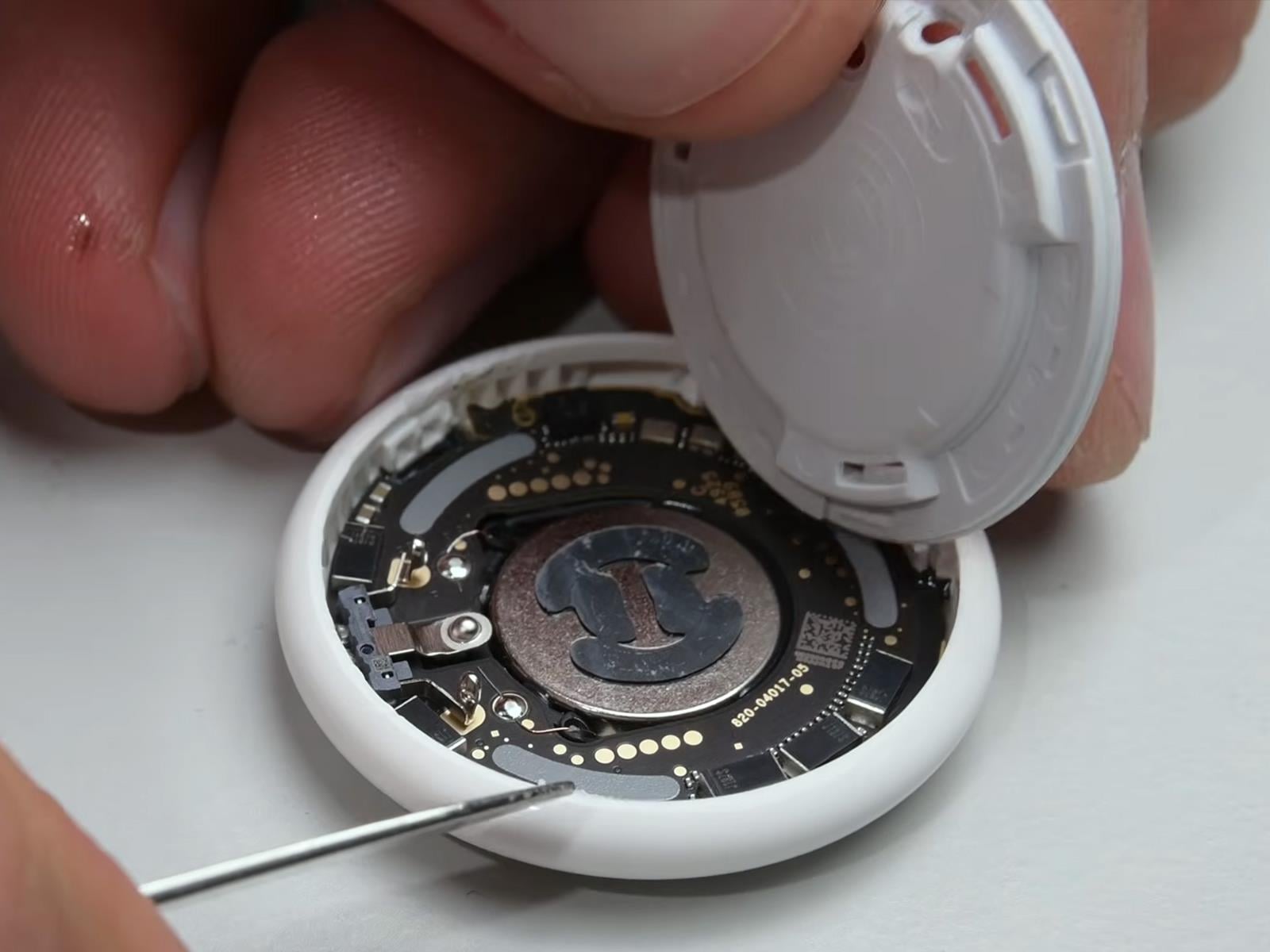
Apple’s second-generation AirTag tracker has gone under the knife in multiple teardown videos, giving us a clear view of the redesigned internal structure compared to the first-generation tracker. In case you missed the launch announcement, Apple announced several key changes, including an expanded Bluetooth range, a louder built-in speaker,
HP 15.6-Inch Laptop (2026 Edition) Falls to 55% Off After Its Second Price Cut in a Month on Amazon

This kind of discount is worth waiting for, so grab it while you can.
Lawmakers ask what it would take to “store” the International Space Station
Members of the House Science, Space, and Technology Committee voted to approve a NASA authorization bill this week, advancing legislation chock full of policy guidelines meant to give lawmakers a voice in the space agency’s strategic direction.
The committee met to “mark up” the NASA Reauthorization Act of 2026, adding more than 40 amendments to the bill before a unanimous vote to refer the legislation to the full House of Representatives. Wednesday’s committee vote was just one of several steps needed for the bill to become law. It must pass a vote on the House floor, win approval from the Senate, and then go to the White House for President Donald Trump’s signature.
Ars has reported on one of the amendments, which would authorize NASA to take steps toward a “commercial” deep space program using privately owned rockets and spacecraft rather than vehicles owned by the government.
The Bizarre Enhancement Claims Rocking Ski Jumping
German newspaper Bild reported in January that some ski jumpers have been injecting their penises with hyaluronic acid ahead of the Milan Cortina Winter Olympics — the theory being that temporarily enlarged genitalia would yield looser-fitting suits when measured by 3D scanners, and those looser suits could act like sails to produce longer jumps.
A study published last October in the scientific journal Frontiers found that a 2cm suit change translated to an extra 5.8 metres in jump distance. No specific athletes have been accused. The World Anti-Doping Agency said Thursday it would investigate if presented with evidence, noting its powers extend to banning practices that violate the “spirit of sport.” The claims arrive as ski jumping already faces scrutiny — two Norwegian coaches and an equipment manager received 18-month bans in January for illegally manipulating suit stitching.


Read more of this story at Slashdot.
Scans Reveal An Ancient Surprise Hiding In Martian Meteorite That Fell To Earth
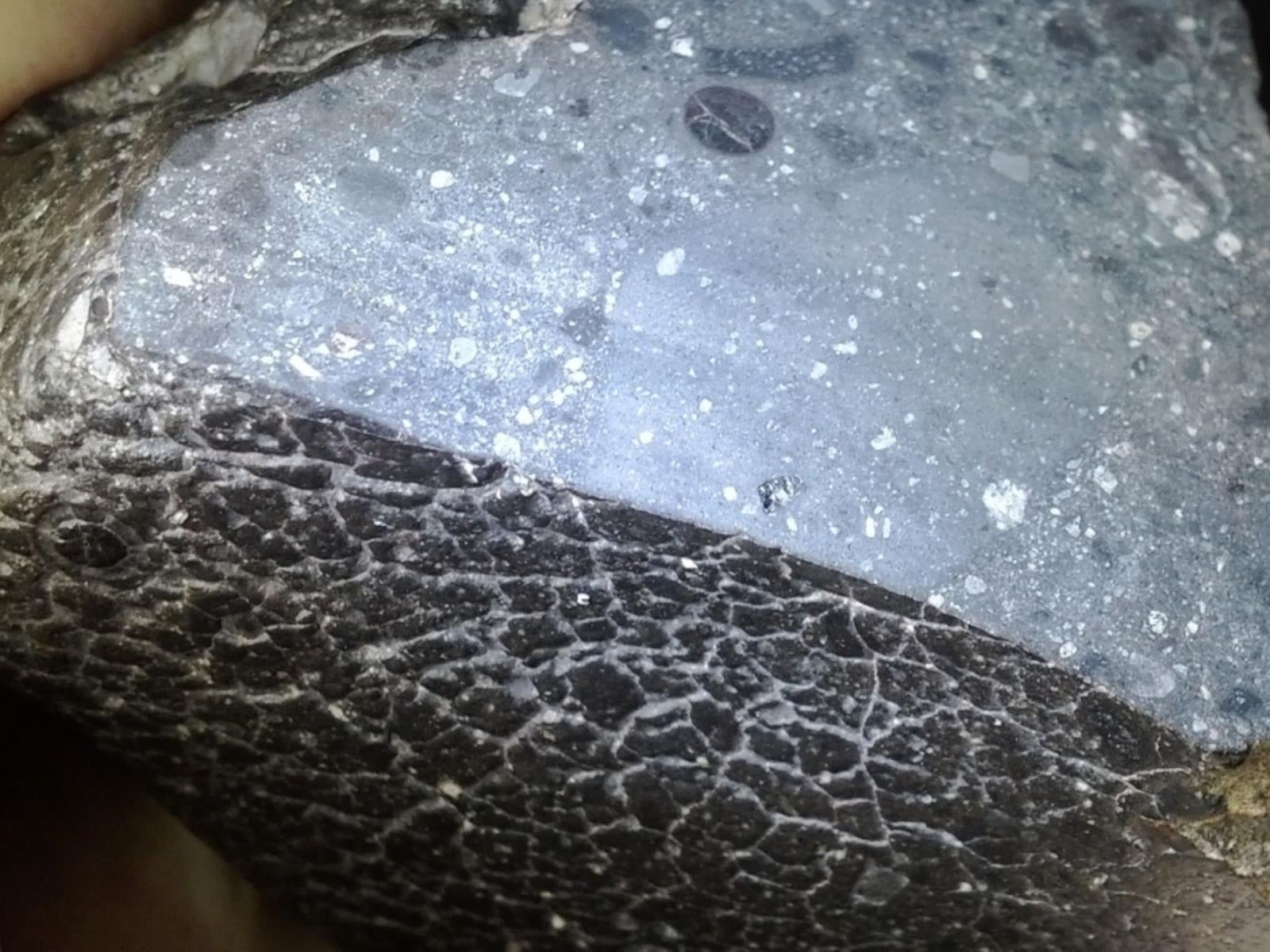
Remember the famous meteorite NWA 7034, a.k.a Black Beauty found in Northwest Africa? Researchers using neutron scanning technology have discovered a hidden reservoir of ancient water locked inside the Martian rock and in higher concentration than expected.
The study, led by Estrid Buhl Naver and her team at the Technical University of
Nintendo Isn’t Freaking Out About The RAM Shortage Affecting Switch 2, Yet

The company is taking a measured approach to unprecedented economic conditions
How to make a local open source AI chatbot who has access to Fedora documentation
If you followed along with my blog, you’d have a chatbot running on your local Fedora machine. (And if not, no worries as the scripts below implement this chatbot!) Our chatbot talks, and has a refined personality, but does it know anything about the topics we’re interested in? Unless it has been trained on those […]
Beats Studio Pro Matches Its Black Friday Pricing at 51% Off, Now the Cheapest ANC Headphones From Apple

The pair offers exceptional sound quality, plus is compatible with both Android and iOS devices.
NVIDIA May Push Back Launch Of RTX 50 Super And Next-Gen RTX 60 GPUs
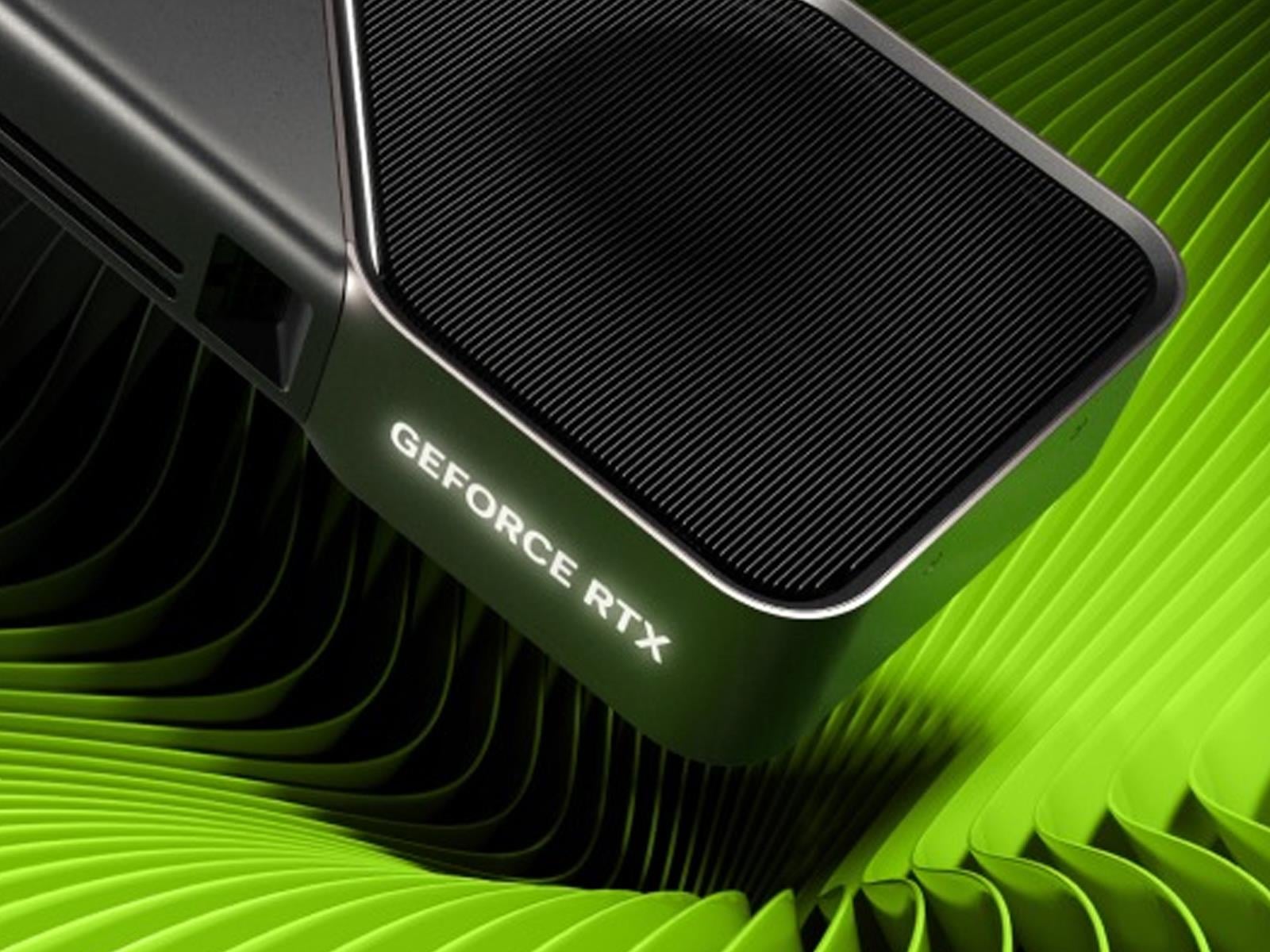
We’re a little over a month into 2026 and one thing is already abundantly clear—it’s going to be a tough year PC gaming upgrades. Hot on the heels of a rumored delay to Intel’s not-yet-announced Core G3 and G3 Extreme Panther Lake CPUs for handhelds and Valve’s Steam Machine potentially getting a price adjustment before pricing is even announced,
NASA will now allow astronauts to take their smartphones to space
Most people wouldn’t leave their phones behind when they so much as go for a drive, but NASA astronauts have had to leave their phones on Earth while they went to work 250 miles away at the International Space Station. That is, until now.
In a post on X, NASA Administrator Jared Isaacman shared that the Crew-12 and Artemis II astronauts will be allowed to bring smartphones along for the journey to the ISS and beyond. “We are giving our crews the tools to capture special moments for their families and share inspiring images and video with the world,” Isaacman said.
While these won’t be the first smartphone images captured in space — that distinction belongs to a trio of miniature phone-based satellites sent into Earth orbit in 2013 which succeeded where the earlier British STRaND-1 project failed. But thanks to the upcoming Artemis II mission, we can look forward to the first smartphone images from the moon’s orbit. The March (for now) launch will be the agency’s first crewed moon mission since Apollo 17 in 1972.
The crews’ personal devices will be far less cumbersome to use than the old Nikon DSLRs they were previously limited to for high-quality still images. Ideally, this means more spontaneous pictures that can be shared with friends and family back on Earth.
This article originally appeared on Engadget at https://www.engadget.com/science/space/nasa-will-now-allow-astronauts-to-take-their-smartphones-to-space-151310548.html?src=rss
Linux from Scratch to drop System V versions
The Linux From
Scratch (LFS) project provides step-by-step instructions on
building a customized Linux system entirely from source. Historically,
the project has provided separate System V and systemd editions,
which gave users a choice of init systems. Bruce Dubbs has announced
the project will no longer produce the System V version:
There are two reasons for this decision. The first reason is
workload. No one working on LFS is paid. We rely completely on
volunteers. In LFS there are 88 packages. In BLFS there are over
1000. The volume of changes from upstream is overwhelming the
editors. In this release cycle that started on the 1st of September
until now, there have been 70 commits to LFS and 1155 commits to BLFS
(and counting). When making package updates, many packages need to be
checked for both System V and systemd. When preparing for release, all
packages need to be checked for each init system.The second reason for dropping System V is that packages like GNOME
and soon KDE’s Plasma are building in requirements that require
capabilities in systemd that are not in System V. This could
potentially be worked around with another init system like OpenRC, but
beyond the transition process it still does not address the ongoing
workload problem.[…] As a personal note, I do not like this decision. To me LFS is
about learning how a system works. Understanding the boot process is a
big part of that. systemd is about 1678 “C” files plus many data
files. System V is “22” C files plus about 50 short bash scripts and
data files. Yes, systemd provides a lot of capabilities, but we will
be losing some things I consider important.
The next version, 13.0, is expected in March and will only focus on
systemd.
Larian Isn’t Involved With The Baldur’s Gate Show, Fans Are Not Happy: ‘I Genuinely Don’t Think Anyone Can Trump Our Writers’

Showrunner Craig Mazin has reached out to the studio to discuss the series