
Of Intel’s different CPU accelerator IPs, the arguably most useful and with the greatest customer interest remains around QuickAssist Technology (QAT). Intel QAT allows offloading various compression and encryption tasks for better performance. Intel this week released QATlib 26.02 as the newest version of their user-space library for leveraging QuickAssist Technology on capable hardware…
Monthly Archives: February 2026
DreamWorks’ OpenMoonRay 2.40 Introduces New GUI, Light Path Visualizer
Back in 2022 DreamWorks Animation announced they were open-sourcing their MoonRay renderer and was then published in early 2023 for this renderer that has been used in a variety of featured animated films. Since then they have continued advancing this MoonRay code via the open-source OpenMoonRay project and this week published their newest feature update…
PeaZip 10.9 Open-Source Archive Manager Released with Improved User Experience
PeaZip 10.9 has been released today as the latest stable update for this open-source file manager and file archiver for Linux, BSD, macOS, ReactOS, and Windows by Giorgio Tani.
Microsoft On QEMU 10.2’s New MSHV Accelerator For Hyper-V Guests
With QEMU 10.2 that released at the end of last year is the new “MSHV” accelerator for allowing VMs to be created from a Microsoft Hyper-V guest without using nested virtualization. Last weekend at FOSDEM 2026 was a presentation on this MSHV accelerator for those interested…
New Proposal Explores Machine Learning Assistance for Linux Kernel Behavior
A Linux kernel developer has proposed using user-space machine learning models to assist kernel subsystems.
Have We Been Thinking About Exercise Wrong for Half a Century?
“After a half-century asking us to exercise more, doctors and physiologists say we have been thinking about it wrong,” writes Washington Post columnist Michael J. Coren.
“U.S. and World Health Organization guidelines no longer specify a minimum duration of moderate or vigorous aerobic activity.”
Movement-tracking studies show even tiny, regular bursts of effort — as short as 30 seconds — can capture many of the health benefits of the gym. Climbing two to three flights of stairs a few times per day could change your life. Experts call it VILPA, or vigorous intermittent lifestyle physical activity. “The message now is that all activity counts,” said Martin Gibala, a professor and former chair of the kinesiology department at McMaster University in Canada… Just taking the stairs daily is associated with lower body weight and cutting the risk of stroke and heart disease — the leading (and largely preventable) cause of death globally. While it may not burn many calories (most exercise doesn’t), it does appear to extend your health span. Leg power — a measure of explosive muscle strength — was a stronger predictor of brain aging than any lifestyle factors measured in a 2015 study in the journal Gerontology…
How little activity can you do? Four minutes daily. Essentially, a few flights of stairs at a vigorous pace. That’s the effort [Emmanuel Stamatakis, a professor of physical activity and population health at the University of Sydney] found delivered significant health benefits in that 2022 study of British non-exercisers. “We saw benefits from the first minute,” Stamatakis said. For Americans, the effect is even more dramatic: a 44 percent drop in deaths, according to a peer-reviewed paper recently accepted for publication. “We showed for the first time that vigorous intensity, even if it’s done as part of the day-to-day routine, not in a planned and structured manner, works miracles,” Stamatakis said. “The key principle here is start with one, two minutes a day. The focus should be on making sure that it’s something that you can incorporate into your daily routine. Then you can start thinking about increasing the dose.”
Intensity is the most important factor. You won’t break a sweat in a brief burst, but you do need to feel it. A highly conditioned athlete might need to sprint to reach vigorous territory. But many people need only to take the stairs. Use your breathing as a guide, Stamatakis said: If you can sing, it’s light intensity. If you can speak but not sing, you’re entering moderate exertion. If you can’t hold a conversation, it’s vigorous. The biggest benefits come from moderate to vigorous movement. One minute of incidental vigorous activity prevents premature deaths, heart attacks or strokes as well as about three minutes of moderate activity or 35 to 49 minutes of light activity.


Read more of this story at Slashdot.
KDE Plasma 6.7 Prepares Smarter Window List and Window Management Improvements
Plasma 6.7 is shaping up to include an improved Window List widget with sorting and clearer grouping for easier window navigation.
Are Big Tech’s Nuclear Construction Deals a Tipping Point for Small Modular Reactors?
Fortune reports on “a watershed moment” in American’s nuclear power industry:
In January, Meta partnered with Gates’ TerraPower and Sam Altman-backed Oklo to develop about 4 gigawatts of combined SMR projects — enough to power almost 3 million homes — for “clean, reliable energy” both for Meta’s planned Prometheus AI mega campus in Ohio and beyond. Analysts see Meta as the start of more Big Tech nuclear construction deals — not just agreements with existing plants or restarts such as the now-Microsoft-backed Three Mile Island. “That was the first shot across the bow,” said Dan Ives, head of tech research for Wedbush Securities, of the Meta deals. “I would be shocked if every Big Tech company doesn’t make some play on nuclear in 2026, whether a strategic partnership or acquisitions.”
Ives pointed out there are more data centers under construction than there are active data centers in the U.S. “I believe clean energy around nuclear is going to be the answer,” he said. “I think 2030 is the key threshold to hit some sort of scale and begin the next nuclear era in the United States.” Smaller SMR reactors can be built in as little as three years instead of the decade required for traditional large reactors. And they can be expanded, one or two modular reactors at a time, to meet increasingly greater energy demand from ‘hyperscalers,’ the companies that build and operate data centers. “There’s major risk if nuclear doesn’t happen,” Oklo chairman and CEO Jacob DeWitte told Fortune, citing the need for emission-free power and consistent baseload electricity to meet skyrocketing demand. “The hyperscalers, as the ultimate consumers of power are, are looking at the space and seeing that the market is real. They can play a major role in helping make that happen,” DeWitte said, speaking in his fast-talking, Silicon Valley startup mode.


Read more of this story at Slashdot.
A New Era for Security? Anthropic’s Claude Opus 4.6 Found 500 High-Severity Vulnerabilities
Axios reports:
Anthropic’s latest AI model has found more than 500 previously unknown high-severity security flaws in open-source libraries with little to no prompting, the company shared first with Axios.
Why it matters: The advancement signals an inflection point for how AI tools can help cyber defenders, even as AI is also making attacks more dangerous…
Anthropic debuted Claude Opus 4.6, the latest version of its largest AI model, on Thursday. Before its debut, Anthropic’s frontier red team tested Opus 4.6 in a sandboxed environment [including access to vulnerability analysis tools] to see how well it could find bugs in open-source code… Claude found more than 500 previously unknown zero-day vulnerabilities in open-source code using just its “out-of-the-box” capabilities, and each one was validated by either a member of Anthropic’s team or an outside security researcher… According to a blog post, Claude uncovered a flaw in GhostScript, a popular utility that helps process PDF and PostScript files, that could cause it to crash. Claude also found buffer overflow flaws in OpenSC, a utility that processes smart card data, and CGIF, a tool that processes GIF files.
Logan Graham, head of Anthropic’s frontier red team, told Axios they’re considering new AI-powered tools to hunt vulnerabilities. “The models are extremely good at this, and we expect them to get much better still… I wouldn’t be surprised if this was one of — or the main way — in which open-source software moving forward was secured.”


Read more of this story at Slashdot.
The World’s First Sodium-Ion Battery in Commercial EVs – Great at Low Temperatures
Long-time Slashdot reader Geoffrey.landis shared this report from InsideEVs:
Chinese battery giant CATL and automaker Changan Automobile are preparing to put the world’s first passenger car powered by sodium-ion batteries on public roads by mid-2026. And if the launch is successful, it could usher in an era where electric vehicles present less of a fire risk and can better handle extreme temperatures.
The CATL Naxtra sodium-ion battery will debut in the Changan Nevo A06 sedan, delivering an estimated range of around 400 kilometers (249 miles) on the China Light-Duty Test Cycle. From there, the battery will roll out across Changan’s broader portfolio, including EVs from Avatr, Deepal, Qiyuan and Uni, the company said. “The launch represents a major step in the industry’s transition toward a dual-chemistry ecosystem, where sodium-ion and lithium-ion batteries complement each other to meet diverse customer needs,” CATL said in a press release…
It delivers 175 watt-hours per kilogram of energy density, which is lower than nickel-rich chemistries but roughly on par with lithium ion phosphate batteries… Where the Naxtra battery really stands out, however, is cold-weather performance. CATL says its discharge power at -30 degrees Celsius (-22 degrees Fahrenheit) is three times higher than that of lithium ion phosphate batteries.


Read more of this story at Slashdot.
Glassbreakers: Champions of Moss & Clay Hunt VR Are Quest’s Horizon+ Monthly Games This February
Glassbreakers: Champions of Moss and Clay Hunt VR are this February’s Horizon+ monthly games on Quest.
February 2026 brings a number of new games to the Horizon+ Monthly Games Catalog, including one of the best strategy games in VR, and an engaging target practice shooter. In addition, previously redeemed games will remain in your library while subscribed to the service.
Here’s what you need to know about this February’s offerings.
Glassbreakers: Champions of Moss
0:00
/1:35
The star of February’s Horizon+ Monthly games, Glassbreakers: Champions of Moss is, as our review put it, a “smart, competitive, and […] one of the best strategy experiences available in VR.” The tabletop strategy game, which features characters and lore from the Moss and Moss 2 game universe, blends the strategic depth of RTS games with the character personality and squad mechanics of the best MOBAs.
Glassbreakers Review: Nuanced PvP Strategy With Adorable Whiskers
Glassbreakers: Champions of Moss is a brilliantly designed PvP strategy game that’s worth your time.
 UploadVRPete Austin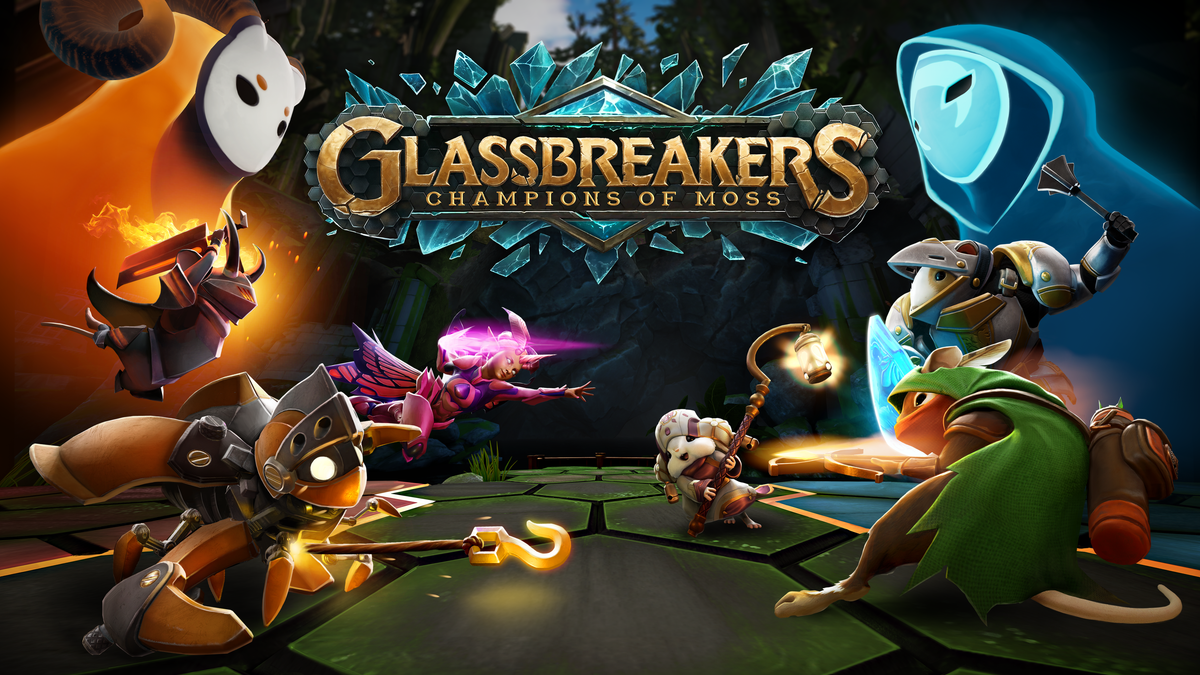
Clay Hunt VR
0:00
/0:31
Clay Hunt VR is a relatively simple shotgun shooting game which challenges you to hone your aim against clay skeets, ducks, and other game animals. A multiplayer mode allows shooting with friends in public or private rooms, and customizable weaponry allows players to tune their favorite guns.
Horizon+ Games Catalog Games
Horizon+ continues offering a Games Catalog of Quest titles that any subscriber can access. Meta can remove and add new games from the catalog at any time. Here is the current Horizon+ Games Catalog in the US:
- Angry Birds VR: Isle of Pigs
- Asgard’s Wrath 2
- Assassin’s Creed Nexus VR
- BARTENDER VR SIMULATOR
- Blacktop Hoops
- Cubism
- Deisim
- Demeo
- Demeo Battles
- Dungeons Of Eternity
- Eleven Table Tennis
- FINAL FURY
- Fruit Ninja 2
- Ghosts of Tabor
- Green Hell VR
- Grimlord
- Human Fall Flat VR
- iB Cricket
- I Expect You To Die 3
- In Death: Unchained
- Into Black
- Into the Radius
- Job Simulator
- Kingspray Graffiti
- LES MILLS BODYCOMBAT: Fitness workouts
- Maestro
- Medieval Dynasty New Settlement
- Moss
- Pets & Stuff
- Pistol Whip
- Premium Bowling
- Project Demigod
- Puzzling Places
- Racket Club
- Real VR Fishing
- Red Matter
- Red Matter 2
- Starship Home
- Synth Riders
- Tetris Effect: Connected
- The Climb 2
- The Light Brigade
- The Thrill of the Fight
- Thief Simulator VR: Greenview Street
- Titans Clinic
- Townsmen VR
- War of Wizards
- Zero Caliber: Reloaded
Horizon+ Indie Catalog Games
Meta continues to add new games to the separate Indie Games Catalog, and you can see the entire list here.
- Alvo
- Apex Construction
- Arcade Paradise VR
- Battlenauts
- Bocce Time!
- Cactus Cowboy – Desert Warfare
- Chess Club
- Coffee Quest VR
- Crumbling
- Cybrix
- Darksword: Battle Eternity
- Disc Frenzy
- Discovery 2
- Elysium Trials
- Espire 1: VR Operative
- Final Overs – VR Cricket
- Galaxy Kart
- Ghost Signal: A Stellaris Game
- Gravity League: Galactic Football
- IRON GUARD
- Ironlights
- Killer Frequency
- Laser Thief
- LAX VR
- Make it Stable
- Motion Soccer PRO
- Mythic Realms
- Noun Town Language Learning
- Operation Serpens
- Retropolis 2: Never Say Goodbye
- Rogue Ascent VR
- Rogue Pinatas: VRmageddon
- RUNNER
- Shooty Fruity
- Slot Car VR
- Space Elevator
- Squingle
- Stupid Cars
- Sushi Ben
- Tactica
- Taiko Frenzy
- The Curious Tale of the Stolen Parts
- The Pirate Queen with Lucy Liu
- The Secret of Retropolis
- The Wizards
- Tiny Archers
- Towers and Powers
- ULTIMATE SWING GOLF
- Underworld Overseer
- Vibe Punch
- Windlands 2
Meta Horizon+ is a subscription service that gives players access to a monthly selection of games for $7.99 USD per month, or $59.99 USD a year. New users can give Meta Horizon+ a try for a month.
Khronos Moves to Integrate Gaussian Splatting Into glTF 3D Format
The Khronos Group is aiming to standardize Gaussian splatting by proposing a release candidate for an integration into the widely adopted glTF 3D format.
Khronos is a non-profit industry consortium that manages OpenGL, Vulkan, and WebGL. In the context of XR specifically, it pioneered OpenXR, an open industry-standard API for XR application development and runtimes. OpenXR provides developers with access to a single standardized API, allowing them to build an app once and then easily port it to other platforms, facilitating cross-platform availability. OpenXR is supported by most major stakeholders in the XR industry, including Meta, Valve, HTC, ByteDance, Epic Games, Unity, Nvidia, and Qualcomm. A notable exception is Apple, which maintains its own proprietary APIs.
In 2015, Khronos introduced glTF (Graphics Language Transmission Format), a standard for the efficient transmission and loading of 3D scenes and models by game engines and applications. Often framed as the “JPEG of 3D,” it provides a streamlined, universal format that allows creators to export high-quality 3D assets from any tool while ensuring consumers can view them instantly and consistently across any device or web browser. Today, glTF is the most widely adopted 3D asset format on the web.
This week, Khronos announced a release candidate for a Gaussian splatting extension to glTF. Gaussian splatting has shown immense potential for XR, as it allows for quick and easy photorealistic 3D capturing of objects and environments using common devices like smartphones, which can later be viewed and explored in VR. The technology already powers the photorealistic captures of Meta Hyperscape, Apple’s recently improved Personas, the volumetric scenes of Gracia and the promptable 3D environments of Marble.
Standardizing delivery: Why glTF is key to mainstream adoption
While capturing Gaussian splats has become easier, sharing them remains the primary hurdle, an issue Khronos is now directly addressing. The new glTF extension enables the storage of 3D Gaussian splats directly within glTF files. By doing so, Khronos is standardizing the delivery of Gaussian splats within an already established and widely adopted 3D ecosystem, paving the way for the technology to move into the mainstream.
“Instagram made it easy to share photos; TikTok brought about an explosion in short-form video social sharing. Until now, 3D has lagged behind 2D media formats because 3D models are so much harder than photos or videos to create and share. With Gaussian splatting, you can easily imagine an app that enables a mobile user to move their phone to quickly capture a scene or object to create a splat-based 3D model. As an open standard, glTF makes it possible to share that model. A splat stored in a glTF file could be shared on social media and displayed with full interactivity on any client device,” explains Neil Trevett, president of Khronos, in a written statement to UploadVR.
Khronos’s decision to formally embrace Gaussian splatting sends a clear message that lifelike 3D is here to stay, says Michael Rubloff, Managing Editor of Radiance Fields, a news blog specialized in Gaussian splatting and similar technologies.
“With that level of impact approaching, it becomes critical to build the foundations carefully. A glTF extension, built on the most widely adopted 3D asset format, helps derisk fragmentation as industries shift from 2D to 3D while giving developers confidence that what they build today can ship across ecosystems rather than remain locked to a single platform,” says Rubloff.
Gaussian Splatting: A new form of 3D graphics representation
Gaussian splats represent a fundamental departure from traditional mesh-based graphics. While standard 3D modeling relies on connected triangles to define an object’s surface, Gaussian splatting treats a scene as a dense cloud of volumetric data points, with each point defined by properties including position, scale, rotation, color, and opacity. The benefits over traditional 3D graphics rendering include the ability to capture complex geometries like hair or smoke and highly realistic lighting effects, such as reflections and refractions, that are notoriously difficult to achieve with polygonal meshes.
The new glTF extension acts like an instruction manual, telling the software to render these points as smooth, overlapping shapes, creating a realistic 3D image rather than the flat, jagged surfaces usually seen in video games.
Still, there is work to be done. The extension is currently in a release candidate phase, with the Khronos 3D Formats Working Group inviting feedback from engine developers, creators, and artists to test the specification ahead of a formal ratification targeted for the second quarter of 2026. So far, companies such as Autodesk, Bentley Systems, Huawei, Niantic Spatial, and Nvidia have contributed to the extension.
The release candidate was developed with the rapid and ongoing evolution of Gaussian splatting in mind. For example, it does not yet define a standard compression approach, which is crucial for making Gaussian splatting performant on mobile devices. To maintain flexibility, the specification is intentionally designed to be extensible, leaving room for future additions as Gaussian splatting techniques evolve and eventually become standardized within the glTF ecosystem.
Is the ‘Death of Reading’ Narrative Wrong?
Has the rise of hyper-addictive digital technologies really shattered our attention spans and driven books out of our culture? Maybe not, argues social psychologist Adam Mastroianni (author of the Substack Experimental History):
As a psychologist, I used to study claims like these for a living, so I know that the mind is primed to believe narratives of decline. We have a much lower standard of evidence for “bad thing go up” than we do for “bad thing go down.” Unsurprisingly, then, stories about the end of reading tend to leave out some inconvenient data points. For example, book sales were higher in 2025 than they were in 2019, and only a bit below their high point in the pandemic. Independent bookstores are booming, not busting; at least 422 new indie shops opened in the United States last year alone. Even Barnes & Noble is cool again.
The actual data on reading, meanwhile, isn’t as apocalyptic as the headlines imply. Gallup surveys suggest that some mega-readers (11+ books per year) have become moderate readers (1-5 books per year), but they don’t find any other major trends over the past three decades. Other surveys document similarly moderate declines. For instance, data from the National Endowment for the Arts finds a slight decrease in the percentage of U.S. adults who read any book in 2022 (49%) compared to 2012 (55%). And the American Time Use Survey shows a dip in reading time from 2003 to 2023. Ultimately, the plausibility of the “death of reading” thesis depends on two judgment calls. First, do these effects strike you as big or small…? The second judgment call: Do you expect these trends to continue, plateau, or even reverse…?
There are signs that the digital invasion of our attention is beginning to stall. We seem to have passed peak social media — time spent on the apps has started to slide. App developers are finding it harder and harder to squeeze more attention out of our eyeballs, and it turns out that having your eyeballs squeezed hurts, so people aren’t sticking around for it… Fact #2: Reading has already survived several major incursions, which suggests it’s more appealing than we thought. Radio, TV, dial-up, Wi-Fi, TikTok — none of it has been enough to snuff out the human desire to point our pupils at words on paper… It is remarkable, even miraculous, that people who possess the most addictive devices ever invented will occasionally choose to turn those devices off and pick up a book instead.
The authors mocks the “death of reading” hypothesis for implying that all the world’s avid readers “were just filling time with great works of literature until TikTok came along.”


Read more of this story at Slashdot.
New York lawmakers introduce bill that aims to halt data center development for three years
On Friday, New York State Senators Liz Krueger and Kristen Gonzales introduced a bill that would stop the issuance of permits for new data centers for at least three years and ninety days to give time for impact assessments and to update regulations. The bill would require the Department of Environmental Conservation and Public Service Commissions to issue impact statements and reports during the pause, along with any new orders or regulations that they deem necessary to minimize data centers’ impacts on the environment and consumers in New York.
The bill would require these departments to study data centers’ water, electricity and gas usage, and their impact on the rates of these resources, among other things. The bill, citing a Bloomberg analysis, notes that, “Nationally, household electricity rates increased 13 percent in 2025, largely driven by the development of data centers.” New York is the sixth state this year to introduce a bill aiming to put the brakes on data centers, following in the footsteps of Georgia, Maryland, Oklahoma, Vermont and Virginia, according to Wired. It’s still very much in the early stages, and is now with the Senate Environmental Conservation Committee for consideration.
This article originally appeared on Engadget at https://www.engadget.com/big-tech/new-york-lawmakers-introduce-bill-that-aims-to-halt-data-center-development-for-three-years-224005266.html?src=rss
Wine 11.2 Released With Faster PDB Loading and 32 Bug Fixes
Wine 11.2 is out with faster PDB loading, improved MSVC runtime support, and 32 bug fixes affecting games, tools, and audio.
Waymo Reveals Remote Workers In Philippines Sometimes Advise Its Driverless Cars
Waymo surprised U.S. lawmakers Wednesday during a hearing on autonomous vehicles and their safety and oversight. Newsweek reports:
During questioning, Sen. Ed Markey, a Massachusetts Democrat, asked what happens when a Waymo vehicle encounters a driving situation it cannot independently resolve. “The Waymo phones a human friend for help,” Markey explained, adding that the vehicle communicates with a “remote assistance operator.” Markey criticized the lack of public information about these workers, despite their role in vehicle safety…
[Dr. Mauricio Peña, chief safety officer at Waymo] responded by clarifying the scope of the operators’ involvement: “They provide guidance, they do not remotely drive the vehicles,” Peña said. “Waymo asks for guidance in certain situations and gets input, but Waymo is always in charge of the dynamic driving task,” according to EVShift Pressed further on where those operators are located, Peña told lawmakers that some are based in the United States and others abroad, though he did not have an exact breakdown. After additional questioning, he confirmed that overseas operators are located in the Philippines…
The disclosure prompted sharp criticism from Markey, who raised concerns about security and labor implications. “Having people overseas influencing American vehicles is a safety issue,” he said. “The information the operators receive could be out of date. It could introduce tremendous cyber security vulnerabilities,” according to People. Markey also pointed to job displacement, noting that autonomous vehicles already affect taxi and rideshare drivers in the U.S. Waymo defended the practice in comments to People, saying the use of overseas staff is part of a broader effort to scale operations globally.
Waymo also defended the remote workers to Newsweek as licensed drivers reviewed for “driving-related convictions” and other traffic violations who are also “randomly screened for drug use.”
Thanks to Slashdot reader sinij for sharing the news.


Read more of this story at Slashdot.
Linux 6.19 Features Include Many Benefits For Intel & AMD Users
With the Linux 6.19 stable kernel expected to be released tomorrow (8 February), here is a reminder about the top features to expect from this next version of the Linux kernel…
DOJ is investigating if Netflix used anticompetitive tactics as part of its merger probe
Netflix’s acquisition of Warner Bros. Discovery isn’t quite a done deal yet. As first reported by The Wall Street Journal, the US Department of Justice has started its probe of Netflix’s proposed purchase, but is notably interested in whether the streaming giant was involved in any anticompetitive practices. According to the civil subpoena seen by WSJ, the Justice Department is looking into any “exclusionary conduct on the part of Netflix that would reasonably appear capable of entrenching market or monopoly power.”
While Netflix announced plans to acquire Warner Bros. Discovery in December at a value of $82.7 billion, the deal was expected to close in 12 to 18 months, subject to required regulatory approvals. The DOJ has the power to block the transaction and this investigation could hint at the agency’s approach, which may involve proving that Netflix put its competition at an unfair advantage.
Netflix’s attorney, Steven Sunshine, told WSJ that this probe was standard practice and that, “we have not been given any notice or seen any other sign that the DOJ is conducting a separate monopolization investigation.” Netflix also said in a statement that it’s “constructively engaging with the Department of Justice as part of the standard review of our proposed acquisition of Warner Bros.” According to WSJ, the investigation is still in its early stages and could take up to a year to complete.
This article originally appeared on Engadget at https://www.engadget.com/entertainment/streaming/doj-is-investigating-if-netflix-used-anticompetitive-tactics-as-part-of-its-merger-probe-210940856.html?src=rss
The State Department is scrubbing its X accounts of all posts from before Trump’s second term
The State Department is wiping the post history of its X accounts and making it so you’ll have to file a Freedom of Information Act request if you want to access any of the content it removed, according to NPR. The publication reports that the State Department is removing all posts from before President Trump’s current term — a move that affects several accounts associated with the department, including those for US embassies, and posts from the Biden and Obama administrations. Posts from Trump’s first term will be taken down too.
Unlike how past administrations have handled the removal of social media content and the transition of accounts, these posts won’t be kept in a public archive. A spokesperson for the State Department confirmed this to NPR, and said the move is meant “to limit confusion on U.S government policy and to speak with one voice to advance the President, Secretary, and Administration’s goals and messaging. It will preserve history while promoting the present.” The spokesperson also called the X accounts “one of our most powerful tools for advancing the America First goals.”
The Trump administration has been purging information from government websites since he took office last year. Just this week, the CIA unexpectedly took down its World Factbook, a global reference guide that’s been available on the internet since 1997.
This article originally appeared on Engadget at https://www.engadget.com/social-media/the-state-department-is-scrubbing-its-x-accounts-of-all-posts-from-before-trumps-second-term-205515745.html?src=rss
Good News: We Saved the Bees. Bad News: We Saved the Wrong Ones.
Despite urgent pleas to Americans to save the honeybees, “it was all based on a fallacy,” writes Washington Post columnist Dana Milbank. “Honeybees were never in existential trouble. And well-meaning efforts to boost their numbers have accelerated the decline of native bees that actually are.”
“Suppose I were to say to you, ‘I’m really worried about bird decline, so I’ve decided to take up keeping chickens.’ You’d think I was a bit of an idiot,” British bee scientist Dave Goulson said in a video last year. But beekeeping, he went on, is “exactly the same with one key difference, which is that honeybee-keeping can be actively harmful to wild-bee conservation.” Even from healthy hives, diseases flow “out into wild pollinator populations.”
Honeybees can also outcompete native bees for pollen and nectar, Milbank points out, and promote non-native plants “at the expense of the native plants on which native bees thrive.”
Bee specialist T’ai Roulston at the University of Virginia’s Blandy Experimental Farm here in Boyce warned that keeping honeybees would “just contribute to the difficulties that native bees are having in the world.” And the Clifton Institute’s Bert Harris, my regular restoration ecology consultant in Virginia, put it bluntly: “If you want to save the bees, don’t keep honeybees….”
Before I stir up a hornet’s nest of angry beekeepers, let me be clear: The save-the-pollinator movement has, overall, been enormously beneficial over the past two decades. It helped to get millions of people interested in pollinator gardens and wildflower meadows and native plants, and turned them against insecticides. A lot of honeybee advocacy groups promote native bees, too, and many people whose environmental awakening came from the plight of honeybees are now champions of all types of conservation…
But if your goal is to help pollinators, then the solution is simple: Don’t keep honeybees… The bumblebees, sweat bees, mason bees, miner bees, leafcutters and other native bees, most of them solitary, ground-nesting and docile, need your help. Honeybees do not.
The article calls it “a cautionary tale about the unintended consequences that emerge when we intervene in nature, even with the best of intentions.”


Read more of this story at Slashdot.