HAM Radio Operators In Belarus Arrested, Face the Death Penalty

An anonymous reader quotes a report from 404 Media: The Belarusian government is threatening three HAM radio operators with the death penalty, detained at least seven people, and has accused them of “intercepting state secrets,” according to Belarusian state media, independent media outside of Belarus, and the Belarusian human rights organization Viasna. The arrests are an extreme attack on what is most often a wholesome hobby that has a history of being vilified by authoritarian governments in part because the technology is quite censorship resistant.

The detentions were announced last week on Belarusian state TV, which claimed the men were part of a network of more than 50 people participating in the amateur radio hobby and have been accused of both “espionage” and “treason.” Authorities there said they seized more than 500 pieces of radio equipment. The men were accused on state TV of using radio to spy on the movement of government planes, though no actual evidence of this has been produced. State TV claimed they were associated with the Belarusian Federation of Radioamateurs and Radiosportsmen (BFRR), a long-running amateur radio club and nonprofit that holds amateur radio competitions, meetups, trainings, and forums. Siarhei Besarab, a Belarusian HAM radio operator, posted a plea for support from others in the r/amateurradio subreddit. “I am writing this because my local community is being systematically liquidated in what I can only describe as a targeted intellectual genocide,” Besarab wrote. “I beg you to amplify this signal and help us spread this information. Please show this to any journalist you know, send it to human rights organizations, and share it with your local radio associations.”


Read more of this story at Slashdot.

The Emergency Repair Supplies Every Homeowner Should Have on Hand

We may earn a commission from links on this page.

So many things can go wrong with your home at any given moment—and those problems won’t exactly wait for you to be prepared to deal with them before they hit. Plus, they often happen when it’s difficult or impossible to get a professional to come help you—like during storms, or in the middle of the night.

If you wake up to a burst pipe or a leaking roof and you can’t get a pro to come for a while, you don’t want to be powerless in your efforts to stave off further disaster. Having a basic set of tools is a great start, but you need to keep a few more items on hand if you truly want to be able to respond with a quick fix. Here’s the short list of everything you should have in your home in case you need to do some emergency repairs.

Essential items for plumbing emergencies

Water is incredibly destructive, and leaks that seem minor can do major damage to your house. Making sure you have basic tools like wrenches and knowing where the water shutoffs are in your house is essential, but here are a few more items that can hep you respond to emergencies:

  • Snake auger. A plunger will take care of a clogged drain or toilet (and if you lack a plunger, don’t forget you can use a garbage bag on the toilet in a pinch), but if plunging doesn’t stop the water’s inexorable rise, you need to have a snake auger on hand. It’s a simple tool that anyone can operate, and it will break up most clogs pretty quickly, potentially averting disaster.

  • Battery powered pumps. You may already have a sump pump installed to keep things dry in your basement and crawl space. If the power goes out, however, your sump won’t do you much good. And battery backup power typically doesn’t last long, so having a cordless transfer pump could be a lifesaver. Even something like a DrillPump (for $17) can stave off a flood long enough to get a professional in there.

  • Pipe clamps. Water pipes always seem to burst at the worst possible time—and shutting off the water to the whole house isn’t ideal if you have to wait a few days for a plumber. Having a few pipe repair clamps on hand will get you through those days. These clamps are pretty simple: You just slip them onto the pipe and tighten the clamp until the leak is sealed by the rubber backing. This fix won’t last forever, but it will probably let you keep the water on for a few days while you sort out a more permanent repair.

Handy items for roofing emergencies

Roof leaks often stay hidden until a bad storm suddenly reveals them—and roof repairs have to wait until the weather clears. Here’s what you need if your roof starts leaking at the worst possible moment:

  • Roof cement. Roof cement (like the Henry 208R) can be a lifesaver. If you notice that your roof has obvious damage, or it has leaked recently, applying a layer of roof cement to the affected area is a fast, easy repair that will keep the water out until you can do something more permanent.

  • Tarp. A durable tarp is useful in a lot of emergencies, but essential for a surprise roof leak. Along with some plastic-cap nails, you’ll be able to quickly cover any damaged section of your roof and keep things as dry as possible until a roofer can make an assessment. Tarping a roof isn’t hard, though you should always use extreme caution when on your roof—especially if it’s raining.

Other items to deal with miscellaneous house emergencies

There are a bunch more things you might not need every day, but should have on hand in case of emergency:

  • Spray sealant. Clear waterproof sealant spray can be used to seal off cracked windows, minor roof damage, and anything else that suddenly starts leaking.

  • Zip ties. These plastic ties are incredibly useful because they’re easy to deploy quickly, can be linked together, and are strong enough for most temporary repairs when you need to hold things together. They can even be fashioned into a DIY drain cleanout tool in a pinch if you don’t have that snake auger.

  • Duct tape and electrical tape. No, duct tape can’t fix everything, but this strong, sticky tape can temporarily fix tools, hold stuff together, stop minor leaks—and, yes, seal up broken ductwork. Electrical tape is essential if you’re going to attempt any DIY electrical repair, whether it’s braiding wires together, covering exposed wire when the insulation has worn off, or securing a loose connection.

  • Plastic sheeting. Plastic sheeting is useful when a tarp is too heavy and cumbersome. It can be used in just about any application where you want to keep water or the weather out of a space, like covering a broken window in a storm or on the floors under a roof leak.

  • Super glue. Super glue is useful stuff—it can bond just about anything, and it can even be used to seal small leaks in pipes in a pinch.

  • Twine. Having some strong twine rope will definitely come in handy. It can be used to lash things down, to reinforce repairs and connections, to tie down a tarp, or in a million other ways.

  • Bucket. The classic 5-gallon bucket has so many uses you probably already have one—but if you don’t, it’s time to pick one up. Catching leaks, hauling debris, water, or even tools, mixing—they can even be used as ersatz step stools in a pinch.

  • Multitool. You have a whole set of hand and power tools, but when an emergency strikes, you don’t always have the time to gather everything you need. Having a high-quality multitool gives you a range of tools in your pocket, letting you get to fixing things immediately without delay.

Trump FCC threatens to enforce equal-time rule on late-night talk shows

The Federal Communications Commission today issued a warning to late-night and daytime talk shows, saying these shows may no longer qualify for an exemption to the FCC’s equal-time rule. Because the FCC is chaired by vocal Trump supporter Brendan Carr, changing how the rule is enforced could pressure shows into seeking out more interviews with Republican candidates.

The public notice providing what the FCC calls “guidance on political equal opportunities requirement for broadcast television stations” appears to be part of the Trump administration’s campaign against alleged liberal bias on broadcast TV. Carr, who has eroded the FCC’s historical independence from the White House, previously pressured ABC to suspend Jimmy Kimmel and threatened ABC’s The View with the equal-time rule.

The Carr FCC’s public notice today said that federal rules “prevent broadcast television stations, which have been given access to a valuable public resource (namely, spectrum), from unfairly putting their thumbs on the scale for one political candidate or set of candidates over another.” These rules come from “the decision by Congress that broadcast television stations have an obligation to operate in the public interest—not in any narrow partisan, political interest,” the Carr FCC said.

Read full article

Comments

This Hydration App Tracks Your ‘Output’ Instead of Your Intake

We may earn a commission from links on this page.

I’ve never managed to get on board with any hydration trackers. I’ll log the foods I eat, the exercise I do, but drinks just happen. Did I have one glass of water or two with lunch? Hell if I know. Not to mention that your hydration depends on all the H2O you take in, not just the glasses of plain water. You can hydrate with soup, with Diet Coke, or with slices of watermelon. Most hydration apps forget this, but even if they don’t, that just makes logging even more complicated.

That’s why I was intrigued by the P Water app for iPhone and Apple Watch. It tracks exactly what you’d expect from the name. I’ve been using it for about a week, and so far, I’m a fan. I tap a button on my Apple Watch when I’m heading to the bathroom, and between pit stops, I can drink whatever I want without measuring or logging any of it. If it’s been a few hours since my last bathroom trip, the app will prompt me to drink water.

This approach means that I get full credit for the water in my soup and Diet Coke, because it’s still hydrating me, and my internal hydration level is still triggering my bathroom trips. I spend a total of about 30 seconds each day thinking about the app, and I measure nothing. This is ideal for me.

Why it makes sense to track urination rather than water intake

The developers of P Water were not the first to think of tracking water output rather than input. You may have noted this approach is sometimes used in medical settings, and as a new parent I remember being asked how many wet diapers my newborn was producing each day. 

P Water cites research showing that counting up the number of times you urinate per day can give a reasonably good estimate of how hydrated you are. For example, this study on healthy young men concludes that “[Void frequency] is a reliable index of 24-[hour] hydration status” so long as bathroom visits come at a consistent “urgency”—in other words, if you sometimes go when you don’t really have to, but sometimes hold it a long time, your pee count will be less reliable as a hydration indicator. That much is pretty obvious. 

Tracking output rather than input accounts for not just different sources of water in your diet, but also different hydration needs. For example, the “eight glasses of water a day” rule was never a particularly good one, especially when you consider that people come in different sizes and may have different activity levels. 

That said, if you have a need to monitor your exact hydration, an app like P Water won’t necessarily do everything you need it to do. Medical providers often ask for specific amounts when they have people do what they call a “voiding diary.” But for a general sense of whether you’re hydrating enough that you’re peeing a normal amount, P Water seems to be a convenient tool. 

How to use the P Water app (with or without an Apple Watch)

While it’s convenient to use P Water on an Apple Watch, it also works as a regular iPhone app. The full app has some convenient actions, like having a “log a pee” option when you long-press the home screen icon or when you swipe down to see Siri suggestions.

I only used the app’s most basic features—logging bathroom visits, basically—but there’s more in the settings. You can enter notes for each pee, or even use a “stealth mode” that removes the word “pee” entirely. (On the other hand, you can also lean in and ask it to use the word “piss.”) While the core functions are mostly free, some of these bonuses, like stealth mode, require a subscription ($4.99/month or $39.99/year). 

Ozempic is Reshaping the Fast Food Industry

New research from Cornell University has tracked how households change their spending after someone starts taking GLP-1 medications like Ozempic and Wegovy, and the numbers are material enough to explain why food industry earnings calls keep blaming everything except the obvious culprit.

The study analyzed transaction data from 150,000 households linked to survey responses on medication adoption. Households cut grocery spending by 5.3% within six months of a member starting GLP-1s; high-income households cut by 8.2%. Fast food spending fell 8.0%. Savory snacks took the biggest hit at 10.1%, followed by sweets and baked goods. Yogurt was the only category to see a statistically significant increase.

As of July 2024, 16.3% of U.S. households had at least one GLP-1 user. Nearly half of adopters reported taking the medication specifically for weight loss rather than diabetes management. About 34% of users discontinue within the sample period, and when they stop, candy and chocolate purchases rise 11.4% above pre-adoption levels.

Further reading: Weighing the Cost of Smaller Appetites.


Read more of this story at Slashdot.

Marshall’s new Heddon hub adds multi-room audio to speakers with Auracast

Marshall plans to add seamless multi-room audio to its Bluetooth speakers via a newly announced music streaming hub called Heddon. The $300 hub makes it possible to connect and synchronize multiple older Marshall speakers together, not unlike Sonos’ audio devices.

Rather than use Wi-Fi to get multiple speakers playing the same audio, though, the Marshall Heddon uses Auracast. The hub connects to services like Spotify Connect or Tidal over Wi-Fi, or other devices through Google Cast and AirPlay, and then shares that audio over Auracast to the Marshall Acton III, Stanmore III and Wobrun III speakers. You can control playback over a connected Marshall app and the Heddon also has RCA ports to connect other speakers or a record player to the system.

Because the Heddon requires a Wi-Fi connection, Marshall says it could add features to the system over-time, but even in the short term, the hub should meaningfully extend the life of the company’s speakers. Rather than switch to newer models with built-in Wi-Fi, you can just grab a Heddon. Sonos offers similar functionality through its Sonos Port and Sonos Amp accessories, and third-party hubs from companies like WiiM can add even more options. The Marshall Heddon is more streamlined in comparison, but if you’re already invested in the company’s speakers, or planning to build out your audio system with them, the hub could be a helpful tool to have.

The Marshall Heddon is available to purchase now for $300. Marshall says that customers purchasing an Acton III, Stanmore III or Woburn III can get a Heddon at half price, and the hub is included for free when you buy two or more eligible Marshall home speakers.

This article originally appeared on Engadget at https://www.engadget.com/audio/marshalls-new-heddon-hub-adds-multi-room-audio-to-speakers-with-auracast-210500811.html?src=rss

The problem with revisiting Tomb Raider: Reacclimating to tank controls

For a lot of the games I’ve written about in the C:ArsGames series, I’ve come to the conclusion that the games hold up pretty well, despite their age—Master of Orion II, Jill of the Jungle, and Wing Commander Privateer, for example. Each of those have flaws that show now more than ever, but I still had a blast revisiting each of them.

This time I’d like to write about one that I think doesn’t hold up quite as well for me: For the first time in almost 30 years, I revisited the original Tomb Raider via 2024’s Tomb Raider I-III Remastered collection.

You might be thinking this is going to be a dunk on the work done on the remaster, but that’s not the case, because the core issue with playing 1996’s Tomb Raider in 2026 is actually unsolvable, no matter how much care is put into a remaster.

Read full article

Comments

Apple is reportedly overhauling Siri to be an AI chatbot

Apple has been spinning its wheels for many months over its approach to artificial intelligence, but a strategy finally appears to be emerging for the company. Bloomberg‘s Mark Gurman reported today that Apple’s long-awaited Siri overhaul will allegedly involve transforming the voice assistant into an AI chatbot, internally called Campos. 

Sources have reportedly told Gurman that Apple chatbot will completely replace the current Siri interface in favor of a more interactive model similar to those used by OpenAI’s ChatGPT and Google’s Gemini. He also cited sources who claimed that while Apple has been testing a standalone Campos app, the company doesn’t plan to release it for customers. Instead, the new chatbot will emphasize deep software integrations when it rolls out, reportedly as part of the iOS 27, iPadOS 27 and macOS 27 wave late next year. However, there will reportedly be a new features for the current iteration Siri coming in the iOS 26.4. Those additions will include the much-delayed updates Apple first promised for the platform back in 2024.

Pivoting to a chatbot gives some additional context to Apple’s recent move to collaborate with frequent rival Google; the companies announced earlier in January that Gemini models will be used to power the upcoming versions of Siri. Gemini has become ubiquitous in the Google ecosystem, and it makes sense for Apple to leverage outside help in this segment where it has already been trailing its competitors. 

 Although Apple may not have a standalone app for its Siri chatbot, the company does appear to be considering new places to host its AI resource. Additional reports today claimed that 2027 could also see the release of a wearable AI pin.

This article originally appeared on Engadget at https://www.engadget.com/ai/apple-is-reportedly-overhauling-siri-to-be-an-ai-chatbot-205303818.html?src=rss

AMD ROCm 7.2 Now Released With More Radeon Graphics Cards Supported, ROCm Optiq Introduced

Back at CES earlier this month AMD talked up features of the ROCm 7.2 release. ROCm 7.2 though wasn’t actually released then, at least not for Linux. That ROCm 7.2.0 release though was pushed out today as the latest improvement to this open-source AMD GPU compute stack and officially extending the support to more Radeon graphics cards…

Apple is reportedly developing a wearable AI pin

Apple will reportedly try to succeed where Humane failed (miserably). On Wednesday, The Information reported that the iPhone maker is working on an AI pin. The wearable is said to resemble a slightly thicker AirTag and include multiple cameras, a speaker, microphones, and wireless charging.

The report coincides with another from Bloomberg that claims that Apple will revamp Siri as a ChatGPT-style chatbot. When combined with the recent announcement that Google’s Gemini will power Siri AI, it looks like the company is finally making a more defined play for a piece of the generative AI pie. On the other hand, the wearable pin is reportedly only in the very early stages and could still be canceled.

The pin is described as a thin, flat, circular disc with an aluminum and glass exterior. It includes two cameras (standard and wide-angle) for taking photos and videos of the user’s surroundings. It also has three microphones. It includes a speaker and a physical button along one edge. It has a magnetic inductive charging interface, similar to the Apple Watch’s charging mechanism.

Given the way Apple markets itself as a privacy-focused company, it will be interesting to see how the company pitches the public on what sounds like an incognito recording device. Although on that note, the App Store still hosts the Grok app, which egregiously violates privacy by generating nearly-nude deepfakes of real people — despite Apple’s rules explicitly prohibiting such apps.

The Information says Apple could release its AI pin as early as 2027. The company sounds confident in the device’s appeal, as it reportedly plans to produce around 20 million units at launch.

This article originally appeared on Engadget at https://www.engadget.com/wearables/apple-is-reportedly-developing-a-wearable-ai-pin-204705065.html?src=rss

Half of World’s CO2 Emissions Come From Just 32 Fossil Fuel Firms, Study Shows

Just 32 fossil fuel companies were responsible for half the global carbon dioxide emissions driving the climate crisis in 2024, down from 36 a year earlier, a report has revealed. The Guardian: Saudi Aramco was the biggest state-controlled polluter and ExxonMobil was the largest investor-owned polluter. Critics accused the leading fossil fuel companies of “sabotaging climate action” and “being on the wrong side of history” but said the emissions data was increasingly being used to hold the companies accountable.

State-owned fossil fuel producers made up 17 of the top 20 emitters in the Carbon Majors report, which the authors said underscored the political barriers to tackling global heating. All 17 are controlled by countries that opposed a proposed fossil fuel phaseout at the Cop30 UN climate summit in December, including Saudi Arabia, Russia, China, Iran, the United Arab Emirates and India. More than 80 other nations had backed the phaseout plan.


Read more of this story at Slashdot.

Kioxia’s memory is “sold out” for 2026, prolonging a “high-end and expensive phase”

The companies that make RAM and flash memory chips are enjoying record profits because of the AI-induced memory crunch—and they’re also indicating that they don’t expect conditions to improve much if at all in 2026. And while RAM kits have been hit the fastest and hardest by shortages and price increases, we shouldn’t expect SSD pricing to improve any time soon, either.

That’s the message from Shunsuke Nakato (via PC Gamer), managing director of the memory division of Kioxia, the Japanese memory company that was spun off from Toshiba at the end of the 2010s. Nakato says that Kioxia’s manufacturing capacity is sold out through the rest of 2026, driving the market for both enterprise and consumer SSDs to a “high-end and expensive phase.”

“There is a sense of crisis that companies will be eliminated the moment they stop investing in AI, so they have no choice but to continue investing,” said Nakato, as reported by the Korean-language publication Digital Daily. Absent a big change in the demand for generative AI data centers, that cycle of investments will keep prices high for the foreseeable future.

Read full article

Comments

I Tried Strava’s New ‘Instant Workouts’ Feature, and It Isn’t Great

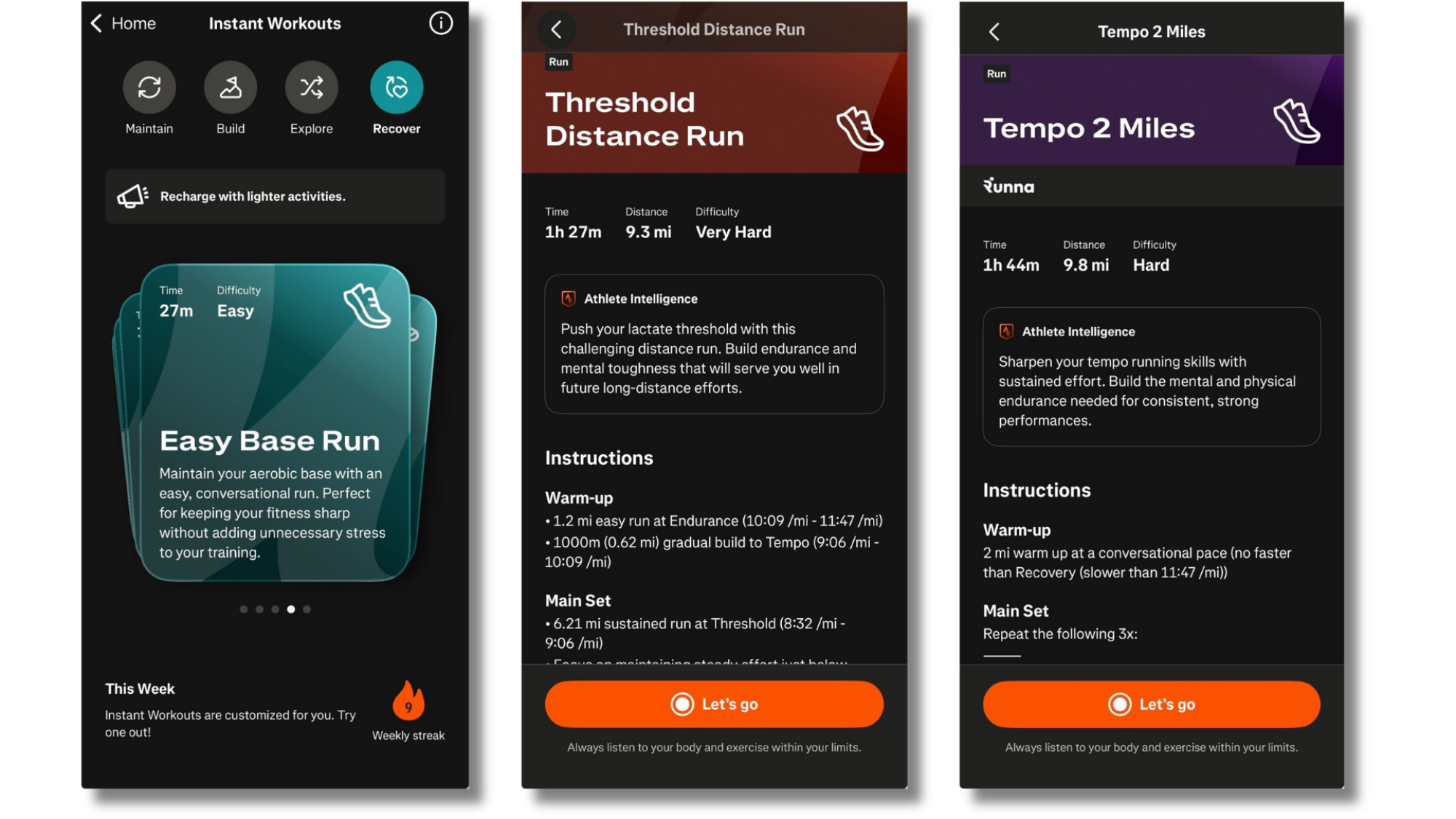
Earlier this month Strava unveiled its new Instant Workouts feature, a subscriber-exclusive tool that seems like a natural way to leverage its acquisition of Runna. In a Reddit post, Strava said this feature builds upon Runna’s already successful Instant Workouts feature.

Instant Workouts uses your activity history to generate personalized workouts across four intents (“Maintain,” “Build,” “Explore,” or “Recover”). The idea is that the more you upload, the more personalized your recommendations become. Another major selling point is the automatic route generation feature, which draws on Strava’s massive database of billions of historical activities to suggest optimal paths for each workout.

The timing of this rollout seems deliberate as the company positions itself for its anticipated IPO. And on paper, it sounds like exactly the kind of innovation that would indeed justify a Strava subscription. In practice, however, the execution leaves a good bit to be desired.

A half-baked launch

Unfortunately, the feature’s current implementation falls far short of its potential. The most glaring issue: You cannot actually view your workout details once you’ve started the activity in the app. Strava generates solid, complex, multi-interval workouts—but provides no way to reference them on your watch during your run or ride. You’d have to screenshot the workout beforehand or print it out.

For the majority of us athletes who rely on our devices to guide interval training, pace targets, and recovery periods, this renders the feature practically useless. Strava has acknowledged this limitation in a Reddit post, promising that device integration for Garmin and Apple watches is “coming soon.” But the timeline for that “soon” is questionable at best.

The relationship between Strava and Garmin has reportedly grown frosty following a lawsuit last fall, and there’s little incentive for Garmin to prioritize features that primarily benefit Strava’s subscription revenue and investor appeal. Without Garmin’s cooperation and swift implementation, a significant portion of Strava’s serious athlete user base remains locked out of the feature’s full utility.

Solid workout design

On the bright side, in my opinion, the workouts themselves show promise—though others disagree. The training plans generated appear to take into account individual fitness levels reasonably well. From my testing, the prescribed intervals, pacing, and progression made sense given my current training status and recent activity history.

Strava's Instant Workouts feature.
These all make sense for me.
Credit: Meredith Dietz

That said, user experiences vary considerably. Some athletes report receiving workouts that seem disconnected from their actual fitness or goals, while others note that the workout descriptions use non-standard terminology that doesn’t align with how most training plans communicate intervals and pacing.

Then there’s the route generation. In a well-traveled area with dense activity heat maps like New York City, my suggested routes tend to be solid and sensible enough. As always, my personal preferences are to avoid extra crowded streets or sketchy areas, which Strava never seems to take into account. Ultimately, the algorithm benefits from years of crowdsourced data showing which streets, paths, and loops are actually popular with runners and cyclists.

However, users in less densely populated areas or regions with sparser Strava usage report wildly inconsistent results. Some routes make no logical sense, sending athletes on inefficient paths or suggesting roads that aren’t suitable for the prescribed workout type. The feature’s quality appears directly tied to the richness of local Strava data, creating a drastic two-tier experience.

And once again: Until I can push the workout and corresponding map to my watch, this feature doesn’t mean much to me.

The bottom line

If you ask me, Strava’s Instant Workouts feature feels rushed to market, likely timed to generate positive press ahead of the IPO rather than to actually serve athletes. Basic functionality that should have been present at launch—like being able to see your workout in the app or send it to your watch—is mysteriously absent. The wonky workout descriptions and inconsistent route quality only compound the sense that this needed more time in development.

Google Just Promised No Ads in Gemini (for Now)

A week after OpenAI admitted it will soon start testing ads in ChatGPT, Google has promised that it’s not planning to inject ads into Gemini anytime soon.

The statement was given to journalist Alex Heath during the World Economic Forum in Davos, Switzerland. Google DeepMind CEO Demis Hassabis said the company doesn’t have “any plans” for ads in Gemini. While the statement was fairly brief, it also jibes with a similar quote Hassabis gave to Axios, where he said he was “a little bit surprised” that OpenAI was already introducing ads to ChatGPT.

That surprise is understandable, especially because OpenAI CEO Sam Altman said in 2024 that he considered ads a “last resort for us as a business model.” But looking at the numbers, it makes sense that ChatGPT is getting ads long before Gemini is even thinking of them.

Google can afford to hold off on ads

While Google makes most of its money through showing people ads, it’s also able to rely on Search and YouTube to push ads to most of those eyeballs. Meanwhile, OpenAI is pretty much just ChatGPT. As the latter moves to a for-profit model, it now has to put moneymaking first, something it’s had trouble doing without relying on traditional internet moneymakers like ads. Google, meanwhile, is already profitable elsewhere, and is able to take its time and use its sheer size to keep Gemini ad-free, at least while it continues to chase market share.

Does this mean Google’s AI will never get ads? Well, never say never. But it does mean that they’re probably not on the horizon—even if Google plans to more aggressively monetize Gemini over the long term, it isn’t facing the same kind of time crunch as Altman’s company.

It remains to be seen whether the presence of ads will push users away from ChatGPT, but the move comes in the wake of significant wins for Gemini and one major loss for ChatGPT. First, Google’s Nano Banana image editing model went viral on social media, winning over the general public. Then, Google struck a deal with Apple to put its AI into the iPhone, and it looks like Gemini will be powering Siri for the foreseeable future.

Meanwhile, ChatGPT reportedly saw a 6% dip in users early last month, following a model update from Gemini—and that was before the introdution of ads. While ChatGPT still seems to be in the lead on total user count, there’s evidence that Google is catching up.

The divide in strategy seems clear: As OpenAI seeks ways to get more money out of its existing user base, Google can focus on growing its own with new integrations into the products we already use every day. I can’t say what the limits of this growth are, but I can say that I rarely go out of my way use AI, yet I’ve still found myself accidentally relying on Google’s AI overviews every now and then. If Google can get more people like me to casually integrate AI into our regular workflows, it’s possible we could soon have a new AI leader on our hands.

Adobe Acrobat Now Lets You Edit Files Using Prompts, Generate Podcast Summaries

Adobe has added a suite of AI-powered features to Acrobat that enable users to edit documents through natural language prompts, generate podcast-style audio summaries of their files, and create presentations by pulling content from multiple documents stored in a single workspace.

The prompt-based editing supports 12 distinct actions: removing pages, text, comments, and images; finding and replacing words and phrases; and adding e-signatures and passwords. The presentation feature builds on Adobe Spaces, a collaborative file and notes collection the company launched last year. Users can point Acrobat’s AI assistant at files in a Space and have it generate an editable pitch deck, then style it using Adobe Express themes and stock imagery.

Shared files in Spaces now include AI-generated summaries that cite specific locations in the source document. Users can also choose from preset AI assistant personas — “analyst,” “entertainer,” or “instructor” — or create custom assistants using their own prompts.


Read more of this story at Slashdot.

This ‘Best Portable Power Station for Most People’ Is Over 50% Off Right Now

We may earn a commission from links on this page. Deal pricing and availability subject to change after time of publication.

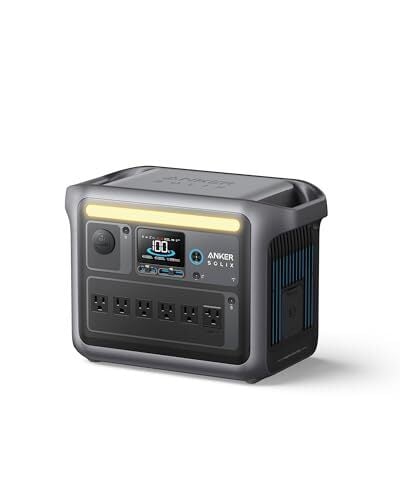
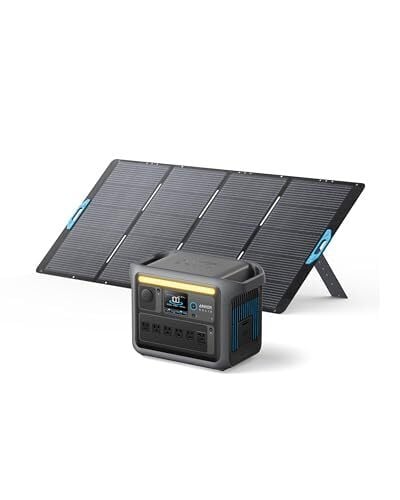
This winter is looking rough, with one of the biggest winter storms hitting nearly half the U.S. this weekend. It’s safe to assume many people will be without power, especially those in cities without the proper infrastructure to take on record-breaking winter storms. A power station is a great device to keep the lights running in a pinch—and the standalone Anker SOLIX C1000 is 41% off, with the options with Solar Panels going for up to 56% off right now. Mashable voted the Anker SOLIX C1000 the best one for most people.

Anker SOLIX C1000 1056wh LiFePO4 Portable Power Station


$469.99
at Amazon
$799.00
Save $329.01

Anker SOLIX C1000 1056wh LiFePO4 Portable Power Station


$469.99
at Amazon
$799.00
Save $329.01

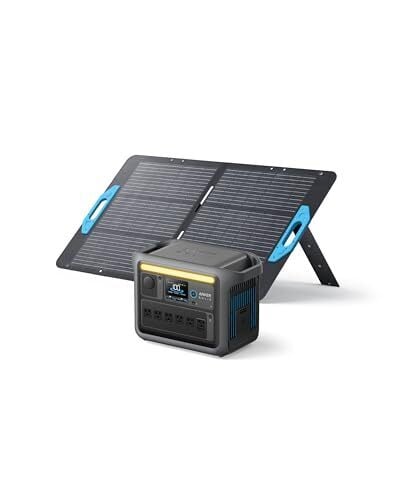
Anker SOLIX C1000 Portable Power Station with 100W Solar Panel, 1800W Solar Generator, 1056wh LFP (LiFePO4) Battery, 6 AC Outlets, Up to 2400W for Home, Power Outages, and Outdoor Camping


$619.99
at Amazon
$1,328.00
Save $708.01

Anker SOLIX C1000 Portable Power Station with 100W Solar Panel, 1800W Solar Generator, 1056wh LFP (LiFePO4) Battery, 6 AC Outlets, Up to 2400W for Home, Power Outages, and Outdoor Camping


$619.99
at Amazon
$1,328.00
Save $708.01

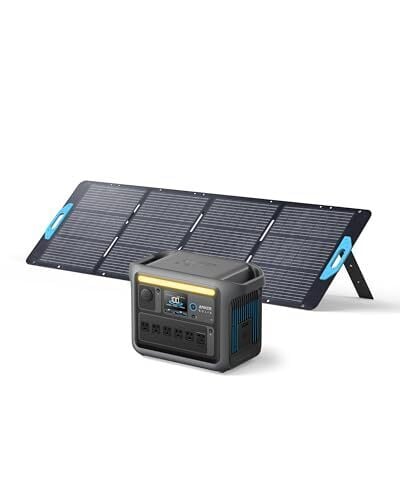
Anker SOLIX C1000 Portable Power Station with 200W Solar Panel, 1800W Solar Generator, 1056wh LFP (LiFePO4) Battery, 6 AC Outlets, Up to 2400W for Home, Power Outages, and Outdoor Camping


$689.99
at Amazon
$1,299.00
Save $609.01

Anker SOLIX C1000 Portable Power Station with 200W Solar Panel, 1800W Solar Generator, 1056wh LFP (LiFePO4) Battery, 6 AC Outlets, Up to 2400W for Home, Power Outages, and Outdoor Camping


$689.99
at Amazon
$1,299.00
Save $609.01

Anker SOLIX C1000 Portable Power Station with 400W Solar Panel, 1800W Solar Generator, 1056wh LFP (LiFePO4) Battery, 6 AC Outlets, Up to 2400W for Home, Power Outages, and Outdoor Camping


$869.99
at Amazon
$1,998.00
Save $1,128.01

Anker SOLIX C1000 Portable Power Station with 400W Solar Panel, 1800W Solar Generator, 1056wh LFP (LiFePO4) Battery, 6 AC Outlets, Up to 2400W for Home, Power Outages, and Outdoor Camping


$869.99
at Amazon
$1,998.00
Save $1,128.01

There are many different types of power stations, with portable ones being the most popular: You can take these camping, to tailgate parties, to help complete outdoor DIY projects, and of course, for emergencies.

The Anker SOLIX C1000 is a versatile power station and blends practicality and power, as you can read in Mashable’s review. It includes a companion Anker app that is user-friendly, with useful information about battery level and usage. It has a 1,056Wh power capacity, which is mid-tier when compared to other power stations, but it’s cheaper than others in that tier. You can keep things like lights, hairdryers, and CPAP machines going for hours. It’s also lightweight enough to carry around easily.

The USB-C power output maxes out at 100W, but you can always use the three-prong plugs for more power. The recharging is quick, and you can opt for one of the portable solar panels, which are also seeing significant discounts right now.

Deals are selected by our commerce team

The Samsung Galaxy S25 FE Is $200 Off Right Now

We may earn a commission from links on this page. Deal pricing and availability subject to change after time of publication.

The Samsung Galaxy S25 FE is the least expensive member of the Galaxy S25 lineup—more affordable but still filled with enough features and Galaxy AI tools that PCMag named it an excellent choice for those who want to be in the Galaxy ecosystem without paying top dollar. Right now, it’s available at an all-time low price on Amazon: $509.99, 28% off the original $709.99 asking price.

The S25 FE comes in four colors and features a large 6.7-inch AMOLED display with a resolution of 2,340 x 1,080 pixels, a refresh rate of up to 120Hz, and a peak brightness of 1,900 nits. Unlike the higher-end Galaxy S25 Ultra, it doesn’t have an anti-reflective coating, though it still performs decently in moderately bright conditions. Rather than the Ultra’s Qualcomm Snapdragon 8 Elite processor, this model runs on a Samsung Exynos 2400 chip with 8GB of RAM and 256GB of storage.

The phone is lighter and more compact than the S24 SE. It has an under-display fingerprint sensor for biometrics as well as a face unlock option. According to PCMag’s tester, the 4,900 mAh battery lasts up to 17 hours (about two hours longer than its predecessor, but less than competitors like the Pixel 9a) and fast-charges in as little as an hour and fifteen minutes. While the cameras can’t compare to the line’s more expensive models, it does share two of its three rear cameras with the S25 and S25+, and will definitely deliver sharp images. It’s also a future-proof device, with Samsung promising up to seven years of updates and security fixes. 

If you’re looking for most of the flagship-style features as pricier S25 phones—including integrated AI tools, strong battery life, and quick performance—without paying flagship prices, the Samsung Galaxy S25 FE checks all those boxes. And discounted to around $500, it’s more affordable than ever. It’s a strong pick if you’re upgrading from an older phone or making the switch to Android.

Deals are selected by our commerce team