Friday 72-year-old Richard Stallman made a two-hour-and-20-minutes appearance at the Georgia Institute of Technology, talking about everything from AI and connected cars to smartphones, age verfication laws, and his favorite Linux distro. But early on, Stallman also told the audience how “I despise DRM…I don’t want any copy of anything with DRM. Whatever it is, I never want it so badly that I would bow down to DRM.” (So he doesn’t use Spotify or Netflix…)
This led to an interesting moment when someone asked him later if we have an ethical obligation to avoid piracy.. First Stallman swapped in his preferred phrase, “forbidden sharing”…
“I won’t use the word piracy to refer to sharing. Sharing is good and it should be lawful. Those laws are wrong. Copyright as it is now is an injustice.”
Stallman said “I don’t hesitate to share copies of anything,” but added that “I don’t have copies of non-free software, because I’m disgusted by it.” After a pause, he added this. “Just because there is a law to to give some people unjust power, that doesn’t mean breaking that law becomes wrong….
“Dividing people by forbidding them to help each other is nasty.”
And later Stallman was asked how he watches movies, if he’s opposed to DRM-heavy sites like Netflix, and the DRM in Blu-ray discs? “The only way I can see a movie is if I get a file — you know, like an MP4 file or MKV file. And I would get that, I suppose, by copying from somebody else.”
“Sharing is good. Stopping people from sharing is evil.”
Google-owned XR studio Owlchemy Labs announced that its breakout VR hit Job Simulator (2016) has now surpassed six million installs.
Job Simulator has been one of the most successful VR games over the past decade, having not found firm footing as a launch title for the original HTC Vive, PSVR, and Oculus Touch back in 2016, but also for having pioneered many of the fundamentals VR developers rely on today.
In short, the madcap simulator parody was one of the first to really nail VR object interaction while serving up immersive room-scale gameplay.
And while you’d expect a bulk of those 6 million installs to come from its earliest days as a regular chart topper, it wasn’t until early 2020 that Job Simulator officially went platinum, selling over 1 million copies.
By then, Job Simulator had already found its next wave of success on Quest, later coming to PSVR 2 and Apple Vision Pro in 2023 and 2024 respectively.
Notably, the number of installs probably doesn’t directly reflect units sold—decidedly a more direct measure of its success with consumers—although it may not be that far off.
In 2016, Job Simulator came free with HTC Vive for a limited time, which may count towards installs and not sales as such. It was also included in Meta’s Horizon Plus subscription games service in March 2025, which lets Quest users download select titles and keep them as long as they’re subscribers. That’s another place the studios might feel more confident counting install numbers and not sales.
Another place is VR arcades. In 2024, leading software distributor SpringboardVR said Job Simulatorwas their top-performing game thanks to its popularity with kids and VR first-timers. And those arcades weren’t buying Job Simulator—SpringboardVR is a games subscription service with an enterprise-focused licensing structure.
In addition to the news, Owlchemy Labs announced its free-to-play multiplayer Quest game Dimensional Double Shift crossed the one million download mark just over a year after its open beta launch, with the studio noting that the Job Sim-style social game recently became its fastest-growing title, with players logging 2.5 million total hours since its open beta launch in September 2024.
Crew members traveling to the lunar surface on NASA’s Artemis missions should be gearing up for a grind. They will wear heavier spacesuits than those worn by the Apollo astronauts, and NASA will ask them to do more than the first Moonwalkers did more than 50 years ago.
The Moonwalking experience will amount to an “extreme physical event” for crews selected for the Artemis program’s first lunar landings, a former NASA astronaut told a panel of researchers, physicians, and engineers convened by the National Academies.
Kate Rubins, who retired from the space agency last year, presented the committee with her views on the health risks for astronauts on lunar missions. She outlined the concerns NASA officials often talk about: radiation exposure, muscle and bone atrophy, reduced cardiovascular and immune function, and other adverse medical effects of spaceflight.
Crimson Kart is a minimal light KDE Plasma theme red go-kart driver and clean racing aesthetics, featuring a graphite base with red, white, and black accents for a modern, minimalist, clean
A patch series posted last week for the open-source AMDGPU kernel driver implements HDMI Variable Rate Refresh “VRR” and other gaming features for HDMI displays. With the HDMI Forum blocking HDMI 2.1 open-source support, these HDMI gaming features for the AMDGPU driver were developed via trial-and-error and the limited public knowledge available. A second iteration of these patches are now available for testing…
For the Intel-powered LG Gram Style 14 laptop one of the Linux support caveats is the internal speakers not working properly under Linux, but with a patch expected for the upcoming Linux 6.20~7.0 kernel cycle it will finally fix the laptop speaker support for one of the laptop models in this series…
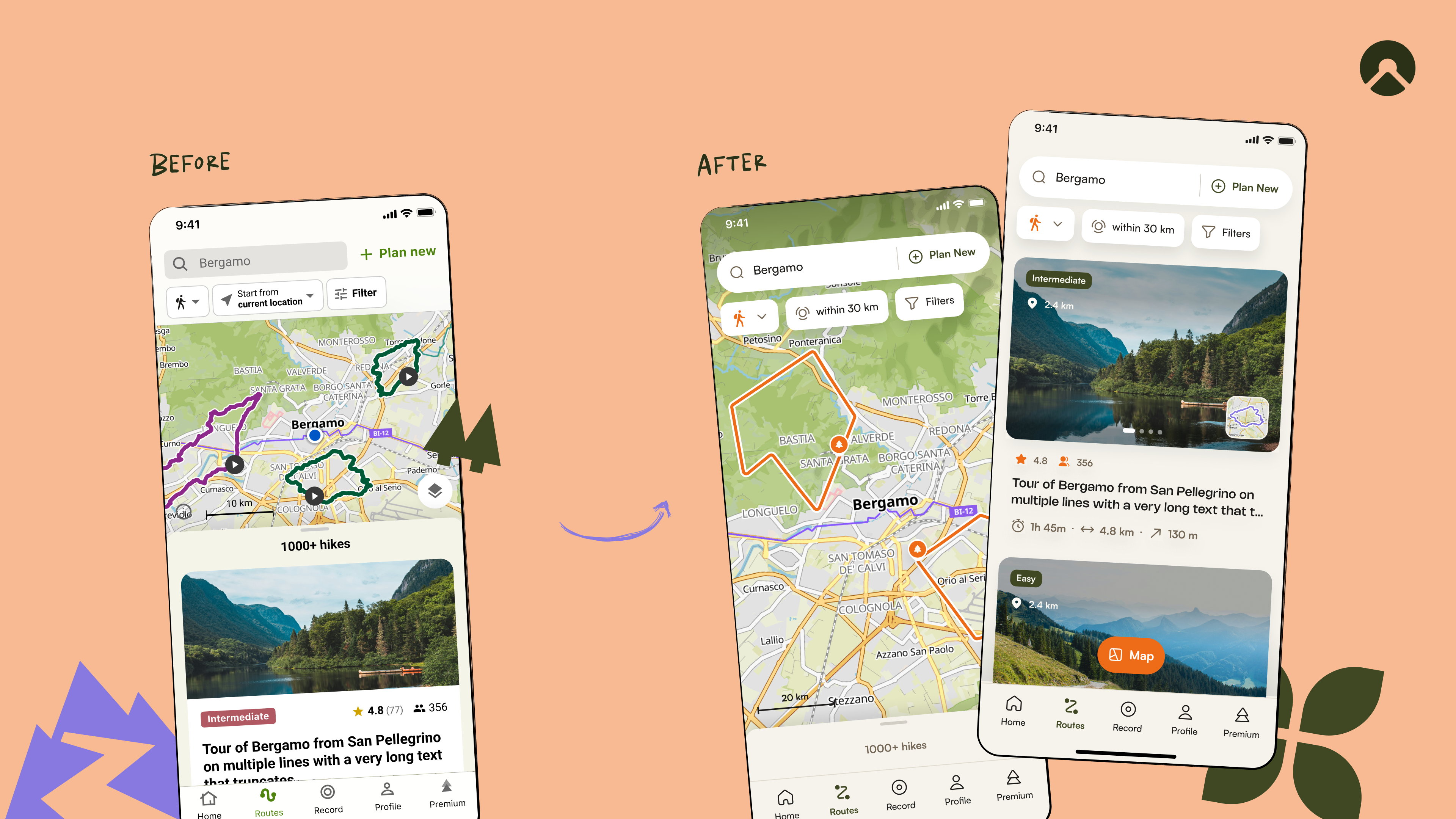
Komoot has announced a new app for Apple Watch users, which works without a smartphone to provide offline maps and navigation, along with turn-by-turn navigation. Users can download maps and routes from Komoot for offline browsing on their watch.
Komoot promises sport-specific maps in its Apple Watch app, with details such as trails and paths, as well as roads. There’s functionality to enable you to pan and zoom to see what’s around you, too.
The Apple Watch app will also track activities and provide real-time stats while on the move and it passes activity data to the Apple Health app.
Komoot updated its user interface last year to make route searches easier.
Other functionality enables the screen to be locked using Apple Water Lock, so it is not susceptible to interference from rain or other moisture.
According to Komoot product manager, Tom Eldred: “Our goal was to make Komoot’s Apple Watch app fully capable on its own.
“For many of us, the ability to disconnect is the best part of being outdoors, so we wanted the community to have the freedom to leave their phone at home – or at least in their pocket.”
The new Apple Watch app can be used for an unlocked map region by any user, without needing to be subscribed to Komoot Premium.
First stop on the 2026 development roadmap
Komoot says it plans to improve route planning in its mobile app later in 2026.
Komoot says the Apple Watch app was one of the most frequent requests when it surveyed its user base and conducted more than 100 interviews to understand its users’ needs in 2025.
It updated its user interface last year and claims to have made more than 80 other enhancements since it was bought for around €300m by Italian private equity group Bending Spoons last March. The acquisition reportedly saw the majority of Komoot’s previous 150-strong development team laid off.
Komoot says other new features for the Komoot iOS and Apple Watch apps that are in development include instant syncing between the two, automatic rerouting, real-time location sharing and increased customisation. It’s not the only fitness-tracking app to focus on Apple Watch enhancements, with Strava refreshing its own Apple Watch app at the tail end of 2025.
Komoot’s enhancements are part of its roadmap for app development during 2026, including improved route planning in the mobile app, personal heatmaps and waypoints, easier route searches and better organisation of saved routes. There’s a long-list of further potential enhancements stretching later into 2026.
ASRock Rack’s PAUL is a low-profile PCIe IPMI card built around the widely-used ASPEED AST2500 controller for providing IPMI/BMC capabilities for any platform. New patches provide mainline Linux kernel support for ASRock Rack PAUL with the necessary Device Tree bits…
Kairui Song of Tencent sent out a new patch series overnight working on enhancing the Linux kernel’s swap code. With the patches there are some memory savings — and more on the way — while also providing for slightly faster performance…
Earlier this month, the media site Press Gazette reported that now Google “is increasingly prioritising AI summaries, X posts and Youtube videos” on its “Discover” feed (which appears on the leftmost homescreen page of many Android phones and the Google app’s homepage).
“The changes could be devastating for publishers who rely heavily on Discover for referral traffic. And it looks set to accelerate a global trend of declining traffic to publishers from both Google search and Discover.”
Xavi Beumala from website analytics platform Marfeel warned in a research update: “Google Discover is no longer a publisher-first surface. It’s becoming an AI platform with YouTube and X absorbing real estate that once went to newsrooms…” [They warn later that “This is not a marginal UI experiment. It is a reallocation of feed real estate away from links and toward inline Youtube plays and generated summaries.”] Google says it prioritises “helpful, reliable, people-first content”. Unlike Google News, there is no requirement that Google Discover showcases bona fide publisher websites.
In recent months fake news stories published by fraudulent website publishers have been promoted on Google Discover, reaping tens of millions of clicks. Google said it was working on a “fix” for this issue…
Facebook, Instagram and Tiktok content may also start flowing into the Discover feed in future. When Google announced the addition of posts from X, Instagram and Youtube Shorts in September, it said there would be “more platforms to come”.
Amflow is the eMTB name on everyone’s lips at the moment, with an impressive power-to-weight ratio and the powerful DJI Avinox motor boasting 1,000W and 120Nm of torque, with either a 600Wh or 800Wh battery.
The brand has just announced 14% off its flagship PL Carbon Pro model, which features Fox Factory suspension and an overall weight of only 20.64kg (size L).
This discount means for a limited time the bike will be available for £7,699, a saving of £1,300 on the £8,999 RRP.
The Amflow PL Carbon Pro will temporarily be available at a reduced price in the UK from the Amflow website. Scott Windsor / Our Media
All sizes of the Amflow PL Carbon Pro with 800Wh battery (M, L, XL, XXL) will be available in the UK at a sale price of £7,699 (14% off RRP) from today (26 January) until Monday, 2 March. This discount will only apply to bikes purchased from Amflow’s website.
Every purchase will also include a free Amflow-branded front light with a £189 RRP.
DJI Avinox motor
DJI’s Avinox offers up to 1,000W peak power and 120Nm torque. Andy Lloyd / Our Media
DJI’s Avinox motor has quickly gained popularity due to its performance and monster power, even prompting riders to question how much power is too much.
It offers Auto, Eco, Trail, Turbo and Boost modes, and includes Intelligent Walk Assist and Hill Start Assist functionality.
Save 14%
The Amflow is available in M, L, XL and XXL sizes. Scott Windsor / Our Media
The Amflow PL Carbon delivers 150mm of rear-wheel travel via a Horst-link suspension design and is specced with a 160mm Fox Factory 36 fork and Factory Float X shock. The Amflow-branded wheels are 29in front and rear, wrapped in Maxxis 3C tyres.
Its Avinox drive unit can deliver up to a claimed 120Nm of torque and 1,000W of peak power in Boost mode.
DJI offers either 600Wh or 800Wh battery options on both Amflow PL builds. Amflow has confirmed that only the larger 800Wh battery option will be included in the sale.
Other details include SRAM’s X0 Eagle Transmission drivetrain, Amflow’s own-brand cranks, and a carbon bar.
California-based Karman Industries “says it has developed a cooling system that uses SpaceX rocket engine technology to rein in the environmental impact of data centers,” reports the Los Angeles Times, “chilling them with less space, less power and no water.”
Karman has developed a cooling system similar to the heat pumps in the average home, except its pumps use liquid carbon dioxide as refrigerant, which is circulated using rocket engine technology rather than fans. The company’s efficient pumps can reduce the space required for data center cooling equipment by 80%.
Over the years, data centers have used fans and air conditioning to blow cold air on the chips. Bigger facilities pass cold liquid through tubes near the chips to absorb the heat. This hot liquid is sent outside to a cooling yard, where sprawling networks of pipes use as much water as a city of 50,000 people to remove the heat. A 50 megawatt data center also uses enough electricity to power a mid-sized city… Cooling systems account for up to 40% of a data center’s power consumption and an average midsized data center consumes more than 35,000 gallons of water per day…
U.S. data centers will consume about 8% of all electricity in the country by 2030, according to the International Energy Agency… The cooling systems are projected to use up to 33 billion gallons of water by 2028 per year… To serve this seemingly insatiable market, Karman has developed a rotating compressor that spins at 30,000 revolutions per minute — nearly 10 times faster than traditional compressors — to move heat…
About a third of Karman’s 23-person team came from SpaceX or Rocket Lab, and they co-opted technologies from aerospace engineering and electric vehicles to design the mechanics for the high-speed motors. The system uses a special type of carbon dioxide under high pressure to transfer heat from the data center to the outside air. Depending on the conditions, it can do the same amount of cooling using less than half the energy. Karman’s heat pump can either reject heat to air, or route it into extra cooling, or even power generation.
The company “recently raised $20 million,” according to the article, “and expects to start building its first compressors in Long Beach later this year….”
Espressif Systems has announced a Matter Camera Solution for the ESP32-P4, described as the industry’s first Matter 1.5 camera implementation on an MCU-class platform. The RTOS-based design targets smart home devices such as security cameras, video doorbells, and intercoms, while reducing power consumption and startup latency compared to Linux-based systems. The architecture is built around […]
Brax Technologies just announced “a privacy-focused alternative to locked-down tablets” called open_slate that can double as a consumer tablet and a Linux-capable workstation on ARM.
Earlier Brax Technologies built the privacy-focused smartphone BraX3, which co-founder Plamen Todorov says proved “a privacy-focused mobile device could be designed, crowdfunded, manufactured, and delivered outside the traditional Big Tech ecosystem.”
Just as importantly, BraX3 showed us the value of building with the community. The feedback we received — what worked, what didn’t, and what people wanted next — played a major role in shaping our direction going forward. Today, we’re ready to share the next step in that journey…
They’re promising their “2-in-1″ open_slate tablet will be built with these guiding principles:
Modularity beyond repairability”. (“In addition to a user-replaceable battery, it supports an M.2 expansion slot, allowing users to customize storage and configurations to better fit their needs.”)
Hardware-level privacy and control, with physical switches allowing users to disable key components like wireless radios, sensors, microphones, and cameras.
Multi-OS compatibility, supporting “multiple” Android-based operating systems as well as native Linux distributions. (“We’re working with partners and the community to ensure proper, long-term OS support rather than one-off ports.”)
Longevity by design — a tablet that’s “supported over time”
Brax has already created an open thread with preliminary design specs. “The planned retail price is 599$ for the base version and 799$ for the Pro version,” they write. “We will be offering open_slate (both versions) at a discount during our pre-order campaign, starting as low as 399$ for the base version and 529$ for the Pro version for limited quantities only which may sell out in a day or two from launching pre-orders…
“Pre-orders will open in February, via IndieGoGo. Make sure to subscribe for notifications if you don’t want to miss the launch date.”
Thanks to long-time Slashdot reader walterbyrd for sharing the news.
A distro aimed at helping people, reducing e-waste – and helping a charity, tooEmmabuntüs is just another Linux distro, but it’s one guided by ethics more than tech. With exceptional help, documentation, beginner-friendly tooling and accessibility, there’s a lot to like.…
Catch up on the latest Linux news: MX Linux 25.1, CachyOS, GNU Guix 1.5, GIMP 3.0.8, COSMIC 1.0.3, Wine 11.1, Bottles 61, Linux distros I recommend for those switching from Windows, and more.
KDE’s “Plasma Login Manager” is apparently dropping support for FreeBSD, the Unix-like operating system, reports the blog It’s FOSS. They cite a recently-accepted merge request from a KDE engineer to drop the code supporting FreeBSD, since the login manager relies on systemd/logind:
systemd and logind look like hard dependencies of the login manager, which means the software is built to work exclusively with these components and cannot function without them… logind is a component of systemd that is responsible for user session management…
This doesn’t mean that KDE has abandoned the operating system altogether. FreeBSD users can still run the KDE Plasma desktop environment and continue using SDDM, the current login manager that works just fine on such systems.
The article argues FreeBSD users “won’t really care much for missing out on this as they have plenty of login manager options available.”