Gen. Michael Guetlein, the senior officer in charge of the US military’s planned Golden Dome missile defense shield, has laid out an audacious schedule for deploying a network of space-based sensors and interceptors by the end of President Donald Trump’s term in the White House.
The three-year timeline is aggressive, with little margin for error in the event of budget or technological setbacks. The shield is designed to defend the US homeland against a range of long-range weapons, including Intercontinental Ballistic Missiles (ICBMs), cruise missiles, and newer threats like hypersonic weapons and drones.
“By the summer of ’28, we will be able to defend the entire nation against ballistic missiles, as well as other generation aerial threats, and we will continue to grow that architecture through 2035,” Guetlein said Friday in a presentation to representatives from the US defense industry.
The European Commission has started proceedings to ensure Google complies with the Digital Markets Act (DMA) in certain ways. Specifically, the European Union’s executive arm has told Google to grant third-party AI services the same level of access to Android that Gemini has. “The aim is to ensure that third-party providers have an equal opportunity to innovate and compete in the rapidly evolving AI landscape on smart mobile devices,” the Commission said in a statement.
The company will also have to hand over “anonymized ranking, query, click and view data held by Google Search” to rival search engines. The Commission says this will help competing companies to optimize their services and offer more viable alternatives to Google Search.
“Today’s proceedings under the Digital Markets Act will provide guidance to Google to ensure that third-party online search engines and AI providers enjoy the same access to search data and Android operating system as Google’s own services, like Google Search or Gemini,” said Henna Virkkunen, the Commission’s executive vice-president for tech sovereignty, security and democracy. “Our goal is to keep the AI market open, unlock competition on the merits and promote innovation, to the benefit of consumers and businesses.”
The Commission plans to wrap up these proceedings in the next six months, effectively handing Google a deadline to make all of this happen. If the company doesn’t do so to the Commission’s satisfaction, it may face a formal investigation and penalties down the line. The Commission can impose fines of up to 10 percent of a company’s global annual revenue for a DMA violation.
Google was already in hot water with the EU for allegedly favoring its own services — such as travel, finance and shopping — over those from rivals and stopping Google Play app developers from easily directing consumers to alternative, cheaper ways to pay for digital goods and services. The bloc charged Google with DMA violations related to those issues last March.
In November, the EU opened an investigation into Google’s alleged demotion of commercial content on news websites in search results. The following month, it commenced a probe into Google’s AI practices, including whether the company used online publishers’ material for AI Overviews and AI Mode without “appropriate compensation” or offering the ability to opt out.
This article originally appeared on Engadget at https://www.engadget.com/ai/the-eu-tells-google-to-give-external-ai-assistants-the-same-access-to-android-as-gemini-has-154157081.html?src=rss
The kernel’s “kfunc” mechanism is a way of exporting kernel functions so
that they can be called directly from BPF programs. There are over 300
kfuncs in current kernels, ranging in functionality from string processing
(bpf_strnlen())
to custom schedulers (scx_bpf_kick_cpu())
and beyond. Sometimes these kfuncs need access to context information that
is not directly available to BPF programs, and which thus cannot be passed
in as arguments. The implicit
arguments patch set from Ihor Solodrai is the latest attempt to solve
this problem.
For all of the advancements in modern TVs, including brighter and more vibrant display panels (hello, OLED and mini LED), thinner profiles, and more capable built-in smarts, the one consistent weakness is audio. Sure, some TV models fare better than others. But none of them truly rival a discrete home theater speaker setup. If you’ve been
Every time Apple’s AirPods 4 with active noise cancelation go on sale I have the same thought: maybe I made a mistake. Don’t get me wrong, I love my regular AirPods 4, but the noise canceling aspect makes their sister pair very enticing.
Take now, for instance, when the AirPods 4 with ANC are on sale for $119, down from $179. The 34 percent discount brings them to only $4 more than the standard AirPods 4 current sale price and below their usual $129. While we’ve seen the ANC model as low as $99, the $119 price tag is the best deal we’ve seen so far this year.
Apple released its fourth-generation AirPods in late 2024 and they’re still our pick for best budget AirPods on the market. We gave the ANC model an 86 in our review thanks to their effective noise canceling, better sound quality and features like adaptive audio. Overall, at $60 off, they’re a great option to pick up.
Check out our coverage of the best Apple deals for more discounts, and follow @EngadgetDeals on X for the latest tech deals and buying advice.
This article originally appeared on Engadget at https://www.engadget.com/deals/airpods-4-with-anc-drop-to-119-153239093.html?src=rss
With the monumental winter storm recently covering most of the nation, now seems a good time to look at some cold and winter weather myths and misinformation. You might be freezing, but there’s no excuse for being freezing and ignorant.
Myth: A blizzard is a heavy snowstorm
Technically, for a storm to be a blizzard, it must have these things: wind speeds of over 35 mph and low visibility (under 1/4 mile) for at least three hours. So you could have blizzard from blowing snow, even if no snow is falling, and you could get a ton of accumulation without it technically ever being a blizzard. (Whether it’s a snowstorm or a blizzard likely won’t matter to you if you’re trapped in it, however.)
Myth: It can be too cold to snow
There’s some nuance to this one. Extremely cold air contains very little moisture, but it has to be very cold. According to Matt Peroutka, a meteorologist at the National Weather Service, “Once the air temperature at ground level drops below about -10 degrees Fahrenheit, (-20 degrees Celsius), snowfall becomes unlikely in most places.”
But there could still be something like snow. “There actually is no such thing as too low a temperature for some sort of ice crystal to form and for such crystals to settle out and land on the surface,” explains Fred W. Decker of the Oregon Climate Service at Oregon State University, in an interview with Scientific American. “Such a deposit of ice needles is not usually considered ‘snow,’ however; in the Arctic, for instance, we might refer instead to an ice fog.”
Myth: You lose most of your body heat through your head
I dug deeply into this myth here, but the bottom line is, not wearing a hat accounts for around seven to 10 percent of bodily heat loss because your head accounts for about seven to 10 percent of your body. On the other hand, how cold you feel is subjective, and not wearing a hat in cold weather will probably make you feel colder, even if you’re not actually losing most of your body heat. Bottom line: Wear a hat to feel warm in cold weather, or don’t wear a hat to prove you’re not losing too much heat.
Myth: Alcohol keeps you warm in cold weather
In an emergency situation, drinking brandy from the cask around a rescue St. Bernard’s neck is a bad idea. Alcohol makes you feel warm by dilating blood vessels, but it actually lowers your body temperature by drawing heat away from your core, which increases your risk of hypothermia. But, much like “losing heat through your head” myth, drinking alcohol often makes people feel warmer, so if you’re safe on your porch and you want a hot toddy, it will seem to “warm you up.” Speaking of…
Myth: Drinking hot liquids warms you faster than drinking cold liquids
It’s probably impossible to drink enough of a hot liquid to raise the temperature of your body’s core. On the other hand (and for the third entry in a row) it might make you feel warmer to drink something warm, and often that’s what you really want, even if it isn’t literally making you warmer. So if you’re safe on your porch and you want a hot tea to feel cozy, go for it.
Traditional winter signs that don’t actually predict anything
There might be a lot we can learn from folk traditions, but man, they get a lot of things wrong too. The following are some folklore sayings about winter that seem dubious:
Thick corn husks, onion skins, and apple skins means a cold winter: The thickness of the outside of vegetables reflect the condition under which they were grown; they don’t predict the future.
Squirrels with very bushy tails means a cold winter: Like the vegetables, the thickness of a squirrel’s tail is generally determined by how healthy and fed it was leading up to winter. More nuts in summer means beefier squirrels.
You can predict winter severity by looking at a caterpillar tail: They say the wider the rusty brown sections on a wooly caterpillar, the milder the coming winter will be. The more black there is, the more severe the winter. The problem is, you’d have to look at a lot of caterpillars to even check if this is true, because some would have wider brown stripes and some wouldn’t. According to University of Massachusetts entomology Mike Peters in the Farmer’s Almanac, “There’s evidence that the number of brown hairs has to do with the age of the caterpillar—in other words, how late it got going in the spring. The [band] does say something about a heavy winter or an early spring. The only thing is … it’s telling you about the previous year.”
Weird myth: This winter storm was manmade and designed to freeze a gigantic sea serpent
The weirder corners of the internet are spreading the theory that the Biblical beast Leviathan has awakened, and the winter storm was created by us to freeze it in its tracks. Their evidence is satellite photos which seem to show a gigantic serpent shape in the Atlantic Ocean. As much as I’d welcome a Biblical sea monster rising from the ocean to seek retribution—all hail Leviathan!—it’s unlikely to exist. I’m 99.9% certain (still have some hope) these were natural geological formations seen on Google Earth being mistaken for a sea monster as a result of pareidolia, the human tendency to see patterns in random data. Also: We can’t control winter storms any more than we can control hurricanes, even if we were about to be eaten by a sea monster.
Pinterest said on Tuesday it would trim its workforce by less than 15% and reduce office space, as the social media company looks to reallocate resources to AI-focused roles and initiatives. From a report: The announcement comes as the company competes with TikTok and Meta-owned Facebook and Instagram for digital advertising budgets, as these platforms continue to draw marketers with their extensive user base.
Pinterest had 5,205 full-time employees as of September 2025. The latest job cut would translate to less than 780 positions. Top executives at the World Economic Forum’s annual meeting said while jobs would disappear, new ones would spring up, with two telling Reuters that AI would be used as an excuse by companies which were planning layoffs anyway. Last week, design software maker Autodesk also announced a 7% job cut to redirect investments to its cloud platform and AI efforts.
DAYTONA BEACH, Fla.—The annual 24 hour race that kicks off the American racing season took place this past weekend at Daytona International Speedway. Each year, the crowd gets bigger and bigger, drawn in large part by the hybrid prototypes that contest the GTP class for overall victory. After Formula 1, these are some of the most complex, sophisticated race cars ever to turn a wheel—and it doesn’t hurt that they look extremely cool too. But yet again, endurance racing wants to offer more than just entertainment.
A large number of automotive technologies or safety features that we mostly take for granted today made their way into road cars from the race track. Seatbelts, rear view mirrors, turbocharged engines, aerodynamics, direct-injection engines, dual-clutch gearboxes, and more owe their existence to competition. Although, truth be told, direct examples of racing technology transfer in the mid-21st century seem less common than the intangible benefits gained when a bunch of motorsports-trained engineers have lunch every day with their road car colleagues.
That is starting to change, though, but now the domain is in simulation. Vast amounts of data are generated during the course of a race—each of the 11 GTP cars that raced at Daytona collects 1,600 different channels of data from onboard sensors, with nearly as many on the GTD machines that are based on road-going cars like Porsche’s 911 or Chevrolet’s Corvette. With 60 cars running for 24 hours—and that’s just the first race of the year—that’s a heck of a lot of high-quality data being generated, and now IMSA wants to leverage that to help automotive and technology companies develop better simulation tools, with the creation of IMSA Labs.
TigerVNC 1.16 is out today for this high performance, multi-platform VNC server and client implementation. Most notable with TigerVNC 1.16 is “w0vncserver” as a new server for sharing Wayland desktops…
If Apple is good at one thing, it’s the length of software/firmware support for its devices. To wit, within a large iOS and WatchOS update dump this week, owners of the 13-year-old iPhone 5s received a nice little gift that allows users to use iMessage and Facetime after certificates expire at the end of this year.
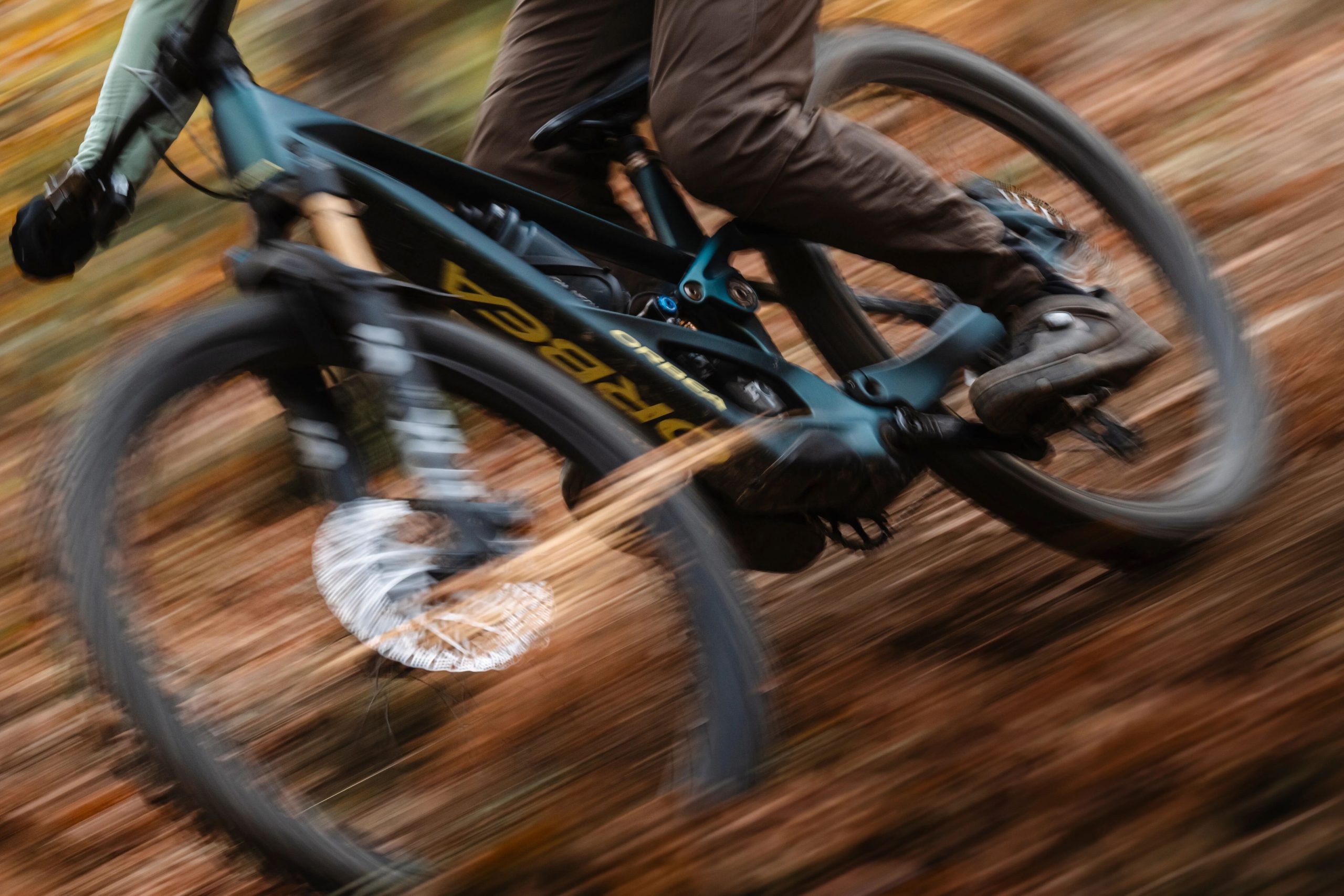
While most brands are pushing their full-power eMTBs – complete with massive batteries and enough torque to shift the earth momentarily on its axis – it’s refreshing to see something a little different from Orbea.
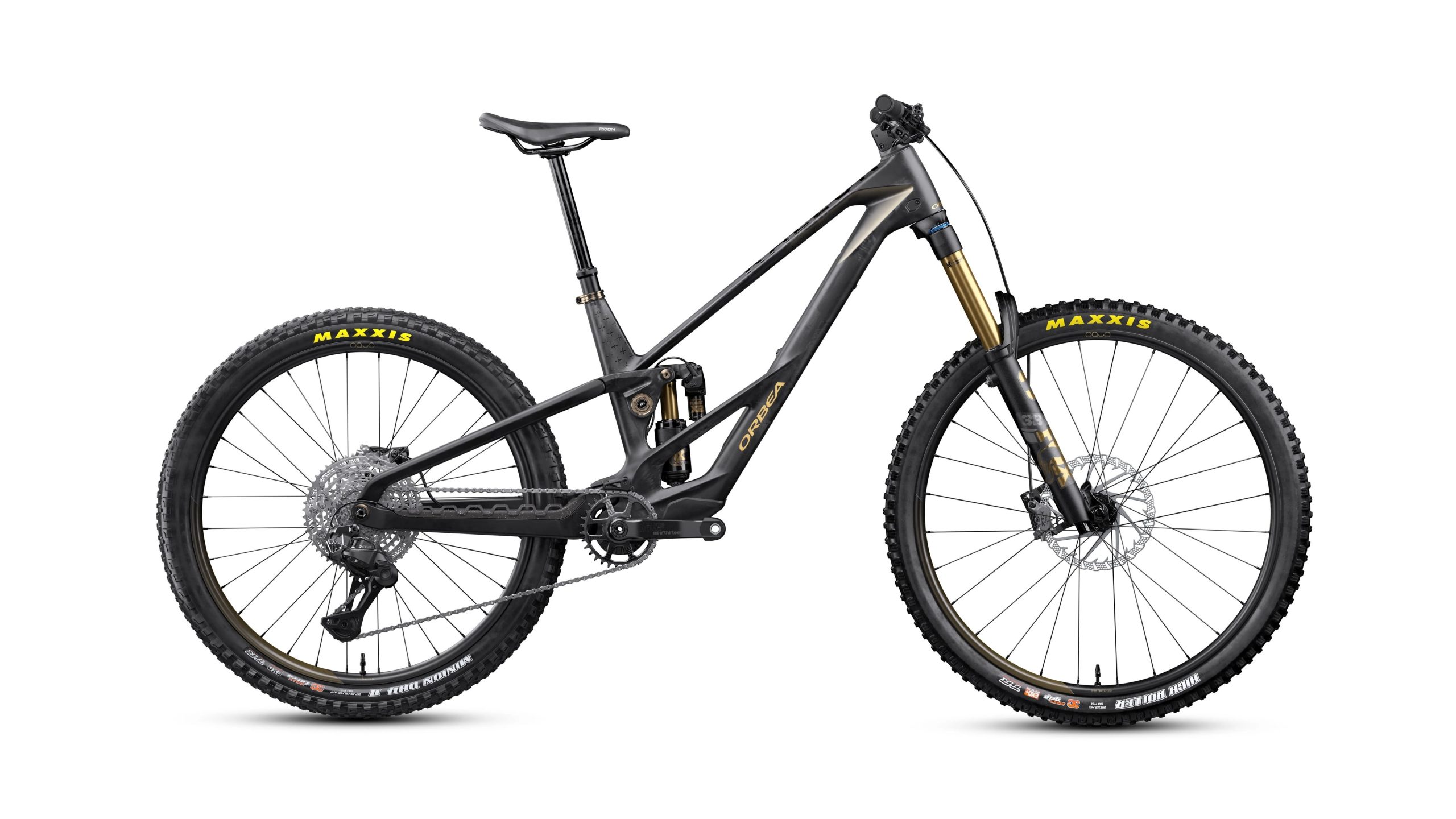
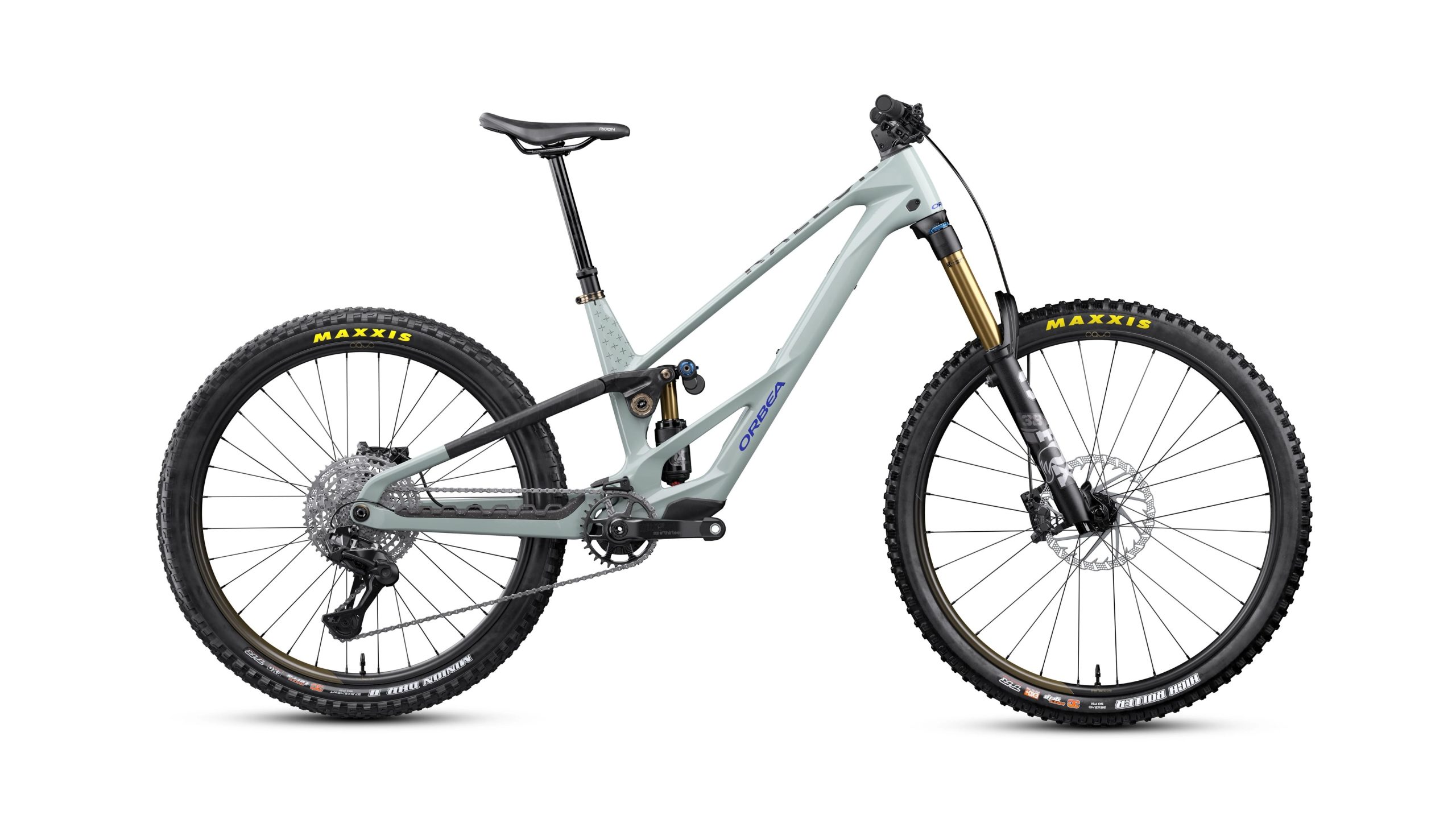
The new Rallon RS is based on Orbea’s Rallon enduro bike – and let’s be honest, looks very much like it, too. It’s got plenty of travel and burly components, but despite being an eMTB, it doesn’t weigh much more than its non-powered counterpart.
It’s a modern take on a lightweight eMTB. Remember those? It was a nice idea but rarely, if ever, came to fruition.
However, the new Rallon RS takes that concept and harnesses the technological advancements to right the wrongs of the early ‘SL’ bikes.
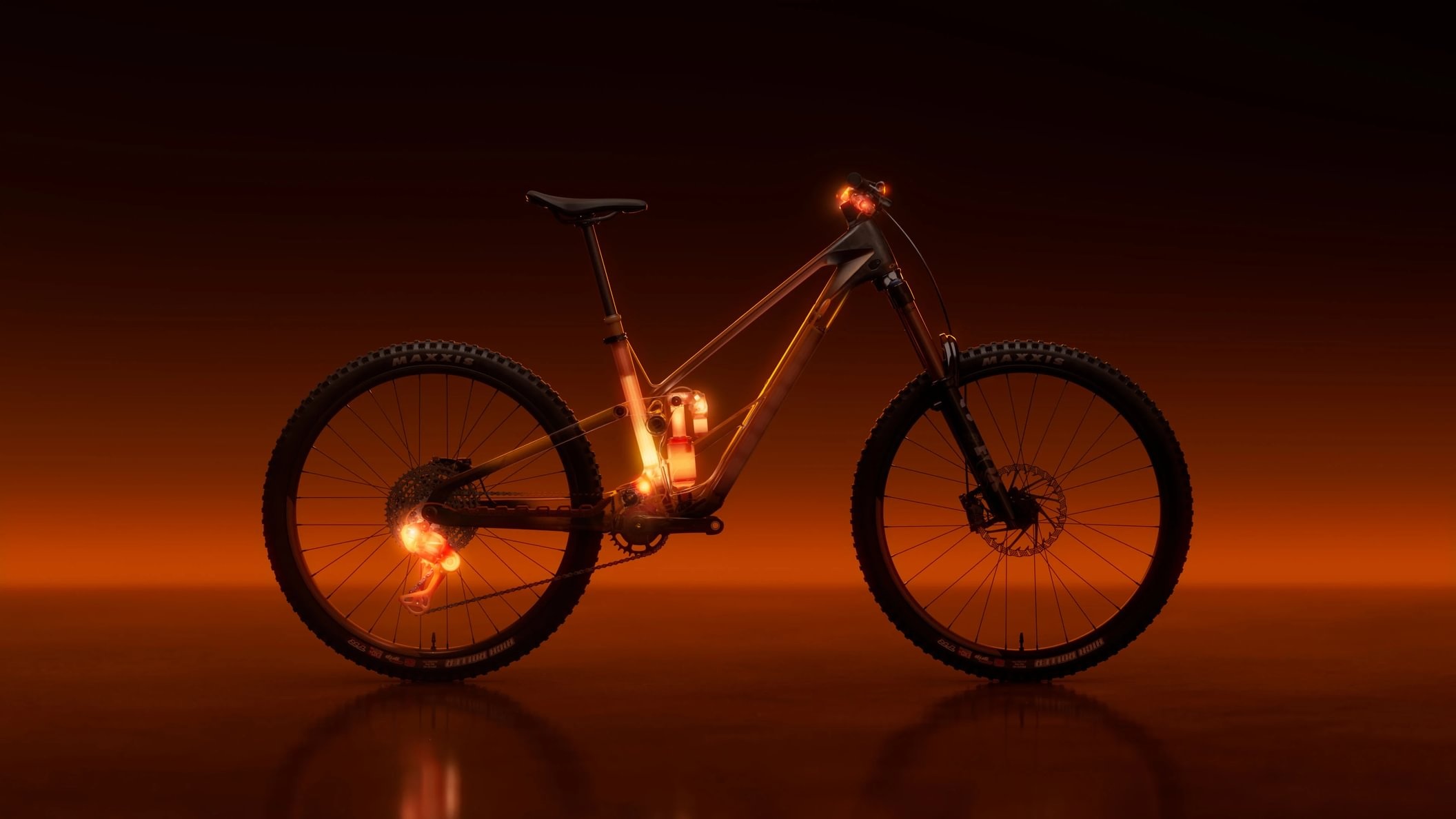
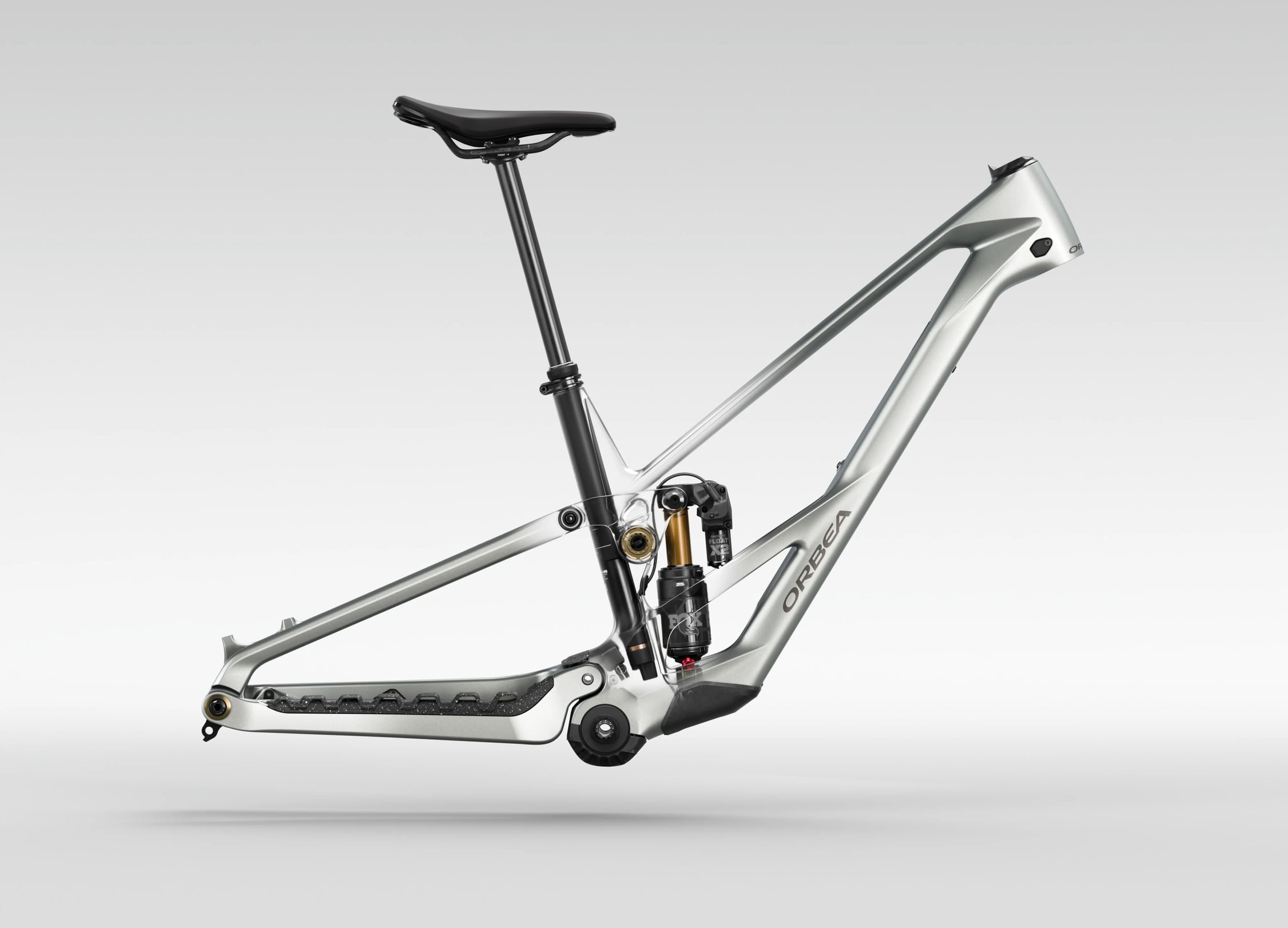
Housed within the carbon tubes, you’ll find a motor – one of the smallest on the market – capable of only 200 watts of peak power, and the small 290Wh battery that powers it, along with a host of other electronics.
And that’s where things get really cool. Orbea has integrated every electronic component on the Rallon RS in a way we’ve not seen before.
Those low power and torque figures will no doubt put people off, but I’m here for it.
The dinky motor means you’ll get some help when you need it riding uphill, but you’ll still need to work on the climbs – no matter what mode you’re in. And I like that.
Orbea has taken a risk with the new Rallon RS and clearly ploughed a lot of cash into it, but I think it’s worth it. Here’s why…
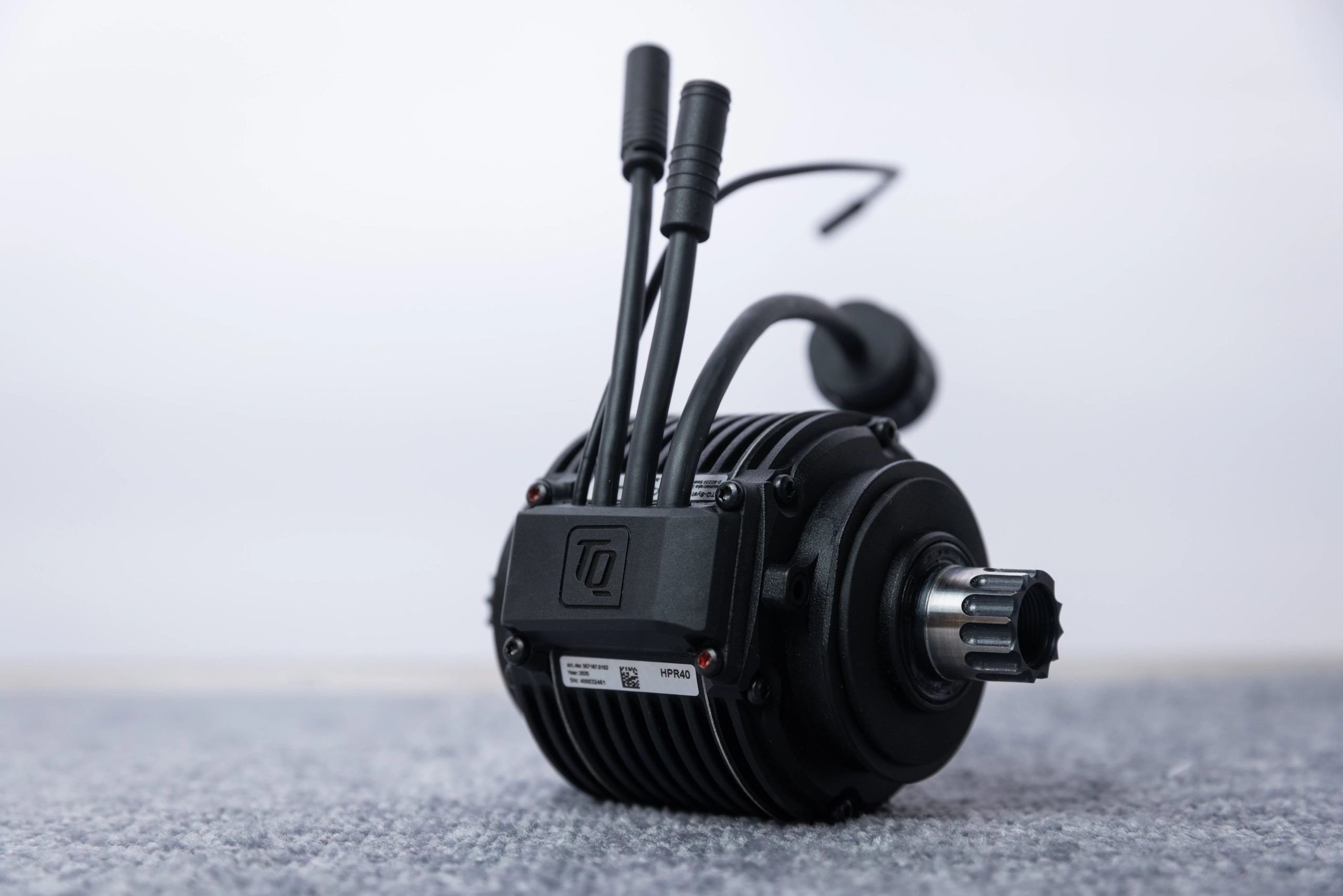
Powering the Rallon RS is the TQ HPR40 motor, which can deliver 200 watts of peak power and up to 40Nm of torque. Roo Fowler / Orbea
With the Wild, Rise (SL and LT) and Urrun eMTBs already in Orbea’s stable, you could argue the Rallon RS is less of a risk, and the lower-powered sibling complements the line-up.
But when you consider how the eMTB market has shifted since Amflow’s super-powerful DJI-motor equipped bikes arrived, launching a bike with power and torque stats at the opposite end of the spectrum might not make a lot of sense.
However, the Rallon RS has the potential to appeal to purists – riders looking for a bit of help on the climbs, but who value that regular-bike feel on the descents.
That might sound like a stretch. After all, who doesn’t want more power? But this bike is pretty special.
When we first started seeing SL eMTBs being launched, their promise of minimal assistance and a natural ride feel was extremely appealing.
Let’s not forget, Orbea was one of the first to the party with the Rise RS, which was a great bike.
The problem was, the motors were still quite hefty and took up a lot of space. The bikes were often quite heavy, and in a bid to keep weight down, generally used trail-bike parts, which were too fragile.
Early ‘SL’ bikes often had low power and torque figures, and weren’t always particularly light. Etienne Schoeman
With only a few kilos between many SL models and their full-power counterparts, it’s easy to see why those (only slightly) lighter bikes were overlooked.
As ebike motors became smaller and more powerful, ‘SL’ bikes morphed into ‘mid-power’ bikes, with more power and torque, along with slightly tougher components.
But if you wanted to ride with mates on full-power bikes, you’d still struggle, making the whole ‘SL’ category something of a conundrum.
The new Rallon RS harks back to that original ‘SL’ concept in a lot of ways, but uses advances in tech to right many of the wrongs and offers something very different from the high-power, torque-tastic eMTBs that seem to be everywhere right now.
The 200 watts of peak power and 40Nm of torque mean the Rallon RS isn’t all about the motor feel. It’s not the dominant factor here by a long stretch.
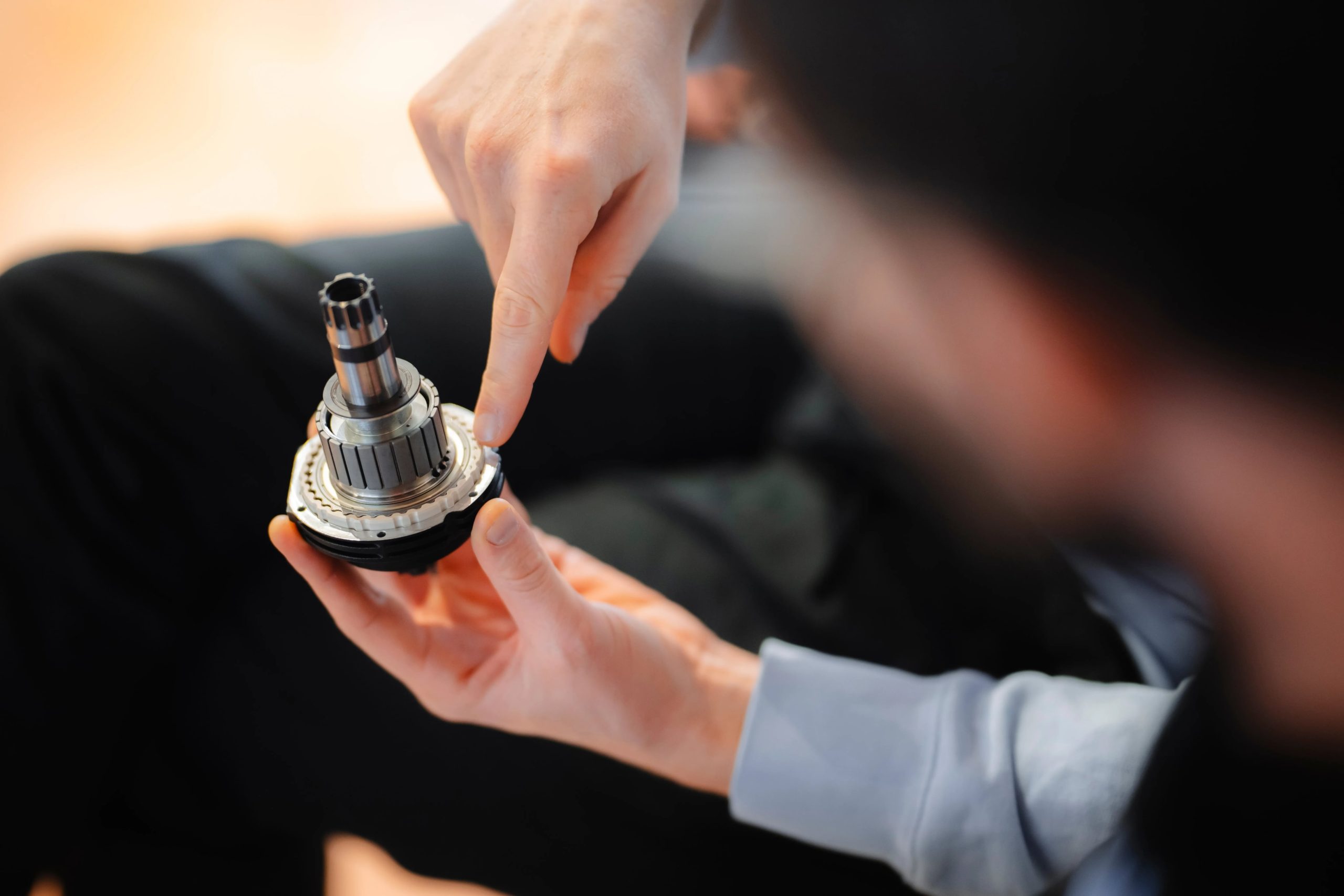
The silent, compact TQ HPR40 motor and its low weight help, boosting your input and making the climbs feel easier, but this bike is way more than its drive unit. Its small form factor and unobtrusive feel have enabled Orbea’s engineers to create a bike with a very special ride.
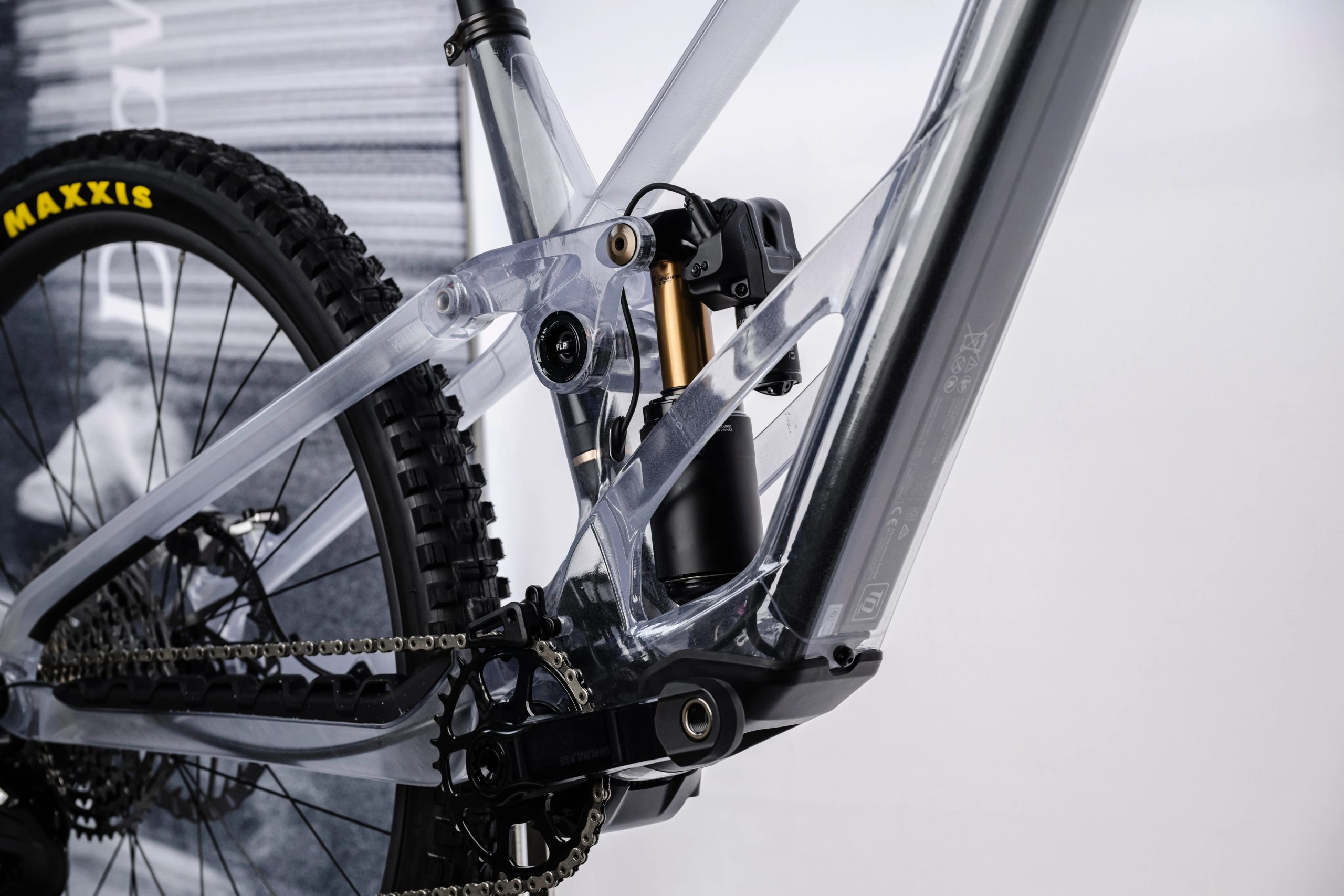
Weighing a claimed 1,170g, the HPR40 doesn’t take up much real estate in the frame. At first glance, you’d probably be hard-pressed to realise this is an eMTB. Its compact size means, unlike bikes of old, the geometry and suspension layout aren’t compromised.
Using the small motor limits packaging problems. This meant Orbea could create a long-travel enduro bike with tough parts to suit, rather than a shorter-travel trail bike with flimsy tyres. Yet it still weighs just over 17kg (claimed) in size medium.
The TQ HPR40 motor is seriously compact, enabling Orbea’s engineers to limit compromises when it came to the suspension layout and geometry. Roo Fowler / Orbea
Even considering all of the above, along with the impressive ride feel and almost silent motor, the sticking point for many riders will be the low power and torque figures.
But I think this bike needs to be considered slightly differently.
If you’re looking for a bike that’s super-fast up the climbs and aim to clock up as many laps as possible, this isn’t the machine for you. But, if you’re a bit of purist, who’d appreciate a little helping hand when riding with fitter friends on regular bikes – or are keen on riding a little further than usual – this could be the bike for you.
Integration stations
The one 290Wh battery located in the down tube powers the motor, rear derailleur, Fox Live Valve NEO rear shock and Orbea’s own dropper post. Orbea
Orbea has gone beyond building a great bike with an intriguing motor – that’s only half of what makes the Rallon RS interesting.
It takes component integration to the next level and could be a sign of where eMTB tech is going next.
Orbea has designed the bike to be used with an electronic, auto-adjusting rear shock, its own electronic dropper post and electronic gears.
These components are hard-wired into the main 290Wh battery via a central control unit.
What’s more, they communicate with one another, in a bid to enhance the ride.
Having partnered with Fox suspension and TQ motors for this project, Orbea says enabling the shock to receive data from the motor, its algorithm is able to use power, cadence and speed to help optimise shock settings more effectively and efficiently.
The dropper post plays its part here, too. When the post is fully compressed, the shock knows it needs to keep its damping circuits open to maximise downhill bump absorption.
Orbea uses its own electronic dropper post, which includes smart features. Orbea
If the post is dropped and the motor sensors detect the bike is on a descent, it can lower assistance modes to avoid any unwanted or untimely bursts of power.
That’s a lot of electronics, which generally means a lot of bar-mounted buttons and remotes. That’s not the case here, though.
While you lose the wireless capability of the Fox Live Valve NEO shock and Shimano XTR Di2 gearing because both are wired into the main battery, it has enabled Orbea to control everything (with the exception of the gears) using one remote.
Orbea partnered with Fox and TQ, enabling them to build better integration into the Rallon RS. Orbea
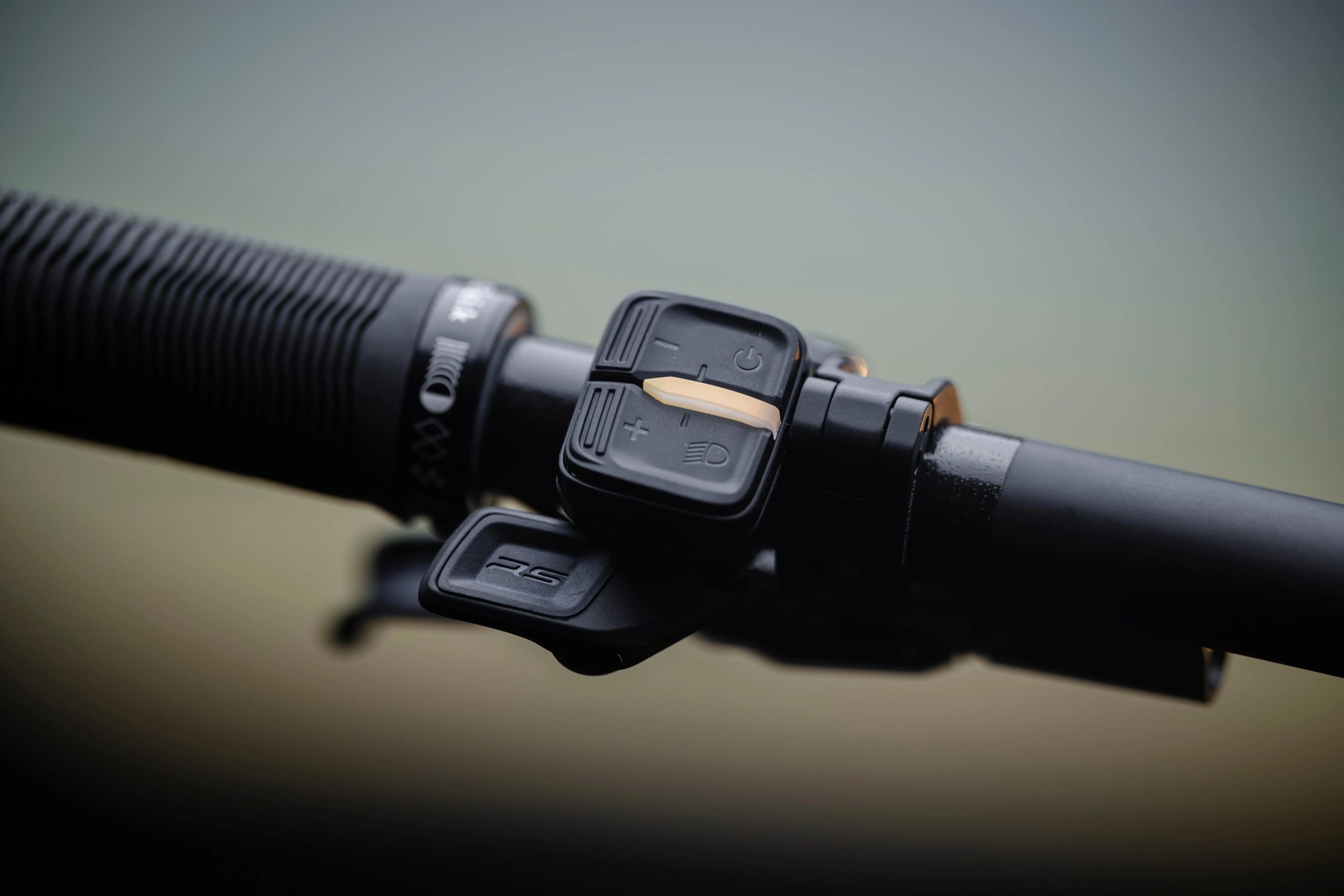
The HMI (Human Machine Interface) remote enables you to tweak just about everything. That means altering motor modes, shock settings and the dropper post, which has a programmable ‘smart’ mode.
Enduro travel, geo and build
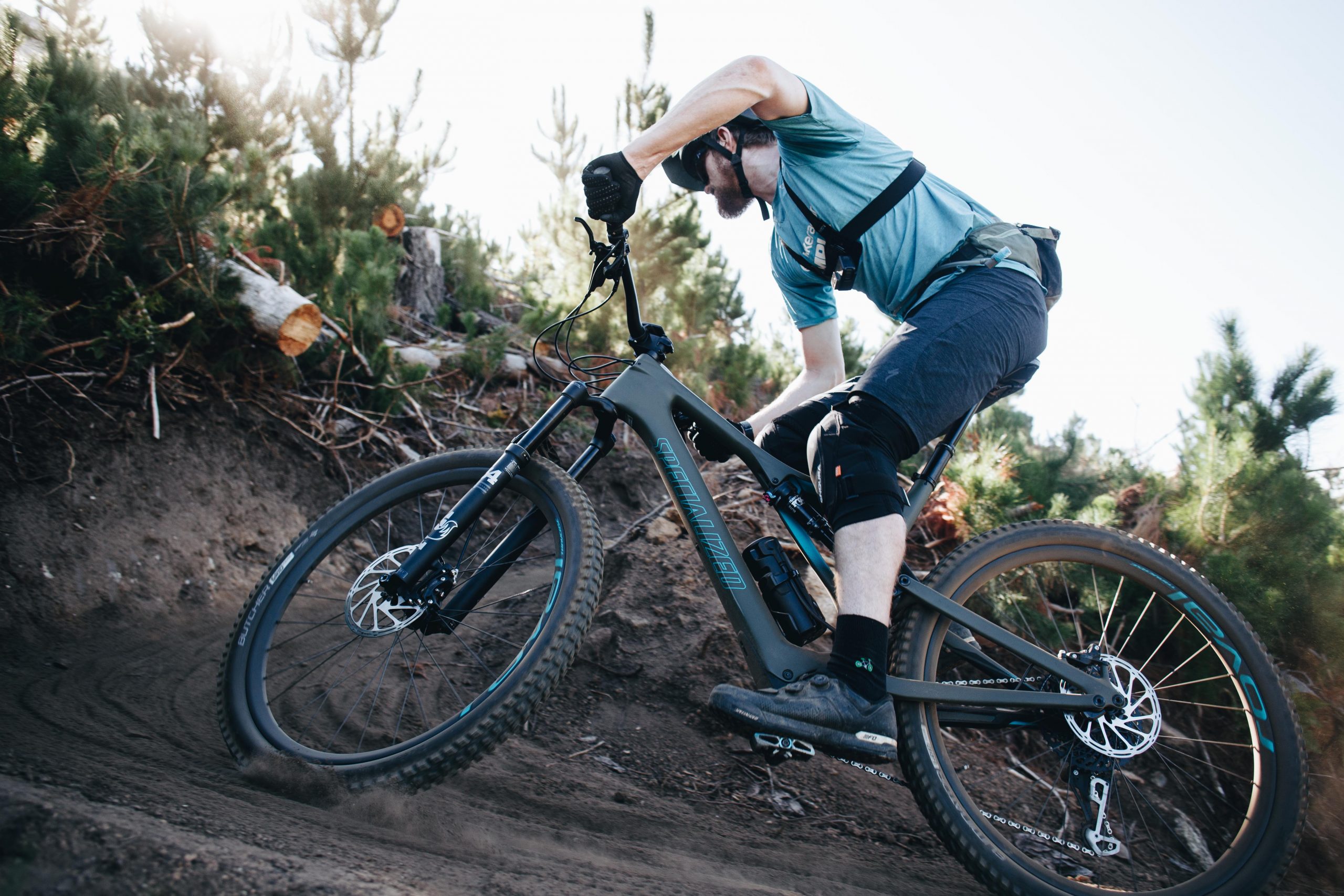
It’s all about enduro levels of travel and geometry, ready for tackling the toughest trails. Roo Fowler / Orbea
Orbea manufactures the new Rallon RS from its OMR (Orbea Monocoque Racing) carbon in what it claims was its most challenging project to date.
To reduce weight, compensating for the use of a motor and battery, the Rallon RS is equipped with a carbon rocker link. This saves a reported 200g, yet is as strong and stiff as its alloy equivalent.
Because Orbea designed the Rallon RS around a shock that was able to control damping levels automatically, there was less need to build in the ability to resist squatting or ‘bobbing’ as the pedals are being turned (often referred to ‘anti-squat’) into the suspension system.
Instead, leaving the automated shock to do the heavy lifting and keep the Rallon RS as efficient as possible, Orbea designed relatively low levels of anti-squat into the platform (just over 80 per cent at sag), with the aim of keeping the back end more sensitive and active.
As with the regular Rallon, the RS version also uses a linkage-driven single-pivot system, which places the rear pivot concentric to the rear axle. There’s 170mm of travel on tap at the rear, paired with a massive 180mm-travel fork up front.
Should you want to get a little rowdier, the frame is designed to handle a dual-crown fork, upping its versatility further – that’s not something many SL-style bikes can boast.
The enduro stats don’t stop there. Reach figures span 430mm on the small to 505mm on the XL. Seat tubes are short, with the medium coming in at 405mm. All frames use the same 445mm chainstay.
Orbea hasn’t shied away from geometry adjustment. There’s a flip chip on the lower shock mount, enabling you to alter the bottom-bracket height by 8mm and head tube angle by 0.5 degrees. You can also make use of the angled headset cups, which enable you to tweak the head angle further by +/- 0.75 degrees.
In the neutral position, the head angle is 64.25 degrees, while the seat tube angle is steep, at just over 79 degrees.
You can run a 29in or 27.5in rear wheel by swapping the rocker link, which ensures geometry remains the same between the two rear wheel sizes.
Fit for purpose
Despite all the electronics featured on the Rallon RS-LTD, the single HMI controller enables you to control everything, with the exception of the Shimano gearing. Roo Fowler / Orbea
Orbea realises this bike won’t be for everyone. As well as being a fresh take on lighter-weight eMTBs, it’s also very expensive and only available in two models.
The top-end RS-LTD build features some drool-worthy kit. But, most importantly, that kit is fit for purpose and suits the Rallon RS’s intentions. There’s a burly fork, big brakes and suitably tough, grippy tyres that’ll take an absolute beasting.
All in, Orbea says the RS-LTD model weighs 17.45kg in size medium, which is impressive considering this is a big bike with some heavy parts bolted to it.
Who will buy it?
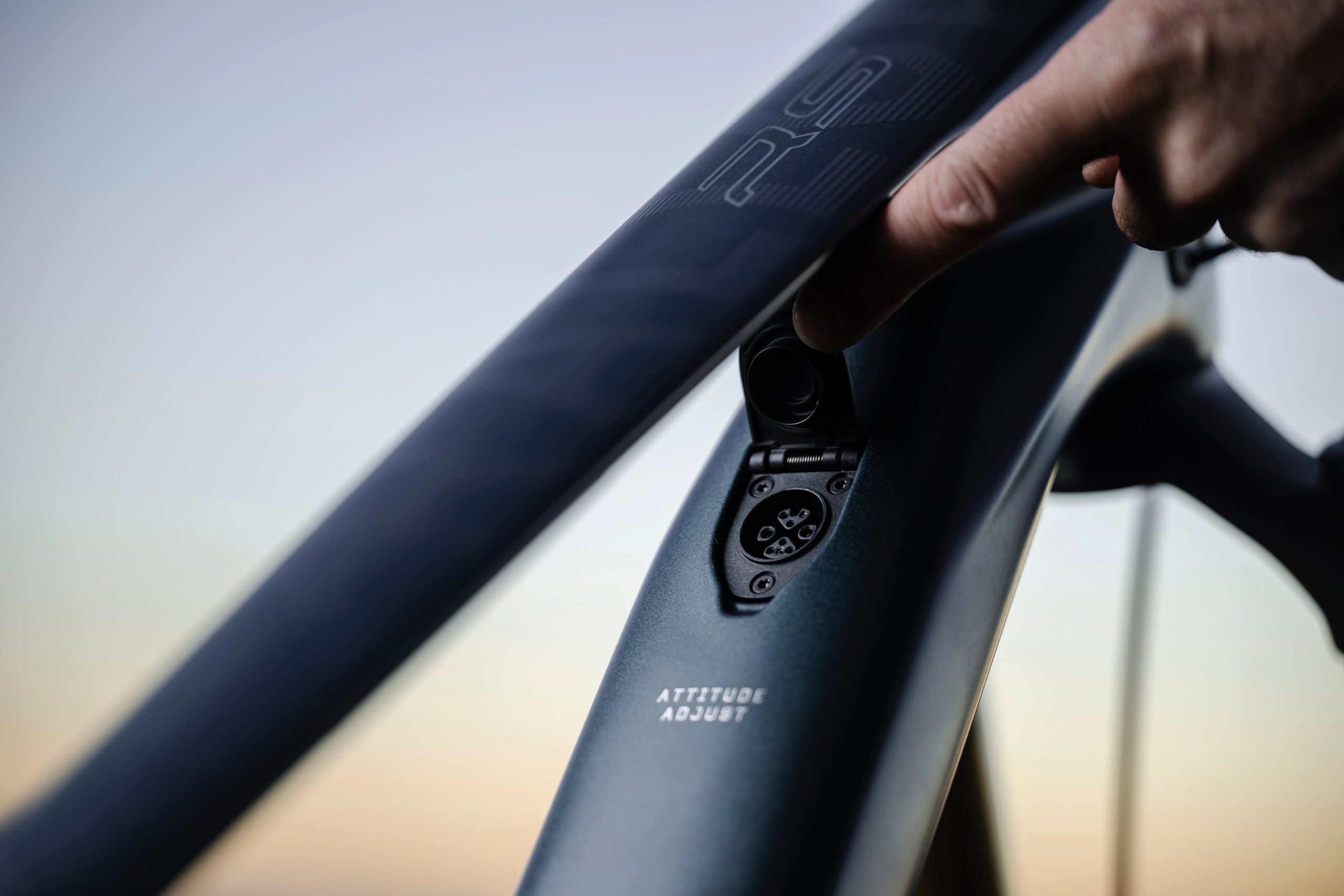
The single charging port enables you to charge every component connected to the battery. Roo Fowler / Orbea
During the presentation, Orbea was very open about the risks involved in creating a bike like this.
While it’s clearly pushing boundaries in terms of integration, those motor stats go against where we’re seeing a lot of the interest in eMTBs.
But I love the idea of the Rallon RS and how it feels on the trails.
I was a big fan of SL eMTBs first time around and, although they had issues, always had fun riding them. The Rallon RS has taken that old blueprint and improved upon it – it offers something for those who aren’t keen on the big-motor eMTBs.
This isn’t a bike for everyone, but I’m sold.
Orbea Rallon RS range details
Orbea Rallon RS-LTD (29in or 29in/27.5in wheels)
Orbea offer both spec levels with either 29in wheels at the front and rear, or a mixed wheel set-up, featuring a smaller 27.5in rear wheel. Orbea
The difference in price here isn’t in relation to the different wheel size options, but because you can upgrade the Team build, adding a Fox X2 Live Valve NEO shock if you wish. Orbea
Big changes have come to social media platform TikTok. On Jan. 22, TikTok’s operations were passed from Chinese company ByteDance to TikTok USDS Joint Venture, a new entity backed by Larry Ellison’s Oracle, private equity firm Silver Lake, and United Arab Emirates-based investment firm MGX.
Days later, on Jan. 23, TikTok introduced new Terms of Service for users. So far, the transition has not been smooth. Users immediately raised privacy concerns over the new TOS, taking to X with posts like this:
While TikTok’s new terms sound draconian, they aren’t vastly different from TikTok’s old TOS (which were draconian). The main change covers AI. The company added a new section to its TOS saying it will collect information from “AI interactions, including prompts, questions, files, and other types of information that you submit to our AI-powered interfaces, as well as the responses they generate,” so don’t think the conversation you have will stay between you and the chatbot.
TikTok also says it will collect “precise location data,” unless users opt out. This will let the service collect user’s exact coordinates instead of a general city or region, that the company will use to serve “customized ads and other sponsored content.”
Another tweak: TikTok now promises it will act in accordance with “applicable law, such as for permitted purposes under the California Consumer Privacy Act,” instead of the more general “applicable state privacy laws” in the old terms.
Other than that, the terms remain largely the same as they were before. TikTok says it collects data that is user-provided, inferred, or contextual, that includes location data, age, email, phone numbers, chat messages, metadata on anything you upload, religious beliefs, mental or physical health diagnosis, sexual life or sexual orientation, immigration status, and more. Then it uses that data to advertise to you, to “infer additional information about you,” train its algorithm, and basically anything else it’s legally allowed to use it for.
Opting out of TikTok’s data collection
Credit: Stephen Johnson
If you’d prefer that TikTok collect less of your personal data, you can go to the settings and privacy page in the app and opt out of “Targeted ads outside of TikTok,” “Using Off-TikTok activity for ad targeting,” turn off location tracking, stop contact syncing, and make other changes. You can also go to your phone’s Settings page, select TikTok, and change its permissions to track your location. Here’s a deeper dive into how and why to change TikTok’s privacy settings.
Accusations of TikTok censorship
Along with promising to delete the app over data-collection worries, many TikTokers are alleging that the platform is censoring or throttling posts based on politics, particularly videos related to the shooting of Alex Pretti. On the #TikTokCensorship hashtag on X, users report that the Democratic Party’s TikTok videos have gone from millions of views to zero views and that the platform is censoring videos about Jeffrey Epstein as well as other subjects.
It’s too early to tell whether these reports are a result in changes in TikTok’s algorithm or the result of a technical glitch. TikTok released a statement blaming videos with zero views and other performance issues on a “cascading system failure” caused by a power outage:
TikTok’s new management vowed last month to retrain the platform’s recommendation algorithm “on US user data to ensure the content feed is free from outside manipulation.” What being free of “outside manipulation” looks like in a practical sense has yet to be seen.
VR treadmill creator Virtuix is going public, as its Class A ordinary shares will start trading today on the Global Market tier of the Nasdaq. The company’s stock market debut comes as consumer VR investment and first-party content spending have slowed across the industry.
The News
Founded in 2013 by CEO Jan Goetgeluk, Virtuix initially started its journey on Kickstarter with the launch of the original Omni, which garnered $1.1 million from backers.
While the company first started out with pretty clear ambitions to enter the consumer market, market realities pushed the company into the out-of-home VR attraction space, forcing it to navigate a significant pivot in its business strategy.
Since then, the Austin, Texas-based company has attracted over $55 million in funding from major investors such as Mark Cuban, Maveron, and Scout Ventures, with its latest crowd investment campaign bringing in an additional $3.3 million.
Virtuix still sells its enterprise-focused ‘Arena’ solution, however the company made it next big bet by reentering the consumer market with the release of Omni One in 2024, which can be purchased as a full system (Pico headset included) for $3,500, or a bring-your-own PC VR headset system priced at $2,600.
Alongside its Nasdaq debut, which is trading under the ticker ‘VTIX’, Virtuix secured an additional $11 million investment from Chicago Venture Partners and established a $50 million equity line of credit, subject to conditions. The company says it plans to use the funding to scale sales of Omni One.
“We’re only getting started,” said Goetgeluk. “In a world where we explore increasingly photorealistic virtual worlds, the missing piece is the ability to move through those worlds naturally. We pioneered the technology to make that possible. Going public provides us with access to capital to fund our growth and develop new products.”
My Take
It’s an interesting time as a consumer-focused VR company to go public, what with Meta’s pullback from the VR games space following the reorganization of its Reality Labs, which saw a reported 10 percent headcount reduction. Granted, that focus is more on the high-end consumer, which likely includes a significant overlap with enterprise.
Still, Virtuix’s performance in the market will serve as an important data point as the next phase of consumer VR takes root—i.e. a moment when platform holder dollars have all but stopped flowing into the games ecosystem. After all, it’s one of very few publicly traded companies specializing solely in VR hardware right now that isn’t a major platform holder.
That said, it’s a pretty grim time for XR studios right now, as it seems investment dollars for big single-player content has dried up amid a flourishing of free-to-play multiplayer games on the medium’s dominant platform, Meta Quest 3. I’m also waiting to see how Valve’s Steam Frame fares, which still doesn’t have a price or specific release date yet.
This comes alongside the closure of three first-party Meta studios, Sanzaru Games (Asgard’s Wrath), Armature Studio (Resident Evil 4 VR port) and Twisted Pixel (Deadpool VR) in addition to layoffs at a number of veteran XR studios, including Mighty Coconut (Walkabout Mini Golf) and Cloudhead Games (Pistol Whip).
For close to a century, geoscientists have pondered a mystery: Where did Earth’s lighter elements go? Compared to amounts in the Sun and in some meteorites, Earth has less hydrogen, carbon, nitrogen, and sulfur, as well as noble gases like helium—in some cases, more than 99 percent less.
Some of the disparity is explained by losses to the solar system as our planet formed. But researchers have long suspected that something else was going on too.
Recently, a team of scientists reported a possible explanation—that the elements are hiding deep in the solid inner core of Earth. At its super-high pressure—360 gigapascals, 3.6 million times atmospheric pressure—the iron there behaves strangely, becoming an electride: a little-known form of the metal that can suck up lighter elements.