Google’s $250M Deal with California to Fund Newsrooms May Be Stalled

Remember how California’s government negotiated a 2024 deal where Google contributed millions to California’s local newsrooms to offset advertisers moving to the search engine?

“A year after it was cemented — and billed as a model that could succeed where entire countries and continents had fallen short — the agreement is tangled in budget cuts, bureaucratic infighting and unresolved questions about who controls the money,” reports Politico, “leaving journalists empty-handed and casting doubt on whether the lofty experiment will ever live up to its promise.”

The program, initially framed as a nearly $250 million commitment over five years, has secured just $20 million in new money for journalists in its first year, with no guarantee the funding will continue. It’s changed hands twice since the University of California, Berkeley withdrew its support [with school officials “worried they wouldn’t have enough of a say in how the money was distributed”]. Suggestions that other big tech players like ChatGPT-maker OpenAI could front more resources haven’t materialized. A $62.5 million “AI accelerator” tied to the deal hasn’t been set up yet.

Not a single newsroom has seen a dollar of funding, and there’s no definitive timeline spelling out when they will… [The article adds later that state officials “have yet to draft precise rules for how California will decide which newsrooms get cash…”] Conversations with at least 20 people involved in the deal’s rollout reveal how California’s budget shortfalls and intraparty spats among Democrats scrambled it… California’s struggle to launch its program has dampened hopes of replicating its model in other states such as Oregon, Illinois and New York, where lawmakers have tried but failed to make Big Tech pay for news…

When [California governor] Newsom unveiled his final state budget plan in May 2025 after a $12 billion deficit suddenly scrambled the state’s finances, California’s first-year commitment was reduced from $30 million to $10 million. Google followed suit within days and cut its first-year contribution from $15 million to $10 million… Whether the program even continues past 2026 is also unclear. Newsom’s office declined to confirm whether the state will provide its $10 million commitment to the fund in the coming 2026-27 state budget. Newsom will also be termed out in 2027, and there’s no requirement for his successor to honor the state’s agreement with Google.


Read more of this story at Slashdot.

Has Microsoft Discontinued Offline Activation of Windows?

An anonymous reader shared
this report from Neowin:

Offline Windows activation has been possible to do using the phone. However, it looks like Microsoft has quietly killed off that method as users online have found that they are no longer able to activate the OS using it… [As documented by Windows user Ben Kleinberg on his YouTube channel], Now when trying to activate the OS by attempting to call the phone number for Microsoft Product Activation, an automated voice response says the following: “Support for product activation has moved online. For the fastest and most convenient way to activate your product, please visit our online product activation portal at aka.ms/aoh”

If you are wondering, that link takes users to the Microsoft Product Activation Portal for online activation. Thus it appears that offline ways to activate Windows may no longer be available even though the official support documentation by the company may not reflect it yet.


Read more of this story at Slashdot.

The US Invaded Venezuela and Captured Nicolás Maduro – But ChatGPT and Perplexity Disagree

Why did the U.S. invade Venezuela and capture its leader Nicolás Maduro? “If you asked ChatGPT about it this morning, it told you that youâ(TM)re making it up,” Wired reported Saturday:

WIRED asked leading chatbots ChatGPT, Claude, and Gemini the same question a little before 9 am ET. In all cases, we used the free, default version of the service, since that’s what the majority of users experience. We also asked AI search platform Perplexity, which advertises “accurate, trusted, and real-time answers to any question…”

ChatGPT did not course-correct. Instead, it emphatically refuted that Maduro had been captured at all. “That didn’t happen,” it wrote. “The United States has not invaded Venezuela, and Nicolás Maduro has not been captured.” It then rationalized: ChatGPT did not course-correct. Instead, it emphatically refuted that Maduro had been captured at all. “That didn’t happen,” it wrote. “The United States has not invaded Venezuela, and Nicolás Maduro has not been captured.” It then rationalized:

“What’s likely going on is a mix-up with real events that are often described in dramatic or misleading ways online. Here’s what actually has happened… No U.S. military invasion of Venezuela. No arrest or capture of Nicolás Maduro… Maduro is still in power in Venezuela.” It went on to detail recent tensions between the US and Venezuela and explained that âoeconfusionâ can happen because of âoesensational headlines,â âoesocial media misinformation,â and âoeconfusing sanctions, charges, or rhetoric with actual military action.â

Perplexity was similarly scolding. âoeThe premise of your question is not supported by credible reporting or official records: there has been no invasion of Venezuela by the United States that resulted in capturing NicolÃs Maduro,â it responded. âoeIn fact, the U.S. has not successfully invaded or apprehended Maduro, and he remains the Venezuelan president as of late 2025. If youâ(TM)re seeing sensational claims, they likely originate from misinformation or hypothetical scenarios rather than factual events.â

Thanks to Slashdot reader joshuark for sharing the news.


Read more of this story at Slashdot.

Switched to Arch Hyprland: I Built HyprLTM-Net, a Rofi-Based Network Management GUI

I remember the days when installing Arch Linux felt like the ultimate challenge for my Linux skills. It was a journey where I learned something new with every attempt. Today, that is no longer the case; Arch has become much more accessible thanks to the archinstall helper.Seeking a new challenge, I decided to build my own Hyprland ecosystem, which I’ve named HyprLTM. As the first major piece of this setup, I developed HyprLTM-Net: a sleek, open source network management graphical user interface (GUI). Powered by Rofi and NetworkManager (nmcli), it is now published on GitHub under the GNU GPL v3.0 license.In this post, I’ll walk you through what HyprLTM-Net is, its features, and how to install and use it.

SpaceX Lowering Orbits of 4,400 Starlink Satellites for Safety’s Sake

“Starlink is beginning a significant reconfiguration of its satellite constellation focused on increasing space safety,” announced Michael Nicolls, Starlink’s vice president of engineering:

“We are lowering all Starlink satellites orbiting at ~550 km to ~480 km (~4400 satellites) over the course of 2026. The shell lowering is being tightly coordinated with other operators, regulators, and USSPACECOM. Lowering the satellites results in condensing Starlink orbits, and will increase space safety in several ways… Starlink satellites have extremely high reliability, with only 2 dead satellites in its fleet of over 9000 operational satellites. Nevertheless, if a satellite does fail on orbit, we want it to deorbit as quickly as possible. These actions will further improve the safety of the constellation, particularly with difficult to control risks such as uncoordinated maneuvers and launches by other satellite operators.

But orbits are being lowered for another reason (besides quick de-orbiting), notes Space.com. Within the next four years the period of least solar activity is expected, a period which coincides with decreased atmospheric density, Nicolls added, “which means the ballistic decay time at any given altitude increases.”

[Bringing the satellites lower] will mean a >80% reduction in ballistic decay time in solar minimum, or 4+ years reduced to a few months,” Nicolls wrote in his X post. “Correspondingly, the number of debris objects and planned satellite constellations is significantly lower below 500 km, reducing the aggregate likelihood of collision….” The downward migration in 2026 involves roughly half of SpaceX’s Starlink megaconstellation, which currently consists of nearly 9,400 operational spacecraft (though that number is always growing).


Read more of this story at Slashdot.

Could AI Bring Us Four-Day Workweeks?

“While a growing number of U.S. employers are mandating workers return to the office five days a week,” reports the Washington Post, “some companies say AI is saving them enough time to launch or sustain a four-day workweek.

“More companies may move toward a shortened workweek, several executives and researchers predict, as workers, especially those in younger generations, continue to push for better work-life balance.” And “several companies — especially those with a largely remote workforce — have adjusted their work rhythm after delegating many tasks to AI…”

AI “has such a potential to have so much labor savings, you’ll see firms shift to a four-day week in an evolutionary way,” said Juliet Schor, an economist and sociologist at Boston College who has studied the subject. “There’s enough social consensus that people are exhausted and stressed….” Small and medium businesses often adopt shortened workweeks to compete with big salaries for new hires and retention, Schor said. That’s how Peak PEO, a London-based service that helps companies expand globally with teams in different locations, thought about its strategy… CEO Alex Voakes said that job openings that used to get two applications jumped to 350 after the change.

“Some of the world’s most influential business leaders have publicly suggested the shift may be inevitable,” adds Fortune:

Jamie Dimon, the CEO of JPMorgan Chase, has said advancing technology could eventually push the workweek down to just three-and-a-half days. Microsoft cofounder Bill Gates has gone further, openly questioning whether a two-day workweek could be the future. Elon Musk has taken the idea to its logical extreme, positing that the need to work altogether could cease… Tech innovation could “probably” lead to a transition toward four-day workweeks, [Nvidia CEO Jensen] Huang said on Fox Business in August…


Read more of this story at Slashdot.

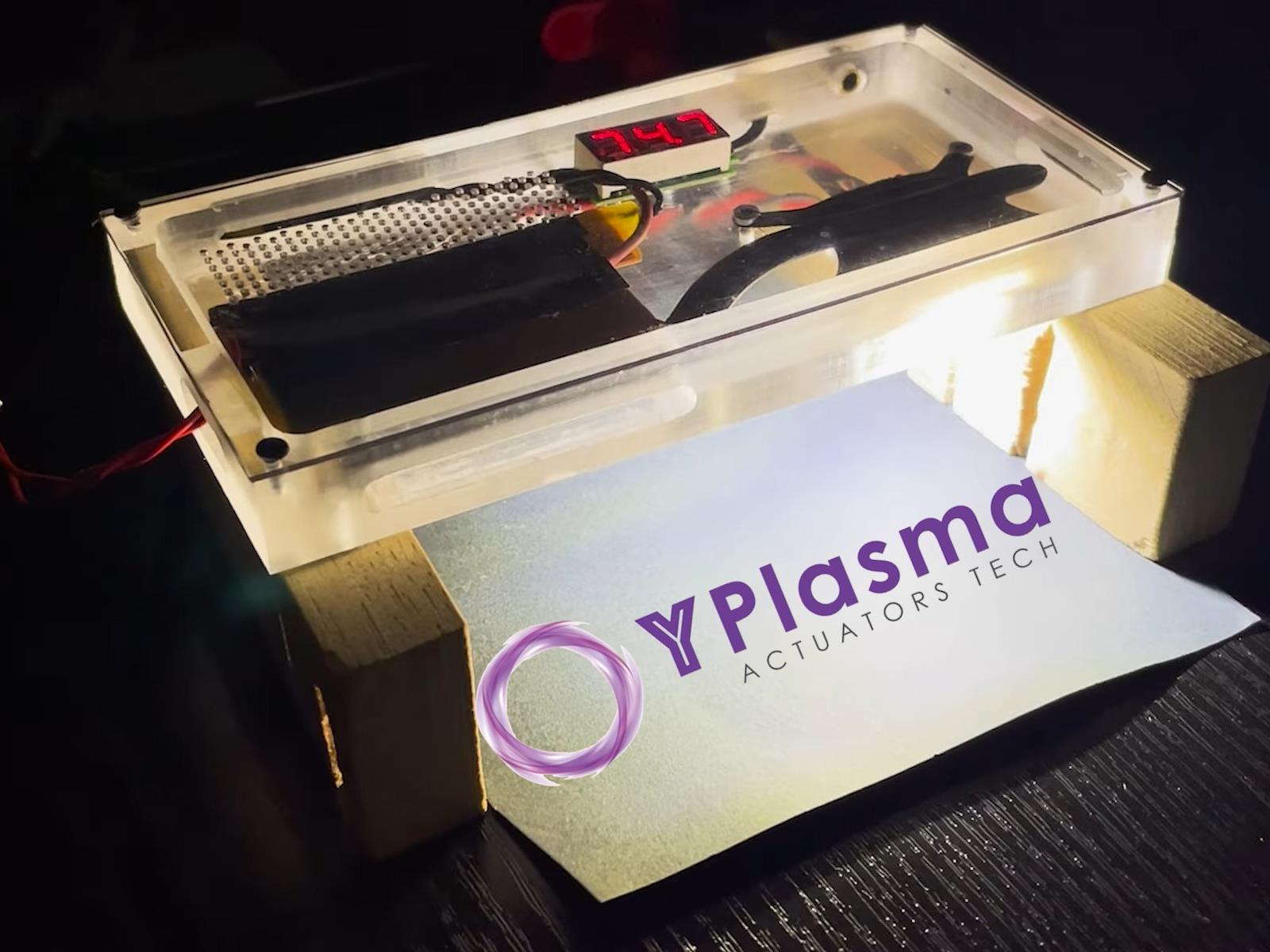
Noiseless Plasma Cooling May Be The Next Big Laptop Breakthrough At CES

Noiseless Plasma Cooling May Be The Next Big Laptop Breakthrough At CES
Computer cooling primarily happens with regular old fans blowing air through a fixed heatsink assembly. This has various complexities; fans need a relatively large amount of space, and they make a lot of noise due to the mechanical action by which they move air. YPlasma thinks it has a better way: micro-plasma actuators moving ionic wind that

Killjoy Microsoft Shuts Down Windows 11 Activation Without An Internet Connection

Killjoy Microsoft Shuts Down Windows 11 Activation Without An Internet Connection
Microsoft has seemingly disabled phone call activation for Windows 11, and perhaps older versions as well, making it impossible to activate Windows without an Internet connection.

This is an unwelcome development for users that want to airgap their systems and enthusiasts who want to activate older versions of Windows on retro hardware.

Volkswagen is bringing physical buttons back to the dashboard with the ID. Polo EV

We could be witnessing the start of the renaissance for real buttons in cars, courtesy of Volkswagen’s ID. Polo. The German automaker unveiled the interior of its upcoming compact EV, which features real buttons, switches and even a knob for audio controls.

“We have created an interior that feels like a friend from the very first contact,” Volkswagen’s chief designer, Andreas Mindt, said in a press release. “Clear physical buttons provide stability and trust, warm materials make it appealing, and charming details such as the new retro views of the instruments show the typical Volkswagen wink.”

Full view of the Volkswagen ID. Polo's dashboard
Volkswagen

Last year, Mindt told Autocar that Volkswagen would commit to reintroducing physical buttons for the most important functions “in every car we make from now on,” starting with the ID. 2all concept car that has since evolved to become the ID. Polo. The EV maker backed up those claims since the ID. Polo will feature tangible buttons underneath the infotainment display, along with a steering wheel that’s packed with even more clear buttons. Between the driver and passenger, Volkswagen even included a knob that can adjust audio volume or shuffle between tracks and radio stations.

Volkswagen's
Volkswagen

Besides the renewed emphasis on physical controls, Volkswagen still included a 10.25-inch digital cockpit behind the steering wheel. In the center, there’s a nearly 13-inch touchscreen that serves as the infotainment system. For a retro throwback, the ID. Polo can swap its cockpit display to one that’s inspired by the classic Golf I from the 1980s through a button on its steering wheel or with the infotainment touchscreen.

The ID. Polo is expected to be the first of four new EVs in Volkswagen’s small and compact car segment, which will see releases in European markets starting this year. However, it’s not all good news, since Volkswagen has no plans to release the compact EV in the US.

This article originally appeared on Engadget at https://www.engadget.com/transportation/evs/volkswagen-is-bringing-physical-buttons-back-to-the-dashboard-with-the-id-polo-ev-190246116.html?src=rss

Airlines Cancel Hundreds of Flights After U.S. Attack on Venezuela

CNBC reports that U.S. airlines have “canceled hundreds of flights to airports in Puerto Rico and Aruba, according to flight tallies from FlightAware and carriers’ sites.”

JetBlue, Southwest, and American Airlines were among the multiple airlines showing cancelled flights, which “included close to 300 flights to and from San Juan, Puerto Rico’s Luis Muñoz Marín International Airport, more than 40% of the day’s schedule, according to FlightAware.”

Airlines canceled flights throughout the Caribbean on Saturday following U.S. strikes on Venezuela after the Federal Aviation Administration ordered commercial aircraft to avoid airspace in parts of the region…. It wasn’t immediately clear how long the disruptions would last, though such broad restrictions are often temporary. Airlines said they would waive change fees and fare differences for customers affected by the airspace closures who could fly later in the month.

CNN cites a U.S. official who says more than 150 U.S. aircraft (including helicopters) launched from 20 different bases “on land and sea” during Friday’s attack.

The U.S. has said the lights were out in Caracas during the attack, presumably because of a targeted strike on their power grid. “Videos filmed by Caracas residents showed parts of the city in the dark,” reports the Miami Herald.

United Nations secretary-general António Guterres issued a statement via his spokesman saying he was “deeply concerned that the rules of international law have not been respected,” (according to a Reuters report cited by the Guardian). The Guardian adds that “a number of nations have called for an emergency meeting of the UN Security Council, in New York, today, as a result of the U.S.’s unilateral action.”


Read more of this story at Slashdot.

California introduces a one-stop shop to delete your online data footprint

Californians can now put a stop to their personal data being sold around on an online trading floor, thanks to a new free tool. On January 1, the state launched its Delete Request and Opt-out Platform, shortened to DROP, that allows residents to request to delete all of their personal information online that’s been harvested by data brokers.

According to the California Privacy Protection Agency (CalPrivacy), which was responsible for DROP’s release, it’s a “first of its kind” tool that imposes new restrictions on businesses that hoard and sell personal info that consumers didn’t provide directly. The process requires verifying your California residency before you can send a “single deletion request to every registered data broker in California.”

On the other end, CalPrivacy will require data brokers to register every year and to process any deletion requests from DROP. Data brokers will also have to report the type of information they collect and share, while also being subject to regular audits that check for compliance. If any data broker is found skirting the requirements, they could face penalties and fines.

Besides being the first in the country to offer this type of comprehensive tool that deletes online personal data, CalPrivacy said it’s one of four states, including Oregon, Texas and Vermont, to require data broker registration. According to the agency, data brokers will start processing the first deletion requests from DROP starting August 1, 2026.

This article originally appeared on Engadget at https://www.engadget.com/cybersecurity/california-introduces-a-one-stop-shop-to-delete-your-online-data-footprint-173102064.html?src=rss

Interference With America’s GPS System ‘Has Grown Dramatically’

86 aircraft were affected by an incident in Denver ,and 256 more in Dallas-Fort Worth, America’s Federal Aviation Admistrationtold the Washington Post:

The pilots flying into Denver International Airport could tell something was wrong. In urgent calls to air traffic controllers, they reported that the Global Positioning System was going haywire, forcing them to rely on backup navigation systems for more than a day. The Federal Aviation Administration issued a warning to air traffic in the area. Eight months later, in October 2022, it happened again — this time at Dallas-Fort Worth International Airport, which shut down a runway as pilots and air traffic controllers scrambled over two days without GPS to guide them. Federal officials have not said who was responsible for interfering with the systems or why it took so long to get them back online, though they’ve said the Denver incident was unintentional. But the disruptions stoked fear about the security vulnerabilities of GPS, a satellite network relied on daily by 6 billion people, businesses and governments.

Over the past two years, interference with the U.S. Global Positioning System has grown dramatically, threatening a network that is highly vulnerable to attack in a conflict. The danger could be posed by enemy or rogue nation-states — or even just hobbyists with commercially available equipment. Efforts by the Pentagon to upgrade GPS have been delayed by years and have cost billions, as adversaries are developing increasingly sophisticated ways to jam and trick the system with false signals that make it think it is somewhere it isn’t. And it’s not just civilian airline traffic at risk. The underpinnings of modern life and entire economies could be disrupted by a broad attack on the fragile satellite system — power grids, financial systems, cellphone networks — raising the prospect of catastrophe in an era of increasing electronic warfare…

A report last year by the OpsGroup, an organization of international airline operators, found that in January 2024, about 300 flights per day were affected by GPS interference. By late last year, that number had grown to 1,500 flights per day as conflicts in Eastern Europe and the Middle East continued. And in a one-month period, between July and August last year, some 41,000 flights were affected. “While GPS interference is not a new phenomenon, the scale and effects of the current wave of spoofing are unprecedented,” the report found…

The Pentagon has launched eight of its next-generation GPS III satellites, which broadcast the military-grade signal that is more resistant to jamming and spoofing. Lockheed Martin, the contractor building the satellites, is also developing a next-generation spacecraft, which would have the ability to emit an even stronger “spot beam” directly to areas used by U.S. forces, making it even more difficult to jam.


Read more of this story at Slashdot.

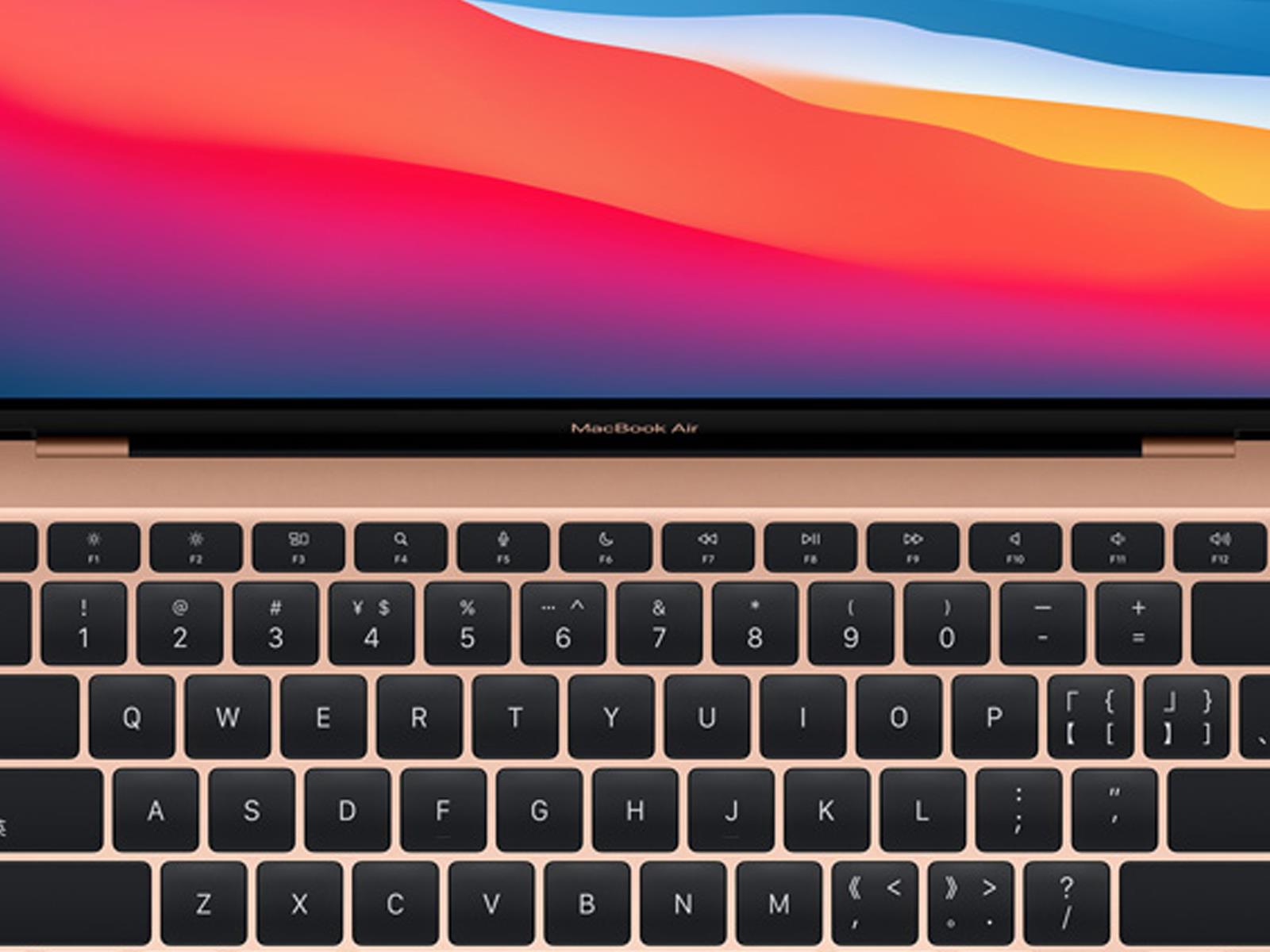
Report Doubles Down On A Low-Cost Apple A18 MacBook Arriving Soon

Report Doubles Down On A Low-Cost Apple A18 MacBook Arriving Soon
The chorus of analysts and leakers crooning about a lower-cost MacBook coming to town is growing louder. Joining the fray is a fresh report by TrendForce, in which the market research firm outlined several reasons why it’s downward adjusting its notebook shipment forecast for 2026. Those same reasons could compel to Apple to offer a cheaper

Jobs Vulnerable to AI Replacement Actually ‘Thriving, Not Dying Out’, Report Suggests

AI startups now outnumber all publicly traded U.S. companies, according to a year-end note to investors from economists at Vanguard.

And yet that report also suggest the jobs most susceptible to replacement by AI “are actually thriving, not dying out,” writes Forbes:

“The approximately 100 occupations most exposed to AI automation are actually outperforming the rest of the labor market in terms of job growth and real wage increases,” the Vanguard report revealed. “This suggests that current AI systems are generally enhancing worker productivity and shifting workers’ tasks toward higher-value activities…”

The job growth rate of occupations with high AI exposure — including office clerks, HR assistants, and data scientists — increased from 1% in pre-COVID-19 years (2015 through 2019) to 1.7% in 2023 and beyond, according to Vanguard’s research. Meanwhile, the growth rate of all other jobs declined from 1.1% to 0.8% over the same period. Workers in AI-prone roles are getting pay bumps, too; the wage growth of jobs with high AI exposure shot up from 0.1% pre-COVID to 3.8% post-pandemic (and post-ChatGPT). For all other jobs, compensation only marginally increased from 0.5% to 0.7%… As technology improves production and reallocates employee time to higher-value tasks, a smaller workforce is needed to deliver services. It’s a process that has “distinct labor market implications,” Vanguard writes, just like the many tech revolutions that predate AI…

“Entry-level employment challenges reflect the disproportionate burden that a labor market with a low hiring rate can have on younger workers,” the Vanguard note said. “This dynamic is observed across all occupations, even those largely unaffected by AI…” While many people see these labor disruptions and point their fingers at AI, experts told Fortune these layoffs could stem from a whole host of issues: navigating economic uncertainty, resolving pandemic-era overhiring, and bracing for tariffs. Vanguard isn’t convinced that an AI is the reason for Gen Z’s career obstacles.

“While statistics abound about large language models beating humans in computer programming and other aptitude tests, these models still struggle with real-world scenarios that require nuanced decision-making,” the Vanguard report continued. “Significant progress is needed before we see wider and measurable disruption in labor markets.”


Read more of this story at Slashdot.
Bose Headphones, Earbuds & Portable Speakers Slashed Up To $150 Off In Big Sale

Bose Headphones, Earbuds & Portable Speakers Slashed Up To $150 Off In Big Sale
Are you ready to rock out to a brand new year? You could be if you take advantage of some deep discounts on several Bose audio products. We took a look around and found a whole bunch of Bose audio devices on sale, including portable Bluetooth speakers, popular headsets with active noise cancellation, and earbuds. Let’s get into it…
Bose