North Dakota Law Included Fake Critical Minerals Using Lawyers’ Last Names

North Dakota passed a law last May to promote development of rare earth minerals in the state. But the law’s language apparently also includes two fake mineral names, according to the Bismarck Tribune, “that appear to be inspired by coal company lawyers who worked on the bill.”

The inclusion of fictional substances is being called an embarrassment by one state official, a possible practical joke by coal industry leaders and mystifying by the lawmakers who worked on the bill, the North Dakota Monitor reported.

The fake minerals are friezium and stralium, apparent references to Christopher Friez and David Straley, attorneys for North American Coal who were closely involved in drafting the bill and its amendments. Straley said they were not responsible for adding the fake names. “I assume it was put in to embarrass us, or to make light of it, or have a practical joke,” Straley said, adding it could have been a clerical error.

Agriculture Commissioner Doug Goehring questioned the two substances listed in state law during a recent meeting of the North Dakota Industrial Commission, which is poised to adopt rules based on the legislation… Friezium and stralium first appeared in the bill on the last afternoon of the legislative session as lawmakers hurried to pass several final bills… The amended bill is labeled as prepared by Legislative Council for Rep. Dick Anderson, R-Willow City, the prime sponsor and chair of the conference committee. Anderson said the amendments were prepared by a group of attorneys and legislators, including representatives from the coal industry…

Jonathan Fortner, president of the Lignite Energy Council that represents the coal industry, said it’s unfortunate this happened in such an important bill. “From the president on down, everyone’s interested in developing domestic critical minerals for national security reasons,” Fortner said. “While this may have been a legislative joke between some people that somehow got through, the bigger picture is one that is important and is a very serious matter.”


Read more of this story at Slashdot.

Yukai Engineering’s latest gadget at CES is a fan for babies

Yukai Engineering, maker of the weirdly cute Mirumi robot, has another interesting gadget at CES 2026. Baby FuFu is a portable fan for babies that attaches to strollers.

Baby FuFu is modeled on the company’s smaller (but otherwise identical-looking) drink-cooling gadget, Nekojita FuFu. “Baby FuFu grew out of Nekojita FuFu fans’ feedback that their children love not only cooling their food with it but also playing with it, pretending to fan their faces and blow-dry their hair,” Yukai Engineering CEO Shunsuke Aoki said.

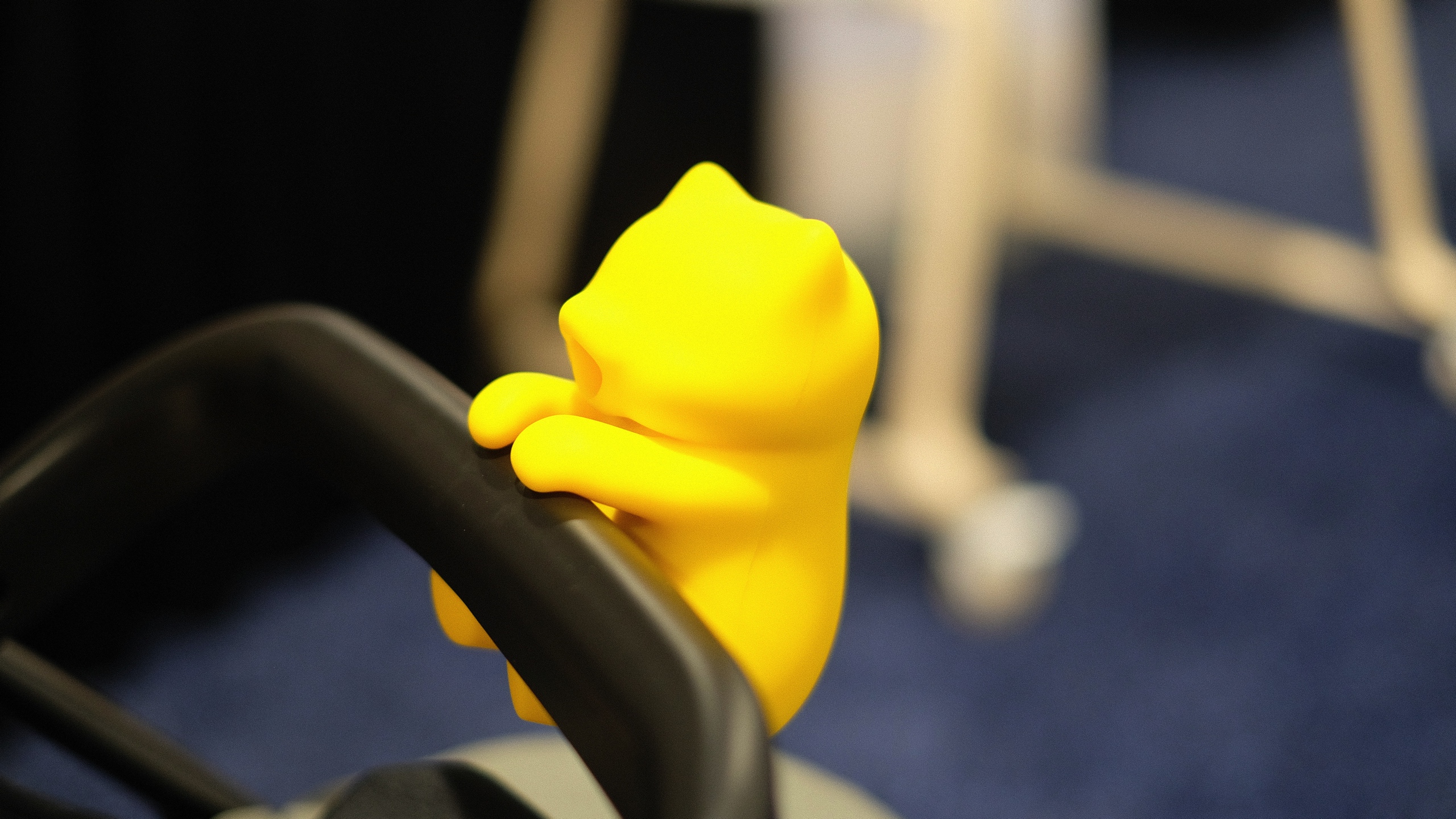
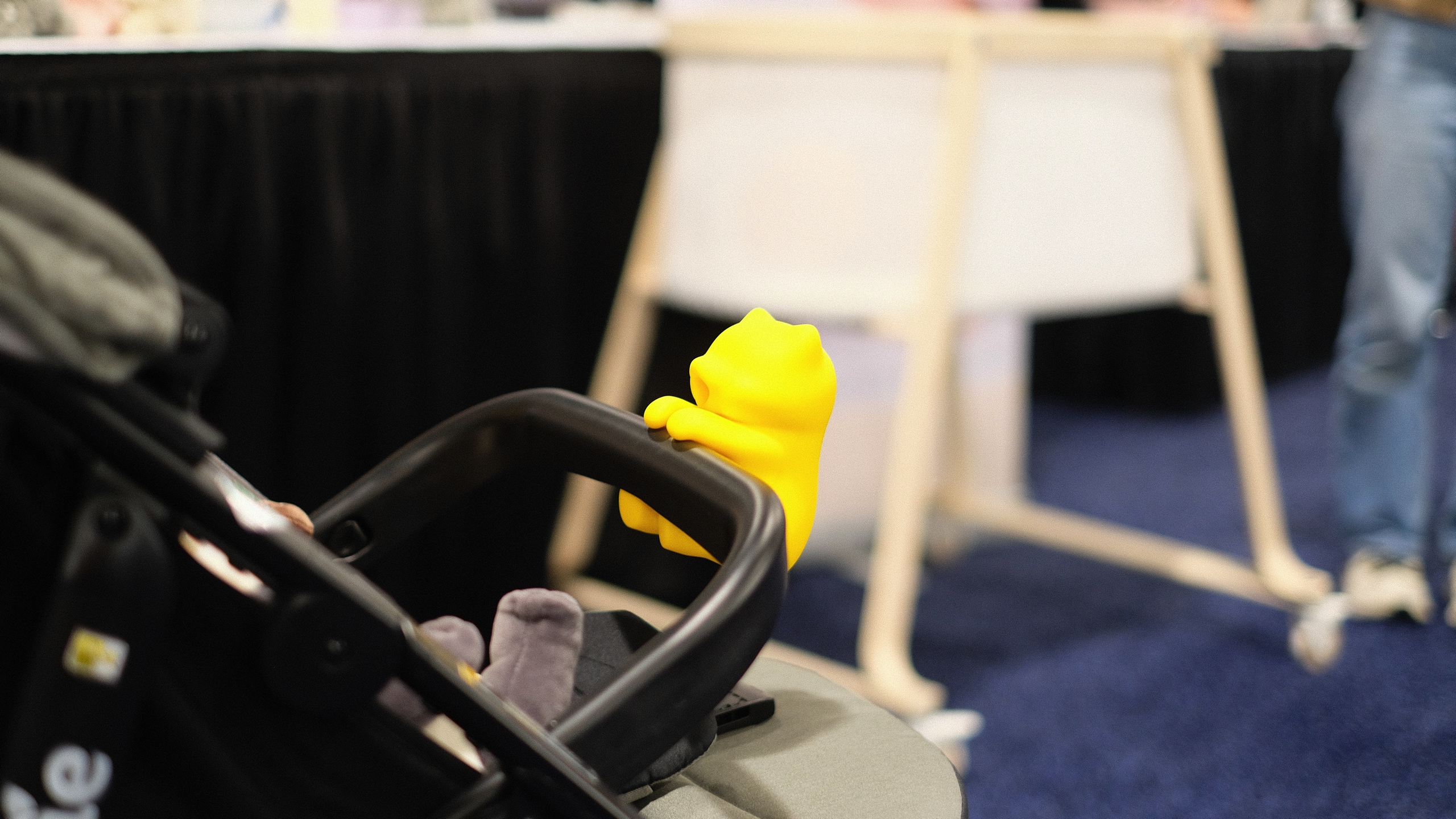
Baby FuFu, positioned on the stroller handle.
Image by Mat Smith for Engadget

The company says the fan blades are concealed behind a slit plate that blocks even the tiniest fingers from entering. The cat-like fan’s “hands” and “feet” are designed to latch onto stroller handles. Parents can angle Baby FuFu to aim airflow at the child’s face (or anywhere else). It has three airflow settings, adjustable with a single button. It charges via USB-C.

Baby FuFu
Baby FuFu
Image by Mat Smith for Engadget

Yukai Engineering plans to launch Baby FuFu in mid-2026 for somewhere between $50 and $60. It will join the company’s “shy” Mirumi charm robot, which has raised over $250,000 on Kickstarter. Mirumi’s crowdfunding campaign expires on January 22.

This article originally appeared on Engadget at https://www.engadget.com/mobile/yukai-engineerings-latest-gadget-at-ces-is-a-fan-for-babies-000000172.html?src=rss

The Subtle Voicebuds use AI to transcribe your words below a whisper, or in very loud spaces (like the CES show floor)

There’s a good chance you spend more time talking to your phone’s virtual assistant, or dictating text with your voice, instead of actually calling people these days. But, as convenient as voice input can be, you don’t want to be the obnoxious person shouting commands to Siri or ChatGPT in a quiet library. And you probably won’t have much luck dictating an email in a room with toddlers screaming and Peppa Pig blaring on the TV. (Ask me how I know.)

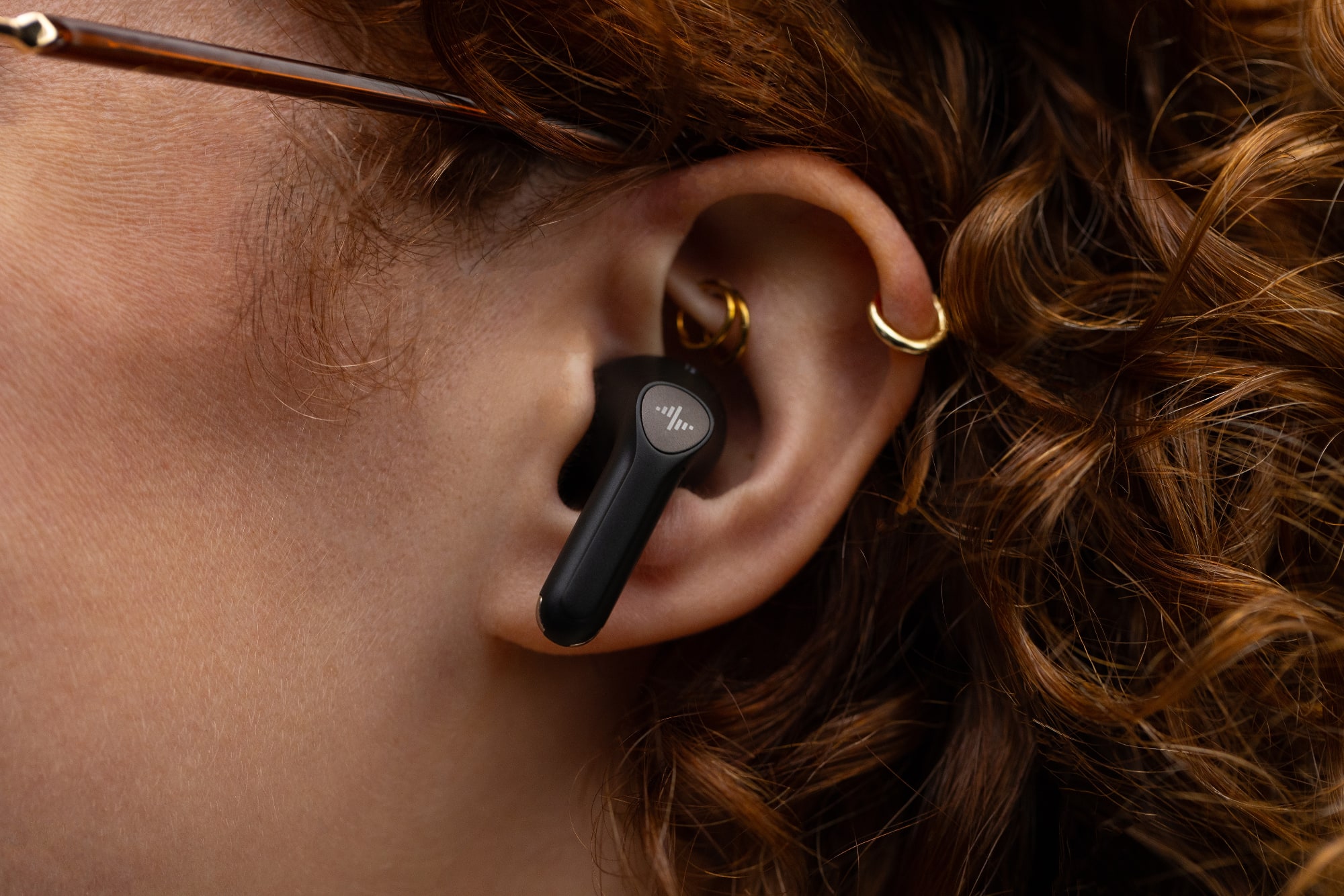
At CES 2026, the startup Subtle is unveiling its solution to those issues: Voicebuds. While they look like a typical pair of wireless earbuds, they feature a custom AI model that lets you dictate text below the sound of a whisper. Additionally, they can also filter out noisy environments so that you don’t have to shout for dictation and voice commands. The Voicebuds seem similar to the WHSP ring we saw at CES 2024, which let whisper to your phone, and they also compete with other AI earbuds like the Notebuds One.

Subtle Voicebuds.
Subtle Voicebuds.
Subtle

Subtle claims its Voicebuds deliver five times fewer transcription errors than the AirPods Pro 3 with OpenAI transcription. At $199, they’re also priced competitively with Apple’s best buds. As with many new hardware products, though, there’s also an additional subscription for premium features on Subtle’s app, including instant dictation and the ability to transcribe notes without looking at your phone. You’ll get a year’s worth of access to the Subtle iOS app (there’s no Android support so far) when you buy the Voicebuds, but after that it’s a $17 a month fee. Without the subscription, the Voicebuds still offer better overall transcription accuracy with its on-device machine learning model.

I haven’t been able to try the Voicebuds in person yet, but in a remote demo I watched Subtle CEO Tyler Chen use them to accurately dictate text while playing loud music. They also worked while while he was barely whispering a few sentences. (He was so quiet, I couldn’t even hear what he was saying over video chat). As you’d expect, you can use Voicebuds to take calls and listen to audio just like any other pair of headphones. They also offer other modern features, like active noise cancellation and a multi-mic array. Still, I can’t imagine a fledgling startup will be able to match the refined audio quality we’ve seen from the AirPods Pro 3 and Sony’s latest buds, or their well-honed ANC capabilities.

As someone who’s practically attached to my AirPods Pros, primarily because they handle Siri voice commands so well, it would have to take a truly transformative product to replace them. Voicebuds won’t support Apple’s “Hey, Siri” command, since that involves having one of Apple’s proprietary chips, though Chen says the company is integrating its own AI assistant. But if the Voicebud’s transcription is as great as the company claims, they may eventually earn a coveted place in my pocket alongside Apple’s buds.

This article originally appeared on Engadget at https://www.engadget.com/audio/headphones/the-subtle-voicebuds-use-ai-to-transcribe-your-words-below-a-whisper-or-in-very-loud-spaces-like-the-ces-show-floor-000000019.html?src=rss

Are Hybrid Cars Helping America Transition to Electric Vehicles?

America’s electric car subsidies expired at the end of September, notes Bloomberg. Yet in those last three months, “while fully electric cars and trucks made up 10% of all auto sales in the US… another 15% of transactions were for hybrid vehicles.”

The EV market is slowing in the U.S., but analysts expect hybrid sales to continue accelerating. CarGurus Inc., a digital listings platform that covers most of the US auto market, predicts nearly one in six new cars next year will be a hybrid, as automakers green-light more and better machines with the technology. And though these cars and trucks will still burn gas, they will quietly move the needle on both transportation emissions and the transition to fully electric cars and trucks… CarGurus calls hybrids the success story of 2025. Indeed, the fastest-selling car in the country this year has been the Hyundai Palisade Hybrid; it sat on lots for fewer than 14 days on average…

While carmakers have struggled to turn a profit on fully electric vehicles, analysts say their investments in batteries and electric motors are helping them sell more and better hybrid machines. It’s also increasingly difficult to discern a hybrid from a solely gas-powered model, said Scott Hardman, assistant director of the Electric Vehicle Research Center at the University of California at Davis. Carmakers today often don’t even label a hybrid as such. Consider Toyota’s RAV4, one of the best-selling vehicles in America. The 2026 version of the SUV comes in six different variants, all of which include an electric motor and a gas tank. “A hybrid is just a regular car now,” Hardman said. “You can buy one by accident….”

While not as clean as an electric vehicle, hybrids offer sneaky carbon cuts as well. Americans, on average, drive about 38 miles a day, which requires about one gallon of gas in most basic hybrids. Contemporary plug-in hybrids, which can run on all-battery power, can cover almost that entire range without the gas engine kicking in. And a small crowd of cars will do even better, stretching their batteries well over 40 miles per charge. All told, hybridization can reduce the carbon dioxide emissions of a vehicle by roughly 20% to 30%, according to the International Council on Clean Transportation.

Some interesting statistics from the article:

By 2030 Ford expects fully or partially electrified vehicles will represent half its global sales. Toyota has already reached 50% (“in part thanks to all those hybrid RAV4s”).
Honda is “basing its entire business on hybrids until at least 2030.”
Around one-third of America’s hybrid drivers “transition to a fully electric vehicle when they next switch cars.”
In September 57% of America’s car shoppers “were considering a fully electric auto, according to JD Power. However, among hybrid households, that share was almost 70%.”


Read more of this story at Slashdot.

Fleischer Studios Criticized for Claiming Betty Boop is Not Public Domain

Here it is — Betty Boop’s first appearance, which became public domain on Thursday. It’s a 60-second song halfway through a longer cartoon about a restaurant titled Dizzy Dishes. (The first scene makes it clear this is a restaurant of anthropomorphized animals — which explains why the as-yet-unnamed character has floppy dog ears…)

So Fleischer Studios has now warned that claiming Betty Boop is public domain “is actually not true.”

Very often, different versions of a character that have been developed later can independently enjoy copyright protection. Also, names and depictions of a character very frequently will remain separately protected by trademark and other laws, regardless of whether the copyright has expired.

But is that really true? Fleischer Studios went out of business in 1946, notes Los Angeles Times columnist Michael Hiltzik:

By then it had sold the rights to its cartoons and the Betty Boop character. A new Fleischer Studios was formed in the 1970s by Fleischer descendants, including Max’s grandson Mark Fleischer, and set about repurchasing the rights that had been sold. Whether it reacquired the rights to Betty Boop is up for discussion… According to a federal appeals court ruling in 2011, the answer is no. Having navigated its way through the three or four copyright transfers that followed the original rights sale, the appeals court concluded that the original Fleischer studios sold the rights to Betty Boop and the related cartoons to Paramount in 1941 but couldn’t verify that the rights to the character had been sold in an unbroken chain placing them with the new studio. The “chain of title” was broken, the appellate judges found — but they didn’t say who ended up with Betty Boop.

So last month Cory Doctorow pointed out that “while the Fleischer studio (where Betty Boop was created) renewed the copyright on Dizzy Dishes, there were many other shorts that entered the public domain years ago.”

That means that all the aspects of Betty Boop that were developed for Dizzy Dishes are about to enter the public domain. But also, all the aspects of Betty Boop from those non-renewed shorts are already in the public domain. But some of the remaining aspects of Betty Boop’s character design — those developed in subsequent shorts that were also renewed — are also in the public domain, because they aren’t copyrightable in the first place, because they’re “generic,” or “trivial,” constitute “minuscule variations,” or be so standard or indispensable as to be a “scène à faire….” But we’re not done yet! Just because some later aspects of the Betty Boop character design are still in copyright, it doesn’t follow that you aren’t allowed to use them! U.S. Copyright law has a broad set “limitations and exceptions,” including fair use.

So while Fleischer Studios insists Betty Boop “will continue to enjoy copyright and trademark protection for years to come,” Doctorow has some thoughts on that trademark:

Even the Supreme Court has (repeatedly) upheld the principle that trademark can’t be used as a backdoor to extend copyright.
That’s important, because the current Betty Boop license-holders have been sending out baseless legal threats claiming that their trademarks over Betty Boop mean that she’s not going into the public domain. They’re not the only ones, either! This is a routine, petty scam perpetrated by marketing companies that have scooped up the (usually confused and difficult-to-verify) title to cultural icons and then gone into business extracting rent from people and businesses who want to make new works with them.

“Trademarks only prevent you from using character names and depictions in a way that misleads consumers into thinking your work is produced or sponsored by the rightsholder,” Duke University clarified in their January 1st explanation of Public Domain Day 2026 — “for example, by putting them on unlicensed merchandise. They do not prevent you from using them in a new creative work clearly unaffiliated with the rights owners…”
“Regardless of who owns the later versions of the character, the original Betty Boop character from 1930 is in the public domain.”
This is another reason why copyright expiration is so important: It brings clarity… Under US copyright law, anyone is free to use characters as they appeared in public domain works. If those characters recur in later works that are still under copyright, the rights only extend to the newly added material in those works, not the underlying material from the public domain works — that content remains freely available. Second, with newer versions of characters, copyright only extends to those new features that qualify for such protection…

Dozens of post-1930 Betty Boop cartoons, including Ker-Choo (1932) and Poor Cinderella (1934), did not have renewals. The newly added material in these animations is also in the public domain… To sum up the copyright story so far: in 2026, the underlying Betty Boop character goes into the public domain. She is joined there by the attributes, plot lines, and dialogue that were first introduced in those later cartoons without renewed copyrights, as well as the uncopyrightable attributes of her later instantiations…

Certainly, there would be a risk of consumer confusion if you use Betty Boop as a brand identifier on the kind of merchandise Fleischer sells — jewelry, back packs, water bottles, dolls. Trademark law does protect Fleischer against that risk. Contrast these uses with simply putting the Boop character in a new artistic work. This is exactly what copyright expiration is intended to allow. Were trademark law to prevent this, then trademark rights would be leveraged to obtain the effective equivalent of a perpetual copyright — precisely what the Supreme Court said we cannot do…

If courts have delineated the line between copyright and trademark, why is there so little clarity in this area? Sadly, companies sometimes claim to have more expansive rights than they actually do, capitalizing on fear, uncertainty, and doubt to collect royalties and licensing fees to which they are not legally entitled.


Read more of this story at Slashdot.

Belkin announces a wireless HDMI dongle that doesn’t need Wi-Fi access

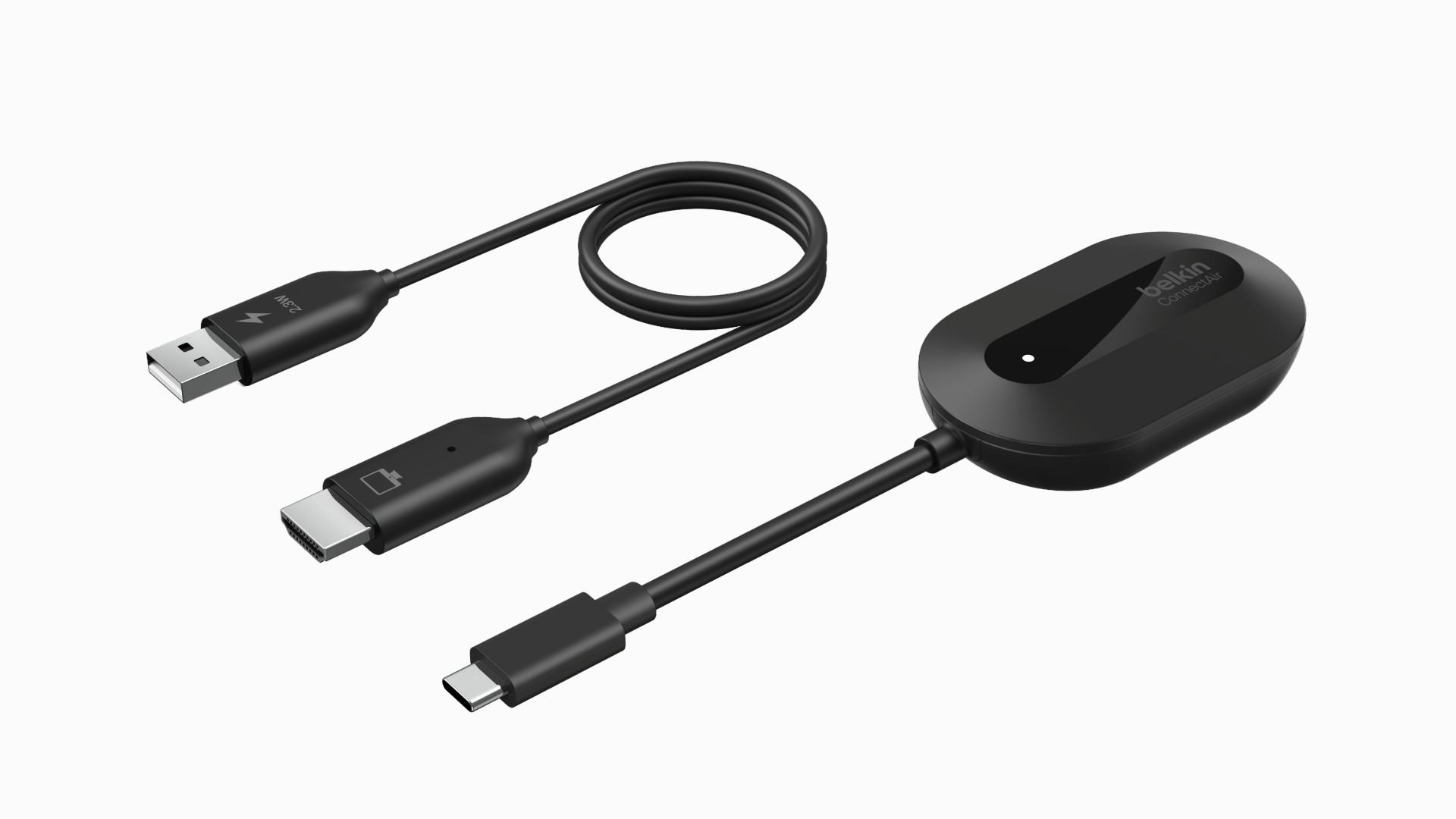
Belkin has announced a plug-and-play casting system at CES 2026 that allows for screen sharing from a laptop, tablet or smartphone to another display without Wi-Fi or Bluetooth. The $150 ConnectAir Wireless HDMI Display Adapter comes with a USB-C transmitter dongle and a USB-A to HDMI receiver that can be connected to a TV, monitor or projector to wirelessly cast over a range of up to 131 feet (40 meters). 

Belkin's ConnectAir Wireless USB-C transmitter and HDMI receiver
Belkin’s ConnectAir Wireless USB-C transmitter and HDMI receiver
Belkin

The ConnectAir Wireless casts in 1080p at 60Hz, with latency under 80ms according to Belkin. It’s compatible with USB-C devices that support DisplayPort Alt Mode, including Windows, macOS and ChromeOS laptops, tablets such as the M1 and M2 iPad Pro and iPad Air, and smartphones with video output. Belkin also says it supports multi-user screen sharing at up to 8 transmitters. The dongle comes in black and while it’s not available to purchase just yet, it’s expected to be released early this year. 

This article originally appeared on Engadget at https://www.engadget.com/computing/accessories/belkin-announces-a-wireless-hdmi-dongle-that-doesnt-need-wi-fi-access-215513179.html?src=rss

LG reveals its laundry-folding robot at CES 2026

LG has unveiled its humanoid robot that can handle household chores. After teasing the CLOiD last week, the company has offered its first look at the AI-powered robot it claims can fold laundry, unload the dishwasher, serve food and help out with other tasks. 

The CLOiD has a surprisingly cute “head unit” that’s equipped with a display, speakers, cameras and other sensors. “Collectively, these elements allow the robot to communicate with humans through spoken language and ‘facial expressions,’ learn the living environments and lifestyle patterns of its users and control connected home appliances based on its learnings,” LG says in its press release. 

The robot also has two robotic arms — complete with shoulder, elbow and wrist joints — and hands with fingers that can move independently. The company didn’t share images of the CLOiD’s base, but it uses wheels and technology similar to what the appliance maker has used for robot vacuums. The company notes that its arms are able to pick up objects that are “knee level” and higher, so it won’t be able to pick up things from the floor.

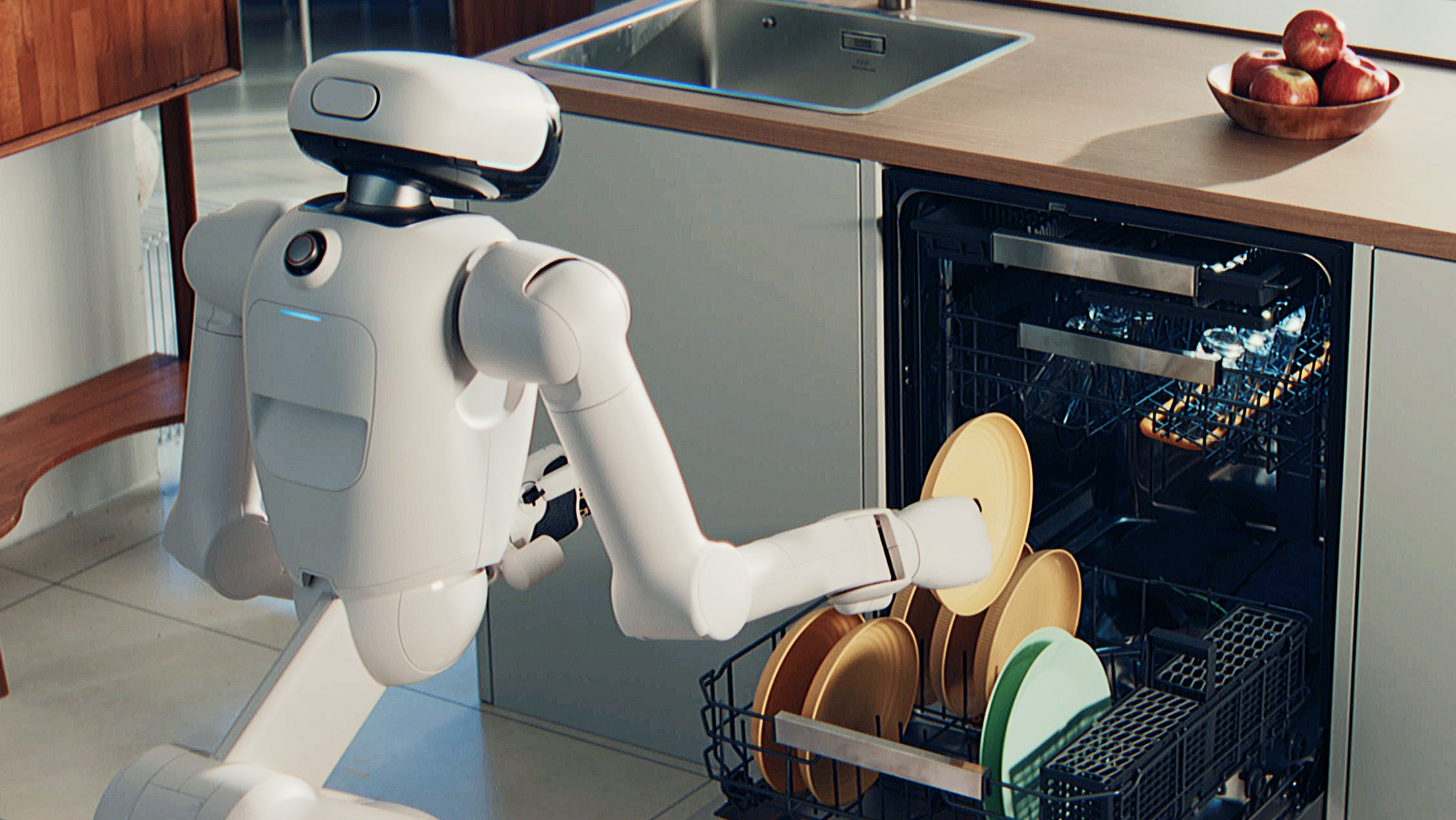
The CLOiD robot unloading a dishwasher.
LG

LG says it will show off the robot completing common chores in a variety of scenarios, like starting laundry cycles and folding freshly washed clothes. The company also shared images of it taking a croissant out of the oven, unloading plates from a dishwasher and serving a plate of food. Another image shows it standing alongside a woman in the middle of a home workout, though it’s not clear how the CLOiD is aiding with that task.

We’ll get a closer look at the CLOiD and its laundry-folding abilities once the CES show floor opens later this week, so we should get a better idea of just how capable it is. It sounds like for now LG intends this to be more of a concept rather than a product it plans to actually sell. The company says that it will “continue developing home robots with practical functions and forms for housework” and also bring its robotics technology to more of its home appliances, like refrigerators with doors that can automatically open.

This article originally appeared on Engadget at https://www.engadget.com/home/smart-home/lg-reveals-its-laundry-folding-robot-at-ces-2026-215121021.html?src=rss

‘Fish Mouth’ Filter Removes 99% of Microplastics From Laundry Waste

“The ancient evolution of fish mouths could help solve a modern source of plastic pollution,” writes ScienceAlert.
“Inspired by these natural filtration systems, scientists in Germany have invented a way to remove 99 percent of plastic particles from water. It’s based on how some fish filter-feed to eat microscopic prey.”

The research team has already filed a patent in Germany, and in the future, they hope their creation will help curb a ubiquitous form of plastic pollution that many are unaware of. Every time a load of laundry is done, millions of microplastics are washed from the fibers of our clothes into local waterways. By some estimates, up to 90 percent of plastic in ‘sewage sludge’ comes from washing machines. This material is then often used in agriculture as soil or fertilizer, possibly exposing those who eat the resulting crops to these pollutants…

Unlike other plastic filtration systems on the market, this one reduces clogging by 85 percent.


Read more of this story at Slashdot.

LG’s ‘Aerominum’ Gram Pro laptops feel impossibly light and strong

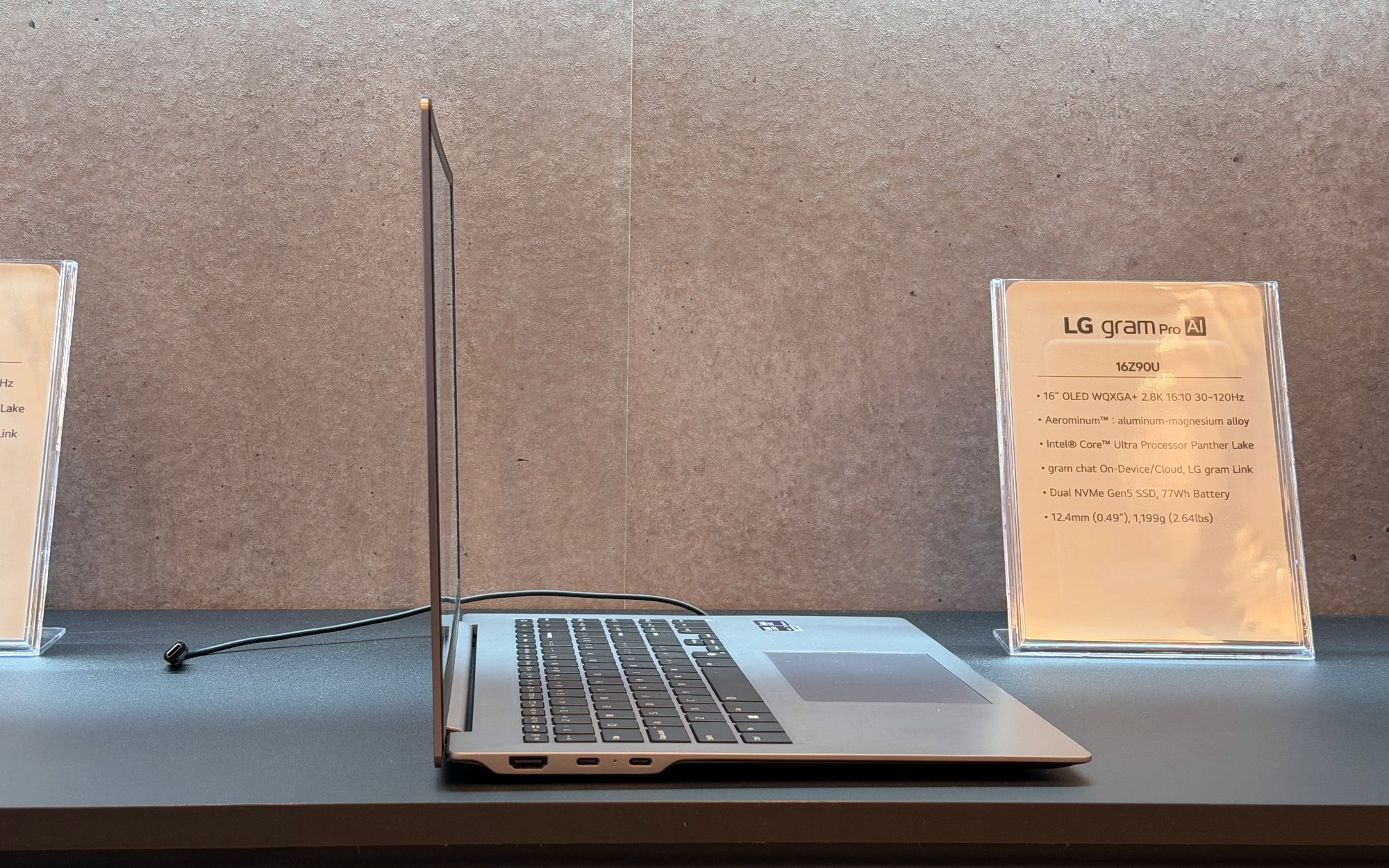
For years, LG has pushed its ultra-light Gram laptops as a way to stand out from the PC crowd, for better or worse. I was’t a big fan of the flex-prone case in the 2017 Gram, and we had similar concerns with the first 17-inch Gram in 2019. But in fairness, it’s been a while since we’ve reviewed one, and we found a lot to like in our preview of last year’s AI-equipped model. Now LG is back with a major Gram Pro redesign at CES 2026, which features a new aluminum/magnesium alloy it’s dubbed “Aerominum.” And finally, it seems LG has found a balance between building a super-light notebook (the 16-inch Gram Pro weighs just 2.6 pounds), and crafting something that actually feels durable.

Admittedly, the Gram Pro doesn’t look particularly impressive at first glance. It has a large 16-inch 2.8K OLED screen, which certainly looks nice, but doesn’t really stand out from the glut of other OLED laptops on market. It’s also powered by Intel’s new Panther Lake chips, and it supports dual NVMe SSDs. The magic happens when you pick it up: My brain had a hard time computing how such a large computer felt so light in my hands. And best of all, it didn’t flex much when I tried to squeeze the case.

LG Gram Pro 16 side ports.
Devindra Hardawar for Engadget

There’s still a bit of give, to be clear, but it didn’t feel as precariously bendy as earlier models. I wouldn’t stress too much about throwing it into a messenger bag without additional protection. The more I handled the Gram Pro, the more I wished other PC makers strived for similar weight reduction. The Gram Pro weighs about as much as the 13-inch MacBook Air! That’s certainly an impressive feat.

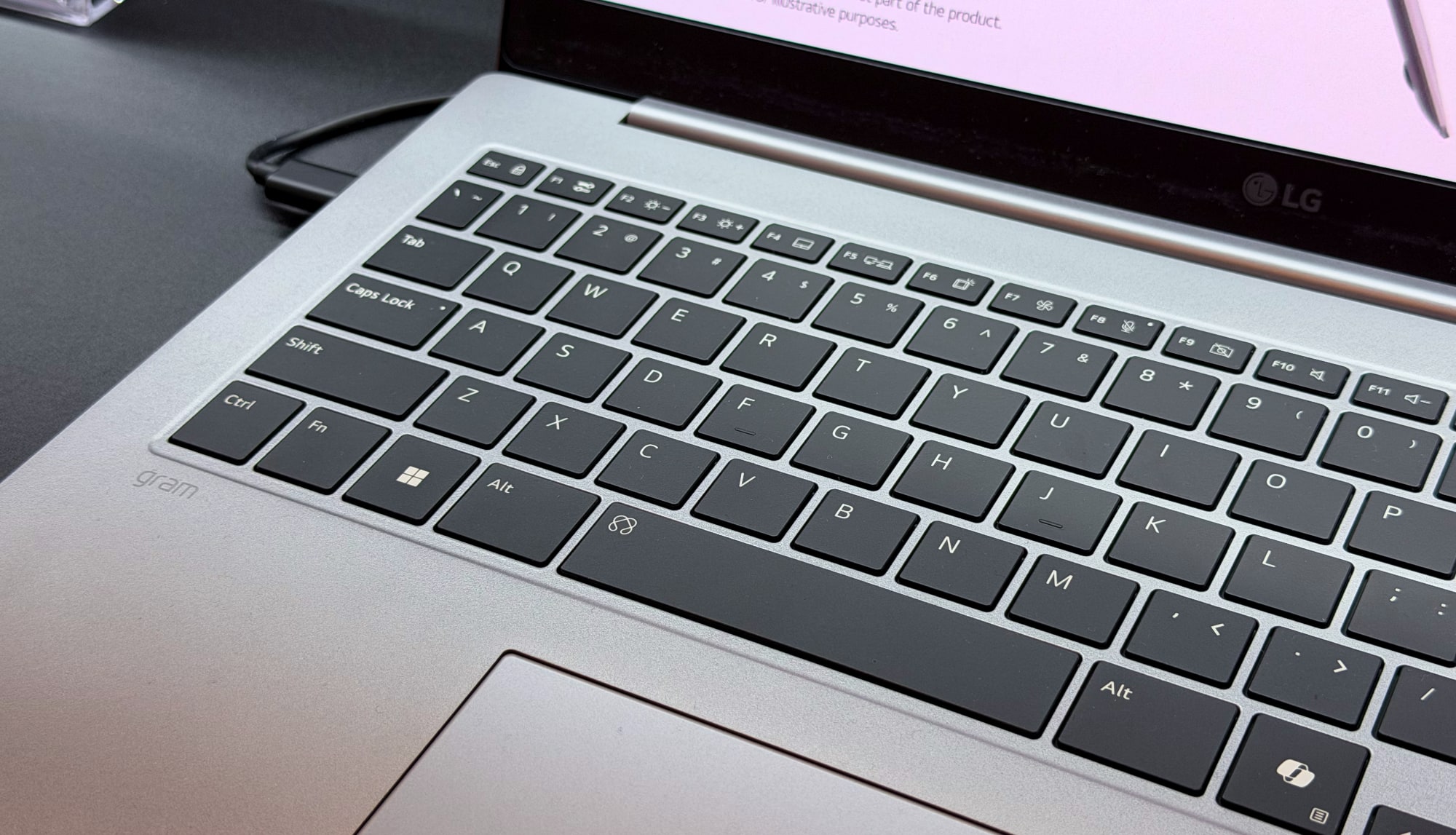
The LG Gram Pro 16's disappointing keyboard.
The LG Gram Pro 16’s disappointing keyboard.
Devindra Hardawar for Engadget

I just wish LG spent as much time refining the Gram Pro’s keyboard as its case design. There’s barely any key travel, which made for an unresponsive and unsatisfying typing experience. I get it, LG probably doesn’t have the available vertical height for much key movement, but there are other ways to make typing feel more dynamic. The Gram Pro’s trackpad, meanwhile, is serviceable, but it also didn’t feel as smooth and responsive as what we see from Apple’s notebooks or Microsoft’s Surface Laptop.

LG Gram Pro 17
LG Gram Pro 17
LG

In addition to the 16-inch Gram Pro, LG also debuted a 17-inch model with an Aerominum case, which is notable for being the lightest notebook at that size with an NVIDIA RTX GPU. Specifically, it’s toting the RTX 5050, which should be enough to play most games at the laptop’s native 2,880 by 1,800 resolution (or 1440p blown up a bit). Given the more powerful hardware, the Gram Pro 17 is heavier than the 16-inch model, but it still comes in under four pounds. I didn’t get a chance to play any games on the laptop, unfortunately, but overall it looks like a decent option for someone who wants a large screen with a bit of horsepower.

This article originally appeared on Engadget at https://www.engadget.com/computing/laptops/lgs-aerominum-gram-pro-laptops-feel-impossibly-light-and-strong-200317743.html?src=rss

A Drug-Resistant ‘Superbug’ Fungus Infected 7,000 Americans in 2025

An anonymous reader shared this report from the Independent:

Candida auris, a type of invasive yeast that can cause deadly infections in people with weakened immune systems, has infected at least 7,000 people [in 2025] across 27 U.S. states, according to data from the Centers for Disease Control and Prevention. The fungus, which can spread easily in healthcare settings such as hospitals and nursing homes, is gaining virulence and spreading at an “alarming” rate, the CDC says. Some strains of the fungus are particularly troublesome — and even considered a superbug — because they’re resistant to all types of antibiotics used to treat fungal infections, The Hill reports.

While healthy people may be able to fight off the infection on their own, the fungus can be deadly, especially in healthcare settings, where it can quickly spread amongst a vulnerable population. “If you get infected with this pathogen that’s resistant to any treatment, there’s no treatment we can give you to help combat it. You’re all on your own,” Melissa Nolan, an assistant professor of epidemiology and biostatistics at the University of South Carolina, told Nexstar…

A recent study found that Candida auris is gaining virulence and spreading rapidly, not just in the U.S., but also globally. Candida auris has already been found in at least 61 countries on six continents.

Some context from Newsweek:

There are strategies available to combat Candida auris infection. While the superbug can develop ways to evade the immune response, vaccination and treatment strategies are possible, but researchers would like them to be strengthened. Four classes of antifungal drugs are currently available, with varying degrees of efficacy, and three new drugs are currently in trials or at newly approved stages


Read more of this story at Slashdot.

Microsoft’s Risky Bet That Windows Can Become The Platform for AI Agents

“Microsoft is hoping that Windows can once again serve as the platform where it all takes off,” reports GeekWire:

A new framework called Agent Launchers, introduced in December as a preview in the latest Windows Insider build, lets developers register agents directly with the operating system. They can describe an agent through what’s known as a manifest, which then lets the agent show up in the Windows taskbar, inside Microsoft Copilot, and across other apps… “We are now entering a phase where we build rich scaffolds that orchestrate multiple models and agents; account for memory and entitlements; enable rich and safe tools use,” Microsoft CEO Satya Nadella wrote in a blog post this week looking ahead to 2026. “This is the engineering sophistication we must continue to build to get value out of AI in the real world….” [The article notes Google’s Gemini and Anthropic’s Claude will also offer desktop-style agentsthrough browsers and native apps, while Amazon is developing “frontier agents” for automating business processes in the cloud.]

But Microsoft’s Windows team is betting that agents tightly linked to the operating system will win out over ones that merely run on top of it, just as a new class of Windows apps replaced a patchwork of DOS programs in the early days of the graphical operating system. Microsoft 365 Copilot is using the Agent Launchers framework for first-party agents like Analyst, which helps users dig into data, and Researcher, which builds detailed reports. Software developers will be able to register their own agents when an app is installed, or on the fly based on things like whether a user is signed in or paying for a subscription…

Agents are meant to maintain this context across apps, ask follow-up questions, and take actions on a user’s behalf. That requires a different level of trust than Windows has ever had to manage, which is already raising difficult questions for the company. Microsoft acknowledges that agents introduce unique security risks. In a support document, the company warned that malicious content embedded in files or interface elements could override an agent’s instructions — potentially leading to stolen data or malware installation. To address this, Microsoft says it has built a security framework that runs agents in their own contained workspace, with a dedicated user account that has limited access to user folders. The idea is to create a boundary between the agent and what the rest of the system can access. The agentic features are off by default, and Microsoft is advising users to “understand the security implications of enabling an agent on your computer” before turning them on…

There is a business reality driving all of this. In Microsoft’s most recent fiscal year, Windows and Devices generated $17.3 billion in revenue — essentially flat for the past three years. That’s less than Gaming ($23.5 billion) and LinkedIn ($17.8 billion), and a fraction of the $98 billion in revenue from Azure and cloud services or the nearly $88 billion from Microsoft 365 commercial.


Read more of this story at Slashdot.
Trump Organization’s $499 Smartphone Delayed Again, Now Until the End of January

Last June the Trump organization announced sales of a $499 “T1” smartphone with a gold-colored case. But though they originally were scheduled for release in August, this week a customer service representative for the wireless carrier told CBS News the device will be pushed back again, now until the end of January, “attributing the delay to the recent U.S. government shutdown.”

Some context from The Independent:

Shortly after the phone was first announced, language describing it as “Made in the USA” was removed from its official website with the vague claim that the devices are “brought to life” in the United States posted in its place… Other information about the phone has also changed or been removed since its first unveiling, The Verge has reported. Trump Mobile initially indicated the T1’s screen measured 6.78 inches, but now claims it is 6.25 inches. It also said the phone had 12GB of RAM; however, that claim has now also disappeared.

As the wait for the T1 continues, Trump Mobile has begun offering refurbished Samsung S23s, S24s, and Apple iPhone 15s and 16s for sale on its site, which appear to have no specific Trump branding and are priced considerably higher than customers might pay elsewhere.


Read more of this story at Slashdot.
M5Stack CoreS3 Thread BR Targets Matter and Thread IoT Gateways

M5Stack has expanded its lineup with the CoreS3 Thread BR, a compact Thread Border Router kit designed for Matter- and Thread-based IoT deployments. The platform combines the CoreS3 controller with a dedicated IEEE 802.15.4 radio module in a DIN-rail-mountable enclosure for smart home, building automation, and low-power sensor networks. The system uses an ESP32-S3 application […]

This Belkin charging case for the Switch 2 has a screen for checking battery life

Belkin just introduced the appropriately-named Charging Case Pro for Nintendo Switch 2 at CES. This is a high-end charging case specifically designed for Nintendo’s latest console.

The 10,000mAh power bank delivers up to 30W of fast charging, which is a decent enough metric. I’m more excited, however, about the bells and whistles. The Charging Case Pro boasts an LCD screen on the exterior, making it easy to keep track of remaining battery life. It also doubles as a tabletop stand, which is always nice. The built-in Switch 2 stand is better than what we got with the first Switch, but it’s still not the sturdiest thing in the world.

A charging case.
Belkin

It also includes a dedicated flap for game card storage and a hidden compartment for smart trackers. Take that, would-be Switch 2 thieves. Belkin promises this case has been made from premium materials and has been designed for “long-term durability.” The Charging Case Pro for Nintendo Switch 2 is available right now and costs $100.

The company also introduced a number of other charging accessories at CES. The UltraCharge Pro Power Bank juices up two devices at once and also costs $100, with availability in February. The BoostCharge power bank is an extremely slim unit that easily slides into pockets. That one starts at $60, but isn’t coming until later in the year.

This article originally appeared on Engadget at https://www.engadget.com/gaming/nintendo/this-belkin-charging-case-for-the-switch-2-has-a-screen-for-checking-battery-life-170029450.html?src=rss

Plaud’s latest AI wearable has a button for flagging key moments

Plaud is back with another conversation-recording AI wearable. This one, the NotePin S, is only a minor iteration on the original NotePin. This model adds… a button.

The recessed recording button replaces the squeeze-to-record mechanism on the 2024 original. A single long press starts recording. It also adds a new “press to highlight” feature. The idea is to flag what’s most important in a conversation, helping the AI learn what to emphasize in its summary.

Otherwise, you’re getting the same package as in the first NotePin. The capsule-sized “S” model still has two microphones, weighs 0.6 ounces and has an advertised reliable recording range of 9.8 feet. (Students may want to keep that last point in mind before considering one for classes in lecture halls.) It includes hardware to set it up as a pin / lapel, lanyard, wristband or clip.

The NotePin S is available today for $179. You can order it from Plaud’s website and Amazon. Just be sure to look out for your fellow humans and get their consent before recording them, okay?

This article originally appeared on Engadget at https://www.engadget.com/ai/plauds-latest-ai-wearable-has-a-button-for-flagging-key-moments-170000172.html?src=rss

Manjaro Linux 26.0 Rolling Out – Xfce Edition Recommended If Wanting To Use X11

Package updates for the Arch Linux powered Manjaro Linux distribution have been pushed out for Manjaro 26.0 “Anh-Linh” while updated ISOs are expected to soon become available. The Manjaro 26.0 milestone brings KDE Plasma 6.5 and GNOME 49 but with both of those you may lose X11 session support so they are recommending their Xfce Edition for wanting wanting to continue using an X.Org desktop session…

Furiosa’s Energy-Efficient ‘NPU’ AI Chips Start Mass Production This Month, Challenging Nvidia

The Wall Street Journal profiles “the startup that is now one of a handful of chip makers nipping at the heels of Nvidia.”

Furiosa’s AI chip is dubbed “RNGD” — short for renegade — and slated to start mass production this month. Valued at nearly $700 million based on its most recent fundraising, Furiosa has attracted interest from big tech firms. Last year, Meta Platforms attempted to acquire it, though the startup declined the offer. OpenAI used a Furiosa chip for a recent demonstration in Seoul. LG’s AI research unit is testing the chip and said it offered “excellent real-world performance.” Furiosa said it is engaged in talks with potential customers.

Nvidia’s graphic processing units, or GPUs, dominated the initial push to train AI models. But companies like Furiosa are betting that for the next stage — referred to as “inference,” or using AI models after they’re trained — their specialty chips can be competitive. Furiosa makes chips called neural processing units, or NPUs, which are a rising class of chips designed specifically to handle the type of computing calculations underpinning AI and use less energy than GPUs. [Founder/CEO June] Paik said Furiosa’s chips can provide similar performance as Nvidia’s advanced GPUs with less electricity usage. That would drive down the total costs of deploying AI. The tech world, Paik says, shouldn’t be so reliant on one chip maker for AI computing. “A market dominated by a single player — that’s not a healthy ecosystem, is it?” Paik said…

In 2024, at Stanford’s prestigious Hot Chips conference, Paik debuted Furiosa’s RNGD chip as a solution for what he called “sustainable AI computing” in a keynote speech. Paik presented data showing how the chip could run the then-latest version of Meta’s Llama large language model with more than twice the power efficiency of Nvidia’s high-end chips. Furiosa’s booth was swarmed with engineers from big tech firms, including Google, Meta and Amazon.com, wanting to see a live demo of the chip. “It was a moment where we felt we could really move forward with our chip with confidence,” Paik said.


Read more of this story at Slashdot.