Why I’m Never Going to Let AI Write My Emails

Need some help writing your emails? Through the wonders of AI and Large Language Models (LLMs), you can now get messages composed on your behalf in Gmail, in Apple Mail, in Outlook, and in many other email clients. Most of the time, the AI option pops up straight away, ready to give you however much assistance you need.

The pitch is that you can offload the drudgery of dealing with email to AI, and move on to other tasks that may be more interesting and important. Anecdotally, I’ve spoken to quite a few people who now use AI chatbots in this way. But it’s not something I’m ready to embrace, and I don’t think I ever will.

These are my reasons, which may or may not resonate with you, though I haven’t mentioned the issues of energy use and copyright violations that hang over the use of AI more generally. You can keep asking if I want some help in Gmail, Gemini, but I’d rather switch you off altogether.

I don’t want to forget how to write

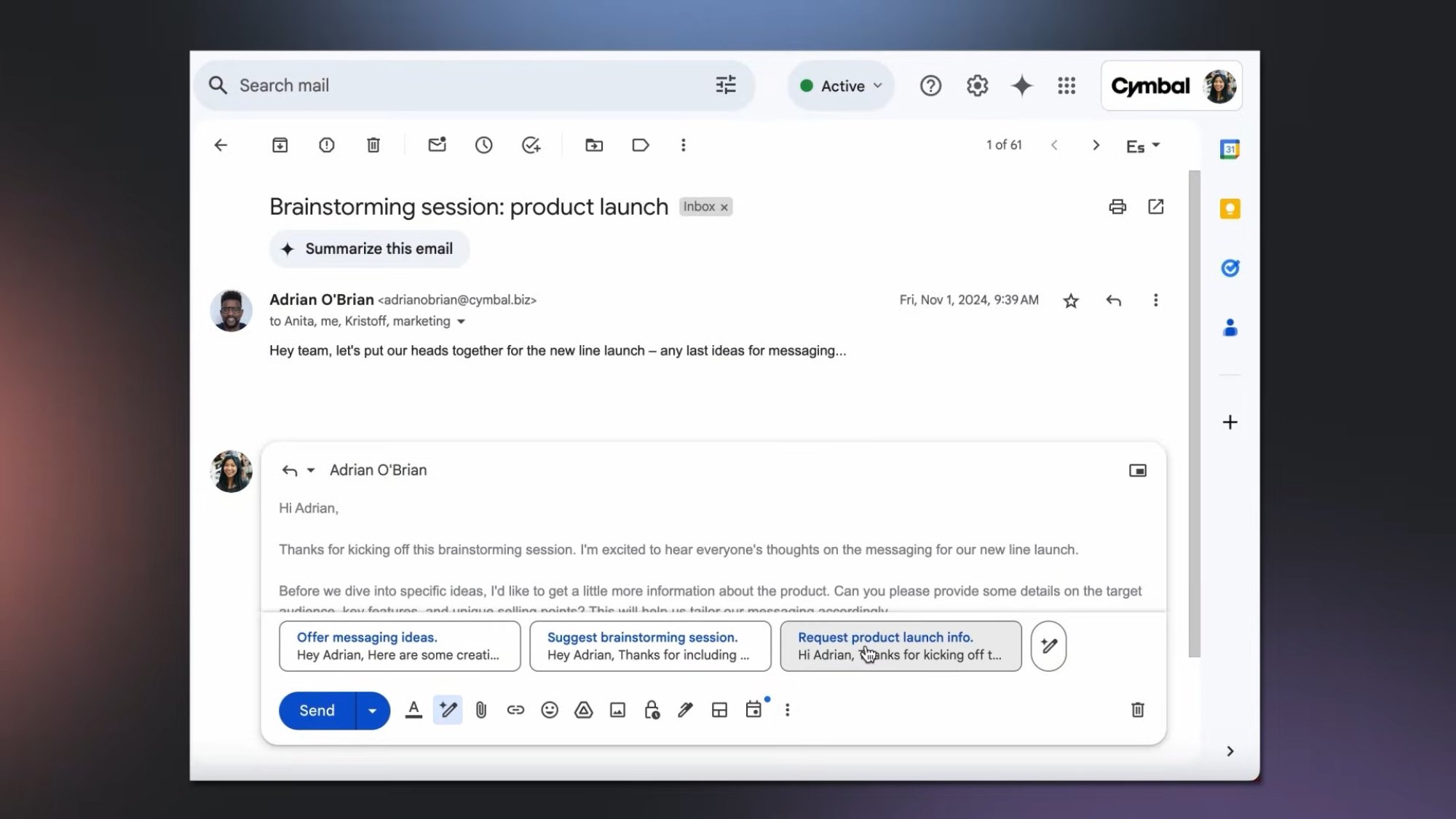
Gmail AI
The daunting blank email.
Credit: Lifehacker

Writing’s pretty easy, really—most of us can do it from an early age without too much trouble. Writing well is harder, but you don’t have to be a best-selling author to fire off a few emails. So is there any harm in using AI for some low-level email composing? It may be quicker and more convenient, but I’m not sure it’s actually beneficial.

As author David McCullough once said: “Writing is thinking.” The skill of being able to choose the right word to put in front of the previous one gets the cogs of the brain moving, and forces some thought about what’s being said. Word choice and sentence structure matters, even on the shortest and most banal of emails.

I don’t want to sit down at a laptop one day and find myself struggling to compose a few lines of text. Is that far-fetched? Perhaps not, based on reports from those who’ve already tried farming out emails to AI. “Is it difficult trying to get that thought in your head translated to an email?” asks Google. Well, yes, it is, and that’s sort of the point.

People deserve a human response

It’s fair to say a lot of us get an excessive amount of email (if you don’t, consider yourself lucky). Chances are that plenty of your incoming email will be from people you don’t know personally, but no matter the sender and the recipient in an email conversation, I think human responses are worth the effort.

If all of our emails—arranging work drinks, applying for jobs, discussing a project—are written by AI, then we’re heading for piles and piles of machine-written missives that lack any kind of nuance or personal touch. Imagine a group email chain where every response sounds the same, irrespective of who sent it.

Even if I’m writing a simple “no thanks” email, if I’m communicating with another human being, I’m of the opinion that they deserve a response that has come straight from me. This is more of a principled stance than anything else, but I’m sticking with it.

AI writes a lot of generic slop

Gmail AI
An AI email that sounds like a lot of other AI emails.
Credit: Lifehacker

Get AI to write a thank you note to someone who hosted an event you recently attended, for example, and you’re going to get a rather generic spiel that’s the averaging out of countless other thank you notes. It’s going to be bland, impersonal, and forgettable.

I can see the temptation to use AI to compose an important email—applying for a job, maybe, or appealing against a company decision—but your message is likely to end up reading like the algorithm-processed, mass-produced text that it is. You’re going to sound like everyone else, basically (see the previous point).

You could get AI to do a draft and then edit it, but if I started down this path, I could see myself making fewer and fewer edits to my messages, out of laziness or habit.

I don’t trust AI to get the details right

AI still makes lots of mistakes, though the chatbot developers don’t tend to mention them much. If you’re drafting an email about a new project pitch, a family get-together, a customer inquiry or whatever it is, there’s no guarantee that an AI will get all the details right.

The more important the content of the email, the more important this becomes. The companies pushing AI-driven emails seem to be of the opinion that we can all be chasing business leads, organizing colleagues, and expressing heartfelt feelings over email with the help of AI, but I’m not convinced.

People make mistakes as well, but I’d rather trust myself than a black box of algorithms that aren’t even fully understood by the developers who code them. Does AI know the people I’m emailing, and the specific details they need? Of course not.

AI talking to AI is not a future I want

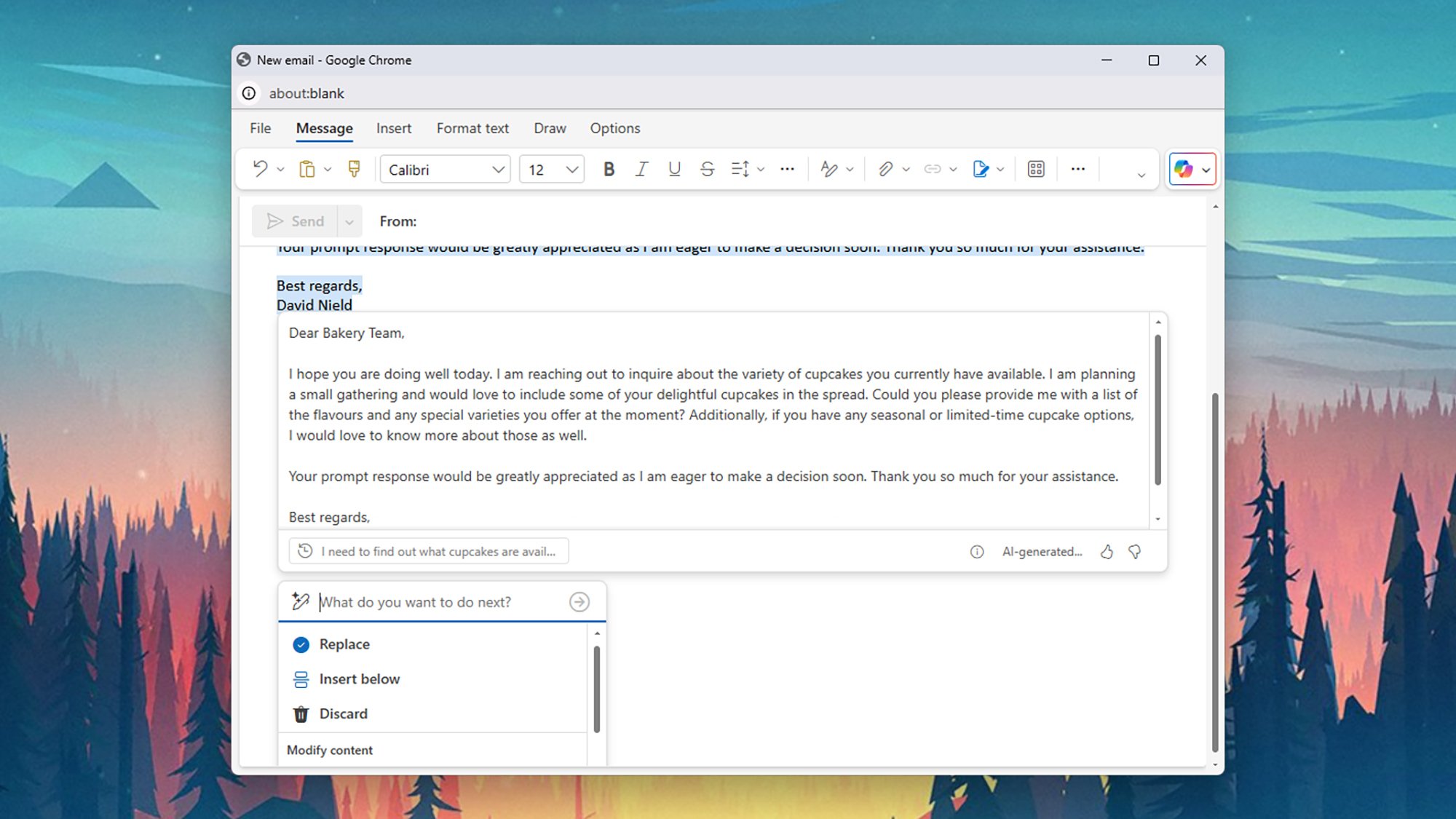
Outlook AI
We may not even need to click “send” in the future.
Credit: Lifehacker

To paraphrase George Orwell, if you want a picture of the future, imagine your AI sending thousands of emails a minute to everyone else’s AIs, forever. At what point do we abdicate responsibility completely to chatbots, and just let them get on with it? I don’t even want to take a single step towards that.

Right now, not even the most enthusiastic AI fans are suggesting that we start sending AI-written emails out into the ether without checking and editing them first, but isn’t that the obvious next step? I can almost see the Google I/O on-stage presentation now—get Gemini to handle everything, for the ultimate productivity boost.

Preliminary studies already show that we forget almost everything we write using AI, which has worrying implications if we’re sending out important information that needs to be recalled later. It’s not a future I’m going to be signing up for, no matter how insistent the AI prompts get.

CES 2026 opening night recap: All the early news you missed from Samsung and LG

CES 2026 is still a day away from officially opening, but Sunday, January 4, delivered the first real wave of news. As has become tradition, the pre-show slate set the tone for the week ahead, anchored by Samsung’s annual First Look press conference and CES Unveiled, the latter of which where hundreds of companies previewed products before the show floor opens on January 6.

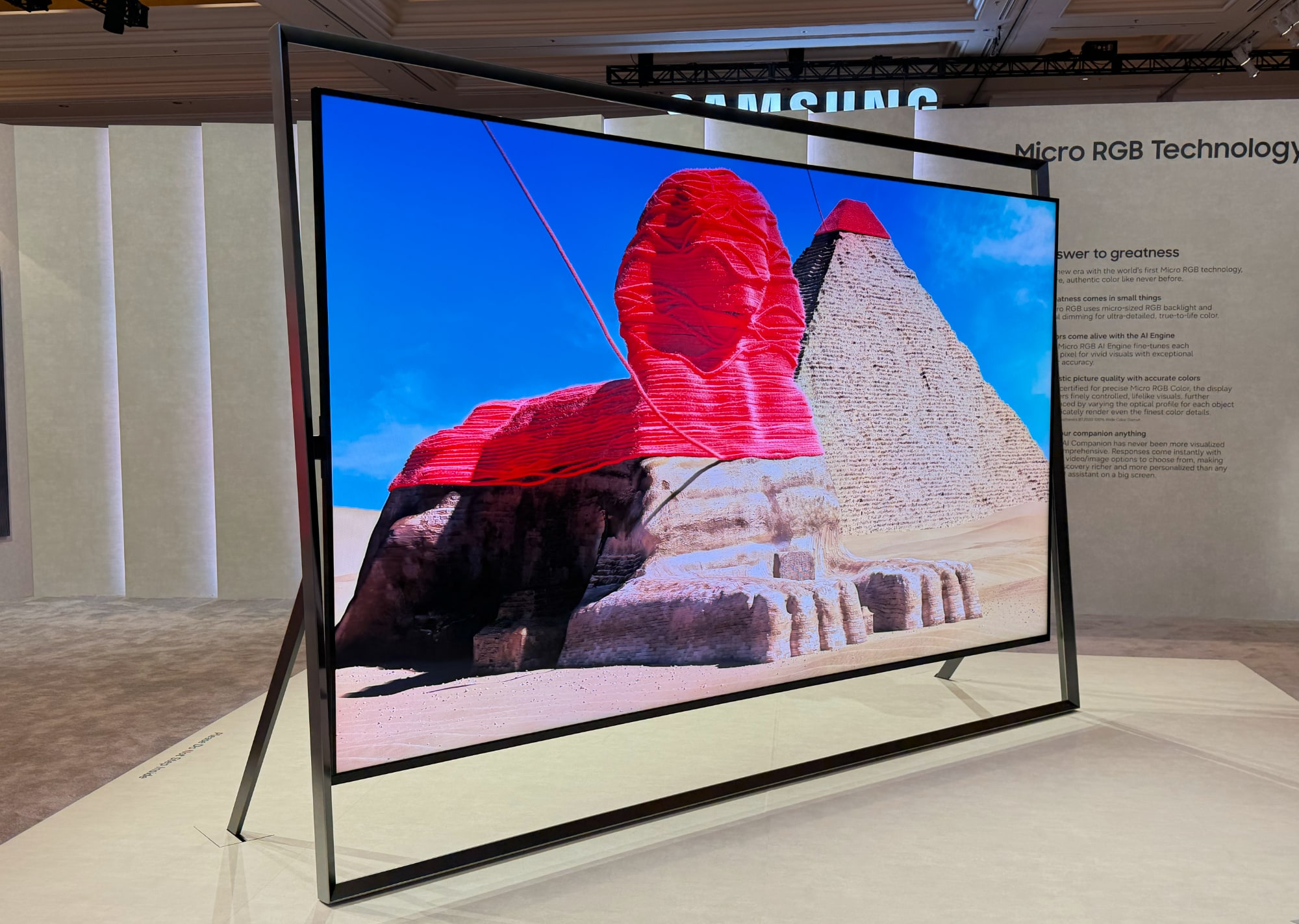
Samsung once again dominated the early conversation with its First Look event, using the stage to outline how it sees AI shaping everything from TVs to home appliances in the year ahead. Rather than focusing on individual specs, Samsung framed its 2026 lineup around adaptive experiences, with screens and devices designed to respond more intelligently to their environment and the people using them. TVs remained the centerpiece, with updates like the new 130-inch Micro RGB model aimed at improving picture quality, content discovery and personalization through AI-driven tools.

Among the more concrete pieces of tech tied to Samsung’s CES run was The Freestyle+, a successor to the company’s portable projector that doubles down on AI-powered picture optimization, brighter output and smarter calibration for different surfaces. The unit also supports immersive audio features and syncs with Samsung’s soundbars for a more complete entertainment package. The company further bolstered its audio portfolio with the new Music Studio wireless speakers, which offer an eye-catching design.

Samsung’s broader display strategy was also on show: Samsung Display revealed next-generation QD-OLED panels capable of peak brightness up to 4,500 nits, which are expected to be used in TVs and monitors that debut on the show floor, and introduced new concepts illustrating how OLED tech can blend into future AI-enhanced lifestyles.

undefined

Software also played a role in Samsung’s early messaging. The company confirmed that Google Photos will be coming to Samsung TVs later this year, bringing photo libraries and Memories directly into the living room. It’s the kind of addition that doesn’t grab headlines in the same way as new hardware, but it’s exactly the type of update that quietly shapes how people actually use their TVs regularly.

Outside of Samsung’s event, CES Unveiled — the convention’s kickoff mini-show — offered an early look at what smaller companies and startups are bringing to Las Vegas this year. The show floor was packed with a familiar mix of near-ready consumer products and more experimental ideas, spanning robotics, smart home gear, health tech and personal electronics. Companion-style robots, updated AR glasses and AI-powered household gadgets were common sights, reflecting broader trends that are likely to show up repeatedly across the main halls this week.

Unveiled is rarely about big-name launches, but it often reveals where the industry’s attention is drifting. This year, that meant a noticeable emphasis on AI-assisted hardware that blends into everyday routines, whether that’s home devices designed to act more autonomously or personal tech that prioritizes context and convenience over raw performance.

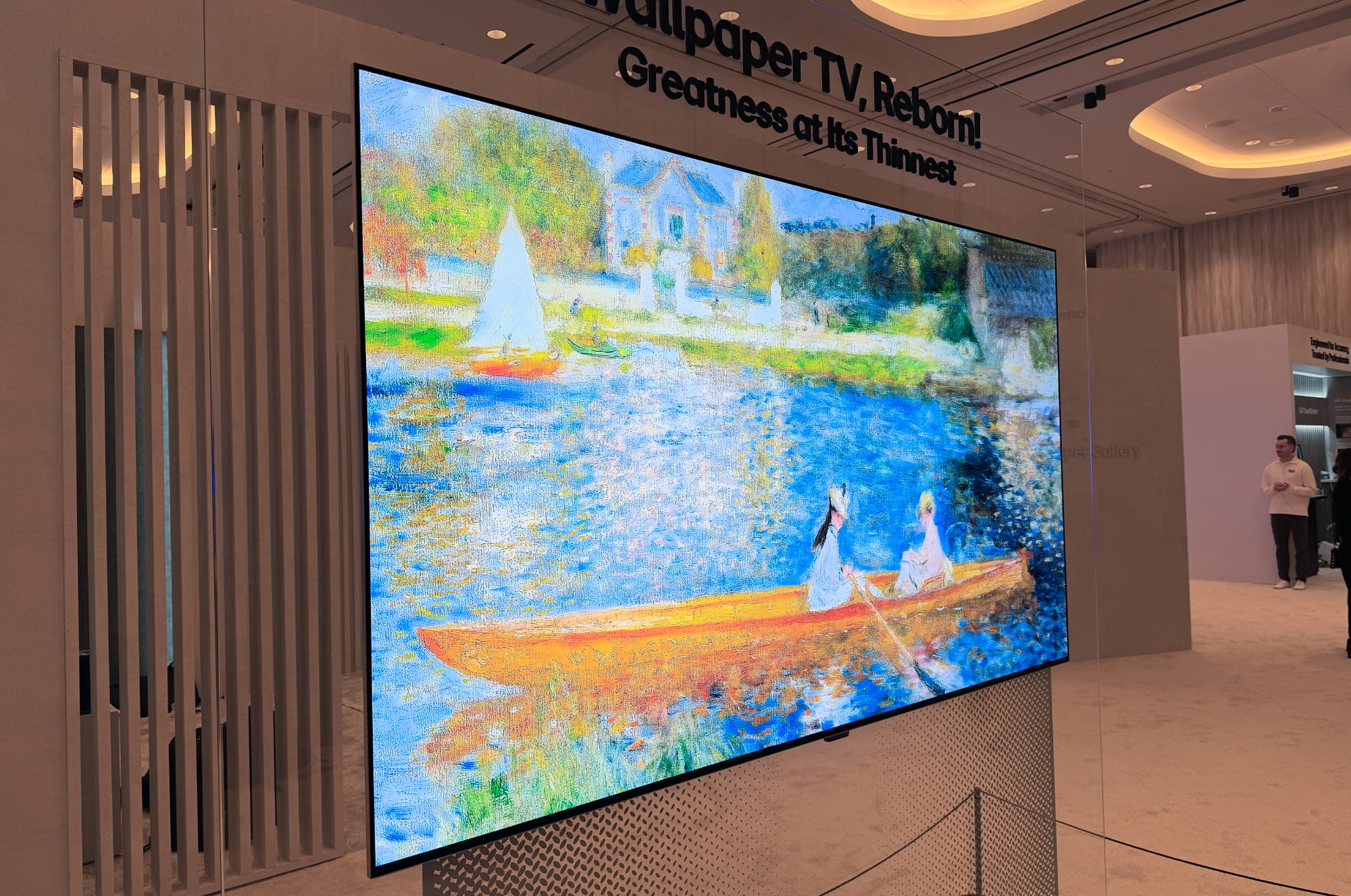
LG also kicked off its pre-show efforts with some notable display news that’s certain to shape conversations on the CES floor. The company reintroduced its ultra-thin Wallpaper OLED evo W6 TV, a panel that sits just 9mm deep and can be mounted flush against a wall, boasting improvements in brightness and color accuracy with Hyper Radiant Color Technology and support for FreeSync and G-Sync.

LG's 2026 Wallpaper wireless OLED TV
LG’s 2026 Wallpaper wireless OLED TV
Devindra Hardawar for Engadget

LG’s display lineup extends into the PC space too, where the division plans to debut a 27-inch OLED gaming panel hitting a 720Hz refresh rate and response times as low as 0.02 ms. On the lifestyle front, the Gallery TV aims to compete more directly with Samsung’s art-style screens by combining a specialized anti-glare panel with an expanding Gallery+ service that brings thousands of artworks to the living room.

Some CES-related announcements also landed ahead of Sunday, underscoring how stretched the show’s news cycle has become. Samsung and LG both shared display and ecosystem updates in the days leading up to January 4, ensuring their products were already part of the CES conversation before pre-show events even began.

Sunday’s announcements served as a clear warm-up for what’s coming next. Monday, January 5, marks the start of press day, when major companies will take the stage for individual conferences and a large number of embargoes are expected to lift. Then, on Tuesday, January 6, CES officially opens its doors, shifting the focus from presentations to hands-on demos and real-world impressions.

We’ll be updating this recap as more news breaks, but if Sunday was any indication, CES 2026 is already moving fast — and the show hasn’t even started yet.

This article originally appeared on Engadget at https://www.engadget.com/home/home-theater/ces-2026-opening-night-recap-all-the-early-news-you-missed-from-samsung-and-lg-142611832.html?src=rss

Apple’s latest MagSafe charger is on sale for only $30

If you want a wireless charger for your iPhone and prefer to stick with Apple, Amazon has a sale that may pique your interest. The retailer is selling the one meter Apple Magsafe charger for $30, saving you $10 off the regular price, while also selling the two meter model for $40 ($10 off). 

If you have an iPhone 16, iPhone 17 or iPhone Air, this cable can charge your device at 25W as long as it’s connected to a 30W power adapter on the other end. While you’ll need a more recent iPhone to get the fastest MagSafe charging speeds, the charger can wirelessly top up the battery of any iPhone from the last eight years (iPhone 8 and later). With older iPhones, the charging speed tops out at 15W. The cable works with AirPods wireless charging cases too — it’s certified for Qi2.2 and Qi charging.

The MagSafe charger is one of our favorite iPhone accessories, and would pair quite nicely with your new iPhone if you’re picking up one of the latest models. If you’re on the fence about that, be sure to check out our reviews of the iPhone 17, iPhone Pro/Pro Max and iPhone Air.

Follow @EngadgetDeals on X for the latest tech deals and buying advice.

This article originally appeared on Engadget at https://www.engadget.com/mobile/apples-latest-magsafe-charger-is-on-sale-for-only-30-141707602.html?src=rss

Magic Leap Signs Deal with Taiwan’s Pegatron, Strengthening AR Manufacturing Position

Magic Leap announced a manufacturing partnership with Pegatron, a major global electronics manufacturer, to scale production of AR glasses components, including Magic Leap’s waveguide technology.

The News

Under the agreement outlined in a press statement, Pegatron will apply its manufacturing capabilities to help turn Magic Leap’s optical designs into mass-produced components.

Taiwan-based Pegatron specializes in developing and producing computing, communications, and consumer electronics for major brands, in addition to being the parent company of PC component company ASRock.

Details are still under wraps, however Magic Leap Product and Partner Development exec Jade Meskill says the partnership will create “a clear path to bring AR components to market at scale.”

“This collaboration reflects the growing maturity of the AR ecosystem,” said Jason Cheng, Vice Chairman at Pegatron. “By combining Magic Leap’s component-level expertise with Pegatron’s manufacturing infrastructure, we can support more efficient pathways from development to production.”

This follows the announcement in October that Magic Leap was entering into a multi-year AR hardware partnership with Google.

My Take

Despite early market missteps that saw millions (if not billions) go to the development of its ML 1 and ML 2 headsets, Magic Leap seems to be making good on its pivot from AR headset creator to major AR component player, as the company is leveraging its designs, know-how and catalogue of patents to stay in the fight.

And despite the years of grinding, it’s a fight that still hasn’t really heated up just yet, as companies like Meta, Apple and Google are still in deep in preparation to create their own AR glasses (note: not smart glasses) for release sometime before 2030.

Still, if the coming AR revolution is anything like the smartphone revolution of the early 2000s, there will potentially be a lot of players beyond those three tech giants to spin up competition when AR components eventually get cheaper with economies of scale.

And while we’re not there yet, Magic Leap seems to have found a solid raison d’être in the meantime, and a much better shot at one day becoming profitable as a result.

The post Magic Leap Signs Deal with Taiwan’s Pegatron, Strengthening AR Manufacturing Position appeared first on Road to VR.

CES 2026 Live: The Biggest, Coolest, and Weirdest Updates From Tech’s Big Event in Las Vegas

The Consumer Electronics Show (CES) is often referred to as “the most powerful tech event in the world,” bringing together tech companies from around the globe to unveil their latest innovations. The massive event is held across various locations, including the Las Vegas Convention Center, The Venetian, Mandalay Bay, and The Sphere, and is a staple event for both companies vying for recognition and media outlets that cover them. One day into “Unveiled,” the media-only prelude to the trade show, I landed on what might be my mantra for my CES 2026 experience.

“Cool, if true,” Associate Tech Editor Michelle Ehrhardt had said about a new product booth, summarizing how I felt about the conference as a whole. Since arriving in Las Vegas on Saturday as a skeptical first-time attendee, I have seen cancer-detecting scanners, smart irrigation systems, and more assistive robots than I can count. I have also rolled my eyes at tech-enabled shoe insoles, smart-companion teddy bears, and AI-powered dog leashes. But I have also seen more grounded tech that lives just at the edge of where science fiction and practicality meet: walk-assisting exoskeletons, smart helmets with fall detection and one-touch SOS commands, and assistive mobility tech that can convert any standard wheelchair into an electric one. In short, CES is both chock-full of BS and a glimpse into the future of clever, helpful, and groundbreaking tech.

Tech Editor Jake Peterson, Senior Health Editor Beth Skwarecki, Associate Tech Editor Michelle Ehrhardt, and I will be on the ground at CES throughout the week, covering the biggest, coolest, and weirdest tech we can find. We’ll also join CNET, PCMag, and others in awarding the Best of CES 2026 awards for a second year in a row. Follow us here and on social media to see what it’s like to be at the world’s biggest technology trade show, and share with us your thoughts, questions, and what you’d like to see. There’s a lot more cool tech to come. If true, of course.

–Jordan Calhoun, Editor in Chief

Samsung Co-CEO Says Soaring Memory Chip Prices Will ‘Inevitably’ Impact Smartphone Costs

Samsung’s co-CEO TM Roh has warned that product price increases are “inevitable” as an unprecedented global memory chip shortage squeezes margins across the company’s consumer electronics lineup — from smartphones to televisions and home appliances.

The South Korean giant, one of the top two largest smartphone manufacturers, plans to double the number of mobile devices running its Galaxy AI features to 800 million units this year, up from 400 million at the end of 2025. Galaxy AI is powered by Google’s Gemini model and Samsung’s own Bixby assistant for different tasks. “As this situation is unprecedented, no company is immune to its impact,” Roh told Reuters in his first interview since becoming co-CEO in November.

Samsung is working with partners on longer-term strategies to minimize the impact, he said. Market researchers IDC and Counterpoint predict the global smartphone market will shrink this year as the chip shortage threatens to drive up phone prices. The shortage is a boon to Samsung’s semiconductor business but pressures margins on its smartphone division, the company’s second-largest revenue source.


Read more of this story at Slashdot.

Hands off! An on-the-road demo of Mercedes’ advanced new driver assist

There’s some debate as to when adaptive cruise control first showed up, but if you ask Mercedes-Benz, it will say in 1999 with that year’s S-Class. Instead of just keeping a set speed, radar-enabled adaptive cruise control allowed the car to react to deceleration by the car ahead, and thus was created the first partially automated car. From there, automakers added a function to keep cars in their lanes, and now we have location-aware, GPS-geofenced vehicles that, as long as the driver is paying attention, will do most of the driving—on the highway at least.

But the goal for developers of both autonomous and partially automated vehicles is to remove as much of the burden of driving from the human as possible, not just on controlled access highways but at lower speeds, on surface streets. Which is what Mercedes’ latest Drive Assist Pro has been designed to do. And after a recent demo—albeit from the passenger seat—on the streets of downtown San Francisco, it appears to be a very credible effort.

CLA gets it first

The big, powerful, comfortable S-Class is normally the standard-bearer for the latest and greatest tech Mercedes has cooked up, but not always. In December we drove the production version of its new entry-level EV, the CLA. At under $50,000, the sleek Mercedes sedan (or four-door coupé) is already available with the current version of the automaker’s Drive Assist suite, with better control of braking and deceleration. A particular improvement, which I’m not sure made the final version of our first drive report, is the way you can use the brake while adaptive cruise control is active without canceling the system.

Read full article

Comments

Google TV is getting Gemini-powered photo editing at CES

Google is working even more Gemini features into Google TV at CES 2026. The company demoed how the AI assistant would work on its TV platform at last year’s show, and this time, it’s expanding the AI’s features to make it easier to do things like adjust your TV’s settings or edit photos.

The ability to view photos stored in Google Photos has long been a feature of Google TV, but as part of this new update, Gemini will be able to do a lot more with them, too. Google says Gemini will be able to search your Google Photos library for specific people and moments, and remix those photos into different styles or compile them into a custom slideshow. Using Google’s Veo and Nano Banana models, you’ll also be able to ask Gemini to create entirely new media from scratch.

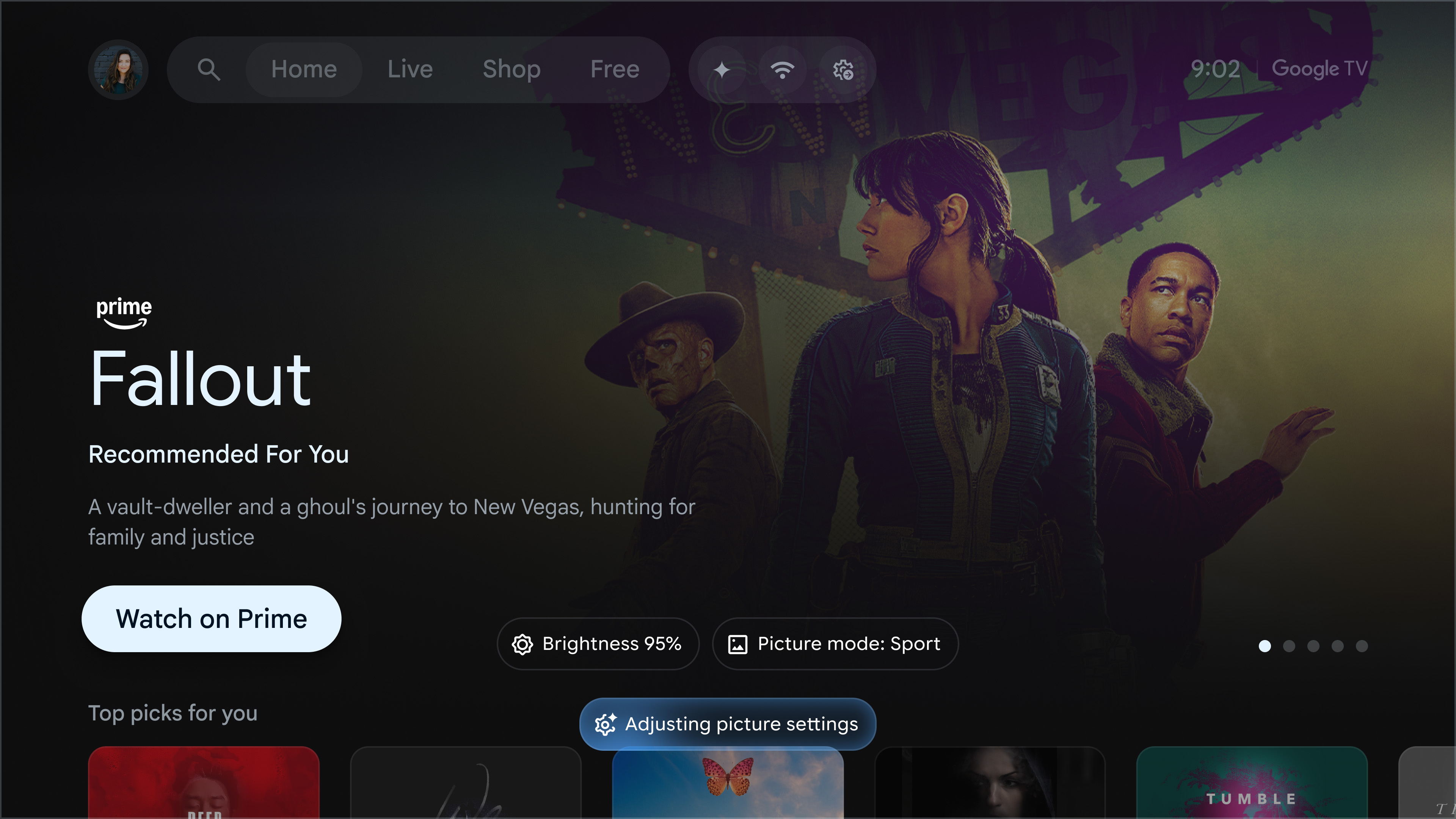
Gemini adjust picture settings through Google TV.
Gemini can adjust TV settings as part of the new update.
Google

When you don’t want to spend time digging through menus, Google says Gemini will also be able to adjust picture and sound settings for you based on a natural language request. Rather than asking for your brightness to be set to a specific level, simply telling Gemini that “the screen is too dim” will be enough to prompt the AI to adjust the image. Gemini’s ability to display information and answer questions through your TV is also expanding. The AI will now use a TV-friendly, “visually rich framework” to answer questions and explain topics, pulling on high-resolution images and video. When you need even more information, clicking on “Dive deeper” under a Gemini response will prompt the AI to create “narrated, interactive overviews” of whatever you want to learn more about.

Google only recently rolled out Gemini to its Google TV Streamer, and it sounds like it could be a bit before these new features are widely available. Google says the new Gemini update will arrive on TCL TVs running Google TV first, before rolling out to “other Google TV devices over the coming months.” 

This article originally appeared on Engadget at https://www.engadget.com/home/home-theater/google-tv-is-getting-gemini-powered-photo-editing-at-ces-140000172.html?src=rss

Qualcomm Dragonwing To Power Next-Gen Autonomous Warehouses and Smart Kiosks

Qualcomm Dragonwing To Power Next-Gen Autonomous Warehouses and Smart Kiosks
Today at CES, Qualcomm signaled its dominance in the burgeoning world of Physical AI by unveiling a massive expansion of its industrial and robotics portfolios. This expansion ought to put the company in position to be a comprehensive provider of edge computing technology for everything from tiny smart cameras to full-size humanoid robots.

Central

Kioxia’s BG7 SSDs Bring More Speed New Form Factors To Mainstream PCs

Kioxia's BG7 SSDs Bring More Speed New Form Factors To Mainstream PCs
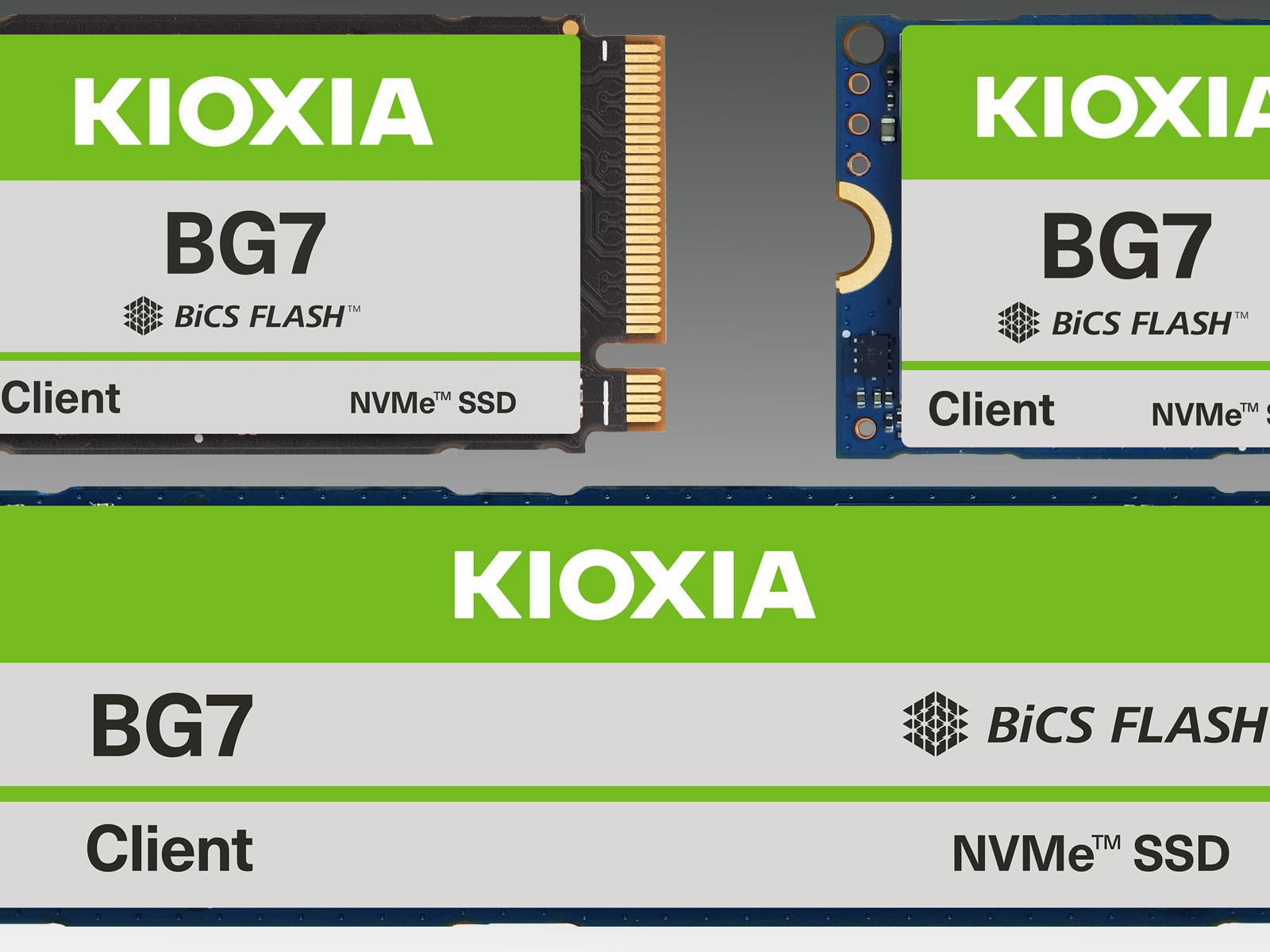
Kioxia is expanding its range of client solid state drives with its new BG7 series. Most of the new SSDs feature the company’s 8th generation BiCS Flash 3D featuring CMOS directly Bonded to Array (CBA) technology. The only exception is the smallest 256GB capacity model, which employs BiCS Flash generation 6 chips.

The big takeaway here

GeForce RTX 3060 Return Rumored As GPU Leads The Pack On Steam

GeForce RTX 3060 Return Rumored As GPU Leads The Pack On Steam
Following reports that NVIDIA discontinued production of its two-generations old GeForce RTX 3060 in August 2024 and, more recently, chatter that supplies of the mid-range GPU in the retail channel were running out, a fresh rumor has emerged indicating that the Ampere part will be resurrected for another production round this quarter.

That’s

8BitDo is unveiling a new mobile gaming pad at CES

Gaming peripheral company 8BitDo is teasing a new smartphone gaming pad that seems aimed exclusively at portrait-mode gamers. In a post on X, the company says the 8BitDo FlipPad will debut in the summer of 2026 and will be compatible with iOS and Android devices. It also mentions the peripheral is “officially supported by Apple.”

The post doesn’t give too much away, as the company will be premiering the FlipPad at CES this week. A short, rendered video shows that the mobile gaming peripheral connects via USB-C, and then flips upward on a hinge to lay flat against the bottom portion of a user’s phone screen. In the rendering, we can see a directional pad, purple ABXY buttons, select, start buttons and six more unlabeled buttons.

8BitDo makes a lot of gaming controllers, including retro-inspired ones like the NES40 collection celebrating the 40 year anniversary of Nintendo’s NES. The company also makes arcade controllers, a “Pro” controller compatible with Switch, PC, SteamOS, Apple and Android devices, and many others.

This article originally appeared on Engadget at https://www.engadget.com/gaming/8bitdo-is-unveiling-a-new-mobile-gaming-pad-at-ces-134555603.html?src=rss

Everything announced at CES 2026

It’s the first week of a new year and there’s no time for the tech world to slowly ease back into things following the holidays. That’s because CES 2026 is in full swing, with all manner of companies descending on Las Vegas to reveal their latest innovations and what they’re planning to bring your way in the near future. 

Many of the Engadget crew are on the ground to check out as much of the new tech as possible. Of course, we’re keeping tabs on all of the major CES press conferences too. Samsung has already held its First Look presentation, which focuses on home products, while LG has shown off a wide array of TVs. Presentations from NVIDIA, Sony, Lego, Hyundai and others are yet to come.

You can catch up on all of the big CES 2026 announcements (and some of the more offbeat gizmos that are being shown off at the event) right here. We’ll be keeping this story updated throughout the week. 

Micro RGB TVs 

Samsung's 130-inch Micro RGB TV.
Samsung’s 130-inch Micro RGB TV.
Devindra Hardawar for Engadget

Micro RGB is a term you can expect to hear about quite a bit in the coming months and years, especially when you’re shopping for your next TV. Micro RGB is a new tech that’s similar to Mini LED, though it uses red, green and blue LEDs instead of white backlights. Contrast ratios aren’t quite as high as those on Micro LED and OLED displays, since the pixels can’t be turned on and off individually. However, Micro RGB units are said to be brighter and more color accurate than TVs that use other display tech, in part because the LEDs in these screens offer smaller, more customizable dimming zones. 

We’re seeing more of these TVs pop up at CES 2026, including a mammoth 130-inch concept model that Samsung brought to Las Vegas. The company unveiled its first Micro RGB TV in August, — that’s a 115-inch, $29,999 model. This year, you can expect it to start offering Micro RGB TVs in 55-, 65- and 75-inch sizes. There are also 85-, 100- and 115-inch models on the way.

LG revealed its first Micro RGB set at CES as well. The largest variant is 100 inches, but there are 86- and 75-inch models too. Elsewhere, LG showed off its latest Wallpaper TV, which is a 100-inch OLED display. We also got a look at LG’s new Gallery TV — The Gallery is the company’s take on Samsung’s Frame TV format.

Samsung

Samsung's Music Studio 5 speakers at CES 2026.
Samsung’s Music Studio 5 speakers at CES 2026.
Billy Steele for Engadget

Samsung being Samsung, the company had a lot more up its sleeve than just TVs. In the leadup to CES, it announced its two new soundbars (we’re had some hands-on time with one of those), the nifty-looking Music Studio speakers (we’ve got some IRL impressions of those), a bunch of monitors, the refreshed FreeStyle+ projector (we’ve checked that out too). It also announced plans to bring Google Photos to TVs.

At the First Look showcase on Sunday, Samsung talked up “AI experiences everywhere. For everyone” (sigh). Here, we saw more TVs, such as the thin S95H OLED, which has a zero-gap mount that allows you to position the unit flush against a wall. 

First Look has long been focused on home products. Naturally, Samsung execs discussed some features for the company’s fridges, such as ​​recipe selection, AI cooling tech and Google Gemini-powered AI Vision that’s said to be able to recognize more items and help you figure out what you need to buy without having to manually take inventory. FoodNote, meanwhile, is a weekly summary that breaks down what has gone in and out of your fridge.

Samsung highlighted the Samsung Bespoke AI Laundry Combo and its new AI wash cycle. With the new Air Dresser — which has an Auto Wrinkle Care feature — Samsung aims to do away with irons (thank you, Samsung). As for the Bespoke AI smart vacuum and mop, that can apparently keep an eye on your pets when you’re not home.

LG

LG's CLOiD robot.
LG’s CLOiD robot.
LG

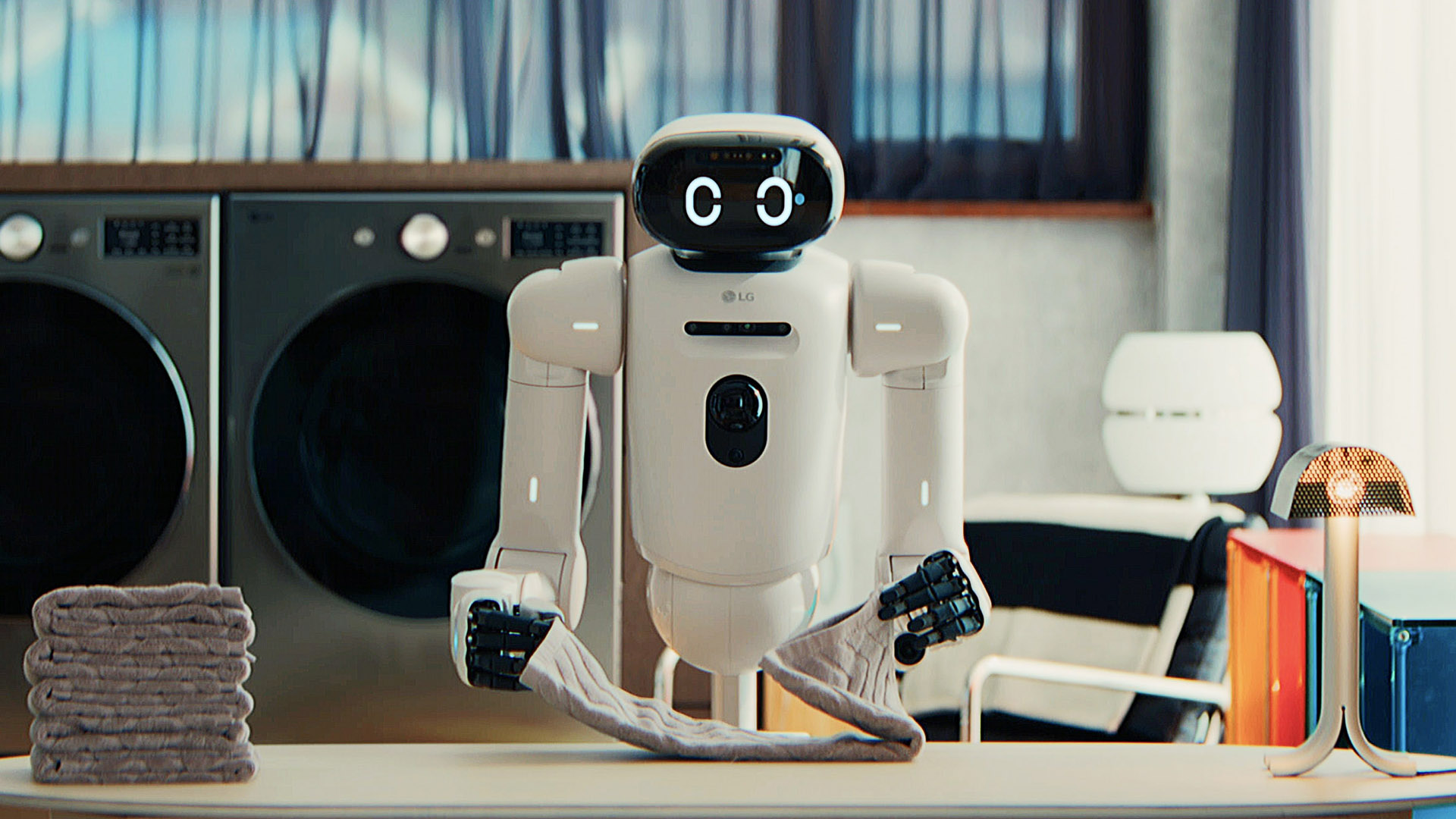
Likewise, LG brought more than TVs to CES. The company is shining the spotlight on its CLOiD robot. Like the far creepier-looking 1X Neo, the CLOiD is designed to help with household tasks such as starting laundry cycles, folding clothes, unloading the dishwasher and serving food. This appears to be more of a concept than something you’ll be able to buy anytime soon, but we should get a closer look at the CLOiD in person later this week.

The company also debuted the LG Sound Suite, a modular home audio system it developed in conjunction with Dolby to take on the likes of Sonos. Just ahead of CES, LG pulled back the curtain on a new batch of xboom speakers as well as some monitors and ultralight Gram laptops that are made with a material it’s calling Aerominum. 

Laptops and desktops

LG Gram Pro
LG Gram Pro
Engadget

It’s CES season, so of course we’re going to see a bunch of laptops and desktops. We’ll almost certainly see the majority of those emerge after NVIDIA’s press conference on Monday evening, though we’ve already had a peek at LG’s Aerominum laptops.

This article originally appeared on Engadget at https://www.engadget.com/general/everything-announced-at-ces-2026-130124802.html?src=rss

The Out-of-Touch Adults’ Guide to Kid Culture: The Memes of 2025

Before we toss the year 2025 onto the temporal dungheap where it belongs, let’s take a look back at the year that has passed from the point of view of the people who have to live here even longer than we have to. Below is a month-by-month replay of the year, focusing on the memes, events, and ideas that shape and define Generations Z and Alpha.

January: “TikTok refugees” move to RedNote

For Gen Z, 2025 began with a panic that turned into a unique cross-cultural experiment. In January 2025, ByteDance, the Chinese company behind TikTok, announced that it was about to shut down the social media platform in the U.S. Ahead of the shut-down (which didn’t end up happening) a wave of TikTokers moved over to RedNote, another Chinese social media platform, but one that was previously only used in China. The result was a few weeks where very different cultures met on common ground, and it was low-key beautiful. Young people from China and the U.S. asked each other questions about their respective cultures, TikTok refugees showed off their newly acquired Mandarin-speaking skills, while RedNoters demonstrated their English by doing a lot of imitations of Donald Trump, and everyone learned we weren’t all that different. But it was only temporary: The geopolitical drama was solved (for now), TikTok stayed open, and TikTokers, for the most part, went back to their digital home—but hopefully young people took a little empathy with them.

February: The rise of “6-7”

Like it or not, 2025 is the year of 6-7. The ubiquitous slang term really started in late 2024 with the release of Skrilla’s “Doot Doot (6 7)” video on YouTube, but it took a couple months to catch on and filter down to the schoolyard, and a few more months to become the biggest slang word of the year. As I’m sure you know by now, “6-7” doesn’t mean anything specific, it’s just a fun thing to say, but even with no definition, 6-7 has remarkable staying power. Even after every parent and teacher on Earth learned what it meant, kids kept saying it. Whatever was funny about the joke hasn’t been funny for a long time, so maybe 2026 will see the death of 6-7, but I wouldn’t put money on it. It seems like one of those jokes that will go from funny to unfunny and back to funny a million times until it finally dies.

March: the “80/20 rule”

In March, Netflix released the series Adolescence, a distressing exploration of the inner worlds of alienated young men. In Adolescence, one of the teenage characters mentions the “80/20 rule” as a way of explaining the incel/red pill culture central to the murder plot and central to the worldview of too many real-life young men. Put simply, the 80/20 rule is an axiom that states 80% of women are attracted to only 20% of men. Despite being based on almost nothing, in incel spaces, the 80/20 rule is regarded as absolute truth, and the 80/20 rule (and other “mano-sphere” ideas) are spreading to more mainstream young people. Understanding the pervasiveness of belief in the 80/20 rule is essential to understanding the specific strain of misogyny that’s afflicting young people. There’s a helplessness implied by it—the 80/20 rule, like the rest of incels’ elaborate theories about how men and women relate to each other, boils down to “it’s not my fault, and there’s nothing I can do to change my situation.” The spread of the 80/20 rule is the almighty algorithm rewarding the worst in people, and victims often have too few real-life relationships to reveal the obvious flaw in the rule’s logic.

April: A Minecraft Movie

In their fractured and balkanized media landscape, Generations Z and A have few shared cultural experiences, but in 2025, A Minecraft Movie was a rare exception. The pre-release buzz (and “chicken-jockey!” memes) suggested that many young people were expecting an ironically enjoyable experience—something “so bad it’s good”—but A Minecraft Movie is actually so good it’s good, and appealed to everyone, younger kids, teenagers, and parents alike. Tapping Jared Hess—who helmed Napoleon Dynamite—to direct was inspired, as was the casting of Jack Black and Jason Momoa, but the real star of A Minecraft Movie is Minecraft, a video game that was released in 2009 and still has an estimated 200 million people (mostly young) playing it regularly. The success of A Minecraft Movie (and The Super Mario Bros Movie in 2023) indicates that Hollywood has finally figured out how to make decent movies out of video games.

May: “100 men vs. one gorilla”

“Who would win in a fight to the death, one gorilla or 100 men?” sounds like a dumb question at first, but the more you think about it, the deeper it gets. My first thought was 100 men are taking it, no problem, but then I considered the overwhelming power of an enraged gorilla, how it could literally tear off limbs and bite off faces, and the scale started tipping heavily the other way. No matter where you land on the answer, the question is fascinating, and the internet was briefly obsessed with this imaginary battle in May. Taking a broader view, the debates, memes, and TikTok videos the gorilla question birthed are an illustration of how the technology that connects us took what would have been an interesting hypothetical discussion among a few weird friends 20 years ago and turned it into a worldwide discussion and convenient excuse to learn about primates.

June: Steal a Brainrot

“Steal a Brainrot” came out in late May 2025, and by June, all the kids were playing it; 20 million of them, anyway. “Steal a Brainrot” is a multiplayer mini-game within maxi-games Roblox and Fortnite. In a game of Brainrot, up to eight players share a server, and each has their own base. The object of the game is to buy brainrots for your base and/or steal brainrots from other players’ bases, while defending your own brainrots from thieves. The brainrots themselves are objects meant to reference “Italian brainrot,” i.e.: low-quality internet memes. They vary in value and have vaguely Italian names, but they aren’t based on actual brainrot memes. The lesson: Good game design only needs the lightest hook to create a compelling experience.

July: the death of fart jokes?

In July, teachers and parents posted videos that may point to one of the most defining cultural touchstones of Generation Alpha: they don’t think fart jokes are funny. They don’t laugh when someone farts in public. They don’t feel the need to say “He who smelt it, dealt it.” I realize a couple TikTok videos is the opposite of hard evidence, but judging from the comments and the kids being interviewed, it feels true, and important. Gen A don’t seem like they’re trying to be accepting of others, or mature; they seem genuinely bewildered by the idea that anyone would think farts are funny. Which is cool; they’re right. But still, I can’t help but feel sad for the poor fart jokes that have brought us all so much joy for so many centuries.

August: performative males

The “performative male” is another “gift” from the toxic-masculinity corner of youth culture. The term is an insult young men throw at other young men whose tastes, hobbies, and lifestyle are seen as a performance aimed at obtaining societal approval, especially the approval of young women. Performative male traits include matcha lattes, Labubu toys, listening to Clairo, tote bags, and reading in public. “Performative male” is mildly sexist on the surface—it’s mocking dudes who like things associated with women (gasp)—but if you go deeper, it’s similar to older slang words like “white knight” and “virtue signaling.” A performative male is fundamentally dishonest, because no real man would read in public, so it must be fake, and why would men be fake if not to make women like them?

September: the tragic story of D4vd

If young people are going to remember any news story from 2025, it’s likely to be the one about singer D4vd. On September 8, Los Angeles police discovered a body in the trunk of an abandoned Tesla registered to 20-year-old musician David Anthony Burke, aka D4vd. The body was later identified as the remains of Celeste Rivas, who was reported missing from her home in Riverside on April 5, 2024, when she was just 13 years old.

The singer’s rise to fame is a quintessentially Generation Z story. His career began with online fame gained through posting Fortnite videos online, but YouTube removed his content for using copyrighted music. At the suggestion of his mom, D4vd began recording original songs using free iPhone tools, which he posted to SoundCloud. The end result was a recording contract, an album, a couple of moody, dreamy songs with over 1.5 billion plays on Spotify, and a body in the trunk of a car.

D4vd has not been charged with any crimes in connection with the body, but neither has anyone else, so this story is likely to continue into 2026.

October: Portland frog and chicken protestors

This year, young people in Portland changed the perception of what “protesting” means. At demonstrations against Federal immigration enforcement, young people started showing up dressed in colorful, inflatable Halloween costumes. Frog guy was first. Then chicken guy. Then a panoply of unicorns and other fanciful creatures. The idea seems to be to highlight the farce of a heavy police presence on American streets by appearing as harmless as possible. Protestors have been using ridiculousness to make their point since protests began, but the instant, worldwide dissemination of videos from Portland’s “front line” is fairly new, and they really deliver the message. Images of heavily armed and armored law enforcement officers staring down Portland weirdos in unicorn and panda costumes makes a more compelling point than would clashes with radicals in ski masks—you don’t have to think very hard to know which side you’re on.

November: quarter zips

A quarter zip is a pullover sweater with a zipper that goes a quarter way down the chest, and it’s becoming the go-to look for young men, especially Black men. Wearing a quarter zip isn’t exactly “dressed up,” but it’s more sophisticated than rocking athleisure wear. More importantly, the quarter zip is often a signifier of status and intention. Like flannel shirts in previous generations, the quarter zip is marks one as belonging to an in group, being a “quarter zip man,” and the even being part of the “quarter zip movement.”

December: millennial optimism

The younger generation closed out the year by looking backwards, but only a little bit backwards. The trend of December was “millennial optimism,” the romanticization of the years around 2010. Some younger people imagine it as as a more innocent, hopeful time that they missed out on, and many millennials who were setting those trends in the 2010s are feeling nostalgic for their lost youth/relevance, so both groups are posting TikTok videos about “millennial optimism.” Being older than both groups, I can say with confidence that both groups are wrong for different reasons. “Missed-out-on-it” types are wrong because a period that included the recession of 2008 and the election of Donald Trump was not “optimistic,” and the millennials only think of it as a fun, awesome time because it’s when millennials were young (and having a fun, awesome time.)

Intel Xe Driver Preps THP Support For “Significant” SVM Performance Gains

Intel engineer Francois Dugast today sent out the new patch series for enabling Transparent Hugepages (THP) support within the drm_pagemap code with a focus on the Intel Xe kernel driver usage. This enabling of THP support and in turn 2MB pages by the Xe driver is yielding “significant” performance improvements when using Shared Virtual Memory (SVM) such as for GPU compute workloads…