Vocci’s AI note-taking ring aims to do much more

One trend emerging from CES 2026 is wearable microphones you can use to dictate your thoughts. Vocci is one such gadget, a titanium ring with a single button capable of recording audio for up to eight hours on a charge. Unlike some of its competitors, Vocci isn’t just for catching your own thoughts as they spring forth from your scalp. Instead, you’ll be able to record whole conversations and meetings from the comfort of your proximal phalanx. 

Users can start and end recordings by double clicking the ring’s single button, while single clicks are used to mark important moments within the recording. Tagged moments will instruct the AI app to add more context, highlights or reminders, where appropriate. Once the file has been processed, you’ll receive a transcript, complete with a summary and commentary.

I’m told the ring has a range of five meters, but I was unable to hear an example recording or see a working demo of the technology. I did ask why a ring would be more effective at capturing a room’s worth of chat over, say, using a recording app on one’s phone laid on a table. But the response was to point out a user may forget to start the recording, and you can’t disagree with that.

Vocci will ship with a charging case, and will be able to recharge to full in half an hour, but it’s not clear yet how much (if at all) power will be stored in the case’s batteries. We also don’t know how much the ring will cost, but it’s likely to be available for pre-order at some point in February. As for the ring’s pedigree, it comes from Gyges Labs, the company which leant its name, manufacturing and engineering expertise to last year’s Halliday Smart Glasses.

This article originally appeared on Engadget at https://www.engadget.com/wearables/voccis-ai-note-taking-ring-aims-to-do-much-more-170536442.html?src=rss

Audeze has unveiled the Maxwell 2 gaming headset at CES 2026

Audeze has unveiled the second generation of its Maxwell gaming headset at CES 2026. The Maxwell 2 is a comprehensive refresh aimed at competitive players and anyone seeking more immersive audio when gaming on PC or consoles. The original Maxwell headset was our pick for best premium gaming headset in 2025.

The headline upgrade is Audeze’s patent-pending SLAM technology, which the brand claims improves spatial cues while delivering “punchier” bass. Maxwell 2 pairs that with 90mm planar magnetic drivers, which offer a wide frequency range of 10Hz to 50kHz. Audeze says the result is clearer detail for every in-game sound from subtle directional footsteps in competitive FPS games to bass-heavy moments like big explosions with near-zero distortion.

An upgraded suspension strap with ventilation holes aims to ensure comfort during longer sessions and a new earpad design gives your ears more space. A new magnetic attachment system should make earpads easier to swap.

The Maxwell 2 headset includes an AI noise-canceling mic setup with AI-assisted noise removal on a removable hypercardioid boom mic. The headset can connect with a wireless USB-C dongle as well as Bluetooth 5.3. Battery life is rated at over 80 hours of wireless playback and the headset supports USB-C fast charging.

Pricing is set at $329 for the PlayStation version and $349 for the Xbox model (which supports Dolby Atmos on compatible devices). Both versions also support Windows, macOS, Android, iOS and Nintendo Switch and they’re available now.

This article originally appeared on Engadget at https://www.engadget.com/audio/headphones/audeze-has-unveiled-the-maxwell-2-gaming-headset-at-ces-2026-170056068.html?src=rss

XGIMI’s Titan Noir Max 4K projector has a dynamic IRIS for increased contrast

XGIMI, which burst on the scene in 2025 with several impressive projectors, has unveiled its latest high-end model called the Titan Noir Max. The new model revealed at CES 2026 has many of the bells and whistles found on professional-level projectors including a dynamic IRIS system for improved contrast, along with a new thermal system designed to boost brightness.

The Titan Noir Max has a design to XGIMI’s Titan model announced last year, but it’s taller and a bit squarer with an elegant grille-like pattern on the front. As with other XGIMI models, it features a laser light engine and 4K video quality, though the company didn’t say if it had the same big Texas Instruments 0.78-inch DMD (digital micromirror device) chip as the original Titan model. 

The key new feature is a dynamic IRIS system that boosts native contrast to 10,000:1 for deeper blacks and brighter highlights. At the same time, it boasts new “precision tuned optics” (ie a better lens) also designed to improve contrast and color nuance. 

Another key feature is a re-engineered DMD architecture that can handle “substantially higher light power densities,” XGIMI says. This should allow for increased brightness, though the company didn’t provide a figure in ANSI Lumens. It would be impressive if it topped the 5,000 Lumen Titan, though. 

Many other specs are lacking, like color accuracy in the Rec.2020 space. However, the company is promising a lot, saying that the Titan Noir Max will offer “the stability, accuracy, and reliability required for color-critical work, studio environments, and high-end installations.” At the same time, it’s also targeted at home enthusiasts, promising to “turn a blank wall into a cinematic event.” 

XGIMI’s Titan was only recently released for $3,999 but there’s no word yet on the price or release date of the Titan Noir Max. Unlike the Horizon 20 series (which has a smaller 0.47-inch DMD chip) the Titan has received very few reviews so far, but one French projector site gave it a solid score. 

This article originally appeared on Engadget at https://www.engadget.com/home/home-theater/xgimis-titan-noir-max-4k-projector-has-a-dynamic-iris-for-increased-contrast-170044625.html?src=rss

CES 2026: Withings’ Body Scan 2 Is a Smart Scale With Smartwatch Health Features

We may earn a commission from links on this page.

Withings launched their $600 Body Scan 2 smart scale at CES Unveiled last night—but they’re positioning it as a “longevity station” rather than a smart scale. The device has a handle in addition to the footplate, which allows for extra sensors, and the new features include things like hypertension notifications that we’ve previously seen from smartwatches. (Hypertension notifications only just came to the Apple Watch a few months ago.)

I got to see the Body Scan 2 at a CES event but haven’t had a chance to use it for myself. According to Withings, the Body Scan 2 can measure “60+ biomarkers” that it says are relevant to tracking your health over time. With the caveat that I’m asking the company for more information on how this all works, I can say that it has more sensors than a typical smart scale and seems to be handling its data in a more sophisticated, and potentially more accurate, way. With sensors in your hands, and a small screen on the handle, it’s able to measure and display the sort of data that you’d normally expect from a smartwatch.

Smart scales generally aren’t very accurate for data like body fat percentage, or really anything that goes beyond simple body weight. A typical smart scale runs a weak electrical current from one foot to another, measuring the electrical resistance of your lower legs. The Body Scan 2 adds a handle with electrodes, which brings the upper body into the mix. The screen on the handle also allows it to display data like ECG readings or other detailed results. Since the screen is in your hands, you don’t have to squint at a display at your feet. (In product photos, the retractable handle sits on top of the footplate, but at yesterday’s demo, Withings had the handles mounted on little holders at hand height.

This setup allows for more detailed data than smart scales can usually measure. For example, a Withings rep told me yesterday that it can measure arterial stiffness by comparing the timing of your pulse in your torso, hands, and feet—the faster blood flows between these areas, the better. The Body Scan 2 uses impedance cardiography, a well-studied technology that can measure several aspects of heart health, and it includes a six-lead ECG. This means you can get ECG data and hypertension notifications—two headline Apple Watch features—without having to wear a watch every day.

The scale isn’t yet available for sale, but Withings estimates that it will be available in the second quarter of this year, pending FDA clearance for some features. The price will be $599.95. Withings already sells a first-generation Body Scan scale, with a handle but with fewer sensors and without a screen on the handle, for $399.95.

Brisk It brings its AI cooking tech to an indoor oven at CES 2026

Brisk It has shown off AI-enabled smart grills at CES before now, but for 2026, the company is taking its cooking tech indoors. With the Neoma multi-function countertop oven, the company offers AI features that can serve as both sous chef and nutritionist, helping you create dishes that fit your budget, diet and other lifestyle needs. The Brisk It Agentic AI can also help with meal planning and grocery orders on top of automatic cooking cycles for recipes it selects.

The Neoma has a temperature range from 90 to 450 degrees Fahrenheit and cooking times of one minute up to twelve hours. This means you can do everything from baking to roasting, air frying and more. In fact, it comes with an air fry basket, baking pan, oven rack, and crumb tray. The robust steel construction, glass door and interior space should make the Neoma well-suited for most kitchens.

Brisk It isn’t leaving the grill game though. The company also announced the AI Hybrid Gas Grill at CES. The hybrid bit describes the dual gas and wood pellet combustion, giving users the ability to infuse wood smoke in their high-heat grilling sessions. Of course, Brisk It’s AI goes to work here too, with adaptive cooking and personalized meal plans.

The AI Hybrid Gas Grill will be available at retailers later this year. The Neoma AI Countertop Oven will hit Kickstarter in February before a wider retail launch. Brisk it didn’t mention pricing for either model in its press materials.

This article originally appeared on Engadget at https://www.engadget.com/home/kitchen-tech/brisk-it-brings-its-ai-cooking-tech-to-an-indoor-oven-at-ces-2026-170000705.html?src=rss

The HP Omnibook Ultra 14 at CES 2026: Super sleek and surprisingly durable

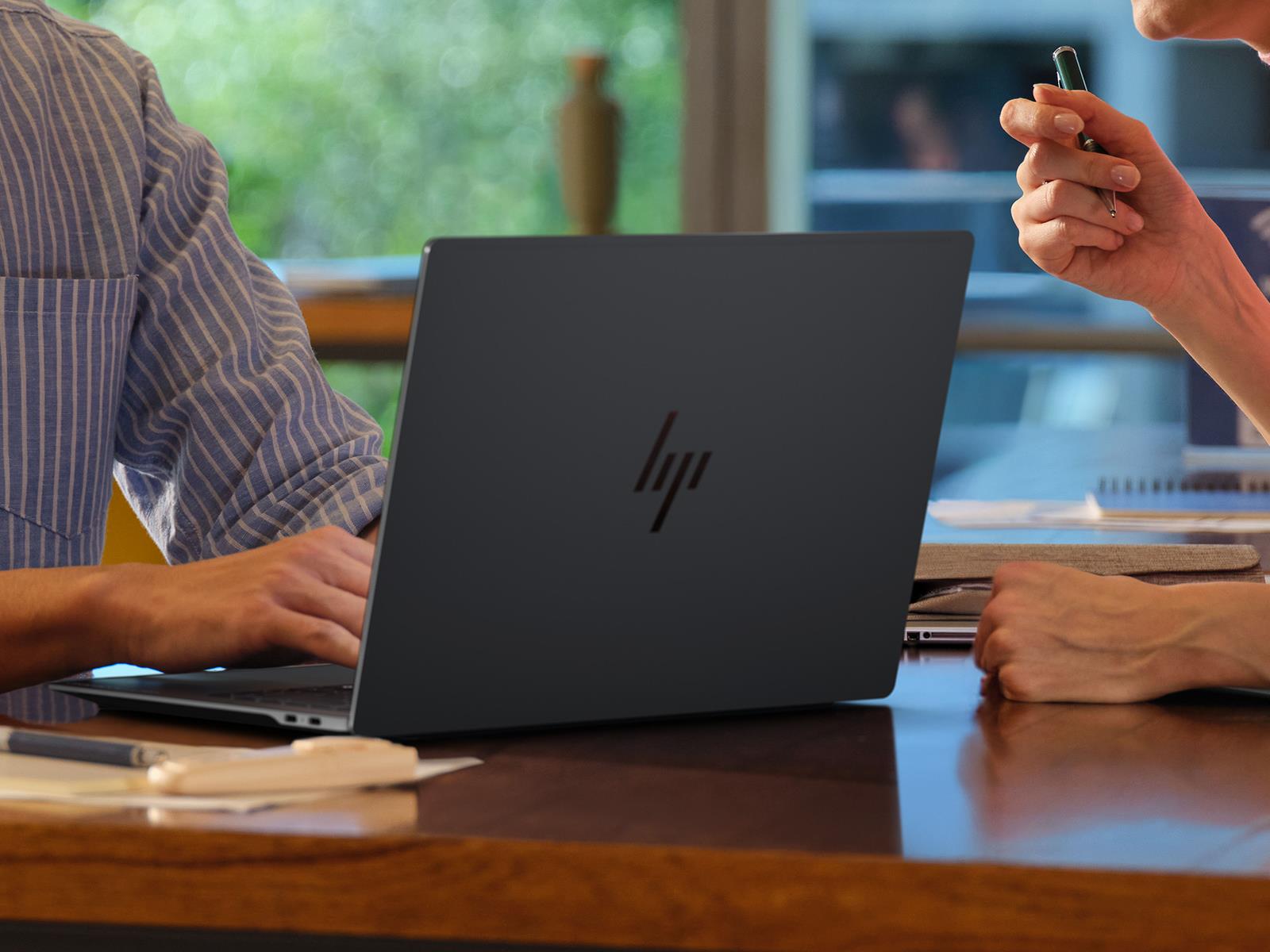
At CES 2026, HP is showing off its latest flagship consumer laptop: The Omnibook Ultra 14. It features an all-new super thin design that’s much tougher than it looks. 

According to HP, the Omnibook Ultra 14 is the “world’s most durably slim 14-inch consumer notebook,” which is a somewhat convoluted way of saying the system remains quite portable — just 0.42 inches thick — while still passing 20 different military standard tests (MIL-STD-810) for things like shock resistance, drops and extreme temperatures. The whole system is crafted from aluminum, though instead of taking a unibody approach like you see on Apple’s MacBooks, HP opted for forge stamped manufacturing which is said to give the laptop added strength and bend resistance. The result is a notebook that’s both 52 percent lighter than the previous model at 2.8 pounds and five percent thinner than a 2025 M4 MacBook Air 13. And after seeing it in person, I have to say it looks pretty slick, too. 

As you’d expect from a premium ultraportable, the Omnibook comes with a vivid 3K OLED display, up to 64GB of memory, 2TB of storage and your choice of either an Intel Core Ultra 3 CPU or a Snapdragon Elite X2 chip. That said, thanks to an exclusive partnership with Qualcomm, anyone planning on running a lot of AI-based apps on the Ultra 14 may want to go with the Snapdragon variant as it’ll come with a slightly more powerful NPU that maxes out at 85 TOPS (that’s trillions of operations per second) rather than the 80 TOPS you’d get from other OEMs. Furthermore, to help support strong sustained performance, the Ultra 14 is also the first Omnibook to feature a built-in vapor chamber. 

Granted, as a pretty straightforward ultraportable, this thing doesn’t have a ton of special features. But even so, I appreciate that HP didn’t cut corners regarding its keyboard, which has a nice feel that’s not too stiff or bouncy and sits above a rather large touchpad. The company even found room for quad speakers and three USB-C ports that offer Thunderbolt 4, power delivery (USB PD 3.1) and DisplayPort 2.1.

My one small nitpick is that I would have liked to see an SD or microSD card reader as well, but considering HP’s emphasis on portability and toughness, I’m not surprised that it didn’t make it. The other thing I’m not so sure about is the Omnibook name in general. It’s been a little while since HP axed the Spectre branding for its top tier consumer laptops and I kind of wish HP would bring it back as it sounds better and feels more befitting of a flagship system like this. 

Regardless, if you’re in the market for a premium 14-inch Windows laptop, the Omnibook Ultra 14 looks like it will be a very strong contender when it goes on sale later this month starting at $1,550.

This article originally appeared on Engadget at https://www.engadget.com/computing/laptops/the-hp-omnibook-ultra-14-at-ces-2026-super-sleek-and-surprisingly-durable-170000330.html?src=rss

Qualcomm unveils Snapdragon X2 Plus chip at CES

CES tends to bring a wave of news from chipmakers, and Qualcomm has used this year’s event to announce the Snapdragon X2 Plus laptop processor. This is a more modest version of the flagship Snapdragon X2 Elite chip that Qualcomm unveiled in September. 

The Snapdragon X2 Elite will be available in the coming generation of Windows 11 Copilot+ PCs and its integrated Hexagon NPU can deliver the 80 TOPS performance benchmark for powering artificial intelligence tasks. The chip is also equipped with a third-generation Qualcomm Oryon CPU with either six cores or ten cores. For comparison, the Snapdragon X2 Elite gives options of either 12 or 18 cores. 

According to the company, this iteration of the CPU boasts up to 35 percent faster single-core performance compared with the previous generation. It also says the six-core model has up to 10 percent faster multi-core performance over the prior model, while the ten-core option has up to 17 percent better multi-core performance. Both versions of the Snapdragon X2 Plus come with an Adreno GPU that has improved performance up to 29 percent over the past iteration.

This article originally appeared on Engadget at https://www.engadget.com/computing/qualcomm-unveils-snapdragon-x2-plus-chip-at-ces-170000392.html?src=rss

XGIMI, best known for projectors, launches its own smart glasses

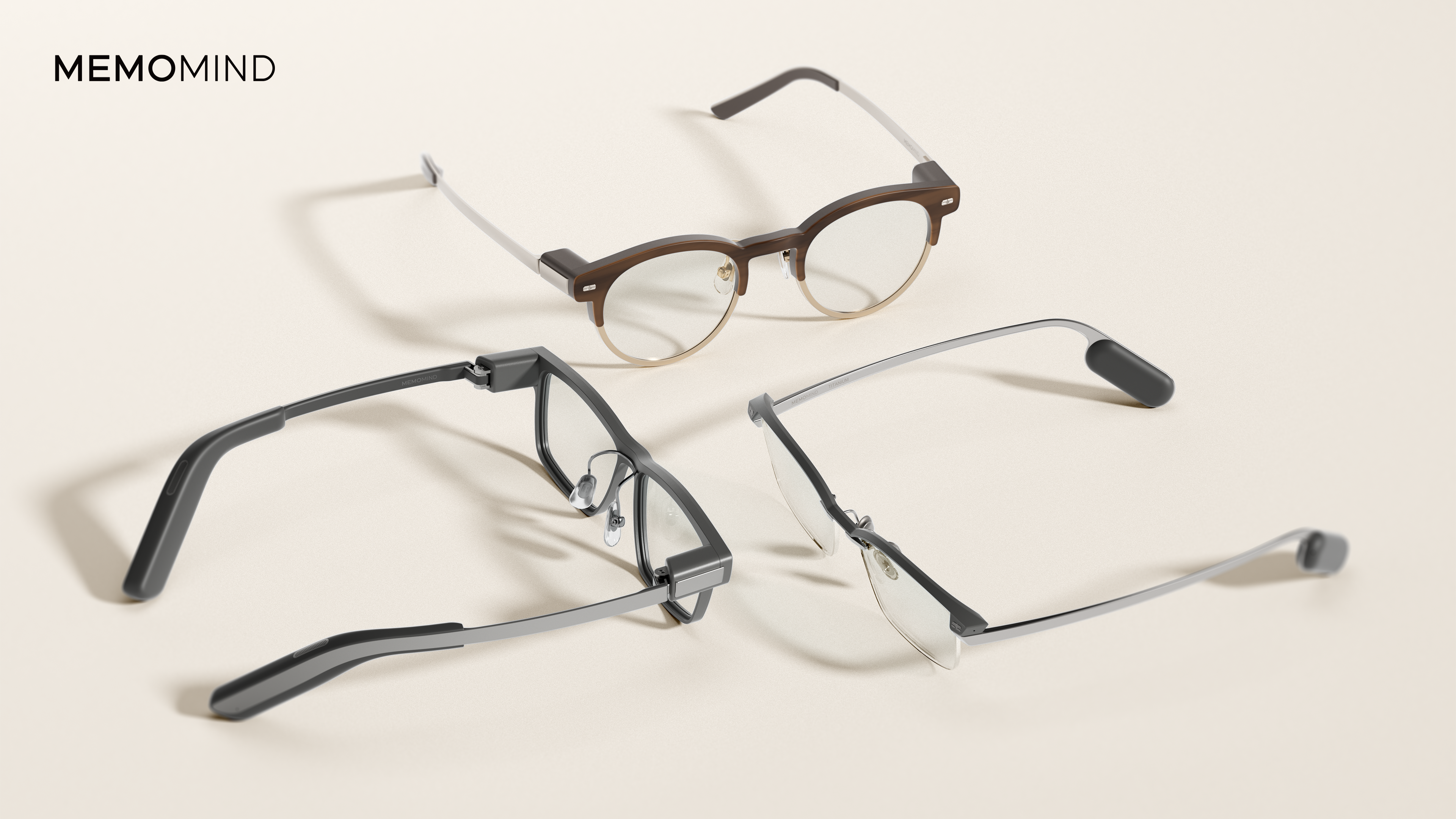
Projector maker XGIMI has turned up at CES to launch its own range of AR glasses, but don’t get the champagne out too soon. MemoMind is a new brand under which its AI-infused eyewear will be sold, with two distinct units arriving at some point in the near future. The company says it has leveraged its know-how in optics and engineering to produce glasses which are unobtrusively light, all the better for blending into your daily life. Fashionistas will even be overjoyed to learn the glasses’ ship in eight different frame styles, five different temple designs and can be worn with prescription lenses. 

Memo One is the company’s flagship option, with dual-eye displays and integrated speakers so you can see and hear your AI assistant. The Memo Air, meanwhile, is a more stripped down model  weighing just 28.9 grams which just has a single eye display. Unfortunately, the company is using microLED displays rather than waveguides, making them a far harder sell for a lot of would-be users. After all, putting something that small so close to your eye but behind your prescription means it’s a painful experience for short sighted folks to focus on text. As I explained in my Halliday review, this technology is no friend to the glasses wearers who would otherwise be the ideal early adopters.

MemoMind Lineup
MemoMind Lineup
XGIMI

The glasses are just a vehicle for the company’s AI assistant, promising translation, summarization, note-taking, reminders and contextual guidance. Unlike some of its would-be rivals, XGIMI says its platform will switch between OpenAI, Azure and (Alibaba’s) Qwen depending on what it thinks will offer you the best result for each task. Naturally, we’ll need to get them in to test before passing final judgment on their qualities but, you can color us naturally hostile to those damn microLEDs until we’re convinced otherwise.

XGIMI says the flagship Memo One will be available to pre-order “soon,” priced at $599, with additional models available further down the line. 

This article originally appeared on Engadget at https://www.engadget.com/wearables/xgimi-best-known-for-projectors-launches-its-own-smart-glasses-170000968.html?src=rss

Qualcomm Snapdragon X2 Plus Boosts Performance And Efficiency For Windows AI PCs

Qualcomm Snapdragon X2 Plus Boosts Performance And Efficiency For Windows AI PCs
Qualcomm is expanding its latest-generation Snapdragon chip line for Windows laptops with the Snapdragon X2 Plus, and with the new addition comes the promise of a “legendary leap in performance.” It slots underneath the existing Snapdragon X2 Elite that was unveiled several weeks ago and fleshes out Qualcomm’s arsenal for its continued Arm-based

HP Unveils OmniBook Ultra 14 With Snapdragon X2 Elite And OLED To Challenge MacBook

HP Unveils OmniBook Ultra 14 With Snapdragon X2 Elite And OLED To Challenge MacBook
HP is trotting out a bunch of new laptop and desktop designs (among other things) at the Consumer Electronics Show in Las Vegas this week, one of which is its sleek OmniBook Ultra 14 powered by Qualcomm’s Snapdragon X2 Elite chip. According to HP, it’s 52% lighter than the previous generation, and 5% thinner than a 2025 MacBook Air 13 (M4).

It

Providers dropping common anesthesia drug that’s also a climate super pollutant

Desflurane is a common anesthetic used in hospital operating rooms worldwide. It’s also a climate super pollutant. Now, several decades after the drug was first introduced, a growing number of US hospitals have stopped using the anesthetic because of its outsized environmental impact. On January 1, the European Union went a step further, prohibiting its use in all but medically necessary cases.

Desflurane is more than 7,000 times more effective at warming the planet over a 20-year period than carbon dioxide on a pound-for-pound basis. However, curbing its use alone won’t solve climate change. The anesthetic contributes only a small fraction of total global warming, which is driven by far larger volumes of carbon dioxide and methane emissions.

Still, emissions from the drug add up. Approximately 1,000 tons of the gas are vented from hospitals and other health care facilities worldwide each year. The emissions have a near-term climate impact equivalent to the annual greenhouse gas emissions from approximately 1.6 million automobiles.

Read full article

Comments

Influencers and OnlyFans Models Dominate US ‘Extraordinary’ Artist Visas

The O-1B visa, a work permit reserved for individuals deemed to possess “extraordinary ability” in the arts, has become the pathway of choice for social media influencers and OnlyFans models seeking to build careers in the United States. Immigration attorneys told the Financial Times that influencers now make up more than half their clientele for O-1B applications, a shift that has accelerated since the Covid-19 pandemic as lawyers and talent managers have adapted the visa’s criteria — originally designed for traditional artists — to fit the metrics of online fame.

High follower counts and substantial earnings can establish commercial success under the visa’s requirements, landing a brand promotion contract can qualify as an endorsement of talent, and appearing at a store opening can count as performing in a “distinguished production.” The total number of O-1 visas granted annually increased by more than 50% between 2014 and 2024, even as overall non-immigrant visa issuance grew by just 10%. Fewer than 20,000 O-1 visas were granted in 2024. Some attorneys said they worry the fixation on algorithm-driven metrics could disadvantage traditionally trained artists whose work doesn’t generate viral attention.


Read more of this story at Slashdot.

Anker’s new 45W charger from CES is already $10 off

Anker introduced a nifty little charger at CES 2026, which is a refresh of the pre-existing Nano Charger. It’s already on sale for $30, which is a discount of $10. These are preorders, however, with shipments officially going out on January 20.

The 45W charger includes a screen that displays real-time data like power flow, temperature and charging status. It also features “fun animations to keep things cheerful.” Anker says it can recognize what’s being charged and automatically adjust certain metrics to ensure a longer battery lifespan.

To that end, it works with just about everything. The company advertises that this charger is a good fit for the iPhone, Apple Watch, AirPods and Samsung devices, among others. The new Nano Charger is on the smaller side, with dual folding prongs that rotate to fit most outlets.

The deal does require a coupon code, but it’s auto-applied at checkout. If that doesn’t work, it’s WS24D5XT3DV9. We haven’t gotten a chance to try this one yet, but it looks promising.

This article originally appeared on Engadget at https://www.engadget.com/deals/ankers-new-45w-charger-from-ces-is-already-10-off-160707324.html?src=rss

LG Unveils Stunningly Thin Wallpaper OLED TV With Wireless Design At CES

LG Unveils Stunningly Thin Wallpaper OLED TV With Wireless Design At CES
LG has revealed the OLED evo W6 at CES 2026, which is its latest take on the wallpaper TV niche. This wafer-thin, reflection-free TV (or is it an electronic wallpaper?) is meant to be flush-mounted to your wall and even boasts nearly four times the brightness of standard OLEDs.

Measuring in at an impressive 9mm thick (versus roughly 12.7mm

Samsung’s CES Concepts Disguise AI Speakers as Turntables and Cassette Players

Samsung is bringing a pair of retro-styled speaker concepts to CES 2026 that combine old-school aesthetics with OLED screens and AI-powered music recommendations, and the company is positioning them as alternatives to conventional Bluetooth speakers that typically depend on a paired smartphone or tablet for content selection. The “AI OLED Cassette” features a 1.5-inch round OLED display, while the larger “AI OLED Turntable” uses a 13.4-inch round panel, and both allow users to receive music suggestions, browse and select content directly on the device, and set ambient moods using images and video playback.


Read more of this story at Slashdot.

Anker’s Soundcore Work AI voice recorder offers transcription in an ultra-compact form factor

Anker’s sub-brand Soundcore just announced a new AI voice recorder at CES 2026. The appropriately-named Work voice recorder is primarily intended for professionals, but also seems useful for students and anyone else who wants an AI to transcribe conversations.

To that end, the company promises 97-percent transcription accuracy via the AI algorithm. The affiliated app will also provide summaries of conversations, like many modern AI tools. Users can double-tap the gadget during important parts of a conversation to ensure it gets preferential treatment.

A gadget.
Anker/Soundcore

None of this is really that new. Dedicated AI voice recorders have been around a while and there are plenty of smartphone apps that do this kind of thing. The Soundcore Work, however, is extremely small and could make for an inconspicuous recording method. The company says it’s “coin-sized” so it should fit just about anywhere, including as part of a necklace. 

It has built-in privacy protections and has been MFi certified for Apple devices. The Soundcore Work is available right now and costs $159.

This article originally appeared on Engadget at https://www.engadget.com/ai/ankers-soundcore-work-ai-voice-recorder-offers-transcription-in-an-ultra-compact-form-factor-160030844.html?src=rss

Anker unveils a new lineup of chargers and docks at CES 2026

Anker, one of the leaders in third-party chargers, has unveiled a new portfolio of “smart” chargers and docks at CES 2026. The company says the lineup adds improved visual interfaces, faster Qi2 wireless charging and “upgraded ecosystems” for the latest line of iPhone models.

First up is the Anker Nano Charger, which features a smart display, 180-degree foldable prongs and provides up to 45W of power. The plug can identify the exact iPhone model connected and then deliver the right amount of power for your phone. Anker says the Nano uses three-stage power delivery and a “Care Mode” that the company claims keeps batteries cooler than some competing 45W chargers. It arrives in late January 2026 and will retail for $40.

For fans of wireless charging stations, the Anker Prime Wireless Charging Station offers a 3-in-1 solution for iPhone, Apple Watch and AirPods. It uses a “AirCool” system for “faster, safer performance” and offers up to 25W of Qi2 wireless power. The design is also foldable for compact travel. It’s set for release in Q1 2026 and will retail for $150.

The company debuted a clamp-on 10-in-1 Nano Power Strip with 70W of output and built-in surge protection. It sports two USB-C ports, two USB-A ports and six AC outlets. The Nano Power Strip is getting a late January release, and it will sell for $70.

Anker also unveiled a 13-in-1 Nano Docking Station. This serves as an all-in-one hub with support for up to three displays (with 4K resolution supported on a single display), up to 100W of upstream charging and 10 Gbps of data transfer between connected devices. It also features a removable 6-in-1 hub with SD and microSD card readers, a USB-A port and a 5 Gbps USB-C port. The Nano Docking Station is available now and retails for $150.

This article originally appeared on Engadget at https://www.engadget.com/computing/accessories/anker-unveils-a-new-lineup-of-chargers-and-docks-at-ces-2026-160021195.html?src=rss