What are Micro RGB TVs and why are they everywhere at CES 2026?

Micro RGB TVs first arrived last year with little fanfare and a confusing name, so you may have mistaken it for other panel tech or not even noticed. That is not likely to be the case this year, though — it’s the hot new “luxury” display technology and is all over the place at CES 2026. So why do we even need these new TVs and how are they different from OLED, Micro LED and Mini LED models? Here’s how it works and how it compares.

A brief history of flat panel display tech

To better understand Micro RGB, it helps to see how flat panel display technology has evolved over the last 20 years. The first LCD TVs used liquid crystals that become transparent to light when voltage is applied, letting a rear backlight shine through as a pixel. Those pixels combine to create moving or still images, with color created via an RGB filter layer placed in front.

The main problem is that LCD crystals let some light partially leak through, so blacks are dark grey instead of pure black. And for a backlight, early LCD TVs used a white screen lit by dim and power-hungry fluorescent lights, which caused uneven light distribution. And finally, the RGB filter color layer reduced a panel’s brightness.

The next step up, then, was to use LED backlights instead, placed at first at the edges of the white screen and then later directly behind it (the first TV with this tech was Sony’s 2004 Qualia). That added the benefits of higher brightness, lower power consumption, improved color balance and even light distribution. It also allowed individual dimming zones that improve contrast by allowing near-pure blacks in shadow areas of an image.

Samsung Neo QLED 8K
Samsung’s Neo QLED 8K TV from CES 2025
Samsung

Quantum dot (QD) technology came on the scene around 2013 with Sony’s Triluminos televisions. This type of LCD panel employs a semiconductor nanocrystal layer (rather than an RGB filter layer) that can produce pure monochromatic red, green, and blue light when struck with a blue backlight. Unlike previous LCDs, they offer higher brightness and color accuracy thanks to the purity (narrowness) of the base RGB colors. The best-known TVs using this tech are Samsung’s QLED models.

The latest evolution of QD LED technology is Mini LED. That combines the accuracy of quantum dot tech with hundreds or even thousands of LED dimming zones. Those models offer high brightness and color accuracy along with good contrast, but still don’t deliver perfect blacks and can display “blooming” in scenes with bright points of light due to leakage into neighboring pixels.

Both of those problems were solved with OLED technology, which first came on the market in 2007 with Sony’s XEL-1 model. The panels are made using sheets coated with organic LEDs, each paired with a transistor that can switch the LED on or off. On regular OLED TVs, OLED pixels are white and a filter layer generates colors, much as with LED TVs. However, with QD-OLEDs, OLED pixels are blue and color is created via a quantum dot layer, like LED QD displays. The latest version of QD-OLED featured on several new monitors at CES 2026 (Samsung’s 5th-gen QD-OLED) uses an RGB stripe pattern to reduce color “fringing” on text.

This is the first, and still the only widely commercialized TV tech that can switch its light source off on a pixel-by-pixel basis, allowing perfect black levels and near-infinite contrast. However, due to their organic nature, OLED TVs suffer from a lack of brightness and the potential for “burn-in” that can kill pixels.

There is another type of self-illuminating tech called Micro LED. Rather than organic, it uses microscopic inorganic LEDs to form the individual pixel elements. Those can also be turned on or off individually, so they offer the same pure blacks and sky-high contrast as OLED. At the same time they’re potentially brighter than OLED and don’t suffer from burn-in. The tech is still prohibitively expensive to manufacture, though, so none have arrived to market other than Samsung’s The Wall, which costs a cool $40,000.

Micro RGB

LG Micro RGB
Devindra Hardawar for Engadget

Before talking about Micro RGB, let’s look at color space and gamut both for HDR, which uses the BT.2020 standard, and SDR, commonly associated with the REC.709 standard. REC.709 is ideal for regular HD content like TV broadcasts and YouTube videos. It can display a limited set of colors and brightness is generally capped at 100 nits.

BT.2020, however, is designed for high-end HDR streaming and 4K or 8K content creation (via Dolby Vision, HDR 10 or HDR10+). It has a much wider color gamut, meaning it can display a wider variety of colors and a bigger chunk of the visible color spectrum. It’s also designed for significantly higher brightness levels of 1,000 nits or more.

To achieve the color accuracy required for BT.2020, TVs must have extremely accurate red, green and blue pixels. Up until last year, the most color-accurate TVs used quantum dot technology and achieved a maximum of around 85 percent BT.2020 coverage (some projectors can cover 100 percent or more of the BT.2020 spectrum as they use RGB lasers to create colors).

That brings us to Micro RGB (also known as RGB Mini LED), the most advanced LED panel yet. Unlike the uniform white or blue backlights found on Mini LED models, it features individually-controlled, precise red, green and blue LED backlights that shine through a liquid crystal layer. It also offers more local dimming zones. The net result is higher color accuracy and better contrast than regular Mini LED displays, but with potentially greater brightness than OLED. Since each pixel still can’t be turned on and off like OLED or Micro LED, though, contrast falls short of those technologies.

Micro RGB chart showing REC 2020 gamut
Wikipedia

So far, there is one and only one Micro RGB TV on the market, Samsung’s 115-inch 4K MR95F model. The color accuracy is impressive with 100 percent coverage of the challenging BT.2020 HDR standard, an industry-first and huge leap over quantum dot tech. That means it can produce billions of colors natively and display a higher percentage of them in the visible spectrum than any TV to date.

Samsung left out a few key specs like the local dimming zone count, only saying that it has four times more than its similarly-priced 115-inch Q90F QLED model (so likely around 3,600). The company also failed to disclose the total brightness in nits, but the figure should be impressive given the potential of Micro RGB.

We were gobsmacked with the MR95F Micro RGB model in person. Engadget editor Sam Rutherford said it produced “stunningly rich and vivid colors that put Samsung’s other top-tier TVs to shame,” including the aforementioned Q90F. It also came with an equally stunning $29,999 price tag.

A couple of other manufacturers including HiSense have also released RGB Mini LED models similar to Samsung’s Micro RGB, but they differ slightly in that the RGB modules are larger than the ones found on Samsung’s latest TVs.

Which companies will have Micro RGB tech at CES 2026?

Samsung's new lineup of Micro RGB TVs
Samsung

Luckily, the number of Micro RGB TVs is about to dramatically increase. Earlier this month, Samsung announced a full lineup using the technology with 55-, 65-, 75-, 85-, 100- and 115-inch screen sizes, saying they’d set “a new standard for premium home viewing.” Those sets will also offer 100 percent BT.2020 HDR coverage under a new certification standard called Micro RGB Precision Color 100. While certainly likely to carry more reasonable prices than the first model, they’ll probably still be Samsung’s most expensive TVs when released later this year.

And on Sunday, Samsung also revealed a 130-inch Micro RGB prototype meant to showcase the technology. Once again, it blew us away partially just because of the huge size, but also due to the incredible “color accuracy and richness,” as Engadget editor Devindra Hardawar put it. “I couldn’t help but notice how everyone just looked a bit stunned, like the monkeys from 2001 seeing the monolith for the first time,” he added.

At the same time, LG announced its first Micro RGB “evo” TV lineup in 75-, 86- and 100-inch models. The company is also promising 100 percent BT.2020 color gamut coverage and said the sets will have over a thousand local dimming zones for color control. Not only that, it said that its new TVs will deliver 100 percent coverage in SDR modes as well, both for Adobe RGB and the challenge P3 standard.

It was interesting to compare LG’s Wallpaper and other OLED sets with the new Micro RGB tech, with our editor Devindra again being amazed. “LG already announced its Micro RGB set a few weeks ago, but that didn’t prepare me for standing in front of the 100-inch demo TV it brought to CES,” he said. “Throughout a variety of clips, colors looked wonderfully rich, and the overall texture of the images looked surprisingly life-like.”

This article originally appeared on Engadget at https://www.engadget.com/home/home-theater/what-are-micro-rgb-tvs-and-why-are-they-everywhere-at-ces-2026-182441543.html?src=rss

[$] Predictions for the new year

The calendar has flipped over to 2026; a new year has begun. That means
the moment we all dread has arrived: it is time for LWN to put out a set of
lame predictions for what may happen in the coming year. Needless to say,
we do not know any more than anybody else, but that doesn’t stop us from
making authoritative-sounding pronouncements anyway.

Flu Is Relentless. Crispr Might Be Able to Shut It Down

Scientists at Melbourne’s Peter Doherty Institute for Infection and Immunity are working on a Crispr-based treatment — delivered as a nasal spray or injection — that could stop influenza infections by targeting the virus’s RNA and disrupting its ability to replicate inside human cells.

The approach uses the Cas13 enzyme, a lesser-known cousin of the DNA-cutting Cas9, which can be engineered to seek out conserved regions of influenza’s genetic code that are found in virtually all flu strains and are crucial to the virus’s survival. The delivery mechanism would use lipid nanoparticles to ferry two molecular instructions to flu-infected cells in the respiratory tract: an mRNA that tells cells to produce Cas13 and a guide RNA that directs the enzyme to specific parts of the influenza virus’s code.

Cas13 then cuts the viral RNA and effectively stops the infection at the genetic level, Sharon Lewin, the infectious diseases physician leading the project, told Wired. Early safety testing at Harvard’s Wyss Institute used a “lung on a chip” model to examine whether human cells producing Cas13 could fight off flu strains including H1N1 and H3N2. The institute’s founding director Donald Ingber says the studies showed no off-target effects.


Read more of this story at Slashdot.

Darshan Shankar Reflects On 10 Years Of Bigscreen Beta As Beyond 2 Production Ramps

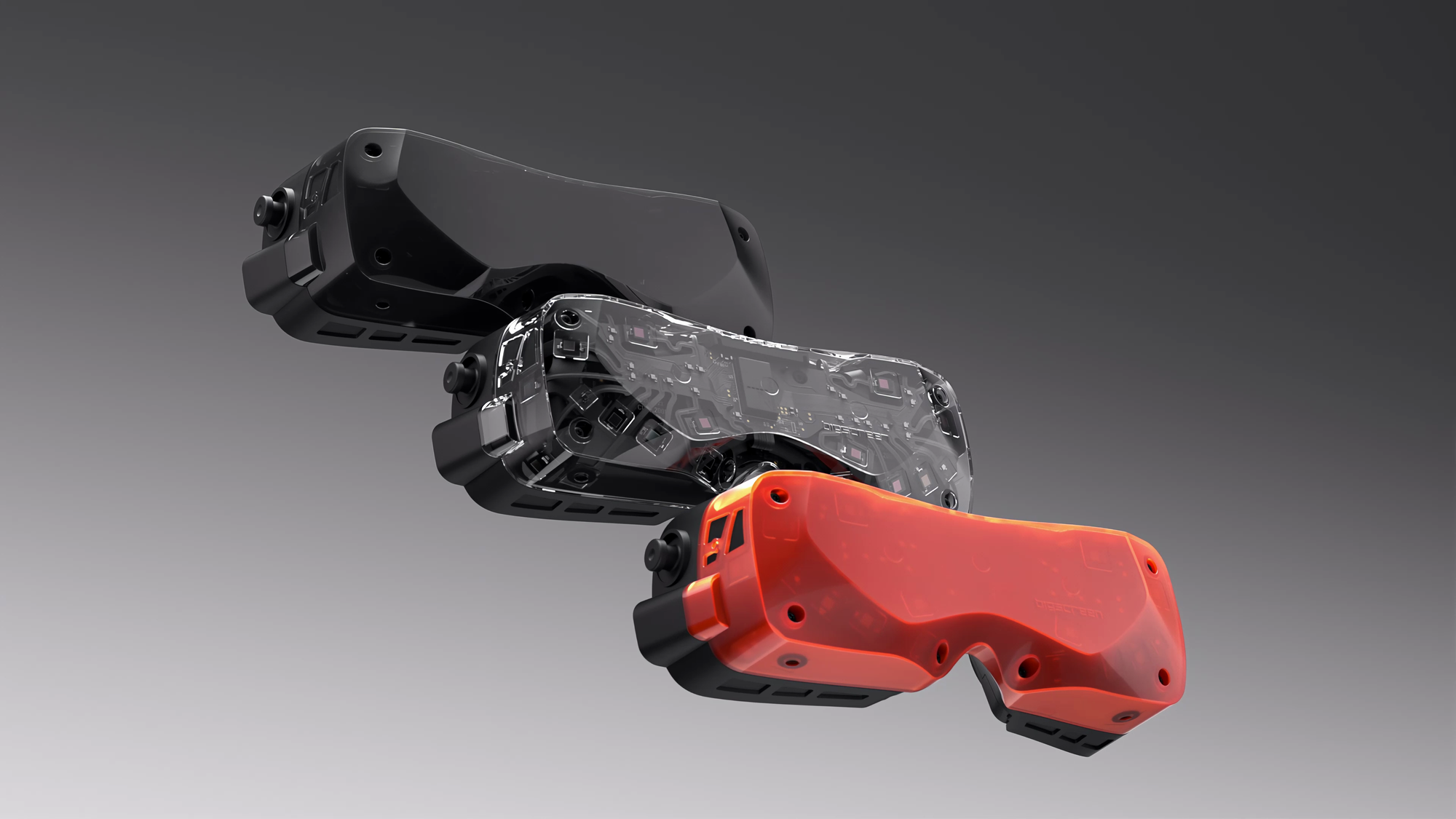
Bigscreen founder Darshan Shankar believes Beyond headsets could be among the top five systems in use on Steam in the next few years.

On that path, Shankar hopes to fully catch up to demand for Beyond 2 headsets in February so they “ship within 1-2 business days, including custom-fit and universal-fit orders.” In April, Bigscreen marks 10 years of shared co-watching in VR on Steam with Shankar suggesting over email “perhaps we’ll keep the ‘beta’ tag forever.”

Shankar said Valve’s announcement of Steam Frame coincided with “one of our biggest sales days” as “the Beyond 2 has become the obvious upgrade path for those who want ultra-lightweight high-resolution micro-OLED and still use their preferred SteamVR tracking/controller setup.”

With Valve preparing to launch the Frame headset, I asked Shankar whether Bigscreen would support flat screen co-watching to devices like Steam Deck. Shankar responded:

“This has regularly come up in the past decade. We’ve stayed focused on VR, and I think that’s our strength. Many others (especially Valve) will do a good job of cross-play across PC and VR. We’re focused on the areas in which we think we have an exceptional edge in capability and knowledge. We have nothing to announce yet on our software development, need more time to develop 🙂 but we haven’t been sitting idle, that’s for sure.

Bigscreen just launched Dynamic Foveated Rendering for the Beyond 2e headset with early access in iRacing and DCS World among the first to explore support for the feature, which promises “eye tracking-driven performance improvements.” I purchased a Beyond 2 without eye tracking and received it near the end of 2025 to keep my base stations in service another couple years. We’ll be curious to hear reports from 2e customers when it comes to their real world performance using the feature.

“Many customers – hundreds of thousands around the world – are actively using SteamVR Base Stations and Controllers right now with their Valve Index, HTC Vive, etc., and the Beyond 2 has become the obvious upgrade path for those who want ultra-lightweight high-resolution micro-OLED and still use their preferred SteamVR tracking/controller setup,” Shankar wrote. “We are firmly committed to manufacturing the Beyond 2 with SteamVR Lighthouse tracking for the next 2 years. We can say this with certainty as we’ve inventoried components and have setup a continuously running production line. We’ve signed commitments to enterprise customers as they are reliant on our hardware for their businesses.”

Beyond 2 was announced in March 2025, shipping started in July 2025 with a universal fit cushion shipping near the end of the year.

“December is our biggest month of shipping, shipping more units in a single month than we typically did in an entire year with Beyond 1 in 2023 or 2024,” Shankar wrote. “We faced a lot more demand than we expected, with Beyond 2 already selling approximately 3 times more than Beyond 1 did.”

“We thought we would have inventory on hand for fast-shipping by August/September, but demand has just been too high. Each time we ramp up supply/production, demand was going up even further.”

The Steam Hardware Survey suggests that, as of this writing, Beyond headsets still need to climb past PlayStation VR2, Meta Quest Pro and both Windows Mixed Reality and the Oculus Rifts to make it into the top five.

“Perhaps within 1-2 years, we’ll be Top 5 alongside Steam Frame, Quest 3, etc,” Shankar wrote. “Beyond 2e’s built-in eyetracking cameras is the first computer vision-driven product we’ve shipped. It should be no surprise that we’ll eventually have more cameras inside Bigscreen Beyond, but there is no timeline for that. Camera R&D started years ago, and it’ll still take years before we release anything. The bar is very high for any camera-based feature.”

“I think the size of the existing SteamVR ecosystem is underestimated, and with Steam Frame dropping Lighthouse support, we’re actually seeing growing sales.”

Shankar said 2026 will see Bigscreen focus on expanding the company’s international presence.

“We currently sell in the US, Japan, Canada, UK, Europe, Australia, and New Zealand (>50% of sales are international). To improve the speed of European fulfillment and support, we’re planning to open a facility in The Netherlands in early 2026,” Shankar wrote. “It currently takes 3-10 days to ship products into the EU from our Los Angeles factory, and we aim to improve this to 1-2 days with our local European center,” Shankar wrote. “We’ve achieved meaningful scale as a company (expecting to cross $100 million in annual revenue in the next year). We’ve stayed true to our values, built by passionate VR enthusiasts for VR enthusiasts, and we’re here for the long run.”

Turn on This Setting to Protect Your Privacy When Letting Someone Else Use Your iPhone

Your phone is a one-stop shop for a lot of your personal information, from day-to-day activities logged in your calendar and email to financial data accessed via banking apps. If you let someone else use your device—whether you’re showing a friend a collection of photos or allowing a stranger to make an emergency call—there’s a lot you don’t want them to be able to see.

If you’re an iPhone user, there are several features you can enable to prevent others from snooping around your device.

Use Guided Access

If you don’t want someone using your device to see anything else on it, you can turn on Guided Access, which limits them to a single app (such as Phone or Photos). This essentially locks down your screen and prevents navigation outside of the specific features you make available.

First, go to Settings > Accessibility > Guided Access and toggle the feature on. Tap Passcode Settings to set up a specific passcode or flip the Face ID toggle to use biometrics to end Guided Access sessions.

To start a Guided Access session before handing over your phone, open the app and triple click the side button. You can circle specific areas of the screen you don’t want to respond to touch (such as swipes through Photos). Tap Session Settings at the bottom to set a time limit, disable the keyboard, and manage button press options. Then tap Start.

To end a Guided Access session, triple-click the side button and enter your passcode or double-click and authenticate with Face ID.

You can also lock or hide specific apps

Some mobile apps, like financial apps and password managers, already require you to log in or authenticate with your username and password combo or device biometrics every time you open them. You can also lock down other individual apps on iPhone so Face ID, Touch ID, or a passcode is required for access. To lock an app from your home screen, touch and hold the icon until the quick actions menu appears, then tap Require Face ID.

Alternatively, you can hide apps so others cannot see them on your device (let alone open them) unless you authenticate using Face ID, Touch ID or a passcode. To hide an app, tap and hold the icon on the home screen and tap Require Face ID in the quick actions menu. Tap Hide and Require Face ID > Hide App. If you need to open a hidden app, swipe left on your home screen to reach your App Library, locate the Hidden folder at the bottom, and tap and authenticate to unlock the folder followed by the app.

(Note that some native iOS apps, including Calculator, Camera, Clock, Contacts, Find My, Maps, Shortcuts, and Settings, cannot be locked, and system apps that come preinstalled cannot be hidden.)

Another Leak Points To Intel Arc B770 Battlemage Graphics Cards Incoming

Another Leak Points To Intel Arc B770 Battlemage Graphics Cards Incoming
Okay, we know — you’re tired of hearing about a hypothetical “Big Battlemage” GPU and just want Intel to launch the darn thing already. Hey, so do we! We can only report the news that comes to us, though, so until Intel pulls the trigger, we’re gonna keep posting proof that the new parts exist. This latest one is arguably the most concrete

A Stranger Things making-of documentary hits Netflix next week

Netflix just announced the pending release of a Stranger Things documentary, hot on the heels of the series finale. It premieres on January 12. One Last Adventure focuses on the making of season five, so it’s not a full series retrospective. This seems similar to what Disney+ does a few weeks after a popular Star Wars or Marvel show drops.

Still, it’s a documentary about the very last season of the show, so there’s likely to be some tearful goodbyes and all of that jazz. As a matter of fact, the trailer shows plenty of hugs along with sit-down interviews.

It’ll shine a light on how some of the stunts and set pieces came together, which is cool. Stranger Things, after all, is primarily a show about spectacle and season five had plenty to spare. The Duffer Brothers will also discuss how they came to write some of those final character arcs (no spoilers here.)

If you’re grieving the loss of Steve Harrington, Delightful Derrick, Eleven and the rest, this should make for a nice watch. It’s worth noting that while Stranger Things has doled out its last needle drop, the franchise itself is still going. 

The animated spinoff Stranger Things: Tales From ’85 premieres later this year. There’s also a live-action spinoff coming at some point. This will likely be another story in the same universe.

This article originally appeared on Engadget at https://www.engadget.com/entertainment/tv-movies/a-stranger-things-making-of-documentary-hits-netflix-next-week-175539720.html?src=rss

Google TV’s big Gemini update adds image and video generation, voice control for settings

Soon, even loafing around on the couch won’t help you steer clear of AI. TV makers are busily integrating AI models into the experience, and Google is no different. At CES, the company announced a big expansion of Gemini features on the Google TV platform, starting with TCL smart TVs.

Google began integrating Gemini with the TV Streamer box this past fall, but the new expansion brings some of the company’s most popular AI features to TVs: Nano Banana (image) and Veo (video), which offered a huge leap in visual fidelity at launch and have only improved with subsequent updates. Both models will be part of the TV experience, allowing users to modify or create new content.

TV photos remix
Google Photos AI remixing in Google TV.
Credit:
Google

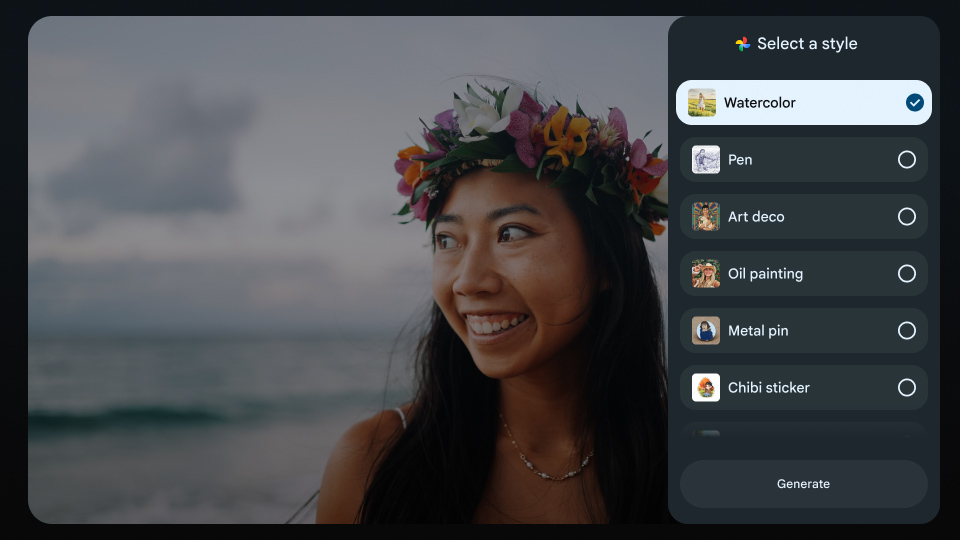
The Google TV platform connects to Google Photos, allowing Gemini to access those images with your approval. Gemini can generate a slideshow of your choosing on the spot, but it can also feed those images into Veo or Nano Banana. Using Gemini voice controls, you can remix a photo or turn a still image into a video. You can also enter a solo prompt to generate a totally new image or video with Google’s AI on your TV.

Read full article

Comments

X blames users for Grok-generated CSAM; no fixes announced

It seems that instead of updating Grok to prevent outputs of sexualized images of minors, X is planning to purge users generating content that the platform deems illegal, including Grok-generated child sexual abuse material (CSAM).

On Saturday, X Safety finally posted an official response after nearly a week of backlash over Grok outputs that sexualized real people without consent. Offering no apology for Grok’s functionality, X Safety blamed users for prompting Grok to produce CSAM while reminding them that such prompts can trigger account suspensions and possible legal consequences.

“We take action against illegal content on X, including Child Sexual Abuse Material (CSAM), by removing it, permanently suspending accounts, and working with local governments and law enforcement as necessary,” X Safety said. “Anyone using or prompting Grok to make illegal content will suffer the same consequences as if they upload illegal content.”

Read full article

Comments

My Favorite Amazon Deal of the Day: These Shokz Bone Conduction Headphones

We may earn a commission from links on this page. Deal pricing and availability subject to change after time of publication.

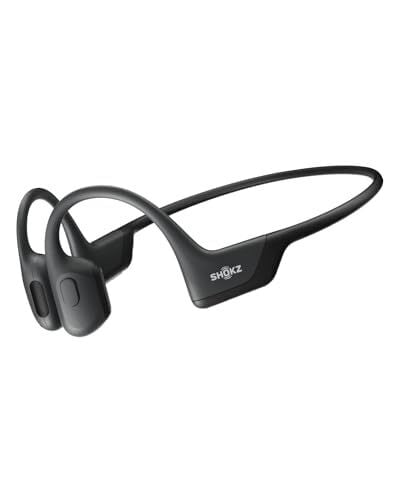
Bone conduction headphones are ideal for activities where it is vital to your safety to hear your surroundings. That’s because they use a technology that sends audio vibrations through to the inner ear while leaving your ear canals open. Shokz is one of the best brands—if not the best brand—making bone conduction headphones right now; at the high end of Shokz’s offerings is the OpenRun Pro 2, which I got to review and put to the test. But the OpenRun Pro are also quality headphones and are currently discounted to $109.95 (originally $179.95), the lowest price they’ve been, according to price-tracking tools.

If you’ve never used bone conduction headphones, they’re worth a try, and the Shokz OpenPro are a great introduction. The technology has come a long way since their early days. The major downside of the way they work has been that the bass doesn’t sound as good as their in-ear counterparts. The OpenRun Pro is designed to compensate for some of that—you won’t get the same thumpy bass you’d get from regular headphones, but it’ll be the best you can get from any other bone conduction headphones.

As the name implies, these are meant to be used on runs outdoors. They have an IP55 rating for dust- and water-resistance, are lightweight and comfortable, and, because of their design, can be worn with bicycle helmets and sunglasses.

You can use these as everyday headphones around the house, as well, since they can take calls; just be mindful that they don’t block any sound. If you plan to use these in a location with a loud music or has a lot of ambient noise, you’ll hear everything, so you might prefer taking regular headphones—but that will defeat the purpose of the “open ear” headphones.

Deals are selected by our commerce team

‘The College Backlash is a Mirage’

Public opinion surveys paint a picture of Americans souring dramatically on higher education, as Pew found that the share of adults calling college “very important” dropped from 70% in 2013 to just 35% today, and NBC polling shows that 63% now believe a degree is “not worth the cost,” up from 40% over the same period. Yet enrollment data tells a different story.

Four-year institutions awarded 2 million bachelor’s degrees in 2023, up from 1.6 million in 2010, and the fraction of 25-year-olds holding a bachelor’s degree has steadily increased for the past 15 years. The economic case remains strong. The average bachelor’s degree holder earns about 70% more than a high-school graduate of similar work experience, and after factoring in financial aid, the cost of attending a public four-year college has fallen by more than 20% since 2015.

Even after accounting for student-debt payments, college graduates net about $8,000 more annually than those without degrees. Part of the disconnect may stem from misunderstanding how college pricing works. Nearly half of U.S. adults believe everyone pays the same tuition, though fewer than 20% of families actually pay the published sticker price.


Read more of this story at Slashdot.

This Tamagotchi clone is designed to help you keep your plants alive

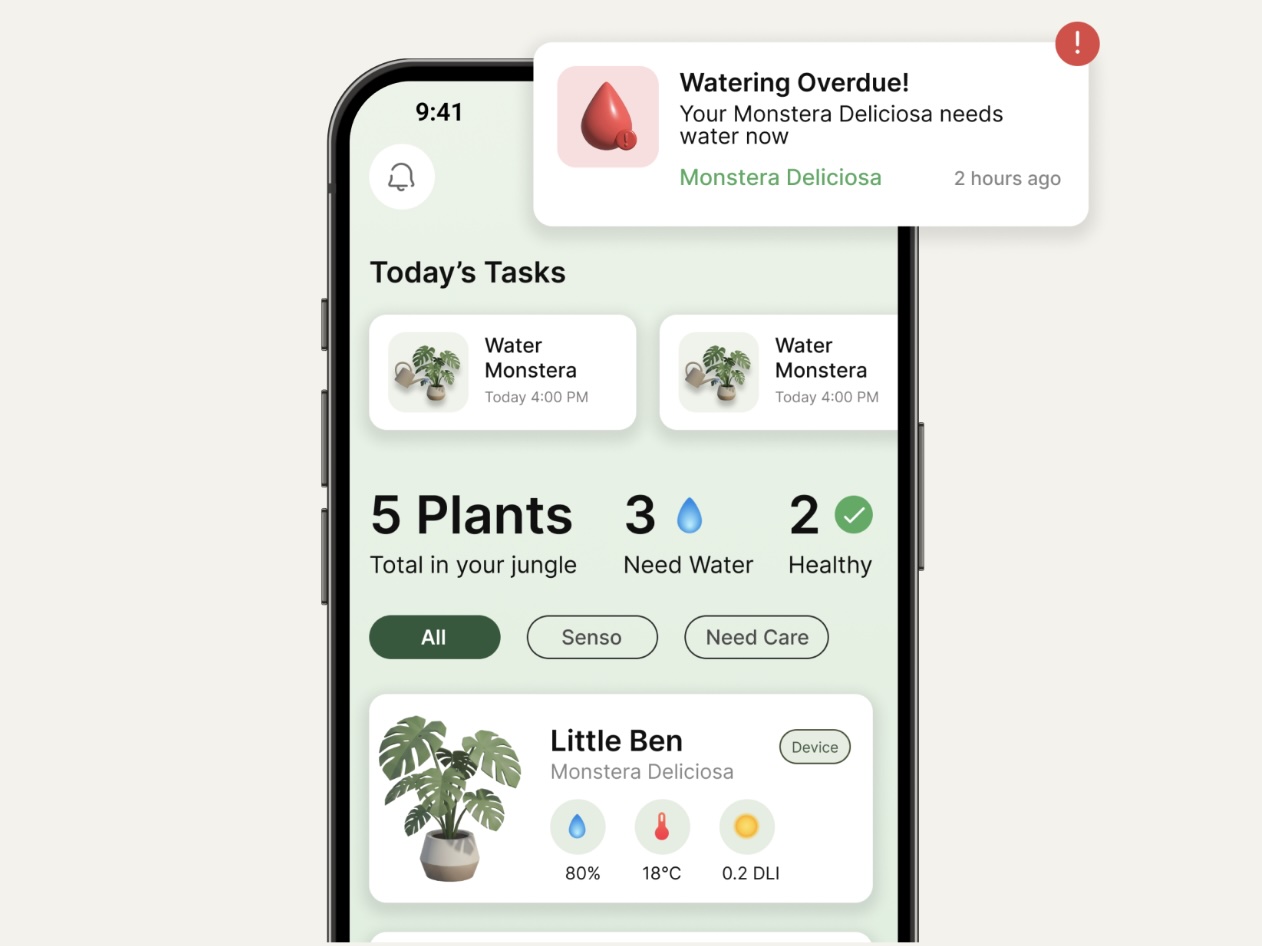
Tamagotchi ripoffs are alive and well at CES 2026, and SoildTech’s spin on the idea is to stick a virtual pet in the dirt to help you stop killing your plants. Senso combines a plant health sensor and a Tamagotchi-like device, offering insights into the conditions of a houseplant’s environment and a gamified way of keeping up with them. 

If a plant is in need of watering or could use some lighting adjustments, little characters will offer you quests to complete those tasks. And by taking care of your plant properly, you’ll also be helping those characters’ virtual home planet thrive. (A world that, I must point out, looks a whole lot like one I’ve seen before as a Tamagotchi Paradise owner). The virtual pet component magnetically attaches to a two-pronged probe that’s inserted into the pot, so it can be swapped between the sensors in different plants if you have more than one. 

The companion app for the Senso device showing plant data and care tips
SoildTech

In the AI-powered app, where you can add and manage multiple plants, you’ll get the full breakdown of each one’s data and needs. Soildtech says the app can also identify plants and the diseases they may be afflicted with from a photograph. Senso supports voice interactions so you can turn directly to the device for caretaking advice too. 

It’s designed with beginner plant enthusiasts in mind and is, admittedly, super cute, though I can’t speak to how well it can actually assess the health of a plant from our brief look at it. Senso comes in multiple colors and will launch on Kickstarter “soon.”

This article originally appeared on Engadget at https://www.engadget.com/home/smart-home/this-tamagotchi-clone-is-designed-to-help-you-keep-your-plants-alive-172000982.html?src=rss

Earliest African cremation was 9,500 years ago

Archaeologists have discovered Africa’s oldest known cremation pyre at the base of Mount Hora in Malawi. According to a paper published in the journal Science Advances, radiocarbon testing dates the site to about 9500 years ago, prompting a rethinking of group labor and ritual in such ancient hunter-gatherer communities.

Many cultures have practiced some form of cremation. There is a Viking cremation site known as Kalvestene on the small island of Hjarnø in Denmark, for instance. And back in 2023, we reported on an unusual Roman burial site where cremated remains had not been transported to a separate final resting place but remained in place, covered in brick tiles and a layer of lime and surrounded by several dozen bent and twisted nails—possibly an attempt to prevent the deceased from rising from the grave to haunt the living.)

But the practice was extremely rare among hunter-gatherer societies, since building a pyre is labor intensive and requires a great deal of communal resources. There is very little evidence of cremation predating the mid-Holocene (between 5,000 and 7,000 years ago). According to the authors of this latest paper, the earliest known concentration of burnt humans remains was found at Lake Mungo in Australia and date back 40,000 years, but there is no evidence of a pyre, making it challenging to determine specific details.

Read full article

Comments

The Cyberdeck: How Personal Computing Enters VR

William Gibson’s 1984 novel Neuromancer describes jacking into “the consensual hallucination” of “the matrix” with a “custom cyberspace deck” projecting one’s “disembodied consciousness” there. The hardware necessary to spend time in VR is a “cyberspace deck” seen “banging against” the hip of the main character.

In 2026, the “Realworld cyberdecks” page on Reddit says “The era of virtual reality is coming, so it is also time for cyberdecks to come” as hundreds contribute new rigs weekly.

If the “era of virtual reality” is coming and a “cyberspace deck” is how we get there, what do the first “realworld” decks look like? What are their functions?

Unlocking Digital Data In VR By Locking It To The Real World

What is a cyberdeck?

My custom deck begins at a couple terabytes of local storage of videos, photos, music, games, and other personal files. I’ve been able to access this data store in VR since about 2016 with Virtual Desktop. I don’t buy much software from Microsoft, though, so my data has been an ill fit inside Windows. Looking ahead, I’d love to build on my data with a Framework laptop to drive VR directly with Linux. In the meantime, I’m using macOS, iOS, Windows 11, SteamOS, and various flavors of Android to operate my file systems.

Many of us already carry, at the very least, 50 gigabytes of storage in our phones everywhere we go. Is it so difficult for us to imagine a couple years more and almost everyone finding use for terabytes carried with us?

After roughly a decade of headsets from Gear VR in 2014 to Quest 3 in 2023, when the Vision Pro arrived in 2024 I first experienced a standalone system unlock terabytes of digital information to use in VR. Apple brought apps from my iPad and iPhone, sure, but I also started perusing my own personal data store on local drives wirelessly through Mac Virtual Display. When I use the feature, my Mac’s screen turns off in the “realworld” and a resizable virtual panel opens in VR instead. If anybody else happens to be watching my screen my data isn’t displayed there anymore. For some scenarios that’s a bug, but for many it’s a feature.

Gibson’s fiction understood the value of cyberspace before “the matrix” could actually be. Now VR is a consumer reality and our model for personal storage of digital content collides with Gibson’s idea of a deck and the technical delivery of cyberspace. For example, you discover the confines of your digital keepers when you apply personal computing to your life without any specific platform limitations. The FAT god commands us to store no file greater than 4 gigabytes. And beware special characters in thy filenames.

In my view, a “custom deck” starts with pouring one’s personal data into any portable device. MicroSD cards are readable in Steam Decks and Steam Frames while thumb drives include their universal connector. So you can start building a deck starting from a $15 thumb drive or MicroSD card, and build up over time to a multi-thousand dollar laptop with the very latest graphics card to cyberspace.

Entry Level Decks

Hanging from a bag in the corner of my office is the latest personal computer from Raspberry Pi. Described as a “premium desktop computer” the Raspberry Pi 500+ is a keyboard selling for $200 with a 256-gigabyte solid-state drive built in running Linux.

Just send USB-C power into the Raspberry Pi and the keyboard starts computing. I used the included tools for the 500+ to unscrew the bottom of the keyboard and swap out its drive. The custom computer boots to the desktop quickly and now carries four terabytes of storage underneath satisfying mechanical keys.

Now I just need somewhere to display my files.

Conceptually, Raspberry Pi and I put together a custom deck of hardware and software that’s cheaper and more portable than anything made by Apple. The Pi doesn’t take me to cyberspace but it can display in cyberspace, and I can access it there as if from a floating terminal just like my Mac. And all of it is running in the space occupied by the keyboard traditionally used to operate a personal computer.

Wi-Fi and Bluetooth emanate from the keyboard. In the back, ethernet, USB and micro HDMI ports connect physical accessories. The biggest problem is that the year is 2026 and we don’t have the easy-to-use software I need in virtual reality to access my deck’s files wirelessly. Instead, I hack my keyboard PC into VR by any means necessary. That means dealing with stuff like VNC and IP addresses or perhaps a latency-inducing capture card.

The Steam Deck offers access to Linux in a more user-friendly handheld console-like form factor compared with any Pi or Mac. If logging into Steam online before you can do fun things with your computer is too restrictive, then you can build your own deck of hardware and software and log in online only if you want.

A Framework For The Future

Readers who invest multiple thousands of dollars in their personal computing rigs know $200 or even $500 doesn’t truly buy a “premium desktop computer”. If a Raspberry Pi can only display a flat screen in VR, then a Framework laptop should be able to fully embrace the concept of cyberdeck carrying an NVIDIA RTX 5070 and 64 gigabytes of RAM.

My ideal configuration for a personal computer essentially matches the price of a top-of-the-line headset for a top-of-the-line deck that’s upgradeable for years. To me, it doesn’t really matter if my “deck” starts with my data on a thumb drive in a well-structured folder system, or if there’s a complex operating system and graphics card and central processor with a virtual assistant managing my data. The computer becomes “custom” and “personal” when I put my data inside.

The aim is to bring personal computing with me wherever I go. It’s not to the cafe or on a plane I really care about my deck of data and hardware going. Sure, those places would be great, but the most important place a deck goes is in VR.

Everyone Already Owns A Cyberdeck Lacking Direct VR Support

Bigscreen Beyond 2 needs a deck.

A cyberdeck is the missing key to Bigscreen Beyond.

As long as you’re seated there in your chair and have a good supply of clean power, conceptually speaking, Bigscreen Beyond and a Framework laptop should put you in cyberspace when the headset touches your face.

Yes you need lasers sweeping the room right now for Beyond and a network connection added to this core experience would bring a lot. Yes you could also add accounts, friends, entitlements, digital rights management and thousands upon thousands of other services and software packages as with any open computer.

Whether Beyond is running from a desktop PC or the Framework laptop is a secondary concern. All that fundamentally matters is that when you go to VR you have at your fingertips a storage device you can separate from your computer with all your personal and favorite files organized, indexed, searchable, accessible and playable.

As of this writing, data portability in the “cloud” typically means waiting hours or days to download a store of information from a provider. There’s a more immediate and extreme example of data portability, however, and we’ve had it for decades with removable storage systems.

If you have the freedom to immediately unplug both your content and yourself from the network and the headset, you also have the freedom to take your stuff with you anywhere and everywhere, in VR or otherwise.

From MP3 Players & Headphones To PCs & Assistants

Over the last quarter century, the MP3 player became the iPod and music libraries became the launchpad for iPhone – a new kind of hyper-connected deck filled with personal information. From iPhone and Android, our pocket decks consumed almost every product category of personal computing and remade a few others.

Something new is happening with spatial computing starting with experiences in virtual reality and extending into passthrough views and mixed reality. Any surface can become a touch-sensitive display. And our existing touch-sensitive displays become even more useful accepting touch input while turning off the flow of photons. They just send that data as bits over the network when needed. With reskinnable passthrough views, that “deck” in hand can become anything from a camera to a map to a tool to drag objects. Even non-interactive displays can become frames for new functionality. Watch a movie with closed captions while a friend seated on the same couch enjoys the same film in 3D without any text distractions.

That’s just for starters. Now imagine looking down at your phone in hand in VR and swiping along its surface, but in the real world the screen is off. Or imagine playing Breath of the Wild while standing in Hyrule and holding a Sheikah Slate.

Like the words “virtual reality” before we could go there anytime, the word “cyberdeck” right now still exists largely in the realm of fiction, except to the people posting to a creative subreddit. It is still mostly a concept. But as a concept, consider the possibility that VR is taking so long to become accepted by mainstream audiences because we lack our companion devices, data, and services as we walk around another universe. To interact with VR, we hold a pair of controllers standing in for hands instead of a cyberdeck displaying a map of where to go.

Bring on the pucks to access cyberspace with terabytes carried between headsets and glasses. In the meantime, Neuromancer is in production for Apple TV.