Has Cane Creek just solved the problems with internal routing?

The reasons for hiding cables are now well established, ranging from professional riders seeking marginal gains to bike designers wanting to create cleaner, leaner-looking bikes.

The downsides of Internal routing are that it makes bikes harder to build and harder to travel with – not forgetting they’re harder to adjust and service, hence mechanics don’t like it.

However, Cane Creek believes it can offer something better with the new HCR system.

HCR is hidden, not internal
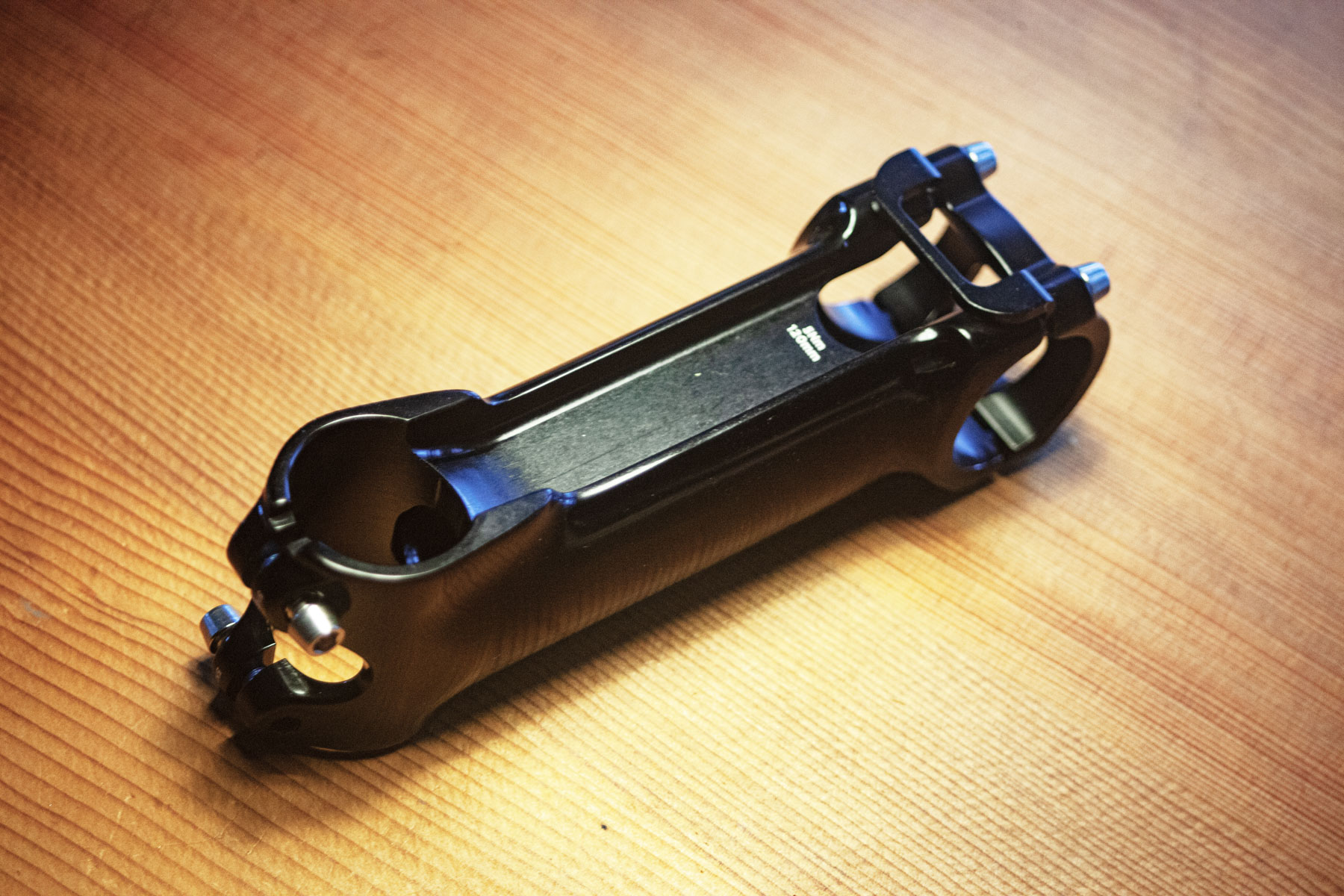
cane creek hcr stem
The underside of the HCR stem has a machined channel to hide hoses and cables. Warren Rossiter / OurMedia

The key elements of the HCR system are a combination of a classic-looking lightweight stem and a headset built for longevity. The stem, while being compatible with IS52 and EC44 designs with internal routing, is much easier to live with.

The HCR stem is based on the beautifully finished, classic-looking GXC stem. Unlike that stem and different from most internal-routing stems, the HCR has a deep machined channel on its underside. This hides cables rather than routing them through the body of the stem or using a plastic bolt-on cover, as seen on competitors’ stems from the likes of FSA, such as the SMR or ACR.

Cane Creek claims that by using this channel, it simplifies travelling with your bike because the stem can be disassembled from the steerer without splitting hoses.

It also makes maintenance and adjustment easier, even enabling a complete stem replacement without removing cables or hoses. The spacers have a slotted design, too, which means you can alter the stack height without splitting hoses or having to use plastic split spacers.
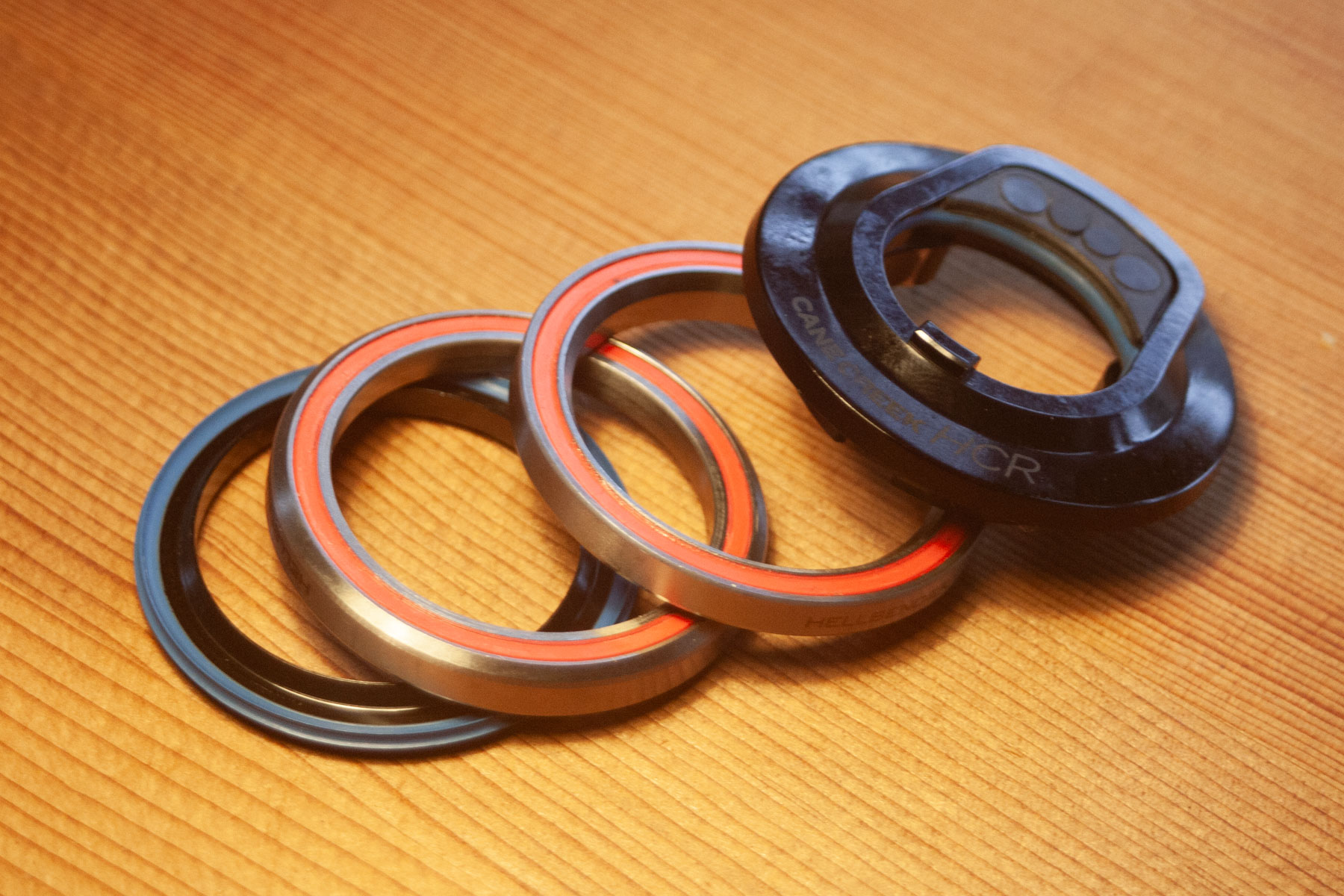
Cane Creek HCR headset
The HCR headset uses Hellbender bearings. Warren Rossiter / OurMedia

Quality, but not at a prohibitive price
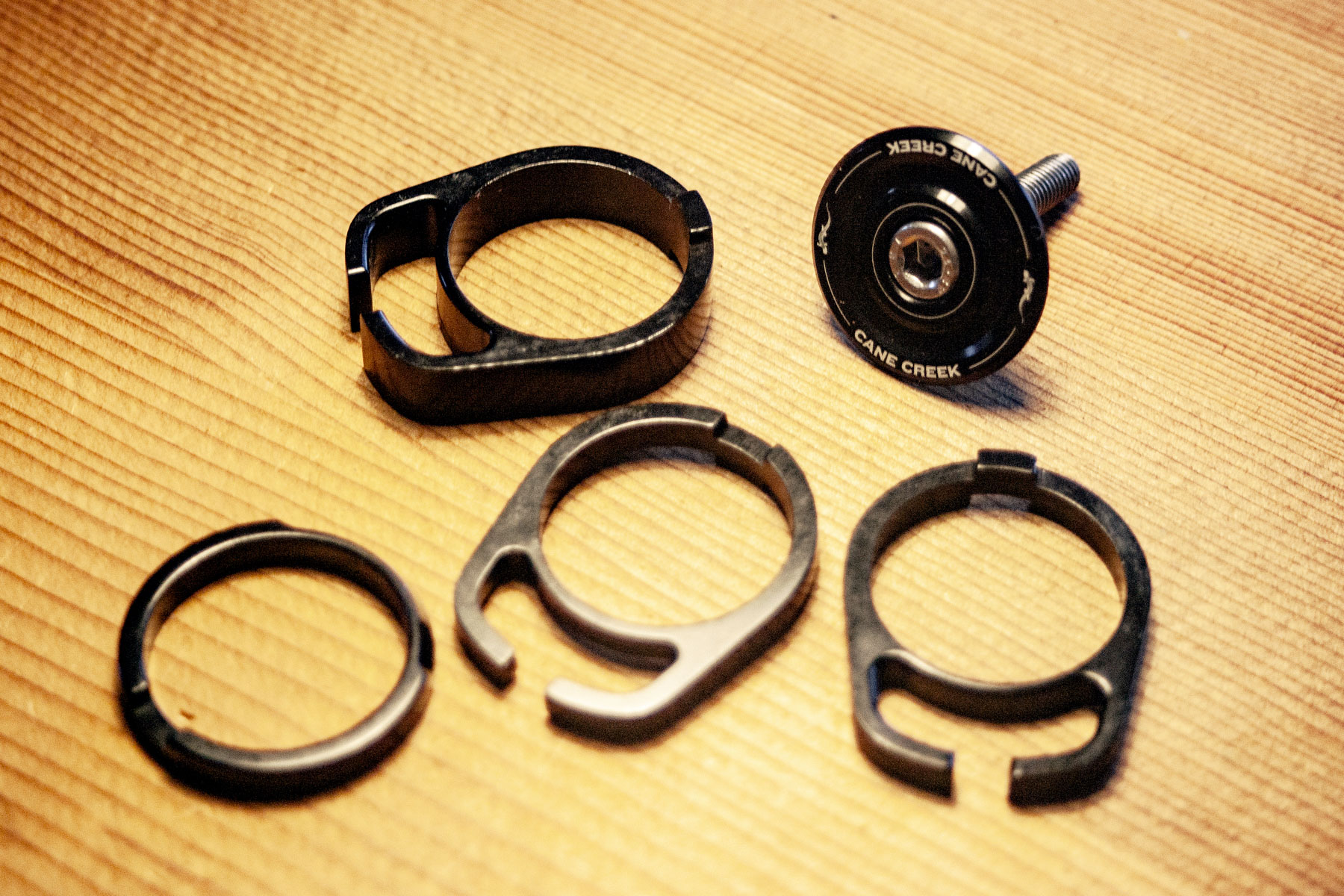
Cane Creek HCR slotted headset spacers
The HCR slotted headset spacers are made from machined aluminium. Warren Rossiter / OurMedia

Cane Creek’s designers made the choice early in the HCR’s development not to use plastic in either the stem or spacers.

Will Hart, Cane Creek’s product marketing manager, told us: “When we looked at the existing products on the market, we were disappointed to see that even the most premium-priced offerings used plastic split spacers and plastic covers for the cable routing.

“Plastic is not something we like to use at Cane Creek, so we decided that HCR would be all metal, which is what we do. That means every part of the HCR system can be made in-house.”

The headset is based around Cane Creek’s highly regarded Hellbender 70 bearing races. The Hellbender 70 has a great reputation for longevity and anti-corrosion with its combination of stainless-steel construction and robust sealing.

The alloy top cover, which interlocks seamlessly with the spacer, features a channel for the cables into an interlocking cable seal. It is a thick rubber-like material called EPDM with a level-80 durometer.

EPDM is a synthetic rubber (Ethylene Propylene Diene Monomer) known for its durability, flexibility, and excellent resistance to UV rays, ozone and weather. It is used widely in applications requiring weather resistance, such as roofing membranes, automotive hoses and seals. 

The seal has four holes for hoses and mechanical cables. The insert comes with alloy plugs for each hole to maintain the sealing when running the combo on wireless-drivetrain equipped builds.
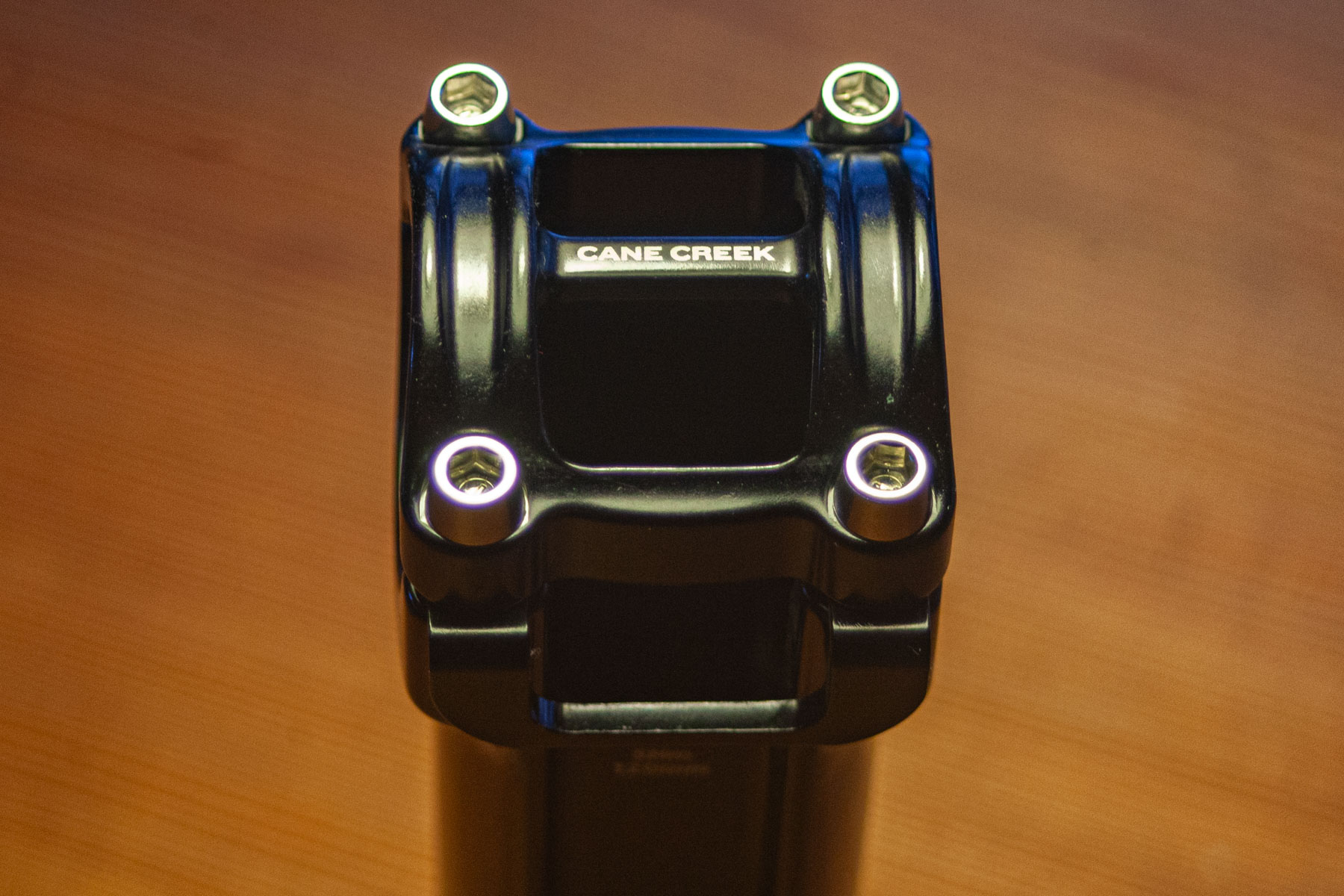
Cane Creek HCR stem
Cane Creek uses all stainless steel hardware on the HCR stem. Warren Rossiter / OurMedia

The HCR combination is priced at $249.99 for both stem and headset. It’s similar in price to an FSA NS ACR stem at £133.99 / $124 and a basic No.55R FSA stem at £95 / $101. That FSA combo weighs in at around 338g, according to FSA.

Cane Creek claims the combination of a 90mm HCR stem and headset weighs in at 160g for the stem, which is 70g lighter than the FSA equivalent and 92g for the headset, making the Cane Creek more than 80g lighter.

At the premium end of the market, a Chris King AeroSet and ENVE In-Route stem combination, common on high-end custom bikes, will set you back £320 / $295 for the headset (113g) and £390 / $350 for the stem (180g). In comparison, the Cane Creek combination is $395 less costly and 40g lighter.

Is the HCR the answer to your internal-routing woes?
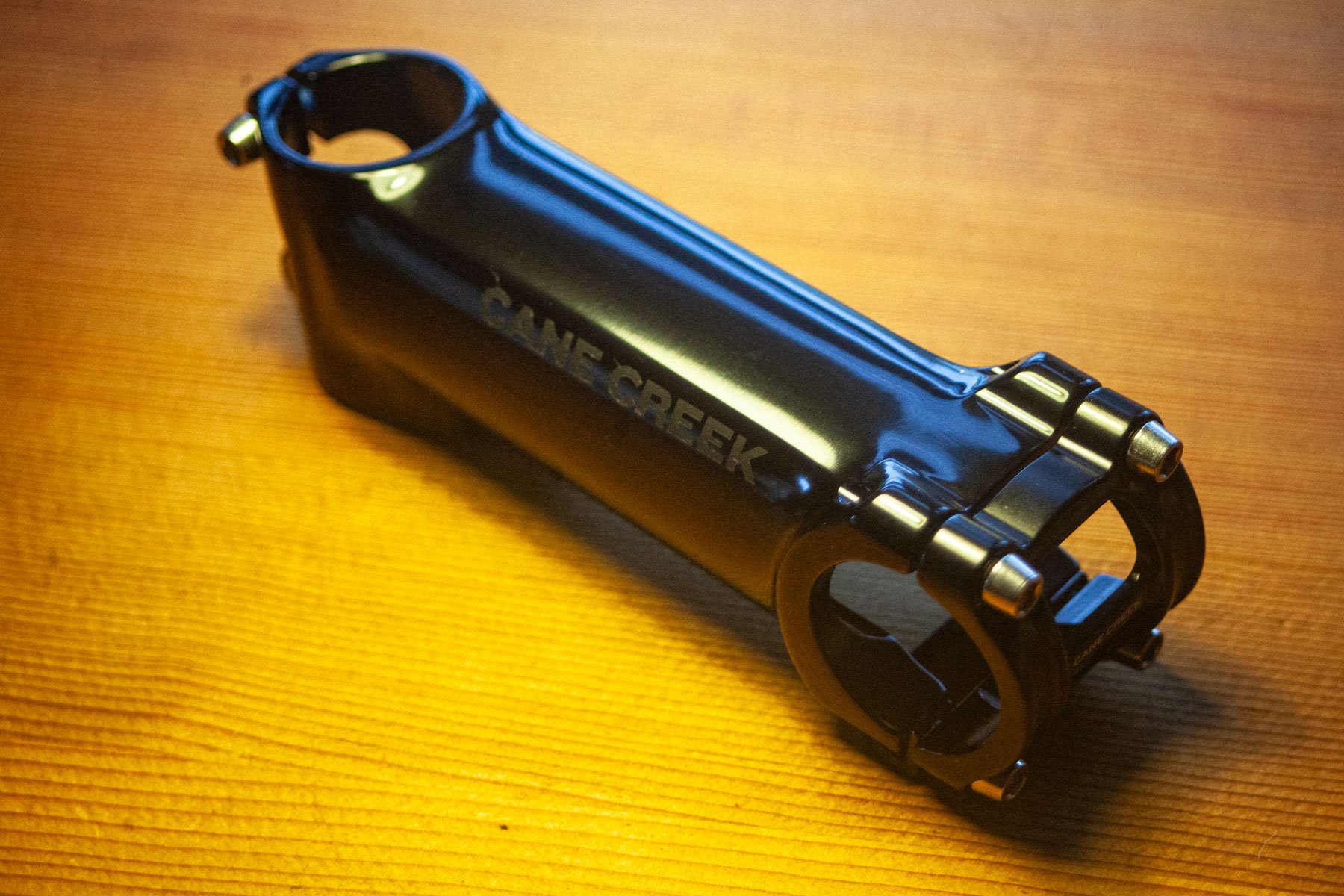
Cane Creek HCR stem
The HCR stem is based on the classic GXC design. Warren Rossiter / OurMedia

At first look, the HCR system certainly has quality, and it’s very well priced for such an obviously premium offering.

Does it solve the known issues with internal routing on headsets? Well, not quite. The improved sealing, the materials used and the simplified, channelled, hidden rather than fully internal routing certainly make assembling and maintaining a bike easier (I’ve just built up a new bike using the HCR system – more on that and a full review will follow later in the year).

The fundamental design of routing within the bearing centre still leaves bikes open to water ingress, a common problem on OE equipment on bikes. Cane Creek has cleverly worked within the confines of internal designs and stacked the odds in its favour by using high-grade, corrosion-resistant bearings and materials. I’ll report back on how they hold up once I’ve got a few miles under my belt on the HCR setup.

Where I think the HCR will find favour is on custom builds, especially bikes built with traditional steel or titanium. Most modern stem designs, such as the ENVE In-Route and FSA NS ACR, look somewhat incongruous when paired with a titanium frame. The HCR stem, replete with its all-alloy spacers, looks more as though it belongs.

Cane Creek HCR details and prices

  • HCR headsets and stems sold separately 
  • Stems come with 1x10mm and 2x5mm slotted HCR spacers 
  • Headsets come with a round conversion spacer in case you want to use them with another stem or one-piece cockpit 
  • Cane Creek also offers a kit of slotted HCR spacers for individual sale if riders need more than what comes with the stem 
  • HCR headset, IS52|IS52: $129.99 / €179.99 / AU$257.95 / £139.99
  • HCR headset, EC44|EC44: $149.99 / €209.99 / AU$303.95 / £159.99
  • HCR stems (all sizes): $99.99 / €139.99 / AU$195.95 / £99.99
  • HCR Spacer kit – 1x10mm, 2x5mm: $29.99 / €34.99 / AU$58.95 / £29.99

Specifications

  • Stem material: forged and machined 6066 aluminum ​
  • Weight: 160g (90mm stem)  ​
  • Stem lengths: 70mm, 80mm, 90mm, 100mm, 110mm, 120mm​
  • Stem angle: -6 degrees​
  • Colour: black​
  • Headset codes: EC44/EC44 & IS52/IS52​
  • Drivetrain compatibility: optimised for wireless drivetrains, compatible with mechanical​
  • Stem hardware: stainless steel​
  • Headset cups: machined 6061-T6 aluminum​
  • Headset bearings: Hellbender stainless steel bearings​
  • Seals: interlocking cable seal, steerer tube seal, bearing lip seal​
  • Spacers: one-piece, machined aluminum HCR headset spacers, included with the stem. 1x10mm, 2x5mm 
  • Standard converter spacer included with headset for use with non-HCR stem

Spot the difference: Sony’s electric car gets a crossover version

Six years after Sony first announced its automotive ambitions, everything is looking a lot more concrete. Production of the Afeela 1, the electric sedan that has been developed by Sony Honda Mobility, is already underway in Ohio. Deliveries will begin later this year in California, expanding to Arizona and Japan in 2027. And last night, on the eve of this year’s Consumer Electronics Show, it even showed off a crossover version.

“The way we are fusing diverse technologies to deliver a completely novel mobility experience is not limited to a single model type,” said Sony Honda Mobility CEO Yasuhide Mizuno.

We first saw a Sony electric vehicle back at CES in 2020 when the consumer electronics company showed off the Vision-S, telling the world it was mostly just a showcase for things like sensors and infotainment. Then the world caught a hot case of electric vehicle fever. Tesla’s stock price went vertical, and the auto industry focused on EV optimism, even as a pandemic rewrote everyone’s working rules.

Read full article

Comments

This Tool Deletes Your Info From Data Broker Sites (If You Live in One State)

There’s very little privacy on the internet: Data brokers collect tons of information about you and your online activity and sell it to anyone interested in marketing to you. California residents have gained more control over their personal data than those in other states since the passage of the California Consumer Privacy Act (CCPA) in 2018, and they now have a one-stop shop for requesting that their information be removed from hundreds of data brokers registered with the state (and any that do so in the future).

California isn’t the only state to enact stronger consumer privacy laws in recent years, but its Delete Requests and Opt-Out Platform (DROP) is the first of its kind. The tool is live now, though brokers won’t begin processing submissions until August. Here’s what to do now if you live in California—and some options for removing your information from data brokers if you don’t.

How to sign up for California’s data removal platform

To get started with DROP, you’ll need to confirm that you are, in fact, a California resident by verifying personal information via California Identity Gateway or signing in with Login.gov credentials. To be eligible, you must either live in California or be domiciled in the state even if you live elsewhere temporarily. (This is based on the location of your primary residence, where you are registered to vote, and which state issued your driver’s license.)

You will then be able to create and submit a deletion request. You’ll need to provide some personal data, which will be used to match your request with records held by data brokers. Data types include names, date of birth, zip codes, email addresses, phone numbers, Mobile Advertising IDs (MAIDs), and vehicle identification numbers (VINs). You can enter multiples of everything except your date of birth and update your request at a later time—if you get a new car or change your email, for example.

While you can begin submitting requests now, know that data brokers won’t actually begin processing them until August 2026 and could take up to 90 days from then to delete your data. If they find a match, they are required to delete all of the information they have about you, though there are some exceptions, such as data available through public records or provided directly to a business.

Once processing begins later this year, you’ll be able to track the status of your request on the DROP platform.

Alternatives for deleting your data

If you don’t reside in California and qualify for DROP, all is not lost—though you will have to invest a bit more time and/or money to remove your information from data broker sites than simply mass deleting via a single request.

To start opting out of data collection, download Consumer Reports’ donation-based Permission Slip app, which tracks where your data can be found and follows up on removal requests. You can try to manually opt out by identifying data brokers and going directly to their sites, but this can be tedious, and there are a handful of other paid services that will do it for you. (None are perfect, nor do they guarantee 100% success.)

We also have a guide to blocking companies from tracking your online activities, which can help mitigate the problem somewhat before it begins.

Segway’s Navimow brand unveiled a new line of robotic lawn mowers at CES 2026

Segway, the maker of Steve Wozniak’s favorite mode of self-balancing transport, has released a new series of robotic lawn mowers under its Navimow brand, designed for all manner of Roomba-esque mowing action. The lineup includes four residential series and was unveiled at CES 2026.

Navimow’s lineup includes the flagship X4 Series for large yards up to 1.5 acres in size. Its AWD system can handle slopes up to 40 degrees and it sports dual 180-watt cutting motors. The largest mode, the X450 will retail for $3,000. A smaller X430 rated for yards up to 1 acre will go for $2,500.

The Navimow i2 series comes in AWD and LiDAR variants and is designed for “everyday” lawn maintenance. The AWD variant’s three-wheel-drive system can handle 24-degree slopes and is designed to handle muddy or slippery terrain. The larger i2 AWD model, called the i210 AWD is rated for yards up to a quarter-acre in size, and will retail for $1,300. A smaller model dubbed the i206 AWD can handle yards as large as 0.15 acres and will go for $1,000.

The i2 LiDAR variant can scan 200,000 points per second to create a detailed spatial map of your yard, allowing it to navigate complex paths and, crucially, work at night. That model is rated for yards up to 0.37 acres in size. Pricing has not been announced for the i215 LiDAR model.

Finally, the H2 series features three vision technologies integrated into one model, with LiDAR, Network RTK and cameras combining into what Navimow is calling LiDAR+. The H2 is built for slopes up to 24 degrees and can handle yards up to half an acre in size. The H2 is being released in two models. The H210 for yards up to 0.25 acres, and the H220 for half-acre yards. Pricing for the H2 series has not been released yet.

The i2 AWD Series and the X4 Series will be available for pre-order beginning January 16.

This article originally appeared on Engadget at https://www.engadget.com/home/smart-home/segways-navimow-brand-unveiled-a-new-line-of-robotic-lawn-mowers-at-ces-2026-130007014.html?src=rss

VW Brings Back Physical Buttons

sinij shares a report from Car and Driver: Volkswagen is making a drastic change to its interiors, or at least the interiors of its electric vehicles. The automaker recently unveiled a new cockpit generation with the refreshed ID. Polo — the diminutive electric hatchback that the brand sells in Europe — that now comes with physical buttons. […] The steering wheel gets new clusters of buttons for cruise control and interacting with music playback, while switches for the temperature and fan speed now live in a row along the dashboard.

The move back to buttons doesn’t come out of nowhere. Volkswagen already started the shift with the new versions of the Golf and Tiguan models in the United States. Unfortunately, some climate controls, such as those for the rear defrost and the heated seats, are still accessed through the touchscreen. Thankfully, they look to retain their dedicated spot at the bottom of the display. Volkswagen hasn’t announced which models will receive the new cockpit design. The redesigned interior also may be limited to the brand’s electric vehicles, which would limit it to the upcoming refresh for the ID.4 SUV (and potentially the ID.Buzz), as the only VW EV models currently sold in America. “Unfortunately, the glued-on-dash tablet look is still there,” adds sinij.


Read more of this story at Slashdot.

Segway launches two more e-bikes at CES

I’m no psychologist, but I get a sense Segway turned up to CES 2026 with something to prove after last year. Certainly, it’s gone out of its way to prove its micromobility bona fides with the press, who perhaps were a bit too sniffy that scooter people were launching an e-bike. This year, Segway’s not just launching two more mainstream e-bikes, but an electric dirt bike, all of which are crammed with the sort of tech that might just make everyone halt their sniffiness.

First up, there’s the Myon, a chunky step-through with a decent-sized pannier rack for folks who want to go far and carry a bit of luggage as they go. That’s hardly an eye-catching proposition given so many e-bikes fit within the same template, but Segway is hoping its tech will make a difference here. Myon is equipped with electronic gear shifting (tied to a Shimano CUES chain drivetrain), electronic motor optimization and the company’s proprietary Intelligent Ride System. 

The latter, along with Segway(TM) TurboTuned(TM) will automatically optimize motor and battery performance while under way. The company adds that the bike’s built-in gyros, cadence and torque sensors will meter out performance according to road conditions. So if you’re going up hill, the power will gently increase before you have to think about it. Additionally, if you stop at the lights, the system won’t just turn on the power to whatever you’ve set it at as soon as it senses the tiniest ounce of pressure on the pedal, removing the jerky start action you see in other bikes.

Segway’s broader pitch is that its bikes will also feature a whole host of smart features, including integration with Apple’s Find My network, GPS tracking, remote locking, integration with your health and fitness app of choice, and smartphone pairing. 

Muxi
Muxi
Segway

Muxi (pronounced moo-shee) is a more interesting piece of hardware, since it’s been built like a longtail cargo bike, but with the long tail chopped off. Even so, the focus is on cargo, with the bike getting an optional passenger seat with foot pegs, and an optional middle basket. Plus, the bike comes with a beverage cup holder (although given it has a direct drive motor, I’m not sure I’d want to cruise around at low speed while trying to sip my morning latte). To ensure you don’t struggle with your load, the bike comes with Hill Start Assist, Hill Descent Control, regenerative braking and traction control. Plus the aforementioned suite of added value features, like Find My integration, remote locking, GPS and the app integrations. 

Rounding out the announcements is the Xaber (say-br) 300, an electric dirt bike geared toward off-roading. It has three power modes, letting you learn on the equivalent of a 150cc engine, then dialing that up to 200cc, before topping out at 300cc. If you still want a greater sense of control, you can activate an electronic clutch, and if you want to cede more of it to the bike, you can set the maximum wheelie angle. There’s no price for Xaber, but the company says expect to learn more about it when it makes it debut in Spring or Summer this year.

As for Myon, it’s available to buy today from Segway’s official site and via its dealer network, priced at $2,000. Muxi will be available through those same channels in March, setting you back $1,700. 

This article originally appeared on Engadget at https://www.engadget.com/transportation/segway-launches-two-more-e-bikes-at-ces-130000152.html?src=rss

Top 5 Zwift Videos: Feature Requests, FTP Tests, and Tour de Zwift

Zwift ended 2025 with a bang, bringing the highly requested draft indicator to the game. As we head into 2026, one Zwifter shares 7 things that he thinks Zwift should add in 2026!

Also included in this week’s picks are videos about FTP tests, Tour de Zwift 2026, brutal Zwift races, and fitness testing.

7 Things Zwift Should Release in 2026 (Everyone Would Love This)

Adam from Road to A shares 7 features that he thinks Zwift should add in 2026.

My first FTP test – With my new Zwift bike!

Moloko Cycling shares why she got the Zwift Ride, sets up the Zwift Ride, and tackles her first FTP test on Zwift.

Tour de Zwift 2026: Watch This Before You Ride

Bike Bonk Biff shares everything you need to know about Tour de Zwift 2026.

My FTP Went Up After This Brutal Zwift Race | London Uprising

Dead Last Cycling tackles stage 4 of the Fresh Outta 25 series. Watch as he pushes himself to the limit and sets a new FTP!

My First Zwift FTP Test In 2 Years

For the first time in nearly 2 years, Giorgio Coppola tackles an FTP test to see where his fitness is at.

Got a Great Zwift Video?

Share the link below and we may feature it in an upcoming post!

Ugreen launches a smart home security platform at CES

Ugreen makes plenty of things, but you’re probably familiar with the name in the context of its NAS systems (should that be NASes? Who knows). Naturally, the company has turned up to CES 2026 with the former, but it’s also branching out into home security. It’s announcing SynCare, an AI infused all-in-one surveillance platform which, it rather boldly claims, will become an “attentive, integrated guardian” of your home.

Leading the pack is the SynCare Video Doorbell with head-to-toe 4K video, intelligent detection and 24/7 recording — especially if you’ve got it hooked up to your Ugreen NAS. That works in tandem with SynCare cameras offering 4K video on a pan-tilt base and, of course, AI to recognise “people, pets and key events.” Ugreen is also offering a tablet, the SynCare Smart Display, a “home hub” to let you manage your cameras from a single place in your home. 

The company is quick to highlight the major benefit of an at-home system like this, which is no need to pay for a monthly subscription. And, of course, that the footage from your home stays inside your home at all times, making it a better option for those folks who value their privacy. Sadly, Ugreen isn’t ready to share pricing or availability information for the series, saying it’ll be available in the back end of 2026.

This article originally appeared on Engadget at https://www.engadget.com/wearables/ugreen-launches-a-smart-home-security-platform-at-ces-130000389.html?src=rss

The Cannondale CAAD14 has leaked – and it looks like the alloy road bike we’ve been dreaming of

Images of what appears to be Cannondale’s long-awaited CAAD14 aluminum road bike have leaked online, and it looks to be exactly what we were hoping for.

If the images and details posted on various websites are to be believed, the Cannondale CAAD14 is a finished article and possibly soon to be released.

Among a host of updates, the most notable change compared to the existing CAAD13 looks to be a move back to the traditional high seatstays that were part of what made previous versions of the CAAD so iconic.

Let’s take a look at the leaked information and what it might reveal about this highly anticipated alloy road bike.

The aluminium road bike of our dreams?

Cannondale CAAD14 2026 information leaked on X.com
Cannondale CAAD14 2026 information leaked on X.com. X.com

It’s been more than six years since the last generation of this iconic road bike launched, and while Cannondale’s current CAAD13 remains an excellent bike, a new version has been on our wishlist for a while.

In fact, BikeRadar’s senior technical editor, Warren Rossiter, laid out his hopes for a potential update to the platform last year.

Piecing together the various bits of information posted on X.com, Reddit and Geometry Geeks – which, it should be stressed, remain unverified – it looks as if Warren and his fellow CAAD fans might get almost everything they’ve been asking for.

Leaked image of Cannondale CAAD 14
Although it’s only low-resolution, this image appears to be a studio photograph and makes us most confident it’s showing the real deal. @John_Doe_0774 / X.com

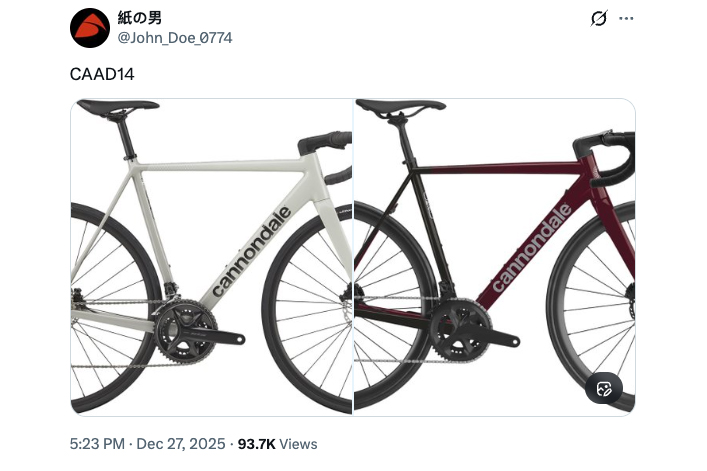
According to the leaked images, which were posted on X.com by user @John_Doe_0774, the bike will return to its classic silhouette, without dropped seatstays and a horizontal top tube.

The frame also looks set to adopt a UDH rear dropout, which would make it compatible with SRAM’s latest direct-mount rear derailleurs.

Beyond that, the CAAD14 looks set to retain a round (likely 27.2mm) seatpost, and to adopt fully internal cable routing, using the same handlebar and stem systems specced on the carbon SuperSix Evo range.

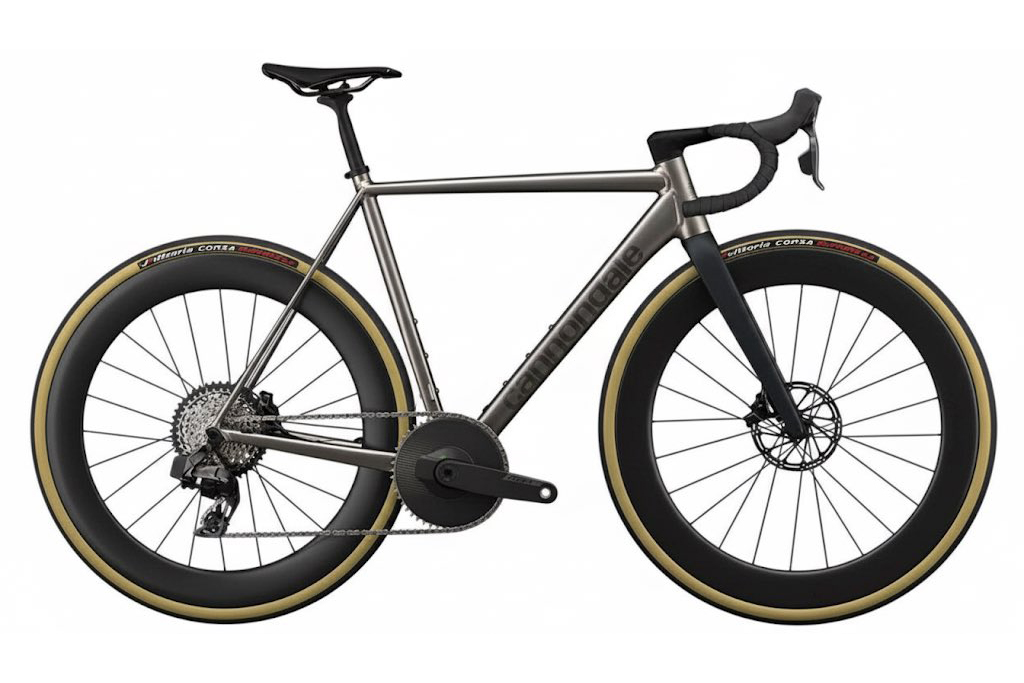
A potential higher-end build, which rumours on Reddit suggest will be a limited-edition model costing $7,499, could also see the fully integrated carbon handlebar specced alongside carbon aero wheels and a 1x SRAM Force AXS groupset.

Leaked image of Cannondale CAAD 14
Although it’s well detailed, this image appears to be a render, not a photograph – the tyre branding, for example, isn’t the right size and has a whiff of ‘AI’ about it. @John_Doe_0774 / X.com

It’s worth acknowledging, though, that the leaked image appears to be a digital render rather than a photograph of a real bike – so take this one with a big pinch of salt.

We certainly hope this bike, or something like it, makes the final production range, though, because the frame’s brushed aluminium finish pairs beautifully with the smattering of carbon parts and tanwall tyres.

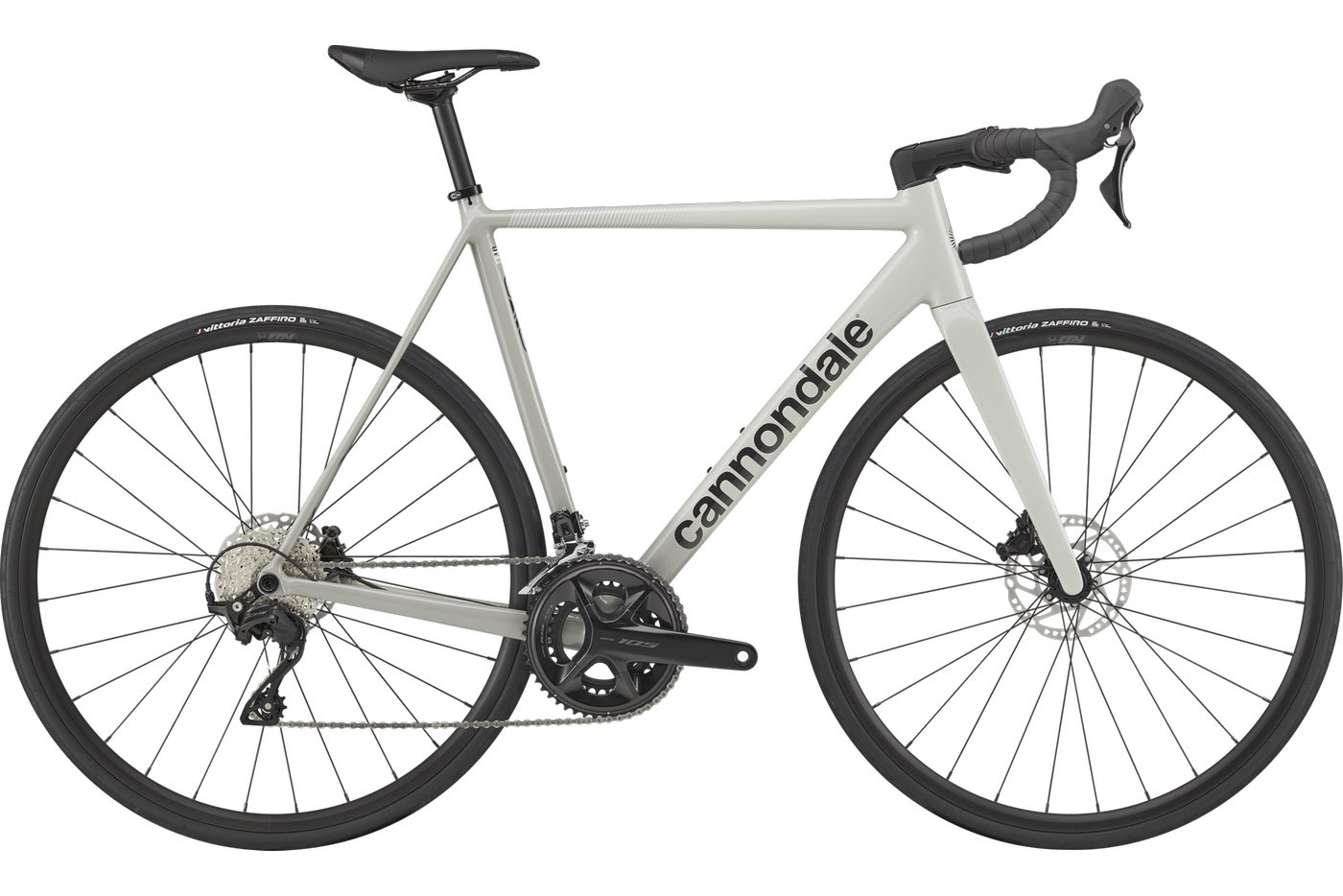
We can be more certain there will be a cheaper build with a Shimano 105 R7100 mechanical groupset and aluminium finishing kit because the image we have of that bike (see above) looks to be a studio photograph.

If the picture is right, this build will feature a gray and white paintjob, while the rumours on Reddit suggest it will cost $2,499.

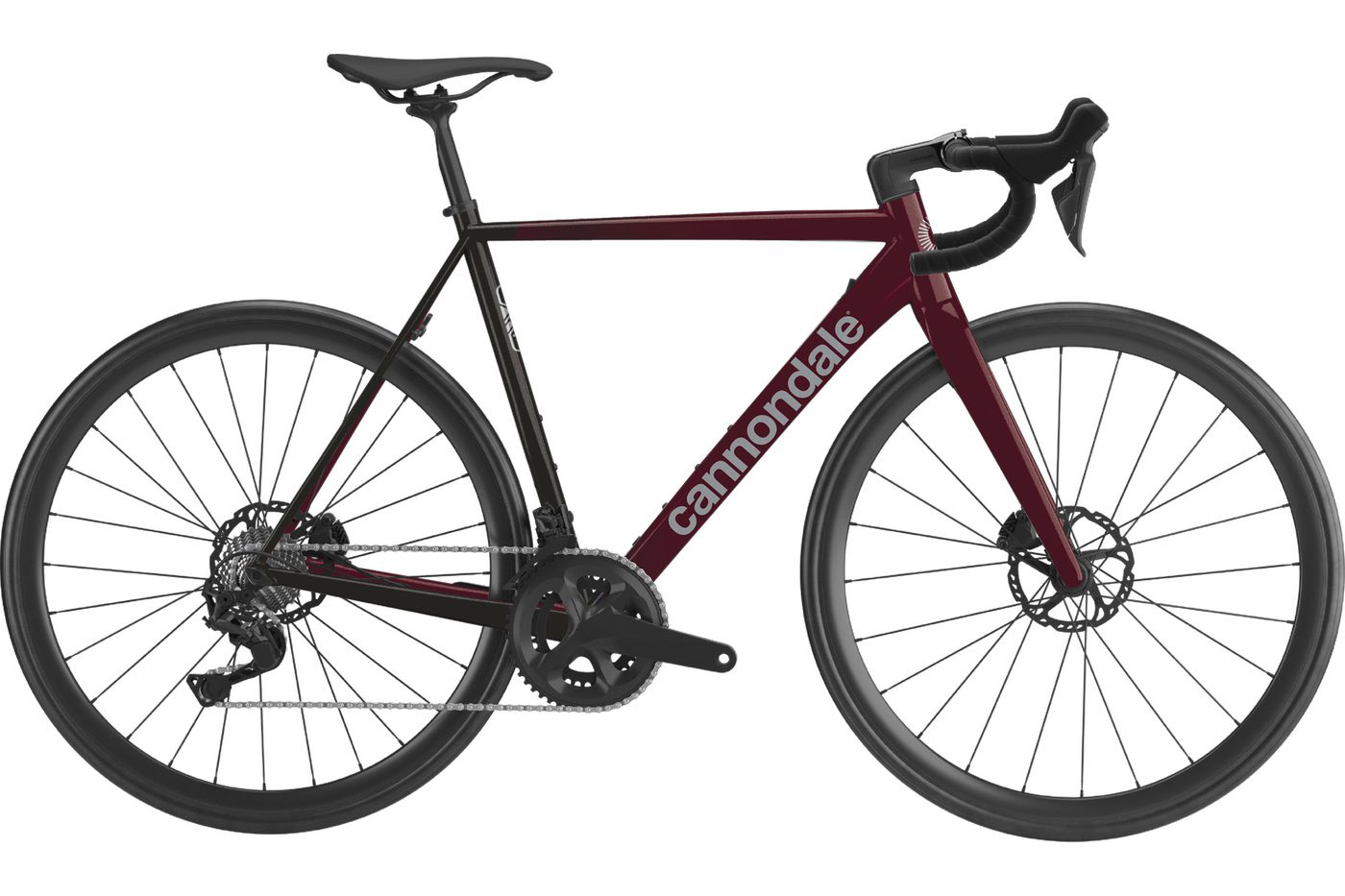
Leaked image of Cannondale CAAD 14
This image is a render rather than a photograph, but it could have been made solely for illustrative purposes. @John_Doe_0774 / X.com

A second image showing a black and red paintjob looks to be another digital render, so we’re less convinced by that one.

There’s also mention on Reddit of a frameset-only option, as well as a mid-range build with a SRAM Rival AXS groupset, the latter of which is claimed to cost $3,999. We don’t have any images of these to confirm the details, though.

Leaked geometry

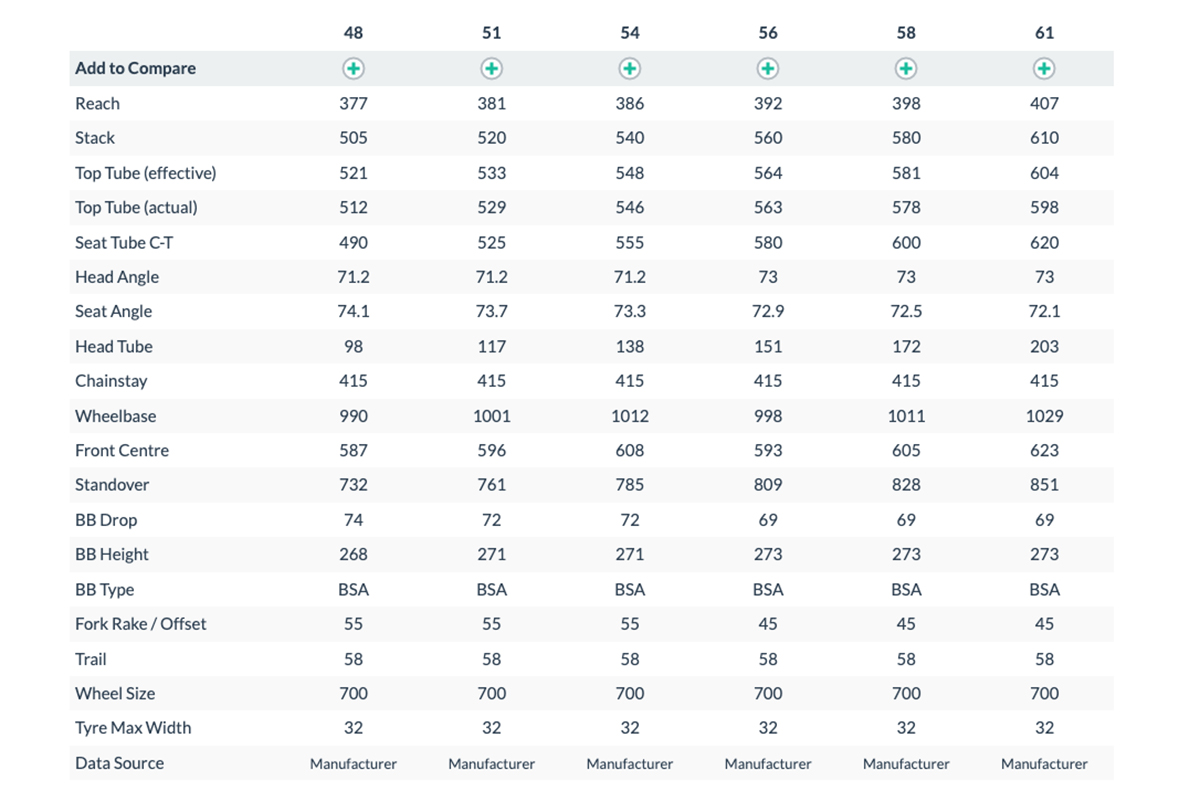
Leaked Cannondale CAAD14 2026 geometry table
These could be the geometry numbers behind the new CAAD14. GeometryGeeks.bike

Unusually for a bike leak, we also have details of what could be the bike’s geometry.

An entry for ‘Cannondale CAAD 14 2026’ has appeared on the geometrygeeks.bike database, and lists the in-depth geometry details for a full size range.

If the data is to be believed (and it’s worth reiterating that this information is also unverified), then it appears the CAAD14 range will feature six sizes, from 48 through to 61.

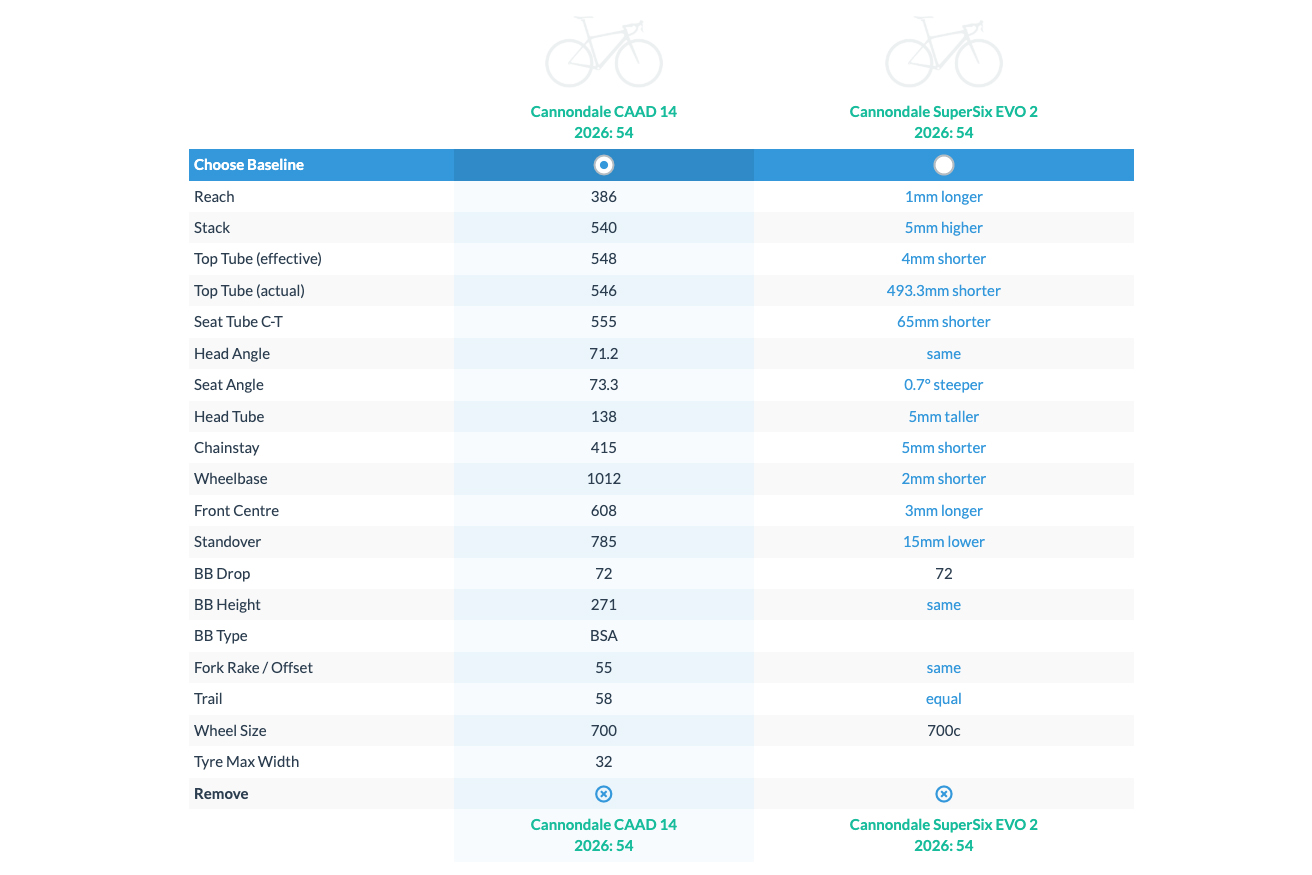
Handily, geometrygeeks.bike enables us to compare how the numbers from two bikes stack up against each other, so we thought it would be interesting to compare a size 54 CAAD14 to a size 54 SuperSix Evo.

Notably, the two geometries are similar but not identical:

Leaked Cannondale CAAD14 2026 versus SuperSix EVO
The geometry is similar to the SuperSix Evo. GeometryGeeks.bike

Perhaps most importantly, though, the fork and head tube angles look to be shared across the two bikes. This should mean the handling characteristics are fairly consistent (assuming the data is accurate, of course).

A couple of other tidbits we can glean from the data on geoemtrygeeks.bike and Reddit is the CAAD14 will use a BSA threaded bottom bracket and have clearance for up to 32mm-wide tyres.

Both characteristics are in keeping with what the current SuperSix Evo offers, so would seem likely features for a new CAAD.

When will the Cannondale CAAD 14 be released?

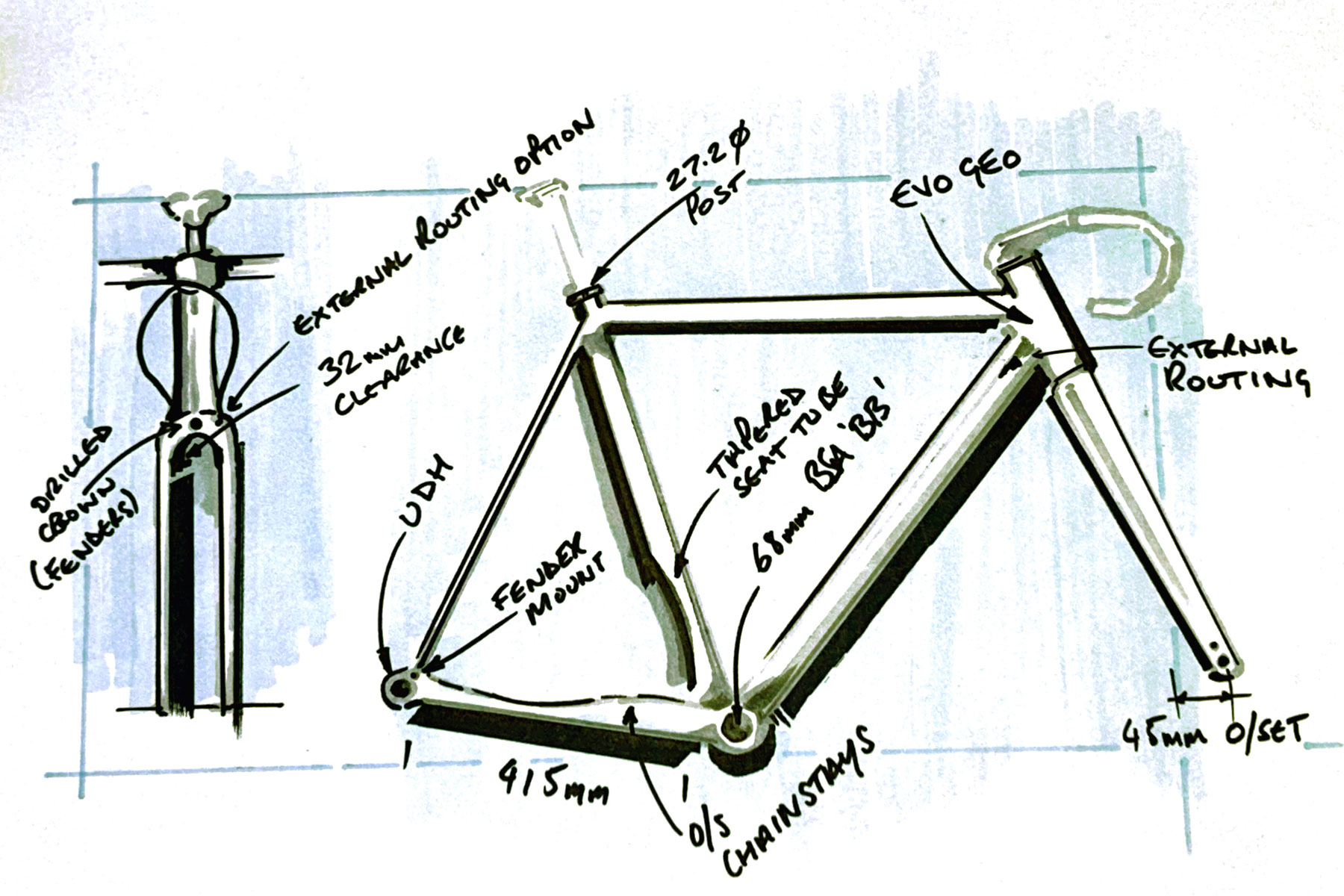
sketch of CAAD14 wishlist
Cannondale looks set to deliver on most of our wishlist for the CAAD14, but when might it launch? Warren Rossiter / Our Media

As we’ve mentioned, it’s worth taking these leaks and rumours with a heavy pinch of salt because we’ve not been able to confirm any of these details with Cannondale at the time of writing.

Nevertheless, the post on Reddit suggests the launch is set for “March 2026”.

Based on the studio photograph of the 105-equipped model, it appears this bike is ready to go. 

Given this, we suspect an official launch is unlikely to be too far off, but these releases are always subject to change right up until the last minute.

Either way, it looks as though we’re going to have another high-quality aluminium road bike to add to the mix this year.

Birdbuddy’s new smart bird feeder can ID birds by their songs

I’m seeing a ton of smart bird feeders again this year at CES — and I’m inexplicably drawn to them. Perhaps because the idea of birds nibbling on seeds and flying away represents a natural purity and freedom that doesn’t exist within the halls of CES. Birdbuddy was one of the first smart bird feeder brands, with a wildly successful Kickstarter back in 2020. And this year, they’ve added birdsong to their species identification capabilities.

Two new feeders, the Birdbuddy 2 and the Birdbuddy 2 Mini both have the new feature, but the latter is a more affordable, starter version. The Bird Buddy 2 is solar-powered with built-in panels. It’s slightly larger and has a bigger seed capacity, too. Both have HD cameras you can manually position either vertically or horizontally and both have a mic to help with birdsong IDs.

Upgrades to the cameras include a faster wake-up time when a bird lands and the housing for the seed and camera has a more modular design that makes the feeder easier to clean. The lens is now protected by Gorilla Glass, which may seem excessive, but Rhian Humphries, Birdbuddy’s senior PR manager, said curious birds often peck at the camera looking for more food.

The AI Birdbuddy uses was trained on real bird visits and at the end of each day, you’ll get a “postcard,” a curated look at the birds that visited your feeder that day. Of course, the app can also alert you each time you have a feathered customer in your yard so you can tune into nature’s live feed and soothe your soul for a few.

The Birdbuddy 2 goes for $199. It sold out during the pre-order phase, and those units will ship in February, but more will be available in mid 2026. The Birdbuddy 2 Mini costs $129 with pre-orders opening in summer.

This article originally appeared on Engadget at https://www.engadget.com/home/smart-home/birdbuddys-new-smart-bird-feeder-can-id-birds-by-their-songs-122000692.html?src=rss

Private equity deal shows just how far America’s legacy rocket industry has fallen

If you are a student of space history or tracked the space industry before billionaires and venture capital changed it forever, you probably know the name Rocketdyne.

A half-century ago, Rocketdyne manufactured almost all of the large liquid-fueled rocket engines in the United States. The Saturn V rocket that boosted astronauts toward the Moon relied on powerful engines developed by Rocketdyne, as did the Space Shuttle, the Atlas, Thor, and Delta rockets, and the US military’s earliest ballistic missiles.

Rocketdyne’s dominance began to erode after the end of the Cold War. The company started in 1955 as a division of North American Aviation, then became part of Rockwell International until Boeing acquired Rockwell’s aerospace division in 1996. Rocketdyne continually designed and tested large new rocket engines from the 1950s through the 1980s. Since then, Rocketdyne has developed and qualified just one large engine design from scratch—the RS-68—and it retired from service in 2024.

Read full article

Comments

After Ditching Meta Headset Plans, Asus Partners with XREAL on ROG AR Glasses with 240Hz Display

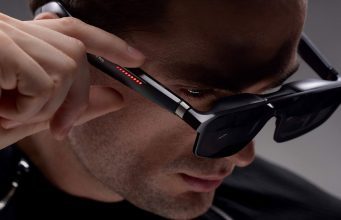
While the long-awaited Quest-style VR headset from Asus has been put on ice, the Taiwanese tech giant announced it has now partnered with XREAL on a pair of AR glasses for traditional gaming, which boast an impressive 240Hz refresh rate.

The News

In 2024, Asus and Lenovo announced they were creating Quest-style VR headsets running Horizon OS—the first third-party devices to do so. However last month, we learned that deal has been indefinitely “paused”.

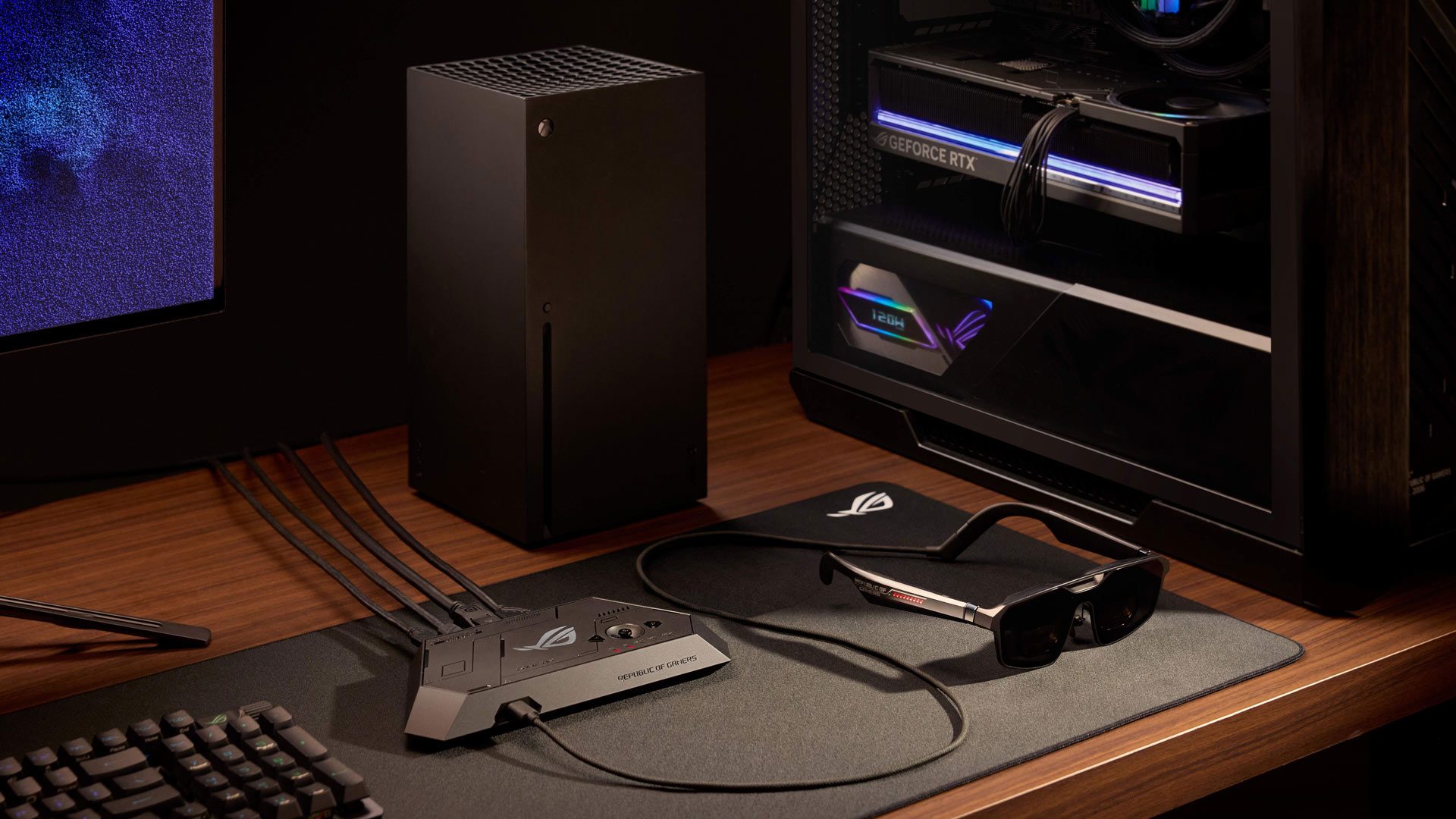
At CES 2026 this week, Asus Republic of Gamers (ROG) announced it’s partnering with XREAL to release a pair of “gaming glasses” that feature dual 1,920 x 1,080 240Hz microOLED displays: ROG XREAL R1.

Similar to XREAL One Pro, the glasses are slated to offer a 57° field of view via its birdbath optics, 3DOF tracking, electrochromic tinting, and Sound by Bose audio.

ROG XREAL R1 is also shipping with an external ‘ROG Control Dock’ that extends connectivity to PCs and consoles with the addition of one DisplayPort 1.4 port and two HDMI 2.0 ports. Notably, it can also connect directly to supported USB-C devices, such as ROG Ally.

Image courtesy Asus ROG

Like XREAL One Pro, Asus says ROG XREAL R1 serves up the equivalent of a 171-inch virtual screen at 4 meters, substantively making its 240Hz refresh microOLEDs the major outlying difference between the two; XREAL One Pro ($650) only features 120Hz refresh.

Asus hasn’t mentioned pricing or release date yet, however ROG XREAL R1 is expected to ship globally in the first half of 2026.

Check out the spec sheet below:

ROG XREAL R1 Specs

Display
Sony 0.55-inch micro-OLED
Resolution 1,920 x 1,080
Refresh rate 240Hz
Field of view (FOV) 57°
Motion-to-photon latency 2ms
Peak brightness 700 nits
Color gamut 107% sRGB
3 Degrees of Freedom (DoF)
Native 3DoF, 6DoF supported
Adjustable lens transparency
3-level adjustable
Digital IPD adjustment Yes
Audio Sound by Bose
Weight 91g

ROG Control Dock Specs

I/O ports (Input)
2 x HDMI® 2.0
1 x DisplayPort™ 1.4
I/O port (Output) 1 x USB-C®
Video resolution 4K@60Hz
Dimensions
215 x 100 x 25mm
Weight 230g

My Take

When Asus and Lenovo announced last year they were working with Meta to create their own XR headsets running Horizon OS, the game plan was pretty clear: ROG would appeal to enthusiast VR gamers while Lenovo would hone in on productivity, and maybe even enterprise.

And I’ll admit, I didn’t really know what that meant at the time. Neither company had the leeway to meaningfully change the underlying Quest 3 hardware without fracturing the Horizon OS ecosystem, which is mostly now geared to content made specifically for Quest 3 and 3S, both of which run the Qualcomm Snapdragon XR2 Gen 2.

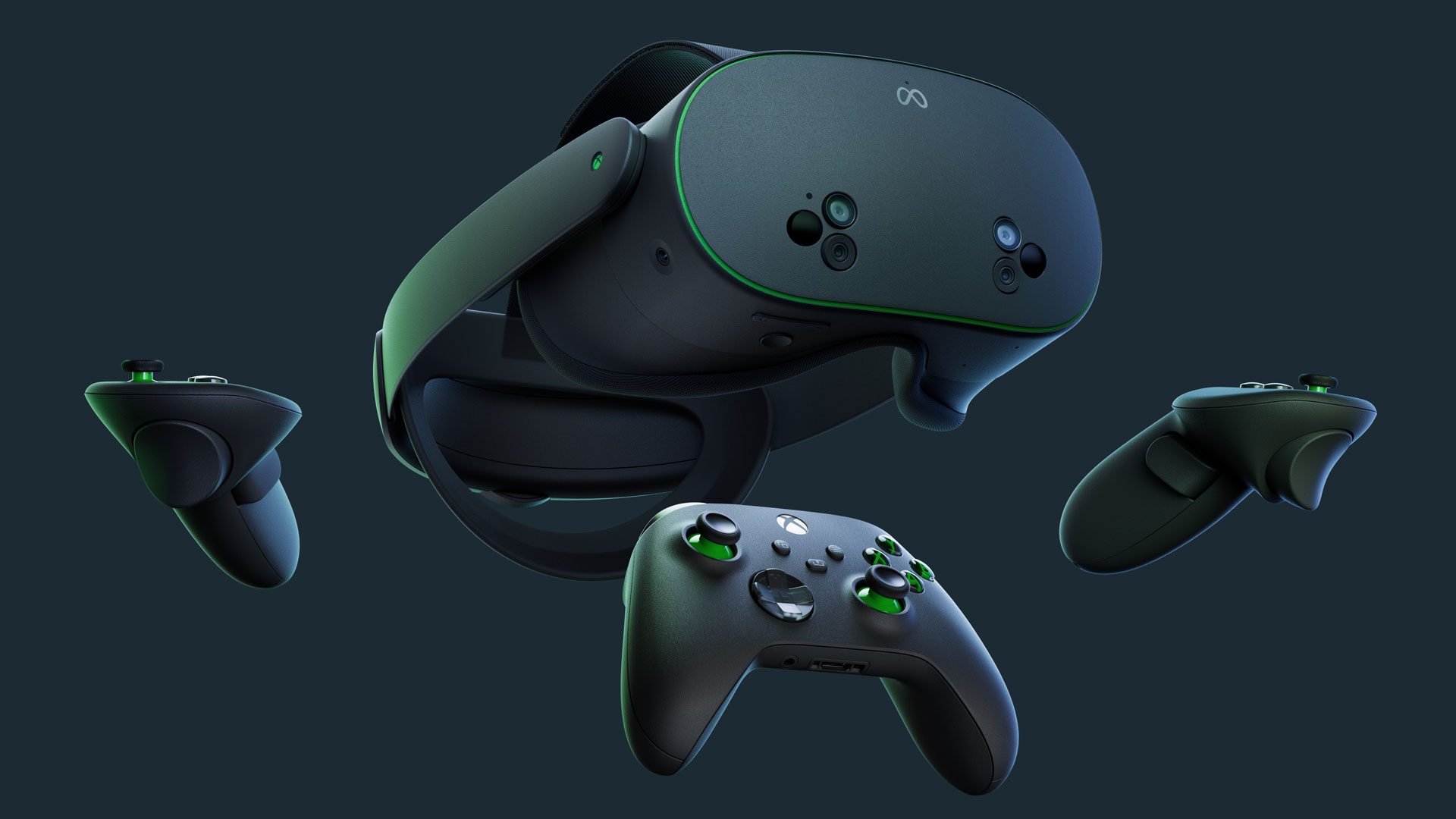
Quest 3S Xbox Edition | Image courtesy Meta, Microsoft

Light speculation: this essentially left Asus hamstrung. The company may have been faced with creating little more than an expensive, flashier Quest 3 running the same chipset—with maybe even the same resolution displays, and little else. Whatever the case, it was always going to be difficult to compete against Meta’s own subsidized first-party headsets without having a clear path towards differentiation.

Asus and Lenovo exiting the partnership may have come down to a shift in the overall competitive landscape. In 2024, getting third-party manufacturers in the mix was supposed to be Meta’s new ethos as the ‘open’ XR alternative—a foil to Vision OS, which, in Apple style, is a monolithic platform that will never be open to anyone but the Cupertino tech giant itself.

That ‘open’ ethos seems to be more of Google’s game with Android XR though—its opening salvo being the recently released Samsung Galaxy XR. I’d expect more Android XR-running headsets to come eventually too.

Meanwhile, Meta seems to be shifting the bulk of Reality Labs’ focus to developing AR and smart glasses, which feels especially relevant since ROG has decided to back long-time AR glasses maker XREAL instead of, say, announcing it was creating an Android XR headset in the vein of Quest.

The post After Ditching Meta Headset Plans, Asus Partners with XREAL on ROG AR Glasses with 240Hz Display appeared first on Road to VR.

Meta has delayed the international rollout of its display glasses

Meta is pausing release of its Ray-Ban Display smart glasses to the UK, France, Italy and Canada due to “unprecedented demand and limited inventory,” the company said on Monday at CES 2026. There’s no new date for the expansion that was originally set for early 2026. “We’ll continue to focus on fulfilling orders in the US while we re-evaluate our approach to international availability,” Meta wrote on its blog.

Since Meta’s display glasses first went on sale, acquiring them has been a challenge. They’re not available online and can only be found in a limited number of retail outlets including select Ray-Ban, Sunglass Hut, LensCrafters and Best Buy locations in the United States. To buy them, you need to book an appointment for a demo at one those stores via Meta’s website. Ahead of launch, Meta said it saw “strong” demand for demos with locations booked ahead for several weeks. 

There was optimism that availability would increase as the company expected buying options to “expand” the longer they were on sale. However, with the delay of the planned international launch, it appears that the company still has a mismatch between supply and demand. 

Meta’s $799 Ray-Ban Display glasses are its first to incorporate a heads-up display and are also equipped with a camera, stereo speakers, six microphones, WiFi 6 and a finger tracking Neural Band controller. In her review, Engadget’s senior reporter Karissa Bell noted that the Ray-Ban display “enables wearers to do much more than what’s currently possible with [other] Ray-Ban or Oakley models” — provided you don’t mind the look of the chunky, chunky frames. 

This article originally appeared on Engadget at https://www.engadget.com/social-media/meta-has-delayed-the-international-rollout-of-its-display-glasses-120056833.html?src=rss

Meta’s EMG wristband is moving beyond its AR glasses

Meta has been experimenting with EMG technology for years. In 2025, the company commercialized it for the first time in its Meta Ray-Ban Display glasses, which users control via a dedicated neural band that is able to interpret subtle muscle movements in the wrist.

Now, at CES 2026, the company is offering its first look at how its neural band could be used to control devices outside of its smart glasses lineup. Meta has teamed up with Garmin, as well as a handful of research partners, to explore some intriguing use cases for its wrist-based controller.

The social media company has previously worked with Garmin on fitness integrations for its glasses. But at CES, the companies were showing off a very early demo of how Meta’s neural band inside of a car to control the built-in infotainment system. 

The experience is part of Garmin’s “Unified Cabin” concept, which explores a bunch of AI-centric in-car experiences. The demo I tried was fairly limited: while wearing a neural band, I was able to navigate two apps on a touchscreen display in Garmin’s cockpit setup. In one, I used pinch and swipe gestures to manipulate an onscreen model of a car, much like how I would use the band to zoom in and out of an image while wearing the display glasses. The second demo, somewhat bizarrely, was a game of 2048. I used the same swipe gestures to move the tiles around. 

Neither of those are the kinds of experiences you immediately think of when you imagine “in-car entertainment,” but Garmin, which works with a number of major car brands on infotainment systems, seems to be thinking about some more practical use cases too. The company told me that it will explore using the neural band to control vehicle functions like rolling down windows or unlocking doors. 

Elsewhere, Meta also announced a research collaboration with the University of Utah that will explore how its EMG tech can be used to help people who have ALS, muscular dystrophy and other conditions that affect the use of their hands.

Researchers will work with Meta to test gestures that could enable people to control smart speakers, blinds, thermostats, locks and other household devices using the neural band.  “Meta Neural Band is sensitive enough to detect subtle muscle activity in the wrist — even for people who can’t move their hands,” the company explains in a blog post. Researchers will also look at using the band for mobility use cases, like the University of Utah’s TetraSki program, which currently uses a joystick or mouth-based controller to help participants ski.

This article originally appeared on Engadget at https://www.engadget.com/wearables/metas-emg-wristband-is-moving-beyond-its-ar-glasses-120000503.html?src=rss