We may earn a commission from links on this page. Deal pricing and availability subject to change after time of publication.
Tools can be a serious investment—so if you’re looking to up your DIY game in 2026, a tool bundle is often a good solution. Because they come with batteries and chargers, they’re a great way to get everything you need to use a new tool set right away, and they can be more economical than buying each tool individually. Milwaukee tool sets are often more than $1,000, but you can get a few of these bundles for under $700 right now at Home Depot.
Why I recommend Milwaukee tools
I’ve been using Milwaukee cordless tools for over a decade on a variety of professional and personal projects, including projects around the house as well as large scale decking installations. These tools tend to be reliable and the batteries routinely last more than ten years, even working on outdoor projects, exposed to rain and dirt. Durability is a big consideration when I buy tools; the longer they last, the more economical they are. Because all of the current tools are backwards-compatible with all of the 18-volt batteries I have, it’s easy to add tools to my set as new ones come out that I want to try, and as my needs expand.
Milwaukee tool bundles on sale
The Milwaukee 18-volt, nine-tool combo kit is on sale for $649, 46% off its regular price. It comes with a drill, a ¼-inch impact driver, a ½-inch impact wrench, a 6 ½-inch circular saw, a one-hand reciprocating saw, an angle grinder, an oscillating multitool, a mini blower, a work light, two 5-amp-hour batteries, a charger, and tool bag. This is a good set for larger projects, and it has many of the tools included that I used for building a large outdoor deck. Two larger capacity batteries is a good place to start, although if you plan on using multiple saw simultaneously, you’ll need to add another battery or two to keep a fresh battery ready on the charger.
The Milwaukee 18-volt five-tool combo kit is on sale for $299, 50% off its regular price. This set includes a drill, a ¼-inch impact driver, a 6 ½-inch circular saw, a one-hand reciprocating saw, a work light, a five-amp-hour battery, a 1.5-amp-hour battery, a charger, and a tool bag. This set has everything you need to get started doing DIY projects, and it includes all the basic Milwaukee tools I use day-to-day for woodworking and smaller building projects like building shelves. This is a good starter set to build on, and it’s very similar to the one I began with more than a decade ago.
The Milwaukee 12-volt sub-compact drill and driver set is on sale for $199, 50% off its regular price. This set includes a 12-volt drill, an impact driver, a powered ratchet, two batteries, a charger, and a tool bag. While 12-volt batteries are often underpowered for larger projects, these smaller tools can be quite useful for projects like furniture assembly, putting up shelves, or doing appliance repair, as you often don’t need more than an hour or so of battery life to accomplish many of these tasks with your tools, and the smaller size makes them easier to fit into tight spaces.
Throne has rocked up to CES 2026 to show off its forthcoming toilet computer which uses computer vision to study your poop. It hangs from the side of the bowl and has a camera and microphone to track bowel motions and urination and offer feedback. It was co-founded by (activity tracker) Whoop co-founder John Capodilupo, who explained the hardware is designed to understand what your base state is to be able to identify when you fall out of that pattern.
Capodilupo explained the hardware will look at how often you go, the texture and size of your motions, as well as the volume. The eventual aim is to be able to analyze your gut health, adding that as a GLP-1 user, that sort of data is vital to manage the symptoms of those drugs. The battery lasts for a month on a single charge but you won’t be forced to drag it out of the bathroom to re-juice it. The device ships with a 13 foot long USB-C power cable which should stretch long enough from your nearest outlet to the toilet.
At this point, we can’t talk to its efficacy but will certainly be looking to test this thing when it arrives at some point in February. Pre-orders are open, and it can currently be picked up for $340, plus a $6 per month membership.
This article originally appeared on Engadget at https://www.engadget.com/home/smart-home/throne-from-the-co-founder-of-whoop-uses-computer-vision-to-study-your-poop-150000606.html?src=rss
Android Authority reports
that Google will be reducing the frequency of releases of code to the
Android Open Source Project to only twice per year.
A spokesperson for Google offered some additional context on this
decision, stating that it helps simplify development, eliminates
the complexity of managing multiple code branches, and allows them
to deliver more stable and secure code to Android platform
developers. The spokesperson also reiterated that Google’s
commitment to AOSP is unchanged and that this new release schedule
helps the company build a more robust and secure foundation for the
Android ecosystem.
The release schedule for security patches is unchanged.
Stranger Things has finally come to an end and left us with some big complicated feels about how it all went down. Both of us (Jennifer and Beth) are bona fide fans who have seen prior seasons multiple times, and we had remarkably similar reactions to the fifth season, especially the series finale. So we decided to co-write a review, discussing everything we liked about it as well as kvetching about the things we definitely didn’t like—a shared “airing of grievances.”
(WARNING: Many, many spoilers below in the interest of a thorough analysis.)
Season 4 ended with Vecna (Jamie Campbell Bower) opening the fourth gate that allowed the Upside Down to leak into Hawkins. We got an 18-month time jump for S5, Vol. 1, but in a way, we came full circle, since those events coincided with the third anniversary of Will’s (Noah Schnapp) original disappearance in S1.
CES 2026’s first official show day kept the pace up with a mix of near-term gaming upgrades, ambitious new form factors and a few reminders that not every gadget needs to do everything. NVIDIA announced important gaming news, we caught up with Samsung’s tri-fold phone and Lenovo marched out an army of impressive looking gaming laptops and concept tech. Here are the biggest stories from January 6.
NVIDIA
NVIDIA’s G-Sync Pulsar is the next evolution of its VRR technology.
NVIDIA
NVIDIA’s gaming updates focused on making motion look cleaner and boosting performance without forcing developers to rebuild everything from scratch.
The company introduced G-Sync Pulsar, a new display tech designed to reduce monitor-based motion blur by pulsing a screen’s backlight in sections rather than leaving it on continuously. NVIDIA says the approach gives pixels time to stabilize before they’re illuminated, which should make fast movement easier to track, particularly in esports.
The first Pulsar monitors are expected to come out starting January 7 from Acer, AOC, ASUS and MSI, all which are 27-inch 1440p IPS panels with a 360Hz refresh rate and up to 500 nits peak HDR brightness. Pulsar models also support Ambient Adaptive Technology for automatic color temperature and brightness adjustment based on room lighting.
On the software side, NVIDIA announced DLSS 4.5, which adds a second-generation Transformer-based Super Resolution model the company says improves temporal stability, reduces ghosting and improves anti-aliasing. DLSS 4.5 also introduces Dynamic Multi Frame Generation, intended to push performance toward your display’s refresh rate, with NVIDIA positioning it around high-end targets like 4K 240Hz path tracing. The 2nd Gen Super Resolution Transformer model is available now for RTX GPUs, while Dynamic 6x Frame Generation is expected in spring 2026 for RTX 50-series cards, with support rolling out across hundreds of games via the NVIDIA app.
Samsung
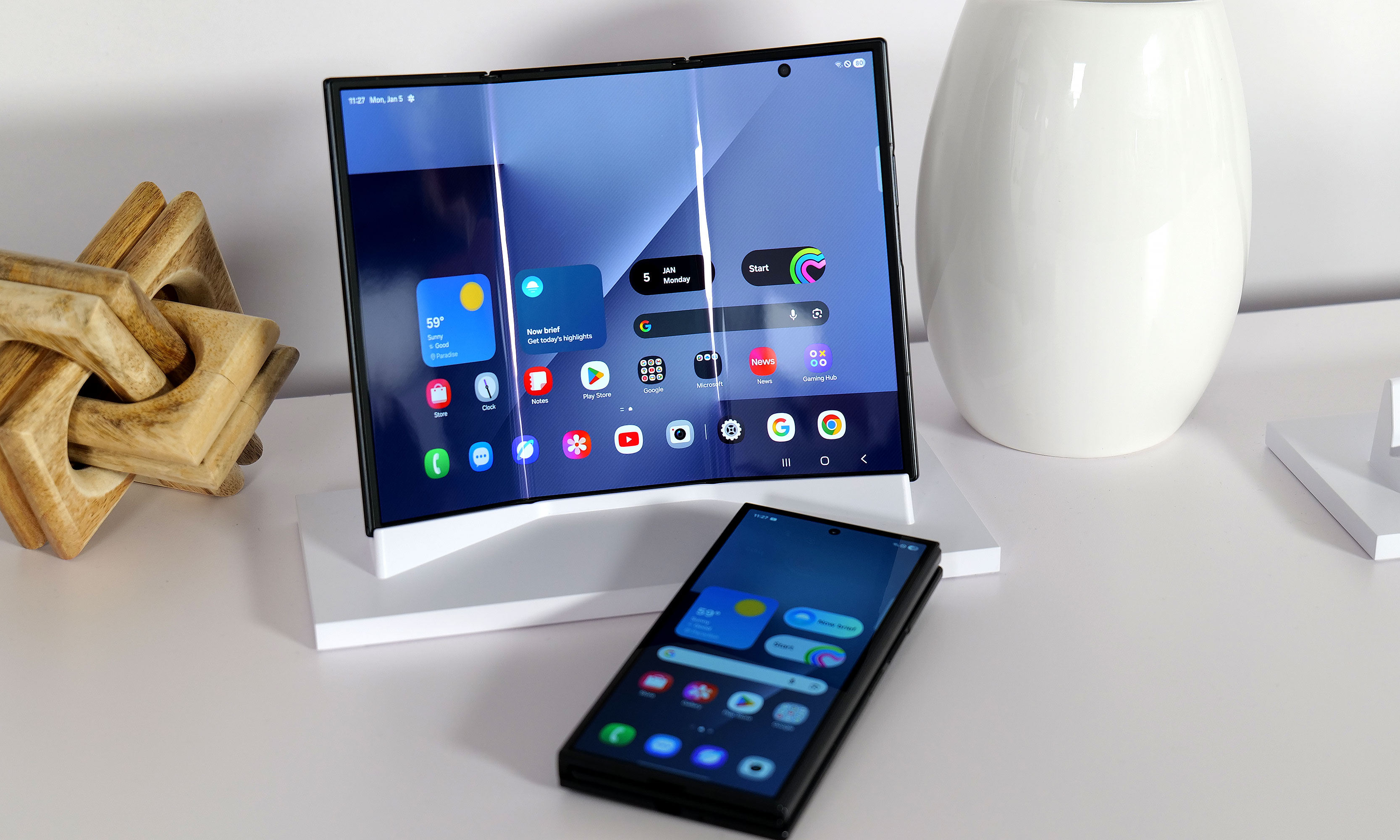
The Galaxy Z TriFold is the latest evolution in Samsung’s growing lineup of fancy foldable phones.
Sam Rutherford for Engadget
Samsung’s Galaxy Z TriFold was unveiled in Asia before the show, but this was our first opportunity to see the superphone in person. It looked, at first glance, like the kind of idea that comes with obvious compromises: more weight, more thickness and a bigger price tag. In person, the pitch becomes easier to understand.
The main draw is the 10-inch AMOLED display, which is a meaningful leap from the 8-inch inner screen on Samsung’s current book-style foldables. That extra real estate makes multitasking feel less cramped, and when paired with DeX, it starts to resemble a travel-friendly laptop alternative if you’re comfortable carrying a small keyboard and mouse. The TriFold’s 4:3 aspect ratio also helps for video and general productivity, with fewer awkward tradeoffs than the squarer inner screens Samsung has leaned on in recent generations.
Samsung appears to have put real effort into the mechanics, too. The device uses two hinges and a magnet system designed to make opening and closing feel intuitive, with built-in warnings if you try to unfold it the wrong way. The obvious downsides are still there, including the bulk and cost, and it’s not clear how much thinner future versions can get when the USB-C port is effectively the limiting factor. For now, the TriFold is on sale in South Korea, with US and broader North American availability and pricing still pending.
Lenovo
While it normally has a 16-inch display, the Lenovo Legion Pro Rollable concept’s screen can expand up to 23.8 inches across.
Sam Rutherford for Engadget
Lenovo arrived with a stack of concepts and a few more concrete products, making it clear that the company is still treating CES as its main playground for experimental form factors.
The most striking concept was the Legion Pro Rollable, a gaming laptop built around a flexible OLED panel that expands sideways from a standard 16-inch footprint to 21.5 inches or 23.8 inches, shifting aspect ratios from 16:10 to 21:9 or even 24:9. It’s the kind of idea that makes immediate sense for flight sims, racing games and open-world titles that benefit from ultrawide views, even if the mechanics felt a bit prototype-like up close.
Lenovo also showed the XD Rollable concept, which takes a more familiar rollable approach, expanding a 13.3-inch OLED screen to 16 inches at the push of a button. The twist is that the “extra” display wraps around the back of the lid to create a world-facing surface for mirrored content or a secondary view. It’s a clever way to avoid hiding unused panel real estate, even if the practical use cases still feel limited (maybe point-of-sale terminals?).
On the handheld front, Lenovo confirmed the Legion Go 2, which will be powered by SteamOS and will arrive in June starting at $1,199. It keeps the same core hardware, including an 8.8-inch OLED 144Hz VRR display, detachable controllers, a kickstand and two configuration tiers based on Ryzen Z2 chips. The big change is swapping SteamOS in place of Windows, which should appeal to anyone who wants a more console-like experience, even if it remains a large device at 2.2 pounds.
For laptops headed to market, Lenovo introduced the ThinkBook Plus Gen 7 Auto Twist, a notebook with a motorized display that can follow you during calls and presentations using a 10MP webcam and onboard AI. It also supports Intel Core Ultra Series 3 processors, up to 32GB RAM and 2TB storage, plus a strong port selection, and Lenovo says it starts at $1,649 with availability planned for June.
Finally, Lenovo teased an AI smart glasses concept that looks more like normal eyewear than most show-floor prototypes. Lenovo says the glasses are designed for live translation, image recognition and notification summaries, with an eight-hour battery claim. As with many Lenovo concepts, there’s no firm timeline for a retail release.
Pebble
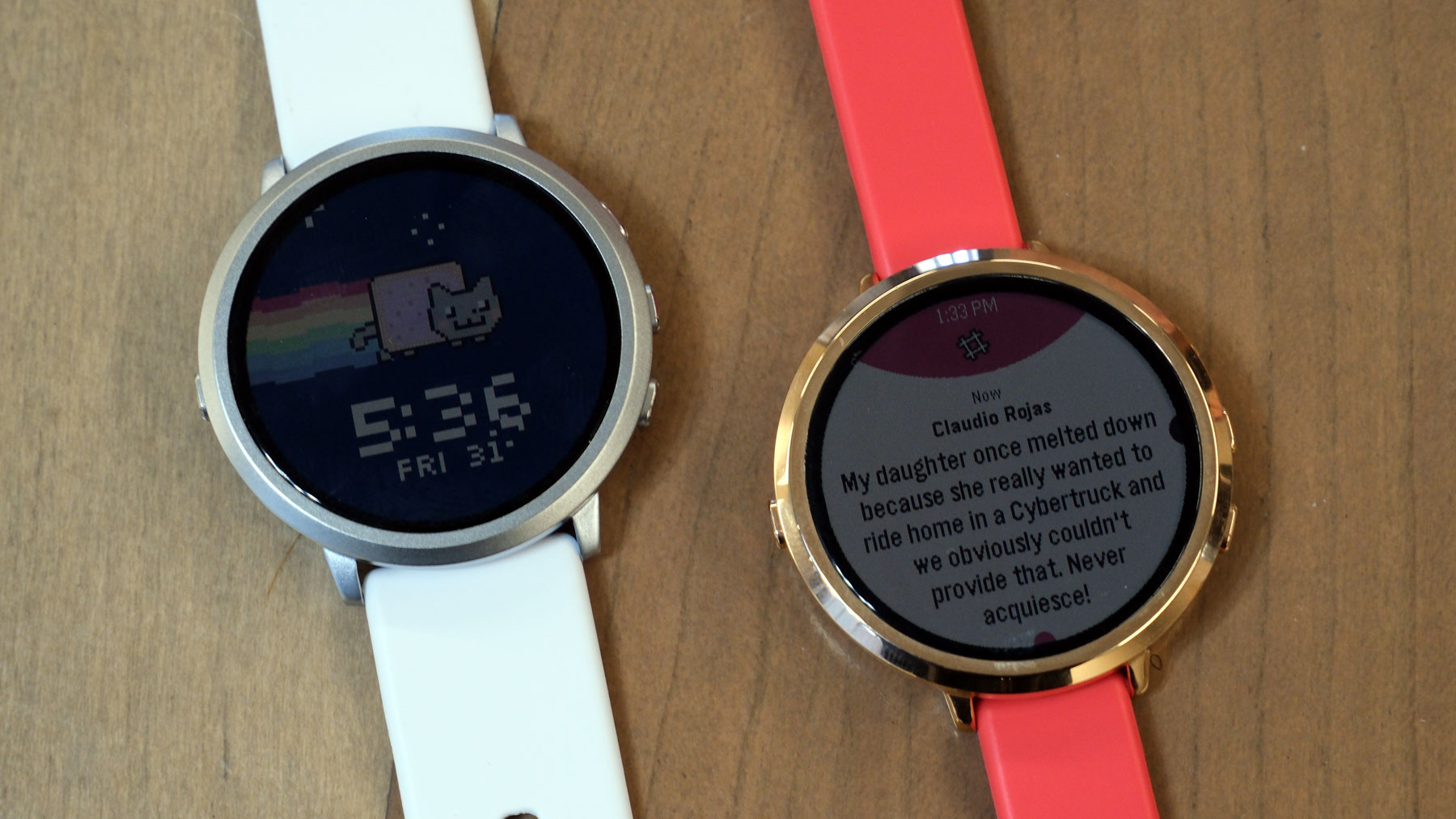
The Pebble Round 2 reboots a smartwatch classic.
Daniel Cooper for Engadget
Pebble’s presence at CES this year felt like a counterpoint to the “more features, more sensors, more subscriptions” direction of other wearables.
The Pebble Round 2 aims to revive the brand’s original appeal: a lightweight watch that supplements your phone rather than trying to replace it. The new model uses a 1.3-inch color e-paper touchscreen that runs to the edge of the case, with Pebble claiming two weeks of battery life in the 8.1mm-thick watch. It also makes deliberate tradeoffs, skipping GPS, a speaker and an optical heart rate sensor to keep the device thin and focused.
Then there’s the Pebble Index 01, a simple AI ring built around a physical button you press to activate voice commands that you can use to ask questions, set reminders and the like. The pitch is reducing friction: no wake words, no gestures you have to get right every time. Pebble says the ring is water resistant and not rechargeable, instead using a sealed battery designed to last years depending on usage, with replacement handled when the battery is nearing the end of its life. It’s available for pre-order at an early bird price of $75, with shipping planned for May.
Segway
Segway expanded its presence well beyond scooters with two very different pitches: smarter yard care and more tech-forward e-bikes.
Under its Navimow brand, Segway introduced a new lineup of robotic lawn mowers spanning multiple tiers, including the X4 Series for large yards up to 1.5 acres with AWD and dual cutting motors, plus the more mainstream i2 Series with AWD and LiDAR options. Segway says pre-orders for the i2 AWD and X4 models begin January 16, with pricing ranging from around $1,000 to $3,000 depending on configuration.
On the mobility side, Segway announced two new e-bikes, the Myon and Muxi, along with an electric dirt bike called the Xaber 300. The headline is the company’s focus on sensor-driven ride smoothing, smart features like Find My integration and app-based controls, and tech meant to make starts, hills and traction feel more predictable. The Myon is available now for $2,000, while the Muxi is expected in March for $1,700.
Meta
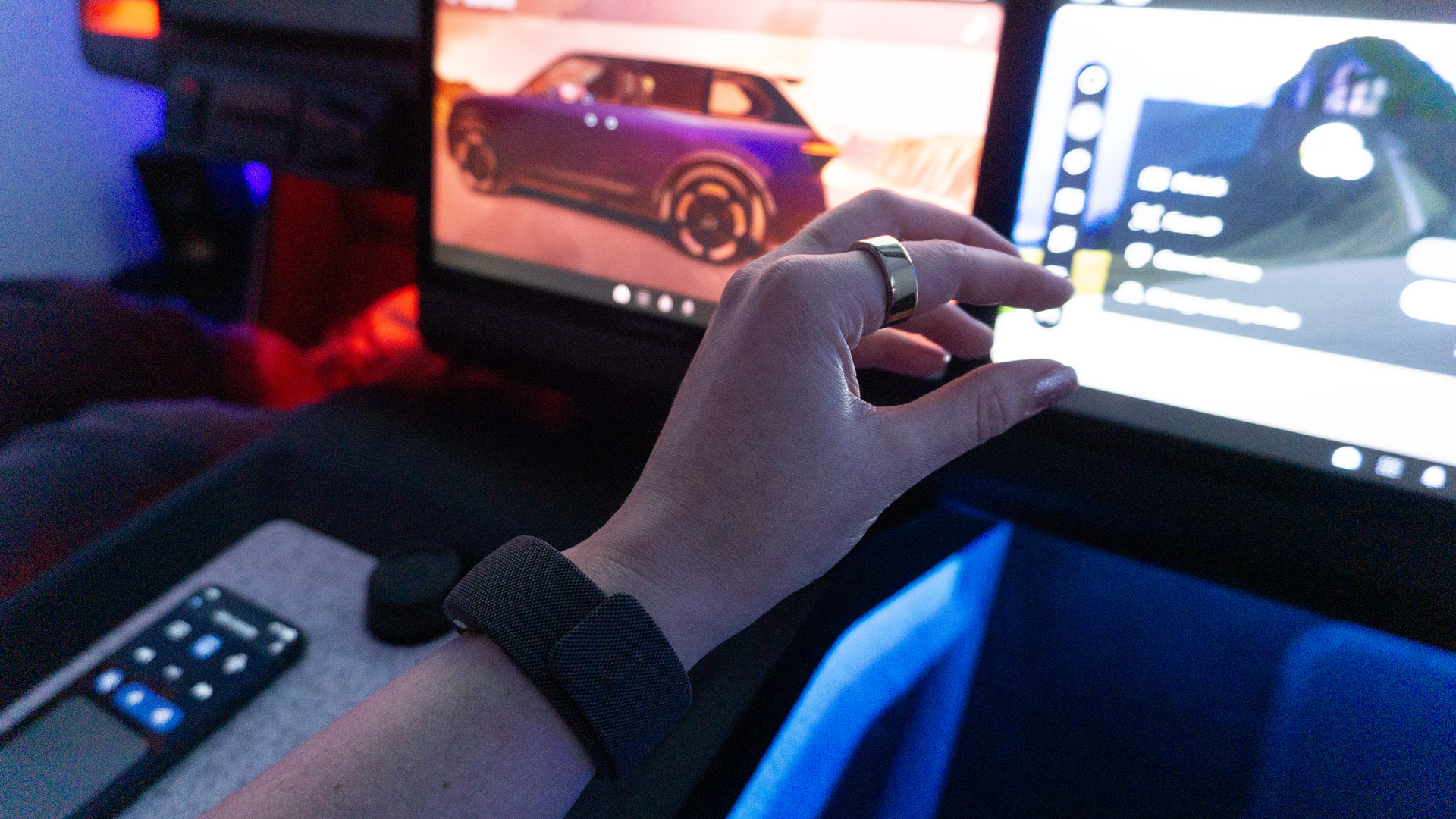
Meta’s neural band in Garmin’s Unified Cabin at CES 2026.
Karissa Bell for Engadget
Meta’s EMG wristband (that’s short for “electromyography,” the ability to recognize and translate small finger and wrist gestures) is starting to look like more than a companion accessory for smart glasses. Meta showed how its wrist-based neural controller could be used beyond its own eyewear, including an early demo with Garmin inside a concept car cockpit. The interaction was still basic — swipe and pinch gestures to navigate apps on an infotainment screen — but the larger idea is hands-free control of vehicle functions over time.
Meta also highlighted research work exploring how EMG control could help people with conditions that limit hand mobility interact with smart home devices like speakers, blinds and thermostats. If day one of the show had a theme beyond AI, it was that companies are still willing to gamble on new shapes and inputs, and they can work as long as they feel practical and immediately useful.
Razer
Razer’s concept immersive gaming chair with light strips along the head cushions is pictured in front of a desk in a rocky outdoor environment between large puddles
Razer
Razer’s day-one news was split between a full-blown immersion concept and a more grounded chair refresh.
The company’s Project Madison concept is a gaming chair designed as a multisensory rig, combining reactive lighting, spatial audio and multi-zone haptics to match on-screen action. It’s not a product you can buy, but it’s a clear statement about where Razer thinks the “setup” category could go.
Razer also showed Project Motoko, a concept headset meant to blur the line between gaming gear and an AI wearable. It includes cameras for real-time object and text recognition and is designed to work with multiple AI assistants, with Razer positioning it as a platform that could eventually ship first as a developer kit and later as a retail product.
Birdbuddy
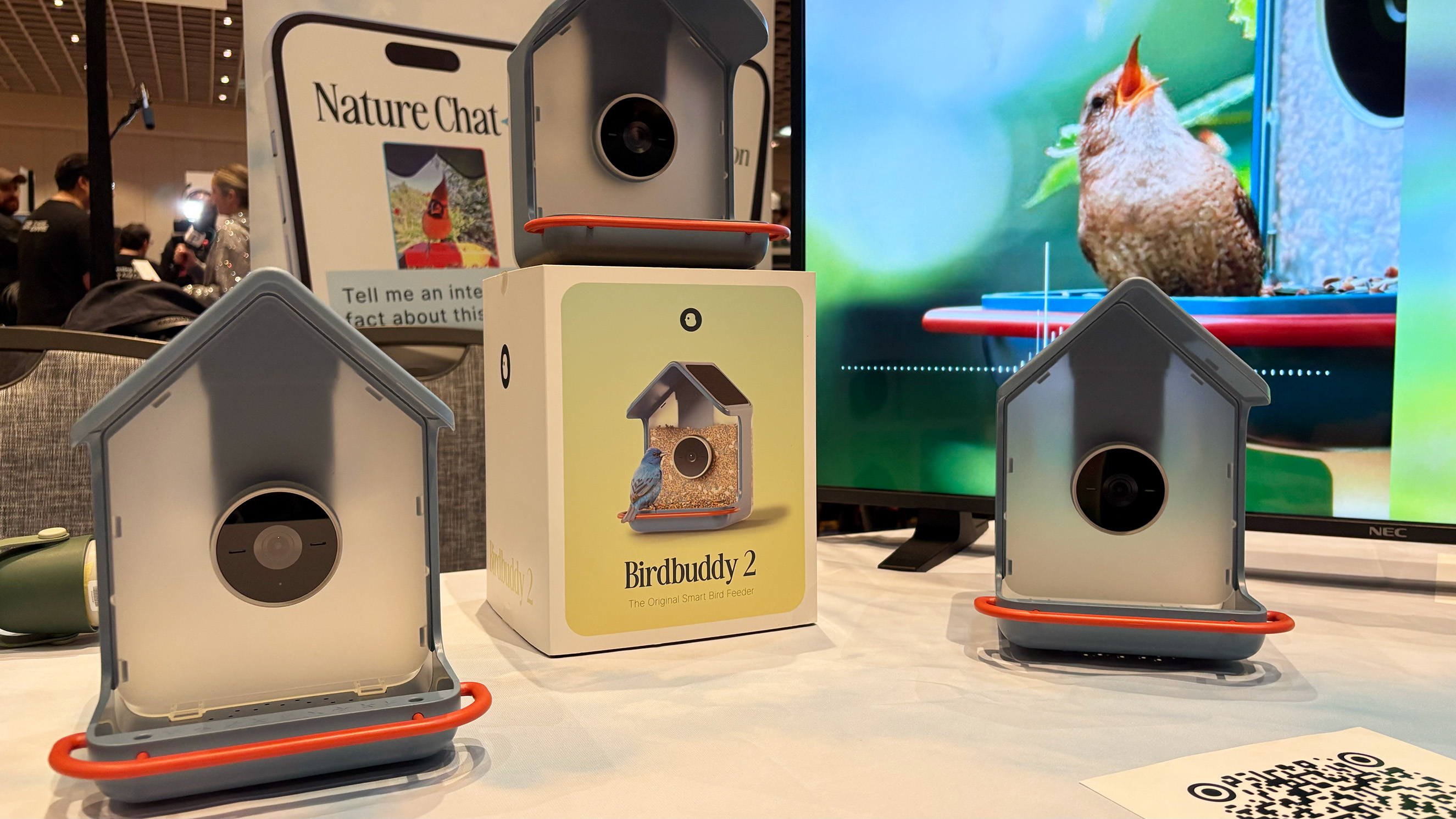
Two new Birdbuddy smart bird feeders displayed at CES.
Amy Skorheim for Engadget
Birdbuddy added a feature that makes its smart feeders feel closer to a true nature companion: birdsong identification. The Birdbuddy 2 and Birdbuddy 2 Mini both add microphones that help the system identify species by sound, alongside the usual camera-based detection. Birdbuddy also says the new models improve camera wake-up speed, use a more modular design for easier cleaning and protect the lens with Gorilla Glass since birds have a habit of pecking at it.
The Birdbuddy 2 is priced at $199 and is expected to ship pre-orders in February, with wider availability mid-2026, while the Birdbuddy 2 Mini costs $129 with pre-orders planned for summer.
Agibot
Humanoid robots are having another moment at CES this year, and Agibot’s demos leaned into movement, personality and practical service roles.
The company brought two robots, the larger A2 and smaller X2, both capable of walking around the floor, waving to attendees and dancing with surprising confidence. Agibot described the A2 as a potential hospitality helper for places like museums or conferences, while the X2 is framed more as an educational platform with slightly more human-like movement. Agibot also says its robots can learn actions from video, including training dance routines from TikTok clips, and the company plans to make its robots available in the US this year, though pricing and broader availability details weren’t shared.
Day one is in the books, but CES 2026 is far from over. With the show floor now fully open, expect more hands-ons, deeper dives and plenty of unexpected demos as the week continues, especially across laptops, wearables, mobility and smart home tech. We’ll be updating our CES coverage daily, with liveblogs, reviews and show-floor impressions throughout the week. You can follow along on Engadget for the latest news as it happens.
This article originally appeared on Engadget at https://www.engadget.com/big-tech/ces-2026-day-1-the-biggest-tech-news-and-gadgets-you-missed-from-the-first-official-day-of-the-show-144040174.html?src=rss
Polymarket is disputing that the mission to capture Nicolas Maduro constituted an invasion and said it will only settle a prediction contract if the US military takes control of Venezuelan territory. From a report: The decision by the prediction market has angered gamblers and added to the controversy surrounding a successful wager on the timing of Maduro’s capture that netted more than $400,000 in winnings for a mystery trader.
The dispute over the definition of “invade” highlights just one of the controversies faced by the mostly unregulated industry. Polymarket — which only recently gained regulatory approval to operate legally in the US — says on its website that it will resolve the “Will the US invade Venezuela by … ?” contract if the US “commences a military offensive intended to establish control over any portion of Venezuela” by one of three dates. “The resolution source for this market will be a consensus of credible sources,” it adds. Prediction platforms such as Polymarket do not typically make directional wagers in their own markets. Rather, they act as an intermediary matching long and short positions and adjudicating the outcome of events, collecting a fee in the process.
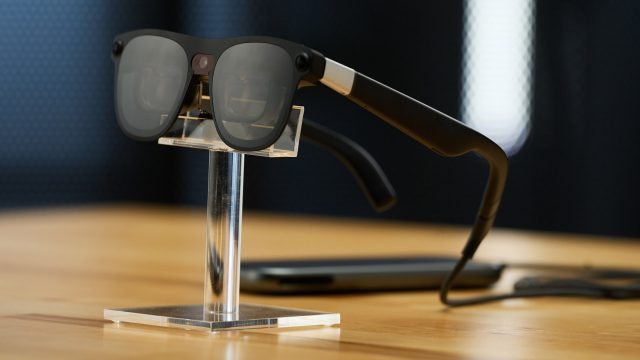
Google announced a multiyear extension to its partnership with AR glasses maker XREAL, positioning it as a lead hardware partner for the Android XR ecosystem.
The News
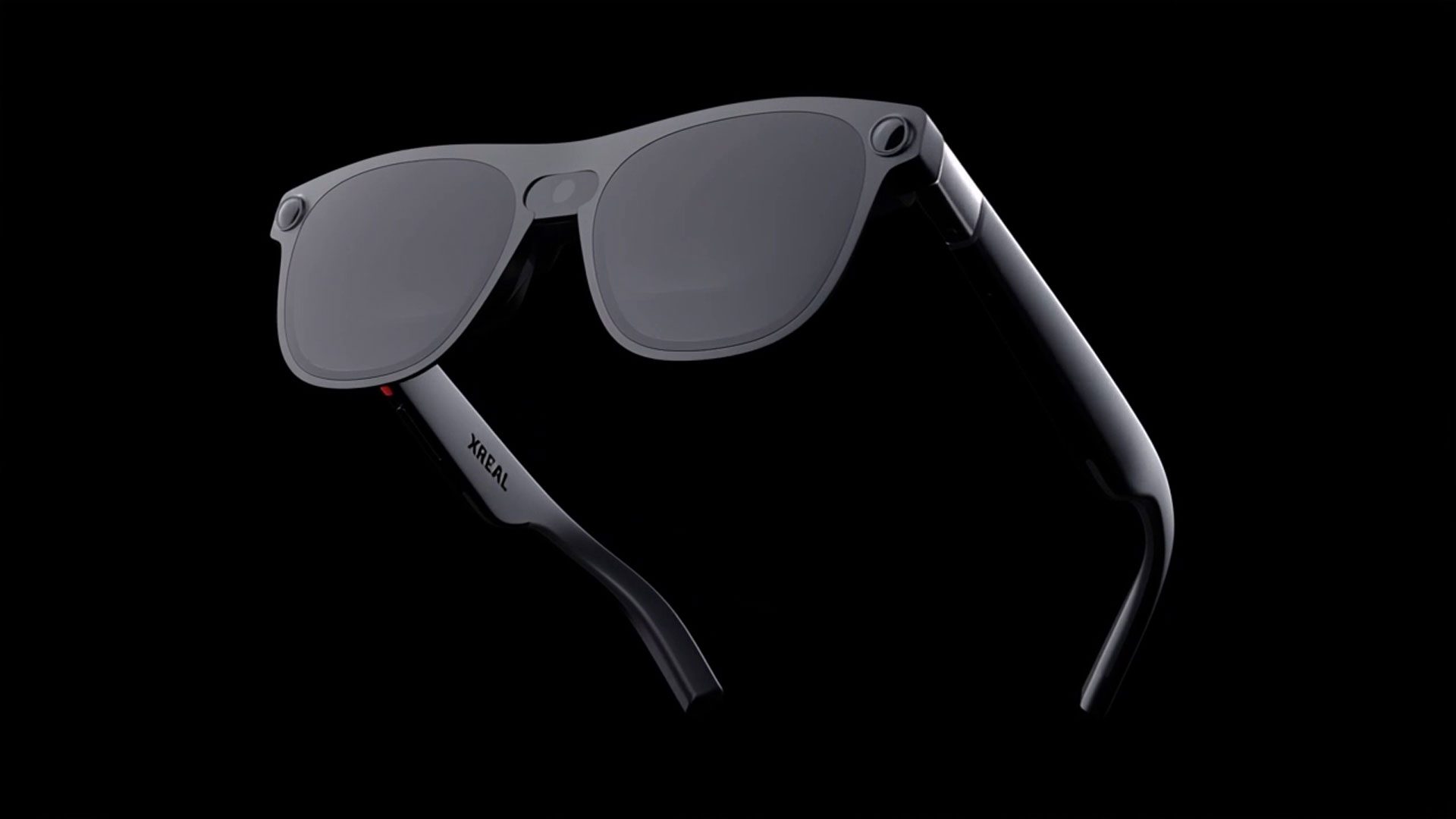
XREAL Project Aura is an Android XR-based pair of AR glasses which is due to ship sometime this year.
Combining a 70° field of view with an optical see-through display, the device is powered by an X1S chip in the glasses themselves and a Snapdragon XR2+ Gen 2 in the separate compute puck, enabling 6DoF tracking, hand and eye0tracking, and Google Gemini integration.
Ahead of its 2026 rollout, Google announced it’s strengthening its partnership with the Beijing, China-based XR glasses maker.
Image courtesy XREAL
The companies say in a press statement that the deepened collaboration “aligns XREAL’s long-term hardware roadmap with the Android XR platform,” noting that Google and XREAL will collaborate on bringing Android XR to optical-see-through devices, like wired XR glasses.
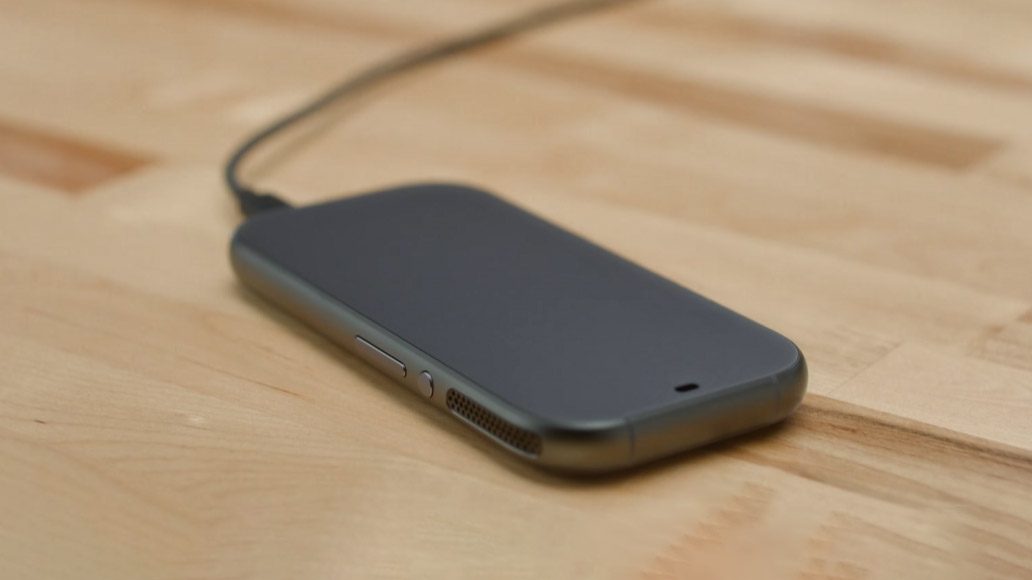
Notably, XREAL Aura is set to be the first pair of see-through AR glasses to run Android XR, which serves up an impressively compact form factor thanks to offloading a fair bit of weight to the external compute/battery puck, which can slip into your pocket.
Image courtesy Google
“Interestingly, the puck looks like the size and shape of a typical smartphone, but instead, the entire screen area is a giant trackpad which can be used for mouse-like input in addition to hand-tracking,” Road to VR’s Ben Lang says in a hand-on with the device.
We still don’t know when Project Aura will launch, however Google says we should learn more later this year.
Additionally, At CES 2026 this week, XREAL announced it was working with ASUS Republic of Gamers (ROG) on a pair of AR glasses for traditional gaming, which boast an impressive 240Hz refresh rate.
My Take
Google has been working on XR for years now; it has dedicated in-house hardware teams which have been bolstered by HTC’s XR engineering talent—acquired in early 2025.
That said, with the mounting pressure from competitors like Meta to own a large market share of the coming AR ecosystem, it’s more than a bit surprising to see that Google is leaning so heavily on an external partner for its initial push into consumer AR glasses.
Then again, you might say the same with its rollout of Samsung Galaxy XR in October 2025, the first VR headset to adopt Android XR. Still, standalone XR has a proven track record—Quest 3, Apple Vision Pro, Pico 4, etc—that, and Google/Samsung’s longstanding relationship makes things feel decidedly less experimental as a result.
More likely: Google still isn’t ready to swing its full weight into XR right now, as they seem happier to let hardware partners take the bulk of the risk in proving out the market. Once signs are clear that AR is big enough, Google may even launch their own first-party XR hardware—or maybe even acquire XREAL if things shake out the way they hope.
There are many good reasons to get a VPN (Virtual Private Network) app installed on your phone or laptop: They make it harder for anyone else to track your browsing, they keep your data safe when you’re on public wifi networks, and they even let you spoof your location so you can access geolocation-locked content.
You’ll also find plenty of choice when it comes to VPNs. Our own guides to the best paid VPNs and the best free VPNs show the wealth of impressive apps out there, and even when you narrow down the criteria, you’ve still got lots of options to pick from—see our recommendations for the best free VPNs for Android.
So what exactly should you be looking for when it comes to choosing the right VPN for you? These are the features and selling points that you’ll see mentioned when you’re browsing VPN comparisons, and what they mean (and once you’ve built up a shortlist from these criteria, then you can look at the prices and extras).
Browsing speed
One of the downsides of loading up a VPN is that your browsing speed can suffer, while your data gets pinged around multiple servers across the globe. Ideally, you want all the protection that a VPN offers, without too much of a hit on download and upload rates (no matter how many other people are using the same VPN).
Unfortunately, this isn’t really something you can gauge just by looking at VPN listings and ads, as most VPNs will claim to be the fastest. Either read benchmark tests put together by publications and authors you trust (watch out for sponsored content), or make use of as many free trials as you can and do some testing yourself.
Server locations
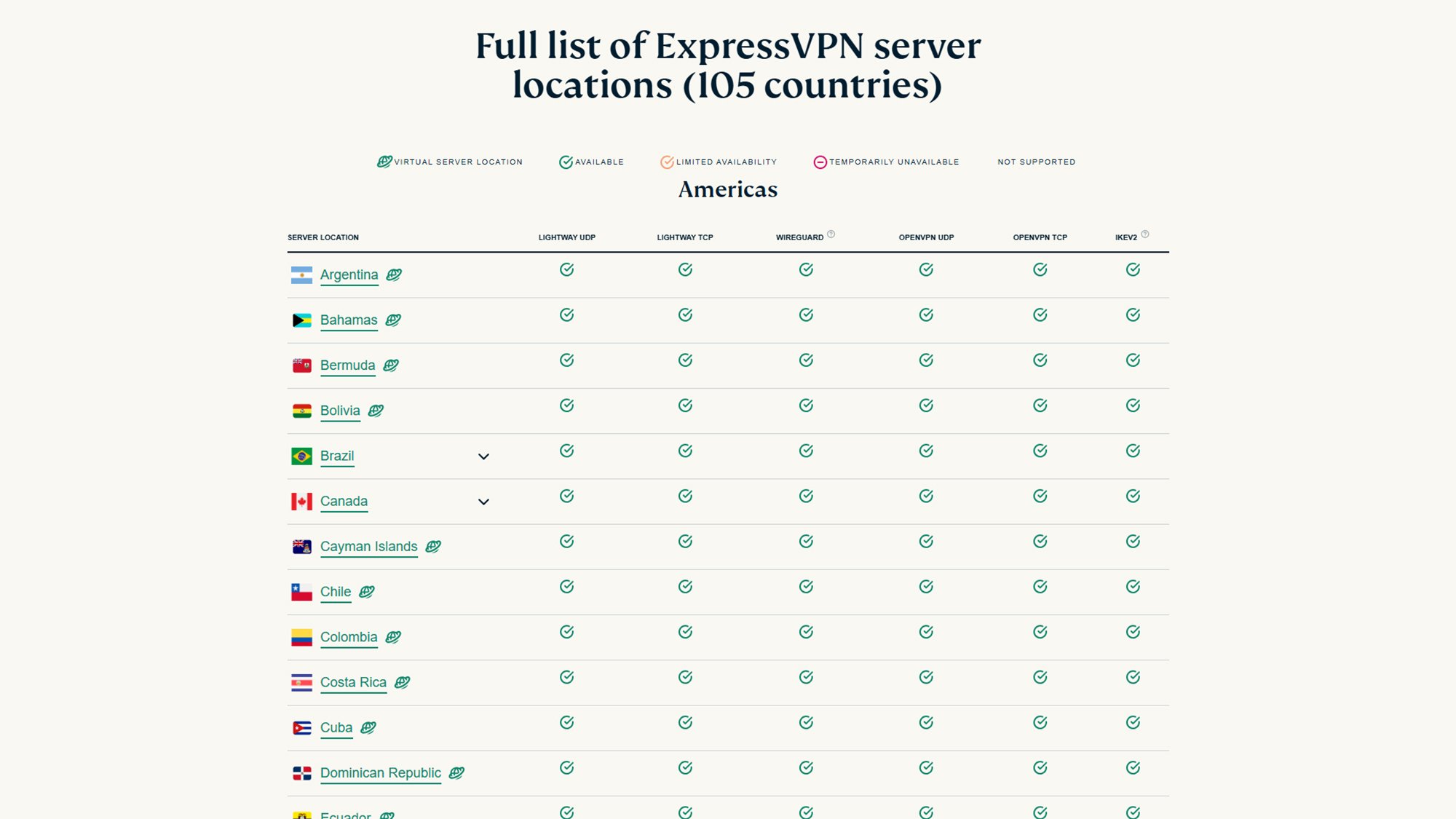
Even VPN service will tell you how many servers it has, and where they are. Credit: ExpressVPN
Your VPN of choice needs to reroute your internet traffic somewhere, and how many servers a particular VPN has around the world can make a substantial difference to speed and availability. It’s also going to determine where in the world you can pretend to be of course, if you want to jump to another country virtually.
Broadly speaking, the more servers the better, though as with VPN speeds you may have to do some testing of your own to check reliability and transfer rates. Look for server locations close to you (for speed), and outside of heavily censored or surveilled countries (for privacy), and check any technical specs that are given for them.
Split tunneling and kill switches
Something else to look out for is split tunneling, or the ability to send only some of your internet traffic through a VPN. This means you get better speeds (and less security and privacy) on data that’s not so important, if you’re just reading the news or learning a language. It’s a feature that many of the best VPNs now offer.
Another feature worth checking for is a kill switch. It sounds rather dramatic, but it’s simply a feature that shuts down your internet connection if the data encryption somehow fails—cutting you off from the internet, but preventing your connection and data from being exposed. Again, this is now fairly common, but not every VPN offers it.
No logs or zero logs
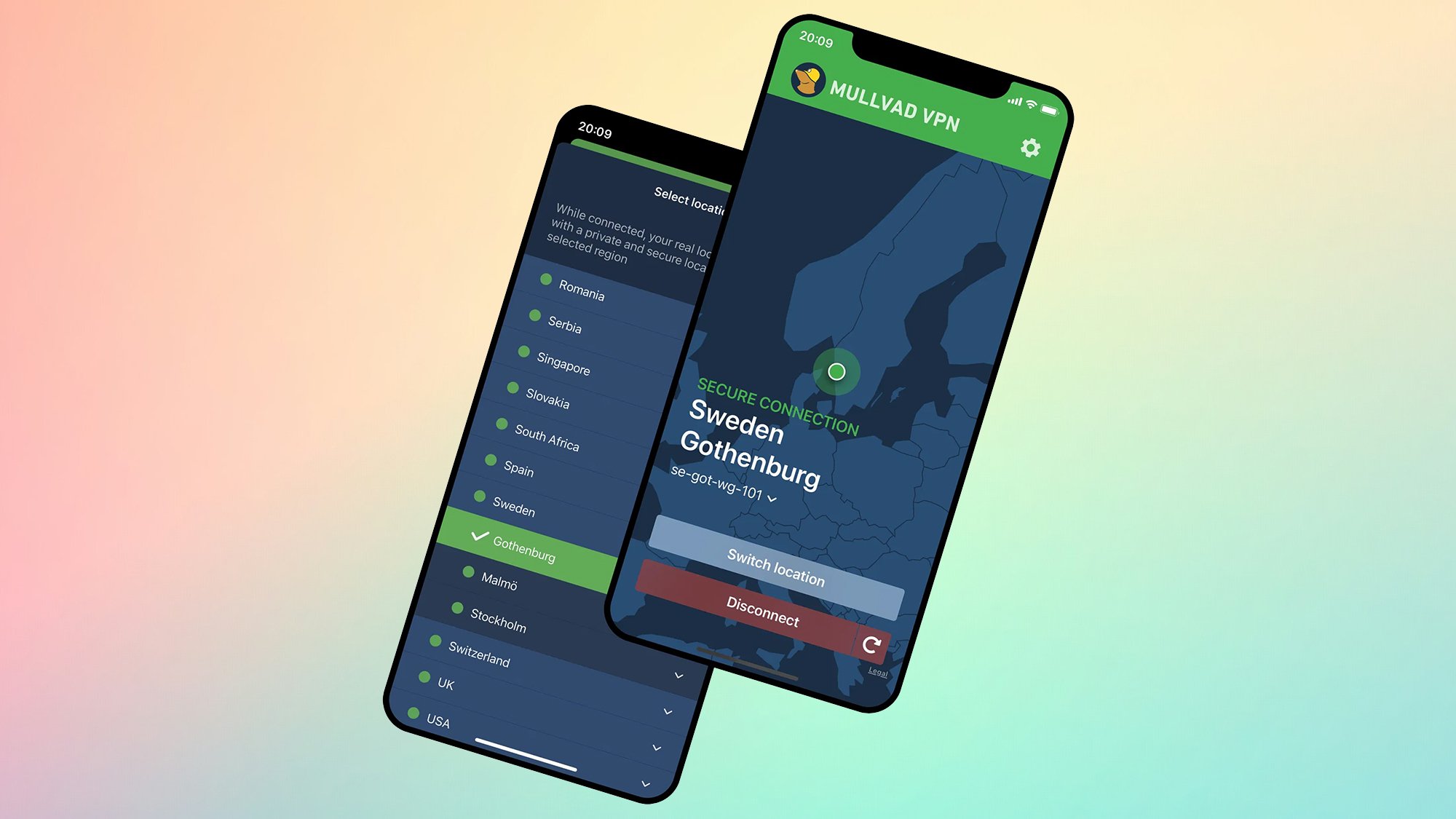
Mullvad VPN lets you pay by cash, if you don’t want to enter payment info. Credit: Mullvad VPN
You should only consider VPNs that have clear no-logs policies (no browsing data is permanently retained) or zero-logs policies (supposedly even stricter, covering more data). Don’t take the VPN’s word for it. though: Look for third-party audits from independent security companies, carried out regularly, to verify these claims.
If these logs are retained, they might be sold to data brokers, or pulled by law enforcement agencies—so check the individual privacy policies for details of what happens when you’re connected to your VPN. Some VPNs go above and beyond when it comes to letting you stay anonymous: Mullvad VPN lets you pay by cash through the post, for example.
VPN protocol
A VPN protocol is the way that the VPN connects to the internet at large: It makes a major difference to speed and security, and you’ll often see it mentioned in VPN listings. However, as important as it is, it’s not something that’s easy to compare across different VPN services—most VPNs will simply say their protocol of choice is the best.
Once you’ve got a shortlist of VPNs together, do some background reading on the protocols they use: Look for independent assessments of their security and transparency, technical benchmarks, and protocols that have been open sourced so they can be analyzed. OpenVPN and WireGuard are two well-regarded protocols, for example.
Location and reputation
Where a VPN is based is important, as well as where it connects to. Credit: Lifehacker
VPN companies are bound by the laws and regulations of the country that they’re based in—so it’s a good idea to look for ones based in places where surveillance regulation and government monitoring is less strict. If necessary, check the VPN’s policies on how it deals with data requests from the authorities and law enforcement in its local region.
It’s also worth weighinga VPN company’s reputation: How does it make money? What other services does it offer? What’s its record with data breaches? This is much more important with a VPN than it is with your streaming music provider, for example, because you’re trusting it with all of your online data while you’re connected.
Trials and money back
Generally speaking, it’s worth paying for a VPN, as you’re giving it so much responsibility in terms of your online access and security. The paid options are almost always going to give you a faster and more reliable service, and if you regularly make use of a VPN then the monthly fee is well worth the investment.
It is, however, worth looking for services that offer free trials and your money back if you’re not satisfied (usually after 30 days). Not only does it reflect well on the VPN company, it means you can see if the VPN suits your needs—and check how fast its servers are—before signing up for any kind of payment plan.
French startup WheelMove demonstrated a compact motorized wheelchair add-on at CES 2026 that not only acts as a power-assist device, but can also lift up a chair’s small front wheels so it can ride over rough terrain. The accessory upgrades a manual wheelchair with a 10-inch extra wheel and a 250W motor that can drive at up to six miles per hour (10 kilometers per hour) and handle slopes up to 10 percent, with a range of 15.5 miles (25km). The battery is swappable, too, so a person could pack an extra for a longer outing to avoid having to stop and recharge.
As the WheelMove team showed at its booth, the accessory can be attached to a wheelchair in a matter of seconds while seated, and its control panel can be strapped onto an armrest or even a bodypart. There are five speed options, which also work to keep the speed consistent when a person is traveling on a downslope. With the WheelMove attached, its creators say a manual wheelchair user can traverse rough and uneven surfaces — like cobblestones, grass and dirt paths — as well as ramps with far less effort than would normally be required. In some cases, it could open up travel in places that would otherwise be completely inaccessible.
The startup says it’s worked with wheelchair users who have field tested the device for months ahead of its launch. It weighs less than eight kilograms (17.6 lbs) and packs up in a backpack. Pre-orders for the WheelMove have opened for buyers in France, where it’s expected to ship later this year before expanding internationally. It costs roughly $6,000.
This article originally appeared on Engadget at https://www.engadget.com/transportation/wheelmove-gives-manual-wheelchairs-the-power-and-height-to-handle-rough-terrain-143000560.html?src=rss
In a unanimous written determination, the Warner Bros. Discovery’s board is advising shareholders to once again reject Paramount Skydance’s “inadequate” hostile takeover bid. The letter to shareholders cites a number of concerns with the offer and reiterates its position that Netflix’s offer remains superior. Netflix and WBD have entered into a merger agreement in early December after the WBD board selected its offer over other bidders.
There are two key differences between the two options: Netflix is willing to pay $82 billion, but only for the Warner Bros., HBO and HBO Max divisions; Paramount Skydance’s latest offer came in at $108 billion and is for all of WBD’s assets, including CNN, HGTV, Food Network and many more. The Netflix deal leaves those assets in the hands of WBD shareholders, to be spun off as Discovery Global.
Paramount Skydance made three separate attempts to scoop up WBD before the company even opened the process up to other bidders. The third of those early offers was reportedly in the neighborhood of $24 per share, while this most recent hostile takeover stands at $30 per share.
But the WBD board has concerns. Among them, the extraordinary amount of debt required for Paramount, a studio with a market capitalization of just $14 billion, to take on an acquisition of this size. (Netflix’s market cap is over $400 billion.) This comes despite Larry Ellison, the father of Paramount CEO David Ellison, stepping in to guarantee $40 billion worth of the needed financing. The board also points out that Netflix’s offer is partially paid in the streaming giant’s shares, which it says have the potential to provide further value in the future.
At this stage in negotiations, the board also claims opting to go with Paramount Skydance’s offer would also result in WBD paying over $4 billion in termination fees.
“Your Board negotiated a merger with Netflix that maximizes value while mitigating downside risks, and we unanimously believe the Netflix merger is in your best interest,” the letter states. The merger with Netflix will still have to go before regulatory bodies in the United States and Europe.
This article originally appeared on Engadget at https://www.engadget.com/entertainment/streaming/warners-bros-discovery-board-urges-shareholders-to-reject-amended-paramount-bid-141513357.html?src=rss
It’s CES week, when the tech world gathers in Las Vegas to check out the latest gadgets, prototypes, and innovations that will shape the future. Lifehacker’s tech team is on the ground at the convention, tracking down big stories and cool gear.
What is CES?
Billing itself as “The Most Powerful Tech Event in the World,” CES (short for “Consumer Electronics Show”) is the Consumer Technology Association’s trade convention. It began in 1967 as a small showcase for televisions and radios, but over the decades CES has become a gathering of the tribes for tech culture. Everyone is there, from huge companies like Samsung and Sony, to scores of journalists, to scrappy startups with big dreams. From innovative AI tools to electric vehicles, laptops, e-readers, and robotic dogs, CES is where tech companies show off their wares, journalists dig up the next big story, and tech insiders network and sneak a look into the future.
Where and when is CES 2026?
CES is held in Las Vegas from Jan. 6-9. The Las Vegas Convention Center hosts the main show floor, but there are CES-related events at the Fontainebleau Las Vegas, Mandalay Bay, The Sphere, and other locations across Las Vegas.
The biggest stories of CES 2026 so far
Along with the expected innovations in televisions and laptops, CES 2026 is crammed with artificial intelligence, robots, and mobility devices, and health-focused wearables. Here are some of the biggest announcements at CES 2026 so far.
At its keynote, NVIDIA unveiled Alpamayo, “the world’s first thinking, reasoning autonomous vehicle AI.” This could be serious competition for Tesla.
HP showed off a new mini desktop computer, The Eliteboard G1a. You just plug the keyboard into any monitor and go to town. Only time will tell if this is a gimmick or a new form factor.
Hyundai and Boston Dynamics showed off humanoid robot Atlas. But Hyundai didn’t show off any new electric vehicles, suggesting a cautious outlook for the near future.
Broadcom showed off Wi-Fi 8 routers and chips, providing a practical look into the future.
CES 2026 Event Schedule
Below is a guide to some of the major events at CES 2026.
Sunday, January 4: Media Day 1 at Mandalay Bay
Monday, January 5: Media Day 2 at Mandalay Bay. C-Space: 9 AM – 5 PM
Tuesday, January 6: Show Floor Press Conferences, Exhibits: 10 AM-6 PM, C-Space: 9 AM – 5 PM
Wednesday, January 7: Show Floor Press Conferences, Exhibits: 9 AM-6 PM, C-Space: 9 AM – 5 PM
Thursday, January 8: Exhibits: 9 AM-6 PM, C-Space: 9 AM – 5 PM
Friday, January 9: Exhibits: 9 AM-4 PM
Can’t-miss keynotes and conferences at CES 2026
Sunday, January 4
CES Unveiled Las Vegas – The Official Media Event of CES 2026 with innovative product previews – 4:00-7:00 PM
Monday, January 5
AMD Chair and CEO Dr. Lisa Su, 6:30 PM, The Venetian
Tuesday, January 6
Siemens President and CEO Dr. Roland Busch, 8:30 AM, The Venetian
Lenovo Chairman and CEO Yuanqing Yang, 5:00 PM, Sphere
South Korea’s President Lee Jae Myung asked at a televised policy meeting last month whether the country’s state-run healthcare plan could cover hair-loss treatment, framing it as a question about whether hair loss qualifies as a disease. The health minister told Lee that baldness is generally considered an aesthetic problem and therefore covered out-of-pocket, but the 61-year-old president — who himself has a full head of hair — pushed back, arguing that young people experiencing thinning hair view their situation as a “matter of survival.”
The proposal has divided the country. South Korea is known for a cultural phenomenon called “lookism,” where physical appearance carries significant weight in professional and social settings. The expression “your appearance is also a credential” is common, and nearly all job applications require a photograph, including those for part-time barista positions.
Lee first made the pledge to cover hair-loss treatment during his unsuccessful 2022 presidential campaign but dropped it when he ran again. He won a snap election in June and has now resurrected the idea as a way to appeal to younger voters who have grown more dissatisfied with him. The Korean Medical Association has called the proposal “questionable” given the health system’s stretched finances. The health ministry is currently reviewing whether the treatments are appropriate for coverage. More than three in four South Koreans believe everyone has concerns about hair loss, according to a recent Embrain Trend Monitor poll.
Even if you bring home as few bags as possible — using reusable bags, carrying purchases home with your own two hands — soft plastics sill accumulate. I certainly have a collection with one flimsy plastic sack filled with dozens or hundreds of others. I plan to do something with it… eventually.
Unfortunately, there aren’t a ton of options for what to do with those soft plastics, as most recycling facilities can’t accept them. But no one likes seeing them end up in oceans and rivers and stuck up in trees. So I was excited to see the Clear Drop Soft Plastic Compactor (CPC) at CES. It’s a pre-recycler for your home that turns hundreds of bags into a solid brick that’s easier to transport. Certain facilities can accept the bricks for recycling.
Clear Drop works with 95 percent of soft plastics, sucking up bags, bubble wrap, ziplocks, package wrap and cling film into its maw. It then compresses and heats the plastic to form a compact eight by twelve by four inch brick. I asked Matt Daly, Clear Drop’s head of product, what the compactor can’t take and I was told you can’t add ping pong balls, IV bags and camera film. Easy enough.
A compacted brick the Clear Drop CPC produced.
Amy Skorheim for Engadget
It was satisfying to see the little slot on the top gobble up the plastic bags Daly fed it. The Clear Drop wasn’t set to smash and heat at the show, but I was assured by another Clear Drop rep that any plastic smell produced during operation was minimal and the company performed safety tests to ensure the machine didn’t create any harmful emissions.
Daly said it would take about a month for most households to create a brick, which translates to around a 30 gallon trash bag full of other bags. Once that brick is created, it can be shipped to one of Clear Drop’s partner facilities and pre-paid USPS shipping envelops are included. They work with multiple US-based recycling facilities and do audits to ensure the bricks are actually being recycled.
Of course, I was a little disappointed the bricks couldn’t be tossed in my blue curbside bin, but Daly said they’re working to bring more recycling partners on board and the ultimate goal is to create an infrastructure that would eventually include municipal recycling. Shipping the bricks somewhere feels a little counterproductive, eco-wise. And the machine itself is not cheap. The price is split up over the course of two years, but it adds up to $1,400.
I’m happy to see someone somewhere is doing something to address a pretty clear problem. While it’s not perfect, this is probably the best household-level solution I’ve seen to that can ensure your bags don’t go down some sea turtle’s throat.
This article originally appeared on Engadget at https://www.engadget.com/home/smart-home/clear-drop-is-trying-to-do-something-about-all-those-plastic-bags-under-your-sink-140000254.html?src=rss
Why buy a mechanical gaming keyboard and Stream Deck separately when you can have them both in the same package? The easy answer is because an integrated all-in-one solution was never a solution…until now. Announced at CES 2026, Corsair’s new Galleon SD 100 is a full-size mechanical deck for gamers with a built-in Stream Deck situated where
Ketones have courted controversy since The Mail on Sunday disclosed that 91 athletes were used as guinea pigs in the run-up to the London 2012 Olympics to test the potential performance effects of this synthetic energy source.
Until the past few seasons, WorldTour teams and riders have remained stoically tight-lipped, whether they were using them or not – especially Team Sky, who publicly and repeatedly denied usage.
This stubborn silence fuelled scepticism in a sport still reeling from the Lance Armstrong saga, despite ketones never being on the WADA (World Anti-Doping Agency) prohibited list.
The Mouvement Pour un Cyclisme Crédible (MPCC) advised its members not to use them due to the unknown long-term health impact.
They also called on cycling’s governing body for clarity. “We’re awaiting the result of a UCI study into ketones,” the MPCC told me several years ago. And again last year. And earlier this year.
A UCI press release landed in October 2025 – finally, ketone clarity. Not quite. “There is no compelling evidence that ketone supplements enhance performance or recovery, so the UCI see no reason for them to be used. Therefore, the UCI do not recommend the inclusion of such supplements in riders’ nutritional plans.”
On the face of it, the UCI’s stance is plain. But it soon becomes clear that its summation of this substance, originally developed by scientists at Oxford University with $10 million of funding from the American Department of Defence so US Special Forces could operate for longer behind enemy lines with fewer rations, couldn’t have been more opaque – there was no comment on long-term health and no reference to their own study.
And who tasked the UCI with nutritional advice? We contacted the UCI for further detail, to speak to whoever conducted the study that it didn’t reference in the release.
The press officer replied: “Please be informed that this study is currently with a scientific journal and is expected to be published soon. While we do not have a confirmed publication date, we will share the article link and the author’s contact details with you once it becomes available.” We batted back with, “Understandably, there are many questions off the back of the press release.
Firstly, if the study is yet to be released, why are the UCI making a statement?” “We are awaiting the publication of the study, came the response. As soon as it is released, we will share the publication link along with relevant contact details for the authors.”
And so on.
So, despite the brevity and lack of evidence, the UCI feels taking ketones is a waste of time. Which must have had the likes of Ketone-IQ, used by Visma–Lease a Bike, and KetoneAid, used by Soudal Quick-Step, turning to their lawyers. Then again, the UCI does have a point that evidence for their use is far from equivocal.
But that can be said about everyday supplements used by cyclists all around the world – multi-vitamins for example – and the UCI hasn’t delivered a verdict on those.
Soudal Quick-Step is among the teams to use ketones. Tim de Waele/Getty Images
That’s the politics, which we suspect will run and run. But what of the studies into ketones and cycling performance?
What is the general consensus from those? That’s where we turn to Sebastian Sitko, a sport scientist and lecturer at the University of Zaragoza in Spain.
In 2024, the journal Physiologia published Sitko’s work, ‘The role of exogenous ketones in road cycling: evidence, mechanisms and performance claims’. Within, his meta-analysis took a deep dive into the published literature.
“The potential benefits of ketone body supplementation in endurance sports like cycling are multifaceted, spanning metabolic, physiological and cognitive domains,” he concluded in his paper.
“However, despite the growing interest in ketone supplementation, the current science applied to the practical field is limited by inconsistent findings, individual variability and a lack of long-term data.”
In short, there’s an uncertainty around their benefits. But that doesn’t mean they don’t work. As Sitko highlights, it’s an individual thing and, like most facets of training and nutrition, comes down to whether someone is a ‘responder’ or ‘non-responder’.
Visma-Lease a Bike has a partnership with ketone supplier Ketone-IQ. Dario Belingheri/Getty Images
“Evidence for its use points to a mix of phenotype [observable characteristics of when nature meets nurture] and current metabolic state,” he says.
“A rider’s baseline metabolic health (insulin sensitivity, level of fat), recent diet (carbohydrate availability, keto- adaptation), gut absorption, gender and training status all matter.”
“The delivered BHB exposure (not just the dose) is a big determinant of response,” he adds. BHB is beta-hydroxybutyrate, a type of ketone. Its vessel tends to be either an ester or salt, with the evidence stronger for ester use because ketone content tends to be higher.
“Genetics likely plays a role, but robust genotype response links in athletes are still lacking,” says Sitko. “In short, who you are (metabolic phenotype) and what state you’re in (glycogen-heavy, fasted, recent training) are the main practical predictors.”
Mechanisms of improvement
If you respond, what does that mean? Potentially riding longer and stronger, fighting fatigue and delivering high-intensity moments when needed.
“The most plausible mechanism why is due to sparing glycogen,” says Sitko. “Ketone bodies can be oxidised efficiently by the working muscle and theoretically reduce reliance on carbohydrate, which could preserve muscle glycogen during very long efforts or in low-glycogen states.”
That physiological promise has clear mechanistic rationale, says Sitko, but enjoying consistent race benefits has proven tricky because cycling performance is the product of numerous interacting systems.
For instance, fuel availability, neuromuscular function, pacing, thermoregulation and gut tolerance to ketones.
There’s also an argument that ketones raise blood acidity, which is exactly what you don’t want when exercising hard. “The major problem is that small metabolic gains often disappear when translated into whole-race conditions,” Sitko continues.
“Laboratory protocols, participant feeding state, ketone dose and how it’s delivered, and whether carbohydrate is co-ingested all change the metabolic context, so the same ketone drink can produce different outcomes across studies and athletes.”
In essence, like any mooted performance-enhancer, while it might give a physiological boost in the controlled setting of a laboratory, which can be measured easily, the same can’t always be said once it’s in the dynamic amphitheatre of racing. And if it does, there are too many variables to pinpoint ketones as the game-changer.
After researching this area over several years, we’d presumed that the time it took the UCI to make a statement came down to delays while it pored over recent studies that show a rise in circulating erythropoietin (EPO) in the body.
EPO is a hormone that naturally produces red blood cells but, as Lance and co showed, can also be taken exogenously (primarily by injection) to raise levels artificially.
It’s why, under section S2.1 of WADA’s Prohibited List, entitled, ‘Erythropoietins and agents affecting erythropoiesis’, EPO and other drugs that elevate levels of EPO are banned. Then again, not every method of boosting red blood cells is outlawed. Altitude training, for instance.
“There isn’t solid evidence that these temporary EPO rises translate into sustained increases in red-cell mass or haematocrit (which would require repeated exposure and time for erythropoiesis),” says Sitko.
“In short, EPO signalling equals possible stimulus, but increased red blood cell mass and measurable performance gain is not established in humans with current data. That makes any anti-doping or performance claims premature.”
Will the UCI’s press release sound the death knell for ketone use in professional and recreational cycling? It’s doubtful, especially when recent research suggests its benefits stretch beyond the (still debated) physical.
Can ketones slow brain ageing?
Ketones may help slow cognitive decline in ageing cyclists – if taken at the right time. Getty Images
As Sitko mentioned earlier, studies show that ketones potentially have an impact on “cognitive domains”. Again, the evidence isn’t conclusive, but it is compelling, especially for those who are approaching their mid-40s.
According to research in the journal Proceedings of the National Academy of Sciences, our “brain-network stability” doesn’t follow a linear path of decline.
Instead, it’s non-linear with distinct landmarks of acceleration and plateauing, with the human brain ageing much faster from the age of 44 before levelling off at 67.
The researchers hypothesised that neuronal metabolic stress, such as increased insulin resistance and impaired glucose uptake, leads to a nudge in age-related cognitive decline.
Or it would without drinking a bottle or two of ketones, for they discovered that administering this ‘super- fuel’ delivered an extra energy source that sidestepped the issues caused by this metabolic stress to protect the brain from deterioration.
They warned that the intervention would only prove effective before the neurons fall off a cliff – in other words, start in your mid-40s – and stressed that further research was needed to confirm or disprove the mechanisms at play.
That said, it’s the latest study of many that suggests ketones could be a cognitive lifesaver because of their ability to deliver energy when the insulin system’s struggling.
Because the brain makes up 20% of your daily energy needs each day, the mechanism adds up.
Where does that leave us? Arguably, where we were before the UCI’s press release – in ergogenic limbo. Research shows that performance and recovery can benefit from ketones. It also shows that performance and recovery aren’t impacted by ketones.
As ever, it’s an individual thing whether it works – or you believe it works (placebo is a feature in itself).
But it’s clear that for most recreational cyclists, consistent riding and staying healthy via a wholesome diet are much higher up the performance ladder than any supplement.
Will we ever know if ketones work or not out in the field? Sitko thinks so. “Serial blood metabolomics can reveal individual metabolic fingerprints and identify who benefits from ketone exposure and under which conditions,” he says. “This supports precision nutrition but research is still in its early phase.”