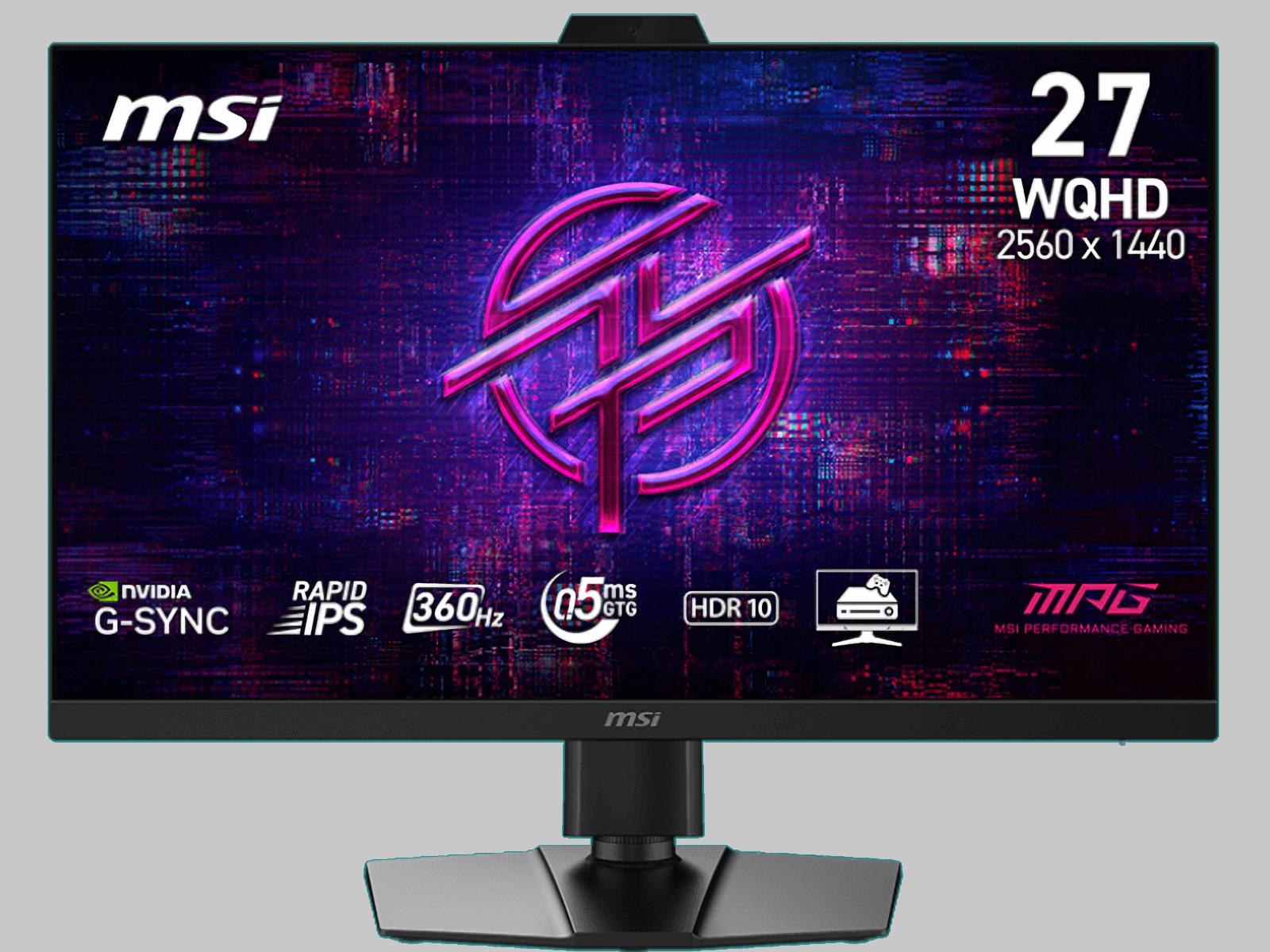
At CES 2026, NVIDIA finally revealed its long-awaited lineup of first-generation G-SYNC Pulsar monitors—and one of them is the MSI MPG 272QRF X36. Like the other new monitors revealed at NVIDIA’s conference, the MSI MPG 272QRF X36 is a 27-inch Rapid IPS monitor in 2560×1440 resolution, with full G-SYNC support up to 360 Hz. Where things get
An anonymous reader quotes a report from Ars Technica: The Federal Communications Commission plans to authorize a new category of wireless devices in the 6 GHz Wi-Fi band that will be permitted to operate at higher power levels than currently allowed. The FCC will also consider authorizing higher power levels for certain wireless devices that are only allowed to operate indoors. The FCC said it scheduled a vote for its January 29 meeting on an order “to create a new category of unlicensed devices… that can operate outdoors and at higher power than previously authorized devices.” These so-called Geofenced variable power (GVP) devices operating on the 6 GHz band will “support high data rates suitable for AR/VR, short-range hotspots, automation, and indoor navigation,” and “overcome limitations of previous device classes by allowing higher power and outdoor mobility,” the FCC said. They will be required to work with geofencing systems to avoid interference with fixed microwave links and radio astronomy observatories.
FCC Chairman Brendan Carr attributed the FCC’s planned action to President Trump in a press release titled, “President Trump Unleashes American Innovation With 6 GHz Win.” That’s consistent with Carr’s relatively new stance that the FCC takes orders from the president, despite his insisting during the Biden era that the FCC must operate independently from the White House. While many of Carr’s regulatory decisions have been criticized by consumer advocates, the 6 GHz action is an exception. Michael Calabrese, of New America’s Open Technology Institute, told Ars that “increasing the power levels for Wi-Fi connections to peripheral devices such as AR/VR is a big win for consumers” and a change that has been “long advocated by the Wi-Fi community.”
Carr said that the FCC “will vote on an order that expands unlicensed operations in the 6 GHz band so that consumers can benefit from better, faster Wi-Fi and an entirely new generation of wireless devices — from AR/VR and IoT to a range of innovative smart devices. [It] will do so through a set of forward-looking regulations that allow devices to operate at higher power while protecting incumbent users, including through geofencing systems.” […] A draft of the order said the planned “additional power will enable composite standard-power/LPI access points to increase indoor coverage and provide more versatility to American consumers.” The FCC will also seek comment on a proposal to authorize LPI access points on cruise ships.
In 2002, Bryan Fleming helped to create pcTattletale, software for monitoring phone and computer usage. Fleming’s tool would record everything done on the target device, and the videos would be uploaded to a server where they could be viewed by the pcTattletale subscriber.
This might sound creepy, but it can also be legal when used by a parent monitoring their child or an employee monitoring their workers. These are exactly the use cases that were once outlined on pcTattletale’s website, where the software was said to have “helped tens of thousands of parents stop their daughters from meeting up with pedophiles.” Businesses can “track productivity, theft, lost hours, and more.” Even “police departments use it for investigating.”
But this week, nearly 25 years after launching pcTattletale, Fleming pled guilty in federal court to having knowingly built and marketed software to spy on other adults without their consent. In other words, pcTattletale was often used to spy on romantic partners without their knowledge—and Fleming helped people do it.
This is a cross-section of a chainsaw doing its thing filmed at 20,000 frames per second. It’s so mesmerizing to watch it’s almost easy to forget that thing will take my leg off. Won’t you, chainsaw? WON’T YOU?! It really wants to, I can tell. I made the mistake of trying to carve the Thanksgiving turkey with a chainsaw and now it has a taste for thigh.
When Meta first announced its display-enabled smart glasses last year, it teased a handwriting feature that allows users to send messages by tracing letters with their hands. Now, the company is starting to roll it out, with people enrolled in its early access program getting it first,
I got a chance to try the feature at CES and it made me want to start wearing my Meta Ray-Ban Display glasses more often. When I reviewed the glasses last year, I wrote about how one of my favorite tings about the neural band is that it reduced my reliance on voice commands. I’ve always felt a bit self conscious at speaking to my glasses in public.
Up to now, replying to messages on the display glasses has still generally required voice dictation or generic preset replies. But handwriting means that you can finally send custom messages and replies somewhat discreetly.
Sitting at a table wearing the Meta Ray-Ban Display glasses and neural band, I was able to quickly write a message just by drawing the letters on the table in front of me. It wasn’t perfect — it misread a capital “I” as an “H” — but it was surprsingly intuitive. I was able to quickly trace out a short sentence and even correct a typo (a swipe from left to right will let you add a space, while a swipe from right to left deletes the last character).
Alongside handwriting, Meta also announced a new teleprompter feature. Copy and paste a bunch of text — it supports up to 16,000 characters (roughly a half-hour’s worth of speech) — and you can beam your text into the glasses’ display.
If you’ve ever used a teleprompter, Meta’s version works a bit differently in that the text doesn’t automatically scroll while you speak. Instead, the text is displayed on individual cards you manually swipe through. The company told me it originally tested a scrolling version, but that in early tests, people said they preferred to be in control of when the words appeared in front of them.
Teleprompter is starting to roll out now, though Meta says it could take some time before everyone is able to access.
The updates are the among the first major additions Meta has made to its display glasses since launching them late last year and a sign that, like its other smart glasses, the company plans to keep them fresh with new features. Elsewhere at CES, the company announced some interesting new plans for the device’s neural band and that it was delaying a planned international rollout of the device.
This article originally appeared on Engadget at https://www.engadget.com/wearables/handwriting-is-my-new-favorite-way-to-text-with-the-meta-ray-ban-display-glasses-213744708.html?src=rss
If you’ve been running several email accounts through your Gmail, you might want to double-check your settings this month—that’s because Google is ending support for the POP3 protocol that can sync emails from third-party accounts. And while there are some other solutions, they don’t work quite the same.
POP3 is an older standard of syncing emails between multiple accounts that allowed users to import emails from a third-party account and manage them in one spot. It’s also a less secure method of transferring emails, so it’s not a total surprise that Google is phasing it out, but the company hasn’t broadcast the change too loudly, so it might come as a surprise to some users.
How to keep your third-party accounts working in Gmail
If you’re still using POP3 to fetch your emails from a third-party account, there are a couple of ways to fix it before Google pulls the plug:
Forward emails from your other accounts. Rather than having Gmail reach out to your third-party accounts, you can set up automatic forwarding on the other end. How to do this will depend on which email providers you use, so check your third-party account settings for forwarding options.
Use IMAP to check your email from the Gmail apps. In the Gmail app for Android and iOS, you can log into third-party email accounts that support IMAP connections.
The IMAP protocol works a bit differently than POP3. While POP3 would import messages into your Gmail but leave the original, IMAP syncs between your accounts. So if you use the Gmail app to check your email and delete some messages, they’ll be gone if you check the original account later.
Google’s support doc says this change will take effect “Starting January 2026” with no more specific time frame. At time of writing, POP3 support is still working on my own email accounts, so it’s not disabled just yet, but it’s a good idea to update your email setup sooner rather than later.
The long-standing hierarchy in the TV market — Sony, Samsung and LG at the top, TCL and Hisense fighting it out in the midrange — is eroding as the budget brands close the performance gap and increasingly lead on technology innovation, The Verge writes. Hisense debuted the first RGB LED TV last year, and TCL’s X11L announced at CES 2026 is the first TV to use reformulated quantum dots and a new color filter. TCL’s QM9K release last year was “a pretty clear statement that they’re ready to fight with the big boys.”
The premium brands retain certain advantages: Sony’s processing remains unmatched and LG’s OLEDs deliver contrast that mini LED cannot match. “Even as the gap in performance across technologies continues to shrink, and TVs from all the manufacturers get closer to parity, the challenge for TCL and Hisense shifts from creating incredible, competitive products to altering perception,” The Verge notes.
Samsung once owned the art TV segment entirely; CES 2026 saw announcements from Amazon’s Ember Artline and LG’s Gallery TV, all using similar edge-lit technology and magnetic frames. The experience across brands is “remarkably similar.” If the pricing gap persists and performance remains comparable, “the big three will have to respond by bringing their pricing down or risk losing sales,” the publication concluded.
While wave upon wave of smartglasses and face-based wearables crash on the shores of CES, traditional glasses really haven’t changed much over the hundreds of years we’ve been using them. The last innovation, arguably, was progressive multifocals that blended near and farsighted lenses — and that was back in the 1950s. It makes sense that autofocusing glasses maker IXI thinks it’s time to modernize glasses.
After recently announcing a 22-gram (0.7-ounce) prototype frame, the startup is here in Las Vegas to show off working prototypes of its lenses, a key component of its autofocus glasses, which could be a game-changer.
IXI’s glasses are designed for age-related farsightedness, a condition that affects many, if not most people over 45. They combine cameraless eye tracking with liquid crystal lenses that automatically activate when the glasses detect the user’s focus shifting. This means that, instead of having two separate prescriptions, as in multifocal or bifocal lenses, IXI’s lenses automatically switch between each prescription. Crucially — like most modern smartglasses — the frames themselves are lightweight and look like just another pair of normal glasses.
Mat Smith for Engadget
With a row of prototype frames and lenses laid out in front of him, CEO and co-founder Niko Eiden explained the technology, which can be separated into two parts. First, the IXI glasses track the movement of your eyes using a system of LEDs and photodiodes, dotted around the edges of where the lenses sit. The LEDs bounce invisible infrared light off the eyes and then measure the reflection, detecting the subtle movements of your eye and how both eyes converge when focusing on something close.
Using infrared with just a “handful of analog channels” takes far less power than the millions of pixels and 60-times-per-second processing required by camera-based systems. IXI’s system not only tracks eye movements, but also blinking and gaze direction, while consuming only 4 milliwatts of power.
Mat Smith for Engadget
Most of the technology, including memory, sensors, driving electronics and eye tracker, is in the front frame of the glasses and part of the arms closest to the hinge. The IXI prototype apparently uses batteries similar in size to those found in AirPods, which gives some sense of the size and weight of the tech being used. The charging port is integrated into the glasses’ left arm hinge. Naturally, this does mean they can’t be worn while charging. IXI says that a single charge should cover a whole day’s usage.
The prototype frames I saw this week appeared to be roughly the same weight as my traditional chunky specs. And while these are early iterations, IXI’s first frames wouldn’t look out of place in a lineup of spectacle options.
The team has also refined the nose pieces and glasses arms to accommodate different face shapes. Apparently, when testing expanded from Finland to the UK, British faces were “…different.” A little harsh when talking to me, a Brit.
Eiden pulled out some prototype lenses, made up of layers of liquid crystal and a transparent ITO (indium tin oxide) conductive layer. This combination is still incredibly thin, and it was amazing to watch the layers switch almost instantly into a prescription lens. It seemed almost magical. As they’re so thin, they can be easily integrated into lenses with existing prescriptions. It can also provide cylindrical correction for astigmatism too.
Autofocus lenses could eliminate the need for multiple pairs of glasses, such as bifocals and progressives. Even if the glasses were to run out of power, they’d still function as a pair of traditional specs with your standard prescription, just lacking the near-sighted boost. IXI’s sensor sensitivity can also offer insight into other health conditions, detect dry eyes, estimate attentiveness and, by tracking where you’re looking, even posture and neck movement. According to Eiden, blink rate changes with focus, daydreaming and anxiety, and all that generates data that can be shown in the companion app.
Mat Smith for Engadget
Hypothetically, the product could even potentially adapt prescriptions dynamically, going beyond the simple vision correction of Gen 1. For example, it could offer stronger corrections as your eyes get fatigued through the day.
IXI appears to be putting the pieces in place to make these glasses a reality. It still needs to obtain the necessary medical certifications in order to sell its glasses and get all the production pieces in place. It’s already partnered with Swiss lens-maker Optiswiss for manufacturing. Eiden says the final product will be positioned as a high-end luxury glasses option, selling through existing opticians. The company hopes to finally launch its first pair sometime next year.
This article originally appeared on Engadget at https://www.engadget.com/wearables/ixis-autofocusing-lenses-multifocal-glasses-ces-2026-212608427.html?src=rss
Last year Razer showed off Project Ava as a digital assistant that lived inside your computer to help adjust settings or provide gaming tips. But now at CES 2026, the company’s AI companion platform has gotten a major glow-up while moving into some new digs.
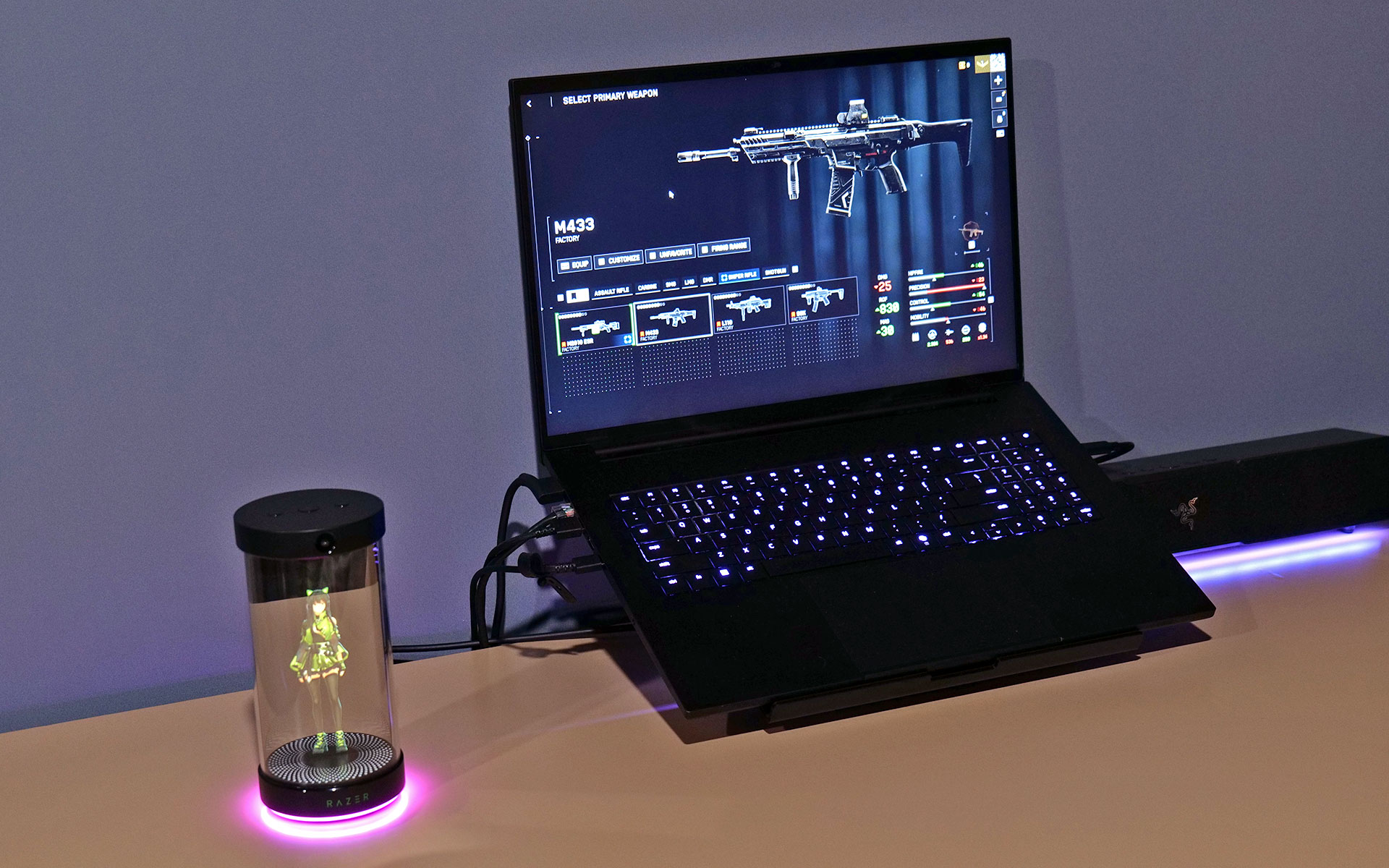
Now, in lieu of being constrained entirely to your PC’s screen, Razer has given Project Ava a real home in the form of a small tube that can display a 5.5-inch animated hologram of the AI’s avatar. You’ll still need to connect it to your computer via USB-C to provide Ava with the power and data it needs. However, all of your companion’s other components are built into its abode, including dual far-field mics so you can talk to it, a down-firing full-range speaker so it can talk and an HD camera with an ambient light sensor so the AI can see and react to its surroundings.
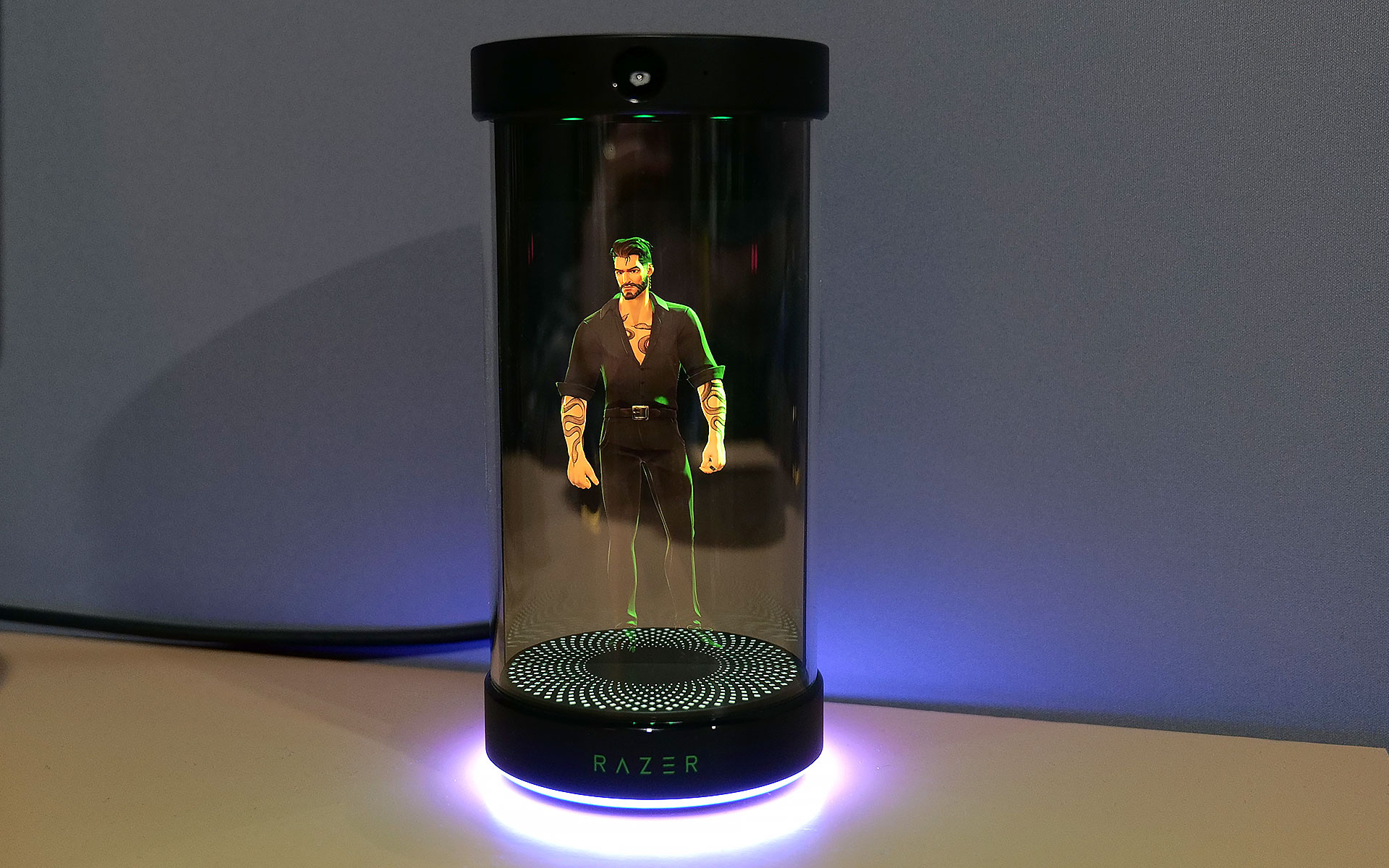
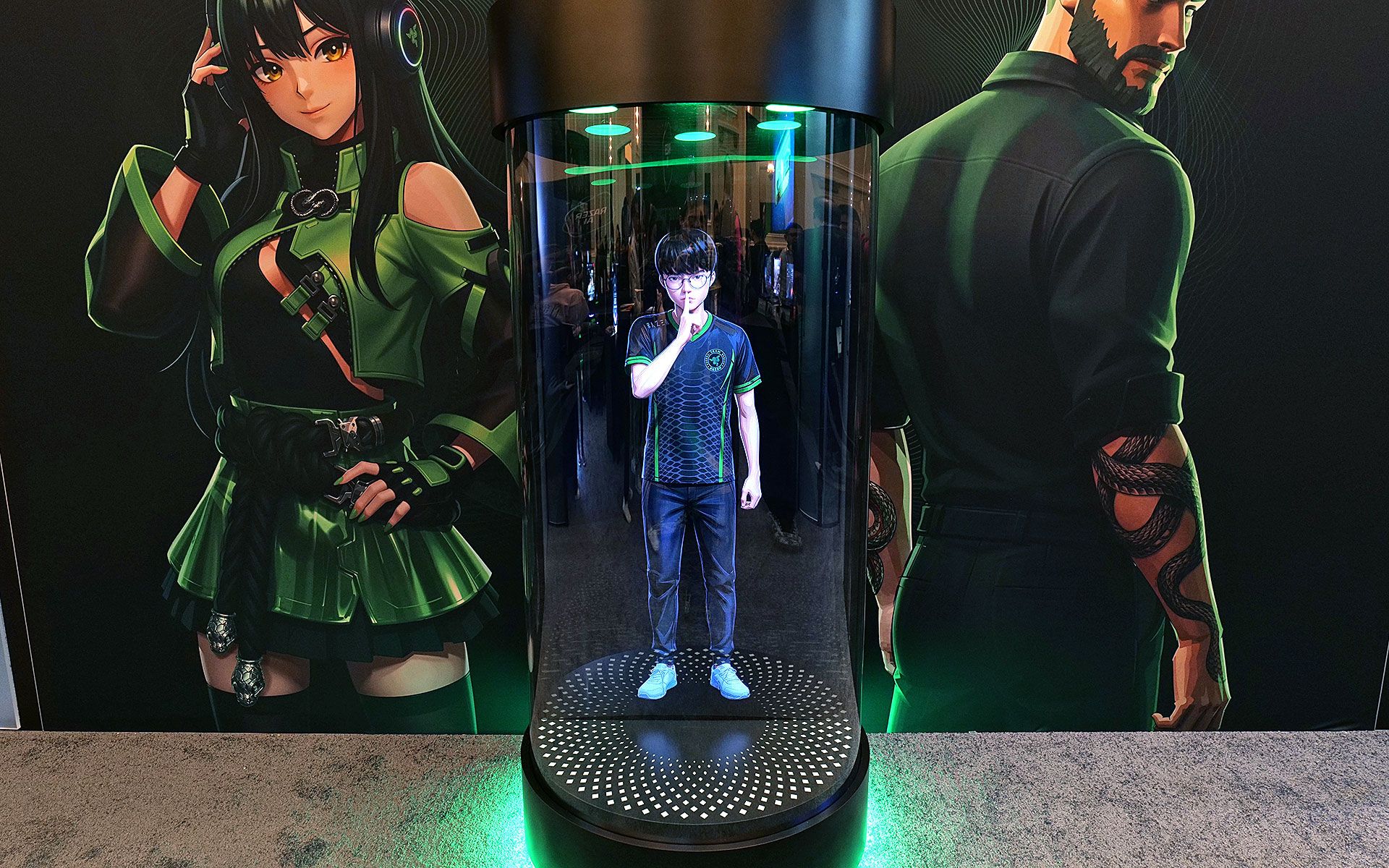
But perhaps the biggest upgrade to the project is that instead of just Ava, who Razer describes as “a calm, reliable source of energy to help you keep things clear, efficient, and always on point,” there are three or four new personas (depending on how we’re counting) joining the roster. Kira looks like a TikTok e-girl decked out in a frilly outfit complete with Razer neon green accents, while Zane is her edgy masculine alternative who kind of reminds me of the Giga Chad meme, but with extra snake tattoos. Then there’s Sao, who appears to be directly inspired by iconic Japanese salary woman Saori Araki. Finally, there’s an avatar made in the likeness of Faker (Lee Sang-hyeok), the most successful and well-known League of Legends player of all time and one of Razer’s sponsored esports athletes.
The new peripheral for Project Ava is a cylinder that can display a 5.5-inch hologram of an AI companion.
Sam Rutherford for Engadget
The idea now is that instead of being trapped inside your computer, Ava or one of Razer’s other personas can sit on your desk and be your companion for everything. They can remind you of upcoming events, respond to questions or even comment on your outfit using Razer’s built-in camera. That said, if you need some privacy, the device’s mics can be muted and the company says its planning on putting a physical camera shutter on final retail models. Of course, Ava or any of the other avatars can still hang out while you game and give you advice. During my demo, Kira helped pick out a loadout in Battlefield 6 based on user criteria and even provided pros and cons for some of the game’s other equipment options.
Project Ava’s expanded roster of AI companions
Razer
Unfortunately, while I did get to see Kira and Zane talk, dance and sway in their little bottles, Sao and Faker weren’t quite ready to make their holographic debuts. But according to Razer, that’s sort of by design as Project Ava is very much a work in progress. Currently, the avatars’ responses are generated by X AI’s Grok (yikes!), but the platform was created as a sort of open-source project that will support other models like Gemini or ChatGPT.
Down the line, Razer is hoping to add the ability for users to create their own unique avatars and companions based on their input or inspiration from real-world objects. Meanwhile, for avatars like Faker’s because he’s also an actual person, Razer wants additional time to make the AI companion helpful with topics like real-time League of Legends coaching.
Say hello to Giga Chad, I mean Zane.
Sam Rutherford for Engadget
That said, while some folks might find Project Ava a bit weird or unnerving, it actually feels pretty tame (almost cute even) in an era where people are already marrying their AI partners. And if you’re the kind of person who prefers digital companions over flesh-and-blood alternatives (you know, people), I guess it’s kind of nice to have a more tangible representation of your electronic waifus and husbandos.
Faker’s avatar was only viewable in this nearly life-size mock up.
Sam Rutherford for Engadget
Sadly, Razer has not provided full pricing for Project Ava’s holographic peripheral, though a representative said that it will be in the same ballpark as the company’s other peripherals. I’m estimating a final cost of around $200. Reservations for Project Ava are currently live with a $20 deposit before official shipments begin sometime in the second half of 2026.
This article originally appeared on Engadget at https://www.engadget.com/gaming/pc/razer-put-a-waifu-in-a-bottle-at-ces-2026-205315908.html?src=rss
YouTube introduced some new filters to its advanced search tools today. Possibly the most exciting change is that Shorts are now listed as a content type, so the three-minute-or-less videos can be excluded as results in your searches.
This is a welcome update for any of us who have been on the hunt for a long-form explainer only to wade through dozens of ten-second clips before finding anything close to our goal. Especially with the addition of even more AI slop last year thanks to the Google Veo 3 engine, an option to exclude Shorts may look even more appealing.
The other updates include a pair of renamed features within advanced search. The “Sort By” menu will now be called “Prioritize.” Likewise, the “View Count” option has been renamed to “Popularity;” this will allow YouTube’s algorithms to account for other metrics such as watch time to gauge how much other users are engaging with a particular video. A pair of former filter options have also been removed; there will no longer be choices to search for “Upload Date – Last Hour” and “Sort by Rating.”
This article originally appeared on Engadget at https://www.engadget.com/entertainment/youtube/youtube-will-let-you-exclude-shorts-from-search-results-204500097.html?src=rss
An anonymous reader shares a report: Internet access available through mobile devices in Iran appears to be limited, according to several social media accounts that routinely track such developments. Cloudflare Radar, which monitors internet traffic on behalf of the internet infrastructure firm Cloudflare, said on Thursday that IPv6 (Internet Protocol version 6), a standard widely used for mobile infrastructure, was affected.
“IPv6 address space in Iran dropped by 98.5 per cent, concurrent with IPv6 traffic share dropping from 12 per cent to 1.8 per cent, as the government selectively blocks internet access amid protests,” read Cloudflare Radar’s social post. NetBlocks, which tracks internet access and digital rights around the world, also confirmed it was seeing problems with connectivity through various internet providers in Iran. “Live network data show Tehran and other parts of Iran are now entering a digital blackout,” NetBlocks posted on X.
A Chinese company which mass produces many of the best known headsets in the industry has shared a new compact MR headset reference design which sets expectations for 2026.
Goertek is a little-known but massively important player in the XR industry. The company is a key enabler in the production of XR headsets as it provides reference designs which function as blueprints for consumer companies to build headsets, and handles mass production for some of the best known headsets in the industry.
At CES 2026, Goertek revealed its latest MR headset reference design. Reference designs like this act as a blueprint for any company that wants to put their own spin on the device and take it to market. Rather than a prototype—which might use novel materials or techniques that aren’t yet mass producible—reference designs like this represent a fully functional set of ready-to-manufacture components with tangible costs and delivery dates.
There isn’t a lot of info available on the reference design yet, except what has been officially stated by Goertek:
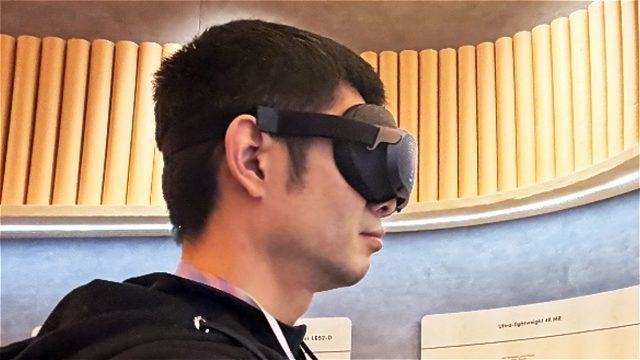
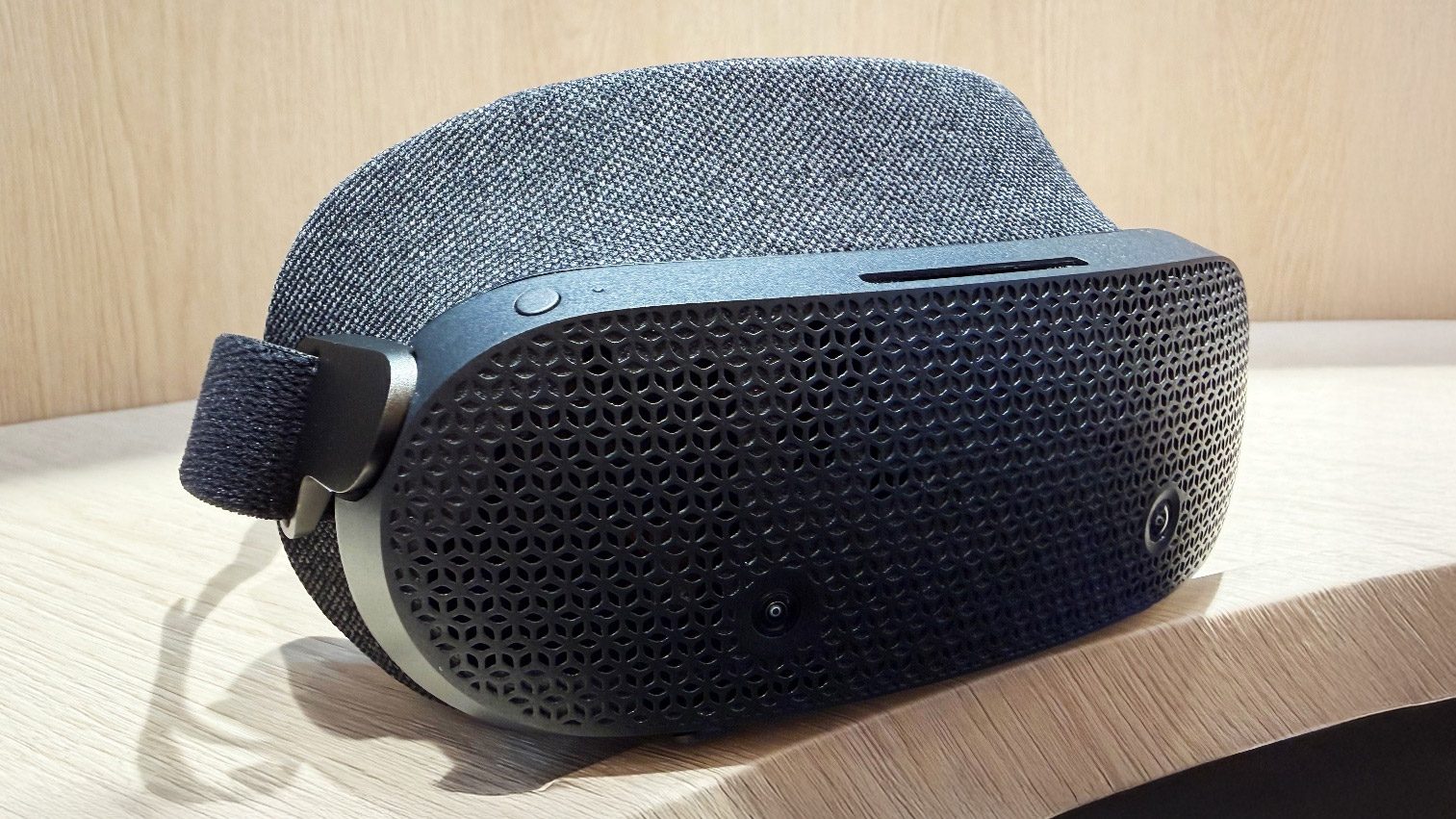
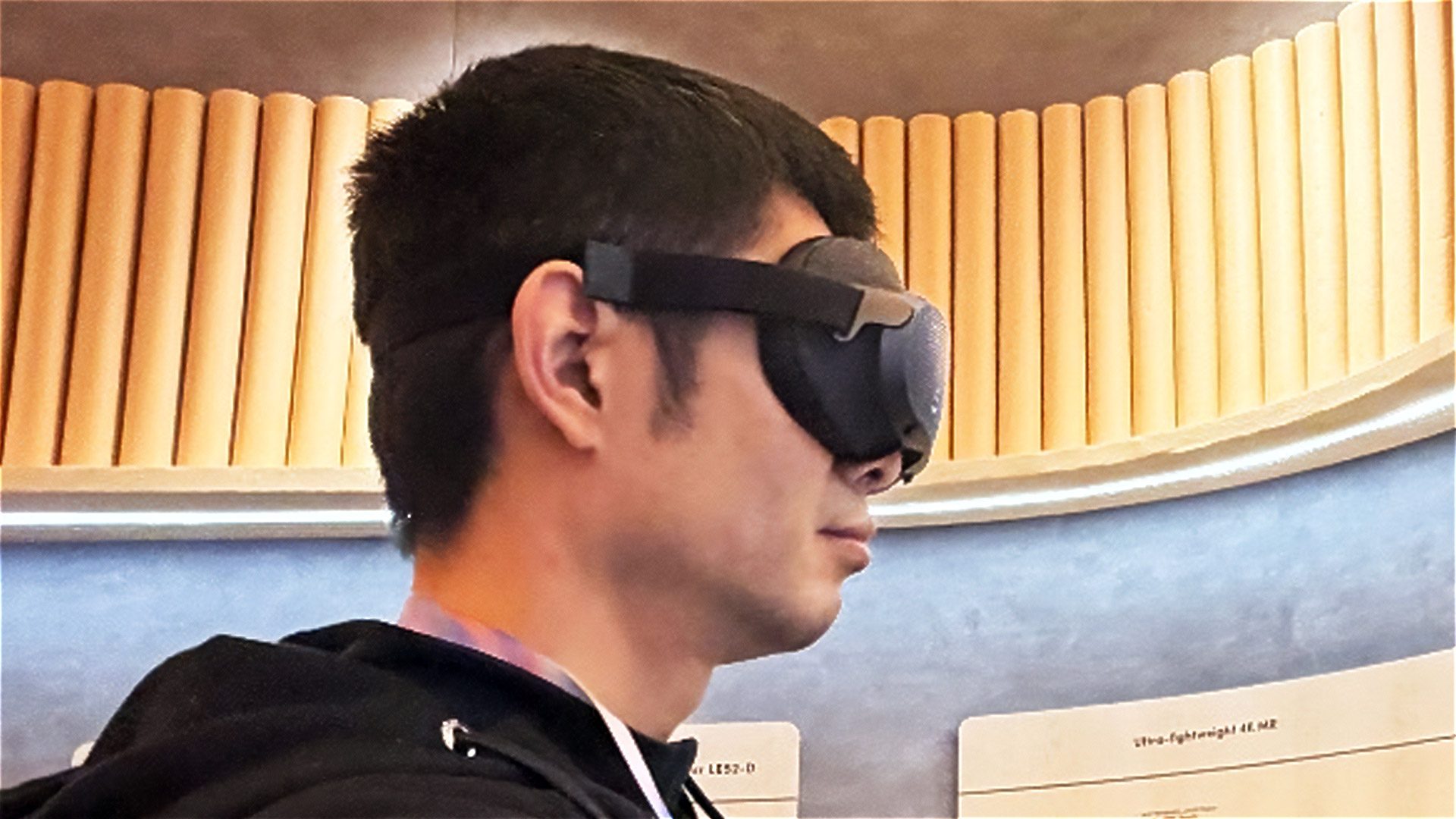
An Ultra-Lightweight MR Reference Design showcases system-level optimizations, reducing the weight of a 4K MR headset to approximately 100 grams. It delivers retinal-level clarity (38 PPD) within a 100-degree field of view, with Video See-Through (VST) and 6DoF [tracking].
We’ve reached out to Goertek for details, but in the meantime many questions remain.
Considering the incredible 100g weight of the headset, it seems almost certain that this reference design does not include on-board compute or battery. For comparison, Quest 3, even with a soft strap, weighs in at 515g.
Image courtesy CNFOL
That means the headset would need to rely on a tethered compute/battery pack, or some other host device, to function. This would follow the trend of headsets like Vision Pro and Galaxy XR which both offload the battery weight to a tethered battery.
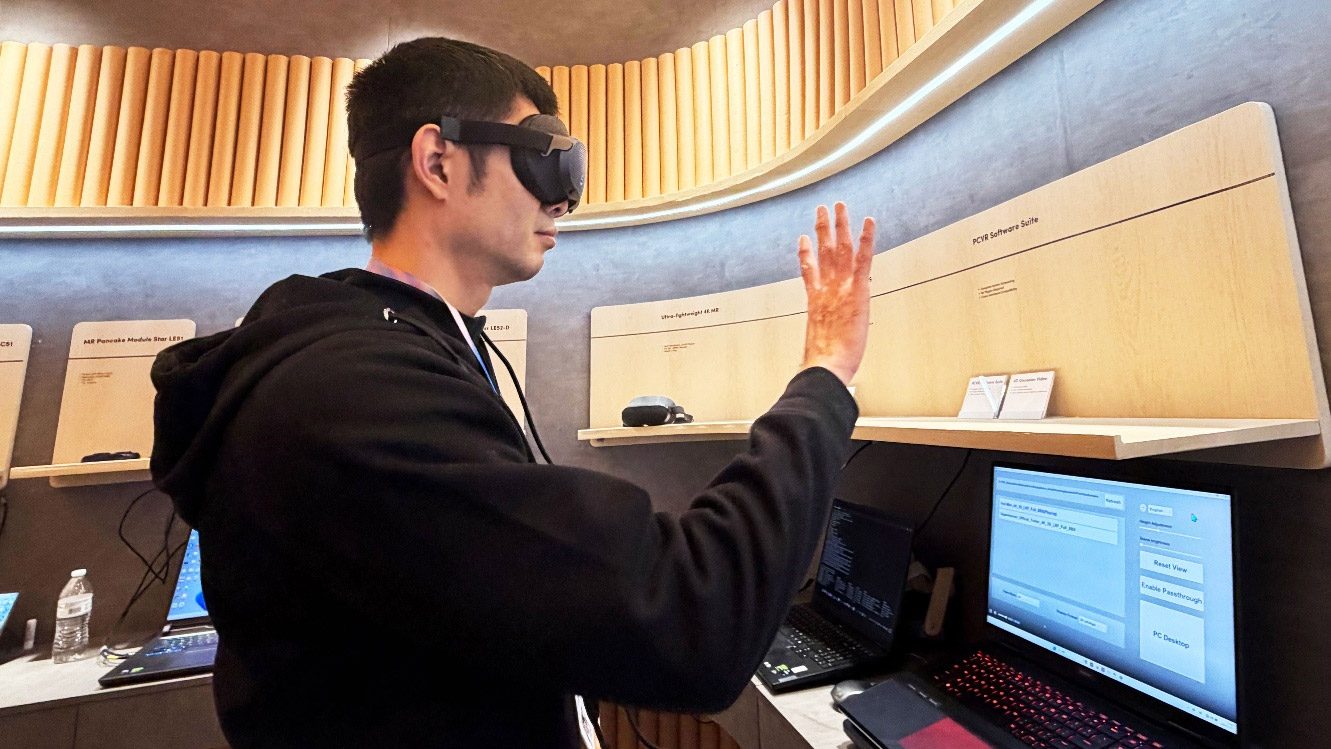
Adding to the confusion, Goertek calling the headset an “MR reference design” would generally be understood to mean a standalone device, but in the one photo we’ve been able to find of the device in use so far (courtesy CNFOL), it appears to be part of the company’s “PCVR Software Suite” display station, and looks to be tethered directly to the PC in front of the user.
Image courtesy CNFOL
In any case, the reference design shows us what kind of resolution and field-of-view can be expected from headsets in 2026 with this compact form-factor, even if the design doesn’t have its own compute/battery.
Image courtesy CNFOL
Likely the reference design is meant to show the form-factor while leaving it up to customer companies to decide if they would bring it to market as a standalone or tethered headset.
Supply shortages and big price increases for RAM and storage have been a major drag for enthusiasts and PC builders in recent months. And while we haven’t yet seen large, widespread price increases for memory-dependent products like pre-built laptop PCs, smartphones, and graphics cards, most companies expect that to change this year if shortages continue.
In the meantime, memory manufacturers are riding high demand and high prices to record profits.
In revenue guidance released this week, Samsung Electronics predicts it will make between 19.9 and 20.1 trillion Korean won in operating profit (roughly $13.8 billion USD) in Q4 2025, compared to just 6.49 trillion won in Q4 of 2024.
Fender Audio may have announced its new headphones and speakers right before CES, but Las Vegas afforded us the first opportunity to see the brand’s new lineup in person. Fender Audio is a Fender-owned brand from Riffsound that’s designing and making new devices after licensing the name. It’s been a while since the guitar and amplifier company made any general-use speakers of its own, and this new arrangement is similar to what Zound was doing with Marshall for a spell.
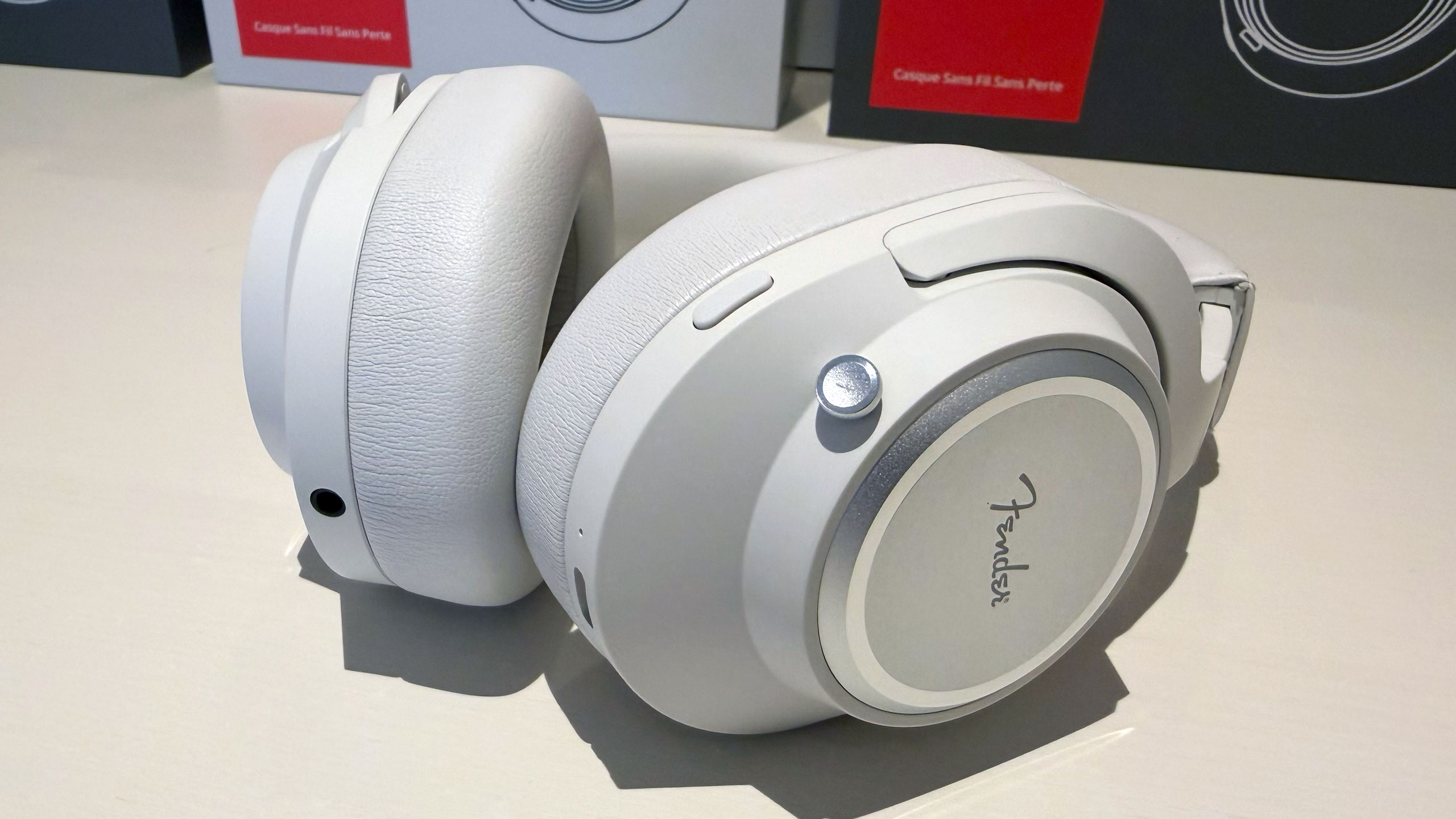
Logistics out of the way, let’s get down to what the Mix and Ellie are like in the flesh. First, the Mix headphones offer a modular construction that allows you to replace nearly every piece as needed. The ear cups detach from the headband and the ear pads are replaceable. You can also swap out the battery, thanks to an easy-to-access slot behind one ear pad. And on the other side, a USB-C dongle for wireless lossless audio is stowed for safe keeping (wired lossless audio over USB-C is also available).
Fender Audio Mix headphones
Billy Steele for Engadget
Fender Audio kept the controls simple on the Mix, opting for a single joystick for volume and playback changes. The joystick also serves as the power and pairing control as the only other button cycles through active noise cancellation (ANC) modes. In terms of sound, the Mix will satisfy listeners who crave deep bass, and vocals cut through clearly. In my brief demo, I would’ve liked more mid-range, but I’ll wait until I get a review unit for a full assessment there. I should mention the other standout feature is battery life: the Mix will offer up to 52 hours of use with ANC enabled (up to 100 hours with it off).
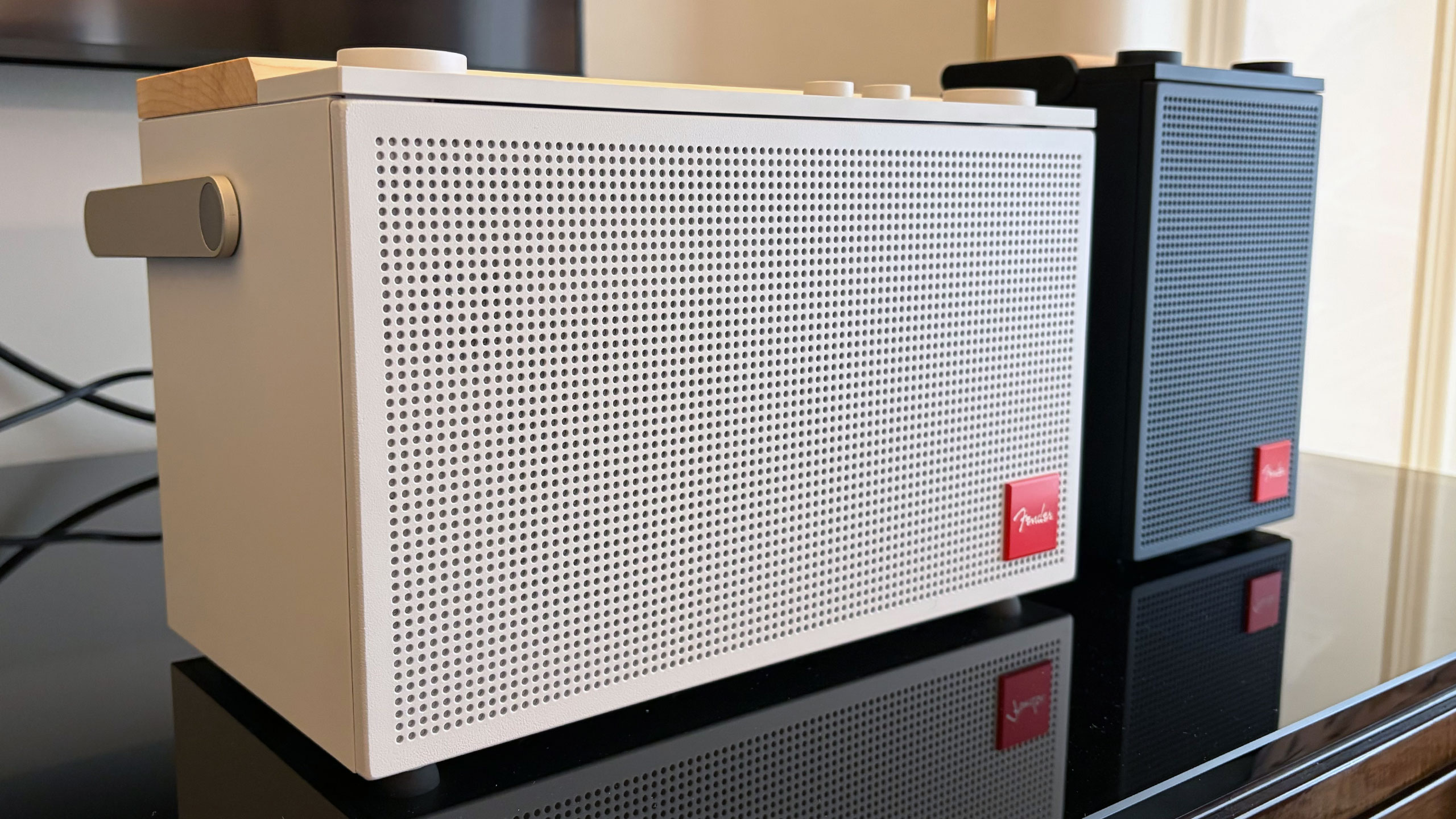
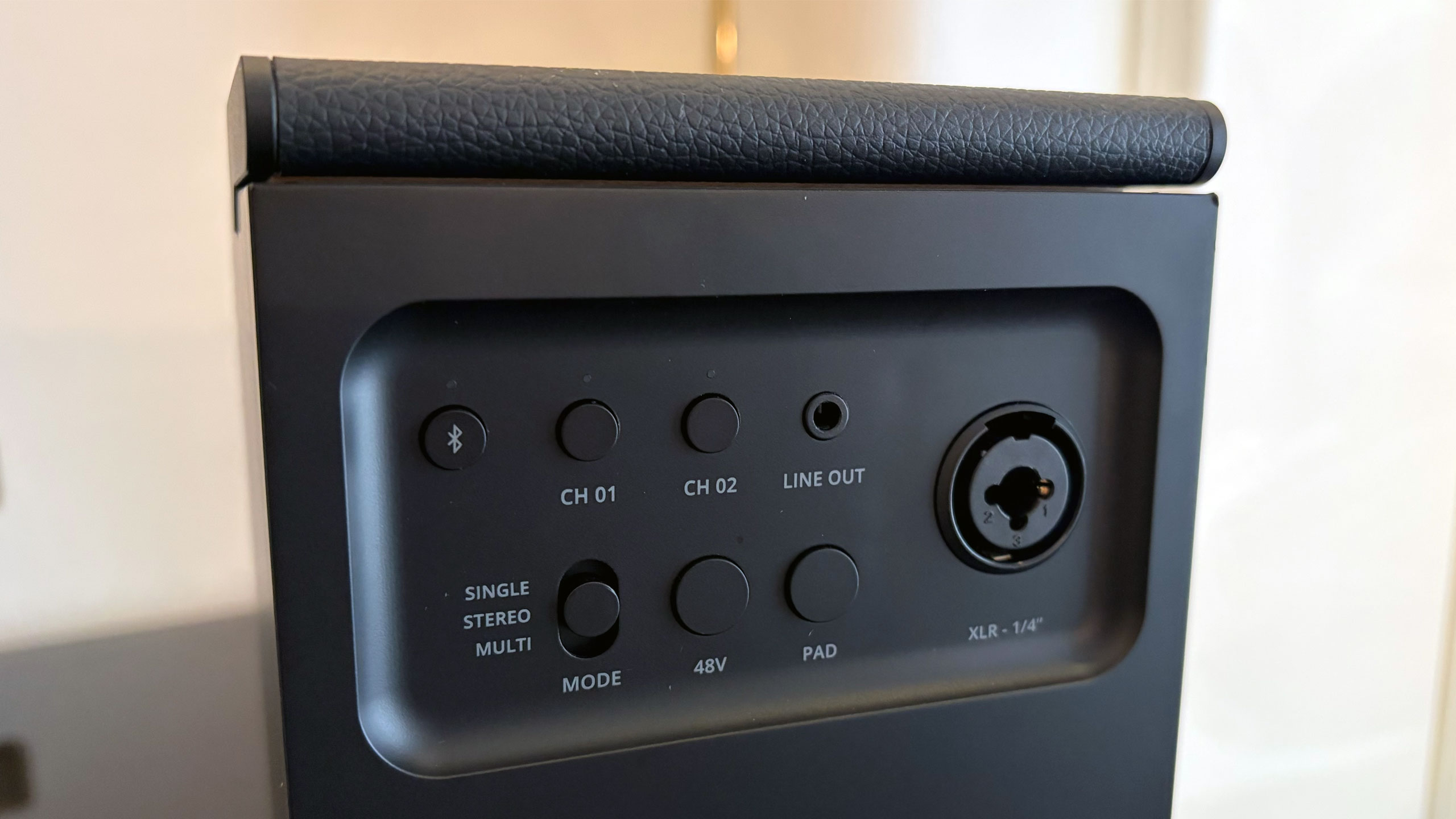
Then there are the Elie speakers. Both offer a similar set of features, which includes two wireless inputs for microphones (the company is working on its own model) and a combination XLR and 1/4-inch input for instruments. The Elie 06 is the smaller unit, housing a tweeter, full-range driver and subwoofer with 60 watts of output. The larger Elie 12 doubles all of that, serving as a more robust but still very portable option.
Fender Audio Ellie speakers
Billy Steele for Engadget
Both Elie units can be used in a single configuration or as a stereo pair. You can also connect up to 100 of the speakers via a Multi mode. Fender Audio has done a nice job here of checking all of the usual Bluetooth speaker boxes while offering something unique in terms all of those inputs. It’s like the company combined “regular” portable speakers with larger party boxes, offering something for customers who don’t want a massive device or any of the flashing lights.
Of course, none of these specs matter if the company didn’t ace the sound quality. While I’ll wait until I can spend several hours with some review units before I make any final judgement on these, I can tell you that both Elie speakers made a great first impression. There’s ample bass in the tuning for both, but obviously the larger Elie 12 offers more thump. Both units also provide excellent vocal clarity and nice details in the highs, as I made sure to select test tracks with lots of subtle sounds — like Bela Fleck’s banjo tunes.
The back of Fender Audio Ellie 06 speaker
Billy Steele for Engadget
Fender Audio says the arrival of the entire new lineup is imminent. Both the headphones and the Elie 6 will cost $299 and the Elie 12 is $399.
This article originally appeared on Engadget at https://www.engadget.com/audio/hands-on-with-fender-audios-headphones-and-speakers-at-ces-2026-203104561.html?src=rss
Whenever you have a bunch of looming tasks—as many of us do at the start of the new year, when everyone actually “circles back” on the things we’ve been putting off—having a structured to-do list is an essential part of getting everything done. Determining what goes on that list and in what order, though, is a task all its own. I’ve covered a lot of ways to do that, but if you’re stuck with a high volume of important responsibilities, you need an approach that matches the complexity of what you’re trying to do—and that’s where the RICE method comes into play.
What is the RICE method of prioritization?
RICE, as you probably guessed, is an acronym. Here’s what it stands for:
Reach: How many people or parts of your life or project this task will impact
Impact: How meaningful that impact will be if and when it’s done correctly
Confidence: How sure you are about your estimates of the other three factors
Effort: The time, energy, knowledge, and resources required
A unique combination of those factors is going to give you guidance on which tasks are the most crucial to prioritize, which is helpful when you’re overloaded by information and dread, unable to think about when or where to get started.
How and when to use RICE
I won’t lie to you: This method is more convoluted than some of the others I’ve covered in the past. I might even recommend trying a simpler prioritization technique, like the Eisenhower matrix, before you try this one and only whip this out if Eisenhower or its peers aren’t given you solid results. RICE takes a little time—and that’s because you need to do some math.
Start by writing down all your tasks. Under each, you’re assigning numbers. The Reach score will be the number of people or parts of your life or project that the task will impact and the Impact score is a 3 (massive impact), 2 (high), 1 (medium), .5 (low), or .25 (minimal impact). Confidence should be a 100, 80, or 50, to represent the percentage of confidence you feel in your estimates and abilities. You can use any number between 0 and 100, but falling back on those three just makes it easier. Most adherents of this method use a complicated math equation (determining “person-months”) for Effort, but I’m going to simplify that for you. Score it the same way you scored Impact, with a 3 for multiple days or resources, 2 for a day, 1 for half a day, .5 for an hour, and .25 for a half an hour or less. You can also score Reach that way if you’re working on a personal project and your results won’t necessarily reach a big number of people. In that case, think about the different areas of your life or personal goals it will affect and use that 3-to-.25 scale.
That part is all subjective, similar to using the ABCDE method to assign grades to your to-dos. It can’t be avoided—you won’t know the true resources required or reach of the project until it’s done—but you can quantify it a bit.
Next, you do math. It’s R x I x C divided by E. You’ll end up with a numerical score for each task. Rank the tasks in descending order, with the biggest numbers first. Obviously, you may find that some can’t be completed until others are done, so use your discretion there, but for the most part, you’ve just created a clear outline of which things will have the biggest impact and reach and you can at least know where to start. Add each into your calendar using time boxing and time blocking, then get after it. Knowing you have a plan of attack is half the motivational battle.
Anti-vaccine Health Secretary Robert F. Kennedy Jr. and Agriculture Secretary Brook Rollins unveiled the delayed 2025–2030 Dietary Guidelines for America Wednesday, which is already drawing criticism for its ties to the meat and dairy industry.
Headlining with the advice to “eat real food,” the new guidelines, which are updated every five years, are in a brisk, citation-free 10-page document. Overall, the new guidelines: lambaste added sugars and highly processed foods (though it doesn’t clearly define them); ditch previous limits on alcohol while directing Americans to just drink “less”; beef up recommendations for protein, including red meat; and appear to embrace saturated fats while not actually changing the 2020–2025 recommendation for how much you should eat—which was and continues to be no more than 10 percent of total daily calories.
“We are ending the war on saturated fats,” Kennedy said triumphantly in a White House press briefing Wednesday, despite the lack of a change. He went on to proclaim that “today, our government declares war on added sugar,” though that too is questionable.
The RADV ray-tracing improvement covered earlier this week for some big performance gains for Unreal Engine 5 titles running under Linux thanks to Steam Play has been merged for Mesa 25.0…
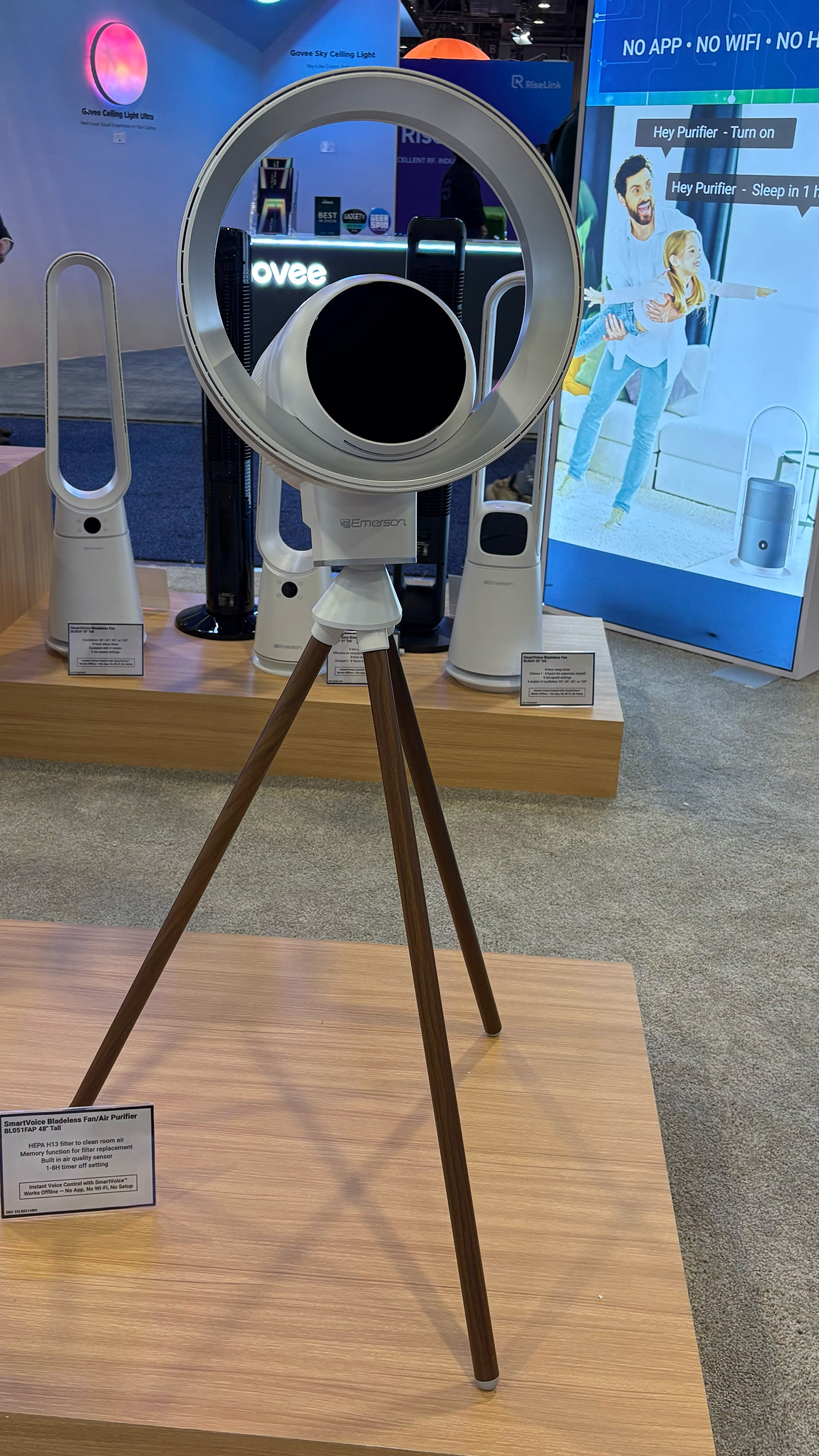
Perhaps you like the idea of controlling your home appliances with your voice, but aren’t super keen on a data center processing recordings of you. Fair enough. The trade-off for most smart home conveniences is relinquishing at least some of your privacy. Today at CES, I saw a line of voice-controlled home appliances from Emerson Smart that adjust power and setting via voice commands. But commands are recognized on the devices themselves, not carried through Wi-Fi and processed elsewhere.
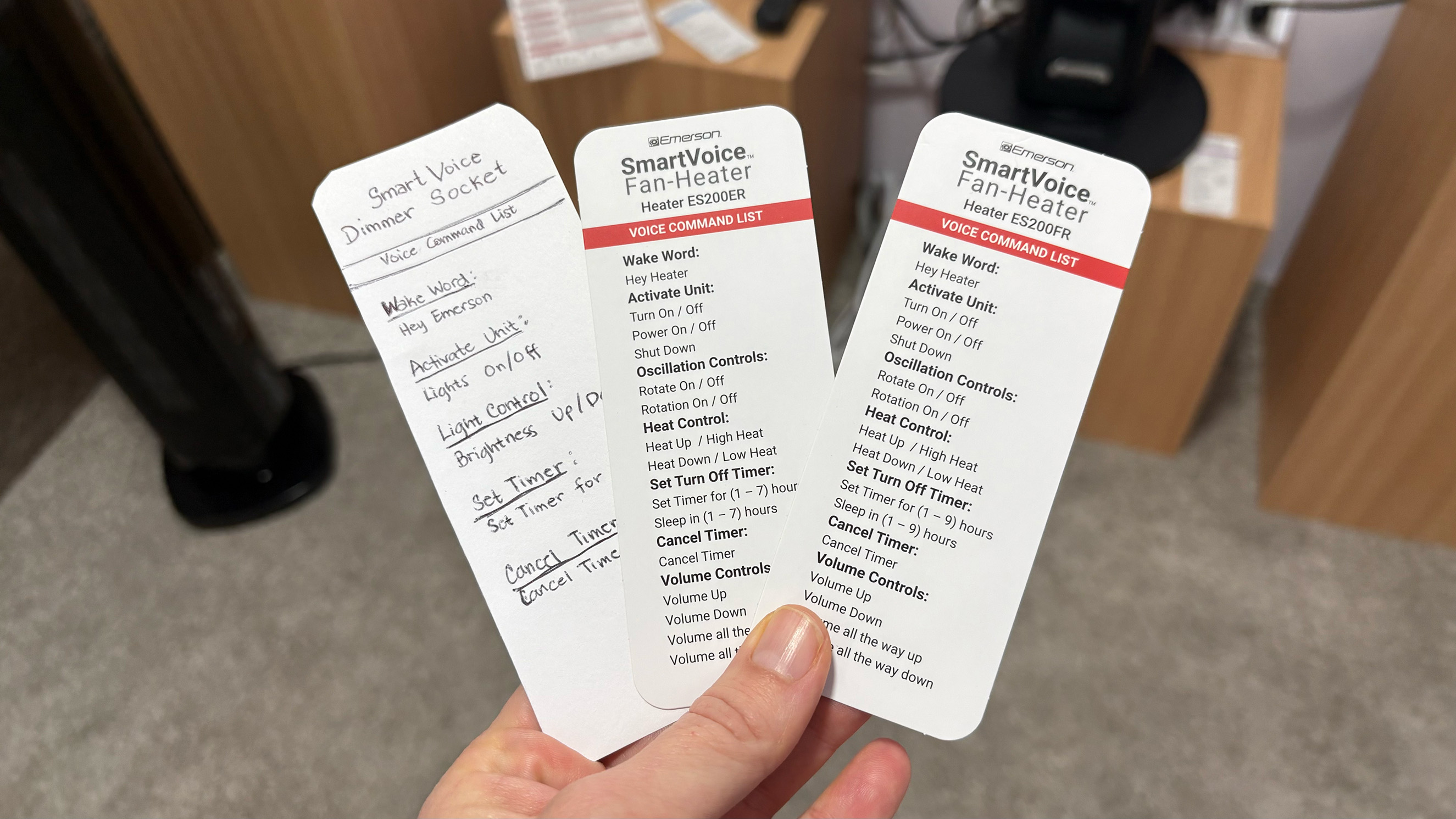
The huge array of smart plugs, fans, heaters and even air fryers require no app for setup and don’t need access to Wi-Fi. Instead, I said, “hey Emerson, lights on” or “hey fan, turn on low” and the devices in the demo space acted accordingly. A few of the devices combine the mic with a speaker and can respond when a command is received.
A bit of built-in programing on the air fryers allow them to understand commands for 100 cooking presets, so saying things like, “reheat this pizza” or “cook these frozen french fries” will set the correct mode, time and temp. Of course you can also just say, “cook at 350 degrees for 10 minutes” and it’ll comply. Most of the commands for the other items are pretty simple but allow you to do things like set a timer, turn on oscillation and set intensity speeds.
Selection of available commands for Emerson Smart devices.
Amy Skorheim for Engadget
Some of the devices allow for a small amount of programmability. Pressing and holding the button on the smart plug, for example, changes the wake word to “plug two,” doing it again swaps it to “plug three,” and so on. That way, if you have more than one plug in a room, you can operate them individually.
The small demo space in which I talked to the devices (that did its best to shut out the thrumming noise of the CES show floor) had at least six models active and listening for my words. When I said “Hey Emerson,” both an air fryer and one of the heaters responded. That was one of the limitations that I could see with the devices: If you outfit your entire home in Emerson Smart gear, it might take some time to name and position everything so it works in a coherent way. The lack of an app means that programmability is limited, too. That’s the trade-off the privacy-conscious or app-averse user will have to make if they want to turn their lamp on and fan up when they walk into a room just by talking.
As the only offline, non-DIY voice-controlled lineup of appliances out there, you’re stuck with whatever design Emerson Smart thinks look good. Thankfully, the overall design is clean and modern, if a little basic. The upcoming models of air purifiers and fans were decidedly more attractive.
A new Emerson Smart air purifier and fan combo.
Amy Skorheim for Engadget
A handful of devices are available for sale now, but new Emerson Smart products will go into production later this year.
This article originally appeared on Engadget at https://www.engadget.com/home/smart-home/emerson-smart-brings-offline-voice-control-to-lamps-and-fans-201500078.html?src=rss