Major automakers have urged Washington to prevent Chinese government-backed automakers and battery manufacturers from opening U.S. manufacturing plants, warning the industry’s future is at stake. From a report: The Alliance for Automotive Innovation, which represents General Motors, Ford, Toyota Motor, Volkswagen, Hyundai, Stellantis and other major automakers, sounded the alarm and said Congress and the Trump administration needed to act.
“China poses a clear and present threat to the auto industry in the U.S.,” the group wrote in a statement for a U.S. House hearing on Chinese vehicles. The group also said lawmakers should maintain the U.S. Commerce Department’s prohibition on importing information and communications technology and services from China that effectively bars the import of vehicles from Chinese manufacturers. “No amount of investment by automakers and battery manufacturers operating inside the U.S. can counter a China that is enabled by subsidies to chronically oversupply around the world. This is a recipe for dumping that Congress and the Trump Administration must prevent from happening inside the U.S.,” the auto industry group said.
I get really carsick if I try to read in a moving vehicle. And there’s a reason for that: my eyes and my sense of movement are out of sync.
At least, that’s according to the CDC, which states that motion sickness, “happens when the movement you see is different from what your inner ear senses.” Your inner ear is a sack of fluid that moves when you do, giving you an innate sense of movement. If you’re in a car and watching the horizon, your senses are aligned. But if you’re looking at your phone, your senses are confusing each other. It’s similar to the reason VR games make some people feel sick.
The free Android app KineStop aims to help. The application overlays a transparent horizon, and a number of transparent dots, across your entire screen. The accelerometer on your phone is used to move these reference points as your phone moves, helping to reduce the conflict between your eyes and your inner ear. You can turn the feature on manually in the application or, if you prefer, you can set it up to turn on automatically when you’re in a moving car.
I tried it out, wondering if it would help with my carsickness, and it did—surprisingly well. Normally I can’t read for more than a few minutes without feeling sick, but the KineStop app helped me do so for longer, without discomfort. I’m still not going to be able to read novels during a long road trip, mind you, but I can look up the next restaurant on a road trip without vomiting, and I call that a win.
Credit: Justin Pot
KineStop is totally free, though there’s a $3.50 pro version that adds themed overlays, including one that makes it look like your phone is a half-empty beer. It’s great to support a developer, but I also think the free version will work fine for most everyone.
F1: The Movie, the cinematic love letter to Formula One and — quite possibly even more so — consumer products made by Apple, is finally available to stream on Apple TV if you’re a subscriber. It follows the sports thriller’s long theatrical run, during which it raked in more than $630 million globally, comfortably making it Apple’s most successful original film.
Directed by Joseph Kosinski (Top Gun: Maverick, Tron: Legacy), F1: The Movie follows the washed-up former F1 prodigy Sonny Hayes (Brad Pitt), who is convinced by an old friend (Javier Bardem) to get back in the driver’s seat and help rescue his failing team. Seven-time F1 world champion Lewis Hamilton served as a producer on the film to ensure it represented the sport as authentically as possible.
Engadget’s Devindra Hardawar reviewedF1: The Movie when it arrived in theatres in the summer, calling it a “shameless Apple ad that will blow your socks off.” Should you manage to keep your eyes from rolling straight out of their sockets when a pair of AirPods Max appear on screen beforeanyone says a word, then a deliriously entertaining blockbuster awaits.
For all of the film’s formulaic storytelling and generic characters, the Really Fast Car bits are so well done that they put F1: The Movie among the very best racing movies, as far as our reviewer is concerned. In truth, it’s the kind of film that deserves to be seen on the biggest screen you can find, but failing that, the TV in your living room should do the job just fine, too.
Apple recently dropped the “+” from its streaming service’s name, so it’s now just called Apple TV (yes, the same name as one of its products). If you’re a new subscriber you can take advantage of a seven-day free trial, after which it costs $13 per month following a recent price hike.
This article originally appeared on Engadget at https://www.engadget.com/entertainment/streaming/f1-the-movie-now-streaming-on-apple-tv-following-a-long-theatrical-run-133531702.html?src=rss
Figuring out how to structure your days so they’re as productive as possible is a challenge, which is why there are so many different techniques for doing it, though they’re all best suited to different kinds of people. And then sticking to a plan once you’ve made it? Even harder. This is where RPM can help. The Rapid Planning Method, or RPM, can help you streamline your daily planning process and get started working on your action steps sooner, making you more productive overall. Plus, since RPM is fairly straightforward, you’re more likely to stick with it.
What is the Rapid Planning Method (RPM)?
This technique comes from famed motivational speaker Tony Robbins, who outlined it in his Time of Your Life program. Robbins may have a slightly cheesy rep, but RPM has the goods: Not only does does the acronym stand for Rapid Planning Method, but it can also serve as a guide to what your day should look like: Results-oriented, purpose-driven, and featuring a massive action plan.
It starts with asking yourself three questions consistently—every morning, for instance, or every week:
What do I want?
What is my purpose?
What do I need to do/What is my massive action plan?
You can write down your answers or just keep them in mind, but they’re intended to drive you forward into action that will be efficient and lead to accomplishing your ultimate goal. For best results, I do recommend writing the answers down in a planner, so you can stick your guiding principles somewhere you’ll continually see them. Actually, I just recommend writing them down in general. Having to hand-write something helps commit the information to memory.
How RPM makes you more productive
There are a whole lot of productivity methods out there—and the benefit of RPM is that it can be easily combined with many of them. For example, you can implement a 1-3-5 to-do list as part of your overall action plan. The defining feature of RPM is that it keeps your goals and desires front and center, giving you something to strive for. and organize your actions around. Just by keeping that central plan in mind, you can weed out what isn’t important and highlight what you want to prioritize, all without a lot of time-wasting deliberation.
Overall, I recommend sticking with productivity techniques that revolve around larger, bigger-picture goals and clearly-defined purposes. When you fail to keep your dreams and loftier ambitions in mind, it can be hard to motivate yourself to complete the tedious, smaller steps that add up to them. Another solid option for this kind of broader thinking is the MIT method.
Like using SMART goals, using RPM infuses your daily tasks with a sense of purpose or a mission, helping you stay focused and engaged.
You may be surprised to learn electricity only accounts for 21 percent of the world’s energy consumption. Fossil fuels and the rest all play their part to make the world go around, but their role is likely to diminish no matter what happens. The International Energy Agency believes electricity’s share of global energy consumption is going to double in the next decade alone. You all know the causes: Electrification, EVs, data centers and AI mean the planet needs to dramatically increase its power generation, transmission and storage capacity. It’s a shame, then, that the world is nowhere near ready to satisfy such an outrageous surge in demand.
Re-learning to love the atom
The US has certainly spent the year opening doors to dramatically increase domestic energy production. Part of that has to give the signal that the US will embrace nuclear power in ways it hasn’t for generations. This January, an executive order titled Unleashing American Energy included an instruction for the government to eliminate rules and regulations related to power generation. Its primary focus was to destroy environmental regulations limiting the extraction of oil, natural gas and coal, but also to remove roadblocks to the construction of new nuclear plants. Then, in May, a subsequent order declared a desire to ensure the deployment of “advanced nuclear technologies.”
As the driving force behind the AI push, big tech has made some high profile moves to buy up extra generation capacity. Meta signed a 20-year deal with Constellation to own the output of the Clinton Power Station, preserving the 1.1GW facility once its state tax credit expires next year. Microsoft has its own 20-year deal with Constellation to own the power generated by reactor 1 at Three Mile Island, now renamed the Crane Clean Energy Center. On November 18, that project was also given the backing of the Department of Energy which authorized a $1 billion loan. But even without the backing of big tech, other mothballed reactors are being restarted, like the Palisades plant in Michigan. Earlier this year, the Department of Energy handed out a $1.52 billion loan to get the facility, capable of generating 800MW, back up and running.
Big tech is also betting on the future of nuclear power, signing deals with a number of startups looking to build out a new generation of reactors. Google, for instance, has backed Kairos Power and its plan to build a series of small, modular reactors. Amazon, meanwhile, invested in X-Energy and has published plans for its own buildout in Washington State.
It’s not just the US that is learning to fall back in love with nuclear power, as the rest of the world is also building out new capacity. The World Nuclear Association says there are 70 reactors currently under construction across 15 countries. Russia, India, Argentina, Turkey, South Korea, Japan, and Brazil, to name just a few, are all working on new reactors.
China on its own is presently building 33 reactors and, as Nuclear Business Platform reported earlier this year, greenlit a further 10 this April. That same report adds that China’s policy of producing multiple reactors at a time has seen costs crater. It says that while the UK’s two new reactors at Hinkley Point will cost in excess of $60 billion, each of these new reactors will cost $2.7 billion.
Bridging the nuclear gap
coal handling in a port
Indigo Division via Getty Images
Building a nuclear reactor is not a swift process, and construction of a facility can take the better part of a decade. You can add on a few more years if you include the necessary procedural steps that need to be undertaken before a single piece of concrete is poured. Consequently, any major shift in the US’ power generation fleet will be measured in generations, rather than years. It’s a concern that, for all of the attention nuclear power is getting, it’s merely a smokescreen for a renewed push for fossil fuel extraction.
After all, one major casualty from the Big, Beautiful Bill was the eradication of subsidies for the US’ solar industry. As we reported back in July, the act has kicked the legs out from domestic solar panel manufacturing, handing renewable energy dominance to China. This goes hand in hand with the US Department of Energy setting up a $625 million funding stream to revive America’s coal industry and recommission old power plants. Or that it is also awarding contracts to grow America’s strategic petroleum reserve.
Back in September, Energy Secretary Chris Wright made the implausible claim to BBC News that fossil fuel extraction was nothing to worry about as fusion power would be on the grid in the next decade. Wright, himself the former CEO of fracking company Liberty Energy, was taken to task by a number of climate experts for publishing a report riddled with “misleading or fundamentally incorrect” assertions. Similarly, on November 20, the Department of Energy reshuffled its org chart to eliminate several departments responsible for renewable energy and energy efficiency while forming the Office of Fusion.
Solar’s unstoppable rise
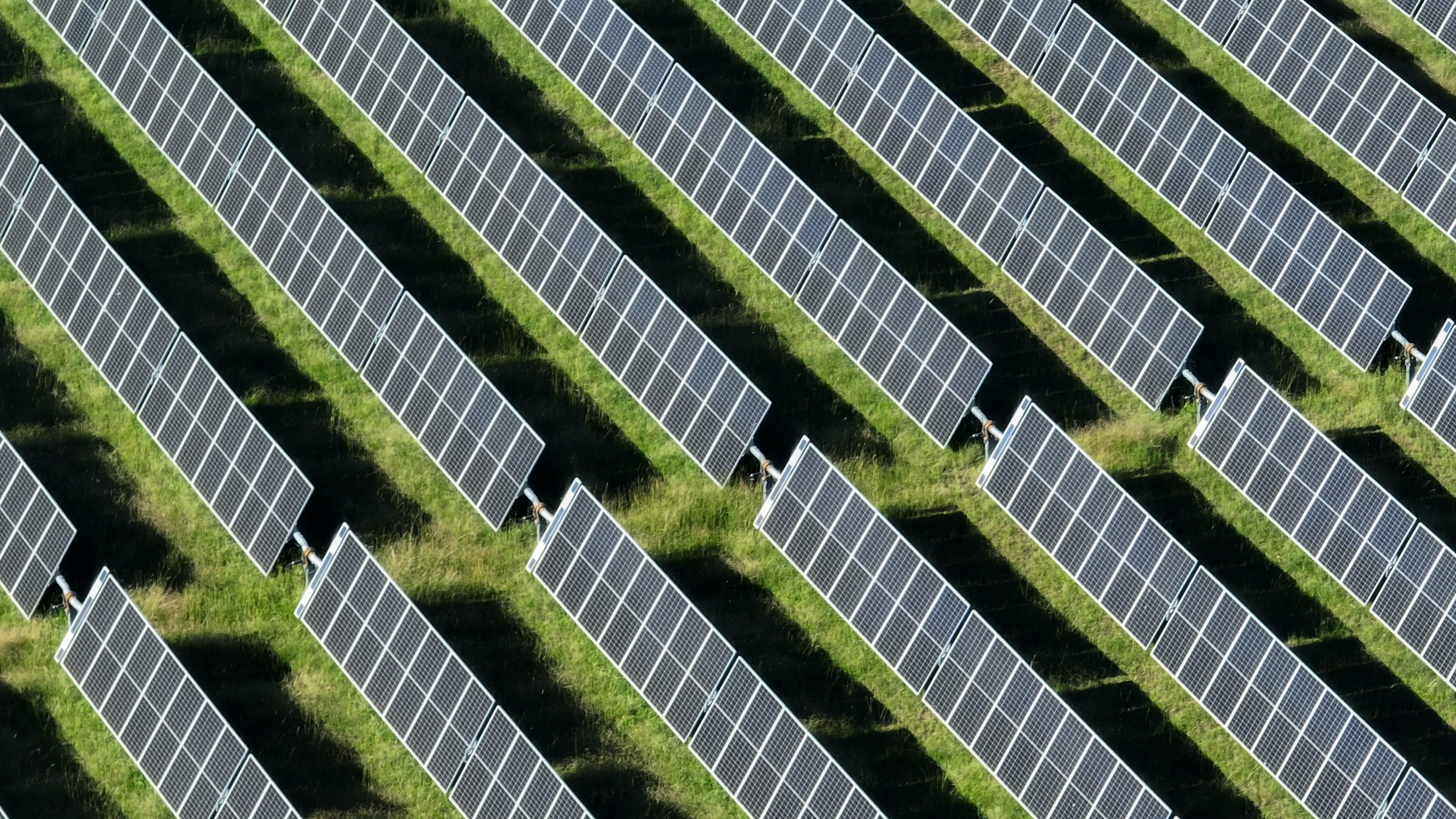
This stunning aerial view captures an array of solar panels arranged in neat, parallel rows across the landscape. From above, the panels shimmer under the bright sunlight, creating a striking contrast against the natural terrain below. The organized rows of solar panels stretch across acres of land, symbolizing the growing global shift toward renewable energy. The grid-like pattern highlights the efficiency and scale of modern solar farms, contributing to sustainable energy production.This high-resolution image showcases the incredible reach and potential of solar power as a clean, renewable energy source. Whether situated in rural fields, expansive deserts, or atop rooftops, these solar panels represent a major step toward reducing carbon footprints and combating climate change. The solar farm’s orderly rows and reflective surfaces create a visually appealing scene, demonstrating both technological innovation and environmental responsibility.
Diane Keough via Getty Images
The US may have kneecapped its domestic solar industry, but it may not be enough to defeat renewables’ momentum. In October, the International Energy Agency projected renewable energy will grow by 4.6 TW by 2030 — a figure equal to the combined generation capacity of China, the EU and Japan combined. 77 percent of that figure is expected to come from solar power alone, despite the loss of subsidies in the US and less favorable circumstances in China.
The domestic US forecast has been revised downward significantly as a consequence of its policy choices. But despite this, the obvious benefits of solar power haven’t gone away even if the price may be higher than it was at the start of the year. It remains the fastest and cheapest way to add new power in many countries, and can be installed on a grid or individual basis. Not to mention its utility in remote areas with poor generation resources, where it can reduce dependency on fossil fuels. This year, clean energy think-tank Ember reported on the growth of solar power in the last decade, and how it went from adding just one percent of global power generation in 2015 to 8.8 percent in the first half of 2025.
“AI demand for electricity is the macro driver of US made solar,” said Rob Gardner, VP at the Solar Manufacturers for America Coalition. “AI investments can’t deliver expected returns without quickly deployed power, and US solar is the fastest and cheapest to deploy,” he said. Gardner cited a recent FERC forecast which predicts that 92.6GW of solar will come online between now and July 2028.
The dream of fusion
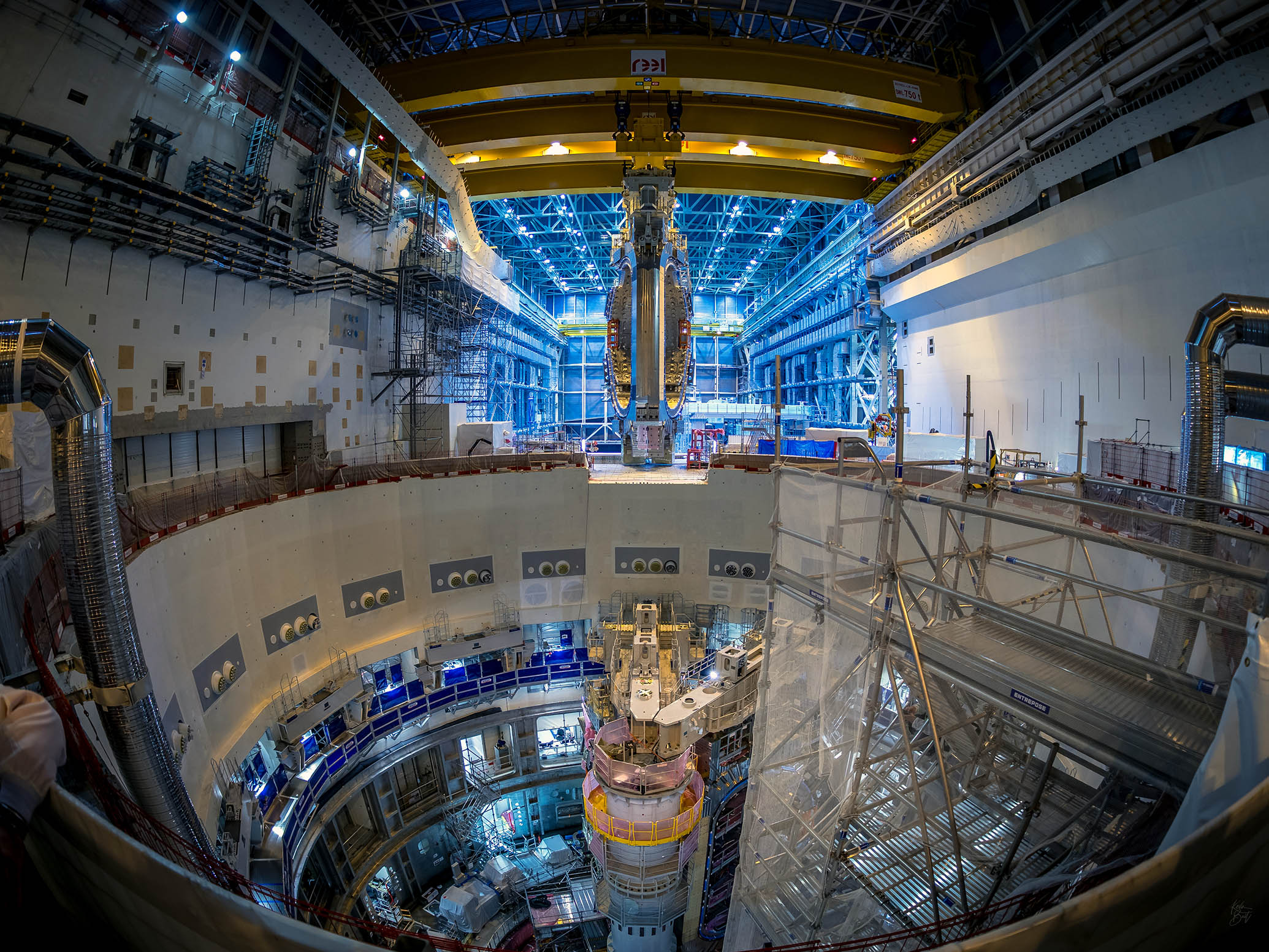
Construction inside the reactor of ITER.
ITER
The US is pinning a lot of its hopes on fusion power to wipe away the debt of our fossil fuel past. Earlier this year, the Department of Energy released a roadmap to get fusion out of the lab and into the world. It wants to coordinate the remaining resources of the federal government to close the fusion world’s “critical science, materials and technology gaps.” In the next three years, officials have been tasked with designing facilities for reactors and developing sources of fuel. Within the next decade, it’s hoped the government will be able to offer large-scale fuel cycle plants to help private sector plants start operations.
If fusion power can be harnessed, it has many of the same upsides as nuclear fission with a lot fewer downsides. If nuclear fission harnesses the energy released when an atom is broken apart, then fusion harnesses the energy released when two smaller atoms are smashed together to create a larger one. It harnesses the same principle as you’ll find inside our sun: Superheated hydrogen atoms fusing to create helium. And while nuclear fusion requires radioactive material, we can source deuterium and tritium from water and lithium.
ITER (International Thermonuclear Experimental Reactor) is a giant experimental fusion reactor under construction in France which, when operational, will be the world’s largest. It is backed by a coalition of nations, including the US, EU and China, and has the aim of both generating power and developing the technologies necessary to make Fusion a reality. The organization claims that there is enough of both materials available on the planet to run fusion plants for at least a thousand years, if not longer. There are also a raft of safety benefits, as there’s no creation of the sort of long-lived and dangerous waste associated with nuclear power, no risk of a meltdown, and its raw materials can’t be used to make weapons.
But while fusion is entirely possible, and on paper could be the salve to all of the world’s energy ills, it’s not yet a reality. There are a large number of engineering challenges sitting between us and a viable commercial reactor. The shift that has happened this year is that fusion is now being treated as a “strategic national priority,” according to the International Atomic Energy Agency. More than 160 fusion facilities are operational worldwide, each one looking to explore ways of solving the hard problems standing between us and limitless power.
But as well as ITER, there are other major nations working to build out their own fusion capacity. The biggest would likely be China’s Experimental Advanced Superconducting Tokamak (EAST) which has already set a record for energy generation. At the start of this year, it was able to produce a steady state for 1,066 seconds.
But what we are seeing now, which may offer some degree of hope, is the surge in interest from the private sector. Companies like Commonwealth Fusion, Type One Energy, Helion and Pacific Fusion are all working on their own fusion facilities. These projects have received billions in funding, but it’s likely all will need time to work out if their approaches are viable.
Stuart White is a spokesperson for Tokamak Energy, a British-Japanese startup spun out from the UK’s Atomic Energy Authority which is developing its own fusion technologies. In 2022, the company’s own reactor was able to reach a plasma temperature of 100 million degrees celsius. “It’s an incredible achievement but that isn’t going to power homes around the UK or anywhere,” he said. White believes the fusion world will spend the next decade “scaling up,” projects to find the right pathway to building commercial reactors. He cited national programs, like the UK’s STEP which is targeted to begin working in 2040, while the US’ plan for the mid-2030s he feels is “aggressive.”
White also explained that, as equally important as solving the key physics issues, is building out the supply chain to actually make the equipment. He cited the importance of manufacturing in Japan and China to produce the hardware necessary to build fusion reactors. And that this process, while time consuming now, will help accelerate the eventual development of the technology down the line. White added that another positive sign is that regulators aren’t likely to want to scrutinize fusion reactors with the same intensity as they do nuclear reactors. That will both speed up the construction of new facilities and reduce costs when they do eventually enter service.
What’s clear, however, is that Fusion is not going to be able to swoop in and decarbonize the world’s energy needs in the sort of time scale it’s likely to be required. (White said it is likely to arrive in time to complement other clean sources of energy over the next half century, rather than so quickly that every other power station gets mothballed instantly.) Consequently, the government of the world must keep prioritizing the rollout of renewables rather than hoping that fusion will simply bail everyone out in the next decade.
This article originally appeared on Engadget at https://www.engadget.com/science/in-2025-ai-and-evs-gave-the-us-an-insatiable-hunger-for-power-133000673.html?src=rss
Last week, Netflix surprised us all when it announced plans for an $82.7 billion acquisition of Warner Bros., a move that would fundamentally reshape the world of streaming video and Hollywood. But Paramount isn’t giving up on WB — this week it launched a $108 billion hostile takeover effort. In this episode, we discuss why everyone is fighting for WB, and why Netflix may be the best worst option for the storied movie studio.
What the Netflix bid for Warner Bros. means for at-home streamers and moviegoers – 1:55
Disney characters are coming to Sora after OpenAI struck a deal – 32:59
Meta may be giving up on open source for Llama – 43:53
Google CEO says we’re just going to have to grin and bear societal disruption via AI – 46:46
Around Engadget: The Kindle Scribe Colorsoft is good, but is it $630 good? – 49:06
The best trailers and announcements from The Game Awards’ Day of the Devs stream – 51:28
Here’s why projectors won in 2025 – 54:31
Working on – 56:15
Pop culture picks – 57:33
Credits
Host: Devindra Hardawar Guest: Nathan Ingraham Producer: Ben Ellman Music: Dale North and Terrence O’Brien
This article originally appeared on Engadget at https://www.engadget.com/social-media/engadget-podcast-why-netflix-is-the-best-worst-option-for-warner-bros-132156232.html?src=rss
Sure enough, yesterday’s inaugural TheRock 7.10 release tag ended up being a precursor to ROCm 7.10 as predicted in the earlier article. Overnight ROCm 7.10 was released as a new developer preview and with it comes expanded hardware support — including for Ryzen AI 300 Strix Point APUs finally being officially mentioned…
Despite the word “ubuntu” having a nice connotation (especially in Africa), the distro called “ubuntu” isn’t a poster child for community but for a super-rich person commanding an army of unpaid volunteers
A popular productivity method encourages you to start your day by “eating the frog”—that is, tackling your biggest, most important task of the day first, then moving through the lesser ones in turn. For many, structuring their to-do list around their greatest responsibility is a good way to stay motivated and ensure top priorities are handled expediently.
But not every person works best that way. I know I don’t. Even for people who generally doenjoy tackling the hard stuff first, not every dayis the same. If you find the prospect of jumping into a massive project first thing in the morning daunting—every day, or just today—there are other ways you can arrange your schedule. The following two rules can help you.
Start your day with the 10-Minute Rule
The 10-minute rule was coined by time management expert Clare Evans, who included it in a roundup of “anti-sad hacks.” Here’s the gist: Think about the activities that don’t energize or excite you, but which also don’t take up a lot of time. Answering emails. Making a grocery list. Organizing your desk. Filling out paperwork. You can probably knock each of these out in 10 minutes or less, but they’re tedious.
So do all of your “10-minute tasks” right away. The theory behind why this is helpful is similar to the one undergirding the concept of “eating the frog”: Once these tasks are done, you’ll feel a sense of accomplishment, and will be well positioned to a tackle additional responsibilities.
Sure, when you do choose to eat the frog, you’ll feel motivated and proud, and it will be easier to breeze through the lighter lifts on your list—but that’s not always the case. Sometimes, you’re too bogged down to tackle something huge. Other times, doing that big thing will deplete your energy and focus enough that those small tasks will feel a lot bigger than they should.
On these occasions, the 10-minute rule might be a better option. Quickly working through the simple things first won’t zap your energy or use up all your resources, and will still give you a sense of accomplishment that can keep you going.
I am a major proponent of doing this, especially for the tasks I don’t enjoy at all, like cleaning. In my version, I keep an ever-updating note on my phone that contains small tasks I need to do, which I input the minute I think of or notice them. They’re usually things like “clean the fan” or “wipe the baseboards.” Just jotting them down helps keep them closer to the top of my mind, so even if I’m lacking motivation or time in the moment, I always have a list to consult. Then, when I think of one or check my list, I just pounce on it. After that, I work in the “one more” trick, which involves asking yourself if you can do “one more” thing every time you complete something small. The answer is usually yes and, as you work through the list of additional tasks, you grow more and more motivated.
The “One-Minute Rule” is even simpler
There’s an even a simpler method, conceptualized by Gretchen Rubin in her book The Happiness Project. It’s similar to the 10-minute rule, but not quite as structured. In short, if something will take you a minute or less to accomplish, you should do it as soon as you realize it needs to be done. I mentioned I keep my 10-minute tasks in a note, but since becoming familiar with Rubin’s technique, I’ve started trying to knock out my one-minute projects the second I think of them or notice them. It does help. Emails don’t go unanswered. The table is never in desperate need of a wipe-down. Little actions add up to big improvements, which compounds the motivation.
This rule is especially useful for me when it comes to signing important documents—a simple thing that I can do quickly, but which I often end up putting off, and then forgetting to do altogether. I’ve recently been trying something new: As soon as I see the request (which might pop up on my computer, iPhone, and/or Apple Watch), I stop whatever I’m doing it, open it, complete the Docusign, return it, and get on with my day. Nothing to remember to come back to later, and minimal interruption to my workflow now.
This is the crux of Rubin’s rule: If you can effectively cross an item off your list in under 60 seconds, just do it. Yes, this flies in the face of other productivity methods, which emphasize limiting distractions and rigidly blocking out your schedule. But in life, not everything will always slot neatly into a perfect, prearranged structure—just as it won’t make sense to begin every day with that mouthful of metaphorical frog.
There’s another version of this—the two-minute rule—which operates the same way. I’ll caution this, though: Don’t get too hung up one whether something will take one, two, or 10 minutes. Don’t overthink these strategies until you’re in a state of decision paralysis. Trust yourself to recognize the tasks that can easily be taken care of instantly, the ones that might take 10 minutes but should be tackled ASAP, and the ones that will be a heavier lift. If you’re struggling, try a task prioritization technique like MIT, which helps you order your responsibilities based on the impact they’ll have on your life, or the Eisenhower matrix, which organizes them by urgency.
An anonymous reader quotes a report from the Guardian: Reddit has filed a challenge against Australia’s under-16s social media ban in the high court, lodging its case two days after implementing age restrictions on its website. The company said in a Reddit post on Friday that while it agreed with protecting people under 16, the law “has the unfortunate effect of forcing intrusive and potentially insecure verification processes on adults as well as minors, isolating teens from the ability to engage in age-appropriate community experiences.”
Reddit said there was an “illogical patchwork” of platforms included in the ban. “As the Australian Human Rights Commission put it, ‘There are less restrictive alternatives available that could achieve the aim of protecting children and young people from online harms, but without having such a significant negative impact on other human rights.'” Reddit argued it was a forum primarily for adults without the traditional social media features the government has “taken issue with.”
Reddit was challenging the law on the grounds it infringed on the implied freedom of political communication. It was also seeking to challenge whether Reddit could be considered an age-restricted social media platform under the legislation. It said it was not seeking to challenge the law to avoid compliance, and had implemented age-assurance measures since Wednesday. The company said the vast majority of Redditors were adults, and advertising wasn’t targeted to children under 18. The Apple app store age rating for Reddit is 17+. “Despite the best intentions, this law is missing the mark on actually protecting young people online,” Reddit said. “So, while we will comply with this law, we have a responsibility to share our perspective and see that it is reviewed by the courts.”
This weekend, we’ve chosen three events to help you earn route badges (and XP bonuses) for tougher routes, plus two very different TT-related events. See our picks below!
THE COALITION PRL Full and PRL Half Badge Hunt
Route Badge Endurance Challenge Unique Event
This event from popular Zwift team THE COALITION is essentially three events in one, designed to help riders of all types have a great day out while riding London’s PRL Full or Half routes. Choose your own adventure! Ride the PRL Full (A group), the PRL Half (B group), or a banded version of the PRL Half (C group).
A and B will start together, while C will start two minutes later. All riders will be able to see each other on course. Read the event description for more info.
The USMeS squad tells me their last attempt to break the Fuego Flats Reverse TT record was just 4s off the record of 7:34. This event begins with a warmup/lead-in, but once riders hit the segment, the front pack will feature A/A+ riders hitting the line at 55kph/34mph in TT style rotation ~8.5wkg for 1 min.
All riders will be placed on draftable Cadex Tri bikes with the fastest disc wheels. Riders of all abilities are invited to join in the lead-in, then attempt their own PRs.
Cycling Time Trials (CTT) – the national governing body for time trials in England, Scotland, and Wales – continues to evolve their popular time trial series (read about the launch here).
Saturday is your last chance to complete week 5’s race on Tempus Fugit (12.1 miles, 16m), which is a repeat of the first week’s race. Set a course PB and you’ll earn series points to boost your overall ranking!
The Feed is holding three longer fondo-style group rides this Saturday on Navig8 (66.1km, 421m), Dust in the Wind (52.5km, 582m), and Sacre Bleu (73.8km, 410m).
Each fondo has a ride leader, with a pace of 2.2-2.8 W/kg. Finish the ride and unlock The Feed kit on Zwift. Each fondo ride also features two prize giveaways – the ride leader will explain how they work!
Join the Zwift Riders Scotland team and tackle some of Zwift’s more difficult routes to earn those route badges! These are banded rides, so you’ll stay with the pack as long as you keep pedaling.
This week they’re on New York’s Fuhgeddaboudit route (79km, 838m).
We choose each weekend’s Notable Events based on a variety of factors including:
Is the event unique/innovative in some way?
Are celebrities (pro riders, etc) attending/leading?
Are signup counts already high, meaning the event is extra-popular?
Does the ride include desirable unlocks or prizes?
Does the event appeal to ladies on Zwift? (We like to support this under-represented group!)
Is it for a good cause?
Is it just plain crazy (extra long races, world record attempts, etc)?
Is it a long-running, popular weekly event with a dedicated leader who deserves a shout out?
In the end, we want to call attention to events that are extra-special and therefore extra-appealing to Zwifters. If you think your event qualifies, comment below with a link/details and we may just include it in an upcoming post!
Trek has recalled around 700 electric bikes in the USA because the bolts on the chainring can come loose, causing it to come off and posing a crash hazard to the user.
If you have one of the affected bikes, you should stop using it immediately and contact an authorised Trek dealer to schedule a free repair at the dealer location, the recall notice says.
“The dealer will tighten the chainring bolts to the correct specification. Trek will provide consumers who participate in the recall with a $20 in-store credit toward Trek, Electra, or Bontrager merchandise. The credit is valid through December 31, 2026,” the notice explains.
Trek issued the recall following three reports of chainrings coming loose on the recalled bikes. No injuries have been reported.
The bicycles were sold at authorised Trek retailers across the USA from July 2025 to September 2025 for between $5,000 and $8,000.
In response, we created this non-smart TV guide that includes much more than dumb TVs. Since non-smart TVs are so rare, this guide also breaks down additional ways to watch TV and movies online and locally without dealing with smart TVs’ evolution toward software-centric features and snooping. We’ll discuss a range of options suitable for various budgets, different experience levels, and different rooms in your home.
Honestly, compiling the biggest losers for Engadget is more fun than talking up the winners. While we reviewed nothing as atrocious as those ill-fated AI assistant gadgets from 2024, AI companies and services straddled both the winner and loser podiums.
The losers might be you, the American consumer. (Sorry.) In the US, anyone wanting a drone will have to find something that isn’t made by DJI. The company has been targeted by regulators since 2017 over concerns its products could spy on sensitive US infrastructure on behalf of China.
Engadget
The problem is DJI has such a high market share (over 75 percent) that its absence will effectively upend the industry. Oh, and its drones are consistently the best too. The US government hasn’t yet attempted to work with DJI to assess whether its products pose a risk. DJI recently made a final plea for a security review, sending letters to five US agencies that could assess its products. If that fails, US drone options will shrink massively.
In the same 12 months, EV sales across the globe are up around 25 percent this year. Germany set a record in the first half of 2025, with electric cars accounting for nearly one in five new registrations. In China, EV sales are growing so fast (over 50 percent market share) that the country is flooding the global market with gas-powered cars it can’t sell at home. However — remember this is about losers — in the US, the Trump administration ended the EV tax credit. And shock! Sales of EVs in the US slumped, with some automakers, such as Ford, seeing a 60 percent year-over-year decline.
As Sam Rutherford puts it, this policy change puts more roadblocks (his inadvertent pun, not mine) in the way of making cheaper battery-powered cars. It also affects EV investment and could mean US automakers fall even further behind their rivals elsewhere.
We also point and shake our heads at Xbox, Grok and TV streaming. Check it all out right here.
News, trailers and award winners. Most of which are Clair Obscur.
Remedy
If you missed The Game Awards 2025, you missed a historic sweep by Sandfall Interactive’s Clair Obscur: Expedition 33. The Belle Epoque saga, which was expected to win several categories, even bagged Game of the Year and eventually picked up more wins than any title in the show’s 12-year history.
Naturally, there were trailers and game reveals too, which were pleasantly notable. We got a first look at the Control sequel, Resonant, Star Wars: Fate of The Old Republic is coming, headed by Mass Effect veterans, while Larian Studios is returning to the Divinity series following the success of Baldur’s Gate 3. Heck, if you want a good chance of winning at The Game Awards, hire Jennifer English to voice one of your main characters — she was in both BG3 and Clair Obscur.
Disney announced a three-year licensing agreement with OpenAI to bring more than 200 of its characters, including those from Star Wars and Pixar, to the Sora app and ChatGPT. With the deal in place, OpenAI users will be able to prompt ChatGPT to generate images that tap into Disney’s intellectual property, with costumes, props, vehicles and environments covered. Additionally, Disney will invest $1 billion in OpenAI, with the option to purchase additional equity down the road.
Learn about tennis from Serena Williams or music from John Legend.
If you’re struggling to find a good present for the holidays, MasterClass has discounted its subscriptions by up to 40 percent. I secured a similar deal for myself and was pleasantly surprised by the solid interface and the number of courses. I also forgot to update my subscription, whoops. Maybe this offer will get me back on board.
It’s already getting the details wrong on its own shows.
Amazon’s plan to offer AI-generated recaps of Prime Video shows isn’t off to a great start. The company’s recap of the first season of Fallout has multiple errors. First, the AI-generated recap incorrectly identifies the era of the show’s Los Angeles-set flashbacks as being the 1950s — they’re actually 2077. Perhaps more egregiously for a recap, it misunderstands the ending of the first season, which sets up season two’s partnership between vault dweller Lucy and The Ghoul.









 THE COALITION PRL Full and PRL Half Badge Hunt

 Route Badge
 USMeS Fuego TT Record Attempt