If you find yourself in an emergency or crisis situation, the more information you can give first responders, the better. Android users can now share a live stream of their surroundings with 911, allowing emergency services to assess and provide guidance in real time while you wait for help to arrive onsite.
Emergency services on Android
Your Android already shares some information with first responders via Emergency Location Services (unless you disable this feature). This built-in tool sends an accurate location as well as contextual information, such as language settings, when you call or text an emergency number. Now, that includes live video from your device’s camera.
You don’t need to do anything to set up Emergency Live Video. Once available in your area, responders can send a request during an emergency call or text to securely share your camera’s live video. You’ll see a prompt on your screen to start sharing with one tap.
According to Google, Emergency Live Video is encrypted by default. Users can choose whether to share their video from the prompt as well as stop the share at any time by clicking the onscreen Stop sharing button.
Live video sharing is rolling out now to U.S. users, as well as those in parts of Germany and Mexico, on Android phones running Android 8 and up. Google says they are partnering with public safety organizations to expand the feature to more users.
Other Android safety features
Emergency Live Video is the latest in Google’s suite of safety features designed to make help more accessible—more quickly—in an emergency. Pixel users in Australia, North America, and several dozen countries across Europe now have access to Satellite SOS, which allows you to call emergency services even without a cellular or wifi connection. Car Crash Detection contacts emergency services and shares your location in the event of severe crash, while Fall Detection and Loss of Pulse Detection will call for help based on Pixel Watch sensor data.
The Washington Post’s top standards editor Thursday decried “frustrating” errors in its new AI-generated personalized podcasts, whose launch has been met with distress by its journalists. From a report: Earlier this week, the Post announced that it was rolling out personalized AI-generated podcasts for users of the paper’s mobile app. In a release, the paper said users will be able to choose preferred topics and AI hosts, and could “shape their own briefing, select their topics, set their lengths, pick their hosts and soon even ask questions using our Ask The Post AI technology.”
But less than 48 hours since the product was released, people within the Post have flagged what four sources described as multiple mistakes in personalized podcasts. The errors have ranged from relatively minor pronunciation gaffes to significant changes to story content, like misattributing or inventing quotes and inserting commentary, such as interpreting a source’s quotes as the paper’s position on an issue.
According to four people familiar with the situation, the errors have alarmed senior newsroom leaders who have acknowledged in an internal Slack channel that the product’s output is not living up to the paper’s standards. In a message to other WaPo staff shared with Semafor, head of standards Karen Pensiero wrote that the errors have been “frustrating for all of us.”
A startup established three years ago to churn out a new class of high-power satellites has raised $250 million to ramp up production at its Southern California factory.
The company, named K2, announced the cash infusion on Thursday. K2’s Series C fundraising round was led by Redpoint Ventures, with additional funding from investment firms in the United States, the United Kingdom, and Germany. K2 has now raised more than $400 million since its founding in 2022 and is on track to launch its first major demonstration mission next year, officials said.
K2 aims to take advantage of a coming abundance of heavy- and super-heavy-lift launch capacity, with SpaceX’s Starship expected to begin deploying satellites as soon as next year. Blue Origin’s New Glenn rocket launched twice this year and will fly more in 2026 while engineers develop an even larger New Glenn with additional engines and more lift capability.
PC memory prices are getting out of control, there’s no doubt about that, and storage could be next. You can blame AI and its growing appetite for hardware, which has left consumers in a precarious spot. Somewhat ironically, however, GPU prices continue to level out and sometimes even drop below MSRP. That’s the case with a factory overclocked
Over the past year Intel engineers have worked a lot on Cache Aware Scheduling for the Linux kernel. The yet-to-be-merged functionality allows for the Linux kernel to better aggregate tasks sharing data to the same last level cache (LLC) domain to reduce cache misses and cache bouncing. The Cache Aware Scheduling development was led by Intel but helps other CPU vendors too for processors with multiple cache domains. Back in October I showed some nice performance wins for AMD EPYC Turin with Cache Aware Scheduling while today’s article are some benchmarks of the newest CAS code and looking at the performance benefit on Xeon 6 “Granite Rapids” processors.
As series go, Thief boasts quite the checkered history. Originally born of Looking Glass Studios, the first two entries are celebrated as helping pioneer the Immersive Sim genre. The latter was also Looking Glass’ swansong. Then the next two entries were the fairly divisive Thief: Deadly Shadows (also Ion Storm’s swansong) and Eidos Montreal’s THIEF (2014), which left things uncertain if we’d ever see a return to Garrett’s gloomy, snarkily charming world of steampunk thievery. Yet here we are with Maze Theory’s Thief VR: Legacy of Shadow.
And incredibly – they pulled it off! Mostly. It wouldn’t be a Thief game without some jank, and we’ll get to that shortly. Regardless, I’m truly astonished at how well Legacy of Shadow weaves the old world with the new. Whether this is your first time with the series or you’ve been following along since the Y2K days, there’s reason to strap your headset on for this one.
The Facts
What is it?: A single-player VR stealth game with puzzle elements Platforms: Quest, Steam, PS VR2 (reviewed on Quest 3) Release Date: Out now Developer: Maze Theory Publisher: Vertigo Games Price: $29.99
Now a little additional context is in order. You see, it was always hinted that THIEF (2014) wasn’t actually a hard reboot. There are nods to the world of the first three games as ancient history. If anything, there are some hints to suggest that Garrett’s hometown possibly operates on Legend of Zelda reincarnation rules. And without getting into spoilers… I like the way Maze Theory finally addresses this. Set in the centuries between the third and fourth games, there’s just enough connective tissue to make things work.
Easy does it…
I believe Maze Theory knew they were dealing with a fanbase that pays attention to these details. The nods made here aren’t simply for show, but elaborate on the early years of the Northcrest family’s dogmatic, tyrannical reign over The City. In turn, the dialogue between new protagonist Magpie and Garrett (voiced perfectly as always by Stephen Russell from the original trilogy), is sharply written. There’s no profound takeaways here, but what’s delivered is satisfying.
That’s well and good, but all the loving appreciation for a setting wouldn’t be worth a guard’s coin purse if the game played poorly. Fortunately, Legacy of Shadow is superb – when it’s working properly. The goal is simple: grab everything not nailed down worth any coin, accomplish whatever primary objectives are set before you, and maybe tackle a few secondary goals if you’re up for more of a challenge. It feels far more like free-form puzzle solving than an archery game, which is a relief because that’s how Thief should feel.
Seeing as Magpie is still a rather young thief, she stumbles more often and has far fewer resources. She has to skulk around in the shadows carefully. Direct confrontations are best avoided entirely, as even in a best-case scenario, you’ll take more hits than it’s worth. Instead, to ensure they stay hidden, you can whip out a bow with a limited arsenal of arrows, a nightstick for knocking out most (but not all types of) enemies, activate a special vision mode that highlights tactically advantageous things, and surprisingly… you can wield your voice.
This game is going to seriously mess with you if you have a fear of heights.
I was dubious at first of that final option, remembering how ill-fated other attempts in gaming’s past have failed at incorporating voice input. And yet, Legacy of Shadow makes great use of it. You can limit it to just being able to blow, which lets you summon a friendly bird for some extra coin or lure guards, and blow out candles. With the fully immersive setting on, any talking is translated into a noise in-game that can tip enemies off to your presence. Cursing under your breath can actually lead to you jumping when someone suddenly and audibly responds to it – a welcome inclusion. That said, it’s probably best to turn it off if you’ve got family talking in the background.
Comfort
Thief VR: Legacy of Shadow is certainly one of the more involved VR games on the market. Full body motion is a requirement, including climbing sections that if failed can lead to Magpie’s death. The bow has to be manually strung and aimed with precision, wobbling easily. Almost all abilities require reaching around to your head, shoulders, and waist.
This is not a game for players who want to sit back and relax. While there are accessibility options, including customizable snap turning, they only ease things to a certain extent. Expect a lot of stretching, reaching, and waving around. Don’t have anything fragile nearby. There is a limited automatic ducking function and a crouch button, but further crouching in real life is advisable to avoid detection. This is not for those with weak stomachs or easily strained joints.
There is, at least currently, one small exploit though, if nothing else. If you crouch in real life, go into settings, and reset your height calibration, it can make you taller. This makes you more easily spotted, but those struggling to reach certain handholds or items may find this useful. This is still present after patches as of this writing.
The special vision mode is a returning feature from THIEF (2014), though in a very different form. In the prior game, it’s essentially a super-thief mode moderated by a limited use meter that has to be refilled manually. It could also be upgraded. That’s not how it works in Legacy of Shadow. Here it’s infinitely usable, but overheats if used for too long, and is demonstrably less powerful. It’s most effective at identifying lootable items you may have missed and tracing electrical circuits to disable some security tech. No super speed pick-pocketing. Sometimes it can reveal hints left by a mysterious new organization reminiscent of the Keepers of the original Thief trilogy.
Magpie’s bow is a bit more of a mixed bag. The biggest issue is it starts off so limited that you’ll barely use it. Unlike in most Thief games, you can’t use your coin from prior missions to buy what you need – instead, you have to complete Reward Objectives, which grant you a choice of one of three perks. Some of these perks are absolutely useless, like having slightly more health in a game where combat is the last thing you should engage in. Others are darn near necessities, like starting every mission with three rope arrows in your quiver, minimized fall damage, and moving unconscious bodies faster. As such, the bow is something you’re likely to only use for key objectives and replaying missions.
Despite the cramped space afforded to most areas, the visuals still capture a gorgeous, towering city landscape.
What doesn’t help matters while playing is how the two perks relating to health would always appear first. It’s like they were impatiently waiting for me to pick them, so I’m being drip-fed one worthwhile upgrade each time I earn a reward. It’d be better if the perks offered each time were randomized. At least it gives you something to work for when replaying missions, since you can vary your approach with every perk. Still, for most players, the nightstick and ghosting about should be their go-to. Swipe a guard’s legs, then conk them on the head to be dragged off out of sight. Easy, relatively reliable, and it guarantees you’ll get the pacifist stat every single mission.
The real highlights are the thrill of grabbing everything in sight without getting caught. At one point, I’m weaving between writing desks, plucking items from out of view while a guard was looming overhead. It’s not even a setpiece, and completely optional, but it has me engaged like it’s some key moment in a heist movie. A little white dot appears when there’s loot to grab, an effective stand-in for a sense of touch, though there’s also some nice kinetic feedback from your controllers. Even patting your other palm with your nightstick elicits a slight sensation. Thief VR’s attention to detail is quite welcome.
That same tactile approach is taken when keying hidden compartments behind bookshelves and paintings, as well as rotating your controllers to pick locks. It’s all well integrated and flows smoothly. There’s a few key moments that require environmental observation as well, with the potential to either alarm guards or feel like the smartest person in the world if you pull off a heist properly.
On a personal note, I love how versatile guards’ helmets are. You can find them strewn about levels, and they’re actually quite useful. You can wear them, toss them as a distraction, or even knock some guards out with them! Is the game at Immersive Sim levels of depth? No, but it is marvelously fun sneaking around, using every tool in your arsenal.
The only aspect that makes things less exciting is how your opponents are not clever. Most guards are easily fooled, and checkpoint resets are generously well placed for when the guards are actually a threat, particularly the nightstick-invulnerable heavy guards. From what I can discern, it’s only possible to eliminate them by going lethal, which costs precious fire arrows.
Water arrows are your friends. Guards relighting chimneys beneath you afterwards are not.
Speaking of disappointments, let’s rip off the band-aid: In my time with the game, there have been some peculiar issues. Sometimes objects fail to load in properly, like a treasure chest going transparent whenever I face it from the front – or an entire basement visually deloading momentarily if I walk too close to an adjoining wall. Nothing that breaks gameplay, but obviously has a negative impact on immersion. You can pick the lock of an invisible chest as easily as a visible one, but it’s less than ideal for maintaining atmosphere.
That said, the ragdoll physics for unconscious enemies can be peculiar as well. The most astonishing instance of this was when, while dragging a guard who curled over himself unconscious, his ragdoll somehow sent me up through the floor to the second story of Northcrest Manor. If you’re reading this after a few more patches – we’ve seen twoalready – you might be getting something a little more stable and immersive.
While I’m also not one to be too flummoxed by graphical limitations, there certainly are clear compromises on Quest 3. It’s nothing horrendous and still looks good, though Thief VR’s resolution and texture quality take an understandable hit on Quest systems. PC VR offers a notable visual upgrade, though I can’t personally speak for how the PlayStation VR2 edition compares.
That’s one of the heavy guards. Don’t get caught by them.
I cleared Thief VR: Legacy of Shadow in roughly five and a half hours and that’s with thorough exploration. A few levels are repeated, though with updated layouts and objectives in each that help them stand out enough to feel distinct. There’s novelty to be found in the remixed locations. Your prior knowledge is an asset, rather than a frustration. I can absolutely see someone blazing through Legacy of Shadow in a weekend. Replaying levels to either ghost or blitz through can be enjoyable, though some additional difficulty modifiers or a challenge mode map like in THIEF (2014) would be welcome.
Thief VR Review – Final Verdict
Crucially, Legacy of Shadow is all about encouraging the player to try for a little bit more. Between secondary objectives, bonus markers like completing a mission without alerts or finding every bit of gold lying around, and reward objectives that grant new perks? There’s some meat on the bone, even if it’s still lean meat. I’ll always take good but short instead of longer but worse. These levels are wonderfully detailed despite their small scope, yet a more exploration-inclined player such as myself is likely to see most of each in their first run.
Thief VR: Legacy of Shadow may be a bit modest and rough around the edges, but it’s also impressive in the right ways. It melds modern sensibilities with a retro mindset, welcoming new players to the series. Magpie is a charmingly impish lead aided greatly by Garrett’s ghostly reprisal. The foundations set here can deliver a proper fresh start for this classic series. I can see Magpie’s story continuing, though time will tell if that’s the case. Either way, Maze Theory pleasantly surprises with the next generation of Thief.
UploadVR uses a 5-Star rating system for our game reviews – you can read a breakdown of each star rating in our review guidelines.
I have a love–hate relationship with the smartwatch on my wrist. This relationship is no doubt shaped by the fact that I write about fitness tech for a living, but I know I’m not alone in succumbing to an obsession with numbers from my wearables. Did I hit 10,000 steps? What’s my resting heart rate today? Is my sleep score better than yesterday’s? When did progressive overload turn into screen time overload, too?
The fitness tech boom is showing no signs of slowing down any time soon—and with it, we consume a constant stream of promises that this data will make us healthier, stronger, and faster. With the sheer amount of health insights potentially available to us at any time, it’s easy to get overwhelmed. I’ve watched my least health-anxious friends become consumed by metrics they’d never heard of two years ago. They’re tracking bone density trends, obsessing over cortisol levels, panicking about stress scores that fluctuate for reasons no algorithm can fully explain. I can feel my fitness trackers pull me away from genuine wellness and into a mental health disaster. The good news: When I look up from my screens and start talking to real people, I see I’m not alone in wanting to unplug and push back against the overly quantified self.
A growing anti-tech fitness movement
When I put out a call on Instagram asking people about their relationship with posting workout data and fitness content, I received hundreds of responses from people exhausted by the performance of fitness. Even if your only audience is your own reflection, simply owning a wearable can create a real barrier between feeling good about your body and your fitness journey. Did I work out enough today? Will my friends see that I skipped a workout? Should I push through injury to maintain my streak?
For these reasons, celebrity trainer Lauren Kleban says she doesn’t like to rely on wearables at all. “Counting steps or calories can quickly spiral into a bit of an obsession,” says Kleban, and that “takes the joy out of movement and away from learning what’s truly best for us.” She says her clients want to focus on their mind and body connection, now more than ever. There’s a real, growing desire to rebuild a sense of intuition that doesn’t depend on feedback from a watch.
Similarly, Marshall Weber, a certified personal trainer and owner of Jack City Fitness, says that he’s “definitely been surprised by the growing push towards unplugged fitness,” but that he “totally gets it.” Weber says he’s had clients express feeling “overwhelmed with their Fitbit or Apple Watch micromanaging their training.” When every workout becomes about numbers and keeping up with an average, it’s all too easy to lose touch with your body. “The anti-tech movement is about taking back that personal connection,” Weber says. After all, when was the last time you finished a workout and didn’t immediately look at your stats, but instead just noticed how you felt?
This is the paradox at the heart of fitness technology. Tools designed to help us understand our bodies have created a new kind of illiteracy. Maybe you can tell me why you’re aiming for Zone 2 workouts, but can’t actually recognize what that effort feels like without a screen telling you. In a sense, you might be outsourcing your own intuition to algorithms.
If nothing else, the data risks are real. (Because if you think you own all your health data, think again.) Every heart rate spike, every missed workout, every late-night stress indicator gets recorded, stored, and potentially shared. Still, for me, the more insidious risk is psychological: the erosion of our ability to know ourselves without consulting a device first.
How to unplug and exercise intuitively
So what does unplugged fitness actually look like in practice? It’s not about rejecting all technology or pretending GPS watches and heart rate monitors don’t have value—I promise. Look, I crave data and answers as much as—and maybe more than—the average gym-goer. I’m simply not woo-woo enough to ditch my Garmin altogether.
Instead, I argue for re-establishing a hierarchy in which technology serves your training, not the other way around. “Sometimes, the best performance boost is just learning to listen to what your body is saying and feeling,” says Weber. But what does “listening to your body” actually look like?
If you’re like me, and need to rebuild a connection with your body from the ground-up, try these approaches:
Start with tech-free workouts. Designate certain runs, yoga sessions, or strength workouts as completely unplugged. No watch, no phone, no tracking. Notice what changes when there’s no device to check.
Relearn your body’s signals. Can you gauge your effort level without looking at a heart rate monitor? Do you actually know what “recovery pace” feels like for you, or are you just matching a number? Practice assessing fatigue, energy, soreness, and readiness without checking your watch.
Replace metrics with sensory awareness. Instead of tracking pace, notice your breathing pattern. Instead of counting calories burned, pay attention to how your muscles feel. Instead of obsessing over sleep scores, ask yourself a simple question in the morning: how do I actually feel?
Set goals that can’t be gamified. Rather than chasing step counts or streak days, aim for qualitative improvements. Can you hold a plank with better form? Does that hill feel easier than last month? Are you enjoying your workouts more? These are the markers of real progress.
Create tech boundaries. Maybe you use your GPS watch for long runs but leave it home for everything else. Perhaps you track workouts but delete the social features. Find the minimum effective dose of technology that serves your goals without dominating your headspace.
Reconnect with in-person community. The loss of shared gym culture—people actually talking to each other instead of staying plugged into individual screens—represents more than just nostalgia. There’s real value in working out alongside others, in having conversations about training instead of just comparing data, in building knowledge through shared experience rather than algorithm-driven insights.
The bottom line
Unplugging is easier said than done, but you don’t need to go cold turkey. Maybe in the new year, you can set “body literacy” as a worthwhile resolution. At the end of the day, exercise should add to your life, not become another source of performance anxiety. It should be energizing, not exhausting—and I don’t just mean physically. The never-ending irony of modern fitness culture is that in our pursuit of optimal health, we keep inventing new forms of stress and anxiety. When all forms of wellness come with trackable metrics and social pressure, I think we’ve fundamentally missed the point.
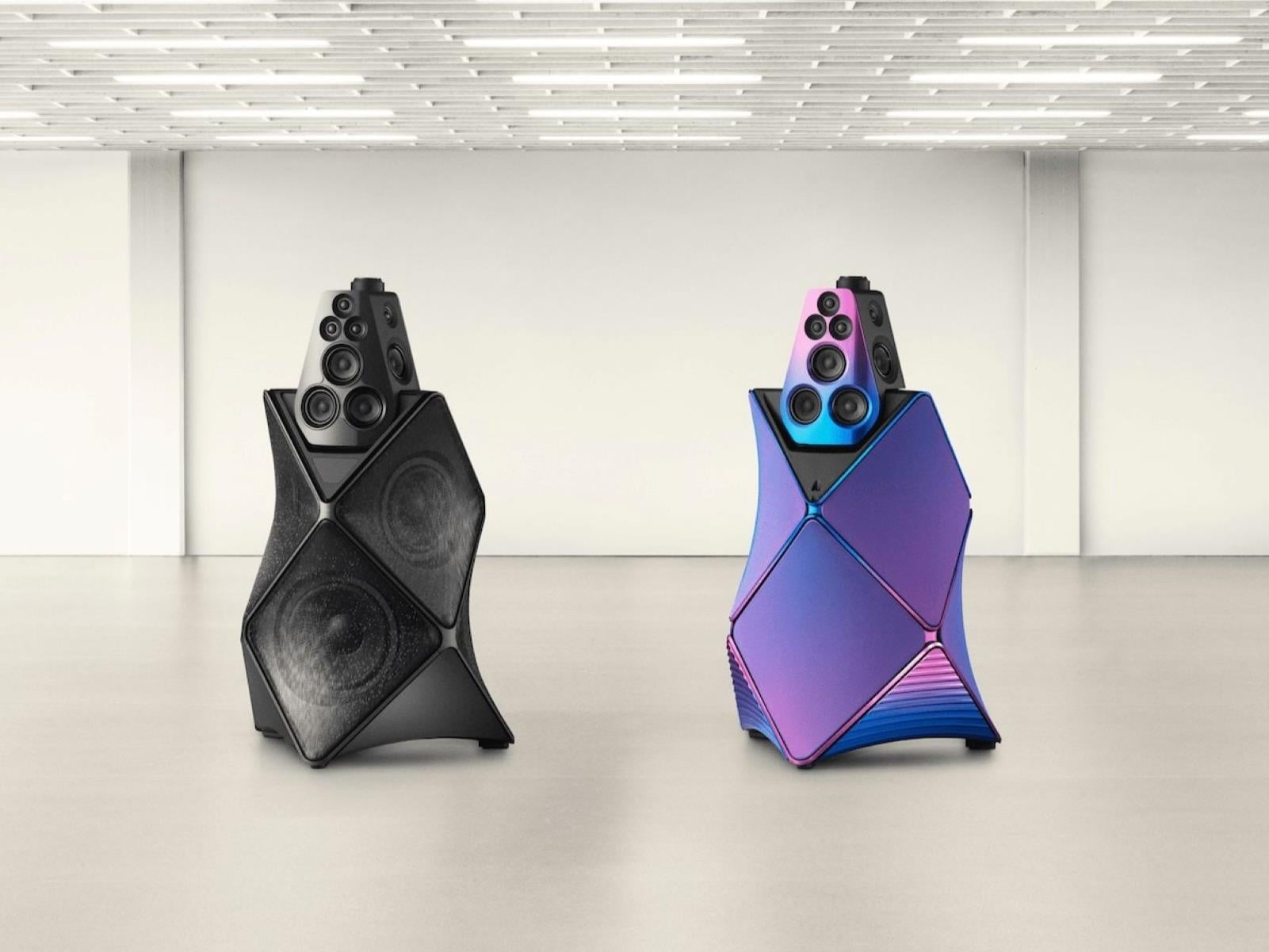
Bang & Olufsen has once again blurred the lines between high fidelity audio and sculptural fine art with the reveal of two flagship loudspeakers, the Beolab 90 Phantom Edition and Mirage Edition. Whether they’re worthy of their six-figure price tag is a whole other discussion altogether.
As one last big hurrah for the year, the celestial display of the Geminids meteor shower is expected to dazzle us with some celestial fireworks, as long as you’re in the right viewing spot and weather conditions, of course.
Skygazers in the Northern Hemisphere can look forward the peak of the Geminids shower on the night of the 13th (tomorrow),
pearOS, a Linux distro that aims to look and behave like Apple’s macOS, is once again in active development with a new base, design, installer, and more.
Carl Rinsch, the director behind the 2013 Keanu Reeves film “47 Ronin,” has been found guilty of defrauding Netflix out of $11 million that was meant to fund a science fiction series called “Conquest,” which the streaming company ultimately cancelled in 2021 after Rinsch failed to meet any production milestones. A jury in the Southern District of New York convicted the 48-year-old on seven charges: one count each of wire fraud and money laundering, and five counts of transacting in illicitly obtained property.
Prosecutors alleged that Rinsch funneled the $11 million through multiple bank accounts into a personal brokerage account, lost more than half of it on securities within two months, and then began speculating on cryptocurrency. Court records show he also spent $2.4 million on a Ferrari and five Rolls Royces, $3.3 million on furniture and antiques, and $387,000 on a Swiss watch. Netflix has written off $55 million in total and has not recovered any funds. Rinsch faces up to 90 years in prison and is scheduled for sentencing on April 17, 2026.
Reddit has filed a lawsuit in Australia’s High Court aiming to overturn the country’s under-16 social media ban, Reuters reported. The forum platform called the law contrary to Australia’s constitution as it intrudes on free political discourse. It also argued that Reddit shouldn’t have been included in the ban since it isn’t a social media site, based on the law’s definition. The action is likely to set in motion a protracted legal battle, given Reddit’s resources and its popularity in Australia
Australia’s minimum age social media ban, the first of its kind in the world, went into effect on December 10. The ten platforms affected, including Reddit, must bar underage users or face a fine of up to A$49.5 million ($33 million). Platforms are using a variety of means to determine age, including age inference based on activity and selfies.
However Reddit argued that the law comes with some “serious privacy and political expression issues” for users. “Australian citizens under the age of 16 will, within years if not months, become electors. The choices to be made by those citizens will be informed by political communication in which they engage prior to the age of 18,” it wrote in the filing.
The government disagreed, noting that Reddit filed the lawsuit to protect is profits, not children’s right to free expression. “It is action we saw time and time again by Big Tobacco against tobacco control and we are seeing it now by some social media or big tech giants,” said Health Minister Mark Butler.
With a market capitalization of $44 billion, Reddit certainly has the means to sustain a long fight. It would be motivated to do so as well, given that Australia is its fourth-largest market after Canada, the UK and the United States.
This article originally appeared on Engadget at https://www.engadget.com/social-media/reddit-sues-australia-over-underage-social-media-ban-143018208.html?src=rss
We may earn a commission from links on this page. Deal pricing and availability subject to change after time of publication.
The PlayStation 5 Pro’s price has finally eased up a bit, dropping to $648.99 from $749.99, which is the lowest it has gone on Amazon so far according to price trackers. For anyone who has been eyeing a console upgrade but didn’t want to spend full price, this discount makes it easier to consider.
The Pro looks almost identical to the regular PS5, but the changes inside matter a lot more than the shell. Sony bumped up the GPU power, increased memory bandwidth, and doubled storage to a 2TB SSD. In simple terms, you spend less time uninstalling old games to make room for new ones. Sony also added Wi-Fi 7, which won’t matter to everyone, but if your router is up to the task, downloads will be faster and more stable.
In use, the console feels familiar. You still get the fast loading PS5 owners enjoy, and the DualSense controller remains one of the best reasons to stay in the PlayStation ecosystem. The real difference comes when you fire up games that have been optimized for the Pro—titles like Spider-Man 2, God of War Ragnarok, and Horizon Forbidden West. These games run with higher frame rates and more stable performance. Visual details pop a bit more, especially on a capable TV. Other games will still run well, just without the added polish. You don’t lose anything by making the jump; you just get a bit more when the software allows it. PCMag gave the PS5 Pro an “Excellent” rating, largely due to its performance gains over the original.
That said, the PS5 Pro ships without a disc drive. If you’re someone who still buys physical games or has a stack of PS4 discs lying around, you’ll need to pick up the optional external drive for $79. If you’ve already gone all-digital, that extra cost doesn’t apply. Overall, the PS5 Pro isn’t a must-have for casual players, but it’s a smart buy for anyone who wants more visual fidelity now and doesn’t want to wait around for the PlayStation 6. And at this price, it’s a lot easier to justify the jump.
The Blender 3D modeling software could enjoy better macOS support with better cross-platform code paths thanks to in-development work for leveraging KosmicKrisp for Vulkan API usage on macOS via Metal…
At a time when many young people are using AI for personal and learning purposes, schools are trying to figure out what to teach about AI and how (find out more in this summer 2025 data about young people’s usage of AI in the UK). One aspect of this is how technical we should get in explaining how AI works, particularly if we want to debunk naive views of the capabilities of the technology, such as that AI tools ‘think’. In this month’s research seminar, we found out how AI contexts can be added to current classroom maths to make maths more interesting and relevant while teaching the core concepts of AI.
At our computing education research seminar in July, a group of researchers from the CAMMP (Computational and Mathematical Modeling Program) research project shared their work:
Prof. Dr. Martin Frank, Founder of CAMMP (Karlsruhe Institute of Technology (KIT), Germany).
Assistant Prof. Dr. Sarah Schönbrodt (University of Salzburg, Austria)
Research Associate Stephan Kindler (Karlsruhe Institute of Technology (KIT), Germany)
They talked about how maths already taught in secondary schools can be used to demystify AI. At first glance, this seems difficult to do, as it is often assumed that school-aged learners will not be able to understand how these systems work. This is especially the case for artificial neural networks, which are usually seen as a black box technology — they may be relatively easy to use, but it’s not as easy to understand how they work. Despite this, the Austrian and German team have developed a clear way to explain some of the fundamental elements of AI using school-based maths.
Sarah Schönbrodt started by challenging us to consider that learning maths is an essential part in developing AI skills, as:
AI systems using machine learning are data-driven and are based on mathematics, especially statistics and data
Authentic machine learning techniques can be used to bring to life existing classroom maths concepts
Real and relevant problems and associated data are available for teachers to use
A set of workshops for secondary maths classrooms
Sarah explained how the CAMMP team have developed a range of teaching and learning materials on AI (and beyond) with an overall goal to “allow students to solve authentic, real and relevant problems using mathematical modeling and computers”.
She reflected that much of school maths is set in contexts that are abstract, and may not be very interesting or relevant to students. Therefore, introducing AI-based contexts, which are having a huge impact on society and students’ lives, is both an opportunity to make maths more engaging and also a way to demystify AI.
Old-fashioned contexts are often used to teach classroom maths concepts. Those same concepts could be taught using real-world AI contexts. (Slide from the researchers’ presentation.)
Workshops designed and researched by the team include contexts such as privacy in social networks to learn about decision trees, personalised Netflix recommendations to learn about k-nearest neighbour, word predictions to learn about N-Grams, and predicting life expectancy to learn about regression and neural networks.
Learning about classification models: traffic lights and the support vector machine
For the seminar, Sarah walked through the steps to learn about support vector machines. This is an upper secondary workshop for students aged 17 to 18 years old. The context of the lesson is an image problem — specifically, classifying the data representing the colours of a simplified traffic light system (two lights to start with) to work out if a traffic light is red or green.
She walked through each of the steps of the maths workshop:
Plotting data points of two classes, the representation of green and red traffic lights
Finding a line that best separates the data points of both classes
Figuring out what best is
Classifying the data points in relation to the chosen (separating) line
Validating the model statistically to see if it is useful in classifying new data points, including using test data and creating a contingency table (also called a confusion matrix)
Discussing limitations, including social and ethical issues
Explaining how three traffic lights can be expressed as three-dimensional data by using planes
By classifying green and red traffic light data, students are learning about lines, classifying data, and considering limitations. (Slide from the researchers’ presentation.)
Throughout the presentation, Sarah pointed out where the maths taught was linked to the Austrian and German mathematics curriculum.
Learning about planes, separating planes, and starting to see how data can be represented in vectors. (Slide from the researchers’ presentation.)
Learning about social and ethical issues
Learning about the social and ethical issues in data-driven systems. (Slide from the researchers’ presentation.)
As well as learning about lines, planes, distances, dot product and statistical measures, learners are also engaged in discussing the social and ethical issues of the approach taken. They are encouraged to think about bias, data diversity, privacy, and the impact of errors on people. For example, if the model wrongly predicts a light as green when it is red, then an autonomous car would run through a red traffic light. This would likely be a bigger consequence than stopping at a green traffic light that was mis-predicted as red. So should the best line reduce this kind of error?
To teach the workshops, Sarah explained they have developed interactive Jupyter notebooks, where no programming skills are needed. Students fill in the gaps of example code, explore simulations, and write their ideas for discussion for the whole class. No software needs to be installed, feedback is direct, and there are in-depth tasks and staggered hints.
Learning about regression models: Weather forecasting and the toy artificial neural network
Stephan went on to introduce artificial neural networks (ANNs), which are the basis of generative AI applications like chatbots and image generation systems. He focused on regression models, such as those used in weather forecasting.
ANNs are very complex. Therefore, to start to understand the fundamentals of this technology, he introduced a ‘toy ANN’ with one input, three nodes, and one output. A function is performed on the input data at each node. With the toy network, the team wants to tackle a major and common misconception: that students think that ANN systems learn, recognise, see, and understand, when really it’s all just maths.
Tackling misconceptions about ANNs by exploring how they work in a toy version. (Slide from the researchers’ presentation.)
The learning activity starts by looking at one node with one input and one output, and can be described as a mathematical function, with a concatenation of two functions (in this case a linear and activation function). Stephan shared an online simulator that visualises how the toy neural network can be explored as students change two parameters (in this case, weight and bias of the functions). Students then look at the overall network, and the way that the output from the three nodes is combined. Again, they can explore this in the simulator. Students compare simple data about weather prediction to the model, and discover they need more functions — more nodes to better fit the data. The activity helps students learn that ANN systems are just highly adjustable mathematical functions that, by adding nodes, can approximate relationships in a given data set. But the approximation only works in the bounds (intervals) in which data points are given, showing that ANNs do not ‘understand’ or ’know’ — it’s just maths.
Stephen finished by explaining the mutual benefits of AI education and maths education. He suggested maths will enable a deeper understanding of AI, and give students a way to realistically assess the opportunities and risks of AI tools and show them the role that humans have in designing AI systems. He also explained that classroom maths education can benefit from incorporating AI contexts. This approach highlights how maths underpins the design and understanding of everyday systems, supports more effective teaching, and promotes an interdisciplinary way of learning across subjects.
Some personal reflections — which may not be quite right!
I have been researching the teaching of AI and machine learning for around five years now, since before ChatGPT and other similar tools burst on the scene. Since then, I have seen an increasing number of resources to teach about the social and ethical issues of the topic, and there are a bewildering number of learning activities and tools for students to train simple models. There are frameworks for the data lifecycle, and an emerging set of activities to follow to prepare data, compare model types, and deploy simple applications. However, I felt the need to understand and to teach about, at a very simple level, the basic building blocks of data-driven technologies. When I heard the CAMMP team present their work at the AIDEA conference in February 2025, I was entirely amazed and I asked them to present here at our research seminar series. This was a piece of the puzzle that I had been searching for — a way to explain the ‘bottom of the technical stack of fundamental concepts’. The team is taking very complex ideas and reducing them to such an extent that we can use secondary classroom maths to show that AI is not magic and AI systems do not think. It’s just maths. The maths is still hard, and teachers will still need the skills to carefully guide students step by step so they can build a useful mental model.
I think we can simplify these ideas further, and create unplugged activities, simulations, and ways for students to explore these basic building blocks of data representation, as well as classification and representing approximations of complex patterns and prediction. I can sense the beginnings of new ideas in computational thinking, though they’re still taking shape. We’re researching these further and will keep you updated.
Finding out more
If you would like to find out more about the CAMMP resources, you can watch the seminar recording, look at the CAMMP website or try out their online materials. For example, the team shared a link to the jupyter notebooks they use to teach the workshops they demonstrated (and others). You can use these with a username of ‘cammp_YOURPSEUDONYM’, where you can set ‘YOURPSEUDONYM’ to any letters, and you can choose any password. They also shared their toy ANN simulation. The CAMMP team are not the only researchers who are investigating how to teach about AI in maths lessons. You can find a set of other research papers here.
Join our next seminar
In our current seminar series, we’re exploring teaching about AI and data science. Join us at our last seminar of the series on Tuesday, 27 January 2026 from 17:00 to 18:30 GMT to hear Salomey Afua Addo talk about using unplugged approaches to teach about neural networks.
To sign up and take part, click the button below. We’ll then send you information about joining. We hope to see you there.
Given the rash of recent leaks, we’d be shocked if the upcoming Consumer Electronics Show (CES) in Las Vegas came and went without the roll out of Intel’s Arrow Lake-S Refresh processors. Yet another one that we can add to the pile is a pair of retail listings for two as-yet unannounced CPU models, the Core Ultra 9 290K Plus and Core Ultra