
Merged a few days ago for the ongoing Linux 6.19 merge window were all of the “char/misc” updates. A lot of random changes throughout this time from the Industrial I/O “IIO” drivers to an interesting new feature for User-Space I/O “UIO” for PCI/PCIe devices…
Monthly Archives: December 2025
Inside A Simulated Steam Machine: 27 Games Tell The Real Story
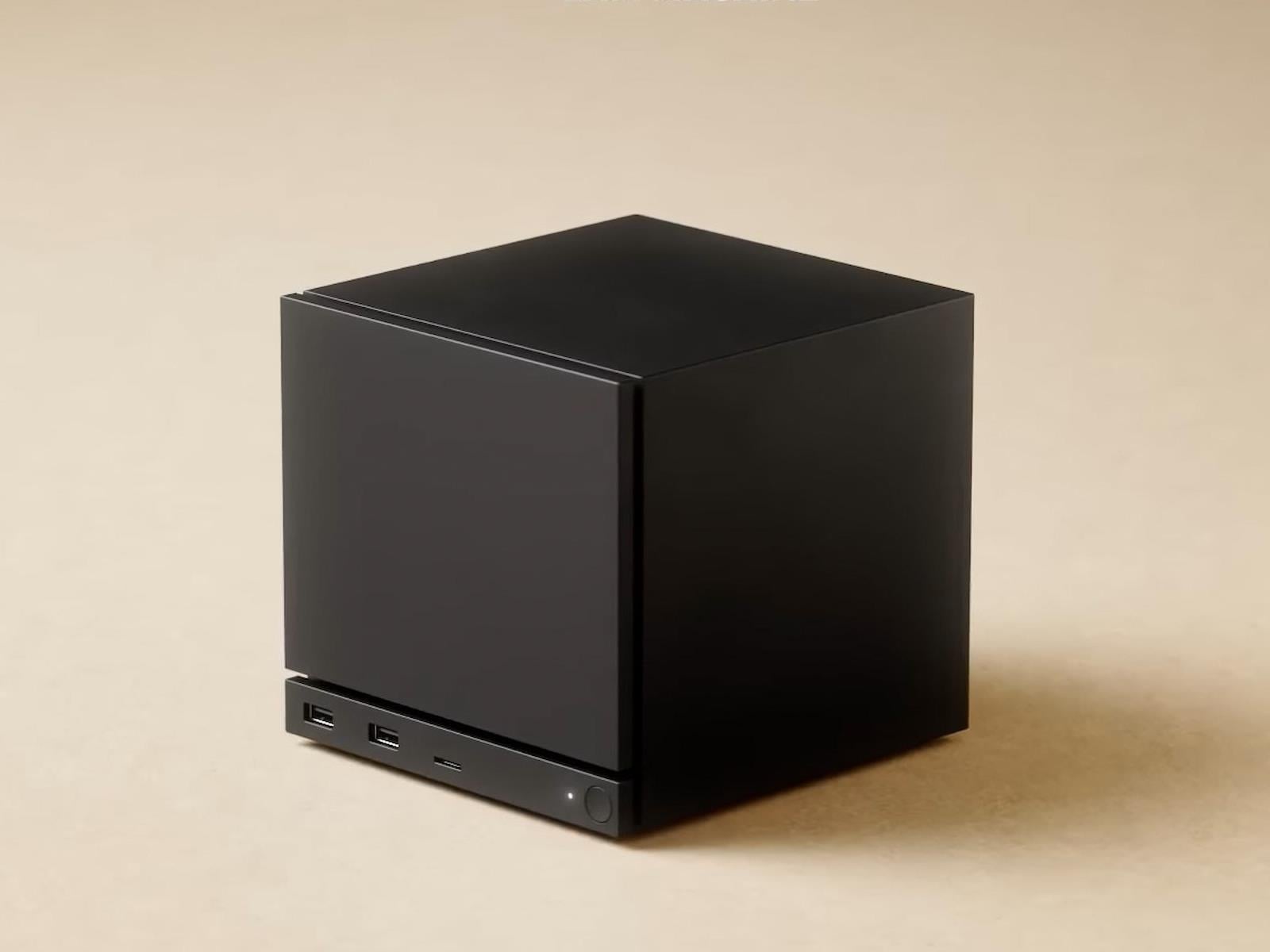
The year is 2013. Valve Software, whose Steam digital delivery service has just hit the ten-year mark, has decided it’s time to launch a series of gaming PCs, along with a custom operating system. The project continues through 2015 and but doesn’t catch on, mostly because the software situation simply wasn’t ready. SteamOS at that time could…
Amazon Goes on Clearance With TP-Link WiFi 7 Range Extender at a Record Low, Priced Like Budget WiFi 6 Model

Save $30 on the TP-Link Wi-Fi 7 mesh-compatible range extender for a limited time at Amazon.
The post Amazon Goes on Clearance With TP-Link WiFi 7 Range Extender at a Record Low, Priced Like Budget WiFi 6 Model appeared first on Kotaku.
Hundreds of Climate Migrants Arrive in Australia, Leaving Their Sinking Island Home Behind
This year, thousands of Tuvaluans applied for Australia’s climate-migration visas to escape the impacts of rising sea levels.
Doom studio id Software forms ‘wall-to-wall’ union, with a majority of employees voting in favor
Id Software, the company behind Doom, has voted in favor of forming a “wall-to-wall” union. The term “wall-to-wall” refers to a union that includes every employee, regardless of duties. The vote wasn’t unanimous, though a majority did vote in favor of the union.
The union will work in conjunction with the Communications Workers of America (CWA), which is the same organization involved with parent company ZeniMax’s recent unionization efforts. Microsoft, who owns ZeniMax, has already recognized this new effort, according to a statement by the CWA. It agreed to a labor neutrality agreement with the CWA and ZeniMax workers last year, paving the way for this sort of thing.
“The wall-to-wall organizing effort at id Software was much needed; it’s incredibly important that developers across the industry unite to push back on all the unilateral workplace changes that are being handed down from industry executives,” id Software producer and CWA committee member Andrew Willis wrote in a statement to Engadget.
From the onset, this union will look to protect remote work for id Software employees. “Remote work isn’t a perk. It’s a necessity for our health, our families, and our access needs. RTO policies should not be handed down from executives with no consideration for accessibility or our well-being,” said id Software Lead Services Programmer Chris Hays. He also said he looks forward to getting worker protections regarding the “responsible use of AI.”
Workers at id began organizing around 18 months ago, according to a report by Aftermath. Things sped up after Microsoft closed several Bethesda studios in the middle of last year.
“We look forward to sitting across the table from Microsoft to negotiate a contract that reflects the skill, creativity and dedication these workers bring to every project,” said CWA Local 6215 President Ron Swaggerty.
The developer’s latest game is Doom: The Dark Ages, which we loved. It scooped up an award for accessibility at last night’s The Game Awards.
This article originally appeared on Engadget at https://www.engadget.com/big-tech/doom-studio-id-software-forms-wall-to-wall-union-with-a-majority-of-employees-voting-in-favor-164808829.html?src=rss
Doom studio id Software forms ‘wall-to-wall’ union, with 165 employees voting in favor
Id Software, the company behind Doom, has voted in favor of forming a “wall-to-wall” union. The term “wall-to-wall” refers to a union that includes every employee, regardless of duties. The vote wasn’t unanimous, with 165 of 185 total employees in favor of the union.
The union will work in conjunction with the Communications Workers of America (CWA), which is the same organization involved with parent company ZeniMax’s recent unionization efforts. Microsoft, who owns ZeniMax, has already recognized this new effort, according to a statement by the CWA. It agreed to a labor neutrality agreement with the CWA and ZeniMax workers last year, paving the way for this sort of thing.
“The wall-to-wall organizing effort at id Software was much needed; it’s incredibly important that developers across the industry unite to push back on all the unilateral workplace changes that are being handed down from industry executives,” id Software producer and CWA committee member Andrew Willis wrote in a statement to Engadget.
From the onset, this union will look to protect remote work for id Software employees. “Remote work isn’t a perk. It’s a necessity for our health, our families, and our access needs. RTO policies should not be handed down from executives with no consideration for accessibility or our well-being,” said id Software Lead Services Programmer Chris Hays. He also said he looks forward to getting worker protections regarding the “responsible use of AI.”
Workers at id began organizing around 18 months ago, according to a report by Aftermath. Things sped up after Microsoft closed several Bethesda studios in the middle of last year.
“We look forward to sitting across the table from Microsoft to negotiate a contract that reflects the skill, creativity and dedication these workers bring to every project,” said CWA Local 6215 President Ron Swaggerty.
The developer’s latest game is Doom: The Dark Ages, which we loved. It scooped up an award for accessibility at last night’s The Game Awards.
This article originally appeared on Engadget at https://www.engadget.com/big-tech/doom-studio-id-software-forms-wall-to-wall-union-with-165-employees-voting-in-favor-164808311.html?src=rss
China Leads Research in 90% of Crucial Technologies – a Dramatic Shift this Century
China is leading research in nearly 90% of the crucial technologies that “significantly enhance, or pose risks to, a country’s national interests,” according to a technology tracker run by the Australian Strategic Policy Institute (ASPI) — an independent think-tank. Nature: The ASPI’s Critical Technology Tracker evaluated research on 74 current and emerging technologies this year, up from the 64 technologies it analyzed last year. China is ranked number one for research on 66 of the technologies, including nuclear energy, synthetic biology, small satellites, while the United States topped the remaining 8, including quantum computing and geoengineering.
The results reflect a drastic reversal. At the beginning of this century, the United States led more than 90% of the assessed technologies, whereas China led less than 5% of them, according to the 2024 edition of the tracker. “China has made incredible progress on science and technology that is reflected in research and development, as well as in publications,” says Ilaria Mazzocco, who researches China’s industrial policy at the Center for Strategic and International Studies, a non-profit research organization based in Washington DC.
Mazzocco says the general trend identified by the ASPI is not a surprise, but it is “remarkable” to see that China is so dominant and advanced in so many fields compared with the United States.


Read more of this story at Slashdot.
HP Adds Another 80% Off Laptop as Holiday Clearance Deals Continue on Amazon, Not Listed on Official Site

Amazon is letting you upgrade to a reliable, efficient HP laptop for under $500 today.
The post HP Adds Another 80% Off Laptop as Holiday Clearance Deals Continue on Amazon, Not Listed on Official Site appeared first on Kotaku.
[$] Best practices for linux-next
One of the key components in the kernel’s development process is the
linux-next repository. Every day, a large number of branches, each
containing commits intended for the next kernel development cycle, is
pulled into linux-next and integrated. If there are conflicts between
branches, the linux-next process will reveal them. In theory, many other
types of problems can be found as well. Some developers feel that
linux-next does not work as well as it could, though. At the 2025
Maintainers Summit, Mark Brown, who helps to keep linux-next going, led a
session on how it could be made to work more effectively.
KDE Gear 25.12 released
Framework Raises DDR5 Prices By 50%, Accuses Apple & Dell Of Price Gouging

Framework is on a mission to change the status quo when it comes to laptops, having introduced several modular models with replaceable parts that go beyond the DIY boundaries of what is typical for a laptop. Be that as it may, Framework is susceptible to the same market conditions as everyone else. As a result, it’s being forced to raise DDR5
Clair Obscur Gets Free DLC Including A Photo Mode To Celebrate Historic Awards Sweep

The RPG added new content overnight, including new boss fights
The post <i>Clair Obscur</i> Gets Free DLC Including A Photo Mode To Celebrate Historic Awards Sweep appeared first on Kotaku.
Logitech’s Wireless Gaming Headset Deal Comes Early, Hitting Its Cheapest Price Yet Despite Being Newly Released

For a limited time, you can save 25% on the Logitech G522 Lightspeed gaming headset over at Amazon.
The post Logitech’s Wireless Gaming Headset Deal Comes Early, Hitting Its Cheapest Price Yet Despite Being Newly Released appeared first on Kotaku.
The Immediate Post-College Transition and its Role in Socioeconomic Earnings Gaps
A new study of roughly 80,000 bachelor’s degree recipients from a large urban public college system finds that characteristics of a graduate’s first job can explain nearly two-thirds of the otherwise-unexplained earnings gap between students from low-income and high-income families five years after graduation.
The research [PDF], published as an NBER working paper by economists at Columbia University, tracked graduates from 2010 to 2017 using administrative education data linked to state unemployment insurance records. Low-income students — defined as those receiving Pell grants throughout their undergraduate enrollment — earned about 12% less than their high-income peers at the five-year mark. A substantial gap of roughly $4,900 persisted even after the researchers controlled for GPA, college attended, major, and other pre-graduation characteristics. That residual gap fell to about $1,700 once first-job variables entered the equation.
Graduates from lower-income families tended to start at employers paying lower average wages and were less likely to have their first job secured before graduation. Just 34% of low-income graduates continued at a pre-graduation employer compared to 40% of their higher-income peers. The firms employing low-income graduates paid average wages that were 18% lower than those employing high-income graduates. The researchers say that while the study cannot establish causation, the patterns suggest that supporting low-income students during their transition from college to the labor market may be a fruitful area for policy intervention.


Read more of this story at Slashdot.
Epic celebrates “the end of the Apple Tax” after appeals court win in iOS payments case
Back in April, District Court Judge Yvonne Gonzalez Rogers delivered a scathing judgment finding that Apple was in “willful violation” of her 2021 injunction intended to open up iOS App Store payments. That contempt of court finding has now been almost entirely upheld by the Ninth Circuit Court of Appeals, a development that Epic Games’ Tim Sweeney tells Ars he hopes will “do a lot of good for developers and start to really change the App Store situation worldwide, I think.”
The ruling, signed by a panel of three appellate court judges, affirmed that Apple’s initial attempts to charge a 27 percent fee to iOS developers using outside payment options “had a prohibitive effect, in violation of the injunction.” Similarly, Apple’s restrictions on how those outside links had to be designed were overly broad; the appeals court suggests that Apple can only ensure that internal and external payment options are presented in a similar fashion.
The appeals court also agreed that Apple acted in “bad faith” by refusing to comply with the injunction, rejecting viable, compliant alternatives in internal discussions. And the appeals court was also not convinced by Apple’s process-focused arguments, saying the district court properly evaluated materials Apple argued were protected by attorney-client privilege.
Philips Hue’s New Security Camera Is Surprisingly Useful
We may earn a commission from links on this page.
Philips Hue is one of the most well-respected and popular brands in smart lights—but what about its smart security cameras? Parent company Signify has been developing Hue cameras for a couple of years now, with a video doorbell and 2K camera upgrades recently added to the portfolio of devices. (Note: This 2K version hasn’t yet landed in the U.S., but the existing 1080p versions are quite similar.)
I got a chance to test out the new 2K Hue Secure camera, and alongside all the basics of a camera like this, it came with an extra bonus that worked better than I expected: seamless integration with Philips Hue lights. These two product categories actually work better together than you might think.
While you can certainly connect cameras and lights across a variety of smart home platforms, Philips Hue is one of very few manufacturers making both types of device (TP-Link is another). That gives you a simplicity and interoperability you don’t really get elsewhere.
Setting up a Hue camera
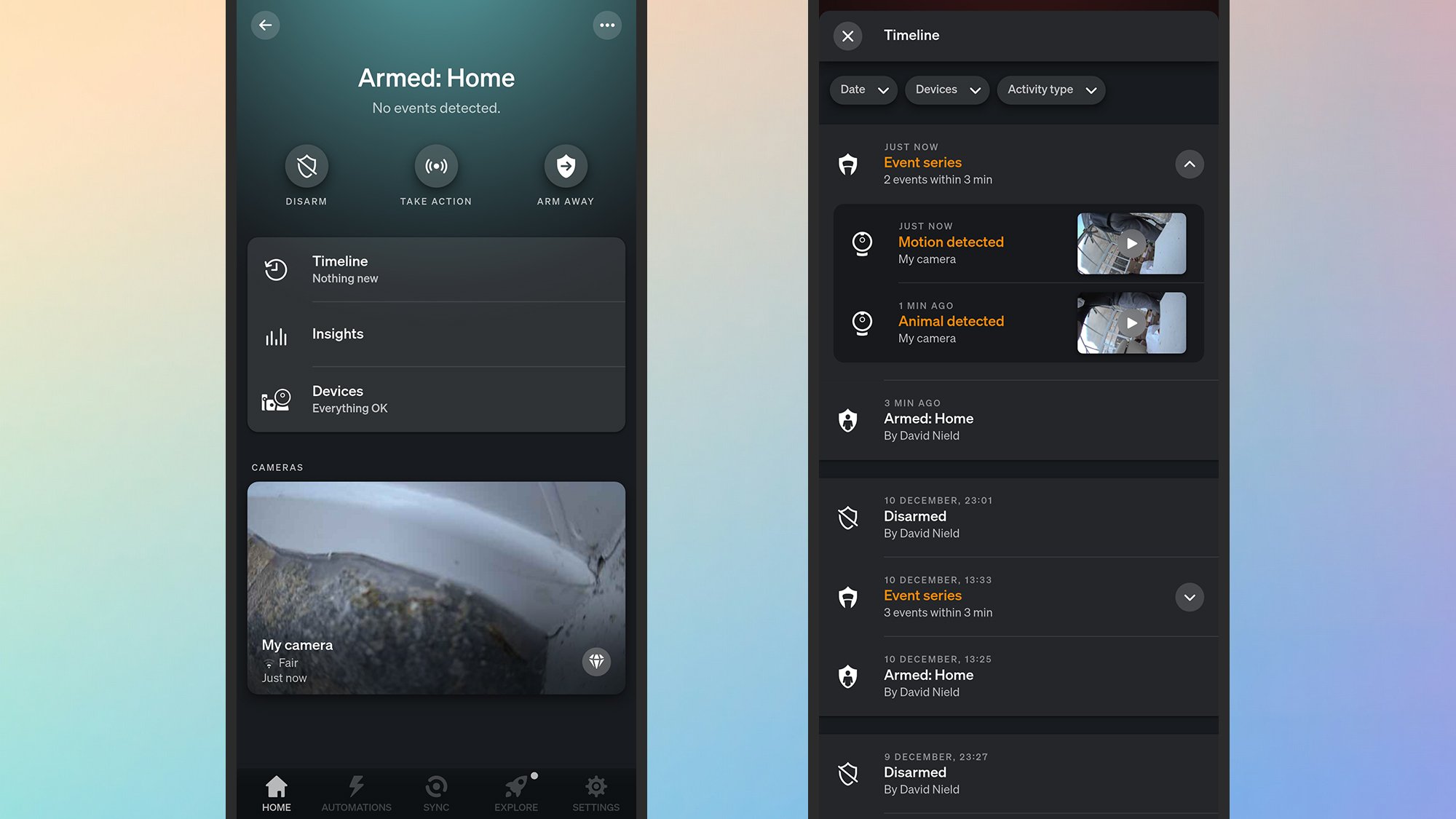
All the basic security camera features are covered.
Credit: Lifehacker
Credit: Lifehacker
Hue cameras are controlled inside the same Hue app for Android or iOS as the Hue lights. You don’t necessarily need a Hue Bridge to connect the camera, too, as it can link to your wifi directly, but the Bridge is required if you want it to be able to sync with your lights—which is one of the key features here. (If you already have the lights, you’ll already have the Bridge anyway.)
The 2K Hue Secure wired camera I’ve been testing comes with a 2K video resolution (as the name suggests). two-way audio, a built-in siren, infrared night vision, and weatherproofing (so you can use it indoors or out). As well as the wired version I’ve got here, there’s also a battery-powered option, and a model that comes with a desktop stand.
Once configured, the camera lives in the same Home tab inside the mobile app as any Philips Hue lights you’ve got. The main panel doesn’t show the camera feed—instead, it shows the armed status of the camera, which can be configured separately depending on whether you’re at home or not. The idea is that you don’t get disturbed with a flurry of unnecessary notifications when you’re moving around.
The basic functionality is the same as every other security camera: Motion is detected and you get a ping to your phone with details, with a saved clip of the event that stays available for 24 hours. You can also tap into the live feed from the camera at any time, should you want to check in on the pets or the backyard.
As is often the case with security cameras, there is an optional subscription plan that gives you long-term video clip storage, activity zone settings, and AI-powered identification of people, animals, vehicles, and packages. That will set you back from $4 a month, with a discount if you pay for a year at a time.
Syncing a camera with smart lights
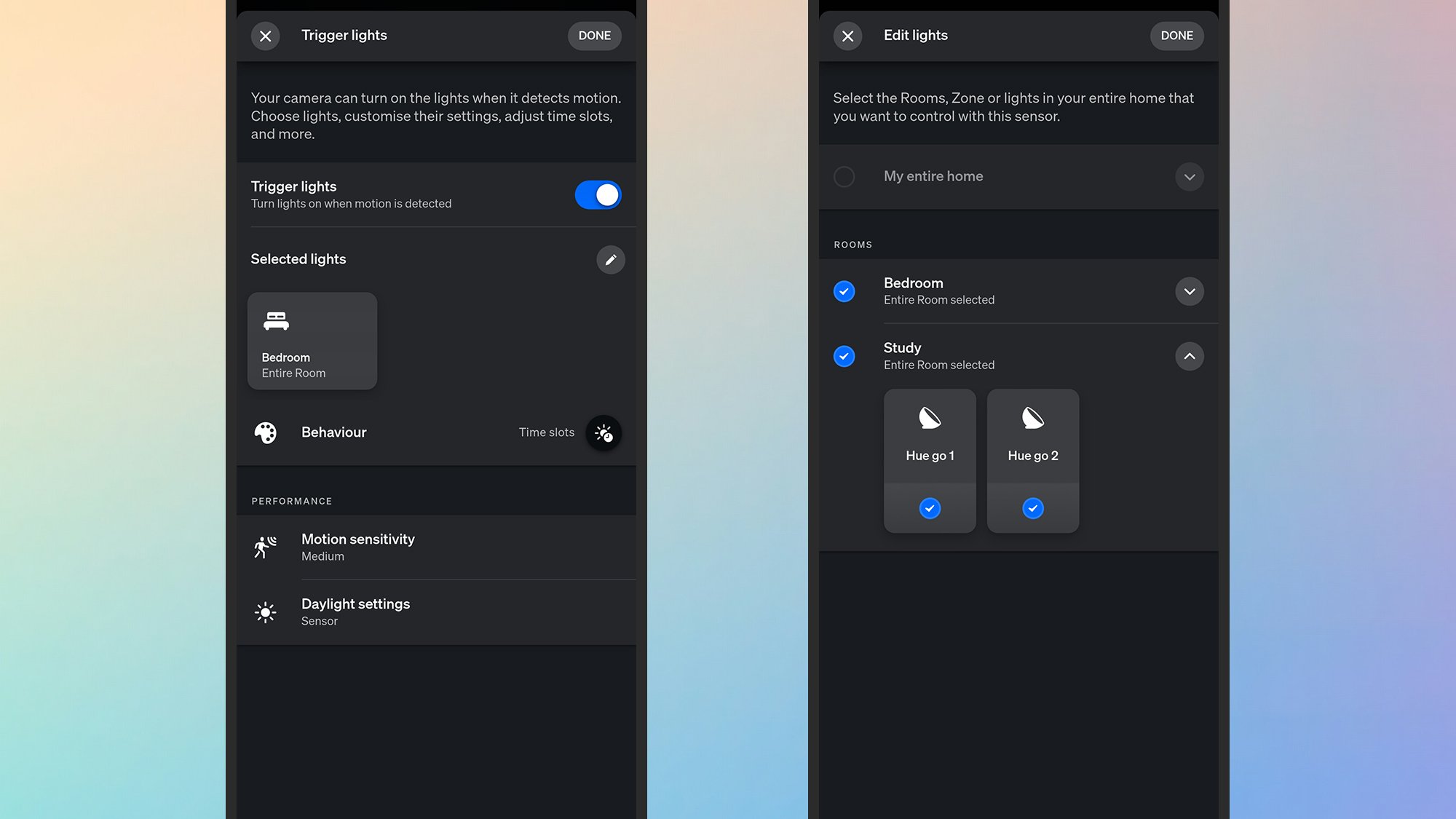
Your cameras can be used as customized triggers for your lights.
Credit: Lifehacker
Credit: Lifehacker
I started off a little unsure about just how useful it would be to connect up the Hue cameras and Hue lights—it’s not a combination that gets talked about much—but it’s surprisingly useful. If you delve into the camera settings inside the Hue app, there’s a Trigger lights section especially for this.
You get to choose which of your lights are affected—they don’t all have to go on and off together—and there are customizations for color and brightness across certain time schedules. You could have your bulbs glowing red during the night, for example, or turning bright blue during the daytime. The duration the lights stay on for can also be set.
It’s not the most sophisticated system, but it works: If someone is loitering around your property, you can have a selected number of lights turn on to put them off, or to suggest that someone is in fact at home. This is in addition to everything else you can do, including sounding a siren through the camera, and because it works through the Hue Bridge it all happens pretty much instantaneously.
You can also set specific cameras as basic motion sensors for you and your family—lighting up the way to the bathroom late at night, for example. This can work even when the system is disarmed, so there’s no wifi video streaming happening, but the cameras are still watching out for movement and responding accordingly.
There’s one more option worth mentioning in the security settings in the Hue app: “mimic presence.” This can randomly turn your lights on and off at certain points in the day, and the schedule you choose can be controlled by whether or not your Hue security is armed or disarmed (so nothing happens when everyone is at home).
The Street Fighter Movie Is Going To Be Way Weirder Than You Think

Everything is in place for this to be one of the funniest films in forever
The post The <i>Street Fighter</i> Movie Is Going To Be <i>Way</i> Weirder Than You Think appeared first on Kotaku.
MIPS buys protection brand Koroyd to strengthen position in helmet-safety market
MIPS has signed an agreement to acquire all the shares in Koroyd, the impact-protection brand, for €40 million.
According to MIPS CEO and president Max Strandwitz, Koroyd will continue to operate separately under its leadership. But the acquisition will mean MIPS can expand its range of protection across consumer and professional uses.
“The acquisition of Koroyd marks another important step in MIPS’ long-term strategy to strengthen our position as the leader in helmet safety. This acquisition positions the group uniquely in the market and enables interesting entries into other adjacent product areas,” says Strandwitz.
Brands such as Smith and Endura have used Koroyd in their helmets. In fact, the Smith Optics Ignite MIPS helmet uses both of the ‘ingredient’ technologies.
Koroyd, which is based in Monaco and was founded in 2010, produces a variety of impact-protection technologies that span head, body and hand protection across sport, motorsport, defence, industrial safety and child-restraint systems.
Founder of Koroyd, John Lloyd, says: “From the beginning, Koroyd has been built on a culture of purposeful innovation, solving real problems with solutions that genuinely improve protection whilst putting the user experience first. In MIPS, we have found a partner who shares that ethos entirely.”
MIPS says the purchase of Koroyd amounts to €40m on a cash and debt-free basis, and with the possibility of an additional earn-out of €25m if performance targets are met.
“The acquisition is expected to contribute positively to MIPS’ earnings per share, EBIT margin, and sales growth on a short and long-term basis,” says MIPS.
Forget Govee, Philips Hue 65″ Smart TV Light Strip Is 56% Off and Now Even Cheaper Than the 55″ Version

It’s time to freshen up your entertainment setup.
The post Forget Govee, Philips Hue 65″ Smart TV Light Strip Is 56% Off and Now Even Cheaper Than the 55″ Version appeared first on Kotaku.
Senator endorses discredited doctor’s book that claims chemical treats autism, cancer
For years, Sen. Ron Johnson has been spreading conspiracy theories and misinformation about COVID-19 and the safety of vaccines.
He’s promoted disproven treatments for COVID-19 and claimed, without evidence, that athletes are “dropping dead on the field” after getting the COVID-19 vaccination. Now the Wisconsin politician is endorsing a book by a discredited doctor promoting an unproven and dangerous treatment for autism and a host of ailments: chlorine dioxide, a chemical used for disinfecting and bleaching.
The book is “The War on Chlorine Dioxide: The Medicine that Could End Medicine” by Dr. Pierre Kory, a critical care specialist who practiced in Wisconsin hospitals before losing his medical certification for statements advocating using an antiparasite medication to treat COVID-19. The action, he’s said, makes him unemployable, even though he still has a license.