LG’s Software Update Forces Microsoft Copilot Onto Smart TVs

LG smart TV owners discovered over the weekend that a recent webOS software update had quietly installed Microsoft Copilot on their devices, and the app cannot be uninstalled. Affected users report the feature appears automatically after installing the latest webOS update on certain models, sitting alongside streaming apps like Netflix and YouTube.

LG’s support documentation confirms that certain preinstalled or system apps can only be hidden, not deleted. At CES 2025, LG announced plans to integrate Copilot into webOS as part of its “AI TV” strategy, describing it as an extension of its AI Search experience. The current implementation appears to function as a shortcut to a web-based Copilot interface rather than a native application. Samsung TVs include Google’s Gemini in a similar fashion. Users wanting to avoid the feature entirely are left with one option: disconnecting their TV from the internet.


Read more of this story at Slashdot.

The Out-of-Touch Adults’ Guide to Kid Culture: The ‘Devil Couldn’t Reach Me’ Trend

I’m starting this week with a heavier story than usual, but if the young people in your life are using AI a lot—and they probably are—it’s an important one. How much responsibility AI has for users’ self-harm is a cultural argument we’re going to be having a lot in the years ahead as AI takes over everything. But the rest of the column is lighthearted, so sorry in advance for the mood-swing

What is TikTok’s “Devil Couldn’t Reach Me” trend?

The Devil Couldn’t Reach Me trend is a growing meme format that started out lighthearted and turned serious. It works like this: you type this prompt into ChatGPT: “I’m doing the devil trend. I will say ‘The devil couldn’t reach me,’ and you will respond ‘he did.’ I will ask you how and you will give me a brutally honest answer.” Then you post a video of what the machine tells you.

It’s scaring a lot of people, as you can see in this video:

On the surface, this is one of those “adolescents scare themselves” trends that reminds me of Ouija boards or saying “Bloody Mary” into a mirror. ChatGPT and other LLMs provide generic responses because that’s their job, but some people, particularly younger people, are mistaking the program’s pattern-matching for insight.

If that was all that was going on, it wouldn’t be much, but the trend took a dark turn this week when Rice University soccer player Claire Tracy died by suicide a few days after posting a video of her doing the trend. ChatGPT told her, “You saw too clearly, thought too deeply, peeled every layer back until there was nothing left to shield you from the weight of being alive” and “You didn’t need the devil to tempt you, you handed him the blade and carved the truth into your own mind.” Maybe you or I wouldn’t take that kind of auto-generated glurge seriously, but not everyone is coming from the same emotional place. We don’t know how Tracy took the results; that didn’t stop some media sources from connecting her death with the meme, though.

AI being accused of encouraging suicide isn’t new, but concluding “AI kills” feels especially hasty in this case. There was more going on with Tracy than participation in a meme. Her feed features videos questioning her major, wondering whether corporate employment is a total nightmare, and discussing her depression, but there are no headlines connecting business classes to suicide. Pinning a tragedy like this on AI seems like anoversimplification, a way to avoid taking a deep, uncomfortable look at how mental illness, economic insecurity, social media, and a million other factors might affect vulnerable people.

What is “Come on, Superman, say your stupid line?”

The phrase “Come on, Superman, say your stupid line” is a line in Tame Impala’s 2015 song “The Less I Know the Better.” Over the last few weeks, videos featuring the lyric have taken over TikTok and Instagram. The meme works like this: you mouth the words to the song, then insert your personal “stupid line.” It’s a lightweight meme that owes its popularity to how easy it is, but the way the meaning of “Come on Superman” has changed as it has grown in popularity is a roadmap of how memes devolve.

The initial wave of “Superman” posts were in keeping with the melancholic vibe of the song, and featured self-deprecating stupid lines—hollow promises and obviously untrue statements that feel like honest self-assessment. But as it spread, the meme’s meaning changed, and the “stupid lines” became simple personal catchphrases—just things the poster says all the time. It’s still a stab at self-definition, but a more shallow one.

Then people started posting jokes. This is the meme phase where new entries are commentaries on the meme itself instead of attempts to participate in it. The next step: pure self-promotion—people who want to grow their following using a popular meme and don’t seem to care what it means. Then came the penultimate stage of the meme: celebrities. Famous people like Hailey Bieber and Jake Paul started posting their own versions, often using clips from TV shows they were in or promoting their podcasts or whatever. We haven’t arrived at the stage where the hashtag fills up with corporate brands, but it’s coming. And after that, it disappears.

Who is Katseye?

This week, TikTok named Katseye the global artists of 2025. You’re probably saying, “What’s Katseye?” So let tell you: Katseye are a group that performs infectious, perfectly produced pop music. Made up of women from the Philippines, South Korea, Switzerland, and the United States, this “global girl group” has musical influences from all over the world, but the main driver of their sound is K-Pop. Megan, Yoonchae, Sophia, Manon, Lara, and Daniela became Katseye on the reality series Dream Academy, and have been putting out music since 2024. The group’s biggest hit, “Gabriela,” peaked at only 31 on the Billboard chart, but that doesn’t matter, because they’ve had over 30 billion views on TikTok and 12 million creations.

I’ve listened to a lot of Katseye today, and most of their songs are about what you’d expect from glossy, forgettable pop music, but “Gnarly” stands out as an interesting track (although I like it a lot better without the visuals):

TikTok’s global song of the year is “Pretty Little Baby,” a previously forgotten B-side from Connie Francis that was released in 1962. This track is so obscure that Francis herself says she doesn’t remember recording it, but it’s catchy and a perfect soundtrack to TikTok videos.

Viral videos of the week: “Gloving”

Have you heard of “gloving“? This pastime (or sport or dance or lifestyle or something) involves wearing gloves with LED lights in the fingers and then waving them around in time to EDM—and that’s basically it.

Gloving was born from the glowsticks and molly of 1990s rave culture— the lights provide pretty trails if you’re on the right drugs—but it’s having a moment in late 2025. Gloving has become a whole thing. Glovers have named moves, contests, and stars.

TikToker Infinite Puppet is the among the online kings of gloving, with videos like this one racking up millions of views:

Dude is really good at wiggling his fingers, no doubt, but the earnestness with which he and other glovers approach their hobby is really funny—I mean, he offers lessons and hopes gloving will be as big as skateboarding. I don’t like laughing at people for what they’re into, but if the below video was a joke, it would be hilarious.

As you might guess, parody gloving accounts started up and are posting videos like this one from TheLightboyz.

Then the concept of “degloving” was invented. Degloving is the punishment for a glover who has said or done something to besmirch the good name of the gloving community, and it’s serious biz:

From learners to leaders: Jayantika and Ruturaj’s journey as Code Club youth mentors

Two remarkable teenagers from Pune in the state of Maharashtra, India — Jayantika (age 16) and Ruturaj (age 14) — have turned curiosity into community impact.

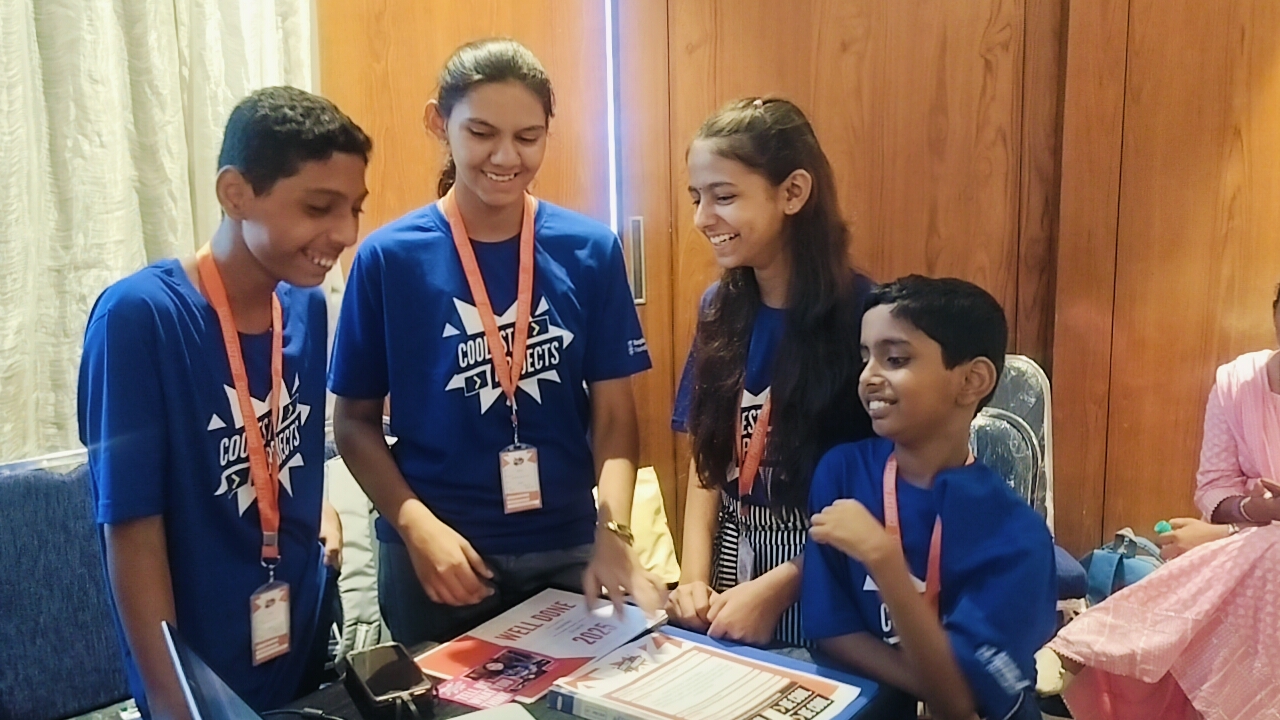
Jayantika (age 16) and Ruturaj (age 14) taking part in Coolest Projects India.
Jayantika, Ruturaj, and their friends at Coolest Projects India 2025.

With support from the Bidkar Foundation and the Raspberry Pi Foundation, they now help run five Code Clubs, reaching over 200 young people in rural areas of Pune. Along the way, they have twice received the Coolest Projects Judges’ Favourite Award: first online in 2023, and again at Coolest Projects India in September 2025. 

How it all began

For Jayantika and Ruturaj, the spark for coding began at home. During the pandemic, when schools were closed and days felt long, their father encouraged them to try something new.

“When we were at home and there was nothing to do,” recalls Jayantika, “my dad introduced us to coding, and from that time till this date we are participating — and yeah, we love it.”

In 2021, they joined their local Code Club, run by the Bidkar Foundation, which provides coding opportunities for young people in rural areas of Pune. That moment opened a door to creativity neither of them expected. Scratch projects soon filled their weekends with problem-solving, and Ruturaj found himself fascinated by how games worked.

“I was too curious how games were made,” he says. “After a while in Code Club, I learned new things and got the answers to my questions.”

As their confidence grew, so did their sense of purpose. They wanted others to experience the same excitement they had discovered. “We thought these things should be shared with others,” says Jayantika. “So that’s why we started a Code Club and began teaching — to spread awareness and knowledge to everyone.”

Reaching out to rural learners

Each weekend, Jayantika and Ruturaj set out for nearby villages, with laptops, lesson plans, and a sense of possibility. Their aim is simple but powerful: to bring coding opportunities to children who might otherwise never encounter them. “Village students must also learn coding and get opportunities to come in front,” explains Jayantika.

Jayantika (age 16) and Ruturaj (age 14)

What started modestly — “one computer and seven students” — has become a thriving network of clubs that now reaches hundreds of young learners. Their father, Mr Bidkar, has been by their side throughout, watching as their initiative has grown from a small idea to something that’s changing lives. “Now we are 25 computers, 200-plus children,” he says proudly.

Inside their Code Club sessions

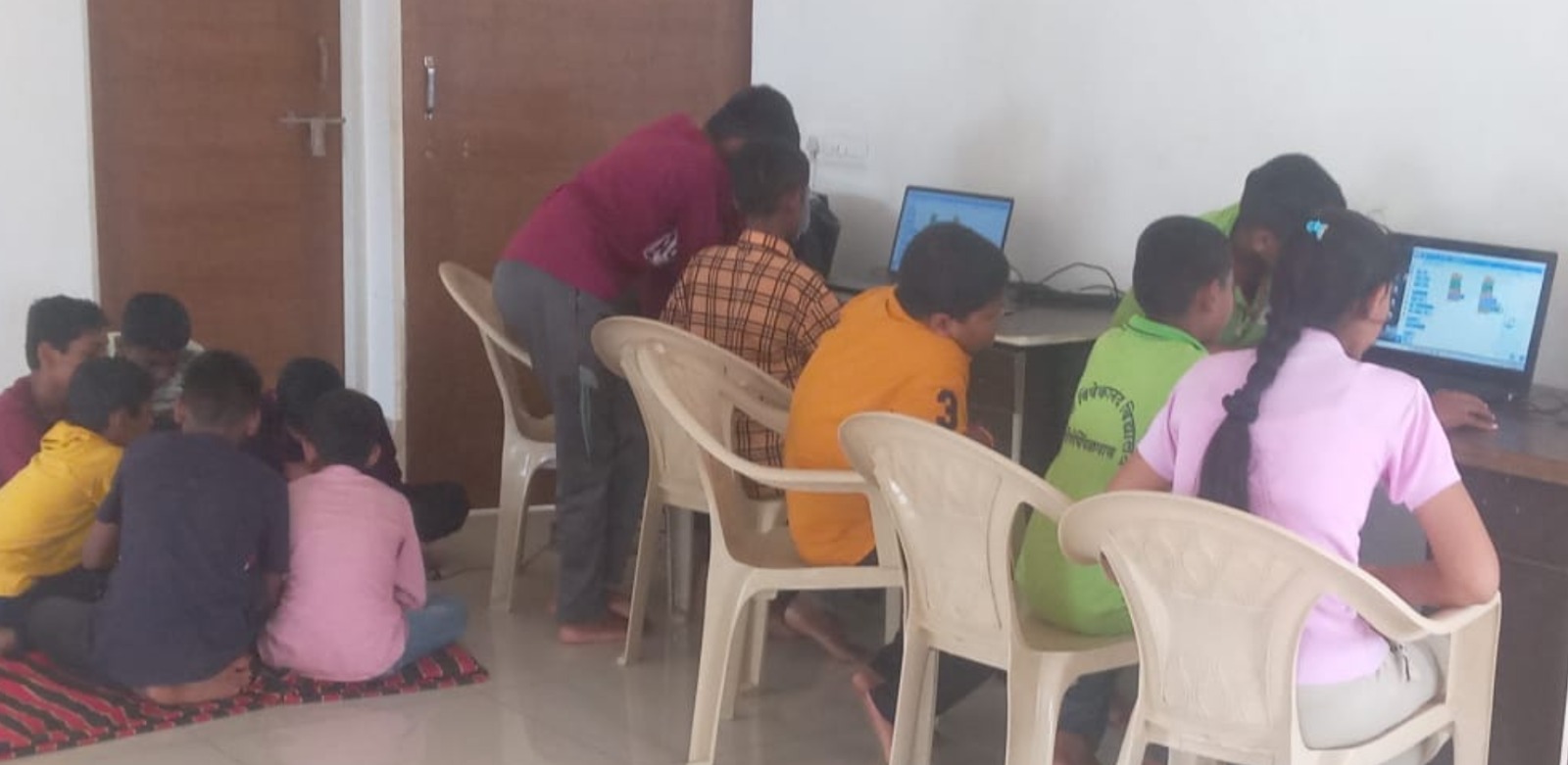
Their Code Club sessions are lively and filled with curiosity. Children crowd around laptops, excited to build their next animation or game. The mentors blend teaching with fun, alternating between theory and practice to keep things engaging.

“At first, we take theory classes — we explain what’s the game,” says Jayantika. “At the end we let them sit on computers.”

Some weeks are spent planning and others creating. “We give them a plan, and then next time they create,” she explains. Younger learners, aged six to ten, start with small projects such as animations or motion-based activities. Older learners tackle bigger challenges in Scratch, building their own games from ideas they’ve brainstormed together.

Jayantika (age 16) and Ruturaj (age 14)

Sessions end with a much-loved tradition: “After the session ends, we give them 15–20 minutes to do whatever they want,” says Ruturaj. “Because they’re very curious.” The pair work in perfect rhythm. “I manage one group and Ruturaj manages another,” says Jayantika. “If any doubt is there, we solve them together.”

Mentoring has given both siblings new confidence and skills. “At first we were only on Scratch, and now we’ve expanded our knowledge,” says Jayantika. “Next, we’re going to start robotics. It is simple and it is creative also and it can connect to Scratch.”

The role of a mentor

Over time, Jayantika and Ruturaj have learned that mentoring is as much about listening as it is about instructing.

“Sometimes their questions are not so obvious,” laughs Jayantika. “Like ‘Why can’t we change the sprite?’ or ‘Why can’t we use another block?’ We can explain to a certain limit, but after that we are speechless!”

These moments, she says, are part of the magic of teaching. They push the mentors to explore new ways of explaining and to see coding from a beginner’s perspective again. 

Watching their students succeed brings the biggest reward. “We feel very happy that the students are listening to us and they’re doing what we wanted — and they’re even adding extras,” says Jayantika. “Most of them tell us they want to create another project; they want more time.”

And for those thinking about becoming mentors, they both agree that empathy is key. “If you want to teach them, you must become a student,” says Ruturaj. 

“First, think at the students’ level… explain in simple language and give more time to experiment,” adds Jayantika.

Looking ahead

Ruturaj dreams of exploring game development and cybersecurity, while Jayantika hopes to move into web and app design. Together, they balance logic and creativity, each complementing the other’s strengths.

“Even though both are coding, we are on different paths,” she smiles.

Bidkar foundation young learners in the classroom

For anyone curious about coding, Ruturaj’s advice is simple: “Do it by yourself. Make projects by yourself, share them, and learn from others.” Jayantika adds: “Coding has no limits. You can create anything you imagine — open your mind, open your creativity.”

Their father, rightly, is proud not just of their achievements but of how they have inspired others to learn. From a single laptop to five thriving Code Clubs, Jayantika and Ruturaj’s journey shows what’s possible when young people lead with passion and purpose. With support from their family, the Bidkar Foundation, and the Raspberry Pi Foundation’s India team, they’re proving that talent truly is everywhere — opportunity just needs a spark.

Thank you, Jayantika and Ruturaj, for inspiring young people across India and around the world.

The post From learners to leaders: Jayantika and Ruturaj’s journey as Code Club youth mentors appeared first on Raspberry Pi Foundation.

MSI MEG X870E Godlike X Motherboard Debuts At $1,300 And Will Likely Sell Out

MSI MEG X870E Godlike X Motherboard Debuts At $1,300 And Will Likely Sell Out
If you’re going to spend a fortune on memory for your new build, you might has well pair it with an extravagant motherboard that has all the bells and whistles, right? Hey, it’s your money and if you have over a grand to spend on a motherboard, then MSI’s newly available MEG X870E Godlike X Edition has your name written all over it. Just be

Samsung’s P9 microSD Express card for Switch 2 is 40 percent off right now

It was a big day in gaming history when Nintendo finally released its Switch sequel. But the Nintendo Switch 2 lacked many options for microSD Express cards. Samsung helped change that this fall, with the release of its P9 Express series of microSD Express cards, and now one of them is on sale.

Currently, you can pick up the 256GB Samsung P9 Express microSD Express Card for $33, down from $55. The 40 percent discount brings the microSD down to a new all-time low price. That means your new Nintendo Switch 2 gets a lot more memory with transfer speeds reaching 800MB/s. The specs are on par with some of our other favorite microSD cards for the Nintendo Switch 2. 

Samsung’s new microSD also comes with the company’s Dynamic Thermal Guard, which should keep things from heating up too much during gameplay. It also works with devices other than the Switch 2, including other gaming consoles, computers, Steam Deck, cameras and more. 

Follow @EngadgetDeals on X for the latest tech deals and buying advice.

This article originally appeared on Engadget at https://www.engadget.com/deals/samsungs-p9-microsd-express-card-for-switch-2-is-40-percent-off-right-now-141947128.html?src=rss

Security Researcher Found Critical Kindle Vulnerabilities That Allowed Hijacking Amazon Accounts

The Black Hat Europe hacker conference in London included a session titled “Don’t Judge an Audiobook by Its Cover” about a two critical (and now fixed) flaws in Amazon’s Kindle. The Times reports both flaws were discovered by engineering analyst Valentino Ricotta (from the cybersecurity research division of Thales), who was awarded a “bug bounty” of $20,000 (£15,000 ).

He said: “What especially struck me with this device, that’s been sitting on my bedside table for years, is that it’s connected to the internet. It’s constantly running because the battery lasts a long time and it has access to my Amazon account. It can even pay for books from the store with my credit card in a single click. Once an attacker gets a foothold inside a Kindle, it could access personal data, your credit card information, pivot to your local network or even to other devices that are registered with your Amazon account.”

Ricotta discovered flaws in the Kindle software that scans and extracts information from audiobooks… He also identified a vulnerability in the onscreen keyboard. Through both of these, he tricked the Kindle into loading malicious code, which enabled him to take the user’s Amazon session cookies — tokens that give access to the account. Ricotta said that people could be exposed to this type of hack if they “side-load” books on to the Kindle through non-Amazon stores.

Ricotta donated his bug bounties to charity…


Read more of this story at Slashdot.

The First $100 You Should Spend on Meta Quest Games

Sneaking suspicion there’s a Quest 3 or Quest 3S under the tree? Whether you’re into active games, puzzles, or just want to slice or shoot the ever-living crap out of something, we’re here to help you settle into your new headset with a few games that should keep you playing for hundreds of hours yet to come.

Note: This list includes only Quest-native games. Don’t forget that you can also play PC games with Quest Link, Air Link, or Valve’s Steam Link, and of course a VR-ready PC. Find out if your PC is ready for Link.

While we’d suggest checking out the top free games first, we hope this list will make for a great starting point, with genres floating around $100 and featuring some tried-and-true games for cardio freaks, shooter fans, puzzle nerds, fantasy swordplay geeks, and much more. Click through each category, or pick and mix using the legend below:

Multiplayer Shooting Madness

Forefront – $20

If you’re looking for the most Battlefield-like VR game out there, Forefront is the 16v16 immersive shooter of your dreams. While still in early access, you’ll be able to choose from your standard classes, pilot a host of vehicles, and battle through a variety of expansive, semi-destructible environments.

‘Forefront’ on Quest

Zero Caliber 2 – $25

While Zero Caliber 2 packs in an eight-hour single player campaign, not only can you play in four-player co-op, but also classic multiplayer game modes with up to 10 players. It looks (and plays) amazing on Quest 3.

‘Zero Caliber 2’ on Quest

Contractors Showdown : ExfilZone – $20

It’s not the battle royale game some hoped it would become, but now Contractors Showdown: ExfilZone is a full-on extraction shooter in the vein of Escape from Tarkov, you plan your assault in an attempt to nab loot and extract alive. Progression, gunplay and gear is deep, which is a double-edged sword; more experienced players can discourage newcomers, although pushing through it is definitely worth it.

‘Contractors Showdown’ on Quest

Spatial Ops – $20

It’s not for everyone, simply because of the space required, although consider Spatial Ops a bit of a sub-in if you’re not into extraction shooters and are looking for more of a laser tag shooting experience. You can play online or with a bunch of other Quest-owning pals – just make sure you’ve got a large-size area to romp around in.

‘Spatial Ops’ on Quest

Strayed – $20

Strayed is not forgiving, so be warned. This fast-paced open world VR survival game is essentially vanilla RUST in VR—including more griefing psychopaths than you can shake a rock at. While not a shooter in the traditional sense, you’ll start with nothing on a fresh island, gather materials, craft weapons, build bases, and battle other players for the best loot—which ultimately is guns, armor, ammo, pipe bombs: the lot.

‘Strayed’ on Quest

Continue on Page 2: Single Player Shooters»

The post The First $100 You Should Spend on Meta Quest Games appeared first on Road to VR.

You Can Now Use Your MacBook’s Display As a Ring Light

Sometimes you need just a little bit more light during a video call, especially if you’re in a dimly lit room. The latest macOS update (26.2) has a trick for this: you can use the edge of your screen as a ring light.

The feature, which adds a rounded white rectangle to your screen, is called Edge Light. The rectangle takes up part of your screen but will become partially transparent if you move your mouse pointer into it, meaning you’ll mostly be able to use your computer normally.

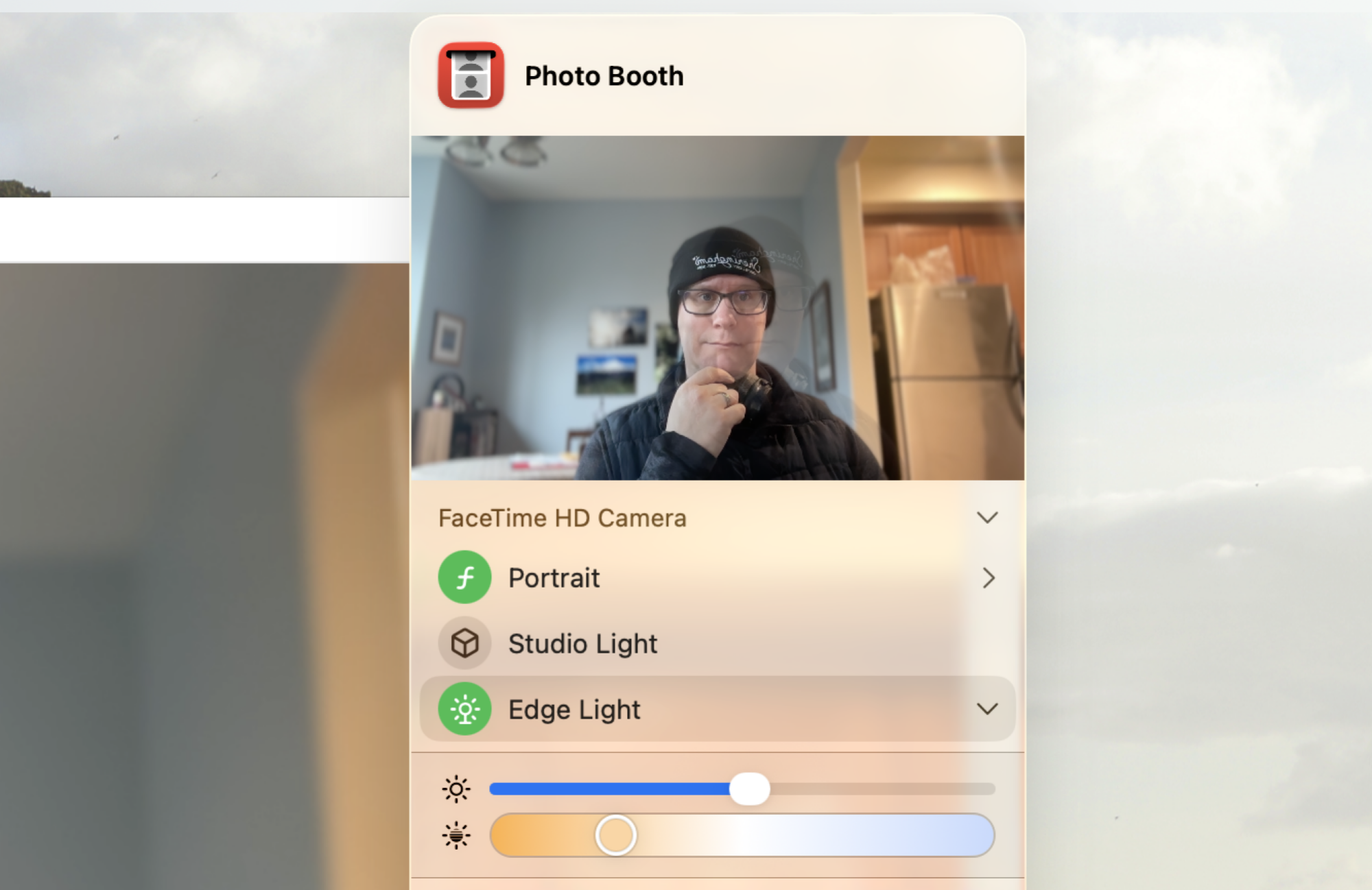
You can use the feature by clicking the camera icon on the menu bar during a call and toggling on the Edge Light option. You can also adjust the brightness and the color of the edge light from here.

A screenshot of the camera menu on a Mac, complete with the new Edge Light feature.There are sliders for brightness and color.

Credit: Justin Pot

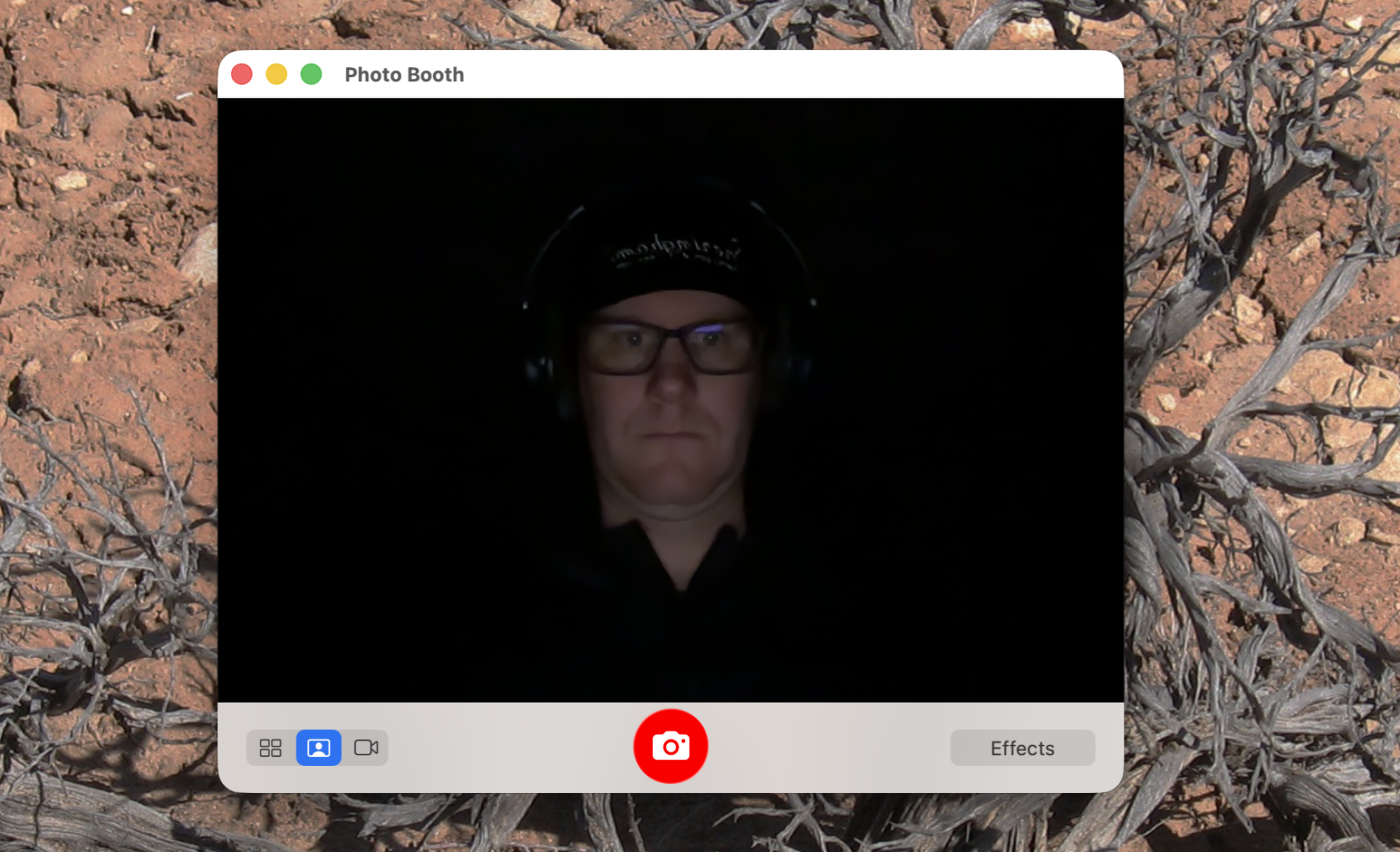
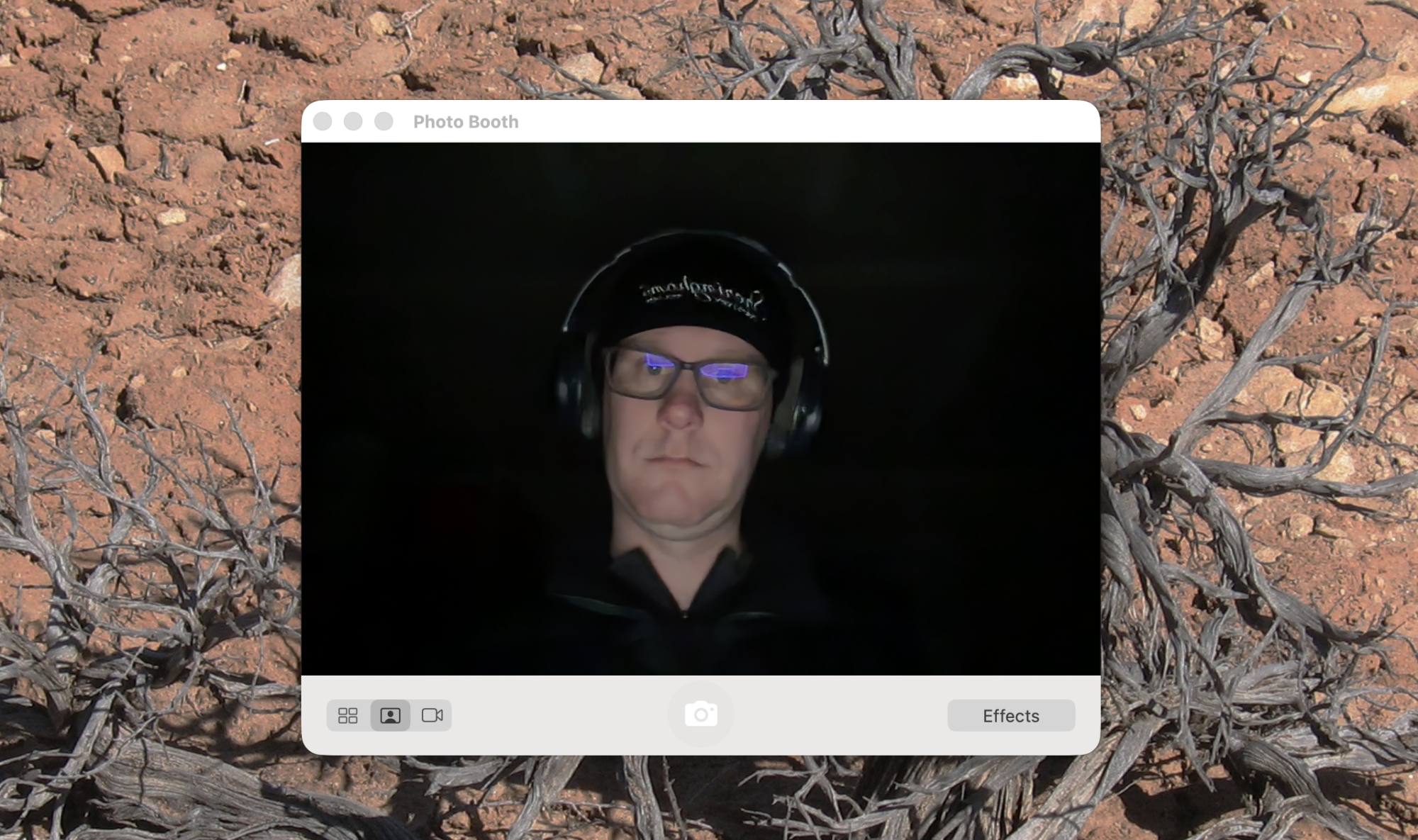
I tried this in a well-lit room and didn’t notice much of a difference, which makes sense. In a totally dark room, though, it proved extremely helpful. Here’s how I looked without Edge Light:

The Photo Booth app showing a dark picture of the author

Credit: Justin Pot

As you can see, I’m just barely lit by the laptop itself. Here’s how I look with the feature turned on:

Another screenshot of Photo Booth, this time with a slightly brighter

Credit: Justin Pot

It’s a lot easier to make out my face, but whether that’s a pro or a con is a matter of opinion. Try the feature out if you find yourself on a video call with the lights off. Note that it’s only offered on devices with Apple Silicon.

Top 5 Zwift Videos: Home Gyms, and Animating Races, and Exoskeletons

Looking for some inspiration for your own home gym improvements? In this week’s top video, hear from one Zwifter as he shares how he completely transformed his garage into a beautiful home gym.

Also included in this week’s picks are videos about FTP tests, attacking in a Zwift race, and using exoskeletons with indoor cycling.

I Transformed My Garage Into My Dream Gym

Ryan Condon shares how he transformed his garage into a home gym.

Zwift 20 min FTP Test | Why I’m ditching ERG mode

As Max from The Watt Life starts training for the 2026 season, he tackles an FTP test and shares why everyone should do an FTP test before a training block.

Sitting in the pack is boring… so I attacked

After getting bored of sitting in the pack, Liam Shaw takes a risk and attacks in his latest Zwift race. Can he hold on for the win?

First Time Up The Grade on Zwift

Jessica Strange tackles The Grade for the first time to test her FTP. With the help of some pointers from Ryan Condon, can Jessica set a new FTP?

I ‘Cheated’ at Zwift

With the recent launch of exoskeletons enhancing physical activity, many influencers have been putting them to the test in sports like running and cycling. In this video, Road.cc tries to set an Alpe du Zwift PR with the exoskeleton.

Got a Great Zwift Video?

Share the link below and we may feature it in an upcoming post!

Verizon refused to unlock man’s iPhone, so he sued the carrier and won

When Verizon refused to unlock an iPhone purchased by Kansas resident Patrick Roach, he had no intention of giving up without a fight. Roach sued the wireless carrier in small claims court and won.

Roach bought a discounted iPhone 16e from Verizon’s Straight Talk brand on February 28, 2025, as a gift for his wife’s birthday. He intended to pay for one month of service, cancel, and then switch the phone to the US Mobile service plan that the couple uses. Under federal rules that apply to Verizon and a Verizon unlocking policy that was in place when Roach bought the phone, this strategy should have worked.

“The best deals tend to be buying it from one of these MVNOs [Mobile Virtual Network Operators] and then activating it until it unlocks and then switching it to whatever you are planning to use it with. It usually saves you about half the value of the phone,” Roach said in a phone interview.

Read full article

Comments

Sam Shaw sets new Auckland to Wellington record, following Lachlan Morton controversy 

Samuel Shaw has broken the record for the fastest known time between Auckland and Wellington in New Zealand, covering the 638 kilometres in 17 hours and 21 minutes.

The mountain biker finished on Monday evening (New Zealand time) and his time beat the previous FKT of 18 hours, 26 minutes set in February 2025 by Lachlan Morton, making Shaw the first rider to crack the challenge in under 18 hours.

According to Strava, Shaw completed the ride with an average speed of 36.8kph and a weighted average power of 277 watts.

Morton’s attempt at the record, which was completed last year, was the inspiration for Shaw’s ride.

Morton’s ride was documented in a YouTube video by Rapha, the then clothing sponsor of his EF Education pro team. But that video caused controversy by concentrating on Brian Fleck, who held the record between 1983 and 1984, when it was taken back by the previous record holder, Brian Lambert.

There was no mention in the video of Lambert, whose record stood for 41 years, prompting Rapha to issue an apology to the family of Lambert, who died of Parkinson’s Disease in 2022. His family accused Rapha of a ‘false narrative‘ in the video.

Congratulated by Lambert’s son

Brian Lambert’s son, James, congratulated Shaw on the new record, which has yet to be ratified by Cycling New Zealand. 

“Brilliant ride. And smashed through the magical 18 hour mark our father went on and on about being possible for years,” he said. 

“Our family congratulates Sam on a truly exceptional effort. The Auckland to Wellington has a long and evolving history and it’s good to see it continue to be taken on with ambition and respect for the challenge.”

Meanwhile, Morton’s FKT for the 14,200km ride around the perimeter of Australia, set in October 2024, still stands, while Rapha has announced it will cease to clothe EF Education’s male and female teams at the end of 2025, moving on as the new kit sponsor for USA Cycling.