One of the most water-scarce regions on Earth is now experiencing a dramatic atmospheric shift that’s pushing moisture onto Oman’s northern coast at rates more than 1.5 times the global average, according to a Washington Post investigation of global atmospheric data [non-paywalled source]. The change has turned extreme rainfall into a recurrent source of catastrophe across the Arabian Peninsula. In the 126 years between 1881 and 2007, just six hurricane-strength storms hit Oman or came within 60 miles of the country. At least four more have made landfall in the past 15 years alone.
Research from Sultan Qaboos University analyzing 8,000 storms across 69 rainfall stations found that half of all rain in Oman falls within the first 90 minutes of a 24-hour storm. These intense bursts quickly overwhelm the desert’s ability to absorb water and send flash floods racing through wadis — normally dry riverbeds where many communities are built. In response, Dubai is constructing an $8 billion underground stormwater network spanning more than 120 miles. Oman has agreements to build 58 new dams and is studying 14 major wadis that funnel to its al-Batinah coastline.
Meta’s CTO has responded to speculation of VR being “dead” at the company.
After reports from outlets like Bloomberg, The New York Times, The Wall Street Journal, and Business Insider suggested that Meta is “considering” a cut “as high as 30%” for its “metaverse” teams, Meta issued an official statement confirming “shifting some of our investment from Metaverse toward AI glasses and Wearables”.
“Within our overall Reality Labs portfolio we are shifting some of our investment from Metaverse toward AI glasses and Wearables given the momentum there,” the official statement read. “We aren’t planning any broader changes than that.”
Following this, in an “ask-me-anything” session on his Instagram page, Meta’s CTO Andrew Bosworth was asked the question “Is VR dead for Meta now? You seem to have moved on to glasses and AI?”.
Here’s how Bosworth responded:
0:00
/1:00
Every now and then there’s just a narrative that people cannot help writing, and I’ll give you the way to know.
First of all, the answer is no: VR is not dead. We’re also investing a lot in glasses and AI, and that’s the trick.
The way to know if there’s a convenient narrative is if it appears zero-sum. Meta is a big company. We can invest in many things. We can invest in VR, glasses, and AI — and by the way, we have been for years.
Every year we go through a budget process, and in that budget process, we ask every team, “Hey, can you do the same work more effectively?” We’ve got better tools, we’ve got AI, we’ve got things. You’re trying to right-size it. How big is the market? How fast is it growing? Is that what we expected? If it’s slower than we expected, let’s make sure our burn rate is lower. If it’s faster than expected, let’s double down and make sure we take advantage and don’t cede it to other people. You’re being smart about it, but it’s normal stuff.
Bosworth’s response doesn’t contradict Meta’s official confirmation of shifting some investment “from Metaverse toward AI glasses and Wearables”, but seems to push back on the idea that an up to 30% spending cut means the company is no longer investing at all, suggesting that it can work on VR, glasses, and AI concurrently.
Meta’s funding shift from Horizon Worlds and VR to smart glasses comes just over a year after a leaked memo from Bosworth told Reality Labs staff that 2025 will determine whether their projects are “the work of visionaries or a legendary misadventure”.
In the memo, Bosworth described 2025 as “the most critical year in my 8 years at Reality Labs”, and told staff they “need to drive sales, retention, and engagement across the board but especially in MR”. Note that at the time, Meta was using MR to refer to VR too, a nomenclature that it ended earlier this year.
“And Horizon Worlds on mobile absolutely has to break out for our long term plans to have a chance”, Bosworth followed that sentence with.
Since then, Reality Labs saw its highest-ever quarterly revenue in Q4 2024 with the launch of Quest 3S, which was the top-selling console on Amazon US for Christmas. But this momentum did not carry through into 2025 at all.
The first two quarters of 2025 saw Quest sales decline year-over-year, revealing that while Quest 3S was a popular stocking stuffer, it simply is not a successful year-round product. While Q3 saw a rebound, Meta explained that this was due to retailers stocking up on Quest 3S for this year’s holiday season.
Meanwhile, Meta has continued to push its Horizon Worlds “metaverse” platform with multi-million-dollar creator competitions, especially focused on smartphone-only worlds, as the company hopes to scale the platform from a social VR space to a cross-platform Roblox and Fortnite competitor. But this doesn’t seem to have gained much traction.
This relative stagnation in its Quest and Horizon Worlds efforts comes as the company is seeing skyrocketing sales and significant public and investor interest in its smart glasses.
Back in February, in its Q4 2024 earnings call, Meta’s partner EssilorLuxottica said that the Ray-Ban Meta glasses had sold 2 million units, and in its Q2 2025 call in July said that sales had more than tripled since last year, performing “exceptionally well”.
In its Q2 2025 call in July, the company said that the glasses were performing “exceptionally well” in the market, with sales having more than tripled compared to 2024.
This doesn’t mean Meta isn’t working on new headsets, though. Leaked memos reveal that it plans to launch its rumored ultralight headset with a tethered compute puck in the first half of 2027, and that it recently started work on a gaming-focused Quest 4 set to be a “large upgrade” over Quest 3, though at a higher price.
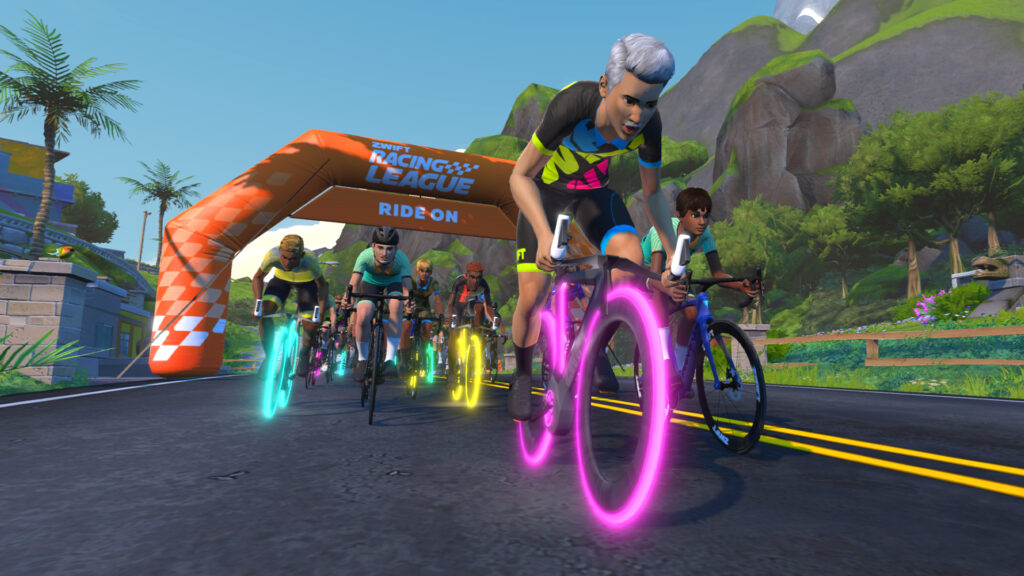
Now in its 18th round, Zwift Racing League continues to take racing to the next level on Zwift! Registration is now open for the third round of the 2025/26 season, which begins on January 6.
This page contains everything you need to know about the current ZRL round, and is updated as WTRL announces new details.
Intro to ZRL
Zwift Racing League (ZRL) is team-based racing for all abilities. It’s also the world’s largest virtual cycling competition, with over 30,000 riders of all abilities participating in each of the past two seasons!
Organized by WTRL, this is a team-based points competition spanning multiple weeks, with teams divided into divisions based on time zones and ability. Races take place every Tuesday, and the season is divided into distinct rounds with brief breaks in between.
ZRL is Zwift racing at its highest level. Its unique structure and varied race formats drive serious Zwift racers to show up week after week while providing a place for new racers who jump in and find their first team home.
Key Changes this Round
Zwift + WTRL continously collaborate to modify ZRL’s structure and rules with the aim of engaging as many racers as possible. Heading into this round, the rules have changed regarding team limits.
Riders were previously limited to membership on only two teams, but that limitation is now gone. The new rule says you may race for as many teams as you wish, but you are limited to a maximum of two teams per category within each league.
Examples:
A rider may race for Green B1, Lime B1, and Emerald B1
A rider may race for Green B Development, Green B1, and Green A1
A rider may race for Green B2 and Green B1
A rider may race for two teams in Green B2
A rider may not race for two Green B2 teams plus a Green B1 team, as all three sit in the same league and category (Green B)
This gives teams and riders more flexibility while ensuring divisions remain fair and rankings remain transparent.
Each ZRL round comprises weekly races which are either scratch races, points races, or team time trials (TTT). Scratch Races and Points Races are both actually points-based in terms of final results, but Points races include intermediate segments while Scratch Race points are all earned at the finish line. TTT winners are the teams who complete the race course fastest, with team time taken from the fourth rider across the line.
Race #1: Neon Shore Loop January 6, 2026 (TTT)
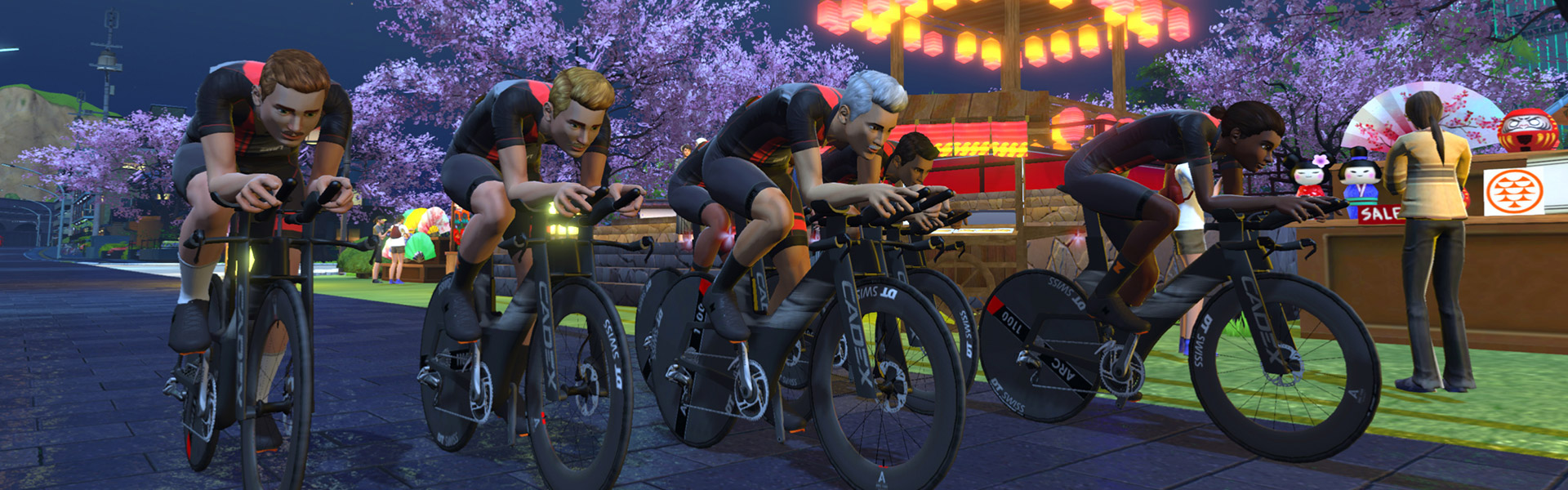
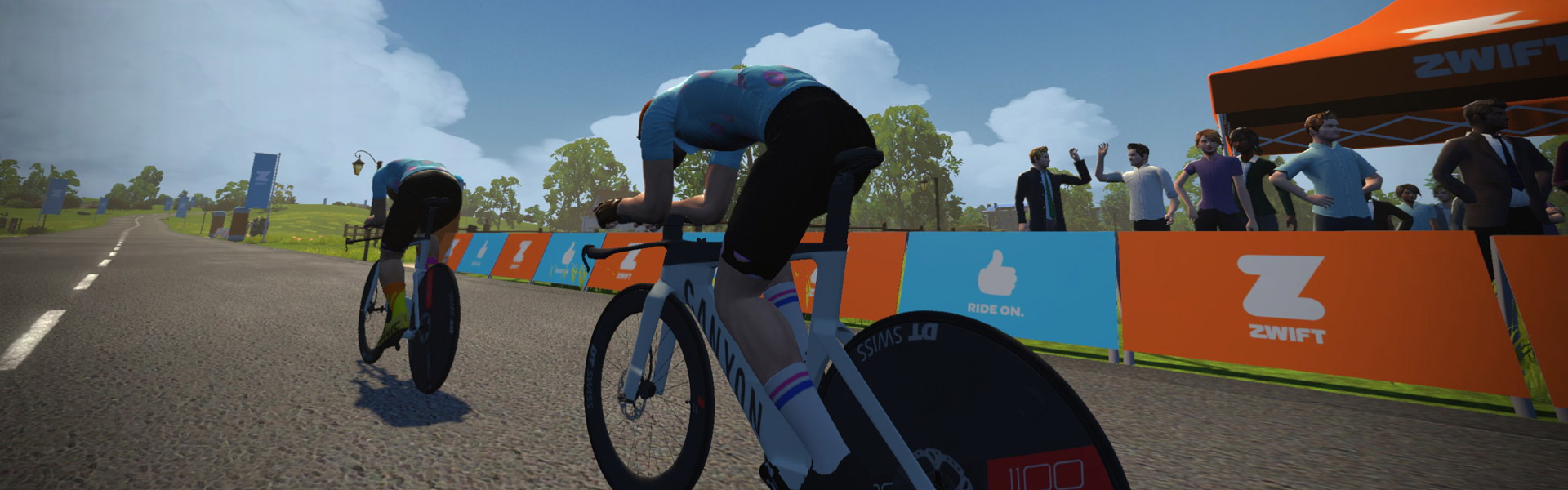
The round begins with a team time trial on a completely new route. This Makuri Islands route isn’t even in game yet, but we’ll be publishing details as soon as they’re available. Until then, please enjoy this press photo from Zwift, which shows how to ride as inefficiently as possible in a TTT:
1 Lap of Makuri Islands’ Neon Shore Loop (34.1km, 258m elevation)
Our second TTT of Round 3 kicks off with a tough lead-in: the steady climb up the backside of the Petit KOM. Then it’s a flat, fast route until we encounter that climb once more for the finish!
1 Lap of France’s Roule Ma Poule (26.1km, 263m elevation)
Race #5: Cobbled Climbs February 3, 2026 (Points Race)
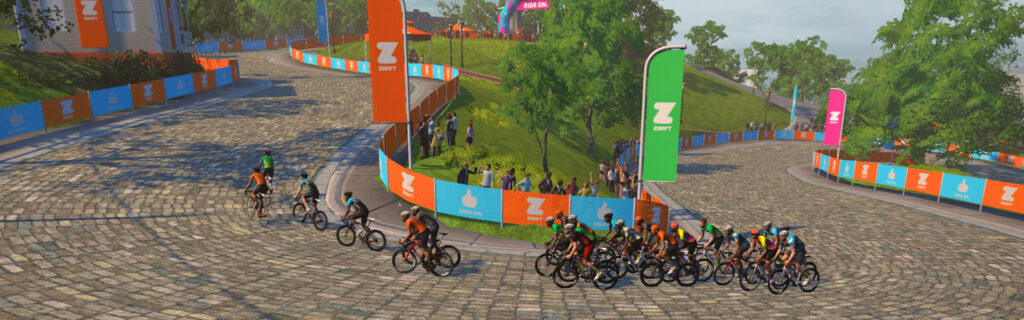
Our second points race of Round 3 takes us to Richmond for multiple laps of a punchy course that includes three key climbs on every lap, although only two are points segments.
A/B: 4 Laps of Richmond’s Cobbled Climbs (37km, 537m elevation)
C/D: 3 Laps of Richmond’sCobbled Climbs(27.8km, 403m elevation)
Race #6: London Loop (A/B) + Greatest London Loop (C/D) February 10, 2026 (Scratch Race)
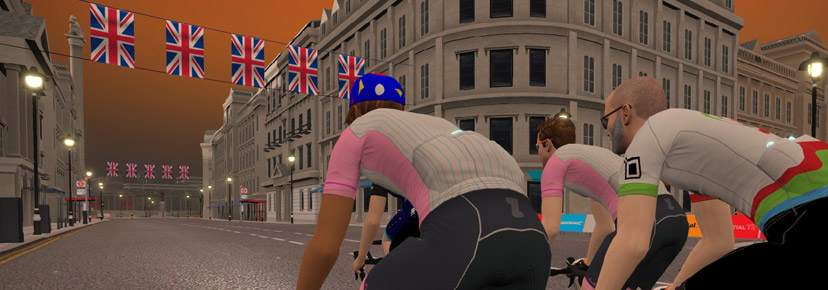
Round 3 wraps up with scratch races in London. A/B teams are on a different route than C/D teams, but no matter who you are, the big selections will happen on the big climbs. Hup hup!
A/B: 2 Laps of London’s London Loop (30.4km, 466m elevation)
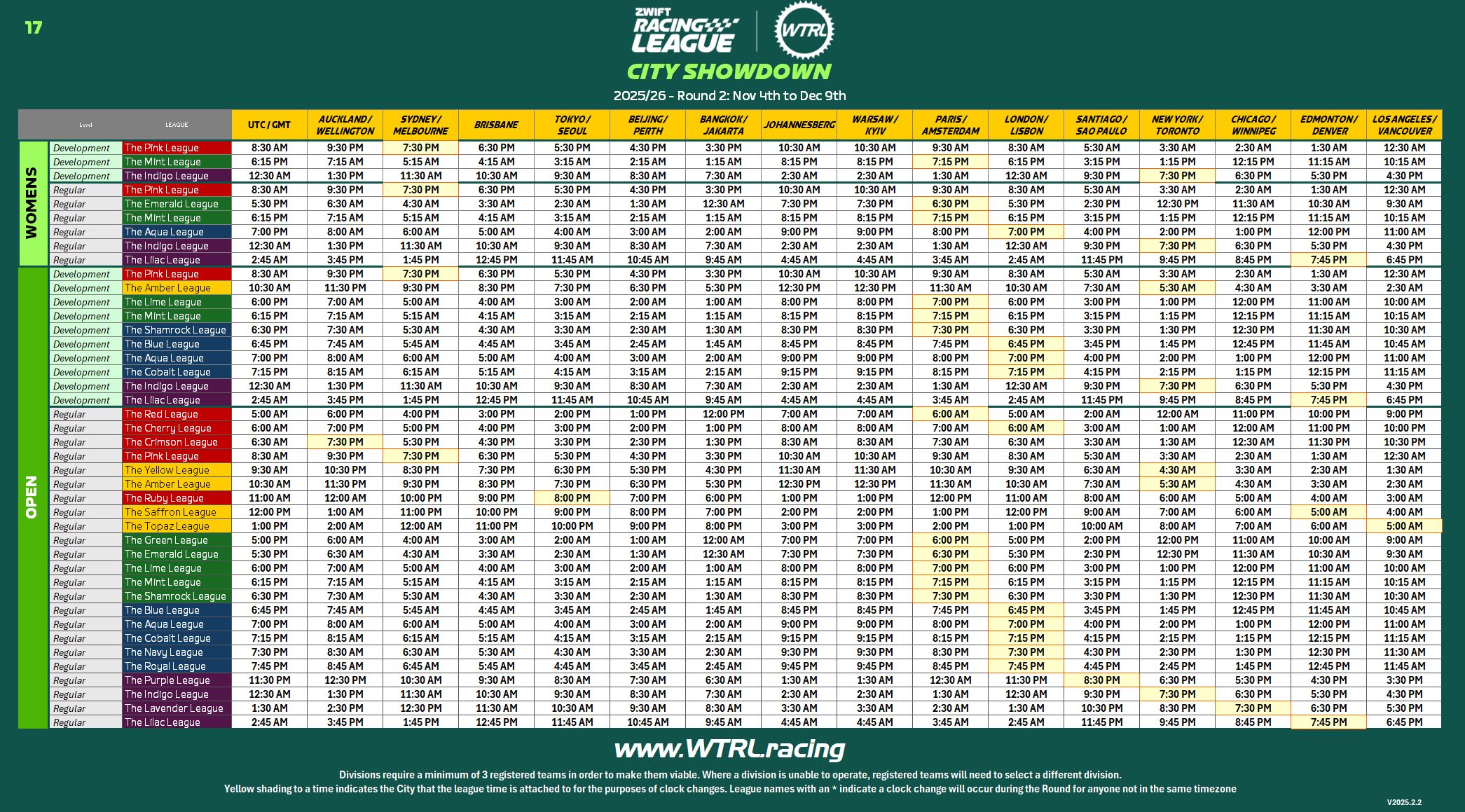
Some divisions and start times get tweaked between each round. Use the table below to find a time slot that works for your team, but note this table may be updated for Round 3.
ZRL is a team-based competition – you cannot sign up as an individual rider. Teams can have up to 12 racers rostered, but only 6 can race in each event. Teams must have at least 4 riders on their roster, and a rider into as many teams as they’d like, but only a maximum of two teams per league category (see “Key Changes this Round” above).
Want to race, but don’t have a team? Here are seven ways to find a team:
If you’re already a member of a larger Zwift Club, contact a senior Club representative to see if you can join one of your Club’s ZRL teams.
Join an official team-lead ZRL Group Recon Ride (see below) where several teams can be found looking for more riders. These run several times a day, starting two weeks before the first race.
Join the ZRL Facebook Group and post preferred race times/league, Pace Group Category, and any other preferences under the #zrlteamhunt tag where many teams are eagerly waiting.
Reply to one of the #zrlrecruiting posts that teams make in the ZRL Facebook Group if you don’t want to post your own request.
Reach out directly to WTRL and they can match you to a team based on race times, category, and team preferences.
The minimum category you’ll race is determined by your power history on Zwift. See this post for details.
Riders must use a power sensor to transmit power to the game – this would be a smart trainer, smartbike, or power meter. (You’re allowed to race C and D categories with a “classic” trainer and virtual power, but your points are cut in half.)
Heart rate monitors are required. (You’re allowed to race without a HRM, but your points are cut in half.)
Cadence monitors are required.
You’ll want to have at least a few races under your belt before you try to join a team, so you are confident that you’re in the correct category. It causes a lot of hassle if you join a team and are forced to upgrade to a new category mid-round!
Race Recon Events
If you’re unfamiliar with a particular week’s race course, join a ZRL recon ride! These happen multiple times per day and are led by experienced racers who may share route info and racing tips as you ride.
NVIDIA has announced the release of Nemotron 3, the latest generation in its ongoing Nemotron line of large language models (LLMs). It presents the new models as open, high-efficiency building blocks for agentic AI systems. The first model in the series, Nemotron 3 Nano, is available now, with larger “Super” and “Ultra” variants scheduled
Cloudflare’s sixth annual Year in Review report describes an internet increasingly shaped by two forces: automated traffic and government intervention, as global connectivity grew 19% year over year in 2025.
Google’s web crawler now dominates automated traffic, dwarfing other AI and indexing bots to become the single largest source of bot activity on the web. Nearly half of all major internet disruptions globally were linked to government actions, and civil society and non-profit organizations became the most attacked sector for the first time.
Post-quantum encryption crossed a significant threshold, now protecting 52% of human internet traffic observed by Cloudflare. The company also recorded more than 25 record-breaking DDoS attacks throughout the year.
Ubisoft is moving deeper into MOBAs after buying March of Giants from Amazon and acquiring the team that made the game. As part of the agreement, Amazon will help promote March of Giants on Twitch. The deal is expected to close on December 16
There’s no release date as yet for March of Giants. Amazon announced the free-to-play game back in August and there was a closed alpha playtest the following month. The next playtest will take place in 2026. The next major update for March of Giants will include “new giants, expanded competitive modes and foundational systems designed to support long-term growth.”
March of Giants is a 4v4 game in which players control giant war commanders. You’ll lead armies with thousands of soldiers and send them to attack enemy giants. Likewise, you’ll have to fend off the other team’s minions. You can also deploy reinforcements (called Battleworks) like trenches, tanks and bunkers to help you win a match.
MOBAs aren’t entirely new territory for Ubisoft. While it’s ostensibly a third-person action game, For Honorchecks all the MOBA criteria too. Although it clearly sees an opportunity in the MOBA market, Ubisoft will have a job on its hands to make March of Giants succeed in a space that’s dominated by League of Legends and Dota 2.
March of Giants was in development at Amazon Games Montreal, a studio that was established five years ago. Several former Ubisoft employees are returning to that company as part of this deal. Many of them were part of the original creative team behind Rainbow Six Siege, including Amazon Games Montreal founder and March of Giants creative director Xavier Marquis.
This article originally appeared on Engadget at https://www.engadget.com/gaming/amazon-sells-moba-march-of-giants-to-ubisoft-183948291.html?src=rss
Asymmetric VR games are a rare but wonderful treat, especially those which let you play with non-VR friends. The newly released VR Giants not only lets you play with a non-VR friend, but thanks to the ‘Friend Pass’ feature, your friend plays for free with only one copy of the game between the two of you.
VR Giants, an asymmetric co-op VR game first launched on Steam, is now available in Early Access on Quest. The game features two distinct roles: the VR player is Goliath and the non-VR player is David. The pair work together to tackle platforming challenges from two completely different perspectives.
The release of VR Giants on Quest includes a free Friend Pass which allows a friend to join you as David, free of charge. Your co-op partner can join via another Quest or on a PC thanks to newly added cross-play with the Steam version of the game (and its equivalent Friend Pass).
I appreciate the thoughtful inclusion of the Friend Pass and cross-play as it maximizes the opportunity to play the game with your friends regardless of what platforms they have access to.
Developer Risa Interactive says the game includes 23 levels with some eight hours of co-op gameplay.
LG makes some of the most popular TVs on the market thanks to its long running line of OLED sets, which happen to be part of some solid holiday discounts right now. As with most other TV manufacturers in the market, it bundles pre-installed apps on its smart TV platform, WebOS. However, the latest addition to this included set of apps hasn’t
Merriam-Webster has selected “slop” for the dictionary company’s 2025 word of the year. The leading lexicographers define slop as “digital content of low quality that is produced usually in quantity by means of artificial intelligence.” We’ve seen an absolute deluge of AI slop this year, from fake movie trailers on YouTube to AI-generated bands on Spotify. Not even food delivery like Uber Eats could escape the onslaught of AI-generated garbage that no one asked for.
It’s gotten to the point that half the videos my well-meaning parents send me on social media are AI-generated videos of dogs. This isn’t all that surprising given how very intentionally the social media giants have added slop to all our feeds.
Merriam-Webster rightly points out the somewhat mocking nature of calling it “slop.” “Like slime, sludge and muck, slop has the wet sound of something you don’t want to touch. Slop oozes into everything. The original sense of the word, in the 1700s, was ‘soft mud.’ In the 1800s it came to mean ‘food waste’ (as in ‘pig slop’), and then more generally, ‘rubbish’ or ‘a product of little or no value,'” the dictionary distributors wrote.
As the proliferation of AI slop expanded, some platforms like TikTok and Pinterest got wise and began offering users the choice to tone down the sheer amount of it in their feeds. Even Spotify is at least trying to combat some of this stuff now, though that didn’t stop an AI-generated copycat from going unnoticed on the platform for weeks. Elsewhere, companies like Google leaned in, incorporating Veo 3-generated videos into YouTube Shorts. We’ll only be able to tell in hindsight if 2025 was the peak of AI slop, but for now it shows no signs of abating.
Merriam-Webster highlighted some other words for the year (some of which the chronically online will be familiar with), including Gerrymander, Touch Grass, Performative, Tariff, Conclave and Six Seven.
This article originally appeared on Engadget at https://www.engadget.com/ai/slop-is-merriam-websters-word-of-the-year-181903322.html?src=rss
Google began offering “dark web reports” a while back, but the company has just announced the feature will be going away very soon. In an email to users of the service, Google says it will stop telling you about dark web data leaks in February. This probably won’t negatively impact your security or privacy because, as Google points out in its latest email, there’s really nothing you can do about the dark web.
The dark web reports launched in March 2023 as a perk for Google One subscribers. The reports were expanded to general access in 2024. Now, barely a year later, Google has decided it doesn’t see the value in this type of alert for users. Dark web reports provide a list of partially redacted user data retrieved from shadowy forums and sites where such information is bought and sold. However, that’s all it is—a list.
The dark web consists of so-called hidden services hosted inside the Tor network. You need a special browser or connection tools in order to access Tor hidden services, and its largely anonymous nature has made it a favorite hangout for online criminals. If a company with your personal data has been hacked, that data probably lives somewhere on the dark web.
Google has decided to retire its free dark web monitoring tool, saying it wasn’t as helpful as the company hoped. From a report: In a support page, Google announced the discontinuation of the “dark web report” tool, two years after offering it as a free perk to Gmail users before expanding it more broadly. The feature worked by scanning for your email addresses to determine whether they had appeared in data breaches, which often circulate on Dark Web marketplaces. The tool could then alert you about where the data was exposed, including any accompanying details such as dates of birth, addresses, and phone numbers.
The iPhone’s Focus modes are perhaps its most underrated feature. Once customized, they can become incredibly powerful tools that put you in control of how your iPhone can grab your attention. They can take some time to set up, but it’s worth it. Once you’ve got everything squared away, you’ll have timed boundaries from certain apps, people, and even your work, for that mythical work-life balance. Forget having a personal phone and a work phone—a couple of well-tuned Focus modes might be enough.
Diving into Focus modes
Credit: Khamosh Pathak
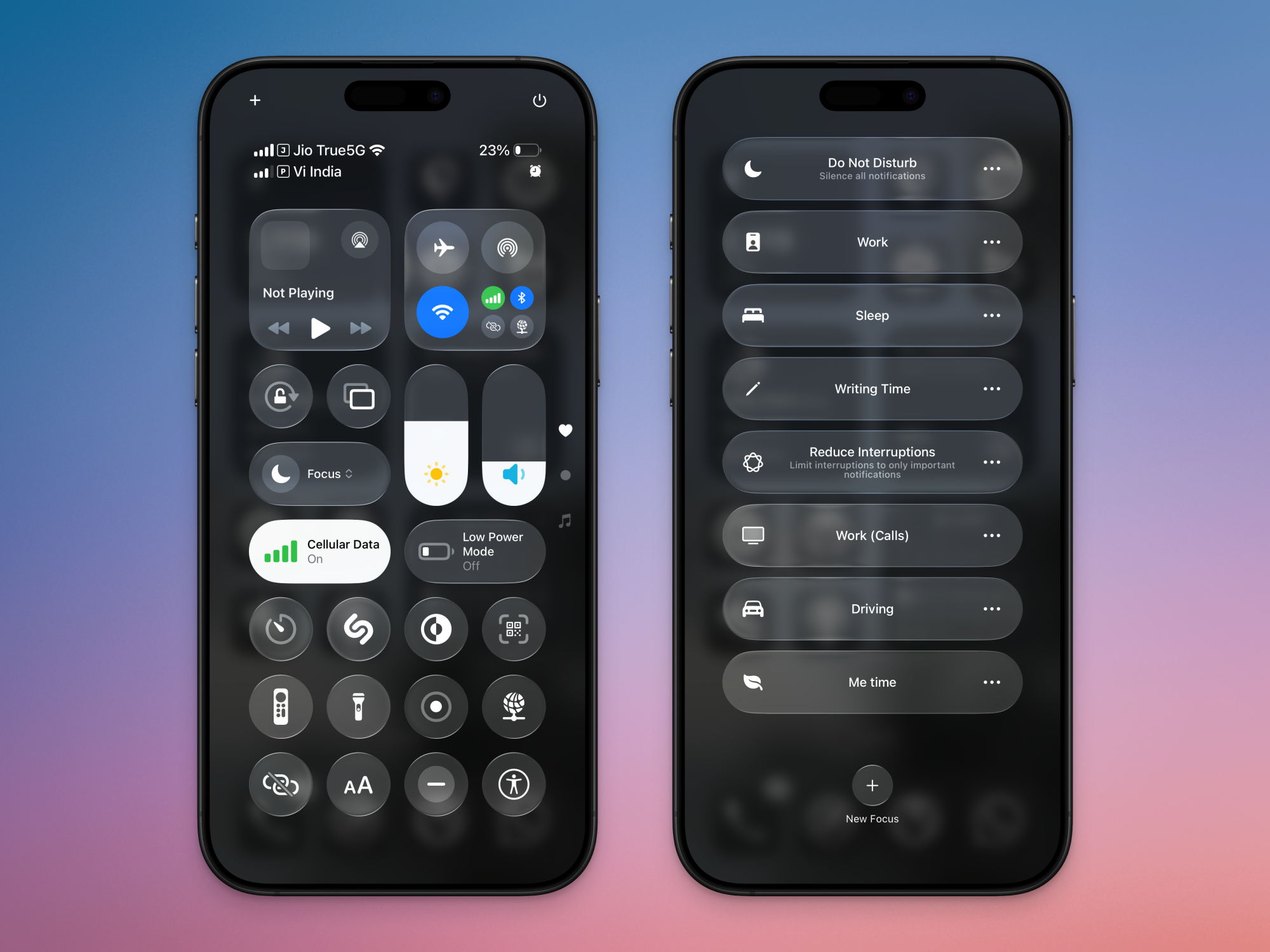
What used to be Do Not Disturb on iPhone is now Focus mode, which comes with many more options. Open the Control Center and tap the Focus button to see a list of all available Focus modes. The familiar Do Not Disturb option will be up top, but you’ll also see helpful Focus modes premade by Apple, Sleep being a prominent example. If you have a device that supports Apple Intelligence, you’ll also see a mode called Reduce Interruptions, which automatically mutes all notifications except the really important ones. Other premade modes include Personal, Work, and Sleep, which you can all customize to your own liking.
How to set up your own Focus mode
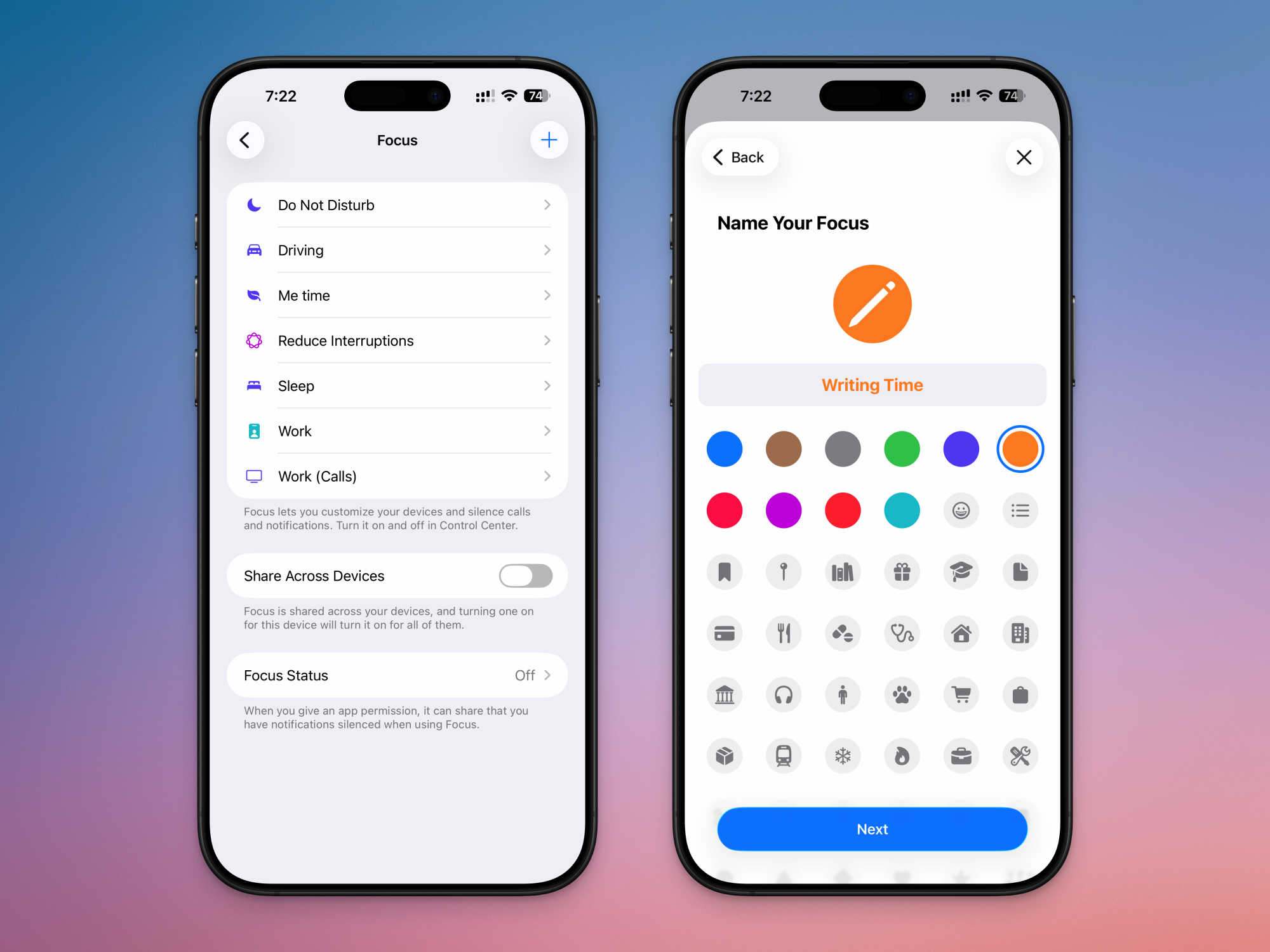
To get the most out of Focus Modes, you should set some Focus modes for yourself. One for work and one for personal time would be a great place to start. Go to Settings > Focus and tap the Plus button at the top. Here, choose the Custom mode option to get the most flexibility. Give it a name, icon, and tap Next. Then, tap Customize Focus.
Credit: Khamosh Pathak
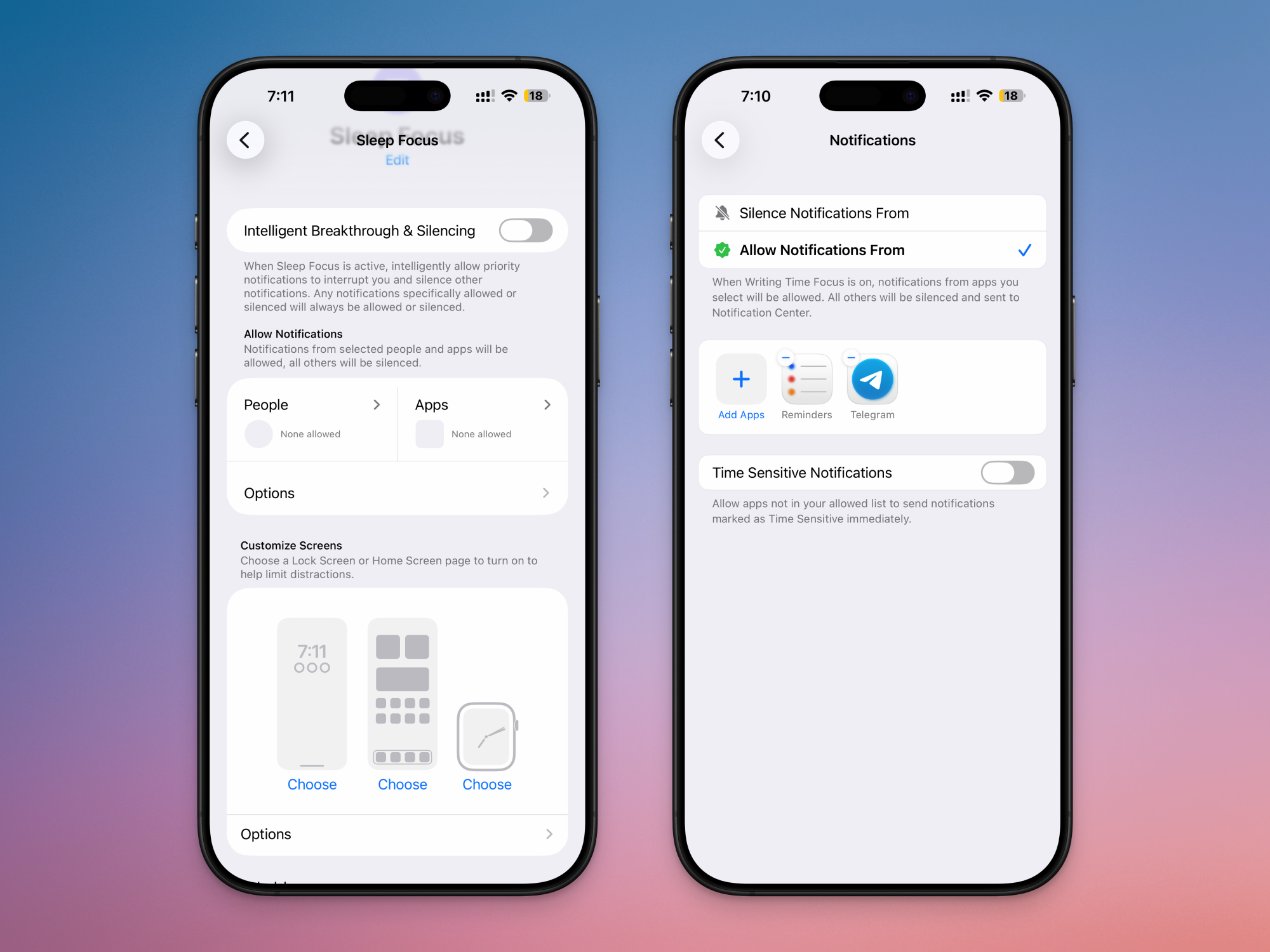
This is where you’ll do most of your work. First, tap Choose People and select if you want to allow notifications from only a couple of people, or if you want to silence notifications from particular folks. If you’re setting up a Focus mode for personal time, you might want to stop notifications only from your boss and colleagues. Choose the people to allow, and tap Next. Then, choose who is allowed to call you. You can limit it to just your Favorites, or only a handful of people.
Credit: Khamosh Pathak
Then, tap Choose Apps and follow the same process for apps as well, either allowing notifications from some apps, or only silencing notifications from particular apps. For example, if you’re setting up a Focus mode for personal time, you might want to disable notifications from work apps like Slack, Teams, Gmail, and more. Tap into the Options menu, and you can also choose to show silenced notifications on the Lock Screen, or to dim the lock screen every time that Focus mode is enabled.
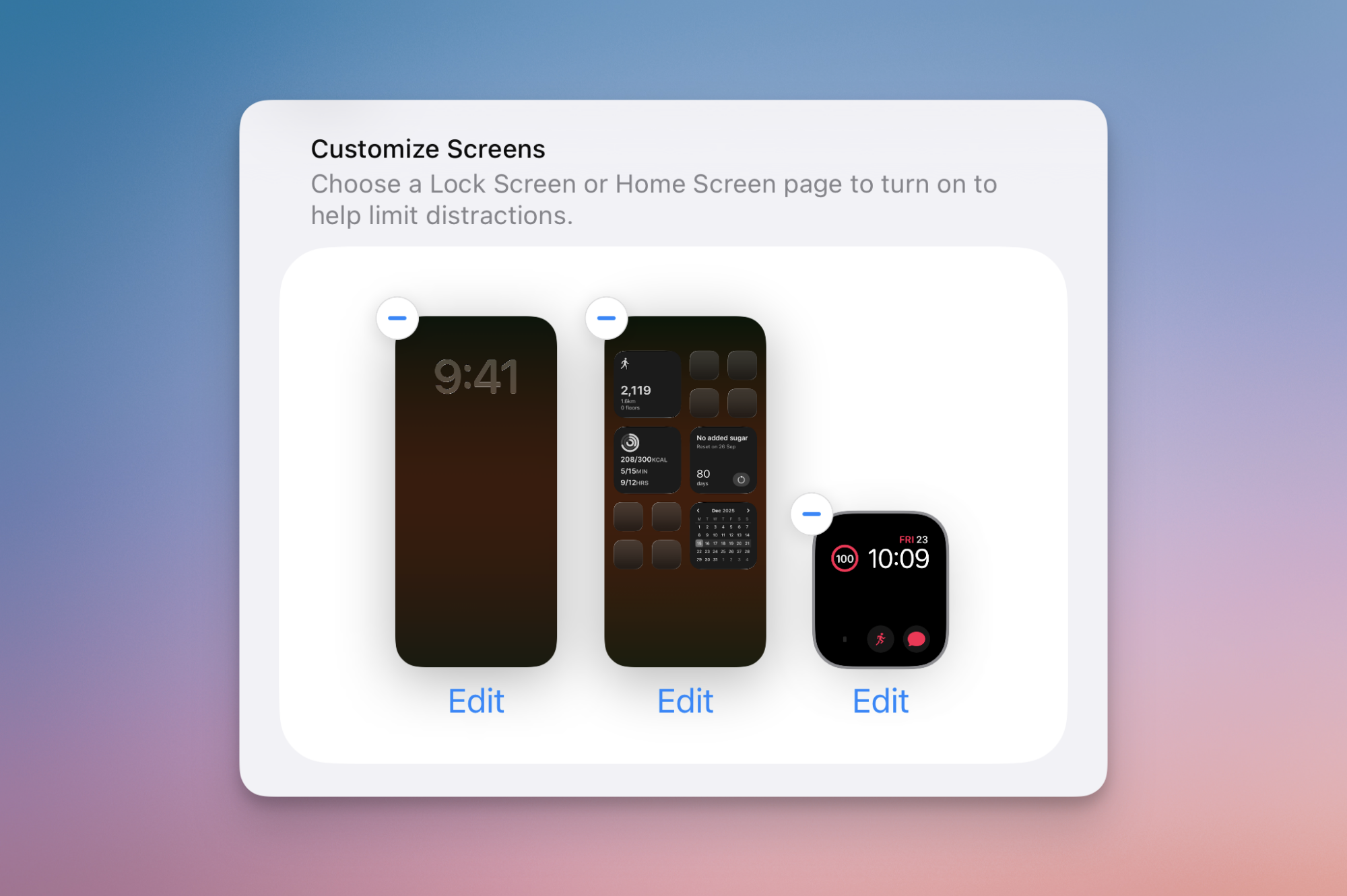
Next, take some time to customize what you see when a Focus mode is enabled. Apple will let you choose a distinct Lock screen, Home screen and even an Apple Watch watch face per Focus mode. For example, your work Focus can feature just your calendar and to do list. This will go a long way towards cementing the Focus state in your mind. For example, when I’m in my Writing Focus mode, my home screen is devoid of everything, including my tasks widget and communication apps.
Credit: Khamosh Pathak
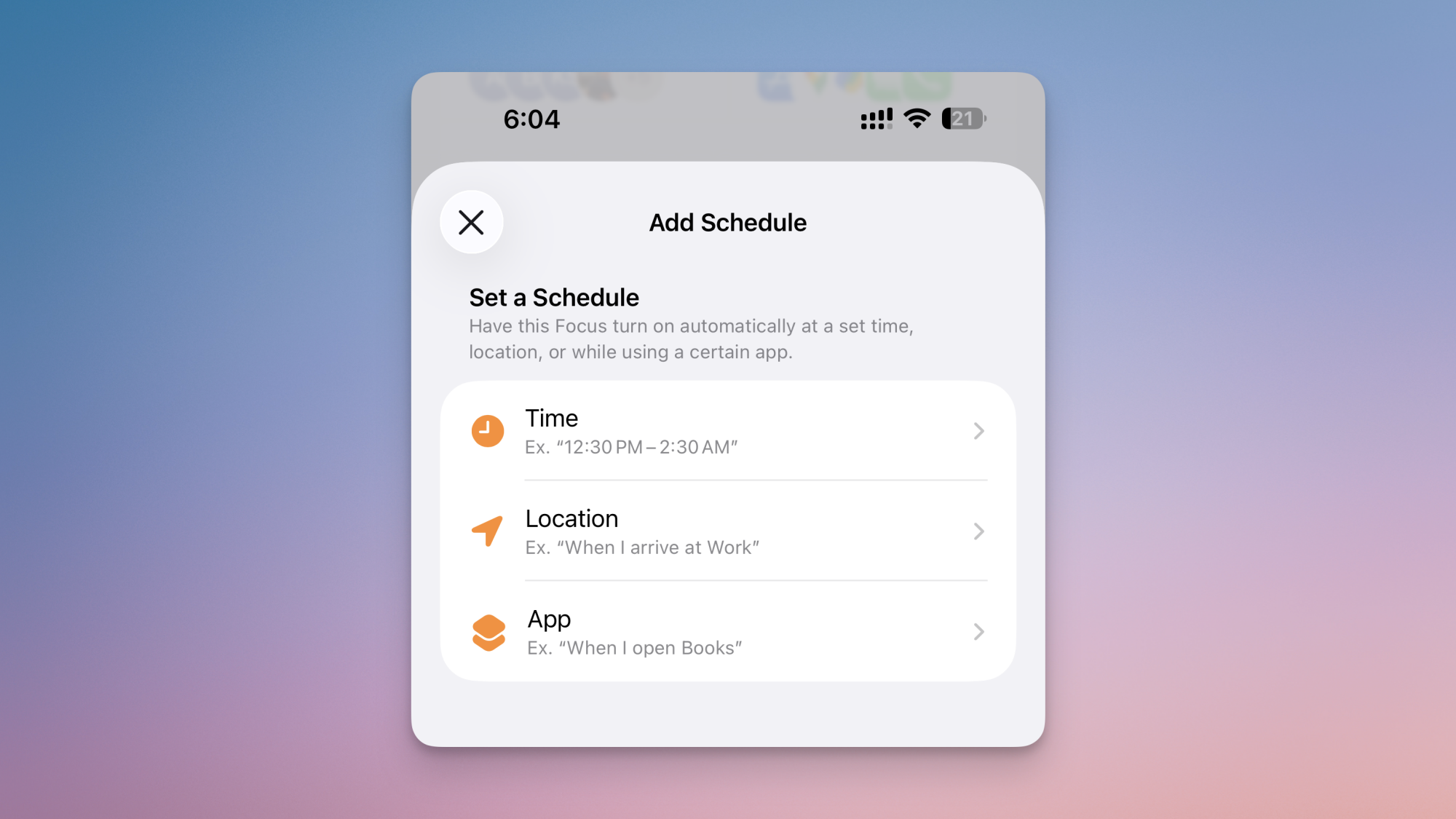
Then, you’ll see a Set a Schedule section. Here, you can turn on a Smart Activation feature that will automatically enable a Focus mode depending on your location, app usage and so on. This has been hit or miss for me, so I would advise you to avoid it for the most reliable results. But you can definitely create a manual schedule using the Add Schedule button. Here, You can trigger a Focus mode to automatically start or stop at a certain time of day.
Credit: Khamosh Pathak
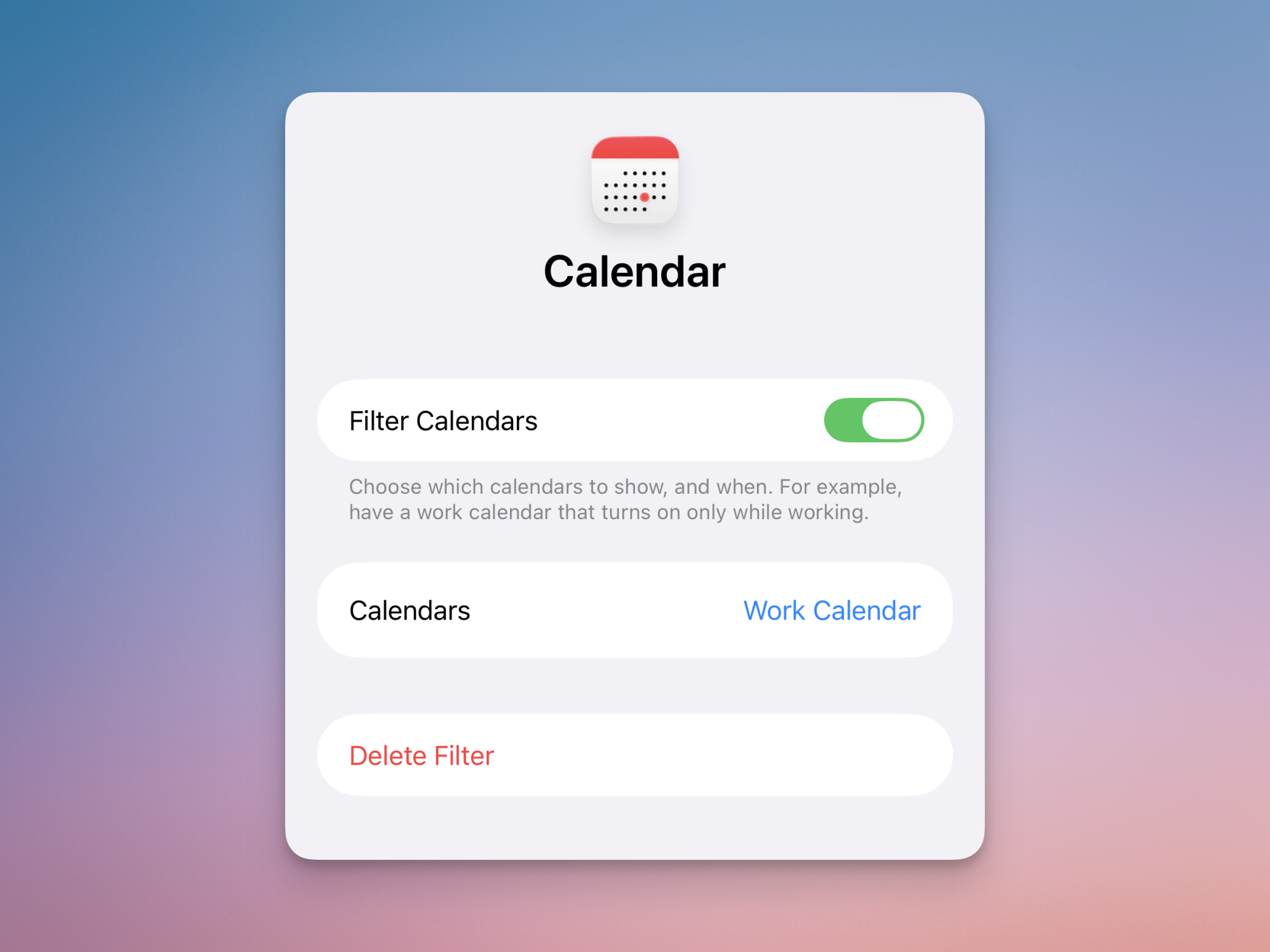
You can even use Focus Filters to further customize exactly what apps can show you when you’re in a Focus mode. For example, you can choose to only see your work calendar when you’re in your work Focus, but not your other calendars. These filters work for Apple’s apps and even third-party apps.
Credit: Khamosh Pathak
Lastly, you can choose to enable the Intelligent Breakthrough & Silencing feature that’s found at the top of the Focus page. If you have an iPhone with Apple Intelligence enabled, you’ll see this setting. It uses on-device intelligence to allow priority notifications to interrupt you even when you’re in silent mode. This goes over all other customizations that you might’ve done. But, being an Apple Intelligence feature, its reliability can be a bit iffy. Based on personal experience, I would recommend you take the time to fully customize the Focus mode to your liking instead of handing some of that work over to Apple Intelligence, as it gets things wrong for me fairly often.
Quest 3S is on sale for $250 again, and from Best Buy it comes with a $50 gift card, 1 month of Xbox Game Pass Ultimate, and The Walking Dead: Saints & Sinners.
For Black Friday 2025, the 128GB model of the headset was on sale for $250 ($50 off its regular $300 price), and the 256GB storage model for $330 ($70 off its regular $400 price), in a sale that ended after December 2. On top of this, Best Buy was providing $110 of perks. Now, Meta has brought the sale back, and Best Buy has brought its deal back too.
You can find the deal for the 128GB base model of Quest 3S here, and for the 256GB model here.
Both deals end after 11:59 pm PT on January 3, giving plenty of time to order for a holiday season gift.
In both cases, you still get 3 months of the Meta Horizon+ subscription, as with all purchases of new Meta Quest headsets.
You could use the $50 Best Buy gift card to get the Elite Strap to make the headset more comfortable for just $20, for example, while during the 1 month of Xbox Game Pass Ultimate (normally $30) you can play popular flatscreen games like Call of Duty on a giant virtual screen.
As for The Walking Dead: Saints & Sinners, it’s also normally $30, and it’s widely considered to be one of the best VR games of all time due to its physics-based combat system, earning an ‘Essential’ score in our review.
While Quest 3S can run all the same content as Quest 3, and has the same fundamental capabilities (including the same XR2 Gen 2 chipset and 8GB RAM), if you have the funds we always recommend Quest 3 over Quest 3S. The proper Quest 3 features Meta’s advanced pancake lenses which are clearer and sharper over a wider area, have a wider field of view, and are fully horizontally adjustable, suitable for essentially everyone’s eyes. These pancake lenses also enable Quest 3 to be thinner, which makes the headset feel slightly less heavy.
Still, at $250 and with $110 worth of perks Quest 3S is hard to say no to, and it could be an impulse gift for the holiday season to bring a friend or loved one into VR and mixed reality.
SparkyLinux 2025.12 (codename Tiamat) has been released today as another snapshot in the semi-rolling series of this Debian-based GNU/Linux distribution leveraging the Debian Testing repositories.
The Trump administration announced Monday the United States Tech Force, a new program to recruit around 1,000 technologists for two-year government stints starting as soon as March — less than a year after dismantling several federal technology teams and driving thousands of tech workers out of their jobs.
The program will primarily recruit early-career software engineers and data scientists, paying between $150,000 and $200,000 annually. About 20 companies have signed on to participate, including Palantir, Meta, Oracle and Elon Musk’s xAI. Some engineering managers will be allowed to take leaves of absence from their private-sector employers to join the program without divesting their stock holdings.
The initiative follows the March closure of 18F, General Services Administration’s internal tech consultancy, and the shuttering of the Social Security Administration’s Office of Transformation in February. The IRS had lost over 2,000 tech workers by June.
With Linux 6.19-rc1 released, the merge window for Linux 6.19 has now concluded. Here is a summary of the interesting Linux 6.19 new features and changes with this kernel version.



 A rider may race for Green B1, Lime B1, and Emerald B1
 A rider may not race for two Green B2 teams plus a Green B1 team, as all three sit in the same league and category (Green B)