
Longtime Red Hat engineer Hans de Goede who worked on many Intel/AMD laptop enhancements over the years left Red Hat and ended up joining Qualcomm. Now it turns out one of his projects at Qualcomm is enhancing the Fedora Linux support for running nicely out-of-the-box on Snapdragon-powered Windows on ARM laptops…
Monthly Archives: December 2025
SPhotonix Touts 5D Glass Storage To Preserve Data For Billions Of Years

SPhotonix is the latest big name in 5D glass storage technology, and it’s proving to be quite ambitious in its goal to bring the technology to market, estimating “another three or four years of R&D” to get it there.
5D glass storage, for the uninitiated, refers to a technique where high-density, high-durability silica glass is used with
Fallout season 2’s first episode will premiere a little earlier than expected
In an era where we often have to twiddle our thumbs for three years before a new season of a TV show we enjoy returns to our screens, the second season of Fallout has had a relatively short turnaround. It’s set to hit Prime Video 20 months after the first batch of episodes. As it turns out, the season two premiere is going to arrive a little earlier than you may have anticipated as well.
The first episode will now hit Prime Video at 9PM ET on December 16. That’s six hours earlier than expected. So if you’ve been looking forward to catching back up with Lucy, Maximus and The Ghoul, you won’t have to stay up as late on Tuesday night to catch the premiere as soon as it’s available.
Well, well, looks like Christmas came early on Sphere. The Fallout Season Two premiere, now arriving December 16 at 6 p.m. PT. pic.twitter.com/RHpSBBXJ6H
— FALLOUT⚡️ (@falloutonprime) December 15, 2025
However, you won’t be able to binge the entire season this week. While Amazon dropped all of Fallout season one at once in April 2024, this time around it will release episodes on a weekly cadence through February 4.
Fallout was also in the news late last week when Prime Video offered up an error-ridden, AI-generated recap of season one. Amazon responded to the backlash (the Fallout fallout, if you will) by nixing AI video recaps from Prime Video entirely.
This article originally appeared on Engadget at https://www.engadget.com/gaming/playstation/fallout-season-2s-first-episode-will-premiere-a-little-earlier-than-expected-205018028.html?src=rss
Quest Now Has A Disney+ App With Downloads & Dolby Atmos
Quest headsets now have an official Disney+ app, with support for downloads and Dolby Atmos immersive audio.
It was already possible to watch Disney+ via the website in the Horizon OS web browser, but this is limited to 720p.
With the official app, Meta says Disney+ streams at up to 4K resolution with Dolby Vision HDR for all subscribers of the service. Quest 3 only has 2K regular LCD panels, so the benefits of 4K and HDR compared to 1080p SDR will be marginal, but the higher bitrate that comes alongside the higher resolution version should be very noticeable on the giant virtual screen, in terms of seeing fewer compression artifacts.
Disney+ Premium subscribers also get Dolby Atmos immersive audio in supported titles, a feature added to Horizon OS in v74 last year, as well as the ability to download content for offline viewing. That means you can now bring your Quest on a plane and watch Disney+ movies you’ve prepared, for example.


Window screenshots of Disney+ on Quest.
The only other major streaming platform with an app on Quest’s store with download support is Amazon Prime Video, which arrived on Meta’s platform alongside the launch of Quest 3S.
What isn’t supported on the Quest Disney+ app that is on the visionOS version, however, is 3D. Despite headsets being the ideal way to watch 3D movies, solving the problems of traditional 3D glasses in cinemas, the Quest app is limited to 2D only. It also lacks the custom 3D environments of the visionOS Disney+ app, such as the Alien: Earth Containment Room.
You can grab Disney+ on the Meta Horizon Store for free, and you’ll need a Disney+ subscription, of course. Meta claims that the app is currently only available in the US, but I was able to download and use it in the UK, despite not using a VPN or proxy of any kind.
New Amazon Prime Video Quest App Supports Downloads
Amazon just launched an all-new Prime Video Quest app that supports downloads for offline viewing.
 UploadVRDavid Heaney

Disney+ is now available to stream on Meta’s Quest headsets
Meta revealed that Disney+ was coming to its Quest headsets earlier this year during its Connect event. Now, the streaming app and its vast catalog are finally available to Meta’s VR users in the United States.
Meta recently overhauled the Quest’s entertainment experience with a new Horizon TV hub that brings its streaming features into one place. Horizon TV also added support for Dolby Vision and Dolby Atmos sound, both of which Disney+ subscribers can now take advantage of. According to Meta, there are a”select” number of titles available to stream in Dolby Vision 4K HDR, and Disney+ Premium subscribers can stream with Dolby Atmos Sound. The company also says there are more than 100 titles in Disney’s catalog that support 4K UHD and HDR and some Marvel and Pixar titles that support IMAX’s expanded aspect ratio.
The app is available now on the latest version of Horizon OS. Though Disney+ is for now limited to US-based Quest users, Meta says that international availability is “coming soon.”
This article originally appeared on Engadget at https://www.engadget.com/ar-vr/disney-is-now-available-to-stream-on-metas-quest-headsets-203622392.html?src=rss
What’s New in KDE Gear 25.12 — A Major Update for KDE Software
The KDE community has just published KDE Gear 25.12, the newest quarterly update to its suite of applications. This refresh brings a mix of enhancements, bug fixes, performance refinements, and new features across many popular KDE apps, from Dolphin file manager and Konsole terminal to Krita and Spectacle.
The Kindle App Now Has Built-In AI, Because of Course It Does
It’s 2025, so every piece of technology now needs to have an AI component. It doesn’t matter if these AI features are useful (though some are), they just need to be there, however ham-fisted or useless they may seem—though the line between those extremes often comes down to user preference. To that end, if you’ve ever been reading a book on the Kindle app and wished that you could ask your device a question about the text, Amazon has an AI bot for you.
Last week, Amazon announced “Ask this Book,” a new AI feature for the Kindle app. Now available on the iOS version of the app, it lets you ask Amazon’s AI questions about whatever it is you’re reading, whether you bought or borrowed the title. You can highlight a selection from the text to include in you’re queries, and ask questions relating the story’s plot, characters, relationships, and theme. According to Amazon, all answers will be contextual, presumably meaning they’ll all be related to the text at hand, and importantly, all answers will be spoiler-free. That should help avoid the classic mistake of googling a question you have about a book you’re reading and spoiling a coming plot twist or character death.
Amazon says Ask this Book is currently active for “thousands” of books written in English. As noted, as of this writing the feature is only live in the iOS version of the app, but Amazon is working on bringing it to the Android app, as well as Kindle devices, next year.
Ask this Book, whether you like it or not
If this sounds like the type of feature you’d be interested in, great! If you don’t care for this feature, either as a reader who doesn’t want AI getting in the way of their books, a publisher who doesn’t want Amazon training its AI on their IP, or a teacher who might see this as a potential cheating opportunity, there’s bad news: Once Amazon makes Ask this Book available for any given title, it’s permanently available, and there’s nothing anyone can do about it. That comes directly from an Amazon spokesperson, who told Publishers Lunch, “[t]o ensure a consistent reading experience, the feature is always on, and there is no option for authors or publishers to opt titles out.”
That response bothers me for two reasons. One, it’s always frustrating when a company introduces a new feature lwithout giving users the option to turn it off. I don’t use Apple Intelligence, but I appreciate that Apple lets me turn it off. Meta, on the other hand, forces me to contend with Meta AI, even though I never use it. Amazon seems to be attending the Meta school of user design.
But what’s more, it seems wild to me that authors and publishers don’t get a say as to whether this AI bot gets to be active on their books—especially retroactively. It’d even be one thing if authors had to opt-in in order to put their books on the Kindle platform going forward. But to enable it on “thousands” of titles made available before Ask this Book was ever a thing is, to me, disrespectful to authors and publishers, to say the least.
Interestingly, Amazon dodged questions from Publishers Lunch concerning licensing rights around Ask this Book, as well as protections for users, which is troubling given generative AI has a habit of hallucinating—or, in other words, making things up completely. Sure, when it’s working as intended, the AI can help readers understand things they’re confused about, but there’s a real chance that the AI will misinterpret questions, misrepresent the text, or straight up lie, which could negatively impact a reader’s experience of the work, with potential fallout for both the author and the publisher.
How Kindle’s Ask this Book works
While you won’t see this feature yet on your Kindle, you will encounter it in the Kindle app. You can either access it from the menu in any book where the feature is available, or by highlighting text in said book. Once you do, Ask this Book will present a list of questions it thinks you might be interested in asking. If none of them do it for you, you can formulate your own questions, and ask followups after the bot answers.
SK Hynix Reveals When Memory Crisis Could End And It’s Not Soon

Have you looked at the price of RAM lately? Retail prices for desktop DDR5 memory kits are three to five times what they were just a month ago. Building a PC has gone from “your GPU should be the most expensive component” to “make sure to budget for enough RAM.” In fact, the shortage reminds us of the GPU shortage just a few short years ago.
Microsoft takes down mod that recreated Halo 3 in Counter-Strike 2
Last month saw the release of Project Misriah, an ambitious modding project that tried to recreate the feel of Halo 3 inside Valve’s Counter-Strike 2. That project has now been taken down from the Steam Workshop, though, after drawing a DMCA complaint from Microsoft.
Modder Froddoyo introduced Project Misriah on November 16 as “a workshop collection of Halo ported maps and assets that aims to bring a Halo 3 multiplayer-like experience to Counter-Strike 2.” Far from just being inspired by Halo 3, the mod directly copied multiple sound effects, character models, maps, and even movement mechanics from Bungie and Microsoft’s popular series.
In the weeks since, Project Misriah drew a lot of praise from both Halo fans and those impressed by what modders could pull off with the Source 2 engine. But last Wednesday, modder Froddoyo shared a DMCA request from Microsoft citing the “unauthorized use of Halo game content in a [Steam] workshop not associated with Halo games.”
Murder-suicide case shows OpenAI selectively hides data after users die
OpenAI is facing increasing scrutiny over how it handles ChatGPT data after users die, only selectively sharing data in lawsuits over ChatGPT-linked suicides.
Last week, OpenAI was accused of hiding key ChatGPT logs from the days before a 56-year-old bodybuilder, Stein-Erik Soelberg, took his own life after “savagely” murdering his mother, 83-year-old Suzanne Adams.
According to the lawsuit—which was filed by Adams’ estate on behalf of surviving family members—Soelberg struggled with mental health problems after a divorce led him to move back into Adams’ home in 2018. But allegedly Soelberg did not turn violent until ChatGPT became his sole confidant, validating a wide range of wild conspiracies, including a dangerous delusion that his mother was part of a network of conspirators spying on him, tracking him, and making attempts on his life.
If Some Photos Are Inexplicably Turning Red on Your iPhone, There’s a Fix
If you open a picture in the Photos app on your iPhone, and it inexplicably starts turning red, I wouldn’t blame you for being a bit concerned. After all, that’s not supposed to happen, and out of all the colors your photos could randomly fade into, red is among the creepiest.
While you contemplate what angry and vengeful god you might have crossed recently, understand that this isn’t necessarily a problem affecting all, or even most, iPhone users and their photos. In fact, it doesn’t appear to be affecting photos taken on iPhones at all. Rather, the users reporting this issue see it when zooming in on photos taken on Android devices. It seems a new hue has been added to the iPhone/Android divide: green bubbles, red pictures.
If this isn’t happening on your own iPhone, you can see the issue play out in this Reddit post. User djenki0119 posted a screen recording of themself browsing photos on their iPhone that they had originally taken on a Samsung Galaxy S24. At first, the pictures appears totally normal. But once djenki0119 zooms in on each, it quickly turns a deep shade of red—almost as if you were looking at film developing in a dark room. This user has the same issue, only they took their photo on a Motorola Razr.
At this time, it’s unclear what is actually causing the issue to occur. It usually doesn’t matter what type of device took any particular image: Once it’s in the Photos app, it should display normally. But there must be something about Android files that the iOS Photos app isn’t reading correctly, at least when users zoom in on the image. As 9to5Mac highlights, it appears that something is adding a red filter to these images in the Photos app. Since this issue is only popping up recently, my guess is there’s a bug within iOS 26, though there could be an issue with Android instead.
For what it’s worth, I wasn’t able to replicate the problem with photos I sent from my Pixel 8 Pro over to my iPhone. But perhaps there is some strange combination of hardware and software that results in this tinting: Maybe a photo taken on a certain type of Android device running a specific version of Android turns red on a certain iPhone model running a specific version of iOS.
How to undo a photo that turned red on iPhone
Luckily, you don’t have to wait for Apple, Google, Samsung, or Motorola to issue a fix, depending on where the actual issue is coming from. To return your image to its proper color scheme, open it in the Photos app, tap “Edit,” then choose “Revert.” This restores the image to its original state, and removes the red filter that was unnecessarily overlayed on top of it.
[Industry Direct] Free-to-Play Elemental VR Arena ‘Crystal Conquest’ Launches in Early Access


Crystal Conquest is our free-to-play elemental class battler now available on Meta Quest. Players can step into various classes and roles to battle it out! Aeromancers fly, Geomancers control space with stone and impact, Hydromancers heal allies and extinguish attacks, Pyromancers pressure with decisive burst damage and more.
Industry Direct by the Crystal Conquest Team
Industry Direct is our program for sponsors who want to speak directly to the Road to VR newsletter audience. Industry Direct posts are written by sponsors with no involvement from the Road to VR editorial team and do not appear in our front-page editorial feed. Industry Direct sponsors help make Road to VR possible.
Our goal with Crystal Conquest has always been to make a VR battler that feels immersive, expressive, and truly distinct from match to match—not just a series of casters trading the same projectiles. Each class was built with its own unique moveset, counter logic and roles for combat.
Class Identity Built for Counterplay
 We designed each class to have clear strengths and roles. Hydromancers can block fire arcs using their water moves and recover pushes by healing allies. Aeromancers reposition using tornados, flying, and wind bow snipes. Geomancers can summon shields, create stone weaponry, or throw boulders at the enemies. Pyromancers control tempo through offensive flame attacks and dashes. Monks move through combat with agile double jumps and direct melee strikes, interrupting players in close range.
These class identities form the backbone of Crystal Conquest. Encounters unfold cleanly, and counters feel intuitive: water extinguishes fire, mobility punishes aim, stone structures resist high-sustain lanes, and air angles break static defense. The result is a style of VR combat where players can read the moment, react, and then express their role fully.
And there’s still more to come with classes! At launch, we’re offering our primarily gesture based character, the Monk who moves through combat with agile double jumps and direct melee strikes, interrupting players in close range.
A Discord-fan voted class, the Illusionist—a shadow magic user who wields daggers in a rogue manner—is in the works and will be available shortly after launch!
3v3 Conquest Mode with Towers, Minions, and Objective Flow
 Conquest mode offers a structured 3v3 MOBA-style environment with minions, capture points, and towers arranged to reward positioning and timing. This format allows class synergy to matter beyond raw combat as you battle it out and unlock potions and other powerful items.
Hydromancers can heal minions under pressure. Geomancers anchor forward positions or reinforce chokes. Aeromancers scout and engage from elevation that shift the tempo of the lane. Pyromancers turn small openings into decisive pushes. Monks break formations and force responses behind the frontline.
Duels and Cooperative PvE
 For those who prefer direct contest, the 1v1 duels provide space to battle it out with another player or in a private lobby with your friend.
For players looking to play collaboratively, Gauntlet mode introduces escalating PvE waves supported by AI allies or a friend, creating a co-op environment that functions as both practice and progression.
Free-to-Play Access Without Stat Advantages
 Crystal Conquest launches as free-to-play to encourage wide participation and immediate entry. Classes can be unlocked through play or purchased directly, but no stat boosts or competitive advantages are sold. This ensures that performance reflects player decision-making rather than purchase history.
A few cosmetics and class skins will be available at launch. We’re planning more cosmetics and skins alongside seasonal options and playtest rewards. But we are committed to making sure that balance remains grounded in fair access.
You can also earn an exclusive free skin by joining our Discord!
Crossplay at Launch
Crystal Conquest supports full crossplay between Quest and Steam/PC VR at launch!
Entering Early Access
As we launch the game in Early Access, our focus is on refinement and responsiveness. Standalone performance, platform parity, and input clarity remain at the center of development. With each playtest wave, we observe how players move, counter, coordinate, and highlight their own experiences.
Crystal Conquest is built to let movement, class identity, and counter logic become the foundation of VR arena expression. Whether flying as an Aeromancer, holding space as a Geomancer, sustaining a push as a Hydromancer, burning through lanes as a Pyromancer, or intercepting duels as a Monk, players can enter, observe, and act with intent.
Play Now
 Crystal Conquest is our vision of VR battleground identity: clear roles, readable counters, distinct movement, and the ability to express skill through elemental purpose rather than identical casting.
We look forward to seeing you in the arena.
Crystal Conquest is available worldwide on Meta Quest, SideQuest and SteamVR!
The post [Industry Direct] Free-to-Play Elemental VR Arena ‘Crystal Conquest’ Launches in Early Access appeared first on Road to VR.
Filmmaker Rob Reiner, wife, killed in horrific home attack
We woke up this morning to the horrifying news that beloved actor and director Rob Reiner and his wife Michele were killed in their Brentwood home in Los Angeles last night. Both had been stabbed multiple times. Details are scarce, but the couple’s 32-year-old son, Nick—who has long struggled with addiction and recently moved back in with his parents—has been arrested in connection with the killings, with bail set at $4 million.
“It is with profound sorrow that we announce the tragic passing of Michele and Rob Reiner,” the family said in a statement confirming the deaths. “We are heartbroken by this sudden loss, and we ask for privacy during this unbelievably difficult time.”
Reiner started his career as an actor, best known for his Emmy-winning role as Meathead, son-in-law to Archie Bunker, on the 1970s sitcom All in the Family. (“I could win the Nobel Prize and they’d write ‘Meathead wins the Nobel Prize,’” Reiner once joked about the enduring popularity of the character.) Then Reiner turned to directing, although he continued to make small but memorable appearances in films such as Throw Momma from the Train, Sleepless in Seattle, The First Wives Club, and The Wolf of Wall Street, as well as TV’s The New Girl.
The Outer Worlds 2 Is So Good It Makes The Wait For Fallout 5 That Much Easier

Obsidian’s new game is like a Bethesda RPG, but with better writing and fewer bugs
The post <i>The Outer Worlds 2</i> Is So Good It Makes The Wait For <i>Fallout 5</i> That Much Easier appeared first on Kotaku.
System76 Launches Pop!_OS Linux Distro To Much Fanfare, Check It Out
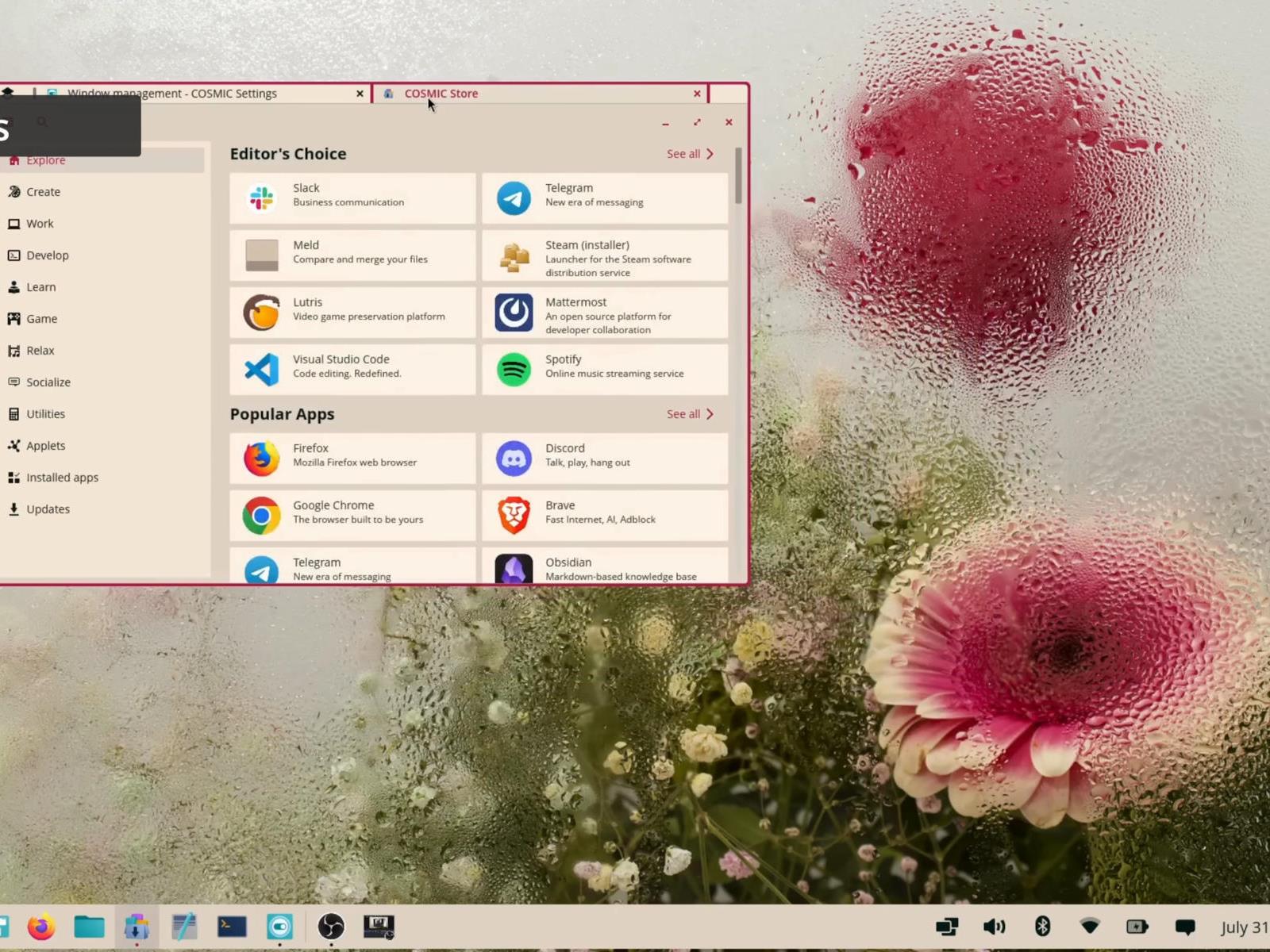
Pop!_OS is a new Ubuntu-based Linux distribution from System76, flaunting the COSMIC Desktop Environment and available on either a PC of your choice or one of many US-made laptops or desktops. While the naming of Pop!_OS recalls a more distant era of computing, the operating system itself is quite modern, featuring all the core features you’ve
First Avengers Doomsday Trailer With Captain America May Have Just Leaked

Chris Evans is returning to the role because Marvel’s out of ideas
The post First <em>Avengers Doomsday</em> Trailer With Captain America May Have Just Leaked appeared first on Kotaku.
VR Design Unpacked: The Best Shotguns in VR (and what makes them feel great)


Our series Inside XR Design highlights examples of great XR design. Today we’re looking at shotguns in several different VR games to learn what makes them feel great in the player’s hand. In doing so, we’ll uncover the secret to making anything feel great in VR.
Editor’s Note: Two of the games feature in this episode of Inside XR Design, Boneworks and Arizona Sunshine 2, were released this month way back in 2019 and 2023 respectively. Despite being years old, both games remain great examples of using the power of feedback to make VR weapons feel great. To commemorate these dual anniversaries, we’re bumping this episode back up to the front page to highlight what they can teach us about VR interaction design.
You can find the complete video below, or continue reading for an adapted text version.
Ok, we’re jumping right into this… if I asked you ‘what’s your favorite shotgun in VR?’ you can probably picture it in your head pretty quickly. But could you tell me exactly what makes that shotgun feel so great?
Well, that’s kind of a trick question, because the answer is like 50 different little details that all add up to how a shotgun ultimately feels in the player’s hands.
So today we’re going to look at some of my favorite shotguns in VR and dissect all those little details to talk about how they contribute to that feeling. And by the end of this… I’m going to make the case that if we can understand what makes a shotgun feel great in VR, we can figure out how to make anything feel great in VR.
Arizona Sunshine 2 – Sunshine Shorty
Let’s kick things off with one of my favorite shotguns in all of VR. That would be the sawed-off pump-action shotgun in Arizona Sunshine 2—lets call it the Sunshine Shorty.
Just look at this thing go. It’s incredibly satisfying to use. But why?
Well first of all, it’s pump action. You just can’t beat a pump-action shotgun in VR. Two-handed interactions in VR are always interesting, and making the player perform such a visceral and well-recognized gesture is always gonna make them feel like a bad-ass. Pumping a shotgun to load the next round is a clear extension of the ‘Instructed Motion’ concept I introduced in the previous episode, and an example of how such movements can infuse players with emotion.
The way the Sunshine Shorty reloads has a great little detail too. In many VR games you can reload a weapon just by touching the magazine or shell to the right place on a gun, but in Arizona Sunshine, you need to actually slide the shell into the weapon. The developers made this feel great by adding a custom hand-pose to show the player pushing the shell into the gun.
This little detail adds a lot to the feel of the weapon, because it changes reloading from just touching one thing to another into performing a gesture that captures more of the fantasy of sliding rounds into a shotgun. And importantly, it’s still feels good without being tedious. You might say the interaction is generous to the player… you don’t need to get the motion or position perfectly right in order for it to work.
But the motions themselves are only part of what makes using the shotgun satisfying. Providing feedback to the player intention is critical as well, and the easiest way to do this is with great sound and haptics.
And getting the sounds right is everything.
Let’s listen to how much less satisfying it is to use the Sunshine Shorty with weak sounds vs. strong ones:
Unmute for sound
Sounds make such a difference.
For a shotgun, getting the pump-action sound just right is crucial. As someone who’s fired real shotguns, I wouldn’t say the Sunshine Shorty’s pumping sound is particularly realistic, but remember, the goal is to convey the feeling of pumping a shotgun, not simply playing back a perfect replication of a sound. In the case of this shotgun, its got just the right amount of crunch, clack, and metallic sounds to give a very satisfying feeling every time you pump it.
Unmute for sound
And though I can’t show you haptics on video, haptics can be almost as beneficial as audio itself, because it ties specific weapon sound effects to different locations on the weapon. For instance, when you pump the gun you should feel a haptic rumble in the pump hand, but not the trigger hand.
And again, both sounds and haptics are about giving the player feedback when they do something. When a player pumps the gun you’re conveying that they did something right by giving them the feedback of a sound effect and a haptic rumble.
Another piece of feedback is seeing the shotgun shell ejected from the gun after pumping it. This further reiterates the player has interacted with the shotgun in a valid way.
And there’s a great little detail the developers added here. On most real-life shotguns, the shell ejection port is on the side of the weapon so the shell is ejected away from the wielder. But the Sunshine Shorty has an ejection port on the top of the shotgun, just to make the feedback of ejecting the shell even more visible for players. I love it.
There’s one huge thing we haven’t talked about yet about what makes this shotgun feel great in VR. That would be the things the player actually shoots the gun at. You could do literally everything perfectly about the gun itself—the sounds, effects, tuning etc—but if the player pulls the trigger and the enemy just slowly lays down, that’s absolutely not gonna feel good.
Arizona Sunshine 2 might even go a bit over the top with the visual impact and sound effects when shooting zombies, but damn it feels great. The key is that the effect on the target correctly matches the sound and recoil of the weapon. Since the shotgun sounds powerful when it shoots, to deliver the feedback of that expectation, the target you’re shooting at needs to be satisfyingly impacted.
So the Sunshine Shorty feels great for all the reasons we talked about. But we can also learn a lot by noticing where things could be better. If I could just snap my fingers and make it so, these are the improvements I’d wanna to see with this gun:
First: Having an animated transition in hand poses between holding the shell and sliding it into the gun would make reloading look smoother visually.
Second: While the gun operates realistically in terms of pumping and loading, visually if we look into the chamber we can see the next shell from the gun isn’t actually loaded into the barrel. It just sits there until the chamber closes and then essentially appears in the barrel to be ejected after the shot.
And Third: Unless you’re counting while reloading, there’s no clear way to know when the shotgun is completely full of shells. That often means you’ll go to put another shell in the gun but end up throwing it on the ground instead because it can’t fit. This happened to me all the time when playing the game. Giving players an audio cue to indicate when the gun is almost full and then completely full is a subtle way to avoid this—and you’ll see exactly that with the next shotgun we talk about.
Continue on Page 2 »
The post VR Design Unpacked: The Best Shotguns in VR (and what makes them feel great) appeared first on Road to VR.
Bose QuietComfort Ultra Earbuds (2nd-Gen) Are At An All-Time Low Price
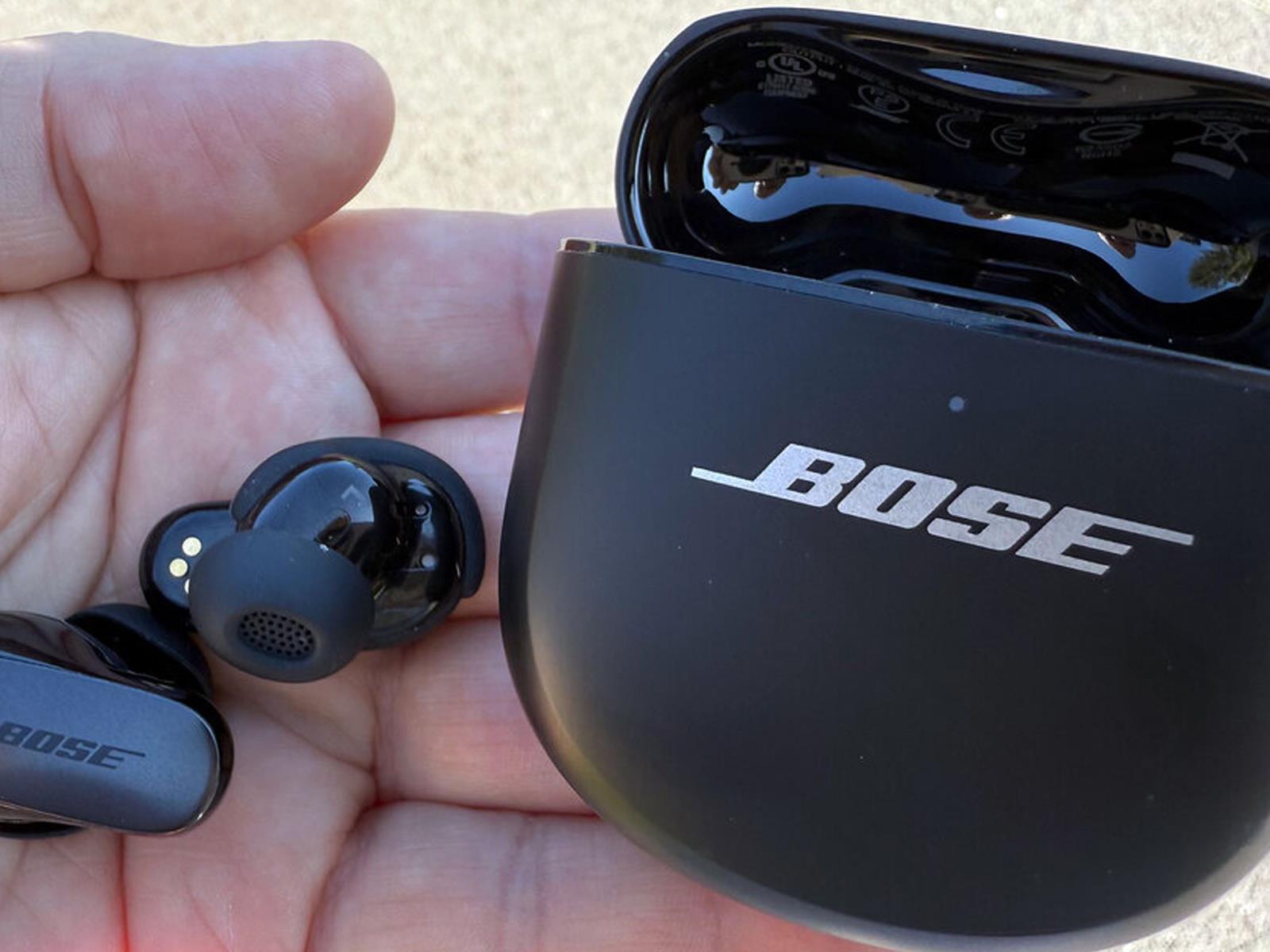
One of our favorite set of earbuds is on sale in time for Christmas. That would be the Bose QuietComfort Ultra (2nd Gen) that we recently reviewed. One of the very few knocks we had against these earbuds was the premium price, but that is partially mitigated with this holiday deal. It still might not be the type of thing that qualifies as
UK to “encourage” Apple and Google to put nudity-blocking systems on phones
The UK government reportedly will “encourage” Apple and Google to prevent phones from displaying nude images except when users verify that they are adults.
The forthcoming push for nudity-blocking systems was reported by the Financial Times today. The report said the UK won’t institute a legal requirement “for now.” But asking companies to block nude images could be the first step toward making it mandatory if the government doesn’t get what it wants.
“The UK government wants technology companies to block explicit images on phones and computers by default to protect children, with adults having to verify their age to create and access such content,” the FT report said. “Ministers want the likes of Apple and Google to incorporate nudity-detection algorithms into their device operating systems to prevent users taking photos or sharing images of genitalia unless they are verified as adults.”
Flatpak Adds Support For Building OCI Bundles Using Zstd Compressed Layers
Back in November Flatpak 1.17 released with support for sideloading from OCI images and other improvements in working toward the Flatpak 1.18 stable release. Out today is Flatpak 1.17.1 and was then followed quickly by Flatpak 1.17.2 to fix a mistake in the release artifacts…