Use the Eight Elements of the ‘Flow State’ to Be More Productive

We may earn a commission from links on this page.

You hear people talk about working in a “flow state,” but what does that even mean? before you start thinking of it as one of those corporate jargon phrases that gets tossed around so much it loses any meaning it ever had, it’s worth knowing that it’s a “real” thing, backed up by a whole lot of psychological research. In essence, being in a flow state enables you to work more efficiently and effectively at whatever you’re focused on.

What is flow theory?

Psychologist Mihály Csíkszentmihályi came up with this theory in 1970, suggesting a flow state is similar to when someone is floating along, being carried by water: Their brains are working so efficiently they’re moving straight ahead on a task with no issues, almost as if they are being propelled forward. 

He spent his time interviewing artists and athletes at the top of their game to understand when and how they performed optimally—and how everyday people can tap into a “flow” state, too. He wrote several books on the topic, but for our purposes here, you don’t need to ingest all of them. What’s most important is to understand the eight main traits of flow theory.

The basics of flow theory

Csíkszentmihályi’s work ultimately describes eight clear characteristics of being in flow:

  1. You’re completely concentrated on your task.

  2. You have clarity around goals in your mind and can get immediate feedback.

  3. Time feels like it’s transforming, either speeding up or slowing down.

  4. The work is intrinsically rewarding.

  5. There is a sense of effortlessness or ease.

  6. The work is challenging, but you have the skills for it.

  7. You are not self-conscious; actions and awareness are working together.

  8. You feel you have control over the task.

This may remind you of the concept of “deep work,” which is author/professor Cal Newport’s definition of doing demanding tasks when you’re fully engrossed in them and not distracted. The two concepts are similar, but to achieve either, there are a few things you need to do. It’s clear from the list of flow characteristics above that mastery and resources play a big role in whether you’ll feel you’re in a flow state when you’re working. Obviously you’ll likely only hit this state if you’re doing something you’re completely prepared for, so don’t aim for it if you’re going to be doing something that requires contributions from other people, resources you don’t have, or skills you don’t possess. You can be ripped from it quickly if, say, you’re waiting around for a colleague to email you something you need for the project, which can destabilize your whole day. (For a better understanding of that, it’s worth familiarizing yourself with the difference between downtime and idle time.)

When you are trying to hit a flow state, plan around when you need to do a major, demanding task. For instance, when planning your 1-3-5 to-do list for the day, your one big task should be one you’re fully prepared and have all the resources for. Keep Carlson’s Law—the idea that any work you attempt to do while distracted will be suboptimal—in mind, too; you can’t work, let alone flow, if you’re being pulled in multiple directions, so schedule the time you’re going to take on your big task to coincide with a time when you have nothing else going on and can give it your full attention. Use timeboxing to allocate this time in your schedule, minute by minute, and, if you can, make your calendar publicly visible so people in your organization know you’re not available.

When I explored adopting this mindset in my own life, I found that my biggest blocker was dealing with distractions, especially from my phone (no surprise there). Almost counterintuitively, I found two apps to be helpful: Steppin, which blocks my access to distracting apps unless I trade time I’ve banked by walking around in the real world; and Focus Pomo, which blocks all other apps whenever I’m in a “focus session.”

So, if you’re working hard on something but don’t feel like you’re achieving any kind of flow state, refer back to the list of characteristics to see what’s missing. Are you distracted? Do you not have the option to get immediate feedback? Are you lacking a necessary resource? Is the work too challenging for your skills or maybe even not challenging enough to keep your attention? Identifying which characteristic you’re lacking most will help you fix the problem and get you closer to flowing your way to major productivity.

SoundCloud Confirms Breach After Member Data Stolen, VPN Access Disrupted

An anonymous reader quotes a report from BleepingComputer: Audio streaming platform SoundCloud has confirmed that outages and VPN connection issues over the past few days were caused by a security breach in which threat actors stole a database containing user information. The disclosure follows widespread reports over the past four days from users who were unable to access SoundCloud when connecting via VPN, with attempts resulting in the site displaying 403 “forbidden” errors.

In a statement shared with BleepingComputer, SoundCloud said it recently detected unauthorized activity involving an ancillary service dashboard and activated its incident response procedures. SoundCloud acknowledged that a threat actor accessed some of its data but said the exposure was limited in scope. […] BleepingComputer has learned that the breach affects 20% of SoundCloud’s users, which, based on publicly reported user figures, could impact roughly 28 million accounts. The company said it is confident that all unauthorized access to SoundCloud systems has been blocked and that there is no ongoing risk to the platform. “We understand that a purported threat actor group accessed certain limited data that we hold,” SoundCloud told BleepingComputer. “We have completed an investigation into the data that was impacted, and no sensitive data (such as financial or password data) has been accessed. The data involved consisted only of email addresses and information already visible on public SoundCloud profiles.”


Read more of this story at Slashdot.

Divinity: Original Sin 2 for modern consoles is free for old fans

The definitive version of Divinity: Original Sin 2, the sequel to Original Sin first released back in 2017, is now available for the PS5, Nintendo Switch 2 and Xbox X|S. The role-playing game was developed by Larian Studios, the same company that developed Baldur’s Gate 3. To be clear, the game’s new release isn’t a remake or even a remaster — it’s just a port for new consoles so that old and new fans alike can enjoy the game without having to bust out their previous-gen devices. Fans who already own a copy of the game can even get it for free.

Original Sin 2 is the fifth main entry in the Divinity game series. In it, gamers play a sorcerer who can wield forbidden magic and who gets captured by the Magisters of the Divine Order so they can be “cured” of their powers. Players can make their character from scratch, creating their own class and giving their character the abilities, skills and stats they want. But they can also use any of the pre-set characters the game provides.

Players who already have the 2017 version installed will get a free upgrade applicable to their console. If they don’t have it installed anymore, they can go to game’s store page on their new device and download the upgrade for free — aside from fans in Japan who’ll have to pay ¥100 for the Switch 2 and PS4 upgrade. Larian is also working on the latest entry to the franchise, simply called Divinity, which is its biggest and most abitious game to date.

This article originally appeared on Engadget at https://www.engadget.com/gaming/divinity-original-sin-2-for-modern-consoles-is-free-for-old-fans-130000192.html?src=rss

Game Night Blends Robot Boxing & Sumo In New Mixed Reality Minigame

Game Night’s new minigame blends Rock ’Em Sock ’Em Robots boxing with Sumo, and it’s out now for the co-located mixed reality party title.

Released last year in early access, Game Night by New Zealand studio Fantail Games is a family-friendly roomscale title that’s playable solo or with up to four players locally. Joining this minigame collection as a free update, Final Throwdown only uses hand tracking as you directly control the fists of your robot avatar to punch opponents out of your shared arena.

0:00

/0:49

Launch trailer

Designed around “short, high-intensity rounds,” Final Throwdown sees you knocking other players out of the ring to score points. Throwing them into hoops earns bonus points, while bosses force you to decide whether to cooperate with your opponents or use the disruption to your advantage. Arena height adapts to the shortest player, which allows for seated play. Fantail also states arm reach is normalized to give adults and children equal advantage.

Final Throwdown marks the seventh minigame so far in Game Night, and the fourth it’s received since last year’s early access launch. Other featured games include Fishing Frenzy where you scoop up and deliver fish, a match-3 spatial puzzler where you connect matching plushies in a conga line, penguin ice hockey, a Whack-A-Mole game to test reactions, and more.

Game Night is out now in early access on the Meta Quest platform.

Hollow Knight: Silksong’s upcoming DLC pack will be free for all players

One of 2025’s splashiest games, Hollow Knight: Silksong, is getting its first major DLC expansion, developer Team Cherry announced in a blog post. The nautically-themed Sea of Sorrow update will come to the moody Metroidvania some time in 2026, and better still, it will be free for all players. 

The DLC will include “new areas, bosses, tools and more,” the developer wrote. There aren’t a lot of clues to the gameplay in the short trailer below, but the four shots definitely relay the vibe. The first shows what looks like fishing tackle, then we see something (or someone) on a tomb-like wooden platform tied under a canvas sheet. Next an orb-like structure crackling with electricity looms and finally the game’s protagonist, Hornet, appears. 

In related news, Team Cherry gave updates on its Nintendo Switch 2 version of the original Hollow Knight that will bring it up to visual parity with the the Hollow Knight: Silksong Switch 2 edition. As part of that, the studio also released a beta update to the Steam and GOG PC versions of the original Hollow Knight. 

This article originally appeared on Engadget at https://www.engadget.com/gaming/hollow-knight-silksongs-upcoming-dlc-pack-will-be-free-for-all-players-123055729.html?src=rss

The Anker Laptop Power Bank soothed my (self-inflicted) battery anxiety

For the longest time, I refused to upgrade my work-issued MacBook. I was leery of the hassle, and would much rather hang on to an aging Intel-powered laptop than have to transfer files, set up apps and sign in to accounts all over again. What did it matter if my notebook barely lasted long enough to cover an iPhone launch? My petty brain blamed it all on external factors (like being forced to use a MacBook instead of a PC), and left me dripping in stress as I watched the power levels dip down to zero at many of the live events I attend every year. So when I saw the Anker Laptop Power Bank was one of the items in our Labor Day deals roundup this year, I decided to get one to alleviate my battery anxiety (instead of, you know, doing the sane thing and agreeing to a new laptop).

When I unboxed my new Laptop Power Bank the night before the iPhone 17 Pro launch, I wasn’t expecting to be so taken by its features. All I knew before then was that this was a solid, beefy laptop battery pack, squeezing 25,000mAh in a compact package that would save me from having to worry too much about finding an outlet. But when I saw the screen light up with details on the amount of energy left (to two decimal places!) and the real-time charge data when I plugged it in, I was impressed. How modern!

Then I noticed the built-in cables — one retractable and neatly tucked inside the charger and the other artfully curved into a groove and doubling as a handle. Both wires were braided and felt like they’d be resistant to fraying and destroying themselves over time. Altogether, the general build quality and functionality of all the components made it clear this was a thoughtfully designed product worthy of all the praise and money we’ve hurled at it since my colleagues first tested it. 

But what truly made me smile (and giggle, honestly) was a naughty little Easter egg. I saw posts on Threads indicating that if you tugged on that retractable cable and let it go in and out a few times, the screen would show a smiley face. I didn’t believe this was true until I saw it for myself. Sure, it felt a little bit odd, but I told myself I was revving a chainsaw, and doing legitimate testing for professional reasons, not jerking off a device. And when I saw the funny face appear, I felt the effect was humorous rather than pervy. The good news for the more staid readers is that if you don’t want to ever see that face, you never have to. And if you like cheeky little touches in your tech products, the Anker Laptop Battery Charger will delight. 

Regardless of how I felt about having pleasured a laptop battery charger, it doesn’t take away from the fact that this is a well-made, well-rounded product. It managed to get my MacBook a few extra hours, so I made it all the way to the end of a multi-hour keynote, though it did run completely empty so I couldn’t recharge my phone after. Blast Apple Park and its utter lack of available power outlets!

Anker’s Laptop Battery Pack effectively allayed my battery anxiety, brought me some mirth and won me over with its thoughtful design. And because I got it on sale, it was $90 well spent.

This article originally appeared on Engadget at https://www.engadget.com/mobile/the-anker-laptop-power-bank-soothed-my-self-inflicted-battery-anxiety-123000024.html?src=rss

The Morning After: Roomba maker iRobot files for bankruptcy

iRobot, the company that brought robotic vacuum cleaners to homes and popular culture, has filed for bankruptcy. It plans to sell all assets to its primary supplier, the Chinese company Picea Robotics. Investors “will experience a total loss and not receive recovery on their investment” if the deal is approved, iRobot said. The company didn’t discuss how the move might affect its employees in the US or elsewhere.

Amazon dropped its $1.7 billion acquisition of the company last year after a veto threat from European regulators, leaving the Roomba maker with no other option. Political scrutiny came on two fronts: The company was also reportedly hit hard by Trump’s tariffs in Vietnam, where it manufactures products for the US market.

iRobot launched its first Roomba in 2002, arguably inventing the world of robot vacuums — and the first robots to enter many of our homes. Competition from rivals has chipped away at its dominance, with other companies coming in at both lower and higher prices, like Roborock, Dyson and Anker’s Eufy.

— Mat Smith

The other big stories this morning

IKEA’s new wireless charger is cute

I like the illuminated charging bowl too.

TMA
IKEA

IKEA’s revamp of its smart home products doesn’t end with Matter support. It also has some new Qi wireless chargers. First up, the $10 VÄSTMÄRKE combines a PopSockets-style phone grip with cable storage in a donut-shaped package.

It can magnetically attach to iPhones with MagSafe or Pixel phones with Google’s Pixelsnap magnets. Then there’s the $25 VÄSTMÄRKE wireless charger with lighting, a bowl-shaped charging pad in the center for your smartphone or wireless earbuds.

Continue reading.

LG will debut its first Micro RGB television at CES

More color and better dimming than a standard LCD.

LG says it will unveil its LG Micro RGB evo TV at CES 2026, but ahead of that, it shared some preliminary information about the screen. Instead of just white lights, Micro RGB means the backlight can be any hue, thanks to individually controlled red, green and blue Micro LEDs, offering a wider color array. This approach is midway between OLED’s individual-pixel lighting and TVs that use typical mini-LEDs.

Continue reading.

‘Slop’ is Merriam-Webster’s word of the year

2025 saw AI slop sludge into every nook and cranny of online life.

TMA
OpenAI

Merriam-Webster has selected “slop” for its 2025 word of the year. It’s defined as “digital content of low quality that is produced usually in quantity by means of artificial intelligence.” We’ve seen an absolute deluge of AI slop this year, from fake movie trailers on YouTube to AI-generated bands on Spotify. It was (unfortunately) one of our winners of 2025.

Continue reading.

This article originally appeared on Engadget at https://www.engadget.com/general/the-morning-after-engadget-newsletter-121547853.html?src=rss

3T releases range of made-in-Italy electric bikes

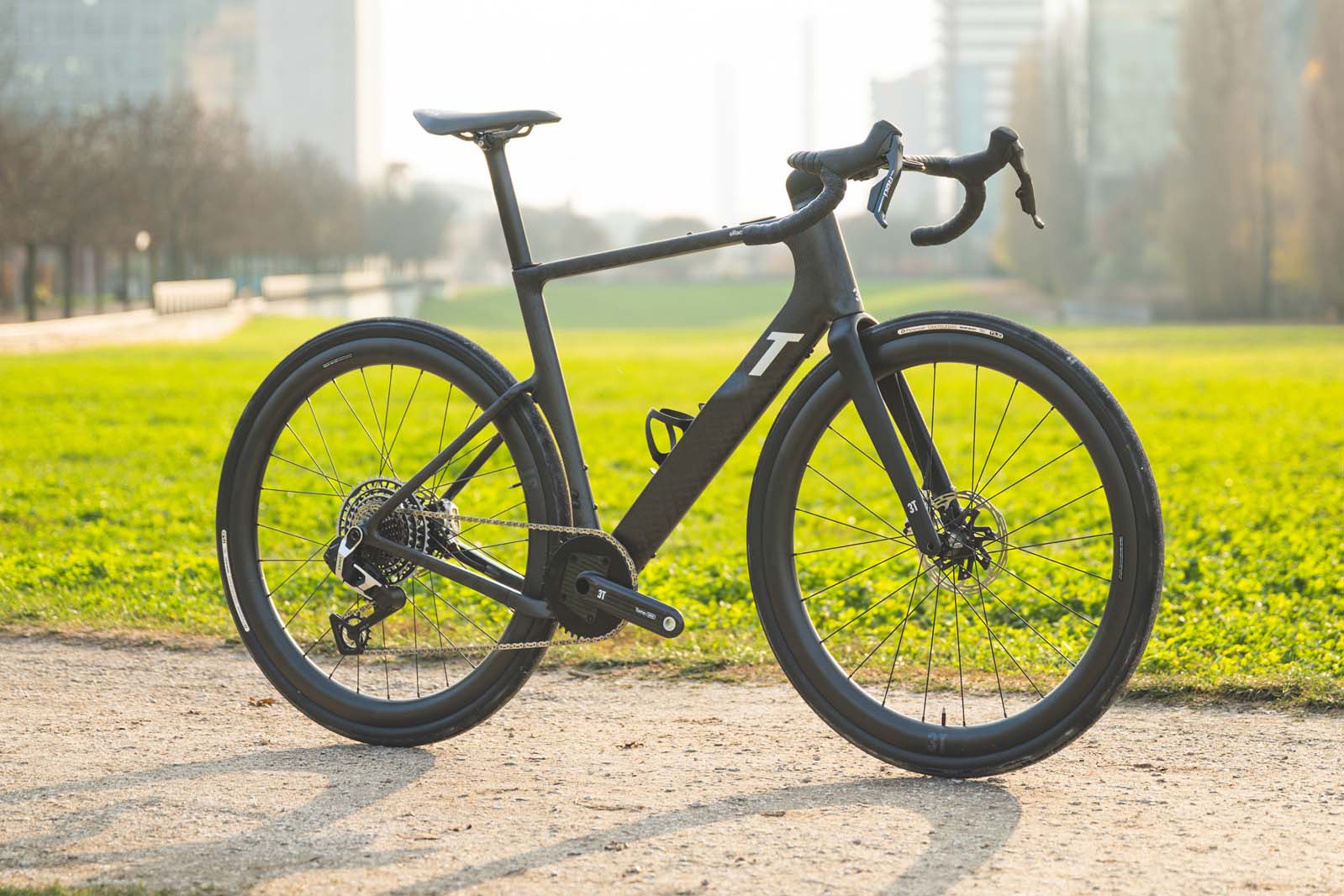
3T has revealed three new made-in-Italy electric gravel bikes, promising the brand’s familiar “handling and iconic design”. 

The new range is said to provide options for “everything from fast gravel to most extreme terrain” and uses 3T’s non-assisted gravel bikes as its starting point.

3T says its new electric gravel bikes have the same carbon frames, design and ride feel of its Racemax, Extrema and Ultra gravel bikes. 

With the addition of a Mahle X20 motor system, these become the e-Racemax, e-Extrema and e-Ultra. The new electric versions of these bikes are said to be identical to the non-electric versions, with all components, cables and batteries housed within the frames. 

The bikes are also said to be part of 3T’s ongoing development of its in-house production at its Presezzo facility in the province of Bergamo. 

The three bikes 

3T e-Racemax electric gravel bike.
The new 3T e-Racemax electric gravel bike. 3T

3T’s new e-gravel bikes match the same applications as their non-assisted equivalents. 

The e-Racemax is derived from the Racemax, which 3T claims is “one of the most high-performance and iconic aero-gravel bikes on the market”. The Italian brand claims the new electric version can “transition effortlessly” from tarmac to cobblestones.

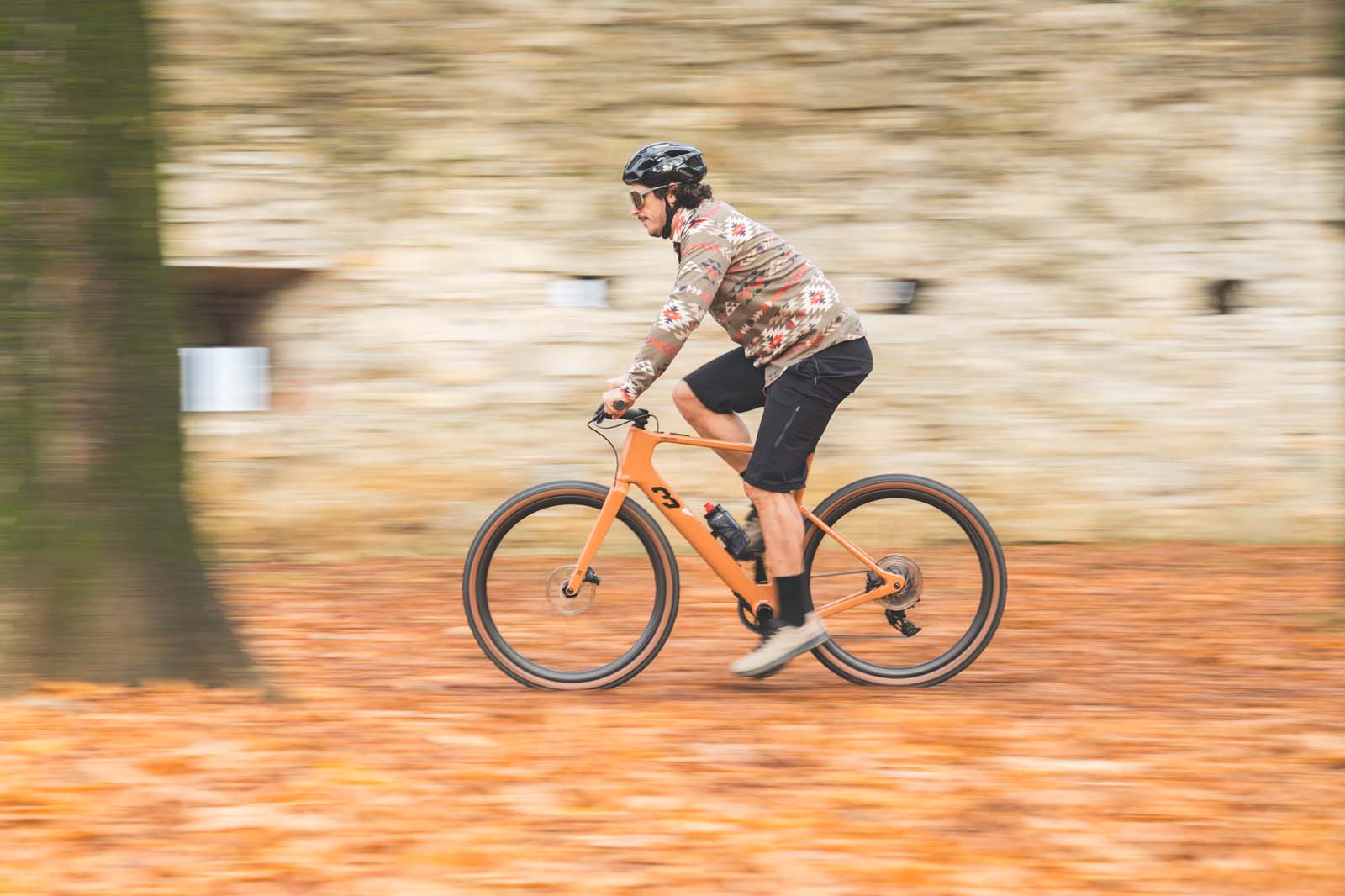
Man riding 3T e-Ultra electric gravel bike.
The 3T e-Ultra comes with either a drop or flat handlebar.

The e-Ultra is suited to more challenging off-road riding than the e-Racemax. The geometry puts you in a more upright and comfortable position. The gravel bike is available with a drop handlebar or a flat handlebar, which 3T says makes it suitable for urban riding and touring, alongside gravel riding. 

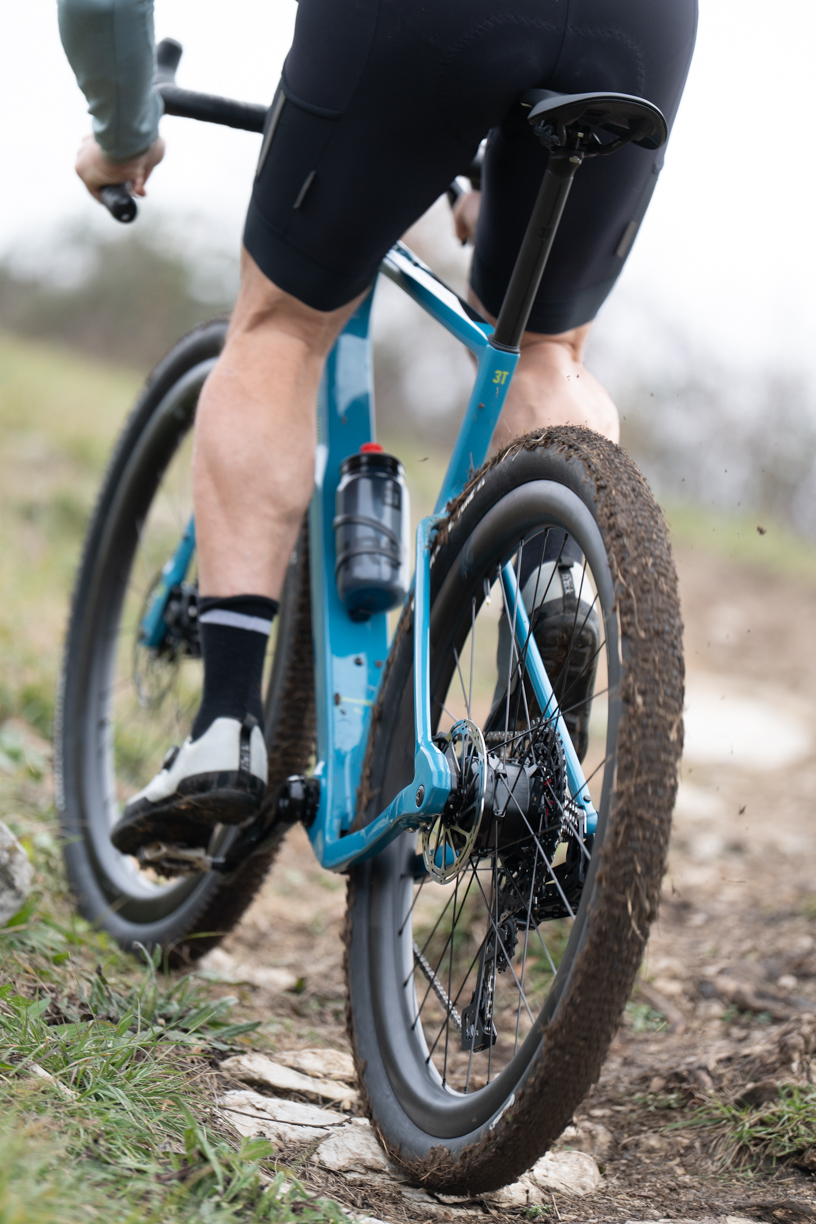
With room for gravel tyres up to 57mm wide, the e-Extrema is said to be the most capable gravel bike in 3T’s new range. 3T describes it as an “all-terrain” gravel bike that can take on singletrack mountain bike trails. 

3T e-Extrema electric gravel bike showing tyre clearance.
The e-Extrema can fit 57mm gravel tyres. 3T

Mahle X20 motor

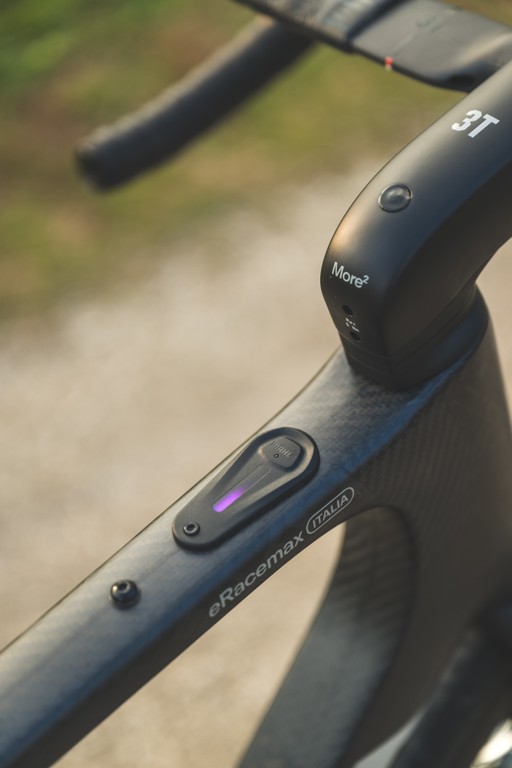
Mahle X20 top tube button on 3T e-Racemax electric gravel bike.
The Mahle X20 motor system is operated via a button in the top tube. 3T

The electric gravel bikes use the Mahle X20 motor, customised for 3T and placed within the rear hub. 

The X20 is Mahle’s flagship motor system for electric road and gravel bikes, and 3T says it adds 3–3.9kg to its new bikes compared to the non-assisted models.

3T says the X20 motor system “is lightweight, provides smooth and natural assistance and creates no resistance when not in use. 

“In addition, the Mahle motor – being especially light and positioned in the rear hub – offers a progressive, fluid power delivery that keeps the pedalling motion natural and enjoyable.” 

The electric motor is operated via a button in the top tube of the new bikes, enabling you to select your preferred level of assistance.

3T says the Mahle X20’s 350Wh battery means a 75kg cyclist can achieve a range of 150km with 2,000m of elevation, with careful power management.

2025 highlights from the Raspberry Pi Computing Education Research Centre

It’s been over a year since I last wrote an update on this blog about our research and as we’ve just published our 2025 Annual Report, this is an ideal opportunity to share what we’ve been working on at the Raspberry Pi Computing Education Research Centre.

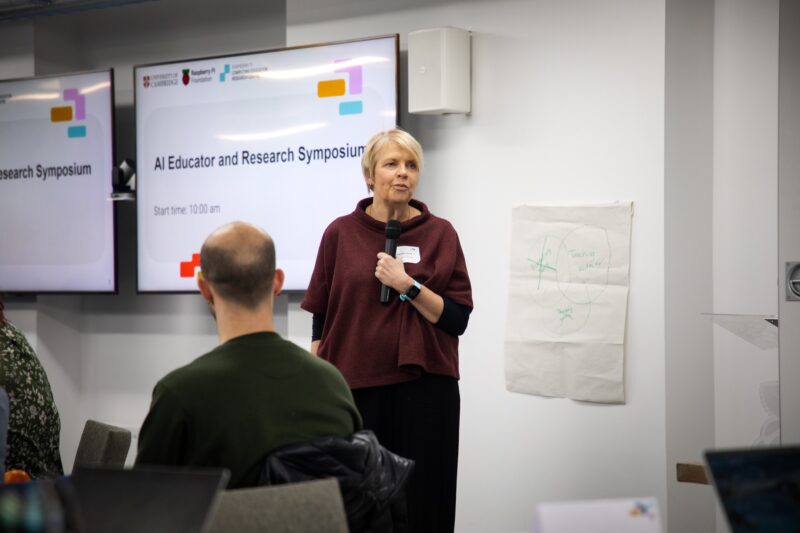
At our AI education workshop in early 2025.

We are a research centre based in the Department of Computer Science and Technology at the University of Cambridge, with a team that spans the university and the Raspberry Pi Foundation. We conduct research into many aspects of the teaching and learning of computing and AI and we work closely with schools, teachers and young people to ensure our research is applicable to practice.

Below I highlight some of the projects we’ve worked on in the academic year 2024-2025:

  • Computing Around the World
  • AI education
  • Programming education
  • Physical computing (EPICS project)
  • Teacher action research (TICE project)

Computing Around the World

As I’ve written on this blog before, computing education is a global challenge. In one of the Research Centre’s projects, we are looking at how computing education is spreading around the world.

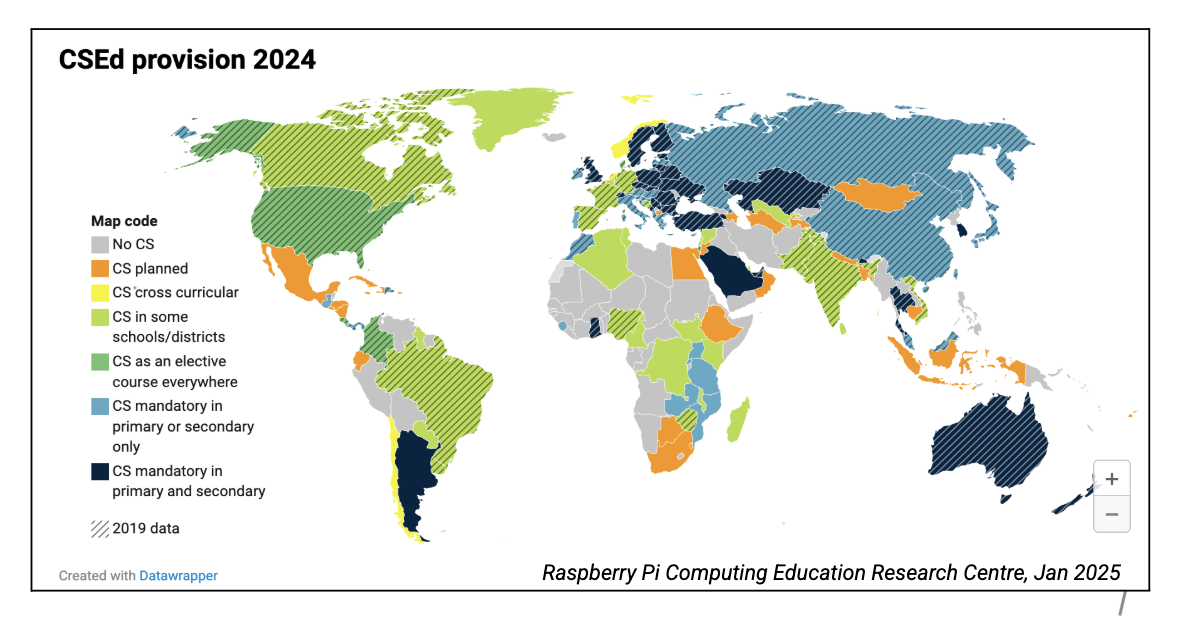
Computing education in countries around the world
Computing education in countries around the world.

We found that between 2019 and 2024 the number of countries offering computing education had doubled, and that two thirds of all countries now offer, or have concrete plans to offer, computing education. This research has already been highlighted in the Stanford AI Index, and we are considering repeating the analysis in future years in order to have the most accurate and up-to-date information displayed in our map.

AI education

We have a number of projects in the area of AI education.

Teaching about AI

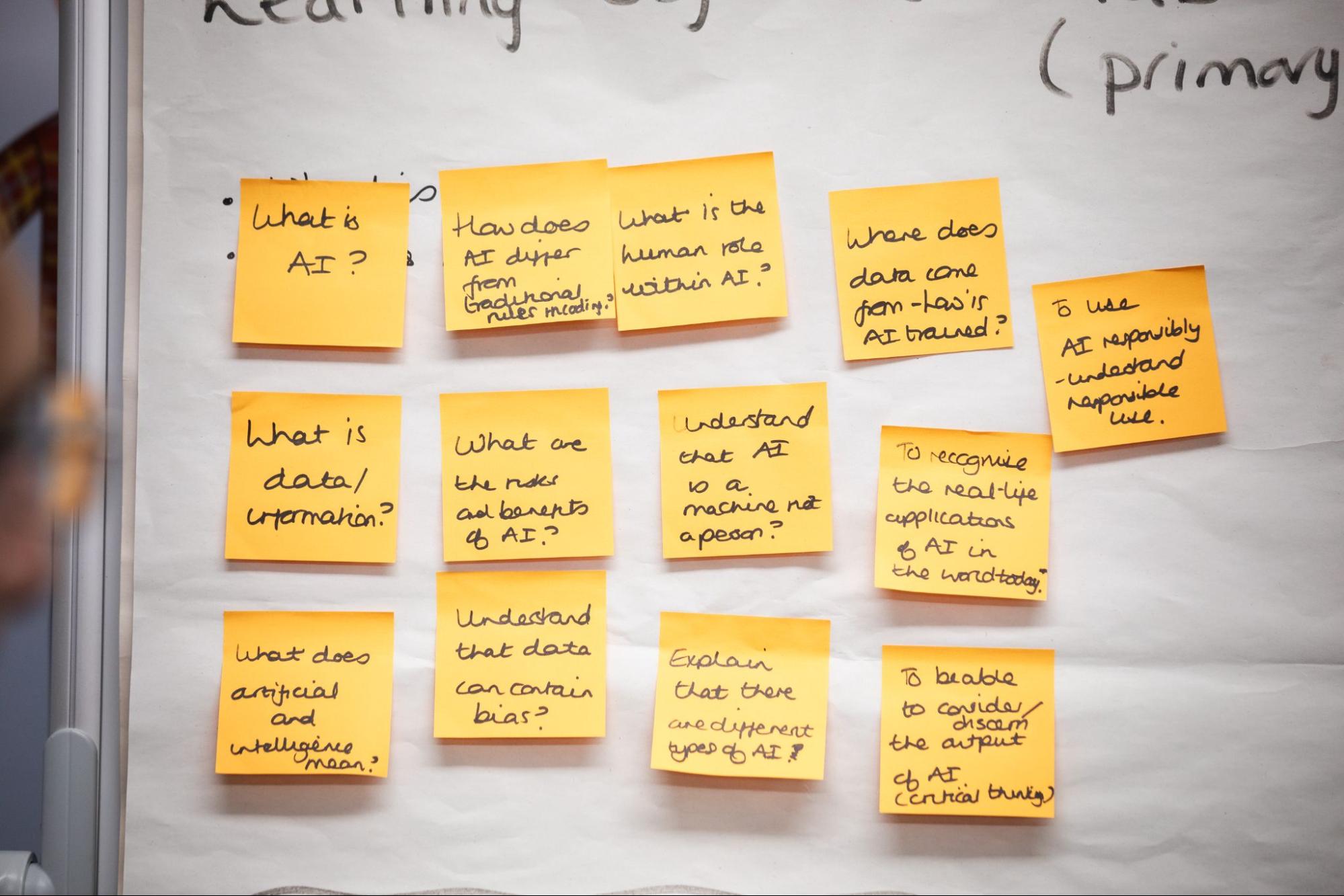
We are very interested in how to teach about AI, and held a workshop with teachers who were interested in the teaching of AI in February. Following on from the workshop results, we are interviewing more stakeholders, including UK-based experts, teachers and students, about their perspectives on concepts and skills that should be taught as part of an AI curriculum.

Notes at our teacher workshop about AI
Notes at our workshop about AI education.

We’re also researching data science and data ethics education, which are foundational aspects of AI literacy. Most of the current AI systems are data-driven, having been trained on vast amounts of data. Therefore students need to understand about data and data science if they are to learn about AI systems. Therefore we’ve conducted two detailed literature reviews on data science and on data ethics this year. The first of these will be published in March at the WiPSCE conference.

Unplugged AI in Ghana

One of our PhD students, Salomey Addo, has been examining how AI is taught in Ghana, where it is part of the curriculum for young people between ages 12 and 15. This year Salomey published a paper reporting that Ghanaian teachers have positive attitudes towards teaching AI but feel unprepared for it. She’s also developed unplugged resources to teach about artificial neural networks (ANNs).

PhD student Salomey explaining how the unplugged resources worked in a teacher PD session in Ghana
PhD student Salomey explaining how the unplugged resources worked in a teacher PD session in Ghana.

ANNs are a fundamental technology used in a variety of AI systems, including image recognition and language translation systems. While ANNs are included in the Ghanaian AI curriculum, Salomey observed that teachers had difficulty with this particular topic The resources she developed are directly inspired by this, and involved teaching through role play and a board game.

Using AI in learning and teaching computing

This is an area we’ve also done some research in in the past year.

Carrie Anne Philbin published a paper in September showing that — at least in higher education — much of the use of generative AI in computing education is just duplicating the way teachers might already teach, and is primarily passive from a students’ perspective.

Meanwhile Katharine Childs and Veronica Cucuiat have been looking at how large language models (LLMs) can support secondary school programming education by helping students understand programming error messages. 

Programming education: Learning to debug

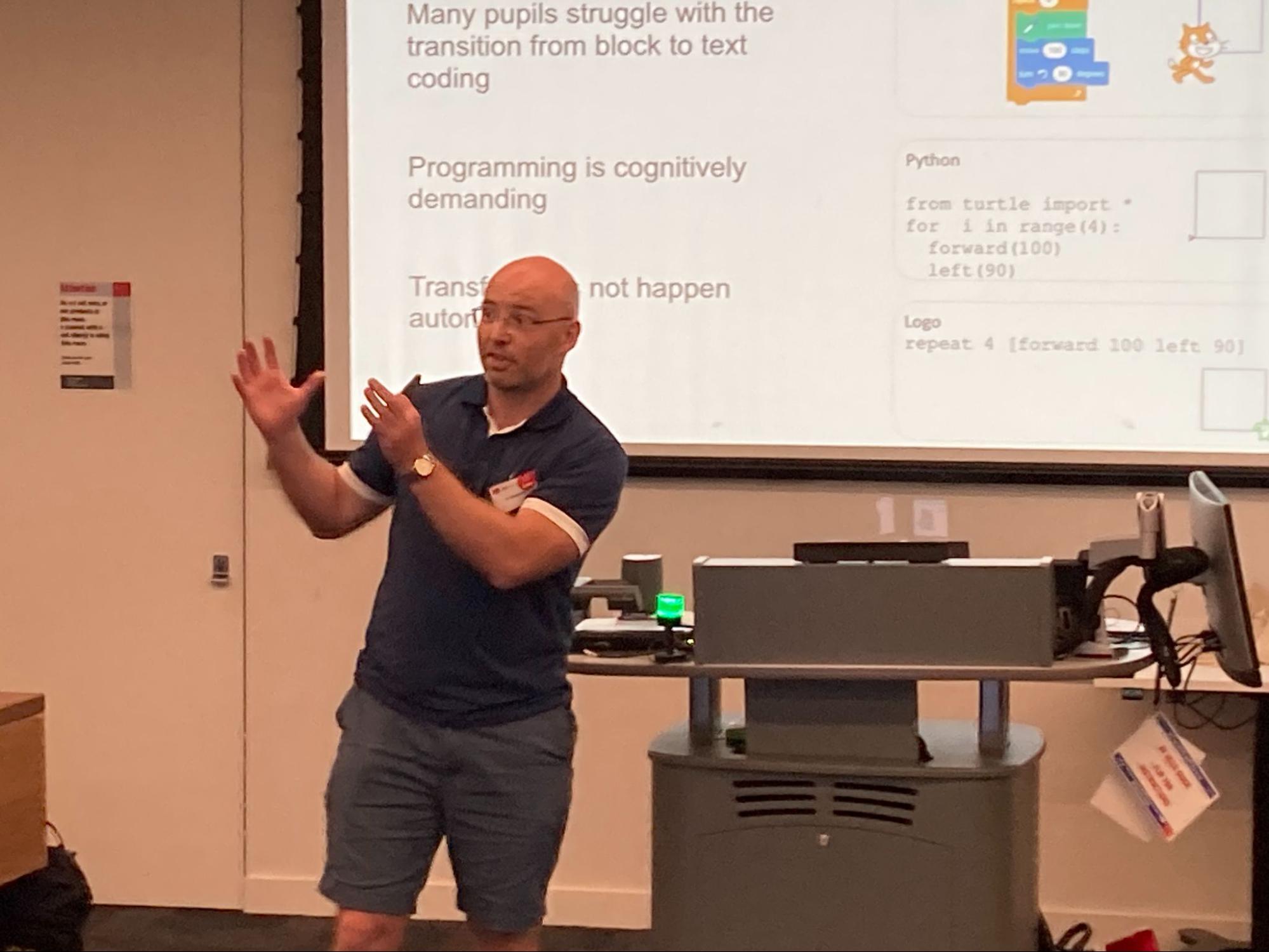
Text-based programming is a topic featured in many computing curricula around the world. Teachers and researchers know that younger learners, for example at the lower secondary school level, can find debugging text-based programs very challenging. Although we’ve seen decades of research around programming and debugging focusing on learners who are in higher education, very little research has been done with school-age students.

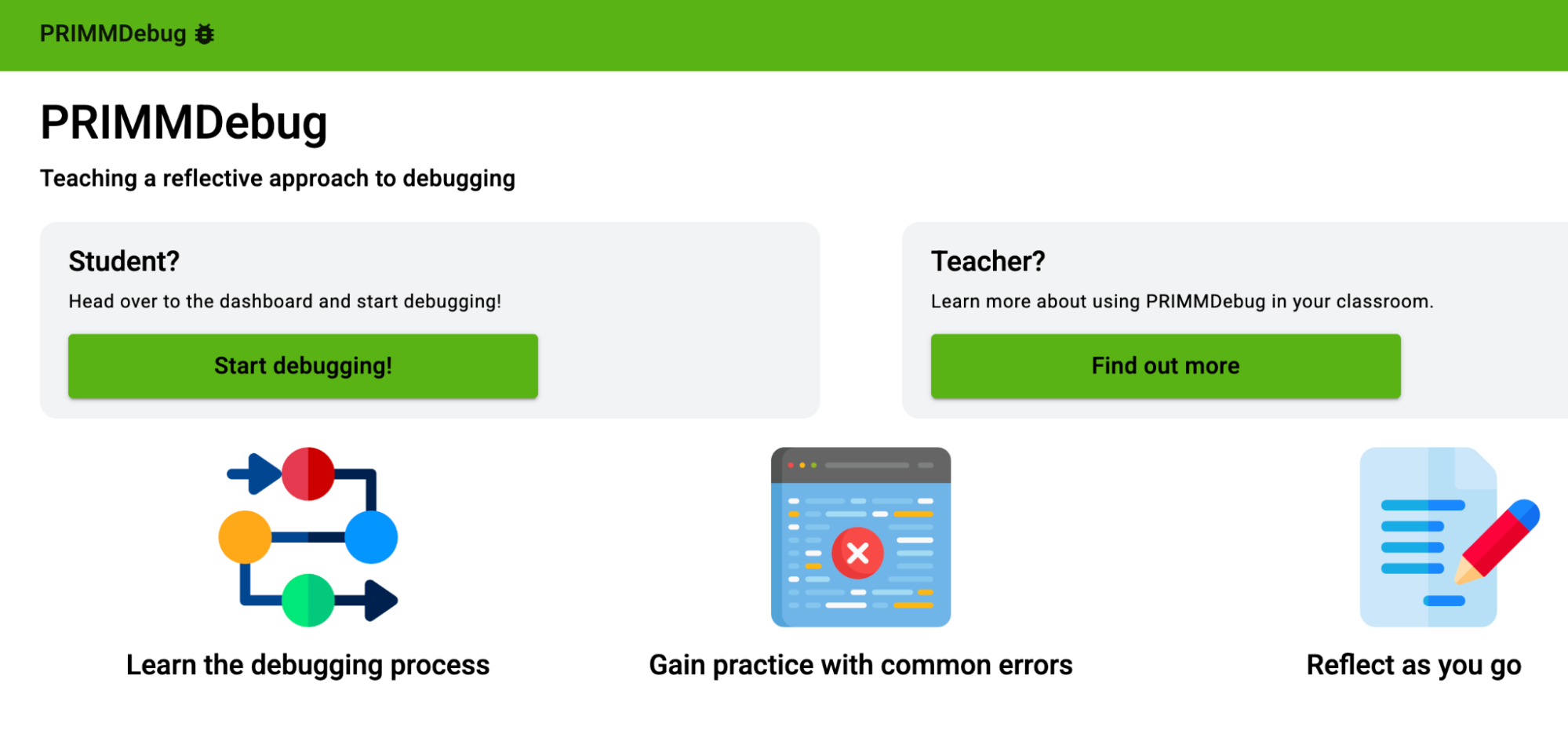
The interface of the PRIMMDebug tool
The interface of the PRIMMDebug tool.

In his research, Laurie Gale, a final-year PhD student at the Research Centre, found that learners were impatient to fix programs by trial and error, without figuring out what the real problemwas with their code or the underlying algorithm. He subsequently developed a tool called PRIMM Debug, which supports a more reflective and systematic approach to debugging. This tool enables learners to slow down when they are programming and to be more reflective. You can read more about it on the Research Centre website, and also catch up on the Foundation research seminar where he presented his work.

EPICS: Physical computing in school

As part of a 5-year longitudinal project, running across the whole UK and the first project of its kind, we are looking at how physical computing impacts primary and secondary school learners. We’re investigating the effect of physical computing on learners’ creativity, agency and confidence, over time and at particular points known to be important for their subject choices. We are working with a wonderful set of partner primary schools who we visit each year.

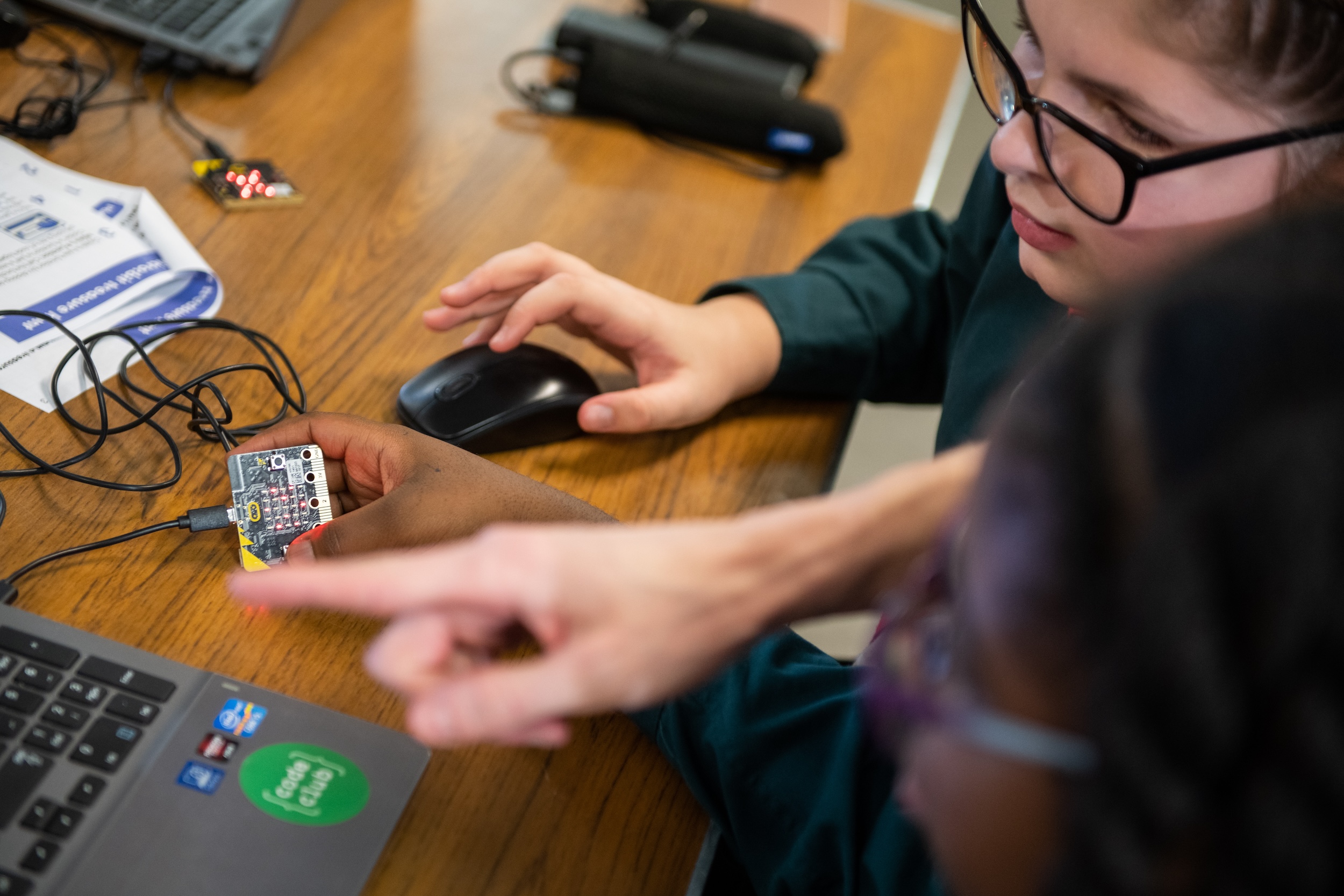
Young learners coding a microbit project.
Young people using a micro:bit.

This year we reported some of our first results, which point to teachers’ perceptions of physical computing being engaging and inclusive for primary-aged children. Starting next spring, we will be carrying out our third year of data collection with our pupil cohort, who have reached the age of 10 to 11.

We’ll also be running a survey next summer for upper primary-aged children and their teachers. Please sign up for our Teacher Research Network newsletter to be the first to hear about taking part in this survey.

Teacher Inquiry in Computing Education (TICE)

As part of our TICE project we support teachers to conduct their own action research projects. This is a collaborative project, involving academics across the UK who volunteer to support teachers. The goal is to enable teachers to take a deep dive into a curriculum topic, a pedagogical approach, or a new resource, or to address a wider issue such as gender diversity or accessibility, to inform a change in their practice.

This year 16 teachers published their reports in our Teacher Research Booklet, and many also presented their findings online at CAS events or at the KCL-CAS London conference and the CAS National Conference. We’re very proud of them!

TICE participant Will Grey presenting at the KCL-CAS Conference in July 2025
TICE participant Will Grey presenting at the KCL-CAS Conference in July 2025.

Two of our TICE teachers will be also presenting their research at an academic conference to be held in January. Congratulations to Will Grey and Joanne Hodge!

Get involved

There are many other projects you can find out about on our website and in our annual report, so I hope that you will keep reading. It goes without saying that I’m incredibly proud of the team who’ve worked on all of these projects! 

To summarise, here’s how you can stay up to date with our work and maybe even get involved in studies:

Finally, I am pleased to announce that we will be hosting the UKICER 2026 conference for researchers and teachers in Cambridge on 3 and 4 2026 September. More details will follow on the UKICER website and on the Research Centre website in due course.

The post 2025 highlights from the Raspberry Pi Computing Education Research Centre appeared first on Raspberry Pi Foundation.

PayPal Applies To Become a Bank As US Loosens Regulatory Reins

PayPal has applied to become a US bank by forming a Utah-chartered industrial loan company, signaling a push to deepen its financial services “as companies rush to capitalize on a friendly regulatory environment under the Trump administration,” reports Reuters. From the report: If approved, the move will help PayPal to strengthen its lending offerings to small businesses in the U.S. as well as reduce its reliance on third parties. “Securing capital remains a significant hurdle for small businesses striving to grow and scale,” said PayPal CEO Alex Chriss. “Establishing PayPal Bank will strengthen our business and improve our efficiency, enabling us to better support small business growth and economic opportunities across the U.S.”

PayPal also plans to offer interest-bearing savings accounts to customers. The company has provided over $30 billion in loans and capital since 2013, it said. […] PayPal has selected Mara McNeill to serve as PayPal Bank’s president. She comes with over two decades of experience in banking and commercial lending, and has previously served as the CEO of Toyota Financial Savings Bank.


Read more of this story at Slashdot.