Mozilla has named Anthony Enzor-DeMeo as its new chief executive, promoting the executive who has spent the past year leading the Firefox browser team and who now plans to make AI central to the company’s future.
Enzor-DeMeo announced on Tuesday that an “AI Mode” is coming to Firefox next year. The feature will let users choose from multiple AI models rather than being locked into a single provider. Some options will be open-source models, others will be private “Mozilla-hosted cloud options,” and the company also plans to integrate models from major AI companies. Mozilla itself will not train its own large language model.
“We’re not incentivized to push one model or the other,” Enzor-DeMeo told The Verge. Firefox currently has about 200 million monthly users, a fraction of Chrome’s roughly 4 billion, though Enzor-DeMeo insists mobile usage is growing at a decent clip.
He takes over from interim CEO Laura Chambers, who led the company through a major antitrust case and what Mozilla describes as “double-digit mobile growth” in Firefox. Chambers is returning to the Mozilla board of directors. The new CEO has outlined three priorities: ensuring all products give users control over AI features including the ability to turn them off, building a business model around transparent monetization, and expanding Firefox into a broader ecosystem of trusted software. Mozilla VPN integration is planned for the browser next year.
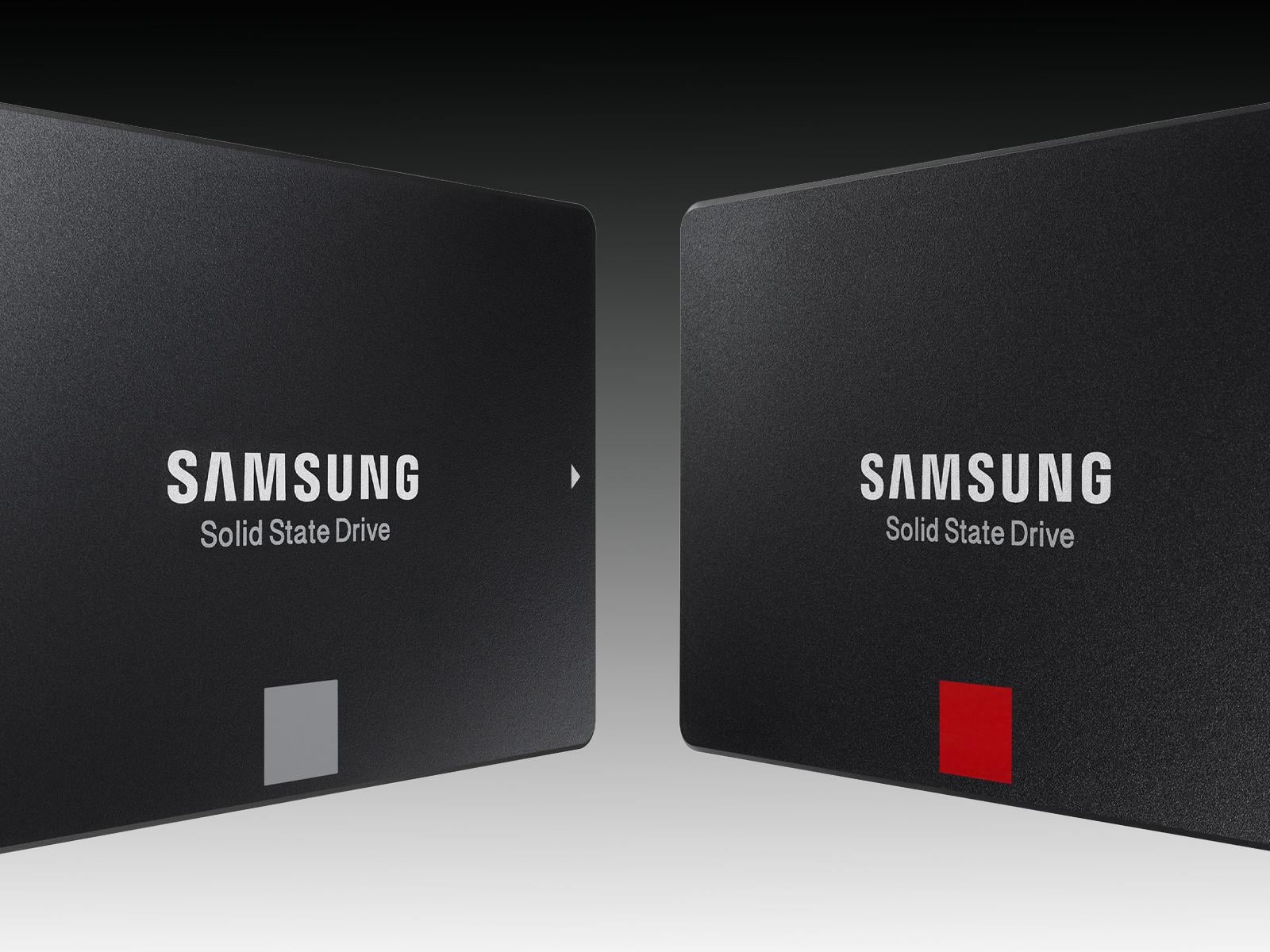
Are we about to lose another NAND flash brand in the consumer storage space? Following Micron’s decision to pull its 29-year-old Crucial brand from the consumer market to focus on higher margin data center clients, rumors began to swirl that Samsung was getting ready to stop selling SATA-based solid state drive (SSDs) to consumers. According
PayPal is the latest company looking to become a bank in the US. On Monday, the company announced it had submitted applications for PayPal Bank to the Federal Deposit Insurance Corporation (FDIC) and the Utah Department of Financial Institutions (UDFI). PayPal is already a bank in Europe, based in Luxembourg.
According to PayPal, it has provided “over $30 billion in loans and working capital” for more than 420,000 business accounts globally. PayPal puts its focus on small businesses in pitching the need for a US bank. “Securing capital remains a significant hurdle for small businesses striving to grow and scale,” Alex Chriss, president and CEO of PayPal, said in a release. “Establishing PayPal Bank will strengthen our business and improve our efficiency, enabling us to better support small business growth and economic opportunities across the US.”
PayPal also plans to provide “interest-bearing saving accounts” as a bank. If approved, it would be chartered in Utah.
Applications to become a bank have popped up left and right this year, with approval odds increasing under the Trump administration. On Friday, the Office of the Comptroller of the Currency (OCC) announced that five cryptocurrency companies, including BitGo, Circle and Ripple, received conditional approval to become federally charted trust banks.
“New entrants into the federal banking sector are good for consumers, the banking industry and the economy,” the OCC’s comptroller Jonathan V. Gould stated in the announcement. “They provide access to new products, services and sources of credit to consumers, and ensure a dynamic, competitive and diverse banking system.”
Other companies such as Nissan and Sony have also submitted applications to form a bank.
This article originally appeared on Engadget at https://www.engadget.com/big-tech/paypal-applies-to-become-a-bank-under-trumps-looser-financial-rules-143025772.html?src=rss
Chromecasts were one of the most useful little gadgets that Google ever made, so of course it decided to ditch the product line. The Google Cast functionality lives on in the Google TV Streamer and Google TV devices and televisions, but sadly we won’t see another Chromecast go on sale.
If you’ve got an older Chromecast hanging around, it’ll still work fine for now. However, you might soon be moving on to a newer streaming device—or perhaps you already have—and that’s left you wondering what to do with your older hardware. In fact, these small dongles are more versatile than you might have realized.
While streaming content from the likes of Netflix and Apple TV is going to be the primary use for these devices for most people, you can do plenty more with them—thanks to the casting support that Google and other developers have built into their apps.
Keep an eye on your property
If you’ve got a Chromecast-compatible security camera (including Google’s Nest Cams), you can see a live feed on your Chromecast, making it easy to set up a mini security monitoring center if you have a smaller monitor or television somewhere to spare.
Getting the feed up on screen is as easy as saying “hey Google, show my…” followed by the camera name (as listed in the Google Home app). On the Chromecast with Google TV, you can also open the Google Home widget that appears on the main Settings pane.
Set up a second screen wirelessly
You can cast anything from a Chrome tab. Credit: Lifehacker
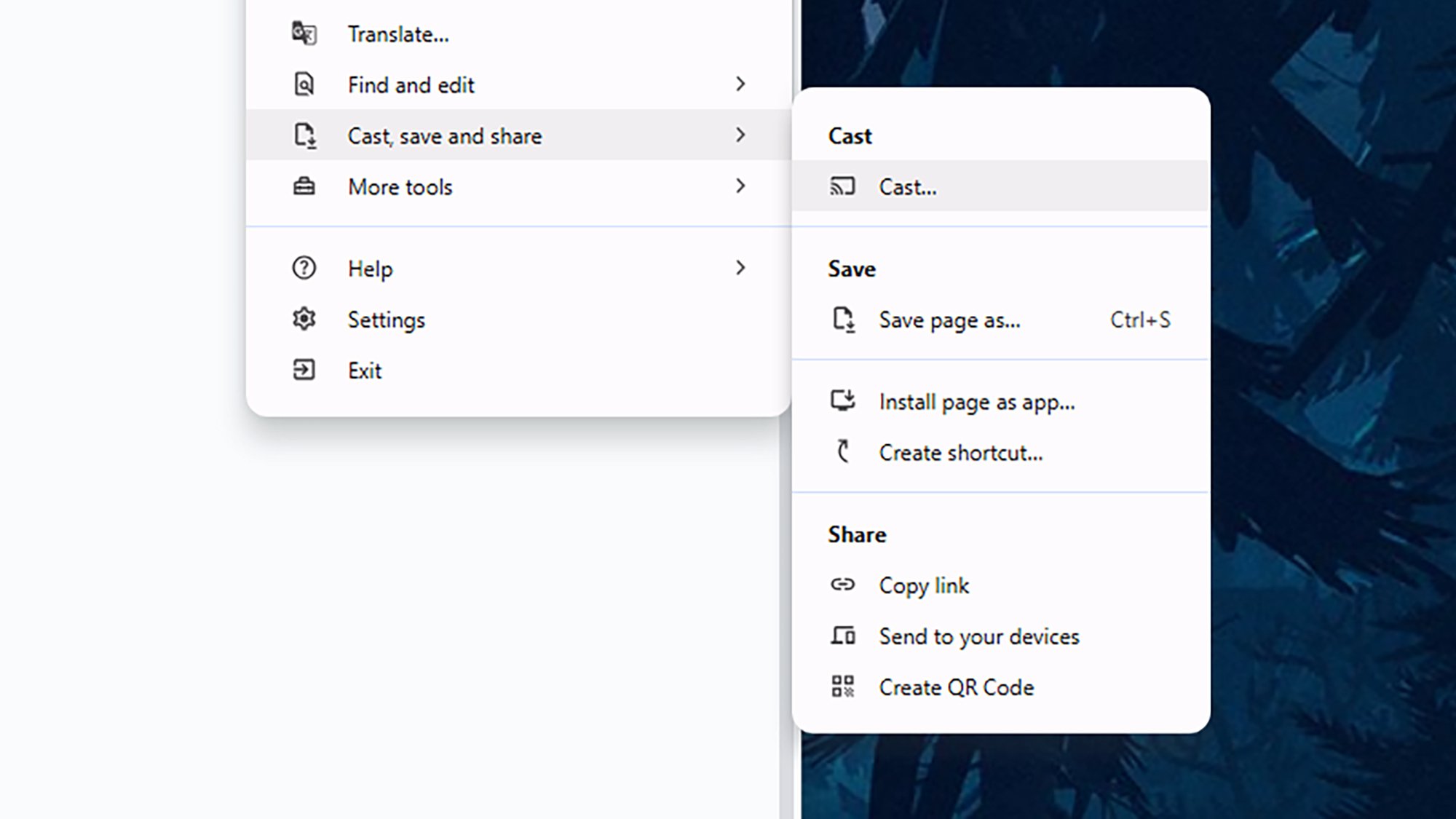
Something else you can throw to a Chromecast in seconds: any tab you happen to have open in Google Chrome on your laptop or desktop. Just click the three dots in the top right corner of the tab, then choose Cast, Save and Share > Cast.
This means you can use the monitor or TV that your Chromecast is hooked up to as a second screen, with no cables required—just a wifi network.
Stream music, podcasts, and audiobooks
When it comes to slinging content to your TV screen, you’re going to think about movies and shows first and foremost, but the Google Cast standard works with audio apps as well—including the likes of Spotify, Pocket Casts, and Audible.
This is especially worth looking into if you’ve got a soundbar or a high-end speaker system connected to your television, because it means you can enjoy your audio streams at a much higher volume and a much higher level of quality, compared to your phone.
Play some simple games
This one needs a Chromecast with local storage installed, so I’m primarily talking about the Chromecast with Google TV. That device supports local apps, which means it also lets you set up games to play with the remote or a connected Bluetooth controller.
See what you can find by browsing the Google Play Store, but Super Macro 64 showcases 25 different titles you can play easily, while the folks at XDA Developers have put together a full guide to creating a retro game emulator with the help of RetroArch.
Display photos and wallpapers
Your Chromecast can display photos and even artwork. Credit: Lifehacker
Chromecasts work great as a way to add some ambience to a room when you’re not actually watching something on a TV or monitor. You can show your own personal pictures, or a selection of nature shots, or pretty much anything you want.
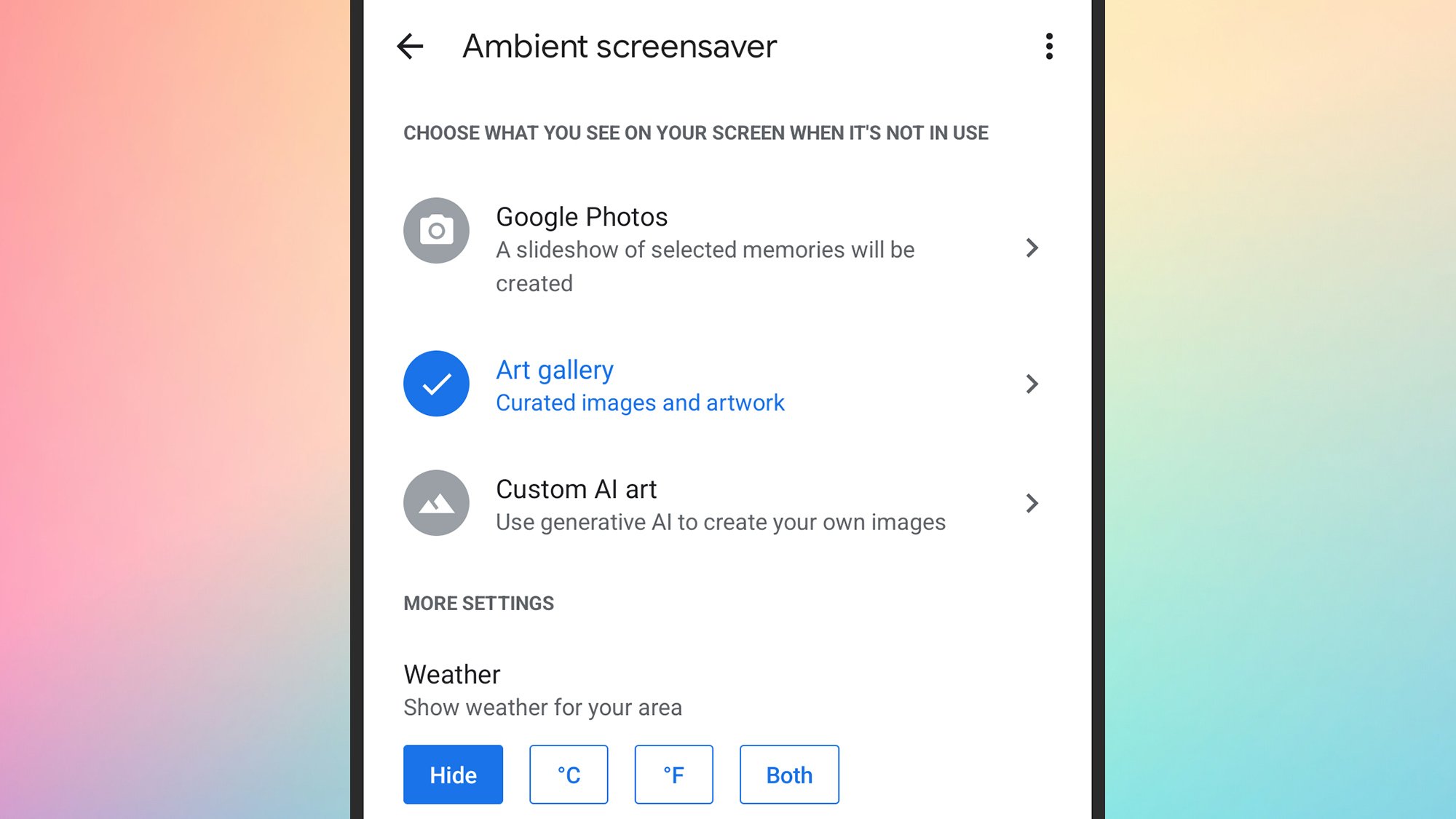
Either cast via Google Photos (open an album, tap the three dots in the top right corner, then Cast), or set up a screensaver through the Google Home app. Select your Chromecast, tap the gear icon (top right), then choose Ambient mode.
Keep in touch
Trying to hold video calls—whether with family over the holidays or colleagues during a meeting—isn’t always easy on a phone screen or even a laptop screen, so why not take advantage of a larger monitor or TV with a Chromecast plugged into it?
For this to work you need to be using Google Meet in a web browser on a computer. You can either choose the “cast this meeting” option before it starts, or click the three dots during the meeting (Google has full instructions online).
Dockless hire bike operators Lime and Forest “must take action” to address poor parking and bad rider behaviour, Islington Council said in an open letter published last week.
The letter says “persistent problems are undermining the benefits” of Lime and Forest bikes in the London borough.
“These issues have been raised repeatedly but remain unresolved,” read the letter signed by council leader Una O’Halloran and councillor Rowena Champion.
Islington council said that progress must be made on a range of points, such as reducing obstructive parking and nighttime noise.
It also wants to be able to request geofenced no parking and go-slow zones on estates to address “access issues and antisocial behaviour”.
“To make hire bike usage a fair and sustainable option in Islington we need you the operators to act and do so swiftly, decisively, and effectively to protect residents and businesses from ongoing disruption,” the letter says.
“We welcomed you to the borough because of the benefits that hire bikes bring – but without urgent action on these issues, this welcome will be withdrawn,” it concludes.
The council says it has removed more than 200 dangerously placed bikes, although it has not specified over what period.
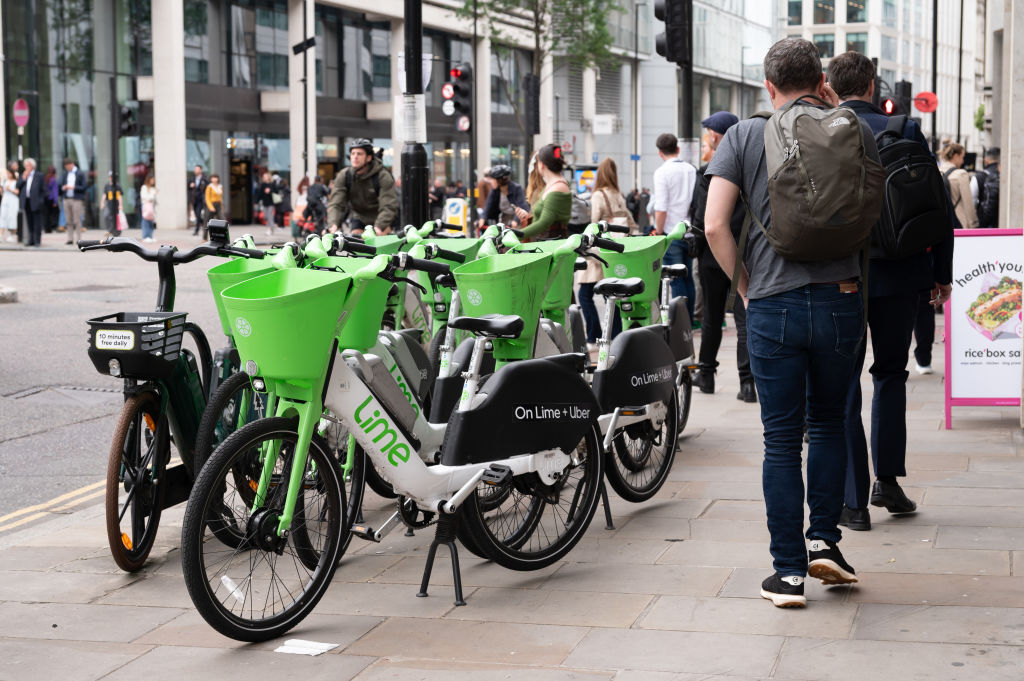
Lime rental ebikes parked in Finsbury Square in Islington. John Keeble / Getty Images
Forest’s head of policy, Alex Berwin, says millions of journeys are made using its bikes in Islington each year and the company remains committed to being a “responsive and constructive partner” to the council.
“We recognise that the service must work well for everyone, and we take the issues raised seriously. That is why we are investing heavily in better parking technology, in-app guidance and clear instructions to help users park responsibly and reduce street clutter. Our local team also responds quickly when issues are reported to help ensure bikes don’t cause obstruction or inconvenience,” Berwin says.
Berwin says Forest has responded to O’Halloran and Champion’s letter in detail.
In response to the open letter, Lime said it takes its partnership with Islington council “seriously” and is committed to working with the council to “minimise disruption for residents”.
“We’ve worked in partnership with Islington council for 6 years, and share their view that rental ebikes play a valuable role in improving congestion, air quality, and public health in the borough and across London,” Lime says.
In January 2025, Lime launched its London Action Plan to address ebike parking and safety. It says it has funded more than 1,100 parking bays in London this year and increased its “onstreet team” to more than 400 people.
Islington is the latest London council to initiate action on dockless rental bikes in the capital.
In August, Hounslow council ended its two-year trial of Lime bikes after they were claimed to be parked in dangerous places.
Hackney council also capped Lime bike fares at £1.75, making them the same price as a bus, in September.
But Lime has still gone from strength to strength in the UK, with its profits increasing by more than £40m in 2024.
Londoners made 16 million journeys by Lime during commuting hours in 2024, while the company saw an 85 per cent increase in total journeys. This summer, Lime also saw a spike in usage, partly due to the September tube strikes.
Transport for London estimates the number of daily cycling journeys in London increased in 2025 to 1.5m.
TfL also estimates that 10 per cent of the total daily cycling journeys in 2025 could have been made on dockless ebikes, such as Limes.
The City of London Corporation says dockless cycles have “quadrupled” in the city of London since 2022.
Spatial Ops expands the mixed reality FPS’s map creation tools in today’s free update on Quest, also adding custom rulesets and a new co-op survival mode.
In the ‘Blueprint Combat Update’, developer Resolution Games has introduced the ability to edit Spatial Ops maps in real time before beginning a multiplayer match, where everyone can see the changes immediately. This also adds ‘Undo’ and ‘Redo’ tools, hazardous damage zones that slowly drain health, floating barriers, and the option to place text in levels to better guide players.
As for other changes, Spatial Ops now features an online map library, the ability to save a host’s map, and new map templates. Custom rulesets can now be saved to individual maps, letting you tweak elements like bot difficulty, friendly fire toggles, weapon tuning, armor visibility settings, and more.
It’s also getting a co-op survival mode for taking on challenges together with other players. Supporting this is a new ‘Enemy Spawner’ object to determine where foes appear, alongside a Flashbang weapon. Finally, there’s also a new paid DLC called the “Corrupted Technology Theme,” offering unique props for your toolkit.
It’s the latest post-launch update since Spatial Ops entered full release last year, and this August saw Resolution Games release the ‘Pulse Protocol‘ update. That introduced bHaptics support for the TactSuit, TactSleeve, and TactVisor, in-game achievement tracking, campaign rebalancing, an extra large map template, and new features for the Quest-exclusive Arena Mode.
Spatial Ops is available now on the Meta Quest platform. While it didn’t receive today’s update, a ‘Campaign Edition’ is also on Pico.
We may earn a commission from links on this page. Deal pricing and availability subject to change after time of publication.
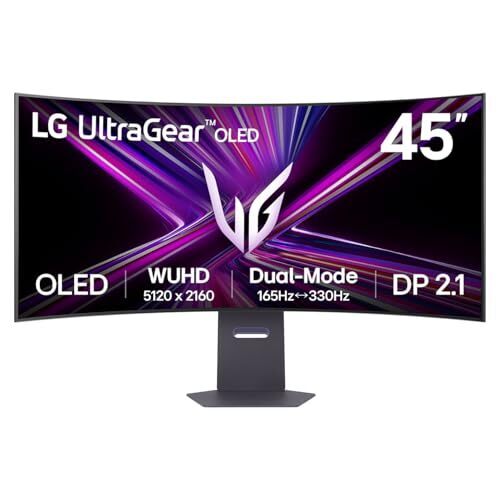
At just under $1,460 on Amazon right now (down from $1,999.99), the LG 45GX950A-B Ultragear OLED is still a major investment, but a serious one for anyone who cares about pixel density, immersion, and future-proof display tech.
You’re looking at a 45-inch ultrawide curved OLED screen with a resolution of 5120 x 2160, which puts it in rare territory. It doesn’t just look good; it’s one of the only displays of this size and shape that offers this much clarity, according to PCMag’s “excellent” review. Compared to more extreme 32:9 panels, its 21:9 aspect ratio feels a little more natural for everyday use and offers more usable vertical space. Whether you’re gaming or multitasking, that extra resolution pays off in clean text, sharper details, and more visible screen real estate.
The curved 800R OLED panel of the 45GX950A-B is paired with a 165Hz refresh rate at full resolution and can go up to 330Hz if you drop the resolution down to 1080p. Add in DisplayPort 2.1, two HDMI 2.1 ports, AMD FreeSync Premium Pro and G-Sync compatibility, and this thing is clearly built for performance. Input lag numbers back it up, with sub-10ms results in most tested modes. The monitor also supports multiple display modes depending on your use case, like a 4K 16:9 mode at 37 inches if you’re watching movies or need tighter framing. The stand is solid, adjustable, and surprisingly desk-friendly for a monitor this large, and the USB-C port with 90W power delivery is a nice touch for anyone using it with a laptop setup.
Still, it’s not a monitor for everyone. The rated brightness is only 275 nits, which means it won’t pop in sunlit rooms the way some Mini LED or IPS panels do. And while it does have internal speakers with a bit of bass, they’re not loud enough to carry a room—headphones are still the way to go. But if you’ve got the desk space, GPU power, and budget, the 45GX950A-B might be the best way to go big without going full TV.
Google’s data partner HouseCanary has begun displaying home listings directly in search results in select markets, sending Zillow’s shares tumbling more than 8% yesterday as investors weighed whether the search giant might eventually cut into the portal business that Zillow dominates.
The experiment places property details, prices, images and a “Request a tour” button at the top of mobile search results. HouseCanary, a full-service brokerage licensed in all 50 states and Washington D.C., said it contacted every MLS in the test regions before launching.
Analysts are largely downplaying immediate concerns. Goldman Sachs noted that most of Zillow’s traffic comes directly through its apps and websites rather than Google searches, though the firm views the development as a long-term risk. Piper Sandler called the fears “overblown,” and Wells Fargo suggested portals like Zillow would likely end up bidding for ad units on Google rather than losing traffic outright.
No matter what you think of James Cameron’s Avatar movies, their technical ambitions are undeniable. Cameron developed his own camera system to shoot the first Avatar in 3D, but since most of the actors were digitally captured, he also had the freedom to construct scenes with a virtual camera after they were physically shot. For Avatar: The Way of Water, which arrived a whopping 13 years after the first film, Cameron also leaned into high frame rate footage and new ways of modeling natural fluid dynamics.
Even though the third entry, Avatar: Fire and Ash, is coming just a few years after the last sequel, I still expected Cameron to deliver some sort of new feat to wow audiences. He could have found a smoother way to employ high frame rate footage, so the film wasn’t jarringly shifting between traditional 24 fps scenes and smoother 48 fps action shots. Maybe we’d see more natural interactions between live actors and virtual characters and environments (it sure is hard to beat Edie Falco suited up in a wicked exoskeleton in the last film, though).
Instead, Avatar: Fire and Ash is just another Avatar film — it doesn’t push any boundaries, narratively or technically. And without any technical achievements to lean on, the narrative issues inherent with Avatar become all the more glaring.
It’s still basically a story that places a clueless white dude in the middle of a fight between indigenous and colonialist powers. (Improbably, he’s crowned one of the Na’vi’s best warriors!). The script from Cameron and his co-writers (Rick Jaffa and Amanda Silver, continuing their work from The Way of Water) often hits identical beats to a low-rent CW show. And perhaps worst of all, the stakes of the story haven’t really changed much. Jake Sully (Sam Worthington) and his family are still fighting off the militarized Resource Development Association (RDA), Col. Quaritch still holds a grudge from being killed (twice now!) and from the Sullies raising his Tarzan-like son, Spider (Jack Champion).
There’s an attempt to cast the Na’vi in a new light with the villainous Ash People, who spend their days attacking and stealing from other tribes. While most Na’vi people work cooperatively with other clans and share their reverence for Eywa, the collective consciousness of Pandora, the Ash People resent it for not saving their villages from natural disasters. Despite a deliciously evil performance by Oona Chaplin (Charlie Chaplin’s grandaughter!) as Varang, the Ash People don’t amount to much more than “evil Na’vi.” When they inevitably work together with humans to attack other Na’vi, it doesn’t feel surprising in the least. Honestly, it’s a tad insulting.
Avatar: Fire and Ash
20th. Century Studios
Perhaps we’ve been spoiled by Cameron’s last few films, but Avatar: Fire and Ash ultimately feels like more of the same. Even its massive final battle feels like a retread, since it’s set in the same ocean environment as The Way of Water and is once again focused on protecting psychic alien whales from humans. Cameron does let his action chops shine throughout the film, but after a certain point, trying to enjoy those sequences is like trying to eat a family-sized carton of ice cream by yourself. You’ll enjoy it for a little while, but eventually you’re left with a massive headache and sugar hangover.
It’s clear that James Cameron has built the Avatar franchise to explore everything he loves: Stories about protecting the environment, fighting against capitalist excess and kicking tons of ass. Parts of Avatar 4 have already been shot, and that film is expected to arrive in 2029. But I’m hoping the 71-year-old filmmaker eventually finds his way out of Pandora. He’s co-directing the Billie Eilish concert film, Hit Me Hard and Soft: The Tour, so that’s a start. But I’m eager to see what other new worlds he can dream up.
This article originally appeared on Engadget at https://www.engadget.com/entertainment/tv-movies/avatar-fire-and-ash-review-maybe-its-time-to-sunset-pandora-140000997.html?src=rss
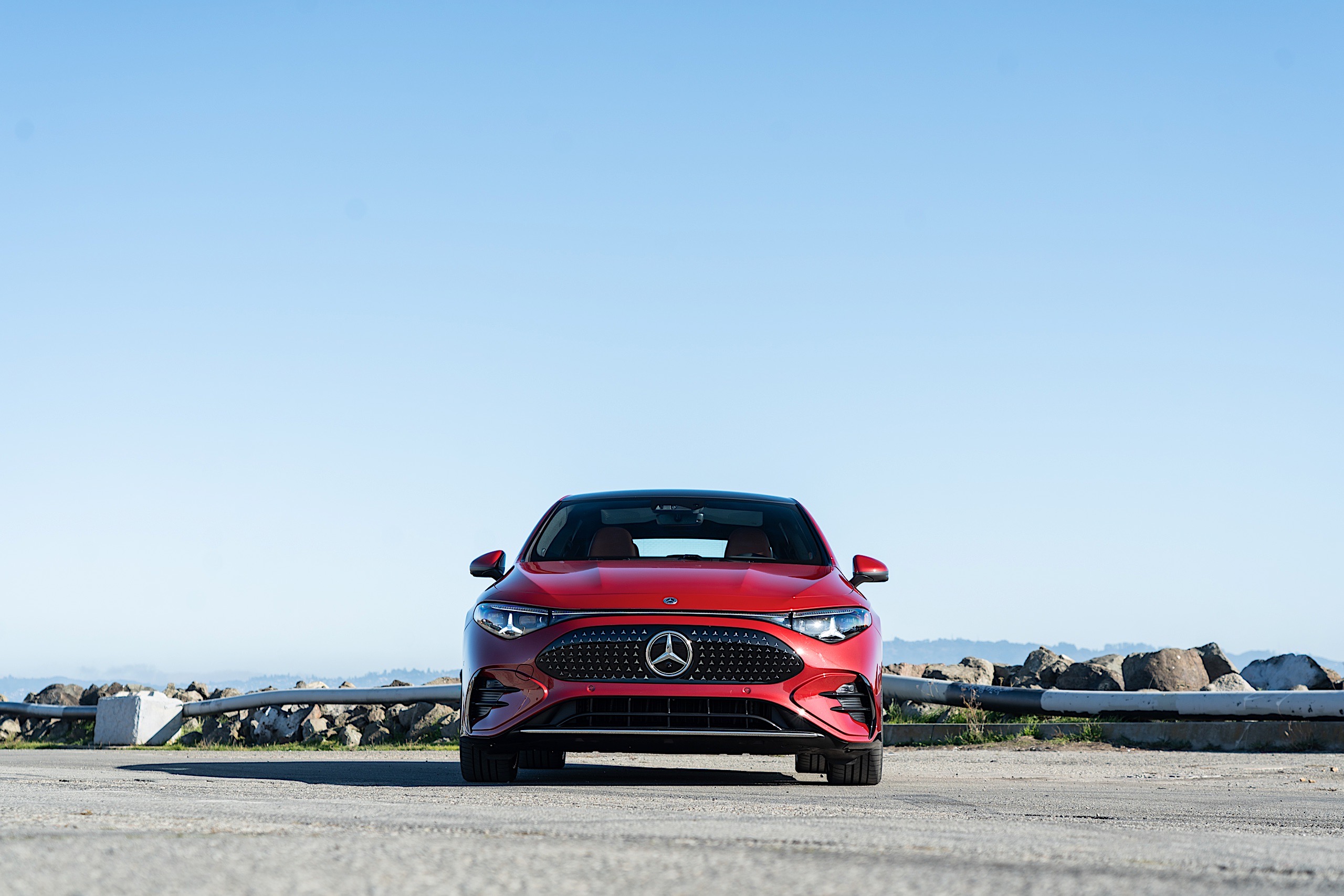
This one’s been a long time coming. Mercedes-Benz has been researching, refining and even reshaping the car that would ultimately be the CLA for years now, teasing us with technical briefings and even showing off a sultry crimson concept car a full two years ago.
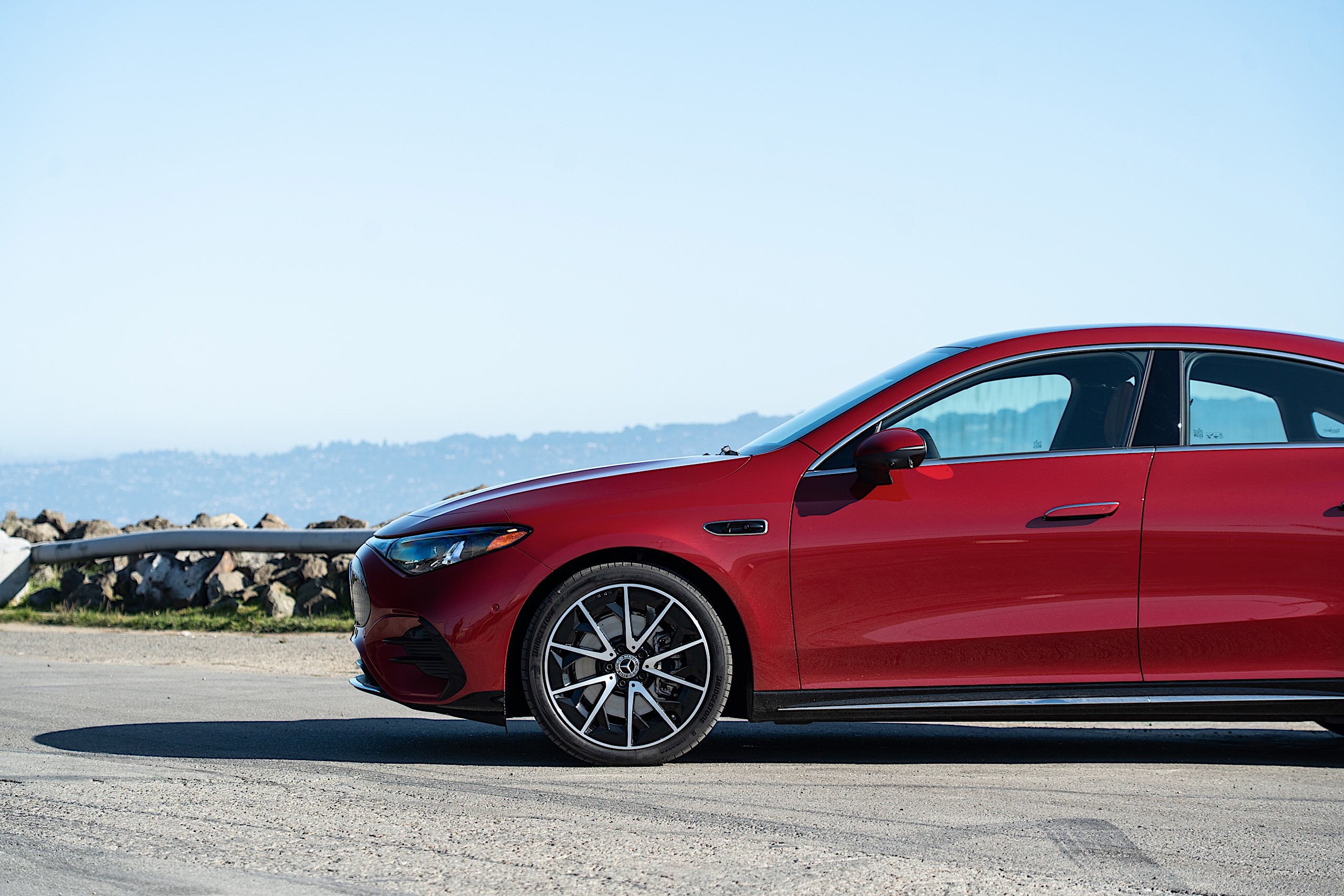
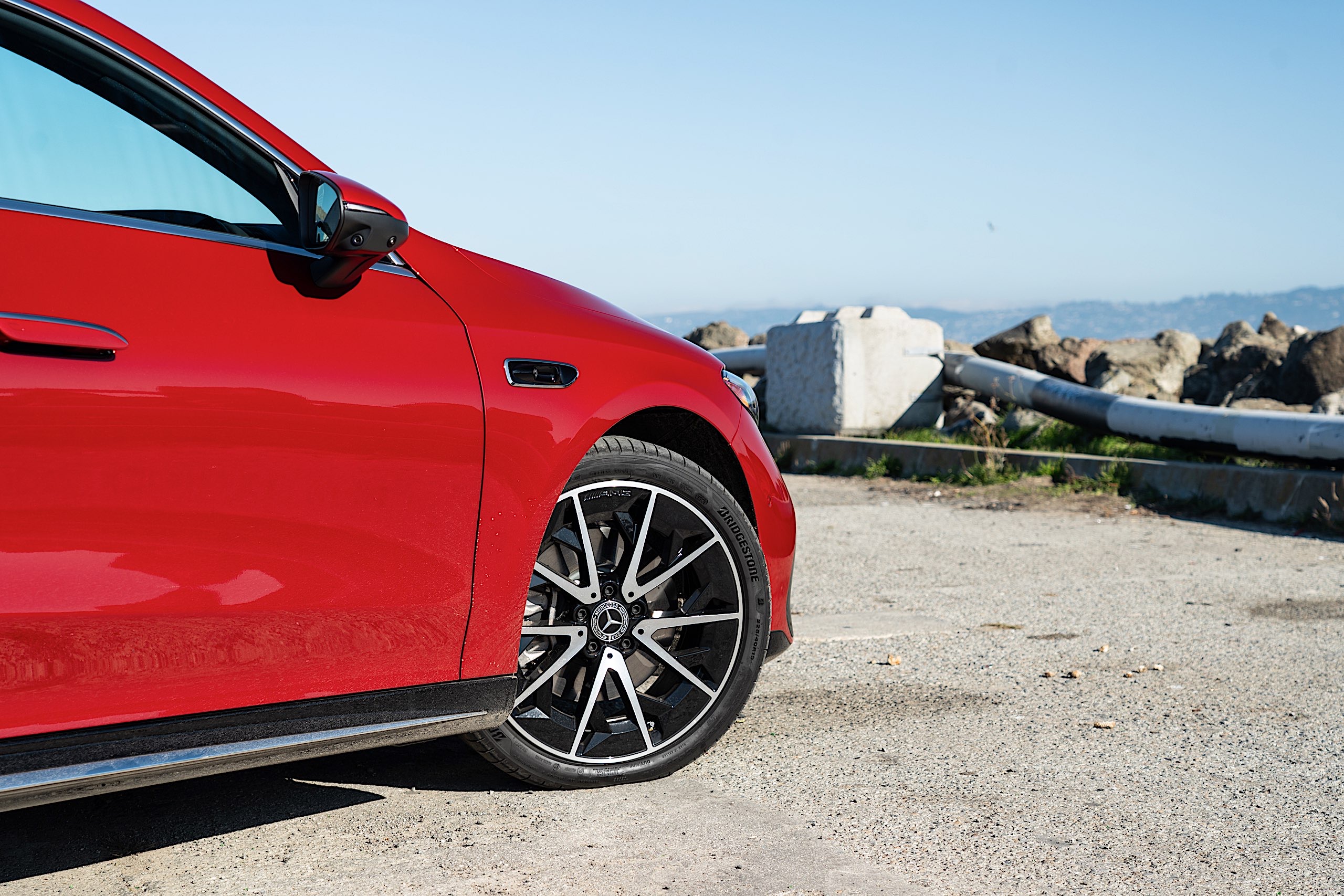
That was the Concept CLA, and while the production CLA you see here doesn’t look quite that good, it is a fine-looking little electric sedan. More importantly, it goes as far as you’d think its slippery, 0.21-coefficient-of-drag body would carry it: up to 374 miles on a charge.
With a $47,250 starting price, is this electric CLA the complete package? After spending a day behind the wheel of one, I think it might just be.
Higher density
2026 Mercedes-Benz CLA 250+ EQ
Tim Stevens for Engadget
The CLA has long been Mercedes-Benz’s most attainable sedan, a machine for those wanting something fun and stylish that offers a taste of the M-B lifestyle without breaking the bank.Attainability is still a big focus of this newly rebooted CLA, which serves as the debut venue for the company’s latest generation of electrification. While most luxury auto makers would have you swing for their top-tier models to get the newest tech, Mercedes is actually bringing it to the lower end first.
The new CLA is built around a new battery pack that offers 20 percent more energy density than the company’s previous EVs. There’s a big boost in efficiency, too. Where the EQS, the company’s current range meister, does up to 390 miles on a charge from roughly 110 kilowatt-hours, the CLA manages 374 miles from just 85. It’s a much smaller car, sure, and lighter too at about 4,500 pounds versus 5,500 and up for the EQS, but there are bigger efficiencies at play here thanks to advanced motors and the aforementioned aerodynamics.
The CLA’s 0.21 coefficient of drag slots it right in between the 0.20 rating for the EQS sedan and 0.22 for the EQE. Crucially, though, despite being just as slippery as those cars, Mercedes-Benz’s designers also managed to make the CLS stylish, a big step up from the efficient but amorphous profiles of its previous EVs.
That aerodynamic efficiency is a big part of what delivers the 374-mile range for the single-motor CLA 250+ with EQ Technology model, the formal and long-winded designation for what I drove. It delivers 268 horsepower through the rear wheels. Those wanting a bit more oomph can step up to the 349-hp, dual-motor, all-wheel-drive 350 4MATIC model. That extra power and low-grip surety costs an extra $2,550, but the bigger penalty is range: the dual-motor model maxes out at 312 miles on a charge. (There is a hybrid version of the new CLA coming as well, but we’ll cover that on its own later.)
When it comes to charging, the new CLA impresses there, too. Charging at up to 320 kilowatts via the company’s first NACS plug, the CLA adds a whopping 200 miles of range in 10 minutes. Weirdly, the car also has a separate, older-style J1772 plug for slower, level-two charging.
Accessible, not basic
The interior displays of the 2026 Mercedes-Benz CLA 250+ EQ
Tim Stevens for Engadget
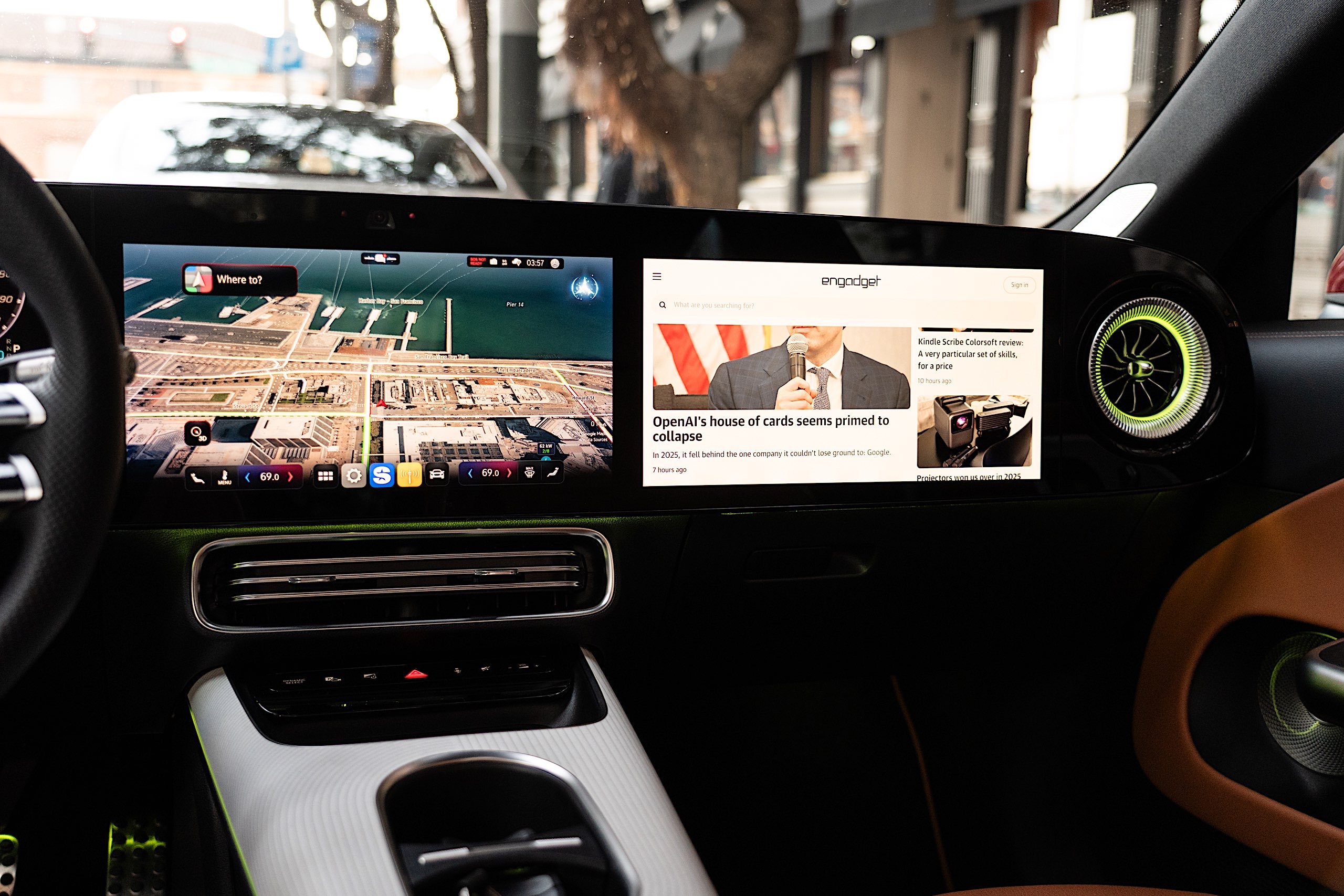
As a more attainable machine, you wouldn’t necessarily expect the CLA to be completely loaded with features. Still, tick enough boxes and you can definitely get it there. While it doesn’t have the luscious, curving Hyperscreen display as the EQS, it does offer a similar experience called Superscreen. You can get up to three displays spread across the dashboard: a 10.25-inch gauge cluster on the left, a 14-inch touchscreen in the center and an optional third display (also 14 inches) on the right for the passenger to play Angry Birds or stream videos. If, for some reason, they wouldn’t rather just look at their phone.
All those displays run the latest version of the MBUX user interface, similar to what we’ve seen in the company’s other EVs, but it’s a bit simpler and easier to use here. That’s backed by a wholly new system-level operating system called MB.OS running on NVIDIA silicon, also making its debut on the CLA. Mercedes says this not only has far more capability but can also be more comprehensively updated via the car’s 5G connection.
One of the features in the latest Mercedes software is baked-in AI. Say “Hey, Mercedes,” and you can not only change just about any setting in the car, but also engage in any number of inane conversations. I asked for a weather update for my next trip to Chicago, the latest releases from a few of my forgotten bands and even got an explanation of why the lyrics in the song “Water’s Edge” by Seven Mary Three are so very creepy. (Don’t go down there, friends.)
It’s all reasonably snappy and quite useful, but not perfect. When I said “I’m hungry,” I got a quick listing of restaurants and offers for quick routing. When I said, “I need a hospital,” the system, flummoxed, just stopped talking to me. Thankfully, I did not need a hospital. I was actually feeling pretty okay.
That extensive software upgradability is also opening the door to a new era of car upgrades. Yes, the automotive DLC era is here, and you can pay extra to unlock additional active features like automated parking, navigation, a dashcam function and whatever else Mercedes-Benz’s product planners can dream up in the future. Hopefully, there’s no horse armor involved.
We’ll see how that shakes out, but my only real complaint about the interior was that it felt a bit cramped. It’s a sedan on the small side, sure, but the layout feels a bit claustrophobic. That dashboard with all the displays is situated nearly vertically, as are the sides of the center console. Sitting in the passenger seat felt like being tucked in a box.
Mind you, it was a very comfortable box, well-upholstered and featuring a lovely interior trim made of recycled paper, grooved to give the effect of a Zen garden. Headroom up front is generous and actually isn’t too bad in the rear, but ducking under that sweeping roofline to get into the back seats requires a bit of flexibility.
Drive time
2026 Mercedes-Benz CLA 250+ EQ
Tim Stevens for Engadget
Despite being the slowest electric CLA, this little sedan gets off the line quickly. A 6.6-second 0-to-60 time under-sells the feeling of instant acceleration and throttle response that make EVs so very compelling. You only start to feel the CLA’s relative lack of horsepower at higher speeds, but even there, it’s hardly lacking.
That made it a blast to scoot from light to light as I was escaping from San Francisco, but it was much more fun in the foothills of Mt. Tamalpais. The CLA’s steering is light yet has good feedback. I could really feel the road beneath the front tires, making for a more engaging machine than I was expecting.
That battery pack in the floor keeps body roll in check, but a positively pliant suspension makes for a relaxed affair. The CLA did a great job of soaking up the countless imperfections in and around San Francisco, making for an extremely comfortable commuter, if one that felt a bit floaty at times.
It’ll be a safe commuter, too. The car is festooned with sensors, including 10 cameras of various resolutions and focal lengths, five radar sensors firing in every direction and 12 ultrasonic sensors. You’ll need to pay extra for the digital keys to unlock their full functionality, though, like advanced lane-keeping and automated lane changes. There’s even an advanced, point-to-point driver assistance system coming called MB.DRIVE Assist Pro that’ll let the car handle most of the steering — even on secondary roads. More details on that to come.
For now, the car did great at managing itself on the highway, changing lanes with enough initiative to get through commuter traffic without issue, and not only bringing itself to a complete stop in traffic, but resuming again as soon as the cars ahead moved.
It even delivered good efficiency. I saw 3.9 miles per kWh, which would equate to a theoretical 331 miles from the 85 kWh battery pack. That’s despite my driving with a good amount of enthusiasm and a heavy right foot. Edmunds, driving more conservatively, got 434 miles from a single charge,
Wrap-up
2026 Mercedes-Benz CLA 250+ EQ
Tim Stevens for Engadget
So the CLA looks great, drives well, has plenty of range and again, starting at $47,250, feels well-priced. Yes, you’ll need to pay extra if you want to get all the toys, like the epic Dolby Atmos-capable Burmester sound system or the lovely Natural Fiber Zen interior trim. But when I ticked all the boxes I wanted, I still came out under $60,000. That put me about $5,000 below the base price of the company’s next-bigger EV, the EQE.
The CLA really is a big step forward on the EV front, and it’s a car that’s hard to fault. The new CLA is hitting dealerships presently, and I have a feeling you’ll be seeing plenty of them on the road soon.
This article originally appeared on Engadget at https://www.engadget.com/transportation/evs/mercedes-benz-cla-first-drive-head-of-the-ev-class-140000562.html?src=rss
The follow-up to a successful debut is often harder to make than the first, and that goes double when the inspiration for a show comes from the most beloved installment of the underlying franchise. That’s precisely the challenge Fallout season 2 is facing as the TV series shifts its stage to the irradiated lights of New Vegas when the series returns on December 16 at 9PM ET/6PM PT on Prime Video. However, while other video game adaptations like The Last of Us suffered from a bit of a sophomore slump, Fallout continues to get more crass, vulgar and abrasive in the most entertaining ways.
Editor’s note: We were provided the first six of eight episodes of Fallout season 2 for this review, so if the ending of this season misses its landing, blame The Enclave.
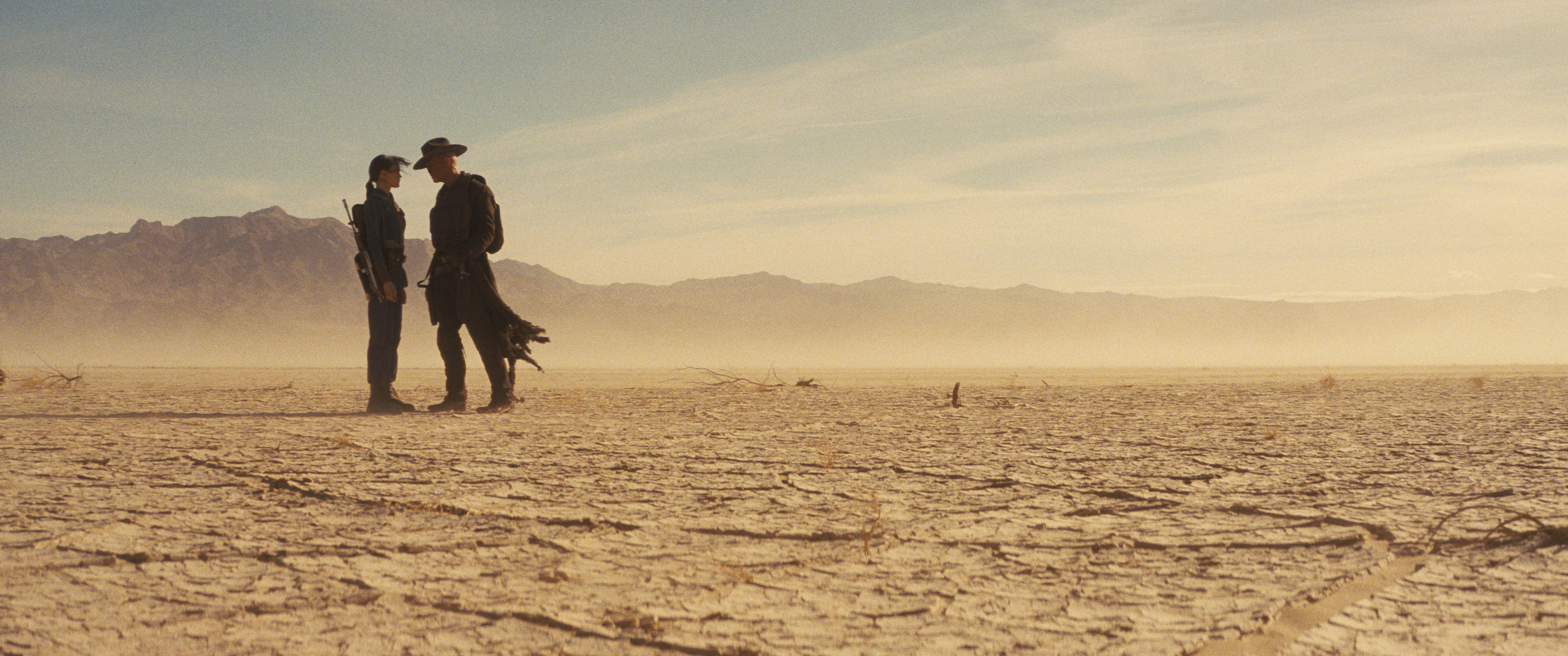
Season two picks up directly after the first as Lucy (played by Ella Purnelle) and The Ghoul (Walton Goggins) make their way across the wasteland in pursuit of Lucy’s father. And right away, we’re instantly reminded of the magnetic chemistry between our leading lady vault dweller and her endearing naivete and our post-apocalyptic cowboy afflicted with dark pragmatism from having simply lived through too much. This simple combo not only often provides the setup for Lucy’s signature catchphrase — which is both quaint and refreshing — it also sets the stage for some interesting plot points. Just hearing The Ghoul say things like “Do more drugs” with Goggin’s classic drawl and without a hint of irony is a real treat.
There’s never a dull moment when Lucy and The Ghoul are traveling together.
Prime Video
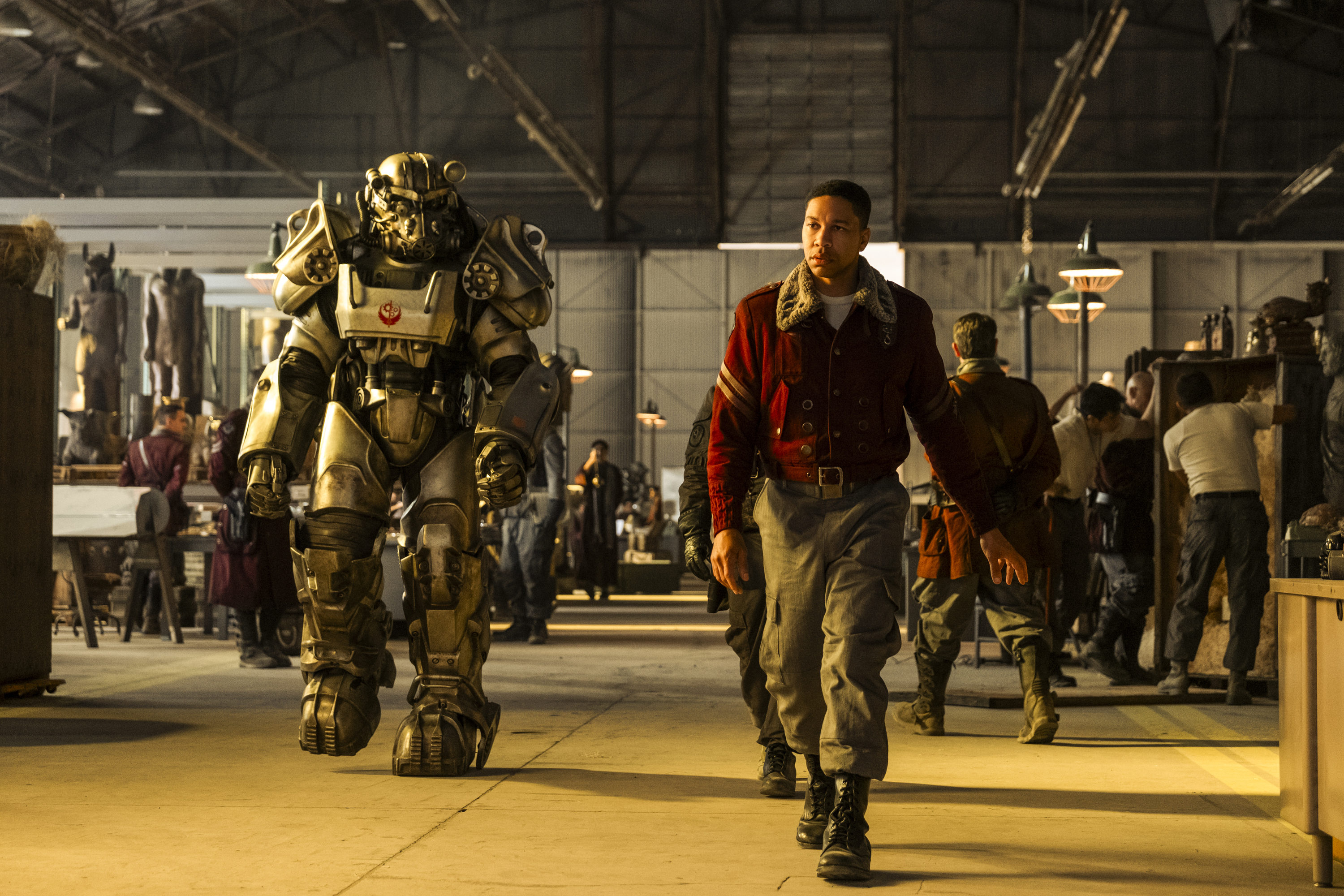
One of the potential pitfalls of a second season though, is an expanded storyline. That’s because unlike the Fallout games where you get to steer the action, we’re just here for the ride as we flip between Lucy’s search for her father, the existential crises facing multiple vaults and an expanded role for Maximus (Aaron Moten) as he suddenly finds himself near the top of the Brotherhood of Steel’s org chart.
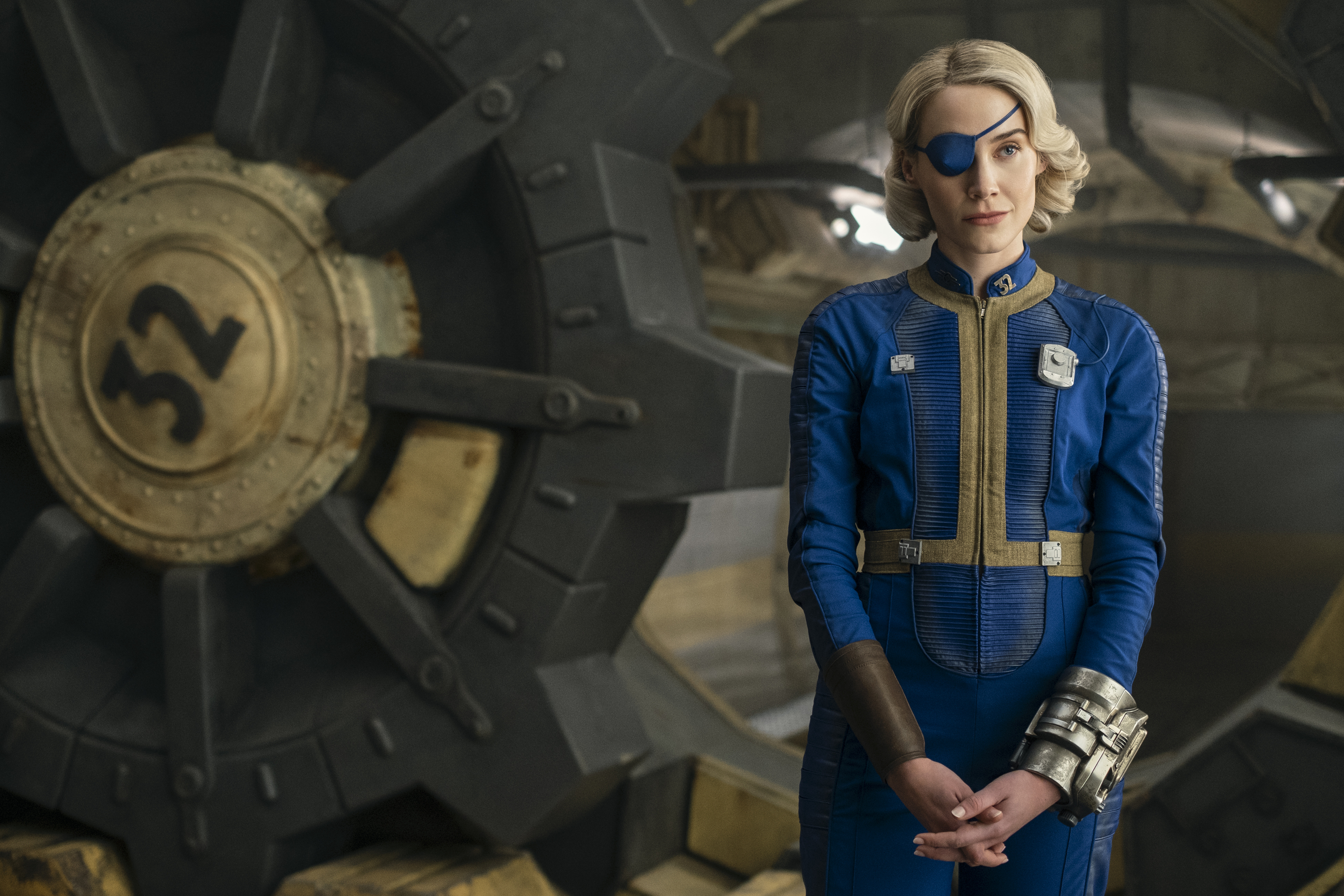
But somehow, the showrunners have managed to make each branching path just as engaging as the others. There were hints of his range in the first season, but Moises Arias shines as Lucy’s brother Norm as the leader of a new crew (I’m trying to keep this review as spoiler-free as possible) while Annabel O’Hagan as Overseer Harper does a fantastic job of switching between being out of her depth and completely unhinged at a moment’s notice.
In season two, it feels like Aaron Moten’s Maximus is so close to figuring out what kind of soldier he wants to be.
Prime Video
The one path that still feels like it hasn’t fully hit its stride is Maximus’, due in large part to the fact that the character’s actions often feel like they are influenced more by circumstance than personal agency. In some ways, it’s the continuation of someone defining their own morality, which rarely feels as convincing or driven as someone with a plan. But there’s still intrigue there too.
Meanwhile, for fans of the games, the number of easter eggs and callbacks is downright delightful. The set design and cinematography make the wasteland a character in its own right, even if the last thing I want to see is someone eat flea soup. We’re also treated to an ever-growing zoography of nuclear critters such as rad scorpions, all sorts of mutants and more, along with appearances from iconic characters like everyone’s favorite cowboy-coded security robot. And I appreciate how the show spends a little extra time to go over the myriad of factions (like The Legion and the NCR), which pays homage to the core series while functioning as an interesting side quest at the same time.
With Overseer Harper at the helm, there’s no telling what will happen to Vault 32.
Prime Video
With this much going on, it would be easy for a series to become overburdened. But the pacing isn’t labored, because while the show doesn’t actually get to New Vegas until episode four, the journey there was so entertaining that I didn’t mind. Perhaps most importantly, even though it would be impossible to completely recreate New Vegas on TV (since you can’t choose your own adventure here like you can in the game), it really feels like Fallout’s showrunners have nailed the balance between respecting the source material and tweaking the story to fit a different medium.
That’s a big credit to the franchise, especially coming from a genre that often gets maligned for a lack of depth or nuance. But it’s also a tribute to this series, which continues to be a prime example of how to make the jump from pixels to TV screens look gook. And after seeing The Last of Us stumble a bit during its second cour, I might even go so far as to say that Fallout is the best live-action video game crossover to date.
This article originally appeared on Engadget at https://www.engadget.com/entertainment/tv-movies/fallout-season-2-review-viva-new-vegas-140000678.html?src=rss
China has taken another step forward in the self-driving car market. The country’s Ministry of Industry and Information Technology (MIIT) has made its first approval for cars with level-3 autonomous driving capabilities. The two electric sedans come from state-owned automakers Changan Auto and BAIC Motor.
The US National Highway Transportation Safety Administration (NHTSA) defines level-3 driving as “the system handles all aspects of the driving task while you, as the driver, are available to take over driving if requested. If the system can no longer operate and prompts the driver, the driver must be available to resume all aspects of the driving task.”
According to a translation of MIIT’s announcement, the Changan vehicle can drive autonomously in single lanes of both highways and urban expressways in traffic congestion. It is allowed solely in certain areas of Chongqing at a maximum speed of 50 km/h (31 mph). The BAIC electric sedan can also function autonomously on the same roads, but only in areas of Beijing at a maximum speed of 80 km/h (50 mph).
“The team strictly followed the standards and procedures to conduct preliminary review, selection, testing, and safety assessments,” MIIT stated. “Both automotive companies have completed and passed the product testing and safety assessments as required.” They didn’t present a timeline for when the models would become available.
This article originally appeared on Engadget at https://www.engadget.com/transportation/china-approves-two-level-3-autonomous-evs-134548316.html?src=rss