As the Trump administration makes announcementafterannouncement about its efforts to promote the US fossil fuel industry, the industry isn’t exactly jumping at new opportunities.
Some high-profile oil and gas industry leaders and organizations have objected to changes to long-standing government policy positions that give companies firm ground on which to make their plans.
And the financial picture around oil and gas drilling is moving against the Trump administration’s hopes. Though politicians may tout new opportunities to drill offshore or in Arctic Alaska, the commercial payoff is not clear and even unlikely.
By executive order last month, Donald Trump launched his so-called “Genesis Mission.”
Described as a “historic national effort” to “invest in AI-enabled science to accelerate scientific advancement,” Trump claimed his mission would address key challenges to American energy dominance, innovation, and national security.
This mission, Trump boasted, would be a game-changer to science akin to putting a man on the moon or firing the first nuclear weapons. By building “an integrated AI platform” trained on “the world’s largest collection” of federal scientific data sets, he promised, the government could set off cascades of scientific breakthroughs.
If you are not satisfied with the current performance for PyTorch or ComfyUI / Stable Diffusion on your Strix Halo APU system or with other consumer RDNA3/RDNA4 Radeon consumer GPUs, AMD engineers are interested in your logs to help better optimize the performance going forward…
Amazon is in discussions with OpenAI to invest $10 billion in the company while supplying more of its AI chips and cloud computing services, according to The Financial Times. The deal would push OpenAI’s valuation over $500 billion but is likely to raise more questions about the company’s circular investment agreements involving chips and data centers.
The two companies are also in talks about the possibility of OpenAI helping Amazon with its online marketplace, similar to deals it has made with Etsy, Shopify and Instacart. However, any agreement still wouldn’t allow Amazon to market OpenAI’s most advanced models on its developer cloud platform, as Microsoft holds the exclusive rights to those until the 2030s.
OpenAI recently restructured its agreement with Microsoft to allow it to use data center capacity from other suppliers. Around the same time, it made a string of deals with NVIDIA, Oracle, AMD and others to build out data center capacity and acquire or rent AI chips.
The new deal would require OpenAI to use Amazon’s Trainium AI chips and rent more data center capacity from Amazon Web Services (AWS). That’s on top of the $38 billion that OpenAI has already committed to renting servers from AWS over the next seven years.
These deals have sounded alarms among investors considering their circular nature. In many of those, including this latest Amazon deal, OpenAI is taking investment money and then sending that cash back to the same company for infrastructure or chips. And the amounts are staggering, with just two companies, Softbank and Oracle, spending a combined $400 billion on new data centers for OpenAI’s compute needs. And so far, OpenAI has lost more money than it makes.
This article originally appeared on Engadget at https://www.engadget.com/ai/amazon-in-talks-to-invest-10-billion-in-openai-and-supply-its-trainium-chips-103653151.html?src=rss
They say Christmas comes but once a year, yet certain Zwifters may feel their letter to Santa Claus has been answered a week early.
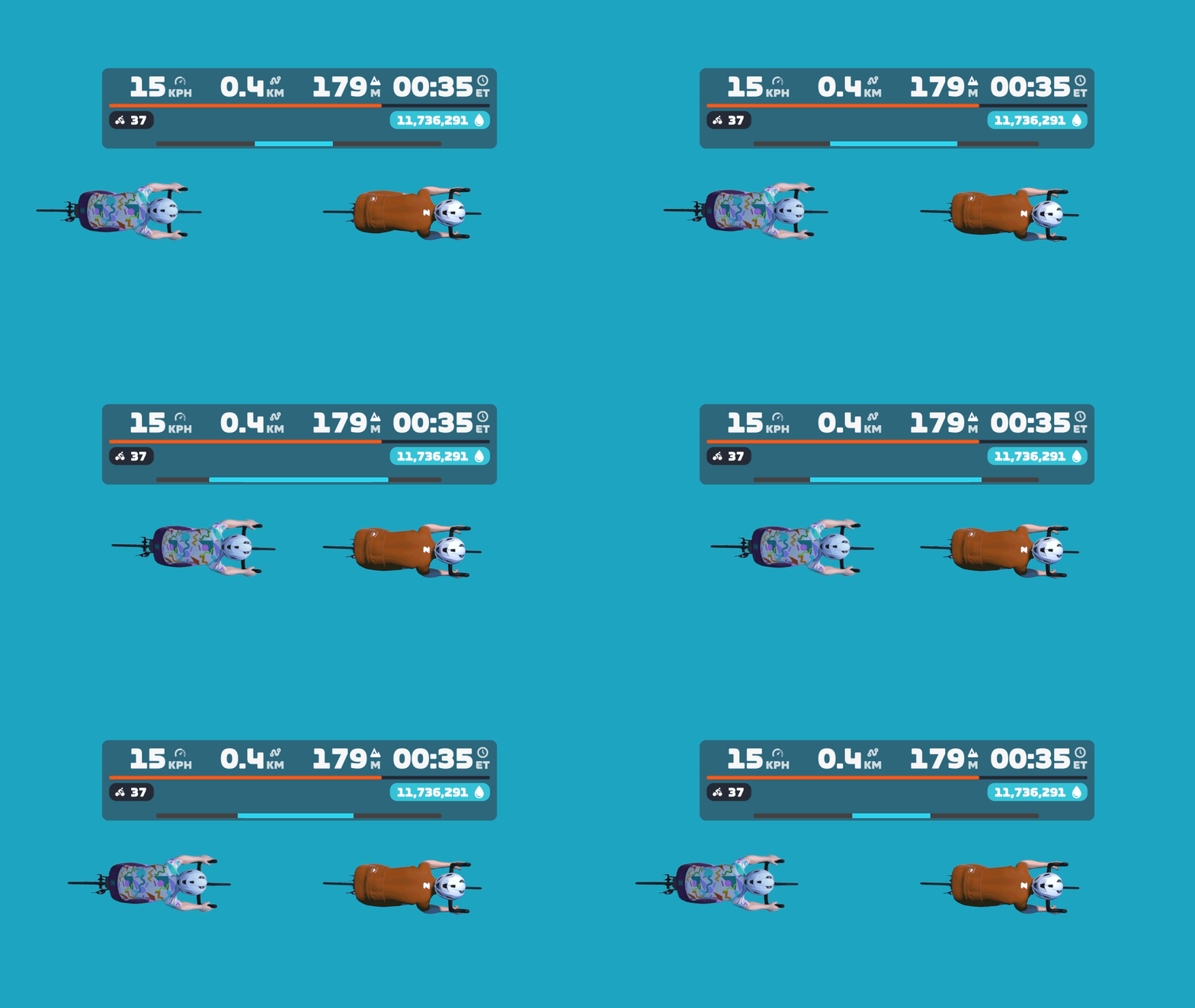
That’s because Zwift has announced that it has released one of its most requested features: a draft indicator.
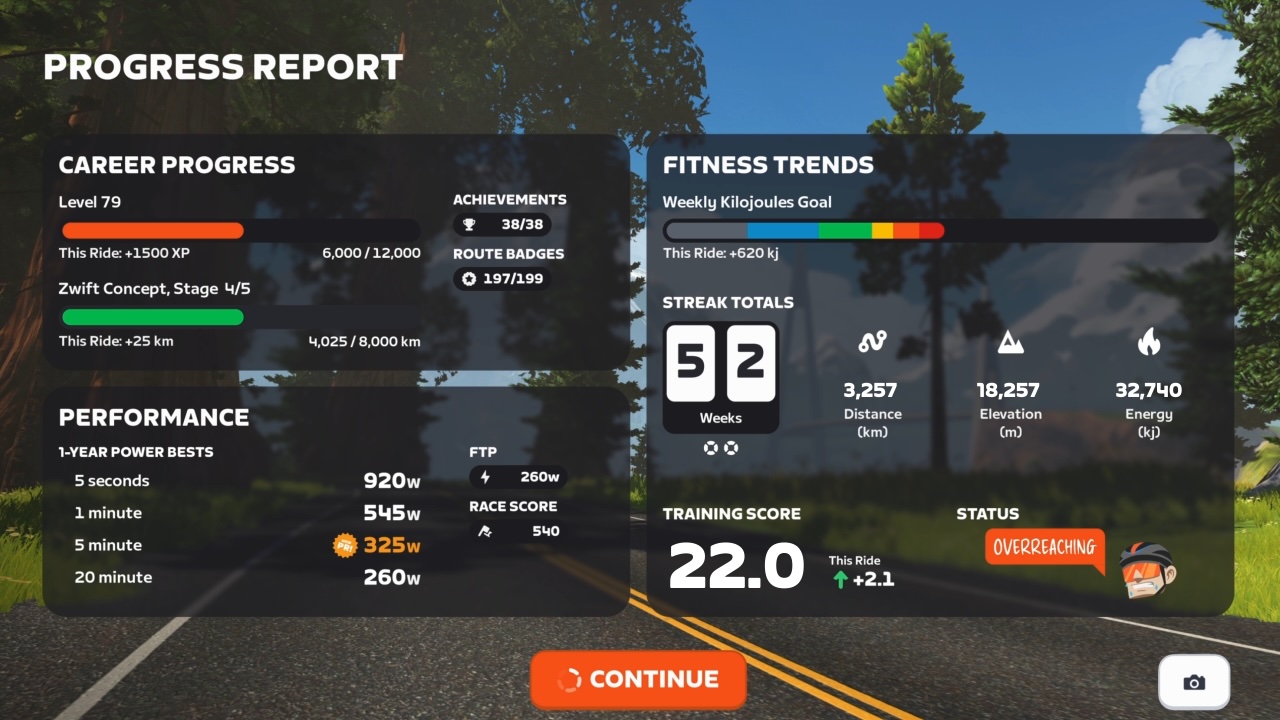
The indicator is one of two “quality-of-life improvements” the indoor cycling app released yesterday, alongside an updated report screen, which enables you to track your fitness progression and more.
Draft indicator
Zwift says the draft indicator is one of its most requested features. Zwift
Although it’s a virtual platform and you don’t get the literal advantages of riding in a group, Zwift’s drafting feature enables you to conserve energy.
Zwift Insider estimates that drafting behind a single rider on the platform earns you a power saving of approximately 25 per cent.
Even if it won’t quantify your energy saving as a percentage, Zwift’s new draft indicator shows how much shelter you are getting from the riders in front.
“The wider the draft indicator bar, the better your draft position is,” Zwift says.
Progress Report screen
The progress report screen shows fitness trends and a whole host of other stats.
Also released yesterday is Zwift’s new progress report screen, which focuses on ‘career stats’ and an overview of your cycling performance.
The screen means you can track your progress after every ride, and is said to build on the success of Zwift’s fitness tracking, which was released in the spring.
“Zwifters can track their weekly goal progression, streak totals, training score and status. The training score represents training load – intensity, duration and frequency as an easy-to-track score,” Zwift says.
You now have the option to set weekly goals in kilojoules, stress points, calories, distance or time, too.
Similar to Garmin’s training status function, Zwift will provide you with status classes: ready, fresh, productive, overreaching or detraining.
The fitness tracking is also available in the Zwift Companion app, where you can see your fitness progress over time, with graphs showing metrics such as training goals, training score, training status and Zwift streak.
The career progress function enables you to see stats such as how many XP points you earned on your last ride and how many you need to level up.
The bike upgrade function means you can see how far you have left to unlock your next bike upgrade. Performance statistics, such as a one-year power bests over 5 seconds and FTP, are also displayed on the summary screen.
Pocket Lands delivers a promising new sandbox for building digital worlds, and it’s out now in Early Access on Quest. Read on for our full impressions.
0:00
/1:23
Creative minds always find a way to express their individuality, no matter the means at their disposal. Pen, paint brush, digital tools. Video games such as Minecraft exploded in popularity through the freedom of shaping its voxel art world, to the point where people created futuristic spaceships, sprawling cities, and medieval towns by hand. If you build it, they will come, so the old quote goes. Pocket Lands aims to deliver a world-building sandbox to allow those with inspiration a new avenue to convey their imagination. It shows signs of a promising future, even if what’s here in early access leaves me wanting.
There is a prebuilt landscape that you can start working from.
A full-scale playground to design complex architectural ideas is not a new concept, as previously seen in cyubeVR and RealmCraft among others, yet Pocket Lands stands out for several small but defining features. The first is its flexible way to engage with your blank canvas, as the diorama is viewable from three different perspectives: a resizable island in mixed reality, as that same snippet of the world but with your surroundings covered, or a sprawling fully immersive mode where everything is rendered in the voxel world, even the day-night cycle. Snappy hand tracking or controller quickly lets you see how expansive your imaginative kingdom is becoming.
Second is the fact that you can drop into your own world at any moment, going from a God-mode perspective to walking around next to your creations. This feeling, especially once laser-focused on more elaborate constructions, is a brilliant addition that inspires awe. That’s helped by the ability to jump and, most importantly, fly around the map to look at the environment from another area. This entices you to perhaps add a new tower to your castle, mast to your airship, or neighboring skyscraper to your skyline.
The day-night cycle is quite jaw-dropping when building skyscrapers out of lamps.
Finally, no creative sandbox is complete without accessible building tools. From a quick 17-slide tutorial where Pocket Lands succinctly explains how it all works, the onboarding to pick up and play is as easy as it gets. Making the motion of grabbing a rectangle from two opposite sides lets you spawn a figure as long, wide, or short as you wish. A handy menu with over 25 full and half block types awaits to accommodate every type of building. Concrete, sand, wood, and lampshades are but a few foundations to build unique creations on. The calming music, ranging from medieval Oblivion-esque melodies to soothing piano sounds, instills a relaxing vibe in the creation process.
However, hand tracking feels a little hit or miss right now. There is a nifty feature that by tapping your thumb to your hand, you can “scroll” through the map as you would a smartphone, turning it yellow to signify selection. You can close your fist to move around the map, pinch to move the edges of the mixed reality diorama, or grab blocks and add new ones. But Pocket Lands doesn’t always register when I stop making a fist gesture, only to end up on an entirely different side of the map. Or worse, the diorama itself ends up in another area of the room.
While Mountainborn Studios is aware of these false positives, the only current solution is to be gentle with the movements so that they can be properly registered to avoid such nuisances. A bit of comic relief against these issues is the addition of arm-swinging locomotion, which doesn’t add much, but it’s undoubtedly fun to make that primal motion while exploring. For the avoidance of doubt, artificial stick-based locomotion is also available.
0:00
/0:17
An unexpected but welcome addition.
I wish that I could do more in Pocket Lands right now. Yes, it’s a wonderful Early Access release with all the aforementioned details. But I’d love to see more items, block types, and creatures added. Thankfully, the latter is in development, along with new biomes and multiplayer. It’s a great playground for creative minds, one that hopes to fill a void after Microsoft abandoned VR support for Minecraft. Here’s hoping that this sturdy foundation builds a lasting legacy.
Pocket Lands is out now in early access for the Meta Quest platform.
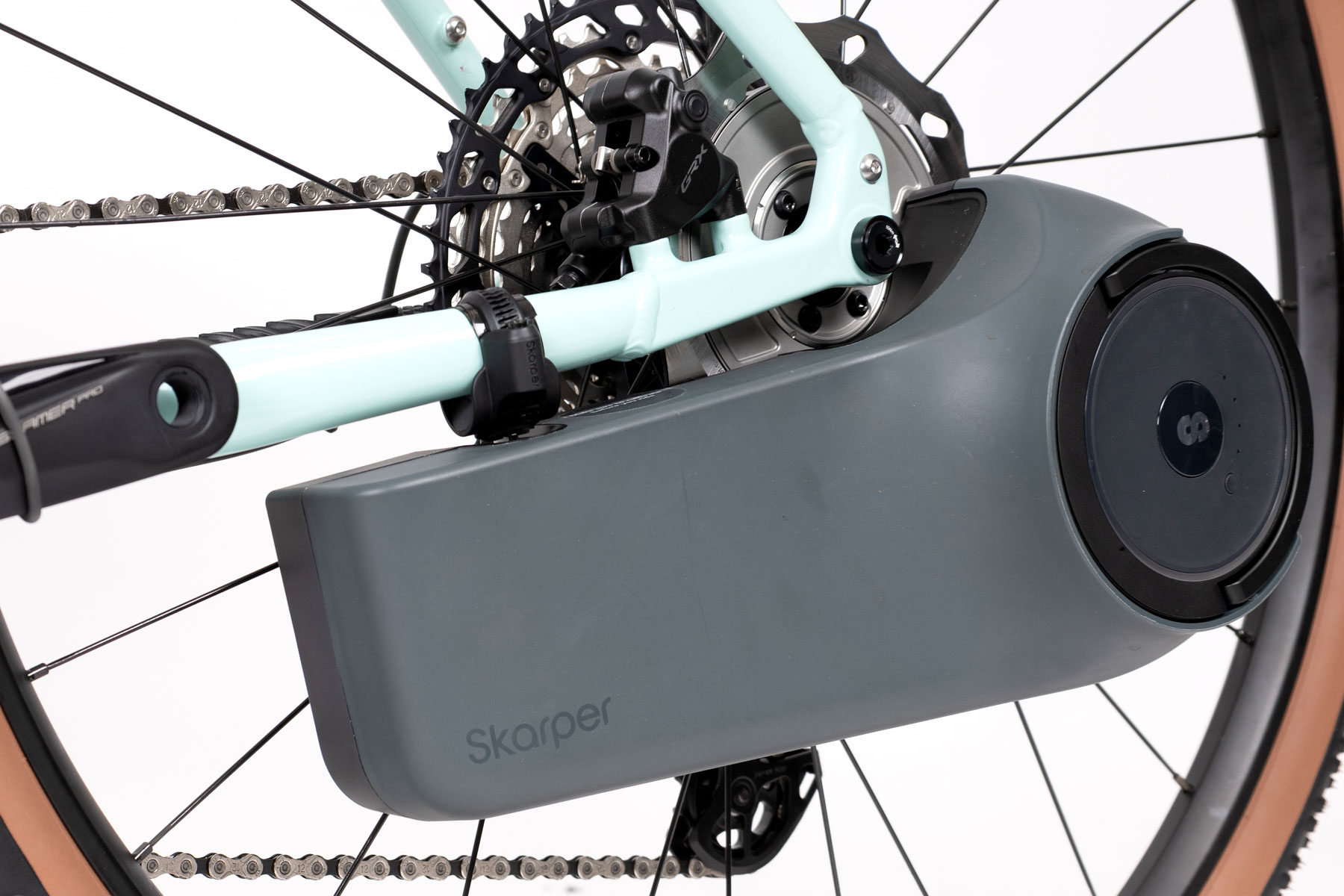
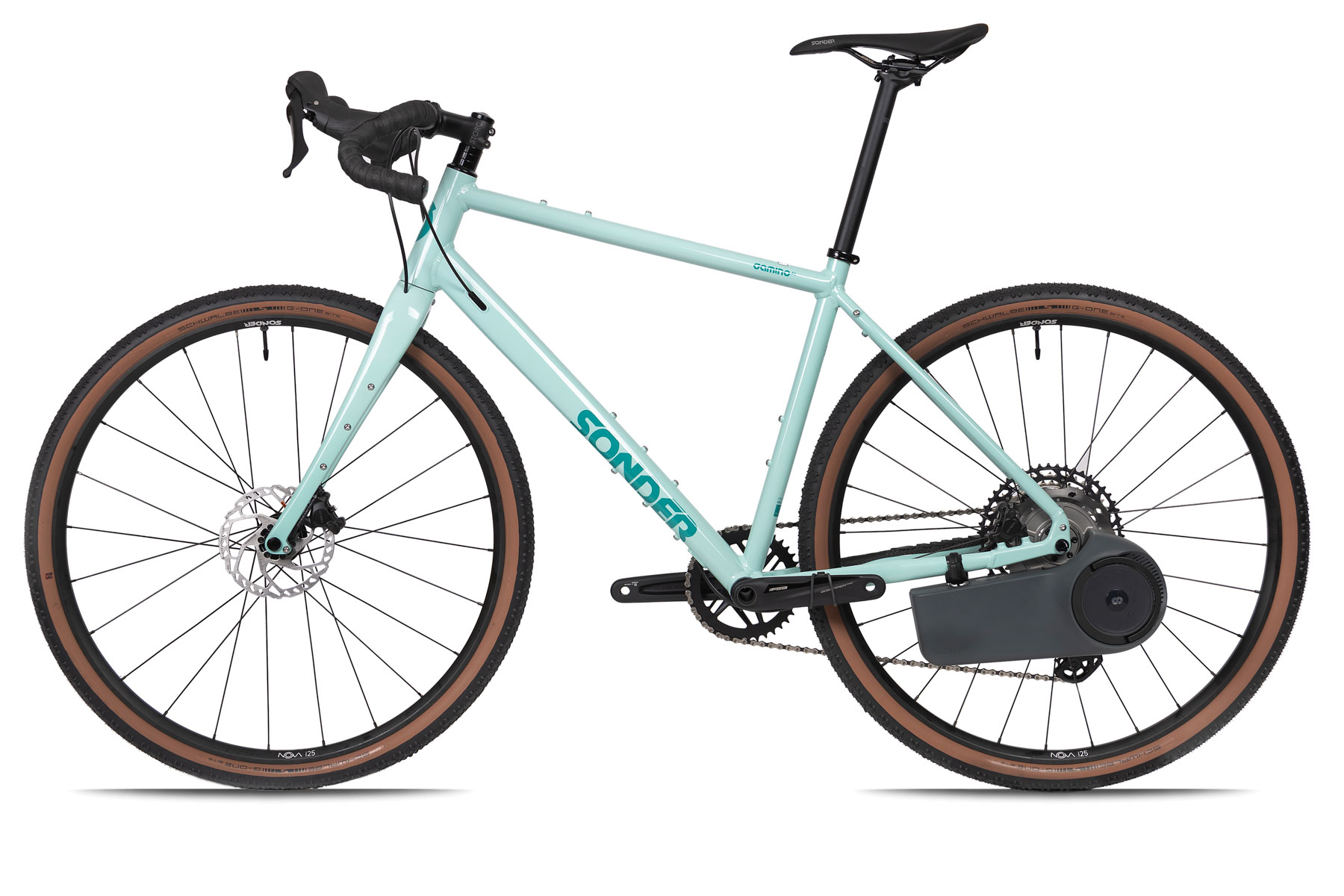
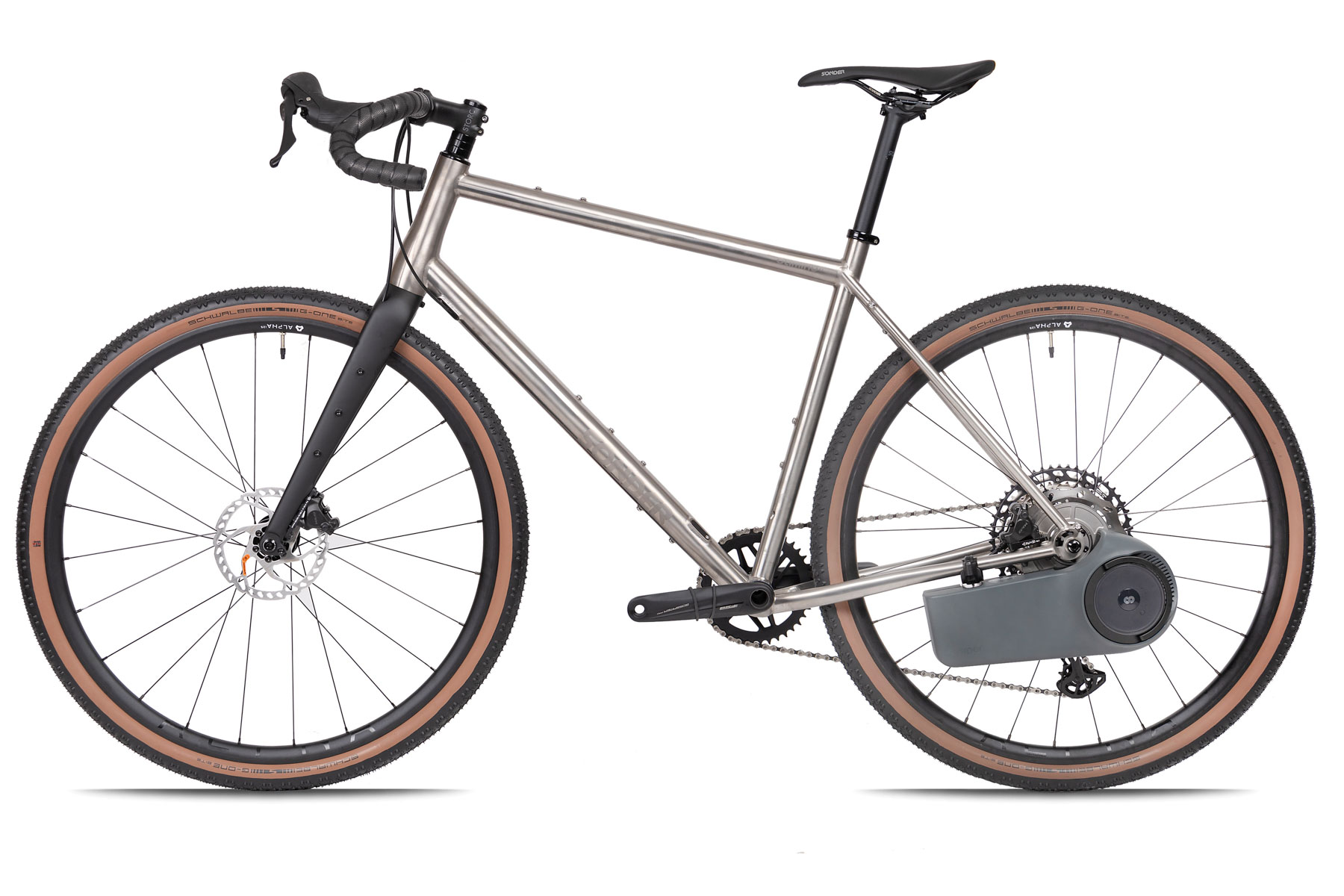
Off-road specialist Sonder has teamed up with fellow British innovator Skarper to equip Sonder’s line of Camino gravel bikes with the DiskDrive ebike system.
When I tested the Skarper in October 2024, I said it had the potential to render the lightweight e-road and e-gravel bike redundant. Well, it seems now Sonder has taken up the challenge by adding a ready-to-ride Skarper-equipped option to its Camino range of gravel bikes.
We’ve been impressed with the Camino in the past, awarding it a 4-star review, and pairing this capable gravel bike with a Skarper unit makes a lot of sense to me.
You can have a quality ebike to commute on during the week, but come the weekend, you still have a non-assisted gravel bike for more adventurous riding. It’s a solution that does away with the need for another bike, such as an electric commuter, taking up valuable space and extra expense.
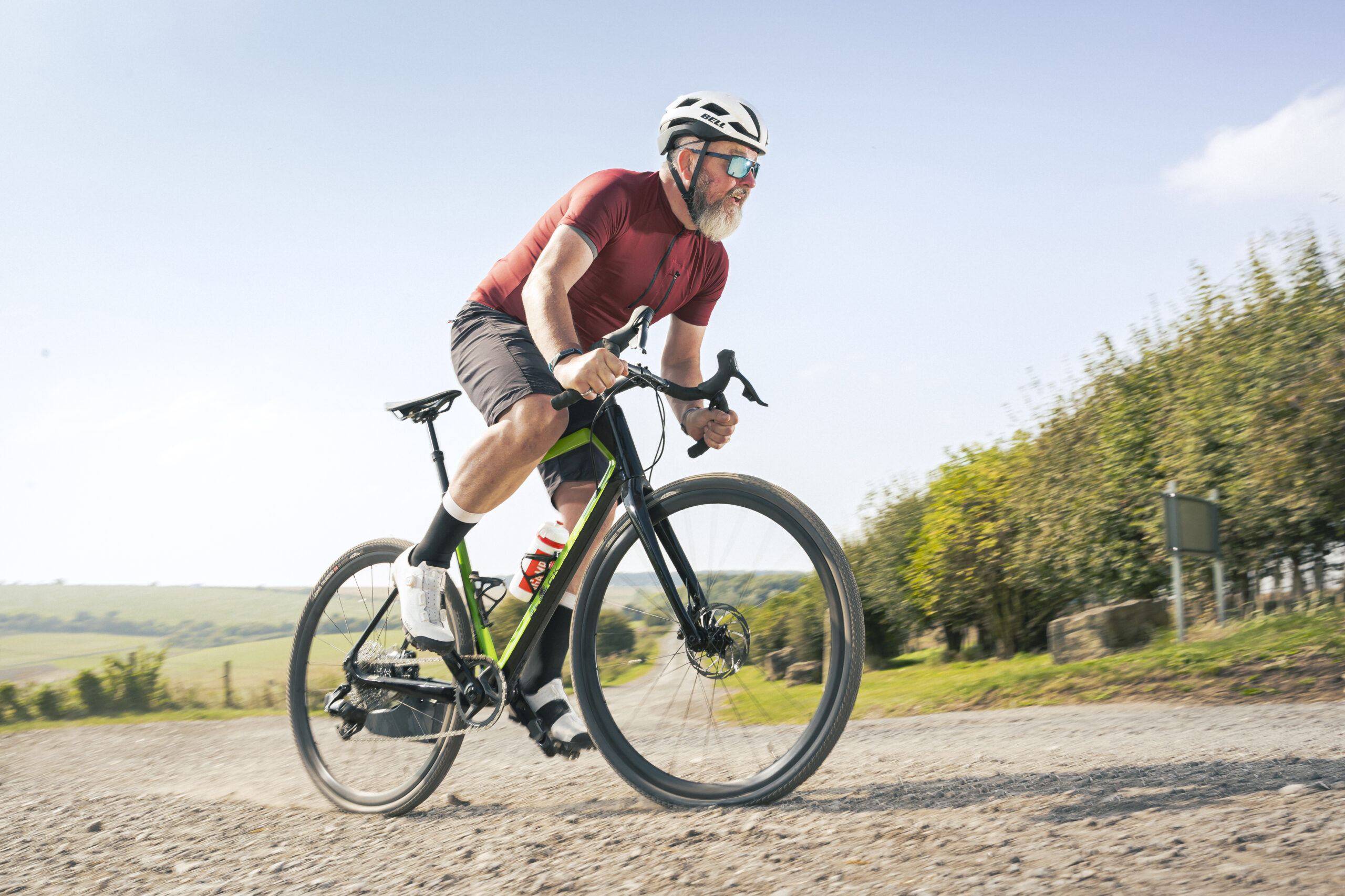
Skarper’s DiskDrive impressed me hugely both on and off-road. Russell Burton / Our Media
The move into OEM (original equipment) from Skarper is a bold one, and not something we’ve seen from any other ebike conversion kit brand.
Neil Sutton, product manager at Sonder, says: “Our riders value simplicity, reliability and adventure. Skarper’s neat, removable drive keeps a Sonder feeling like a Sonder, while adding the confidence to go further. It is a natural fit for how our community rides.”
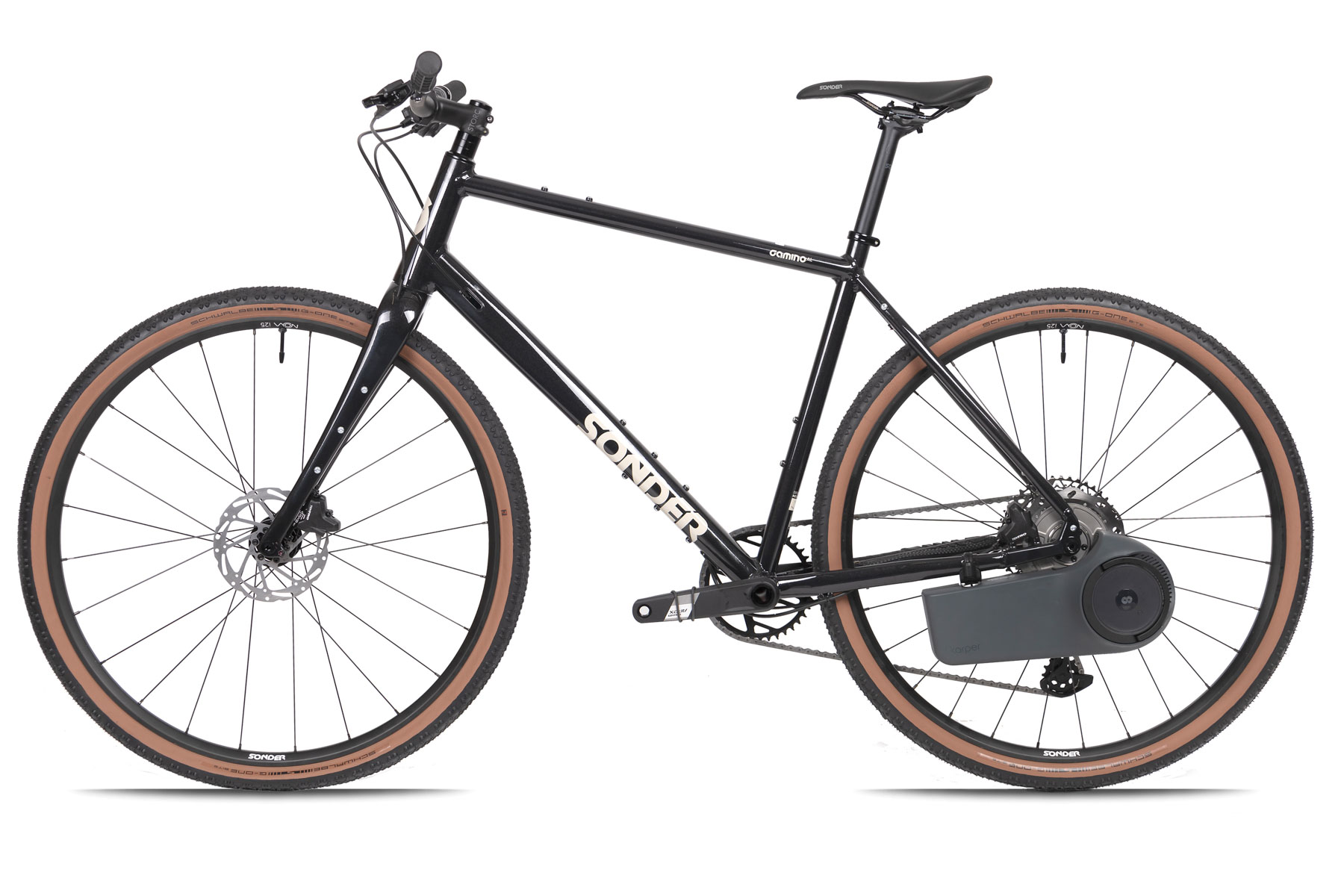
The Skarper-equipped Sonder Camino range starts with this £2,649 flat-bar model. Sonder bikes
Ean Brown, Skarper’s CEO, explains: “Riders want freedom and flexibility, not a second heavy bike. With Sonder, we bring click-on power to award-winning frames through a partnership celebrating British design and innovation.
“The result is one bike that covers the city and the wild, with no compromises on ride feel. For the Skarper brand, this is an exciting step forward as we develop new partnerships that bring to life a new use case for our product – an integrated bundle that goes far beyond being just an additional product to buy for an existing bike you own.”
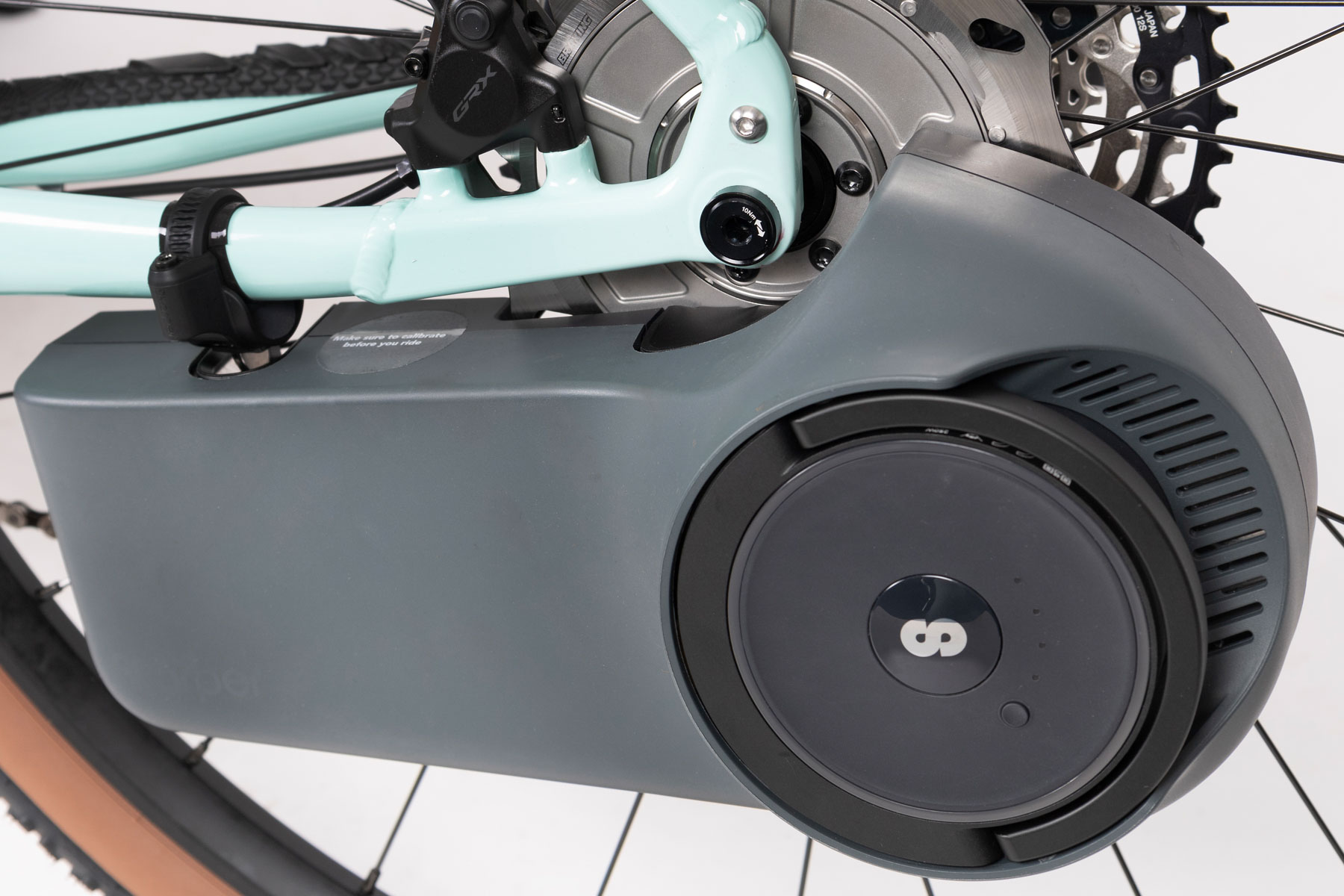
The Skarper can be clicked on or off in seconds. Sonder bikes
With bikes starting at £2,649, the Sonder x Skarper range compares favourably to current electric gravel bikes on price, and has the advantage of giving you both a non-assisted gravel bike and an ebike.
The Skarper kit’s standalone price is £1,495, so the upgrade to the Sonder has a discount over buying the bike and kit separately.
Where to buy the Sonder x Skarper
The aluminium Sonder Camino, with Shimano GRX and a Skarper unit, is priced at £2,999. Sonder bikes
The three-model range is available from today from Alpkit stores or directly through Alpkit’s website. The Sonder x Skarper bikes are also available now from Selfridges in London.
Sonder x Skarper range details
The titanium Sonder Camino Ti GRX1 x Skarper is priced at £4,249. Sonder bikes
The partnership launches with three ready-to-ride Sonder x Skarper bundles, available both in-store and online:
Camino Apex 1 Flat Bar × Skarper: £2,649
Camino Al GRX1 × Skarper: £2,999
Camino Ti GRX1 × Skarper: £4,249
The Caminos come with the Skarper system fitted. Sonder bikes
Existing Sonder owners can also purchase Skarper add-on kits with free professional installation at participating Alpkit stores.
OpenShot creator Jonathan Thomas released OpenShot 3.4 today as a major update to this open-source, cross-platform, and free video editing software for GNU/Linux, macOS, and Windows systems.
A new Arctic Report Card recap shows how the Arctic has transformed in just 20 years, warming about twice as fast as the global average and losing most of its oldest sea ice. It’s also triggering cascading impacts from “Atlantification” to permafrost-driven “rusting rivers” and more destructive storms. Scientific American reports: The first Arctic Report Card was released by the National Oceanic and Atmospheric Administration in 2006. Since then the region has warmed twice as fast as the global average. About 95 percent of the oldest, thickest sea ice is gone — “the sliver that remains is collected in an area north of Greenland. Even the central Arctic Ocean is becoming warmer and saltier, causing more ice melt and changing how much heat is released into the atmosphere in a way that affects weather patterns around the world. Those are just some of the stark changes 20 years have wrought. The findings were highlighted in the 2025 Arctic Report Card, released on Tuesday.
The Arctic Ocean is undergoing what scientists are calling “Atlantification” — a process where warm, salty water from the Atlantic flows north, changing how waters of different temperatures and densities are layered in the Arctic, disrupting ecosystems and altering how heat moves from the water to the air. […] The Arctic is simply becoming wetter, with more precipitation falling as rain instead of snow. June snow cover over the entire Arctic is half of what it was 60 years ago, the report found. Permafrost also continues to thaw, releasing once trapped carbon into the atmosphere and disgorging iron and other elements that have turned rivers and streams orange. These “rusting rivers,” found in more than 200 watersheds, are more acidic than normal and have elevated levels of toxic metals that endanger local ecosystems. And as the permafrost thaws, the tundra of the Arctic biome is shrinking, and the boreal forest biome is creeping northward, disrupting ecosystems.
OpenShot 3.4 video editor delivers a 32% performance boost, new video effects, faster exports, and an experimental timeline aimed at smoother, more reliable editing.
Tesla’s sales in California should be suspended for 30 days because its marketing around Autopilot and Full Self-Driving misled consumers, a California administrative law judge has ruled. Back in 2022, the California DMV accused the automaker of using deceptive language to advertise those products and making it seem like its vehicles are capable of level 5 autonomous driving. Tesla has since added the word “Supervised” to the name of its Full Self-Driving assistance technology.
As Bloomberg notes, the DMV asked the administrative law judge if a suspension is warranted based on the evidence it presented. Even though the judge has agreed that it is, the agency will give Tesla 90 days to explain its side and remove any untrue or misleading language in the marketing materials for the products. Tesla’s sales and manufacturing in California will only be suspended if it doesn’t comply within that timeframe.
“We’re really asking Tesla to do their job, as they’ve done in other markets, to properly brand these vehicles,” said California DMV director, Steve Gordon, in a statement.
A suspension in California could be devastating for the automaker. While new Tesla registrations in the state plummeted earlier this year, Reuters says California accounts for nearly a third of the company’s sales in the country. In addition, Tesla only manufactures its Model S and X vehicles in its Fremont plant, where it also produces Model 3 and Model Y units.
This article originally appeared on Engadget at https://www.engadget.com/transportation/evs/tesla-used-deceptive-language-to-market-autopilot-california-judge-rules-035826786.html?src=rss
An anonymous reader quotes a report from the Wall Street Journal: The alleged perpetrator had improper access to virtually every South Korean adult’s personal information: names, phone numbers and even the keycode to enter residential buildings. It was one of the biggest data breaches of recent years and it has sent the company it targeted — Coupang, South Korea’s equivalent of Amazon — reeling, generating lawsuits, government investigation and calls to toughen penalties against such leaks. The leak went undetected for nearly five months, hitting Coupang’s radar on Nov. 18 only after a customer flagged suspicious activity.
At first, Coupang, which was founded by a Korean-American entrepreneur, said it had experienced a data “exposure” affecting roughly 4,500 customer accounts. But within days, the e-commerce firm revised the figure: The leak exposed up to roughly 34 million user accounts in South Korea — a sum representing more than 90% of the country’s working-age population. Coupang started calling the incident a “leak” after Korean regulators took issue with the company’s prior word choice. “The Whole Nation Is a Victim,” read one local news headline.
An investigation has found that the alleged perpetrator had once worked in South Korea as a software developer for authentication systems at Coupang, which is known for its blockbuster U.S. initial public offering a few years ago. The suspected leaker is believed to be a Chinese national who has moved back to China and is now on the lam, South Korean officials say. They haven’t named the person. Even after leaving the firm roughly a year ago, the suspect secretly held on to an internal authentication key that granted him unfettered access to the personal information of Coupang users, South Korean authorities and lawmakers say. The infiltration, using overseas servers, started on June 24. By using the login credentials, the suspect was able to appear as if he were still a Coupang employee when accessing the company’s systems.
Manjaro-based Mabox Linux 25.12 introduces panel and menu improvements, a revamped update notifier, and completes the transition away from the aging GTK2 toolkit.
The EU is moving to soften its planned 2035 ban on internal combustion cars by allowing a small share of low-emission engines. “The less stringent limit would leave room for automakers to continue selling some plug-in hybrids, which have both electric and internal combustion engines and can use the combustion engine to recharge the battery without the need to find a charging station,” reports the Associated Press. From the report: The proposal from the EU’s executive commission would change provisions of 2023 legislation requiring average emissions in new cars to equal zero, or a 100% reduction from 2021 levels. The new proposal would require a 90% emissions reduction. That means in practical terms that most cars would be battery-only but would leave room for some cars with internal combustion engines.
Automakers would have to compensate for the added emissions by using European steel produced by methods that emit less carbon, and through use of climate neutral e-fuels made from renewable electricity and captured carbon dioxide and biofuels made from plants. EU officials say changing the limit will not affect progress toward making the 27-country bloc’s economy climate neutral by 2050. That means producing only as much carbon dioxide as can be absorbed by forests and oceans or by abatement methods such as storing it underground. CO2 is the primary greenhouse gas blamed by scientists for climate change.
Version 1.6 of libopus as the library for the open-source Opus audio codec is now available. Opus 1.6 brings new machine learning “ML” based features in building atop the machine learning features initially added to Opus 1.5…
A Reuters investigation found that Meta knowingly tolerated large volumes of scam and illegal ads from China worth billions in revenue. Reuters reports: Though China’s authoritarian government bans use of Meta social media by its citizens, Beijing lets Chinese companies advertise to foreign consumers on the globe-spanning platforms. As a result, Meta’s advertising business was thriving in China, ultimately reaching over $18 billion in annual sales in 2024, more than a tenth of the company’s global revenue. But Meta calculated that about 19% of that money — more than $3 billion — was coming from ads for scams, illegal gambling, pornography and other banned content, according to internal Meta documents reviewed by Reuters.
The documents are part of a cache of previously unreported material generated over the past four years by teams including Meta’s finance, lobbying, engineering and safety divisions. The cache reveals Meta’s efforts over that period to understand the scale of abuse on its platforms and the company’s reluctance to introduce fixes that could undermine its business and revenues. The documents show that Meta believed China was the country of origin of roughly a quarter of all ads for scams and banned products on Meta’s platforms worldwide. Victims ranged from shoppers in Taiwan who purchased bogus health supplements to investors in the United States and Canada who were swindled out of their savings. “We need to make significant investment to reduce growing harm,” Meta staffers warned in an internal April 2024 presentation to leaders of its safety operations.
To that end, Meta created an anti-fraud team that went beyond previous efforts to monitor scams and other banned activity from China. Using a variety of stepped-up enforcement tools, it slashed the problematic ads by about half during the second half of 2024 — from 19% to 9% of the total advertising revenue coming from China. Then Meta Chief Executive Mark Zuckerberg weighed in. “As a result of Integrity Strategy pivot and follow-up from Zuck,” a late 2024 document notes, the China ads-enforcement team was “asked to pause” its work. Reuters was unable to learn the specifics of the CEO’s involvement or what the so-called “Integrity Strategy pivot” entailed. But after Zuckerberg’s input, the documents show, Meta disbanded its China-focused anti-scam team. It also lifted a freeze it had introduced on granting new Chinese ad agencies access to its platforms. One document shows that Meta shelved yet other anti-scam measures that internal tests had indicated would be effective. The document didn’t detail the specifics of those measures.
Meta took these steps even as an outside consultant it hired produced research that warned “Meta’s own behavior and policies” were fostering systemic corruption in the Chinese market for ads targeting users in other countries, additional documents show. The upshot: Within a few months of Meta’s brief crackdown, a new crop of Chinese advertising agencies was flooding Facebook and Instagram with prohibited ads. By mid-2025, banned ads climbed back to about 16% of Meta’s China revenue. Rob Leathern, who was a senior director of product management at Facebook until 2020 and is no longer at the company, said the scale of predatory advertising revealed in the documents represents a major breakdown in consumer protections at the social media giant. “The levels that you’re talking about are not defensible,” he said of the percentage of abusive ads. “I don’t know how anyone could think this is okay.”
Patrick d’Emmabuntüs from the Emmabuntüs Collective informed 9to5Linux.com today about the release and general availability of Emmabuntüs Debian Edition 6 1.00 as the latest stable version of this GNU/Linux distribution for refurbishing old computers.
Quilter says its AI designed a complex Linux single-board computer in just one week, booting Debian on first power-up. “Holy crap, it’s working,” exclaimed one of the engineers. Tom’s Hardware reports: LA-based startup Quilter has outlined Project Speedrun, which marks a milestone in computer design by AI. The headlining claims are that Quilter’s AI facilitated the design of a new Linux SBC, using 843 parts and dual-PCBs, taking just one week to finish, then successfully booting Debian the first time it was powered up. The Quilter team reckon that the AI-enhanced process it demonstrated could unlock a new generation of computer hardware makers.
Newer Lenovo ThinkPads are adding the ability to detect and report varying degrees of hardware damage. The Lenovo ThinkPad ACPI driver for Linux is being adapted for being able to communicate said hardware damage to user-space Linux software…