
Beyond the Firefox browser to see more changes under its new CEO, the Thunderbird mail client is also expected to see some big changes in the new year…
Monthly Archives: December 2025
Microsoft Does Final Price Cut of Year on Xbox Controllers, Nearly 50% Off and Makes Sony’s Look Overpriced

Universal compatibility across your entire device collection.
The post Microsoft Does Final Price Cut of Year on Xbox Controllers, Nearly 50% Off and Makes Sony’s Look Overpriced appeared first on Kotaku.
Your Credit Info Might Have Been Leaked in This Massive Data Breach
If you get a letter from a company called 700Credit, don’t ignore it. Your information may have been compromised in a massive breach affecting more than 5.8 million consumers, and you should take the necessary steps to protect your data.
700Credit supplies credit and identity verification services to more than 21,000 vehicle, RV, powersport, and marine dealerships in the U.S., so if you’ve purchased a vehicle and applied for dealer financing—or even been pre-screened or pre-qualified to do so—your information could have been affected.
What happened with 700Credit?
According to the company’s filing with the Maine Attorney General, 700Credit’s systems were hacked between Oct. 25 and Oct. 27. Attackers stole personal information about customers of 700Credit’s dealership clients, including names, addresses, Social Security numbers (SSNs), and dates of birth.
As BleepingComputer reports, this breach was actually a consequence of a system compromise back in July at one of 700Credit’s 200 integration partners. Threat actors were able to gain access to an API used to pull consumer data, and a security vulnerability in the API allowed them to exfiltrate information from 700Credit.
What you need to do
If you receive a data breach notice from 700Credit, read it carefully. 700Credit is offering 12 months of credit monitoring and identity restoration services through TransUnion’s Cyberscout to affected consumers. You will need to go to the URL listed in your notice and enter your unique activation code in order to enroll, and you have 90 days from the date of the letter to complete the process.
700Credit expects to begin notifying individuals starting on Dec. 22.
In addition to utilizing the free credit protection, you should take the usual precautions to lock down your identity:
-
Freeze your credit at all three credit bureaus (Experian, Equifax, and TransUnion).
-
Place a fraud alert on your credit file. You only need to do this at one bureau, which will apply it to all three.
-
Keep an eye on your financial accounts for suspicious transactions as well as your credit report. Note that if your credit is frozen, thieves shouldn’t be able to take out new credit in your name.
-
Request an IP PIN from the IRS to prevent someone from filing a tax return using your SSN.
-
Follow good digital hygiene practices, such as using strong passwords and multi-factor authentication.
You cannot reverse a data breach, but you can (and should) do damage control.
Qt 6.11 Beta Released With New Canvas Painter, OpenAPI & TaskTree Modules
Qt 6.11 Beta 1 is out on-schedule with the code having entered its feature freeze and code branching earlier this month. This toolkit is working toward the stable Qt 6.11 stable debut in March…
Three stable kernels for Thursday
G.Skill And Micron Share Depressing Update On PC Memory Crisis

Just in case anyone needs to hear it again (as if!), we’re in the midst of a memory crisis that has seen the cost of DRAM catapult to unsettling levels. And lest there be any doubt as to what/who the culprit is, G.Skill issued a statement pinning the blame squarely on “unprecedented high demand from the AI industry,” which is a sentiment also
Forget Mac Mini, Amazon’s 4.5-Star Gaming Mini PC Just Hit All-Time Low and Extra Coupon Makes It Even Cheaper

Give your workstation an upgrade without blowing your budget.
The post Forget Mac Mini, Amazon’s 4.5-Star Gaming Mini PC Just Hit All-Time Low and Extra Coupon Makes It Even Cheaper appeared first on Kotaku.
This Amazon Fire Kids Tablet Is 50% Off Right Now
We may earn a commission from links on this page. Deal pricing and availability subject to change after time of publication.
For parents shopping for a first kids’ tablet that won’t turn into a headache or break after one drop, the Amazon Fire HD 8 Kids (2024) might be worth a look. It usually retails for $149.99, but it’s currently marked down to $74.99 on Amazon, its lowest price to date, according to price trackers.

At that price, you’re getting a rugged case, a year of Amazon Kids+ subscription, a two-year worry-free replacement guarantee, and solid parental controls all bundled into one eight-inch tablet. It’s not fast, and it doesn’t have a high-res display, but for young kids starting out with screen time, it does a lot right.
It has a 2.0GHz hexa-core processor, 32GB of storage (expandable to 1TB), and a 1,280-by-800 resolution display. It handles video streaming and basic apps well, though heavier games and multitasking can slow it down. Battery life is impressive, lasting close to 10 hours in PCMag’s video playback tests. The case, which adds bulk, also includes a built-in stand that doubles as a handle, though younger kids might need help adjusting it. It’s not waterproof, but if it breaks, Amazon will replace it for free within two years—no questions asked.
Setup requires a parent to create profiles, set screen time limits, and customize content filters. Once done, kids can access Amazon Kids+, which includes age-appropriate books, videos, games, and a genuinely fun “Quest” feature that blends learning with light gamification. When the free trial ends, though, you’ll need to pay $5.99 a month (or $48 annually) to keep access to that library. Without it, the experience is much more limited and depends on how much effort you want to put into finding and installing your own content. But for under $75, with a kid-proof case and thoughtful tools for parents, it’s one of the better value tablets out there for kids aged three to seven.
Our Best Editor-Vetted Tech Deals Right Now
Apple Watch Series 11 [GPS 46mm] Smartwatch with Jet Black Aluminum Case with Black Sport Band – M/L. Sleep Score, Fitness Tracker, Health Monitoring, Always-On Display, Water Resistant
—
$329.00
(List Price $429.00)
Meta Quest 3 512GB Mixed Reality VR Headset with Controllers
—
(List Price $499.99 With Code “QUEST50”)
Deals are selected by our commerce team
How China Built Its ‘Manhattan Project’ To Rival the West in AI Chips
Chinese scientists have built a working prototype of an extreme ultraviolet lithography machine in a high-security Shenzhen laboratory, a development that represents exactly what Washington has spent years and multiple rounds of export controls trying to prevent: China’s path toward semiconductor independence and an end to the West’s monopoly on the technology that powers AI, smartphones and advanced weapons systems.
The prototype, completed in early 2025 by former ASML engineers who reverse-engineered the Dutch company’s machines, is operational and generating EUV light, though it has not yet produced working chips. The effort is part of a six-year secret government initiative that sources described to Reuters as China’s version of the Manhattan Project.
Huawei is coordinating thousands of engineers across companies and state research institutes, and recruits are working under false identities inside secure facilities. The Chinese government is targeting 2028 for producing working chips, though sources say 2030 is more realistic — still years earlier than the decade analysts had predicted it would take China to match the West.


Read more of this story at Slashdot.
The Big Mystery Surrounding Netflix’s New FIFA Game Is Who’s Actually Making It

Delphi Interactive doesn’t seem to have any developers
The post The Big Mystery Surrounding Netflix’s New <i>FIFA</i> Game Is Who’s Actually Making It appeared first on Kotaku.
Formula 1 is deploying new jargon for 2026
While not quite a separate dialect, Formula 1-speak can be heavy on the jargon at times. They say “box” instead of pit, “power unit” to describe the engine and hybrid system, and that’s before we get into all the aerodynamics-related expressions like “outwash” and “dirty air.” Next year is a big technical shakeup for the sport, and it seems we’re getting some new terminology to go with it. So forget your DRS and get ready to talk about Boost mode instead.
The F1 car of 2026 will be slightly narrower and slightly lighter than the machines that raced for the last time earlier this month. But not by a huge amount: minimum weight is decreased by 30 kg to 724 kg, the wheelbase is 200 mm shorter at 3,400 mm, and the car’s underfloor is 150 mm narrower than before.
The front wing is 100 mm narrower and has just two elements to it, although for the first time in F1 history, this is now an active wing, which works in conjunction with the three-element active rear wing. Active rear wings have been a thing in F1 since the introduction of DRS—the drag reduction system—in 2011, but now there’s a philosophical change to how they’ll work.
Lenovo Goes Rogue on Amazon, This Laptop (i5, 512GB, DDR5, WiFi 6) Drops Nearly 80% Off

One of our favorite laptop deals during holiday season.
The post Lenovo Goes Rogue on Amazon, This Laptop (i5, 512GB, DDR5, WiFi 6) Drops Nearly 80% Off appeared first on Kotaku.
OpenAI just launched an app store inside ChatGPT
OpenAI has introduced an app directory that’s now available right inside ChatGPT, the company announced. “Apps extend ChatGPT conversations by bringing in new context and letting users take action like order groceries, turn an outline into a slide deck or search for an apartment,” the company wrote in a blog post. OpenAI also noted in a help document that “connector” apps like Google Drive are now simply called “apps.”
The new apps section (on iOS, Android and web) is divided into Feature, Lifestyle and Productivity categories, letting you connect to commonly used apps and sites like Booking.com, Spotify and Dropbox. To use an app, simply click on it, hit “Connect” then authorize the app to access ChatGPT. With that done, you can then start a chat related to that app. In the case of Dropbox, for instance, you’ll be able to “gather insights, prepare briefs and summarize reports or internal documents,” according to the description. Once connected, any app can be accessed by doing an @ mention of it.
A new addition that came along with the store is an Apple Music app that, like Spotify, helps users find music, create playlists and manage their libraries through a chat interface. Another is DoorDash, which lets you transform recipes, meal planning and staples into “an actionable shopping cart.”
Along with the app directory, OpenAI is now allowing developers to submit apps for review and publication in ChatGPT according to the company’s app submission guidelines. It also published resources to help developers build such apps, including best practices, open-source example apps, an open-sourced UI library for chat-native interfaces and a step-by-step quickstart guide. That’s on top of the software developer kit (SDK) that OpenAI introduced in October.
OpenAI noted that for now, developers can only monetize apps by linking out from the ChatGPT app to the native app or website — but the company is exploring internal monetization options as well. Privacy was also emphasized, with companies required to provide “clear” policies.
The new feature is a big part of Sam Altman’s promises to make ChatGPT more versatile with the addition of custom “GPT” bots. “Over time, we want apps in ChatGPT to feel like a natural extension of the conversation, helping people move from ideas to action, while building a thriving ecosystem for developers,” the company wrote.
This article originally appeared on Engadget at https://www.engadget.com/ai/openai-just-launched-an-app-store-inside-chatgpt-133049586.html?src=rss
Intel ISPC 1.29 Drops Gen9 GPU Targets, Add New Optimizations & Experimental RISC-V
Intel ISPC 1.29 released on Wednesday as the newest feature update to this Implicit SPMD Program Compiler as a C variant able to target Intel hardware from their CPUs to GPUs for SIMD programming…
This 67W 3-Port USB-C Wall Charger Goes for Peanuts, Amazon Dumps Stock at Record Low for Year-End

Three ports and 67W power delivery transform cable chaos into streamlined charging simplicity.
The post This 67W 3-Port USB-C Wall Charger Goes for Peanuts, Amazon Dumps Stock at Record Low for Year-End appeared first on Kotaku.
Sony Settles Lawsuit With Tencent Over That Horizon Zero Dawn Knock-Off

Light of Motiram was called a ‘slavish clone’ by Sony in the filing
The post Sony Settles Lawsuit With Tencent Over That <i>Horizon Zero Dawn</i> Knock-Off appeared first on Kotaku.
DJI Is Unloading More Than Drones as the Osmo Pocket 3 Vlogging Camera Hits a Record Low

Save nearly $300 on a pro-level 4K action camera that makes sharing and posting videos incredibly easy.
The post DJI Is Unloading More Than Drones as the Osmo Pocket 3 Vlogging Camera Hits a Record Low appeared first on Kotaku.
Ultrahuman brings snoring detection and respiratory health tracking to the Ring Air
The Ultrahuman Ring Air now has the capacity to track snoring and general respiratory health. This is thanks to proprietary technology called Respiratory Health PowerPlug, which is basically a suite of audio analysis tools along with some “advanced biomarker tracking” and AI tomfoolery.
All of this results in “one of the most comprehensive consumer tools ever built for understanding nighttime respiratory stability.” It details snoring sessions, of course, but also delivers a holistic and “actionable sleep picture.” The company says this “reveals patterns, trends and changes in respiratory health over time.”
Ultrahuman
To that end, it can also detect coughing and respiratory disturbances. This data is cross-referenced with movement patterns, sleep fragmentation patterns and resting heart rate to “show exactly how breathing issues shape sleep quality.” The company says this can be a good resource when experimenting with interventions, like switching to a new pillow or taping up the nose.
More health data is never a bad thing, but this information isn’t free. Ultrahuman is charging $4 per month for access to the tool, though folks can pick up an annual subscription for $40.
The Ultrahuman Ring Air made our list of the best smart rings, and that was before the company introduced this new software. It tracks an impressive amount of data and integrates with third-party devices like glucose monitors.
This article originally appeared on Engadget at https://www.engadget.com/wearables/ultrahuman-brings-snoring-detection-and-respiratory-health-tracking-to-the-ring-air-130054901.html?src=rss
The Best Apps to Gamify Your Productivity
We may earn a commission from links on this page.
Call me immature, but I’m about a thousand times more likely to participate in activities that are good for me when they can be gamified. Even the simple pleasures of watching a number go up or earning a digital milestone badge can motivate me to get to the gym, track my meals, or form a new habit. Gamification can be used for focusing and studying, too, and a wide variety of apps exist to serve this purpose. Here are some of the best.
Gamification apps for focusing
Focusing is notoriously difficult, especially in this hyper-connected era in which many of us can’t go five minutes without getting a text or eat a meal without watching TikTok videos. Use your device to your advantage instead with these apps that turn focusing into a game.
Finch
Credit: Finch
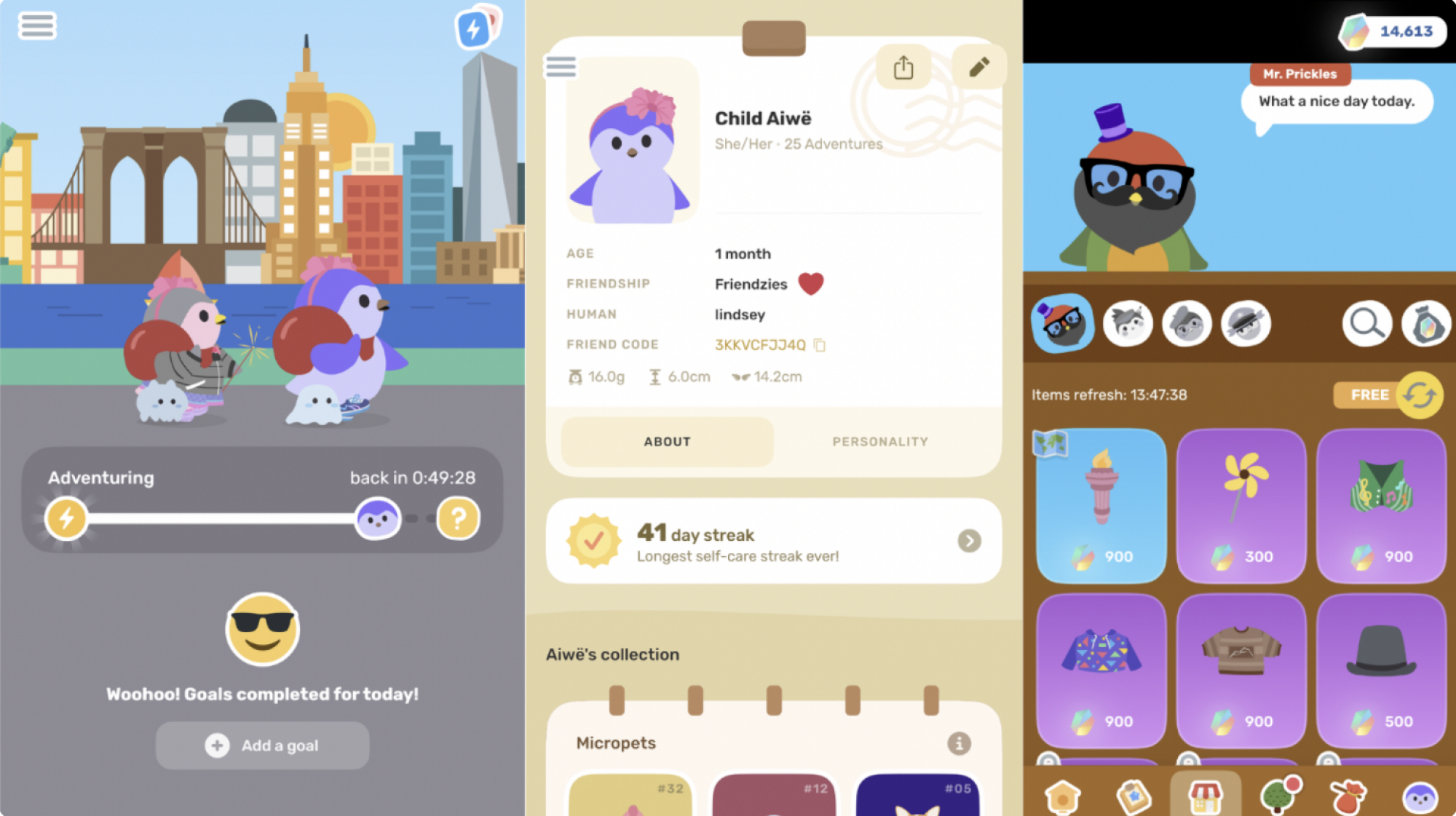
Finch is my favorite habit tracking app and I use it every day (streak as of today: 311!). You are responsible for the well-being of a happy little bird character and you take care of them by marking off your to-dos. I will be upfront and say it’s a little infantilizing and mushy; it comes pre-loaded with to-dos like “get out of bed” and “take a stretch break.” I left those in alongside the actual daily activities I programmed in myself for some easy wins, but the app is clearly designed for people struggling a little with executive function.
To me, though, Finch is great because it’s so positive. Other apps might penalize you for missing a day, but this one is encouraging. It’s useful to have a little positive reinforcement every day, even if it’s a little cloying. By completing your tasks, you send your bird on “adventures,” earn in-game currency to dress them up in outfits, and level up your friendship score with them. Interestingly, you are also periodically prompted to enter in how you’re feeling and what’s making you feel that way, which the app tracks. Over time, you can see a data breakdown of your moods and the things that affect them, which is useful if you’re trying to maximize your productivity and make a few lifestyle changes to enhance it.
Read my full review of the Finch app here.
Habitica
Credit: Habitica
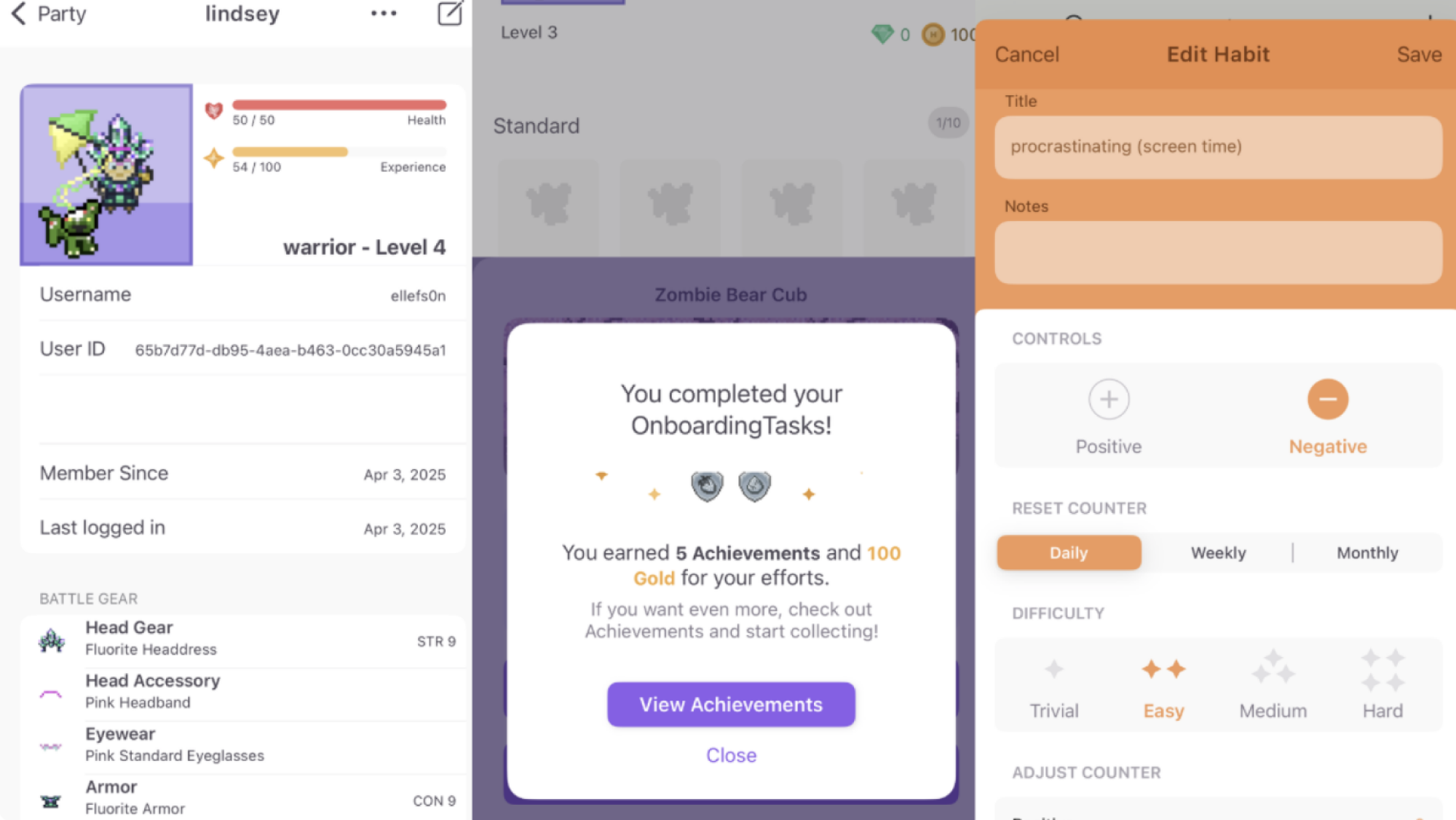
One of the gold-standard apps in gamification and productivity is Habitica, which is almost like a roleplaying game. You designate the goal you want to achieve, track when you do it, and watch as your in-game avatar gains (or loses) health. Your avatar can even link up with other players for games and challenges, so you all level up together. You earn gold coins that can be spent in-game or “redeemed” when you do something you want to do in real life, like watch a movie. It’s free, but you can make in-app purchases or subscribe to group plans that help coordinate team goals for $9 per month, plus $3 per person.
Read my full review of the app here.
Toggl
Credit: Toggl
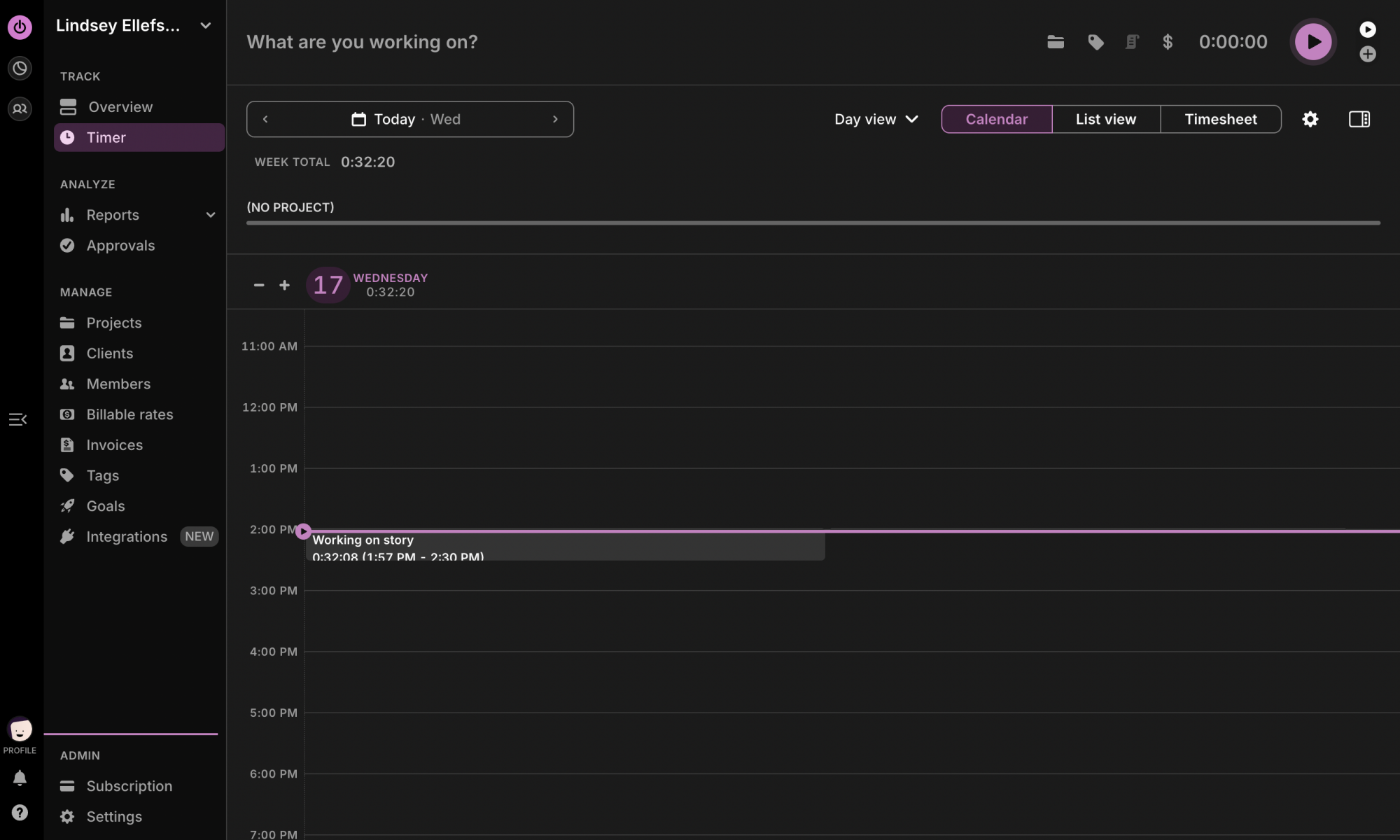
Another app that’s great for teams but also works well for personal productivity, Toggl is a time-tracker that gives you leaderboards in addition to achievements when you stay focused and get things done. If digital badges don’t get you going, imagine the rush of seeing your name at the top of a leaderboard. If you’re using it on your own, it’s free, but after a 14-day trial, teams will pay $9 per user per month.
It looks like any digital calendar tool (and you can import calendars, like Google Calendar, right into it so you can see all your daily commitments), but there’s a Play button in the top right corner that you tap when you’re ready to track time. You can label the time blocks (and should get familiar with the concepts of time blocking and time boxing to make this most effective) so you can see precisely how many minutes you’re devoting to a given task every day.
Beeminder
Credit: Beeminder
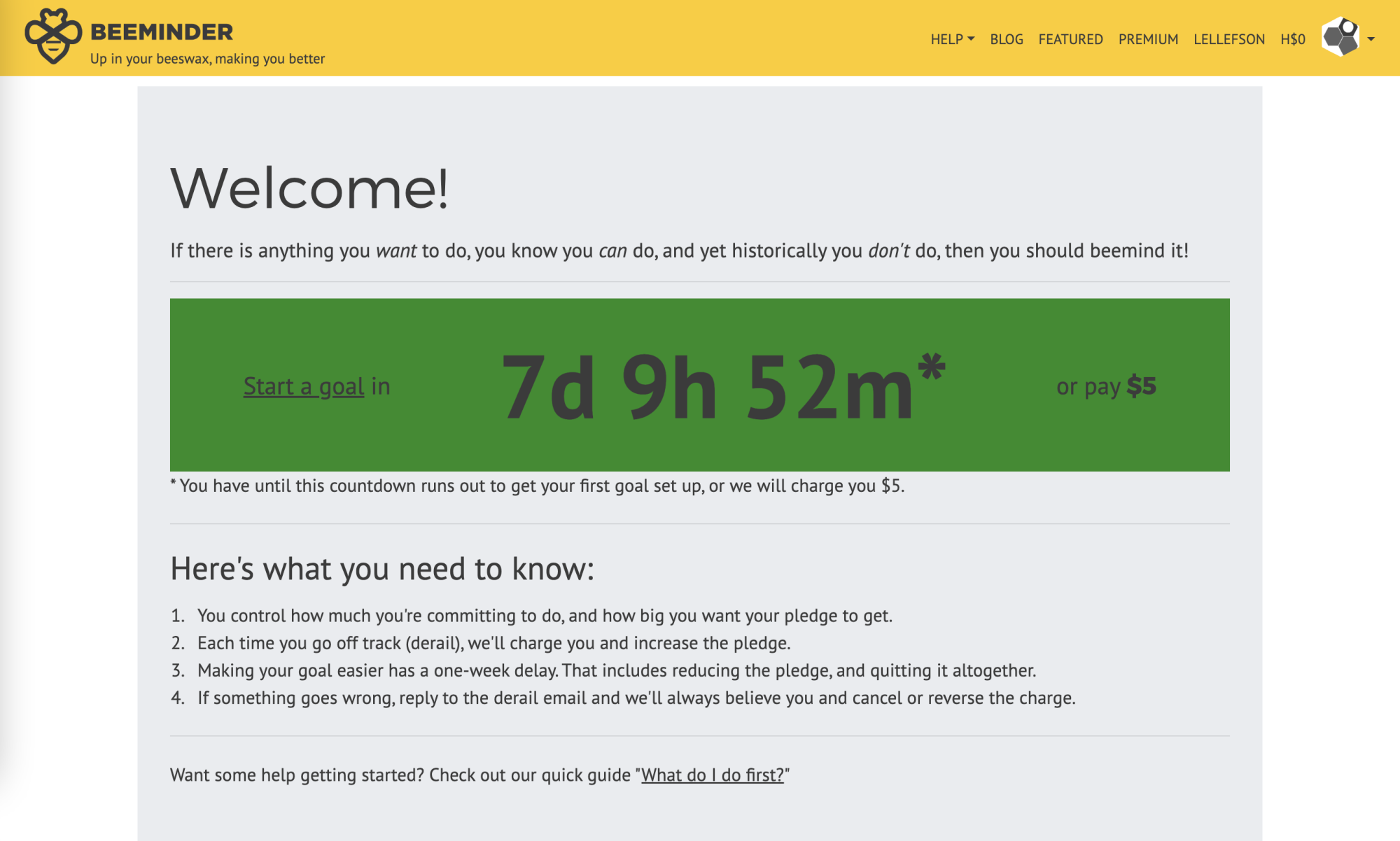
Beeminder is a great app because it links up to a variety of other apps—Habitca, Toggl, Duolingo, Gmail, Fitbit, Strava, and more—pulling in your data to make sure you’re staying on track with your goals. If you have a goal to stay focused on Slack or emails, Beeminder can actually make sure you’re doing it instead of relying on you to be honest in self-reporting. Continue to do what you’re trying to do and a red line will appear, inching toward your goal. The catch? If you don’t stick to what you’re trying to focus on, it charges $5 to the card you have on file. Otherwise, it’s free for up to three goals, but you can unlock unlimited goals (and the ability to put off payments and set charge caps) with premium plans that move from $8 per month, $16 per month, or even $50 per month, depending on how many features you want.
If you’re worried about the money-losing aspect, don’t be: This isn’t a tyrannical, scammy app. The developers are clear that if something comes up and prevents you from completing a goal on time, you can respond to the email you received about that goal’s timeline starting, ask for a refund, and they’ll “always believe you” and reverse the charge.
Gamification apps for studying
If you need to gamify your studies, there are special apps that work well for that, too. The software above also works for studying, so if you’re more of a Habitica person, feel free to stick with those. The ones below have unique features that might be helpful for students.
FocusPomo
Credit: FocusPomo
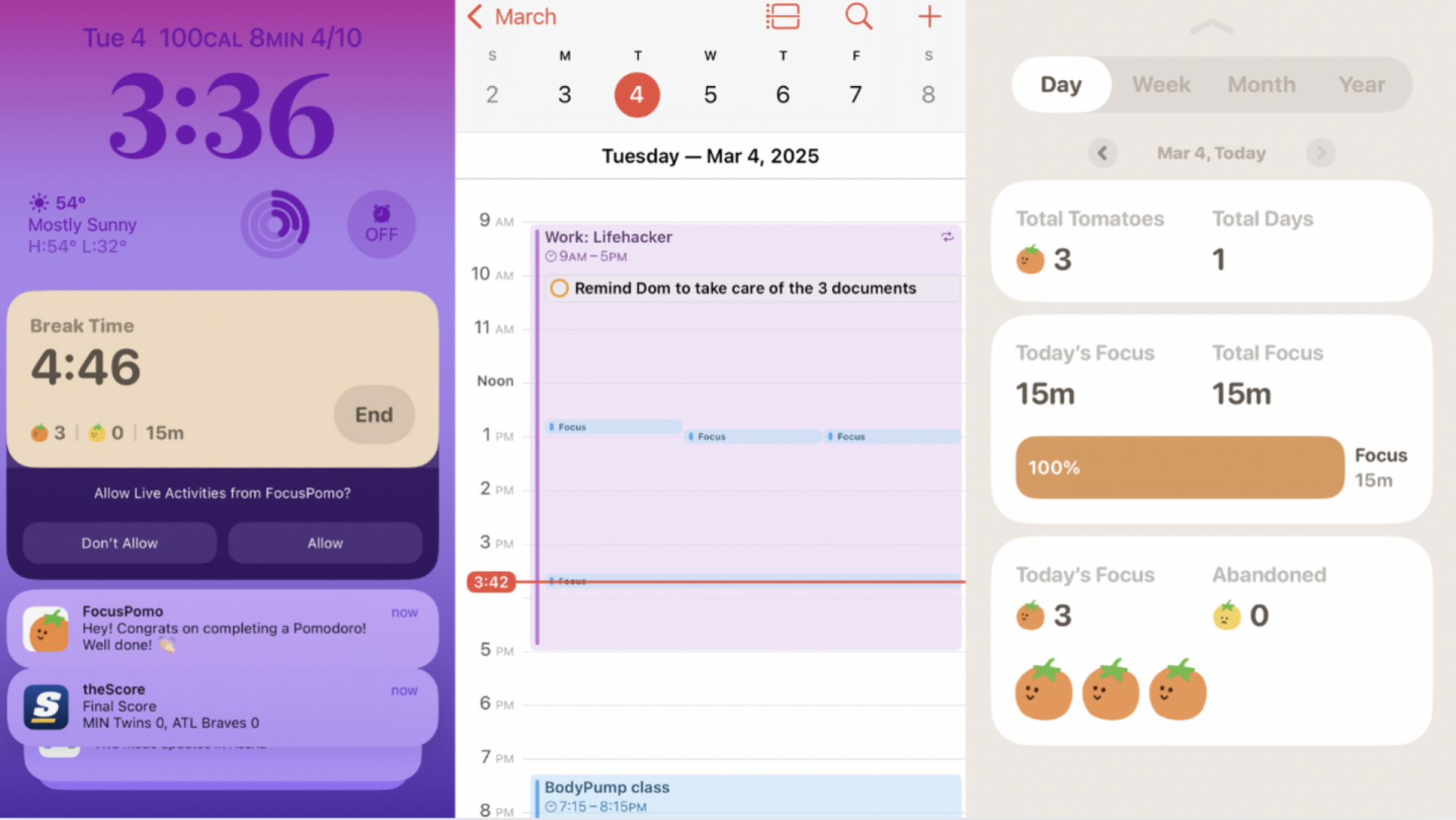
This is my favorite Pomodoro technique app. FocusPomo is simple to use and allows you to quickly access “focus sessions,” which are periods of time that are blocked out for studying or working. The app blocks your other, more distracting apps and rewards you with a little tomato graphic whenever you finish a session. It might not seem like much, but just collecting tiny, pixelated tomatoes becomes a little addicting. The app syncs with your calendars and communication platforms to make it easier for you to launch focus sessions whenever you have something to do, too, so earning those little tomatoes is surprisingly easy.
Read my full review of FocusPomo here.
Flora
Credit: Flora
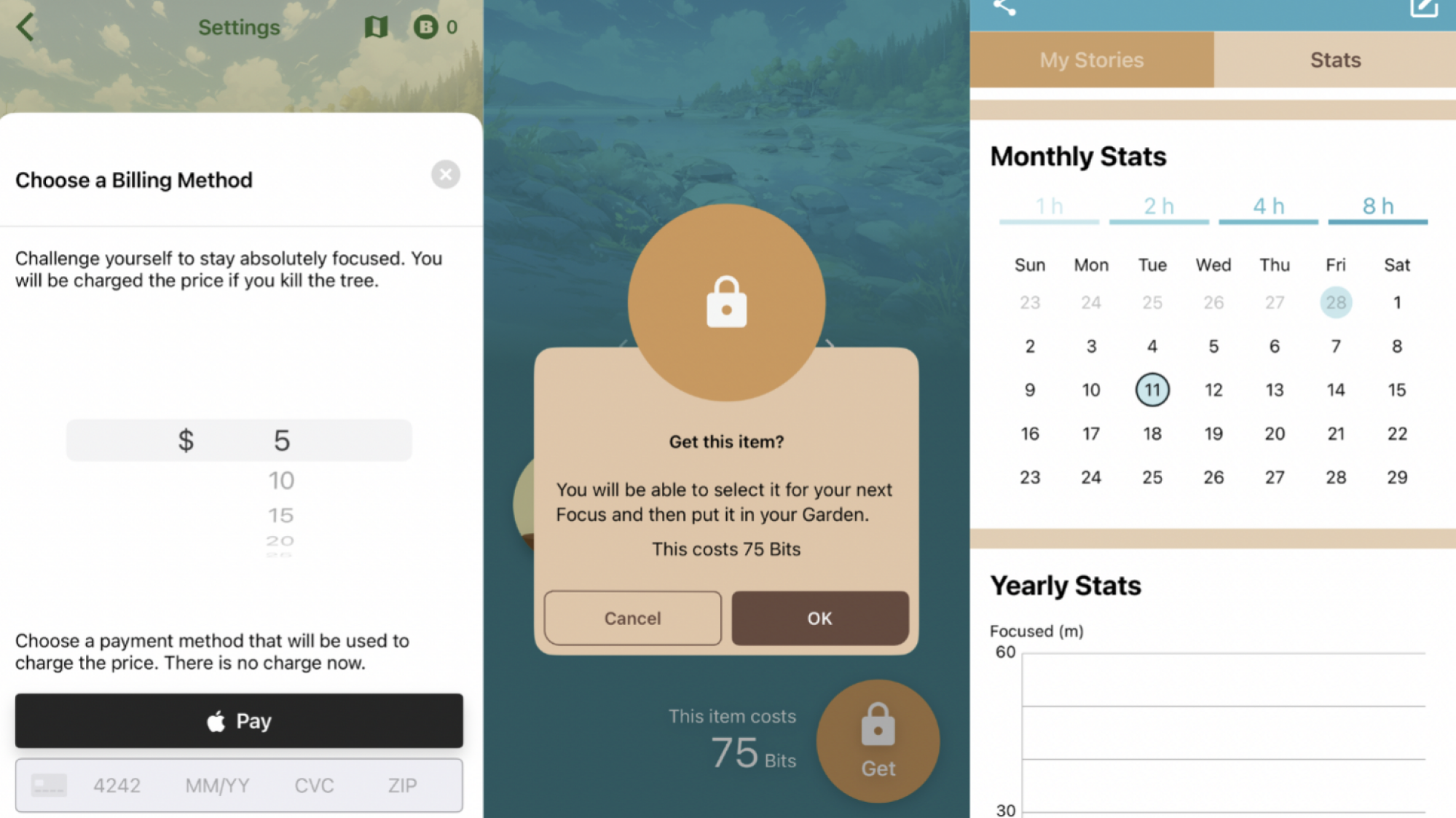
If you want something a little zen that still motivates you, try Flora, which is an app that just wants to help you plant trees (and stay focused on your work). It gamifies your productivity by rewarding you with cool animations, similar to the others on this list. Here, you get to you grow “trees” in a virtual forest, but only so long as you don’t interrupt their growth by using your phone when you’re supposed to be working. Moreover, you can bet money on your ability to carry out focus sessions or buy a subscription, both of which directly fund the planting of trees in the real world. That’s not a gamification so much as a real-world contribution that can make you feel good about your studying.
Read my full review of Flora here.
Study Bunny
Credit: Study Bunny
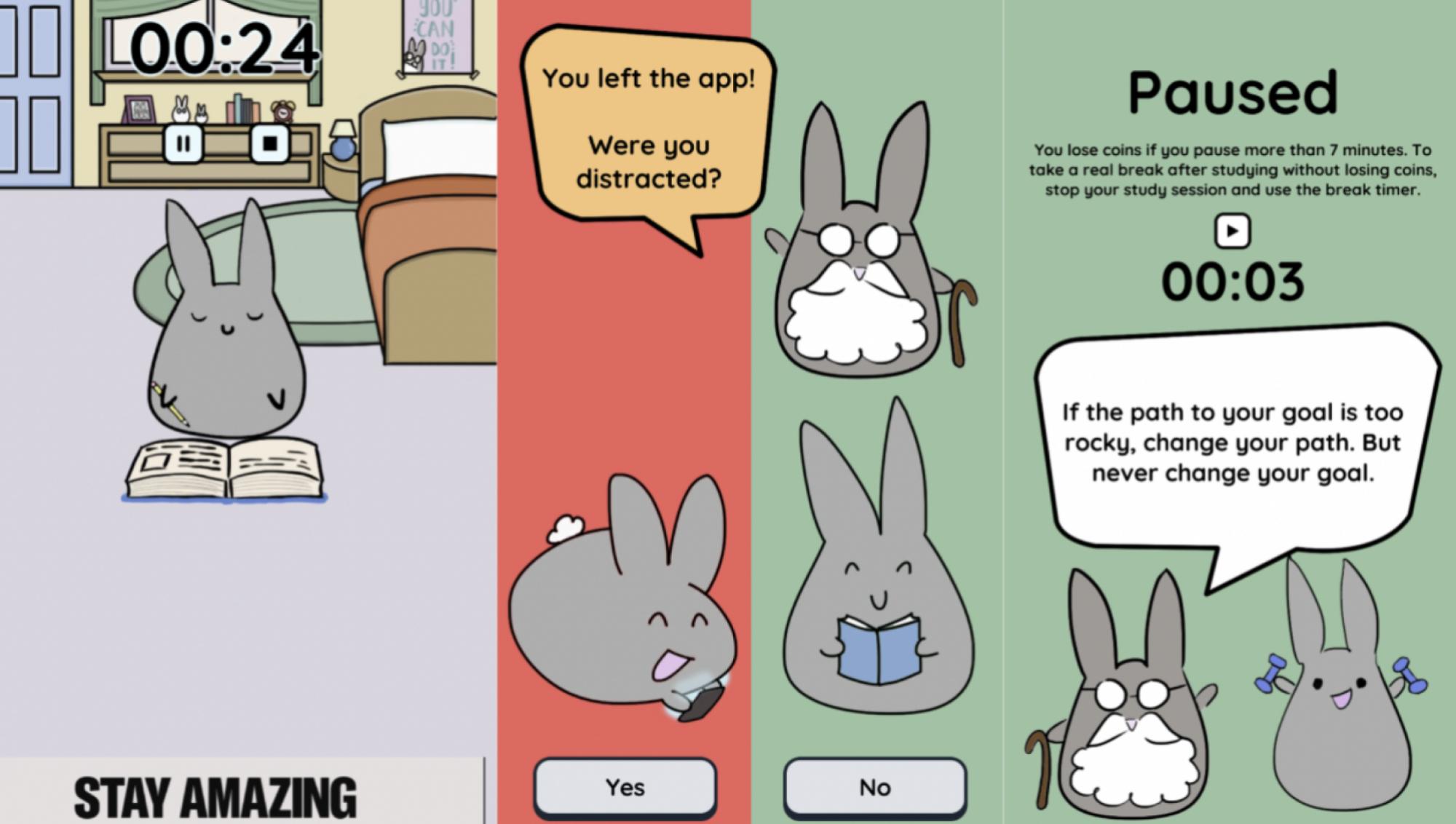
Study Bunny is a game designed for students. It has an in-app timer and a scored flashcard system, slots for to-do lists, and room for 15 subjects. You are assigned a virtual bunny rabbit that gets happier when you track work and progress, but sadder when you pause a work session or don’t open the app. The longer you work, the more coins you earn to buy items for your bunny. The app is pretty janky and I won’t lie about that, but it’s cute and stress-free, which makes it ideal if you’re looking for a fun way to stay motivated about your studies.
Read my full review of Study Bunny here.
Doublespeed Hack Reveals What Its AI-Generated Accounts Are Promoting
An anonymous reader quotes a report from 404 Media: Doublespeed, a startup backed by Andreessen Horowitz (a16z) that uses a phone farm to manage at least hundreds of AI-generated social media accounts and promote products has been hacked. The hack reveals what products the AI-generated accounts are promoting, often without the required disclosure that these are advertisements, and allowed the hacker to take control of more than 1,000 smartphones that power the company. The hacker, who asked for anonymity because he feared retaliation from the company, said he reported the vulnerability to Doublespeed on October 31. At the time of writing, the hacker said he still has access to the company’s backend, including the phone farm itself.
“I could see the phones in use, which manager (the PCs controlling the phones) they had, which TikTok accounts they were assigned, proxies in use (and their passwords), and pending tasks. As well as the link to control devices for each manager,” the hacker told me. “I could have used their phones for compute resources, or maybe spam. Even if they’re just phones, there are around 1100 of them, with proxy access, for free. I think I could have used the linked accounts by puppeting the phones or adding tasks, but haven’t tried.”
As I reported in October, Doublespeed raised $1 million from a16z as part of its “Speedrun” accelerator program, “a fastpaced, 12-week startup program that guides founders through every critical stage of their growth.” Doublespeed uses generative AI to flood social media with accounts and posts to promote certain products on behalf of its clients. Social media companies attempt to detect and remove this type of astroturfing for violating their inauthentic behavior policies, which is why Doublespeed uses a bank of phones to emulate the behavior of real users. So-called “click farms” or “phone farms” often use hundreds of mobile phones to fake online engagement of reviews for the same reason. […] I’ve seen TikTok accounts operated by Doublespeed promote language learning apps, dating apps, a Bible app, supplements, and a massager.


Read more of this story at Slashdot.