
Fabrice Bellard, founder of QEMU and FFmpeg, has published Micro QuickJS, a minimal JavaScript engine targeting embedded and low-memory environments.
Monthly Archives: December 2025
Nintendo Switch With Joy-Con Clearance Starts on Amazon, Already Selling Out Fast at Its Lowest Price

Looking to play some Switch games? Now’s the time to grab one of the OLED models as it’s on sale.
The post Nintendo Switch With Joy-Con Clearance Starts on Amazon, Already Selling Out Fast at Its Lowest Price appeared first on Kotaku.
How AI coding agents work—and what to remember if you use them
AI coding agents from OpenAI, Anthropic, and Google can now work on software projects for hours at a time, writing complete apps, running tests, and fixing bugs with human supervision. But these tools are not magic and can complicate rather than simplify a software project. Understanding how they work under the hood can help developers know when (and if) to use them, while avoiding common pitfalls.
We’ll start with the basics: At the core of every AI coding agent is a technology called a large language model (LLM), which is a type of neural network trained on vast amounts of text data, including lots of programming code. It’s a pattern-matching machine that uses a prompt to “extract” compressed statistical representations of data it saw during training and provide a plausible continuation of that pattern as an output. In this extraction, an LLM can interpolate across domains and concepts, resulting in some useful logical inferences when done well and confabulation errors when done poorly.
These base models are then further refined through techniques like fine-tuning on curated examples and reinforcement learning from human feedback (RLHF), which shape the model to follow instructions, use tools, and produce more useful outputs.
A Recap Of The Top AMD Linux News Of 2025: Strix Halo, AI, Kernel Improvements
As part of our various “year end” articles, here is a look back at the most popular AMD Linux/open-source news and hardware reviews of 2025…
Linux 6.20~7.0 To Bring Prep Changes For CXL Soft Reserve Recovery & Accelerator Memory
The next kernel cycle that will be known as either Linux 6.20 or Linux 7.0 depending upon how Linus Torvalds handles the versioning for this next x.20 milestone. More than likely it will be Linux 7.0 given his historical versioning scheme, but whatever the case, ahead of this next kernel cycle some initialization changes for the CXL subsystem are building up…
My Holiday Hopes for Linux and Open Source
As the old year is replaced by the new, here’s Jack Wallen’s wish list for Linux and open source in 2026 — from the desktop to the developers who keep it alive.
The post My Holiday Hopes for Linux and Open Source appeared first on FOSS Force.
Qualcomm’s Xqci RISC-V Extension Now Deemed Non-Experimental For LLVM 22
In LLVM Git yesterday for next year’s LLVM 22 release the Qualcomm Xqci RISC-V vendor extension is no longer deemed experimental…
Page Cache Sharing Looks To Be Very Beneficial For EROFS Containers
One of the features being worked on for a while with the read-only EROFS file-system is page cache sharing. Besides EROFS being popular on some mobile/embedded devices, this open-source read-only file-system has been quite popular for container usage and there this page cache sharing functionality can provide some significant reductions in RAM usage…
2015 Radio Interview Frames AI As ‘High-Level Algebra’
Longtime Slashdot reader MrFreak shares a public radio interview from 2015 discussing artificial intelligence as inference over abstract inputs, along with scaling limits, automation, and governance models, where for-profit engines are constrained by nonprofit oversight: Recorded months before OpenAI was founded, the conversation treats intelligence as math plus incentives rather than something mystical, touching on architectural bottlenecks, why “reasoning” may not simply emerge from brute force, labor displacement, and institutional design for advanced AI systems. Many of the themes align closely with current debates around large language models and AI governance.
The recording was revisited following recent remarks by Sergey Brin at Stanford, where he acknowledged that despite Google’s early work on Transformers, institutional hesitation and incentive structures limited how aggressively the technology was pursued. The interview provides an earlier, first-principles perspective on how abstraction, scaling, and organizational design might interact once AI systems begin to compound.


Read more of this story at Slashdot.
How to Install Java 25 on Ubuntu 24.04
Java is one of the most widely used programming languages worldwide. When considering installing Java 25 on Ubuntu 24.04, developers will find an object-oriented, platform-independent language used to build a range of applications, including web and mobile applications, big data solutions, and even software for cars and planes.
What Might Adding Emojis and Pictures To Text Programming Languages Look Like?
theodp writes: We all mix pictures, emojis, and text freely in our communications. So why not in our code? That’s the premise of “Fun With Python and Emoji: What Might Adding Pictures to Text Programming Languages Look Like?” (two-image Bluesky explainer; full slides), which takes a look at what mixing emoji with Python and SQL might look like. A GitHub repo includes a Google Colab-ready Python notebook proof of concept that does rudimentary emoji-to-text translation via an IPython input transformer.
So, in the Golden Age of AI — some 60+ years after Kenneth Iverson introduced the chock-full-of-symbols APL — are valid technical reasons still keeping symbols and pictures out of code, or is their absence more of a programming dogma thing?


Read more of this story at Slashdot.
Pinta 3.1 Open-Source Paint App Released with New Cells Effect, Axonometric Grid
Pinta 3.1 has been released today as a major update to this open-source, free, and cross-platform paint program written in GTK# for GNU/Linux, macOS, and Windows.
Inside Uzbekistan’s Nationwide License Plate Surveillance System
An anonymous reader quotes a report from TechCrunch: Across Uzbekistan, a network of about a hundred banks of high-resolution roadside cameras continuously scan vehicles’ license plates and their occupants, sometimes thousands a day, looking for potential traffic violations. Cars running red lights, drivers not wearing their seatbelts, and unlicensed vehicles driving at night, to name a few. The driver of one of the most surveilled vehicles in the system was tracked over six months as he traveled between the eastern city of Chirchiq, through the capital Tashkent, and in the nearby settlement of Eshonguzar, often multiple times a week. We know this because the country’s sprawling license plate-tracking surveillance system has been left exposed to the internet.
Security researcher Anurag Sen, who discovered the security lapse, found the license plate surveillance system exposed online without a password, allowing anyone access to the data within. It’s not clear how long the surveillance system has been public, but artifacts from the system show that its database was set up in September 2024, and traffic monitoring began in mid-2025. The exposure offers a rare glimpse into how such national license plate surveillance systems work, the data they collect, and how they can be used to track the whereabouts of any one of the millions of people across an entire country. The lapse also reveals the security and privacy risks associated with the mass monitoring of vehicles and their owners, at a time when the United States is building up its nationwide array of license plate readers, many of which are provided by surveillance giant Flock.


Read more of this story at Slashdot.
iOS 26.3 Brings AirPods-Like Pairing To Third-Party Devices In EU Under DMA
Under pressure from the Digital Markets Act, Apple’s iOS 26.3 adds AirPods-style proximity pairing and notification support for third-party accessories in the EU. The changes will roll out to European users in 2026. MacRumors reports: The Digital Markets Act requires Apple to provide third-party accessories with the same capabilities and access to device features that Apple’s own products get. In iOS 26.3, EU wearable device makers can now test proximity pairing and improved notifications.
Here are the new capabilities that Apple is adding:
– Proximity pairing – Devices like earbuds will be able to pair with an iOS device in an AirPods-like way by bringing the accessory close to an iPhone or iPad to initiate a simple, one-tap pairing process. Pairing third-party devices will no longer require multiple steps.
– Notifications – Third-party accessories like smart watches will be able to receive notifications from the iPhone. Users will be able to view and react to incoming notifications, which is functionality normally limited to the Apple Watch. Notifications can only be forwarded to one connected device at a time, and turning on notifications for a third-party device disables notifications to an Apple Watch.


Read more of this story at Slashdot.
UploadVR’s Best of VR 2025 Awards – Game Of The Year, Hardware & Most Anticipated Of 2026
Welcome to the last entry of UploadVR’s Best of VR Awards for 2025.
The year’s almost over and we’re once again celebrating this year’s best releases across the VR and wider XR industry, highlighting some exceptional releases across software and hardware alike. Just like we always do, each category features one clear winner and varying numbers of honorable mentions. Excluding our specific early access categories, all of our winners are currently in full release.
Like last year, we’ve split the awards across multiple rounds. Our first round covered platform favorites for Quest, PC VR, PlayStation VR2, and Apple Vision Pro, joined by our favorite exploratory experience. It’s here where we recognized Ghost Town, Roboquest VR, Arken Age, Gears & Goo, and The Clouds Are Two Thousand Meters Up.
Round two is where we focused on achievements across mixed reality, hand tracking, and early access releases. Our winners across these categories were Jigsaw Night, Laser Dance, Forefront, Little Critters, and Figmin XR.
Which leaves us with some of our biggest picks still to come, the moment we’ve all been waiting for. Here are UploadVR’s Best of VR Awards 2025.
Best Virtual Place 2025
A small number of software packages in virtual reality have grown so large and diverse that calling them games doesn’t really apply anymore. They are places, vast, with interconnected systems that make spending significant time there a delight for many. VRChat and No Man’s Sky come to mind as candidates for this category in future years, and both were considered to inaugurate this award category at UploadVR.
Walkabout Mini Golf is UploadVR’s Best Virtual Place 2025.

In 2025, Walkabout grew from a game to a place as mini golf became secondary to the best place that people congregate in virtual reality.
The artists at Mighty Coconut entered the year realizing Elvis as a course to play on and ended it with the best physical illustration of Alice’s Adventures in Wonderland ever made. In between, Walkabout’s creative director and mastermind Lucas Martell took golfers to the seat of the gods at Mount Olympus, face-to-face with dinos at Raptor Cliff’s, sneaking into a Mother Goose-inspired theme park at Forgotten Fairyland, and up close with Neko Atsume kitties all over a tiny Tokyo. While Walkabout’s courses always had secrets, like hidden balls and skeletons, now they’ve started adding playable activities like slingshots and chess. Designers continue rooting around the backstage areas as they add the foundations for future activities and new secrets to discover in places players have been hundreds of times.
The design team spent days together in December roughing out courses that will open starting in 2027. From release in 2020 for standalone VR headsets, we see other developers following the precedents set by Walkabout – guest mode for paid add-ons, private rooms by default, and support for a single controller.
Whether you’re looking to introduce yourself to virtual reality or get lost in there for days, Walkabout Mini Golf is the right onboarding experience for most people and a great place to be.
Best VR Developer
We’ve seen some impressive work from VR developers this year. Mighty Coconut keeps releasing regular DLC courses for Walkabout Mini Golf, Flat2VR Studios continues to deliver impressive VR adaptations like Roboquest VR, while nDreams Elevation and Fireproof Games both showed strong VR-focused gameplay design across Reach and Ghost Town respectively.

This time, our Best VR Developer award goes to VitruviusVR for its work on Arken Age. We previously discussed what we loved about Arken Age when giving it our Best PlayStation VR2 Game of the Year award, praising its exemplary approach to VR-first gameplay design. However, it’s a testament to the studio’s strength that it did so while leveraging the strengths of each platform so effectively. For that reason, we’re giving them this year’s award.
Best New Hardware
This year saw Meta break its three-year streak of new VR headset releases, Apple upgrade its “spatial computer” with a new chip and strap, Samsung launch the first product running Google’s Android XR, and Bigscreen refine its ultralight headset with improved and adjustable lenses.
Bigscreen and Apple deserve mentioning here, even though they aren’t our winners.
Beyond 2‘s lenses fix a crucial flaw of the original to make it a viable optical experience for far more people, but the device still requires SteamVR Tracking base stations, an expensive technology that Valve itself is abandoning.
Meanwhile, the M5 Vision Pro’s Dual Knit Band is a truly innovative approach to headset ergonomics, combining the benefits of a comfortable soft strap and counterbalance in one design, plus the ability to tighten both bands with a single dial. But other than this, it’s a minimum-effort upgrade.
Our winner this year is Meta Neural Band included with Meta Ray-Ban Display. Surface electromyography (sEMG) is not a completely new input technology, but Meta Neural Band brings it to a sleek, lightweight, and flexible wristband with all-day battery life and IPX4 water resistance.

Meta Neural Band makes it practical and comfortable to control a smart glasses HUD without needing to constantly use voice commands, wear a giant ring, or wave your hands around. And for this, it wins our Best Hardware Award for 2025.
Best New Multiplayer Game
Social gameplay remains one of VR’s most appealing strengths, and this year continued providing strong contenders. While Breachers would have been in contention if it wasn’t in early access, plenty of multiplayer games either launched or finally reached full release.
For racing fans, VRacer Hoverbike entered full release and reached new platforms. Pixel Dungeon was an early highlight, Glassbreakers took us back to the world of Moss, and Titan Isles is a highly compelling co-op adventure. Then we have Deadly Delivery, Table Troopers, Elements Divided, GRIM, and Rogue Piñatas.

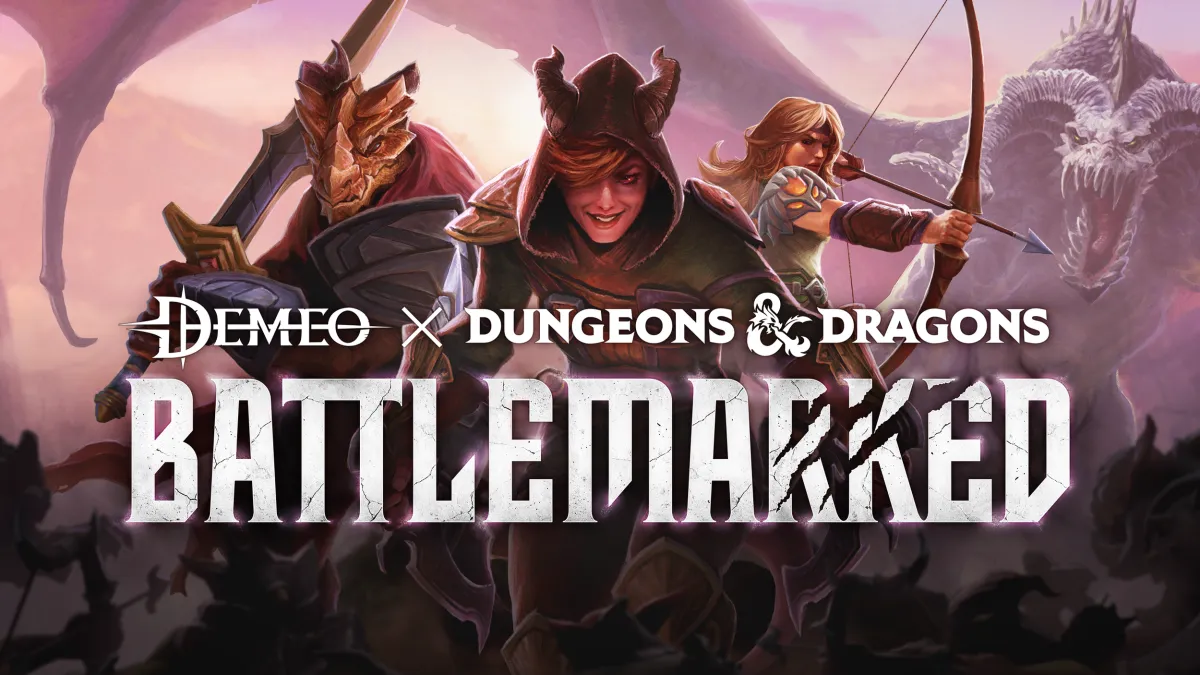
Ultimately, our winner for VR Multiplayer Game of the Year 2025 is Demeo x Dungeons & Dragons: Battlemarked. Resolution Games brought back 2021’s hit in style, and we considered it a “mostly natural crossover and a fitting evolution” on Demeo. If you can’t commit to a real-life tabletop campaign, this is an excellent option that flatscreen players can also join in on.
Demeo x Dungeons & Dragons: Battlemarked Review
Demeo x Dungeons & Dragons: Battlemarked is a mostly natural crossover and a fitting evolution for the VR tabletop RPG.
 UploadVRHenry Stockdale
VR Game Of The Year 2025
And so, we now move onto one of our biggest categories. Our previous awards looked at games for individual platforms across Quest, PC VR, PlayStation VR2, and Apple Vision Pro. This is what we believe stands out as the absolute best of the best across all four.
2025’s been another year when the releases seemingly never end, and that’s been especially true these last few months. Hotel Infinity, Roboquest VR, Marvel’s Deadpool VR, Demeo x D&D, Ghost Town, Reach, Arken Age, Lumines Arise, there’s a lot to choose from, but we can ultimately only crown one title.

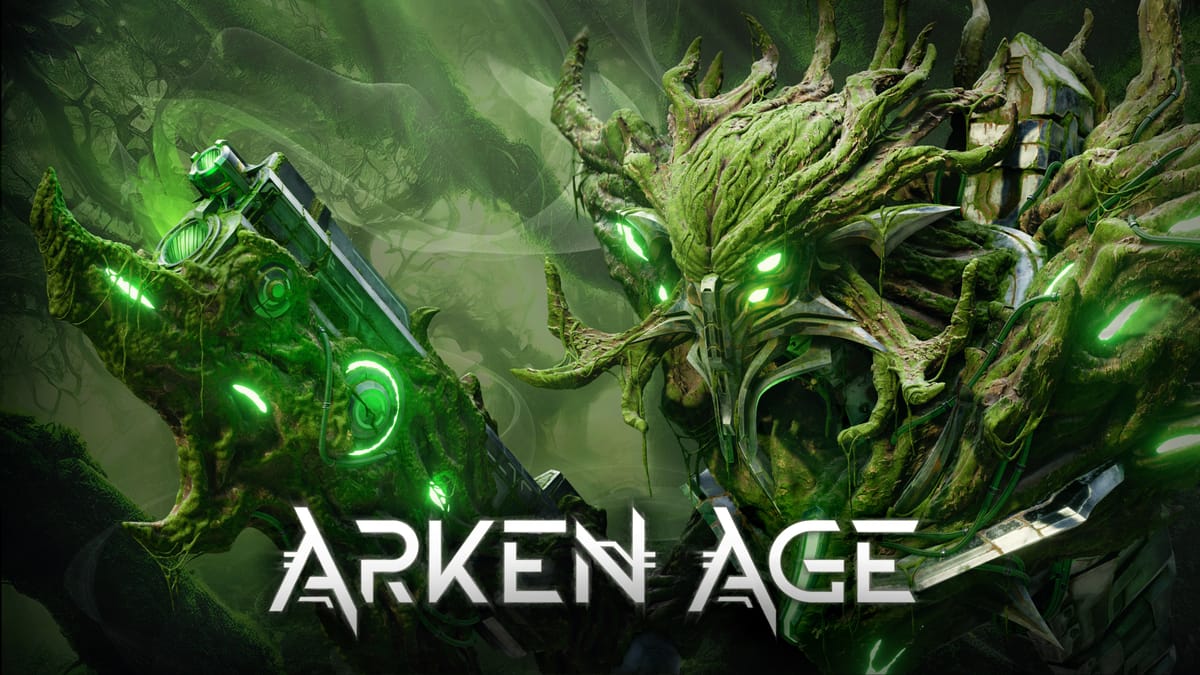
Same as our best PlayStation VR2 game, our winner for VR Game of the Year 2025 is Arken Age. Ghost Town and Roboquest VR have their own individual strengths on Quest and PC VR, yet Arken Age graced each of its platforms with some of the best VR focused design we’ve seen in 2025.
“Arken Age delivers clever VR-first gameplay design for a great sci-fi adventure,” we said at the time, praising its vibrant presentation and rewarding combat. As mentioned before, our appreciation for VitruviusVR’s action-adventure has only grown since launch, and it’s a strong choice no matter your headset.
Arken Age Review: Satisfying Sci-Fi Adventure With Great VR Design
Arken Age delivers a satisfying sci-fi adventure with clever VR-oriented design, and it’s out now on PlayStation VR2 and Steam.
 UploadVRHenry Stockdale
Most Anticipated Game Of 2026
So then, what’s next? 2025’s brought a strong line-up across Quest, PC VR, and PS VR2, and we’ve seen plenty of promising VR and MR games on the way in 2026.
Some games are already in early access and are currently scheduled or likely to receive full releases next year. That includes Unseen Diplomacy 2, Into The Radius 2, Bootstrap Island, Laser Dance, Pocket Lands, and Forefront.
Several VR adaptations of existing series are on the way too, like Evangelion: Δ Cross Reflections, The Boys: Trigger Warning, Little Nightmares VR, and Orcs Must Die! By The Blade. Then we have Guardians Planetfall, Knights of Fiona, Automa, Aces of Thunder, and Remnant Protocol. Many potential contenders, but what’s our top pick?

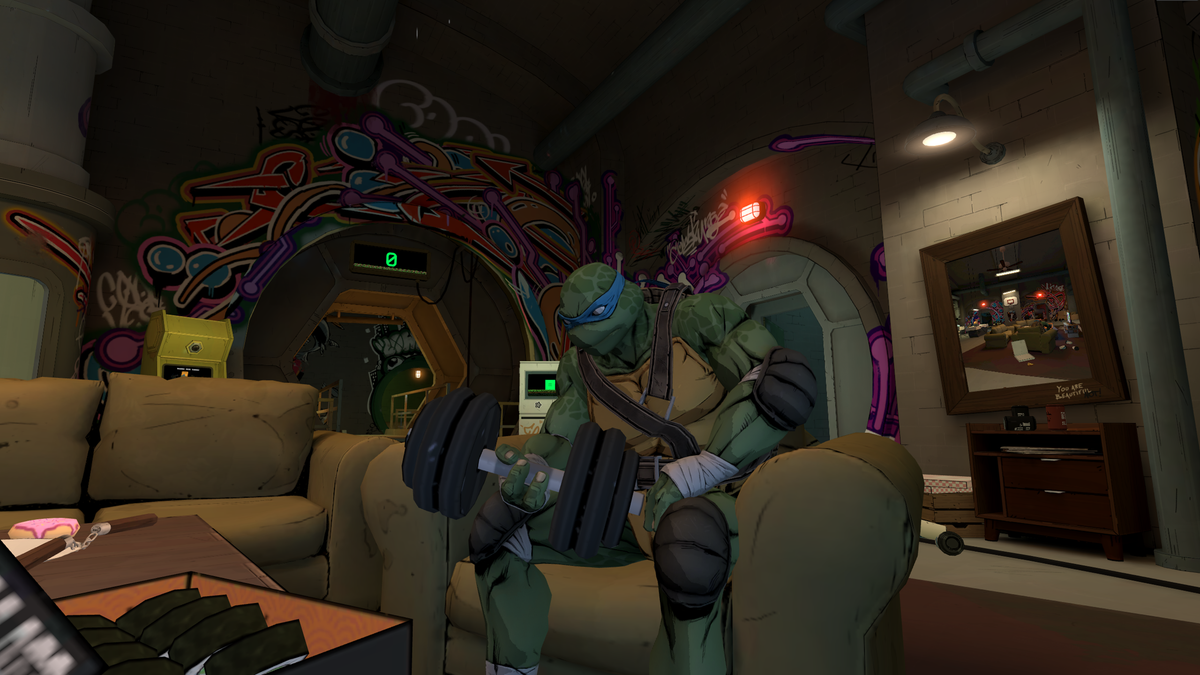
Our Most Anticipated Game of 2026 goes to Teenage Mutant Ninja Turtles: Empire City, an action-adventure that supports single-player and up to four-player co-op. We’ve already had a brief look at what’s to come, and we can’t wait to see how Cortopia Studios adapts the iconic series on Quest 3 and PC VR.
Teenage Mutant Ninja Turtles: Empire City Hands-On At Home In The Sewers
Teenage Mutant Ninja Turtles: Empire City makes you want to live in the sewers.
 UploadVRIan Hamilton
KVM Guest VMs Using Intel AMX Can Cause The Linux Host To Kernel Panic
An unfortunate Linux kernel bug coming to light just ahead of Christmas may cause frustration for some server administrators, particularly public cloud providers… It turns out with the Linux kernel releases since 2022, KVM guest virtual machines making use of Intel Advanced Matrix Extensions (AMX) is possible to cause the host to experience a kernel panic…
John Carreyou and Other Authors Bring New Lawsuit Against Six Major AI Companies
A group of authors led by John Carreyrou has filed a new lawsuit against Anthropic, Google, OpenAI, Meta, xAI, and Perplexity, accusing the AI firms of training models on pirated copies of their books. TechCrunch reports: If this sounds familiar, it’s because another set of authors already filed a class action suit against Anthropic for these same acts of copyright infringement. In that case, the judge ruled that it was legal for Anthropic and similar AI companies to train on pirated copies of books, but that it was not legal to pirate the books in the first place.
While eligible writers can receive about $3,000 from the $1.5 billion Anthropic settlement, some authors were dissatisfied with that resolution — it doesn’t hold AI companies accountable for the actual act of using stolen books to train their models, which generate billions of dollars in revenue. The plaintiffs in the new lawsuit say the proposed Anthropic settlement “seems to serve [the AI companies], not creators.”
“LLM companies should not be able to so easily extinguish thousands upon thousands of high-value claims at bargain-basement rates, eliding what should be the true cost of their massive willful infringement.”


Read more of this story at Slashdot.
Linux’s sched_ext Has Plans For GPU Awareness, Energy-Aware Abstractions
Sched_ext as the extensible scheduler code for the Linux kernel that allows loading schedulers from user-space via eBPF code has shown a lot of interesting possibilities. Andrea Righi of NVIDIA who has been heavily involved in sched_ext development shared some of the future plans being looked at as we move into 2026…
MR Clean Could Be PowerWash Simulator For Mixed Reality
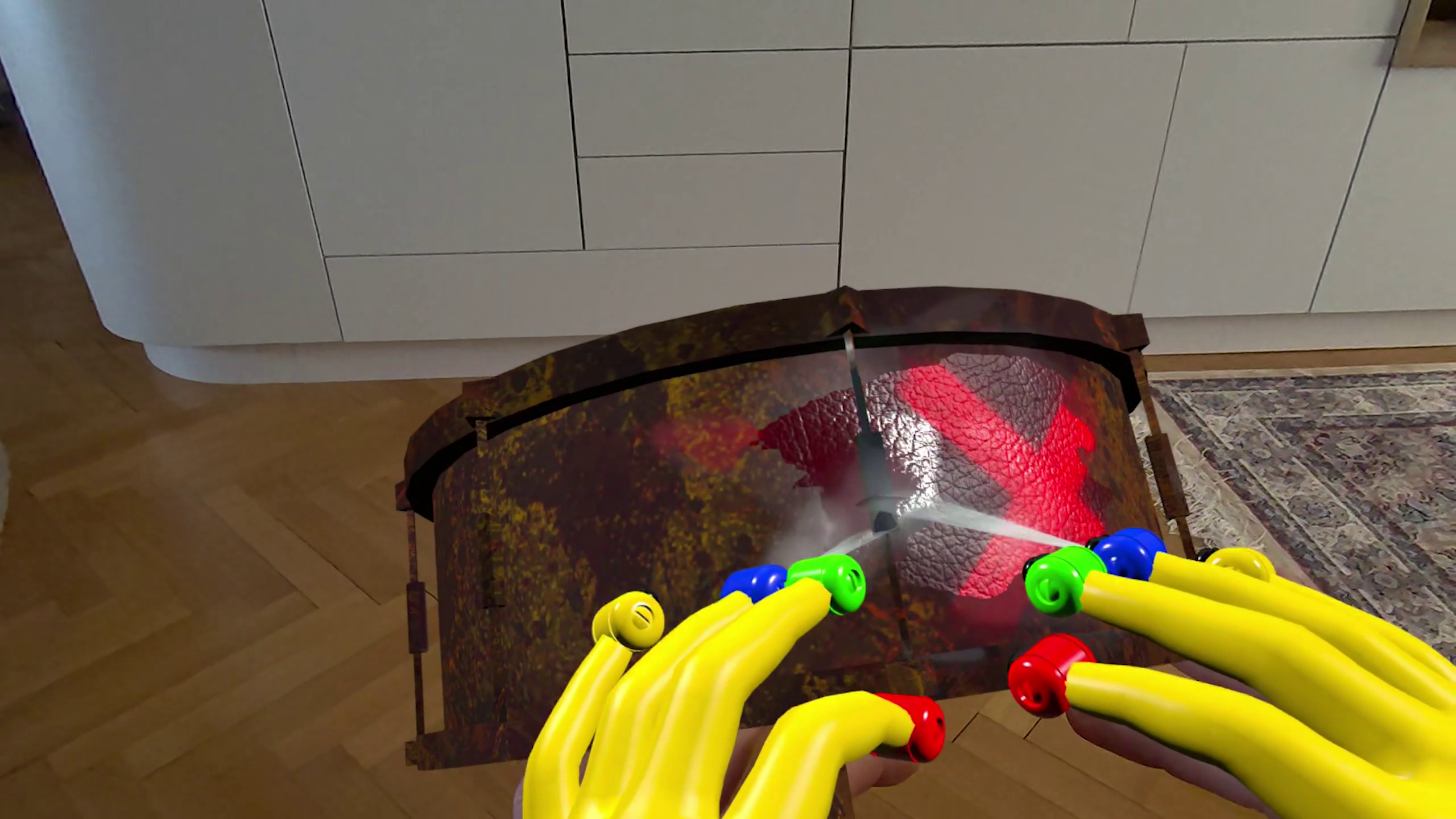
MR Clean could be the PowerWash Simulator of mixed reality, and it’s heading to Quest 3/3S next year.
Developed by PotamWorks (Smash Drums), MR Clean is a roomscale mixed reality cleaning game designed around hand tracking controls, where you clear virtual dirt off your walls, floors, and furniture. This also comes with a ‘Virtual Objects Mode’ where you clean detailed 3D models piece by piece, alongside a two-player ‘Party Mode’ you can play locally.
0:00
/0:54
It’s originally inspired by a mixed reality experiment created in Smash Drums, where you can splatter your room with virtual paint.
“While the painting mechanic became a natural fit for Smash Drums, and one of its more iconic environments, the cleaning phase ultimately didn’t align with a game built around chaos and rock ’n’ roll,” states PotamWorks, who revived the idea for the Meta Horizon Start Developer Competition 2025.
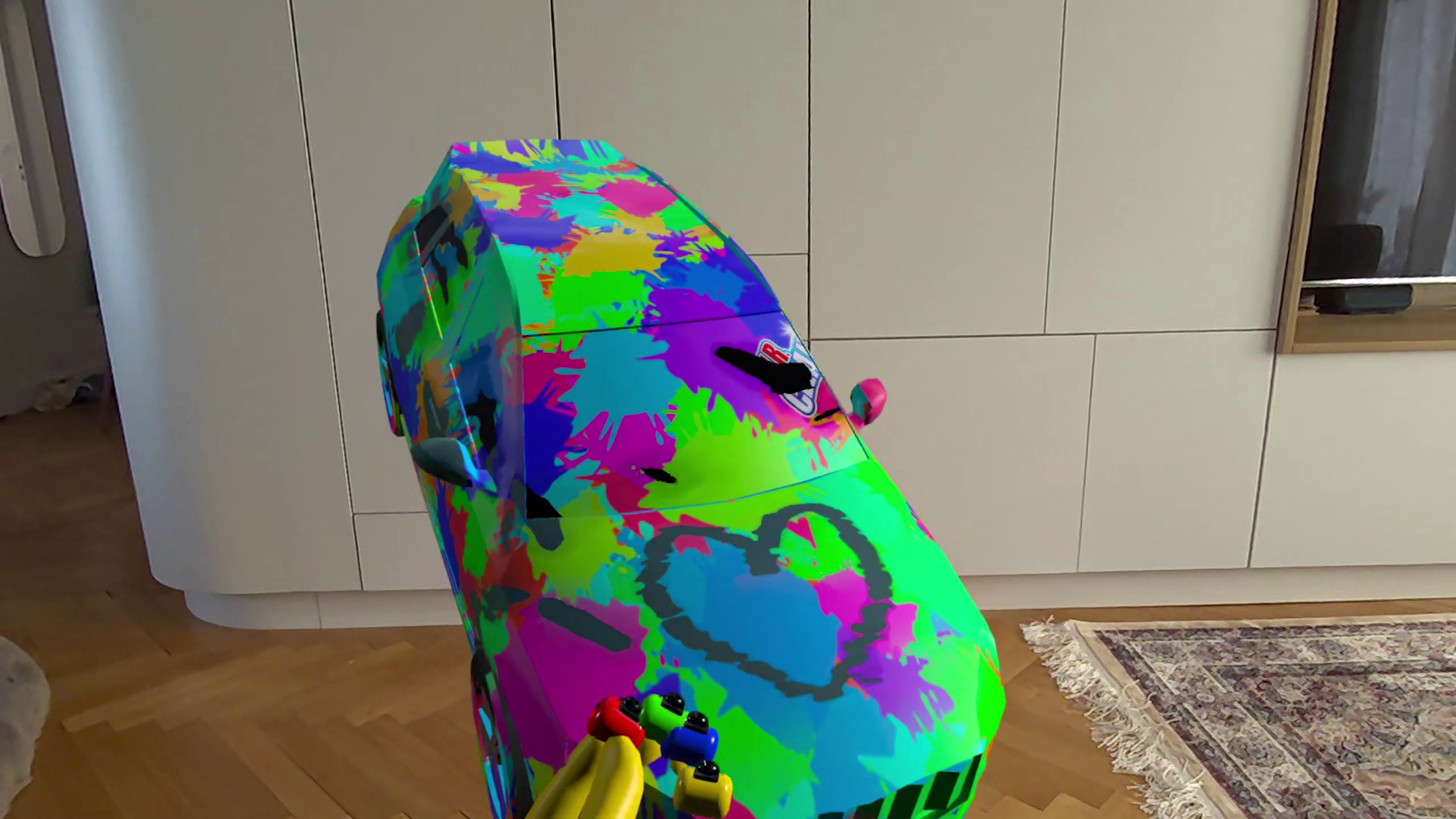
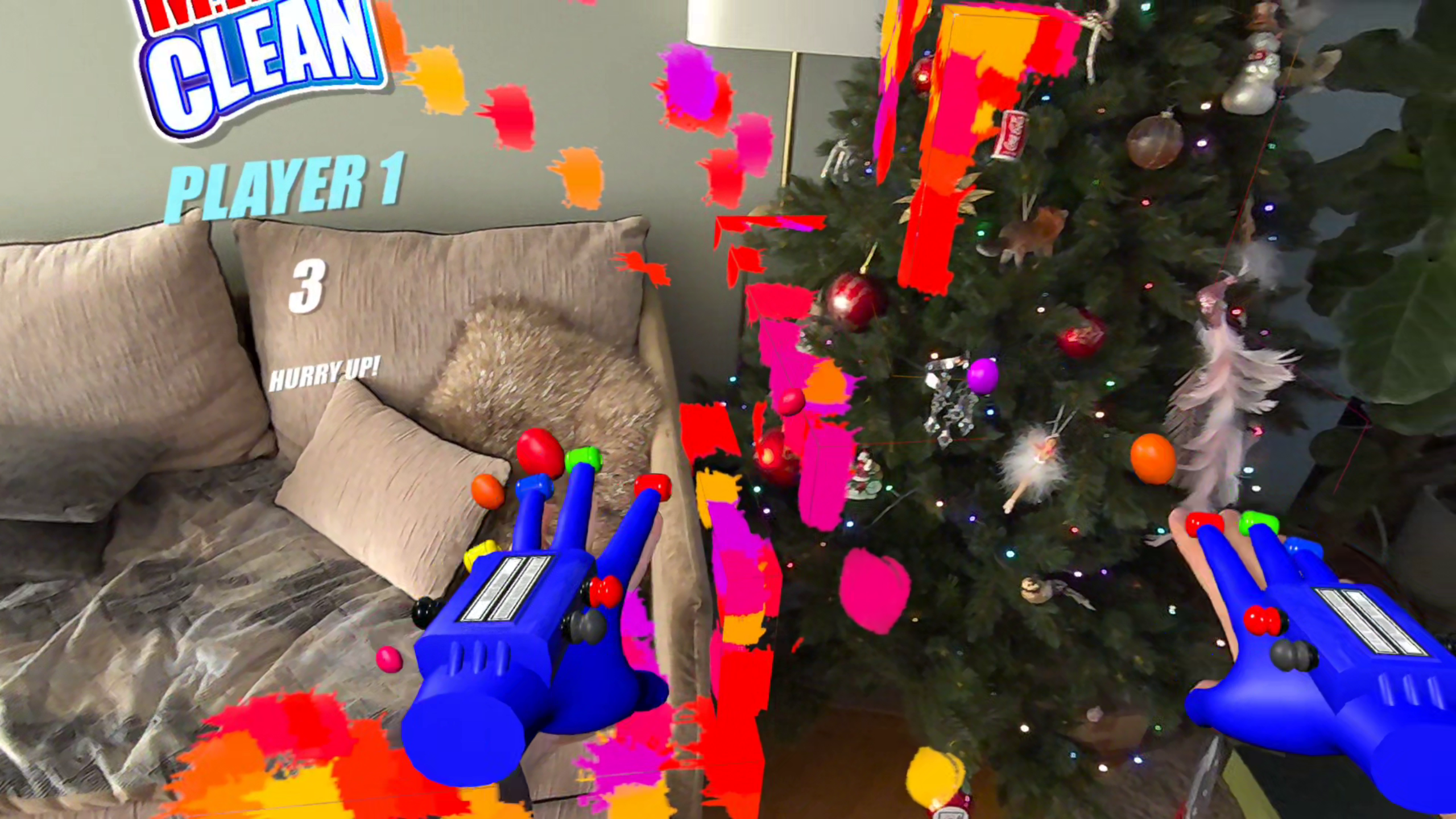

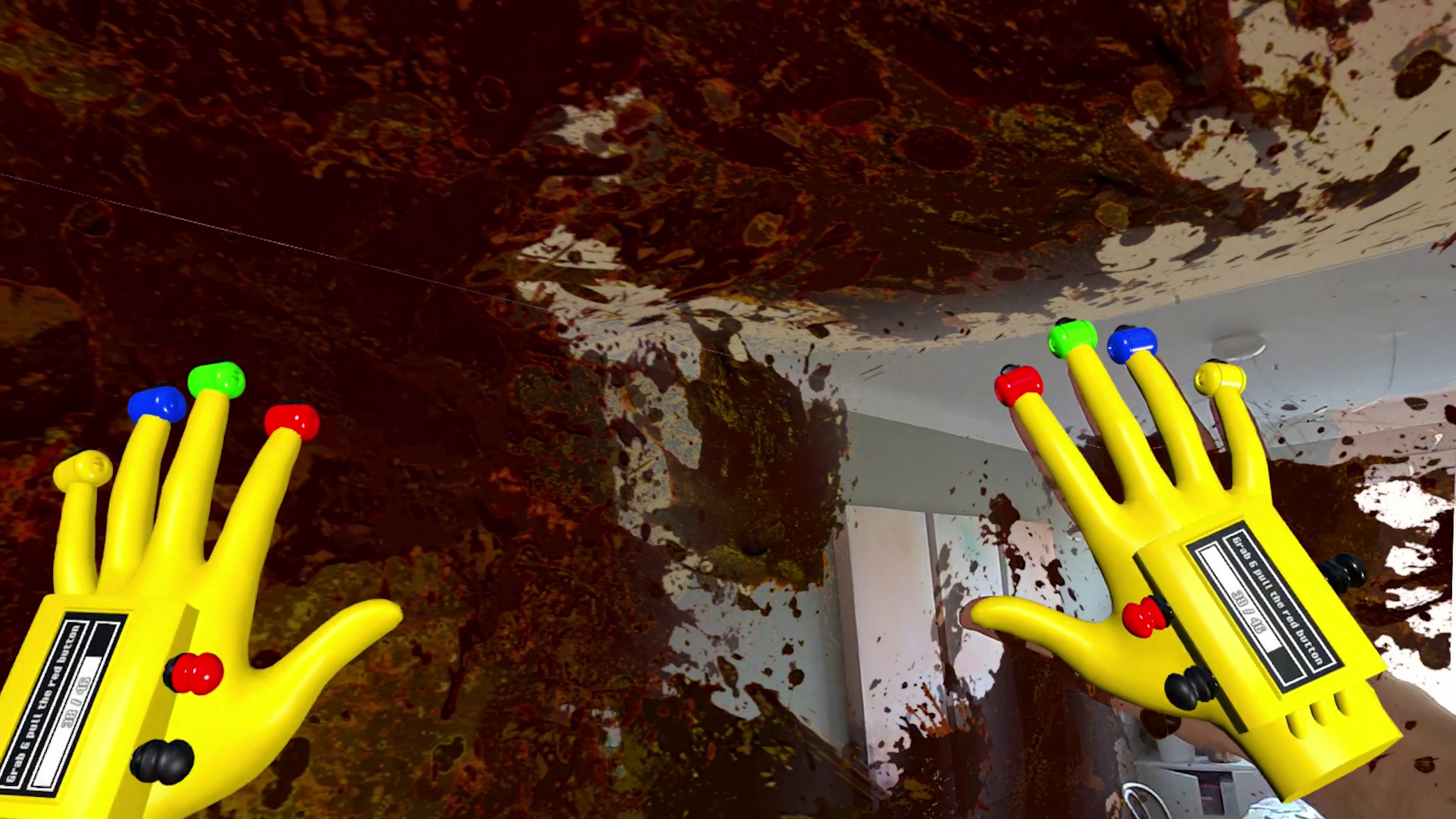
Collaborative content and themed challenges are also planned for the upcoming game. Crossovers have already been confirmed with Red Matter 2, Ancient Dungeon, Deisim, Smash Drums, “and over 15 other fan-favorite experiences.” Finally, PotamWorks states MR Clean will also be compatible with the Quest’s Travel Mode.
MR Clean is heading to Quest 3/3S in Q1 2026.
Ireland’s Diarmuid Early Wins World Microsoft Excel Title
Irish competitor Diarmuid Early, dubbed the “Lebron James of Excel spreadsheets,” has won the 2025 Microsoft Excel World Championship in Las Vegas, dethroning three-time champion Andrew Ngai. The BBC reports: The esport showpiece in December attracted competitors worldwide as 256 spreadsheet heads battled it out across knockout rounds to join the final 24 in Vegas. […] A three-time champion in the financial Excel tournaments, this win was Diarmuid’s first in the overall competition. He held the triple-world champion Andrew Ngai to second place, and won the $5,000 prize and title belt. […]
Excel esports transforms a common office tool into a dynamic sport. More than 20 years old, the competitive scene has evolved from being finance based to now involving more general problem solving. Although it might help, Diarmuid said “it doesn’t require accounting or finance knowledge.” He described an example where Excel is used in solving a maze, scoring poker hands, or even sorting Kings and Queens into the battles in which they fought.
Generally there is a 30 minute challenge, with each challenge broken up into levels. The questions increase gradually in difficulty, with each correct answer gaining a player points. Whoever gets the most points wins, and in a tie, it is whoever got there first. “It’s just, can you think on your feet and do things quickly in Excel?” he said. “If you solve the earlier levels in a neat way, that’ll let you hit the ground running faster on the later ones.”


Read more of this story at Slashdot.