
Valve Says Steam Frame Development Started Even Before Index Was Released

In March 2019, Valve surprised the VR industry with the tease of ‘Index’, its first self-made VR headset. Index would go on to launch later in May 2019 and be seen as the enthusiasts’ choice in PC VR headsets for many years to come. Unbeknownst to the world, by the time Index was released, the company had already been working on aspects of what would become its second VR headset, Steam Frame. But Frame’s development wouldn’t conclude for another six years.

During a visit to Valve’s headquarters, engineers who worked on both Index and Frame told me that development of some of Frame’s core aspects began at least as far back as 2019, even before Index was revealed to the world.

“We actually started this in the middle of [developing] Index. Yeah, so Index shipped in [early 2019]. Yeah, we were we were already starting to work on the very beginnings of [Frame] a little before that.”

Photo by Road to VR

Specifically, the team recalls that the headset’s pancake optics were already in development before Index shipped.

The optics were all designed here [at Valve]. We started it, like I said, right around about the middle of [building Index], and then after we shipped Index we focused really hard on [the new optics]. […]

I think the challenge [with great optics] has always been about how can we do it in a way that’s affordable and not heavy with glass elements and all that stuff.

So it was a really hard, and I think we’ve definitely benefited from the industry wanting to make pancake optics work because there was a lot of work that needed to go into making these manufacturable.

To really understand how it would take another six years before Frame’s announcement, it’s important to understand how work at Valve differs from other companies. While many companies create goals to release specific products on specific timelines, Valve has a much more iterative, ‘release it when it’s done’ mentality. During my visit, a member of the Frame development team explained:

[An] interesting thing about our development process and timeline is we try to work on hardware [at Valve] the same way that we work on software.

We have game teams that have learned how to use play testing really well and how to iterate really well and how to form cross-disciplinary teams that are really productive at just finding the things that are really fun and valuable.

So a lot of the processes [that led to Frame] started before we even shipped Index; we didn’t have an end goal in mind. We’re just like, ‘we think this [idea] is gonna be good. Let’s test it.’ […]

And we just kind of kept going and testing it with people, play-testing our ideas, trying different things and different combinations until […] at some point we’re like, ‘okay, this is doing everything we think that it needs to do. This will make our customers happy. This is a great companion to Steam.’ […]

And only when we reach that point—when we’re confident that we’ve tested our goals and our assumptions—that we’re like, ‘okay, let’s get on the shipping timeline.’

We really only wanna ship something when it’s ready.

If you’ve ever heard someone mention ‘Valve Time’, this is it in a nutshell.

In speaking to the Frame team, I got the sense that most of them were serious VR users themselves, and the features and design of Frame were driven heavily by what they themselves—not some abstract ‘addressable audience’—wanted in a headset. They wanted the headset to be able to play their entire Steam library, they wanted it to be portable and comfortable, and they wanted it to be moddable.

Photo by Road to VR

I asked if their goal with Steam Frame was to make a standalone headset from the outset. A member of the team told me they were more focused on the user experience they wanted, which ultimately led them to the standalone form-factor to reduce the friction of setup.

I don’t think we necessarily said, ‘let’s make a standalone device.’ I think it really came down to, we all just wanted to play the things we wanted to play wherever we wanted to play.

And whether that’s streaming or whether that’s running stuff locally, it was really about the experience we were after and like what made this something [we] wanted to use. […]

We’re really excited about what [the power of a full PC] provides, but we also want to not have to set up things [like tracking beacons] and we want to be able to pause [our games] and walk away [to easily resume them later].

Now Frame is finally out in the open. Will it be worth the wait? We’ll find out once it ships in early 2026.

The post Valve Says Steam Frame Development Started Even Before Index Was Released appeared first on Road to VR.
This Tablet Is a Cross Between a Kindle and an iPad, and It’s Down to $150 for Cyber Monday

We may earn a commission from links on this page. Deal pricing and availability subject to change after time of publication.

It’s Cyber Monday, and Lifehacker is sharing the best sales based on product reviews, comparisons, and price-tracking tools before the sales are over. 

  • Follow our live blog to stay up-to-date on the best sales we find.

  • Browse our editors’ picks for a curated list of our favorite sales on laptops, fitness tech, appliances, and more.

  • Subscribe to our shopping newsletter, Add to Cart, for the best sales sent to your inbox.

  • Sales are accurate at the time of publication, but prices and inventory are always subject to change. 


I love using e-readers to read novels and other books, but when it comes to color content, especially comic books or even Android apps, I’m torn. I like the easy-on-the-eyes effect of E Ink, but e-readers that run Android can be slow to respond to your taps, and color e-readers still lose out on a lot of vibrancy and contrast when compared to more traditional screens. TCL’s NXTPAPER displays go a long way towards fixing that, and now you can get a NXTPAPER tablet for a large discount during Cyber Monday.

The trick behind NXTPAPER is that it’s not technically E Ink, but it feels pretty similar to it. Instead, NXTPAPER uses a more traditional LCD display, but with special low blue light technology and a matte coating to make it feel like paper. It’s hard to imagine it comes close to something like a Kindle when reading the marketing bragging about it, but having tried it in person, I can say it’s about 80% of the way to feeling like the real thing. And the benefit? You get far more vibrant colors than you would with color E Ink, and the same responsive feeling and high refresh rate as when using a phone or an iPad.

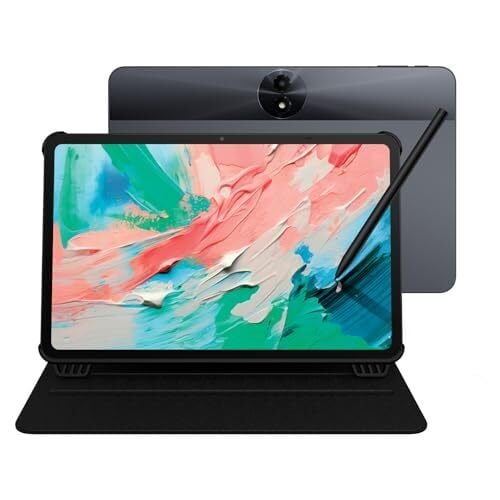
It’s probably not something I’d want on the phone I carry every day, since the matte coating can still make the colors a little duller, if not as bad as E Ink would. But this Cyber Monday, you can get a standalone NXTPAPER tablet for a great price. Currently, the NXTPAPER 11 Gen 2 is just $150 on Amazon, and that’s with a stylus and case included.

This tablet has an 11-inch 1,920 x 1,200 screen and starts off with 64GB of storage (upgradeable up to 256GB for a bit more). Its MediaTek chip and 8GB of RAM means it won’t be a powerhouse for running demanding apps like the most recent games, but it should be fine for the task it’s built for—reading. The biggest downside is that it’s going to drain a bit more battery than a proper E Ink display would, but with an 8,000 mAh capacity, the battery should last for days in between charges.

It’s probably not the best choice if you only read black-and-white books, because E Ink will still provide a hands-down better experience there, if only by a little bit. But if you want the versatility of Android, or you want to read vibrant color content without straining your eyes, the NXTPAPER 11 Gen 2 might be a better pick for you than any actual E Ink device. It’s also a good choice for artists, as NXTPAPER also feels a bit more natural to draw on, as seen on the slightly pricier XP-Pen Magic Note Pad, which is also on sale for Cyber Monday.


What stores have the best sales on Cyber Monday?

Nowadays, both large retailers and small businesses compete for Cyber Monday shoppers, so you can expect practically every store to run sales through Monday, December 1, 2025. The “best” sales depend on your needs, but in general, the biggest discounts tend to come from larger retailers that can afford lower prices: think places like Amazon, Walmart, Target, Best Buy, and Home Depot. You can find all the best sales from major retailers on our live blog. 

Are Cyber Monday deals worth it?

In short, yes, Cyber Monday still offers discounts that can be rare throughout the rest of the year. If there’s something you want to buy, or you’re shopping for gifts, it’s a good time to look for discounts on what you need, especially tech sales, home improvement supplies, and fitness tech. Of course, if you need to save money, the best way to save is to not buy anything. 

Are Cyber Monday deals better than Black Friday?

Black Friday used to be bigger for major retailers and more expensive tech and appliances, while Cyber Monday was for cheaper tech and gave smaller businesses a chance to compete online. Nowadays, though, the distinction is almost meaningless. Every major retailer will offer sales on both days, and the smart move is to know what you want, use price trackers or refer to guides like our live blog that use price trackers for you, and don’t stress over finding the perfect timing.

Our Best Editor-Vetted Cyber Monday Deals Right Now


Sony WH-1000XM5


—
$248.00

(List Price $399.99)


Amazon Fire TV Stick 4K Plus


—
$24.99

(List Price $49.99)

Deals are selected by our commerce team

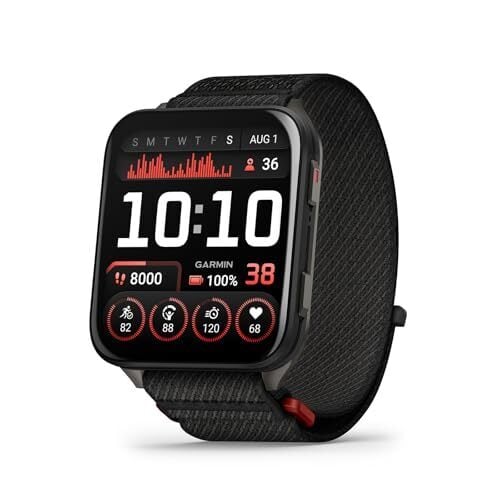
The Garmin Venu X1 Is $200 Off for Cyber Monday

We may earn a commission from links on this page. Deal pricing and availability subject to change after time of publication.

Black Friday sales officially start Friday, November 28, and run through Cyber Monday, December 1, and Lifehacker is sharing the best sales based on product reviews, comparisons, and price-tracking tools before it’s over. 

  • Follow our live blog to stay up-to-date on the best sales we find.

  • Browse our editors’ picks for a curated list of our favorite sales on laptops, fitness tech, appliances, and more.

  • Subscribe to our shopping newsletter, Add to Cart, for the best sales sent to your inbox.

  • Sales are accurate at the time of publication, but prices and inventory are always subject to change. 


If you’re looking for Garmin’s answer to the Apple Watch Ultra—aka a versatile watch that balances everyday wearability with solid fitness tracking—look no further than Garmin’s Venu X1. And for Cyber Monday, the Venu X1 is on sale for $599.99 ($200 off its normal price $799.99).

The X1 is Garmin’s biggest screen—41 x 46 millimeters with a two-inch diagonal measurement—making it easy to view maps, data, and notifications at a glance.

You also get an LED flashlight built into the watch, handy for early morning runs or fumbling with your keys in the dark. The scratch-resistant sapphire lens adds durability, while built-in maps mean you can navigate without pulling out your phone. There’s also a speaker and microphone for taking calls or using a voice assistant directly from your wrist.

Solid training and tracking

The X1 includes coaching for running, cycling, and strength training, plus all the health and fitness tracking Garmin is known for. It goes without saying that Garmin watches deliver excellent GPS accuracy and reliable heart rate readings—qualities that matter whether you’re logging casual jogs or training for your next race.

Beyond the usual activity profiles and running-specific metrics, the X1 supports a wide range of sports including motorcycling, rock climbing, and golfing (with extra features tailored to the course). The battery lasts up to eight days, so you won’t be tethered to a charger constantly.

If you prefer a round watch geared specifically toward serious runners and athletes, check out Garmin’s high-end Fenix line also on sale today.


How long do Black Friday deals really last?

Black Friday sales officially begin Friday, November 28, 2025, and run throughout “Cyber Week,” the five-day period that runs from Thanksgiving through Cyber Monday, December 1, 2025. But Black Friday and Cyber Monday dates have expanded as retailers compete for customers. You can get the same Black Friday sales early, and we expect sales to wind down by December 3, 2025. 

Are Black Friday deals worth it?

In short, yes, Black Friday still offers discounts that can be rare throughout the rest of the year. If there’s something you want to buy, or you’re shopping for gifts, it’s a good time to look for discounts on what you need, especially tech sales, home improvement supplies, and fitness tech. Of course, if you need to save money, the best way to save is to not buy anything. 

Are Cyber Monday deals better than Black Friday?

Black Friday used to be bigger for major retailers and more expensive tech and appliances, while Cyber Monday was for cheaper tech and gave smaller businesses a chance to compete online. Nowadays, though, distinction is almost meaningless. Every major retailer will offer sales on both days, and the smart move is to know what you want, use price trackers or refer to guides like our live blog that use price trackers for you, and don’t stress over finding the perfect timing.

Our Best Editor-Vetted Cyber Monday Deals Right Now


Sony WH-1000XM5


—
$248.00

(List Price $399.99)


Amazon Fire TV Stick 4K Plus


—
$24.99

(List Price $49.99)

Deals are selected by our commerce team

A Windows Update Broke Login Button, and Microsoft’s Advice is To Click Where It Used To Be

Microsoft has acknowledged that a recent Windows preview update, KB5064081, contains a bug that renders the password icon invisible on the lock screen, leaving users to click on what appears to be empty space to enter their credentials.

The issue affects Windows Insider channel users who installed the non-security preview update. The company’s suggested workaround is straightforward if somewhat absurd: click where the button should be, and the password field will appear. Microsoft said it is working to resolve the issue.


Read more of this story at Slashdot.

This Switch 2 With ‘Mario Kart World’ Bundle Might Be the Best Cyber Monday Deal

We may earn a commission from links on this page. Deal pricing and availability subject to change after time of publication.

Black Friday sales officially start Friday, November 28, and run through Cyber Monday, December 1, and Lifehacker is sharing the best sales based on product reviews, comparisons, and price-tracking tools before it’s over. 

It’s Cyber Monday, and Lifehacker is sharing the best sales based on product reviews, comparisons, and price-tracking tools before the sales are over. 

  • Follow our live blog to stay up-to-date on the best sales we find.

  • Browse our editors’ picks for a curated list of our favorite sales on laptops, fitness tech, appliances, and more.

  • Subscribe to our shopping newsletter, Add to Cart, for the best sales sent to your inbox.

  • Sales are accurate at the time of publication, but prices and inventory are always subject to change. 


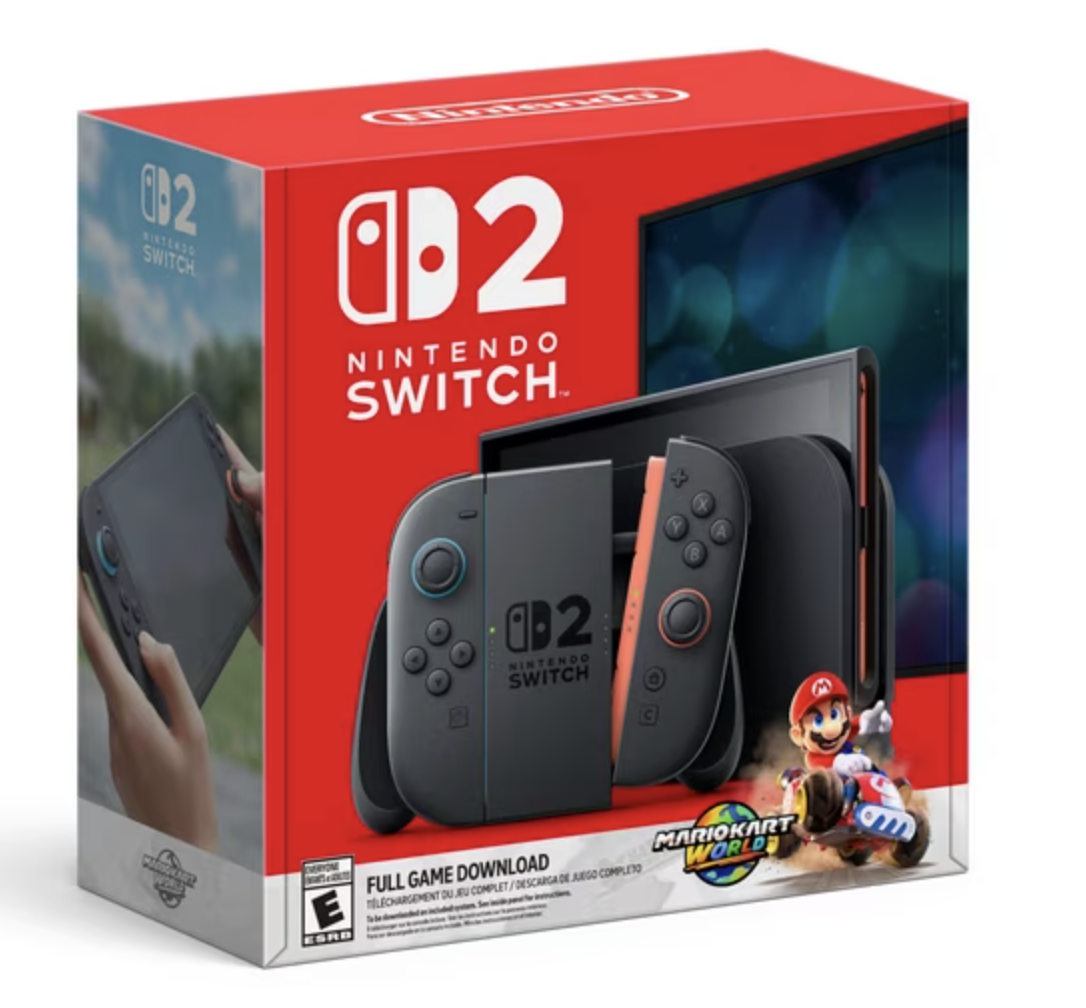
It’s the Cyber Monday deal I didn’t see coming: The new Nintendo Switch 2 with Mario Kart World bundle is actually discounted today, which is surprising considering there’s no real incentive to knock money off a brand new system, and because it was not discounted at all during Black Friday.

But yes, at the moment, you can get the game and system for $449 (down from $499) at both Amazon and Walmart—the lowest price it has reached yet, according to price tracking tools. (Note that you can only see the price once it’s in your cart as Nintendo restricts retailers from promoting anything below the “minimum advertised price” of $499.) With Christmas on the way, this deal is likely to sell out fast, so I’ve advise ordering it sooner rather than later if you’re considering it.

To put into perspective how good this deal is, the OLED edition of the original Nintendo Switch is $400 right now, meaning you can get the new system and a great game for only $50 more—and the Switch 2 is an upgrade in every way, according to Lifehacker’s review. You can play your old Switch games on the Switch 2, since it’s backwards compatible. The ergonomics and design have improved, making it much better to hold and look at. The battery life has also improved, now with about 180 minutes of handheld playtime before the juice runs out.

The biggest thing to consider when deciding whether you should buy a Switch 2 right now is that the library is currently on the smaller side, with few absolute must-play titles yet released (and the ones that are out may cost more, going up to $80). But being able to play your older games does make the transition easier, especially considering some games, like The Legend of Zelda: Tears of the Kingdom, will look better on the Switch 2.


Does Amazon have Cyber Monday deals?

Yes, Amazon has Cyber Monday sales, but prices aren’t always what they seem. Use a price tracker to make sure you’re getting the best deal, or refer to guides like our live blog that use price trackers for you. And if you have an Amazon Prime membership, make the most of it.

What stores have the best sales on Cyber Monday?

Nowadays, both large retailers and small businesses compete for Cyber Monday shoppers, so you can expect practically every store to run sales through Monday, December 1, 2025. The “best” sales depend on your needs, but in general, the biggest discounts tend to come from larger retailers that can afford lower prices: think places like Amazon, Walmart, Target, Best Buy, and Home Depot. You can find all the best sales from major retailers on our live blog. 

Are Cyber Monday deals worth it?

In short, yes, Cyber Monday still offers discounts that can be rare throughout the rest of the year. If there’s something you want to buy, or you’re shopping for gifts, it’s a good time to look for discounts on what you need, especially tech sales, home improvement supplies, and fitness tech. Of course, if you need to save money, the best way to save is to not buy anything. 

Our Best Editor-Vetted Cyber Monday Deals Right Now


Sony WH-1000XM5


—
$248.00

(List Price $399.99)


Amazon Fire TV Stick 4K Plus


—
$24.99

(List Price $49.99)

Deals are selected by our commerce team

[Industry Direct] Pimax Launches ‘SuperOpen’ to Empower Developers and Shape the Next Era of VR

As we celebrate our tenth anniversary, we at Pimax are excited to introduce SuperOpen, a long-term initiative that opens our technology to the global community and invites developers, creators, and enthusiasts to help shape the next era of virtual reality.

Industry Direct by Pimax

Industry Direct is our program for sponsors who want to speak directly to the Road to VR newsletter audience. Industry Direct posts are written by sponsors with no involvement from the Road to VR editorial team and do not appear in our front-page editorial feed. Industry Direct sponsors help make Road to VR possible.

SuperOpen is not a new product and it is not a marketing slogan. It is a commitment to openness and a belief that VR hardware should evolve in a more flexible and sustainable way. Over the past decade, the VR industry has made significant progress, but it has also been limited by closed ecosystems and hardware that becomes outdated too quickly. We believe it is time for a different approach.

Why We Created SuperOpen

For years, VR users have been asked to replace entire headsets every time a major improvement arrives. Optics change, displays improve, cooling advances, and yet the entire device must be replaced. This is wasteful and does not reflect how modern technology should grow.

Crystal Super was built on a different idea. Instead of a device that stays fixed, it is a platform that can evolve. Its optical engine, front shell, facial interface, and other modules can be changed as new innovations appear. This makes the headset something you can refine, not something you discard.

Now that Crystal Super is widely available and our production is stable across the world, this is the right moment to open the platform and bring the community into the process.

Opening Our Technology to the World

Pimax has always believed that true innovation comes from sharing. SuperOpen marks the first release of our development resources, and we’ll continue to update and expand them over time.

Developers can now access:

  • The Platform SDK
  • The XR SDK
  • The Driver SDK
  • The Hardware Development Kit
  • Full Crystal Super 3D models and schematics

These resources are available to help anyone build new ideas directly on top of the Crystal Super platform. This is only the starting point. We will continue to expand the SDKs based on what the community builds.

As our founder Robin Weng says: “Innovation grows faster when people build together.”

Exploring New Hardware Ideas Together

SuperOpen also gives us the chance to explore bold new module concepts hand in hand with the community. We are currently evaluating several experimental ideas that show how far an open headset platform can go:

  • An E Ink optical engine for comfortable reading
  • A seventy PPD clarity module for cinematic viewing
  • A liquid cooling system for long sessions
  • A facial tracking front shell for expressive avatars
  • A high fidelity microphone module for clear spatial voice
  • Specialized Pilot and Racer editions for simulation fans

Some of these concepts are early studies, and others are already in engineering testing, but all of them will grow through community involvement. Through SuperOpen, we will also provide Crystal Super units, HDKs, and SDKs to selected developers who want to explore these concepts with us.

Building a Living VR Ecosystem

SuperOpen marks an important milestone for our tenth year. More than anything, it represents a shift from building product generations to supporting a platform that keeps evolving. When hardware and software grow together with the community, we extend product life, reduce waste, and encourage meaningful innovation.

To support this, we have opened: The SuperOpen Developer Discord

Once inside, developers and creators can share ideas, collaborate on modules, receive feedback from Pimax engineering teams, and access support across development, supply chain, and promotion. SuperOpen is not only a place to discuss ideas. It is a space designed to help those ideas turn into real hardware and real experiences.

Shaping the Next Ten Years of VR Together

The launch of Crystal Super is not the finish line for us. It is the beginning of a platform that will continue to grow year after year. SuperOpen reflects our belief that openness and collaboration are the most powerful forces in VR today.

To everyone who has supported Pimax over the past decade, and to everyone who will join us now, thank you. We invite developers, creators, engineers, and VR enthusiasts to help define what the next ten years of virtual reality will look like.

Let us shape the future of VR together.

The post [Industry Direct] Pimax Launches ‘SuperOpen’ to Empower Developers and Shape the Next Era of VR appeared first on Road to VR.

After a Witcher-free decade, CDPR still promises three sequels in six years

It’s been over 10 years since the launch of the excellent The Witcher 3: Wild Hunt, and nearly four years since the announcement of “the next installment in The Witcher series of video games.” Despite those long waits, developer CD Projekt Red is still insisting it will deliver the next three complete Witcher games in a short six-year window.

In a recent earnings call, CDPR VP of Business Development Michał Nowakowski suggested that a rapid release schedule would be enabled in no small part by the team’s transition away from its proprietary REDEngine to the popular Unreal Engine in 2022. At the time, CDPR said the transition to Unreal Engine would “elevate development predictability and efficiency, while simultaneously granting us access to cutting-edge game development tools.” Those considerations seemed especially important in the wake of widespread technical issues with the console versions of Cyberpunk 2077, which CDPR later blamed on REDEngine’s “in-game streaming system.”

“We’re happy with how [Unreal Engine] is evolving through the Epic team’s efforts, and how we are learning how to make it work within a huge open-world game, as [The Witcher 4] is meant to be,” Nowakowski said in the recent earnings call. “In a way, yes, I do believe that further games should be delivered in a shorter period of time—as we had stated before, our plan still is to launch the whole trilogy within a six-year period, so yes, that would mean we would plan to have a shorter development time between TW4 and TW5, between TW5 and TW6 and so on.”

Read full article

Comments

These Olympic Bumper Plates are $100 Off for Cyber Monday

We may earn a commission from links on this page. Deal pricing and availability subject to change after time of publication.

Black Friday sales officially start Friday, November 28, and run through Cyber Monday, December 1, and Lifehacker is sharing the best sales based on product reviews, comparisons, and price-tracking tools before it’s over. 

  • Follow our live blog to stay up-to-date on the best sales we find.

  • Browse our editors’ picks for a curated list of our favorite sales on laptops, fitness tech, appliances, and more.

  • Subscribe to our shopping newsletter, Add to Cart, for the best sales sent to your inbox.

  • Sales are accurate at the time of publication, but prices and inventory are always subject to change. 


Normally $366.66, this 305-lb Olympic bumper plate set is currently on sale for $265.99 on Amazon—that’s over $100 off for Cyber Monday. Here’s the real kicker: You’re basically paying $1 per pound, which is a seriously good deal when it comes to at-home strength training.

What you get

This set includes everything you need to start serious barbell training at home:

  • 1x 7-foot Olympic 2-inch barbell (45 lbs)

  • 2x 10 lb plates

  • 2x 15 lb plates

  • 2x 25 lb plates

  • 2x 35 lb plates

  • 2x 45 lb plates

That’s 305 pounds total of equipment, giving you plenty of weight progression options whether you’re doing deadlifts, squats, bench press, or Olympic lifts.

Plus, unlike traditional iron plates, bumper plates are made of rubber. The rubber on these should minimize bouncing and protects your floors—crucial if you’re training in a garage or basement and don’t want to damage the surface (or annoy your neighbors).

Whether you’re building out a home gym from scratch or upgrading from cheaper plates that have seen better days, this Cyber Monday deal delivers serious value. At roughly $1 per pound, you’d be hard-pressed to find a better price on a complete Olympic bumper plate set with a barbell included.


How long do Black Friday deals really last?

Black Friday sales officially begin Friday, November 28, 2025, and run throughout “Cyber Week,” the five-day period that runs from Thanksgiving through Cyber Monday, December 1, 2025. But Black Friday and Cyber Monday dates have expanded as retailers compete for customers. You can get the same Black Friday sales early, and we expect sales to wind down by December 3, 2025. 

Are Black Friday deals worth it?

In short, yes, Black Friday still offers discounts that can be rare throughout the rest of the year. If there’s something you want to buy, or you’re shopping for gifts, it’s a good time to look for discounts on what you need, especially tech sales, home improvement supplies, and fitness tech. Of course, if you need to save money, the best way to save is to not buy anything. 

Are Cyber Monday deals better than Black Friday?

Black Friday used to be bigger for major retailers and more expensive tech and appliances, while Cyber Monday was for cheaper tech and gave smaller businesses a chance to compete online. Nowadays, though, distinction is almost meaningless. Every major retailer will offer sales on both days, and the smart move is to know what you want, use price trackers or refer to guides like our live blog that use price trackers for you, and don’t stress over finding the perfect timing.

Our Best Editor-Vetted Cyber Monday Deals Right Now


Sony WH-1000XM5


—
$248.00

(List Price $399.99)


Amazon Fire TV Stick 4K Plus


—
$24.99

(List Price $49.99)

Deals are selected by our commerce team

Even Microsoft’s retro holiday sweaters are having Copilot forced upon them

I can take or leave some of the things that Microsoft is doing with Windows 11 these days, but I do usually enjoy the company’s yearly limited-time holiday sweater releases. Usually crafted around a specific image or product from the company’s ’90s-and-early-2000s heyday—2022’s sweater was Clippy themed, and 2023’s was just the Windows XP Bliss wallpaper in sweater form—the sweaters usually hit the exact combination of dorky/cute/recognizable that makes for a good holiday party conversation starter.

Microsoft is reviving the tradition for 2025 after taking a year off, and the design for this year’s flagship $80 sweater is mostly in line with what the company has done in past years. The 2025 “Artifact Holiday Sweater” revives multiple pixelated icons that Windows 3.1-to-XP users will recognize, including Notepad, Reversi, Paint, MS-DOS, Internet Explorer, and even the MSN butterfly logo. Clippy is, once again, front and center, looking happy to be included.

Not all of the icons are from Microsoft’s past; a sunglasses-wearing emoji, a “50” in the style of the old flying Windows icon (for Microsoft’s 50th anniversary), and a Minecraft Creeper face all nod to the company’s more modern products. But the only one I really take issue with is on the right sleeve, where Microsoft has stuck a pixelated monochrome icon for its Copilot AI assistant.

Read full article

Comments

Netflix Is Killing Casting From Your Phone

Smart TVs have undoubtedly taken over the streaming space, and it’s not hard to see why. You download the apps you want to use, log into your accounts, and presto: You can stream anything with a few clicks of your remote.

But smart TV apps aren’t the only way people watch shows and movies on platforms like Netflix. Among other methods, like plugging a laptop directly into the TV, many people still enjoying casting their content from small screens to big screens. For years, this has been a reliable way to switch from watching Netflix on your smartphone or tablet to watching on your TV—you just tap the cast button, select your TV, and in a few moments, your content is beamed to the proper place. Your device becomes its own remote, with search built right-in, and it avoids the need to sign into Netflix on TVs outside your home, such as when staying in hotels.

At least it did, but Netflix no longer wants to let you do it.

Netflix no longer supports casting on most devices

While you can still cast to your TV from other streaming platforms, there’s bad news for Netflix fans: The company has abruptly dropped casting support for most devices. Android Authority was the first to report on the change, though you might have stumbled upon the development yourself when looking for the cast button in the Netflix app. In fact, Netflix has prepared for your confusion, as you can see from this Netflix Help Center page titled “Can’t find ‘Cast’ button in Netflix app.” This page might offer a glimmer of hope at first, as you think “Oh good, Netflix has a solution if the Cast button is missing.” Unfortunately, the response isn’t going to make you happy: “Netflix no longer supports casting shows from a mobile device to most TVs and TV-streaming devices. You’ll need to use the remote that came with your TV or TV-streaming device to navigate Netflix.”

The exception here is for “older” Chromecast devices or TVs that work with Google Cast—but only if you pay for an ad-free Netflix plan. If you took Netflix up on its lower-cost subscription offer, those ads not only cost you extra watch time, but also your ability to cast—assuming you even have the older hardware to cast to.

While Android Authority was the first major publication to report on the issue, some Netflix casters have been living with the change over the past couple of weeks. On Nov. 14, this user posted on the Chromecast subreddit voicing their complaints about the change. They were particularly frustrated with the lack of communication from Netflix, as the Cast button was removed “with zero warning.” Other users in the thread noted their frustrations, too, with some threatening to cancel their subscriptions over the issue.

Why is Netflix removing support for casting?

Netflix doesn’t explain why it’s making the change, so I can only speculate. First, it’s totally possible this is simply a tech obsolescence issue. Many companies drop support for older or underused technologies, and perhaps Netflix sees now as the time to largely drop support for casting. Streamlining the tech the app has to support means less work for Netflix developers, and it wouldn’t be the first time the company dropped support for older platforms. However, that doesn’t really explain why the company still supports some devices for casting. Maybe it took a look at its user base, and made the calculation that enough subscribers relied on Google Cast devices for casting, but not enough relies on newer hardware for casting. We might not really know unless Netflix decides to issue a statement.

That said, I can’t help but feel like this is related to Netflix’s crackdown on password sharing. The company clearly doesn’t want you using its services unless you have your own paid account—or have another user pay extra to have you on their account. Casting, however, makes it easy to continue using someone else’s account without paying for it. Since Netflix only requires mobile users to log into the account owner’s home wifi once a month to continue watching on a device, you could theoretically cast Netflix from your smartphone to your TV to continue enjoying your shows and movies “for free.” By removing casting as an option for most users, those users will either need to connect a device to the TV by wire—like a laptop connected via HDMI—or log into the smart TV app. And if those users don’t actually have permission to access that account via that app, they won’t be able to stream.

If this really is the company’s intention, it’s doing so at the inconvenience of paying users, too. If you’re traveling, you now need to bother with signing into your account on a TV you don’t own. If you don’t like using your smart TV apps, you’re kind of out of luck, unless you want to deal with connecting a computer to your TV whenever you want to catch up on Stranger Things.

How to fix Netflix casting issues with compatible hardware

If you do meet the new requirements for casting on Netflix, and the cast button still isn’t appearing, Netflix does have some troubleshooting steps you can take on its Help Center page. It’s device-dependent, but generally, here’s what you should do:

  • Check your Chromecast’s wifi network: You can ensure your Chromecast is actively connected to your wifi network from the Google Home app on your iPhone or Android device.

  • Turn your device off and on again: If you’re casting from your phone or tablet, power it off completely, then turn it back on again.

  • Turn your Chromecast off and on again: If your device boots back up but the Cast button is still missing, power off and unplug your Chromecast for at least 15 seconds before turning it back on again.

  • Sign out of Netflix: Log out of Netflix on the device you’re trying to cast from.

  • Turn off Chrome extensions: If you’re using Chrome on a Mac or PC for casting, Netflix recommends turning off your browser extensions. (This seems like an extreme step in my opinion, especially if you’re someone who relies on Chrome extension—but if it works, it works.)

GTA 6 Demo Footage Leaked By Ex-Rockstar Animator And This Time It’s Not AI

GTA 6 Demo Footage Leaked By Ex-Rockstar Animator And This Time It's Not AI
If you’re dying for any new details at all on Rockstar’s next Grand Theft Auto game, well, good news—we have some. It might not be the earth-shaking revelation that you’re probably hoping for, but we can say beyond a shadow of a doubt that the leak is the real deal, this time around.

Here’s the deal: veteran character animator Benjamin

India will require a state-owned cybersecurity app to be installed on all smartphones

Telecom regulators in India have reportedly asked smartphone manufacturers to preload a state-owned cybersecurity app that cannot be deleted onto all new devices, and push the app to existing devices via a software update. Reuters reports that, according to a non-public government order sent to manufacturers, Apple, Samsung, Xiaomi and others were given 90 days to comply.

The app in question is called Sanchar Saathi (meaning Communication Companion), and is primarily aimed at fraud prevention with tools that allow users to report and lock lost or stolen devices. According to Reuters, the app has a reported 5 million downloads since its release and has helped block 3.7 million stolen or lost phones in India. An additional 30 million reportedly fraudulent connections have been terminated using the app.

“If I lose my phone, immediately the app is on my phone which I can then register and make sure my phone is not used by any fraudulent individual. It’s a step to protect the consumer,” Telecom Minister Shri Jyotiraditya M. Scindia said in an interview with CNBC. The Minister said the installation order should be issued in the “next couple of days.”

How smartphone manufacturers will respond remains to be seen. Apple, for its part, doesn’t have the strongest history of standing up to governments that oversee large markets for the company. Just a few weeks ago Apple removed two of the largest LGBTQ+ dating apps from the Chinese App Store at the government’s request. In 2019 the iPhone maker removed a Hong Kong protest app following pressure from Chinese authorities. The company has also become increasingly entangled with India as it looks to move US-bound iPhone production to the country.

This article originally appeared on Engadget at https://www.engadget.com/cybersecurity/india-will-require-a-state-owned-cybersecurity-app-to-be-installed-on-all-smartphones-192305599.html?src=rss

Waymo Has A Charging Problem

The Santa Monica City Council has unanimously voted to order Waymo to halt overnight charging operations at two outdoor depots near Broadway and 14th Street after months of resident complaints about constant beeping from reverse sensors, noise from charging equipment, traffic congestion and flashing lights between 11 p.m. and 6 a.m. As many as 56 autonomous vehicles charge at the two sites. It’s unclear whether Waymo or its Virginia-based charging operator Volterra intends to comply.

The Los Angeles Times reported that neither company planned to, claiming city officials misunderstood their existing permit rights. Waymo told the newspaper it had adjusted operations in response to neighbor feedback and would continue seeking community input, though the company did not address the order directly. Local law enforcement has gotten involved after at least one person attempted to disrupt operations at the facilities on several occasions.

The dispute points to a broader challenge facing the autonomous vehicle industry: charging depots need to be close to service areas to minimize deadhead miles (distance traveled without revenue-generating passengers), but situating them in residential neighborhoods creates exactly these kinds of conflicts.


Read more of this story at Slashdot.

Marques Brownlee’s controversial Panels app is shutting down

Marques Brownlee’s Panels app is shutting down on December 31. The creators blame this on a shifting development team, as they weren’t able to “bring in collaborators who shared our passion and vision, and we weren’t able to find the right fit.”

Annual subscribers will get a refund when the app shutters and any downloaded wallpapers will still be available to use. Additionally, the developers will be making the app’s code available to “allow anyone to build on what we started.”

Brownlee, a popular tech YouTuber who goes by MKBHD, introduced the Panels app back in 2024. It sailed to the top of the various app charts, for a time, but was mired by controversy. It’s basically just a marketplace for smartphone wallpaper images, but one that requires a steep subscription price for real access. Angry consumers also complained that the app was plagued by intrusive ads and mandated intrusive data-tracking permissions.

MKBHD tried to assuage concerns by introducing a cheaper subscription tier and improving the free experience. However, it looks like the damage was done. Panels was a tough sell even without the frustrations, as not that many people want to spend real money on smartphone wallpapers. Maybe that idea would’ve flown when smartphones were still new and exciting, but that ship sailed over a decade ago.

This article originally appeared on Engadget at https://www.engadget.com/apps/marques-brownlees-controversial-panels-app-is-shutting-down-192224468.html?src=rss

The Samsung Galaxy Ring Is 38% Off for Cyber Monday

We may earn a commission from links on this page. Deal pricing and availability subject to change after time of publication.

It’s Cyber Monday, and Lifehacker is sharing the best sales based on product reviews, comparisons, and price-tracking tools before the sales are over.

  • Follow our live blog to stay up-to-date on the best sales we find.

  • Browse our editors’ picks for a curated list of our favorite sales on laptops, fitness tech, appliances, and more.

  • Subscribe to our shopping newsletter, Add to Cart, for the best sales sent to your inbox.

  • Sales are accurate at the time of publication, but prices and inventory are always subject to change.


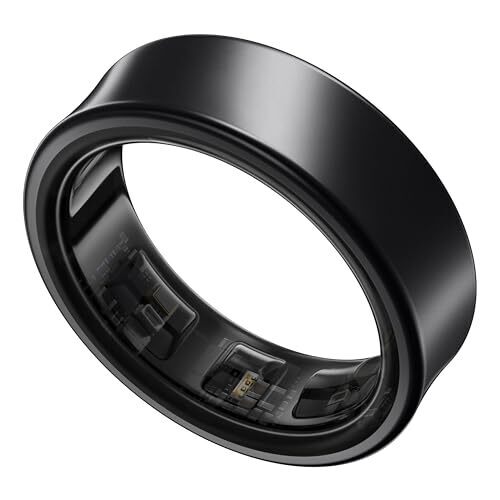
If you’ve been curious about smart rings but hesitant about the price, I’ve got great news: Normally $399.99, the Samsung Galaxy Ring is currently on sale for $249.95 for Cyber Monday.

As Lifehacker’s own Daniel Oropeza says, Samsung’s Galaxy Ring isn’t just a one-off experiment—it’s a well-made health-monitoring product. According to PCMag’s review, it’s a solid first-generation smart ring, though you’ll get the most out of it if you have a Samsung phone.

If you are already part of the Samsung ecosystem, this ring is great health and sleep tracker, monitoring metrics like heart rate, skin temperature, and sleep quality. However, if you’re looking for detailed activity tracking, you’re still better off with a smartwatch. This is more about passive health monitoring throughout your day and night.

Design and features

The Galaxy Ring comes with a titanium finish in gold, silver, and black. Like Oura rings, it’s a bit bulkier than a regular ring at 7mm wide and 2.6mm thick—something to consider if you’re not used to wearing jewelry.

Samsung users get extra perks: You can control your phone’s camera or dismiss alarms by tapping your ring finger to your thumb twice in a row. It’s a small touch, but these kinds of integrations make the device feel more seamlessly connected to your tech ecosystem.

No subscription required

Here’s the biggest advantage over the main competition: The Galaxy Ring is subscription-free. Oura rings require an ongoing monthly fee to access your health data, but Samsung gives you full access without additional costs. That alone could save you hundreds of dollars over the ring’s lifetime.

The ring is IP68 water resistant, so you can wash your hands and shower without worrying about it. It comes with a wireless charging case, and the battery lasts about six days per charge. Sizes range from five to 15, so most people should find a comfortable fit.


What stores have the best sales on Cyber Monday?

Nowadays, both large retailers and small businesses compete for Cyber Monday shoppers, so you can expect practically every store to run sales through Monday, December 1, 2025. The “best” sales depend on your needs, but in general, the biggest discounts tend to come from larger retailers that can afford lower prices: think places like Amazon, Walmart, Target, Best Buy, and Home Depot. You can find all the best sales from major retailers on our live blog. 

Are Cyber Monday deals worth it?

In short, yes, Cyber Monday still offers discounts that can be rare throughout the rest of the year. If there’s something you want to buy, or you’re shopping for gifts, it’s a good time to look for discounts on what you need, especially tech sales, home improvement supplies, and fitness tech. Of course, if you need to save money, the best way to save is to not buy anything. 

Are Cyber Monday deals better than Black Friday?

Black Friday used to be bigger for major retailers and more expensive tech and appliances, while Cyber Monday was for cheaper tech and gave smaller businesses a chance to compete online. Nowadays, though, the distinction is almost meaningless. Every major retailer will offer sales on both days, and the smart move is to know what you want, use price trackers or refer to guides like our live blog that use price trackers for you, and don’t stress over finding the perfect timing.

Our Best Editor-Vetted Cyber Monday Deals Right Now


Sony WH-1000XM5


—
$248.00

(List Price $399.99)


Amazon Fire TV Stick 4K Plus


—
$24.99

(List Price $49.99)

Deals are selected by our commerce team

This Budget-Friendly AirTag Alternative Is Half Off for Cyber Monday

We may earn a commission from links on this page. Deal pricing and availability subject to change after time of publication.

Cyber Monday is here, and Lifehacker is sharing the best sales based on product reviews, comparisons, and price-tracking tools before the sales are over. 

  • Follow our live blog to stay up-to-date on the best sales we find.

  • Browse our editors’ picks for a curated list of our favorite sales on laptops, fitness tech, appliances, and more.

  • Subscribe to our shopping newsletter, Add to Cart, for the best sales sent to your inbox.

  • Sales are accurate at the time of publication, but prices and inventory are always subject to change. 


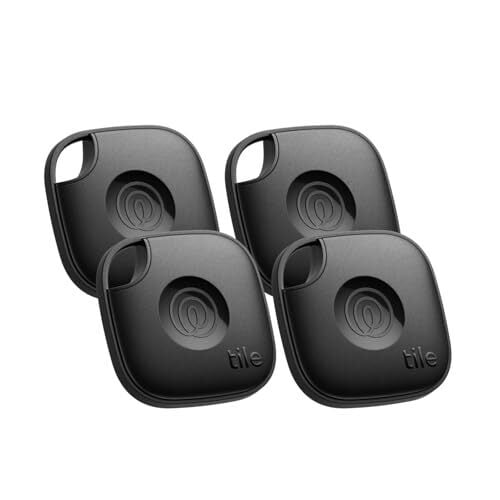
Bluetooth tracking tags are the perfect holiday gift; they’re both high-tech and practical, they’re easy to set up and use, and literally everyone has something they lose, from luggage, to laptops, to car keys, to pets. Plus, they’re compact and easy to wrap. Best of all, these Mate tags from Tile are —especially while they’re 50% off for Cyber Monday.

They work like this: You affix them to whatever you like, and then you can either see where the item is on a map on your phone or play an alarm. But that’s only half of what makes these trackers useful, because also work in reverse: You can click a Mate and it will ring your phone in case you lose that.

A four pack of Mate trackers for $39.99 is the lowest price Amazon has ever offered, so this isn’t an illusionary bargain, and it’s much cheaper than Apple’s competing product: A four-pack of AirTags lists for $99, and is currently on sale for $62.99.


What stores have the best sales on Cyber Monday?

Nowadays, both large retailers and small businesses compete for Cyber Monday shoppers, so you can expect practically every store to run sales through Monday, December 1, 2025. The “best” sales depend on your needs, but in general, the biggest discounts tend to come from larger retailers that can afford lower prices: think places like Amazon, Walmart, Target, Best Buy, and Home Depot. You can find all the best sales from major retailers on our live blog. 

Are Cyber Monday deals worth it?

In short, yes, Cyber Monday still offers discounts that can be rare throughout the rest of the year. If there’s something you want to buy, or you’re shopping for gifts, it’s a good time to look for discounts on what you need, especially tech sales, home improvement supplies, and fitness tech. Of course, if you need to save money, the best way to save is to not buy anything. 

Are Cyber Monday deals better than Black Friday?

Black Friday used to be bigger for major retailers and more expensive tech and appliances, while Cyber Monday was for cheaper tech and gave smaller businesses a chance to compete online. Nowadays, though, the distinction is almost meaningless. Every major retailer will offer sales on both days, and the smart move is to know what you want, use price trackers or refer to guides like our live blog that use price trackers for you, and don’t stress over finding the perfect timing.

Our Best Editor-Vetted Cyber Monday Deals Right Now


Sony WH-1000XM5


—
$248.00

(List Price $399.99)


Amazon Fire TV Stick 4K Plus


—
$24.99

(List Price $49.99)

Deals are selected by our commerce team