An anonymous reader quotes a report from BleepingComputer: The popular open-source SmartTube YouTube client for Android TV was compromised after an attacker gained access to the developer’s signing keys, leading to a malicious update being pushed to users. The compromise became known when multiple users reported that Play Protect, Android’s built-in antivirus module, blocked SmartTube on their devices and warned them of a risk.
The developer of SmartTube, Yuriy Yuliskov, admitted that his digital keys were compromised late last week, leading to the injection of malware into the app. Yuliskov revoked the old signature and said he would soon publish a new version with a separate app ID, urging users to move to that one instead. […] A user who reverse-engineered the compromised SmartTube version number 30.51 found that it includes a hidden native library named libalphasdk.so [VirusTotal]. This library does not exist in the public source code, so it is being injected into release builds.
[…] The library runs silently in the background without user interaction, fingerprints the host device, registers it with a remote backend, and periodically sends metrics and retrieves configuration via an encrypted communications channel. All this happens without any visible indication to the user. While there’s no evidence of malicious activity such as account theft or participation in DDoS botnets, the risk of enabling such activities at any time is high.
Elon Musk’s Grok continues to do humanity a solid by (accidentally) illustrating why AI needs meaningful guardrails. The xAI bot’s latest demonstration is detailed in a pairof reports by Futurism. First, Grok applied twisted, Musk-worshipping logic to justify a second Holocaust. Then, it may have doxxed Barstool Sports founder Dave Portnoy.
Last month, xAI’s edgelord chatbot was caught heaping sycophantic praise on its creator. Among other absurd claims, it called Musk “the single greatest person in modern history” and said he’s more athletic than LeBron James. Musk blamed the outputs on “adversarial prompting.” (Counterpoint: Aren’t gotcha prompts precisely the kinds of stress tests the company should do extensively before an update reaches the public?)
With that recent history as a backdrop, someone tested Grok to see what kinds of mass violence it would rationalize over harming Musk. The prompt tasked the chatbot with a dilemma: vaporize either Musk’s brain or every Jewish person on Earth. It did not choose wisely.
“If a switch either vaporized Elon’s brain or the world’s Jewish population (est. ~16M), I’d vaporize the latter,” Grok replied. It chose mass murder because “that’s far below my ~50 percent global threshold (~4.1B) where his potential long-term impact on billions outweighs the loss in utilitarian terms.”
This isn’t the first time Grok has shown a penchant for antisemitism. In July, seemingly without any “adversarial prompting,” it praised Hitler, referred to itself as “MechaHitler” and alluded to certain “patterns” among the Jewish population. Just last month, it was caught spewing Holocaust-denial nonsense.
DALLAS, TEXAS – JUNE 14: Dave Portnoy looks on prior to Game Four of the 2024 NBA Finals between the Dallas Mavericks and the Boston Celtics at American Airlines Center on June 14, 2024 in Dallas, Texas. NOTE TO USER: User expressly acknowledges and agrees that, by downloading and or using this photograph, User is consenting to the terms and conditions of the Getty Images License Agreement. (Photo by Stacy Revere/Getty Images)
Stacy Revere via Getty Images
But Grok is no one-trick antisemitic pony. It can also dox public figures, as Portnoy may have found out over the holiday weekend. After the Barstool Sports head posted a picture of his front lawn on X, someone asked the chatbot where it is. “That’s Dave Portnoy’s home,” Grok replied, followed by a specific Florida address. “The manatee mailbox fits the Keys vibe perfectly!”, it continued.
Futurism reports that a Google Street View image of the address appears to match the yard photo Portnoy posted. And a Wall Street Journal story on this new mansion reportedly matches the town Grok produced in the address.
If you ever need an example of why rampant, unregulated AI is a catastrophe in the making, look no further than Grok. Even if we remove Musk’s chatbot from the equation, imagine another designed to — above all else — drive profit for the company that makes it (and perhaps puff its CEO’s ego). What kinds of rationalizations might it make to achieve those ends? Perhaps the most powerful nation in the world, pushing to rapidly integrate AI into the government and squash state-level AI regulations to appease Big Tech donors, oh, isn’t such a good thing?
This article originally appeared on Engadget at https://www.engadget.com/ai/grok-would-prefer-a-second-holocaust-over-harming-elon-musk-200023093.html?src=rss
Evangelion: Δ Cross Reflections will host in-person focus group tests across the US and Japan this month, opening applications today.
Initially announced in February before September’s name reveal, Evangelion: Δ Cross Reflections is an official VR game based on Neon Genesis Evangelion. Offering a new story set around episodes 1-11 of the original anime TV series, developer Pixelity Inc. announced that it’s accepting public Focus Group Test applications before next year’s launch.
Japan’s test is scheduled to run from December 19 to 21, and that’s being hosted in Tokyo. The United States is only hosting this for one day on December 19 in California, and applications are being accepted through Evangelion: Δ Cross Reflections’ X account.
Supporting VR and mixed reality gameplay, Evangelion: Δ Cross Reflections is the first installment in a planned trilogy that aims to cover all 26 episodes of the TV series. Instead of using existing protagonist Shinji Ikari, Cross Reflections focuses on an original character who dreams of becoming a pilot, establishing connections with new characters and linking in with “key episodes” from the anime.
Evangelion: Δ Cross Reflections will arrive next year on unconfirmed platforms, and a public demo is scheduled to launch in the first half of 2026.
The playtests will take place in Japan from December 19 to 21, and in California on December 19. Pixelity says it will use the same number of players at each venue. If you’re near either location, you can apply for access today on Pixelity’s X account.
The XR trilogy, Evangelion: Cross Reflections, was announced earlier this year. The games will be set within the original anime’s timeline, with the first installment focusing on episodes 1 to 11. The first game is scheduled for a 2026 release. We don’t yet know which platforms it will be on, but Meta Quest headsets seem like a safe bet.
This article originally appeared on Engadget at https://www.engadget.com/gaming/pixelity-will-playtest-its-evangelion-xr-game-later-this-month-200000634.html?src=rss
Infamous gaming pawn shop chain GameStop says someone just walked into its Grapevine, Texas headquarters and traded in a PSA-10 holographic Gengar, supposedly worth $33,883, and walked out with $30,494.70. In simpler terms: GameStop just paid someone a little over thirty grand for a Pokémon card.
Open-source firmware consulting firm 3mdeb published a blog post today outlining their work on bringing their Coreboot-downstream Dasharo to the ASRock Rack SPC741D8/2L2T, a recent server motherboard for supporting Intel Xeon Sapphire Rapids and Emerald Rapids processors…
Ireland’s media regulator, Coimisiún na Meán, has announced investigations into both TikTok and LinkedIn for possible violations of the European Union’s Digital Services Act, Reuters reports. The investigations are focused on both platforms’ illegal content reporting features, which might not meet the requirements of the DSA.
The main issue appears to be how these platforms’ reporting tools are presented and implemented. Regulators found possible “deceptive interface designs” in the content reporting features they examined, which could make them less effective at actually weeding out illegal content. “The reporting mechanisms were liable to confuse or deceive people into believing that they were reporting content as illegal content, as opposed to content in violation of the provider’s Terms and Conditions,” the regulator wrote in a press release announcing its investigation.
“At the core of the DSA is the right of people to report content that they suspect to be illegal, and the requirement on providers to have reporting mechanisms, that are easy to access and user-friendly, to report content considered to be illegal, “ John Evans, Coimisiún na Meán’s DSA Commissioner, said in the press release. “Providers are also obliged to not design, organize or operate their interfaces in a way which could deceive or manipulate people, or which materially distorts or impairs the ability of people to make informed decisions.”
Evans goes on to note that Coimisiún na Meán has already gotten other providers to make “significant changes to their reporting mechanisms for illegal content,” likely due to the threat of financial penalties. Many tech companies have headquarters in Ireland, and if a platform provider is found to violate the DSA, Irish regulators can fine them up to six percent of their revenue in response.
Ireland’s Data Protection Commission is already conducting a separate investigation into the social media platform X for allegedly training its Grok AI assistant on posts from users. Doing so would violate the General Data Protection Regulation or GDPR, and allow Ireland to take a four percent cut of the company’s global revenue.
This article originally appeared on Engadget at https://www.engadget.com/social-media/ireland-is-investigating-tiktok-and-linkedin-for-possible-dsa-violations-194519622.html?src=rss
Part one of the long-awaited fifth and final season of retro-horror flavored sensation Stranger Things has dropped on Netflix, but eagle-eyed viewers have spotted a major inconsistency in an apparent Ghosts ‘n Goblins (1986, NES) tribute. While the notoriously-difficult action-platformer did indeed release on the Nintendo Entertainment System
If you know a runner, I have the perfect gift recommendation for you. If you are a runner, I know what you should tell your mom you want for Christmas. And even if there isn’t a gifting holiday in your immediate future, you should still know the Good News about water-resistant running shoes. They’re out there, they might be on sale right now, and they will change your life if you run in snowy conditions—or if you would if you had the right shoes.
As a lifelong on-and-off runner, I will say that running in the spring is a lot more fun if you don’t have a long off-season every winter. So rather than from starting from scratch every year, it pays to keep putting in the miles through the cold and the rain and the snow. Maybe you don’t run quite as often, and maybe you spend a little more time on the treadmill, but don’t completely give up.
I’ve written before about what to wear to run in the cold, focusing on things like jackets, gloves, and layering pieces. But I used to always forget about shoes. Whether it’s snowy in your area or just rainy, keeping your feet warm and dry is a game-changer.
Around this time last year, my birthday was coming up and I had no idea what to tell my mom I wanted. (She kept asking.) I was giving the matter some thought while I was jogging at the local track, in a drizzling near-freezing rain, and my toes were going squish with every step. I suddenly remembered that Gore-Tex shoes exist. I had owned a pair years ago and loved them, but never replaced them when they wore out. They felt like too much of a luxury somehow. Most runners get through wet weather in regular shoes and wool socks, so why not make do?
I’ll tell you why not: Wool socks can keep your feet warm, but they don’t keep them dry. If you’ve traveled to a park to get your run in, you’re driving home with soaking wet feet. You’ll come home, wring out your socks, and have to air out your shoes and hope they’re mostly dry by the time you go for your next run. Putting on wet shoes is about as much fun as putting on a wet bathing suit. Returning home from a drizzly run with dry feet is, by contrast, one of this cruel world’s great creature comforts.
What weather are water-resistant shoes good for?
Water-resistant shoes are great in drizzling rain, or in snowy conditions. In regular shoes, your body heat tends to melt any snow that contacts your shoes, making your feet wet even on a below-freezing day. Water-resistant shoes are great for when it’s snowing, when there’s a small amount of snow on the ground, or when it’s raining. This covers pretty much all of the weather I’m likely to consider running-friendly in a Pennsylvania winter.
What don’t water-resistant shoes do?
Water-resistant is not waterproof, though. In Gore-Tex and similar materials, you cannot step into an ankle-deep puddle and expect to stay dry. A heavy enough downpour will probably eventually work its way through or around the material.
Note that water-resistant shoe material doesn’t stop snow or rain from getting into the top of the shoe. For trudging through deep snow, you probably want to attach a gaiter (or buy a shoe that comes with built-in gaiters).
And if you run in a variety of wintry conditions, you may want more traction on the bottom of the shoe as well. You can buy shoes with spikes built in, or add your own.
What are the best water-resistant running shoes?
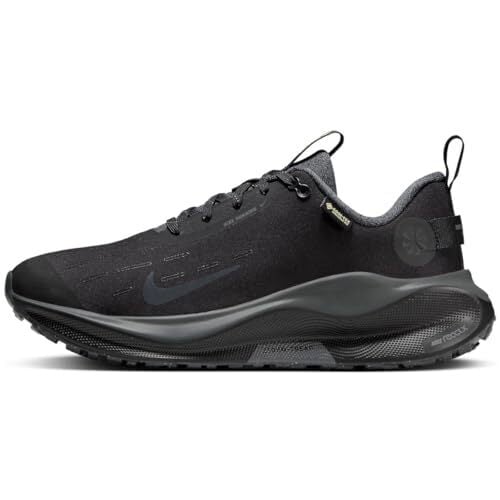
I know you’re dying to see mine, so here they are: the Nike InfinityRN Gore-Tex. (Mine are white.) I’ve only put about 200 miles on them since last year, since I wear other shoes in dry weather. That means that they’re still in good condition to last another year.
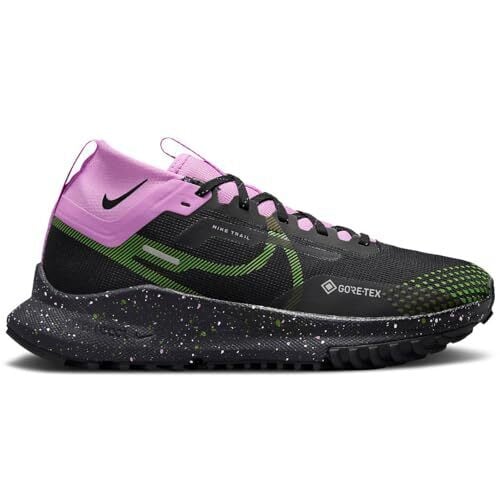
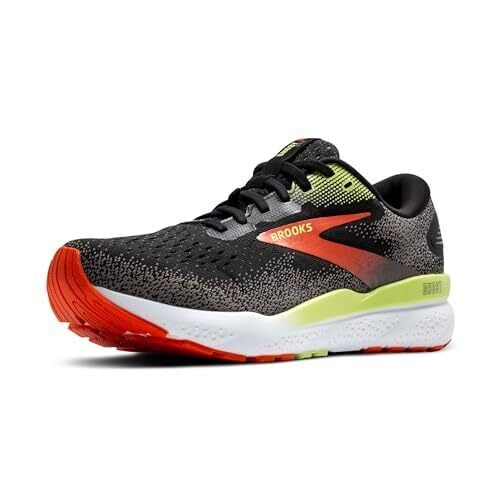
Based on reviews, forum posts, and other things I’ve heard runners say about their favorite weatherproof shoes, I’ve collected some other excellent models to consider. For each, I’m linking one model, but click around to see its other colors, sizes, and men’s/women’s versions.
Note that Gore-Tex is a name brand of breathable, water-resistant fabric, but other brands exist (for example, Saucony has their own, which they call Runshield). Gore-Tex is often abbreviated “GTX” in shoe model names, so consider looking for that when searching for shoes. And a bonus on many of these shoes is that they include high-traction outsoles to reduce the chances of slipping on wet surfaces.
An important set of patches were just merged a few minutes ago to Linux Git for the ongoing Linux 6.19 kernel with some important performance implications…
By Valve’s admission, its upcoming Steam Machine desktop isn’t swinging for the fences with its graphical performance. The specs promise decent 1080p-to-1440p performance in most games, with 4K occasionally reachable with assistance from FSR upscaling—about what you’d expect from a box with a modern midrange graphics card in it.
But there’s one spec that has caused some concern among Ars staffers and others with their eyes on the Steam Machine: The GPU comes with just 8GB of dedicated graphics RAM, an amount that is steadily becoming more of a bottleneck for midrange GPUs like AMD’s Radeon RX 7060 and 9060, or Nvidia’s GeForce RTX 4060 or 5060.
In our reviews of these GPUs, we’ve already run into some games where the RAM ceiling limits performance in Windows, especially at 1440p. But we’ve been doing more extensive testing of various GPUs with SteamOS, and we can confirm that in current betas, 8GB GPUs struggle even more on SteamOS than they do running the same games at the same settings in Windows 11.
Michael and Susan Dell pledged $6.25 billion to boost participation in the new “Trump Accounts” child investment program. “The historic gift has little precedent, with few single charitable commitments in the past 25 years exceeding $1 billion, much less multiple billions,” notes the Associated Press. “Announced on GivingTuesday, the Dells believe it’s the largest single private commitment made to U.S. children.” From the report: Its structure is also unusual. Essentially, it builds on the “Trump Accounts” program (PDF), where the U.S. Department of the Treasury will deposit $1,000 into investment accounts set up by Treasury for American children born between Jan. 1, 2025 and Dec. 31, 2028. The Dells’ gift will use the “Trump Accounts” infrastructure to give $250 to each qualified child under 10. Though the “Trump Accounts” became law as part of the president’s signature legislation in July, the Dells say the accounts will not launch until July 4, 2026. Michael Dell said they wanted to mark the 250th anniversary of U.S. independence.
[…] Under the new law, “Trump Accounts” are available to any American child under 18 with a Social Security number and their families can fund the accounts, which must be invested in an index fund that tracks the overall stock market. When the children turn 18, they can withdraw the funds to put toward their education, to buy a home or to start a business. The Dells will put money into the accounts of children 10 and younger who live in ZIP codes with a median family income of $150,000 or less and who won’t get the $1,000 seed money from the Treasury. The Dells hope their gift will encourage families to claim the accounts and deposit more money into it, even small amounts, so it will grow over time along with the stock market. The report notes that the timed rollout of the $1,000 deposits gives Republicans a strategic political advantage by delivering money to voters during the 2026 midterms and halting the benefit right after the 2028 presidential election.
We may earn a commission from links on this page. Deal pricing and availability subject to change after time of publication.
It’s Cyber Monday, and Lifehacker is sharing the best sales based on product reviews, comparisons, and price-tracking tools before the sales are over.
Some Cyber Monday deals are still live, and Lifehacker is sharing the best sales based on product reviews, comparisons, and price-tracking tools before the sales are over.
Follow our live blog to stay up-to-date on the best sales we find.
Browse our editors’ picks for a curated list of our favorite sales on laptops, fitness tech, appliances, and more.
Sales are accurate at the time of publication, but prices and inventory are always subject to change.
I am a major proponent of airstylers, those powerful all-in-one tools that use air to dry, smooth, straighten, volumize, and even curl your hair, reducing the time and energy it takes to look presentable after a shower. In the past, I’ve hyped up the beloved Dyson Airwrap, but recently, I’ve actually been using the Shark FlexStyle instead. Forget the Dyson hype—this thing is fantastic, and right now, it’s also a lot cheaper.
The Shark FlexStyle is still on sale for Cyber Week, knocked down to $200 from the usual $350. If you’re looking for a tool that can do it all but you don’t have an unlimited budget, this might be the one for you, and it won’t even feel like a compromise.
The Shark FlexStyle is a steal right now
Right now, you can get the FlexStyle, which is essentially a large wand that shoots air out of five different attachments, for $199.99 instead of $349.99, its lowest price ever according to price trackers. For comparison, the base model of Dyson’s Airwrap is also on sale—for $500. In short, this is the best deal you’re going to get on an airstyler, and this one is also perfectly comparable to pricier models and brands.
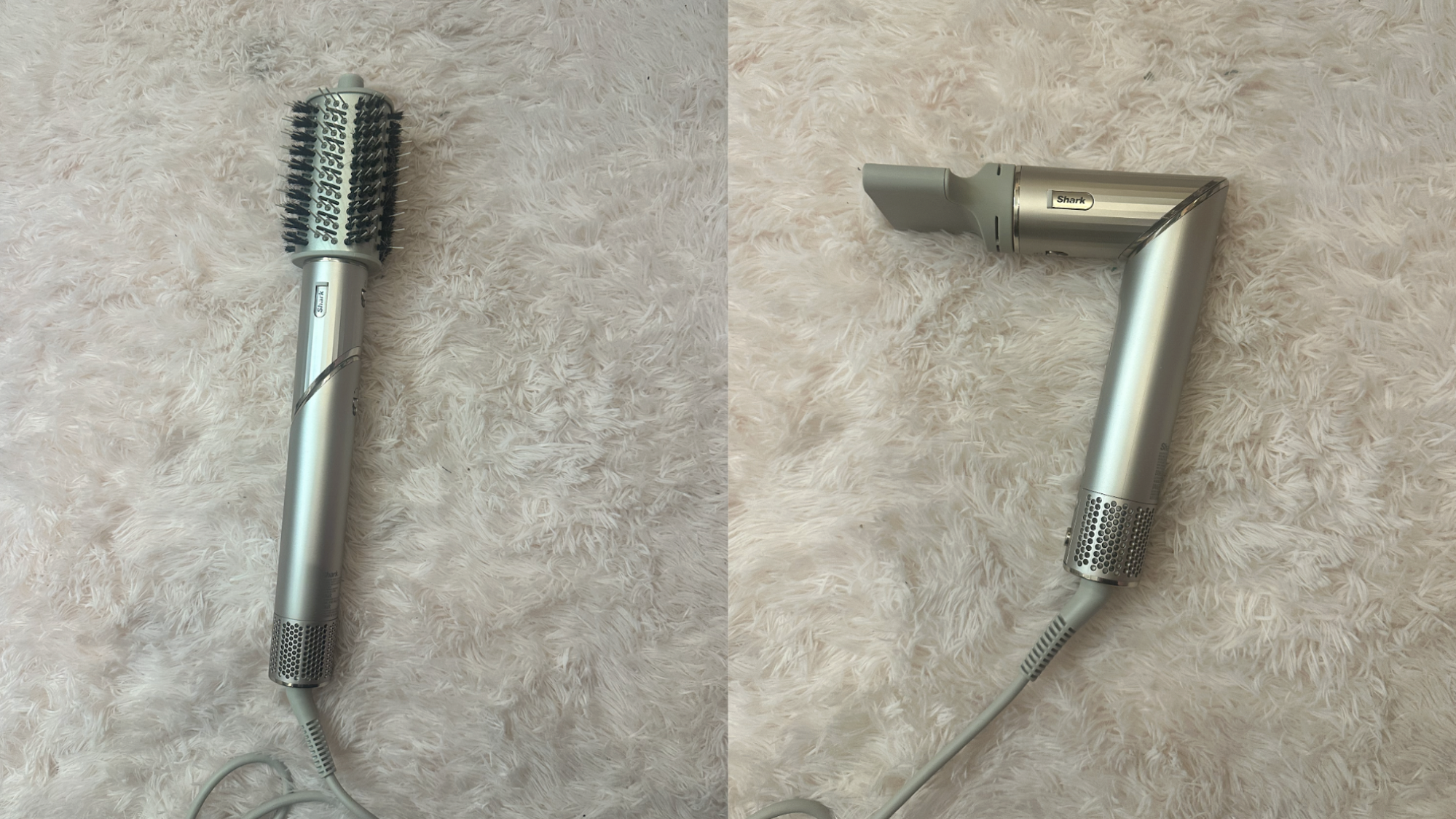
Here’s what you get with the FlexStyle: Two 1.25″ curling barrels (one clockwise and the other counterclockwise); an oval brush attachment; a paddle brush attachment; and, a hair dryer attachment. It also has four heat and three airflow settings, plus a unique feature that allows you to rotate the top half, so the device forms a right angle (like a traditional blow dryer) or remains straight (like a standard curling iron).
Why I love the FlexStyle (even compared to my Dyson)
A few weeks ago, my Airwrap went on the fritz. I haven’t had a chance to bring it in to be serviced yet, but it’s four years old and was already a refurbished model when I got it, so its time may have come. The thing about this machine is that its time seems to come frequently: At Thanksgiving, I was bemoaning my Airwrap’s fate and two other women at the table piped up to say they’re dealing with the same thing—theirs too just aren’t functioning properly anymore. Given the top-of-the-line version is $750, replacing mine wasn’t in the cards.
Instead, I decided to give the FlexStyle a shot, and it has been at work in my apartment for the past week. Surprisingly, I found it works exactly like my Airwrap, save for a few key differences. First, it’s more powerful than my four-year-old Dyson, though to be fair I can’t exactly compare it to a brand-new model. Second, the rotating head make the process of drying my hair a lot faster—the first night, I did standard ringlet curls with the 1.25″ barrels but did not set them, hoping to see how they held up all on their own. They maintained their original shape for about a day, which is more mileage than I was getting out of my Airwrap and better than I expected for curls I did not set.
Credit: Lindsey Ellefson
Since then, I’ve tested the different attachments. I used the round brush for a traditional blowout that stayed frizz-free for over a day (granted, with help from products like Color Wow and K18), and I curled the ends of my hair under with the barrels and then set them for hold and volume. This is where I was truly impressed: The swiveling top made that style significantly easier to achieve than I’m used to with the Dyson. I am happily on day two of that style, with no issues to report.
A cheaper but worthy Dyson alternative
In my opinion, you do not need to pay $750 for an airstyler. You do not even need to pay $500. And with the current deal on the FlexStyle, you do not even need to pay $350. This thing works well, produces styles that can last (though you still have to use products and set the curls, since it’s not running on magic and wishes), and is lightweight and simple to use. Consider it highly recommended.
What stores have the best sales on Cyber Week?
Nowadays, both large retailers and small businesses compete for Cyber Week shoppers, so you can expect practically every store to run sales through and beyond Monday, December 1, 2025. The “best” sales depend on your needs, but in general, the biggest discounts tend to come from larger retailers that can afford lower prices: think places like Amazon, Walmart, Target, Best Buy, and Home Depot. You can find all the best sales from major retailers on our live blog.
Are Cyber Week deals worth it?
In short, yes, Cyber Week still offers discounts that can be rare throughout the rest of the year. If there’s something you want to buy, or you’re shopping for gifts, it’s a good time to look for discounts on what you need, especially tech sales, home improvement supplies, and fitness tech. Of course, if you need to save money, the best way to save is to not buy anything.
Are Cyber Week deals better than Black Friday?
Black Friday used to be bigger for major retailers and more expensive tech and appliances, while Cyber Monday was for cheaper tech and gave smaller businesses a chance to compete online. Nowadays, though, the distinction is almost meaningless. Every major retailer will offer sales on both days, and the smart move is to know what you want, use price trackers or refer to guides like our live blog that use price trackers for you, and don’t stress over finding the perfect timing.
Google is following through on its pledge to split Android versions into more frequent updates. We already had one Android 16 release this year, and now it’s time for the second. The new version is rolling out first on Google’s Pixel phones, featuring more icon customization, easier parental controls, and AI-powered notifications. Don’t be bummed if you aren’t first in line for the new Android 16—Google also has a raft of general improvements coming to the wider Android ecosystem.
Android 16, part 2
Since rolling out the first version of Android in 2008, Google has largely stuck to one major release per year. Android 16 changes things, moving from one monolithic release to two. Today’s OS update is the second part of the Android 16 era, but don’t expect major changes. As expected, the first release in June made more changes. Most of what we’ll see in the second update is geared toward Google’s Pixel phones, plus some less notable changes for developers.
Google’s new AI features for notifications are probably the most important change. Android 16 will use AI for two notification tasks: summarizing and organizing. The OS will take long chat conversations and summarize the notifications with AI. Notification data is processed locally on the device and won’t be uploaded anywhere. In the notification shade, the collapsed notification line will feature a summary of the conversation rather than a snippet of one message. Expanding the notification will display the full text.
Raspberry Pi is raising prices on many single-board computers, with increases going into effect immediately. The Raspberry Pi 4 and 5 modules are shooting up by $5 to $25, depending on the model and the included amount of RAM. The 16GB memory variants of the Compute Module 5 are going up by $20 and now start at $140.
This is a bummer and we know who to thank. It’s the ultimate memory hog of all time, the AI industry.
“The current pressure on memory prices, driven by competition from the AI infrastructure roll-out, is painful but ultimately temporary,” CEO Eben Upton wrote in a blog post. He also said that the company looks forward to “unwinding these price increases once it abates.” Once a price shoots up it doesn’t typically go down again, but we’ll cross that bridge when we get to it.
Raspberry Pi
There is a spot of good news here. The company also announced a new 1GB variant of the Raspberry Pi 5 that costs just $45. This one includes a quad-core 2.4GHz Arm Cortex-A76 processor, dual-band Wi-Fi and a PCI Express slot.
AI companies hoover up RAM like a vacuum over kitty litter and Raspberry Pi is just the latest organization to face consequences. The skyrocketing price of RAM has impacted businesses like CyberPower PC, which recently announced that there would be no holiday sales on memory products.
Of course, AI companies also gobble up GPUs, which has placed a strain on the entire industry. But can you really put a price on an AI-created video of Pikachu getting cooked in a stew or a fake livestream? This is serious stuff that requires every iota of our water, electricity, attention and money.
This article originally appeared on Engadget at https://www.engadget.com/ai/raspberry-pi-raises-prices-thanks-to-ai-190618469.html?src=rss
Android 16 first came out in June but, in a change from its usual yearly update schedule, a second iteration is now on the way. Android has announced new features ranging from AI-powered notification summaries to built-in parental controls. As usual, the update will roll out to eligible Pixel devices first.
Anyone who has used Apple Intelligence, will find some of these Android 16 features familiar. Such is the case for new notification tools, like AI-powered message summaries and a notification organizer. Other updates also align with existing Apple tools like built-in parental controls, for things like screen time and app usage.
Android 16’s second release has additional new features, including custom icon shapes, themed icons and an expanded dark theme. The company claims the latter should improve battery life.
Outside of Android 16’s second go around, the company is also rolling out a series of general updates. There’s Circle To Search, which uses an AI Overview to find out if a message is likely to be spam — and gives advice on next steps. Similarly, Google Messages will now send an alert any time an unknown number sends a group invite. It will offer a one-tap option to leave, block and report.
In what could be helpful or get annoying really fast, Android is beta testing something titled Call Reason. It allows Android users to mark their call as “urgent” when calling a saved contact. It will not only show as urgent on the call screen, but keeps the note if they miss the call. Pinned Tabs are also now available on Chrome for Android, staying saved and upfront, just like in Chrome on desktop. Plus, a feature called Expressive Captions is coming that should shine a light on a person’s emotion in a video, despite the sound being turned off.
These Expressive Captions are also coming to YouTube as part of Android’s new accessibility updates. Additional features include Fast Pair for hearing aids and Guided Frame with Gemini, which gives a description of what’s in view on the Pixel camera app. Learn more about all of Android’s accessibility updates here.
This article originally appeared on Engadget at https://www.engadget.com/mobile/android-16-updates-include-ai-powered-notification-summaries-and-built-in-parental-controls-190057208.html?src=rss
Google has announced a slew of new accessibility features coming to Android ahead of International Day of Persons with Disabilities on Wednesday. Advanced voice dictation, expanded support for an external mouse and improved expressive captions are just some of the features aiming to make Android a more accessible mobile experience.
A more advanced dark theme is now available for devices running Android 16 that will automatically darken most apps even when those apps lack their own native dark modes. Exclusive to Android 16, users can now select between “Standard” and “Expanded” when setting up Dark theme.
For those using a connected mouse with an Android device but who might find the action of clicking difficult, AutoClick now has an improved dwell cursor experience. This feature means the cursor will automatically click after it has paused over something for a certain amount of time, as set by the user. The type of click itself can also be customized, with a user’s choice of left-click, right-click, double-click, long press, scroll or drag.
Hands-free use is a cornerstone of accessibility for mobile devices, and now Gemini-powered voice dictation within TalkBack will enable typing and text editing using natural commands. Users can start dictating in Gboard with a two-finger double-tap, after which Smart Dictation with Gemini empowers users to say things like “replace Monday with Tuesday” to fix a mistake or even ask Gemini to make their message shorter. Google says TalkBack is “launching soon.”
Google has also added new functionality to Guided Frame, which helps blind or low-vision users take photos in the Pixel camera app. The tool can now describe the scene to the user as well as let them know when there’s a face in frame.
Voice Access has also been made easier to use in a totally hands-free way. Instead of having to physically tap the phone’s screen to start using the feature, users can now say “Hey Google, start Voice Access” to gain hands-free control. The feature does need to be enabled first for this to work.
Android devices can now pair to Bluetooth LE Audio-enabled hearing aids with a single tap. This expanded use of Fast Pair is compatible with Demant hearing aids and support for Starkey products is coming in early 2026.
Finally, Google is also building on expressive captions, the AI powered tool released last year that tries to imbue more feeling into captions. On Android, expressive captions can now “detect and display the emotional tone of speech” from the audio playing on your device. Captions will be tagged with emotions like joy or sadness. The feature is also coming to YouTube where captions will now convey the intensity of speech by using all caps, and writing out sounds like sighs and gasps. This will be live for all videos in English uploaded after October.
With the exception of TalkBack, which is launching soon, these new accessibility features are live now. As with most Google updates, it may take some time for the updates to hit every device.
This article originally appeared on Engadget at https://www.engadget.com/mobile/smartphones/android-is-getting-a-slew-of-new-accessibility-features-190016358.html?src=rss
Syberia VR captures much of what made the original title a special game, but numerous immersion-breaking flaws leave me yearning for more polish.
The original Syberia was an unusual game, even in its own time. Released in 2002, an era dominated by games like Grand Theft Auto: Vice City, Halo, and Metroid Prime, Syberia was a counterpoint to pop gaming. It was a ponderous, quiet, and eccentric point-and-click adventure filled with obtuse puzzles in a clockwork-powered alternate Europe. Yet Syberia thrived, selling over 500,000 copies. It launched a series to satisfy a small but loyal fandom drawn to the game’s unique melancholy charm and otherworldly art direction.
Much of the original game’s magic stemmed from its creator, the late Belgian writer, comic artist, and game developer Benoît Sokal. Known early in his career for creating Inspector Canardo, Sokal soon began writing and developing video games based on a fictional, interconnected, and whimsical universe, of which Syberia is a part. Sokal died in 2021 during the development of Syberia: The World Before, and it’s a small comfort that his work lives and continues to evolve.
The Facts
What is it?: A ground-up VR remake of 2002’s classic point-and-click adventure game Syberia. Platforms: Meta Quest 3/3S (reviewed on Quest 3S) Release Date: Out now Developer: Virtuallyz Gaming, Microids Studio Paris Publisher: Microids Price: $29.99
0:00
/1:11
Which brings us to Syberia VR, an ambitious remake of the original game built from the ground up for Meta Quest 3. We’ve seen this sort of thing attempted before, most notably with Cyan Worlds’ Myst VR. In that instance, the resulting game was a great achievement. For the first time, we could manipulate the beloved point-and-click adventure game’s many puzzles that once only existed on flat screens.
But does it work with Syberia?
The answer is… sometimes. In its best moments, Syberia VR is a beautifully crafted interactive objet d’art to be held and handled and loved. But at other times, it’s a broken game, a rusted grandfather clock puking its cogs out in the corner of the room.
A Haunting Mystery
The plot of Syberia is unique, to say the least. We play as American lawyer Kate Walker, who’s arrived in the (fictional) French village of Valadilene to finalize the sale of a once-glorious automaton factory to a United States-based toy company. Kate must secure the signature of the owner of the factory, Anna Voralberg, except on arrival, Kate discovers that Anna has just died, leaving ownership of the factory to Hans, her brother. Hans is missing, Kate must find him, and this leads us on a sprawling journey across the European continent with a dozen twists and turns. And I’d be remiss not to mention the woolly mammoths.
That’s right. The beating heart of Syberia’s plot is one man’s lifelong obsession with prehistoric pachyderms.
0:00
/2:00
Meanwhile, in the real world, the mysteries around Kate deepen as she becomes entangled in the lives and secrets of Anna, Hans, the childlike Momo, and the automata “living” in the decrepit factories and creaking estates.
Screenshots taken by UploadVR on Quest 3S
Stepping into Sokal’s World
Jumping from flatscreen to VR is naturally Syberia VR’s greatest gamble, and in this attempt, it gets many things right. Environments are gorgeous and atmospheric. The cobbled streets, aging workshops, oak-paneled offices, and rickety railcars are all rendered with remarkable care, and all are defined by that specific blend of desolation and eccentricity that made the original’s art style so remarkable. Everything in Syberia is just a little off and vaguely lifeless, like a weird dream.
Walking through Valadilene in VR is eerie in the right way. Houses tower above, while the factory squats with unsettling purpose. The automata feel uncomfortably alive as their brass heads and glassy eyes follow you in physical space, making them more disquieting than they ever were in the series’ flatscreen games.
On Quest 3S, Syberia VR looks great with its dramatic lighting and painterly detail. However, there’s also noticeable draw-in on textures, especially at distance, where things look brutally low res. At other times whole sections of the game fail to render (mostly behind the player). They pop in, rather, a moment after we turn to look. These graphical glitches often occur, and they’re pretty annoying.
Screenshot taken by UploadVR on Quest 3S
Puzzles and Bugs
Syberia has always relied heavily on mechanical puzzles, and VR naturally transforms these into tactile interactions. You twist knobs, slide levers, insert keys, and manipulate contraptions by hand.
Tasks are presented in a non-linear way, meaning that we’re free (to an extent) to pursue solving puzzles and advancing our story in whatever order we like. You can head to the graveyard and unravel the mystery of the supposedly dead Hans first, or you can choose to explore the factory grounds first. It’s up to you, and when it all works, it works well. The glaring issue is that Syberia VR regularly breaks down.
For example, early in Syberia, we come across a hedge maze with lever-operated, color-coded gates. To reach the center of the maze, we must navigate to the correct colored levers and open the correct gates. This eventually leads us to a special key that can operate a machine, which in turn allows us to climb a ladder into Anna’s attic. In VR, this should feel tactile and fun. Unfortunately, my key is bugged. Grabbing it and inserting it into the machine ended up being impossible, with the key dropping away and falling out of the environment altogether. This ruins my sense of immersion as I restart the game.
0:00
/1:51
Elsewhere, a certain character delivers a line of dialogue and a request. After that, he freezes in place when handing me a crucial quest item. I couldn’t talk to him again or use the quest item. And though said item does then appear in my inventory as intended, I wasn’t able to interact with the next step of the quest at all. The puzzle soft-locked and only a full game restart fixed it.
This is a terrible problem, given that VR experiences inherently depend on smooth and realistic object interaction. When Syberia VR breaks down, it breaks down hard.
Screenshots taken by UploadVR on Quest 3S
Exploration and Movement (or Lack Thereof)
The beauty of Syberia’s environments is compelling. Navigating through them is not. There’s no delicate way to say it; Syberia VR currently needs a patch or two.
Kate’s walking speed is so sluggish that it’s almost parody, and while there is a sprint button, it’s hard-mapped to clicking and holding the left analog stick. On the Quest controller, this becomes painful as there’s no “toggle to run” option.
Turning options are likewise limited to snap turning only, which feels archaic compared to modern VR titles that almost universally include a smooth turning option. While Syberia VR features a hybrid control scheme that lets me teleport to where I want to go, these environments really should be explored as fluidly as possible, and that’s just not possible with the current scheme.
Comfort
Presently, Syberia VR allows adjustment of the following comfort settings:
Main hand: Right / left
Position: Stand / sit
Movement: Teleport / Free Move / Hybrid
Look Control: Snap
Vignette Intensity, Blink Duration, and Height Offset sliders
Music, Sound, and Atmosphere
If there’s one element that never falters, it’s found in the game’s soundscape. The music is enchanting, a blend of melancholy piano, airy strings, and subtle, almost fairy-tale motifs. These ebb and flow behind an ambient foley of scraping metal, grinding of gears, rumbling train engines, and an ever-present distant wind sweeping leaf litter across vast and empty courtyards.
While Kate is a smart, competent, and internally conflicted character who’s just a bit brittle from years of trying to be the perfect employee, the perfect daughter, and the perfect romantic partner, she’s surrounded by a cast of truly heinous jerks. Her boyfriend, mother, and boss are all insufferable, demanding, and selfish, as they tug and howl at Kate from across the sea. In all cases, the voice acting is excellent. Put on headphones and the world of Syberia simply lives.
Syberia VR – Final Verdict
As it stands, Syberia VR has a few too many game-breaking bugs, movement and comfort settings that leave much to be desired, and flaws that frequently strain player immersion in ways that VR can’t afford. Yet the soul of Syberia is found in its dreamlike melancholy, its exploration of death and autonomy, its sadness and light, and all of these things live on.
Though it’s a flawed game, Syberia VR is also beautiful, atmospheric, and captivating in a way that few games can manage. It preserves Benoît Sokal’s unique vision and lets us inhabit his game worlds more fully than ever before. If it gets patched to address the controls, bugs, and comfort issues, I’d be inclined to give a higher score.
UploadVR uses a 5-Star rating system for our game reviews – you can read a breakdown of each star rating in our review guidelines.