Sony is bringing another of its long-running game franchises to iOS and Android in the shape of MLB The Show Mobile. This is a free-to-play “standalone experience built from the ground up to deliver realistic baseball gameplay on mobile devices.” San Diego Studio, the developer of every MLB The Show game since the series debuted in 2006, is behind this mobile game as well.
MLB The Show Mobile, which was spotted by Gematsu, doesn’t feature crossplay with console games. For now, it’s only available in the Philippines and it went live there on Wednesday. Sony says it doesn’t have a timeline in place for expanding availability to more territories, but it certainly plans to do that. It’s not uncommon for mobile games to have a soft launch in select regions before they’re made available elsewhere. Sony is doing the same thing with a Ratchet and Clank multiplayer game.
Sony is optimizing MLB The Show Mobile for more recent mobile devices. On the iOS side, that means “iPhone 16 or comparable” devices. As for Android, you’ll get the best experience on Samsung Galaxy S25, Sony Xperia V or a comparable device, according to the game’s website.
MLB The Show Mobile features solo and player-vs-player modes. There are more than 1,100 cards representing baseball players in the game. You’ll be able to build out an all-star roster of MLB players past and present, and upgrade their cards. San Diego Studio appears to be tapping into the Ultimate Team modes of EA Sports games, as you’ll be able to buy and sell cards with other players in a marketplace. Sony also notes that in-game purchases can include random items.
Each of these player cards has a momentum cost. These are stat points you can use strategically to better your chances of winning. The gameplay is skill-based. You’ll need to get the timing right to throw a great pitch or hit the ball out of the park. You’ll have real-time control of runners as well, so you can try to steal bases.
This article originally appeared on Engadget at https://www.engadget.com/gaming/playstation/sony-is-bringing-mlb-the-show-to-ios-and-android-163300468.html?src=rss
Rockstar fans might be all-in on waiting for GTA VI, but Grand Theft Auto is far from the only big title the company makes. One of Rockstar’s most impactful games, Red Dead Redemption, turned 15 in May. All these years later, it’s still very much worth your time—if critics and fans have anything to say about it.
On Tuesday, Rockstar announced some big news for the first Red Dead: First, anyone who owns a copy of the game for PS4, Xbox One, and Nintendo Switch, can now upgrade to the PS5, Xbox Series X|S, or Nintendo Switch 2 versions for free. That includes upgrades like 60 fps, upgraded visuals, support for HDR, and 4K resolution—at least on PlayStation and Xbox.
But console gamers aren’t the only ones impacted here. Rockstar also revealed that Red Dead Redemption is now available on mobile for the first time ever. This could open the game up to a whole new market of players who don’t own a console—if your primary gaming device is your smartphone or tablet, you can now check out Red Dead Redemption in its entirety. Depending on your device, you may even have access to a “performance mode” that boosts the frame rate of the game. Otherwise, it appears locked to 30 fps—though that might not be as noticeable on mobile as it would on a TV.
Red Dead on mobile is either free, or very expensive
However, there’s a bit of a catch here. Depending on your current subscriptions, Red Dead Redemption‘s mobile port can either be completely free, or quite expensive. If you look at the listings for the game on the Google Play Store and iOS App Store, you’ll see the game currently costs $39.99. That’s pricey for a mobile game, even a console port. While there aren’t many games as large as Red Dead with mobile versions, the ones that are aren’t quite this expensive. Stardew Valley is $4.99; Minecraft is $6.99; GTA: San Andreas is $6.99 (though the “Definitive” edition is $19.99); Hitman: Absolution is $14.99. $39.99, by comparison, is steep.
I’m not saying Red Dead isn’t worth $40, but you need to be sure you want to commit to the mobile port of the game—especially if you have other means of playing it. The PS4 version is currently $29.99 at Best Buy: If you have either a PS4 or PS5, you can enjoy the game on your TV for $10 less. Plus, PS5 owners can upgrade to the higher-performing version for free.
Speaking of free, however, there is a way to play Red Dead Redemption on the go without spending anything—or, at least, anything extra. If you have an active Netflix subscription, you can download the Netflix version on your iPhone or Android free of charge. It’s the same game, just validated through your Netflix account—so if you have a Netflix subscription, I highly recommend you download this version before you spend money on the game.
If it sounds weird that Netflix is offering Red Dead for free, I don’t blame you. However, this isn’t really something new for the company. Netflix has been offering free games for subscribers for four years now, and while some of them are Netflix-owned, others are major titles the company licenses. That includes games like Into the Breach, Moonlighter, Heads Up!, and, of course, Red Dead Redemption. Netflix doesn’t even require you to have a specific subscription to access these games: All subs, including its cheapest “With Ads” plan, can play.
If you’ve never played Red Dead Redemption, the cheapest way to experience the game right now is to subscribe to Netflix for a month. You could pay $7.99 for the company’s least expensive plan, and after catching up on Stranger Things, you could play through all of Red Dead. Not a bad deal.
A proposal was raised a month ago for Fedora Linux 44 to replace the kernel’s frame-buffer console “FBCON” with KMSCON in user-space. The Fedora Engineering and Steering Committee (FESCo) has now granted approval for making this change in Fedora 44 as part of a larger foal to eventually deprecate FBCON/FBDEV emulation in the kernel…
On Wednesday, three NASA astronomers released an analysis showing that several planned orbital telescopes would see their images criss-crossed by planned satellite constellations, such as a fully expanded Starlink and its competitors. While the impact of these constellations on ground-based has been widely considered, orbital hardware was thought to be relatively immune from their interference. But the planned expansion of constellations, coupled with some of the features of upcoming missions, will mean that at least one proposed observatory will see an average of nearly 100 satellite tracks in every exposure.
Making matters worse, some of the planned measures meant to minimize the impact on ground-based telescopes will make things worse for those in orbit.
Constellations vs. astronomy
Satellite constellations are a relatively new threat to astronomy; prior to the drop in launch costs driven by SpaceX’s reusable rockets, the largest constellations in orbit consisted of a few dozen satellites. But the rapid growth of the Starlink system caused problems for ground-based astronomy that are not easy to solve.
Cube has recalled its Agree C:62 road bike model in all sizes from the 2025 and 2026 model years sold before 30 November 2025.
In a statement released today, Cube said that after analysing several reported cases of cracks forming above the Agree C:62’s front brake mount, it found that a change in resin material for the 2025 model year “resulted in isolated forks having an insufficient resin content in this area.”
Cube said the forks affected by the issue do not meet its quality standards and that excessive braking on affected models may cause the outermost carbon layers of the fork to delaminate.
“The described product defect increases the risk of an accident, which can cause material damage, serious injuries or even death,” Cube said.
The recalled models are as follows:
826100 Cube Agree C:62 ONE foggrey´n´grey 2025
826200 Cube Agree C:62 Pro blackline 2025
826210 Cube Agree C:62 Pro polarlight´n´aquagreen 2025
Cube said that you must stop riding affected bikes immediately and “without exception”, until the fork has been checked and affected forks are replaced.
You can check whether your bike is affected by visiting Cube’s recall page. You will need your bike’s frame (WOW) number and the fork serial code, which is located on the steerer tube and can only be accessed by removing the headset.
Cube said this work should only be done by a bike professional and that the final inspection, replacement and “all steps of processing” must be carried out by an authorised Cube dealer.
“We are working at full speed to provide replacement forks,” Cube said. “The first replacements are expected to be available from the beginning of February 2026. This will be followed at regular intervals by further deliveries until the recall is complete.”
Waymo is adding four new US cities to the gradual rollout of its robotaxi service. As reported by TechCrunch, the company said it has already started trialling self-driving cars in Philadelphia, albeit with a human safety monitor, and that it will now commence similar manual tests in Baltimore, St. Louis and Pittsburgh.
After the initial supervisory and data-collecting stage, the plan is to deploy fully autonomous vehicles, as Waymo recently did in Miami, ahead of launching in five new cities across Texas and Florida in 2026. Waymo’s taxis currently accept passengers in Los Angeles, Phoenix, Atlanta, Austin and the San Francisco Bay Area, and it recently announced that San Diego, Las Vegas and Detroit would soon be joining them.
Also key to the company’s aggressive nationwide expansion is New York City, even if a fully functioning robotaxi service is likely still some way off. New York state law currently prohibits the operation of vehicles without a driver behind the wheel, but back in August, Waymo was temporarily granted the permit needed to be able to test autonomous vehicles in parts of Manhattan and Downtown Brooklyn. The testing phase ran until late September, marking the first time a permit for the “testing deployment” of AVs in the city had been signed off.
Waymo has international ambitions too. Next year it will partner with Moove to launch a robotaxi service in London, which will be its first major expansion outside the US. Fully driverless cars are currently banned in the UK, but new legislation will begin a long regulatory process that starts with government-approved robotaxi pilots in the Spring.
This article originally appeared on Engadget at https://www.engadget.com/transportation/evs/waymos-testing-avs-in-four-more-cities-including-philly-161709279.html?src=rss
An anonymous reader quotes a report from Reuters: Multiple divisions at Microsoft have lowered sales growth targets for certain artificial intelligence products after many sales staff missed goals in the fiscal year that ended in June, The Information reported on Wednesday. It is rare for Microsoft to lower quotas for specific products, the report said, citing two salespeople in the Azure cloud unit. The division is closely watched by investors as it is the main beneficiary of Microsoft’s AI push. […]
The Information report said Carlyle Group last year started using Copilot Studio to automate tasks such as meeting summaries and financial models, but cut its spending on the product after flagging Microsoft about its struggles to get the software to reliably pull data from other applications. The report shows the industry was in the early stages of adopting AI, said D.A. Davidson analyst Gil Luria. “That does not mean there isn’t promise for AI products to help companies become more productive, just that it may be harder than they thought.”
You could easily spend $50, $100, or even more on a high quality gaming mouse, but do you really need to? That’s up to each individual buyer to decide, but if you’re looking to spend far less without compromising too much, there are deals out there, especially now that we’re in the midst of the holiday shopping season. To that end, how does
Over time, many Linux users wind up with a collection of aliases,
shell scripts, and makefiles to run simple commands (or a series of
commands) that are often used, but challenging to remember and
annoying to type out at length. The just command runner is a
Rust-based utility that just does one thing and does it well: it reads
recipes from a text file (aptly called a “justfile”), and runs the
commands from an invoked recipe. Rather than accumulating a library
of one-off shell scripts over time, just provides a cross-platform tool
with a framework and well-documented syntax for collecting and
documenting tasks that makes it useful for solo users and
collaborative projects.
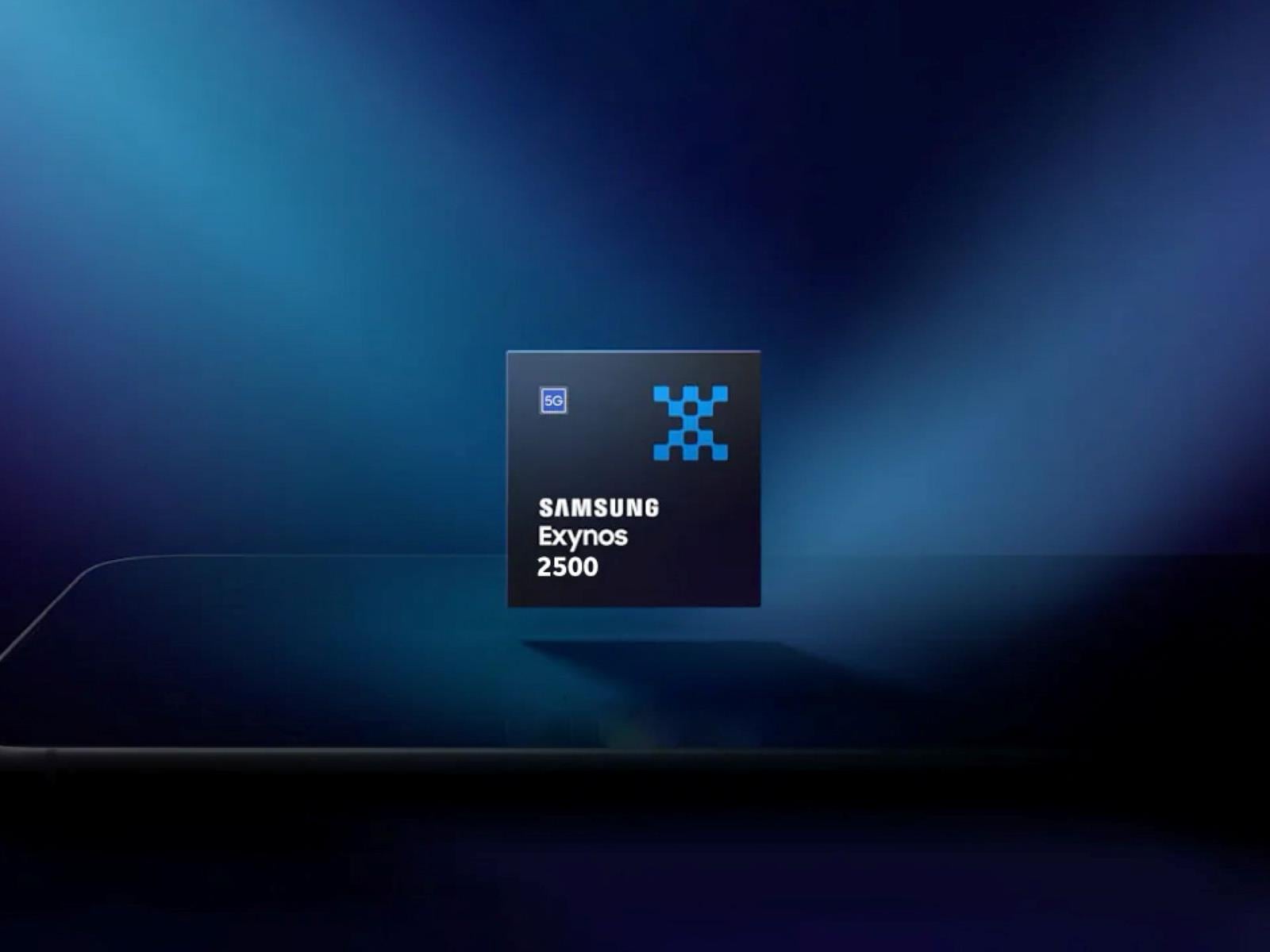
Samsung has formally confirmed the existence of its next-generation flagship processor, the Exynos 2600. From what we can tell, the new SoC bound for the S26 seems to be the course correction that the company has promised for ages, following years of Exynos performance controversies.
The official reveal trailer titled “The next Exynos”
Gran Turismo 7 launches its free Spec III update and the Power Pack DLC tomorrow on PS5 and PlayStation VR2.
We’ve known since September’s State of Play presentation that Polyphony Digital planned to launch its Gran Turismo 7: Spec III update. Celebrating the wider series reaching 100 million sales, this free update comes with two new tracks – Abu Dhabi’s Yas Marina Circuit and Canada’s Circuit Gilles-Villeneuve – alongside eight new cars. You can see that in action below.
Like before, these cars aren’t unlocked immediately and require purchasing from different shops in Gran Turismo 7. Here’s the full list of cars being added: Ferrari 296 GT3 ’23, Ferrari 296 GTB ’22, FIAT Panda 30 CL ’85, Gran Turismo F3500-B, Mine’s BNR34 GT-R N1 base, Mitsubishi FTO GP Version R ’97, Polestar 5 Performance ’26, and the Renault Espace F1 ’95.
These aren’t the only free additions in update 1.65, either. PlayStation Blog confirms other changes include Dunlop tires, a raised collector level cap, seven new events across World Circuits, and more weekly challenges. A new ‘Data Logger’ is accessible in non-racing modes, while further Café Menus and featured curations in Scapes mode are also included.
With the Power Pack DLC, Polyphony Digital states that it’s “based around the theme of real racing.” The studio confirmed this offers various motorsports challenges such as full racing weekend formats, 50 new events across 20 categories, and 24-hour endurance races.
This DLC also exclusively contains the latest version of Gran Turismo 7’s AI agent, Sophy 3.0, and completing Menu Book No.9 Championship unlocks the Power Pack pavilion on the world map, represented by a sailboat icon. Unlike Spec III, that’s a premium update costing $29.99 and includes 5,000,000 in-game credits.
Hammerspace maximizes your GPU usage using your existing NVMe storagePartner content As AI computing expands across hybrid and multi-cloud environments, infrastructure teams are under pressure to accelerate time-to-insight while maximizing GPU investments. But too often, storage becomes the bottleneck.…
Video used to be an afterthought for Nikon, but since the company purchased RED last year, content creators are now high on its priority list. A perfect example of that is Nikon’s new $2,200 ZR: a full-frame mirrorless model that stands up against dedicated cinema cameras for a fraction of the price.
It’s the first consumer camera to capture video using RED’s 12-bit RAW format, but unlike RED’s Hollywood cameras, it has a fast and accurate autofocus system. It also comes with a huge display, pro video monitoring tools, in-body stabilization and 32-bit float internal audio recording. After shooting a short film that tested its capabilities, I can confirm that the Nikon ZR offers incredible video quality at this price.
Body and handling
While a bit lighter than Nikon’s Z6 III, the 1.19-pound (540-gram) ZR feels solid. It has a boxy design like Sony’s FX2 but a much smaller grip because it’s designed to be rigged up for cinema shooting with cages and handles. However, unlike the FX2 which has multiple 1/4-inch mounting threads to do such rigging, the ZR unfortunately has only one of those on the bottom.
The ZR also lacks an electronic viewfinder like the FX2, but it more than makes up for that with its huge 4-inch display — the largest I’ve ever seen on a mirrorless camera. At 1,000 nits, it’s bright enough to shoot on sunny days, extremely sharp (3.07 million dots) and flips out for vloggers. All of that makes it a perfect primary display for checking the image and controlling the camera.
Nikon has nailed the ZR’s handling, too. While it’s not covered with buttons and dials like some models, it does have two shooting dials to control exposure and a joystick for autofocus. There’s also a camera/video switch, two record buttons, a power switch and five customizable buttons. Many of Nikon’s lenses come with control rings as well, so extra manual control is available.
The menu button is unusual: you press once for the quick menu and hold to see the full menu. Given the large number of settings, I would advise anyone buying this camera to learn all the important adjustments, then customize the controls to avoid wading through dense menus while shooting.
Another unique feature is in the battery compartment. There’s a single fast CFexpress slot to handle RAW video, plus a microSD slot for proxies. The lack of a second CFexpress slot or fast SD card slot for backup isn’t ideal for a professional camera, though.
Finally, the ZR runs on the same N‑EL15c batteries as other Nikon mirrorless cameras. They allow 90 minutes of HD shooting on a charge, or 390 photos per CIPA standards. That’s mediocre, so if you’re planning long shoots, stock up on batteries.
Video
Steve Dent for Engadget
The Nikon ZR has the largest selection of RAW video settings I’ve seen. The centerpiece is RED’s RAW R3D NE light codec (designed by RED for Nikon) with RED’s Log3G10 log format. It also supports Nikon’s N-RAW, ProRes/ProRes RAW and H.265 with resolution that ranges from 6K at up to 60 fps to 4K 120 fps and 1080p at 240 fps. Despite the smallish body, it can capture 6K RAW video continuously for 125 minutes without overheating.
The 24MP sensor uses a dual ISO system with native 800 and 6,400 ISOs, providing a nice range for indoor and outdoor shooting. The company claims 15+ stops of dynamic range, which is more than just about any other mirrorless camera. Other key video features include five-axis in-body stabilization with seven stops of shake reduction, waveform and vectorscope monitoring and a false color display for manual focus.
To test the camera’s features and video quality, I shot a short film in a mix of indoor low light, outdoor daytime and a mix between the two. I also shot handheld (including running with it) to test the stabilization. I primarily captured in R3D RAW, as well as Nikon’s N-RAW at the native 800 and 6,400 ISOs to maximize dynamic range. (You can take 24MP photos with this camera, but I’m focusing on video as it’s mainly designed for that.)
In order to not see a flat log profile when shooting, you’ll need to apply a look-up table (LUT) designed for RED cameras, like “Achromic,” “Bleach” or “Caustic.” Those are only for in-camera previews and not baked into the video, but you can apply those LUTs later in Adobe Premiere or DaVinci Resolve to get the same look.
Steve Dent for Engadget
With such a high native ISO, I was able to shoot inside with a single studio light. Video quality was outstanding with little noise in shadow regions, even after boosting black levels in post. Meanwhile, the RED R3D codec and Log3G10 gave me extra latitude to reveal shadow detail and dial down highlights when I shot the subject against a bright window.
When you use the R3D codec, exposure is strictly manual with no ability to set auto shutter speed (shutter angle) or f-stop. So, for a scene with varying light, I used Nikon’s N-RAW to see if it would give me the correct exposure at the beginning and end of the scene. It did a good job, with no noticeable jumps during the shot.
Video in sunlight at ISO 800 was also sharp with accurate colors after downscaling to 4K from 6K in DaVinci Resolve. ISO 800 is a relatively high native setting, though, and the ZR doesn’t have a built-in ND filter to reduce exposure. That means you’ll need to buy ND filters for outside shooting or the high shutter speeds will result in choppy video.
Cinema cameras from Blackmagic Design, Arri or RED are manual-focus only. But the ZR is a Nikon camera, and it has the best AF system I’ve seen on any of the company’s models, consistently nailing focus even with moving subjects. You can also automatically track vehicles, birds and other animals. At the same time, the ZR handles manual focus well. That’s thanks to a built-in display that’s big enough to check focus accurately and Nikon’s focus peaking setting with three levels of sensitivity.
Steve Dent for Engadget
In-body stabilization on the ZR wasn’t up to par with Panasonic’s S1 II, however. Video was smooth for handheld shooting if I panned the camera gently, but all my running and walking shots showed noticeable camera shake. That said, the ZR at least has in-body stabilization, unlike most cinema cameras, and most filmmakers will use a gimbal for running shots, regardless of which camera they use. (Note that the rattling you hear when the ZR is turned off is the sensor, which floats by design.)
Finally, I was able to capture good audio quality via an external microphone without any clipping worries thanks to the Nikon ZR’s 32-bit float internal audio capture. The company also touts directional capture using its built-in mics, but as with any such system, audio quality isn’t high enough for production use.
Wrap-up
With the ZR, Nikon has shown that it’s finally catching up to and even surpassing its rivals for content creation. Whether you’re doing social media, YouTube, documentaries or even film production, this camera is versatile and powerful with few compromises. Video quality and ease of use even beats models that are double or triple the price.
The ZR’s primary competition is in the low-end cinema cameras, particularly Sony’s $2,998 FX2 and the $3,899 Canon R5C. While more expensive, both come with an electronic viewfinder that the ZR lacks, and the R5C can shoot up to 8K video. Another option is Blackmagic Design’s Pyxis 6K camera, but it only offers basic autofocus capabilities and lacks in-body stabilization.
Compared to those options, Nikon’s ZR delivers better dynamic range thanks to the inclusion of RED’s R3D RAW codec. It also comes with an excellent autofocus system and decent in-body stabilization. If you’re a creator looking to get the best video quality for the money without losing those niceties, I’d highly recommend the ZR.
This article originally appeared on Engadget at https://www.engadget.com/cameras/nikon-zr-review-a-highly-capable-cinema-camera-at-a-reasonable-price-152634311.html?src=rss