Coros’s New Beta Update Adds Everything Its Watches Have Been Missing

We may earn a commission from links on this page.

I like Coros running because they do nearly everything Garmins do, at a lower cost. But there have always been a few areas where they fall short, which I’ve noted in my reviews. Now, that seems to be changing—the most recent beta firmware update adds a critical new feature while fixing some of my pet peeves.

I tried out the new features through a public beta from Coros. You can sign up for beta access with these instructions Coros posted on Reddit. (On iOS, you’ll install a Testflight version of the Coros app, which can then give you access to the firmware update. On Android, you’ll need to download the beta app, then go here to access the new beta firmware.) I tested these features out on a Pace 4, and I’m mostly happy with them.

Coros watches can now control music playing on your phone

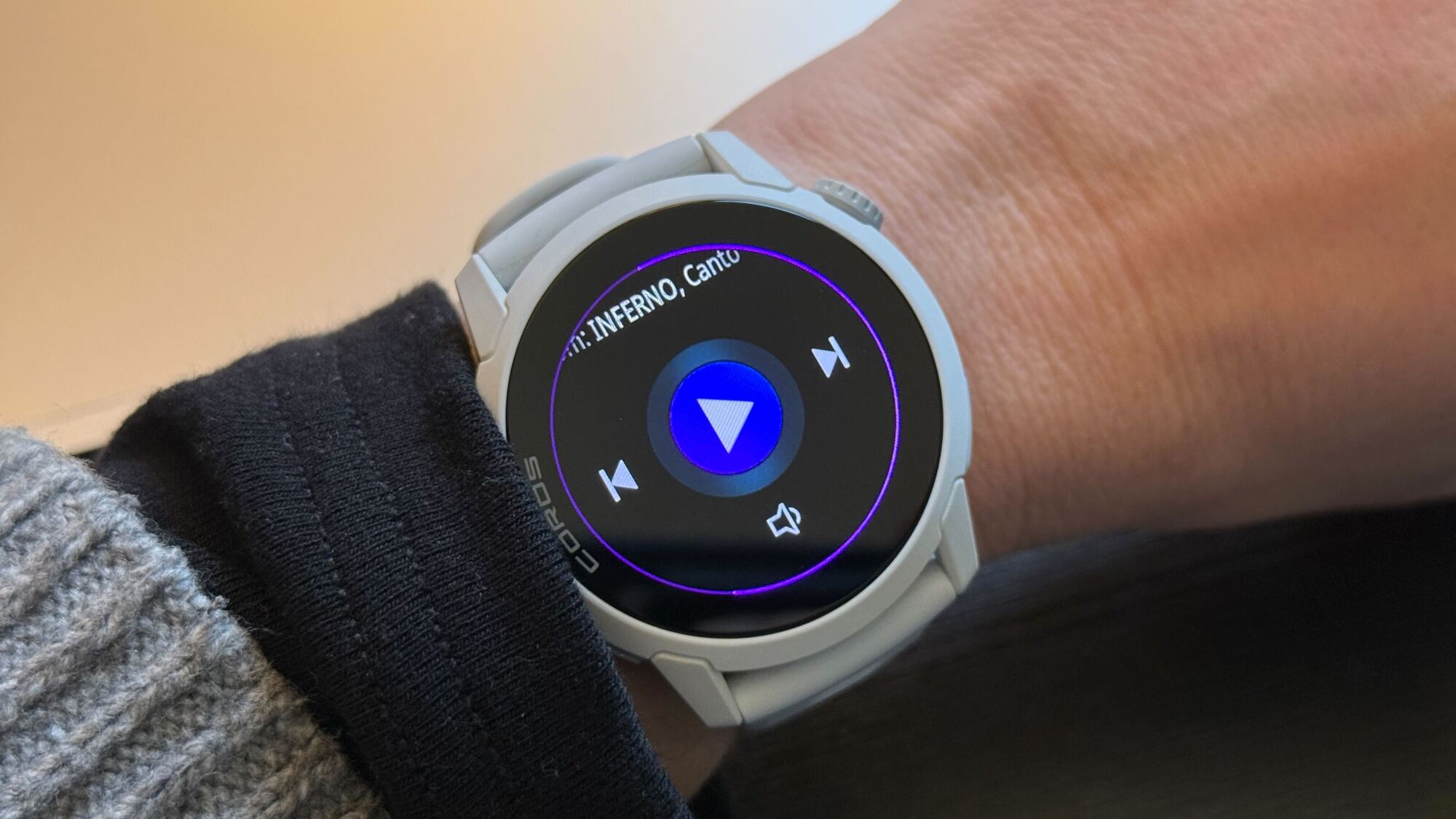
Media controls on wrist
I have not loaded any media onto this watch, but here it’s playing a podcast from my phone.
Credit: Beth Skwarecki

In my reviews of Coros watches, I’ve always docked a few points for how they handle music. Until recently, the watch could only play music files that you downloaded directly to it. That’s fine if you want to run without your phone, but for me (and many others) it’s an unnecessary annoyance—a smartwatch really should be able to display and control what’s playing on your phone. Garmin and Suunto have long had this capability, and Coros was the only major brand missing it. 

But now it’s here. When you long-press the lap button to view your toolbox, you’ll see two different apps. The familiar “music” plays downloaded music, and the new “media control” option does exactly what you’d expect: It shows the track information for whatever is playing on your phone, and it gives you buttons to play, pause, skip, or adjust volume. Was that so hard?

Workouts no longer end themselves while you’re cooling down

When I swapped my Garmin for a Coros this summer, one of my biggest complaints was that Coros watches pause your workout once you’ve completed all the steps. So if you have a 4.5-mile run programmed, but want to total five miles for the day, you have to remember to hit “resume workout” after the 4.5-mile run ends. I tend jog through that beep, thinking nothing of it, and then swear at my watch when I realize at the end that the last half-mile never got recorded.

I prefer the way Garmin does it: After you complete a Garmin workout, the activity continues until you decide to manually stop it. Coros has apparently adopted that philosophy, as workouts now roll over into an open segment automatically. 

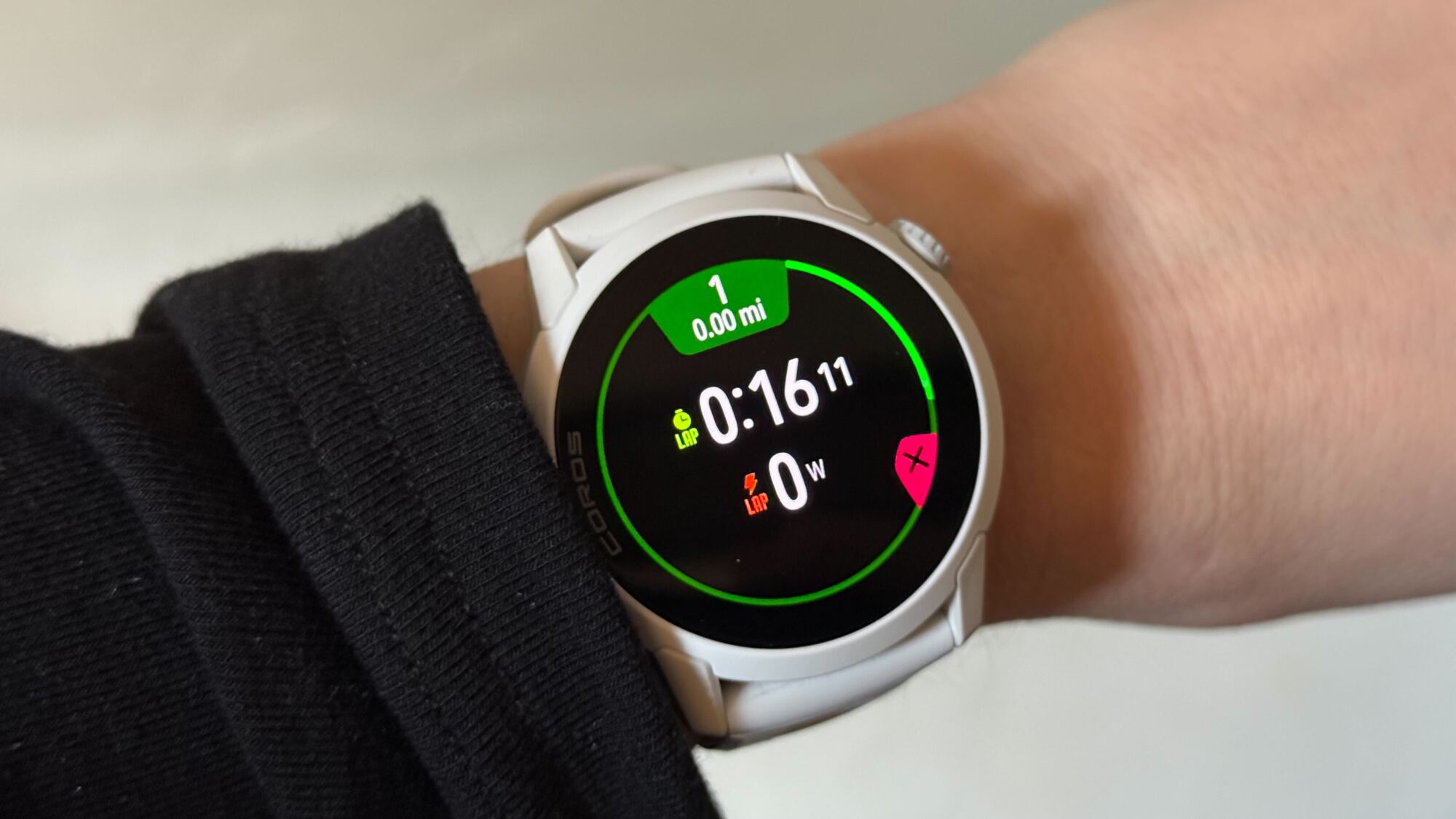
You can now undo a lap button press

undo lap button
Hit the button in the lower right to undo this lap segment.
Credit: Beth Skwarecki

During an activity, pressing the lap button starts a new segment of the workout (or advances you to the next segment if you’re following a pre-written workout). I know I’m not the only one who sometimes presses this button by accident, so an “undo” option is nice. Garmin watches added this feature about a year ago. Coros adds it with this update. 

Unfortunately the undo isn’t available for every lap button press. I do see it if I’m doing an unstructured workout and mark a lap—hitting the lap button again takes me back to the original lap in progress. But I don’t see an undo function if I’m following a workout that already has lap segments built in, or if I’m doing a strength workout (where the lap button switches between work and rest).

You can time your rests in strength workouts without choosing exercises ahead of time

My most common way of using the strength feature is to start an unstructured workout, then use the lap button to mark the end of each set and the start of my rest time. This way, I can keep track of rests during the workout and I know how many sets I’m doing. I might follow a pre-planned workout, but I never enter exercises from the watch during a workout. 

This is simple enough on Garmin, but on Coros, the watch used to ask me to enter at least a body part for each exercise. So if I’m doing five sets of bench press, I have to select “chest” each time I begin a set. This drove me up the wall, and I stopped using the rest timer at all—which makes the strength feature nearly useless. 

After the update, I can select a body part at the beginning of the workout, and that remains the active body part while I stop and start my sets. (“Full body” is an option, so I usually choose that one.) During the workout, hitting the start/stop button brings up a menu where I can switch body parts should I care to do so. Suddenly,. using the watch during my strength workouts seems like a viable option, instead of annoying.

First Image & Clip Of Xreal’s Project Aura Android XR Device Revealed

The first real image and clip of Xreal’s Project Aura have been revealed.

A concept render was shown at Google I/O earlier this year when Project Aura was first announced as the second Android XR device, set to launch next year.

It’s a birdbath-style see-through device in a form factor that tries to imitate the basic appearance of sunglasses, as with Xreal’s existing products. But while Xreal’s current products primarily act as a virtual monitor for your existing devices, via the included cable, Project Aura will come with a tethered compute puck running Google’s Android XR on a Qualcomm Snapdragon chipset.

0:00

/0:22

The short clip depicts the relatively limited field of view at the start.

Xreal says Project Aura will have a field of view of 70 degrees diagonal, its widest yet, and have built-in head and hand tracking.

Most features and apps available on Galaxy XR will also run on Project Aura’s puck, with some notable exceptions such as the face-tracked Likeness realistic avatars, as Aura doesn’t have face tracking.

Today, during The Android Show: XR Edition, Google and Xreal showed off the device in images and a short clip. They also confirmed that it’s still on track to launch in 2026 – just days after internal Meta memos leaked revealing that its headset with a tethered puck is delayed to 2027.

Note that while Xreal devices are designed to look like sunglasses, they sit much further out from your eyes than real glasses, and thus are a markedly different device category than the AR glasses in development at Meta and Apple. Those future AR glasses use a display technology called waveguides to sit as close to your eyes as regular glasses, while Xreal uses a far cheaper but also far bulkier optical approach. They also block out most light, so can’t be used as regular indoor prescription glasses.

Form factor comparison: Ray-Ban Meta vs Meta Ray-Ban Display vs Xreal One Pro.

Essentially, you can think of Project Aura as a lightweight alternative to Samsung Galaxy XR that trades off field of view and opacity for sleekness, rather than competition for future outdoor AR glasses.

The confirmation that Project Aura is still set to ship in 2026 comes one month after Lynx revealed that Google terminated its Android XR deal. After Samsung, Lynx, Xreal, and Sony were the three companies Google had earlier confirmed were working on Android XR products. While declining to comment on the Lynx situation, Google confirmed that it’s still working with Sony, though we’ve yet to see even a tease of a Sony Android XR device, and its SRH-S1 headset runs Sony’s own fork of Android.

Lynx’s New Headset Won’t Run Android XR, But Will Have Widest Standalone FOV
Lynx says its new headset won’t run Android XR, as Google “terminated” its agreement, but will have by far the widest field of view of any standalone.
UploadVRDavid Heaney

Google Says First AI Glasses With Gemini Will Arrive in 2026

Google said it’s working to create two different categories of artificial intelligence-powered smart glasses to compete next year with existing models from Meta Platforms: one with screens, and another that’s audio focused. From a report: The first AI glasses that Google is collaborating on will arrive sometime in 2026, it said in a blog post Monday. Samsung Electronics, Warby Parker and Gentle Monster are among its early hardware partners, but the companies have yet to show any final designs. Google also outlined several software improvements coming to Samsung’s Galaxy XR headset, including a travel mode that will allow the mixed-reality device to be used in cars and on planes.


Read more of this story at Slashdot.

Paramount tries to swipe Warner Bros. from Netflix with a hostile takeover

Netflix won the bidding war for Warner Bros. Discovery’s (WBD’s) streaming and movie studio businesses last week. But Paramount Skydance isn’t relenting on its dreams of owning WBD and is pushing forward with a hostile takeover bid.

On Friday, Netflix announced that it had agreed to pay an equity value of $72 billion, or an approximate total enterprise value of $82.7 billion, for WBD’s streaming and film businesses, as well as its film and TV libraries. The deal includes HBO and the HBO Max streaming service but not WBD’s cable channels, which are to be split off ahead of the acquisition into a separate company called Discovery Global. Netflix said WBD’s split should conclude in Q3 2026.

Paramount has different plans, though.

Read full article

Comments

Meta will let Facebook and Instagram users in the EU share less data

Meta will soon allow Facebook and Instagram users in the European Union to choose to share less data and see less personalized ads on the platform, the European Commission announced. The change will begin to roll out in January, according to the regulator. 

“This is the first time that such a choice is offered on Meta’s social networks,” the commission said in a statement. “Meta will give users the effective choice between: consenting to share all their data and seeing fully personalised advertising, and opting to share less personal data for an experience with more limited personalised advertising.”

The move from Meta comes after the European Commission had fined the company €200 million over its ad-free subscription plans in the EU, which the regulator deemed “consent or pay.” Meta began offering ad-free subscriptions to EU users in 2023, and later lowered the price of the plans in response to criticism from the commission. Those plans haven’t been very popular, however, with one Meta executive admitting earlier this year that there’s been “very little interest” from users. 

In a statement, a Meta spokesperson said that “we acknowledge” the European Commission’s statement. “Personalized ads are vital for Europe’s economy — last year, Meta’s ads were linked to €213 billion in economic activity and supported 1.44 million jobs across the EU.”

This article originally appeared on Engadget at https://www.engadget.com/social-media/meta-will-let-facebook-and-instagram-users-in-the-eu-share-less-data-183535897.html?src=rss

The 20 Most Essential Podcasts of 2025 (and Two Episodes You Can’t Miss)

If 2024 was the year podcasts scrambled to find their footing after the massive wave of acquisitions and consolidation during the pandemic, 2025 is the year the medium truly hit its stride (and I should know…I not only write a podcast newsletter and run a podcast company, I also listen to literally thousands of hours of podcasts every year).

Whatever kind of show you’re seeking—from a scripted story about demon possession, to a deeply reported investigation into outlaws at sea, to a brilliantly improvised comedy series—my guide to the best podcasts of 2025 has you covered. I’ve divided the list into categories to help you find exactly what you’re in the mood for—and because some episodes are just too good to get buried in your queue, I’ve also highlighted two standout episodes of past favorite shows that you shouldn’t miss. Let’s get listening.


The best fiction podcasts of 2025

Two Thousand and Late

Podcast logo

Credit: Podcast logo

This year, Lauren Shippen, the master of audio fiction and creator of The Bright Sessions, brought us Two Thousand and Late, a scripted fiction show about a woman who, on her 36th birthday, gets possessed by a demon who was supposed to visit her when she turned 16. This is a clever, tightly written, expertly produced, and endlessly fun adventure that blends corporate satire with time-travel chaos.

The Harbingers

Podcast logo

Credit: Podcast logo

The new audio drama from Gabriel Urbina (best known as the creator and head writer of Wolf 359), The Harbingers introduces us to two different-in-every-way grad students who eventually become the first people with genuine magical powers, making them the most powerful people in the world. This sweeping, sound-rich show is smart, unpredictable, and gripping from minute one.

The best comedy podcasts of 2025

Next We Have

Podcast logo

Credit: Podcast logo

I love a podcast with good segments, so of course I’m going to be drawn to a podcast that is only segments. Next We Have, hosted by Gareth Reynolds (of The Dollop and We’re Here to Help), brings on the best improvisers to create segments that can be completely ridiculous because the point isn’t to make them sustainable, but to see how far a bunch of comedians can stretch the medium. (Segment examples: penning a negative Yelp review for a chain hotel on behalf of a listener, calling Gareth’s childhood friend to see if he remembers a gross sleepover incident from their past, etc.) 

Text Me Back

Podcast logo

Credit: Podcast logo

If you have been listening to podcasts long enough to remember Call Your Girlfriend, you will appreciate the tried but true format of eavesdropping on a best friend catch-up. Text Me Back co-hosts Lindy West and Meagan Hatcher-Mays have been besties since middle school, and listening to them brings back the flavor of that beloved show. While Call Your Girlfriend leaned heavily into everyday chatter, Text Me Back feels like non-stop standup. Lindy is an author and TV writer and Meagan is a democracy policy expert, but together they are an unstoppable comedy duo. They can spin mundane moments, like ordering salad for takeout, into listening gold. This is the perfect show to binge when you need a laugh (and some validation for your own awkward moments).

The best internet culture podcasts of 2025

The Last Invention

Podcast logo

Credit: Podcast logo

If you knew that aliens were going to take over the world in 50 years, would you be worried? The Last Invention argues that this is our reality, if you replace “aliens” with “AI.” The AI revolution, host Gregory Warner says, is already here, and The Last Invention begins with the history of machine learning and provides a thoughtful exploration of how it is being used now, before looking into the future to see what’s coming, what we could gain, what we could lose, and how best to prepare ourselves. It’s fact-based rather than fear-mongering, yet it might be the most unsettling thing I listened to all year. 

Suspicious Minds

Podcast logo

Credit: Podcast logo

Joel and Ian Gold are brothers (Joel’s a psychiatrist; Ian’s a philosopher) and co-authors of the book Suspicious Minds: How Culture Shapes Madness, which they’ve spun into this show (co-hosted with Sean O’Grady). It’s a documentary series that tackles issues around AI-fueled delusions, and aims to understand where they fit into humanity’s history of delusional thinking in general. Using real patients’ riveting stories, it plunges listeners deep into their disturbed mental states, then follows their journeys toward managing the illness. We’ve read the headlines—the person who was gaslit by ChatGPT into thinking he was digital Jesus, or the man who was convinced he was a piece of software—but we don’t always get the context. Sean interviews these people with empathy to get that crucial context—and finds a troubling universality to their stories.

The best culture podcasts of 2025

Diabolical Lies

Podcast logo

Credit: Podcast logo

Diabolical Lies is a culture and politics podcast hosted by Katie Gatti Tassin and Caro Claire Burke. Think of it as a deep dive into the ideas shaping modern America, from algorithmic media, to late-stage capitalism, to identity politics. But it’s really funny. And skeptical. And backed by tons and tons of research. Because it’s listener-supported and free from corporate pressures, the hosts have the freedom to question mainstream narratives. (Every dollar earned is split between Caro, Katie, and organizations that support mutual aid in Gaza, legal representation to immigrant kids ensnared in the legal system, and other worthy causes.)​​ 

Pablo Torre Finds Out

Podcast logo

Credit: Podcast logo

Pablo Torre is a veteran journalist and former ESPN commentator turned podcast powerhouse, and he now hosts Pablo Torre Finds Out, which uses sports as a lens through which to examine issues of culture and power. Blending investigative journalism, commentary, and personal curiosity, he goes beyond the surface to find the deeper meaning behind the headlines. His delve into a major scandal involving LA Clippers owner Steve Ballmer was named one of Apple Podcast’s best podcasts episodes of the year, and that’s just one of dozens of compelling stories you’ll explore.

The best long form investigative podcasts of 2025

In the Dark: Blood Relatives

Podcast logo

Credit: Podcast logo

In earlier seasons, In The Dark has won awards, gotten a man released from jail, and uncovered a horrifying military conspiracy. The latest season, Blood Relatives, explores one of Britain’s most notorious family massacres, revealing huge problems in the prosecution’s case against Jeremy Bamber, who is currently siting in prison for killing his parents, sister, and nephews back in 1985. Host Heidi Blake has access to sprawling case files and has talked to seemingly everyone even tangentially related to the case. What she found is astonishing, and infuriating.

The Outlaw Ocean

Podcast logo

Credit: podcast logo

Season one of  The Outlaw Ocean, which exposed true crimes committed at sea, was some of the most dangerous audio I have ever heard. Yet in the first episode of season two, Pulitzer-prize winning journalist and host Ian Urbina says that this season includes the most dangerous investigative reporting of his career. There’s a three-part series about seafaring migrants getting thrown in secret prisons (his team got jailed for reporting on that one), an exclusive profile on a guy who is either a pirate or a nautical James Bond, an expose on a massive Indian shrimp-processing plant, and an unprecedented deep dive into China’s secretive fishing practices. This is real investigative journalism, beautifully beautifully packaged but no less dangerous for it.

The best true crime podcsts of 2025

Beth’s Dead

Podcast logo

Credit: Podcast logo

Beth’s Dead isn’t a murder investigation show. It’s a story about what happens when parasocial relationships go dangerously wrong. It all began when Monica Padman (of Armchair Expert) started looking into why her favorite podcast, hosted by Elizabeth Laime and Andy Rosen, ended years ago. For Beth’s Dead, she gets on mic with Elizabeth and Andy to explore a chilling story involving obsessive listeners, manipulation, and what happens when one super fan turns into something much darker.

Wisecrack

Podcast logo

Credit: Podcast logo

You don’t often see stand-up comedy blended with true crime, but that’s what you get with Wisecrack. The story centers on comedian Edd Hedges, who returns to his hometown for a charity comedy gig. That night, someone he went to school with murders his family, and Edd has reason to believe that this guy almost tried to murder Edd, too. Or did he? Hosted by ​​TV crime producer Jodi Tovay, Wisecrack is about memory and trauma more than it is about a specific crime. If you liked Netflix’s Baby Reindeer, this expertly produced, genre-bending psychological puzzle is for you. 

The best interview podcasts of 2025

Good Hang

Podcast logo

Credit: Podcast logo

Amy Poehler’s Good Hang is the best hang and one of the best celebrity-hosted podcasts ever. Poehler brings on superstar comedians to talk about what makes them laugh, share stories from their lives and careers, and just generally shoot the breeze. Conversations with people like Kristin Wiig, Idris Elba, and Ina Garten swing from gut-bustingly hilarious to raw and vulnerable, offering us an inside look into the entertainment industry. The production is as casual as the vibe: Amy leaves in “mistakes” that a different show might edit out, like a guest jumping into the zoom late, or what feels like minutes of laughter, and the result is a comfort-listen that will leave you feeling like you’ve just been hugged.

Strangers on a Bench

Podcast logo

Credit: Podcast logo

Strangers on a Bench isn’t your typical interview podcast. Musician/host Tom Rosenthal goes around parks, approaches random strangers on benches, and asks to sit down with them for completely open-ended conversations that feel like meditations. The strangers are always anonymous—we don’t get names or occupations or any other specifics. This means the strangers can get real, and they do. You never know what will happen when you hit play. Some episodes are light, ordinary “slice-of-life” chats, while others dive into issues of grief, trauma, loss, longing, mental-health struggles, or life transitions.

The best personal podcasts of 2025

Stop Rewind: The Lost Boy

Podcast logo

Credit: Podcast logo

Stop Rewind: The Lost Boy tells a true story so unbelievable I literally did not believe it—at first I assumed it was fictional. It’s the story of Taj, a child who was born in India and adopted by a family in the U.S. He had an abusive childhood, was raised in complete poverty, and had only hazy memories of that time—including some that suggested he was brought to America via a kidnapping. He spent his life trying to forget this, purposely or not, and carve his own path, until the day he found an old cassette tape filled with recordings of himself as a child that his mom recorded when he first arrived in the country, knowing he would eventually forget his native language. As an adult, long after he stopped being able to understand what his own voice was saying, Taj met someone who spoke the language, and the transcription of those tapes revealed what really happened to him. The results is a jaw-dropping story especially perfect for a podcast: it’s “told through rare original recordings, immersive sound design and unforgettable first-person testimony.” You’re already dying to hear the tape, right? 

Alternate Realities

Podcast logo

Credit: Podcast logo

Zach Mack’s Alternate Realities series, located on the Embedded feed, starts off with a bet between Zach and his dad, who each believed the other had been lost to conspiracy theories. Zach’s father had started to believe in chemtrails, that the government controls the weather, that ANTIFA staged January 6, that a cabal called the globalists is controlling the world. Zach…did not believe those things. So in early 2024 Zach’s dad made a list of 10 prophesies (such as: a bunch of democrats would be convicted of treason and/or murder, the U.S. would come under marshal law) that he was 100% sure would happen, and by Jan. 1, 2025, Zach would have to give his father $1,000 for every one that did. For every one that didn’t, Zach would get the $1,000. What starts as a strange bet develops in a beautifully depicted family tragedy that forces you to consider the depths of your own mortality.

The best independent podcasts of 2025

Cramped

Podcast logo

Credit: Podcast logo

Kate Downey has been having debilitating period pain every month since she was 14 years old. The affliction is common, yet something nobody seems to want to talk about or research—and certainly nobody is trying to have fun with it. But Kate is doing all of the above with Cramped, which is somehow boisterous and dead serious at the same time. It’s full of fascinating interviews, illuminating info, and helpful tips for anyone with a uterus. She gets smart, funny people on the mic to talk about their that-time-of-the-month experiences, what is really going on in their bodies and why nobody cares, and why Kate hasn’t been able to get answers from a doctor after 20 years of asking questions.

Debt Heads

Podcast logo

Credit: Podcast logo

When I heard the first episode of Debt Heads I felt like a thirsty person who had just discovered water in the desert—I don’t like talking about money, yet this show has a lot of things I didn’t know I’ve been craving. Jamie Feldman and Rachel Webster approach money matters from an angle we’re not used to hearing. They joke that it’s a “true crime investigation into the murder of our bank accounts,” and the show is made with the care of one as it considers the deeply human factors that can drive people into debt.

The best podcast series of 2025

Clotheshorse: I’m With the Brand

Podcast logo

Credit: Podcast logo

Clotheshorse’s Amanda Lee McCarty spent years working in retail and fashion as a buyer for huge brands like Urban Outfitters, before a quasi-spokesperson for debunking the glamour that obscures the real truths about the clothing we buy. Amanda’s multi-part series “I’m With the Brand” helps us begin to untangle our relationship with brands, built on both extensive research and her personal experience. You explore the history of brands, with shout-outs to several that are now just licensed zombie versions of themselves; an exposé of cause marketing; and a breakdown of the ten commandments of emotional branding, paired with specific stories about how they’ve been applied. (Careful, once you see them you cannot unsee them.) Repeat after Amanda: Brands are not your friends. 

Camp Swamp Road

Podcast logo

Credit: Podcast logo

The Wall Street Journal’s “Camp Swamp Road” is about a story that started as a road rage incident and ended up being either a stand your ground case, or a murder, depending who you ask. In 2023 on Camp Swamp Road in South Carolina, Weldon Boyd and Bradley Williams killed Scott Spivey, who they said was driving erratically and shooting his gun out his car window. Scott Spivey’s sister, who is for some reason going through all the audio of the incident, as well as audio of Weldon Boyd interacting with his family, friends, cop buddies, feels differently. The reporting here tries to get to the truth of the matter.

Two must-listen podcast episodes from 2025

“The Auralyn” (with Blair Braverman), You’re Wrong About

Podcast logo

Credit: Podcast logo

Adventurer Blair Braverman is building a mini-survival podcast on the You’re Wrong About feed. (If stories about the lives of Baby Jessica, Chris McCandless, or the 1972 Uruguayan plane crash interest you, search her name in the archive.) “The Auralyn” is one of her best: Blair’s telling of the story of Maurice and Maralyn Bailey, a couple who in 1972 miraculously survived 118 days adrift on a tiny rubber liferaft in the Pacific Ocean after their yacht was destroyed. Obviously this is a story about survival, but more importantly, it’s about what buoys us, and what gives us the strength to survive, whether that be on a raft adrift at sea, or just through the course of a regular bad day.

“Kevin,” Heavyweight

Podcast logo

Credit: Podcast logo

On Heavyweight, Jonathan Goldstein acts as a detective who helps people resolve issues from their past. In this episode we meet “Kevin,” who had a cinematically terrible childhood. He had two friends who kind of saved his life, or at least his sanity, during these hard years, but one day they disappeared, so Jonathan set out to find them. Are they OK? Do they even remember Kevin? This episode has all the pieces of a compelling podcast: a wonderful storyteller in Kevin, a heart-wrenching narrative, a real chance at closure, and a resolution that isn’t easy to explain.

[$] Disagreements over post-quantum encryption for TLS

The

Internet Engineering Task Force
(IETF) is the standards body responsible
for the TLS encryption standard — which your browser is using right now
to allow you to read LWN.net. As part of its work to keep TLS secure, the IETF
has been entertaining

proposals
to adopt “post-quantum” cryptography (that is,
cryptography that is not known to be easily broken by a quantum computer) for TLS
version 1.3. Discussion of the proposal has exposed a large disagreement between
participants who worried about weakened security and others who worried about
weakened marketability.

Analogue is weaponizing your nostalgia with these translucent versions of its 3D console

Analogue just announced new colorways for its recently-launched Analogue 3D console. The appropriately-named Funtastic limited-edition consoles are heavily inspired by Nintendo’s translucent N64 models from the late 1990s. Analogue even borrowed the Funtastic branding.

In other words, these are going for the nostalgic jugular for gamers of a certain age. There’s even a see-through green colorway that calls to mind the Nintendo 64 variant that shipped as a bundle with Donkey Kong 64. Just imagine booting up that bad boy as you roam around the house spouting the lyrics of the DK rap song.

Analogue 3D – Funtastic – Limited Editions.
Available in highly limited quantities.

Perfectly color matched to the originals N64 models.

$299.99

On Sale: Dec 10, 8am PST.
Shipping: Dec 10 with Guaranteed delivery before Christmas. pic.twitter.com/PPYgIw0vxU

— Analogue (@analogue) December 8, 2025

There are eight translucent colors to choose from and accompanying 8BitDo controllers available as a separate purchase. The consoles cost $300 and the controllers are priced out at $45.

The Analogue 3D Funtastic consoles go on sale on December 10 at 11AM ET, with the company promising they’ll ship within 48 hours to ensure delivery by Christmas. The company is also restocking the traditional colors, which will be available for purchase at the same time but won’t ship until January.

Two consoles.
Tim Stevens for Engadget

We praised the Analogue 3D in our official review. It’s a fantastic way to play N64 cartridges, even if the original games don’t always hold up. The 4K CRT emulation is top-notch and the overall hardware design is solid.

This article originally appeared on Engadget at https://www.engadget.com/gaming/analogue-is-weaponizing-your-nostalgia-with-these-translucent-versions-of-its-3d-console-181105740.html?src=rss

The Entire ‘Planet of the Apes’ Franchise Explained in 10 Infographics

For more than half a century, audiences have been captivated by the Planet of the Apes—a sprawling sci-fi epic that spans at least three timelines, 3,000 years of history, and a franchise that includes 10 feature films, two TV series, three video games, and dozens of comics and novels. Whether you’re a long-time fan trying to make sense of the lore or a newcomer wondering how a talking chimpanzee led to a post-apocalyptic planet dominated by primates, I’ve laid out the Planet of the Apes series by release order, chronological continuity, critical and commercial reception, the technological milestones of ape civilizations, and more.

This is your illustrated guide to the rise (and fall… and rise again, and fall, etc.) of the Planet of the Apes.

What is the Planet of the Apes?

Planet of the Apes is one of the strangest, most ambitious, and longest-running film franchises in cinema history. Films in the series vary wildly in quality, ambition, competence, and style, but all Apes movies, from the 1968 original to 2024’s Kingdom of the Planet of the Apes, share a narrative focus: a world-shaking conflict between humans and intelligent apes.

Every Planet of the Apes movie, in chronological order

The original saga (1968–1973)

Planet of the Apes (1968): Based on Pierre Boulle’s 1963 sci-fi novel La Planète des Singes, 1968’s Planet of the Apes tells the story of astronaut George Taylor, who crash lands on what he thinks is a distant planet where apes are intelligent and in charge, and the people are dumb slaves.

Beneath the Planet of the Apes (1970): While star Charlton Heston appears in the film briefly, Beneath the Planet of the Apes is really the story of Brent, an astronaut who’s been sent to rescue Taylor.

Escape from the Planet of the Apes (1971): You’d think the annihilation of the entire planet would end the Planet of the Apes series, but no: In Escape, Cornelius, Zira, and Dr. Milo manage to flee the planet on Taylor’s ship before the doomsday bomb explodes; the trio time-travel to 1973.

Conquest of the Planet of the Apes (1972): The last two old-school Planet of the Apes movies had lower budgets than their predecessors, and it definitely shows. Lore-wise, Conquest presents a divergent narrative path to explain the development of ape intelligence and other events.

Battle for the Planet of the Apes (1973): In the years since the Ape rebellion in Conquest, a nuclear war has killed most humans; humans and ape relations are good enough, but the fragile detente is broken by human-hating gorilla Aldo.  

The Burton reboot (2001)

Planet of the Apes (2001): After a nearly 30-year hiatus, 2001’s Apes is a thematically and tonally uneven summer blockbuster featuring a by-the-numbers plot, mid-tier action, and an ending that confuses everyone. (The makeup and production design are top-notch, though.) 

The modern quadrilogy (2011–2024)

Rise of the Planet of the Apes (2011): This movie blows the dust off the hoary old apes and breathes fresh creative life into a moribund franchise; Rise is a film packed with both action and dignity.

Dawn of the Planet of the Apes (2014): Dawn takes place about a decade after the events of the last movie, and apes are definitely on the come-up: It features the most nuanced (and most depressing) take on the conflict between species.

War for the Planet of the Apes (2017): If the message of Dawn of the Planet of the Apes is “war is inevitable…,” the message of War for the Planet of the Apes is “..and war is hell.” It’s a grim movie. 

Kingdom of the Planet of the Apes (2024): Kingdom explores an ape-dominated world where the few humans left are brainless scavengers (or so it seems). It doesn’t break new ground the way Rise did, but Kingdom opens the way for more Planet of the Apes sequels in the future.

Geographic location of each Planet of the Apes movie

Over more than five decades of films, Planet of the Apes has taken audiences from the shattered ruins of New York City to the tranquil redwood forests of Northern California, and even to entirely different worlds (maybe). This map tracks the primary settings of each movie, showing how the saga’s conflicts play out across Earth.

Who traveled where in time?

From astronauts overshooting the present by millennia, to apes hurtling back to the 20th century’s hippy era, time travel is integral to the Planet of the Apes, so lets take a look at the franchise’s major temporal tourists, charting when they left, when they arrived, and just how far they jumped.

The complicated chronology of the Planet of the Apes

If you’re considering a watch order for the Planet of the Apes, “in order by chronology” is the worst option—the Apes timeline is simply all over the place. While there are a few moments in the modern quadrilogy (2011–2024) that suggest the films are prequels to the original pentalogy (1968–1973), these are ultimately fan-service Easter eggs; the two series just don’t connect unless you get very creative with time-travel loops and offscreen assumptions. Hell, the first five films don’t connect with themselves unless you get creative with time-travel. So, I got creative with time travel to break down the major historical milestones in the Planet of the Apes Universe, across three timelines. (Four, if you count the self-contained 2001 Planet.)

Here are the Planet of the Apes movies listed in order of the year that each one takes place:

Critical reception of Planet of the Apes movies

Critics have a love-hate relationship with Planet of the Apes movies. According to Rotten Tomatoes, the “best” Apes movie is War for the Planet of the Apes, which was praised by 94% of critics. The “worst” is Battle for the Planet of the Apes, with only 33% positivity. That’s a big spread!

How much money did each Planet of the Apes movie make? 

Critical acceptance is great; but in cynical Hollywood terms, the only measure of a good movie is how much money it makes. By that metric, the “best” Apes movie is the 2001 reboot, Planet of the Apes. Despite mixed review, the movie made $328,049,530.32 in domestic ticket sales (adjusted for inflation), which is even more than the original and the 2014 blockbuster Dawn of the Planet of the Apes.

A who’s-who of ape leadership

Any society is defined by its leaders, including ape society, so here is a breakdown of the doctors, generals, and tribal chiefs who have ruled the apes over the last 50 years.  

Dr. Zaius (Planet of the Apes, Beneath the Planet of the Apes): An orangutan Minister of Science and Defender of the Faith who balances political control with the fear of humanity’s return. 

General Ursus (Beneath the Planet of the Apes): This violent gorilla warlord never encountered a problem he couldn’t meet with violence. 

Dr. Zira (Escape from the Planet of the Apes, 1970): A compassionate and sharp-witted chimpanzee thrust into the role of cultural ambassador between societies on the verge of war, Dr. Zira is the defacto leader of a small band of ape time-travelers.

Caesar (Conquest of the Planet of the Apes, Battle for the Planet of the Apes): The original Caesar is a fiery revolutionary who transforms ape resentment into a successful uprising against humanity.

General Thade (Planet of the Apes, 2001): A sadistic and cunning chimpanzee general obsessed with wiping out humanity.

Caesar (Rise of the Planet of the Apes, Dawn of the Planet of the Apes, War for the Planet of the Apes): A hyper-intelligent chimp raised by humans, Caesar’s combination of tactical brilliance, political savvy, raw charisma, and genuine compassion for both apes and humans make him the best overall ape leader.

Koba (2014, Dawn of the Planet of the Apes): A bitter, scarred veteran of human torture and hero of the ape revolution, Koba has been through some shit.  

Proximus Caesar (Kingdom of the Planet of the Apes): An iron-fisted militarist who twists the past to justify authoritarian rule, Proximus Caesar rules through fear and historical revisionism.

Ape technological and intellectual milestones by movie

Across the Planet of the Apes films, the ever-shifting balance of power between apes and humans often comes down to brains as much as brawn. Each installment shows apes using technologies, social systems, and tactics that they’ve either developed or borrowed from humans. From crude tools and simple rules to heavy artillery and complex political structures, these milestones mark the evolving capabilities of ape society over the decades (and timelines) of the franchise. Here’s a breakdown of the technological highlights of ape society in each movie.

Ape-adjacent TV shows, video games, comic books and movies

If ten feature films isn’t enough Apes for you, there’s plenty more material out there. The Ape-verse began with a novel, and has grown to include a live-action TV series, a cartoon series, three video games, and dozens of novelizations and comic books.

Samsung Galaxy XR Gets Persona-Like Likeness Avatars Beta & Travel Mode

The first major update for Google’s Android XR on Samsung Galaxy XR is rolling out now.

The update brings a beta release of Google’s Persona-like realistic avatar system for video calls, called Likeness, a Travel Mode, and a beta for a built-in PC remote desktop feature for Windows called PC Connect.

Samsung Galaxy XR First Impressions: What You Need To Know
I briefly tried Samsung Galaxy XR at its launch event in New York last week, and I have mixed initial thoughts about the first Android XR headset.
UploadVRDavid Heaney

Likeness (Beta)

Likeness is Google’s realistic avatar system for video calls in Android XR, an equivalent to the original non-spatial mode of Apple Vision Pro’s Personas.

Your Likeness replaces the video feed that apps would normally get from a phone’s selfie camera, providing a virtual equivalent, and should thus work for any video calling platform without developer implementation.

0:00

/0:26

Android XR’s Likeness on Samsung Galaxy XR.

Unlike with Vision Pro, you scan your face for Likeness by holding up your phone, not the headset itself. From here, the data is transferred to and securely stored on the headset. The Likeness app is currently only available on “select Android device models”.

In video calls on Android XR, your Likeness is driven by Galaxy XR’s eye tracking and face tracking capabilities in real-time, and the feed shows a virtual representation of your hands when you hold them up too.

Travel Mode

Android XR now has a Travel Mode, which when enabled, makes the positional tracking work properly on moving vehicles, such as planes and trains.

Apple was the first to launch this feature, alongside Vision Pro, and since then Meta, Pico, and Snap have followed.

0:00

/0:25

Android XR’s Travel Mode

Without a Travel Mode, the accelerometer and gyroscope in the headset’s IMU will interpret the acceleration, orientation changes, and vibrations of the vehicle as your head movement, causing virtual objects and windows to drift off in the opposite direction.

Travel Mode works by having the headset rely more on computer vision from the cameras, typically incurring a small loss in tracking quality.

PC Connect (Beta)

PC Connect (beta) is a feature that lets you connect to and control your Windows PC as a virtual screen in Android XR.

0:00

/0:37

PC Connect on Android XR

After installing the streamer app on your PC, you can mirror your entire desktop or one window.

There are already many third-party apps on the Google Play Store that can do this, including Guy Godin’s Virtual Desktop, but PC Connect offers a built-in option.

Quest 3’s Windows 11 Remote Desktop Gets Aspect Ratio Setting & Ultrawide Mode
The official Windows 11 Remote Desktop of Horizon OS now has 21:9 and 3:4 aspect ratio options, as well as an enveloping visionOS-like Ultrawide Mode.
UploadVRDavid Heaney

Meta has a partnership with Microsoft for an officially supported Windows 11 remote desktop system, leveraging the operating system’s RDP system, with support for virtual extra monitors and multiple aspect ratios. Android XR’s PC Connect doesn’t seem to have Microsoft’s involvement, and seems more basic for now, at least in beta, lacking these more advanced options.

We’ll keep a close eye on Google through 2026 for further Android XR updates, such as whether a spatial version of Likeness arrives or advanced virtual monitor options for PC Connect.

Tech’s biggest winners of 2025

Every December, the Engadget staff compiles a list of the year’s biggest winners. We scour over articles from the previous 12 months to determine the people, companies, products and trends that made the most impact over the course of the year. Not all of that influence is positive, however, and some selections may also appear on our list of biggest losers. Still, sit back and enjoy our picks for the biggest winners of 2025.

Nintendo Switch 2

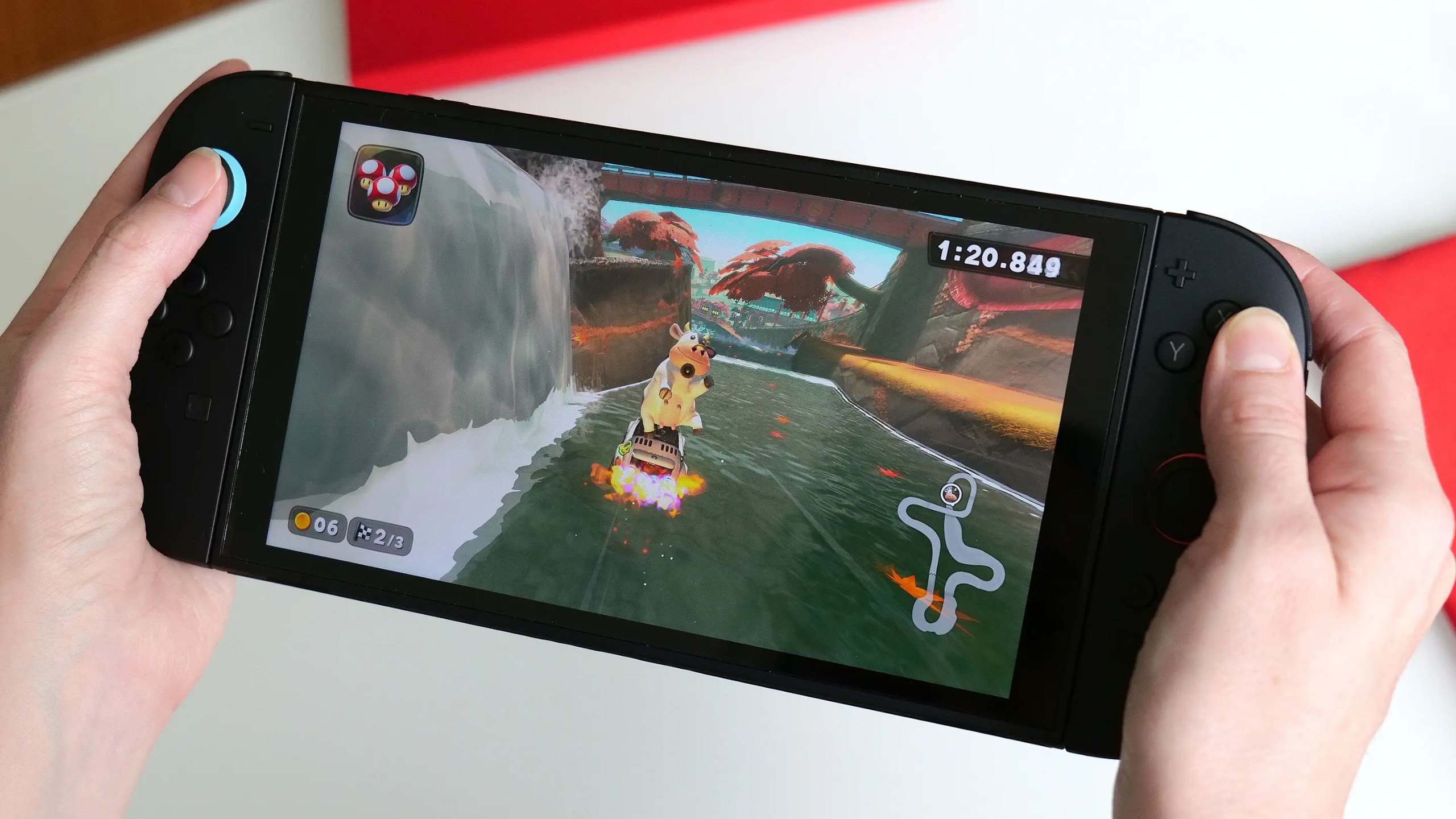
Playing Mario Kart World on the Switch 2 in handheld mode.
Sam Rutherford for Engadget

Aside from a big bump in battery life that many were hoping for, Nintendo took just about everything that made its last console such a phenomenon and upgraded it on the Switch 2. A sleeker design with magnetic Joy-Cons that are less likely to break, a larger (albeit LCD) 1080p display with HDR, much stronger performance, mouse controls and a boost to the base storage were all very welcome.

Of course, the vast majority of Switch games run on the Switch 2 (often with visual improvements or other upgrades), so the new console had a vast library right from the jump. Nintendo is building out its slate of first-party games with treats like Donkey Kong Bananza and Metroid Prime 4, and the third-party support is seriously impressive too. Cyberpunk 2077, Street Fighter 6 and Hitman: World of Assassination are already available, and the likes of Final Fantasy VII Remake Intergrade and FromSoftware’s Switch 2 exclusive The Duskbloods are on the way.

The Switch 2 is an iteration, not a revolution, but Nintendo didn’t need to reinvent the wheel to make another great system. It’s little surprise, then, that we gave the Switch 2 a score of 93 in our review. The console is surpassing Nintendo’s sales expectations as well. The company said in November that it believes it will sell 19 million units (up from 15 million) by the time its current fiscal year ends in March. — Kris Holt, Contributing reporter

NVIDIA

NVIDIA GeForce 5070 Ti
Devindra Hardawar for Engadget

Could things be any rosier for NVIDIA? Once just a video card company for gamers, NVIDIA’s GPU hardware is now directly tied to the rise of the AI industry. Its stock has jumped a whopping 1,235 percent over the past five years, going from $13.56 per share in 2020 to a peak of $202.49 this past October. NVIDIA’s server-grade cards are being used en masse to train AI models, as well as to power AI inferencing. At home, its GeForce GPUs are enabling local AI development and they’re still the gaming cards to beat, despite AMD’s steadily improving competition.

Clearly, the company’s bet on parallel processing has paid off enormously. Its GPUs can handle tons of computations simultaneously, making them ideally suited for the demands of the AI industry. They’re not exactly efficient — that’s why neural processing units, or NPUs have sprung up to power consumer AI features — but it’s hard to deny NVIDIA’s raw computational power. 

NVIDIA’s AI success may not last forever, though. Companies like Google and Microsoft are already working on their own AI chips, and it’s still unclear if consumers actually want widespread AI features as much as tech companies think. If the AI industry crashes, NVIDIA will be one of the first victims. — Devindra Hardawar, Senior reporter

Tech billionaires

US President Donald Trump speaks during a news conference with Elon Musk (L) in the Oval Office of the White House in Washington, DC, on May 30, 2025.
ALLISON ROBBERT via Getty Images

There’s no doubt that tech billionaires, especially those that lean conservatively, have benefitted tremendously from the Trump administration over the past year. Elon Musk’s DOGE team of tech loyalists chainsawed their way through the budgets and staff of several federal agencies, including the National Highway Traffic Safety Administration (NHTSA), which regulates Tesla. (That hasn’t stopped the NHTSA from launching a new investigation into Tesla’s full self-driving tech, though.)

According to a recent report by Oxfam, the 10 richest US billionaires (who are all tech leaders, save for Warren Buffet) increased their wealth by $698 billion of the past year. Of course, it took plenty of wining and dining to get there. Elon Musk reportedly donated nearly $300 million to Trump and Republican allies, and several tech companies have pitched in to build the president’s lavish White House ballroom. 

But the result for the tech elite is increased access to the president, less scrutiny when it comes to acquisitions and other deals, and the potential for massive corporate and elite tax cuts. — D.H.

AI video

POLAND - 2025/11/26: In this photo illustration, a silhouetted individual is seen holding a mobile phone with a Sora of ChatGPT OpenAI logo displayed in the background. (Photo Illustration by Mateusz Slodkowski/SOPA Images/LightRocket via Getty Images)
POLAND – 2025/11/26: In this photo illustration, a silhouetted individual is seen holding a mobile phone with a Sora of ChatGPT OpenAI logo displayed in the background. (Photo Illustration by Mateusz Slodkowski/SOPA Images/LightRocket via Getty Images)
SOPA Images via Getty Images

AI slop didn’t start in 2025, but it reached new heights thanks to updates from Meta, Google, OpenAI and others that made it easier than ever to create a real-ish (emphasis on the ish) looking clips from nothing but your most unhinged mad libs. Now, AI-generated videos are just about impossible to avoid. Some platforms, like Pinterest and TikTok, have even begun offering people the ability to ask their algorithms to show less AI content in their feeds. Unfortunately, there’s no way to stuff Shrimp Jesus back into the bottle. 

AI video is everywhere and it’s here to stay. It’s not only overtaken Facebook and Instagram’s recommendations, Meta created an entirely separate feed just for users’ AI-generated fever dreams. OpenAI’s Sora, which lets you make AI videos of real people, was downloaded a million times in just a few days. Google’s Veo, which generated more than 40 million videos in a matter of weeks, is now built-in to YouTube Shorts.

It’s now trivially easy for creators to churn out fake movie trailers, cute animal videos that never happened or viral clips of made up ICE raids. Hell, the president of the United States regularly shares bizarre, sometimes poop-themed, AI videos on his official social media channels. During the government shutdown, the official X account for Senate Republicans shared a deepfake of Senate minority leader Chuck Schumer. 

AI video is winning not just because it’s everywhere, but because so many are unable, or unwilling, to understand what’s real and what isn’t. More than half of Americans say they are not confident in their ability to distinguish between human and AI-generated content, according to Pew Research. Similar numbers of people report being “more concerned than excited about the increased use of AI in daily life.” But those concerns have done little to stop AI slop from dominating all of our feeds, and there’s no sign it will ever slow down. — Karissa Bell, Senior reporter

Galaxy Z Fold 7

The Samsung Galaxy Z Fold 7's cover screen is slightly larger than the previous model's at 6.5 inches while also being noticeably wider.
Samsung Galaxy Z Fold 7
Sam Rutherford for Engadget

After seven generations, Samsung reached an important milestone this year with its Galaxy Z Fold line: It made a foldable phone that’s the same size as a regular handset. In fact, weighing 7.58 ounces and measuring 72.8mm wide, the Galaxy Z Fold 7 is actually lighter and narrower than an S25 Ultra, while being practically just as thin at 8.9mm (folded). It’s a real marvel of engineering, especially when you consider the phone also features a 200MP main camera, an IPX8 rating for water resistance and a 5,000 mAh battery with 45-watt wired charging. And of course, there’s that huge 8-inch main screen hiding inside, which makes the Z Fold 7 both a phone and a tablet in one device. The only thing it’s really missing is the improved dust resistance Google gave to the Pixel 10 Pro Fold. 

But perhaps more importantly, the Z Fold 7’s reduced size and weight have created a device with wider appeal. This has propelled sales of Samsung’s latest flagship foldable up 50 percent compared to the previous generation while pushing shipments of foldables as a whole to record highs. Who knew that when Samsung focuses on creating world-class hardware instead of overindexing on AI, good things happen? Okay, maybe that’s a bit harsh. Regardless, for a phone category that has struggled with excess weight and bulk since its inception, the Z Fold 7 feels like a revelation and the beginning of a new era for handsets with flexible displays. Now, can we just bring their prices down, please? — Sam Rutherford, Senior reporter

Smart glasses

Karissa Bell wearing a pair of Ray Ban Display
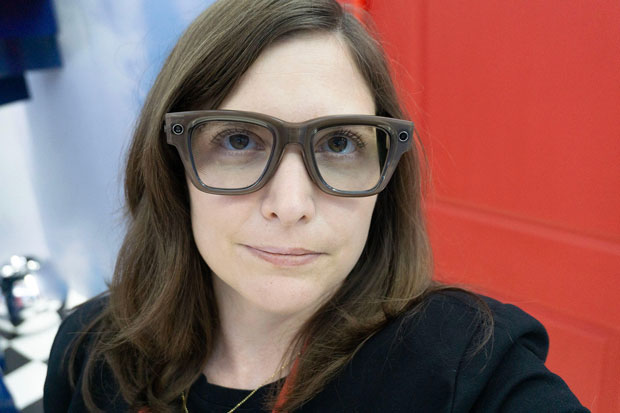
Senior reporter Karissa Bell wearing a pair of Ray Ban Display glasses.
Karissa Bell for Engadget

Like it or not, smart glasses are having a moment. Propelled by new devices like the Meta Ray-Ban Display and upcoming models like Xreal’s Project Aura, the idea of wearing specs with built-in screens suddenly became an attractive proposition. And that means a lot for a category of gadgets that’s often best remembered by the fashion tragedy that was Google Glass in 2013. 

However, this development isn’t purely by chance. The latest generation of smart glasses has only just now become a reality due to the convergence of several branches of tech — including improved optics, lightweight batteries and, of course, AI. Now that last one might sound silly considering how many big companies seem to be betting the farm on machine learning being the next big thing, but AI will be a critical feature for enabling the hands-free experience that you need to make smartglasses work when you can’t rely on touch input. While this category is still in its early stages of development, the increased momentum we’ve seen from smart glasses this year seems poised to carry them towards being a future pillar of people’s core tech kits. — S.R.

Fast charging

The Pixel Watch 4 on a person's wrist with orange leaves in the background.
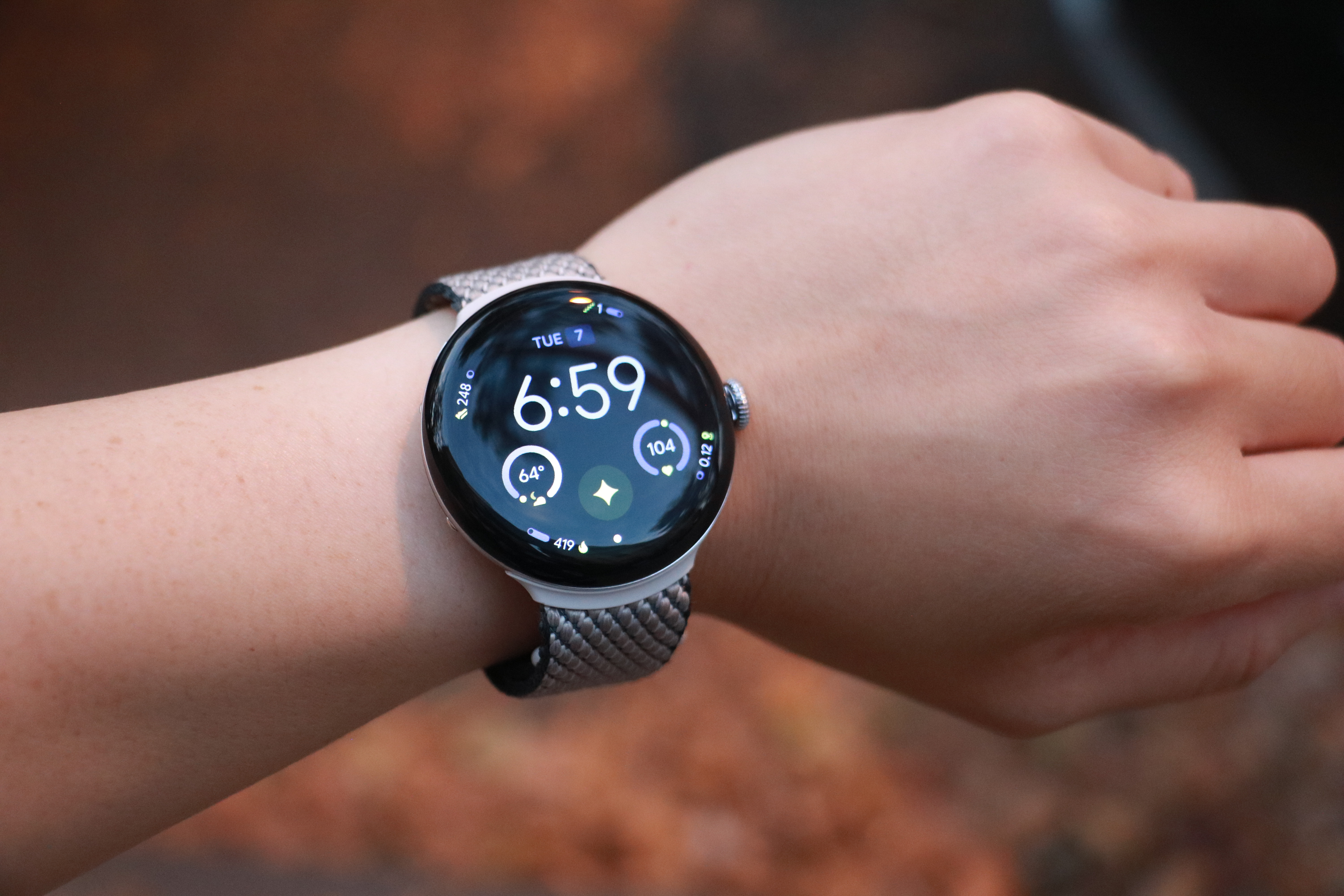
Fast charging on the Pixel Watch 4 is one implementation that impressed us this year.
Cherlynn Low for Engadget

Devices like tablets and smartwatches have matured to the point where each generation mostly sees iterative upgrades, making covering them seem boring. But this year, as the hardware review season came to a close, I noticed an interesting trend. One feature, across various product categories, genuinely excited myself and other reviewers at Engadget and around the internet: impressively fast charging. 

By itself, high-speed charging isn’t new. But when I reviewed the Pixel Watch 4 in October, I was shocked that one seemingly little update changed how I went about my day. The new power system on Google’s smartwatch was so efficient that after about ten minutes on a cradle, the wearable went from below 20 percent to past 50 percent. With that boost, I stopped having to remind myself to plug the watch in — any time I ran low or was about to run out the door, I just plopped it on the charger and would have enough juice for hours.

Google wasn’t the only company to make fast-charging a meaningful addition to one of its 2025 products. Apple’s iPad Pro M5 is the first iPad to support the feature, and while in our testing it fell a little short of the 50 percent charge in 30 minutes that the company promised, our reviewer Nate Ingraham still found it a meaningful improvement.

Observers of the smartphone industry will likely point out two things. First, battery technology can be volatile, and larger, faster-charging cells might lead to exploding phones. So my optimism about this development is not without caution. Secondly, we’ve already seen all this come to handsets, especially in phones that launched outside the US first. OnePlus is known for its SUPERVOOC fast charging system, for example, and we’re seeing even more novel battery tech show up abroad. Calling fast charging a winner of 2025 may feel untimely to some.

But when you consider the spread of speedier charging to other types of products, especially in electric vehicles that till now take forever to top up, the benefits are clear. This year, we saw Formula E (finally) debut its fast-charging pit stops, Honda announce its first full-size electric motorcycle with fast charging and Chinese EV maker BYD unveiling new tech that delivers peak EV charging speeds of 1,000 kilowatts. That should about halve the time it currently takes to top up your electric car. 

Sure, it’s not the most eye-catching or novel technological development. But when counted in terms of precious time saved, fast charging coming to more types of devices certainly amounts to a greater good in gadgets in 2025. — Cherlynn Low, Managing editor

Magnets

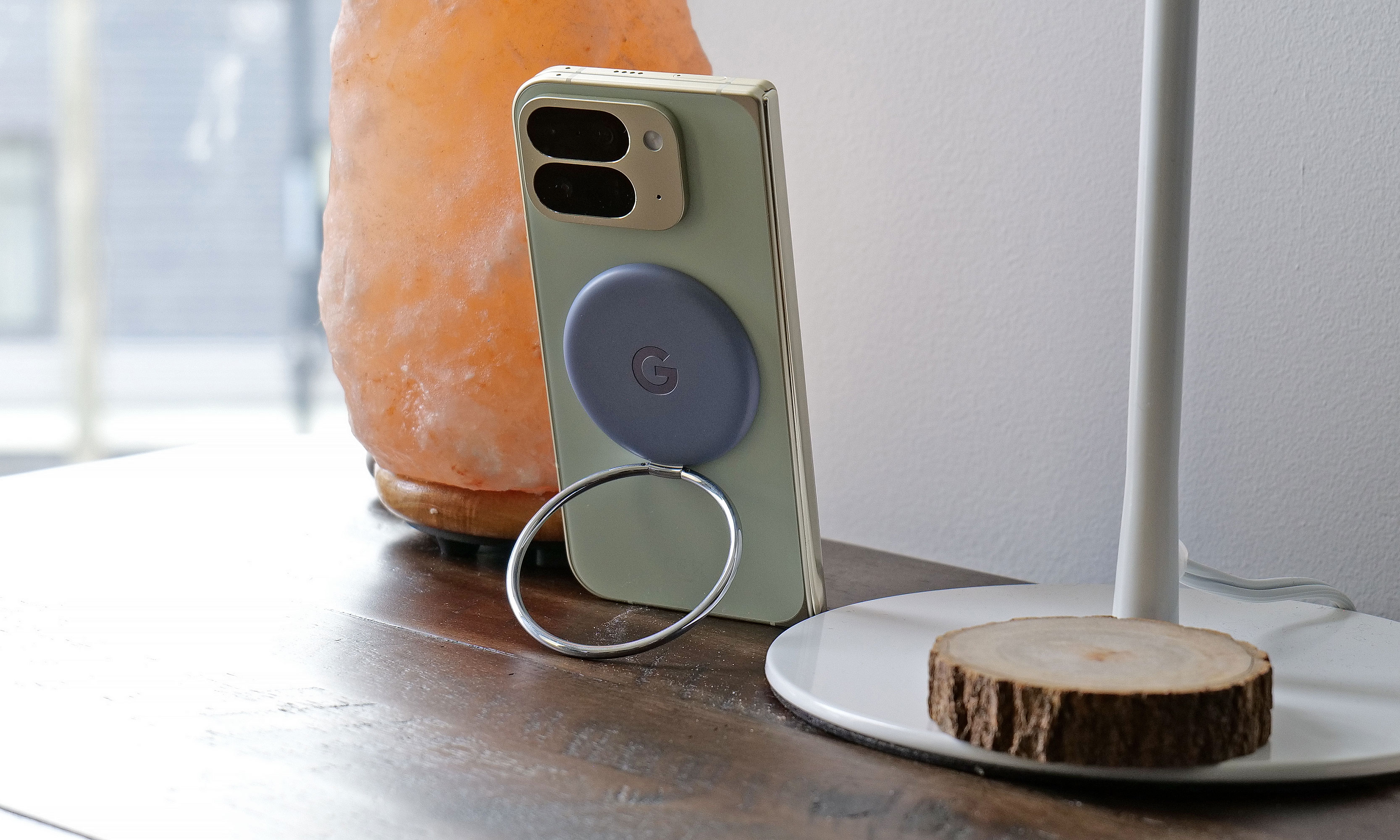
Even if you don't use it for charging, being able to slap magnetic accessories on the back of the Pixel 10 Pro Fold is super useful. Plus, this is the first phone to feature full support for the Qi2 standard.
The Pixel 10 Pro Fold and the Pixel Ring Stand
Sam Rutherford for Engadget

Two years after the announcement of the Qi 2 wireless charging standard and its support of magnetic attachment accessories (a la Apple’s MagSafe), we’re finally seeing one of the more mainstream Android devices adopt it. In 2025, Google became the first Android phone maker that’s not HMD to do so, bringing such magnetic capabilities to the Pixel 10 series. It also introduced Pixelsnap — its own version of a MagSafe accessory ecosystem, including a slim puck with a fold-out kickstand that you can snap onto a phone. 

I love the Pixel Ring Stand and make sure to bring it with me whenever I can. It works perfectly with my iPhone 17 Pro, and has a compact footprint that makes it easy to take anywhere. Of course, it’s not the first of its kind — Case-Mate and PopSocket, among others, already make similar products but they’re either pricier or rated poorly. 

But it’s not just Google that made a magnetic accessory I unexpectedly adored. When reports of Apple’s Crossbody Strap first trickled out, I was underwhelmed. Who cares about a crossbody strap for an iPhone? But when I was presented with one to try at the iPhone 17 launch event, my cynicism quickly melted into desire. 

Setting aside the convenience of having your phone on your person when you don’t have pockets or a purse, the way magnets play a part here also won me over. To adjust the length of the straps, you just separate the two overlapping pieces that stick together magnetically, move them along each other till you’re satisfied with the length and let them snap back in place. 

I’m sure Apple isn’t the first to make a crossbody strap accessory for iPhones, nor is it the first to use magnets to adjust such straps. But like many Redditors, I’ve slowly come to realize the differences between those products and the Crossbody Strap for iPhone 17. It’s far from perfect, but in 2025 it was another implementation of magnets in tech that caught my attention and brought convenience to my life. — C.L.

This article originally appeared on Engadget at https://www.engadget.com/techs-biggest-winners-of-2025-180000177.html?src=rss

Here’s how Google is laying the foundation for our mixed reality future

Today, during the XR edition of The Android Show, Google showed off a bunch of updates and new features headed to its mixed reality OS. And while most of the news was aimed at developers, I got a chance to demo some of the platform’s expanded capabilities on a range of hardware including Samsung’s Galaxy XR headset, two different reference designs and an early version of Xreal’s Project Aura smart glasses and I came away rather impressed. So here’s a rundown of what I saw and how it will impact the rapidly growing ecosystem of head-mounted displays.

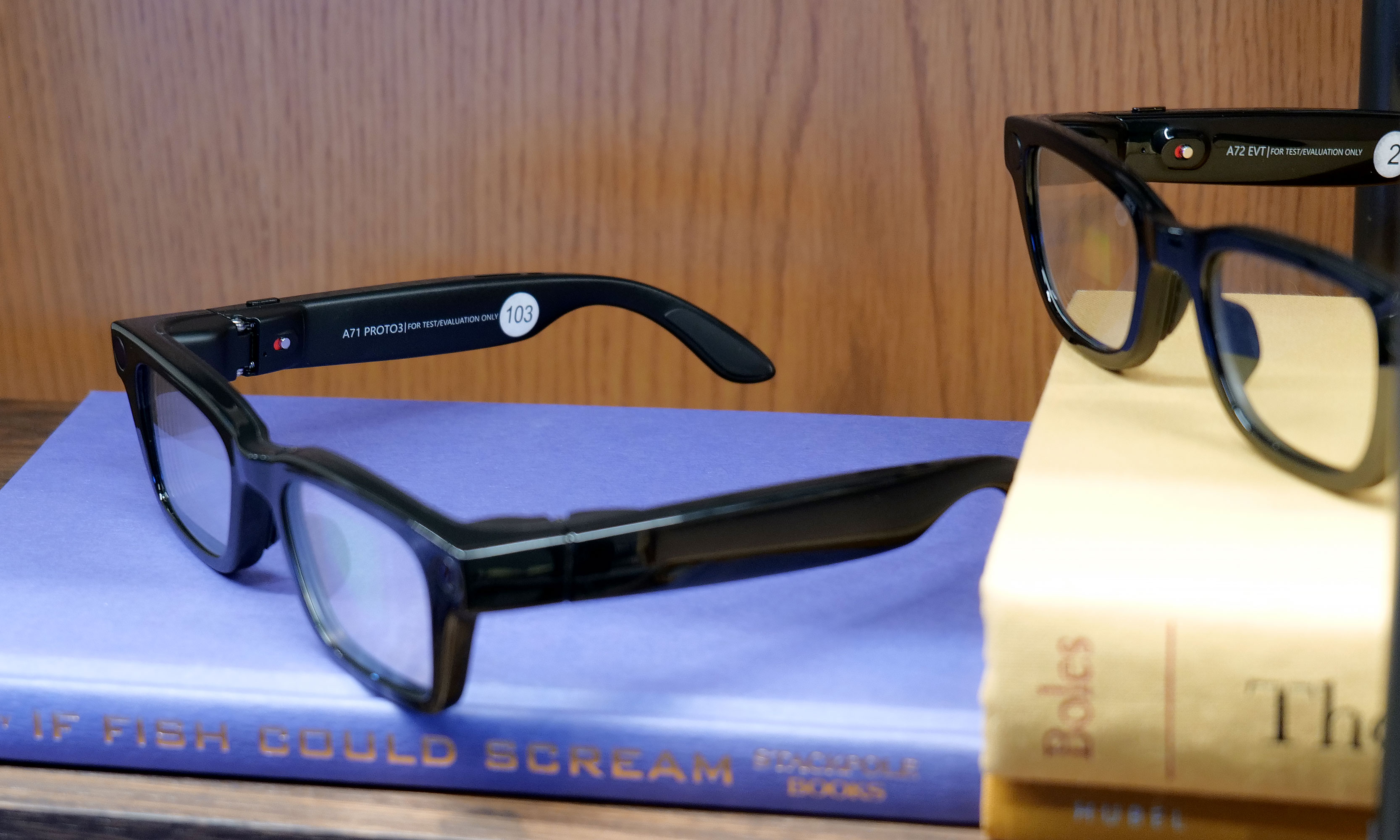
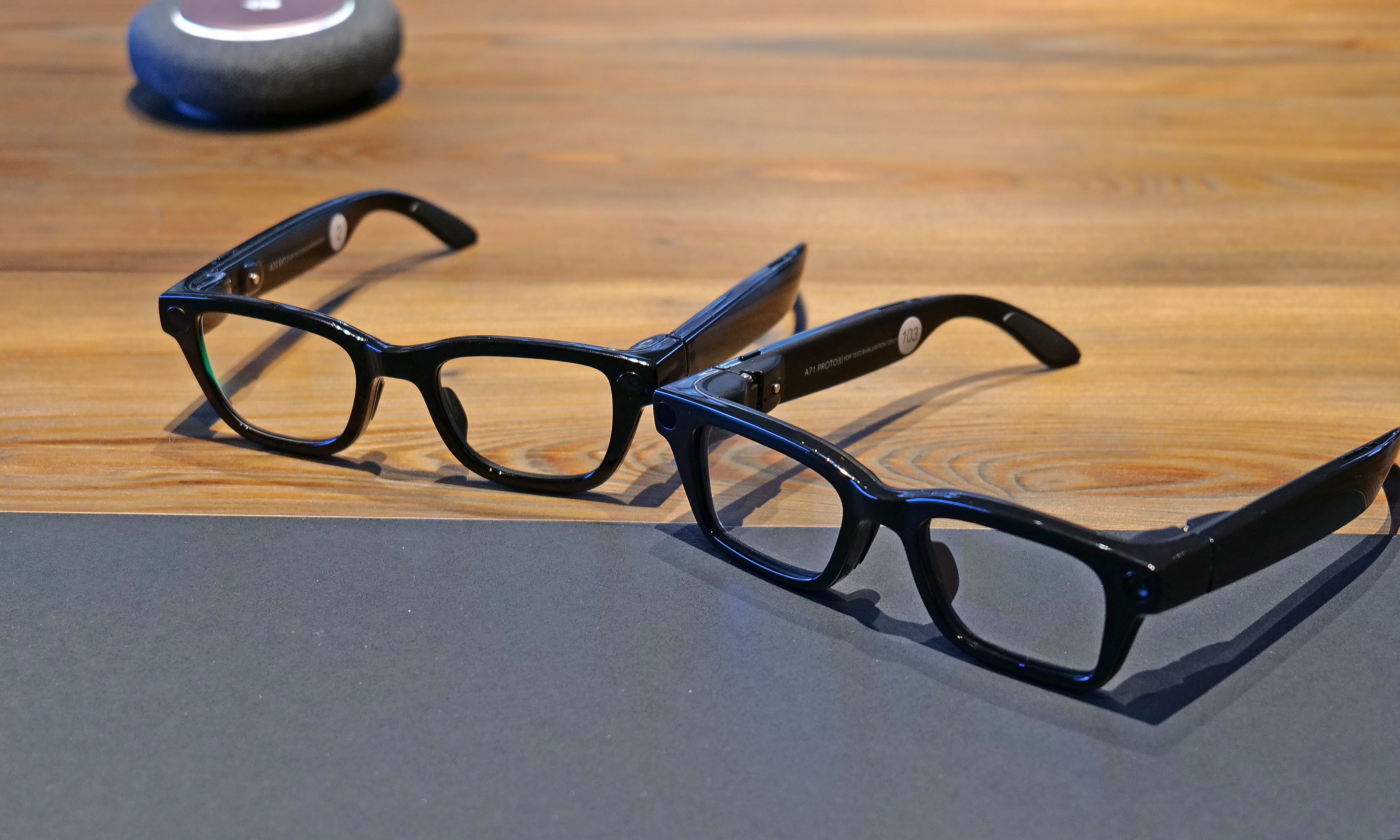
First up was one of Google’s reference design smart glasses with a single waveguide RGB display built into its right lens. I’ve included a picture of it here, but try not to read too deeply into its design or aesthetics, as this device is meant to be a testbed for Android XR features and not an early look at upcoming models.

Try not to read too much into the appearance of Google's reference design smart glasses, as they are explicitly labeled as prototypes meant to test upcoming features in Android XR.
Try not to read too much into the appearance of Google’s reference design smart glasses, as they are explicitly labeled as prototypes meant to test upcoming features in Android XR.
Sam Rutherford for Engadget

After putting them on, I was able to ask Gemini to play some tunes on YouTube Music before answering a call simply by tapping on the touchpad built into the right side of the frames. And because the reference model also had onboard world-facing cameras, I could easily share my view with the person on the other end of the line. 

Naturally, I was curious about how glasses had the bandwidth to do all this, because in normal use, they rely on a Bluetooth or Bluetooth LE connection. When asked, Max Spear, Group Product Manager for XR, shared that depending on the situation, the device can seamlessly switch between both Bluetooth and Wi-Fi, which was rather impressive because I couldn’t even detect when that transition happened. Spear also noted that one of Google’s focuses for Android XR is making it easier for developers to port over the apps people already know and love. 

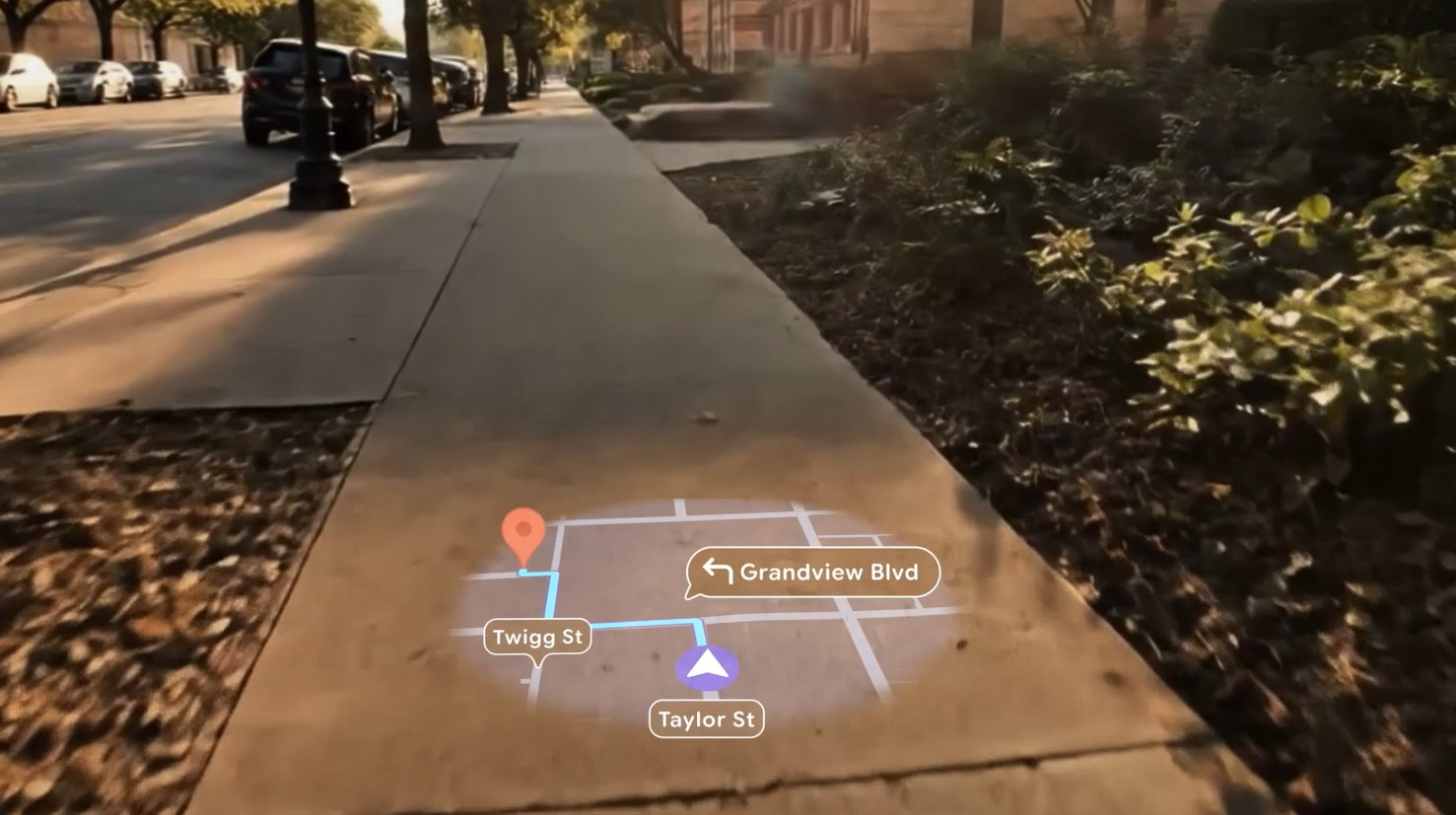
This means for devices like the reference design I wore that feature a built-in display (or displays), the OS actually uses the same code meant for standard Android notifications (like quick replies) to create a minimalist UI instead of forcing app makers to update each piece of software to be compliant with an ever-increasing number of devices. Alternatively, for models that are super lightweight and rely strictly on speakers (like Bose Frames), Google has also designed Android XR so that you only need mics and voice controls to access a wide variety of apps without the need for visual menus. 

This is the picture Gemini created when I asked it to transform a picture of some pantry shelves into a sci-fi scene.
This is the picture Google’s reference design smart glasses created (via Gemini ) when I asked it to transform a photo I took of some pantry shelves into a sci-fi kitchen.
Sam Rutherford for Engadget

Meanwhile, if you’re hoping to take photos with your smart glasses, there’s a surprising amount of capability there, too. Not only was I able to ask Gemini to take a photo, the glasses were also able to send a higher-res version to a connected smartwatch, which is super handy in case you want to review the image before moving on to the next shot. And when you want to inject some creativity, you can ask Gemini to transform pictures into practically anything you can imagine via Nano Banana. In my case, I asked the AI to change a shot of a pantry into a sci-fi kitchen and Gemini delivered with aplomb, including converting the room into a metal-clad setting complete with lots of light strips and a few bursts of steam.

However, one of the most impressive demos was when I asked Google’s reference glasses to look at some of that same pantry environment and then use the ingredients to create a recipe based on my specifications (no tomatoes please, my wife isn’t a fan). Gemini went down an Italian route by picking pasta, jarred banana peppers, bell peppers (which I thought was a somewhat unusual combination) and more, before launching into the first steps of the recipe. Sadly, I didn’t have time to actually cook it, but as part of the demo, I learned that Gemini has been trained to understand human-centric gestures like pointing and picking things up. This allows it to better understand context without the need to be super specific, which is one of those little but very impactful tricks that allows AI to feel way less robotic. 

This is how Google Maps will look on Android XR. However, it's important to note that this is the flat 2D version instead of the more detailed stereoscopic view available on smart glasses with dual displays.
This is how Google Maps will look on Android XR. Note that this is the flat 2D version instead of the more detailed stereoscopic view available on smart glasses with dual displays.
Sam Rutherford for Engadget

Then I had a chance to see how Uber and Google Maps ran on the reference glasses, this time using models with both single and dual RGB displays. Surprisingly, even on the monocular version, Maps was able to generate a detailed map with the ability to zoom in and out. But when I switched over to the binocular model, I noticed a significant jump in sharpness and clarity along with a higher-fidelity map with stereoscopic 3D images of buildings. Now, it may be a bit early to call this, and the perception of sharpness varies greatly between people based on their head shape and other factors, but after seeing that, I’m even more convinced that the smart glasses with dual RGB displays are what the industry will settle on in the long term.

The second type of device I used was the Samsung Galaxy XR, which I originally tried out when it was announced back in October. However, in the short time since, Google has cooked up a few new features that really help expand the headset’s capabilities. By using the goggle’s exterior-facing cameras, I was able to play a game of I Spy with Gemini. Admittedly, this might sound like a small addition, but I think it’s going to play a big part in how we use devices running Android XR, because it allows the headset (or glasses) to understand better what you’re looking at in order to provide more helpful contextual responses. 

Even though it was announced not long ago in late October, Samsung's Galaxy XR headset is already getting some new features thanks to some updates coming to Android XR.
Even though it was announced not long ago in late October, Samsung’s Galaxy XR headset is already getting some new features thanks to some updates coming to Android XR.
Sam Rutherford for Engadget

However, the biggest surprise was when I joined a virtual call with someone using one of Google’s new avatars, called Likeness. Instead of the low-polygon cartoony characters we’ve seen before in places like Meta Horizon, Google’s virtual representations of people’s faces are almost scary good. So good I had to double-check that they weren’t real and from what I’ve seen they’re even a step up from Apple’s Personas. Google says that headsets like the Galaxy XR rely on interior sensors to track and respond to facial movements, while users will be able to create and edit their avatars using a standalone app due out sometime next year. 

The person in the bottom right is using a Likeness, which during my demo looked surprisingly responsive and realistic.
Google

Next, I got a chance to test out the Android XR’s PC connectivity by playing Stray on the Galaxy XR while it was tethered wirelessly to a nearby laptop. Not only did it run almost flawlessly with low latency, I was also able to use a paired controller instead of relying on hand-tracking or the laptop’s mouse and keyboard. This is something I’ve been eagerly waiting to try because it feels like Google has put a lot of work into making Android XR devices play nicely with other devices and OSes. Initially, you’ll only be able to connect Windows PCs to the Galaxy XR, but Google says it’s looking to support macOS systems as well.

Finally, I got to try out Xreal’s Project Aura glasses to see how Android XR works on a device primarily designed to give you big virtual displays in a portable form factor. Unfortunately, because this was a pre-production unit, I wasn’t able to take photos. That said, as far as the glasses go, I was really impressed with their resolution and sharpness and the inclusion of electrochromic glass is a really nice touch, as it allows users to change how heavily the lenses are tinted with a single touch. Alternatively, the glasses can also adjust the tint automatically based on whatever app you are using to give you a more or less isolated atmosphere, depending on the situation. I also appreciate the Aura’s increased 70-degree FOV, but if I’m nitpicking, I wish it were a bit higher, as I occasionally found myself wanting a bit more vertical display area. 

Unfortunately, I wasn't allowed to take photos of Xreal's Project Aura smart glasses, as the model I used was still an early pre-production unit. So here's a shot provided by Google instead.
Unfortunately, I wasn’t allowed to take photos of Xreal’s Project Aura smart glasses, as the model I used was still an early pre-production unit. So here’s a shot provided by Google instead.
Google / Xreal

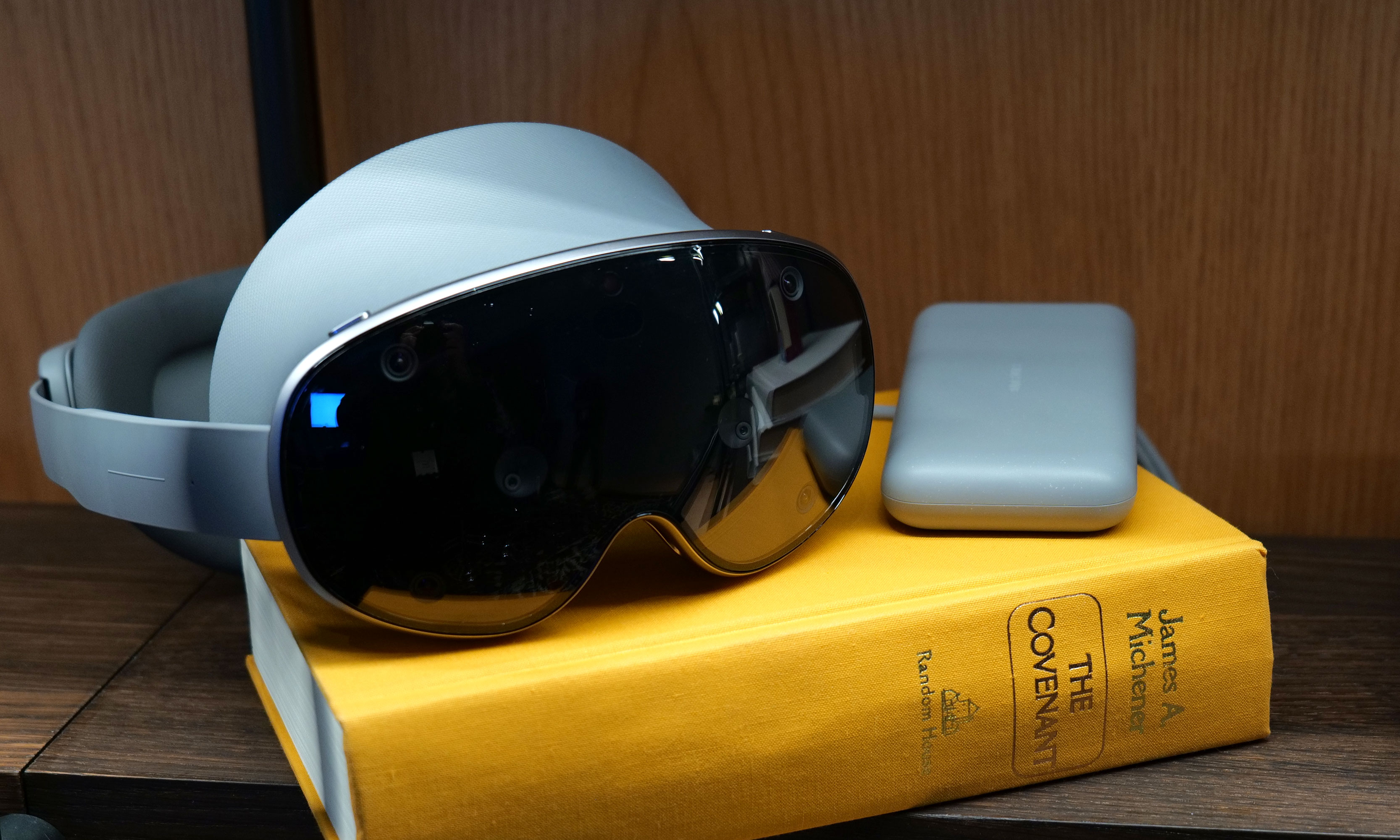
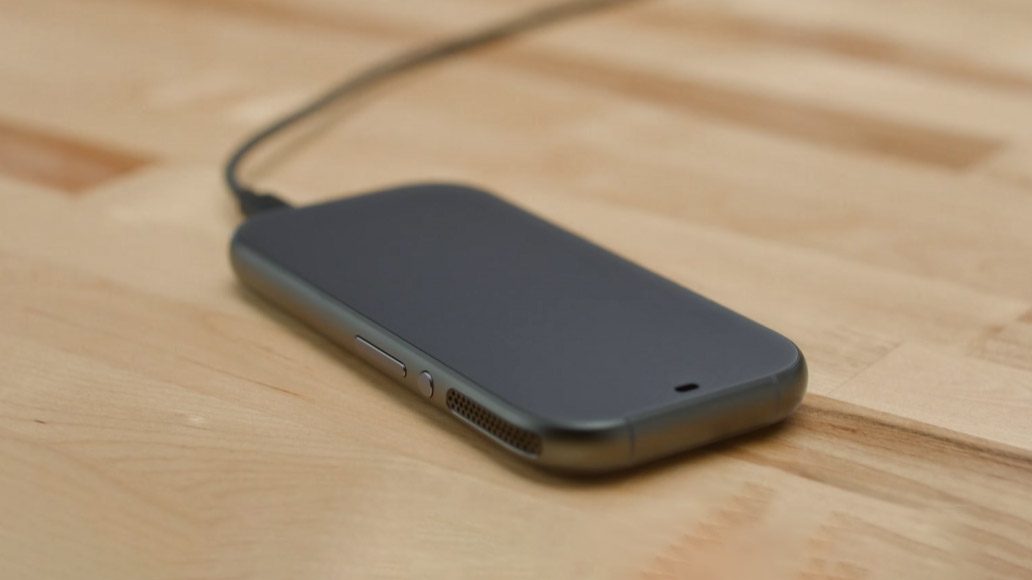
As a device that’s sort of between lightweight smart glasses and a full VR headset, the Aura relies on a wired battery pack that also doubles as a touchpad and a hub for plugging in external devices like your phone, laptop or even game consoles. 

While using the Aura, I was able to connect to a different PC and multitask in style, as the glasses were able to support multiple virtual displays while running several different apps at the same time. This allowed me to be on a virtual call with someone using a Likeness while I had two other virtual windows open on either side. I also played an AR game (Demio) while I moved around in virtual space and used my hands to reposition the battlefield or pick up objects with my hands. 

Now I will fully admit this is a lot and it took me a bit to process everything. But upon reflection, I have a few takeaways from my time with the various Android XR devices and prototypes. More than any other headset or smart glasses platform out now, it feels like Google is doing a ton to embrace a growing ecosystem of devices. That’s really important because we’re still so early in the lifecycle for wearable gadgets with displays that no one has really figured out a truly polished design like we have for smartphones and laptops. And until we get there, this means that a highly adaptable OS will go a long way towards supporting OEMs like Samsung, Xreal and others. 

But that’s not all. It’s clear Google is focused on making Android XR devices easy to build for. That’s because the company knows that without useful software that can highlight the components and features coming on next-gen spectacles, there’s a chance that interest will remain rather niche — similar to what we’ve seen when looking at the adoption of VR headsets. So in a way, Google is waging a battle on two fronts, which makes navigating uncharted waters that much more difficult. 

A major focus for Android XR while people are still figuring out how to make smart glasses is to support a wide variety of designs including those with single displays, dual displays or models without any displays that rely on cameras and speakers.
Sam Rutherford for Engadget

Google is putting a major emphasis on Android XR’s ability to serve as a framework for future gadgets and support and address developer needs. This mirrors the approach the company takes with regular Android and the opposite of Apple’s typical MO, because unlike the Vision Pro and visionOS, it appears Google is going to rely heavily on its partners like Xreal, Warby Parker, Gentle Monster and others to create engaging hardware. Furthermore, Google says it plans to support smart glasses that can be tethered to Android and iOS phones, as well as smartwatches from both ecosystems, though there will be some limitations for people using Apple devices due to inherent OS restrictions.

That’s not to say that there won’t be Pixel glasses sometime down the road, but at least for now, I think that’s a smart approach and possibly a lesson Google learned after releasing Google Glass over a decade ago. Meanwhile, hi-res and incredibly realistic avatars like Likenesses could be a turning point for virtual collaboration, because, in a first for me, talking to a digital representation of someone else felt kind of natural. After my demos, I had a chance to talk to Senior Director of Product Management for XR Juston Payne, who highlighted the difference between smart glasses and typical gadgets by saying “Smart glasses have to be great glasses first. They need to have a good form factor, good lenses with prescription support, they need to look good and they have to be easy to buy.”

That’s no simple task and there’s no guarantee that next-gen smart glasses and headsets will be a grand slam. But from what I’ve seen, Google is building a very compelling foundation with Android XR.

This article originally appeared on Engadget at https://www.engadget.com/wearables/heres-how-google-is-laying-the-foundation-for-our-mixed-reality-future-180000716.html?src=rss

Hands-on: XREAL Aura AR Glasses with Android XR and a 70-degree Field-of-view, Launching Next Year

Set to launch in 2026, XREAL Aura is the first pair of see-through AR glasses to run Android XR. Here are the impressions from my first hands-on.

During a recent meeting with Google, the company shared with me a range of updates relating to Android XR, including the first look at XREAL Aura. Unfortunately I wasn’t allowed to take any photos or videos during the demo.

XREAL Aura will be the first pair of see-through glasses running the full-blown immersive version of Android XR. Considering the immersion they offer, the glasses are impressively compact. Much of this is thanks to offloading weight, battery, and compute onto a tethered puck which can slip into your pocket. Interestingly, the puck looks like the size and shape of a typical smartphone, but instead, the entire screen area is a giant trackpad which can be used for mouse-like input (in addition to hand-tracking).

Image courtesy Google

Compared to prior models of XREAL glasses with bird-bath style optics, the optics in the XREAL Aura are a bit more compact, allowing you to bring your eyes closer to the lens. XREAL is finally getting close to AR glasses which actually look like glasses without the lenses being so far from your eyes that it looks goofy. They’re still look a little funky because of the distance, but we’re getting there.

Putting on the glasses, I was presented with the same Android XR experience I’m used to from Galaxy XR, except this time the background I was seeing was the real world (albeit, a fairly dim version of the real world due to the light loss through the lenses). Unfortunately, Aura doesn’t include eye-tracking, which means I couldn’t use my preferred look+pinch method of input (which is supported on Galaxy XR); I had to use the default laser-pointer input style which feels more cumbersome.

The quoted 70-degree field-of-view (I assume diagonal, but they didn’t specify) felt usable, but seems like the bare minimum field-of-view needed to get real value out of an immersive operating system like Android XR. If Google hasn’t already specified that any immersive Android XR device needs at least this wide of an FoV, they absolutely should.

I was impressed with the sharpness and brightness of the Aura’s display. It looked pretty good for virtual screen usage (ie: viewing websites, videos, photos, etc). But I also saw obvious pupil swim (which looks like warping as you move your head around). This will be more noticeable in fully immersive experiences or multi-tasking where there’s lots of head movement. For some people, pupil swim is just a visual annoyance, but for others it can be dizzying over time. It’s unclear if this can be improved before launch, especially without any on-board eye-tracking hardware.

One particularly cool feature of Aura is the electronically-controlled dimming lenses. A button on the stem of the glasses allows you to dim the real world from 0% to nearly 100%, blocking out almost all light.

This isn’t the first pair of AR glasses to include electronic lens dimming, but the way it’s integrated into Android XR is a clever value-add. If you launch a fully immersive application (like a VR game), the software can automatically switch the dimming to 100% so the virtual content doesn’t conflict with your real-world background. Or, in applications that would like to dim the user’s background (like a media app), it can set the dimming to 50%. With a passthrough headset like Galaxy XR, this dimming would normally be done digitally, but with the Aura glasses it’s done physically. And Google says developers don’t need to worry about the distinction; if their app asks Android XR to dim the background, it’ll automatically do so through whatever means are available to the device.

Of course, Aura is a ‘glasses-style’ device, so even when dimming is set to 100%, you’ll still see lots of the real-world in your peripheral vision. But still, having the feature makes fully immersive applications usable in a way they wouldn’t on a see-through AR device.

Considering its capabilities, Aura looks strikingly close to a normal enough pair of sunglasses that you might not get a double take by people passing by, though anyone talking to you face-to-face would surely know there is something strange going on behind the lenses.

Even with dimming set to 0%, the real world is still made fairly dim; like wearing sunglasses inside. Whether by design (to account for not enough display brightness) or happenstance (as a result of light loss from the optics), it still feels like you’re wearing sunglasses inside, which limits some of the indoor use-cases you might want to do with a pair of AR glasses. For instance, I’d like to have AR glasses which work as a cooking companion in the kitchen so I can reference recipes while preparing food. But like a regular pair of sunglasses, Aura dims the world too much that I wouldn’t want to use them in the kitchen.

I look forward to trying the finished version. In my brief hands-on, I came away feeling like Aura is the first clear look at the eventual convergence of AR and VR headsets. It feels like a full-fledged Android XR headset but in a much more compact package that will be way more portable and less conspicuous. I could actually see myself using Aura on a plane or in a coffee shop without feeling like everyone would be staring at me.

Indeed, Google is thinking the same. Alongside my look at Aura, the company also announced that it’s rolling out a first-party PC Connect application for Android XR to make it easy to stream your Windows desktop to the glasses for productivity, media, or gaming.

There’s still some key things we don’t know about Aura. The company hasn’t revealed a full set of specifications yet, and we don’t know if there will be any controller support (which would mean incompatibility with many immersive VR games). We also don’t have a price or specific release date, but XREAL has confirmed that Aura will launch in 2026.

The post Hands-on: XREAL Aura AR Glasses with Android XR and a 70-degree Field-of-view, Launching Next Year appeared first on Road to VR.

Addressing Linux’s missing PKI infrastructure

Jon Seager, VP of engineering for Canonical, has announced
a plan to develop a universal Public Key Infrastructure tool called
upki:

Earlier this year, LWN featured an excellent article titled
“Linux’s missing CRL
infrastructure
“. The article highlighted a number
of key issues surrounding traditional Public Key Infrastructure (PKI),
but critically noted how even the available measures are effectively
ignored by the majority of system-level software on Linux.

One of the motivators for the discussion is that the Online
Certificate Status Protocol (OCSP) will cease to be supported by Let’s
Encrypt. The remaining alternative is to use Certificate Revocation
Lists (CRLs), yet there is little or no support for managing (or even
querying) these lists in most Linux system utilities.

To solve this, I’m happy to share that in partnership with rustls
maintainers Dirkjan Ochtman
and Joe Birr-Pixton, we’re starting the
development of upki: a universal PKI tool. This project initially aims
to close the revocation gap through the combination of a new system
utility and eventual library support for common TLS/SSL libraries such
as OpenSSL, GnuTLS and rustls.

No code is available as of yet, but the announcement indicates that
upki will be available as an opt-in preview for
Ubuntu 26.04 LTS. Thanks to Dirjan Ochtman for the tip.

This unreleased Teewng Flux uses DJI motor and could be the best-value eMTB of 2026

Chinese brand Teewing has a new electric enduro bike in the works, named the Flux, with its release slated for the first half of 2026.

BikeRadar and MBUK‘s Tom Marvin spotted the bike under Teewing ambassador Andi Sykes, and managed to tease out a few details and take a couple of snaps of this full-carbon bike.

Teewing made an impression on the UK eMTB market in 2025 with the Turbo Force electric trail bike, which features the popular DJI Avinox motor at a price that was below virtually every other DJI-powered carbon eMTB on the market, at £6,699.

While the pricing information I have on the new bike isn’t 100% confirmed, it looks likely that the Teewing Flux is going to come in at a price well below its competitors, making it potentially the best-value electric mountain bike of 2026.

What did I spot?

The TeeWing Flux enduro bike
Look what I saw in the woods! Tom Marvin / OurMedia

Aside from what is generally accepted as the market-leading DJI motor placed by the cranks, the most obvious feature of the new Teewing Flux is the high-pivot suspension design.

On the Flux, this gives you 178mm of travel in the mullet build, and I believe, 170mm in the full-29er

This means the main swingarm pivot is located higher in the frame, well above the chainring.

When the rear wheel hits an obstacle, the arc of the wheel’s initial movement is more rearward and up, rather than either straight up or forward and up. This has the effect of bumping the wheel back and out of the way of an obstacle, rather than pushing the wheel into it.

Teewing flux suspension linkage
The high-pivot design gives the rear wheel an initially rearward axle path for a smoother ride. Tom Marvin / OurMedia

This gives high-pivot bikes a smoother ride on rough terrain, and is a popular feature of longer-travel bikes.

The chain is then routed over an idler pulley, which rotates around the high main pivot, to reduce the impact of chain growth on the suspension’s action.

The Teewing’s carbon swingarm extends a touch past the large idler pulley, and encases the chain that loops over the idler – a neat solution to prevent any derailment.

Further back, the Flux uses a four-bar linkage design, with a pivot located on the chainstay. This should give Teewing additional control over the suspension’s kinematics. However, details such as progression, anti-rise and anti-squat are as yet to be announced.

TeeWing Flux pivot
Mullet capabilities, and dual bearings – plenty of thought has gone into Teewing’s second bike. Tom Marvin / OurMedia

The driveside chainstay has some wavy chain-slap protection, while the rear pivot apparently has a double set of bearings for durability.

You’ll also find a flip chip here, enabling the bike to be run as a mullet bike (as Andi has) or a full 29er.

There’s a second flip chip at the base of the shock, with High and Low settings – this should alter the geometry.

Speaking of geometry, there’s limited information out there. However, we believe a Large bike will have a reach of around 480mm, a head tube angle of just under 64 degrees, a seat tube angle of 78 degrees and a 445mm seat tube length – according to Andi.

A few more hidden details

TeeWing speed sensor
The DJI Avinox motor can measure the bike’s speed 42 times per wheel revolution, thanks to this mini-rotor, part of the reason the motor is so impressive. Tom Marvin / OurMedia

Andi told me the seat tube has been made shorter than that found on the trail bike Turbo Force, as a way of enabling gravity-focused riders to run a longer dropper post.

The Flux also features fully guided internal cable routing.

The aforementioned DJI Avinox motor sits in the middle of the bike, powered by an 800Wh battery tucked into the down tube.

The provision of the 800Wh battery means we’re unlikely to see a size-Small model, because the battery is too large.

TeeWing Flux chainstay
The chainstay neatly encases the chain. Tom Marvin / OurMedia

On the non-driveside, a new magnetic charge port cover replaces the apparently less reliable rubber bung of old. It’s a neat solution with a satisfying snap when the spring pulls it back home.

Not so hidden is DJI’s responsive touchscreen display, which is on top of the top tube, while a pair of button controllers will sit on the cockpit.

Teewing Flux specification and price details

TeeWing suspension
Fox suspension will feature on the two available models. Tom Marvin / OurMedia

I do not have a full spec list or pricing for the new Teewing Flux, however Andi mentioned a few things that hint at what’s to come.

While Andi’s bike is decked out with a Pembree cockpit and Hunt wheels, production models will come with Teewing’s own carbon cockpit.

Two models are planned: this Fox Float-X and 38 Performance-level build, and one with Factory-level suspension of the same model.

I believe the cheaper model will come with SRAM’s Eagle 90 drivetrain, while the more expensive bike will get the new Shimano XT Di2.

Both models will be fitted with DoubleDown-cased Maxxis tyres, hinting at the gravity focus.

Wheels will be alloy on the cheaper model and carbon on the pricier bike.

The Teewing Flux Pro, with its Factory-level suspension, is likely to be priced at around €8,999, while the Flux One A (roughly as seen here) should be around €6,899.

Both these prices represent good value for money in my eyes.

DJI controller screen.
The UI of DJI’s motor system really is class-leading. Tom Marvin / OurMedia
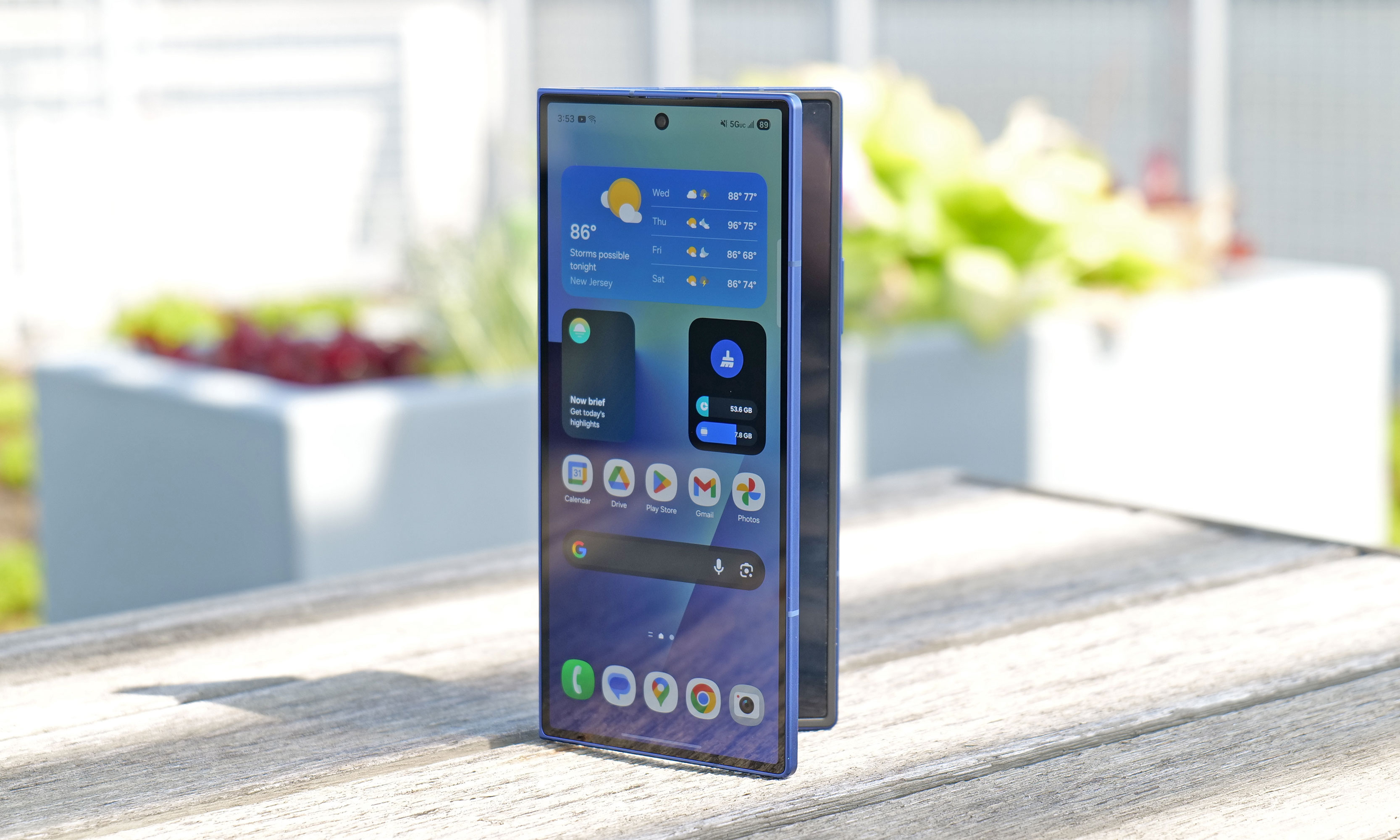
A same-same-but-different build of the Unno Mith, for example, comes in at £10,599 – you get SRAM X0 instead of Shimano XT, but both come with the same suspension, carbon frame, and motor, etc.

Of course, brands that are more established in the UK may be a proposition riders will be attracted to. However, those who are more price-sensitive and willing to purchase from a brand with less history in the UK should be rewarded with a very well-specced bike for the money.

When will the Teewing Flux arrive in the UK?

As yet, I do not know when the Flux will arrive on our shores. As far as I understand, the brand is working on distribution options into the UK.

There’s no doubt the introduction of DJI’s motor shook up the eMTB world. Brands such as Teewing, which may otherwise have struggled to gain traction in the UK and Europe, are able to leverage their position in the market when they have access to what is a hugely influential component.

With the Turbo Force trail bike getting good reviews and coverage that far outweighs the brand’s scale here in the UK, I predict the Flux’s competitive pricing will make this a highly attractive option for riders looking for a DJI-powered bike, who aren’t overly brand loyal.

While I would be excited to throw a leg over the bike, until I have the opportunity you should keep an eye on Andi’s YouTube channel, where I believe more information and impressions will be published soon.