iFixit’s new app uses AI to help you repair your stuff

We’ve all been there: You can’t (or won’t) get help when something breaks, but the YouTube clip doesn’t cover your specific issue. It’s what repair gurus at iFixit want to solve with FixBot, an AI-enabled app that talks you through whatever repair you’re doing. The chatbot will help you diagnose the problem and then walk you step-by-step through the fix. Plus, it’s voice-enabled so you won’t have to get your phone all smeary when you’re elbows-deep in a job. After all, iFixit’s guides don’t just cover fixing your electronics, but everything you might fancy doing yourself, from appliances through to cars and trucks.

Unlike traditional AIs, FixBot has been trained on iFixit’s library of 125,000 guides, its forum and database of repair manuals. The company says there’s less risk of hallucination as it pulls from and shows you the schematics it’s referencing to ensure you don’t order the wrong gear. Users can even upload images from their phone, so the app can point out which bit is which. The company is open about its limitations: It’s an AI, so it’s not bulletproof, and its knowledge only runs as far as its library. It can hunt elsewhere for manufacturer data and on other repair forums but you’ll be warned about the information it pulls from it.

In addition, FixBot will keep an eye on your phone’s battery health in real time to tell you when it’s time to get a replacement. The tool is, for now, in beta, thanks to the fuzzy way some companies track their battery health, but iFixit is promising greater detail than what you currently get. Plus, when it is time to swap out your battery, you can order the parts and kit all within the app. 

FixBot is launching for free on both the App Store and Google Play but it won’t remain that way forever. At some point, free users will switch to a version with access limits, and will be prompted to upgrade to the paid tier for $4.99 a month or $50 a year.

This article originally appeared on Engadget at https://www.engadget.com/general/ifixits-new-app-uses-ai-to-help-you-repair-your-stuff-130000091.html?src=rss

The year age verification laws came for the open internet

When the nonprofit Freedom House recently published its annual report, it noted that 2025 marked the 15th straight year of decline for global internet freedom. The biggest decline, after Georgia and Germany, came within the United States.

Among the culprits cited in the report: age verification laws, dozens of which have come into effect over the last year. “Online anonymity, an essential enabler for freedom of expression, is entering a period of crisis as policymakers in free and autocratic countries alike mandate the use of identity verification technology for certain websites or platforms, motivated in some cases by the legitimate aim of protecting children,” the report warns. 

Age verification laws are, in some ways, part of a years-long reckoning over child safety online, as tech companies have shown themselves unable to prevent serious harms to their most vulnerable users. Lawmakers, who have failed to pass data privacy regulations, Section 230 reform or any other meaningful legislation that would thoughtfully reimagine what responsibilities tech companies owe their users, have instead turned to the blunt tool of age-based restrictions — and with much greater success.  

Over the last two years, 25 states have passed laws requiring some kind of age verification to access adult content online. This year, the Supreme Court delivered a major victory to backers of age verification standards when it upheld a Texas law requiring sites hosting adult content to check the ages of their users.

Age checks have also expanded to social media and online platforms more broadly. Sixteen states now have laws requiring parental controls or other age-based restrictions for social media services. (Six of these measures are currently in limbo due to court challenges.) A federal bill to ban kids younger than 13 from social media has gained bipartisan support in Congress. Utah, Texas and Louisiana passed laws requiring app stores to check the ages of their users, all of which are set to go into effect next year. California plans to enact age-based rules for app stores in 2027.

These laws have started to fragment the internet. Smaller platforms and websites that don’t have the resources to pay for third-party verification services may have no choice but to exit markets where age checks are required. Blogging service Dreamwidth pulled out of Mississippi after its age verification laws went into effect, saying that the $10,000 per user fines it could face were an “existential threat” to the company. Bluesky also opted to go dark in Mississippi rather than comply. (The service has complied with age verification laws in South Dakota and Wyoming, as well as the UK.) Pornhub, which has called existing age verification laws “haphazard and dangerous,” has blocked access in 23 states. 

Pornhub is not an outlier in its assessment. Privacy advocates have long warned that age verification laws put everyone’s privacy at risk. Practically, there’s no way to limit age verification standards only to minors. Confirming the ages of everyone under 18 means you have to confirm the ages of everyone. In practice, this often means submitting a government-issued ID or allowing an app to scan your face. Both are problematic and we don’t need to look far to see how these methods can go wrong. 

Discord recently revealed that around 70,000 users “may” have had their government IDs leaked due to an “incident” involving a third-party vendor the company contracts with to provide customer service related to age verification. Last year, another third-party identity provider that had worked with TikTok, Uber and other services exposed drivers’ licenses. As a growing number of platforms require us to hand over an ID, these kinds of incidents will likely become even more common. 

Similar risks exist for face scans. Because most minors don’t have official IDs, platforms often rely on AI-based tools that can guess users’ ages. A face scan may seem more private than handing over a social security number, but we could be turning over far more information than we realize, according to experts at the Electronic Frontier Foundation (EFF).

“When we submit to a face scan to estimate our age, a less scrupulous company could flip a switch and use the same face scan, plus a slightly different algorithm, to guess our name or other demographics,” the organization notes. “A poorly designed system might store this personal data, and even correlate it to the online content that we look at. In the hands of an adversary, and cross-referenced to other readily available information, this information can expose intimate details about us.”

These issues aren’t limited to the United States. Australia, Denmark and Malaysia have taken steps to ban younger teens from social media entirely. Officials in France are pushing for a similar ban, as well as a “curfew” for older teens. These measures would also necessitate some form of age verification in order to block the intended users. In the UK, where the Online Safety Act went into effect earlier this year, we’ve already seen how well-intentioned efforts to protect teens from supposedly harmful content can end up making large swaths of the internet more difficult to access. 

The law is ostensibly meant to “prevent young people from encountering harmful content relating to suicide, self-harm, eating disorders and pornography,” according to the BBC. But the law has also resulted in age checks that reach far beyond porn sites. Age verification is required to access music on Spotify. It will soon be required for Xbox accounts. On X, videos of protests have been blocked. Redditors have reported being blocked from a lengthy number of subreddits that are marked NSFW but don’t actually host porn, including those related to menstruation, news and addiction recovery. Wikipedia, which recently lost a challenge to be excluded from the law’s strictest requirements, is facing the prospect of being forced to verify the ages of its UK contributors, which the organization has said could have disastrous consequences. 

The UK law has also shown how ineffective existing age verification methods are. Users have been able to circumvent the checks by using selfies of video game characters, AI-generated images of ID documents and, of course, Virtual Private Networks (VPNs). 

As the EFF notes, VPNs are incredibly widely used. The software allows people to browse the internet while masking their actual location. They’re used by activists and students and people who want to get around geoblocks built into streaming services. Many universities and businesses (including Engadget parent company Yahoo) require their students and workers to use VPNs in order to access certain information. Blocking VPNs would have serious repercussions for all of these groups. 

The makers of several popular VPN services reported major spikes in the UK following the Online Safety Act going into effect this summer, with ProtonVPN reporting a 1,400 percent surge in sign-ups. That’s also led to fears of a renewed crackdown on VPNs. Ofcom, the regulator tasked with enforcing the law, told TechRadar it was “monitoring” VPN usage, which has further fueled speculation it could try to ban or restrict their use. And here in the States, lawmakers in Wisconsin have proposed an age verification law that would require sites that host “harmful” content to also block VPNs.

While restrictions on VPNs are, for now, mostly theoretical, the fact that such measures are even being considered is alarming. Up to now, VPN bans are more closely associated with authoritarian countries without an open internet, like Russia and China. If we continue down a path of trying to put age gates up around every piece of potentially objectionable content, the internet could get a lot worse for everyone. 

This article originally appeared on Engadget at https://www.engadget.com/big-tech/the-year-age-verification-laws-came-for-the-open-internet-130000979.html?src=rss


All About the 2025 Rapha Festive 500 on Zwift

Rapha’s Festive 500 began in 2010 as a simple challenge: brave the winter elements and ride 500 kilometers between December 24-31. Since then, riders have covered over 400 million Festive kilometers, including many virtual kilometers after Covid lockdowns opened the Festive 500 challenge to virtual rides.

15 years on and it’s become cycling’s favorite year-end ritual. This year, for the first time, your outdoor miles count just like your indoor miles when it comes to finishing the challenge on Zwift. Read on for details…

The Challenge

Your task is to ride 500 kilometers (310.7 miles) in eight days, from December 24-31. Outdoor bike, e-bike, handcycle, and virtual rides all count toward the total.

This is all tracked through Strava – in fact, the Festive 500 is the longest-running Strava challenge in the world! You’ll need to sign up for the Strava Challenge and upload your rides to Strava to be considered an official finisher.

RoboPacer-Led Festive 500 Events

Outdoor rides and all Zwift miles (free rides, workouts, etc) count toward the Festive 500 challenge, but Zwift is spinning up RoboPacer-led events to encourage riders to go the distance. The following RoboPacers will be in each event:

  • A: 3.7 W/kg Genie RoboPacer
  • B: 2.6 W/kg Coco RoboPacer
  • C: 2.2 W/kg Maria RoboPacer
  • D: 1.8 W/kg Miguel RoboPacer
  • E: 1.5 W/kg Bernie RoboPacer

Events alternate between “long” 50km rides on Triple Flat Loops at the top of each hour and “short” 25km rides on Watopia’s Waistband at the half hour.

See all of Zwift’s Festive 500 Group Rides at zwift.com/events/series/rapha-festive-500-zwift

Special Event: Ride with Eric Min on December 25

Join Zwift CEO Eric Min on Christmas day for a festive 50km group ride on Triple Flat Loops in the limited-edition Ugly Sweater kit. (We don’t yet have the link to the specific event Eric will be leading. Watch here for an update.)

Kit Unlock

Complete the Festive 500 via any combination of indoor and outdoor rides, and you’ll unlock the Rapha Festive 500 2025 kit in Zwift:

Prize Drawing

Details of the Strava challenge say those who finish will earn the following:

  • Entry into the prize draw to win a US$1,000 Rapha voucher
  • A digital roundel for your Strava Trophy Case
  • A 20% off code to spend at Rapha
  • The chance to win a grand prize package from Rapha’s partners

More Events from the Community

Community teams always create special events (group rides and even races) to help riders hit the Festive 500km goal. In fact, each year at least one crazy group holds a ride covering all 500km in one event!

See all upcoming rides over 100km in ZwiftHacks >

Questions or Comments?

Are you up for the challenge? I know I’m in, just like past years. Share below!

Paramount makes hostile takeover bid for Warner Bros Discovery, including cycling rights

Paramount has launched a hostile takeover bid of $108.4 billion for Warner Bros Discovery, with the deal including cycling broadcasting rights.

The news comes after a $72 billion bid by Netflix last week for Warner Bros Discovery, where the most valuable parts of the company, its studio and streaming divisions, would be sold to the streaming giant.

Paramount’s proposal differs and encompasses the entirety of Warner Bros Discovery, including the broadcast and promotional rights to professional cycling races, such as the Tour de France, as well as the Mountain Bike World Cup series, through to 2030.

This offer provides a clearer outlook for cycling fans compared to the Netflix deal, which leaves the question of where races would be shown.

Paramount’s proposal would take the form of a hostile takeover, meaning the offer is made directly to Warner Bros Discovery shareholders and its board of directors without consent from the company’s management.

Both deals raise competition concerns, with regulators likely to scrutinise them in the US and Europe.

Paramount has said it could close the deal faster than the one proposed by Netflix, inside 12 months rather than the streaming giant’s projected 12-18 month process.

Whatever happens, it looks unlikely any changes will come into place in time for next season’s races.

The Morning After: Tech’s biggest winners of 2025

As we wrap up 2025, we’re looking at the year’s biggest winners: the people, companies, products and trends that made the most impact over the year. Almost at the top of the pile, of course, are the tech billionaires. 

According to a recent report by Oxfam, the 10 richest US billionaires (who are all tech leaders, save for Warren Buffet) increased their wealth by $698 billion in 2025. Some of that has been spent treating and lavishing donations on President Trump. Elon Musk reportedly donated nearly $300 million to Trump and Republican allies, and several tech companies have pitched in to build the president’s White House ballroom.

TMA
ALLISON ROBBERT via Getty Images

Thanks to updates from Meta, Google, OpenAI and others, AI video is more realistic and easier to make than ever. AI video is everywhere. It’s not only overtaken your Facebook and Instagram recommendations, but Meta created an entirely separate feed just for users’ AI-generated fever dreams. The numbers are huge: OpenAI’s Sora, which lets you make AI videos of real people, was downloaded a million times in just a few days. And Google’s Veo generated more than 40 million videos in a few weeks of launching. AI slop is here to stay, and it’s everywhere.

We didn’t say the winners would all be positive. But hey, the Switch 2 is great.

— Mat Smith

The other big stories this morning


Paramount and Netflix both want to spend billions on Warner Bros. Discovery

Good news for WBD?

TMA
The Warner Bros. studios water tower. (Reuters / REUTERS)

Paramount wasn’t going to let Netflix pick up Warner Bros. Discovery (WBD) without a fight. Following the streaming service’s $82.7 billion deal to buy much of WBD, Paramount is making a hostile takeover bid of $108 billion, pitching directly to WBD shareholders with an all-cash offer of $30 per share, which expires on January 8.

Last week, the WBD board unanimously accepted Netflix’s offer of $27.75 per share. That breaks down to $23.25 per share in cash and another $4.50 per share in Netflix stock. Paramount, however, wants to pick up the entirety of WBD, while Netflix only wants the studios and streaming businesses.

Whoever bought (or buys?) WBD would face government opposition from all sides. Paramount had already sent WBD a letter questioning the “fairness and adequacy” of the acquisition bidding process before its hostile takeover bid.

President Trump warned the Netflix deal could be a “problem.” According to data from JustWatch, a combined Netflix and HBO would account for 33 percent of the US streaming video market.

Continue reading.


Tekken director Katsuhiro Harada is leaving Bandai Namco

Tekken’s leading face and voice for decades.

Katsuhiro Harada is departing Bandai Namco at the end of 2025. He announced the news both with a farewell note shared on X and, of course, an hour-long DJ mix. Harada’s 30-year career has been most closely involved with Tekken, and he’s a familiar face in the fighting game community.

Harada wrote on X: “To everyone who has supported me, to communities around the world, and to all the colleagues who have walked alongside me for so many years, I offer my deepest gratitude.”

Continue reading.

This article originally appeared on Engadget at https://www.engadget.com/general/the-morning-after-engadget-newsletter-122328464.html?src=rss

‘The Boys’ is Coming to Quest & PSVR 2 in Spring 2026, Trailer Here

Amazon’s hit TV series ‘The Boys’ is coming to VR for the first time next year in an immersive adventure called The Boys: Trigger Warning.

Slated to land on Quest and PSVR 2 sometime in Spring 2026, The Boys: Trigger Warning lets you ‘juice some Temp V’ and become a Supe, as you take on Vought alongside Butcher, Mother’s Milk, and the gang.

As a non-Supe, the story puts you in the shoes of Lucas, whose life has crumbled around him after his family is killed by the Armstrongs, a group of Vought Superheroes. Led by Butcher and Mother’s Milk, you get thrown headfirst into an underground battle against Vought, as you go on a no-mercy hunt to end the Armstrongs for good.

Although the trailer features a sort of on-rails ride, the game’s description maintains that users will be able to “reach, grab, break, pull, crush and fling enemies using telekinesis,” in addition to “break out hand blades, vanish in heavy-duty camouflage, or go full Homelander with laser eyes” as you can take on levels either with stealth or full-force.

Image courtesy ARVORE, Sony Pictures Virtual Reality

The Boys: Trigger Warning is currently being developed by XR veteran studio ARVORE, known for the Pixel Ripped series and interactive experience The Line, and is being published by Sony Pictures Virtual Reality (SPVR).

The series’ cast are also lending their voices to the game,  including Laz Alonso (Mother’s Milk), Jensen Ackles (Soldier Boy), Colby Minifie (Ashley Barrett), and P.J. Byrne (Adam Bourke).

You can pre-order The Boys: Trigger Warning on the Horizon Store for Quest, priced at $24, and wishlist the game on the PlayStation Store for PSVR 2.

The post ‘The Boys’ is Coming to Quest & PSVR 2 in Spring 2026, Trailer Here appeared first on Road to VR.

Bug-Catching “Smatch” Static Analysis On The Linux Kernel Under Threat Due To Funding Gap

For the past 15 years the Smatch static analysis tool has been routinely run for uncovering countless bugs within the Linux kernel. Dan Carpenter who authored Smatch and has been routinely analyzing the Linux kernel with it has authored more than 5,568 patches over the years to become one of the top bug fixers for the kernel. But his funding at Linaro has been cut and the project’s future now in question…

British Cycling seeks investment to elevate the sport’s reach

British Cycling has launched a new commercial entity today to “supercharge commercial growth” in the sport. 

British Cycling Ventures is actively seeking private equity and will absorb the existing British Cycling Events subsidiary to bring all commercial strands into one organisation. 

Darren Henry, British Cycling’s chief commercial officer, said: “The launch of British Cycling Ventures is a landmark moment for our organisation and a transformative step for British sport. 

“For the first time, we have a dedicated commercial engine designed to elevate cycling’s reach, create unforgettable experiences for riders and fans, and build sustainable growth far beyond our traditional horizons.”

British Cycling Ventures’ strategy will focus on expanding its events portfolio, from track cycling to cyclocross and BMX freestyle. 

Launched ahead of Britain hosting the Tour de France Grand Départ in 2027, it will also lay the groundwork for other commercial activities in the future, which will include partner platforms, digital ecosystem and “new revenue models aligned with how fans engage with the sport today”. 

British Cycling has already increased its commercial revenue by 286 per cent since 2023, through its lead partner, Lloyds, alongside partnerships with Shell UK, Elixirr, ALE and others. 

The organisation says that with more than 26.3m people riding bikes at least once a year in the UK, there is a “significant opportunity to grow revenues”. 

British Cycling has appointed Oakley Sports Advisory to help identify and secure investment partners. 

The launch of British Cycling Ventures follows the success of UK Athletics’ Athletic Ventures, which works with London Marathon Events and the Great Run Company. 

Athletic Ventures aims to grow athletics in Britain and has delivered major events, such as last year’s London Athletics Meet for 55,000 people at West Ham United’s London Stadium. 

The focus on commercial growth follows British Cycling’s announcement in November that it will have a new competition structure by 2029, which will be simpler and “more fun” in an attempt to attract more people to cycling clubs and events. 

Evidence That Humans Now Speak In a Chatbot-Influenced Dialect Is Getting Stronger

Researchers and moderators are increasingly concerned that ChatGPT-style language is bleeding into everyday speech and writing. The topic has been explored in the past but “two new, more anecdotal reports, suggest that our chatbot dialect isn’t just something that can be found through close analysis of data,” reports Gizmodo. “It might be an obvious, every day fact of life now.” Slashdot reader joshuark shares an excerpt from the report: Over on Reddit, according to a new Wired story by Kat Tenbarge, moderators of certain subreddits are complaining about AI posts ruining their online communities. It’s not new to observe that AI-armed spammers post low-value engagement bait on social media, but these are spaces like r/AmItheAsshole, r/AmIOverreacting, and r/AmITheDevil, where visitors crave the scintillation or outright titillation of bona fide human misbehavior. If, behind the scenes, there’s not really a grieving college student having her tuition cut off for randomly flying off the handle at her stepmom, there’s no real fun to be had. The mods in the Wired story explain how they detect AI content, and unfortunately their methods boil down to “It’s vibes.” But one novel struggle in the war against slop, the mods say, is that not only are human-written posts sometimes rewritten by AI, but mods are concerned that humans are now writing like AI. Humans are becoming flesh and blood AI-text generators, muddying the waters of AI “detection” to the point of total opacity.

As “Cassie” an r/AmItheAsshole moderator who only gave Wired her first name put it, “AI is trained off people, and people copy what they see other people doing.” In other words, Cassie said, “People become more like AI, and AI becomes more like people.” Meanwhile, essayist Sam Kriss just explored the weird way chatbots “write” for the latest issue of the New York Times Magazine, and he discovered along the way that humans have accidentally taken cues from that weirdness. After parsing chatbots’ strange tics and tendencies — such as overusing the word “delve” most likely because it’s in a disproportional number of texts from Nigeria, where that word is popular — Kriss refers to a previously reported trend from over the summer. Members of the U.K. Parliament were accused of using ChatGPT to write their speeches.

The thinking goes that ChatGPT-written speeches contained the phrase “I rise to speak,” an American phrase, used by American legislators. But Kriss notes that it’s not just showing up from time to time. It’s being used with downright breathtaking frequency. “On a single day this June, it happened 26 times,” he notes. While 26 different MPs using ChatGPT to write speeches is not some scientific impossibility, it’s more likely an example of chatbots, “smuggling cultural practices into places they don’t belong,” to quote Kriss again. So when Kriss points out that when Starbucks locations were closing in September, and signs posted on the doors contained tortured sentences like, “It’s your coffeehouse, a place woven into your daily rhythm, where memories were made, and where meaningful connections with our partners grew over the years,” one can’t state with certainty that this is AI-generated text (although let’s be honest: it probably is).


Read more of this story at Slashdot.

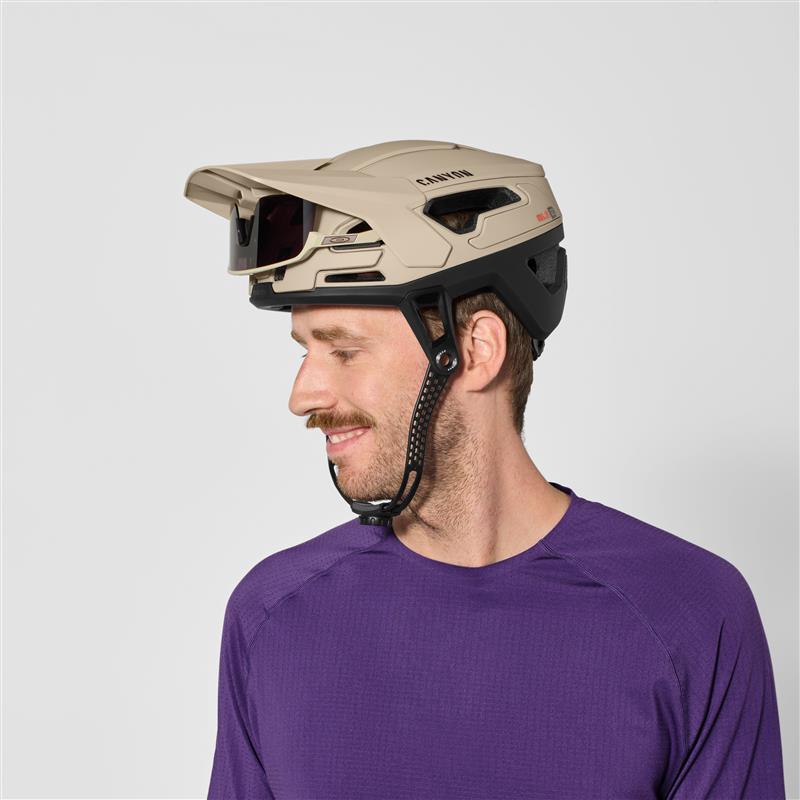
New Canyon Deflectr is ‘world’s safest MTB helmet’ thanks to ball bearings

Canyon’s latest MTB helmet has jumped in at number one in Virginia Tech’s Bicycle Helmet safety rating list. The new Deflectr uses a layer of ball bearings and glue to help it get there.

The Deflectr’s Release Layer System (RLS) technology is said to reduce rotational energy by nearly two-thirds in the event of a crash, which Canyon says makes the risk of concussion four times less likely.

The new helmet is priced at $159.95 / €159.95 and is available in three sizes and two colours, with another colour on the way in February.

Release Layer System technology

Those tiny ball bearings are the key to the Release Layer technology. Release Layer System

Canyon says the reason the Deflectr has such a high safety rating is due to RLS technology, which reduces rotational forces on the rider’s head by up to 65% in an impact.

The helmet scored a maximum 5/5 and sits at number one in the Virginia Tech Mountain Bike Helmet Safety Ratings list.

Amazingly, the RLS tech uses a layer of ball bearings, which enable the two shells to move over one another with very little resistance in the event of an impact.

The system consists of a novel outer-helmet design that relies on two shells separated by the Release Layer membrane. The membrane is essentially a covering of tiny polycarbonate ball bearings attached to the shells by a specially tuned adhesive, which enables the shells to detach from each other and rotate in a heavy impact.

The shells can roll over each other if the crash-rotation energy goes beyond a set limit (dictated by the adhesive). In this case, the bearings enable additional movement between the two shells of the helmet when the helmet contacts the ground.

The aim of the design was to reduce the amount of rotational force transferred to your head during a crash, similar to the more common and older Multi-directional Impact Protection System (MIPS).

Canyon claims this means only one in 30,000 crashes will result in a concussion, which seems remarkably low.

The brand says a multi-national team with more than 125 years of combined experience created the Deflectr. During this time, they reportedly simulated more than 2,000 impacts across 150 locations and tested more than 140 helmets to destruction.

Hexr connection

Release Layer System technology is patented and can be licensed, like MIPS. Canyon Bikes

Canyon explains that the Release Layer System was invented and developed by the same minds that created London-based helmet innovation company HEXR – a laboratory for new helmet concepts with the primary objective of devising new technologies.

Canyon pays for the right to use patented RLS technology in its helmets, as other brands pay to license MIPS, but Canyon does not have an exclusive deal. This means we could see other brands paying to use the same RLS technology under licence.

Next-generation strap

HighBar 1.5 builds on Canyon’s distinctive strap system, which does away with the clip-under-the-ear style Y-strap seen more commonly on helmets. Canyon Bikes

Canyon has re-engineered its own strap system called the HighBar. It claims the latest version (v1.5) reduces facial pressure and channels sweat away from your brow. 

There are two fixed plastic drop-downs on your temples, which Canyon says improve the helmet’s consistency of fit. There is a ventilated chin strap, which Canyon claims is cooler than traditional straps.

Visually, it’s quite a departure from a more traditional system with a fabric strap in front and behind your ear joined with a clip beneath it.

Canyon has also updated the chin dial, which it says now offers true one-handed adjustment.

Integrated rear light

The magnet holding on the integrated rear light is said to be strong enough to prevent the light falling off, even on the roughest off-road terrain. Canyon Bikes

Canyon has integrated a red LED light into the rear of the Deflectr. It attaches to the helmet with a magnet, which Canyon claims is strong enough to retain the light even when riding on the roughest terrain.

Cleverly, the light features a directional lens, which Canyon claims reflects light downwards to illuminate your back.

Sunglasses store

The sunglasses store under the peak is designed to keep your shades secure thanks to specially designed grippers in the slots. Canyon Bikes

Canyon has designed a sunglasses storage slot at the front of the helmet under the peak to keep your shades away from rear-wheel roost. It features specifically designed slots and ‘grippers’ to keep your glasses in place. The peak itself has three positions: low, medium and high.

Ventilation

Ventilation is said to be optimised for low-speed climbing and high-speed descending. Canyon Bikes

Canyon says the Deflectr uses s​​culpted vents and internal channels tuned for maximum ventilation at all speeds, aimed at keeping your head cool on both slow climbs and hot descents.

The large vents at the top of the helmet are there to maximise evaporative cooling on long, slow climbs. The intake and exhaust vents, combined with sculpted inner channels, come into play at higher speeds.

Canyon says because the helmet pads lack any plastic backing, cooling airflow is improved further.

Options and availability

The ‘matte desert’ colourway will be available in February, but not in the USA. Canyon Bikes

The helmet will be offered in three colours: ‘matte black’, ‘metallic olive’ and ‘matte desert’. The matte black and metallic olive helmets will be available from 6 November, but the desert colourway will not be available until February and will not be released in the USA.

Canyon quotes a claimed weight of 326g for a medium Deflectr, which is competitive for a trail helmet.

Fairphone updates its over ear headphones with better sound

Two years ago, Fairphone launched a pair of modular, fully-repairable headphones called the Fairbuds XL. Now, the Dutch social enterprise is releasing an updated version where the focus isn’t just on the quality of its hardware, but on the merits of its raw materials. 

The 2025 Fairbuds XL ship with new “premium” 40mm dynamic drivers and stronger N52 rated magnets for “more power and enhanced bass response.” Listeners should expect to hear “improved accuracy in mid and high frequencies” thanks to improved audio tuning. And there’s a new paper-based speaker membrane that’s more refined than what went before.

Sound-quality is certainly improved over the predecessor, with cleaner bass and sharper mid and high tones. You can really hear how clean the sound is, especially when you’re listening to something lush and orchestral. Going by my memory from two years ago, the ANC seems to be unchanged, able to deal with unwanted sounds like the tapping of my own keyboard with ease. 

Obviously, you shouldn’t go in expecting the same sort of brilliant sound you’d get from top tier manufacturers. Although I think Fairphone has likely closed the gap so while you’re still a generation or two behind the bleeding edge, it’s not by a shameful degree. And, if we’re honest, if you’re looking for a pair of cans that’ll last you years and years, you’re likely able to forgive the absence of the shiniest bells and whistles. 

Closeup image of the Fairbuds XL (2025)
Daniel Cooper for Engadget

It’s easy to notice the design changes, too, with the more austere Fairphone logo and the use of solid plastic in place of the original speckled pattern. Sadly, that extends to the little pop of copper found on the four way joystick, which is now a different shade of the same colorway. I get it: A lot of people want their consumer electronics to blend in, but the loss of whimsy pains me a little. 

There’s some fairly minor but welcome quality of life improvements, including adding automatic power off after 30 minutes. Plus, buyers get the benefit of a three year warranty, and can rest assured the XL are Longtime certified. Longtime is a new European labeling standard for gear built to be long-lived, repairable and supported by a robust repair infrastructure. And, if you already own a pair of XLs, you can buy the new drivers and slot them into your existing cans.

Side showing logo.
Side showing logo.
Daniel Cooper for Engadget

But, in line with Fairphone’s founding principles, the update is equally focused on the raw materials that have gone into making the 2025 XLs. The PU “leather” found in the ear cushions — hardly a climate friendly material — has been ditched in favor of Bird’s Eye Fabric. That’s a cotton fabric produced with a series of air holes for breathability more commonly found in athleisure products. Similarly the PU found in the headband gets replaced with fabric that reminds me of plenty of other high end sport headphones.

Beneath the surface, the new model contains 100 percent fair mined cobalt, copper and silver — via mining credits, at least. The rare earth metals used in the speaker magnets are now 100 percent recycled, and they were assembled in a facility using 100 percent renewable energy. You’ll also find more than 90 percent recycled aluminum, and 80 percent recycled plastics, with the company pledging to recycle an equal amount of e-waste to every pair sold. Plus, as usual, Fairphone will pay the people who assemble the hardware a living wage bonus to ensure “workers can cover their family’s needs.” 

Fairbuds XL are available to order today in Europe both from the Fairphone website and select third party retailers. If you’re in the US, you’ll need to wait until “later” this month, but you’ll be able to pick them up via Amazon for $229. 

This article originally appeared on Engadget at https://www.engadget.com/audio/fairphone-updates-its-over-ear-headphones-with-better-sound-080000773.html?src=rss

Claude Code Is Coming To Slack

Anthropic is bringing Claude Code directly into Slack, letting developers spin up coding sessions from chat threads and automate workflows without leaving the app. TechCrunch reports: Previously, developers could only get lightweight coding help via Claude in Slack — like writing snippets, debugging, and explanations. Now they can tag @Claude to spin up a complete coding session using Slack context like bug reports or feature requests. Claude analyzes recent messages to determine the right repository, posts progress updates in threads, and shares links to review work and open pull requests.

The move reflects a broader industry shift: AI coding assistants are migrating from IDEs (integrated development environment, where software development happens) into collaboration tools where teams already work. […] While Anthropic has not yet confirmed when it would make a broader rollout available, the timing is strategic. The AI coding market is getting more competitive, and differentiation is starting to depend more on integration depth and distribution than model capability alone.


Read more of this story at Slashdot.

Cold Case Inquiries Stall After Ancestry.com Revisits Policy For Users

An anonymous reader quotes a report from the New York Times: Since online genealogy services began operating, millions of people have sent them saliva samples in hopes of learning about their family roots and discovering far-flung relatives. These services also appeal to law enforcement authorities, who have used them to solve cold case murders and to investigate crimes like the 2022 killing of four University of Idaho students. Crime-scene DNA submitted to genealogy sites has helped investigators identify suspects and human remains by first identifying relatives.

The use of public records and family-tree building is crucial to this technique, and its main tool has been the genealogy site Ancestry, which has vast amounts of individual DNA profiles and public records. More than 1,400 cases have been solved with the help of so-called genetic genealogy investigations, most of them with help from Ancestry. But a recent step taken by the site is now deterring many police agencies from employing this crime-solving technique.

In August, Ancestry revised the terms and conditions on its site to make it clear that its services were off-limits “for law enforcement purposes” without a legal order or warrant, which can be hard to get, because of privacy concerns. This followed the addition last year to the terms and conditions that the services could not be used for “judicial proceedings.” Investigators say the implications are dire and will result in crucial criminal cases slowing or stalling entirely, denying answers to grieving families. “Everyone who does this work has depended on the records database that Ancestry controls,” said David Gurney, who runs Ramapo College’s Investigative Genetic Genealogy Center in New Jersey. “Without it, casework is going to be a lot slower, and there will be some cases that can’t be resolved at all.”


Read more of this story at Slashdot.

193 Cybercrims Arrested, Accused of Plotting ‘Violence-As-a-Service’

Europol’s GRIMM taskforce has arrested nearly 200 people accused of running or participating in “violence-as-a-service” schemes where cybercrime groups recruit youth online for real-world attacks. “These individuals are groomed or coerced into committing a range of violent crimes, from acts of intimidation and torture to murder,” the European police said on Monday. The Register reports: GRIMM began in April, and includes investigators from Belgium, Denmark, Finland, France, Germany, Iceland, the Netherlands, Norway, Spain, Sweden, the UK, plus Europol experts and online service providers. During its first six months, police involved in this operation arrested 63 people directly involved in carrying out or planning violent crimes, 40 “enablers” accused of facilitating violence-for-hire services, 84 recruiters, and six “instigators,” five of whom the cops labeled “high-value targets.” […]

Many of the criminals involved in recruiting and carrying out these violence-for-hire services are also members of The Com. This is a loosely knit gang, primarily English speakers, involved in several interconnected networks of hackers, SIM swappers, and extortionists. Their reach has spread across the Atlantic, and over the summer, the FBI warned that a subset of this cybercrime group, called In Real Life (IRL) Com, poses a growing threat to youth. The FBI’s security bulletin specifically called out IRL Com subgroups that offer swat-for-hire services, in which hoaxers falsely report shootings at someone’s residence or call in bomb threats to trigger massive armed police responses at the victims’ homes.


Read more of this story at Slashdot.

Rust-Based Project Aims To Provide Modern Thumbnails For Audio/Video Files On GNOME

Since Showtime replaced Totem as the default video player of GNOME, the desktop has lacked thumbnail capabilities for audio and video files. But to address that defect, the Rust-based gst-thumbnailers project has been in development to leverage GStreamer and paired with Rust to provide safe thumbnail generation capabilities for audio and video content…

Nvidia Can Sell H200 Chips To China For 25% US Cut

The Trump administration will allow Nvidia to resume selling H200 chips to China, but only if the U.S. government takes a 25% cut. Axios reports: Trump said on Truth Social that he’ll allow Nvidia to sell H200 chips — the generation of chips before its current, more-advanced Blackwell lineup — to China, with the U.S. government pocketing a quarter of the revenue. He said he would apply “the same approach to AMD, Intel, and other GREAT American Companies.”

American defense hawks fear that China could use Nvidia chips to advance its military ambitions. Trump said Monday that the sales will be subject to “conditions that allow for continued strong National Security.” The blockade remains in place for Nvidia’s current generation of Blackwell chips, which will be replaced in the second half of 2026 by even more advanced Rubin chips. Huang said recently he was unsure if China would want the older chips. “We applaud President Trump’s decision to allow America’s chip industry to compete to support high paying jobs and manufacturing in America,” Nvidia said in a statement. “Offering H200 to approved commercial customers, vetted by the Department of Commerce, strikes a thoughtful balance that is great for America.”


Read more of this story at Slashdot.