Tracked: Shoot To Survive Review – Exciting But Visually Dated Survival Adventure

Tracked: Shoot to Survive is a narrative survival adventure made for VR from the Green Hell VR studio, offering an exciting tale that needs further work. Read on for our full review.

Following Incuvo’s work on Green Hell VR, Tracked: Shoot To Survive – or Tracked for brevity – feels like a natural step forward to create a narrative survival game that shares similar DNA with the jungle adventure. This new release expands its commitment to a linear story with more biomes and activities, at the cost of resembling PS2 graphics. While some may appreciate a more single-player focused experience, these dated visuals don’t provide a fair tradeoff for what’s here.

The Facts

What is it?: A narrative survival adventure set in the Canadian wilderness that’s made for VR.
Platforms: Quest 3/3S (reviewed on Quest 3)
Release Date: Out Now
Developer: Incuvo
Publisher: People Can Fly
Price: $19.99

Starting out in a light aircraft on the way to St. Hubert’s Caldera, a fictional island in British Columbia, protagonist Alex Hart is on his way to spread his father’s ashes with his sister Samantha. Their relationship is strained, as we quickly learn in their brief interactions, with her tattooed sleeves alluding to a troubled past. Unexpectedly shot down by gunfire just before arriving, Alex regains consciousness injured amidst the wreckage.

Doing the motion of bandaging your hands to heal shows a made-for-VR aspect that can be recognized instantly. Next to a hastily written note about drug smugglers who shot down the wrong airplane, Green Hell VR’s same backpack inventory system is now yours to keep any useful items in your path. As the saying goes, why fix what isn’t broken?
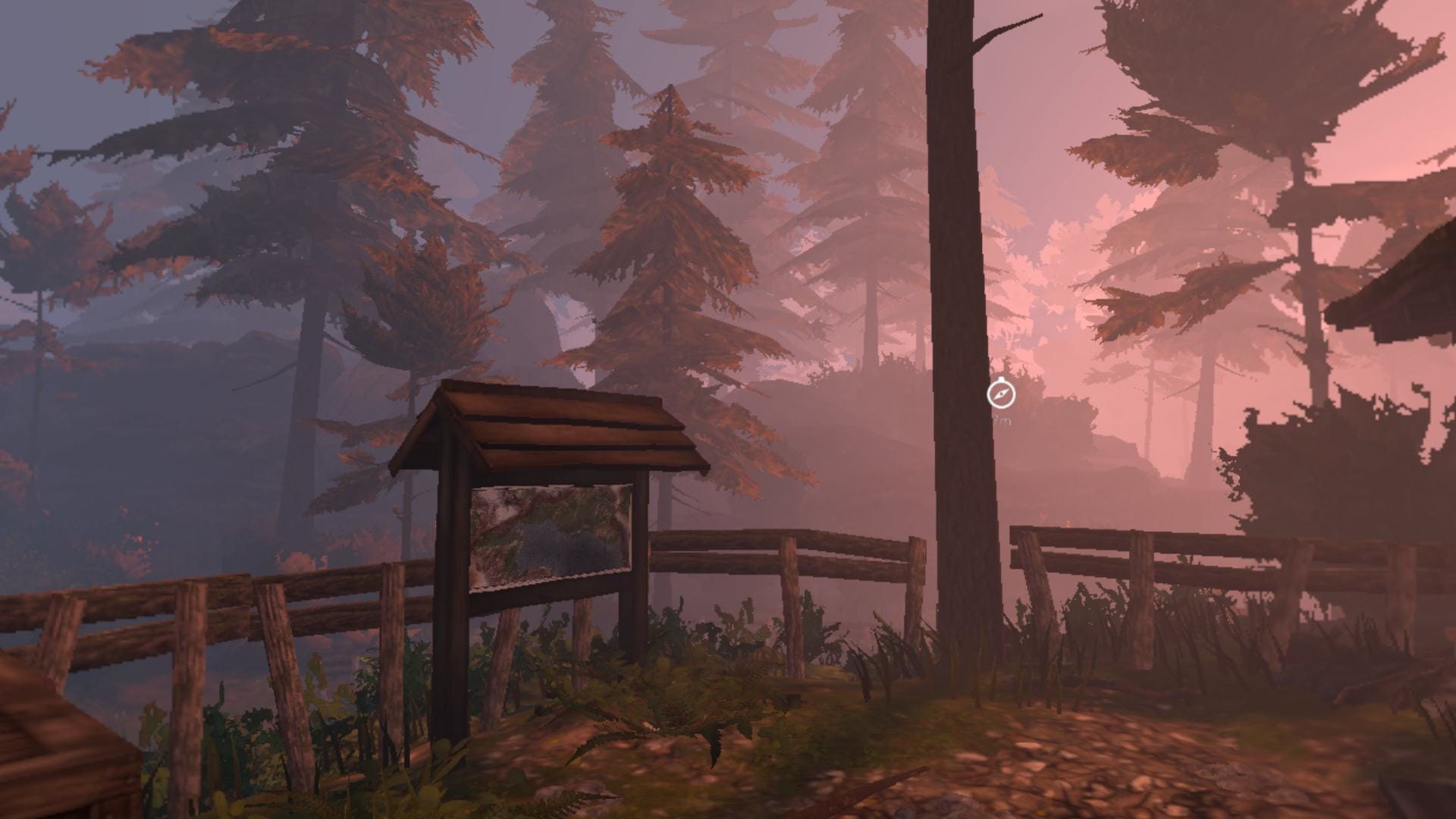
The view from the father’s cabin is enviable.

Narrative emphasis is evident from the start. Overhearing these drug traffickers say that Alex’s sister was kidnapped by them gives us a clear goal to work towards. Numerous written documents detailing the island and its inhabitants make for an interesting read between killing aggressive wildlife and enemies alike. The wooden voice acting ranges from explanatory when obtaining new items to emotional, though the dramatic tension gets a little over the top. Flashbacks abound as it is a narrative device to show Alex and Samantha’s childhood summers with their father. Subject matters like substance abuse, family drama, and friendship betrayal verge on clichéd in their execution, though the writing itself is gritty enough.

Your father’s old cabin serves as a base of operations; pushing through to save Alex’s sister is not a straightforward task. Every so often, Tracked forces you to create items at your crafting table to proceed, such as the climbing axe to ride a zipline or warm clothes to withstand colder atmospheres. To manually craft every item makes the immersion a highlight, too. Pulverizing coal and sulfur for gunpowder, stitching together a larger backpack to carry more weight from animal pelts, and cooking animal meat with blueberries for a nutritious broth are but a few necessary actions to face Mother Nature fully equipped.
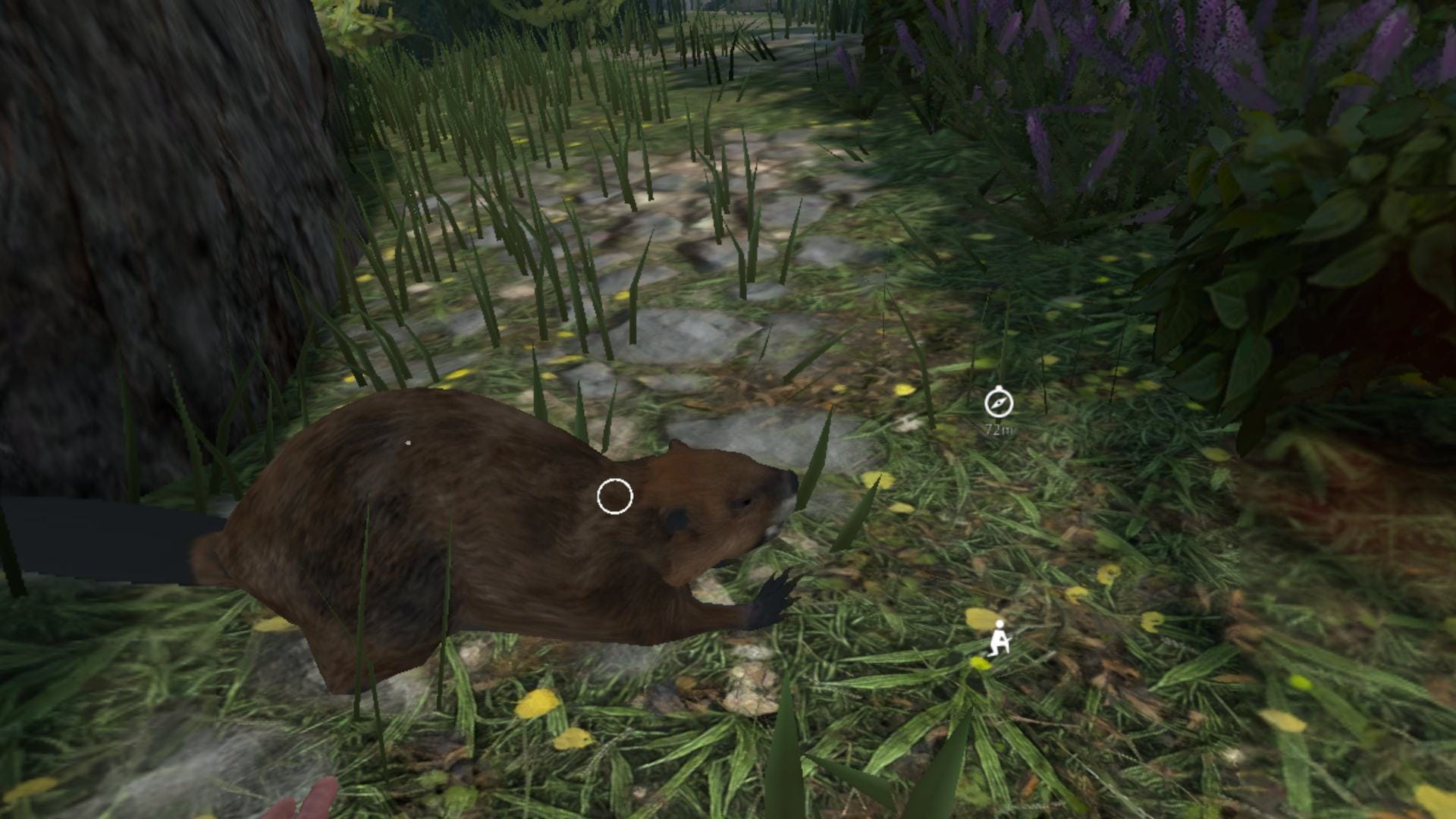
Poor beaver did not stand a chance.

Surviving in the wilds is not a walk in the park. A wristwatch reminds us of Alex’s hunger and thirst levels, causing his early demise if these needs are ignored. Ensuring a safe water source from creeks to industrial plastic barrels, which are thankfully abundant, is a must. Granola bars are suspiciously copious as well, to satiate Alex’s famine. Difficulty options can turn these survival mechanics either completely off or more punishing, depending on your mileage and narrative interest. Welcome options for those after a less punishing, more story-focused experience.

Fighting tooth and nail against the military-trained drug smugglers, Tracked has plenty of combat in its 10 or so hour main quest. Hiding in tall grass, at least in the beginning, you must sneak your way before finding a knife to counterattack. All combat encounters are usually against two unsuspecting enemies. The AI isn’t that smart; strafing to get closer with the knife, or eventually the litany of firearms available, will make short work of them. The fact that enemies can also perceive you through doors is quite discouraging.
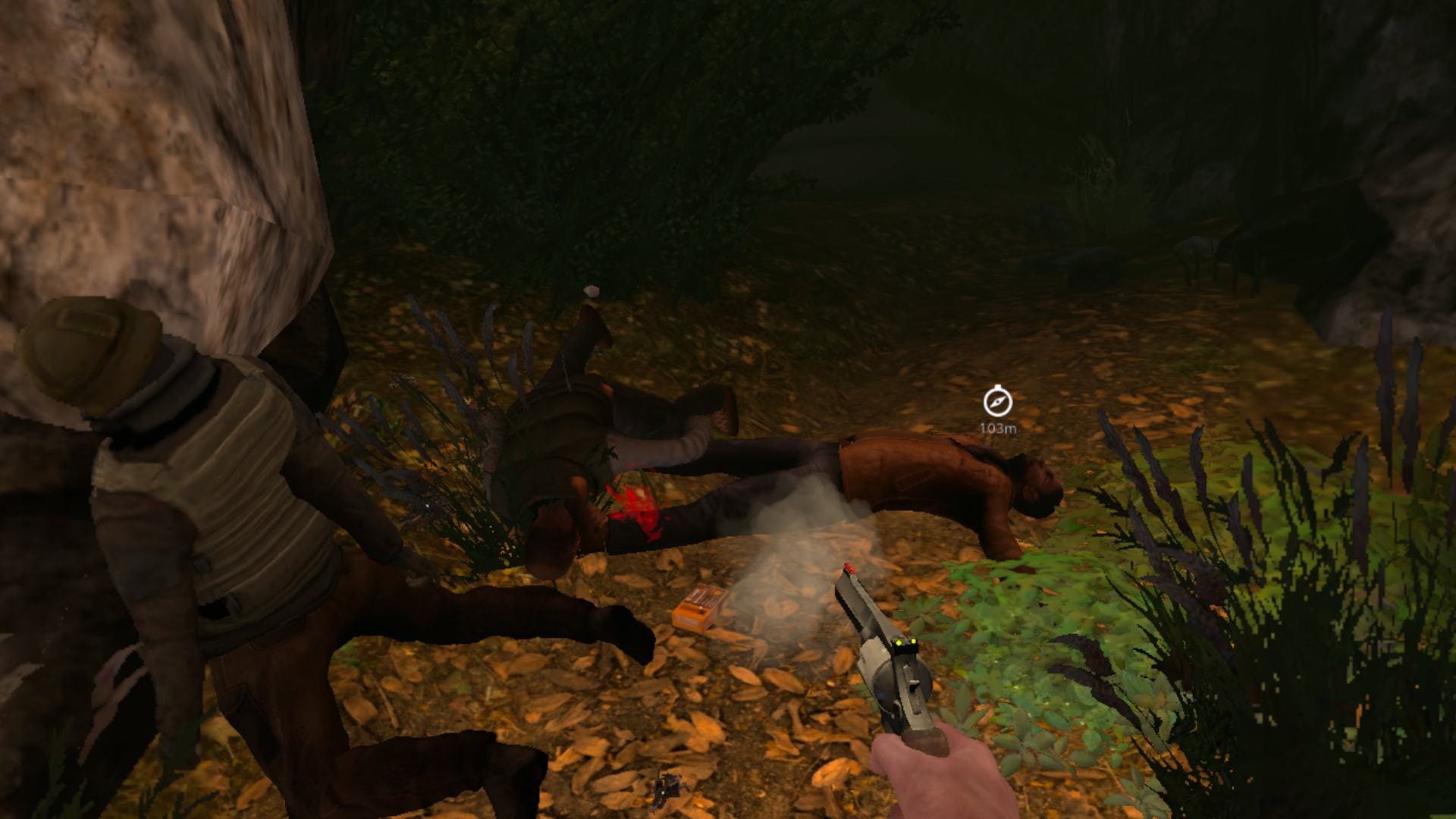
The best gunslinger this side of Canada strikes again.

A bow, shotgun, rifle, and revolver each offer multiple ways to tackle each clash. Reloading has a distinct movement for every one of them. Opening the chamber of the revolver and loading the bullets manually may sound cumbersome for some, but after getting used to it, you can relive your western dreams with it. Finding upgrades during the story to store more ammo and reload faster helps. However, the bow isn’t particularly accurate and the shotgun never really allowed me to load it. Opening the chamber to try to load the shells was hopeless because reaching for the ammo resulted in it closing off again. That said, the rifle equipped with a scope delivers accurate shots to eliminate beavers and deadbeats alike.

There is a fair balance between fighting the wilderness and humans. Each of the open areas that you explore, ranging from warehouses and cabins to caves and forests, is so different; every hostile environment provides unique enemy encounters. It’s quite imposing to struggle against a wild bear over a swift wolf, with the latter appearing more often at night. Scavenging for animal supplies is disgustingly gruesome as you separate the poor carcass in two, causing a splatter in the process. The buzzing sounds of flies next to a haunting howl sell the idea of being stranded in an unforgiving wildland well.

0:00

/0:31

Before using any new weapon it must be repaired.

The day and night cycle is important to consider, as it’s nigh impossible to explore once it gets dark without crafting the headlamp to aid your vision. Tracked’s level design is well considered enough to let you backtrack to previous areas, with smartly placed ladders and doors that unlock as you progress. This isn’t as mind-blowingly interconnected as a Metroidvania, but with some side quests asking to forage for specific items, these shortcuts are convenient.

Comfort

Extensive accessibility features show Tracked: Shoot to Survive was built from the ground up for VR. Calibration for the notebook that you hold in your chest is adjustable, depending on if you are standing or sitting. So are the weapons and tools next to your hip.

Expected camera options for smooth or snap turning movement and speed are there, including the vignette for those prone to suffering from motion sickness. Climbing and ziplining sequences can be simply skipped if desired, too. Your watch with the survival bars can be moved to the left or right hand, as can the knife and backpack slots to accommodate your dominant hand.

A notebook hovering in Alex’s chest at all times helps to give a welcome sense of direction. From the many tabs on display, a map of every level explored makes getting lost virtually a nonissue. Diary-style entries explain the fledging protagonist’s train of thought well as he slowly becomes a seasoned survivor to save his sister. Tracking unlocked achievements is quick, with the game celebrating goals like crafting 100 bullets or drawing first blood, though you don’t earn any rewards for this. All documents obtained are easily accessible, with the standout “Finding Bigfoot” side quest panning out in a silly way.
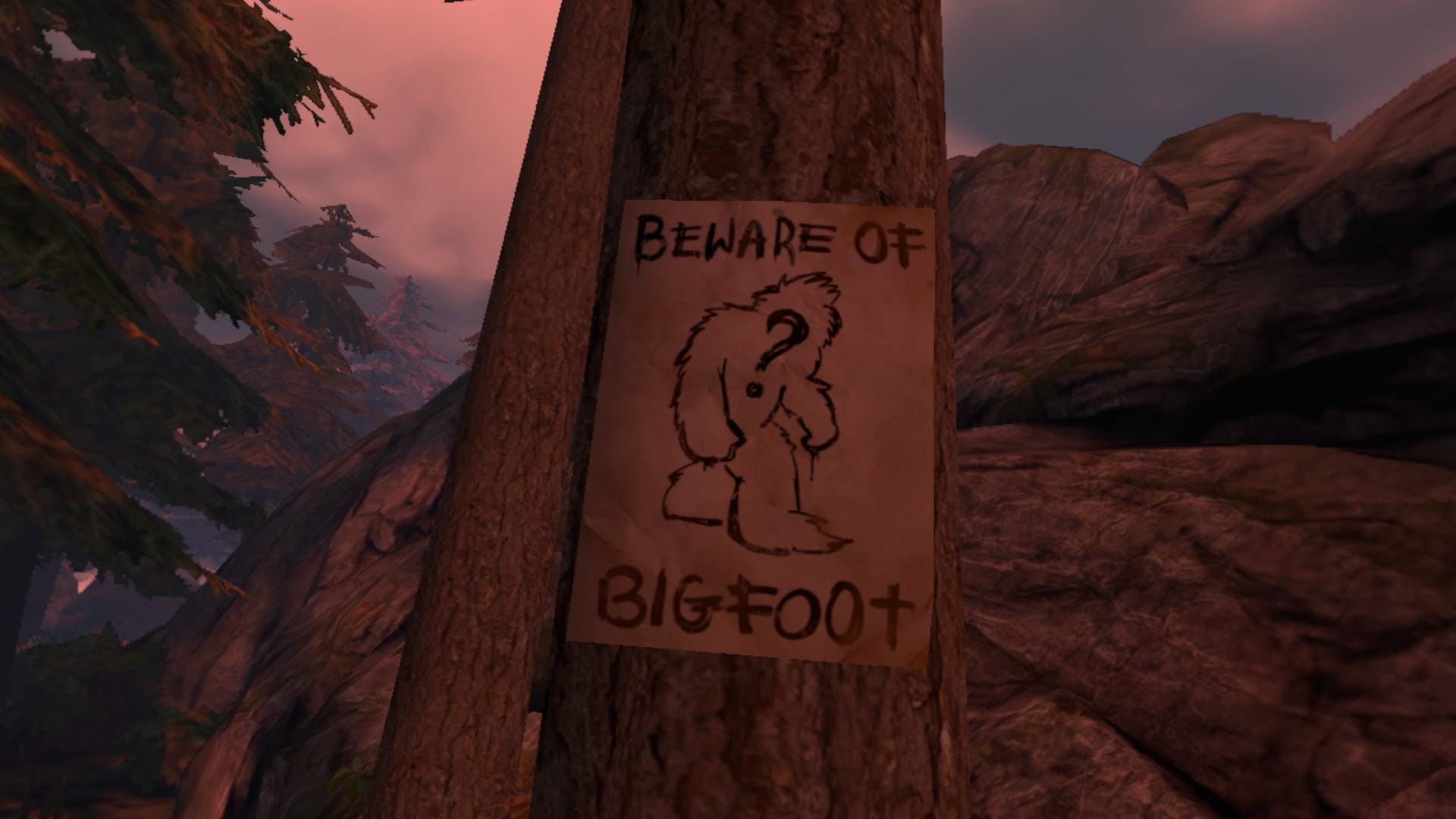
One of, if not the most, famous cryptids in the modern era unexpectedly shows up here.

Addressing the elephant in the room, the graphics leave a lot to be desired by Quest 3 standards. Reminiscent of PlayStation 2 visuals, the low-poly character models, exaggerated enemy grunts, and janky AI don’t do Tracked any favors. Its linear levels, while clever at times, don’t allow for much intuitive exploration. Tracked’s narrative focus delivers, but it’s hampered by dated looks.

Finally, the third act, which currently suffers from frequent stutters and crashes, leaves a bad taste in an otherwise serviceable adventure. Incuvo confirmed that it’s aware of these issues and is actively working to patch them.

Tracked: Shoot to Survive – Final Verdict

You can see Tracked’s promise of cutting your teeth in an unthinkable situation to prevail against all odds. However, its presentation ends up feeling like a product of yesteryear, which isn’t helped by poor AI and performance issues.

For the insatiable VR player constantly searching for the next story-driven campaign, it’s easier to recommend, albeit with the warning to hold off until the framerate issues are resolved. Tracked won me over with its heartfelt narrative, unserious Rambo-esque combat antics, and VR-centric crafting mechanics that kept me engaged throughout. I just wish there weren’t so many strings attached.


UploadVR uses a 5-Star rating system for our game reviews – you can read a breakdown of each star rating in our review guidelines.

Adata & MSI Unveil 4-Rank DDR5 Modules For Massive Memory Capacities

Adata & MSI Unveil 4-Rank DDR5 Modules For Massive Memory Capacities
DDR5 memory runs objectively high transfer rates; JEDEC specs go as high as 6.4 Gbps, and overclockers have taken DDR5 beyond the fastest LPDDR5X: all the way to over 13 Gbps. At these speeds, signal integrity becomes a first-order concern, and most systems can maintain peak performance only when running one module per channel. That generally

Quest 3S Is $250 At Best Buy And Comes With $110 Of Black Friday Perks

Quest 3S is on sale for $250 at Best Buy, and comes with a $50 gift card, 1 month of Xbox Game Pass Ultimate, and The Walking Dead: Saints & Sinners VR game.

That’s a $50 discount from the headset’s regular $300 price, and the three perks together are worth $110. You can find the deal for the 128GB base model of Quest 3 here.

A similar offer is available for the 256GB storage model, with a $330 price ($70 off) and the same $110 of perks. In both cases, you still get 3 months of the Meta Horizon+ subscription, as with all purchases of new Meta Quest headsets.

You could use the $50 Best Buy gift card to get the Elite Strap to make the headset more comfortable for just $10, for example, while during the 1 month of Xbox Game Pass Ultimate (normally $30) you can play flatscreen games like Call of Duty and Fortnite on a giant virtual screen.

As for The Walking Dead: Saints & Sinners, it’s also normally $30, and it’s widely considered to be one of the best VR games of all time, earning an ‘Essential’ score in our review.

The Walking Dead: Saints & Sinners Review – The Best Zombie Apocalypse To Date
With two big updates under its belt, there’s never been a better time to get into The Walking Dead: Saints & Sinners. Read on for our 2021 The Walking Dead: Saints & Sinners review! Note: This is an updated review based on The Walking Dead: Saints & Sinners after its second free
UploadVRJamie Feltham

While Quest 3S can run all the same content as Quest 3, and has the same fundamental capabilities (including the same XR2 Gen 2 chipset and 8GB RAM), if you have the funds we always recommend Quest 3 over Quest 3S. The proper Quest 3 features Meta’s advanced pancake lenses which are clearer and sharper over a wider area, have a wider field of view, and are fully horizontally adjustable, suitable for essentially everyone’s eyes. These pancake lenses also enable Quest 3 to be thinner, which makes the headset feel slightly less heavy.

Still, at $250 and with $110 worth of perks Quest 3S could be hard to say no to, and it could be an impulse gift for the holiday season to bring a friend or loved one into VR and mixed reality.

Dogs came in a wide range of sizes and shapes long before modern breeds

Our best friends come in a fantastic array of shapes and sizes; a Borzoi looks nothing like a Boston terrier, except for a certain fundamental, ineffable (except to taxonomists) doggyness about them. And it’s been that way almost from the beginning. A recent study of dog and wolf skulls from the last 50,000 years found that dogs living just after the last Ice Age were already about half as varied in their shape and size as modern dogs.

“Shaped like a friend” means a lot of different things

Biologist and archaeologist Allowen Evin, of CNRS, and her colleagues compared the size and shape of 643 skulls from dogs and wolves: 158 from modern dogs, 86 from modern wolves, and 391 from archaeological sites around the world spanning the last 50,000 years. By comparing the locations and sizes of certain skeletal landmarks, such as bony protrusions where muscles attached, the researchers could quantify how different one skull was from another. That suggested a few things about how dogs, or at least the shapes of their heads, have evolved over time.

The team’s results suggest that dogs that lived during the Mesolithic (before settled farming life came into fashion in the Middle East) and the Neolithic (after farming took off but before the heyday of copper smelting; 10,000 BCE is a general starting point) were a surprisingly diverse bunch, at least in terms of the size and shape of their skulls.

Read full article

Comments

The Sims-like Paralives is delayed until May 2026

Folks who are looking forward to a fresh flavor of life simulation in the form of Paralives will have to wait a while longer before they can jump into the Sims-like game. The game was supposed to hit early access on Steam on December 8, but lead developer Alex Massé and the team at Paralives Studio have pushed back the release date to May 25.

Massé explained that the team expanded its playtests in the lead up to the early access period, “and the latest feedback we received made us realize the game isn’t up to the standard we wanted it to meet for release.” While the character creator and in-depth home builder modes seem to be in a solid place, playtesters encountered “impactful bugs” in the live mode and it appears that there isn’t yet quite enough to do in the town. “We feel it is necessary to work on these before delivering the product to the community,” Massé wrote. The team plans to improve the game’s onboarding experience too.

A message from the Paralives team: pic.twitter.com/xNk2nOf1Kv

— Paralives (@ParalivesGame) November 14, 2025

Paralives has been in development for six years, and the team has grown from two or three people in the first couple of years to an average of 10. Having such a small team meant that the developers “had to alternate long stretches of development” between the three parts of the game, Massé wrote. “We are so proud of what we have built, but now, we just need a bit more time to polish the simulation part of the game. This would ensure Paralives offers a great first experience when it launches, making players come back for every exciting free update and expansion that we will put out afterwards.”

Paralives Studio will stream 45 minutes of gameplay on its YouTube channel at noon ET on November 25. Massé said you’ll get to see what the game looks like now, including some of the current features. The team will provide more details on aspects it plans to improve before the early access release. You can expect more streams and videos in the coming months. It’s expected that Paralives will remain in early access for two years while the team adds the features and content it plans to.

Paralives is an indie alternative to the likes of The Sims and InZOI. There are other life sim games on the way before Paralives debuts, such as Pokémon Pokopia. Animal Crossing New Horizons is getting a major update and a Switch 2 version in January. However, EA will shut down The Sims Mobile that same month.

This article originally appeared on Engadget at https://www.engadget.com/gaming/pc/the-sims-like-paralives-is-delayed-until-may-2026-174922059.html?src=rss

Scientist pleaded guilty to smuggling Fusarium graminearum into US. But what is it?

A Chinese plant scientist at the University of Michigan, who drew national attention in June 2025 when she was arrested and accused along with another Chinese scientist of smuggling a crop-damaging fungus into the US, pleaded guilty on November 12, 2025, to charges of smuggling and making false statements to the FBI. Under her plea agreement, Yunqing Jian, 33, was sentenced to time served and expected to be deported.

Her arrest put a spotlight on Fusarium graminearum, a harmful pathogen. But while its risk to grains such as wheat, corn, and rice can be alarming, Fusarium isn’t new to American farmers. The US Department of Agriculture estimates it costs wheat and barley farmers more than $1 billion a year.

Tom Allen, an extension and research professor of plant pathology at Mississippi State University, explains what Fusarium graminearum is and isn’t.

Read full article

Comments

Vine Is Back

Today, short-form videos dominate our free time (and our working time, at that)—but this wasn’t always the case. Before the likes of TikTok and Instagram Reels, online video content was more long-form than not. It might have felt short by the standards of cable TV, but many of the videos on platforms like YouTube were regularly anywhere from two to 10 minutes, if not longer.

The first platform to really popularize short-form content as we think of it now was Vine. These videos were short—a maximum of six seconds at a time, which should have spelled the platform’s doom. Who would want to watch these tiny videos back to back for hours at a time? A lot of us, apparently. Vine compilations garner millions (if not tens of millions) of views on YouTube. While the Twitter-owned platform only lasted about five years, it established itself as a true cultural phenomenon. Quote the first half of a popular vine to a group of young millennials or Gen Zs, and, chances are, they’ll finish the line.

For years, us Vine fans have longed for someone to bring the app back. Sure, short-form video has never been more addicting, but it’s just not the same. Videos on Vine had a much different feel than most of the content you see on TikTok. Maybe it was the limited runtime; maybe it was the stripped-down recording interface. But to me, Vine feels like early YouTube: homemade, indie, and fun.

Divine is the new Vine

It seems that experience might actually be making a comeback. A new app, Divine, is trying to recreate the magic of those six-second loops. Divine, built by former Twitter employee Evan Henshaw-Plath and funded by Twitter co-founder Jack Dorsey, is meant to be a platform to share vines old and new. Of course, you can upload fresh six-second clips, but the app will also feature 150,000 to 200,000 “archived” vines from roughly 60,000 creators. You won’t have to rely on those Vine compilations anymore—you can watch those classic clips directly on Divine.

Those videos aren’t scraped from YouTube compilations, either. According to TechCrunch, Vine’s original library was stored by the organization “Archive Team” in a huge but largely inaccessible archive. Henshaw-Plath studied the library, extracting as much data as possible to build profiles for the original Vine accounts and display metrics like views and original comments. Though not all Vines were archived, including “millions of K-pop-focused videos,” Henshaw-Plath believes “a good percentage” are available on Divine. Vine creators can choose to either take down their videos from Divine or take over their profiles on the app, so long as they prove their identities.

Divine is also a decentralized social media platform running on the Nostr protocol. That means no one company owns it, which means your content is your content. When you post, your videos are tied to you via private keys, so you can always prove ownership. Plus, there are no user-specific algorithms. You have to choose what you want to watch, or jump into an algorithm created by the Divine community.

My favorite part of this experiment, however? No AI. At a time when other social media platforms are inundated with hyperrealistic videos from generators like Sora, Divine has a strict no-AI policy. Divine uses tech from the Guardian Project to confirm whether a video was filmed on a smartphone. If the system detects a video is artificial, it gets taken down. It’s enough to make this tech editor shed a (joyful) tear.

How to join Divine

As you might expect, there’s a lot of demand to try Divine at launch. At this time, the company says its beta test is full. However, you can sign up for the waitlist to be notified when more spots open up. You can also browse clips on the platform’s web app right now, even without an account, but I’ve found it to be a bit glitchy.

You can’t pause your game in Call of Duty: Black Ops 7’s always-online campaign

While most of the enormous Call of Duty audience buys each annual entry without hesitation for its multiplayer offering, the single-player campaign is also a big part of the experience. CoD campaigns are often big on popcorn silliness and refreshingly tight. Some people just like to start a game and see its credits roll within a weekend, you know? But judging by the early impressions of Call of Duty: Black Ops 7 that are beginning to surface online, it sounds like this year’s campaign comes with some pretty major caveats.

I admittedly haven’t played the game myself yet, but IGN is one of the outlets that has gone live with its 6/10 review, which reveals that the campaign’s always-online nature means it can’t be paused, and if you’re idle for what the game deems to be too long it’ll boot you out. For a mode that is traditionally offline and totally separate from the online portion of the game, this might come as a shock to some players.

It gets worse. While the official website for Black Ops 7 states that the campaign can be played solo or with a “squad,” it definitely emphasises its co-op nature first. A campaign that facilitates co-op is usually a good thing, but here it sounds like very few considerations are made for single players. You can’t fill in spots in the four-person squads with AI companions, so if you don’t have three friends handy, you’re not getting the desired experience. 

Objectives clearly designed for multiple players are reportedly tediously repetitive when you have to do all of them on your own. Many games are built entirely around co-op and that’s fine, but it seems like a pretty dramatic departure for a series that has always accommodated the solo player. According to IGN’s coverage there are no checkpoints either, so if you don’t finish a mission in a single sitting — not always possible for people with busy lives — you’ll lose all your progress. As you presumably will if your Wi-Fi dies.

For groups willing to live with all these potentially very awkward conditions, the Black Ops 7 campaign promises “high-stakes challenges across a wide spectrum of environments, from the neon-lit rooftops of Japan to the Mediterranean coast, and even into the deepest corners of the human psyche.” Presumably that last bit doesn’t refer to the rageful thoughts of someone who just lost all their progress because they had to answer the front door.

As you’d expect, Call of Duty: Black Ops 7 also offers the traditional multiplayer and Zombies modes that will no doubt keep you busy until next year. It’s out today on Xbox (included with Game Pass), PS5, PS4 and PC.

This article originally appeared on Engadget at https://www.engadget.com/gaming/you-cant-pause-your-game-in-call-of-duty-black-ops-7s-always-online-campaign-172707048.html?src=rss

Tin Hearts Gets Festive With Act 1 Launch Next Month On Quest

VR puzzle adventure Tin Hearts is getting into the Christmas spirit, bringing its first act to Quest next month.

Developed by Rogue Sun and IPHIGAMES, Tin Hearts is a Lemmings-style game that explores the story of a fictional Victorian inventor, Albert Butterworth. Guiding toy soldiers through this Dickensian world with block-based puzzles, VR support arrived in a post-launch on PS VR2 and Steam last year. Now, it’s coming to Quest in an episodic release that begins on December 11.

0:00

/1:26

Release date trailer

Detailed in a press release, publisher Wired Productions calls Act 1 a standalone episode where these tiny soldiers are appropriately dressed for the festive season in an attic filled with toys. Costing $5.99 for the first part, Acts 2, 3, and 4 will follow “in the coming weeks” on Quest, though no specific release dates were confirmed.

Originally released through a now delisted PC VR prologue on PC VR in 2018, we had positive impressions in our Tin Hearts VR preview two years ago. Stating it offers “some well-considered mechanics” that caught our attention, we believed it provides “enjoyable puzzles and an intriguing whimsical setting.”

Tin Hearts is out now in full on flatscreen platforms, PS VR2, and PC VR. Act 1 arrives on the Meta Quest platform on December 11.

Only Half the Homes in America Have Cable TV Anymore

Pay television penetration in American households fell to 50.2% in the third quarter and is projected to drop to 50% or lower by December, according to Madison and Wall, a technology and media advisory firm. Fifteen years ago, nearly nine in ten households subscribed to pay television services.

The decline has prompted major media companies to shed cable assets. Comcast, Warner Bros. Discovery, and A&E are seeking to sell or spin off their cable television operations. Paramount stated it would not divest its cable channels but acknowledged that “each quarter is accelerating decline.”


Read more of this story at Slashdot.

Deity Simulator How To God Arrives In Early Access Next Month

How to God, the deity-themed sandbox experience, launches in Early Access next month on Quest.

Developed by Thoughtfish (Living Room), How to God lets you train as a deity, completing quests and expanding your powers, as you manage a mini society. You can choose to be benevolent and reward your citizens with bountiful harvests or take the spiteful approach and rocket them with fireballs from the heavens. You can check out gameplay below:

0:00

/0:49

Trailer

On top of building temples and answering (or ignoring) prayers, you’ll also perform acts of alchemy, combining materials to create miracles and matter that advance your society. To assist you in achieving these divine goals, you’ll have the help of a petlike creature who can help out the locals with tasks or eat them as punishment.

Various biomes are available to explore, including ancient Egypt and the Scottish Highlands, with each location providing a unique set of problems to solve and quests to complete. As you progress through quests, you’ll also earn relics that will upgrade your powers at the Tree of Life.

How to God arrives in Early Access on December 4 for $29.99 on Quest.

Where Have All the TV Cameras Gone?

TV manufacturers are abandoning their attempts to turn TVs into interactive social devices through smart cameras. Sky announced this month that it will discontinue Sky Live, a camera accessory for its Sky Glass televisions that brought video calls, body-tracked workouts, and motion games to the living room. The device will stop working at the beginning of December. Sky will brick the cameras and reimburse customers. Sky launched the product in mid-2023 as part of an effort to transform televisions from passive viewing devices into interactive platforms.

That vision has not materialized across the industry. LG’s Smart Cam, released in 2023, is out of stock at major retailers and appears discontinued. TCL’s smart TV camera is no longer available. Samsung stopped integrating cameras directly into its television sets, though it still sells an external camera accessory.


Read more of this story at Slashdot.