How Much Can AI Fitness Tech Really Help Us Avoid Injury?

Smart fitness technology is becoming the norm. Just this morning, my smart rowing machine corrected my form (seems I need to drive more power from my legs, not my arms), while my Garmin watch told me to quit rushing my recovery between runs. Even as an AI-skeptic, I find myself listening to the robots on this front. The risk of improper technique is too great—so what’s the harm in taking all the feedback I can get?

The answer, like with so many things AI, is the gap between data and wisdom. So much wisdom gets lost—forfeited, even—when I blindly trust an AI coach to correct my form, and too great a reliance on this breed of fitness tech could quickly lead to more harm than good. Especially if “injury-proofing” is the latest fitness trend, it’s important to spot the snake oil products merely trying to capitalize on the current moment. After all, the promise is seductive: let the algorithms protect you from yourself. The reality, according to experts, is considerably more nuanced.

The promise of prevention

Consider the range of tools now available to the average fitness enthusiast, all metrics you might now take for granted: Peloton bikes that track your output and warn when you’re overtraining; WHOOP bands that measure recovery and readiness; Forme or Tonal smart mirrors that use AI to correct your exercise form in real-time; and apps like Strava that analyze your training load to prevent overuse injuries. Even simple smartphone apps claim to use your camera to assess whether you’re squatting with proper knee alignment, or if your running gait shows injury-risk patterns.

In athletics especially, wearables that asses performance really can support injury prevention. By monitoring training load and overall health data, these devices offer potentially useful insights into an athlete’s readiness and recovery that might otherwise be more of a guessing game.

“The data and analysis that can be provided here is incredible no doubt,” says Marshall Weber, a certified personal trainer and owner of Jack City Fitness. In many ways, the sensors don’t lie about the metrics they measure. Your heart rate variability really did drop; your training load really is 40% higher than last week. That’s valuable information.

My rowing machine experience mirrors this. When the screen tells me my drive-to-recovery ratio is off, or that I’m pulling with my arms too early, I can immediately adjust. It’s not the hands-on correction of a roaming yoga instructor physically repositioning my hips, but it’s infinitely better than flailing around with no feedback at all.

Where algorithms meet reality

But here’s where the magic falters: knowing you’re at risk and actually changing your behavior are entirely different things.

“The hard part is what to do with [the data],” Weber explains. “You have to think critically for your body to avoid injury. As you begin to incorporate tech with your training you will want to pair this with proper awareness, along with consistent recovery habits. Sleep and rest days are so important. Even if an application tells you that you have overtrained, it is up to you to not grind through another workout and rest.”

This is where I recognize myself all too clearly. How many times has my fitness tracker suggested a rest day and I’ve laced up for another run anyway? I’ve yet to pay the price in the form of an injury, and I know it’s because my relationship with my body runs deeper than a wearable providing impersonal guidance.

Still, the problem goes beyond simple stubbornness. I’m the type to override my watch and trust my body; I know way too many people who would override their body and trust their watch instead. And that trust is fundamentally misplaced. Dr. Dhara Shah, a doctor of physical therapy, notes that, “risk prediction is complex because injuries are multi-factorial. Predicting injury risk involves technique, load, fatigue, recovery, readiness, previous injury history, biomechanics, environment, and other medical history. So, the technology may flag some risks, but it won’t see everything.”

A wearable might notice your elevated resting heart rate and reduced heart rate variability, suggesting overtraining. But it can’t know that you also just recovered from a cold, slept poorly because your neighbor’s dog barked all night, and are about to do box jumps on a slippery gym floor while distracted by work stress. All injury risks. None visible to the algorithm.

The gap between data and wisdom

Even form correction technology faces its own limitations. Shah says that while form sensors can be, “helpful in tracking progress over time and as visual feedback for patients,” your personal interpretation remains crucial. “Correcting form is still a human judgment,” she adds. “Detecting that form is off is one thing; prescribing exactly how to adjust for you (given your body, goals, constraints) is more complex and often still requires human judgment.” Or, as Weber puts it: “It is really important to remember that as fitness tech advances it is by no means a magic wand.”

My rowing machine can tell me I’m hunching my shoulders, but it can’t see that I’m compensating for an old shoulder injury, or that my office chair has created postural habits that need addressing before my rowing form will truly improve. The screen shows symptoms; it doesn’t diagnose root causes.

And then there’s the question of accuracy. “Listen to your body and avoid relying solely on fitness devices when planning or performing workouts, as these devices are not always accurate,” says Shah. Anyone who’s watched their fitness tracker credit them with thousands of steps during an afternoon of hand-waving conversation knows this truth intimately.

What AI can’t replace

What really sets expert guidance apart isn’t just knowledge—it’s emotional intelligence and adaptive reasoning. Shah emphasizes that physical therapists bring something irreplaceable to injury prevention. “The power of tactile feedback and analyzing subjective reports from the patient cannot be replaced,” she says. “Also, emotional intelligence: reading tone, frustration, fear, burnout, or overexcitement.” Smart mirrors, heart straps, and fitness trackers are good at measuring, but we can’t trust them to have clinical reasoning skills. Real, human physical therapists can read the story behind the numbers.

“Physical therapy isn’t about following algorithms. It is personalized, adaptive, and effective,” Shah says. A good trainer or physical therapist sees you favoring one leg and asks about last weekend’s hike. They notice when enthusiasm has tipped into risky overconfidence, or when fear is causing you to move tentatively in ways that might cause different injuries. They adjust your program not just based on yesterday’s heart rate data, but on how you describe your energy, your mood, how work is going, whether you winced when you sat down.

The bottom line: AI is a bonus, not a replacement

So will fitness tech make us injury-proof? No. But that’s asking the wrong question. The better question is: can fitness tech make us safer when combined with real human intelligence? The answer there is a cautious yes—if we treat these tools as partners, rather than prophets.

Use the technology for what it does well (tracking metrics, identifying trends, providing immediate form feedback), but pair it with professional expertise for interpretation, personalization, and the kind of holistic assessment that only comes from human interaction. And if you’re like me, remember to actually listen when the devices suggest rest.

My rowing machine will keep nagging me about my form, and I’m grateful for it. But I’ve also started actually taking those suggested rest days seriously, and when it comes to my running career, I’m considering a visit to a physical therapist to address the root causes of my persistent issues with form. The technology can help guide me to my best ability, as I’d initially hoped, but it turns out my best ability requires more than just better sensors—it requires better judgment, too.

The future of injury prevention isn’t technology versus human expertise. It’s technology amplifying human expertise, for those wise enough to seek both.

Skeptics Slam Valve’s Steam Machine Specs But Don’t Count It Out

Skeptics Slam Valve’s Steam Machine Specs But Don't Count It Out
Valve’s bombshell Steam Hardware announcement included the very first in-house Valve Steam Machine, and while most reception was initially positive, a number of critics are now showing a lot of skepticism about how well the Steam Machine will actually perform in the competitive market of entry-level PCs and the PlayStation 5. While factors

VR Design Unpacked: This 2019 Game Still Sets the Bar for Open World VR

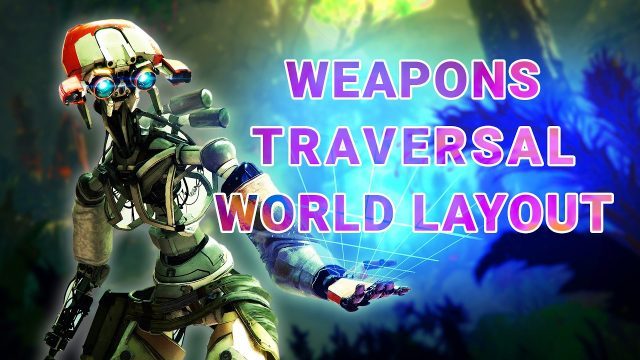
Our series Inside XR Design examines specific examples of great immersive design. Today we’re looking at the clever design of Stormland’s weapons, multi-modal locomotion, and open-world.

Editor’s Note: Stormland was released six years ago today! In celebration of the its release anniversary, we’re bumping this episode of Inside XR Design back up to our front page to highlight the game’s clever approach to weapons, multi-modal locomotion, and its unique open-world architecture. Despite its age, there’s still lots to learn from Stormland’s thoughtful design.

You can find the complete video below, or continue reading for an adapted text version.

Stormland is an open-world action-adventure game with co-op support from Insomniac Games. It’s available on Oculus PC (playable on SteamVR headsets via Revive); check out our full review here.

By the time the studio began development on Stormland, it had already built three VR games prior. That experience shows through clearly in many of Stormland’s cleverly designed systems and interactions.

In this article we’re going to explore the game’s unique take on weapon reloading and inventory management, its use of multi-modal locomotion, and its novel open-world design. Let’s start with weapons.

Weapons

Like many VR games, one of the primary modes of interaction in Stormland is between the player and their weapons. For the most part, this works like you’d expect: you pull your gun out of a holster, you can hold it with one hand or two, and you pull the trigger to fire. But when your gun runs out of ammo, you do something different than we see in most VR games… you rip them in half.

Ripping guns apart gives you both ammo for that weapon type and crafting materials which are used to upgrade your weapons and abilities in the game. In that sense, this gun-ripping pulls double-duty as a way to replenish ammo and collect useful resources after a battle.

Most gun games in VR use magazines to replenish a weapon’s ammo, and while this can certainly work well and feel realistic, it’s also fairly complex and prone to error, especially when the player is under pressure.

Dropping a magazine to the ground in the middle of a firefight and needing to bend over to pick it up might feel reasonable in a slower-paced simulation game, but Stormland aims for a run-and-gun pace, and therefore opted for a reloading interaction that’s visceral, fun, and easy to perform, no matter which weapon the player is using.

This ‘ripping’ interaction, combined with some great visual and sound effects, is honestly fun no matter how many times you do it.

Interestingly, Stormland’s Lead Designer, Mike Daly, told me he wasn’t convinced when one of the game’s designers first pitched the idea for ripping guns apart. The designer worked with a programmer to prototype the idea and eventually sold Mike and the rest of the team on implementing it into the game. They liked it so much that they even decided to use the same interaction for non-gun items like health and energy canisters.

A streamlined approach to weapon reloading isn’t the only thing that Stormland does to make things easier for the player in order to maintain a run-and-gun pace; there’s also a very deliberate convenience added for weapon handling.

If dropping a magazine in the middle of a fight can hurt the pace of gameplay, dropping the gun itself can stop it outright. In Stormland, the designers chose not to punish players for accidentally dropping their gun, by instead having the weapon simply float in place for a few seconds to give the player a chance to grab it again without bending down to pick it up from the floor.

And if they simply leave it there the gun will kindly return to its holster. This is a great way to maintain realistic interactivity with the weapons while avoiding the problem of players losing weapons in the heat of combat or by accidentally not holstering them.

Allowing the weapons to float also has the added benefit of making inventory management easier. If your weapon holsters are already full but you need to shuffle your guns, the floating mechanic works almost like a helpful third-hand to hold onto items for you while you make adjustments.

Multi-modal Locomotion

Locomotion design in VR is complex because of the need to keep players comfortable while still achieving gameplay goals. Being an open-world game, Stormland needed an approach to locomotion that would allow players to move large distances, both horizontally and vertically.

Instead of sticking with just one approach, the game mixes distinct modes of locomotion and encourages players to switch between them on the fly. Stormland uses thumbstick movement when you’re on firm ground, climbing when you need to scale tall structures, and gliding for large scale movement across the map.

Thumbstick movement works pretty much how you’d expect, but climbing and gliding have some smart design details worth talking about.

Climbing in Stormland works very similarly to what you may have seen in other VR games, with the exception that your hand doesn’t need to be directly touching a surface in order to climb. You can actually ‘grab’ the wall from several feet away. This makes it easier to climb quickly by requiring less precision between hand placement and grip timing. It also keeps the player’s face from being right up against the wall, which is more comfortable, and means they don’t need to strain their neck quite as much when looking up for their next hand-hold.

And then there’s Stormland’s gliding locomotion which lets players quickly travel from one end of the map to another. This fast movement seems like it would be a recipe for dizziness, but that doesn’t seem to be the case—and I’ll talk more about why in a moment.

With these three modes of locomotion—thumbstick movement, climbing, and gliding—Stormland does an excellent job of making players feel like they’re free to fluidly move wherever they want and whenever they want, especially because of the way they work in tandem.

VR-centric Open World Design

Open world VR games are very challenging to make because filling a huge map with interesting things to do is extremely resource intensive for developers—not to mention that slowly walking long distances in VR is rarely that much fun. But feeling like you’re exploring a large environment is a key part of the open-world genre.

Stormland came up with a genius compromise which gives players the feeling of exploration without expecting them to walk for minutes at a time with nothing to do. The game achieves this by representing its points-of-interest as literal islands, and then spreading them far apart while giving players a fast and fun way to navigate between them. Throughout the game players are given upgrades that make their traversal experience even more fun, like the ability to create a ramp in the clouds to launch themselves onto an island.

Most VR games never move the player as fast as Stormland’s cloud gliding. Upon first seeing it you might understanbly assume there’s no way it would be comfortable. But it turns out to be very comfortable, and that’s thanks to a few clever tricks. First, let’s talk about vection.

Vection is the sense of motion implied by what’s in your visual field. Normally when we’re moving through the world we visually see things moving past us and this aligns with the rest of our body’s senses of motion. In VR, if you have lots of motion in your visual field but your body’s other senses think you are static, the conflict between those sensations can lead to dizziness.

That’s why VR games where you exclusively stand still tend to be perfectly comfortable, while games with lots of motion can be dizzying.

In order to maintain comfort, Stormland is careful to avoid excessive vection when using high-speed locomotion. It does this by minimizing the amount of fast moving imagery across your visual field.

The game’s fast movement is only accessible on the clouds; this means that only the lower part of your visual field is moving quickly, and even then, the flat, low contrast texture of the clouds reduces the sense of vection. On the other hand, having trees whizzing past the player’s head for too long would lead to significant vection and potentially dizziness.

Another key comfort trick is that the high-speed gliding is controlled not with the thumbstick, but with your arms. Stormland’s Lead Designer, Mike Daly, told me that this was a very intentional choice. Physically involving the player’s body in locomotion has been consistently demonstrated to be more comfortable than the same locomotion with less physical involvement. Both speed and direction while gliding are controlled by how far the player outstretches their arms and which direction they point them.

There’s plenty more great VR design to be found in Stormland, but that’s all for today—maybe we’ll revisit the game in the future.


Enjoyed this breakdown? Check out the rest of our Inside XR Design series and our Insights & Artwork series.

And if you’re still reading, how about dropping a comment to let us know which game or app you think we should cover next?

The post VR Design Unpacked: This 2019 Game Still Sets the Bar for Open World VR appeared first on Road to VR.

‘Divine’ is a Jack Dorsey-backed Vine reboot for 2025

Nearly a decade after going offline, Vine is (sort of) back and, in a truly bizarre twist, Jack Dorsey is at least partially responsible. An early Twitter employee has released a beta version of a rebooted Vine — now called “Divine” — that revives the app’s six-second videos and includes a portion of the original app’s archive. 

The project comes from Evan Henshaw-Plath, a former Twitter employee who goes by “Rabble,” and has backing from Dorsey’s nonprofit “and Other Stuff,” which funds experimental social media apps built on the open source nostr protocol. Rabble has so far managed to resurrect about 170,000 videos from the original Vine thanks to an old archive created before Twitter shut down the app in 2017. In an FAQ on Divine’s website, he says that he also hopes to restore “millions” of user comments and profile photos associated with those original posts as well. 

But Divine is more than just a home for decade-old clips. New users can create six-second looping videos of their own for the platform. The app also has many elements that will be familiar to people who have used Bluesky or other decentralized platforms, including customizable controls for content moderation and multiple feed algorithms to choose from. The site’s FAQ says Divine plans to support custom, user-created algorithms too.

Divine is also taking a pretty strong stance against AI-generated content. The app will have built-in AI detection tools that will add badges to content that’s been verified as not created or edited with AI tools. And, according to TechCrunch, the app will block uploads of suspected AI content.

“We’re in the middle of an AI takeover of social media,” Divine explains on its website. New apps like Sora are entirely AI-generated. TikTok, YouTube, and Instagram are increasingly flooded with AI slop—videos that look real but were never captured by a camera, people who don’t exist, scenarios that never happened. Divine is fighting back. We’re creating a space where human creativity is celebrated and protected, where you can trust that what you’re watching was made by a real person with a real camera, not generated by an algorithm.”

While all that may sound intriguing, Divine has a long way to go before it can accomplish all that. The app hasn’t made it onto either app store yet, though it’s already added 10,000 people to an iOS beta, according to its founder. In the meantime, you can also browse some of the app’s videos, including some old Vine posts, on its website, though not all of the videos are working properly at the moment.

Still, any kind of reboot is good news for fans of the original, who have long hoped the app might make a comeback. Elon Musk has suggested more than once that he would revive Vine in some way, but has yet to follow through.

This article originally appeared on Engadget at https://www.engadget.com/social-media/divine-is-a-jack-dorsey-backed-vine-reboot-for-2025-192307190.html?src=rss

What’s it like to compete in the longest US off-road rally with no GPS?

I’ve been involved with the Rebelle Rally since its inception in 2016, either as a competitor or live show host, and over the past 10 years, I’ve seen it evolve from a scrappy rally with big dreams to the world-class event that it is today.

In a nutshell, the Rebelle Rally is the longest competitive off-road rally in the United States, covering over 2,000 kilometers, and it just happens to be for women. Over eight days, teams of two must plot coordinates on a map, figure out their route, and find multiple checkpoints—both marked and unmarked—with no GPS, cell phones, or chase crews. It is not a race for speed but rather a rally for navigational accuracy over some of the toughest terrain California and Nevada have to offer. There are two classes: 4×4 with vehicles like the Jeep Wrangler and Ford Bronco and X-Cross for cars like the Honda Passport and BMW X5. Heavy modifications aren’t needed, and many teams compete for the coveted Bone Stock award.

For this 10th anniversary, I got back behind the wheel of a 2025 Subaru Crosstrek Wilderness as a driver, with Kendra Miller as my navigator, to defend my multiple podium finishes and stage wins and get reacquainted with the technology, or lack thereof, that makes this multi-day competition so special.

Read full article

Comments

Red Dead Redemption Launches On Netflix & Mobile With Free Upgrades For PS5 And Xbox

Red Dead Redemption Launches On Netflix & Mobile With Free Upgrades For PS5 And Xbox
Fans were undoubtedly disappointed when Rockstar Games announced a second delay to the highly anticipated Grand Theft Auto VI. However, the wait may sting a little less now that the studio has announced that it’s seminal Western, Red Dead Redemption, is coming to mobile devices for the first time and will be available to Netflix subscribers.

Three astronauts are stuck on China’s space station without a safe ride home

Wrapping up 204 days in orbit, three Chinese astronauts flew back to Earth aboard a Shenzhou spacecraft Friday, leaving three crewmates behind on the Tiangong space station with a busted lifeboat.

Commander Chen Dong, concluding his third trip to space, and rookie crewmates Chen Zhongrui and Wang Jie touched down inside their spacecraft at the Dongfeng landing zone at 1:29 am EST (06:29 UTC) Friday. The parachute-assisted landing occurred in the mid-afternoon at the return zone, located in the remote Gobi Desert of northwestern China.

Chinese space officials upended operations on the country’s Tiangong space lab last week after astronauts found damage to one of two Shenzhou return capsules docked at the station. The China Manned Space Agency, run by the country’s military, announced changes to the space station’s flight plan November 4, the day before three crew members were supposed to depart and fly home.

Read full article

Comments

Nintendo Switch 2 Owners Furious After Update Bricks 3rd Party Docks

Nintendo Switch 2 Owners Furious After Update Bricks 3rd Party Docks
Following reports earlier this year that Nintendo had made some odd low-level changes to the Nintendo Switch 2’s USB-C support for third-party accessories, a recent firmware update seems to be bricking functionality of third-party docking stations entirely. Fortunately, some vendors have already shipped firmware updates for their devices that

Forget AGI—Sam Altman celebrates ChatGPT finally following em dash formatting rules

Em dashes have become what many believe to be a telltale sign of AI-generated text over the past few years. The punctuation mark appears frequently in outputs from ChatGPT and other AI chatbots, sometimes to the point where readers believe they can identify AI writing by its overuse alone—although people can overuse it, too.

On Thursday evening, OpenAI CEO Sam Altman posted on X that ChatGPT has started following custom instructions to avoid using em dashes. “Small-but-happy win: If you tell ChatGPT not to use em-dashes in your custom instructions, it finally does what it’s supposed to do!” he wrote.

The post, which came two days after the release of OpenAI’s new GPT-5.1 AI model, received mixed reactions from users who have struggled for years with getting the chatbot to follow specific formatting preferences. And this “small win” raises a very big question: If the world’s most valuable AI company has struggled with controlling something as simple as punctuation use after years of trying, perhaps what people call artificial general intelligence (AGI) is farther off than some in the industry claim.

Read full article

Comments

The Beats Solo Buds Just Dropped to $39 at Walmart

We may earn a commission from links on this page. Deal pricing and availability subject to change after time of publication.

The Beats Solo Buds are a popular choice in the wireless earbuds game, and right now they’re $39 (originally $69) at Walmart, which is even cheaper than Amazon’s lowest price ever of $49.95.  A budget-friendly alternative to Apple’s other in-ear buds, they’re a top contender for those on a budget who still want high-quality sound. 

Compared to the pricier Beats Studio Buds and Studio Buds +, they’re fairly no-frills, as CNET notes. They don’t come with a charging case, Active Noise Cancellation (only passive noise isolation), or other advanced features, but that’s to be expected at a fraction of the cost. Still, they deliver balanced sound with bright highs and deep bass, which is further enhanced when you play Dolby Atmos tracks. Battery life lasts up to 18 hours, and with fast charging via USB-C, five minutes of charging will give you around an hour of playback.

Since the case doesn’t have an internal battery, it’s more compact, and pairing is seamless across both iOS and Android users. While the earbuds don’t have an official IPX rating, they are advertised as sweat and water-resistant, and come with four ear tip sizes for a more comfortable fit. Although the mic quality isn’t on par with the Studio Buds line, noise-learning algorithms and custom-designed mics work well for everyday calls. 

If you don’t need ANC and want compact earbuds at a low cost that still deliver great sound, the Beats Solo Buds are a solid choice for simple listening, especially at a $40 price point. However, if you plan to wear them for heavy sweat sessions or water spots, or if you commute in a very noisy environment, you may want to invest in the Beats Studio buds instead. 

Our Best Editor-Vetted Tech Deals Right Now


Apple AirPods 4 Wireless Earbuds


—
$84.99

(List Price $129.00)


Apple Watch Series 10


—
$279.00

(List Price $429.00)


Amazon Fire HD 10 (2023)


—
$69.99

(List Price $139.99)


Sony WH-1000XM5


—
$297.98

(List Price $399.99)


Amazon Fire TV Stick 4K Plus


—
$24.99

(List Price $49.99)

Deals are selected by our commerce team

Subnautica publisher transforms into ‘AI first’ company and introduces voluntary resignation policy

South Korean games publisher Krafton recently announced its transformation into an “AI first” company, which typically means that human jobs are about to go on the chopping block. To that end, the company is now trying to slash its workforce by offering voluntary resignations, according to a report by Eurogamer.

Krafton is a giant company with tentacles in numerous development studios, including the folks that make PUBG and Subnautica. The organization says this isn’t a plan to lay off its human workforce, but will “support members in proactively designing their growth direction and embarking on new challenges both inside and outside the company amid the era of AI transformation.” Yep. Those are certainly words.

Krafton says they are now an ‘AI first’ company

Franchises they own include ‘PUBG’ and ‘Hi-Fi Rush’ pic.twitter.com/h2lsOOeyxT

— Culture Crave � (@CultureCrave) October 24, 2025

The company also says it will “support members in autonomously deciding whether to continue the direction of change internally or expand externally.” That’s corporate speak for “my way or the highway.”

CFO Bae Dong-geun said during a recent earnings call that “individual productivity must increase at the company-wide level.” Oh yeah. It’s worth noting that Krafton recently noted record profits. It looks like these profits will not be going to the staff, but rather will be funnelled into large-scale investments in AI. It’s a tale as old as time, or at least modern AI.

The company plans to “automate work centered on agentic AI” including the development of an “AI-centered management system.” It’s freezing all hiring except for those “developing original intellectual property and AI-related personnel.”

MIT report: 95% of generative AI pilots at companies are failing.
https://t.co/xejHRlf43q

— Anthony Baldi (@anthbaldi) October 12, 2025

Agentic AI systems have, so far, proven to be underwhelming when tasked with taking the reins. A recent MIT study noted that 95 percent of these efforts fail. Another study predicts that 40 percent of agentic AI projects will be cancelled by the end of 2027. In other words, good luck in your forthcoming endeavors, Krafton. You’re gonna need it.

This article originally appeared on Engadget at https://www.engadget.com/ai/subnautica-publisher-transforms-into-ai-first-company-and-introduces-voluntary-resignation-policy-181042212.html?src=rss

World’s oldest RNA extracted from ice age woolly mammoth

A young woolly mammoth now known as Yuka was frozen in the Siberian permafrost for about 40,000 years before it was discovered by local tusk hunters in 2010. The hunters soon handed it over to scientists, who were excited to see its exquisite level of preservation, with skin, muscle tissue, and even reddish hair intact. Later research showed that, while full cloning was impossible, Yuka’s DNA was in such good condition that some cell nuclei could even begin limited activity when placed inside mouse eggs.

Now, a team has successfully sequenced Yuka’s RNA—a feat many researchers once thought impossible. Researchers at Stockholm University carefully ground up bits of muscle and other tissue from Yuka and nine other woolly mammoths, then used special chemical treatments to pull out any remaining RNA fragments, which are normally thought to be much too fragile to survive even a few hours after an organism has died. Scientists go to great lengths to extract RNA even from fresh samples, and most previous attempts with very old specimens have either failed or been contaminated.

A different view

The team used RNA-handling methods adapted for ancient, fragmented molecules. Their scientific séance allowed them to explore information that had never been accessible before, including which genes were active when Yuka died. In the creature’s final panicked moments, its muscles were tensing and its cells were signaling distress—perhaps unsurprising since Yuka is thought to have died as a result of a cave lion attack.

Read full article

Comments

Retail Traders Left Exposed in High-Stakes Crypto Treasury Deals

An anonymous reader shares a report: Executives are turning to a novel structure to fund crypto accumulation vehicles as investor appetite thins. They’re called in-kind contributions, and they now account for a growing share of digital-asset treasury, or DAT, deals. Instead of raising cash to buy tokens in the open market, DAT sponsors contribute large slugs of their own crypto, often unlisted and hard to value.

Digital-asset treasuries are a new breed of public company built to hold concentrated crypto positions. The structure surged in 2025 as small-cap firms, especially in biotech and mining, reinvented themselves as digital-asset proxies. Sponsors provide tokens or raise money to buy them, and the stock then trades as a kind of listed bet on crypto. For insiders, it’s a shortcut to liquidity. For investors, a wager on upside. But not all DATs carry the same level of risk. Earlier deals raised money to buy tokens through regular markets, which offered at least some independent price check. In-kind contributions skip that step — letting insiders decide what their tokens are worth, sometimes before the token even trades publicly. That shift means pricing and trading risks land more squarely on shareholders, many of them retail investors.

Investor faith is already wobbling. Many DATs that once traded above the value of their holdings now trade below it. As insiders supply the tokens and set their price, it’s becoming harder for investors to tell what these deals are really worth, or when to get out. The in-kind structure was on full display in a recent $545 million private placement by Tharimmune Inc., a biotech firm-turned-crypto proxy, to set up a buyer of Canton Coins. About 80% of the raise came in the form of unlisted Canton tokens, priced at 20 cents each, according to an investor presentation seen by Bloomberg News. The token began trading on exchanges Nov. 10 and is now around 11 cents, CoinGecko data show.

More deals are following the same template. In these placements, insiders contribute tokens — sometimes illiquid or unlisted — to form a treasury, lock in valuations and seed the perception of market demand. But when tokens list below deal price, public shareholders absorb the difference. […] Then there’s Flora Growth Corp., a Nasdaq-listed company that announced a $401 million deal to start acquiring Zero Gravity tokens in September. On closer inspection, the firm had raised just $35 million in cash to pair with a $366 million in-kind contribution of then-unlisted 0G tokens. Those tokens were priced at around $3 a piece; they subsequently listed, and are now trading at about $1.20.


Read more of this story at Slashdot.