
VKD3D 1.18 is now available for this Direct3D 12 implementation that is part of the upstream Wine project. The VKD3D 1.18 release also comes just ahead of next month’s feature freeze for the upcoming Wine 11.0 stable release…
Monthly Archives: November 2025
Amazon Turns Beats Solo 4 Into Apple’s Cheapest Headphone for Black Friday

It’s not everyday you get to grab a solid pair of headphones for $130.
The post Amazon Turns Beats Solo 4 Into Apple’s Cheapest Headphone for Black Friday appeared first on Kotaku.
Naked Homer Breaks Fortnite‘s No-Nipple Rule

The Simpsons icon will not have his glands censored
The post Naked Homer Breaks <i>Fortnite</i>‘s No-Nipple Rule appeared first on Kotaku.
Verizon confirms plans to lay off 13,000 employees
Verizon is set to lay off more than 13,000 employees and every part of the company will be going through some changes, CEO Dan Schulman has confirmed. The company is reducing its headcount and cutting back on outsourcing and other external labor expenses in service of “building a stronger Verizon,” Schulman wrote in a memo to staff. The company will also convert 179 retail stores that it owns into franchised outlets and it will close one store.
In September, Verizon said it had around 100,000 full-time employees, so the layoffs constitute about 13 percent of the workforce. Over the previous three years, Verizon had cut about 20,000 jobs. Meanwhile, a $20 billion takeover of telecoms company Frontier Communications is set to close early next year.
It was reported last week that Verizon was set to cull around 15,000 jobs as part of a cost-cutting drive in the face of sterner competition and a drop in postpaid wireless customers. Schulman — a former PayPal CEO who took on his current job in October — indicated during an earnings call last month that the company would “take bold and fiscally responsible action to redefine Verizon’s trajectory at this critical inflection point for our company. These will not be incremental changes.”
In Thursday’s memo, Schulman framed the downsizing as an attempt to create a leaner, more customer-focused operation. “As a customer-first culture, we have to align our teams and resources to create new value for customers and build a faster, stronger and more proactive Verizon,” Schulman wrote. “To do that, we must simplify our operations to address the complexity and friction that slow us down and frustrate our customers.”
Verizon says it has set up a $20 million reskilling and career transition fund to support the workers it’s turfing out. “This fund will focus on skill development, digital training and job placement to help our people take their next steps,” Schulman claimed. “Verizon is the first company to set up a fund to specifically focus on the opportunities and necessary skill sets as we enter the age of AI.”
This article originally appeared on Engadget at https://www.engadget.com/big-tech/verizon-confirms-plans-to-lay-off-13000-employees-144608021.html?src=rss
GeForce RTX 5070 Ti Deal Sees Biggest Black Friday Discount Yet

For a while there (and still, in some cases), finding a modern generation graphics card at MSRP is considered deal. Forget that noise, though, because over the last couple of months, we’ve seen GPU pricing finally stabilize to the point where popular models can be had for less than MSRP. And so it goes with the GeForce RTX 5070 Ti, and this
Microsoft Exec Asks: Why Aren’t More People Impressed With AI?
An anonymous reader shares a report: A Microsoft executive is questioning why more people aren’t impressed with AI, a week after the company touted the evolution of Windows into an “agentic OS,” which immediately triggered backlash.
“Jeez there so many cynics! It cracks me up when I hear people call AI underwhelming,” tweeted Mustafa Suleyman, the CEO for Microsoft’s AI group. Suleyman added that he grew up playing the old-school 2D Snake game on a Nokia phone. “The fact that people are unimpressed that we can have a fluent conversation with a super smart AI that can generate any image/video is mindblowing to me,” he wrote.


Read more of this story at Slashdot.
Barely a Month Old, MacBook Pro With M5 Chip Already Sees Heavy Price Cuts on Amazon

Never thought we’d see M5 MacBook Pros discounted just weeks after launch.
The post Barely a Month Old, MacBook Pro With M5 Chip Already Sees Heavy Price Cuts on Amazon appeared first on Kotaku.
The Bose SoundLink Plus Is Already at Its Lowest Price Before Black Friday
We may earn a commission from links on this page. Deal pricing and availability subject to change after time of publication.
A price drop always stands out more when the product in question already has a reputation for delivering above its size, and that’s the case with the Bose SoundLink Plus. It hasn’t been on the market for long, but it’s already earned strong reviews—CNET even labeled it “the Goldilocks of Bose Bluetooth speakers.” And right now, ahead of Black Friday, it’s down to $199 from $269, which price trackers show is the lowest it’s ever been.
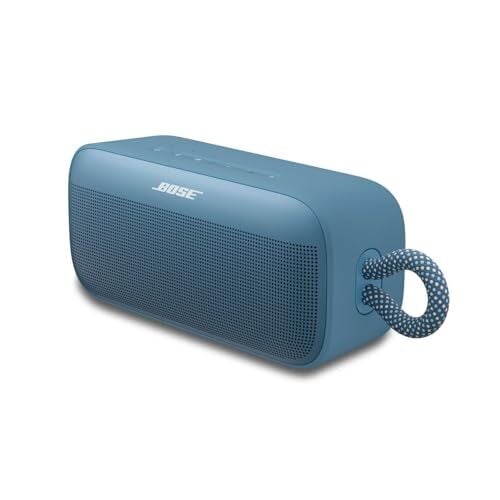
Bose positions it right in the middle of the SoundLink lineup, and you feel that balance in how it’s built. It’s compact enough to clip onto a backpack using its built-in nylon strap, tough enough to handle getting knocked around, and sealed against dust and full water submersion with an IP67 rating. Battery life can last up to 20 hours, depending on the volume, which is sufficient for full-day outings. However, the roughly five-hour recharge time means it’s better to charge it overnight than rely on a quick boost. On the connectivity side, there’s Bluetooth 5.4 with AAC and AptX Adaptive support, as well as the ability to keep two devices paired for smoother switching. What you don’t get is a microphone, aux port, or any voice assistant support, which might matter if you prefer wired options or use speakers for calls.
The sound profile of this Bluetooth speaker leans into mid- and high-bass, which gives electronic and pop tracks a lively pulse without turning everything muddy. It doesn’t reach into true low-bass territory, so anyone who wants thumping sub-bass may not get it here, but the punch it does deliver feels clean for its size. Vocals sit a little behind the beat in denser tracks because the mid-range pulls back slightly, though you can adjust this with the app’s EQ tools. It’s also worth knowing that the speaker plays everything in mono, so you lose the space and width you’d hear in a stereo mix, but its directivity is good—you don’t have to stand directly in front of it to hear things clearly. That said, at higher volumes, there’s some compression, which is common in speakers this size.
Our Best Editor-Vetted Early Black Friday Deals Right Now
Shark AI Ultra Matrix Clean Mapping Voice Control Robot Vacuum with XL Self-Empty Base
—
$249.99
(List Price $599.00)
Shark AI Ultra Matrix Clean Mapping Voice Control Robot Vacuum with XL Self-Empty Base
—
$249.99
(List Price $599.00)
Deals are selected by our commerce team
LEGO Tuxedo Cat Is Now Almost Free Compared to Its Previous Prices for Black Friday, Final Boxes Are Selling Out Fast

Save 20% on the 1,710-piece LEGO tuxedo cat over at Amazon ahead of Black Friday.
The post LEGO Tuxedo Cat Is Now Almost Free Compared to Its Previous Prices for Black Friday, Final Boxes Are Selling Out Fast appeared first on Kotaku.
This Marshall Acton III Bluetooth Speaker Drops 40% Off, Amazon Clears Them Out on Black Friday’s Opening Day

Marshall’s iconic Bluetooth speaker is at a new record low price.
The post This Marshall Acton III Bluetooth Speaker Drops 40% Off, Amazon Clears Them Out on Black Friday’s Opening Day appeared first on Kotaku.
Who is OpenAI’s Auditor?
OpenAI won’t say who audits its books. The company, which projects to hit an ARR of $20 billion this year and is valued at $500 billion, has committed to spending about $1.4 trillion on data centers over the next decade. It accounts for roughly two-thirds of unfulfilled contracts at Oracle and two-fifths at CoreWeave. Microsoft alone holds around $375 billion in unfulfilled contracts with OpenAI.
Reuters reported the company may target a $1 trillion valuation for a potential IPO in coming years. Most companies at this scale use one of the Big Four accounting firms: Deloitte, EY, KPMG or PwC. OpenAI declined to comment to Financial Times. A person close to the organization told the publication the company has “an industry standard audit with one of the Big Four firms.” The company’s latest Form 990 filing lists Fontanello, Duffield, & Otake — a small San Francisco accountancy firm — as the paid preparer. The form does say an independent accountant audited the statements.
Michael Burry, last night: “Can anyone name [OpenAI’s] auditor?”


Read more of this story at Slashdot.
These Smart Glasses Project a Private 200-inch Display, and They’re $50 Off Ahead of Black Friday
We may earn a commission from links on this page. Deal pricing and availability subject to change after time of publication.
I’ve reviewed a ton of high-tech smart glasses for Lifehacker, and this early Black Friday deal on the RayNeo Air 3s Pro display glasses is excellent. They are on sale for $249 on Amazon (originally $299) until Dec. 1.
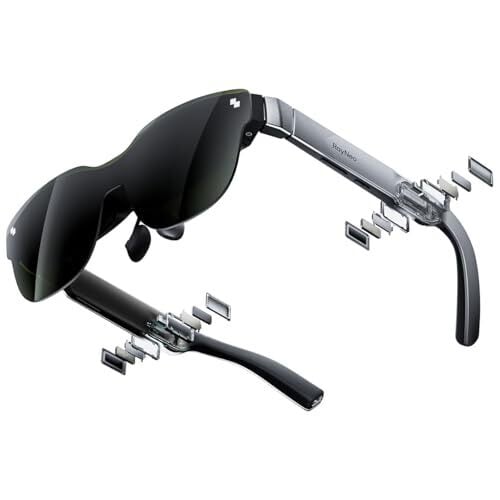
If you’re not familiar, these smart glasses basically put a high-definition display in your pocket, projecting the equivalent of a 201-inch TV in front of your face—so if someone on your list is tech-inclined and you want to blast ’em with a pure “whoa” present, here you go. They’ll even fit in a stocking.
There are other glasses that do the same thing, but the Ray Neo Air 3 Pro hit a nice sweet spot between inexpensive and good quality. Check out my review if you want to read about these glasses in more depth, but the bottom line is: if you want to make every flight you’ll ever take better or stream videos and games in private, these glasses will do the trick.
Our Best Editor-Vetted Early Black Friday Deals Right Now
Shark AI Ultra Matrix Clean Mapping Voice Control Robot Vacuum with XL Self-Empty Base
—
$249.99
(List Price $599.00)
Shark AI Ultra Matrix Clean Mapping Voice Control Robot Vacuum with XL Self-Empty Base
—
$249.99
(List Price $599.00)
Deals are selected by our commerce team
Webb telescope images an aging binary star system in the center of a four-layered cosmic dust shell
NASA’s James Webb Space Telescope has shown us images of space we’d never see otherwise, and one of the latest wonders it has captured is of an unusual star system in our galaxy with what the agency describes as “four serpentine spirals of dust.” Previous observations of the Apep system, named after the Egyptian god of chaos and located around 8,000 light-years away from Eath, showed only one shell. But as you can see in the mid-infrared image captured by Webb above, it actually has four shells, with the most outer one at the very edges of the image. These shells are made out of dense carbon dust emitted by the system’s two Wolf-Rayet stars over the last 700 years.
Wolf-Rayets are massive stars nearing the end of their lives. They’re very rare, and scientists believe there are only a thousand in our galaxy. Apep happens to have two of them. Yinuo Han from Caltech and Ryan White from the Macquarie University in Sydney, Australia have recently published their own papers about the system. They combined measurements from Webb’s observations with years of data from the European Southern Observatory’s Very Large Telescope (VLT) in Chile to determine that the two stars “swing by one another” once very 190 years. The stars then pass close to each other for 25 years, causing their strong stellar winds to collide and cast out huge amounts of carbon-rich dust within that timeframe.
Thanks to the Webb telescope’s observations, they were also able to confirm the presence of a third star in the system that’s gravitationally bound to the two Wolf-Rayets. The third star is a massive supergiant 40 to 50 times bigger than our sun, and it carved a cavity, which looks like a funnel, into the shells. You can see the cavity in the shells in the video below.
Apep’s Wolf-Rayet stars used to be bigger than the supergiant, but they’ve since shed most of their masses and are now only 10 to 20 times the mass of our sun. In time, the two stars will explode into a supernova and possibly turn into a black hole.
This article originally appeared on Engadget at https://www.engadget.com/science/space/webb-telescope-images-an-aging-binary-star-system-in-the-center-of-a-four-layered-cosmic-dust-shell-140000485.html?src=rss
Screw it, I’m installing Linux
I don’t like where Windows is going. Gaming on Linux has never been more approachable. Time to give it a shot.
Windows 11 Update Hurts Games But NVIDIA’s GeForce Hotfix Driver Is The Cure

NVIDIA is pushing out an out-of-band GPU driver update to resolve an issue introduced with Microsoft’s October 2025 update for Windows 11 (KB5066835). According to NVIDIA, the Windows 11 update can hamper performance in some unspecified games, even though it’s not listed by Microsoft as one of the known issues. Despite Microsoft being silent
Google Is Practically Giving Away the Pixel Watch 4, Zero-Margin Black Friday Play on a 2025 Smartwatch

Save 22% on the 41mm model of the Google Pixel Watch 4 a full week before Black Friday.
The post Google Is Practically Giving Away the Pixel Watch 4, Zero-Margin Black Friday Play on a 2025 Smartwatch appeared first on Kotaku.
Attack, defend, pursue—the Space Force’s new naming scheme foretells new era
A little more than a century ago, the US Army Air Service came up with a scheme for naming the military’s multiplying fleet of airplanes.
The 1924 aircraft designation code produced memorable names like the B-17, A-26, B-29, and P-51—B for bomber, A for attack, and P for pursuit—during World War II. The military later changed the prefix for pursuit aircraft to F for fighter, leading to recognizable modern names like the F-15 and F-16.
Now, the newest branch of the military is carving its own path with a new document outlining how the Space Force, which can trace its lineage back to the Army Air Service, will name and designate its “weapon systems” on the ground and in orbit. Ars obtained a copy of the document, first written in 2023 and amended in 2024.
Seagate’s External Hard Drive Drops to a New Record Low, Amazon Clears Out the 4TB Option

If you’re looking at 4TB storage solution, this is the best option.
The post Seagate’s External Hard Drive Drops to a New Record Low, Amazon Clears Out the 4TB Option appeared first on Kotaku.
Turn Your To-do List Into Data to Maximize Your Productivity
You know it’s important to prioritize your to-do list, and may have tried various methods to do so, from the Eisenhower Matrix (to determine how timely and urgent each task is), to the Pareto principle (to decide how to allocate your time to maximize your results). The problem is that determining what’s actually a priority can be an abstract problem. Some people work best when dealing with cold, hard numbers—and there’s a way to take a more quantitative approach to prioritizing your to-dos.
Why prioritize your to-do list?
The Pareto principle, mentioned above, suggests that 80% of your results will come from 20% of your work, so you have to be picky about what you focus on. Plus, there’s only so much you can do in a day, so the best to-do list for you may be a narrow one—say, with room for one major activity, three medium-sized ones, and five little ones (known as a 1-3-5 list). If you try to do too much, your productivity can take a hit. (That’s Illich’s Law, baby.)
To avoid doing too much or working on the wrong things, you need a strategy, and to form a strategy, you need to do some planning. The Eisenhower matrix can be useful as you figure out which tasks have looming deadlines, but it’s a subjective tool. Assigning numbers to your tasks can make it all feel more data-driven.
How to turn your to-do list into data
I encountered this tip in a blog post from consultant and strategist Daniel Coulton Shaw, who breaks down how to number your tasks so they align with the Pareto principle.
First, write down everything you need to get done in the foreseeable future, as you would in the early stages of making a 1-3-5 list. Next, assign each task two numbers, both of which will be between 1 and 10. The first number is for the effort required, and the second is for the project’s impact.
For example, answering all your emails may get a 3 for effort, but could yield results in the 7 territory. Finishing a report on a meeting could be a 6 in effort, but a 2 in results. Picking up meds at the pharmacy could be a 2 in effort, or a 7, depending how hard it is to get there, but a 4 in results, or even a 10, depending on how important the prescription is.
This part is subjective too, to a degree, but even thinking about your tasks in terms of “effort” and “results” will help you grasp their seriousness—and we’re not done yet. Next, divide each task’s “results” number by its “effort” number. So, if answering emails is a 7 on the results scale and a 3 in effort, you’re looking at a 2.33 overall score. Once all your tasks have been assigned a score, you can rank them in ascending order and aim to tackle them in that order, unless something extra timely comes along. By doing this, you’ll knock out the tasks that are important but low effort—which should be that 20% of work that comprises 80% of your results.
What to keep in mind
Something that is a 6 in effort and 2 in results might not make it high up on your list, but could become more urgent as time goes on. Don’t forget to think about timeliness when you’re plotting. If you have a test in four weeks, obviously the effort and results are going to be high and you’re going to want to study, but give yourself the wiggle room of remembering you do have a whole month, so other less pressing tasks might need to come first. Cleaning your room might be high effort and low results when it’s just a little disorganized, but letting it go for too long will make it more effort and force it to yield more results, which will waste time when you should be doing other things no the list. So, yes, the data is important, but there are other human elements you should take into account.
Finally, don’t forget breaks. When you see everything in such a structured, urgent-looking way, it might cause you to jump right in in a flurry. That’s great and will help you better align with the Yerkes-Dodson law, which dictates you need a bit of stress to be most productive, but it can lead to burnout. Write breaks down on that initial list and assign them a high value in terms of results—because taking breaks will yield results. Failing to do so can set you back, rendering the whole exercise useless.
Sonos Ace ANC Headphones Are 2x Cheaper Than AirPods Max, Amazon Clears Out Stock and Wants Them All Gone

AirPods Max best alternative at a new record low price.
The post Sonos Ace ANC Headphones Are 2x Cheaper Than AirPods Max, Amazon Clears Out Stock and Wants Them All Gone appeared first on Kotaku.