
One of the improvements that Intel software engineers have been working on for the Linux kernel around their Trust Domain Extensions (TDX) functionality for confidential computing VMs is reducing the memory use. That work is under the Dynamic PAMT umbrella and this week brought the latest iteration of patches to help lower RAM use when engaging TDX for confidential VMs…
Monthly Archives: November 2025
ASUS Armoury Driver Set To Be Introduced In Linux 6.19
Expected to be introduced in the upcoming Linux 6.19 kernel cycle is the ASUS Armoury “asus-armoury” driver for enhancing support for the ASUS ROG Ally gaming handhelds and other ASUS enthusiast/gaming devices under Linux…
Ray-Ban Meta (Gen 1) Smart Glasses Get 20% Price Drop Ahead of Black Friday


Meta is tossing out a limited time 20% discount off all Ray-Ban Meta (Gen 1) smart glasses, which you can nab from now until December 1st.
The News
Released in 2023 starting at $300, Ray-Ban Meta (Gen 1) are capable smart glasses in their own right, including video/photo capture, onboard AI assistant, and the ability to play music and take calls.
The second gen version released earlier this year, starting at $380, bringing with it better battery life, higher-quality video capture, and improved audio/mics. You can check the spec sheet below for a 1:1 comparison.
Still, at $240, Meta’s latest deal makes Gen 1 the cheapest it’s ever been, with the 20% discount available across all Gen 1 lens and style combos.

You can get the deal from now until December 1st direct through Meta, which includes expedited shipping, as well as partner retailers, including Amazon, Best Buy, Ray-Ban Stores, and Target in the US.
Many supported regions are getting the deal too, which you’ll find in local pricing across Europe, Australia, Canada, India, Mexico, the United Arab Emirates, and the UK.
Meta is also tossing out 20% off prescription lenses when you purchase Ray-Ban Meta (Gen 1 and 2) and/or Oakley Meta HSTN glasses, which will only be available through Meta from now until December 1st.
Ray-Ban Meta: Gen 1 vs Gen 2 Specs
| Gen 1 | Gen 2 | |
| Camera | 12 MP ultra-wide |
12 MP ultra-wide (improved sensor)
|
| Photo Resolution | 3,024 × 4,032 | 3,024 × 4,032 |
| Video Resolution | 1,440 × 1,920 @ 30 fps |
Up to 3K @ 30 fps (includes livestreaming ability)
|
| Storage | 32 GB | 32 GB |
| Microphones | 5-mic array | 5-mic array |
| Speakers | Open-ear speakers |
Improved open-ear speakers (louder, better bass)
|
| Processor | Snapdragon AR1 Gen 1 |
Snapdragon AR1 Gen 1
|
| Battery Life (Glasses) | ~4 hours | ~8 hours |
| Battery Life (Case) | ~32 hours | ~48 hours |
| Charging Speed | Not clearly stated |
~50% charge in ~20 minutes
|
| Water Resistance | IPX4 | IPX4 |
| Frame Styles | Wayfarer, Headliner, Skyler |
Wayfarer, Headliner, Skyler, Oakley HSTN, Oakley Vanguard
|
| AI Features | Basic Meta AI |
Enhanced Meta AI, new capture modes
|
My Take
While Meta is clearly using the big Black Friday sales rush to flush old stock, I honestly hoped for a much larger barn burner, although it’s pretty clear why we’re not seeing the any super deep discounts.
As occult corporate calculus goes, Meta and EssilorLuxottica probably don’t want to make Gen 1 too attractive to people who might otherwise just spring for the more expensive Gen 2. This makes me think that 20% off is about as low as Meta will go this year around, although I’ll be keeping my eye on post-Black Friday sales to confirm.
Still, there are some caveats potential buyers should be aware of: neither are better at capturing video than your smartphone, and they don’t play music better than even mediocre wireless ear buds. You also have to use Meta AI, which is… okay, making it more of a fun toy (or Christmas gift) than a must-have addition to your smartphone.
The post Ray-Ban Meta (Gen 1) Smart Glasses Get 20% Price Drop Ahead of Black Friday appeared first on Road to VR.
Servo Announces Sponsorship Tiers To Get More Organizations Backing This Browser Engine
The Servo open-source web browser engine has been making good progress in recent times. Long outside the confines of Mozilla and working as a Linux Foundation Europe project, Servo has been advancing thanks to Igalia and other open-source developers while getting by on around ~$5.7k USD per month thanks mostly to donations from individuals. Servo has now announced sponsorship tiers in hopefully to solicit more donations from larger organizations…
Samsung Odyssey gaming monitors are up to $350 off for Black Friday
Samsung’s Odyssey G8 OLED monitor is now down to $950 for Black Friday, saving you $350. It’s one of Samsung’s best 32-inch displays, offering a crisp 4K resolution, a 240Hz refresh rate and vivid OLED contrast that makes games and movies look incredible.
The 32-inch Odyssey G8 has earned high marks for its blend of image quality and gaming performance. Its 4K OLED panel produces deep blacks and bright highlights, with 99 percent DCI-P3 color coverage for vibrant visuals. The 240Hz refresh rate and 0.03ms response time deliver exceptional smoothness in fast-paced games, while AMD FreeSync Premium Pro keeps everything tear-free.
Design-wise, it’s sleek and minimal, with a slim metal frame that looks just as good in a work setup as it does in a gaming room. The monitor supports DisplayPort 1.4 and HDMI 2.1 inputs, plus USB-C connectivity for charging and data transfer. Built-in speakers and Smart TV features let you stream directly from apps like Netflix or Prime Video without connecting to a PC or console.
You also get Samsung’s SmartThings integration, so the Odyssey G8 can double as a smart home hub, controlling compatible IoT devices from lights to thermostats. It even supports cloud gaming through Xbox Game Pass and NVIDIA GeForce Now, meaning you can play high-end titles without extra hardware. The combination of OLED contrast, motion clarity and built-in streaming makes it one of the most versatile monitors in Samsung’s lineup.
If you want something even larger, the Odyssey G9 is also discounted by $300, bringing the 49-inch curved DQHD model down to $700. It offers a wide field of view and 144Hz refresh rate, making it a great pick for simulation and racing fans.
The Odyssey G7 is another strong choice, now $600 after a $300 discount. This 37-inch 4K display runs at 165Hz with a curved design and supports both HDR and AMD FreeSync for smooth gameplay.
Finally, Samsung’s Smart Monitor M9 is available for $1,300, $300 off its regular price. It combines 4K OLED visuals with built-in streaming and AI-powered vision tools, making it a good all-rounder for work and entertainment.
This article originally appeared on Engadget at https://www.engadget.com/deals/samsung-odyssey-gaming-monitors-are-up-to-350-off-for-black-friday-103000633.html?src=rss
CERN Can Now Produce Antihydrogen Atoms Eight Times Faster Than Before
fahrbot-bot shares a report from Phys.org: Physicists from Swansea University have played the leading role in a scientific breakthrough at CERN, developing an innovative technique that increases the antihydrogen trapping rate by a factor of ten. The advancement, achieved as part of the international Antihydrogen Laser Physics Apparatus (ALPHA) collaboration, has been published in Nature Communications and could help answer one of the biggest questions in physics: Why is there such a large imbalance between matter and antimatter? According to the Big Bang theory, equal amounts were created at the beginning of the universe, so why is the world around us made almost entirely of matter?
Antihydrogen is the “mirror version” of hydrogen, made from an antiproton and a positron. Trapping and studying it helps scientists explore how antimatter behaves, and whether it follows the same rules as matter. Producing and trapping antihydrogen is an extremely complicated process. Previous methods took 24 hours to trap just 2,000 atoms, limiting the scope of experiments at ALPHA. The Swansea-led team has changed that. Using laser-cooled beryllium ions, the team has demonstrated that it is possible to cool positrons to less than 10 Kelvin (below -263C), significantly colder than the previous threshold of about 15 Kelvin. These cooler positrons dramatically boost the efficiency of antihydrogen production and trapping — allowing a record 15,000 atoms to be trapped in less than seven hours.


Read more of this story at Slashdot.
Don’t spill your guts to your chatbot friend – it’ll hoover up that info for training
LLM makers may be training on user chat with few privacy safeguards, lawmakers hearThe US House of Representatives has heard that LLM builders can exploit users’ conversations for further training and commercial benefit with little oversight or concern for privacy risks.…
Puzzling Places Adds New Replay Tool In Free Quest Update
Puzzling Places adds a ‘Replay Tool’ in its latest free Quest update, launching alongside the game’s newest premium puzzle, “A Painter’s Dream.”
The new experimental Replay Tool automatically records the many individual moments in which a new piece is added to your puzzle. At the moment the puzzle is completed, it automatically generates a full timelapse video of the entire puzzling session. This allows players to share their builds with the Puzzling Places community without the need for manual recording or editing.
0:00
/0:18
Releasing alongside the Replay Tool is a new premium puzzle, “A Painter’s Dream.” This peaceful riverside escape is inspired by impressionist paintings, so think water lilies, sun-dappled ponds, delicate swans, and quiet cafés. Unlike the Replay Tool, that’s receiving a wider release that covers Quest, PS VR2, and Pico.
You can see that in action below.
0:00
/0:40
Developed by realities.io, Puzzling Places is a relaxing 3D jigsaw puzzle game in which players can build all sorts of 3D puzzles in VR and MR modes across solo and multiplayer modes. The game continues introducing new puzzles you can tackle with different-sized piece sets, with more added monthly.
Puzzling Places is out now on Quest, Apple Vision Pro, Pico, and PS VR2, while it’s also coming to Steam at a later date.
Moss Spores Survive 9 Months Outside ISS
alternative_right shares a report from Phys.org: Inspired by moss’s resilience, researchers sent moss sporophytes — reproductive structures that encase spores — to the most extreme environment yet: space. Their results, published in the journal iScience on November 20, show that more than 80% of the spores survived nine months outside of the International Space Station (ISS) and made it back to Earth still capable of reproducing, demonstrating for the first time that an early land plant can survive long-term exposure to the elements of space.
[Lead author Tomomichi Fujita of Hokkaido University and his team] subjected Physcomitrium patens, a well-studied moss commonly known as spreading earthmoss, to a simulated a space environment, including high levels of UV radiation, extreme high and low temperatures, and vacuum conditions. They tested three different structures from the moss — protenemata, or juvenile moss; brood cells, or specialized stem cells that emerge under stress conditions; and sporophytes, or encapsulated spores — to find out which had the best chance of surviving in space.
The researchers found that UV radiation was the toughest element to survive, and the sporophytes were by far the most resilient of the three moss parts. None of the juvenile moss survived high UV levels or extreme temperatures. The brood cells had a higher rate of survival, but the encased spores exhibited ~1,000x more tolerance to UV radiation. The spores were also able to survive and germinate after being exposed to 196C for over a week, as well as after living in 55C heat for a month.


Read more of this story at Slashdot.
OnLogic Refreshes Its CL Series With the New CL260 Edge Gateway
The CL260 is presented as an ultra-compact industrial edge gateway built around Intel N-Series processors. It is intended for deployments that require a small, durable, and headless controller operating within cabinet-mounted or space-restricted environments. The system offers configuration options for storage, wireless connectivity, and operating systems. The system uses either the Intel N150 or Intel […]
Amazon Alexa+ is now available in Canada
Amazon has launched Alexa+, its next-generation digital assistant, in Canada. The company unveiled the new assistant in February, and it has been making its way to more and more people since. Canada is the first region outside the US to get access Amazon’s upgraded Alexa. Like the version that rolled out in the US, users can communicate with Alexa+ in natural language. They can say “I’m cold,” for instance, and the assistant will turn up the heat in their home. If they say “It’s dark,” Alexa+ can switch on the lights for them.
In Amazon’s announcement, Allison Siperco, the Alexa manager for Canada, said the assistant understands Canadian culture and regional expressions. It can understand distinctly Canadian topics, such as the country’s hockey teams and musicians. In addition, the assistant links with services Canadians use. It can make restaurant reservations for them through OpenTable, connects them to CBC news and help them look for and buy items from their e-commerce platforms. Siperco said the assistant will also support Yelp, Uber Eats, Suno and TripAdvisor in the country “soon.”
Alexa+ is capable of adapting its tone to everyone in the household, suggesting different routines based on the user. It can suggest meditation, for example, to someone who’s had a long day at the office. And it can remember if someone has dietary restrictions when recommending restaurants. Alexa+ can also help users shop by finding items with the best pricing, by creating grocery lists for them while taking dietary restrictions into account, as well as by comparing features across products and summarizing reviews on Amazon Canada.
Amazon’s upgraded assistant is free during its Early Access phase, though those who are interested to try it out right now will have to purchase the new Echo Show 8, Echo Show 11, Echo Dot Max or Echo Studio. After Early Access, it will remain free for Prime subscribers, while everyone else will have to pay $28 CAD a month for it.
This article originally appeared on Engadget at https://www.engadget.com/ai/amazon-alexa-is-now-available-in-canada-050827689.html?src=rss
Advocacy Groups Urge Parents To Avoid AI Toys This Holiday Season
An anonymous reader quotes a report from the Associated Press: They’re cute, even cuddly, and promise learning and companionship — but artificial intelligence toys are not safe for kids, according to children’s and consumer advocacy groups urging parents not to buy them during the holiday season. These toys, marketed to kids as young as 2 years old, are generally powered by AI models that have already been shown to harm children and teenagers, such as OpenAI’s ChatGPT, according to an advisory published Thursday by the children’s advocacy group Fairplay and signed by more than 150 organizations and individual experts such as child psychiatrists and educators.
“The serious harms that AI chatbots have inflicted on children are well-documented, including fostering obsessive use, having explicit sexual conversations, and encouraging unsafe behaviors, violence against others, and self-harm,” Fairplay said. AI toys, made by companies including Curio Interactive and Keyi Technologies, are often marketed as educational, but Fairplay says they can displace important creative and learning activities. They promise friendship but disrupt children’s relationships and resilience, the group said. “What’s different about young children is that their brains are being wired for the first time and developmentally it is natural for them to be trustful, for them to seek relationships with kind and friendly characters,” said Rachel Franz, director of Fairplay’s Young Children Thrive Offline Program. Because of this, she added, the trust young children are placing in these toys can exacerbate the types of harms older children are already experiencing with AI chatbots.
A separate report Thursday by Common Sense Media and psychiatrists at Stanford University’s medical school warned teenagers against using popular AI chatbots as therapists. Fairplay, a 25-year-old organization formerly known as the Campaign for a Commercial-Free Childhood, has been warning about AI toys for years. They just weren’t as advanced as they are today. A decade ago, during an emerging fad of internet-connected toys and AI speech recognition, the group helped lead a backlash against Mattel’s talking Hello Barbie doll that it said was recording and analyzing children’s conversations. This time, though AI toys are mostly sold online and more popular in Asia than elsewhere, Franz said some have started to appear on store shelves in the U.S. and more could be on the way. “Everything has been released with no regulation and no research, so it gives us extra pause when all of a sudden we see more and more manufacturers, including Mattel, who recently partnered with OpenAI, potentially putting out these products,” Franz said. Last week, consumer advocates at U.S. PIRG called out the trend of buying AI toys in its annual “Trouble in Toyland” report. This year, the organization tested four toys that use AI chatbots. “We found some of these toys will talk in-depth about sexually explicit topics, will offer advice on where a child can find matches or knives, act dismayed when you say you have to leave, and have limited or no parental controls,” the report said.


Read more of this story at Slashdot.
PHP 8.5 Released with Pipe Operator, URI Extension, and Clone With Functionality
PHP 8.5 has been released today as the latest major update of this widely-used, general-purpose, and open-source scripting language that is especially suited to web development.
Fired Techie Admits Sabotaging Ex-Employer, Causing $862K In Damage
An Ohio IT contractor pleaded guilty to breaking into his former employer’s network after being fired, impersonating another worker and using a PowerShell script to reset 2,500 passwords — an act that locked out thousands of employees and caused more than $862,000 in damage. He faces up to 10 years in prison. The Register reports: Maxwell Schultz, 35, impersonated another contractor to gain access to the company’s network after his credentials were revoked. Announcing the news, US attorney Nicholas J. Ganjei did not specify the company in question, which is typical in these malicious insider cases, although local media reported it to be Houston-based Waste Management.
The attack took place on May 14, 2021, and saw Schultz use the credentials to reset approximately 2,500 passwords at the affected organization. This meant thousands of employees and contractors across the US were unable to access the company network. Schultz admitted to running a PowerShell script to reset the passwords, searching for ways to delete system logs to cover his tracks — in some cases succeeding — and clearing PowerShell window events, according to the Department of Justice.
Prosecutors said the attack caused more than $862,000 worth of damage related to employee downtime, a disrupted customer service function, and costs related to the remediation of the intrusion. Schultz is set to be sentenced on Jan 30, 2026, and faces up to ten years in prison and a potential maximum fine of $250,000.


Read more of this story at Slashdot.
Tineco Goes Nuts, Floor One S5 Wet Dry Vacuum and Mop Now 42% Off Original Price

Tineco is the best wet dry vacuum cleaner brand.
The post Tineco Goes Nuts, Floor One S5 Wet Dry Vacuum and Mop Now 42% Off Original Price appeared first on Kotaku.
Intel Compute Runtime 25.44.36015.5 Brings More Performance Optimizations & Features
Released tonight was the Intel Compute Runtime 25.44.36015.5 as their roughly monthly update to this open-source GPU compute stack providing Level Zero and OpenCL support for Intel’s integrated and discrete graphics hardware…
IBM, Cisco Outline Plans For Networks of Quantum Computers By Early 2030s
IBM and Cisco plan to link quantum computers over long distances by the early 2030s, “with the goal of demonstrating the concept is workable by the end of 2030,” reports Reuters. “The move could pave the way for a quantum internet, though executives at the two companies cautioned that the networks would require technologies that do not currently exist and will have to be developed with the help of universities and federal laboratories.” From the report: The challenge begins with a problem: Quantum computers like IBM’s sit in massive cryogenic tanks that get so cold that atoms barely move. To get information out of them, IBM has to figure out how to transform information in stationary “qubits” — the fundamental unit of information in a quantum computer — into what Jay Gambetta, director of IBM Research and an IBM fellow, told Reuters are “flying” qubits that travel as microwaves.
But those flying microwave qubits will have to be turned into optical signals that can travel between Cisco switches on fiber-optic cables. The technology for that transformation — called a microwave-optical transducer — will have to be developed with the help of groups like the Superconducting Quantum Materials and Systems Center, led by the Fermi National Accelerator Laboratory near Chicago, among others. Along the way, Cisco and IBM will also publish open-source software to weave all the parts together.


Read more of this story at Slashdot.
Real Madrid Apple Immersive Documentary Coming In 2026
An Apple Immersive Video documentary about Real Madrid is coming next year, “with a level of access that fans have never experienced before”.
If you’re an American reading this who doesn’t know much about what you call “soccer”, here’s some context: Real Madrid is one of the most successful football clubs of all time, and has signed some of the best players of all time, including both Ronaldos, Zinedine Zidane, and David Beckham. In the year 2000, FIFA even officially declared Real Madrid “Club of the Century”.
Today, Real Madrid and Apple confirmed work on an Apple Immersive Video documentary about the club, captured during last month’s Champions League match against Juventus.
What Is Apple Immersive Video?
The Apple Immersive Video format is 180° stereoscopic 3D video with 4K×4K per-eye resolution, 90FPS, high dynamic range (HDR), and spatial audio. It’s typically served with higher bitrate than many other immersive video platforms.
We highly praised Apple Immersive Video in our Vision Pro review. It’s not possible to cast or record Apple Immersive Video though, so you’ll have to take our word for it unless you have access to a Vision Pro.
Apple says the documentary was filmed using over 30 Blackmagic immersive cameras, and “brings viewers inside the world’s most decorated club, capturing moments from practice to the pitch with a level of access that fans have never experienced before.”
In an interview with GQ Spain, Real Madrid’s president Florentino Pérez described the documentary as just the beginning of a long-term plan to connect the club’s “billion” strong global fanbase to the stadium using technology. He references the “Infinite Bernabéu”, an idea he has floated in previous interviews, a goal of one day letting fans all over the world virtually attend Real Madrid home matches using VR.
Apple Vision Pro Is Getting Live Apple Immersive LA Lakers NBA Games
Select LA Lakers NBA games will be streamed in Apple Immersive to Apple Vision Pro owners next year, the first-ever live content for the format.
 UploadVRDavid Heaney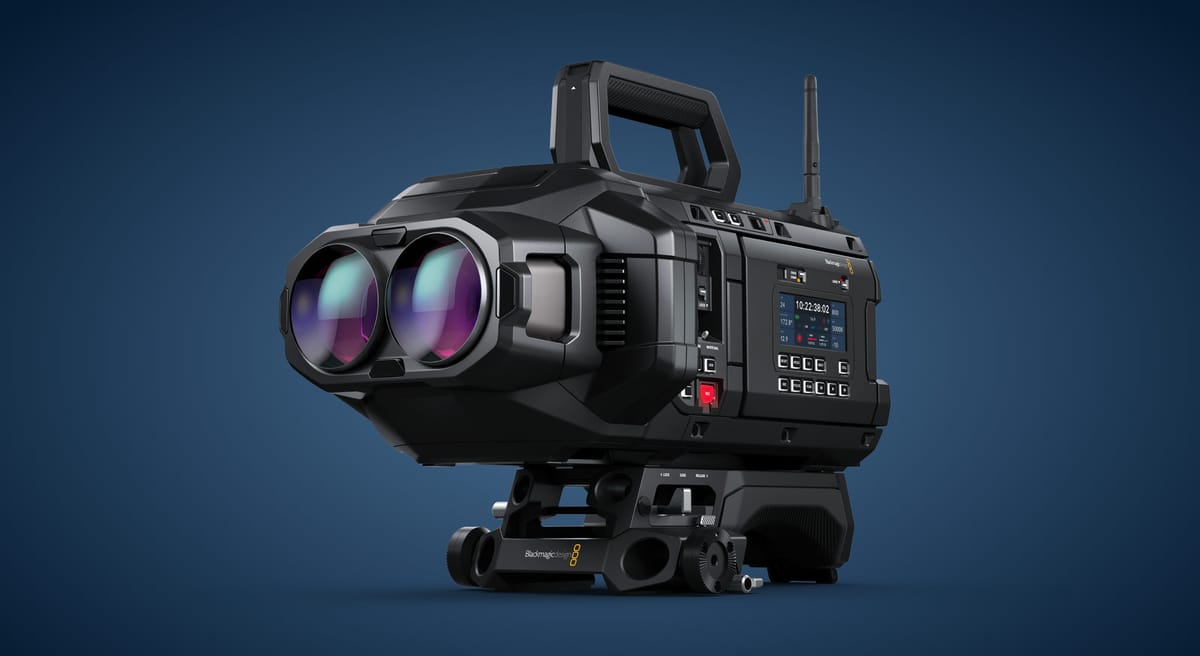
That strongly suggests that the next step of Real Madrid’s plan is to stream live games in Apple Immersive.
The first known live Apple Immersive Video offering will be select LA Lakers NBA games, set to be streamed next year via Blackmagic URSA Cine Immersive Live, a special variant of the immersive camera creators are using for prerecorded Apple Immersive Video content.
The announcement came almost nine years after NextVR started streaming weekly NBA games to the Oculus-powered Samsung Gear VR headset in 180-degree. In 2020 Apple acquired NextVR, and leveraged its expertise and IP to develop Apple Immersive Video.
Mozilla Says It’s Finally Done With Two-Faced Onerep
Mozilla is officially ending its partnership with Onerep after more than a year of controversy over the company’s founder secretly running people-search and data-broker sites. Monitor Plus will be discontinued by December 2025, existing subscribers will receive prorated refunds, and Mozilla says it will focus on privacy tools it fully controls. KrebsOnSecurity reports: In a statement published Tuesday, Mozilla said it will soon discontinue Monitor Plus, which offered data broker site scans and automated personal data removal from Onerep. “We will continue to offer our free Monitor data breach service, which is integrated into Firefox’s credential manager, and we are focused on integrating more of our privacy and security experiences in Firefox, including our VPN, for free,” the advisory reads.
Mozilla said current Monitor Plus subscribers will retain full access through the wind-down period, which ends on Dec. 17, 2025. After that, those subscribers will automatically receive a prorated refund for the unused portion of their subscription. “We explored several options to keep Monitor Plus going, but our high standards for vendors, and the realities of the data broker ecosystem made it challenging to consistently deliver the level of value and reliability we expect for our users,” Mozilla statement reads.


Read more of this story at Slashdot.
Skip GoPro, This Insta360 8K 360° Action Camera Drops to New Record Low on Amazon

8K 360-degree dual sensors with triple AI chips and replaceable lenses capture everything.
The post Skip GoPro, This Insta360 8K 360° Action Camera Drops to New Record Low on Amazon appeared first on Kotaku.