An anonymous reader shares a report: Microsoft is upgrading its Advanced Paste tool in PowerToys for Windows 11, allowing you to use an on-device AI model to power some of its features. With the 0.96 update, you can route requests through Microsoft’s Foundry Local tool or the open-source Ollama, both of which run AI models on your device’s neural processing unit (NPU) instead of connecting to the cloud.
That means you won’t need to purchase API credits to perform certain actions, like having AI translate or summarize the text copied to your clipboard. Plus, you can keep your data on your device.
Pro mountain bike rider, Matt Jones, has completed a death-defying stunt – jumping through two trucks, each moving in the opposite direction.
In a video shared by Red Bull, Jones is towed up to speed by a car before launching off a ramp and jumping through two moving trucks.
As each truck is travelling at speed, the time window for Jones to make the jump safely is said to be “less than a second” long.
In order to hit the precise timings required for Jones to safely complete the challenge, each truck was autonomously controlled using technology developed by Scania.
Combined with live GPS tracking data, this enabled Jones to use a traffic lights-style system on his tow car to determine whether or not it was safe to attempt the jump.
After multiple failed attempts at hitting the precise timing window on his run-up, Jones eventually gets a ‘green light’ on the second day of trying and makes the incredible jump.
Commenting on the video, Jones described the stunt as the “scariest thing I’ve ever done. Full stop”
Kudos also to the camera drone operator who follows Jones through the two trucks at the same time.
Matt Jones is a British slopestyle mountain biker turned YouTube star.
Red Bull is renowned for backing daredevil stunts as part of its marketing for its energy drinks.
As well as backing the Red Bull-BORA-hansgrohe WorldTour team, the brand also sponsors a number of individual athletes in pro cycling, such as Wout van Aert and Tom Pidcock.
Pidcock made similar headlines earlier this year following another video uploaded by Red Bull, which showed him hitting speeds of 95kph while descending the Rossfeld Panorama mountain pass.
Today all that’s left of the ancient city of Semiyarka are a few low earthen mounds and some scattered artifacts, nearly hidden beneath the waving grasses of the Kazakh Steppe, a vast swath of grassland that stretches across northern Kazakhstan and into Russia. But recent surveys and excavations reveal that 3,500 years ago, this empty plain was a bustling city with a thriving metalworking industry, where nomadic herders and traders might have mingled with settled metalworkers and merchants.
Radivojevic and Lawrence stand on the site of Semiyarka.
Credit:
Peter J. Brown
Welcome to the City of Seven Ravines
University College of London archaeologist Miljana Radivojevic and her colleagues recently mapped the site with drones and geophysical surveys (like ground-penetrating radar, for example), tracing the layout of a 140-hectare city on the steppe in what’s now Kazakhstan.
The Bronze Age city once boasted rows of houses built on earthworks, a large central building, and a neighborhood of workshops where artisans smelted and cast bronze. From its windswept promontory, it held a commanding view of a narrow point in the Irtysh River valley, a strategic location that may have offered the city “control over movement along the river and valley bottom,” according to Radivojevic and her colleagues. That view inspired archaeologists’ name for the city: Semiyarka, or City of Seven Ravines.
If a price hike is a sickness, than Black Friday is the cure. Black Friday deals on PlayStation 5 consoles are now in effect, providing a salve against recent price adjustments made by Sony. And yes, it’s easy to be soured by a so-called deal on items that recently went up in price, but the Black Friday discounts bring PS5 console costs to
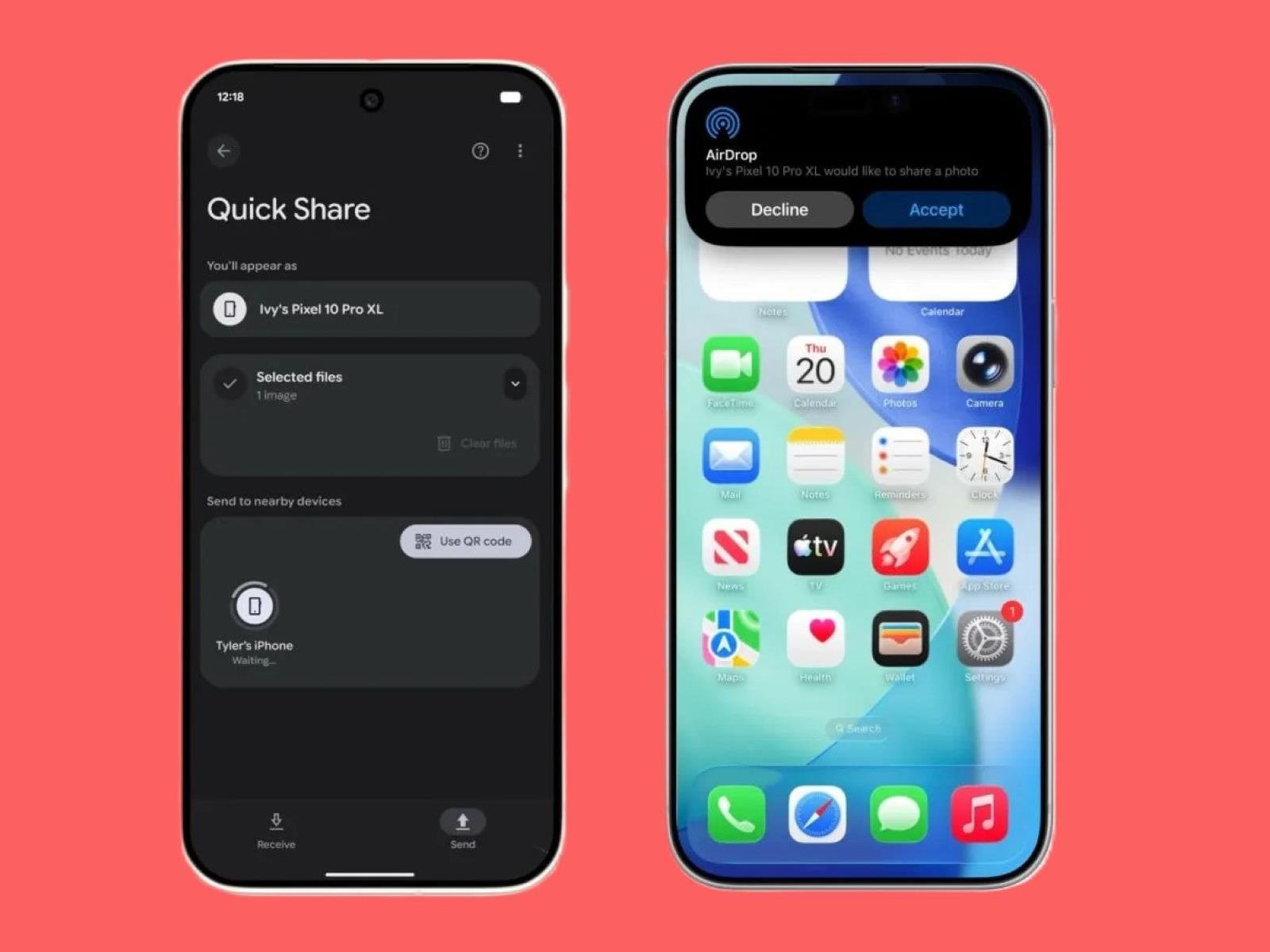
After eons of Android users relying on cumbersome cloud links or email attachments to share content with iPhones, Google dropped a bombshell yesterday that its Quick Share function can now directly communicate with Apple’s proprietary AirDrop feature, forever ending the agonizing cross-platform file sharing wall.
With Lunar Lake and newer Intel graphics there is a new feature called the Common Mode Timing Generator (CMTG) that so far hasn’t been enabled by the open-source Intel Linux graphics driver. But patches being worked on are enabling this CMTG feature that will unlock other functionality moving forward…
OpenAI CEO Sam Altman told colleagues last month that Google’s recent progress in AI could “create some temporary economic headwinds for our company,” though he added that OpenAI would emerge ahead, The Information reports [non-paywalled source]. From the report: After OpenAI researchers heard that Google had created a new AI that appears to have leapfrogged OpenAI’s in the way it was developed, Altman said in the memo that “we know we have some work to do but we are catching up fast.” Still, he cautioned employees that “I expect the vibes out there to be rough for a bit.”
DJI may be the big dog in drones, but it plays third fiddle to GoPro and Insta360 in the action cam market. To better stand out, the company has launched the Osmo Action 6 with a pair of innovative features. The first is a big, square sensor that boosts video quality in low light, while making it easy to output both horizontal and vertical video. The second is a variable aperture for flexible shooting in both bright and dark conditions.
As DJI’s new flagship non-360 action cam, the Action 6 goes up against GoPro’s Hero 13 and the Insta360 Ace Pro 2. Both of those can capture higher resolution footage, so they’re better for most users in daylight conditions. However, if you shoot a lot in dim or contrasty light, DJI’s Action 6 may be your best option.
Variable aperture
I’ve already gone through the Osmo Action 6’s specs in my earlier news post, so check that to see the full details. As for what’s new, the first key feature is the variable f/2.0-f/4.0 aperture — the first ever in an action cam. This allows for brighter video and improved stabilization when shooting at night compared to the fixed f/2.8 aperture on the Action 5 Pro. It also offers shallower depth of field and more flexibility on sunny days.
The first thing I noticed with this feature was the lack of full manual control. You can only set it to fixed f/2.6, f/2.8 and f/4.0 “starburst” modes, or automatic settings ranging from f/2.0-f/4.0 up to f/2.8-f/4.0. That means f/2.0 isn’t available as a fixed aperture, which is too bad as that would be ideal for portraits.
Still, variable aperture is a highly useful feature. In auto mode, it ramps from one setting to another in fine steps (f/2.1 to f/2.2, for example), so I never saw any exposure jumps. In low light, I could dial the ISO range down to avoid excessive noise, giving me higher video quality. However, I’d love to see full manual control in a future update.
New square sensor
Another key feature is the new 1/1.1-inch (0.56 inch diagonal) square sensor that allows a wide range of resolutions and aspect ratios. The Action 6 supports vertical and horizontal resolutions up to 4K, in either 16:9 or 4:3 aspect ratios for the latter orientation. The best new setting, though, is Custom, which lets you shoot 3,840 x 3,840 square video.
At 60 fps (a standard frame rate for action videos), GoPro’s Hero 13 maxes out at 5,312 x 2,988 pixels, while the Insta360 Ace Pro 2 can hit 3,840 x 2,880 pixels. That makes the Osmo Action 6 the only current action cam with 4K vertical resolution at 60 fps.
The benefit is that you can film for both horizontal and vertical video platforms like YouTube and TikTok, respectively, with no need to rotate the camera and no loss in resolution. If that sounds familiar, it’s the same reason Apple adopted a square sensor on the iPhone 17’s front camera.
I tested the Custom aspect ratio in DaVinci Resolve Studio and it made exports a breeze. First, I created and exported a standard 4K horizontal timeline, then simply copied the contents to a vertical timeline. After reframing a few shots to keep the action centered, I was able to immediately export a 4K TikTok video. That’s a big time saver for busy editors.
Video quality
Sample image from the DJI Osmo Action 6 in “Custom” mode
Steve Dent for Engadget
With a 30 percent larger sensor, the Action 6 is better for night or interior shooting using 6,400 ISO and up. Compared to the Action 5 Pro, I found nighttime video from the Action 6 to be considerably cleaner. DJI also improved the Night setting itself: video is cleaner, noise reduction is applied less aggressively and everything looks more natural.
The new sensor and variable aperture also help DJI’s Rocksteady 3.0 digital stabilization in low light. If you’re filming from a bicycle at night, for instance, the Action 6 will use a higher shutter speed than the Action 5, so video will be sharper. That helps the stabilization algorithm produce a better result with less pixelation and tearing.
In daylight conditions, the Action 6 delivers sharp, color-accurate video that can be used straight out of the camera — just like the Action 5. However, in contrasty scenarios like a sun-dappled forest trail, the Action 6 has a slight advantage. When I engaged the 10-bit D-LogM setting to boost dynamic range, I noticed that dark shadow areas had more detail and less noise than they did in footage from the Action 5 Pro or GoPro Hero 13.
However, the GoPro Hero 13’s extra resolution is an advantage if you mostly use YouTube and other horizontal formats. With up to 5,312 x 2,988 pixels at 60 fps, it offers sharper 4K video after supersampling and more room to reframe shots in post production without any loss in quality.
DJI Osmo Action 6’s “Custom” square format shown with gridlines enabled
Steve Dent for Engadget
If you like shooting wide but hate the distortion, DJI’s Natural Wide field of view is a nice addition. The regular Wide setting tends to distort vertical lines, but Natural Wide keeps everything nice and straight while providing a greater field of view.
Finally, I tested the Action 6’s new Film Tone feature that borrows a trick from Fujifilm’s simulations. It’s a way to get some fun looks straight out of the camera, like “pristine and cool tones” or “classic negative film type.”. The results are great for anyone who doesn’t want to fiddle with color in post-production, though DJI needs to add a few more options like black and white or sepia.
Other updates
With its bigger sensor the Osmo Action 6 is slightly larger than the Action 5 Pro in all dimensions, but around the same weight at 5.26 ounces. As before, it can connect to up to two DJI wireless microphones at once, including the Mic 2, Mic 3 and Mic Mini. And it comes with DJI’s new dual-latch Quick-Release Adapter Mount that can be attached in either direction, but supports all of DJI’s past accessories.
Unlike its competition, the Osmo Action 6 comes with 50GB of internal memory (up from 47GB before) along with a microSD card slot. That means you won’t be screwed if you forget a memory card, as most of us have done at one point or another. DJI also doubled the Wi-Fi transfer speeds to 80MB/s and boosted USB-C transfer rates to 800MB/s.
Steve Dent for Engadget
As before, the Action 6 is waterproof to 20 meters (66 feet) by itself, or nearly 200 feet with DJI’s waterproof case. And on top of voice control, the Action 6 supports gestures as well, so you can now wave at the camera to start and stop video (like you can with the new Neo 2 drone). With the same 1,950mAh Extreme Battery Plus as before, shooting time between charges is four hours at 1080p and two hours at 4K.
Finally, DJI has introduced two removable lenses for the Action 6, given DJI some competition in that regard. The first is a macro lens with a minimum focal distance of just 4.3 inches, making it ideal for closeup work and portraits. The other is an FOV expansion lens that boosts the field of view from 155 to 182 degrees.
Wrap-up
With a bigger sensor and larger aperture than the competition, DJI’s Action 6 is now the best action cam on the market for night shooting, delivering clean, sharp video with better stabilization than rivals. It’s also ideal for users who output to both YouTube and TikTok.
For regular daytime shooting, though, the extra resolution offered on GoPro’s Hero 13 might be preferable for some users. All that aside, it may come down simply to the price. DJI’s Action 6 starts at $369 ($439 with extra batteries and a charger), compared to $309 for the Hero 13 Black and $420 for Insta360’s Ace Pro 2. These are all great choices, but if low-light capability is more important than resolution, choose the Osmo Action 6.
This article originally appeared on Engadget at https://www.engadget.com/cameras/dji-osmo-action-6-review-an-action-camera-that-excels-in-low-light-143027343.html?src=rss
We may earn a commission from links on this page. Deal pricing and availability subject to change after time of publication.
The OnePlus 13 isn’t just competing with flagship phones. It’s quietly undercutting them. At $699 for the unlocked 512GB Arctic Dawn model, down from $849, it’s currently at its lowest price according to price trackers, making a strong case for itself if you’ve been eyeing an Android phone with top-tier specs without crossing the $1,000 threshold.
It runs on the new Snapdragon 8 Elite chip with 16GB RAM, includes a massive 6.82-inch ProXDR OLED display that stays readable even in direct sunlight, and delivers all-day battery life. Add in 80W wired charging (with the charger actually in the box) and a surprisingly premium build with IP68/IP69 protection, and you start to wonder why this phone isn’t getting more buzz. It also supports wireless charging, but you’ll need to buy OnePlus’ AirVOOC charger separately, notes this PCMag review.
Performance-wise, it holds its own. Whether you’re juggling dozens of apps or pushing it with demanding games, the OnePlus 13 barely breaks a sweat. Plus, its 120Hz refresh rate makes everyday scrolling feel extra smooth. On the connectivity side, you get wifi 7, NFC, Bluetooth 5.4, and support for advanced audio codecs like LDAC and LHDC 5.0, which is great news for wireless headphone users.
OnePlus’ ongoing collaboration with Hasselblad anchors the camera setup of the OnePlus 13, and this year, all three rear lenses are 50MP—main, telephoto, and ultra-wide. Color reproduction leans natural, not oversaturated, which is great if you prefer photos that don’t need major editing.
Software updates won’t go as long as Pixel or Galaxy phones, which might be a dealbreaker if you plan to keep your phone for years. And it doesn’t have a microSD card slot, so the 512GB you get is all you’ll have. But if you want top-tier performance, clean design, and unbeatable battery life for the price, the OnePlus 13 is one of the best values out there right now.
Our Best Editor-Vetted Early Black Friday Deals Right Now
Thanksgiving isn’t until next week, but the Black Friday sales are upon us already. We’ve seen loads of great deals popping up around the Internet, including some serious discounts on headphones. The Beats Studio Pro set is available for a whopping 51 percent off on Amazon. That means you can grab the high-end Beats model for just $170 instead of its usual $350 price tag. This matches the cost we’ve seen for the Studio Pro headphones during other peak shopping times earlier this year, so this might be your last chance to pick them up for this price.
The Beats brand last updated this wireless over-ear headset in 2023, but it’s still a solid choice for a workhorse pair of headphones. The current model improved audio quality and added a useful Transparency mode, so that you can listen to your tunes and still be aware of the world around you, which is great for settings such as public transit and the gym. The other option is a more immersive active noise-canceling mode. Beats Studio Pro also support lossless audio when wired on a USB-C cable. The official specs say the battery life for the headphones lasts up to 40 hours, or 24 hours when the active noise canceling mode is engaged. If you need to eke more life out of these Beats, they do offer a fast-charging mode that promises four hours of activity from just ten minutes of recharge.
There are several color options for the Beats Studio Pro, so if there’s a particular hue you want to be sporting, this might be a deal to hop on quickly before the supplies run out or the deal expires.
This article originally appeared on Engadget at https://www.engadget.com/audio/headphones/snag-a-pair-of-beats-studio-pro-headphones-for-half-off-this-black-friday-140335259.html?src=rss
While the much-hyped AI features don’t quite live up to expectations, the refined hardware and returning core strengths still make this a compelling upgrade for Android users. As Lifehacker’s Associate Tech Editor Michelle Ehrhardt notes in her review, Pixelsnap—Google’s new magnetic charging and accessory system—adds real day-to-day convenience, especially if you’ve ever admired Apple’s MagSafe ecosystem.
The Pixel 10 Pro sticks to what Google does best: excellent cameras, clean design, and long-term software support. Its triple-camera system delivers consistently great results, whether you’re shooting your cat in low light or capturing a skyline at golden hour. The display gets a modest but useful boost in brightness, and now supports Qi2 wireless charging for faster, cable-free top-ups. That said, Google dropped the physical SIM tray in favor of eSIM-only support with the Pixel 10 series. That’s not a problem if your carrier is compatible, but it could be limiting if you switch networks often or travel internationally.
Where it stumbles is in the details you won’t see in a spec sheet. The new AI tools, like voice-assisted summarizing and text generation, feel more like experiments than must-haves. The Tensor G5 chip performs smoothly in general, but reportedly falls behind Snapdragon chips in third-party app performance. Battery life is okay, not great—it’ll get you through the day, but not with much to spare, notes this PCMag review, so power users may need to top up before the end of the day. Still, if you’re already in the Pixel world or looking to switch from another Android phone, this discounted Pixel 10 Pro feels like a confident step forward in all the right ways.
For anyone who wants more screen space or a foldable option, the rest of the Pixel 10 lineup is also discounted for Black Friday. The Pixel 10 Pro XL is going for $899, and the Pixel 10 Pro Fold is priced at $1,499, down from its original $1,799.
An anonymous reader shares a report: “In the 2024-2025 school year, homeschooling continued to grow across the United States, increasing at an average rate of 5.4%,” Angela Watson of the Johns Hopkins University School of Education’s Homeschool Hub wrote earlier this month. “This is nearly three times the pre-pandemic homeschooling growth rate of around 2%.” She added that more than a third of the states from which data is available report their highest homeschooling numbers ever, even exceeding the peaks reached when many public and private schools were closed during the pandemic.
After COVID-19 public health measures were suspended, there was a brief drop in homeschooling as parents and families returned to old habits. That didn’t last long. Homeschooling began surging again in the 2023-2024 school year, with that growth continuing last year. Based on numbers from 22 states (not all states have released data, and many don’t track homeschoolers), four report declines in the ranks of homeschooled children — Delaware, the District of Columbia, Hawaii, and Tennessee — while the others report growth from around 1 percent (Florida and Louisiana) to as high as 21.5 percent (South Carolina).
The latest figures likely underestimate growth in homeschooling since not all DIY families abide by registration requirements where they exist, and because families who use the portable funding available through increasingly popular Education Savings Accounts to pay for homeschooling costs are not counted as homeschoolers in several states, Florida included. As a result, adds Watson, “we consider these counts as the minimum number of homeschooled students in each state.”
So it turns out Meta isn’t a monopoly, at least according to a federal judge. In this episode, we dive into Meta’s victory in the FTC’s antitrust case, which it seems to have won mainly thanks to TikTok’s existence. Also, we chat about the Cloudflare issue that took down a huge portion of the web this week, as well as Roblox’s plan to collect kids’ selfies for age verification. We also carve out some time to chat with the audience and answer your pressing tech questions.
Meta won its antitrust case, will keep control of Instagram and WhatsApp – 2:30
Chat with the Livestream: Flickr’s repository of aughts memories and who uses Facebook anymore – 23:59
The Cloudflare issue that took down a lot of the web? It was a database error – 32:49
Google’s new Gemini 3 model is now available – 34:57
Roblox wants tens of millions of kids to send them a selfie for age verification – 38:27
TikTok’s screen time management function now includes an…affirmation journal? – 41:30
Around Engadget – 43:47
Working on – 50:36
Pop culture picks – 52:27
Credits
Host: Devindra Hardawar Producer: Ben Ellman Music: Dale North and Terrence O’Brien
This article originally appeared on Engadget at https://www.engadget.com/social-media/engadget-podcast-meta-wins-its-massive-antitrust-case-140000660.html?src=rss