IKEA announces new Matter-compatible smart home products

IKEA has officially announced its range of Matter-compatible smart home products. The Swedish furniture store is releasing 21 new items under the tentpoles of lighting, sensors and control. IKEA teased these releases back in July. 

Part of the roll out will include updates to existing categories in order to work with Matter, an open source smart home standard. “We’re upgrading our most-appreciated products while also adding new ones to solve even more everyday challenges,” Stjepan Begic, product developer at IKEA. “Our focus has been on keeping things simple from setup to daily use, so it’s easy for people to start, use and grow a smart home.”

As for the products themselves, 11 come as part of the KAJPLATS smart bulb range. They will have a mix of shapes and sizes, along with dimming functionality. Then there’s the five smart sensors., starting with an indoor and outdoor motion sensor called MYGGSPRAY, which automatically turns on lights. Similarly, there’s MYGGBETT, which sends a notification when a door or window gets opened or closed. 

On the more technical safety side are sensors like TIMMERFLOTTE, which monitors temerature and humidity. Then there’s ALPSTUGA, an air quality sensor and KLIPPBOK, a water leakage sensor. 

Finishing the lineup is a range of remote controls and one smart plug, GRILLPLATS, which works with regular lamps and appliances to turn them on and off, along with tracking energy use. Then there’s the four BILRESA products, starting with a dual button remote control that can turn lights on and off, adjust the brightness, and create a preset scene. Meanwhile, the remote control with a scroll wheel does similar functions, along with dimming. Two kits of three controls each are available for each type. 

IKEA doesn’t include exact pricing or release dates, noting that it might vary market to market. In its July teaser, the company said these products would be available come January next year. 

This article originally appeared on Engadget at https://www.engadget.com/home/smart-home/ikea-announces-new-matter-compatible-smart-home-products-120013040.html?src=rss

Skarper has a solution to the one issue I had with my favourite ebike conversion kit – and it’s free

The new Skarper companion app brings full control to what I believe is the smartest ebike conversion kit you can buy.

Skarper’s revolutionary DiskDrive Ebike Drive System impressed me massively when I tested it last year.

It combines great power delivery, low weight and being an ebike converter that, uniquely, can be fitted in seconds and removed just as quickly.

I’ve been impressed by ebike converters from the likes of Boost, Swytch and Cytronex. However, the downside is that once you’ve fitted any of those conversion kits, your bike can’t be restored to its former non-assisted state.

Skarper ebike kit
The Skarper unit simply clicks into place and can be removed in seconds. Russell Burton / Our Media

The beauty of Skarper’s groundbreaking solution, which clicks on and off, is that your bike remains a bike. It only becomes an electric bike when you want it to be.

The Skarper system can be shared across multiple bikes, making it a great-value option.

The only niggle I had with the system was the lack of information; with no on-bar display or controller, you have to look at the lights on the unit to check on battery level and current mode. That’s not easy when riding, and not being able to change modes while pedalling seemed like an oversight.

Beta app brings total control

Skarper companion app screens
The new Skarper companion app enables you to check firmware, and changes colour as you swipe through the modes. Warren Rossiter / OurMedia

I called out for an app to make the system complete and Skarper has answered my prayers. I’ve had the Beta version of the new Skarper app on test for a couple of months now, and it’s just what I wanted.

The app converts your smartphone into a speed display; it also shows the battery level, and you can switch between Eco, Cruise and Turbo modes by swiping the display left or right.

It will also show warnings if something is amiss with the system, and you can check the firmware is up to date within the system settings. There’s an odometer for the unit, too.

The Skarper kit delivers smooth power thanks to clever programming. Russell Burton / Our Media

The Beta version has these simple functions, but Skarper tells me it will continue development and is looking into expanding the features of the free companion app soon.

The official roll-out of the Skarper companion app is set for early December. 

Cycling UK’s exclusion of trans women from award prompts winners to withdraw in protest

Several winners of Cycling UK’s 100 Women in Cycling prize have declined their nominations following the charity’s decision to exclude trans women and non-binary people from the award. 

The charity has produced a list of notable women in cycling every year since 2017. It says the winners are “making cycling more accessible and inclusive to all and shaping the future of cycling”. 

But this year, Cycling UK limited its eligibility criteria so only biological women could be nominated, citing a Supreme Court ruling from earlier this year.

The ruling found that references to ‘woman’ and ‘sex’ in the Equality Act refer to biological women and biological sex. 

The case was brought to the Supreme Court by gender-critical campaign group Women For Scotland, which is financially backed by JK Rowling, after two Scottish courts rejected its arguments over the 2010 Equality Act’s definition of a woman being limited to people born biologically female. 

Cycling UK said on its website: “We have received legal advice which says that for our awards to continue to comply with the law we have to limit who can be nominated to biological women only.” 

The charity’s decision has now come under fire from nominees of the 100 Women in Cycling Award. 

Last week, Megan Joy Barclay, who runs the women’s development programme at Herne Hill Velodrome, declined the award. 

In the letter Barclay wrote to Cycling UK, and posted on Instagram, she said: “Thank you for the recognition, I’ve enjoyed your women’s 100 list from afar for years and am flattered to have been chosen. Unfortunately I am going to politely decline the award as a result of your trans-exclusionary policy this year.

“I know that women are incredibly underrepresented at all levels of cycling as a result of years of marginalisation, inaccurate depictions of our capabilities, and binary ideals around what sport should be and look like. We now see the same thing happening to trans and non-binary riders and it saddens me that a sport I love will make the same exclusionary mistakes again.”

“I hope you will reconsider how these awards are run next year to ensure all women and non-binary people are included as we work towards better representation in cycling,” Barclay continued.

Cycling Weekly covered Barclay’s withdrawal from the award on 5 November and, since then, other nominees have turned down a place in the 100 Women in Cycling. 

Sarah Ruggins, who holds the Land’s End to John O’Groats record, said in a statement on Instagram that she is declining the award due to the selection criteria.

Ruggins wrote on Instagram: “I will not accept recognition from a committee that has chosen to align with the Supreme Court’s definition of “woman” as sex at birth. This stance excludes trans women and other minorities, denying the dignity, inclusion, and opportunity they deserve.

“Sport is about belonging, not barriers. Trans women are women. Their exclusion from women’s categories and spaces sends a message that undermines the very principles of fairness, respect, and unity that sport is meant to uphold.”

The Bristol-based cycling guide and coach Claire Sharpe also declined the award because Cycling UK “didn’t mean all women”, she said in an Instagram video. 

“If they don’t want to ride with all women, that’s not the kind of ride I want to be on anyway,” Sharpe added. 

Athlyn Cathcart-Keays, founder of Roll Models, which empowers women and “marginalised genders to ride adventurously, independently, on their own terms”, said: “I cannot accept recognition from an organisation whose position excluded members of our community. Celebration means nothing if it comes at the expense of others’ belonging.”

The Green Party councillor Saskia Heijltjes also posted on Bluesky, saying she had asked to have her name and face removed from the awards. 

The New Forest Off Road Club, which aims to grow representation in the outdoors, said that it understands from Cycling UK that the 100 Women in Cycling initiative is about “decentering the male perspective” and that to do that “we need trans voices too”.

In response to the criticism, Sarah Mitchell, chief executive at Cycling UK, said: “Cycling UK is absolutely dedicated to making cycling open and welcoming for everyone. This change to the awards doesn’t alter our strong commitment to including and supporting all those who cycle, including transgender and non-binary people. We truly believe cycling is for all, and we’ll keep working towards that goal.

“We also plan to review the overall format of our 100 Women in Cycling Awards ahead of the tenth anniversary next year – as there may be new and better ways to champion diversity and inclusivity in cycling.”


China Delays Shenzhou-20 Crew Return After Suspected Space Debris Impact

China has delayed the return of its Shenzhou-20 crewed spacecraft after it was suspected to have been struck by space debris while docked at the Tiangong space station. “The Shenzhou-20 crewed spacecraft is suspected of being struck by a small piece of space debris, and impact analysis and risk assessment are underway,” the China Manned Space Engineering Office (CMSEO) statement Nov. 5 read. “To ensure the safety and health of the astronauts and the complete success of the mission, it has been decided that the Shenzhou-20 return mission, originally scheduled for Nov. 5, will be postponed.” SpaceNews reports: CMSEO did not specify the location of the suspected strike, the extent of any damage, or the data that indicated an impact. No potential dates were noted for a return to Earth. The Shenzhou-20 spacecraft launched April 24, carrying three astronauts — commander Chen Dong and crewmates Chen Zhongrui and Wang Jie — to the Tiangong space station. The spacecraft docked at the radial port of Tiangong’s Tianhe core module. The crew have completed their six-month-long mission in orbit, and had handed over control of the space station to the newly-arrived Shenzhou-21 crew Nov. 4.

Checks on the Shenzhou-20 spacecraft could include telemetry and leak tests, verifying guidance and propulsion systems, and screening for impacts in accelerometer and acoustic sensor data. A key concern would be potential damage to the spacecraft’s thermal protection system or parachute deployment structures, both critical for safe atmospheric reentry and landing. Tiangong features a 10-meter-long robotic arm, capable of crawling, and a smaller, more precise arm. These could be employed to position cameras and provide closeup imagery of a potential impact. Crews may be able to conduct an extravehicular activity (EVA) to assess the situation. Tiangong crews have recently added debris shields during a number of EVAs; the same procedures, tools, and arm support can be adapted for a Shenzhou inspection.


Read more of this story at Slashdot.

Noble Audio’s latest earbuds have a four-driver setup and a solid wood design

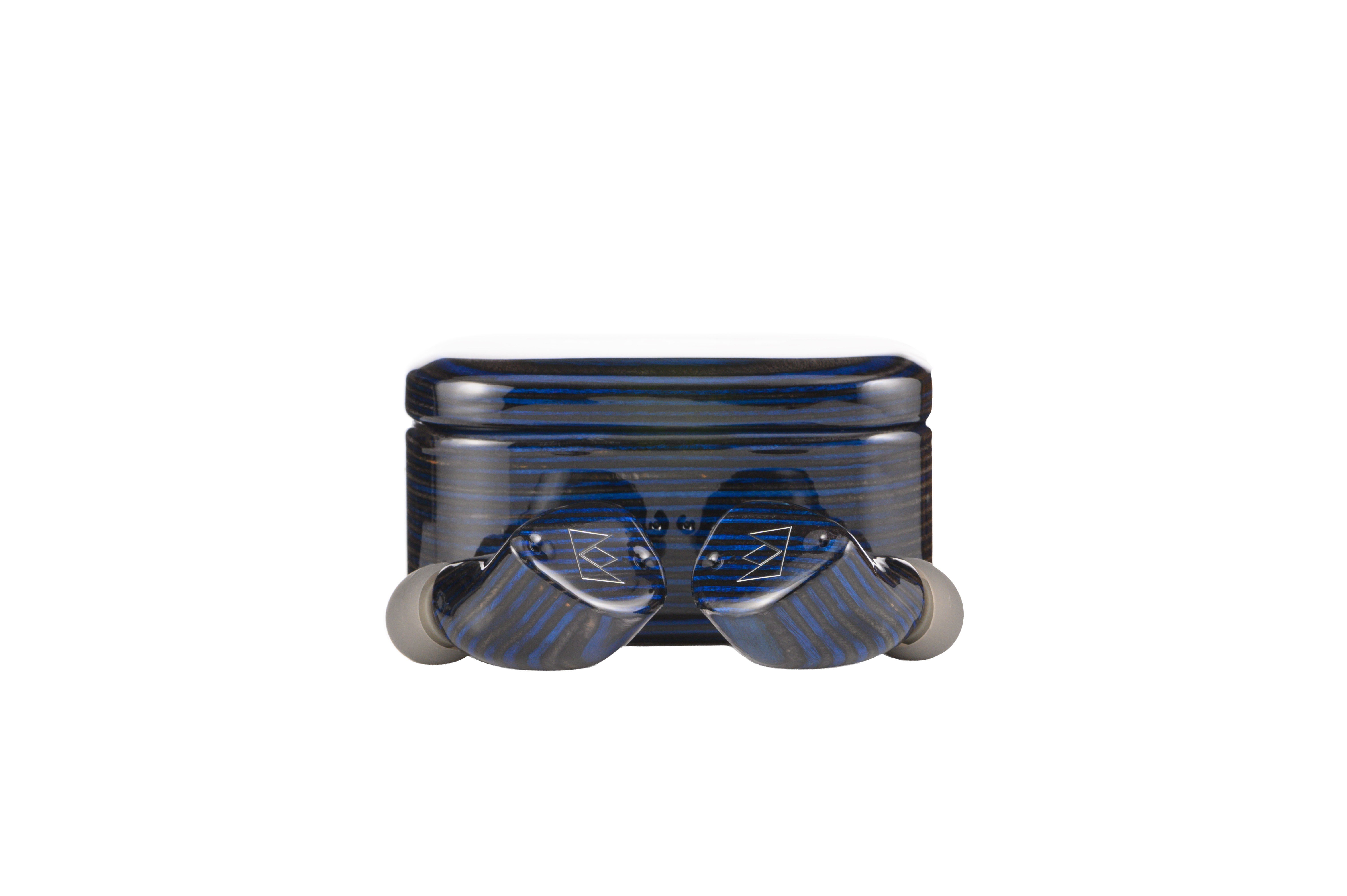
The last time I used a set of Noble Audio earbuds, the company managed to pack five drivers into the tiny housings. Now it’s back with a new model, the FoKus Prestige Encore, and despite only having four drivers this time, the company still took plenty of cues from its line of pro-grade in-ear monitors (IEMs). The biggest downside is that this new set is still plenty pricey, hitting your wallet for $699.

Inside, the FoKus Prestige Encore has one 8mm dynamic driver, two balanced armature drivers and one 6mm planar magnetic driver. According to Noble, each of these components have different duties. The dynamic drivers handle bass while the midrange goes to the Knowles balanced armature drivers. Lastly, the planar magnetic driver is tasked with the treble to “reveal microdetail.” The company says it also designed new “triple-vented” nozzles to make airflow efficient and the seal consistent.

Noble Audio FoKus Prestige Encore
Noble Audio

Rather than using plastic or some other affordable material, Noble opted for solid wood for both the earbud housings and the charging case. Since this is the real thing and not a printed plate, each set of the FoKus Prestige Encore will have its own unique grain pattern — no two sets will look the same. What’s more, Noble reduced the overall size of the buds, which it says offers “a secure, fatigue-free fit.”

The FoKus Prestige Encore is equipped with hybrid active noice cancellation (ANC) and a transparency mode. The earbuds also support aptX Lossless, aptX Adaptive and LDAC for higher quality listening. For calls, dual noise suppression mics won’t overly process your voice for the sake of reducing background distractions, which Noble says will keep you sounding clear and natural in all settings.

Noble promises up to seven hours of use on a charge with ANC enabled or up to 10 hours with noise canceling turned off. When you factor in the case, you’re looking at up to 35 hours of total listening time. A quick-charge features will give you up to two hours of playback. The FoKus Prestige Encore also supports Audiodo for personalized calibration for each user’s hearing, and those profiles are stored on the earbuds for use on any device.

The Fokus Prestige Encore is available starting today for $699 (£649/€799).

This article originally appeared on Engadget at https://www.engadget.com/audio/headphones/noble-audios-latest-earbuds-have-a-four-driver-setup-and-a-solid-wood-design-090000651.html?src=rss

Universe Expansion May Be Slowing, Not Accelerating, Study Suggests

A new study challenges the Nobel-winning theory that the universe’s expansion is accelerating, suggesting instead that it may be slowing down as dark energy weakens — potentially leading to a future “big crunch” where the cosmos collapses back in on itself. “Our study shows that the universe has already entered a phase of decelerated expansion at the present epoch and that dark energy evolves with time much more rapidly than previously thought,” said Prof Young-Wook Lee, of Yonsei University in South Korea, who led the work. “If these results are confirmed, it would mark a major paradigm shift in cosmology since the discovery of dark energy 27 years ago.” The Guardian reports: The latest work focuses on the reliability of observations of distant supernovae (exploding stars) that led to the discovery of dark energy, work that was awarded the 2011 Nobel prize in physics. […] By estimating the ages of 300 host galaxies using a different method, the team concluded that there are simply variations in the properties of stars in the early universe that mean they produce, on average, fainter supernovae. Correcting for this systematic bias still results in an expanding universe, but suggests that the expansion has slowed down and that dark energy is waning, the analysis concluded. If dark energy keeps decreasing to the point where it becomes negative, the universe is theoretically predicted to end in a big crunch. The findings are published in Monthly Notices of the Royal Astronomical Society.


Read more of this story at Slashdot.

Canon’s EOS R6 III arrives with 7K RAW video and 40 fps burst speeds

Canon just barged into the mid-range full-frame hybrid camera arena with a new entry. The 32.5MP EOS R6 III is a dramatic improvement over the EOS R6 II thanks to the higher resolution, faster shooting speeds and better video specs. However, it comes at a relatively high price and lacks a stacked or partially stacked sensor, unlike other cameras in this category. 

The new 32.5MP sensor provides a big boost in resolution compared to the R6 II’s 24MP chip. At the same time, the R6 III offers higher shooting speeds of 40 fps in burst mode with the electronic shutter, or 12 fps with the mechanical or first-curtain shutter. It also supports 20 frames (a half second) of pre-shooting so you won’t miss key moments for wildlife or sports shooting. 

Canon's EOS R6 III arrives with 40 fps burst speeds and 7K RAW video
Canon

The R6 III uses Canon’s fast and dependable Dual Pixel AF system and comes with the company’s latest AI tracking algorithms. It can operate in fairly dim conditions down to -6 EV and should be more responsive with Canon’s latest Digic X processor, pending our review. It offers subject tracking for people, animals and vehicles, along with an Auto mode that will pick one of those automatically. It also borrowed the “Register People Priority” feature from the R5 II, which lets you keep focus locked on specific subjects that you’ve previously memorized. 

The biggest update for the R6 III, though, is with video. Thanks to the higher resolution sensor, it can now capture up to 7K 60 fps RAW light video, 7K 30 fps “open gate” video and 4K at up to 120 fps, all with Canon’s C-Log2 and C-Log3 on tap. There’s a dizzying array of other video formats available (12 pages worth in the specs), with HEVC S, AVC-S, RAW, RAW Light and others, at resolutions up to 7K. All the AF subject detection features are available (vehicles, animals and people), and Canon is typically among the best for video AF in terms of speed and accuracy. 

Canon's EOS R6 III arrives with 40 fps burst speeds and 7K RAW video
Canon

Nobody expects any radical design changes in a Canon camera (the company tried that with the EOS R and it really didn’t work), so the R6 III kept the last model’s tried and true form factor. That includes two adjustment dials on the top and one on the rear, along with a joystick, photo/video selector, mode dial and a good assortment of programmable buttons. 

The rear display flips out as you’d expect for vlogging, but it doesn’t tilt like Panasonic’s S1 II — so it may obstruct the mic or headphone jacks, and isn’t as useful for low-angle photo shooting. The viewfinder has 3.69 million dots of resolution as before, the same as Sony’s A7 IV but less than Panasonic’s slightly more expensive Lumix S1 II. One big change is the addition of a CFexpress card slot that allows RAW video capture and faster burst speeds, along with an SD UHS II slot. The battery is the same as the one for EOS R5 II and allows up to 390 shots (CIPA rating) with the viewfinder enabled. 

Canon's EOS R6 III arrives with 40 fps burst speeds and 7K RAW video
Canon

Other features include waveform monitoring that will be much appreciated by pros, plus new focus speed algorithms borrowed from Canon’s cinema cameras that offer “natural, professional” behavior, the company wrote. Inputs include 3.5mm mic and headphone jacks, along with high-speed USB-C and a full-sized HDMI port. In-body stabilization has been boosted slight from 8 to 8.5 stops, matching the latest Panasonic models. 

Along with the EOS R6 III, Canon introduced some interesting new glass. The RF45mm F1.2 STM lens brings very high speeds and shallow depth of field to a much smaller and lighter .76 pound (346 gram) form factor — less than half the weight of Canon’s RF 50mm f/1.2L USM lens. It’s also shockingly cheap for an f/1.2 lens at $470. 

The Canon EOS R6 III arrives later this month for $2,799 (body only) or $4,049 with the RF24-105 F4 L IS USM lens. That’s a bit more than the Nikon’s $2,500 Z6 III, which has a partially stacked but lower-resolution 24MP sensor. Panasonic’s S1 II also has a partially stacked 24MP but can shoot at up to 70 fps and costs $3,200. Finally, Sony’s A7 IV has a similar 33MP sensor but lacks the RAW video features of the R6 III. 

This article originally appeared on Engadget at https://www.engadget.com/cameras/canons-eos-r6-iii-arrives-with-7k-raw-video-and-40-fps-burst-speeds-060035923.html?src=rss

A New Ion-Based Quantum Computer Makes Error Correction Simpler

An anonymous reader quotes a report from MIT Technology Review: The US- and UK-based company Quantinuum today unveiled Helios, its third-generation quantum computer, which includes expanded computing power and error correction capability. Like all other existing quantum computers, Helios is not powerful enough to execute the industry’s dream money-making algorithms, such as those that would be useful for materials discovery or financial modeling. But Quantinuum’s machines, which use individual ions as qubits, could be easier to scale up than quantum computers that use superconducting circuits as qubits, such as Google’s and IBM’s. “Helios is an important proof point in our road map about how we’ll scale to larger physical systems,” says Jennifer Strabley, vice president at Quantinuum, which formed in 2021 from the merger of Honeywell Quantum Solutions and Cambridge Quantum. Honeywell remains Quantinuum’s majority owner.

Located at Quantinuum’s facility in Colorado, Helios comprises a myriad of components, including mirrors, lasers, and optical fiber. Its core is a thumbnail-size chip containing the barium ions that serve as the qubits, which perform the actual computing. Helios computes with 98 barium ions at a time; its predecessor, H2, used 56 ytterbium qubits. The barium ions are an upgrade, as they have proven easier to control than ytterbium. These components all sit within a chamber that is cooled to about 15 Kelvin (-432.67 ), on top of an optical table. Users can access the computer by logging in remotely over the cloud. […] Helios is noteworthy for its qubits’ precision, says Rajibul Islam, a physicist at the University of Waterloo in Canada, who is not affiliated with Quantinuum. The computer’s qubit error rates are low to begin with, which means it doesn’t need to devote as much of its hardware to error correction. Quantinuum had pairs of qubits interact in an operation known as entanglement and found that they behaved as expected 99.921% of the time. “To the best of my knowledge, no other platform is at this level,” says Islam.

[…] Besides increasing the number of qubits on its chip, another notable achievement for Quantinuum is that it demonstrated error correction “on the fly,” says David Hayes, the company’s director of computational theory and design, That’s a new capability for its machines. Nvidia GPUs were used to identify errors in the qubits in parallel. Hayes thinks that GPUs are more effective for error correction than chips known as FPGAs, also used in the industry. Quantinuum has used its computers to investigate the basic physics of magnetism and superconductivity. Earlier this year, it reported simulating a magnet on H2, Quantinuum’s predecessor, with the claim that it “rivals the best classical approaches in expanding our understanding of magnetism.” Along with announcing the introduction of Helios, the company has used the machine to simulate the behavior of electrons in a high-temperature superconductor. Quantinuum is expanding its Helios line with a new system in Minnesota. It’s also started developing its fourth-generation quantum computer, Sol, set for 2027 with 192 qubits. Then, a fifth-generation system, Apollo, is expected in 2029 with thousands of qubits and full fault tolerance.


Read more of this story at Slashdot.

How to Use Blur in Kdenlive: Full, Partial, and Tracking Effects

Learn how to apply blur effects in Kdenlive, including fullscreen blur, partial blur using alpha mask, manual keyframed blur, and motion tracking blur. This video shows how each method works and compares their results. While motion tracking offers speed and automation, manual tracking provides better precision when the object moves unpredictably making it ideal for creators who need to hide faces, license plates, or sensitive details directly in Kdenlive.

The Louvre’s Video Surveillance Password Was ‘Louvre’

A bungled October 18 heist that saw $102 million of crown jewels stolen from the Louvre in broad daylight has exposed years of lax security at the national art museum. From trivial passwords like ‘LOUVRE’ to decades-old, unsupported systems and easy rooftop access, the job was made surprisingly easy. PC Gamer reports: As Rogue cofounder and former Polygon arch-jester Cass Marshall notes on Bluesky, we owe a lot of videogame designers an apology. We’ve spent years dunking on the emptyheadedness of game characters leaving their crucial security codes and vault combinations in the open for anyone to read, all while the Louvre has been using the password “Louvre” for its video surveillance servers. That’s not an exaggeration. Confidential documents reviewed by Liberation detail a long history of Louvre security vulnerabilities, dating back to a 2014 cybersecurity audit performed by the French Cybersecurity Agency (ANSSI) at the museum’s request. ANSSI experts were able to infiltrate the Louvre’s security network to manipulate video surveillance and modify badge access.

“How did the experts manage to infiltrate the network? Primarily due to the weakness of certain passwords which the French National Cybersecurity Agency (ANSSI) politely describes as ‘trivial,'” writes Liberation’s Brice Le Borgne via machine translation. “Type ‘LOUVRE’ to access a server managing the museum’s video surveillance, or ‘THALES’ to access one of the software programs published by… Thales.” The museum sought another audit from France’s National Institute for Advanced Studies in Security and Justice in 2015. Concluded two years later, the audit’s 40 pages of recommendations described “serious shortcomings,” “poorly managed” visitor flow, rooftops that are easily accessible during construction work, and outdated and malfunctioning security systems. Later documents indicate that, in 2025, the Louvre was still using security software purchased in 2003 that is no longer supported by its developer, running on hardware using Windows Server 2003.


Read more of this story at Slashdot.

72% of Game Developers Say Steam Is Effectively a PC Gaming Monopoly

A new survey of over 300 US and UK gaming executives found that 72% view Steam as a monopoly. “Furthermore, 88% said that at least three-quarters of their revenue came from Steam, while 37% reported that the platform accounted for 90% of their total revenue,” adds Techspot. From the report: Atomik Research conducted the recent survey on behalf of Rokky, a company that helps game publishers minimize the impact of grey market key resellers on prices. In addition to opinions on Steam, developers also answered questions about the PC market’s biggest challenges.

The increasing popularity of free-to-play games such as Fortnite, DOTA 2, Counter-Strike 2, Call of Duty: Warzone, and Roblox topped the list of concerns for 40% of respondents. Approximately a third mentioned market saturation and discoverability, echoing data that suggests there aren’t enough players for the thousands of new titles released on Steam each year. A similar portion of survey respondents also expressed concerns regarding subscription services.


Read more of this story at Slashdot.